

 Brazil
 Antarctica
 Argentina
 Bolivia
 Chile
 Colombia
 Ecuador
 Falkland Islands (Malvinas)
 French Guiana
 Guyana
 Paraguay
 Peru
 Suriname
 Uruguay
 Venezuela
 Albania
 Austria
 Belgium
 Croatia
 Denmark
 Finland
 France
 Germany
 Greece
 Hungary
 Iceland
 Ireland
 Italy
 Luxembourg
 Norway
 Poland
 Portugal
 Slovakia
 Slovenia
 Spain
 Sweden
 Switzerland
 the Czech Republic
 the Netherlands
 the United Kingdom
 Turkey
 Bermuda
 Canada
 Greenland
 Mexico
 Saint Pierre and Miquelon
 the United States
 the Dominican Republic
 Egypt
 South Africa
 Australia
 Fiji
 New Zealand
 Papua New Guinea
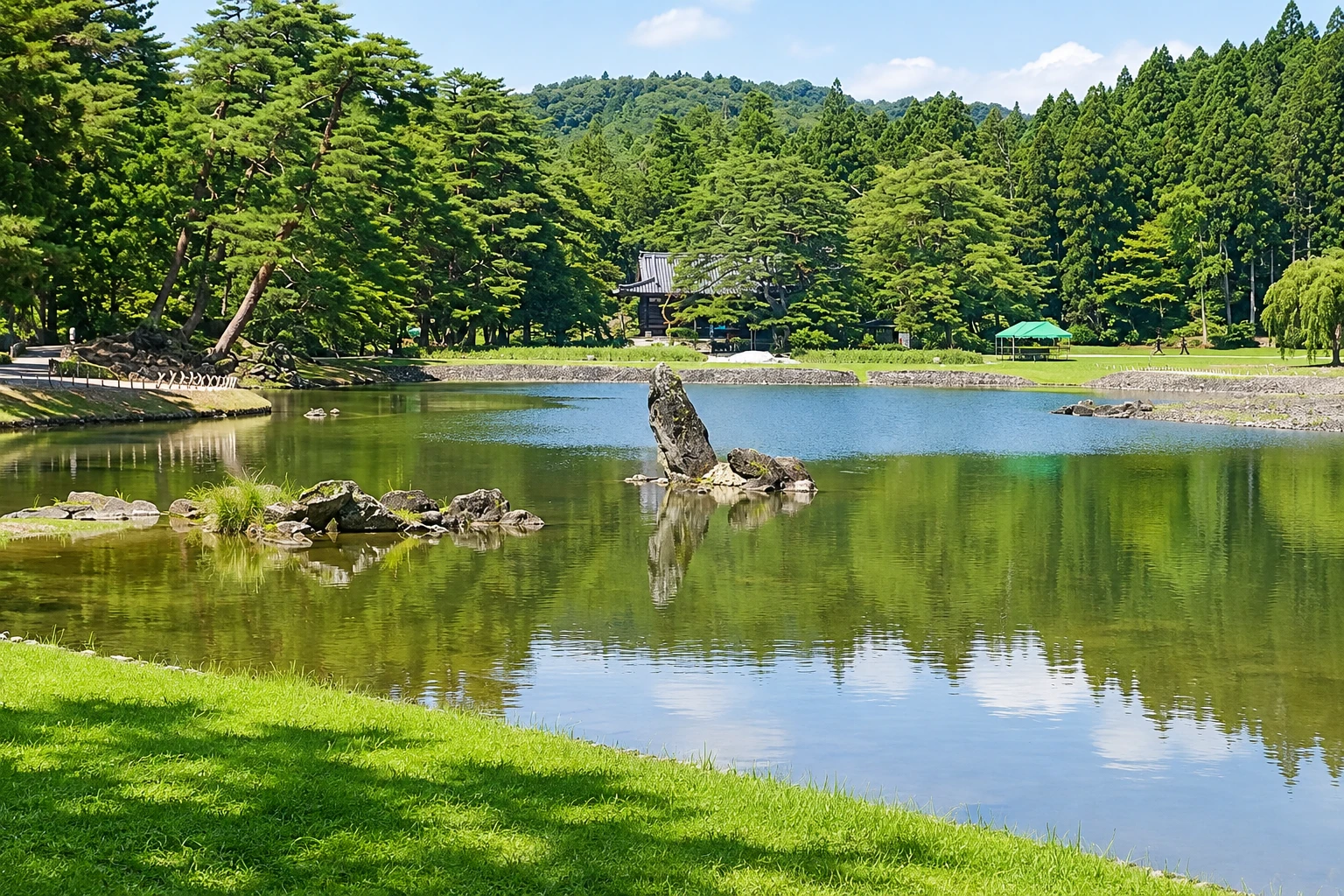
Garden · Hiraizumi, Japan
Motsu-ji
Temple with a 12th-century Pure Land garden around the Oizumi-ga-ike pond, with stones and the foundations of the Fujiwara halls. UNESCO World Heritage, near Hiraizumi Station.
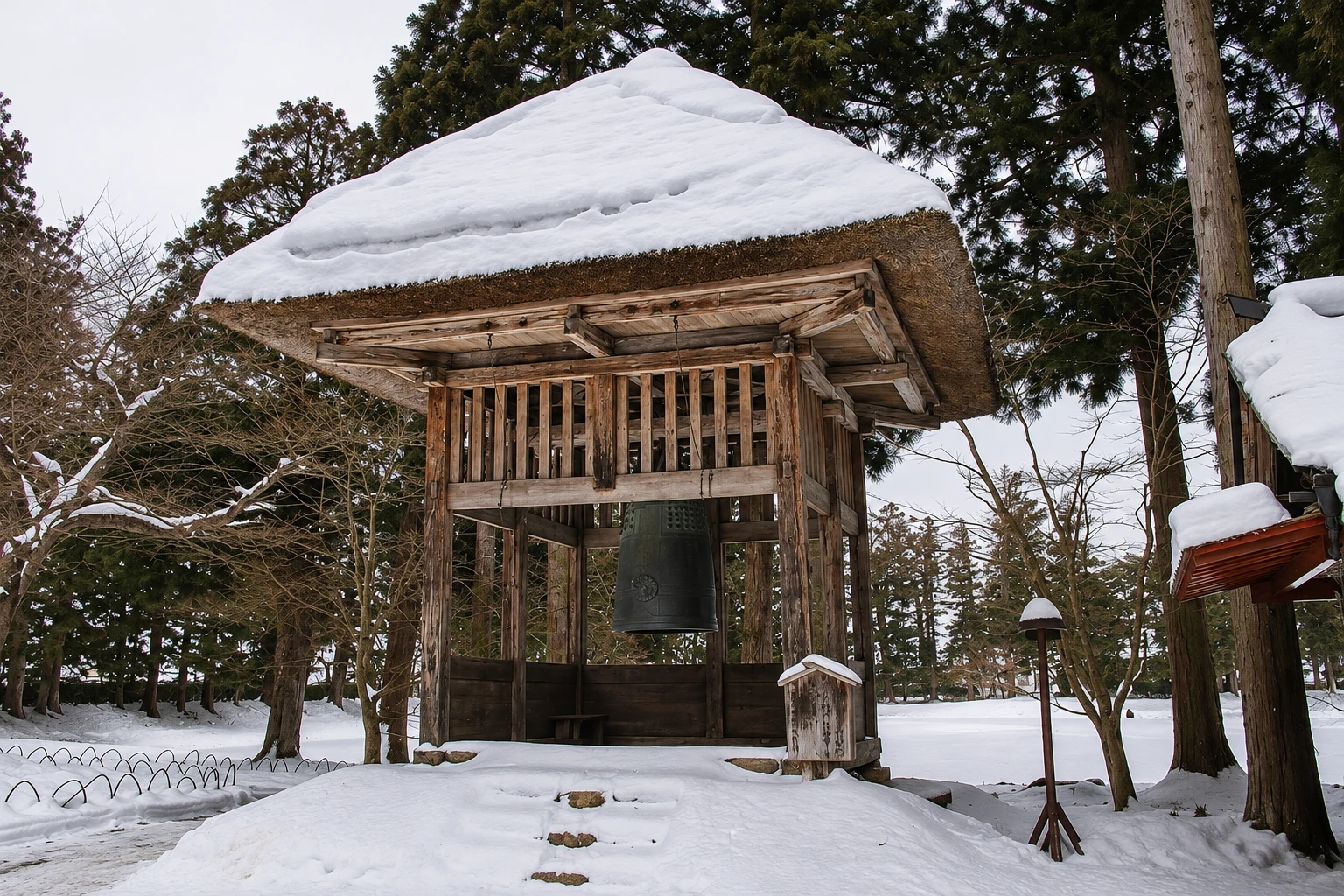
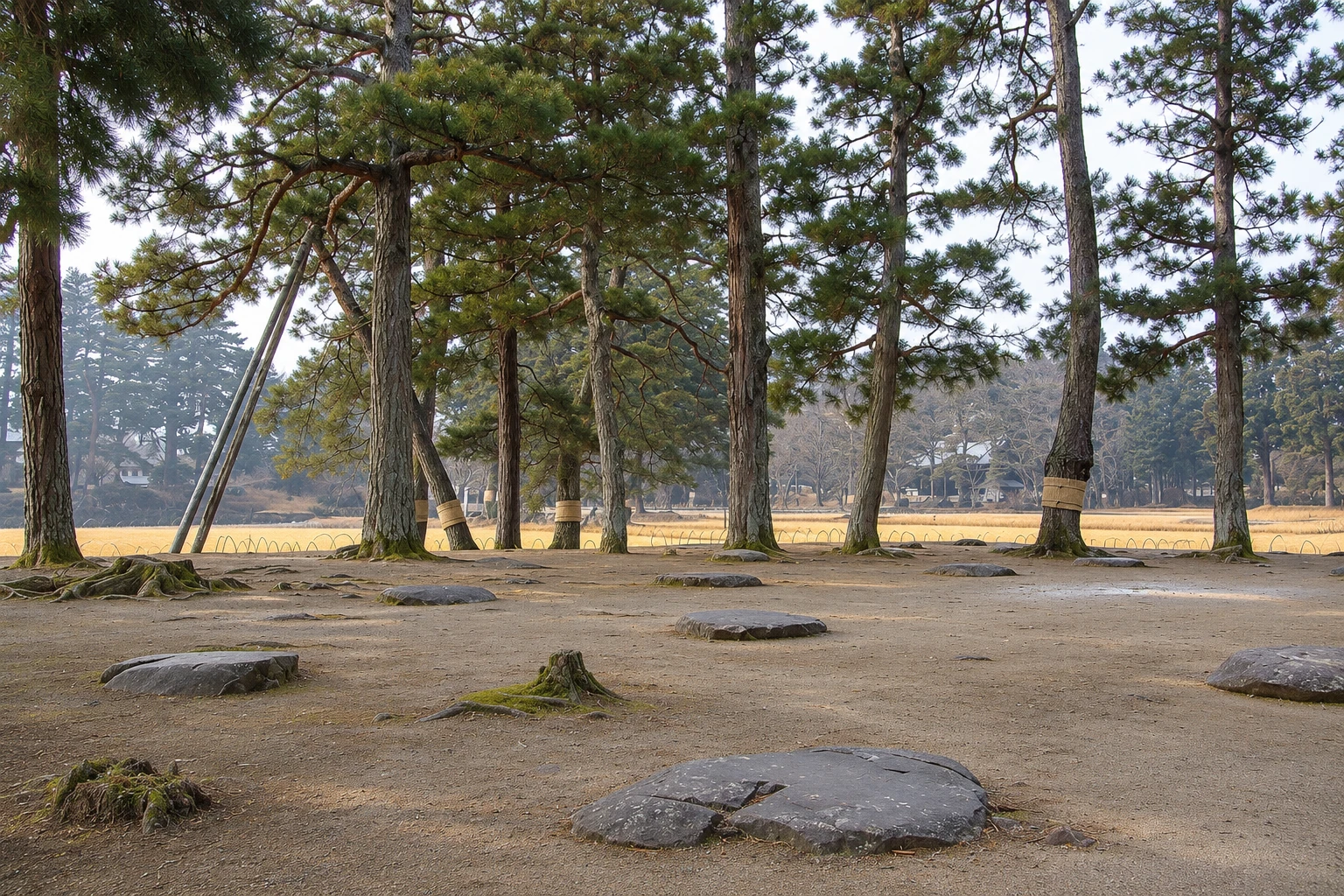
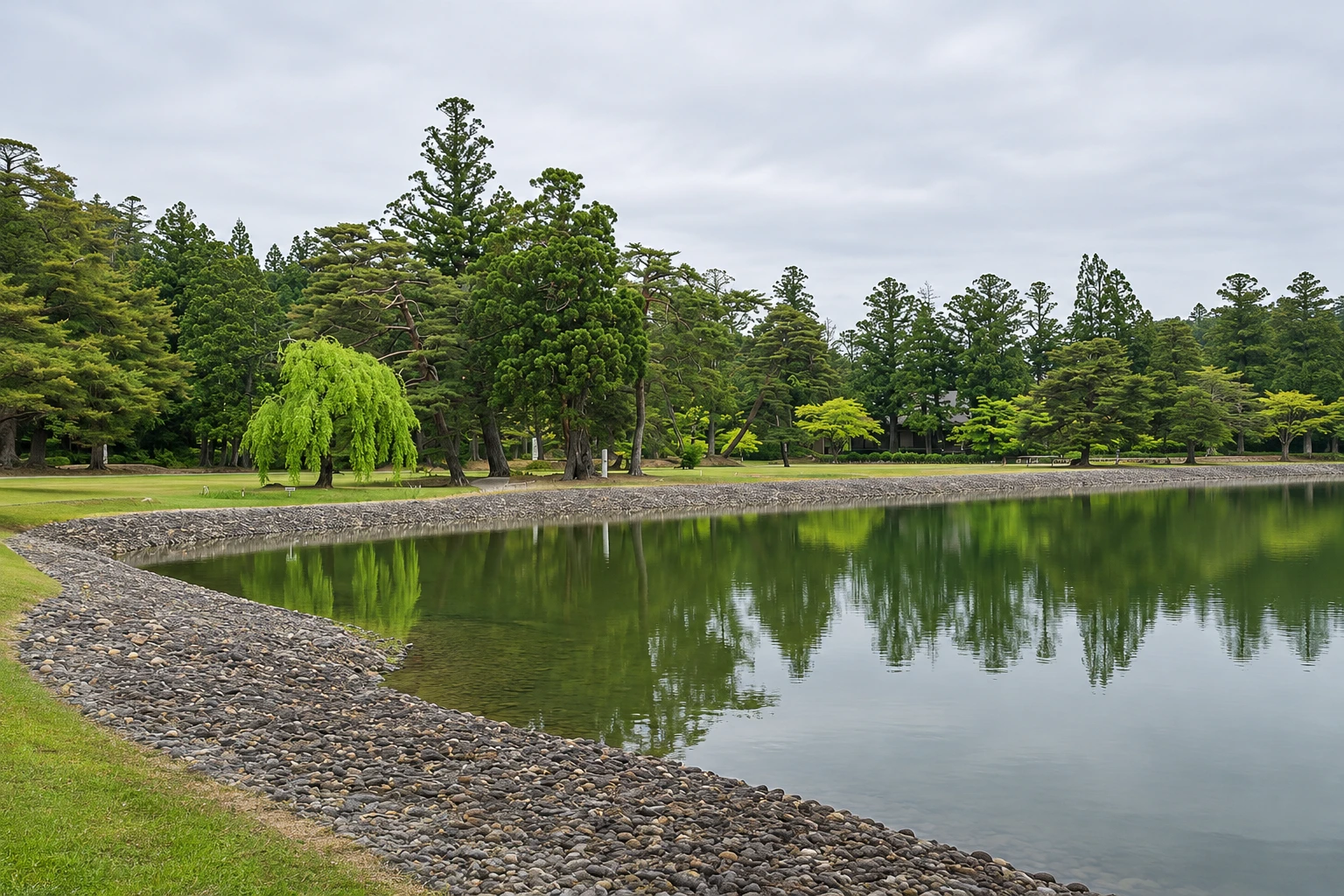
Illustrative images. The pictures in this guide are illustrations based on the real place, not photographs, and may differ from it.

A look at the place
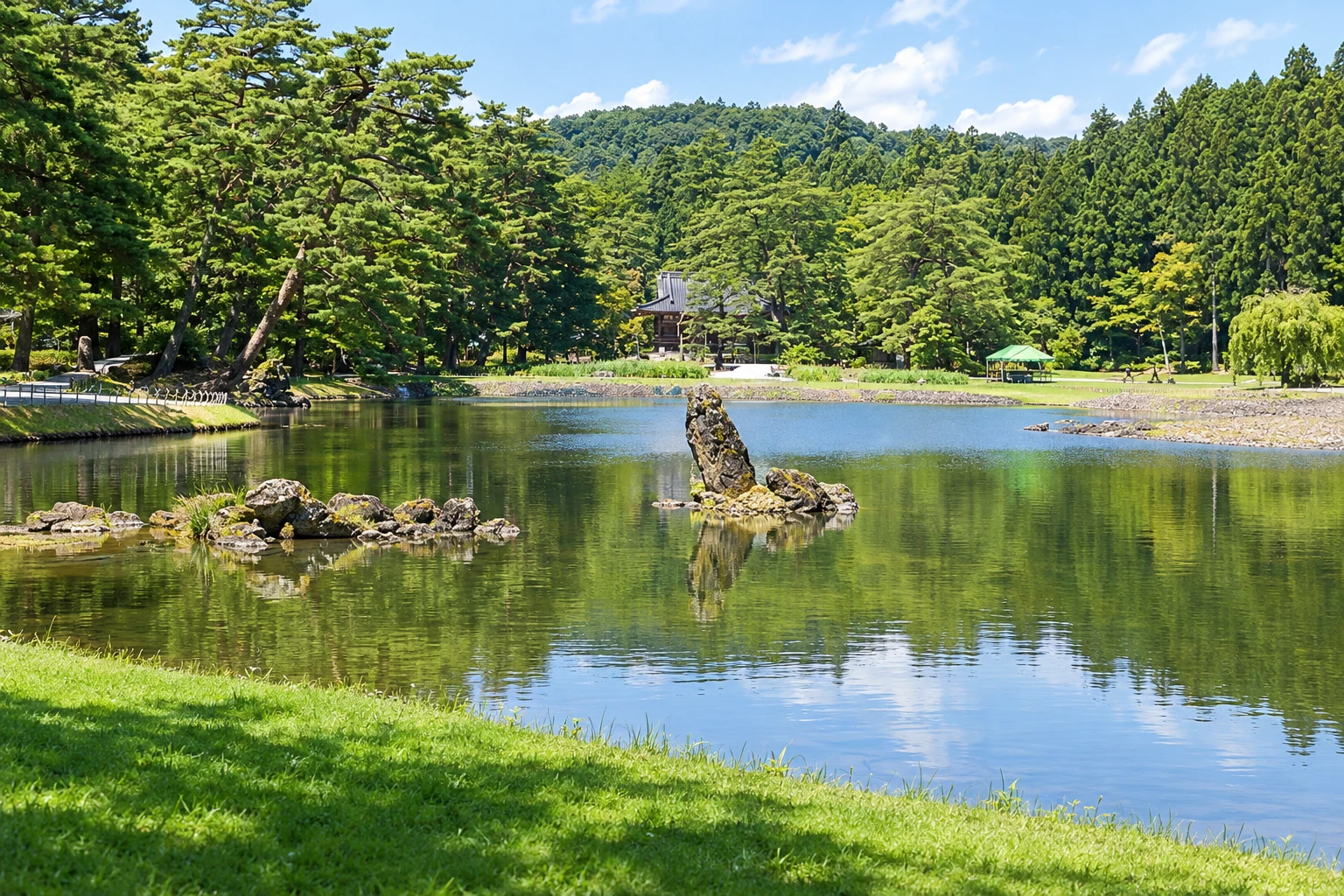
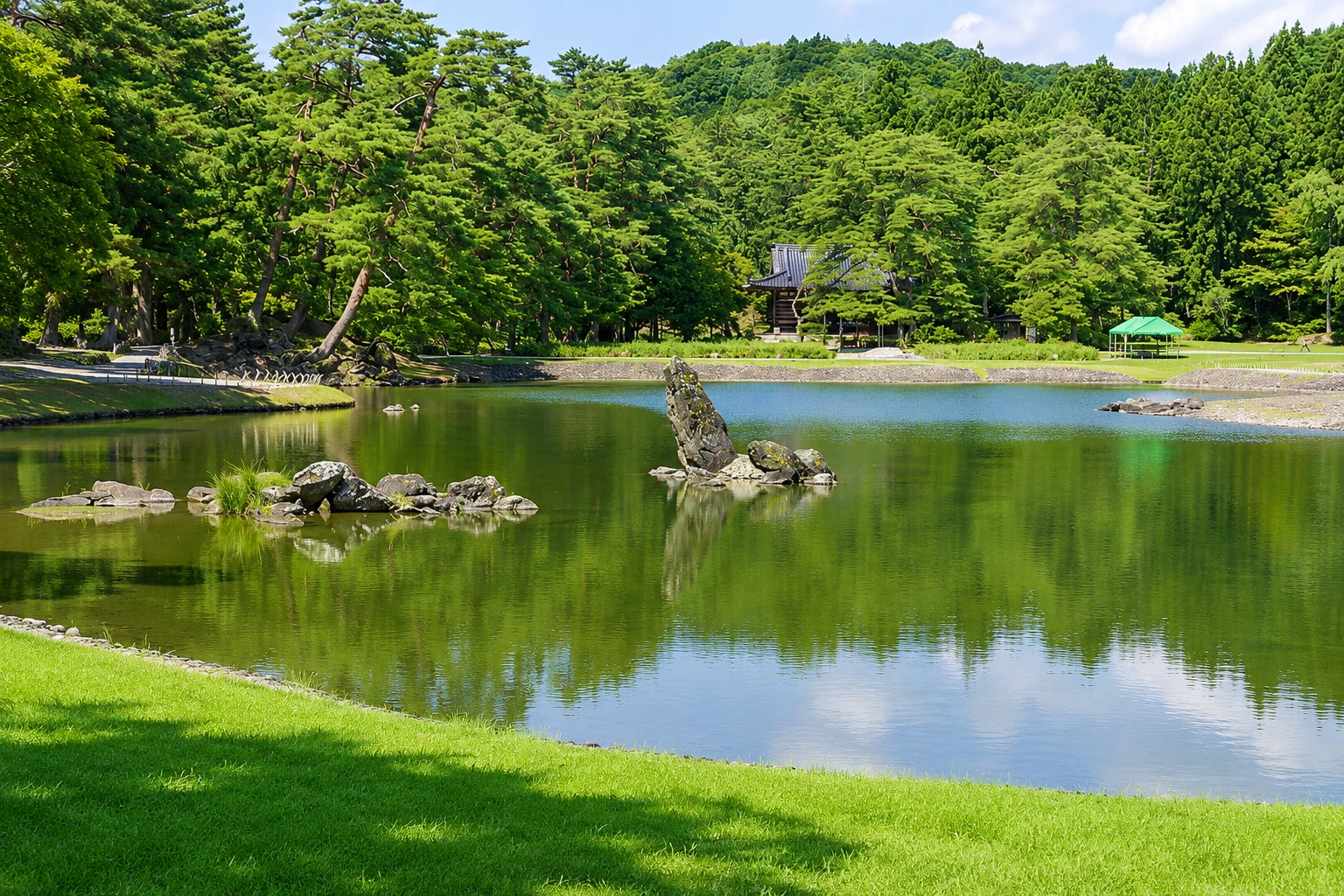
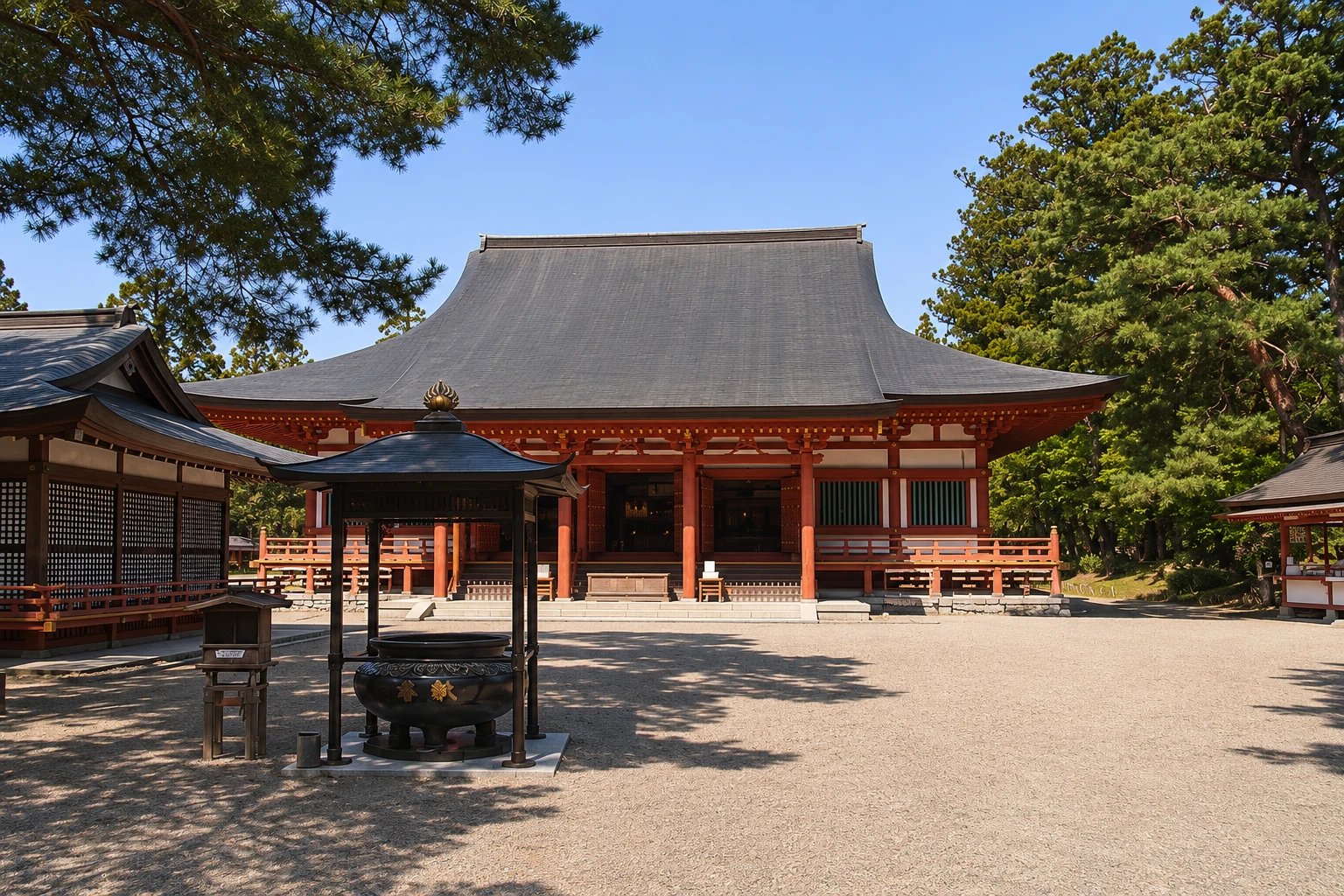
Motsu-ji in pictures
These pictures are illustrations based on the real place, not photographs. They may differ from the place.
Click the picture to enlarge it.
Discover
About Motsu-ji
Motsu-ji was one of Hiraizumi’s largest temples, expanded by Fujiwara no Motohira, the second lord of the Northern Fujiwara, in the mid-12th century. Its halls, which records say once exceeded those of Chuson-ji, were destroyed by fires over the centuries. What remains is the garden, designated a Special Place of Scenic Beauty and Special Historic Site, and one of the oldest examples of a Japanese garden.
At the center is the Oizumi-ga-ike pond, designed to represent the Pure Land, the paradise of Buddhism. On the shore, a cluster of stones simulates a rocky cape lashed by the sea, and a vertical stone in the water suggests a distant island. A winding stream, the yarimizu, descends in curves to the pond and was rediscovered in excavations; it is the only one from the Heian period that has been preserved.
Around the pond, the stone bases of the former halls appear in the grass, marking where the main hall, pavilions and bridges stood. The temple’s current hall is from the 20th century. Nearby, the ruins of Kanjizaio-in, built by Motohira’s wife, show another pond and the layout of two halls.
The walk is a quiet circuit along the shore, with benches and open views. At the end of May, the Gokusui no En recreates a Heian court custom: poets dressed in period clothes compose verses beside the stream while cups of sake float down the water. In June and July, a field of irises blooms near the pond.
Before you go
Practical information
Cidade Turismo reviews its information regularly, but something may have changed. Check with the place before planning your trip.
How much time to set aside
About one hour to walk around the pond and visit the temple museum.
Best time
In the morning or late afternoon, when the still water reflects the trees. From late June to mid-July, irises usually bloom; in late October and early November, foliage colors the shore. The Gokusui no En takes place at the end of May; confirm the date before you go.
How to get there
From Hiraizumi Station, about a 10-minute walk, straight along the avenue in front of the station. The Runrun circular bus also stops at Motsu-ji.
Tip
Walk around the lake counterclockwise, starting at the rocky point, and look for the yarimizu stream on the east side. On the way out, cross over to the nearby ruins of Kanjizaio-in, where there is no entrance fee.
Official website
Your questions
Frequently asked questions about Motsu-ji
What can you see at Motsu-ji?
A 12th-century garden around Oizumi-ga-ike pond, with a rocky point, the sinuous yarimizu stream and the foundations of former halls. The original buildings are gone; the current hall is modern.
What is the Gokusui no En?
It is a poetry festival that recreates a Heian court custom at the end of May. Poets in period dress write verses by the stream while cups of sake float down the water.
When do the irises at Motsu-ji bloom?
Generally from late June to mid-July, in a field beside the pond. Bloom times vary by year.
Is Motsu-ji far from Chuson-ji?
About 2 km away, on the other side of the station. The Runrun bus connects them, and by bicycle the route is flat and short.