

 Brazil
 Antarctica
 Argentina
 Bolivia
 Chile
 Colombia
 Ecuador
 Falkland Islands (Malvinas)
 French Guiana
 Guyana
 Paraguay
 Peru
 Suriname
 Uruguay
 Venezuela
 Austria
 Belgium
 Croatia
 Denmark
 Finland
 France
 Germany
 Greece
 Hungary
 Iceland
 Ireland
 Italy
 Luxembourg
 Norway
 Poland
 Portugal
 Slovakia
 Slovenia
 Spain
 Sweden
 Switzerland
 the Czech Republic
 the Netherlands
 the United Kingdom
 Turkey
 Bermuda
 Canada
 Greenland
 Mexico
 Saint Pierre and Miquelon
 the United States
 the Dominican Republic
 Egypt
 South Africa
 Australia
 Fiji
 New Zealand
 Papua New Guinea
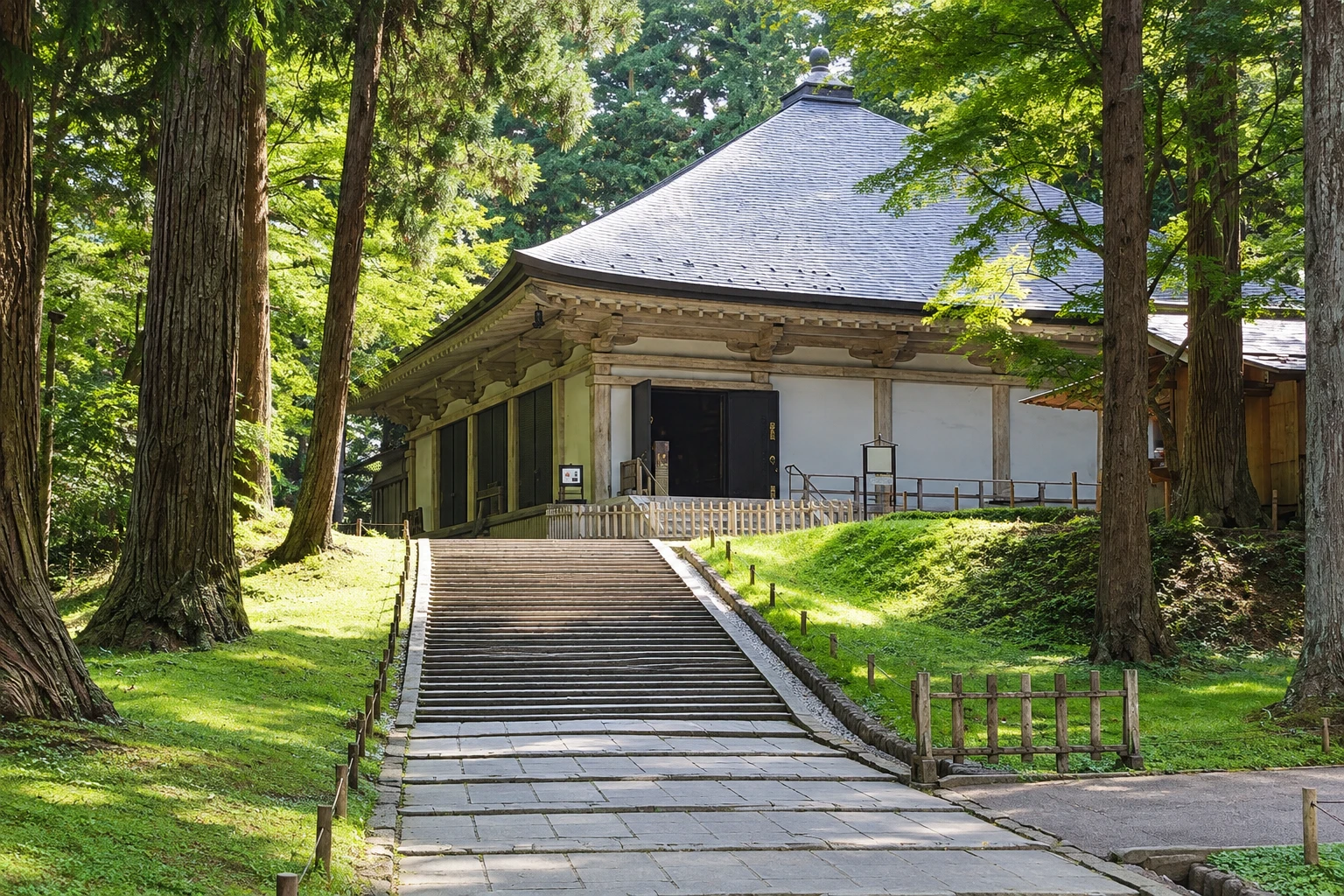
Temple · Hiraizumi, Japan
Chuson-ji
The great temple of the Northern Fujiwara, on a cedar-covered hill, with the Konjikido, a 1124 hall entirely covered in gold, and the Sankozo museum with 12th-century treasures. UNESCO World Heritage.
Illustrative images. The pictures in this guide are illustrations based on the real place, not photographs, and may differ from it.

A look at the place
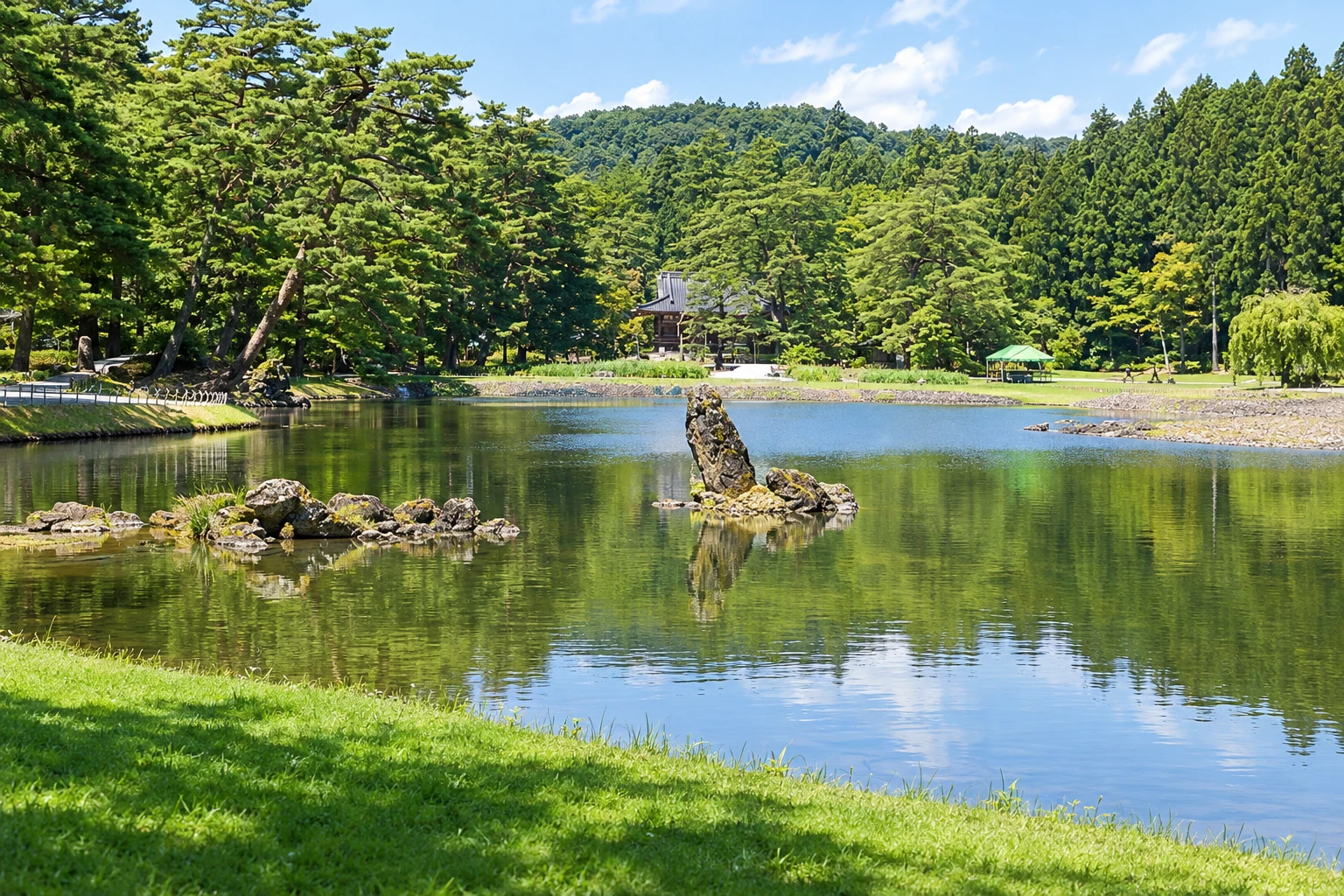
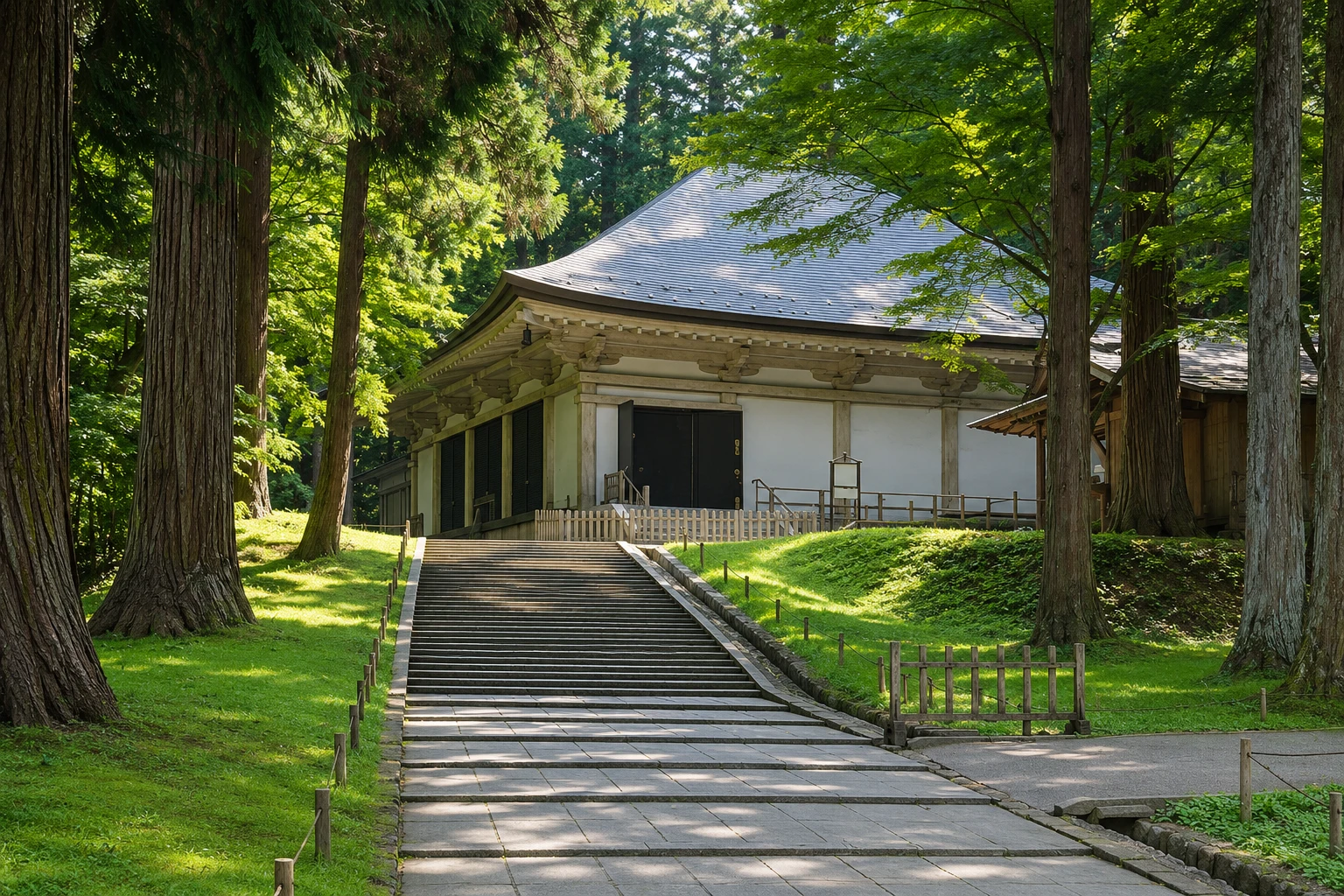
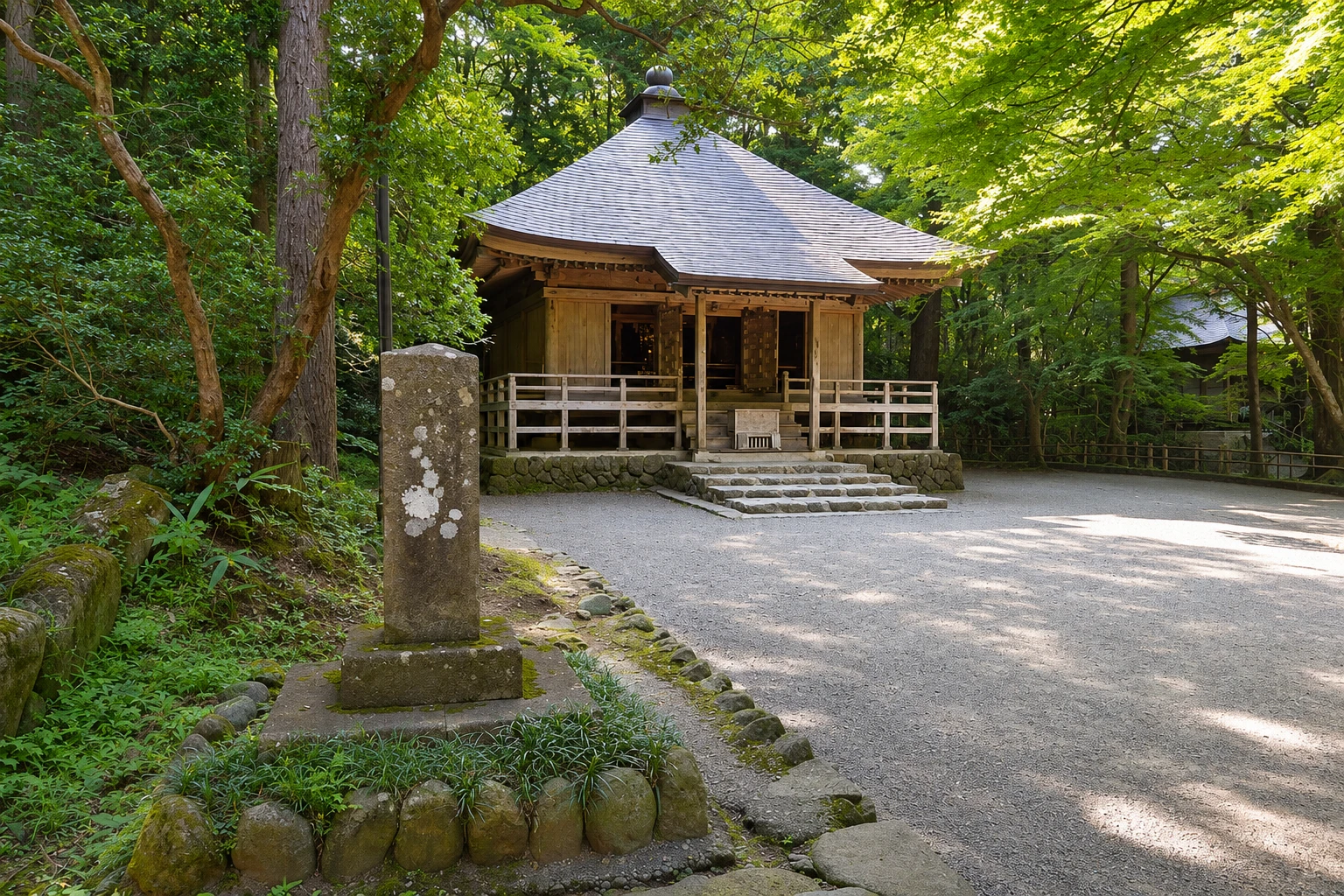
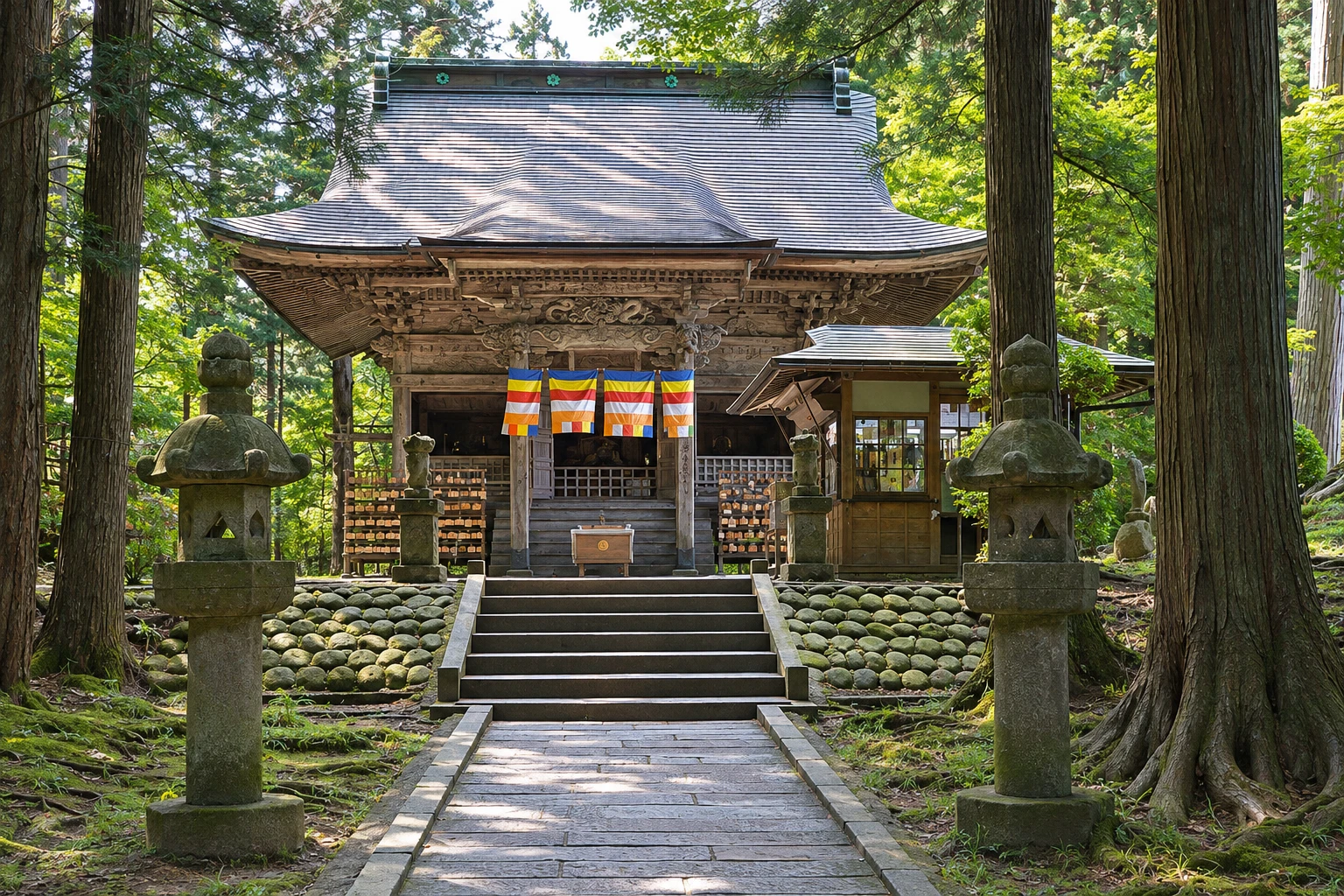
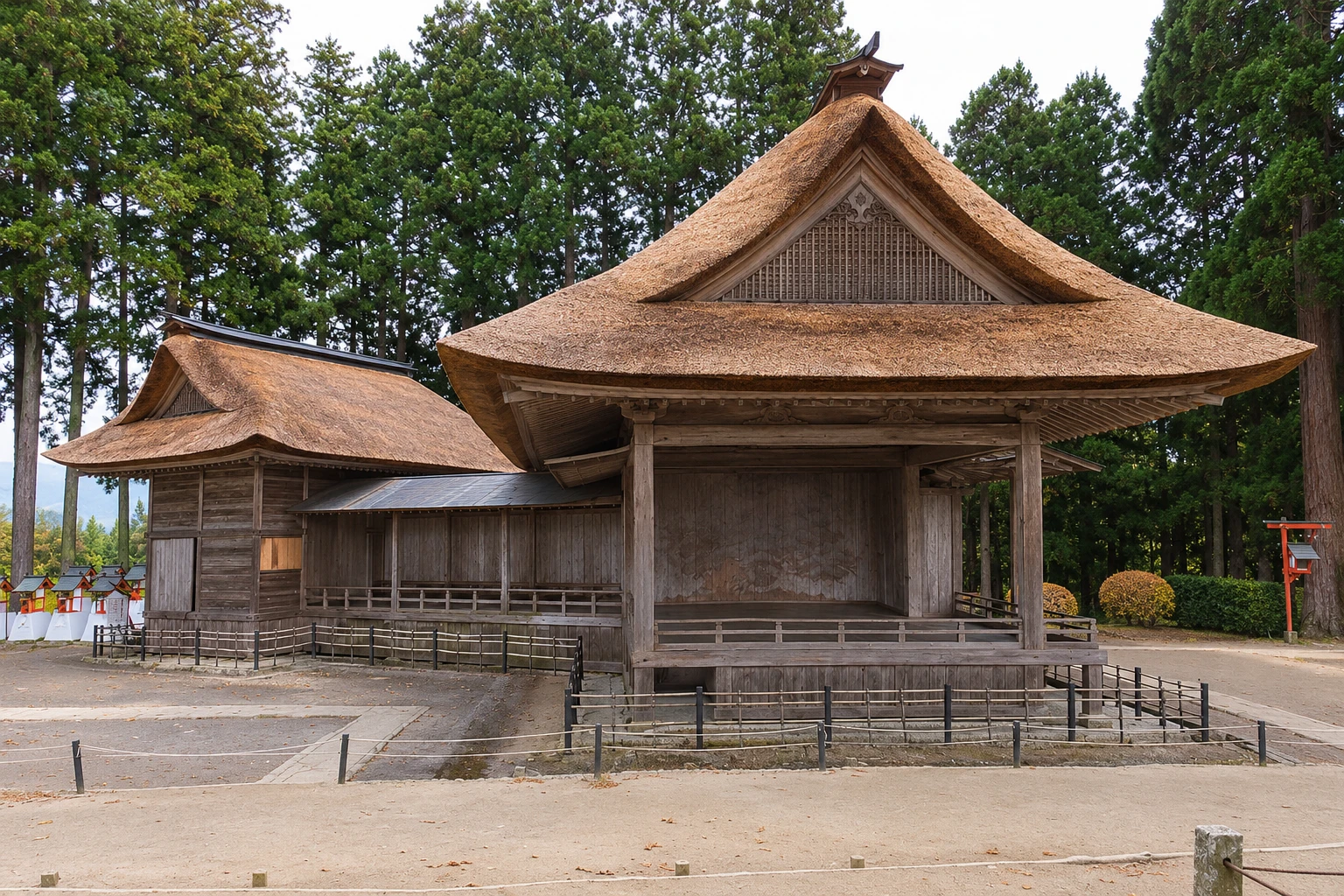
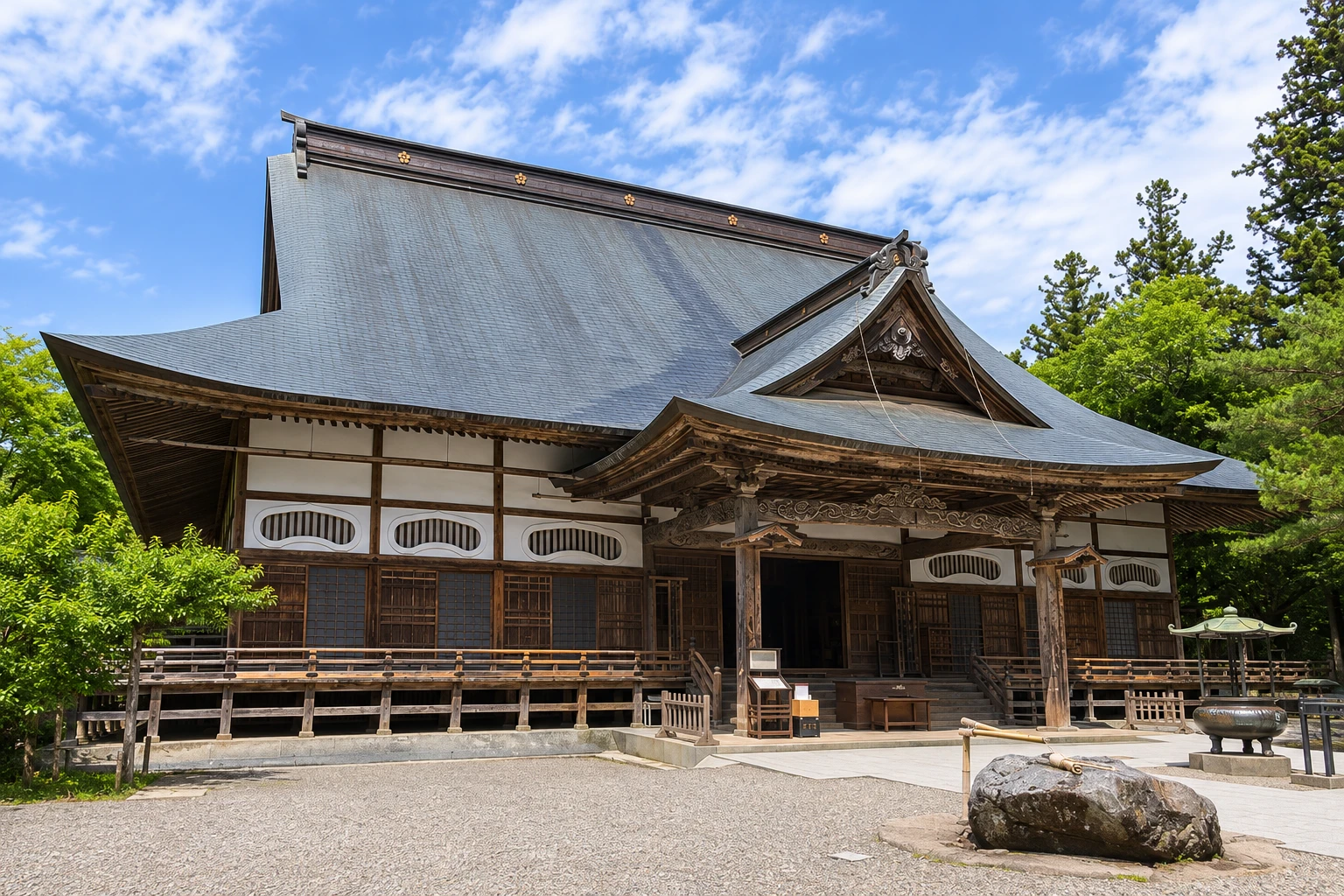
Chuson-ji in pictures
These pictures are illustrations based on the real place, not photographs. They may differ from the place.
Click the picture to enlarge it.
Discover
About Chuson-ji
Chuson-ji is Hiraizumi’s main temple of the Tendai school, spread across the summit and slopes of Mount Kanzan. According to tradition, it was founded in 850 by the monk Ennin, but its glory came in the 12th century, when Fujiwara no Kiyohira, the first lord of the Northern Fujiwara, built dozens of halls and pagodas there to pray for peace after years of war. Almost everything was lost in a fire in 1337; what remains is essential.
The Konjikido, the “golden hall,” was completed in 1124 and is the first building designated as a National Treasure in Japan. Small, about 5.5 meters on a side, it is covered in gold leaf inside and out. The interior has columns and altars decorated with mother-of-pearl from South Sea shells, lacquer and worked metal, and 33 Buddhist statues. Under the altars are the mummified remains of Kiyohira, Motohira and Hidehira and the head of Yasuhira, the last lord. Since 1965, the hall has been housed inside an air-conditioned concrete building and is viewed through glass.
The path to it is the Tsukimizaka slope, a climb of about 800 meters between century-old cedars, with viewpoints over the Koromo River valley. Along the way are the main hall (hondo), smaller pavilions and, at the top, the old sutra repository (kyozo) and the Hakusan shrine, with an open-air Noh stage.
The Sankozo museum, near the Konjikido, houses statues, sutras written in gold and silver and objects from the Fujiwara coffins. The Konjikido ticket includes the museum and the sutra repository. The visit is on foot, with inclines, and photos are prohibited inside the golden hall building.
Before you go
Practical information
Cidade Turismo reviews its information regularly, but something may have changed. Check with the place before planning your trip.
How much time to set aside
About 2 hours, including the slope climb, the Konjikido and the Sankozo museum.
Best time
Right at opening, before the groups that arrive by bus in mid-morning. In late October and early November, the maples on the hill are usually at their peak. In May, the spring festival brings ceremonies and Noh performances. Confirm times before you go.
How to get there
From Hiraizumi Station, the Runrun circular bus takes about 10 minutes to the Chusonji stop; on foot it’s about 25 minutes. From the bus stop, the Tsukimizaka slope rises to the main hall and the Konjikido. There is parking at the base of the hill.
Tip
Climb Tsukimizaka at a relaxed pace and stop at the viewpoints along the way. Allow time for the Sankozo museum, which displays the objects associated with the Fujiwara; it explains what you see in the Konjikido.
Official website
Your questions
Frequently asked questions about Chuson-ji
Is the Konjikido really made of gold?
It is covered with gold leaf inside and out over a wooden structure, with mother-of-pearl and lacquer. It was the first building designated as a national treasure in Japan.
How long does the visit to Chuson-ji take?
About 2 hours, including the climb up Tsukimizaka slope, the Konjikido and the Sankozo museum. With the Hakusan shrine and the viewpoints, add a bit more time.
Is the climb up Chuson-ji tiring?
The Tsukimizaka slope is about 800 meters and is steep at the start, but there are viewpoints and benches for rest. There is a closer car access to the top for those with reduced mobility; check with the temple.
Can you photograph the Konjikido?
No. The hall is inside a protective building where photos and video are prohibited. Elsewhere on the grounds photography is allowed.
What does the Chuson-ji ticket include?
The Konjikido ticket includes the Sankozo museum and the old sutra repository. The grounds and the main hall can be visited without that ticket.