

 Brazil
 Antarctica
 Argentina
 Bolivia
 Chile
 Colombia
 Ecuador
 Falkland Islands (Malvinas)
 French Guiana
 Guyana
 Paraguay
 Peru
 Suriname
 Uruguay
 Venezuela
 Albania
 Austria
 Belgium
 Croatia
 Denmark
 Finland
 France
 Germany
 Greece
 Hungary
 Iceland
 Ireland
 Italy
 Luxembourg
 Norway
 Poland
 Portugal
 Slovakia
 Slovenia
 Spain
 Sweden
 Switzerland
 the Czech Republic
 the Netherlands
 the United Kingdom
 Turkey
 Bermuda
 Canada
 Greenland
 Mexico
 Saint Pierre and Miquelon
 the United States
 the Dominican Republic
 Egypt
 South Africa
 Australia
 Fiji
 New Zealand
 Papua New Guinea
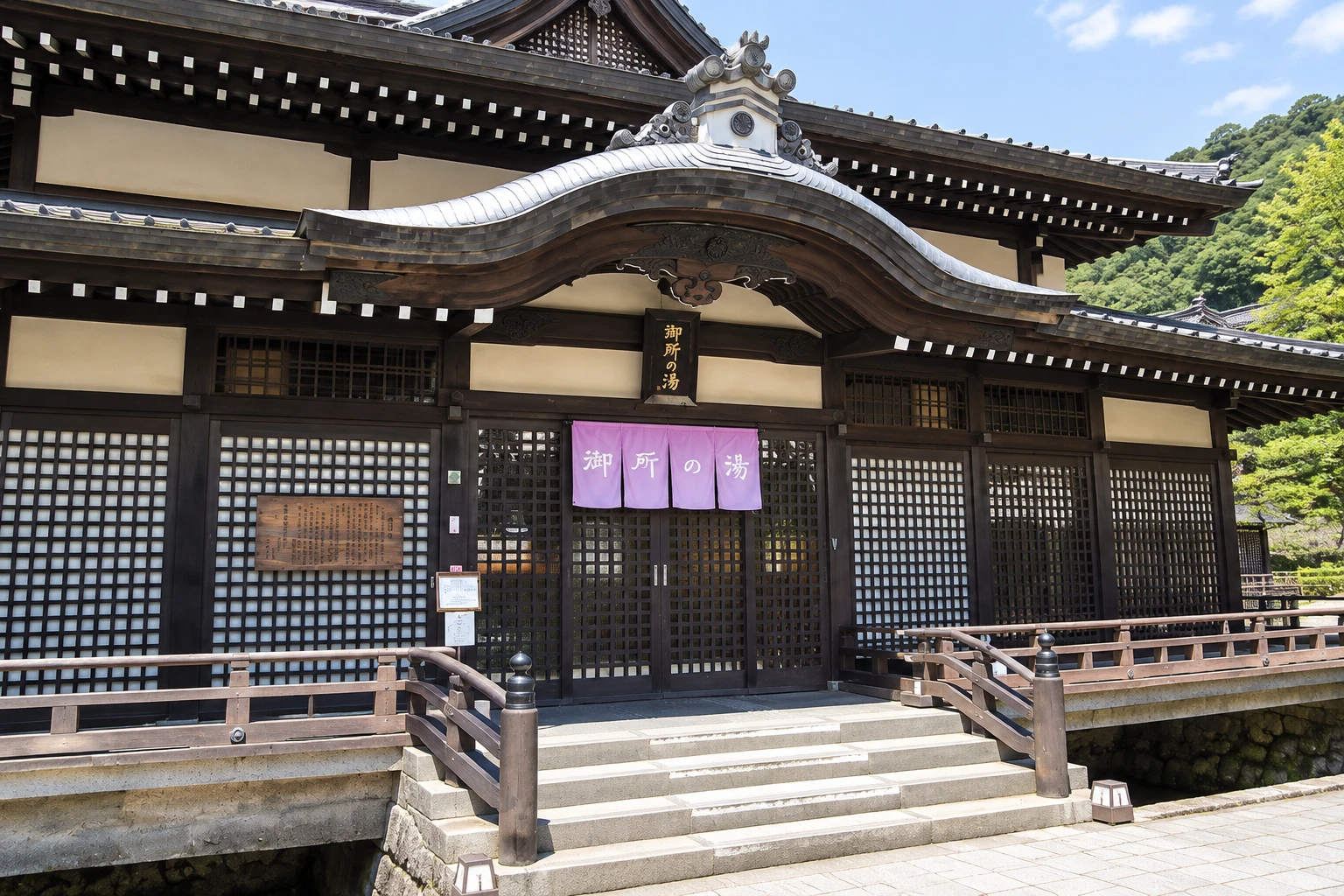
Hot-spring village · Toyooka, Japan
Kinosaki Onsen
Toyooka’s hot-spring neighborhood with seven public baths spread along a stream of stone bridges, frequented by visitors in yukata and wooden clogs.
Illustrative images. The pictures in this guide are illustrations based on the real place, not photographs, and may differ from it.

A look at the place
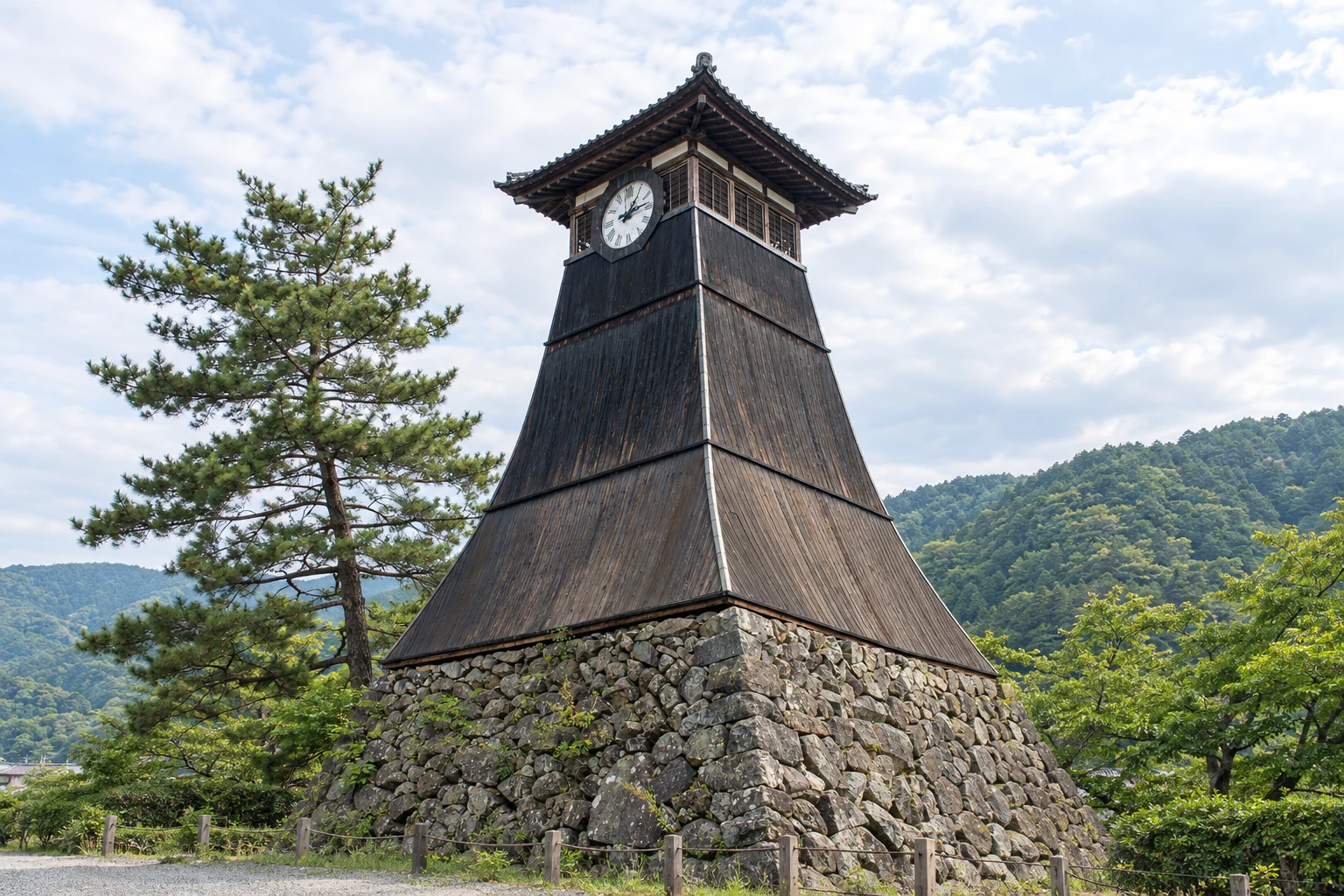
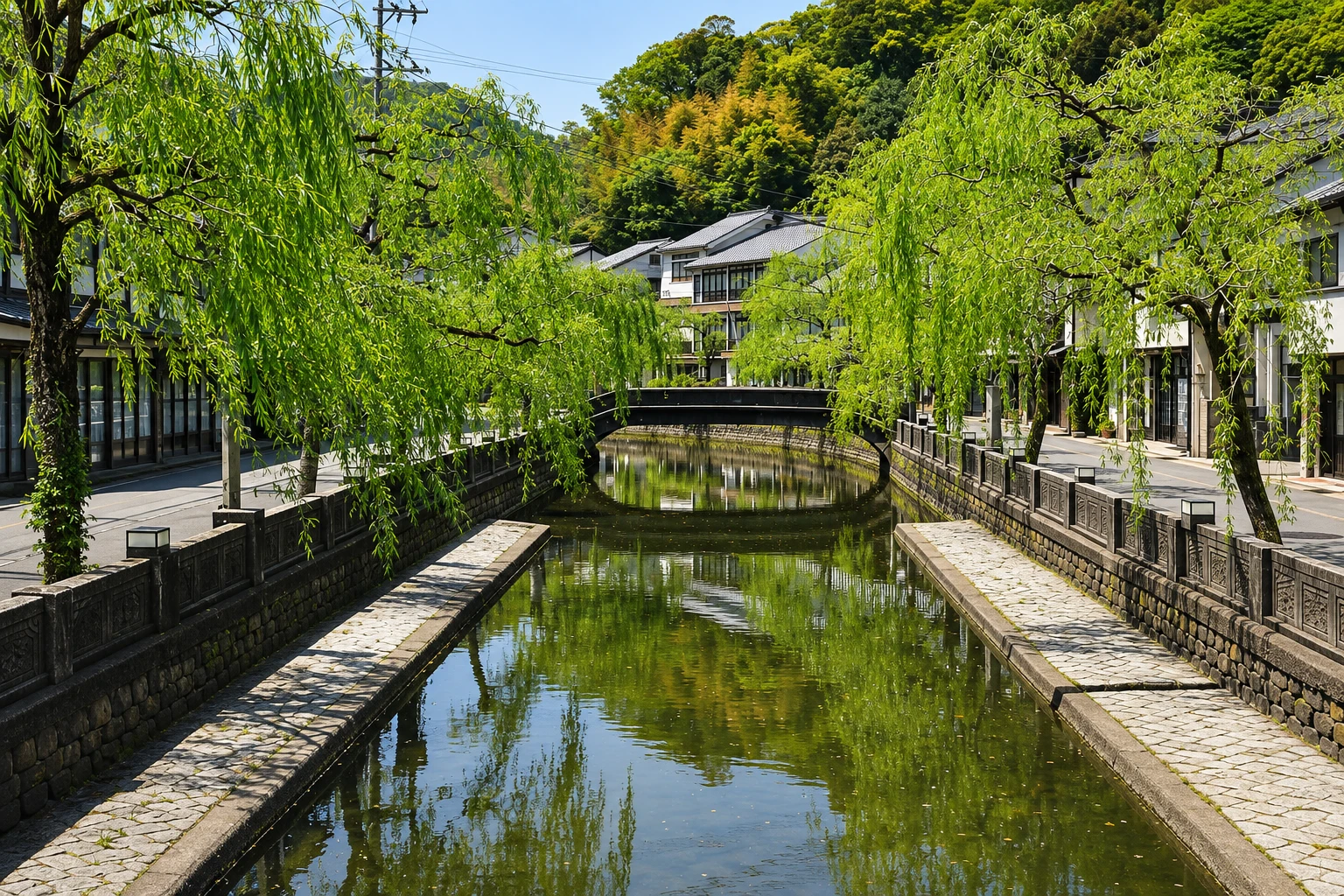
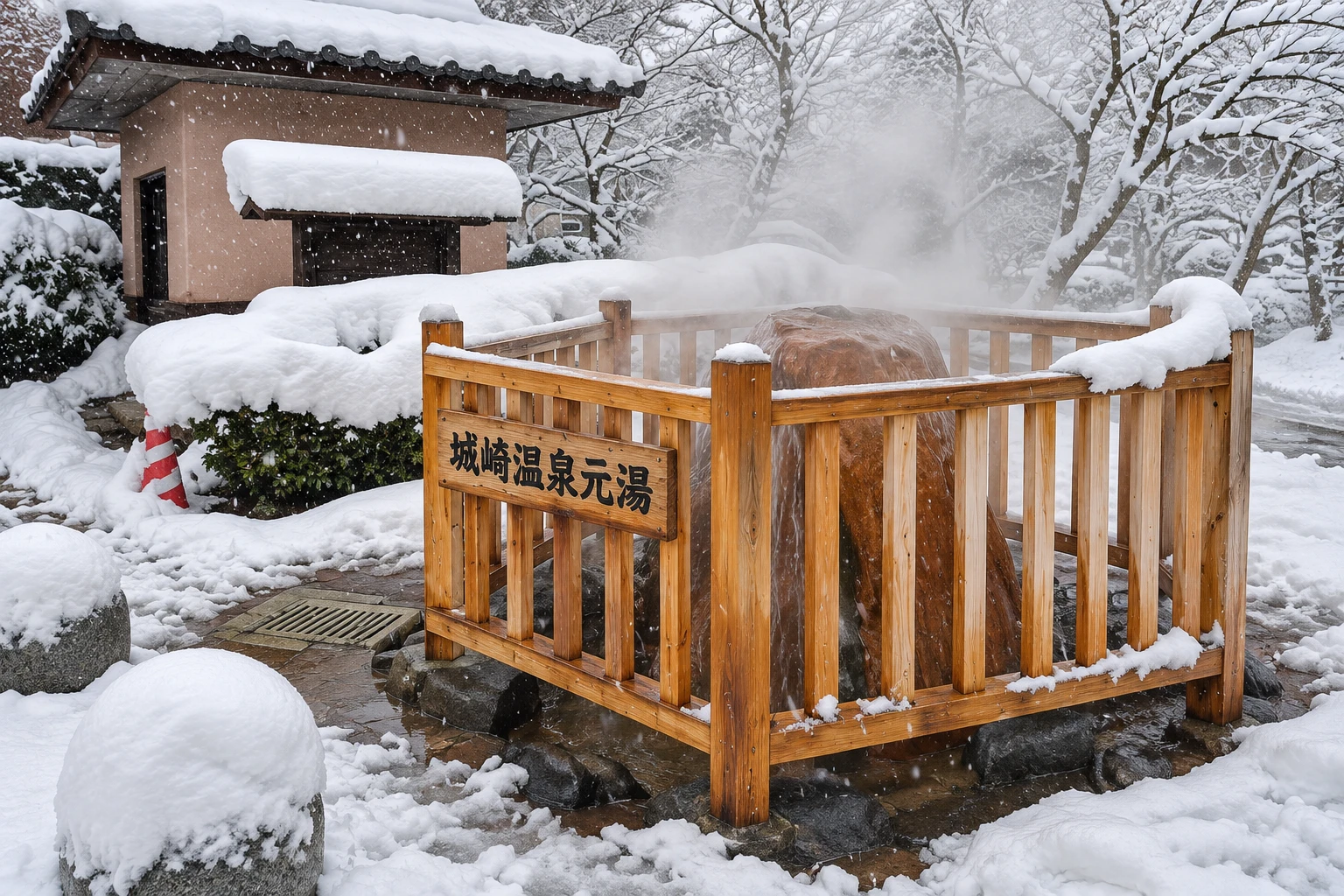
Kinosaki Onsen in pictures
These pictures are illustrations based on the real place, not photographs. They may differ from the place.
Click the picture to enlarge it.
Discover
About Kinosaki Onsen
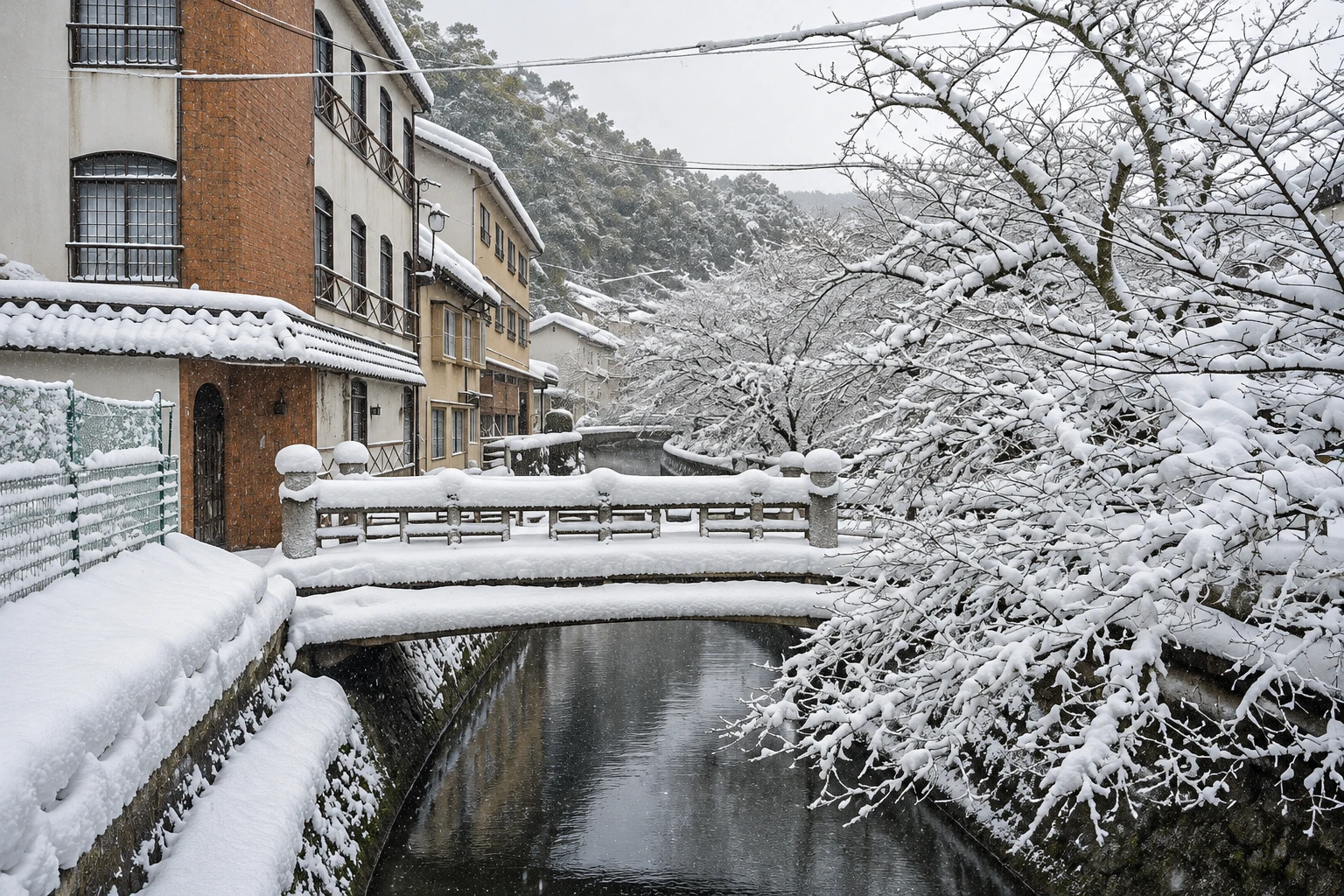
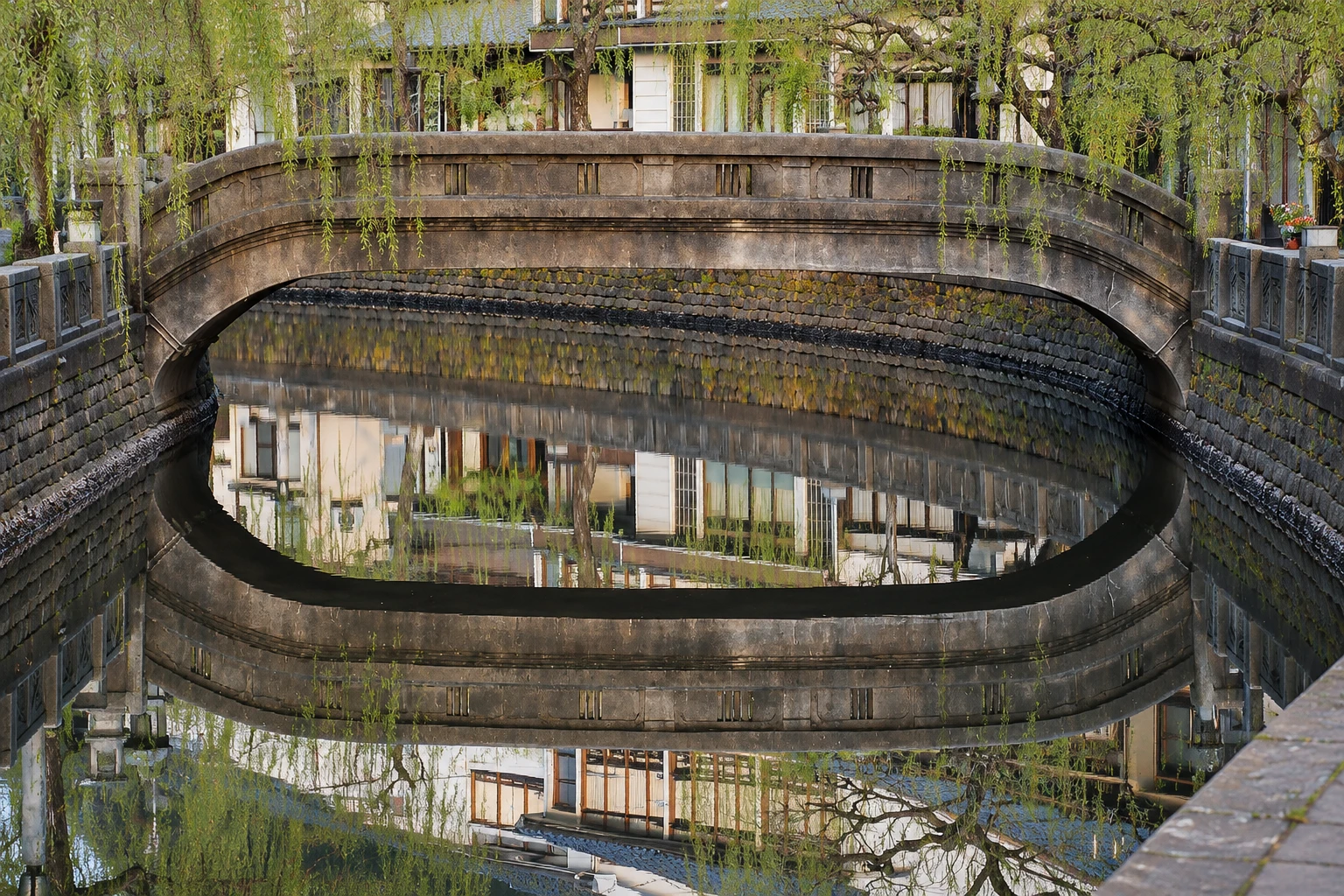
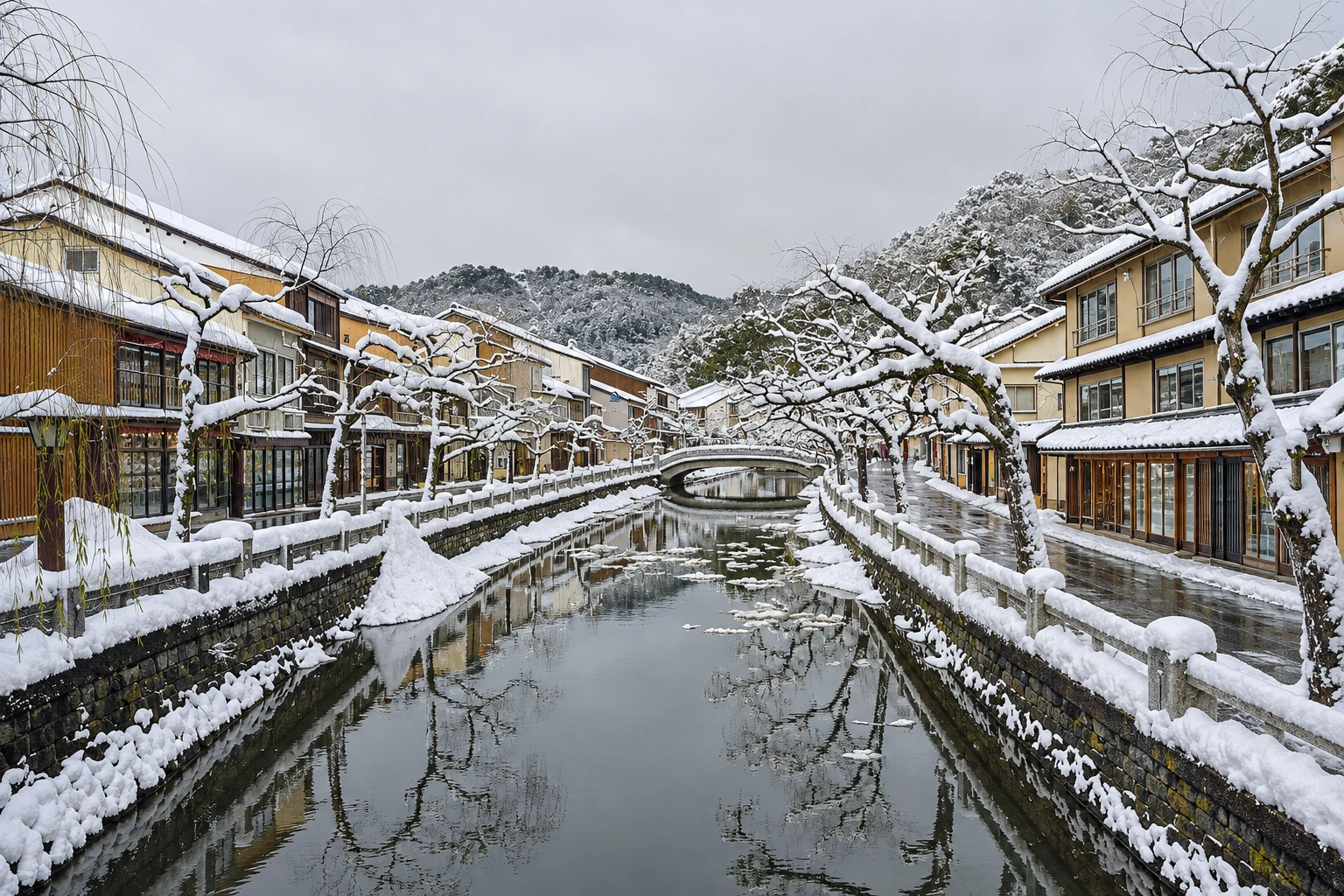
Kinosaki Onsen occupies a narrow valley a few kilometers from the mouth of the Maruyama River on the Sea of Japan. Tradition says the springs were discovered in the 8th century, and the village grew around them, with two- and three-story wooden ryokan along the Otani River, a shallow channel lined with willows, lanterns and arched stone bridges.
The core of the visit is the seven public baths, the sotoyu: Satono-yu, near the station, the largest; Jizo-yu; Yanagi-yu, small, beside a willow; Ichi-no-yu, with a bath inside a cave; Goshono-yu, with a waterfall behind the outdoor pool; Mandara-yu, with a cypress bath; and Kono-yu, the oldest, at the foot of the mountain. Each has its own opening hours and a different regular day off. Guests of village ryokan usually receive a pass valid for all baths; day visitors can buy a one-day pass.
Etiquette follows Japanese bathing custom: wash your body sitting at the showers before entering the water, do not take your towel into the pool, and enter naked, in gender-separated areas. Ryokan lend yukata and clogs, and the clack of clogs on the streets at night is part of the experience.
Between baths there are sweet and souvenir shops, shooting-gallery stalls and cafés. The village also has a small literature museum connected to Shiga Naoya and other writers who stayed here. In snow crab season, from November to March, fish shop windows fill with crabs.
Before you go
Practical information
Cidade Turismo reviews its information regularly, but something may have changed. Check with the place before planning your trip.
How much time to set aside
Half a day to one day, with an overnight stay to enjoy the baths at night.
Best time
Late afternoon and evening, when visitors stroll in yukata. In winter, for the crab and the village under snow. Each bath closes one day a week on different days; check in advance.
How to get there
From Kinosaki Onsen station, the first bath, Satono-yu, is next door, and the village center is about a 10-minute walk. The station is about 10 minutes by train from Toyooka.
Tip
Bring a small bag with a towel and the pass: the baths provide soap and shampoo but generally do not lend towels. Start with the more distant baths and finish near your ryokan.
Official website
Your questions
Frequently asked questions about Kinosaki Onsen
How many public bathhouses are there in Kinosaki Onsen?
Seven: Satono-yu, Jizo-yu, Yanagi-yu, Ichi-no-yu, Goshono-yu, Mandara-yu and Kono-yu.
How does the Kinosaki bathhouse pass work?
Guests staying at ryokan in the village usually receive a pass for all the baths during their stay. Visitors who are not staying overnight buy a day pass.
Do I need a yukata to walk around Kinosaki?
It’s not mandatory, but it’s customary. Ryokan lend yukata and wooden sandals, and there are shops that rent them to people who come just for the day.
Are Kinosaki’s bathhouses open every day?
Each one closes one day a week, on different days, so there are always baths open. Check the schedule beforehand.
Which is the oldest bathhouse in Kinosaki?
Kono-yu, at the foot of Mount Daishi, linked to the legend of the stork that revealed the village’s first spring.