

 Brazil
 Antarctica
 Argentina
 Bolivia
 Chile
 Colombia
 Ecuador
 Falkland Islands (Malvinas)
 French Guiana
 Guyana
 Paraguay
 Peru
 Suriname
 Uruguay
 Venezuela
 Austria
 Belgium
 Croatia
 Denmark
 Finland
 France
 Germany
 Greece
 Hungary
 Iceland
 Ireland
 Italy
 Luxembourg
 Norway
 Poland
 Portugal
 Slovakia
 Slovenia
 Spain
 Sweden
 Switzerland
 the Czech Republic
 the Netherlands
 the United Kingdom
 Turkey
 Bermuda
 Canada
 Greenland
 Mexico
 Saint Pierre and Miquelon
 the United States
 the Dominican Republic
 Egypt
 South Africa
 Australia
 Fiji
 New Zealand
 Papua New Guinea
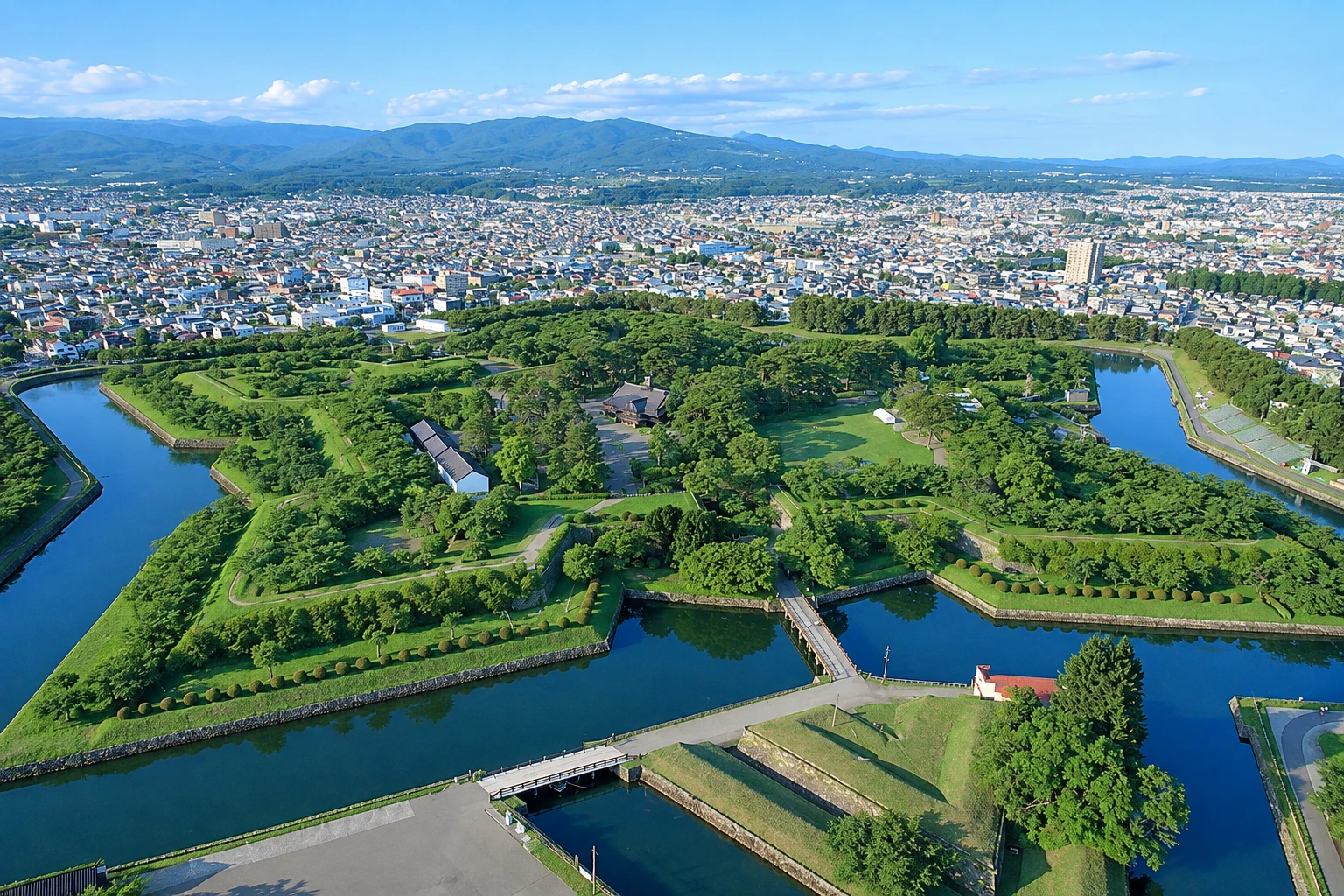
Fortress · Hakodate, Japan
Goryokaku
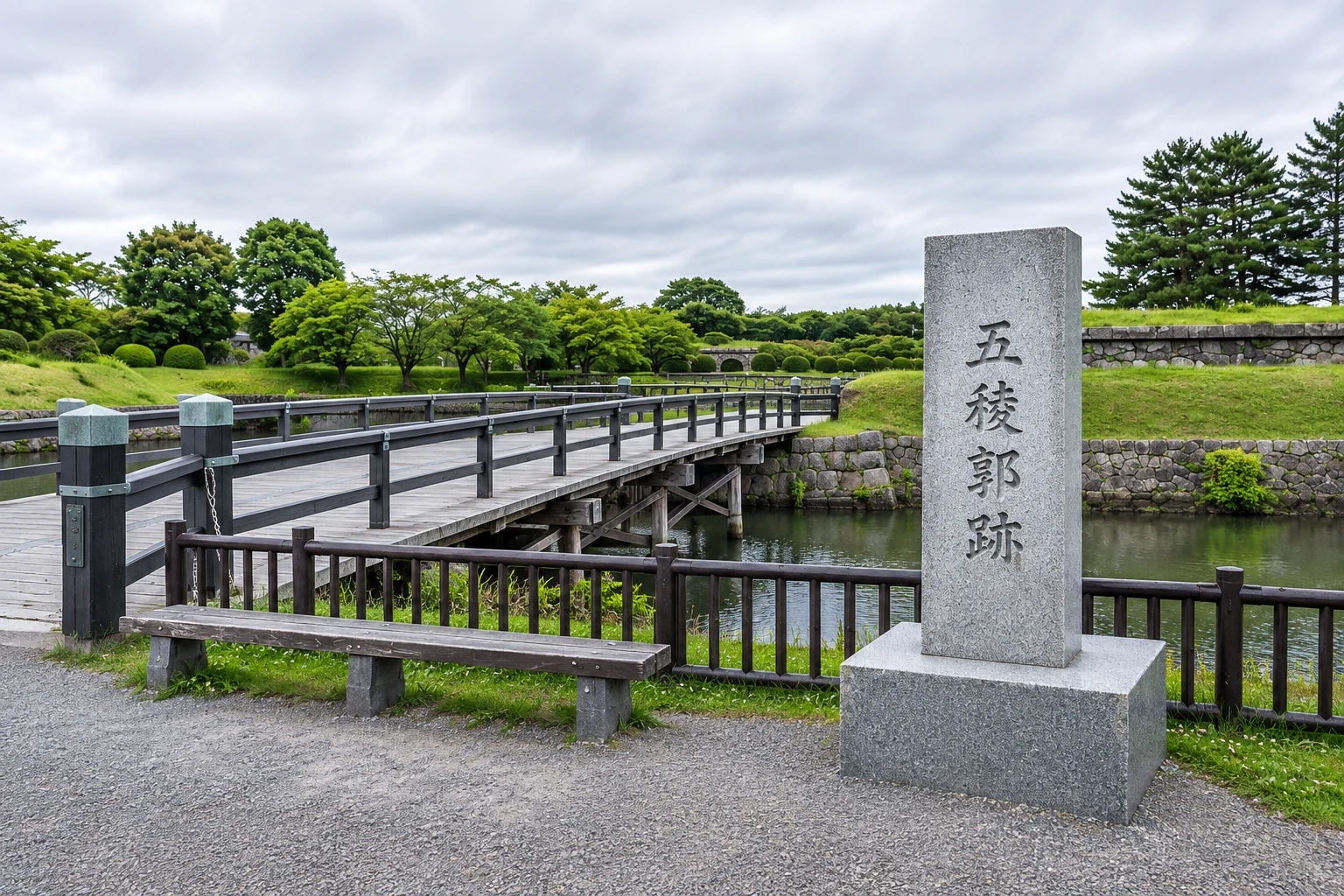
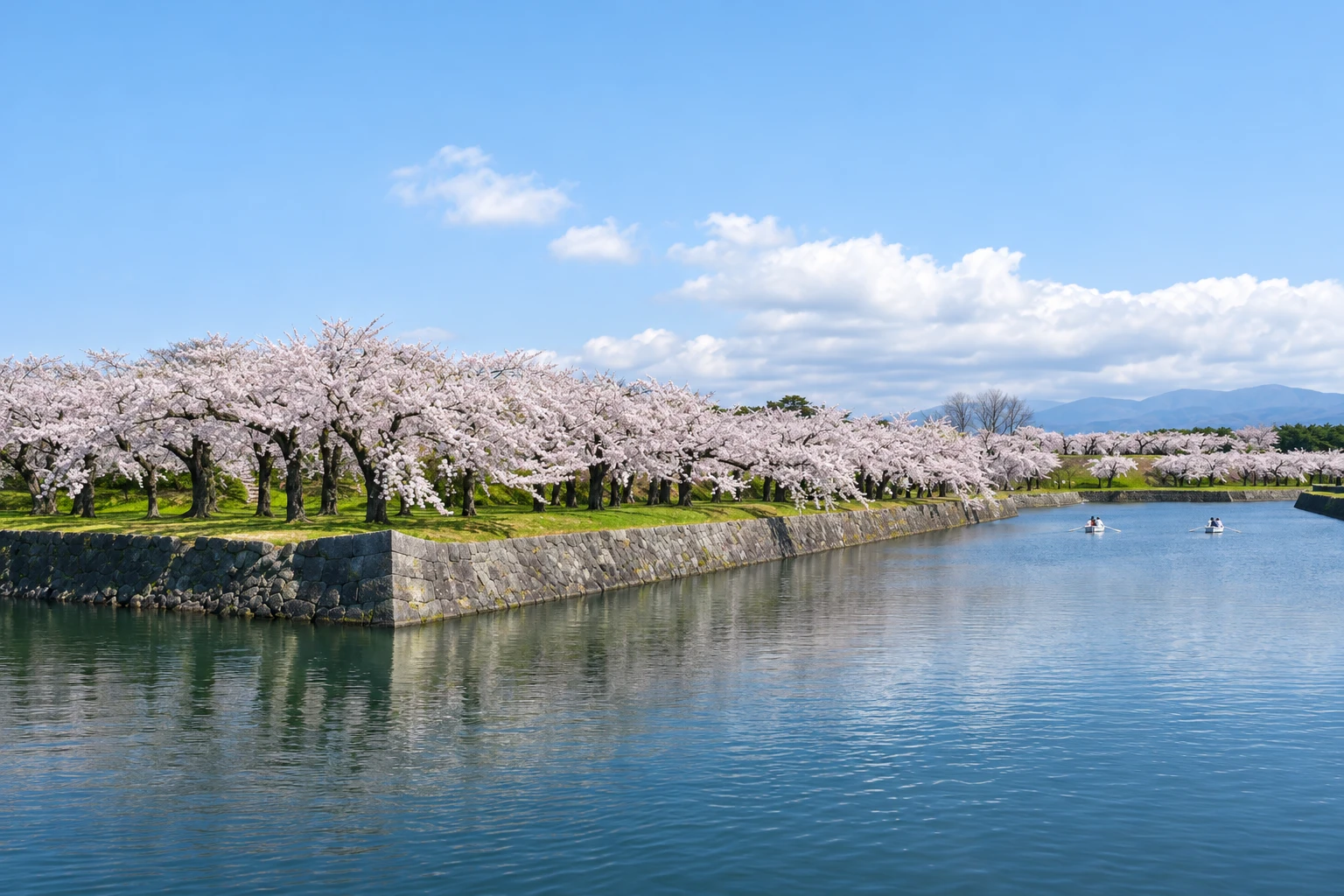
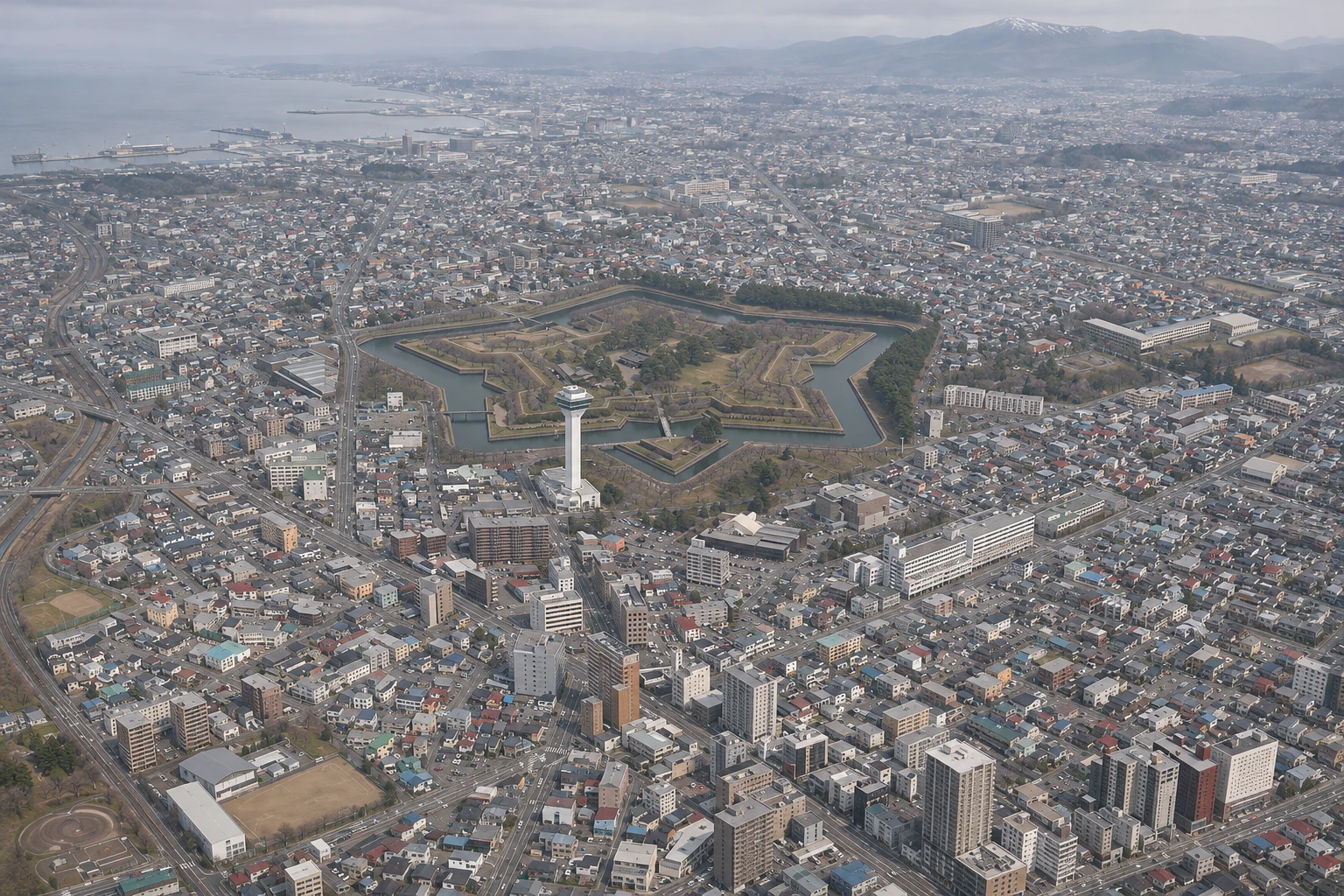
A five-pointed star-shaped fort completed in 1864, the last stronghold of shogunate forces in the Boshin War. Today it’s a park with moats, about 1,500 cherry trees and a replica of Hakodate’s magistrate’s office.
Illustrative images. The pictures in this guide are illustrations based on the real place, not photographs, and may differ from it.

A look at the place
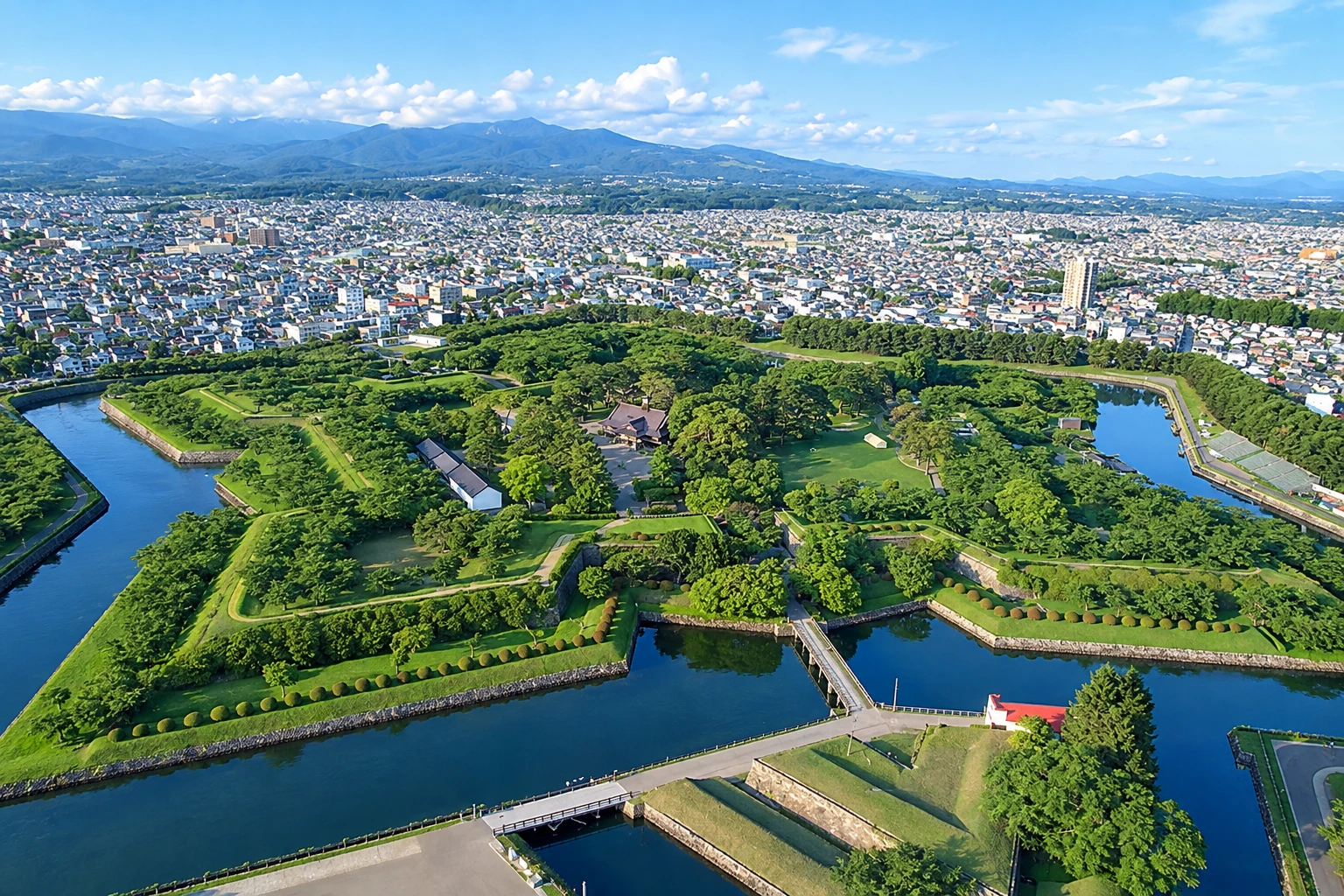
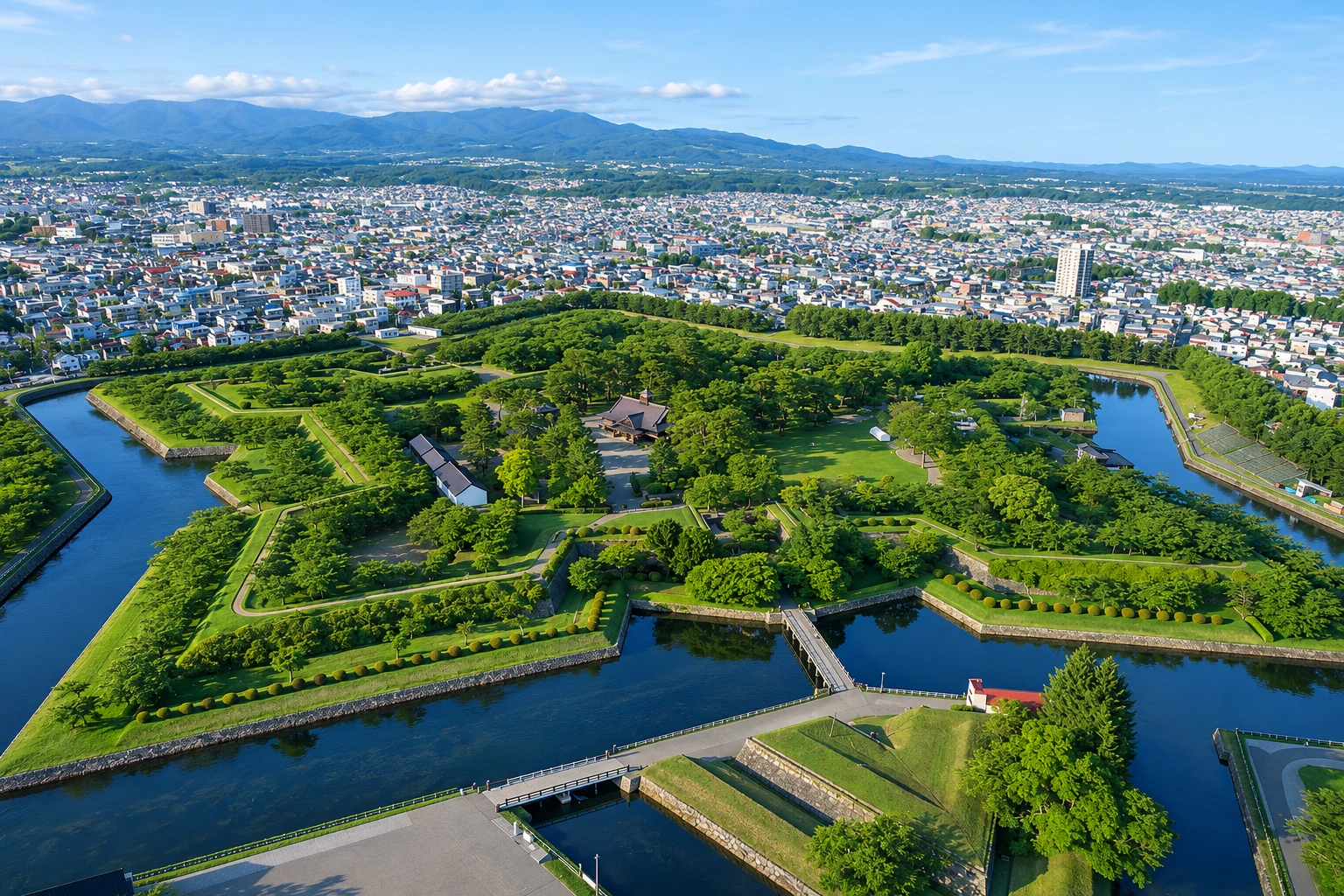
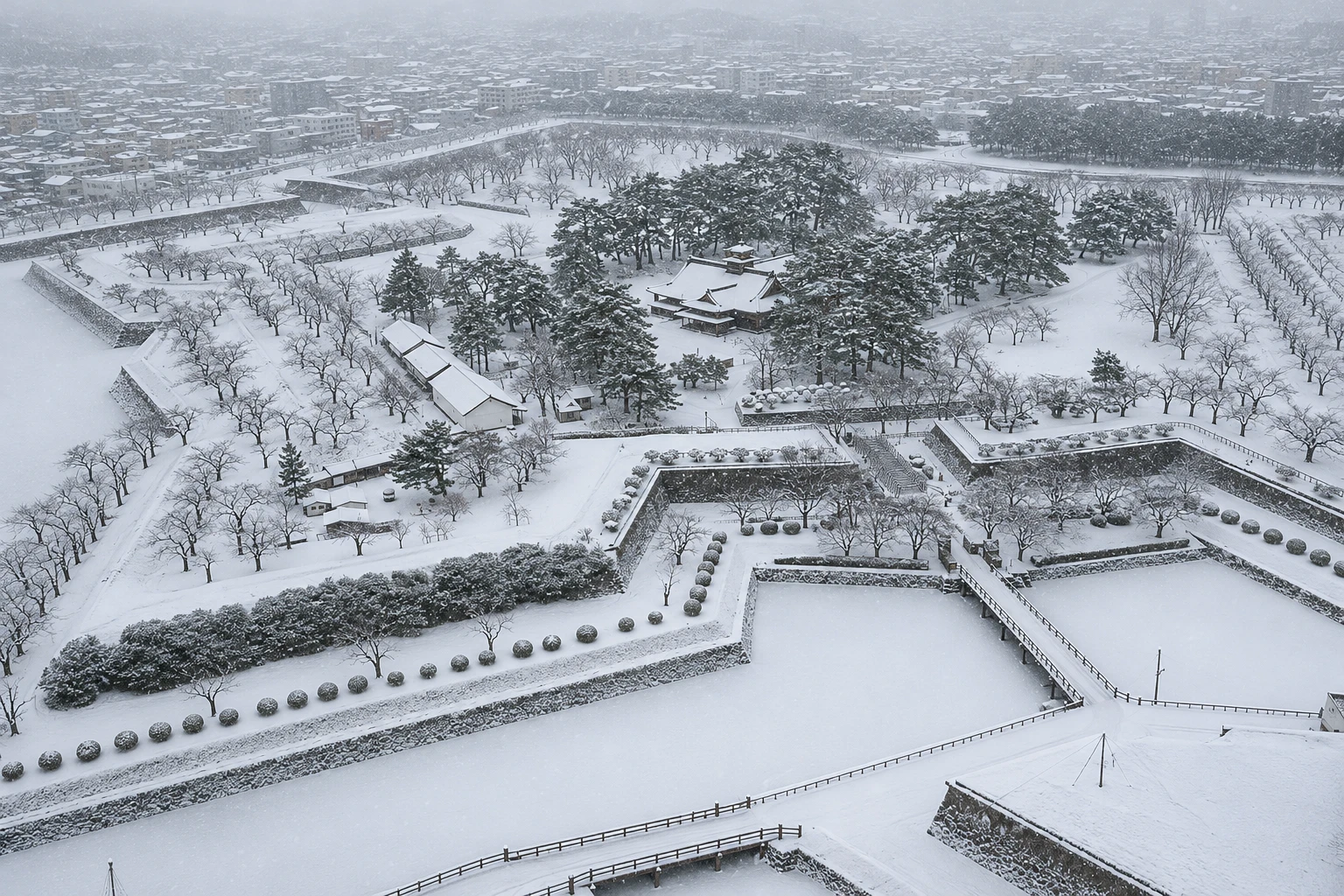
Goryokaku in pictures
These pictures are illustrations based on the real place, not photographs. They may differ from the place.
Click the picture to enlarge it.
Discover
About Goryokaku
Goryokaku was built between 1857 and 1864 by the Tokugawa shogunate to protect the recently opened port of Hakodate for foreign trade. The five-pointed star design follows the model of European fortresses, adapted by a Japanese scholar from Dutch books. Inside stood the Hakodate magistrate’s office, the regional administrative headquarters.
In 1868–1869, during the Boshin War, troops loyal to the shogunate occupied the fort and established their own government there, the so-called Republic of Ezo. They held out until May 1869, when they surrendered to the new Meiji government. Among the fighters was Hijikata Toshizo of the Shinsengumi, who died in Hakodate and is still remembered in the city.
Today the fort is a public park, surrounded by moats and stone walls. The magistrate’s office was rebuilt using traditional techniques and reopened as a museum, with tatami rooms and exhibits about the administration and the siege. About 1,500 cherry trees grow inside, usually blooming from late April to early May, and in winter the star’s outlines are lit at night.
Next to the park, the 107-meter Goryokaku Tower has an observatory from which you can see the fort’s full star shape and panels about its history. Pleasure boats run along the moats in spring and summer.
Before you go
Practical information
Cidade Turismo reviews its information regularly, but something may have changed. Check with the place before planning your trip.
How much time to set aside
1½ to 2 hours, including the tower and the magistrate’s office.
Best time
Late April to early May, when the cherry trees usually bloom; in autumn for fall color; and in winter when the star is illuminated at night. Go up the tower on a clear day.
How to get there
Get off at the Goryokaku-koen-mae tram stop and walk about 15 minutes. From Hakodate Station the tram takes about 15 minutes to the stop.
Tip
First go up the tower to understand the fort’s shape, then walk the walls to the magistrate’s office. The tower and the magistrate’s office charge separate admission; the park is free.
Official website
Your questions
Frequently asked questions about Goryokaku
Why is Goryokaku star-shaped?
The design follows European bastion fortifications, which removed blind spots for defense. It was adapted by a Japanese scholar from Dutch books in the 19th century.
From where can you see Goryokaku’s star shape?
From the Goryokaku Tower observation deck next to the park, at 107 meters high. From ground level the shape does not appear.
Do you have to pay to enter Goryokaku?
The park is open. Goryokaku Tower and the reconstructed magistrate’s office have separate paid tickets; check the current price list.
When do the cherry blossoms bloom in Goryokaku?
They usually bloom between late April and early May, with about 1,500 trees in the park. The date varies each year.