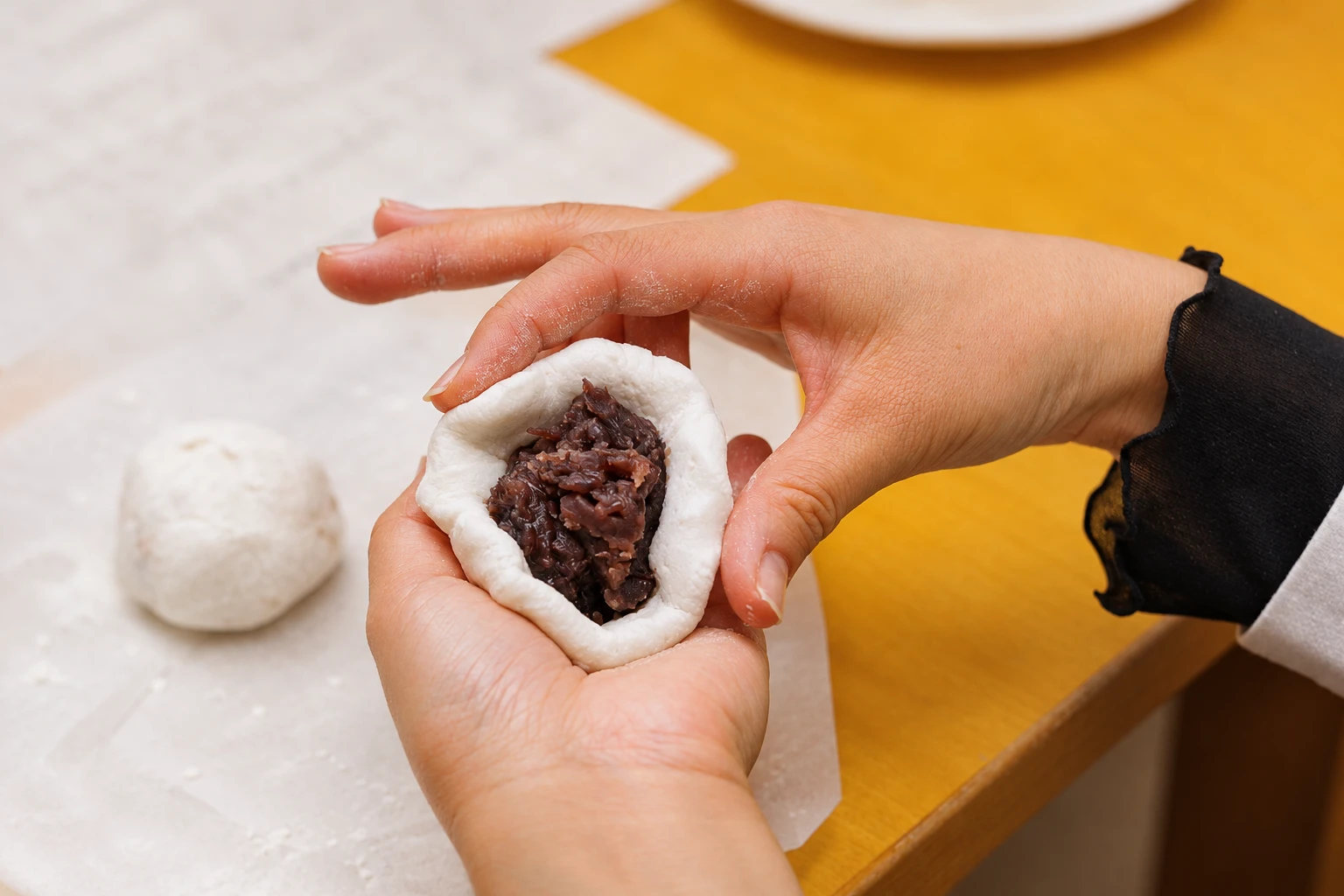
Umegae-mochi
Thin rice‑cake filled with sweet azuki bean paste and toasted on both sides in an iron mold stamped with a plum blossom, the symbol of Dazaifu Tenmangu shrine. It’s the sweet of the shrine avenue in Dazaifu.
Antarctica
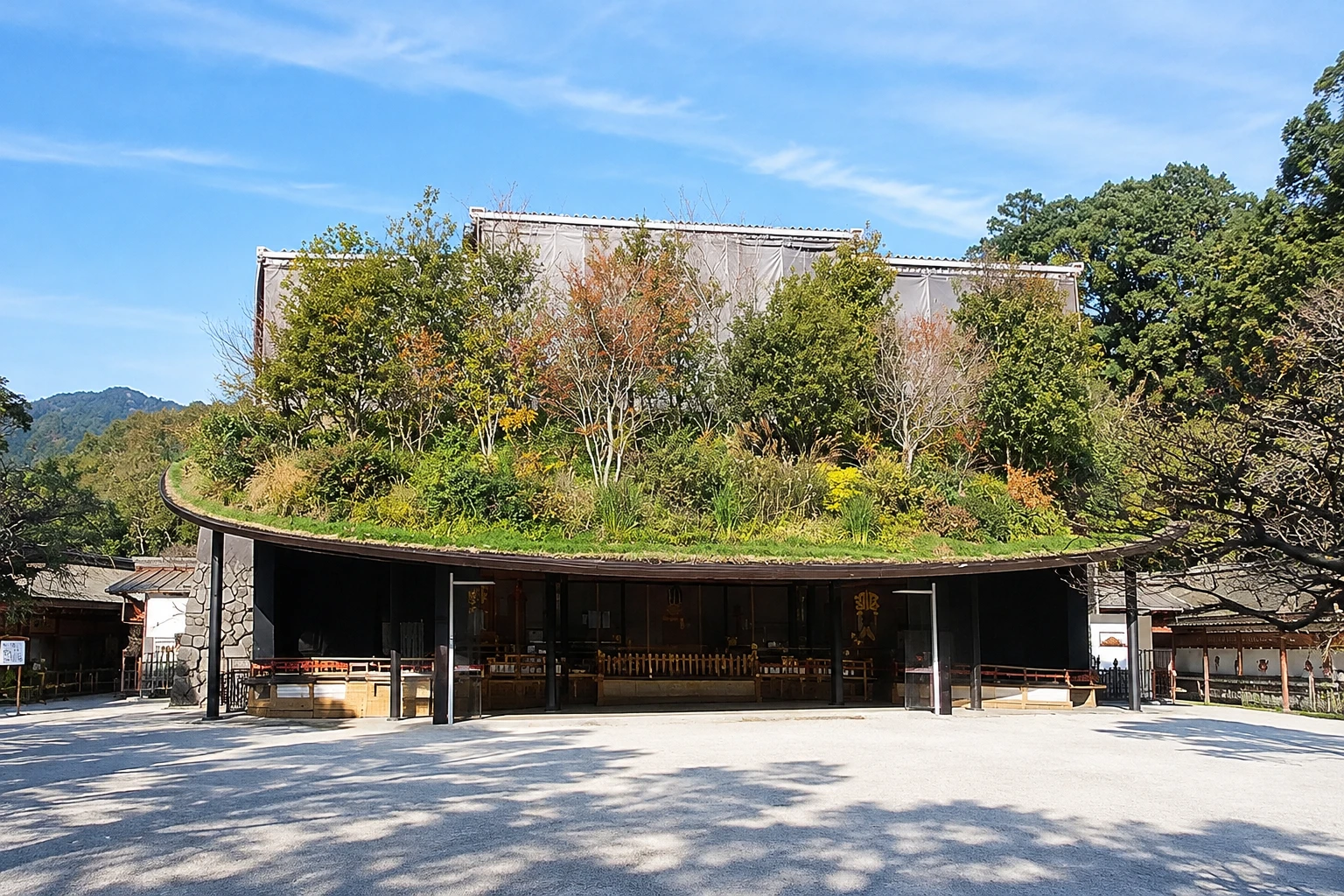
In the photo: Glass facade and undulating roof of the Kyushu National Museum.
Illustrative images. The pictures in this guide are illustrations based on the real place, not photographs, and may differ from it.
The city
Dazaifu is a city about 16 km from Fukuoka that for centuries was the administrative and military center of Kyushu. Today it is known for Dazaifu Tenmangu Shrine, dedicated to the deity of learning, with more than six thousand plum trees, and the Kyushu National Museum, about Japan’s cultural exchanges with Asia. The approach street to the shrine sells umegae-mochi, a traditional sweet.
There's no accommodation in the guide yet in Dazaifu.
Do you run a hotel, guesthouse or vacation rental here? List itThere are no restaurants in the guide yet in Dazaifu.
Know a good one? Recommend it to usThe city's hotels and restaurants on the map.
how to get there · how many days · itinerary · questions
Flavors of Japan
The local experience
Sanctuary built over the tomb of Sugawara no Michizane, a 9th-century scholar venerated as the god of learning. It has a main hall from the 16th century, arched bridges over a pond, and more than six thousand plum trees.
One of Japan’s four national museums, dedicated to cultural exchanges between Japan and Asia, in a wave-shaped glass building on the Dazaifu hills, connected to the shrine by a walkway.
Before you go
Dazaifu – Japan Destination Fukuoka (Fukuoka); Dazaifu (Dazaifu) about 17 km from Fukuoka
Approximate distances. Check flights and bus, train or boat schedules before you travel.
From Tenjin in Fukuoka, Nishitetsu trains reach Dazaifu Station in about 30 minutes with a transfer at Futsukaichi; at certain times there are direct trains. Buses run from Hakata Station and from Fukuoka Airport.
Half a day for the shrine, the approach street and the museum; a full day to include Komyozen-ji Temple and the ruins of the old government office.
From February to early March, when the plum trees usually bloom; at the end of March, the cherry trees. November brings colored leaves at Komyozen-ji. Students fill the shrine during entrance exam season, from January to March.
The seasons shown are the most usual ones; nature doesn't always follow the calendar.
No. The shrine, the museum and Komyozen-ji are within walking distance of Dazaifu Station.
Suggested itinerary
Built with the places on this page. No rush: it's paced so you have time to see them.
Walk up the approach street, cross the arched bridges over Shinji-ike Pond and arrive at the main hall, with the sacred plum tree Tobiume beside it.
Follow the illuminated walkway to the Kyushu National Museum and, on the return, stop by the dry garden of Komyozen-ji Temple.
Try the hot umegae-mochi on the approach street before the shops close and return to Fukuoka by train.
Check before you go. Opening hours and days change, and places may close for renovations, holidays or events. This itinerary is a suggestion from Cidade Turismo, not a commitment: plan yours by checking directly with each place you intend to visit.
Before you go
A rice cake filled with sweet bean paste, grilled on a hot plate with the imprint of a plum blossom, sold on the approach street to the shrine.
For the shrine and the museum, half a day is sufficient. A full day allows you to include Komyozen-ji, the ruins of the old Dazaifu government office and Kanzeon-ji Temple.
By Nishitetsu train from Tenjin in about 30 minutes with a transfer at Futsukaichi, or by bus from Hakata.
The seat of the regional government that administered Kyushu and relations with the continent from the 7th to the 12th century. The ruins of the government building are about 2 km from the shrine.