Matsuyama · Japan · Castle
Matsuyama Castle
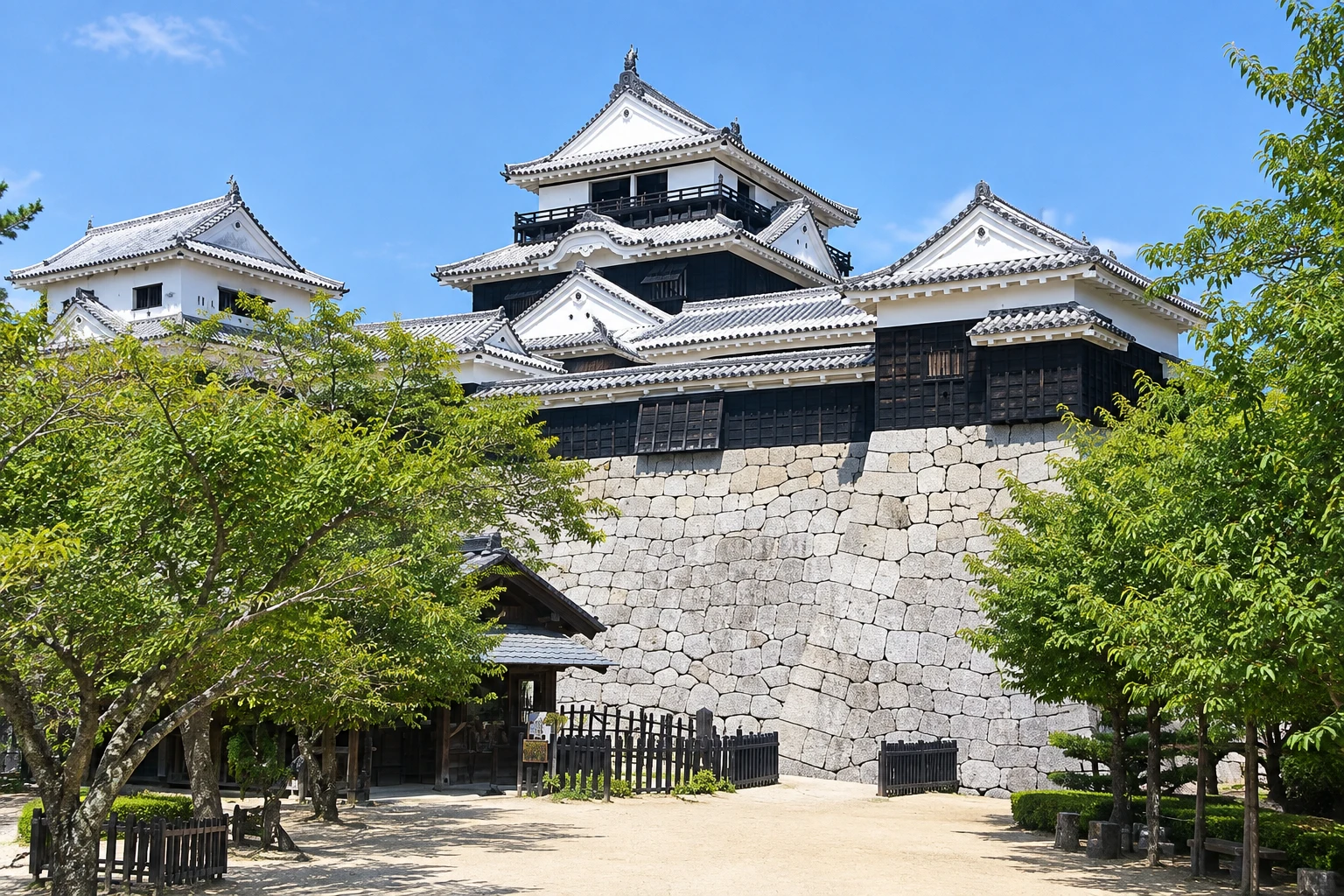
One of the twelve Japanese castles with an original main keep, on top of Mount Katsuyama in the city center; you can reach it by ropeway or gondola and see the Inland Sea from above.

 Search
 Brazil
 Antarctica
 Argentina
 Bolivia
 Chile
 Colombia
 Ecuador
 Falkland Islands (Malvinas)
 French Guiana
 Guyana
 Paraguay
 Peru
 Suriname
 Uruguay
 Venezuela
 Austria
 Belgium
 Croatia
 Denmark
 Finland
 France
 Germany
 Greece
 Hungary
 Iceland
 Ireland
 Italy
 Luxembourg
 Norway
 Poland
 Portugal
 Slovakia
 Slovenia
 Spain
 Sweden
 Switzerland
 the Czech Republic
 the Netherlands
 the United Kingdom
 Turkey
 Bermuda
 Canada
 Greenland
 Mexico
 Saint Pierre and Miquelon
 the United States
 the Dominican RepublicJapanTurkey
 Egypt
 South Africa
 Australia
 Fiji
 New Zealand
 Papua New Guinea
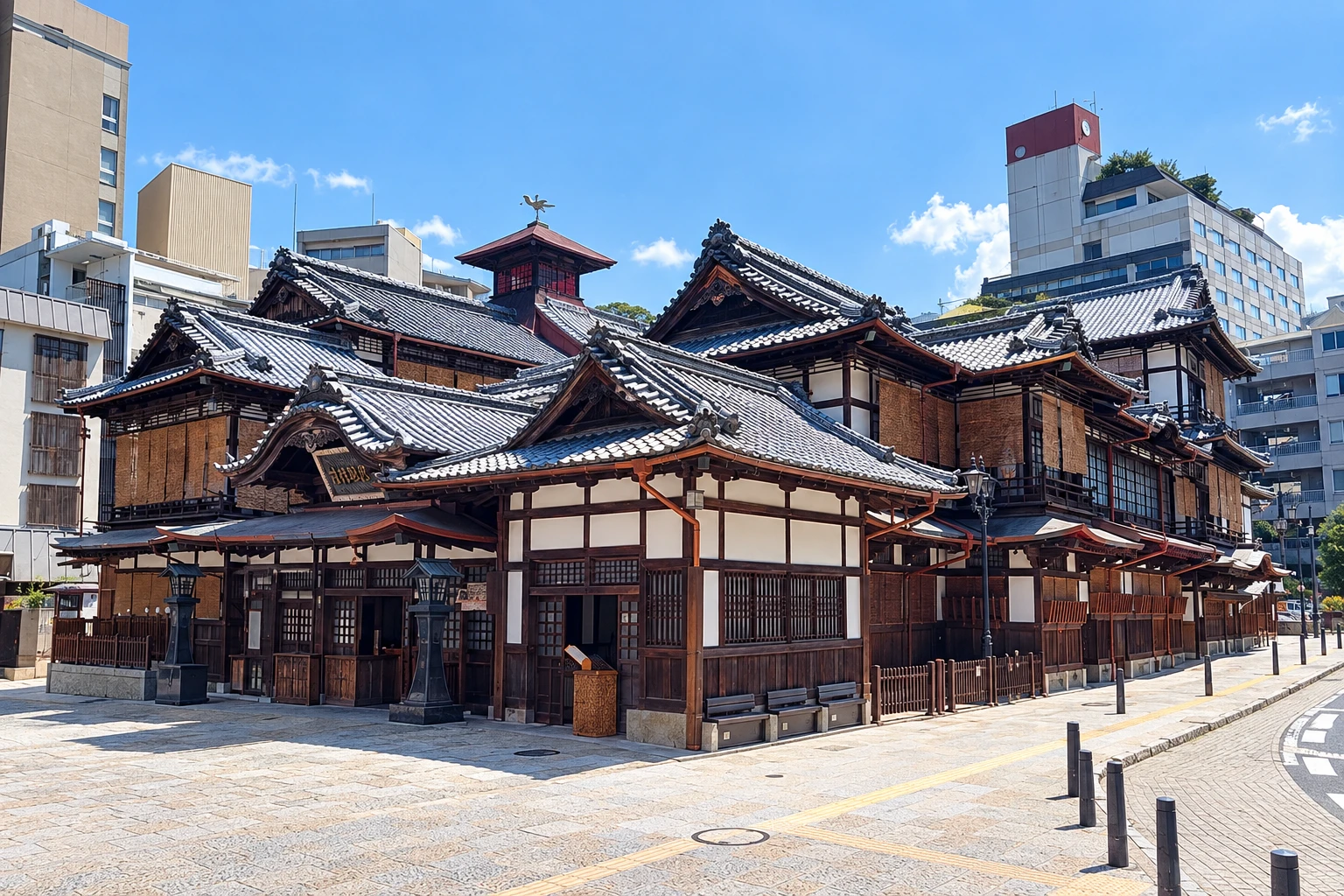
In the photo: Dogo Onsen Honkan building in Matsuyama
Illustrative images. The pictures in this guide are illustrations based on the real place, not photographs, and may differ from it.

The city
Largest city on Shikoku and the capital of Ehime, Matsuyama has the original castle atop Mount Katsuyama, the Dogo Onsen bathhouse from 1894, the Ishite-ji temple on the Shikoku pilgrimage, and trams that connect the station, downtown and Dogo. It is the city of the novel Botchan and of the poet Masaoka Shiki.
There's no accommodation in the guide yet in Matsuyama.
Tem hotel, pousada ou casa de temporada aqui? Cadastre a suaThere are no restaurants in the guide yet in Matsuyama.
Know a good one? Recommend it to usHotéis e restaurantes da cidade no mapa.
how to get there · how many days · itinerary · questions
The local experience
One of the twelve Japanese castles with an original main keep, on top of Mount Katsuyama in the city center; you can reach it by ropeway or gondola and see the Inland Sea from above.
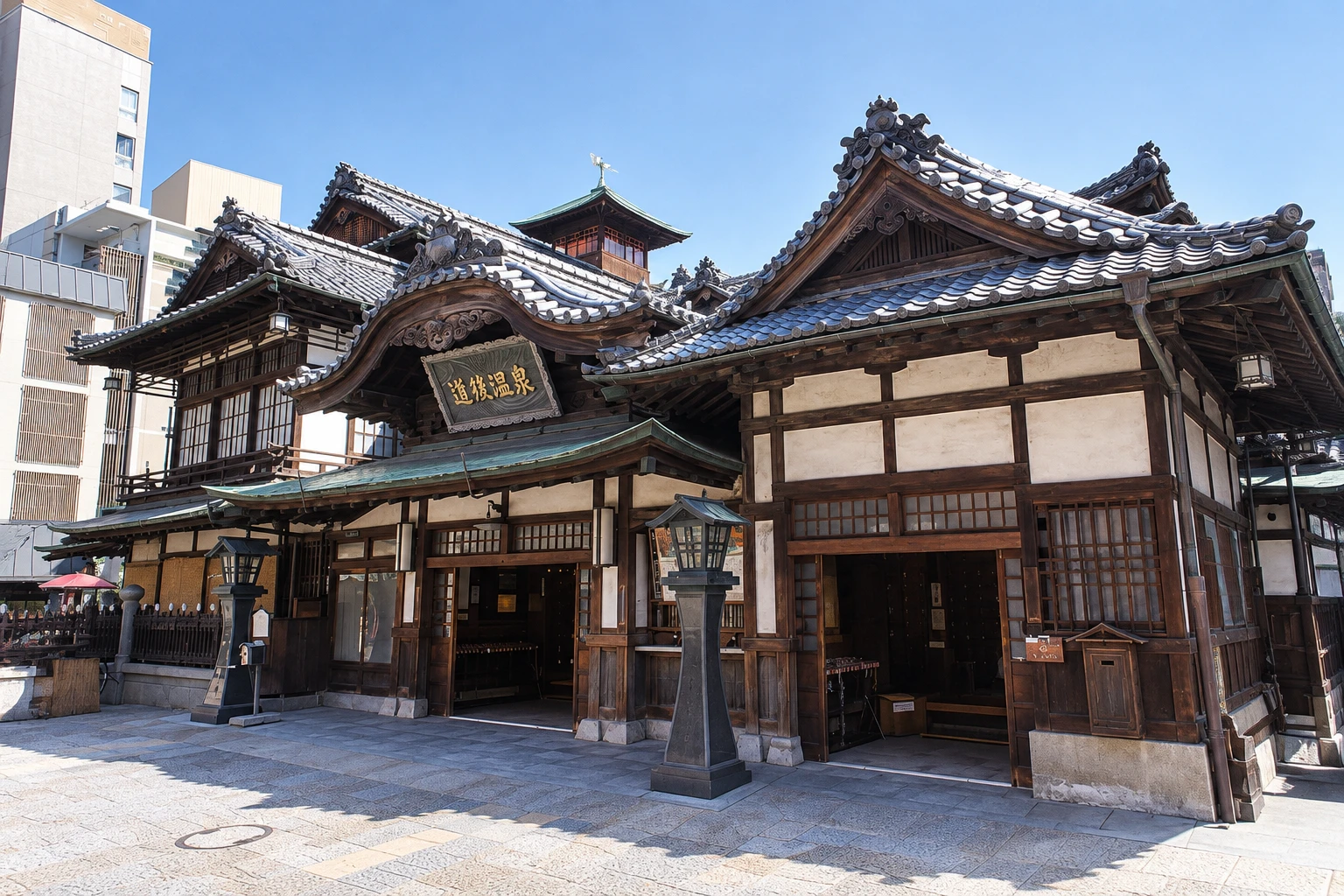
A wooden public bathhouse from 1894 in Dogo Onsen, one of Japan’s oldest hot springs; it has resting rooms, an imperial room and a drum that marks the mornings.
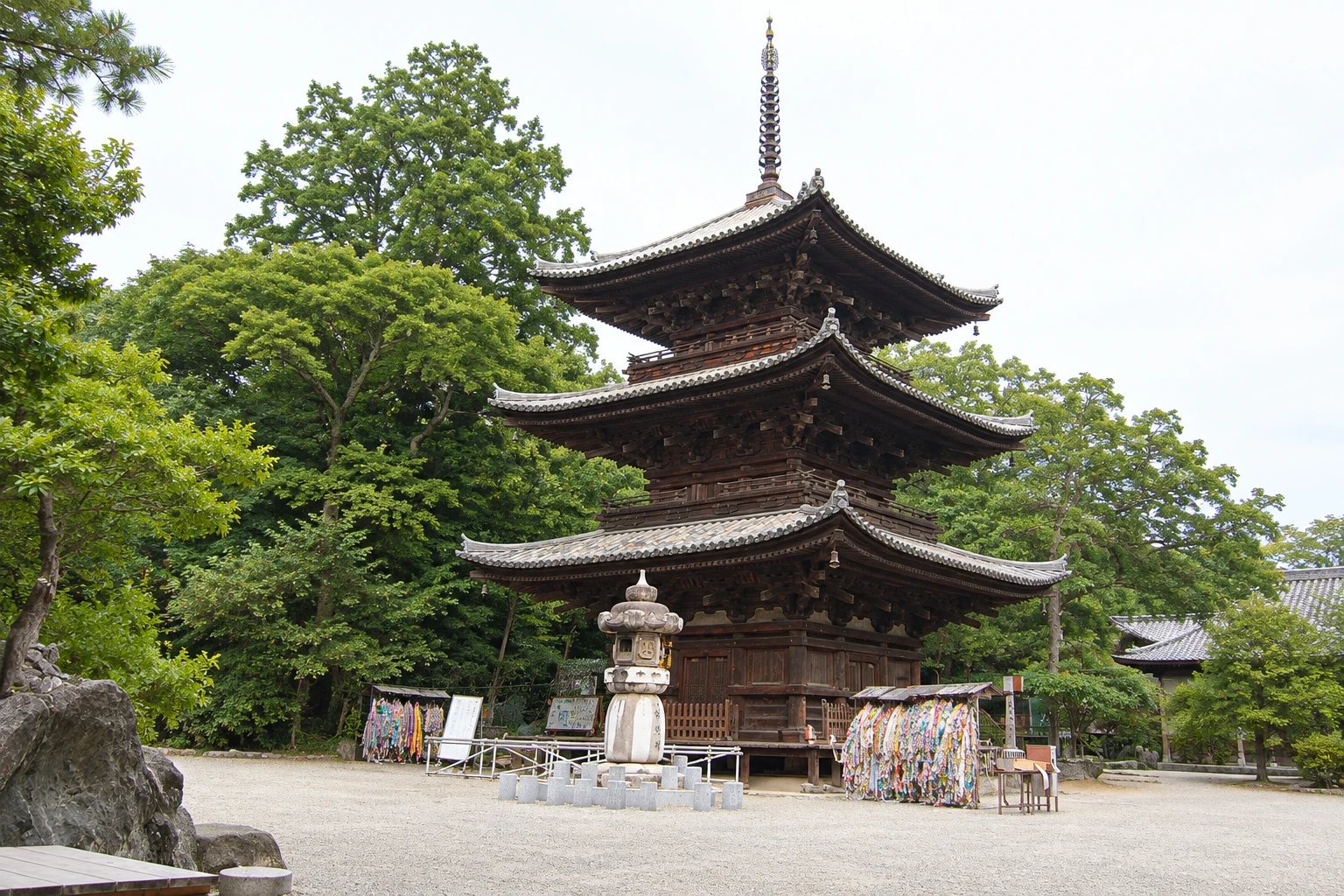
Temple 51 of the Shikoku 88-temple pilgrimage, near Dogo Onsen, with a 14th-century Niomon gate, a National Treasure, a three-story pagoda and a dark cave behind the courtyard.
Before you go
Matsuyama – Japan Destination Matsuyama and Shimanami Kaidō Capital
Approximate distances. Check flights and bus, train or boat schedules before you travel.
JR Matsuyama Station is served by the Shiokaze express from Okayama in about 2 hours 45 minutes, and by trains from Takamatsu and Uwajima. Matsuyama Airport is about 6 km away, with buses to the station, downtown and Dogo. Matsuyama Port receives boats from Hiroshima.
A full day covers the castle, Ishite-ji and Dogo Onsen, ending with a bath in the late afternoon. An overnight stay at a ryokan in Dogo lets you wear a yukata while walking the streets of the hot-spring area.
Cherry trees on the castle hill usually bloom between late March and the first days of April. Autumn brings mild days and the mikan (mandarin) season from November onwards. June and July concentrate the rainy season, and summers are humid.
The seasons shown are the most usual ones; nature doesn't always follow the calendar.
No. Iyotetsu trams link JR Station, downtown and Dogo Onsen, and the castle has a ropeway and a gondola. The airport has direct buses.
Suggested itinerary
Built with the places on this page. No rush: it's paced so you have time to see them.
Take the ropeway or the gondola from Ropeway Street up to the castle and visit the original keep, which offers views over the city and the Inland Sea.
Have lunch downtown, then take a tram and walk to Ishite-ji temple, with its 14th-century gate and a cave behind the courtyard.
Descend to Dogo, stroll through the shopping arcade and bathe at the Honkan bathhouse or the Asuka-no-yu annex.
Dine on tai-meshi (sea bream rice) and see the Botchan Karakuri clock in Dogo Station Square, which usually moves with mechanical figures every hour.
Check before you go. Opening hours and days change, and places may close for renovations, holidays or events. This itinerary is a suggestion from Cidade Turismo, not a commitment: plan yours by checking directly with each place you intend to visit.
Before you go
By Iyotetsu tram, in about 25 minutes, to Dogo Onsen Station, which is a few minutes’ walk from the bathhouse.
Tai-meshi (sea bream rice); jakoten, fried fish fritters; the three-colored sweet botchan dango; and Ehime’s mikan and juices.
A Matsuyama poet who renewed haiku at the end of the 19th century. The city has a museum dedicated to him near Dogo, and mailboxes where you can send haiku.
Yes, eight of the 88 temples are within the municipality. Ishite-ji, near Dogo, is the most visited.