Things to do in Okinawa (Japan) — Naha; Onna; Motobu
10 places to visit, chosen by the Cidade Turismo guide.
Illustrative images. The pictures in this guide are illustrations based on the real place, not photographs, and may differ from it.
To start
The 10 main places Okinawa (Japan) — Naha; Onna; Motobu
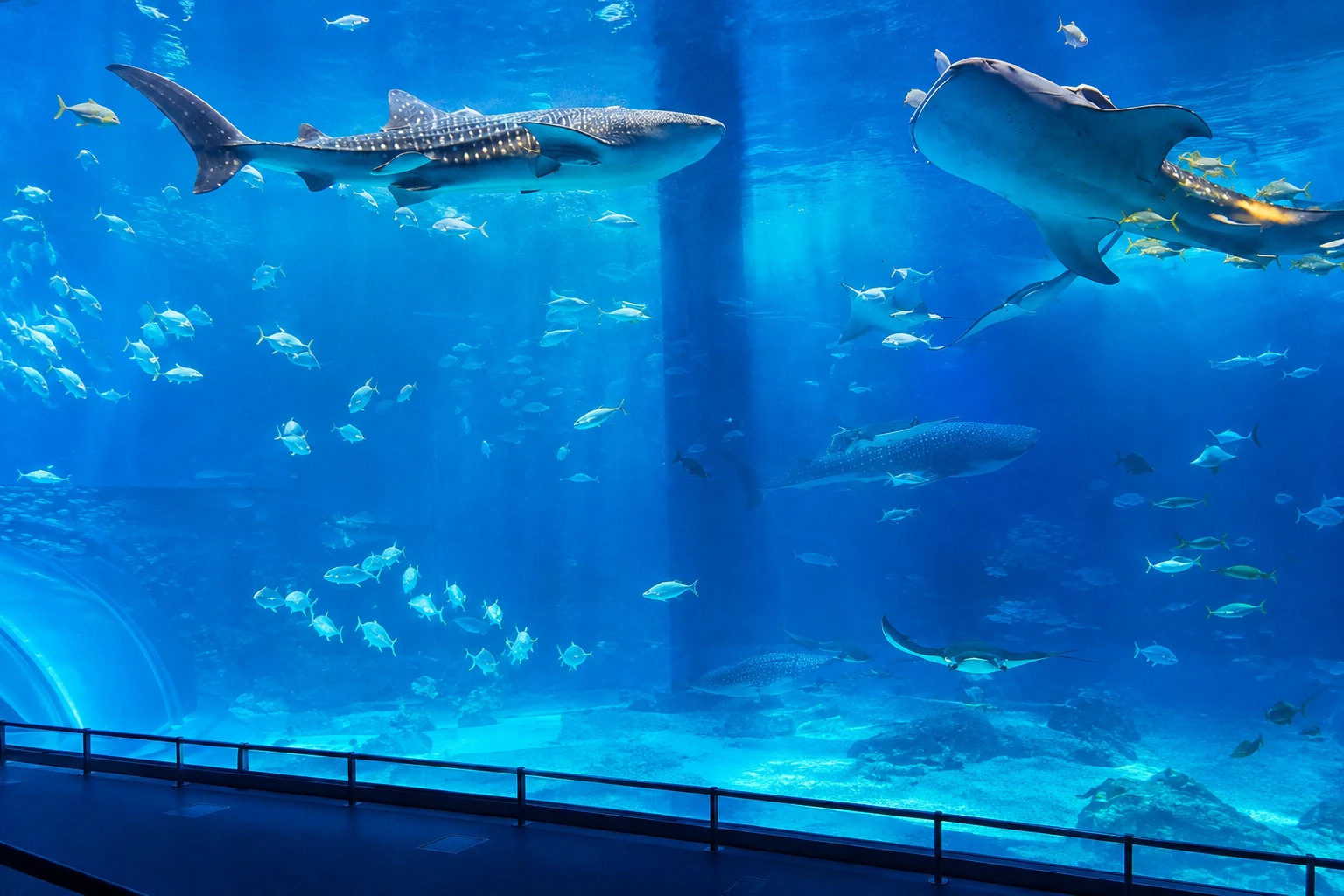
Okinawa Churaumi Aquarium · MotobuAn aquarium in the Ocean Expo Park in Motobu, dedicated to the waters of Okinawa, from the coral reef to the deep sea.
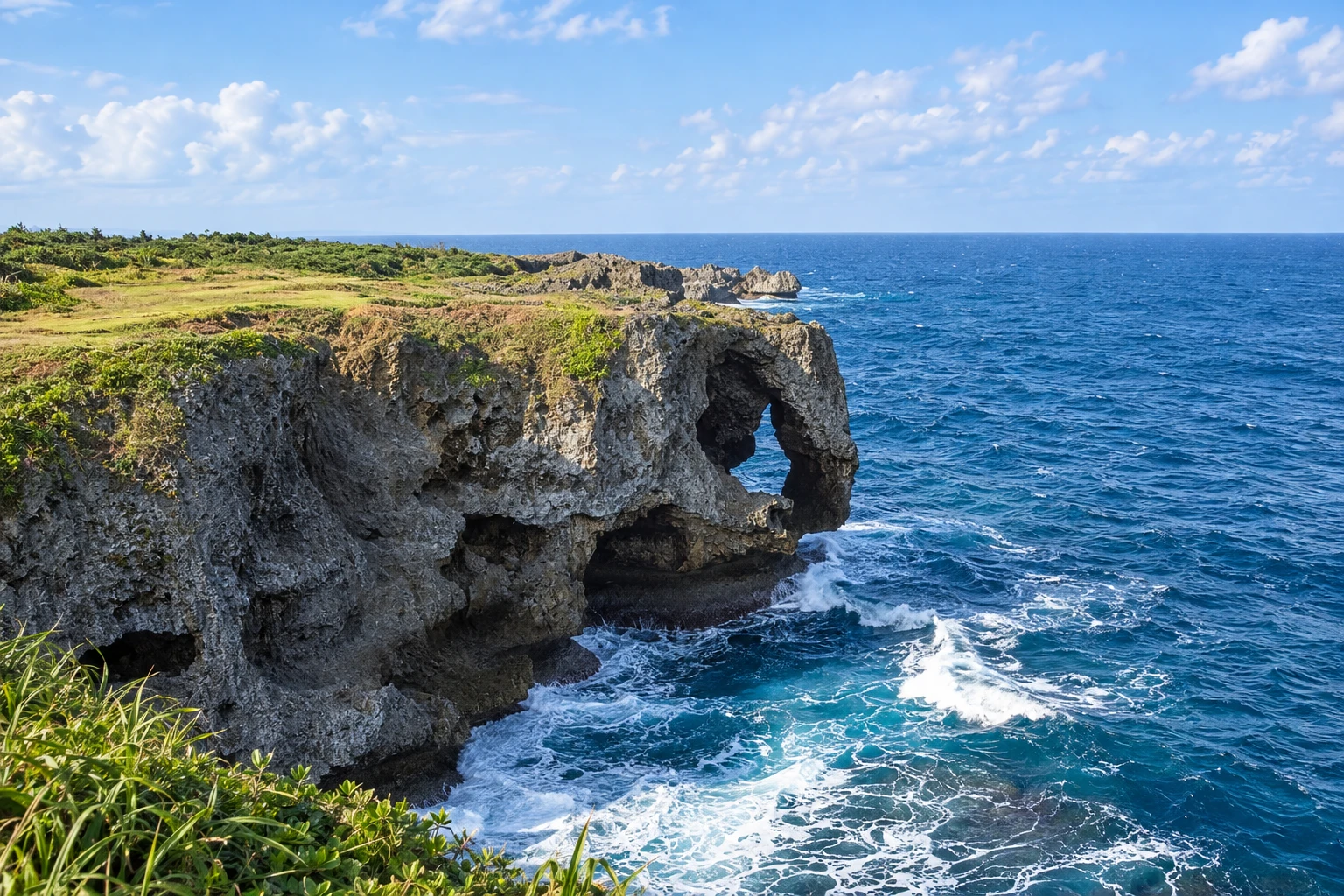
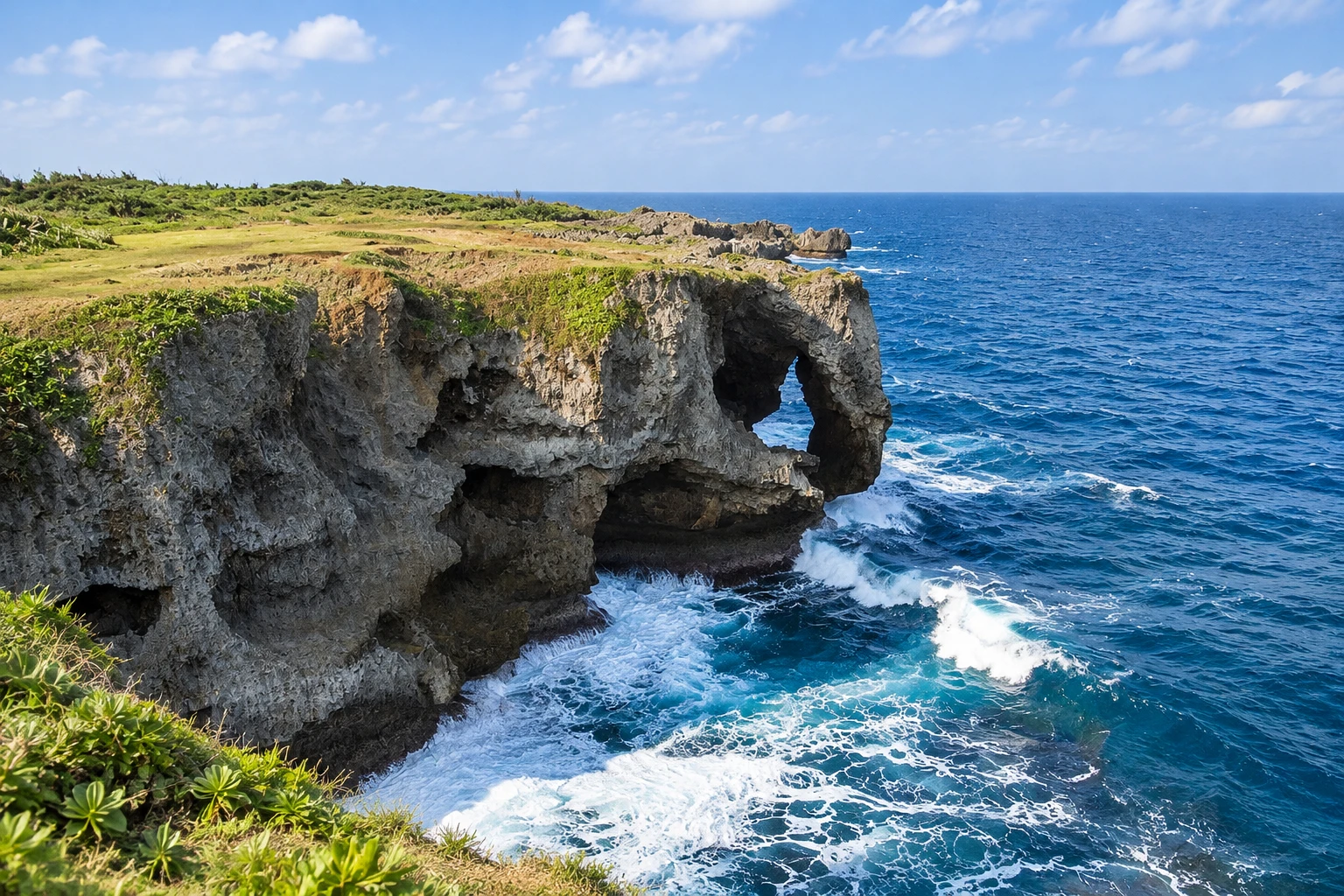
Cape Manzamo · OnnaA coral-rock plateau over the sea, with cliffs about 20 meters high and a rock that resembles an elephant’s trunk.
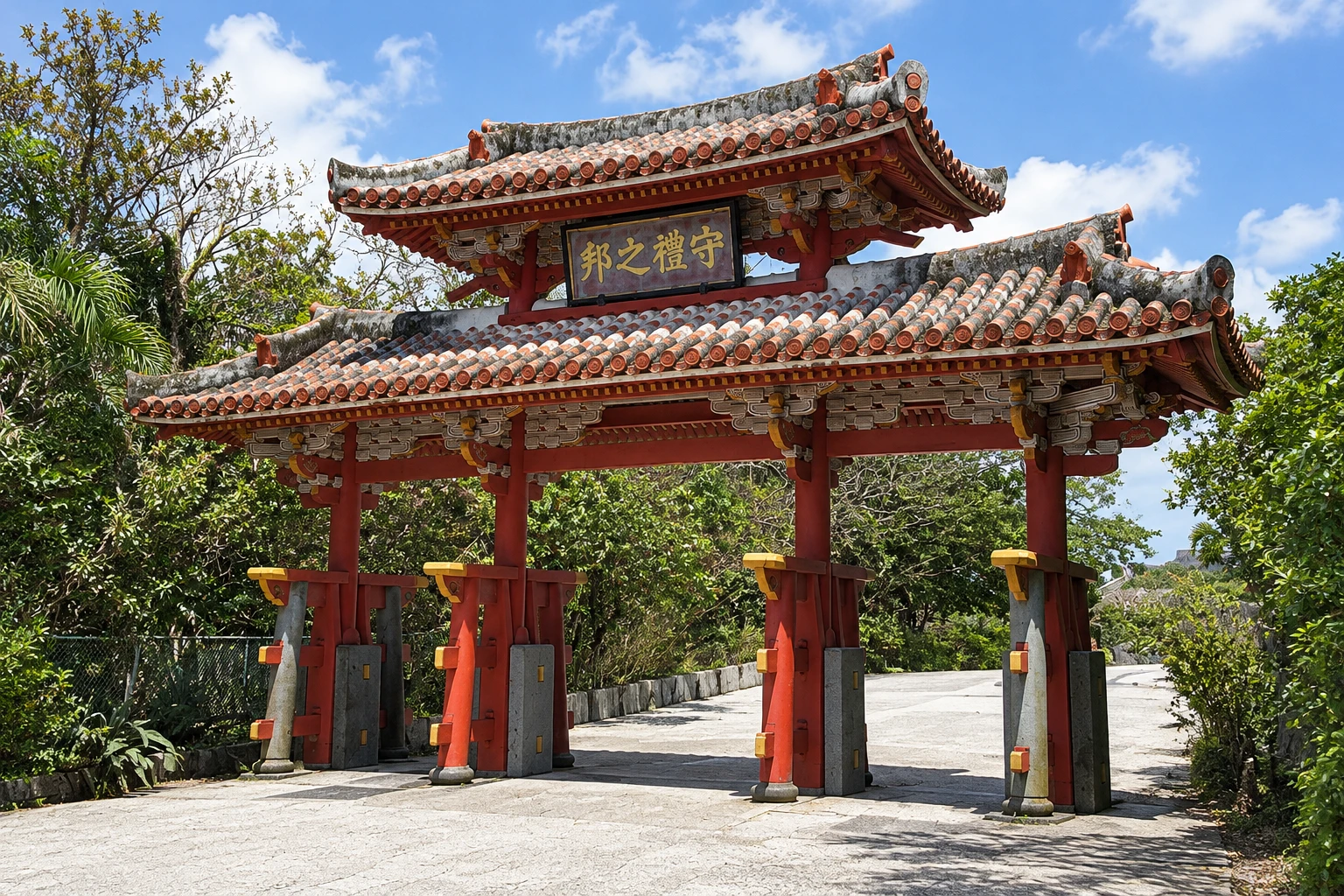
Shuri Castle · NahaFormer palace and seat of the Ryukyu Kingdom, atop the Shuri neighborhood, with curved stone walls and gates in Chinese and Japanese styles.
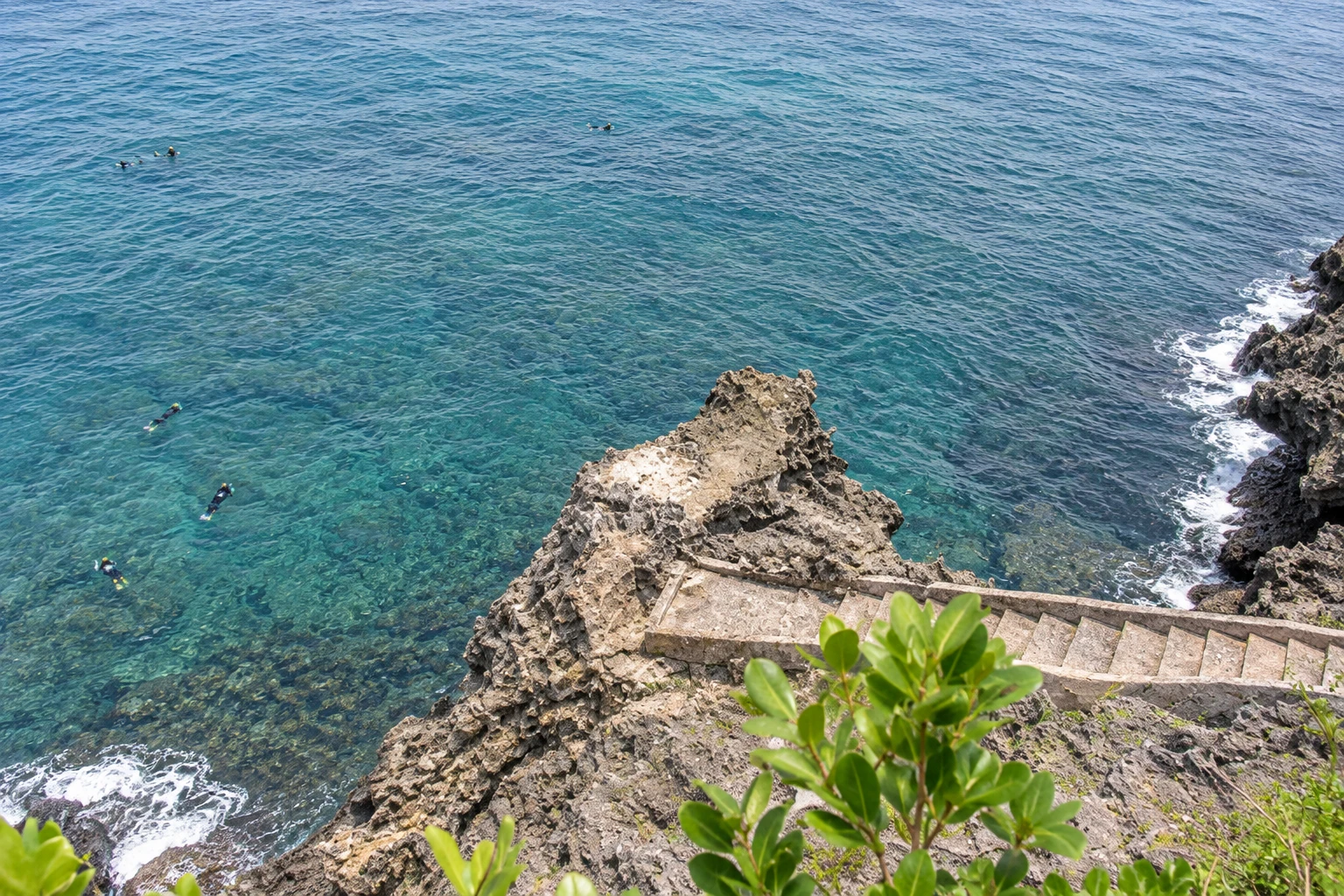
Cape Maeda · OnnaA rocky cape on Onna’s coast, a diving and snorkeling point with coral reefs and the Blue Cave, a sea cave where light makes the water bright blue.
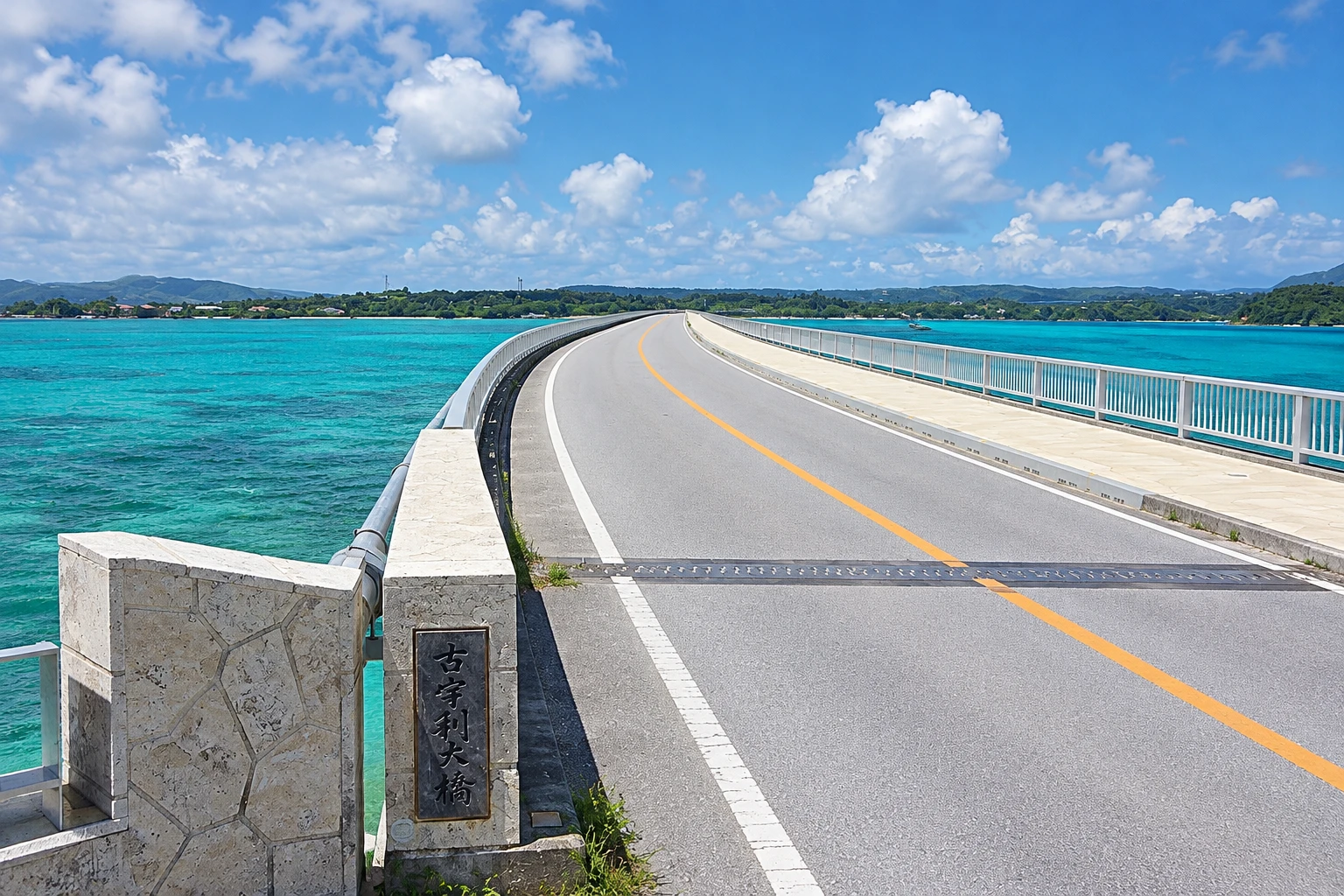
Kouri Island · MotobuSmall island north of the Motobu peninsula, connected by a bridge of almost 2 km over shallow turquoise water.
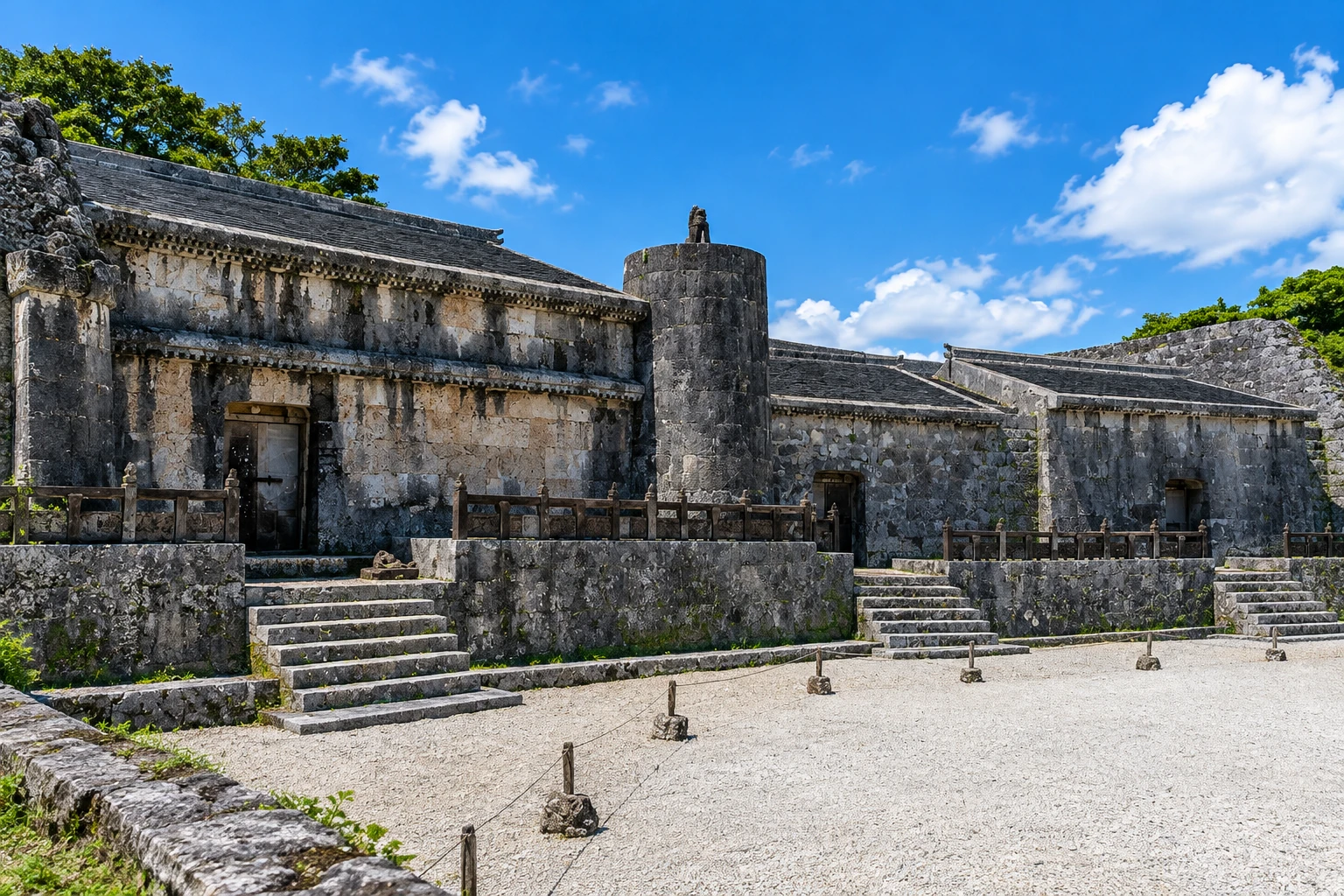
Tamaudun · NahaRoyal mausoleum of the Ryukyu Kingdom, built in 1501 next to Shuri Castle, with stone chambers that echo the palace and stone guardian lions on the roof.
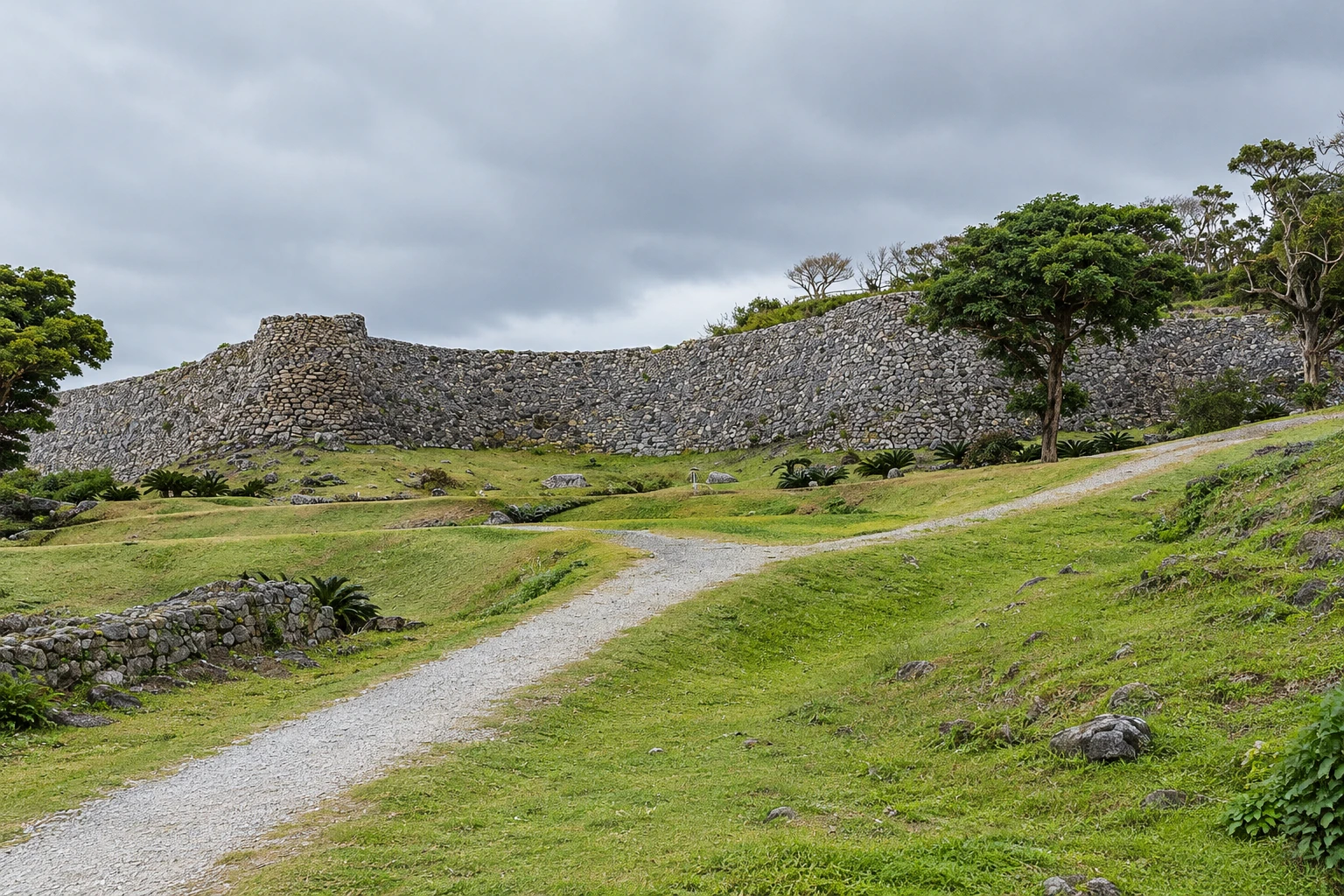
Nakijin Castle · MotobuRuins of a fortress from the 13th–14th centuries, seat of the kings of Hokuzan before the unification of Ryukyu, with limestone walls of about 1.5 km in winding curves.
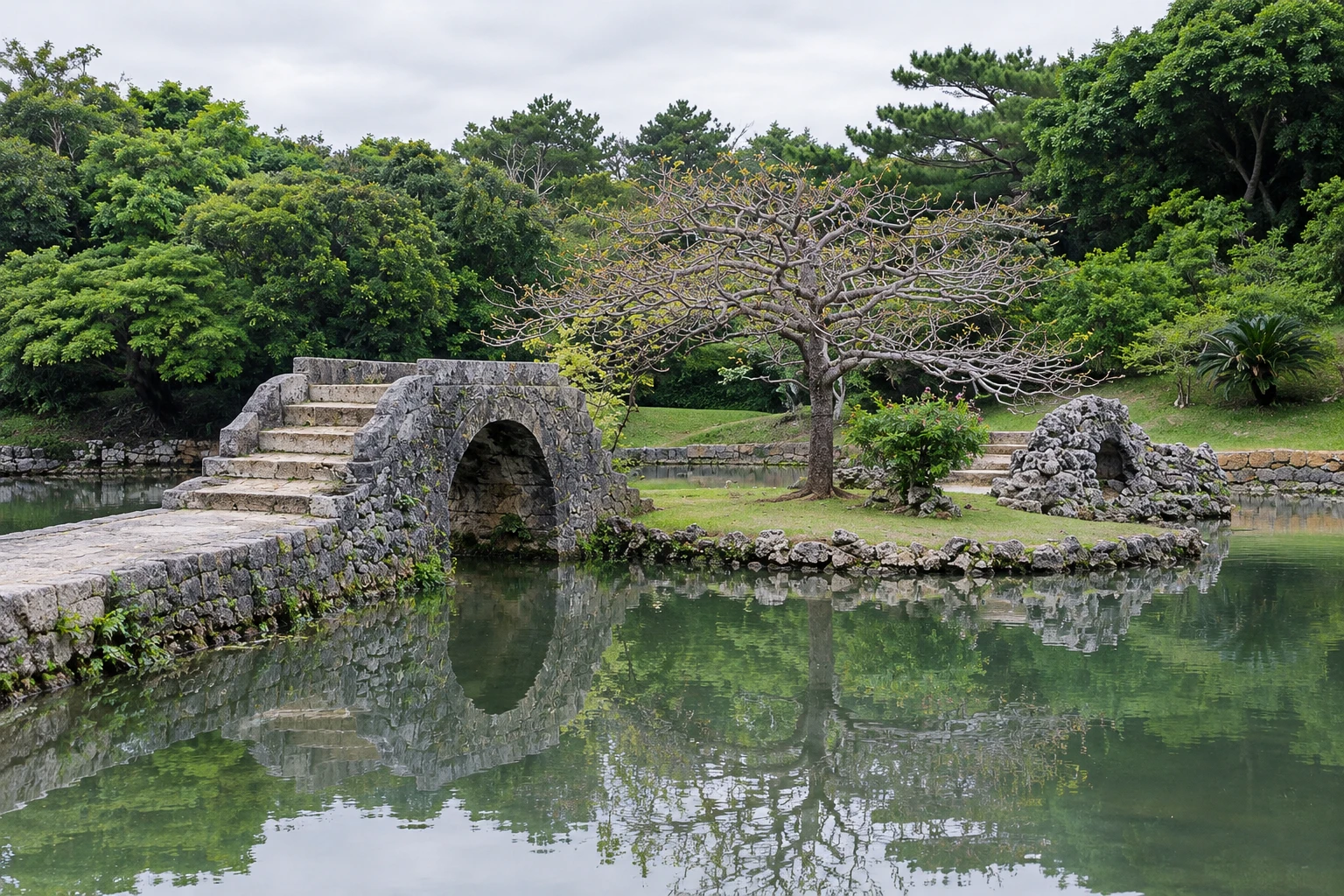
Shikinaen · NahaGarden and retreat of the Ryukyuan royal family from the late 18th century, with a pond, arched stone bridge and a Chinese-style pavilion.
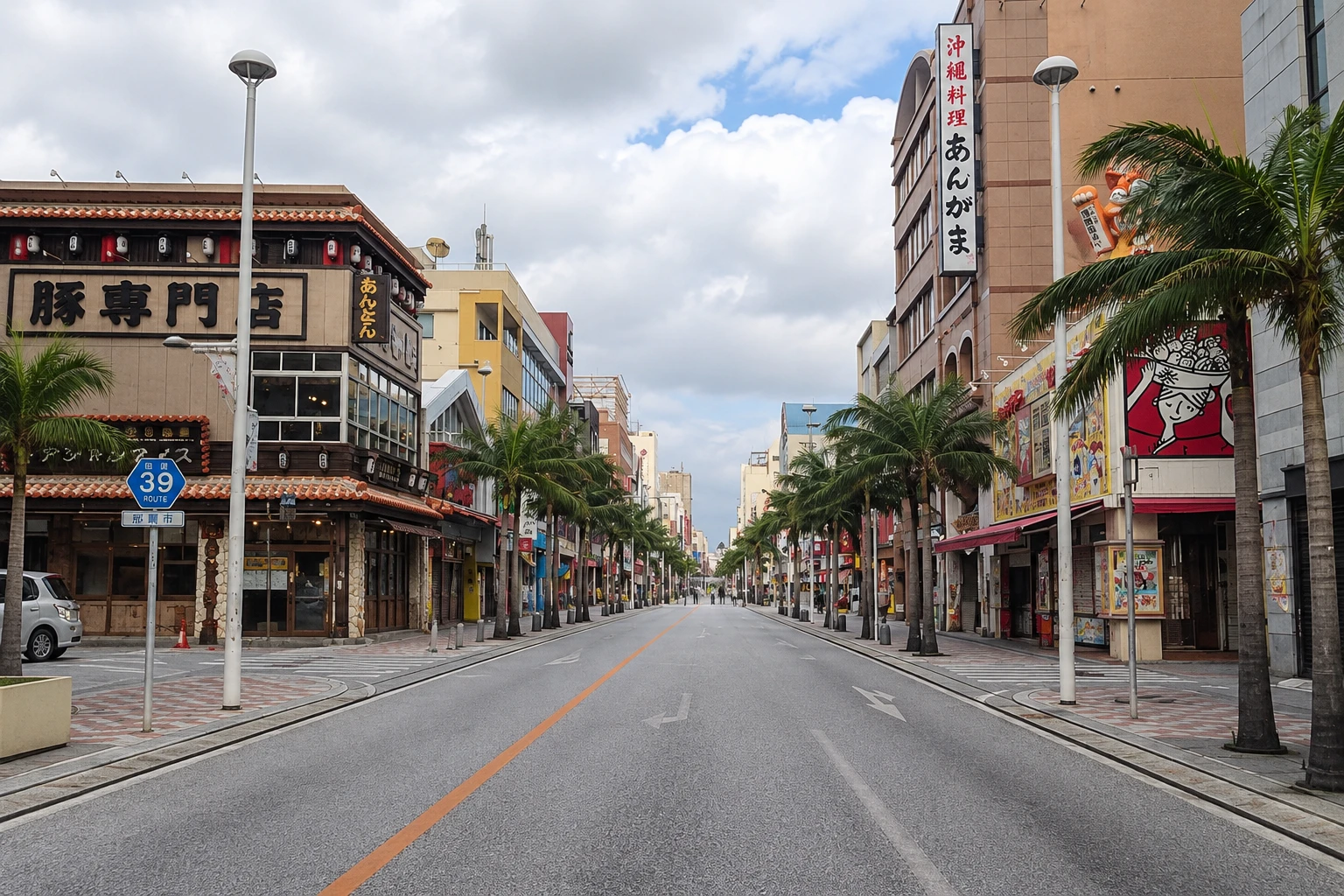
Kokusai Street · NahaAn avenue of about 1.6 km in central Naha, with shops, restaurants and bars, and covered side streets that lead to the Makishi public market.
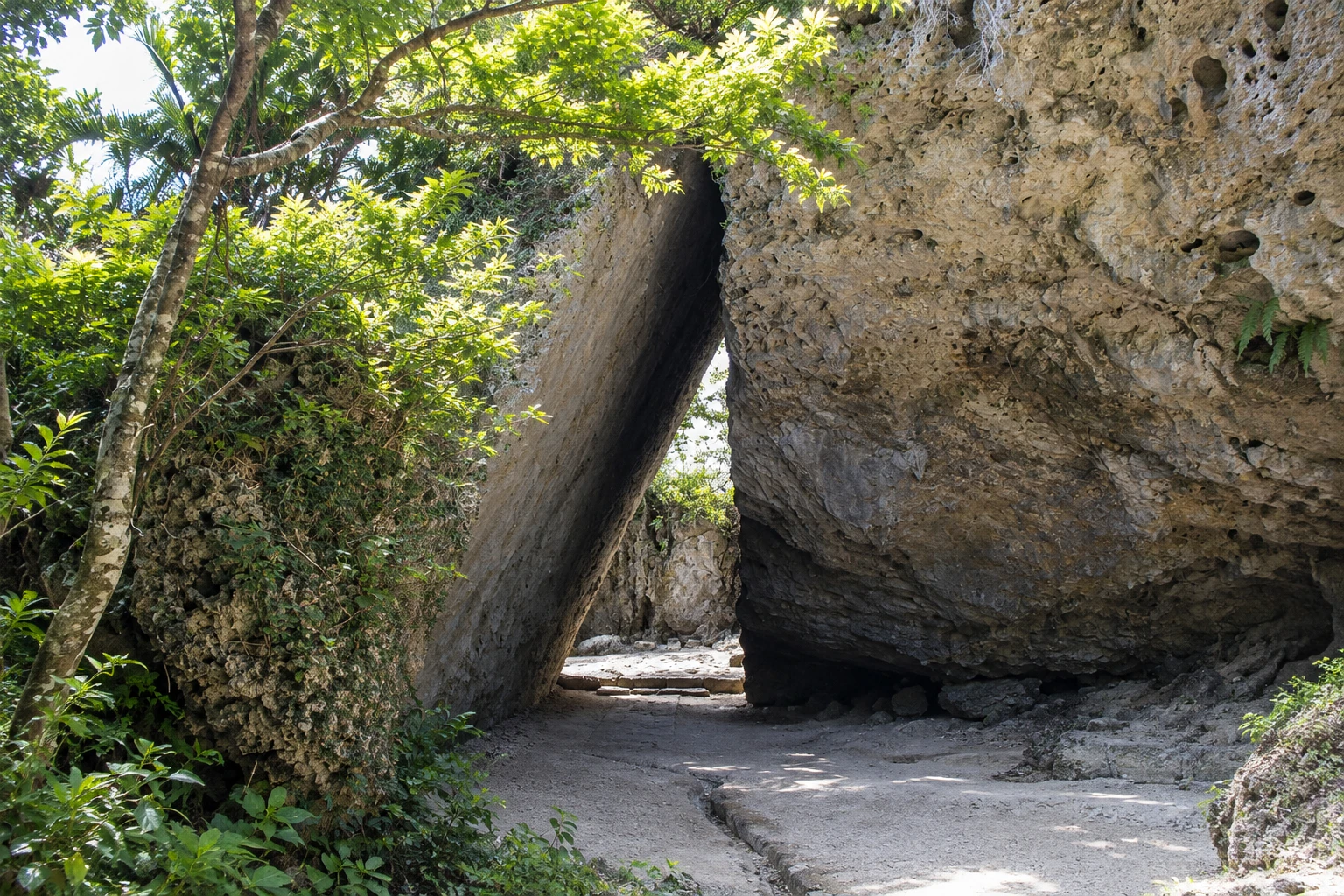
Sefa-utaki · NahaThe most important sacred site of the former Ryukyu Kingdom, in a limestone-rock forest in the south of the island, with a triangular fissure that frames a view of Kudaka Island.
An aquarium in the Ocean Expo Park in Motobu, dedicated to the waters of Okinawa, from the coral reef to the deep sea. The Kuroshio Tank, holding 7,500 cubic meters, houses whale sharks and manta rays.
A coral-rock plateau over the sea, with cliffs about 20 meters high and a rock that resembles an elephant’s trunk. There is a cliff-edge walk and views over Onna’s coast.
Former palace and seat of the Ryukyu Kingdom, atop the Shuri neighborhood, with curved stone walls and gates in Chinese and Japanese styles. A World Heritage site; the main hall, the Seiden, was rebuilt after the 2019 fire.
A rocky cape on Onna’s coast, a diving and snorkeling point with coral reefs and the Blue Cave, a sea cave where light makes the water bright blue. Entry to the water depends on sea conditions.
Small island north of the Motobu peninsula, connected by a bridge of almost 2 km over shallow turquoise water. It has beaches, an approximately 8 km circular road and the Tinu rocks, linked to the local Adam and Eve legend.
Royal mausoleum of the Ryukyu Kingdom, built in 1501 next to Shuri Castle, with stone chambers that echo the palace and stone guardian lions on the roof. A World Heritage site.
Ruins of a fortress from the 13th–14th centuries, seat of the kings of Hokuzan before the unification of Ryukyu, with limestone walls of about 1.5 km in winding curves. World Heritage Site.
Garden and retreat of the Ryukyuan royal family from the late 18th century, with a pond, arched stone bridge and a Chinese-style pavilion. World Heritage site in southern Naha.
An avenue of about 1.6 km in central Naha, with shops, restaurants and bars, and covered side streets that lead to the Makishi public market. Rebuilt after the war, it is the center of the city’s urban life.
The most important sacred site of the former Ryukyu Kingdom, in a limestone-rock forest in the south of the island, with a triangular fissure that frames a view of Kudaka Island. World Heritage site.


 Brazil
 Antarctica
 Argentina
 Bolivia
 Chile
 Colombia
 Ecuador
 Falkland Islands (Malvinas)
 French Guiana
 Guyana
 Paraguay
 Peru
 Suriname
 Uruguay
 Venezuela
 Austria
 Belgium
 Croatia
 Denmark
 Finland
 France
 Germany
 Greece
 Hungary
 Iceland
 Ireland
 Italy
 Luxembourg
 Norway
 Poland
 Portugal
 Slovakia
 Slovenia
 Spain
 Sweden
 Switzerland
 the Czech Republic
 the Netherlands
 the United Kingdom
 Turkey
 Bermuda
 Canada
 Greenland
 Mexico
 Saint Pierre and Miquelon
 the United States
 the Dominican Republic
 Egypt
 South Africa
 Australia
 Fiji
 New Zealand
 Papua New Guinea