

 Brazil
 Antarctica
 Argentina
 Bolivia
 Chile
 Colombia
 Ecuador
 Falkland Islands (Malvinas)
 French Guiana
 Guyana
 Paraguay
 Peru
 Suriname
 Uruguay
 Venezuela
 Austria
 Belgium
 Croatia
 Denmark
 Finland
 France
 Germany
 Greece
 Hungary
 Iceland
 Ireland
 Italy
 Luxembourg
 Norway
 Poland
 Portugal
 Slovakia
 Slovenia
 Spain
 Sweden
 Switzerland
 the Czech Republic
 the Netherlands
 the United Kingdom
 Turkey
 Bermuda
 Canada
 Greenland
 Mexico
 Saint Pierre and Miquelon
 the United States
 the Dominican Republic
 Egypt
 South Africa
 Australia
 Fiji
 New Zealand
 Papua New Guinea
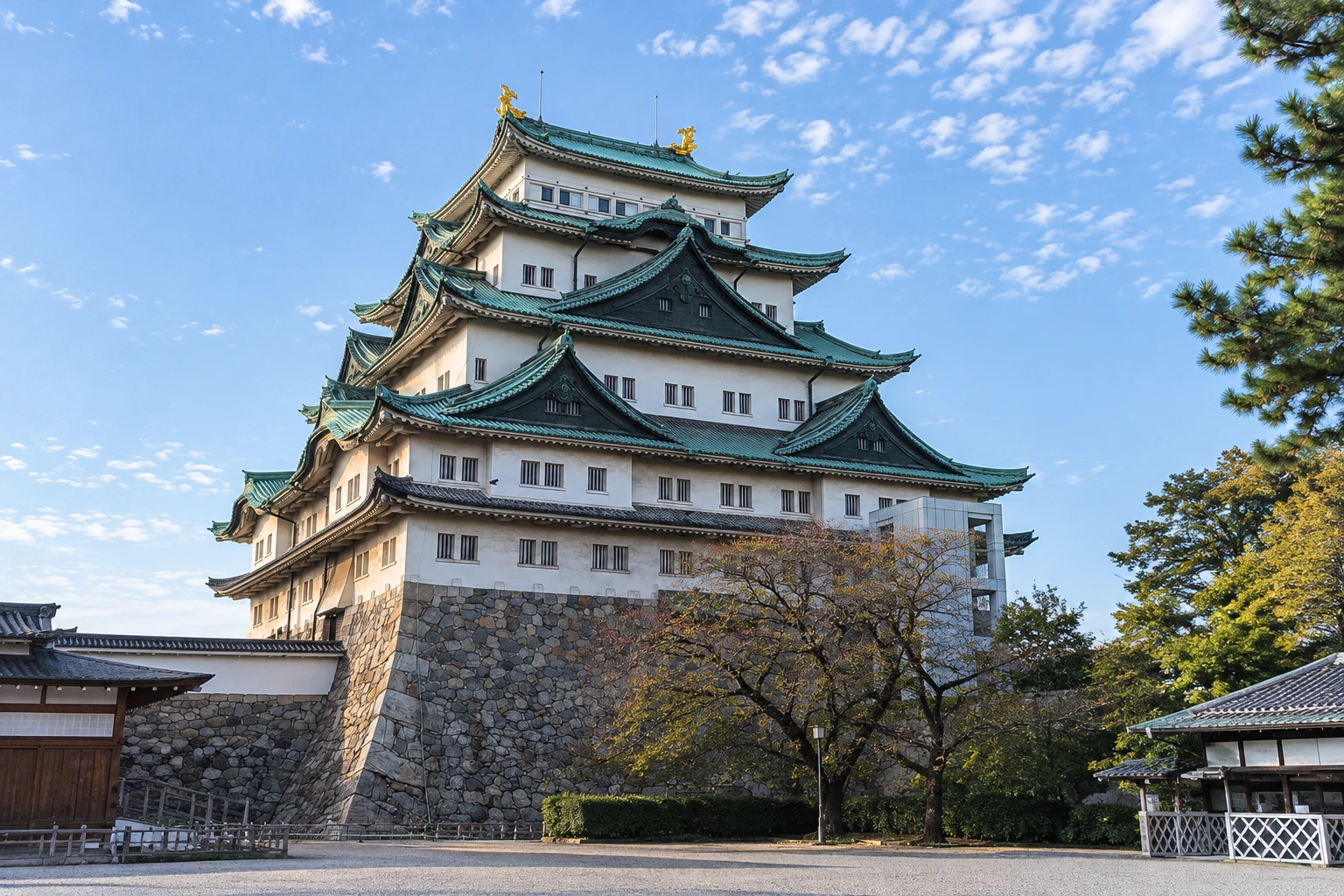
Castle · Nagoya, Japan
Nagoya Castle
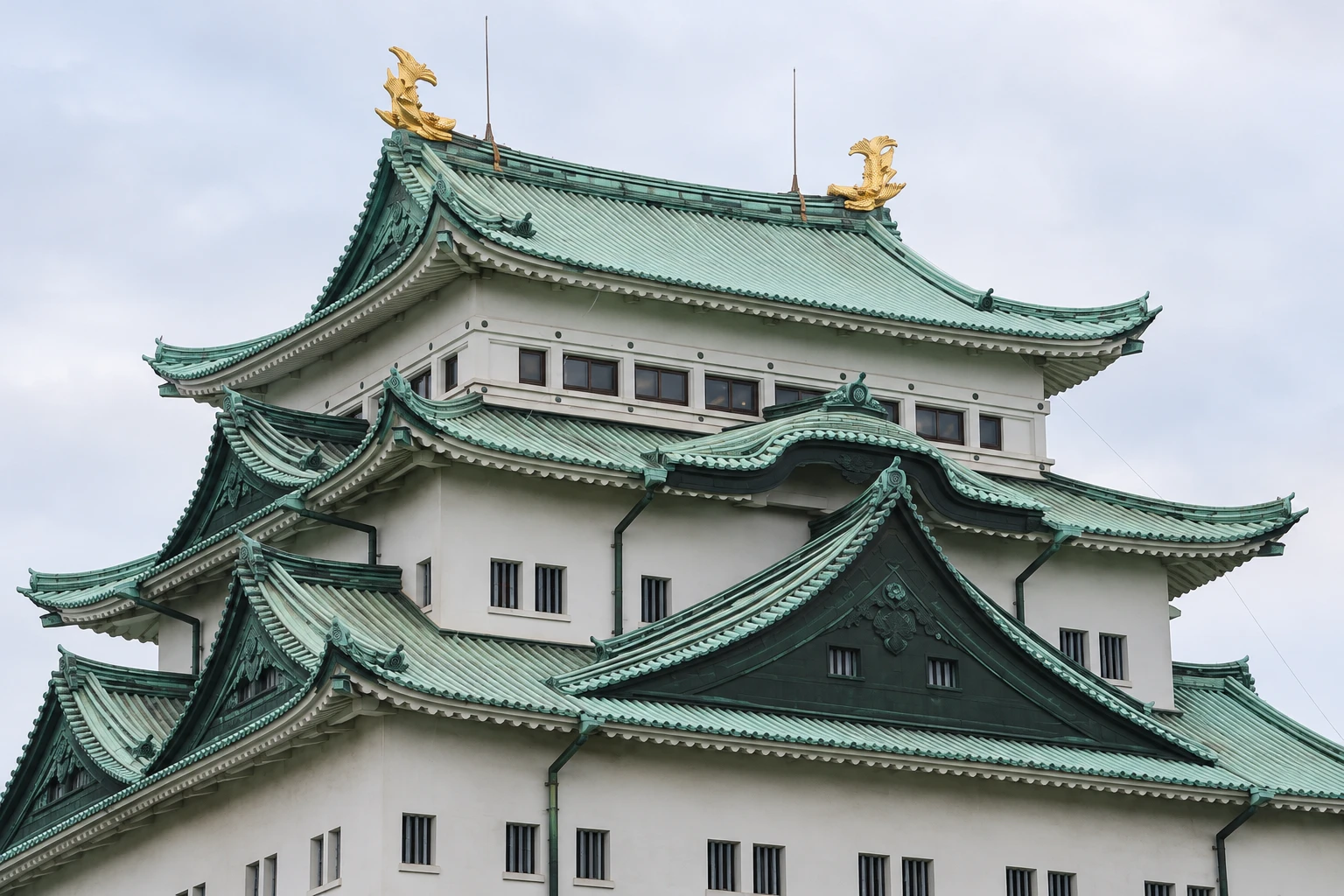
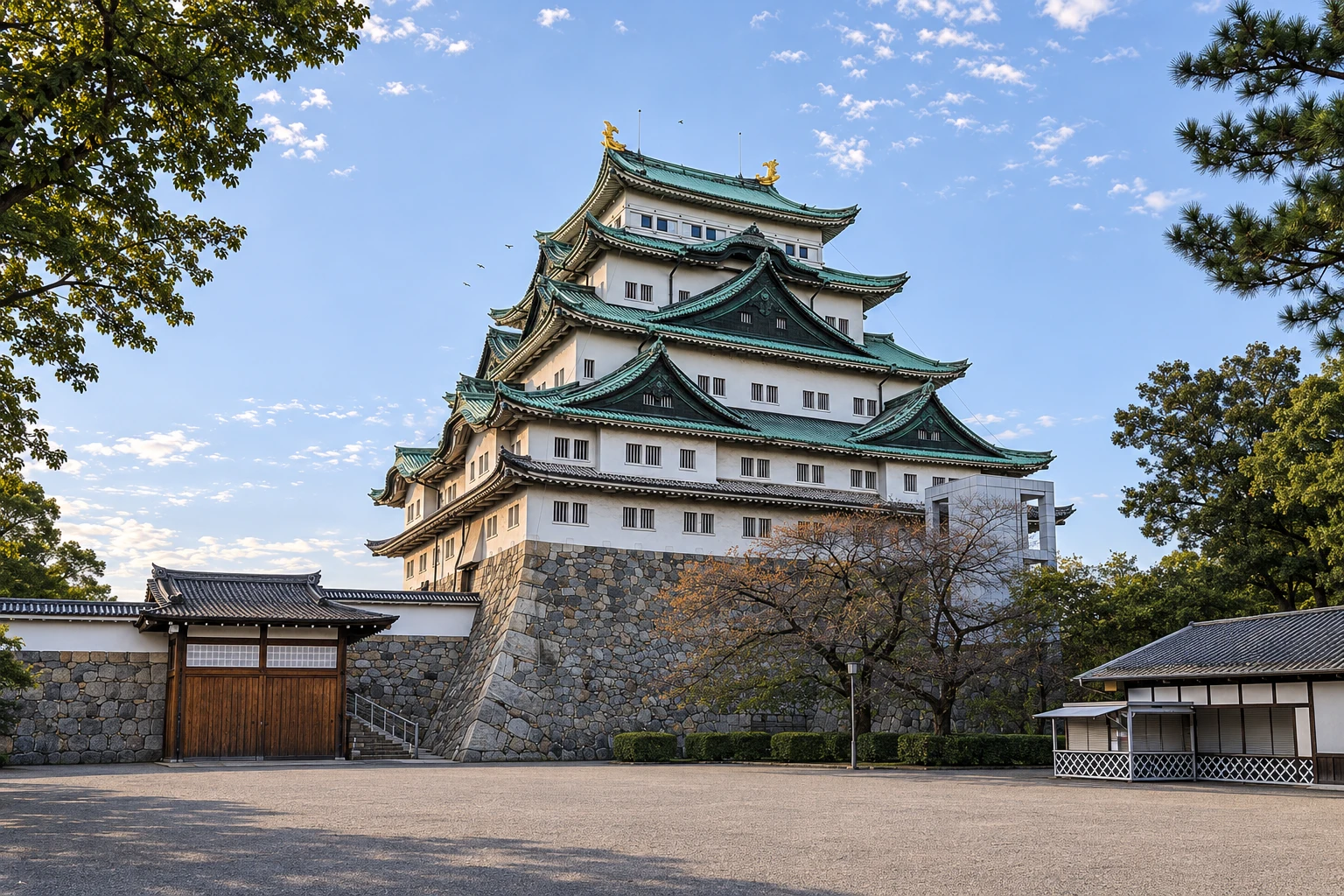
A castle built by order of Tokugawa Ieyasu from 1610, with the main keep crowned by golden dolphins, original corner towers and the Honmaru Palace, rebuilt in wood with painted sliding doors.
Illustrative images. The pictures in this guide are illustrations based on the real place, not photographs, and may differ from it.

A look at the place
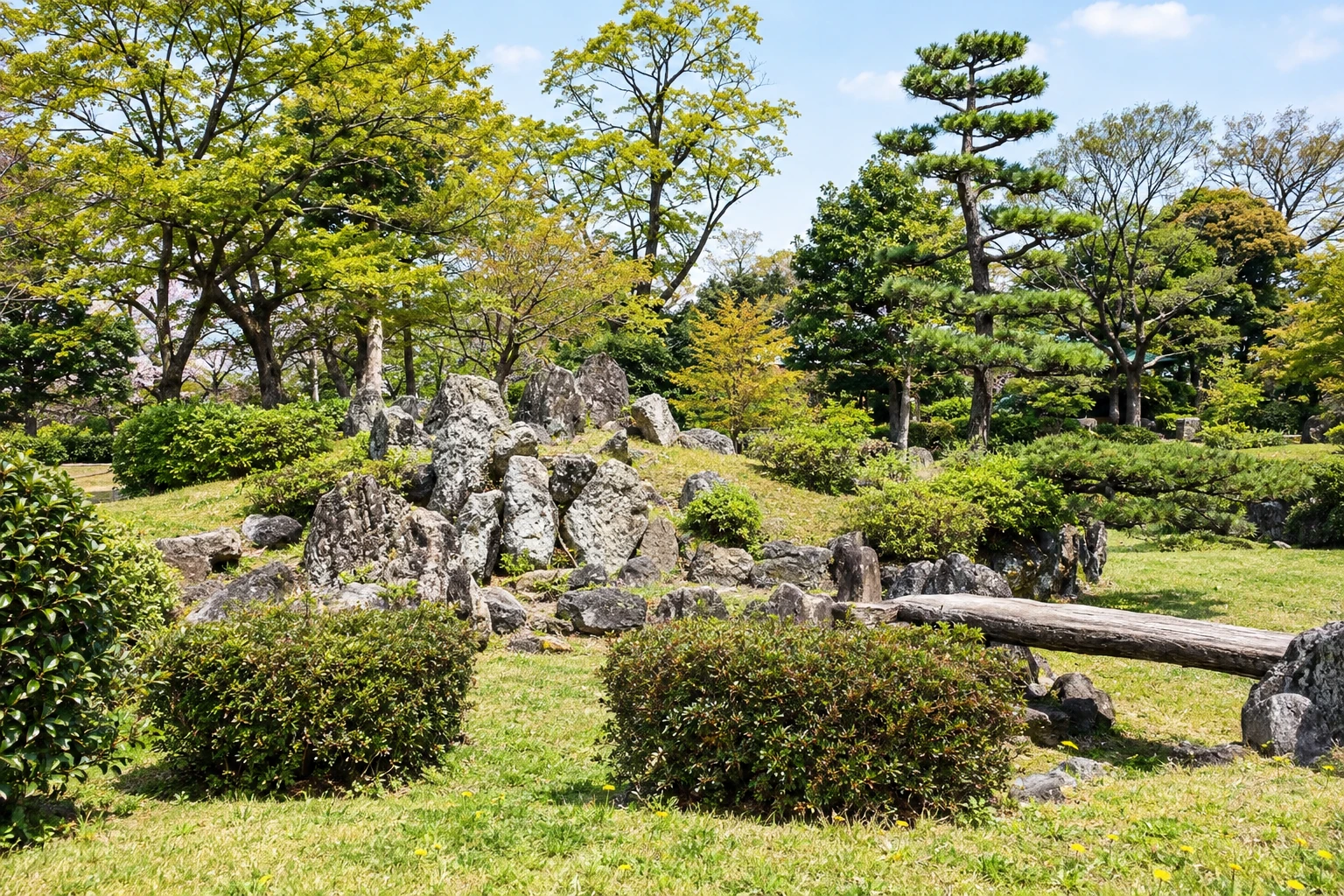
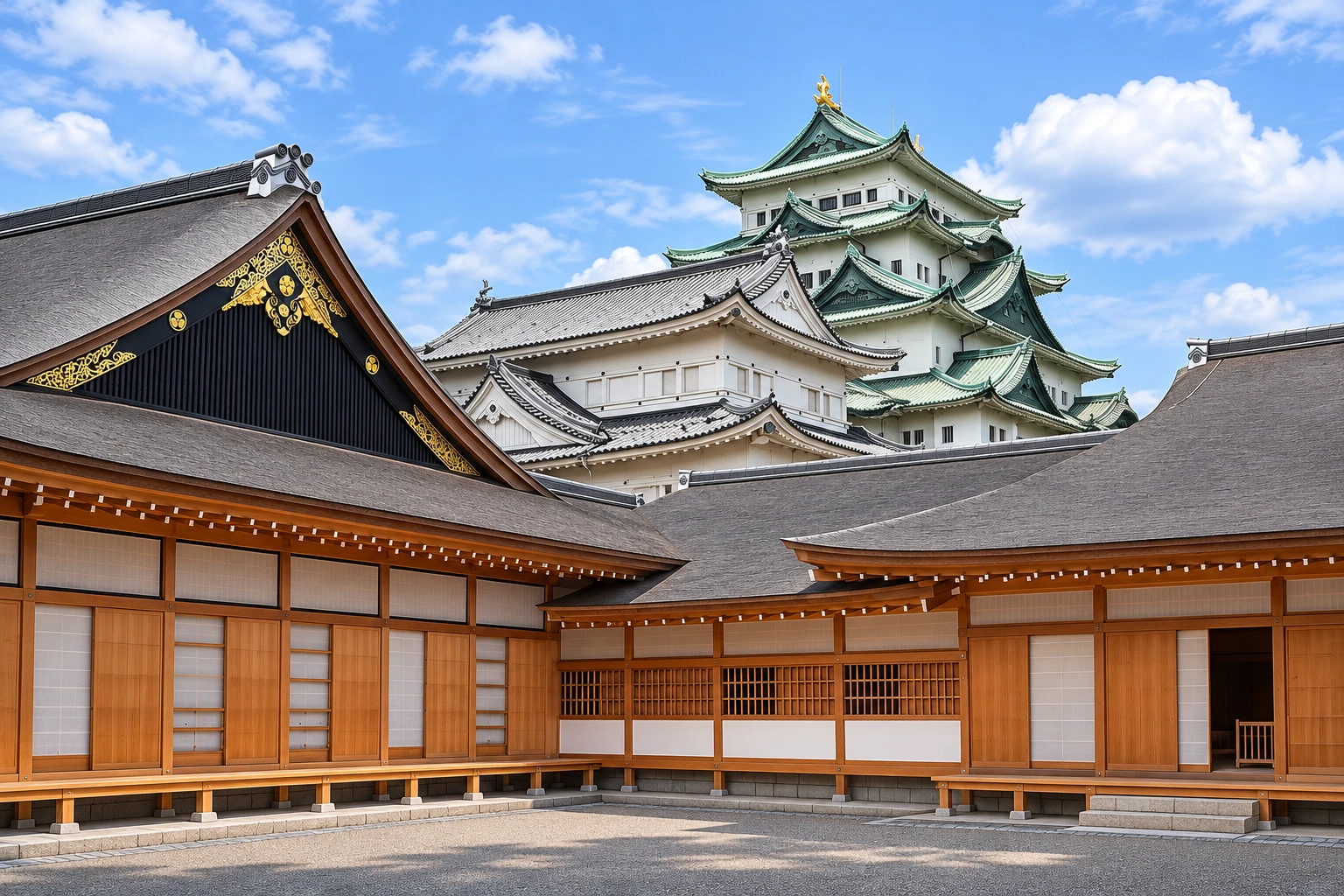
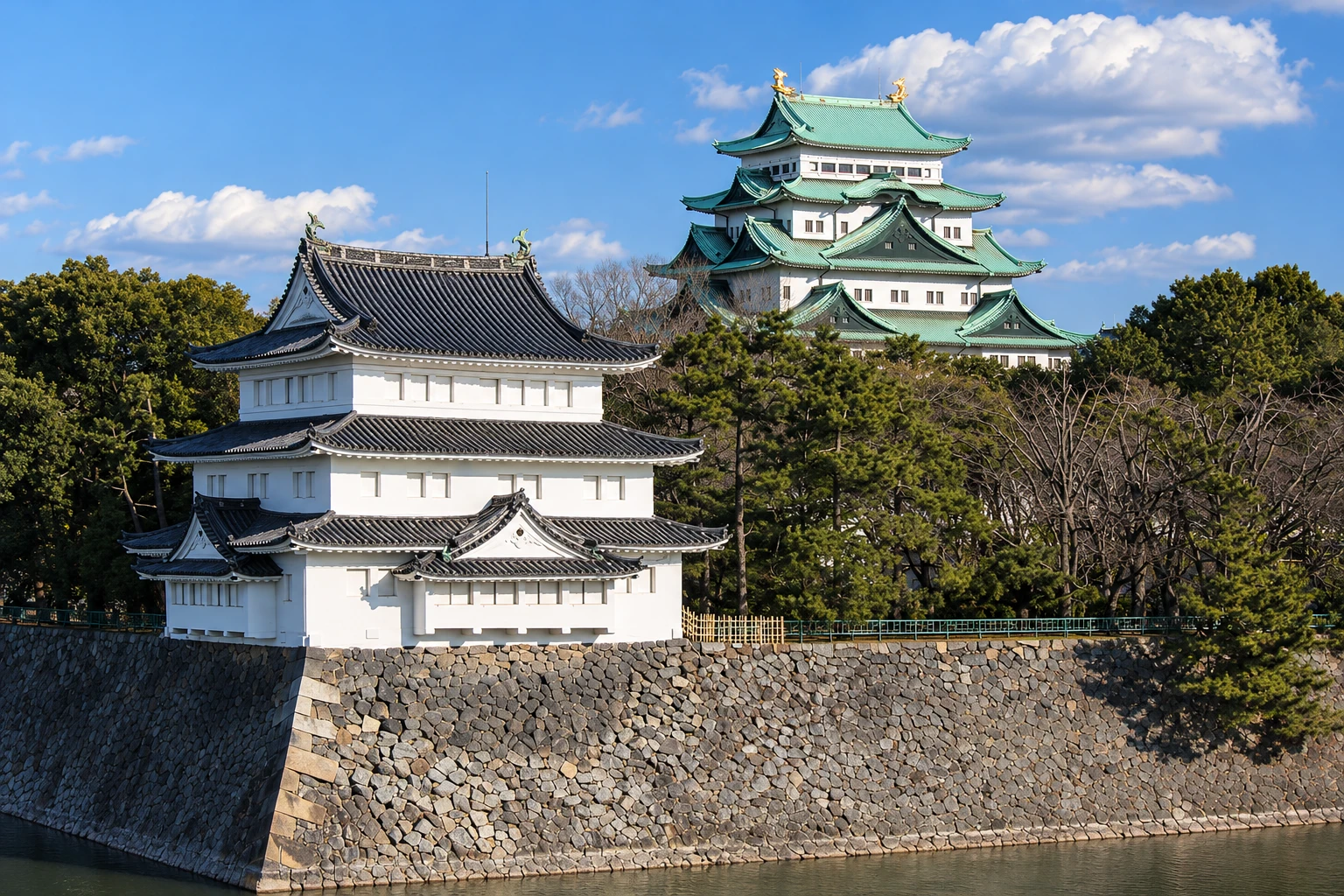
Nagoya Castle in pictures
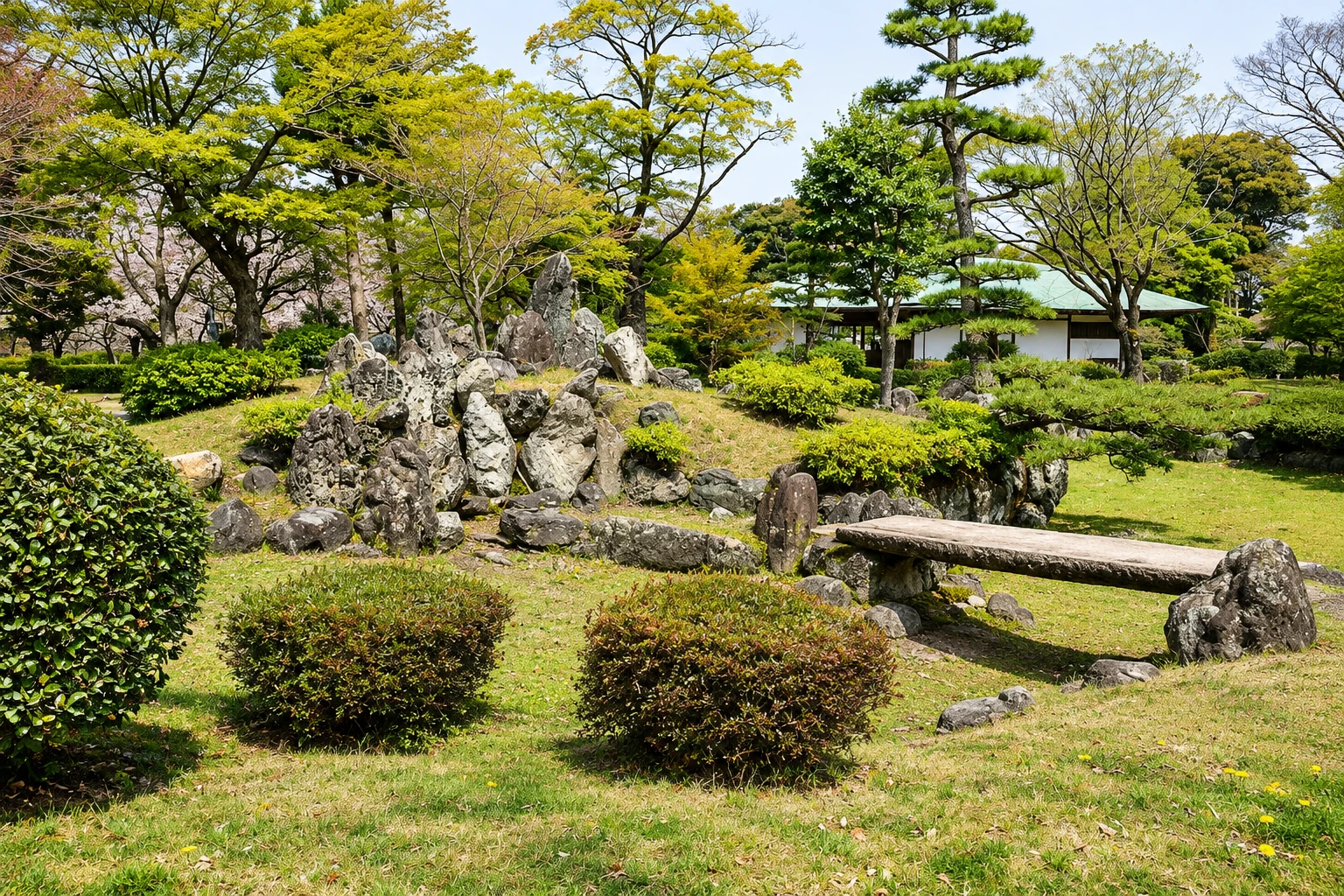
These pictures are illustrations based on the real place, not photographs. They may differ from the place.
Click the picture to enlarge it.
Discover
About Nagoya Castle
Nagoya Castle was built from 1610 by order of Tokugawa Ieyasu to guard the road between Edo and Kyoto, and it served as the seat of the Owari branch of the Tokugawa family throughout the Edo period. The country’s great lords were required to contribute to the construction, and the stone walls still bear the marks each work team carved into the blocks.
The main keep, with five roofs and the two golden dolphins, the kinshachi, at the top, was destroyed in a bombing in 1945, along with the palace. In 1959 it was rebuilt in concrete with the same silhouette. Three corner towers, some gates and parts of the walls survived and are Important Cultural Properties.
Next to the keep stands the Honmaru Palace, the residence and reception hall of the lords, reconstructed in cypress wood from plans, photos and measurements made before the war. The rooms follow one another along tatami corridors, with sliding doors and walls painted with tigers, landscapes and flowers on a gold background, reproductions of the original paintings saved from the fire. The worked wooden ceilings and metal fittings show the luxury of the era.
The grounds include gardens, the dry moat with stone walls and, on the east side, an area of shops and restaurants called Kinshachi Yokocho. In the first weeks of April, cherry trees usually bloom around the moats, and the castle is lit up on some nights during the season.
Before you go
Practical information
Cidade Turismo reviews its information regularly, but something may have changed. Check with the place before planning your trip.
How much time to set aside
From 1.5 to 2 hours, including the Honmaru Palace and the gardens.
Best time
In the morning, to see the palace with fewer people. Cherry trees usually bloom in early April. Check in advance whether the main keep is open for interior visits and the palace hours.
How to get there
Take the Meijo Line subway to Nagoyajo Station, about a 5-minute walk from the east gate. The Me-guru bus also stops at the castle.
Tip
Reserve most of your time for the Honmaru Palace: remove your shoes at the entrance and walk through all the rooms to the reception hall, the most decorated part.
Official website
Your questions
Frequently asked questions about Nagoya Castle
Is Nagoya Castle’s main keep original?
No. The original was destroyed in 1945 and rebuilt in concrete in 1959. Three corner turrets, some gates and the stone walls are original.
What is the Honmaru Palace?
The lords’ residence and reception hall of the castle, reconstructed in wood based on prewar documents, with paintings on a gold background on the doors.
How long does the visit to Nagoya Castle take?
From 1½ to 2 hours, including the Honmaru palace, the gardens and the walls.
When do the cherry trees bloom at Nagoya Castle?
They usually bloom in early April, around the moats. The date changes every year.