

 Brazil
 Antarctica
 Argentina
 Bolivia
 Chile
 Colombia
 Ecuador
 Falkland Islands (Malvinas)
 French Guiana
 Guyana
 Paraguay
 Peru
 Suriname
 Uruguay
 Venezuela
 Austria
 Belgium
 Croatia
 Denmark
 Finland
 France
 Germany
 Greece
 Hungary
 Iceland
 Ireland
 Luxembourg
 Norway
 Poland
 Portugal
 Slovakia
 Slovenia
 Spain
 Sweden
 Switzerland
 the Czech Republic
 the Netherlands
 the United Kingdom
 Turkey
 Bermuda
 Canada
 Greenland
 Mexico
 Saint Pierre and Miquelon
 the United States
 the Dominican Republic
 Japan
 Egypt
 South Africa
 Australia
 Fiji
 New Zealand
 Papua New Guinea
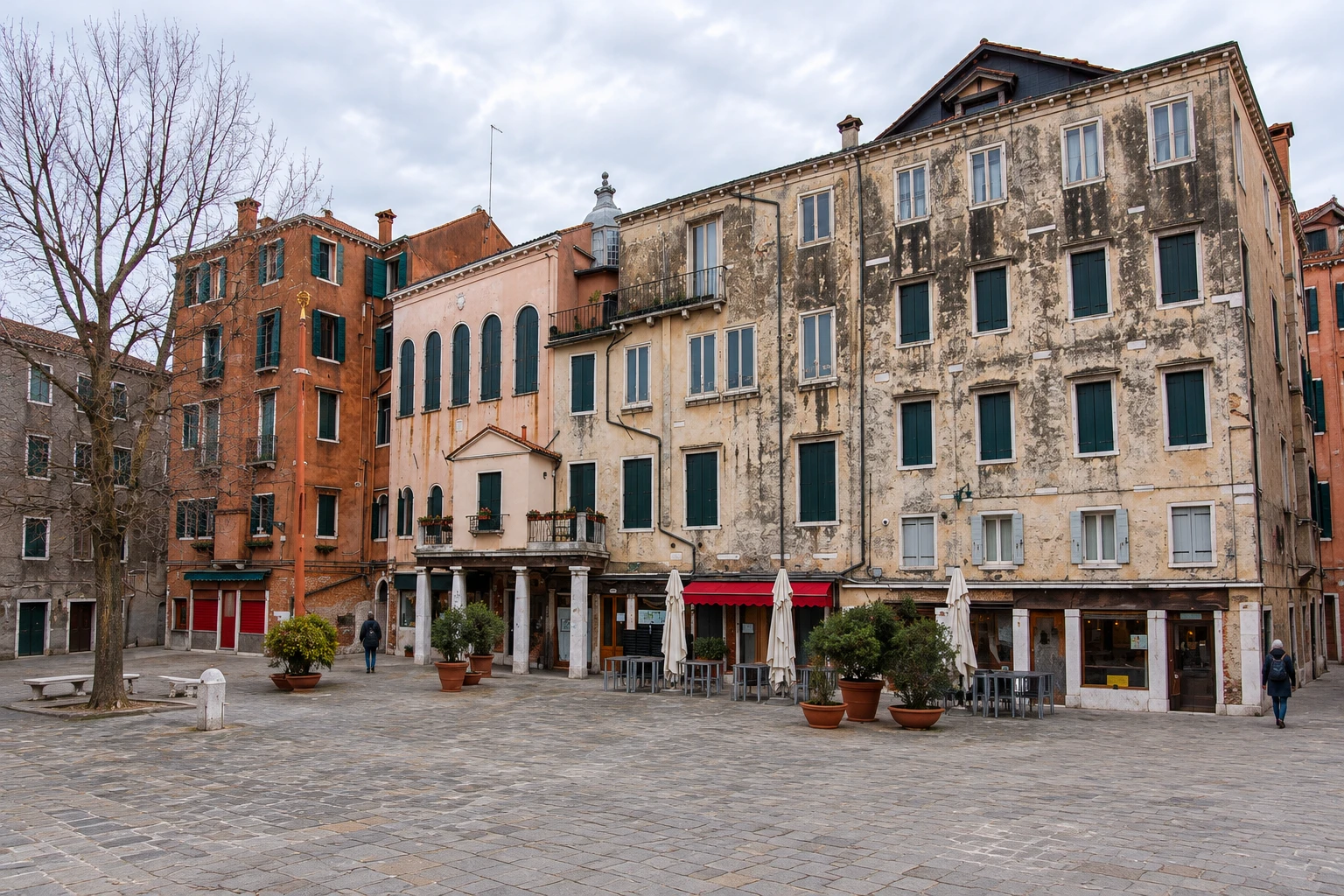
Historic neighborhood · Venice, Italy
Venetian Ghetto
The Cannaregio neighborhood where, from 1516, the Jews of Venice were forced to live. It gave rise to the word ghetto and is still the center of the city's Jewish community, with synagogues and tall buildings.
Illustrative images. The pictures in this guide are illustrations based on the real place, not photographs, and may differ from it.

Discover
About Venetian Ghetto
In 1516 the Republic of Venice ordered that the city's Jews live in an area of Cannaregio where public foundries had stood, the geto in Venetian dialect. The gates were closed at night and guarded. The word ghetto, which came to name similar neighborhoods in other countries, originates here.
The neighborhood has three parts: the Ghetto Novo, the oldest, around a large campo; the Ghetto Vecchio; and the Ghetto Novissimo. Because they could not expand outward, the buildings grew upward and reach seven or eight storeys, much taller than the rest of Venice.
In the Campo del Ghetto Novo are the synagogues installed on the upper floors of the buildings and, on a wall, the bronze reliefs by Arbit Blatas and the plaques in memory of Venetian Jews deported during the Second World War. The neighborhood remains the center of the Jewish community, with a bakery and kosher restaurants.
The Ghetto is in Cannaregio, the most populous district of Venice. On the Fondamenta della Misericordia and degli Ormesini, nearby, Venetians meet in the bacari at the end of the day. Further north, the church of Madonna dell'Orto houses paintings by Tintoretto, who is buried there.
Before you go
Practical information
Cidade Turismo reviews its information regularly, but something may have changed. Check with the place before planning your trip.
How much time to set aside
About an hour walking around the Ghetto; longer if you take a guided visit to the synagogues or follow the fondamente of Cannaregio.
Best time
During daytime on weekdays. On Saturday, the Jewish day of rest, synagogues and neighborhood shops are closed. The fondamente of Cannaregio get lively in the late afternoon.
How to get there
From Venezia Santa Lucia station, about a 10-minute walk along the Strada Nova and the Ponte delle Guglie. Vaporetto to the Guglie or San Marcuola stops.
Tip
Visits to the synagogues are guided and at scheduled times; check the program in advance. Respect the religious and memorial nature of the place and avoid photographing community members without permission.
Your questions
Frequently asked questions about Venetian Ghetto
Why is it called Ghetto?
The area had public foundries — geto in Venetian. When Jews were forced to live there in 1516, the name came to designate the neighborhood, and later similar neighborhoods in other countries.
Can I visit the synagogues?
Yes, on guided tours at scheduled times. Check the schedule before you go. There are no visits on Saturdays.
What else is there to see in Cannaregio?
The Fondamenta della Misericordia and degli Ormesini, with bacari along the canal, and the church of the Madonna dell'Orto, which has paintings by Tintoretto.