Aosta · Italy · Historical monument
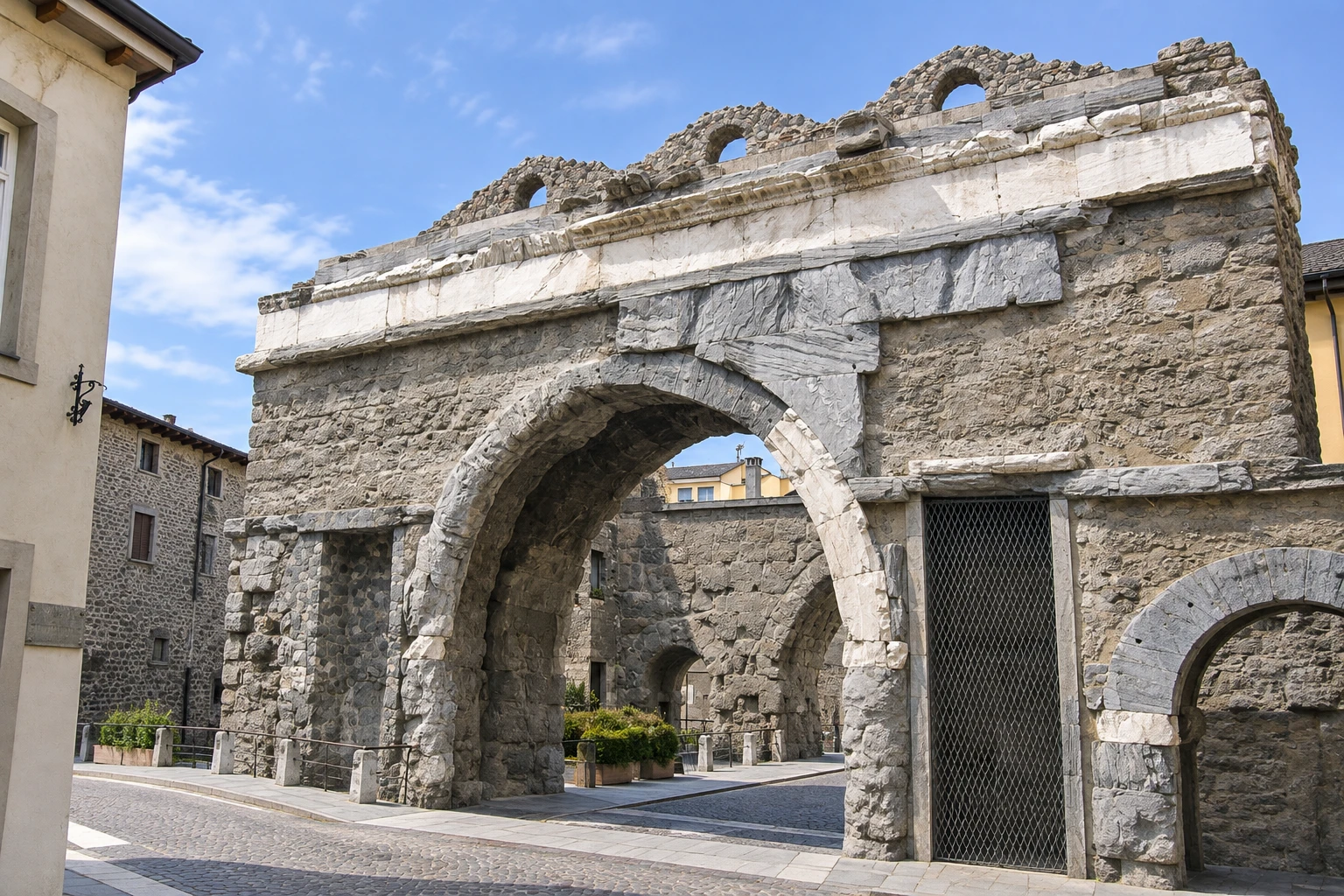
Arch of Augustus
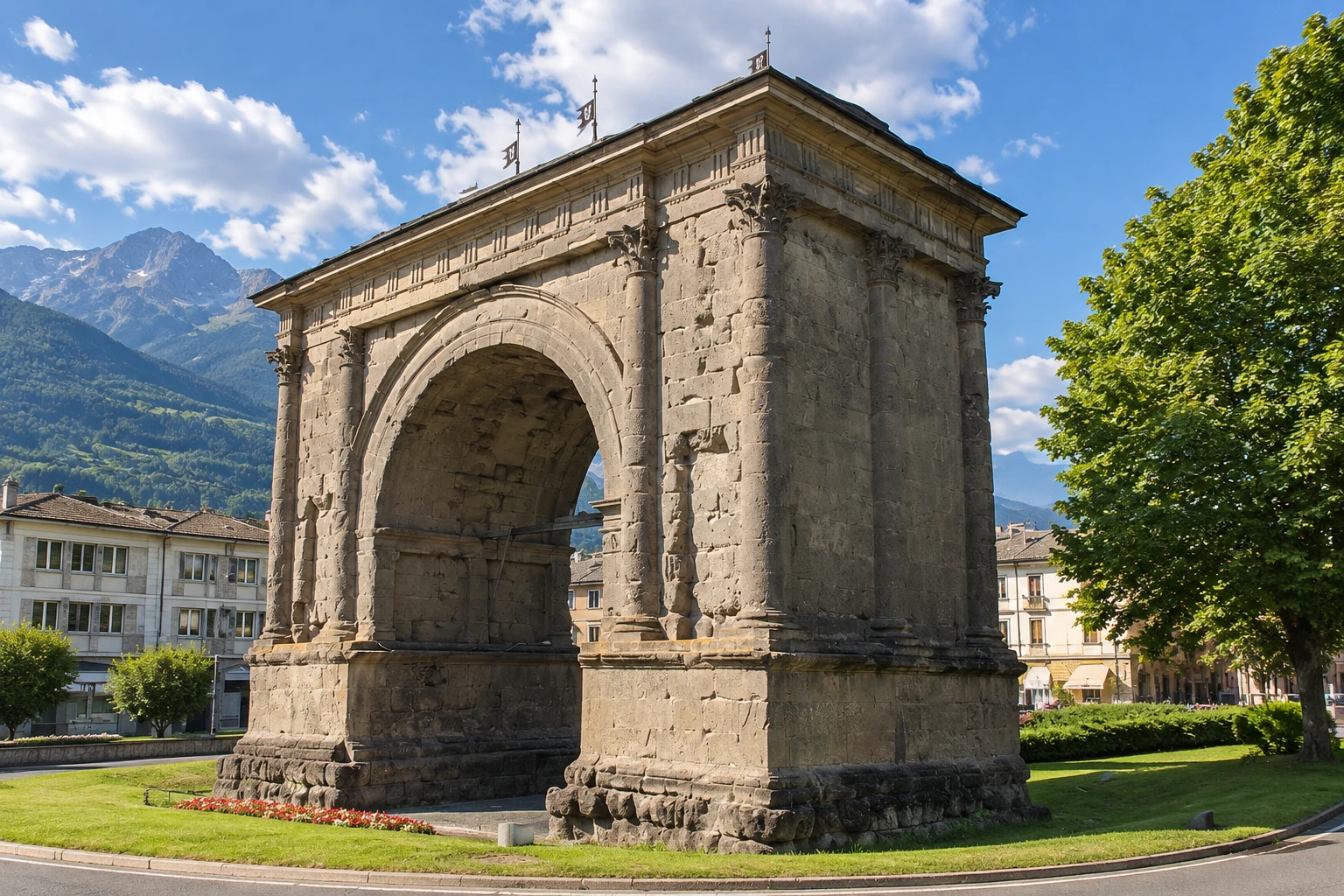
Roman arch from 25 BC, built to celebrate the victory over the Salassi and the founding of Augusta Praetoria, with a crucifix hanging beneath the vault.

 Search
 Brazil
 Antarctica
 Argentina
 Bolivia
 Chile
 Colombia
 Ecuador
 Falkland Islands (Malvinas)
 French Guiana
 Guyana
 Paraguay
 Peru
 Suriname
 Uruguay
 Venezuela
 Austria
 Belgium
 Croatia
 Denmark
 Finland
 France
 Germany
 Greece
 Hungary
 Iceland
 IrelandItaly
 Luxembourg
 Norway
 Poland
 Portugal
 Slovakia
 Slovenia
 Spain
 Sweden
 Switzerland
 the Czech Republic
 the Netherlands
 the United Kingdom
 Turkey
 Bermuda
 Canada
 Greenland
 Mexico
 Saint Pierre and Miquelon
 the United States
 the Dominican Republic
 JapanTurkey
 Egypt
 South Africa
 Australia
 Fiji
 New Zealand
 Papua New Guinea
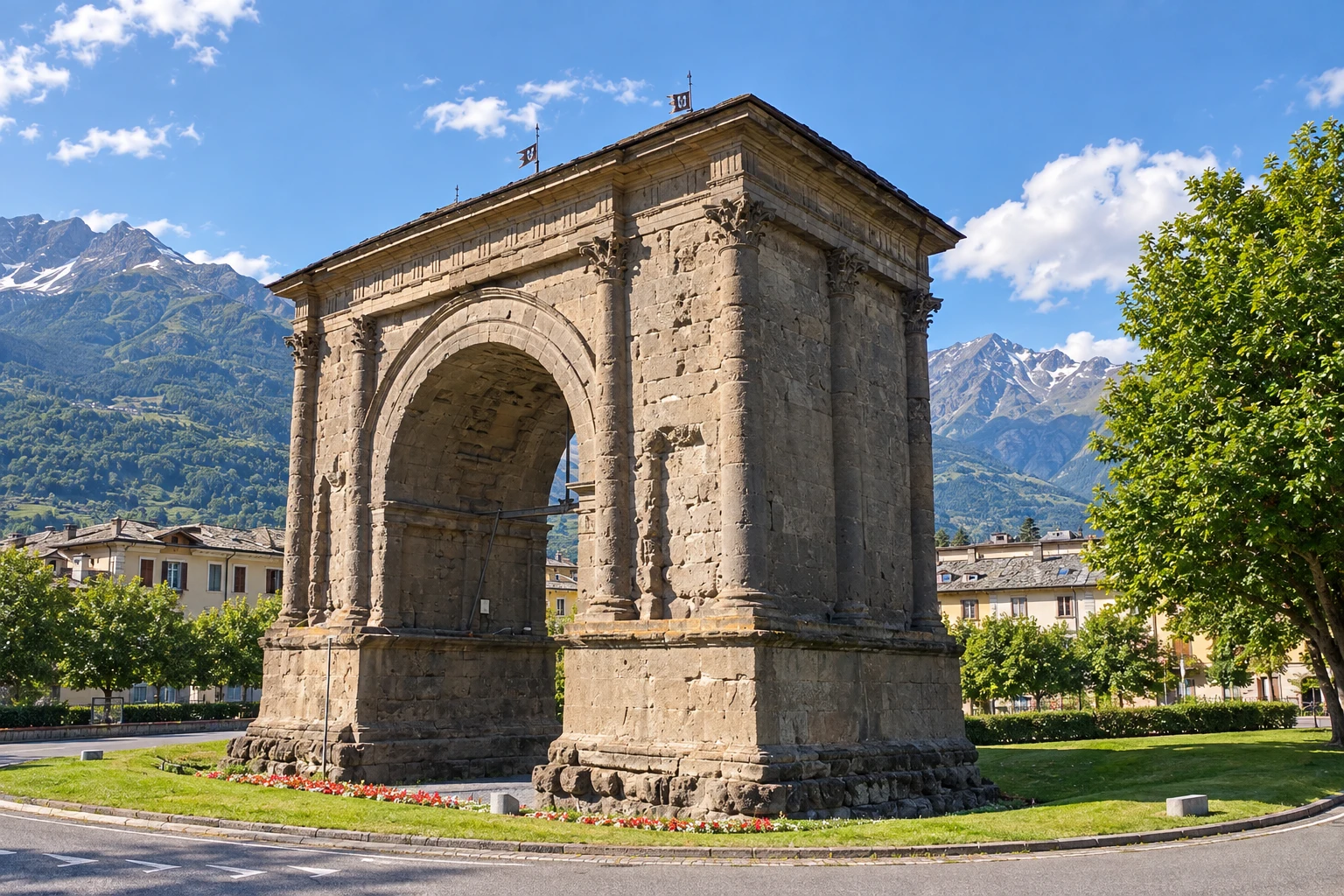
In the photo: Arco de Augusto, Aosta
Illustrative images. The pictures in this guide are illustrations based on the real place, not photographs, and may differ from it.

The city
Aosta is the capital of the Vale de Aosta, the smallest region of Italy, surrounded by the Alps. Founded by the Romans in 25 BC as Augusta Praetoria, it preserves the Arco de Augusto, the Porta Praetoria, the Roman theatre and the forum cryptoporticus. The collegiate church of Santo Urso has a Romanesque cloister, and the cathedral houses a treasure museum. On the outskirts, the megalithic area of Saint-Martin-de-Corléans has stelae over 4,000 years old. A cable car climbs from the center to Pila, and Fénis Castle is 12 km away. Italian and French are spoken, the two official languages.
30 places to stay in Aosta.
30 places to eat in Aosta.
Hotéis e restaurantes da cidade no mapa.
how to get there · how many days · itinerary · questions
The local experience
Roman arch from 25 BC, built to celebrate the victory over the Salassi and the founding of Augusta Praetoria, with a crucifix hanging beneath the vault.
The eastern gate of the Roman town, dating from 25 BC, with two sets of arches that closed a parade square, and one of the best-preserved Roman gates.
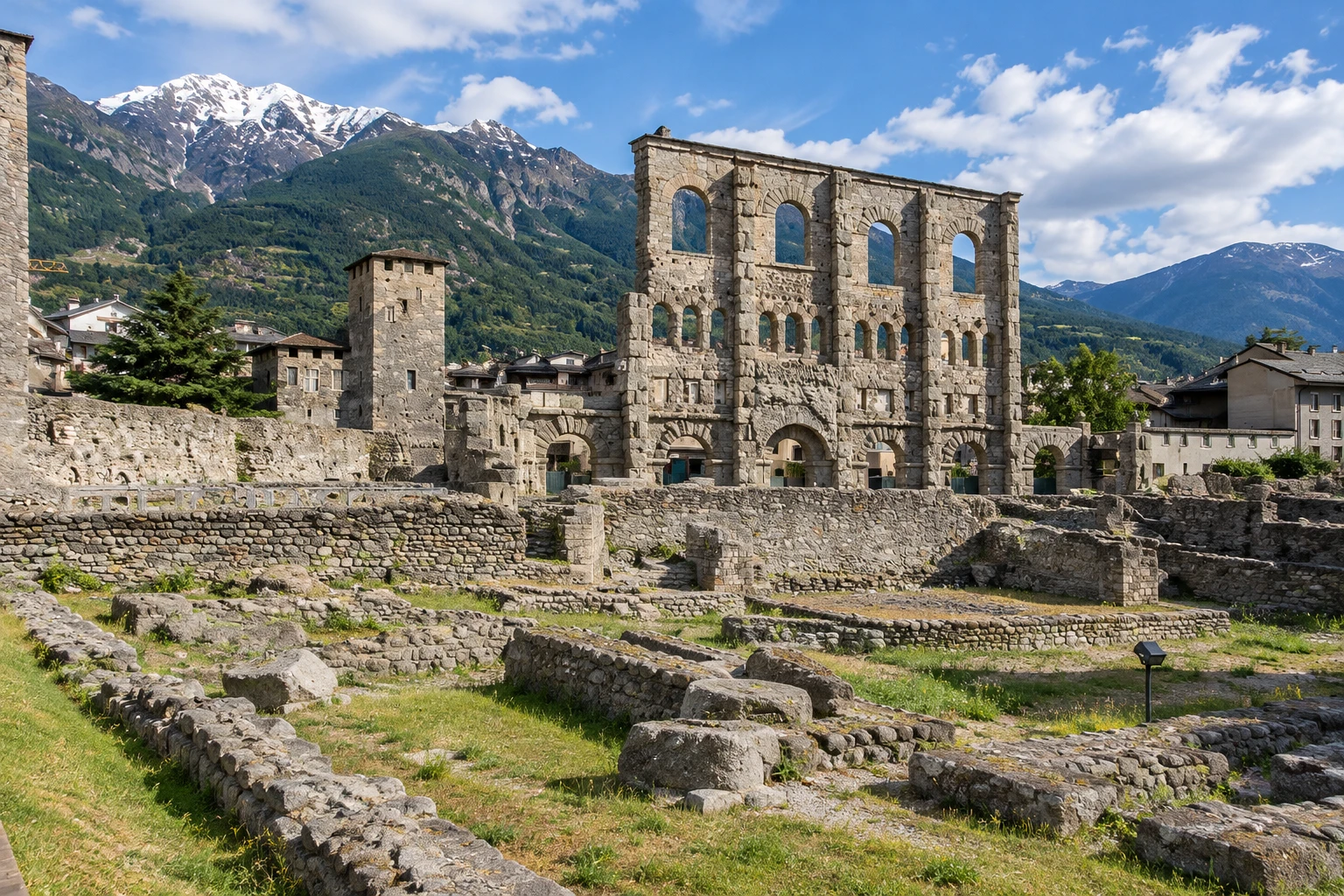
Teatro romano from the 1st century, next to the Porta Praetoria, with a 22-meter-high stone façade, arcades and windows, and space for about 4,000 spectators.
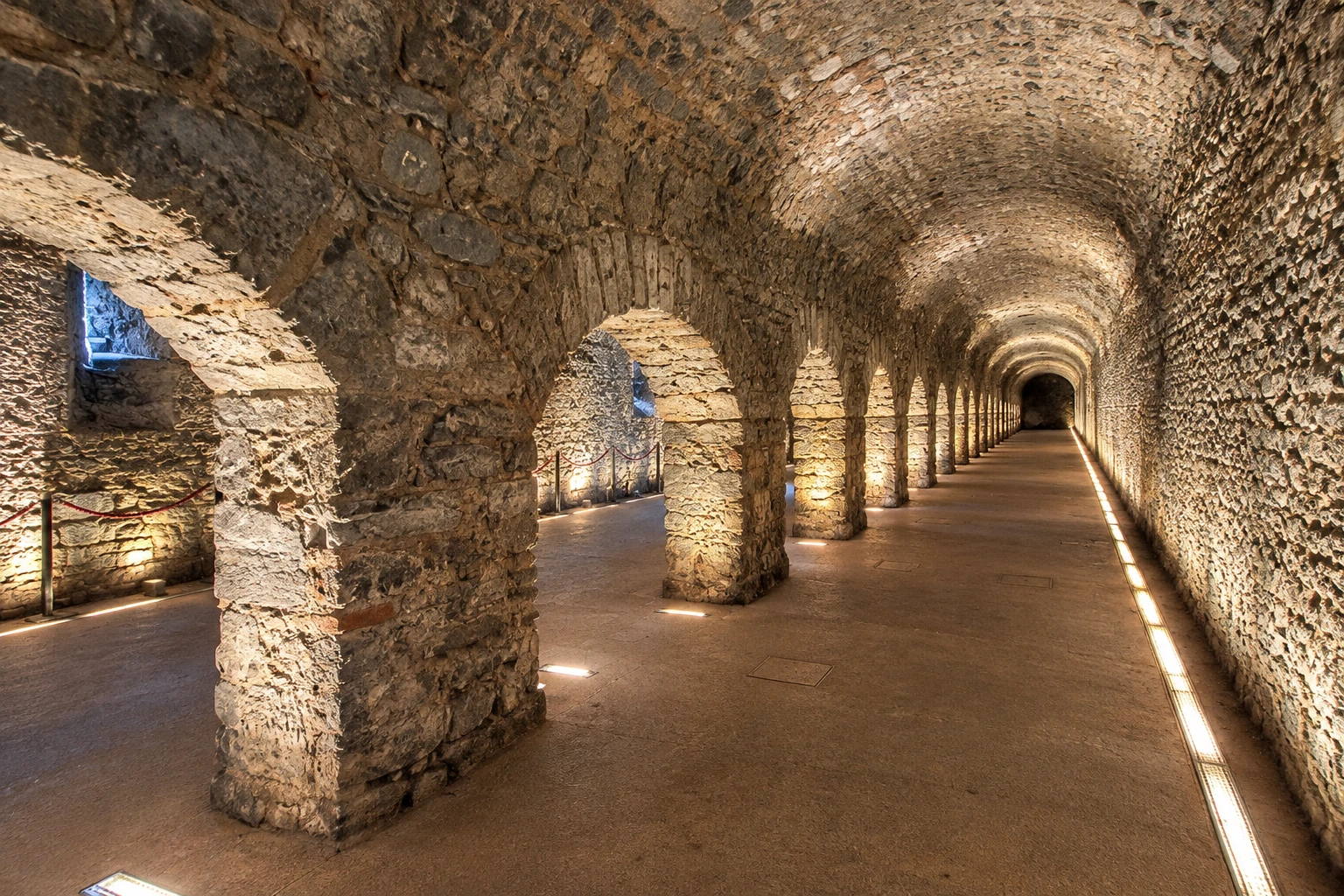
Roman underground gallery of the forum of Augusta Praetoria, with two naves and arches on three sides of a rectangle, next to the cathedral.
Before you go
Aosta – Italy Destination Turin Capital
Approximate distances. Check flights and bus, train or boat schedules before you travel.
Connections to Brazil are usually via another city. Confirm before booking. The nearest airports are Turim (about 115 km), Genebra (about 140 km via the Mont Blanc tunnel), and Milan Malpensa (about 160 km). By train you can reach Aosta from Turim in about 2 hours, with a change in Ivrea on some services. Buses link Aosta to Turim, Milan and Courmayeur. By car, take the A5 motorway, or the Great St Bernard tunnel road coming from Switzerland.
One day is enough for the Roman monuments, Santo Urso and the cathedral. With two days, visit the megalithic area and Fénis Castle, or take a trip up to Pila. Aosta also works as a base for the valleys of Mont Blanc, Gran Paradiso and Cervino.
From June to September is best for hiking in the mountains and visiting castles with long daylight. From December to April for skiing in Pila and the valley resorts, depending on snow. At the end of January, the Feira de Santo Urso fills the streets with wooden handicrafts. Remember the seasons are reversed compared to Brazil and that Italy is 4 to 5 hours ahead of Brasília, depending on the time of year.
The seasons shown are the most usual ones; nature doesn't always follow the calendar.
For the city, no: the monuments are in the center, a few minutes' walk from each other, and the Pila cable car departs near the station. For the castles and side valleys, a car is helpful; there are regional buses but with fewer schedules.
Suggested itinerary
Built with the places on this page. No rush: it's paced so you have time to see them.
Start at the Arco de Augusto and enter the Santo Urso complex, with its Romanesque cloister and 11th-century frescoes above the nave. Then proceed to the Porta Praetoria.
Visit the Roman theatre with its large stone façade, then the forum cryptoporticus, the Roman underground gallery beside the cathedral.
See the cathedral and the treasure museum, and finish at Piazza Émile Chanoux, the city centre, with cafés under the arcades.
Central restaurants serve the valley cuisine: fonduta with fontina cheese, carbonade, Valpelline-style soup and the café à valdostana, served in a wooden cup with several spouts.
Day 1
Arco de Augusto, Santo Urso and Porta Praetoria.
Roman theatre and forum cryptoporticus.
Cathedral, treasure museum and Piazza Chanoux.
Dinner with the cuisine of the Vale de Aosta.
Day 2
Take a bus or taxi to the megalithic area of Saint-Martin-de-Corléans, with stelae and prehistoric tombs under a large shelter.
Continue to Fénis, about 12 km away, for the guided tour of the castle, with its double walls and the courtyard frescoes.
Return to Aosta via the Dora Baltea valley, with mountains and terraced vineyards.
Restaurants and enotecas offering wines from the Vale de Aosta.
Check before you go. Opening hours and days change, and places may close for renovations, holidays or events. This itinerary is a suggestion from Cidade Turismo, not a commitment: plan yours by checking directly with each place you intend to visit.
Before you go
Italian and French, the two official languages of the Vale de Aosta, plus the Franco-Provençal dialect. Signs are usually in both languages.
By train in about 2 hours, with a change in Ivrea on some services, or by bus. By car via the A5 it's about 115 km.
The Arco de Augusto, the Porta Praetoria, the Roman theatre, the cryptoporticus, the collegiate church of Santo Urso, the cathedral and the megalithic area of Saint-Martin-de-Corléans.
Yes. Courmayeur, at the foot of Mont Blanc, is about 35 km away, with buses and road access via the A5.
On January 30 and 31, with artisans from the valley selling wooden goods, basketry and textiles along the streets of the centre.
Cross-border routes
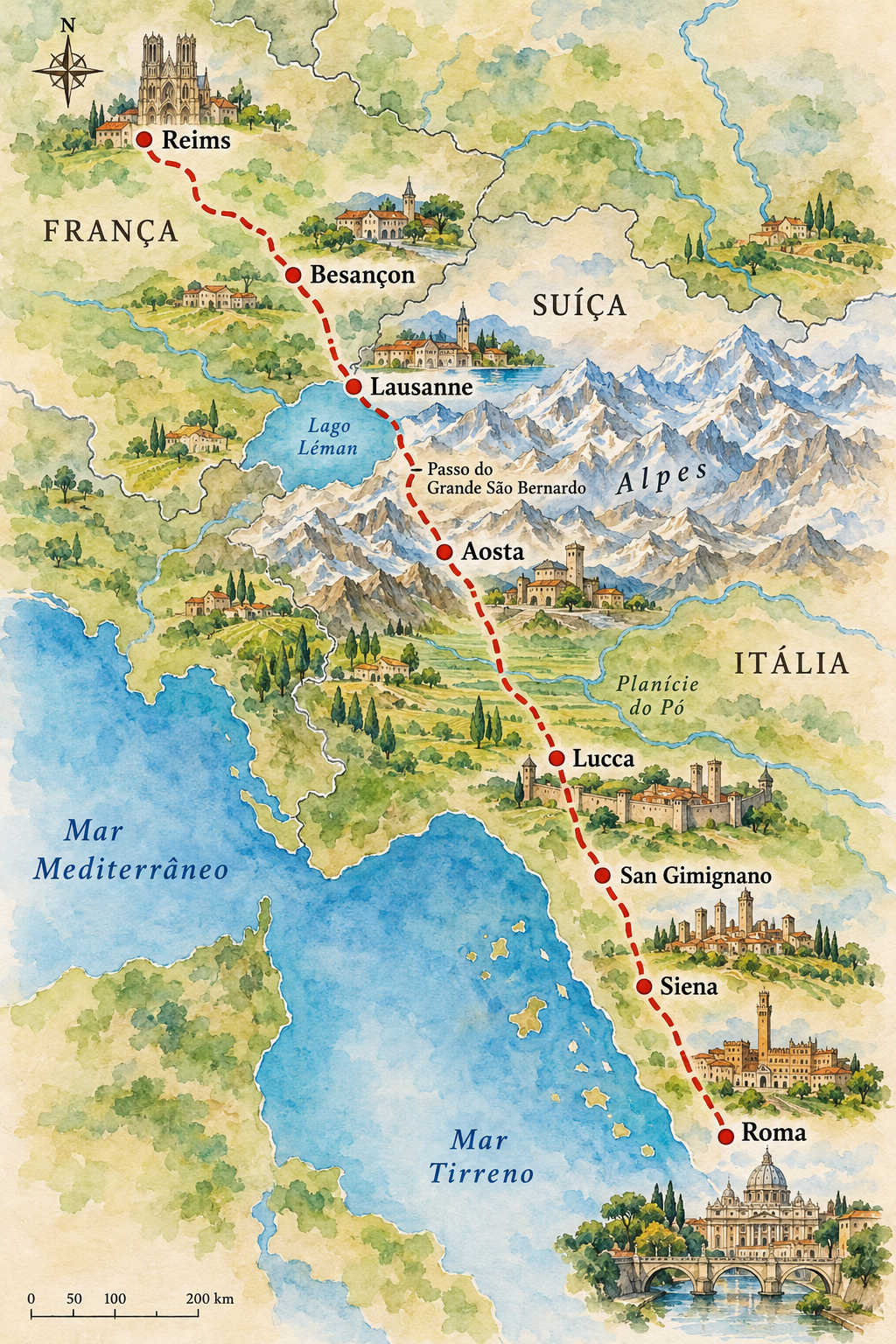
The ancient pilgrims’ route to Rome: from Canterbury Cathedral, through France and Switzerland, over the Alps via the Great St Bernard Pass and through Tuscany to St. Peter’s Square.