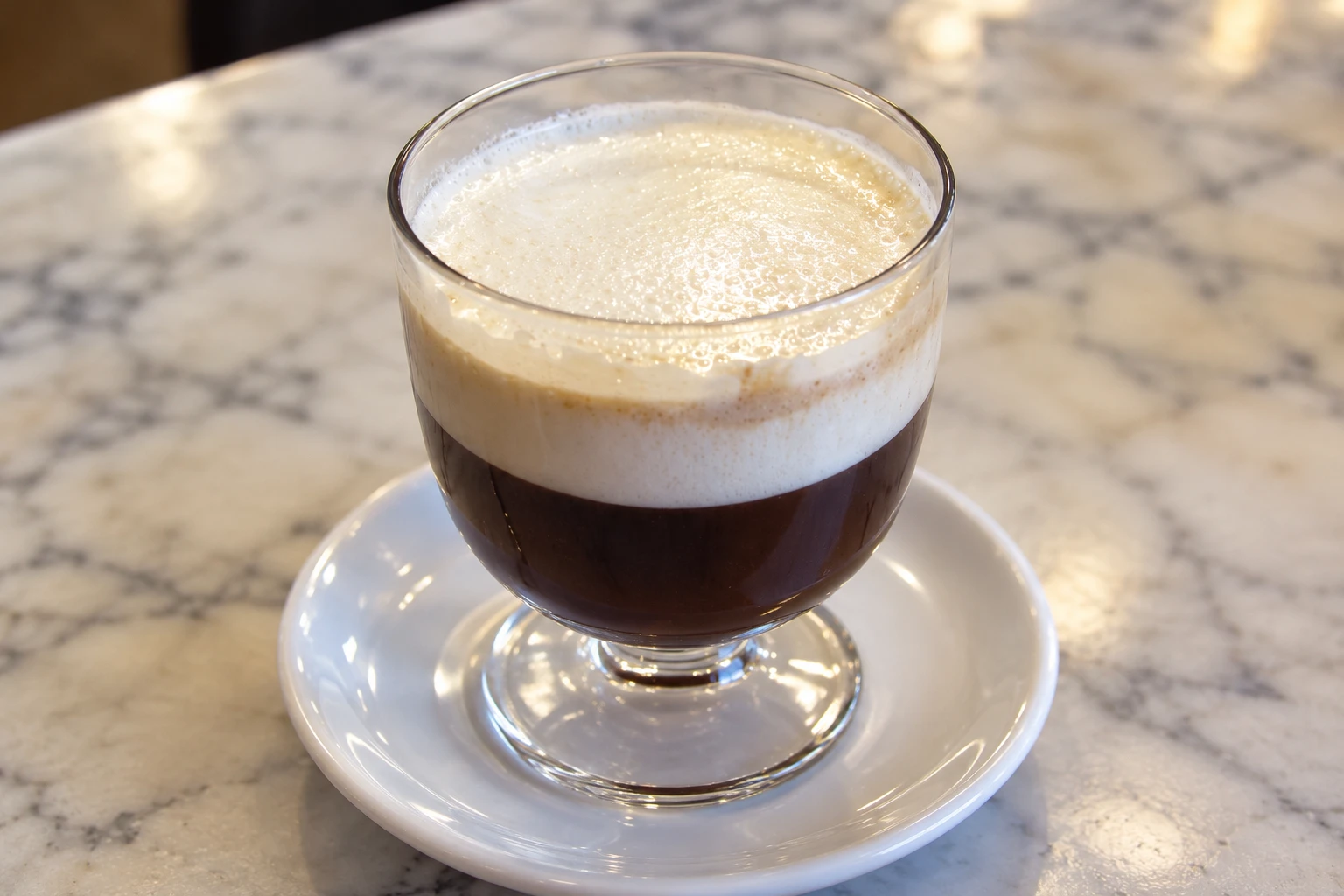
Bicerin
Hot drink served in a small glass cup, in three unmixed layers: thick hot chocolate, espresso coffee and heavy cream. It is Turin’s typical drink, linked to the city’s historic cafés since the 18th century.
Antarctica
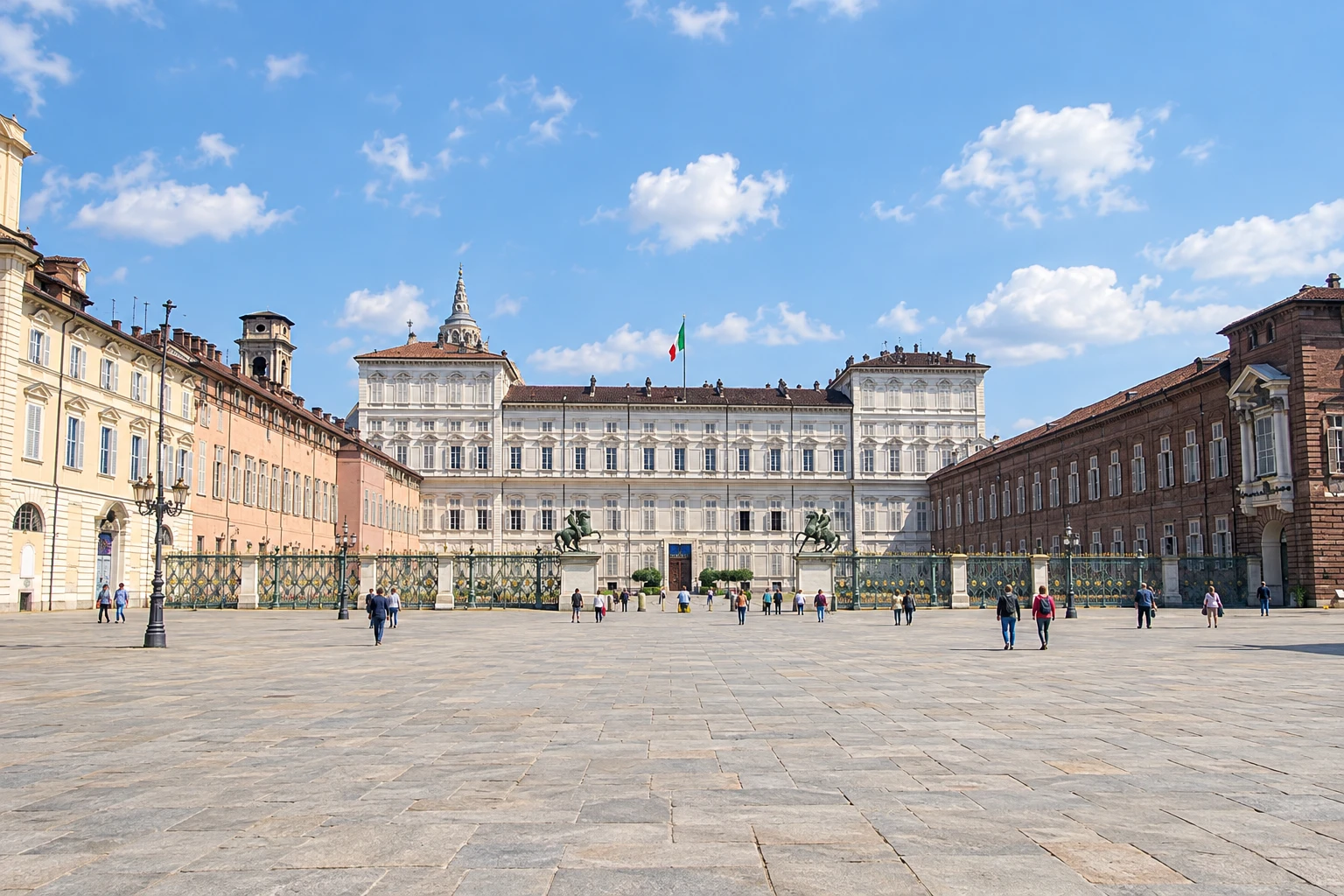
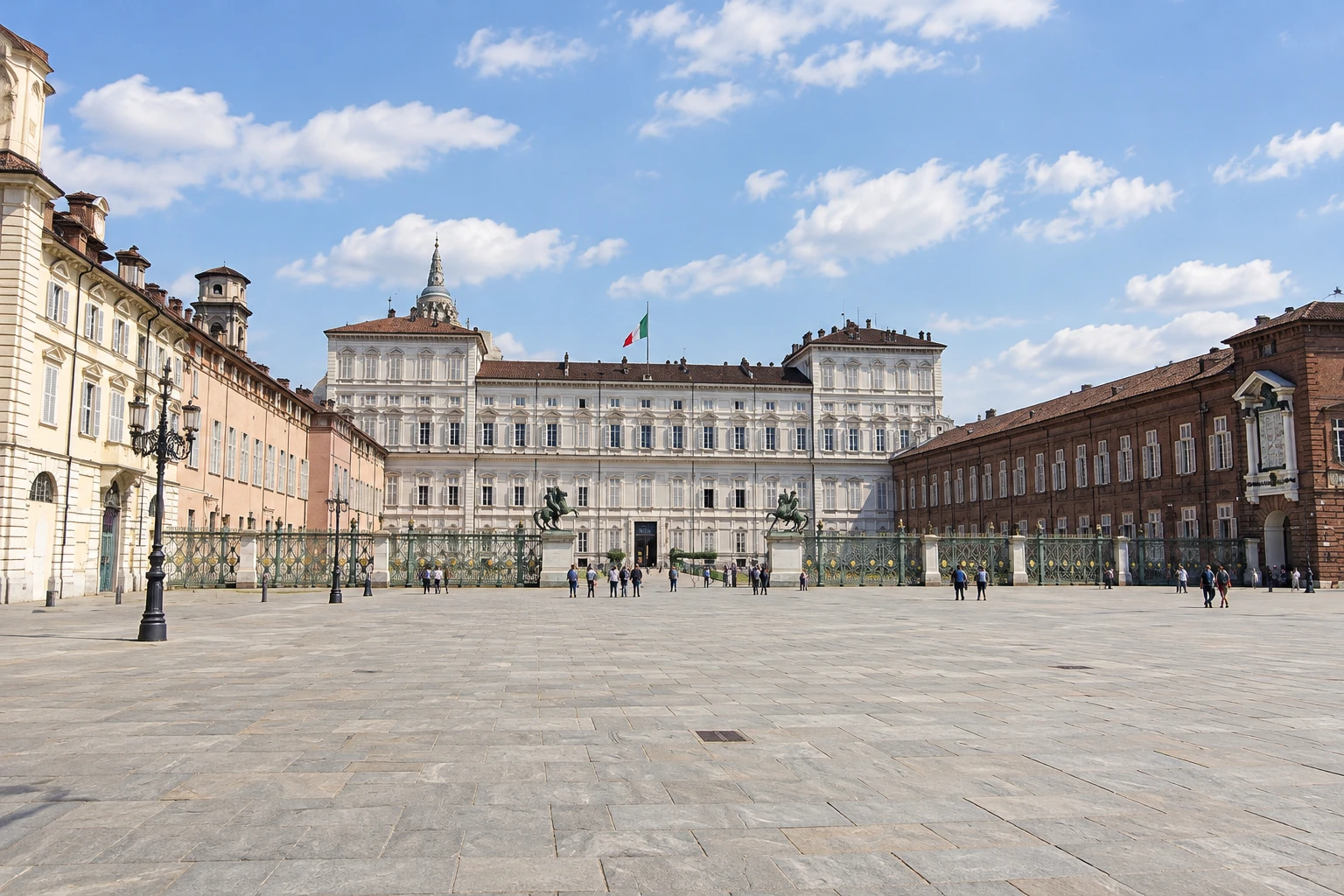
In the photo: Piazza Castello and Palazzo Reale, Turim
Illustrative images. The pictures in this guide are illustrations based on the real place, not photographs, and may differ from it.
The city
Capital of Piemonte and former seat of the Casa de Savoia, Turim brings together around Piazza Castello the Palazzo Madama, the Musei Reali and the Duomo, which holds the Santo Sudário. Nearby are the Museo Egizio and the Mole Antonelliana, with the Museo Nazionale del Cinema. Outside the center are the Basilica di Superga, the Reggia di Venaria, Stupinigi, the Lingotto and the Juventus stadium; the Langhe, land of Barolo, are about an hour away.
Turin lies in northwestern Italy on the left bank of the Po, backed by hills and facing the sweep of the western Alps, which fills the horizon on clear days. It's the capital of Piedmont. Once the Roman colony of Augusta Taurinorum, Turin became the capital of the Duchy of Savoy in 1563 and later the first capital of unified Italy. In the 20th century it became a city of cars and cinema.
The center retains its Roman grid and court architecture: broad squares, Baroque palaces by Guarino Guarini and Filippo Juvarra, and 18 km of arcades that shelter walkers from rain and sun. Start on Piazza Castello, home of the Palazzo Reale and Palazzo Madama. To the south, Via Roma leads to Piazza San Carlo and Porta Nuova station. To the east, Via Po descends past the Mole Antonelliana to Piazza Vittorio Veneto and the river. To the west, pedestrian Via Garibaldi cuts through the Quadrilatero Romano, the oldest quarter. To the north are the Porte Palatine and Porta Palazzo market.
Across the Po, the city climbs the hillside past the Gran Madre church, Monte dei Cappuccini, Villa della Regina, and, higher still, the Basilica di Superga. On the near bank, the Parco del Valentino follows the river beside the San Salvario neighborhood. To the south, the former Fiat factory at Lingotto anchors a district of automotive and art museums.
Turin has over 80 museums. The most popular include the Museo Egizio, the world's oldest museum devoted to Egypt, the Musei Reali, the Museo Nazionale del Cinema inside the Mole, and Palazzo Madama. Turin is also known for historic cafés, chocolate, and vermouth enjoyed at aperitivo time.
The Po plain and nearby Alps shape the climate. Winter is cold, averaging around 3°C in January, with some foggy days and others so clear that the entire snow-covered range comes into view. Summer is hot, with July highs above 30°C. Rain is heaviest in spring, especially in April and May, and returns in October. April, May, September, and October tend to be mild for walking, and the arcades come in handy year-round.
The city is flat, orderly, and easy to navigate on foot. The Reggia di Venaria and Palazzina di Caccia di Stupinigi, the grand Savoy hunting residences, lie in neighboring municipalities about 10 km away. Milan is about an hour away by train.
30 places to stay in Turin.
30 places to eat in Turin.
Hotéis e restaurantes da cidade no mapa.
Flavors of Italy

Hot drink served in a small glass cup, in three unmixed layers: thick hot chocolate, espresso coffee and heavy cream. It is Turin’s typical drink, linked to the city’s historic cafés since the 18th century.

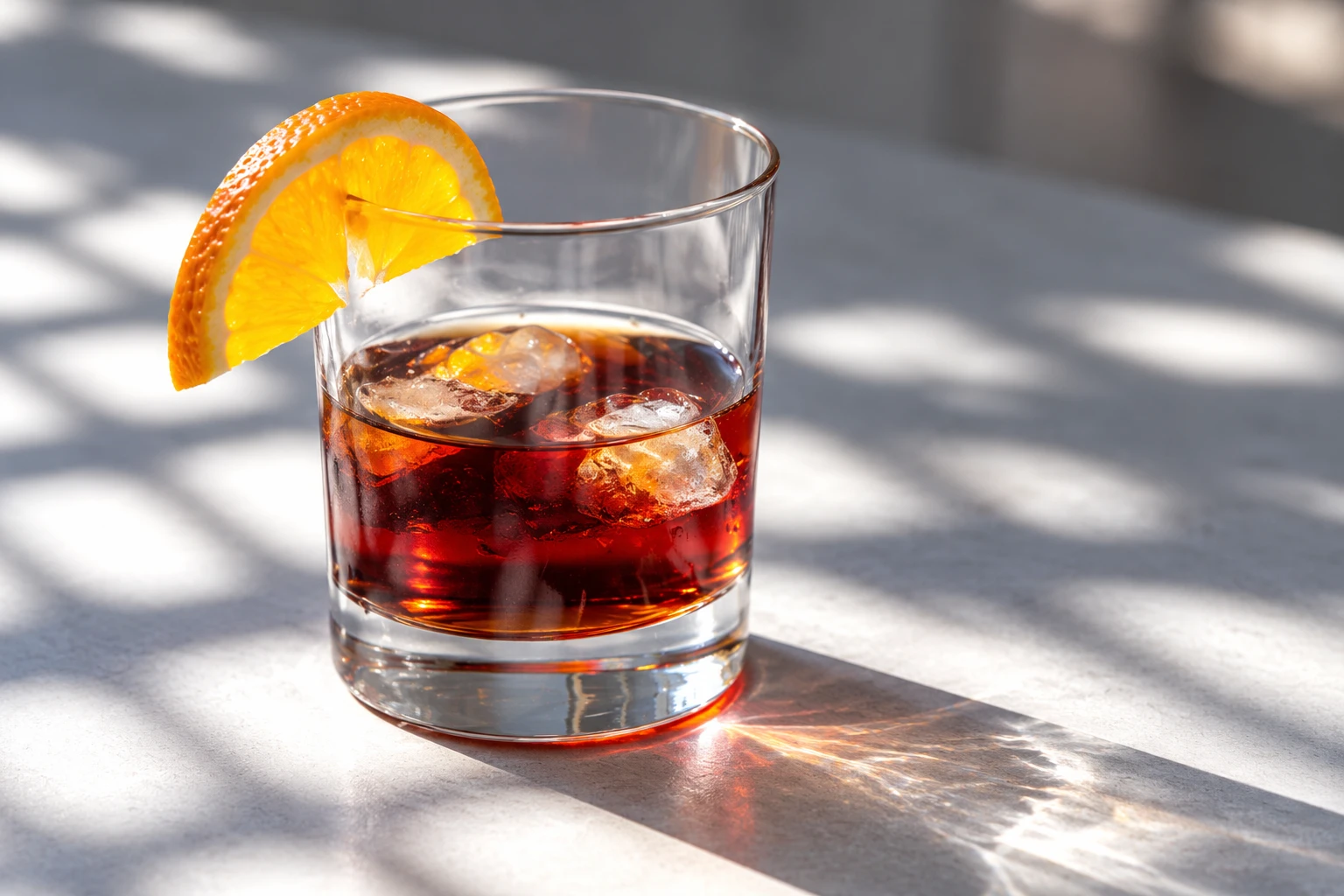
A flavored wine made with wormwood, herbs and spices, born in Turin at the end of the 18th century. Drunk neat or in cocktails, it is the base of the Turin aperitivo and has its own geographical indication.
The local experience
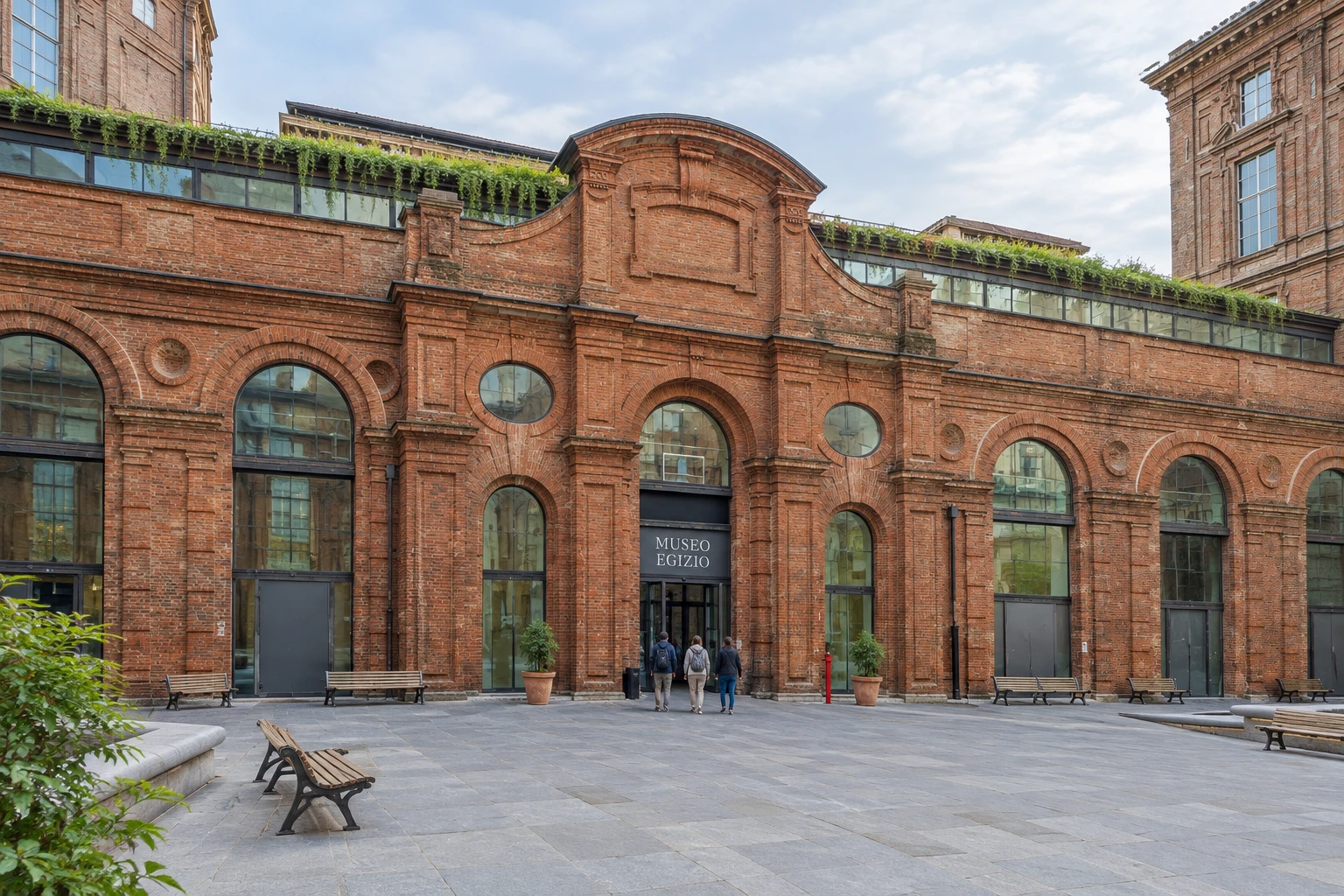
The oldest museum in the world dedicated solely to Ancient Egypt, opened in 1824. It houses statues of pharaohs, papyri, mummies and the complete tomb of the architect Kha and his wife, Merit.
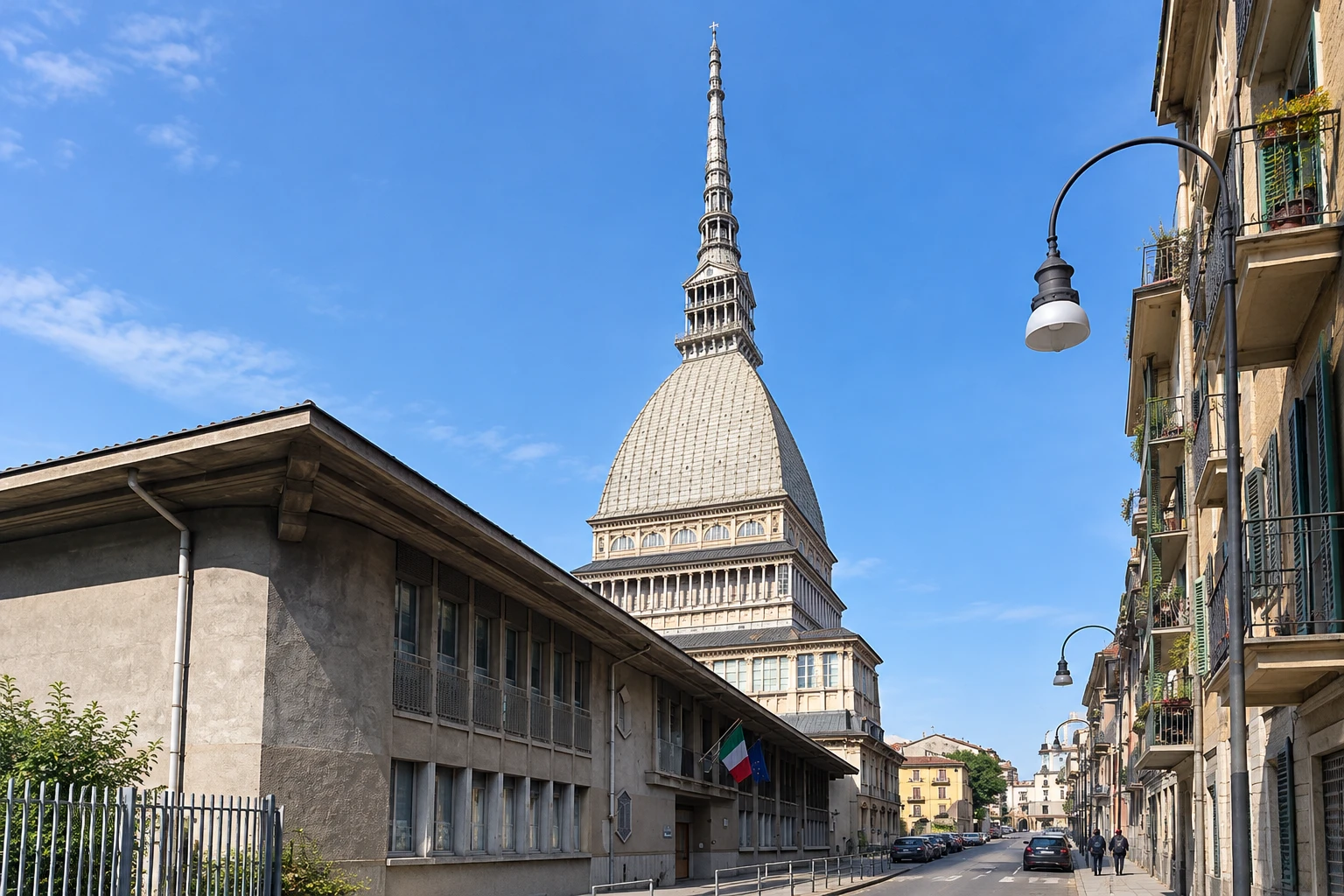
A symbol of Turin, 167.5 meters high. Inside it houses the Museo Nazionale del Cinema, and a glass-walled elevator rises to the panoramic terrace at 85 meters.
Turin's main square, surrounded by arcades, with the Palazzo Madama in the center, the Palazzo Reale to the north, the Teatro Regio and the church of San Lorenzo. From it lead Via Roma, Via Po and Via Garibaldi.
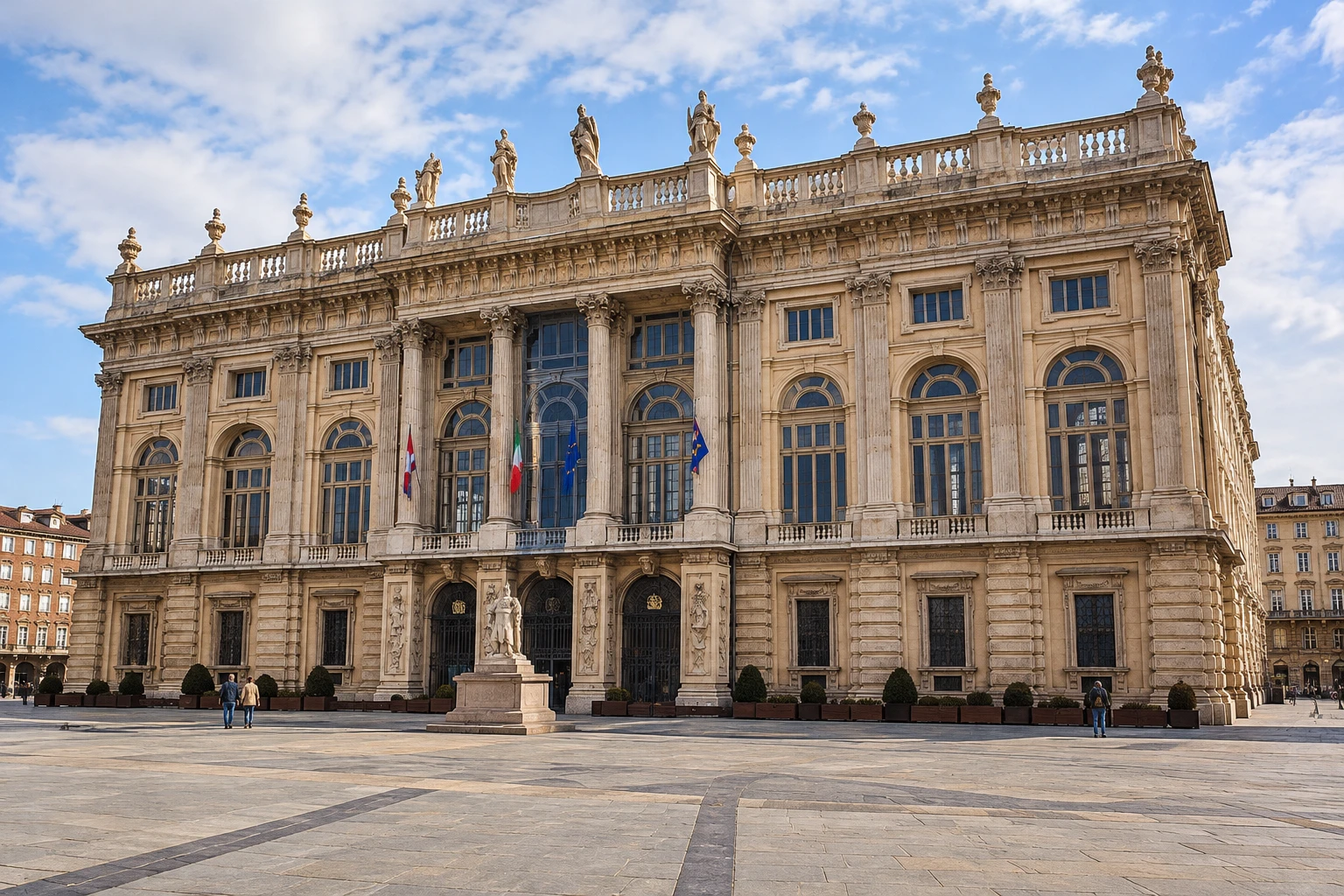
Palace in the middle of Piazza Castello that brings together two thousand years of history: a Roman gate, a medieval castle and a Baroque façade by Filippo Juvarra. It houses the Museo Civico d'Arte Antica.
To choose before you go
Where each tour starts, how long it takes, how it is done, what is included and the price range.
For train travelers, this is the classic introduction to Turin, a straight walk almost entirely under arcades from the station to the square of the palaces. Construction of Porta Nuova station, with its great central vault and expanses of glass, began in December 1861, the year of Italian unification. Opposite, Via Roma is the center's main shopping street, now pedestrian-only. Halfway along is Piazza San Carlo, known to locals as the city's drawing room. Designed by Carlo di Castellamonte, it was finished in 1638 as Turin expanded south. Arcades surround the rectangular square, with the Baroque churches of Santa Cristina and San Carlo Borromeo standing side by side at one end. At the center, Carlo Marochetti's 1838 equestrian monument depicts Emmanuel Philibert sheathing his sword after victory at Saint-Quentin. Locals call it Caval ëd Bronz, the Bronze Horse. Historic cafés under the arcades once drew writers and politicians. Order a bicerin, the hot drink made with coffee, chocolate, and cream. On one side, Palazzo Turinetti houses the Gallerie d'Italia, five floors devoted chiefly to photography, with a selection of Piedmontese Baroque works. The Galleria San Federico, a covered passage between the square and Via Roma, has a historic movie theater. Via Roma ends at Piazza Castello, where other main streets fan out through the center.
Stops: Torino Porta Nuova, Via Roma, Piazza San Carlo, Chiesa di Santa Cristina, Chiesa di San Carlo Borromeo, Gallerie d'Italia, Galleria San Federico, Piazza Castello.
Includes: Free walk. The Gallerie d’Italia charges separate admission. Check current rates.
Tip: This route works well in the rain, as you can stay under the arcades almost the whole way. The square fills up for aperitivo in the late afternoon. The tourist office is on Piazza Castello at the corner of Via Garibaldi.
Best time: Year-round. The Luci d’Artista light installations illuminate the downtown streets from late October through January.
Piazza Castello has been the heart of Turin since the time of the Savoys. Arcades of different periods surround the square, with one palace in the middle and another at the far end. At the far end, the Musei Reali bring together the Palazzo Reale, Armeria Reale, Biblioteca Reale, Galleria Sabauda, Museo Archeologico, Sale Chiablese, Cappella della Sindone, and Giardini Reali on a route of about 3 km. Start with the palace state rooms and armory, pass through the chapel with its spiraling dome by Guarino Guarini, and continue to the picture gallery. On the first floor of the Galleria Sabauda, a space devoted to Leonardo da Vinci rotates original drawings from the Biblioteca Reale collection in a climate-controlled case. André Le Nôtre, the landscape architect of Versailles, designed the gardens behind the palace in 1697. On a corner of the square, the church of San Lorenzo has almost no facade but holds another Guarini dome. Look up at the interwoven arches. In the middle of the square, Palazzo Madama spans two thousand years of history. A gate of the Roman camp became a medieval castle, then gained a Baroque facade and staircase by Filippo Juvarra through the initiative of two regents, the madamas who gave it its name. In the 19th century it housed the kingdom's first Senate. Today the Museo Civico d'Arte Antica has Gothic and Renaissance rooms, glass and ceramics, a medieval botanical garden, and a tower overlooking the square. Beside it stands the Teatro Regio, the city's opera house, whose origins date to 1740.
Stops: Piazza Castello, Musei Reali di Torino, Palazzo Reale, Armeria Reale, Galleria Sabauda, Chapel of the Holy Shroud, Giardini Reali, Chiesa di San Lorenzo, Palazzo Madama, Teatro Regio.
Includes: The square, San Lorenzo Church and Royal Gardens are free. The Royal Museums and Palazzo Madama charge separate admission and are included in the Torino+Piemonte Card. Check current rates.
Tip: The Musei Reali are five museums in one, so choose what to explore in depth. The two museums on this outing close on different weekdays. Check ahead. For the view alone, climb the Palazzo Madama tower.
Best time: Year-round. In spring and summer, the Royal Gardens offer a shady spot for a break.
Northwest of Piazza Castello lies the oldest part of Turin, the Roman colony's grid of streets known locally as the Quadrilatero Romano. The late 15th-century Duomo, dedicated to St. John the Baptist, keeps the Holy Shroud in a closed case in a side chapel. The cloth goes on public display only rarely. Beside the cathedral are the Porte Palatine, the northern gate of Augusta Taurinorum, with two brick towers and the wall between them, and a section of the Roman theater. A few minutes away on Piazza della Repubblica, Porta Palazzo is described by the local tourist office as Europe's largest open-air market. Stalls sell fruit, vegetables, fish, cheeses, and spices from many countries. The Galleria Umberto I, a covered passage with shops and restaurants, is in the same area. In the streets behind it, Borgo Dora holds the Balôn secondhand market every Saturday. On the second Sunday of each month the Gran Balôn brings more than 300 stalls of antiques and collectibles. Return through the Quadrilatero to the Santuario della Consolata, dedicated to the city's patroness. Guarini, Juvarra, and Carlo Ceppi all contributed to the church. Nearby, the MAO museum of Asian art occupies the 18th-century Palazzo Mazzonis. Its displays include Chinese funerary art and works from Japan, the Himalayas, and the Islamic world. The Museo della Sindone nearby explains studies of the Shroud. Finish on pedestrian Via Garibaldi and follow it past the Palazzo Civico, the town hall, back to Piazza Castello. In the evening, tables fill the narrow streets of the Quadrilatero.
Stops: Turin Cathedral, Porta Palatina, Porta Palazzo, Galleria Umberto I, Balôn, Santuario della Consolata, MAO Museo d'Arte Orientale, Museo della Sindone, Via Garibaldi, Palazzo Civico.
Includes: The churches, Roman ruins, and markets are free. MAO and Museo della Sindone charge separate admission. Check current prices.
Tip: Go in the morning, Monday through Saturday, when the market is set up. Saturday is Balôn market day. Respect services at the Duomo and the Consolata.
Best time: Year-round. The Gran Balôn takes place on the second Sunday of each month.
Three blocks between Piazza San Carlo and Piazza Castello hold the city's most visited museum and the palace where the Italian parliament began. Founded in 1824 in a Baroque palace, the Museo Egizio is the world's oldest museum dedicated to Egyptian civilization and has one of the most important collections outside Egypt. Statues, papyri, sarcophagi, and everyday objects cover more than 4,000 years of history along a route still expanding with new rooms and multimedia features. Separate access leads to the rock chapel of Ellesyia, a temple cut into the rock and moved here stone by stone. Museum admission requires a ticket bought online. On leaving, you'll reach Piazza Carignano. Palazzo Carignano, commissioned from Guarino Guarini in 1679, has an undulating brick facade and an entrance hall with twin staircases. Kings Charles Albert and Victor Emmanuel II were born here. It housed the Subalpine Parliament and Italy's first parliament. The Museo Nazionale del Risorgimento Italiano on the main floor traces the country's formation from the 18th-century revolutions to the eve of World War I. It includes both parliamentary chambers, the Subalpine Chamber preserved as it was in 1848 and the great hall built for the kingdom's deputies. Teatro Carignano stands opposite. The other facade overlooks Piazza Carlo Alberto and the National Library. From here the Galleria Subalpina, a covered passage with cafés, leads back to Piazza Castello.
Stops: Egyptian Museum, Piazza Carignano, Palazzo Carignano, Museo Nazionale del Risorgimento Italiano, Teatro Carignano, Piazza Carlo Alberto, Galleria Subalpina.
Includes: The squares and arcade are free. Museo Egizio and Museo del Risorgimento charge admission, included in the Torino+Piemonte Card. Check current prices.
Tip: Buy a timed Museo Egizio ticket and allow at least half a day. Weekdays outside school vacations are quieter. The highlight at the Risorgimento museum is its two parliamentary chambers.
Best time: Year-round. A classic outing for cold or rainy days.
Via Po runs diagonally downhill from Piazza Castello to the river. It was laid out in the 17th century with continuous arcades on both sides so people could walk under cover from the Palazzo Reale to the Po. Today bookshops, cafés, and bars line the arcades and fill up at aperitivo time. A few steps off the street, the Mole Antonelliana rises above the roofs. At 167.5 m, it's Turin's symbol and is described as Europe's tallest masonry building. Inside is the Museo Nazionale del Cinema, one of the world's leading film museums for its collections, with an unusual layout. The route spirals up through the dome between sets, projections, and lighting effects, from shadow theater and early projection lanterns to special effects and virtual reality. A glass panoramic elevator rises through the central hall to the lookout over the city, hillside, and Alps. Nearby on Via Giulia di Barolo, Casa Scaccabarozzi is another work by Alessandro Antonelli, the Mole's architect. The wedge-shaped building is so narrow that it's nicknamed Fetta di Polenta, the Slice of Polenta. Via Po ends at Piazza Vittorio Veneto, known simply as Piazza Vittorio. This 31,000-square-meter rectangle is lined with arcades and opens toward the river and hillside, with the Gran Madre church across the bridge. Tables under the arcades make it a favorite evening gathering place. Below the square by the water are the Murazzi, the old quays.
Stops: Via Po, Mole Antonelliana, National Cinema Museum, Casa Scaccabarozzi (Fetta di Polenta), Piazza Vittorio Veneto, Murazzi del Po.
Includes: Free walk. The cinema museum and panoramic elevator charge admission, with combined or separate tickets. Check current rates.
Tip: Book online ahead of time, especially for the panoramic elevator, which has timed tickets and a separate line. Torino+Piemonte Card holders also need to reserve. Go up on a clear day. The museum closes one day a week, so check ahead.
Best time: Year-round. On clear winter days, you can see the snowcapped Alps from the lookout.
Cross the bridge at the end of Piazza Vittorio Veneto and the flat city ends. Turin's hillside starts on the far bank, and the three stops on this route rise along its lower slopes. Just beyond the bridge is the Gran Madre di Dio, a circular Neoclassical church designed by Ferdinando Bonsignore and completed in 1831, with a columned portico and broad steps. From the steps you can look straight across the square and along Via Po toward downtown. Behind the church, an uphill lane leads to Villa della Regina. Built in the early 17th century as a hillside vineyard estate for Cardinal Prince Maurizio of Savoy, it became a retreat for the family's duchesses, princesses, and queens. From 1692, under Anne d'Orléans, artists and architects including Filippo Juvarra redesigned it. There are decorated salons, formal Italian gardens, and a vineyard within the city facing downtown. Back at the riverside, steps and a ramp climb in about ten minutes to Monte dei Cappuccini, a 284 m hill topped by the Capuchin church. Its terrace offers the classic view of Turin: the city grid, the Mole in the center, and the Alps in the background. Next door, the Museo Nazionale della Montagna has rotating collections, exhibitions, a section on mountaineer Walter Bonatti, and, at the end of the route, a lookout and panoramic terrace facing the mountains.
Stops: Chiesa della Gran Madre di Dio, Villa della Regina, Monte dei Cappuccini, Museo Nazionale della Montagna.
Includes: The churches and terrace on Monte dei Cappuccini are free. Villa della Regina and the Museo della Montagna charge separate admission. Check current prices.
Tip: Visit Villa della Regina first, as it closes earlier and isn't open every day. Save Monte dei Cappuccini for the last hour of daylight. After a winter cold front, the whole Alpine range comes into view.
Best time: Year-round. The mountain range is usually snowy from November to March, and the villa gardens are green from April to October.

The Valentino is Turin's best-known park, covering about 42 hectares along the left bank of the Po at the foot of the hills, a few minutes' walk from downtown. It has avenues, lawns, cycle paths, and some 1,800 large trees. Herons and ducks live by the water. At its center stands the Castello del Valentino, one of the residences of the House of Savoy. Already a riverside country house in the 16th century, it flourished under Christine of France, the duchy's first regent. She expanded it in the French style with high roofs and commissioned decorations for the principal rooms. Today it houses the Politecnico's architecture school. The decorated rooms can be visited only on a guided tour booked online, with entry from Viale Pier Andrea Mattioli. Beside the castle, the university's Orto Botanico dates to the 18th century and has rare plants and exotic species. Farther on, statues surround the large Rococo basin of the Fontana dei Dodici Mesi. Stone paths, streams, and water features fill the Giardino Roccioso. The park has kiosks and bars and hosts events and performances throughout the year. It's also a starting point for walks and bike rides along the Po. Between the park and Porta Nuova station is San Salvario, a neighborhood of diverse communities known for nightlife, restaurants, bars, and artisans' workshops.
Stops: Parco del Valentino, Castello del Valentino, Orto Botanico, Fontana dei Dodici Mesi, Giardino Roccioso, San Salvario.
Includes: The park is free. Guided visits to the castle's principal floor are free by reservation. The botanical garden has its own visiting days and hours and may charge admission. Check current prices.
Tip: Castle tours are in Italian only and places are limited. Book ahead. Check the botanical garden's separate opening calendar. After a late afternoon visit to the park, have dinner in San Salvario.
Best time: April to October for a green park and flowering plants. In fall the leaves turn color.
The Basilica di Superga stands at 672 m on the ridge east of the Po, visible from almost anywhere in Turin. Its story begins in 1706 during the siege by French and Spanish troops. Duke Victor Amadeus II climbed the hill to observe the enemy and vowed to build a monument there if he won. Filippo Juvarra oversaw construction between 1717 and 1731. The church has a circular plan, a 75 m dome, two 60 m bell towers, and a portico of eight Corinthian columns. The site was chosen to be visible from the city and Rivoli Castle. Guided visits take in the tombs of the House of Savoy beneath the basilica and the king's apartment. You can climb stairs to the dome for a full panorama of the plain, though it closes in rain, fog, or snow. From the belvedere in front of the church, the city and the sweep of the Alps form a view Rousseau described as the finest spectacle the human eye could see. Behind the basilica, a plaque commemorates Grande Torino, the soccer team killed in 1949 when its plane struck the hill. Fans leave tributes here. The ascent is part of the outing. From Sassi station in the neighborhood at the foot of the hill, restored vintage cars climb a 3.1 km rack railway through the trees. At the top, trails explore the hillside nature park.
Stops: Tranvia Sassi-Superga, Basilica di Superga, Royal Tombs of the House of Savoy, Basilica dome, Grande Torino Memorial.
Includes: The basilica is free to enter. The rack railway, Savoy tombs and apartment, and climb to the dome are charged separately. Check current rates.
Tip: Choose a clear day, preferably in the morning. Check the rack railway’s operating days and service status before setting out. A bus replaces it when it’s suspended. Winter service is less frequent.
Best time: Year-round. Clear winter days offer the sharpest views of the Alps.
A few metro stops south of Porta Nuova is the Turin of the auto industry. Lingotto was Fiat's first great factory, a 500 m building where the assembly line rose floor by floor to a banked test track on the roof. After the factory closed, Renzo Piano converted it into a complex with a convention center, shops, and an auditorium. The track is still up there, transformed into the Pista 500 rooftop garden with views of the hills and Alps. Also on the roof, in a suspended structure Renzo Piano called the Scrigno, or treasure chest, the Pinacoteca Agnelli displays Giovanni and Marella Agnelli's collection. Its 25 works span the 18th to the mid-20th century: seven paintings by Matisse, six views of Venice by Canaletto, two views of Dresden by Bellotto, two plaster works by Canova, works by Tiepolo, Modigliani, and Severini, and Balla's 1913 painting on the speed of the automobile. There are also temporary exhibitions. About a 15-minute walk away on the Po, the Museo Nazionale dell'Automobile, or MAUTO, grew out of an idea conceived in 1932 by two pioneers of Italian motoring. On three floors, more than 200 original cars from 80 makes show how the automobile evolved from a means of transportation into an object of devotion. The displays use staged settings for early vehicles, racing cars, prototypes, and models that defined their eras.
Stops: Lingotto, Pista 500, Pinacoteca Agnelli, National Automobile Museum (MAUTO).
Includes: Pista 500 with the Pinacoteca Agnelli and MAUTO charge admission, included in the Torino+Piemonte Card. Pay your own metro fare. Check current prices.
Tip: Go up to the track in late afternoon on a clear day. Both museums close one day a week. Check ahead. Car enthusiasts with limited time should start at MAUTO.
Best time: Year-round.
Turin has strong ties to 20th-century and contemporary art, much of it displayed in converted industrial buildings beyond the palace circuit. Start at GAM, the Galleria Civica d'Arte Moderna e Contemporanea. It was the first museum in Italy to build a public collection of modern art. Its nucleus dates to 1863, when the city gained its civic museum. The route covers four floors. The first explores the 20th century, from Divisionism, Futurism, and abstraction to Pop Art and Arte Povera, with work by Balla, Severini, Boccioni, de Chirico, Dix, Ernst, and Klee. Continue to OGR, the Officine Grandi Riparazioni. These former railway repair workshops now host temporary exhibitions, music, and events. Two private foundations round out the route for anyone following recent art: Fondazione Sandretto Re Rebaudengo and Fondazione Merz, both with changing exhibitions throughout the year. For photography, visit CAMERA, the Centro Italiano per la Fotografia downtown. Outside the art circuit, the interactive Museo Lavazza at the company's headquarters explores coffee culture and more than 120 years of Lavazza family and Italian industrial history across five galleries. The region's major contemporary art museum, Castello di Rivoli, is in a separate municipality west of Turin.
Stops: GAM - Galleria Civica d'Arte Moderna e Contemporanea, OGR - Officine Grandi Riparazioni, Fondazione Sandretto Re Rebaudengo, Fondazione Merz, CAMERA - Centro Italiano per la Fotografia, Museo Lavazza.
Includes: Each venue has its own ticket. Several are included in the Torino+Piemonte Card. Arrange your own transportation and check current prices.
Tip: Choose GAM and one or two other stops for the day. The foundations and OGR open according to their exhibitions. Check the program and opening days before heading out.
Best time: Year-round. A good outing for rainy days.
Day by day
Suggestions to plan the trip. Change the order of the days according to the weather and tour availability.
From Porta Nuova station, follow Via Roma under the arcades and stop on Piazza San Carlo for coffee or a bicerin. Spend the morning at the Museo Egizio with your ticket bought online in advance. On leaving, see the undulating facade of Palazzo Carignano and cross the Galleria Subalpina to Piazza Castello. After lunch, choose one of the square's two palaces: the longer Musei Reali circuit or Palazzo Madama with its tower view. Step into San Lorenzo, then visit the Duomo and Porte Palatine a few minutes away. In midafternoon, head down Via Po to the Mole Antonelliana and ride the panoramic elevator if the sky is clear. Continue to Piazza Vittorio Veneto. If time and daylight allow, cross the bridge and climb Monte dei Cappuccini for the city and Alpine panorama. Return to the square for an aperitif and dinner. Save Superga, the Valentino, and Lingotto for another visit.
Start at the Musei Reali on Piazza Castello for the Palazzo Reale state rooms, armory, Cappella della Sindone, and Galleria Sabauda. Enter San Lorenzo and stop at the Duomo and Porte Palatine. Before lunch, explore Porta Palazzo market while it's open in the morning and eat nearby or in the Quadrilatero Romano. Visit the Santuario della Consolata and return downtown along Via Garibaldi. In the afternoon, visit the Museo Egizio at your reserved time. Afterward, walk through Piazza Carignano and Galleria Subalpina, then follow Via Roma to Piazza San Carlo for an aperitif under the arcades. Opera lovers can check the program at Teatro Regio.
Spend the morning on Via Po and at the Mole Antonelliana, with the Museo Nazionale del Cinema and a reserved panoramic elevator ride. Walk down to Piazza Vittorio Veneto for lunch. Cross the bridge in the afternoon for the Gran Madre, Villa della Regina, and Monte dei Cappuccini in the last hour of daylight. For a higher viewpoint, replace the villa with Superga, reached by tram and rack railway, and allow the whole afternoon. Late in the day, walk along the river to the Parco del Valentino and have dinner in San Salvario.
Start early on Via Roma and Piazza San Carlo, then visit the Museo Egizio at your reserved time. Have lunch around Piazza Carignano. In the afternoon, visit Palazzo Madama and the Musei Reali, or choose one for a more leisurely visit, and step into San Lorenzo. End the afternoon in the Quadrilatero Romano with the Duomo, Porte Palatine, and Santuario della Consolata, followed by dinner in the neighborhood's narrow streets.
Spend the morning at the Mole Antonelliana with its film museum and elevator. Have lunch on Piazza Vittorio Veneto. In the afternoon, take a tram to Sassi and the rack railway to the Basilica di Superga for the Savoy tombs, dome, and belvedere over the city. On the way back, climb Monte dei Cappuccini if daylight allows. If the weather closes in, visit Villa della Regina or the Museo della Montagna instead of Superga.
Start at Porta Palazzo market and, on Saturdays, continue to the Balôn. Take the metro to Lingotto for Pista 500, the Pinacoteca Agnelli, and the Museo dell'Automobile. Late in the afternoon, return along the Po to the Parco del Valentino and view the castle exterior. Have dinner in San Salvario. For a different day, the Reggia di Venaria, about 10 km away, fills a full day with its palace and gardens. It's in a neighboring municipality and served by bus from downtown.
Best time to go
The seasons shown are the most usual ones; nature doesn't always follow the calendar.
Winter · Snowcapped Alps on the horizon · Luci d’Artista
Winter. At Torino Caselle, 1991–2020 temperatures averaged 3.3°C, with lows around −1°C. Rainfall averaged about 48 mm in 1971–2000. It sometimes snows in the city. After cold fronts the air clears and the full mountain range comes into view from Monte dei Cappuccini and Superga. The Luci d'Artista installations usually stay lit until early in the month. It's a quiet time for museums and historic cafés.
Winter · Cold, clear days
Winter. At Torino Caselle, 1991–2020 temperatures averaged 4.9°C, and 1971–2000 rainfall averaged about 47 mm. Cold, often clear days suit hillside views. The Museo Egizio and Musei Reali are quieter on weekdays. Try hot chocolate or bicerin at a downtown café. Bring a heavy coat and closed-toe shoes.
Early spring
Early spring. At Torino Caselle, 1991–2020 temperatures averaged 9.2°C, and 1971–2000 rainfall averaged about 73 mm. Days lengthen, tables begin to reappear under the arcades, and the Alps remain snow-covered in the distance. It's a good month for museums and downtown walks. Bring an extra layer for the evening.
Spring · Easter and April 25
Spring. At Torino Caselle, 1991–2020 temperatures averaged 12.6°C, and 1971–2000 rainfall averaged about 113 mm, mostly in showers. The Valentino, Giardini Reali, and Villa della Regina gardens come into bloom. Easter and the April 25 holiday bring more visitors. The arcades make rainy days easy: you can walk from the station to Piazza Castello and the river with little need to open an umbrella.
Spring · Wettest month · Salone del Libro
Spring is in full swing. At Torino Caselle, 1991–2020 temperatures averaged 16.9°C, and 1971–2000 rainfall averaged about 145 mm, the wettest month of the year, with thunderstorms. Between showers the days are long and mild. The Salone del Libro book fair fills Lingotto and books up hotels for several days. Reserve accommodations in advance.
Summer · Feast of patron saint John the Baptist on June 24
Summer. At Torino Caselle, 1991–2020 temperatures averaged 21°C, and 1971–2000 rainfall averaged about 104 mm, mostly in late-afternoon thunderstorms. On June 24 Turin celebrates its patron saint, St. John, with festivities on Piazza Castello and an evening show by the Po. Evenings stretch out on Piazza Vittorio Veneto, in San Salvario, and along the river.
Summer · Heat on the plain · Kappa FuturFestival
Summer. At Torino Caselle, 1991–2020 temperatures averaged 23.2°C, with highs above 30°C. Rainfall averaged about 71 mm in 1971–2000. The city heats up. Visit museums when the sun is strongest and save the Valentino and the hillside for late in the day. The electronic music Kappa FuturFestival draws a young crowd for several days. Many residents head to the Alps on weekends.
Summer · August vacations
Summer. At Torino Caselle, 1991–2020 temperatures averaged 22.8°C, and 1971–2000 rainfall averaged about 76 mm, with thunderstorms. The city empties around the August 15 holiday, and many restaurants and cafés close for one or two weeks. Major museums stay open, with short lines. Check closures before choosing where to eat.
Late summer · The town is in full swing
Late summer. At Torino Caselle, 1991–2020 temperatures averaged 18.6°C, and 1971–2000 rainfall averaged about 84 mm. Days are pleasant and nights cool. Theaters and concert halls open their seasons as the city returns to its normal rhythm. It's one of the most comfortable months for all-day walks and the ascent to Superga.
Fall · Changing leaves in Valentino and on the hill · Luci d’Artista late in the month
Fall. At Torino Caselle, 1991–2020 temperatures averaged 13.5°C, and 1971–2000 rainfall averaged about 106 mm. Expect foggy mornings, yellow leaves in the Valentino and on the hillside, and mushrooms and truffles on menus. It's a good month for museums and the Savoy palaces. Bring an umbrella and a warm layer for the evening.
Fall · Luci d’Artista · Torino Film Festival
Late fall. At Torino Caselle, 1991–2020 temperatures averaged 7.9°C, and 1971–2000 rainfall averaged about 69 mm. Fog settles over the plain and days are short. Luci d'Artista installations by contemporary artists light up streets, squares, and monuments, and the Torino Film Festival fills downtown movie theaters. It's a season for museums and historic cafés.
Winter · Christmas and Luci d’Artista
Winter. At Torino Caselle, 1991–2020 temperatures averaged 3.8°C, and 1971–2000 rainfall averaged about 45 mm. It sometimes snows. The Luci d'Artista remain lit as downtown squares host Christmas markets and a Christmas tree. On clear days, the snowy Alps appear at the end of the streets. Crowds rise between Christmas and New Year's, so book timed museum entries.
Plan the journey
Turin Airport (TRN) is in Caselle Torinese, about 17 km from the center, with flights from Italy and elsewhere in Europe.
Metropolitan rail lines SFM4, SFM6, and SFM7 connect the terminal with Torino Porta Susa and Torino Lingotto stations. Two bus companies run downtown, stopping at Porta Nuova and Porta Susa. Taxis outside arrivals take about 30 minutes to downtown. Rental car counters are on the same level.
From Milan Malpensa, the nearest intercontinental airport, direct buses to Turin take about 2 hours. Alternatively, go to Milano Centrale and take a train. High-speed services reach Turin in about an hour.
Confirm flights, routes, and times before traveling.
Turin has six stations, two of which serve long-distance and international trains.
Torino Porta Nuova on Corso Vittorio Emanuele II is the central station, at the start of Via Roma, about a ten-minute walk from Piazza San Carlo and fifteen minutes from Piazza Castello. Torino Porta Susa on Corso Bolzano, west of downtown, serves high-speed and airport trains. The metro connects the two. Lingotto station to the south serves regional and airport trains.
By high-speed train, Milan is about 1 hour away, Bologna about 2 hours and 15 minutes, Florence about 3 hours, and Rome about 4 hours. Genoa is about 1 hour and 50 minutes away and Venice about 4 hours. Trains from Lyon and Paris use the Fréjus line. Check that it's operating normally.
For the Langhe, a regional train journey to Alba takes about 1 hour and 30 minutes with a change.
High-speed tickets usually cost less when bought ahead. Check which of the two Turin stations is shown on your ticket.
Long-distance buses connect Turin with major Italian cities and destinations abroad.
There are two terminals. The Autostazione Terminal Bus is on Corso Vittorio Emanuele II. The Corso Bolzano terminal is beside Porta Susa station and the metro.
Direct buses from Milan Malpensa Airport reach Turin in about 2 hours. Buy tickets on the operators' websites. Compare times and arrival stops before booking.
Five highways reach Turin and connect via the tangenziale, the expressway around the city's northern, western, and southern sides: the A4 from Milan, Venice, and Trieste, the A5 from Aosta and the Mont Blanc Tunnel, the A6 from Savona, the A21 from Piacenza, and the A32 from the Fréjus Tunnel and France. Milan is about 1 hour and 30 minutes away. The main ring road exits for downtown are Corso Regina Margherita in the north and Corso Allamano in the south. Other exits serve the airport, Lingotto, Venaria Reale, and Stupinigi.
Downtown has a restricted traffic zone (ZTL). Only authorized vehicles can enter on weekday mornings, and some streets are reserved for public transportation at other times as well. Via Garibaldi, Via Lagrange, and Via Carlo Alberto are pedestrian-only. If you're driving a rental, fines arrive later through the rental company.
Street parking in the center and surrounding streets is paid, in blue-lined spaces with rates varying by area. Underground garages are also available.
You can get around the city without a car. If you're continuing to the Langhe or Alpine valleys, pick up your car the day you leave.
Explore downtown on foot. The ground is flat and much of the walk is under arcades, with 18 km of covered sidewalks.
GTT buses and trams cross the city from early morning until late evening. The automated metro has one line. It starts in Collegno to the west, stops at Porta Susa and Porta Nuova stations, then runs south via Lingotto to Piazza Bengasi. On Friday and Saturday nights and the nights before holidays, Night Buster buses link downtown with the neighborhoods.
Buy tickets from authorized outlets such as tobacco shops and newsstands or from machines. The city ticket is valid for 100 minutes, and day passes are available. Check current fares.
For Superga, tram 15 goes to Sassi station, where the rack railway starts. Buses from downtown serve the Reggia di Venaria and Palazzina di Stupinigi in neighboring municipalities.
Find taxis at stands on the main squares and at the stations or call one by phone. Turin has 258 km of cycle paths, with bikes, kick scooters, and motor scooters available to rent by app.
The Torino+Piemonte Card covers admission to major museums and Savoy residences in the city and region and offers discounts on tourist services.
Your questions
Yes. The high-speed train takes about 1 hour between Milano Centrale and Torino Porta Nuova. Turim has the Museo Egizio, the Mole Antonelliana with the Museo Nazionale del Cinema and the palaces of the Savoia, a UNESCO World Heritage Site. A day trip is possible, but staying one night in the city is more rewarding.
Torino Porta Nuova is at the start of Via Roma, about a 15-minute walk from Piazza Castello. Torino Porta Susa is west of the centre and is a stop for high-speed trains and metropolitan trains to Venaria and the airport. The two are connected by the metro line.
Yes. The museum sells tickets only online with a timed entry. Buy in advance, especially for weekends. On Mondays the museum is open only in the morning; check the opening hours before going.
Normally no. The Holy Shroud (Sindone) is kept in a conservation case in the last chapel of the left nave of the Duomo, beneath the royal tribune. Visitors can pray in front of the chapel, but the cloth is shown to the public only during ostensions, rare exhibitions announced by the archdiocese years apart.
Agnolotti (stuffed pasta), vitello tonnato (cold veal with tuna sauce), bollito misto and bagna càuda are typical Piedmont dishes. Turim is the city of the gianduiotto, a chocolate-hazelnut bonbon, of the bicerin and of vermouth, served at aperitivo. In the Langhe, autumn is the season for Alba's white truffle.
The most convenient area is downtown between Piazza Castello, Piazza San Carlo and Porta Nuova station, within walking distance of the main museums. The area around Porta Susa works well if you’re arriving by high-speed train or from the airport. Piazza Vittorio Veneto and Via Po put you near the Mole and the nightlife. San Salvario, between Porta Nuova and Parco del Valentino, has plenty of restaurants and bars and can get noisy at night. The Quadrilatero Romano is the old quarter, with narrow streets.
The airport is in Caselle Torinese, about 17 km away. The SFM4, SFM6 and SFM7 trains connect the terminal with Torino Porta Susa and Torino Lingotto stations. Two bus companies run downtown services that stop at Porta Nuova and Porta Susa. A taxi takes about 30 minutes. Check routes and schedules before you travel, especially at night and on Sundays.
The traditional route is by rack railway. Take tram 15 from downtown to Sassi station at the foot of the hill, where the 3.1 km railway climbs to the basilica at an elevation of 672 m. Check which days the railway runs before you go. A bus replaces it when service is suspended. By car or taxi, take the road up the hill. Pick a clear day. In rain, fog or snow, the dome closes and you lose the view.
It can pay off if you plan to visit several museums in a few days. The card covers major museums and Savoy residences in Turin and Piedmont, including the Museo Egizio, Musei Reali, Palazzo Madama, the cinema museum, Reggia di Venaria and the automobile museum. It also gives discounts on services such as the airport bus. Some places, including the Mole, require a timed reservation even with the card. Compare current prices with the cost of visiting the museums on your list.
Yes. A glass elevator rises through the main hall of the National Cinema Museum to a viewing deck 85 m up, overlooking the city, the hills and the Alps. The elevator has a separate line and its own ticket, which you can combine with museum admission. Booking online in advance is strongly recommended. On a foggy day, it’s worth saving the ride for another time.
Turin is one of Italy’s easiest cities to explore in the rain. Its 18 km of arcades let you walk from Porta Nuova station to Piazza Castello and the river while staying almost entirely dry. The Subalpina, San Federico and Umberto I galleries are covered passages. The Museo Egizio, Musei Reali, cinema museum and Palazzo Madama each merit half a day. Round out the day with hot chocolate or a bicerin at one of the historic cafés.
Evenings start with aperitivo, a local tradition in the birthplace of vermouth. Popular spots include Piazza Vittorio Veneto, the Quadrilatero Romano and Borgo Dora, with bars and restaurants for a range of tastes, and San Salvario, between Porta Nuova and the Valentino park. Aurora and Vanchiglia are gaining a following with a younger crowd. For opera and ballet, Teatro Regio on Piazza Castello has an annual season. Other theaters and concert halls have their own programs.
The National Cinema Museum inside the Mole is usually a hit for its panoramic elevator, sets and installations. The Museo Egizio offers family visits and activities. Museo A come Ambiente has hands-on games and workshops on energy and water. The automobile museum has more than 200 cars. Kids can burn off energy on the lawns, bike paths and play areas at Parco del Valentino, and the rack railway ride up to Superga is an outing in itself.
The two residences are in neighboring towns about 10 km from downtown, on opposite sides of Turin. Venaria is to the north and Stupinigi to the south. The Venaria Express bus runs from downtown to the Reggia di Venaria. Bus 41 runs from Porta Nuova to the Palazzina di Caccia di Stupinigi. If you’re driving, the ring road has exits for both. Seeing both in one day makes for a rushed visit. Check routes, schedules and opening days before setting out.
The terrace on Monte dei Cappuccini, a 10-minute uphill walk from the bridge at Piazza Vittorio Veneto, has the best-known view, with the Mole in the middle. The lookout at the Basilica di Superga takes in the entire city and the sweep of the Alps. Downtown, try the viewing deck at the Mole Antonelliana or the tower at Palazzo Madama. To the south, there’s the rooftop track at Lingotto. The National Mountain Museum also has a terrace facing the mountains. Clear winter days bring the sharpest views.
Both are Turin food and drink traditions. The Merenda Reale dates to the 18th century, when the court drank hot chocolate in the middle of the afternoon. Historic cafés serve hot chocolate or bicerin with cookies and small sweets, including the gianduiotto. Vermouth hour is the early-evening aperitivo, when the aromatized wine that originated in Turin is served straight or in cocktails, alongside snacks.
Porta Palazzo on Piazza della Repubblica is the big food market, held Monday through Saturday mornings. In the streets behind it, secondhand dealers gather for the Balôn every Saturday. The Gran Balôn antiques and collectibles market takes place on the second Sunday of the month. Downtown squares also host monthly markets, with vintage goods on Piazza Carlo Alberto on the second Saturday and plants and flowers on Piazza Vittorio Veneto on the fourth Sunday. Check dates before you go.
Yes. The Juventus Museum at Allianz Stadium in the Continassa neighborhood outside downtown tells the club’s story through trophies, jerseys and interactive exhibits. The guided stadium tour visits the locker rooms and the tunnel leading to the field. On game days the museum has shorter hours and stadium tours are suspended, so check the calendar. You can get there from downtown by bus or tram.
Almost all close one day a week. Some close on Monday, others on Tuesday or another day. The Museo Egizio opens every day, with shorter hours on one of them. The staggered closures mean there’s always something to visit, though you may need to change the order of your itinerary. Many museums close on holidays such as December 25 and January 1. Check each museum’s website as you plan your days.
Yes, with a little planning. Expect heat and late-afternoon thunderstorms. Around the August 15 holiday, many restaurants, cafés and stores close for a week or two. The major museums stay open with short lines, and the arcades offer shade. Check closing dates when deciding where to eat, and save your walks for mornings and evenings.
These light installations by contemporary artists have illuminated Turin’s streets, squares and monuments since 1998, turning downtown into an open-air museum. They usually run from late October through January, and several pieces return to the same spots every year. Seeing the lights is free. Just walk downtown after dark. You’ll find the map for the current edition on the city’s tourism website.
The nearest options include the Savoy residences. The Reggia di Venaria and the Palazzina di Caccia di Stupinigi are about 10 km away, and the Castello di Rivoli houses a contemporary art museum. The Sacra di San Michele, a mountaintop abbey at the entrance to the Susa Valley, is another classic. The Langhe, home to Barolo wine and white truffles, are about an hour away by car, or you can reach Alba in about 1 hour 30 minutes by train. Milan is around an hour away by high-speed train.
Cross-border routes
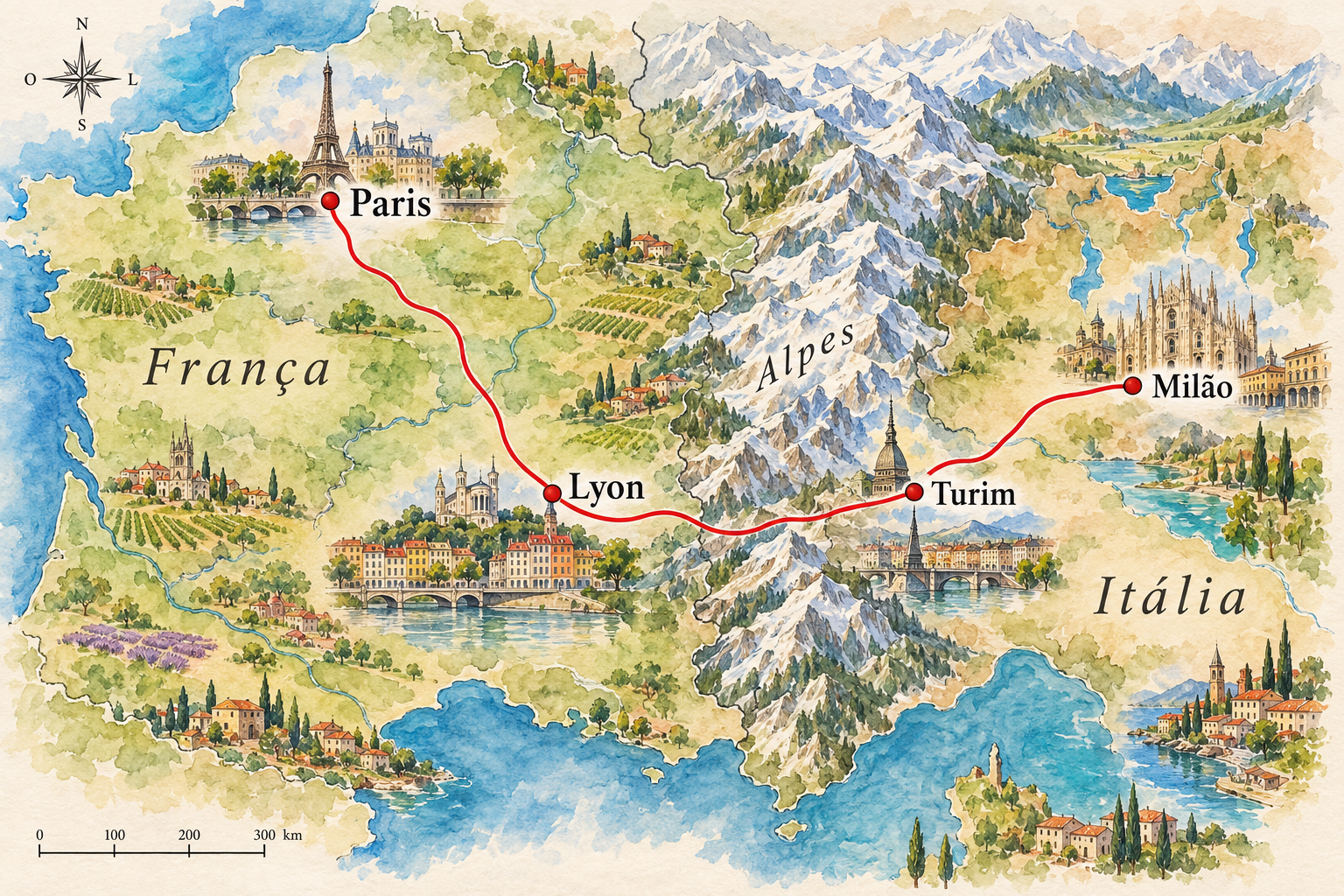
By train from Italy to France through the Alps: Milan, Turin, the Maurienne valley, Lyon and Paris in about seven hours, without changing trains.