Genoa

Liguria Capital

Genoa

In the destination Genoa and Portofino.

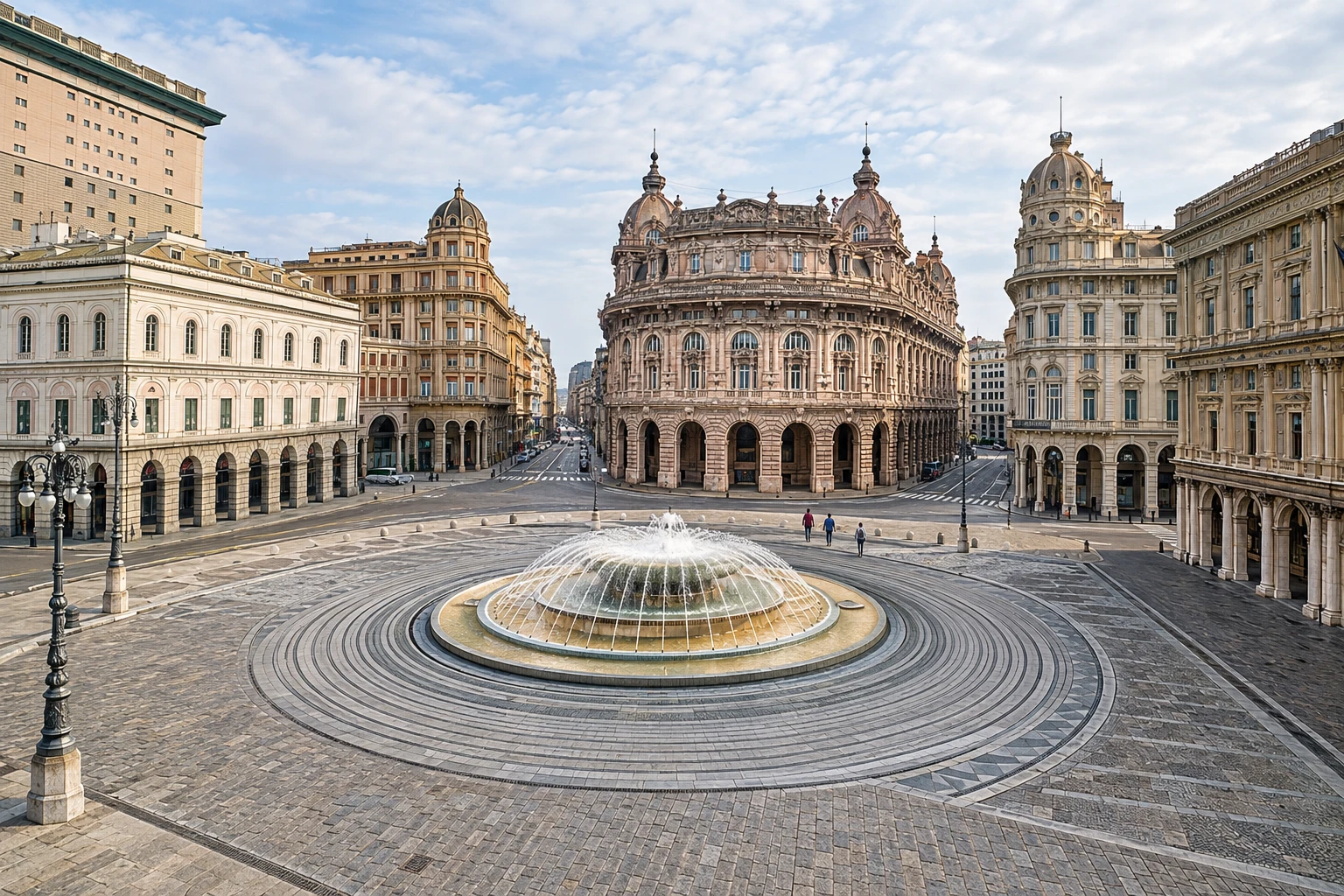
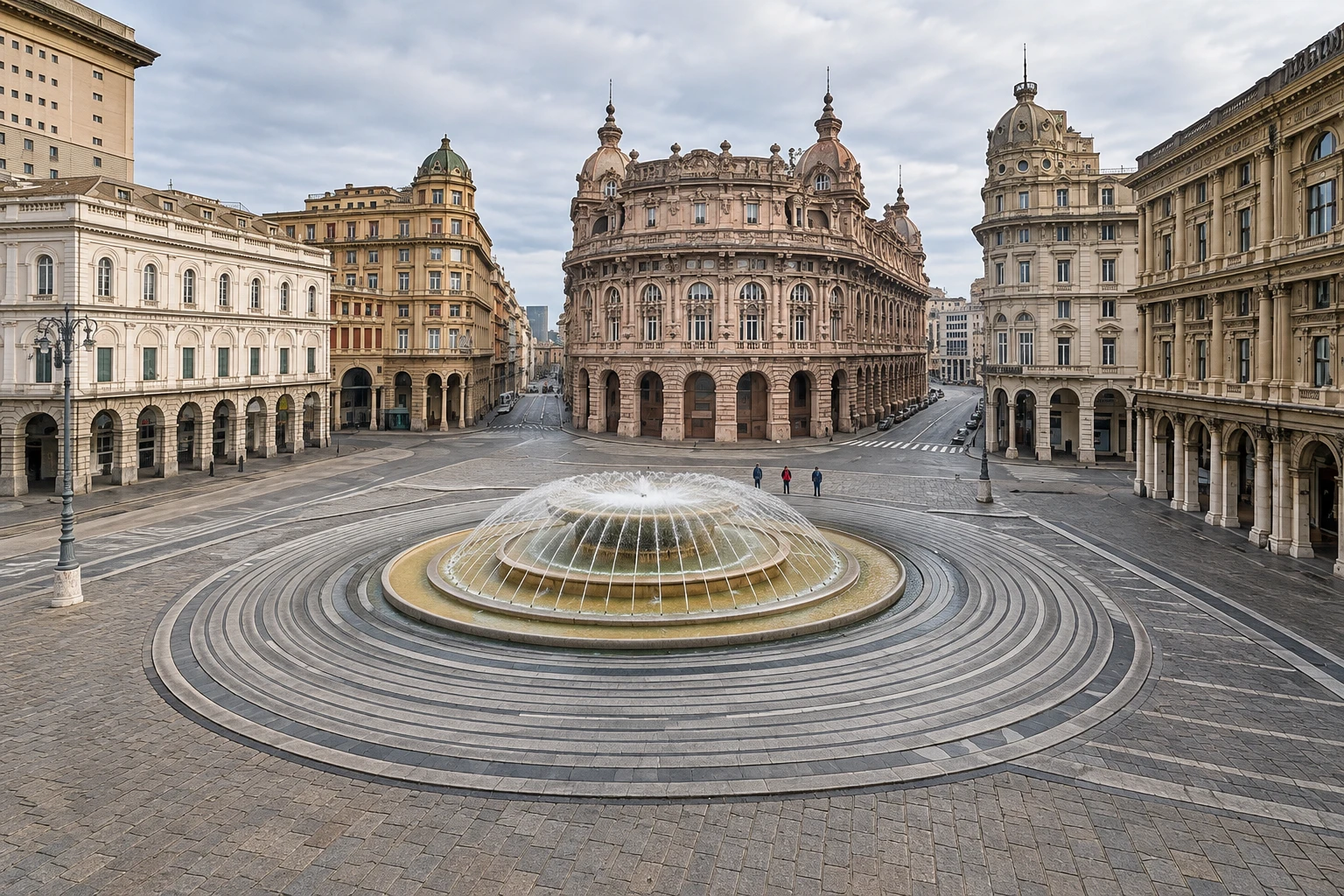
In the photo: Piazza De Ferrari, Gênova

Illustrative images. The pictures in this guide are illustrations based on the real place, not photographs, and may differ from it.

Get it on Google Play

The city

What to expect from Genoa.

Gênova is the capital of Ligúria and one of the major ports of the Mediterranean. The historic center, with narrow alleys called caruggi, stretches from the Cattedrale di San Lorenzo to the Piazza De Ferrari and down to the Porto Antico, where the Acquario di Genova is located. On Via Garibaldi are the Palazzi dei Rolli, a UNESCO World Heritage site. To the east, Boccadasse is a fishing village within the city; to the west, the Lanterna is the lighthouse that became a symbol of the port.

Genoa (Genova), the capital of Liguria and one of the Mediterranean's most important ports, lies between the sea and the hills. The city stretches along about 35 km of coast, from the beaches of Voltri in the west to the cliffs of Nervi in the east, and climbs deep valleys and steep slopes. In 1926 it absorbed 19 neighboring municipalities. Those neighborhoods still feel like separate villages, and residents still speak of “going to Genoa” when they head downtown.

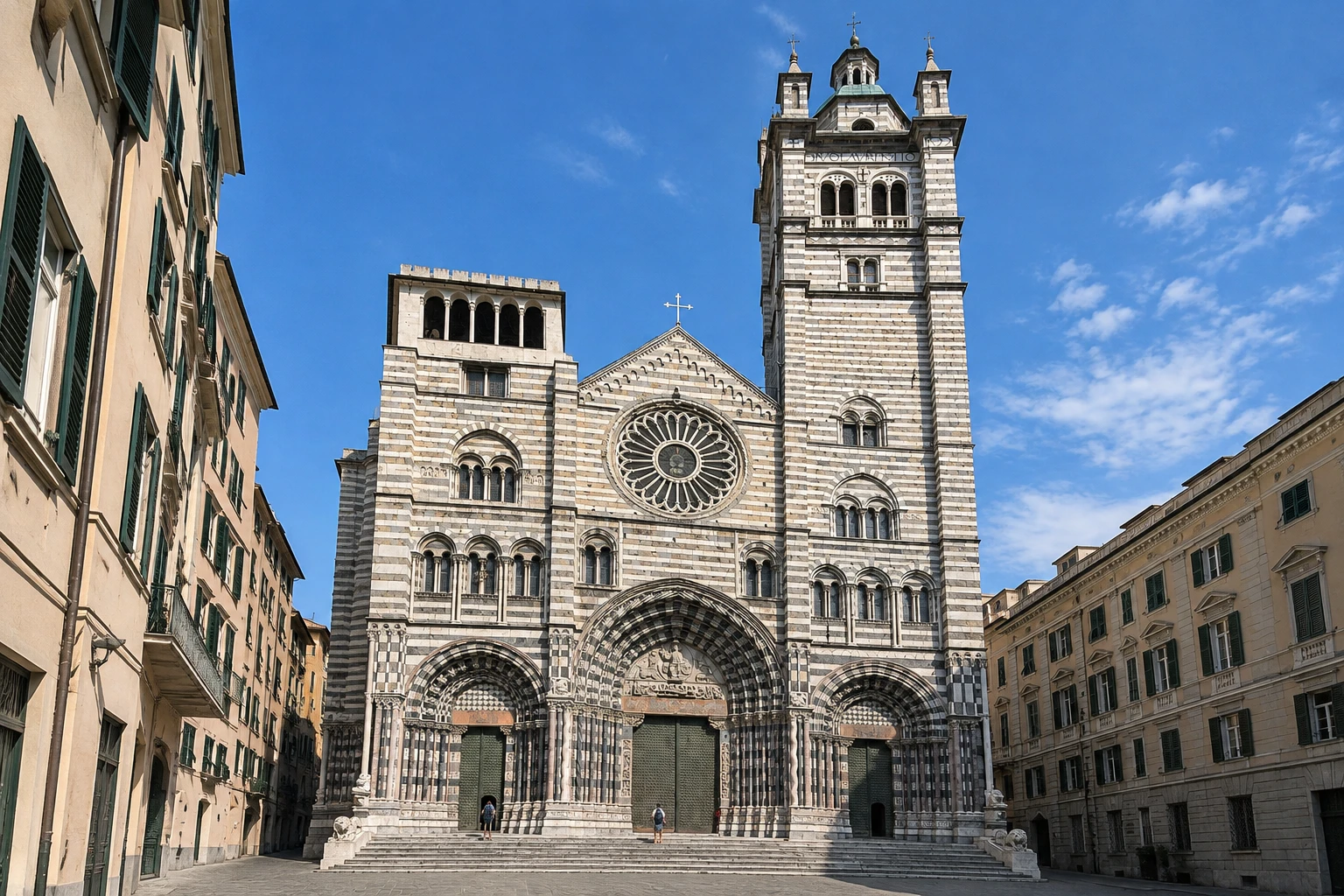
The 113-hectare old town is one of Europe's largest medieval centers. Its caruggi, narrow alleys between tall buildings, open unexpectedly onto little squares associated with noble families and their churches. Here you'll find the black-and-white-striped Cathedral of San Lorenzo and shops that have traded for more than a century. At the upper edge runs Via Garibaldi, laid out in the mid-16th century as the Strada Nuova for aristocratic residences, including the UNESCO-listed Palazzi dei Rolli. At the lower edge is the Porto Antico, the old harbor redeveloped by Renzo Piano in 1992, with the Aquarium, the Bigo, and the maritime museums. Piazza De Ferrari, with its bronze fountain, Teatro Carlo Felice, and Palazzo Ducale, links the medieval and 19th-century city.

Genoa is a vertical city. Funiculars, a rack railway, and public elevators climb from downtown to the upper neighborhoods. The Castelletto elevator leads to a lookout over slate rooftops, and the Zecca–Righi funicular reaches the park where trails to the forts and the 17th-century Mura Nuove begin. At the other end of town, the 77 m Lanterna lighthouse marks the harbor entrance.

You can reach the sea without leaving the municipality. East of downtown, the roughly 2.5 km Corso Italia promenade ends in Boccadasse, an old fishing village of colorful houses. Farther on are Quarto, Quinto, and Nervi, with its cliffside promenade and parks on former villa grounds. To the west, Pegli has a waterfront and the park of Villa Durazzo Pallavicini. City trains follow the coast from Voltri to Nervi, and a scheduled boat links the Porto Antico with Pegli.

The Mediterranean climate has few extremes. Winter highs are around 11 to 12°C and lows around 6 to 7°C, with sunny, windy days. Spring is mild with rain showers. Summer highs reach around 27°C in July and August. The swimming season runs from June through September, when the water is around 23°C. Fall is the rainy season. October and November bring the largest totals, sometimes in heavy storms.

Camogli, Santa Margherita Ligure, and Portofino on the promontory to the east have their own guide pages. Camogli is about 30 minutes away by regional train and Santa Margherita about 35. This guide covers Genoa and its neighborhoods.

Share: WhatsApp

Where to stay

30 places to stay in Genoa.

Where to eat

29 places to eat in Genoa.

Mapa de Genoa

Hotéis e restaurantes da cidade no mapa.

Flavors of Italy

To try Genoa

Discover other flavors of Italy

The local experience

Things to do in Genoa

Genoa · Italy · Museum

Strada Nuova Museums

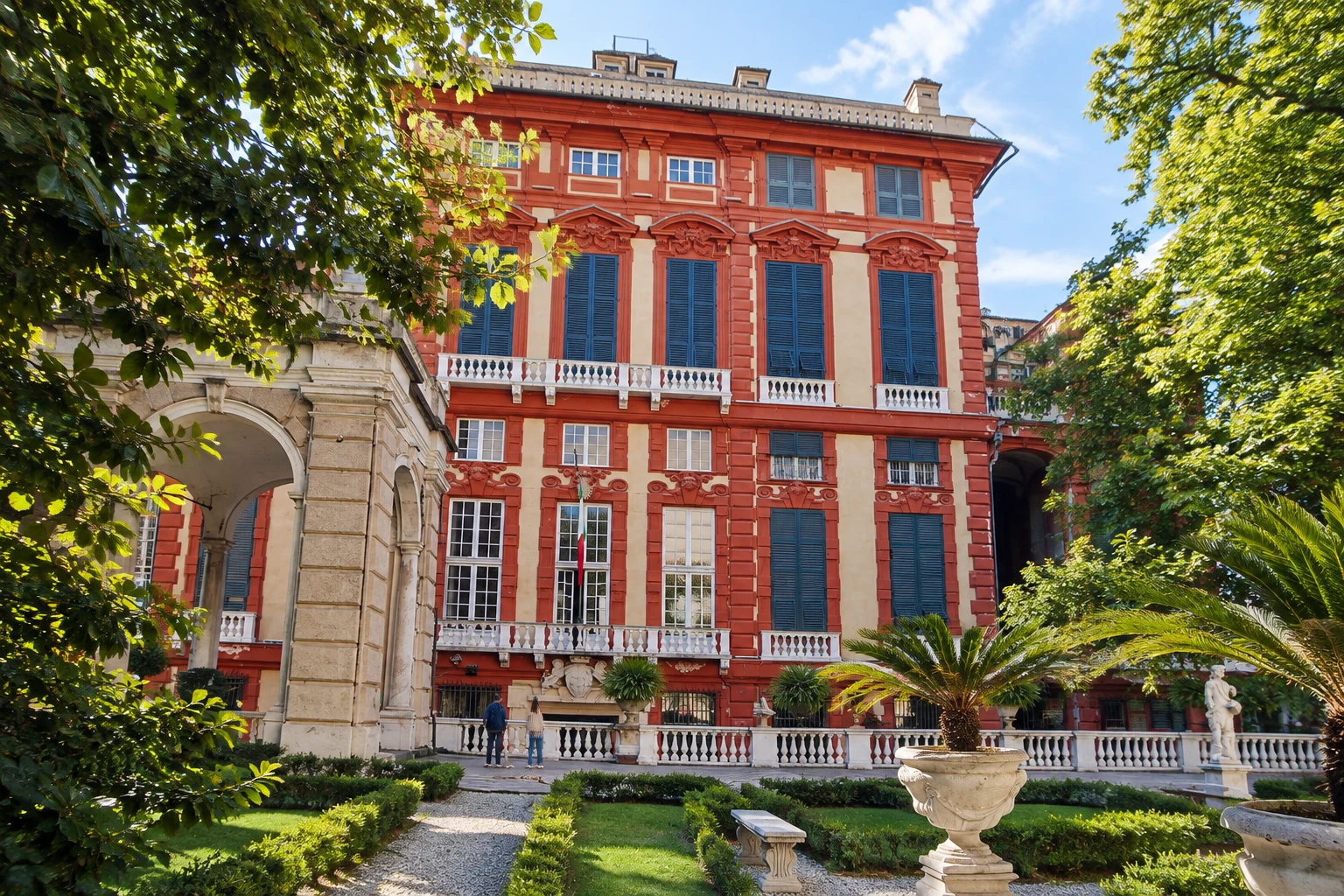
Three palaces on Via Garibaldi, the street of the Palazzi dei Rolli: Palazzo Rosso, Palazzo Bianco, and Palazzo Doria Tursi, with paintings by Van Dyck, Veronese, and Caravaggio, and Paganini’s violin.

Explore Strada Nuova Museums

Genoa · Italy · Cathedral

Genoa Cathedral

Genoa Cathedral, consecrated in 1118, with a Gothic façade of white and black bands and a treasury museum in the underground level.

Explore Genoa Cathedral

Genoa · Italy · Port

Old Port of Genoa

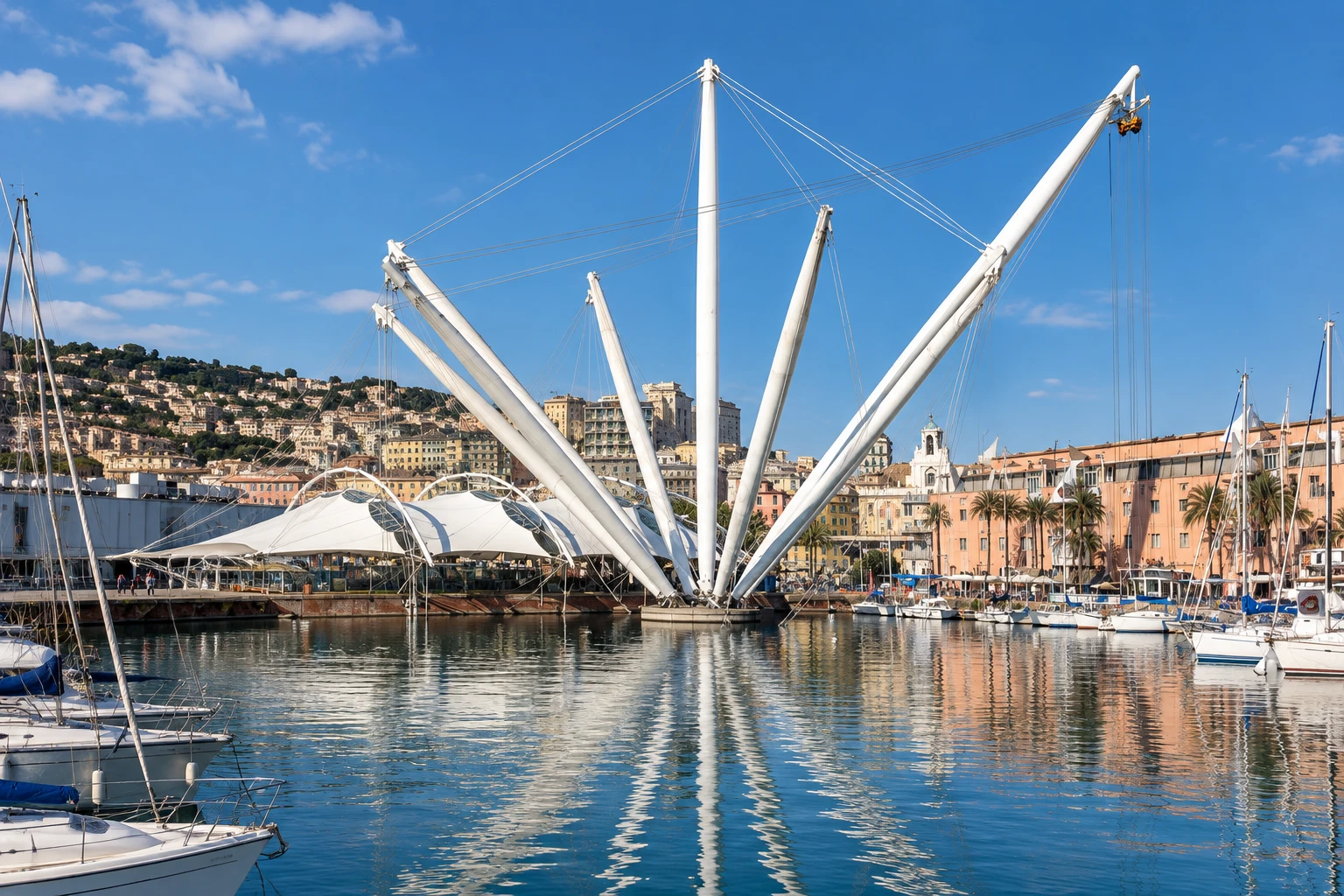
Former area of Genoa’s port, transformed into a public promenade by Renzo Piano for the 1992 celebrations, featuring the Bigo, the aquarium and the quay.

Explore Old Port of Genoa

See 3 more places in Genoa

To choose before you go

Tours in Genoa

Where each tour starts, how long it takes, how it is done, what is included and the price range.

The Strada Nuova museums: inside Palazzo Rosso, Palazzo Bianco, and Palazzo Tursi

From Via Garibaldi On foot, with one ticket for all three palaces 2 hours 30 minutes to 3 hours Morning or afternoon Easy (some stairs)

Via Garibaldi was laid out in the mid-16th century as the Strada Nuova for the mansions of Genoa's wealthiest families. Three of them form the Musei di Strada Nuova, a route through more than 75 rooms of Renaissance and Baroque art. Palazzo Rosso is a 17th-century residence with the Brignole-Sale family's collections and furnishings. Rooms decorated with frescoes and stucco hold paintings by Dürer, Veronese, Guercino, Bernardo Strozzi, Grechetto, and Van Dyck. Palazzo Bianco is Liguria's leading picture gallery. It displays 16th- to 18th-century Italian and Ligurian painting and Flemish, Spanish, French, and Dutch works, with Caravaggio and Rubens among the artists. A historical textiles collection has around 3,000 pieces. The passage between Palazzo Bianco and Palazzo Tursi crosses the site of the convent church of San Francesco di Castelletto, whose remains are visible. Also open is the collection storage facility designed after the war by architect Franco Albini, with over two hundred paintings in eighteen rooms. Palazzo Doria-Tursi, now city hall, was built as the largest private residence of the so-called Century of the Genoese. It holds tapestries, Genoese ceramics, coins, and the official weights and measures of the old Republic of Genoa, along with Niccolò Paganini's historic violins, including the Guarneri del Gesù known as the Cannone. On the same street you can see the entrance halls and courtyards of other Rolli palaces from the sidewalk.

Stops: Via Garibaldi, Musei di Strada Nuova, Palazzo Rosso, Palazzo Bianco, Palazzo Doria-Tursi.

Includes: One ticket covers all three palaces and costs extra. Check current prices and opening days.

Tip: Start at Palazzo Rosso and finish at Tursi to come out near the climb to Spianata Castelletto. Municipal museums close during red weather alerts.

Best time: Year-round. More palaces open to the public on Rolli Days weekends in spring and fall.

Spianata Castelletto and Villetta Di Negro: a rooftop view and the art of Japan

From Piazza Portello, a short walk from Via Garibaldi Public elevator or on foot along the creuze lanes About 2 hours, including the museum Late afternoon Easy by elevator, moderate on foot

Castelletto is the hill just above the historic center. A fortress stood here until 1849, when it was demolished under pressure from residents who feared it would threaten the city below if occupied by an enemy. In its place is the Spianata Castelletto, or Belvedere Montaldo, a terrace over slate roofs, medieval towers, and Baroque domes. The Porto Antico and sea lie beyond, with parks, shrines, and forts on the slopes behind you. There are two ways up. From Piazza Portello, an elevator rises 57 m. Dating to 1909, it's Genoa's oldest and ends at a glass-enclosed Liberty-style gallery. On foot, Salita San Francesco begins on Via Garibaldi just past Palazzo Bianco and becomes Salita a Spianata Castelletto. This is a creuza, one of the brick-paved pedestrian lanes that once led out of town, passing colorful houses and little gardens. Locals come up for gelato or granita with a view. On the way down toward Piazza Corvetto, Villetta Di Negro is a 19th-century municipal park with Mediterranean and exotic plants and a waterfall. Inside it, a Rationalist building designed by Mario Labò houses the Museo d'Arte Orientale Edoardo Chiossone. Chiossone, a Genoese engraver, lived in Tokyo from 1875 to 1898 and designed Japan's first banknotes. Founded in 1905, this was Italy's first museum devoted to Japanese art. Displays include large Buddhist sculptures in wood and bronze, arms and armor, theater masks, porcelain, and lacquerware. Fragile paintings and ukiyo-e prints appear in temporary exhibitions.

Stops: Spianata Castelletto, Ascensore di Castelletto, Villetta Di Negro, Museo d'Arte Orientale Edoardo Chiossone.

Includes: The lookout is free. The elevator takes a city transit ticket, and the museum charges separate admission.

Tip: Take the elevator up and walk down Salita San Francesco, which brings you back to Via Garibaldi. The terrace is at its best in late afternoon, with the sun over the harbor.

Best time: Year-round on clear days.

Walking the caruggi to San Lorenzo, the cathedral towers and Porta Soprana

From Piazza San Lorenzo Self-guided walk About 3 hours Morning Easy (short slopes and steps)

Take your time in the old town. Windows nearly touch across the alleys, and styles overlap: a medieval wall supports a 14th-century building, and a Gothic arcade has become a bar. Street names recall old trades, as in Via degli Orefici, the goldsmiths' street. Look up at the corners for niches with images of saints, donated by the guilds to light the streets at night. Some shops have been in business for more than a century, preserving old recipes and trades. The Cattedrale di San Lorenzo is Genoa's principal church. Built around 1098 on a fifth- and sixth-century basilica, it was consecrated in 1118. It was partly rebuilt in Gothic style after the fire of 1296. The black-and-white-striped facade was completed between 1307 and 1312. A 15th-century chapel in the left aisle holds the ashes of St. John the Baptist, the city's patron saint, brought here at the end of the First Crusade. In the right aisle is a copy of a shell fired by the British fleet in 1941 that landed in the church without exploding. Galeazzo Alessi designed the dome and apse in the mid-16th century. Enter the Museo del Tesoro from inside the cathedral. Tower visits are by reservation. Climb to Piano di Sant'Andrea for Porta Soprana, two towers joined by a pointed arch. This was one of five gates in the so-called Barbarossa wall, built between 1155 and 1159 to defend the republic against Emperor Frederick Barbarossa. Beside it are the cloister of Sant'Andrea and the two-story Casa di Colombo. Christopher Columbus' father, a wool weaver, had his workshop downstairs and the family lived upstairs. Columbus lived here between 1455 and 1470. The present building is probably an 18th-century reconstruction on the remains of the original.

Stops: Historic center, Cattedrale di San Lorenzo, Museo del Tesoro, Porta Soprana, Casa di Colombo, Chiostro di Sant'Andrea.

Includes: The walk and cathedral are free. Museo del Tesoro, the cathedral towers, and Casa di Colombo charge separate admission.

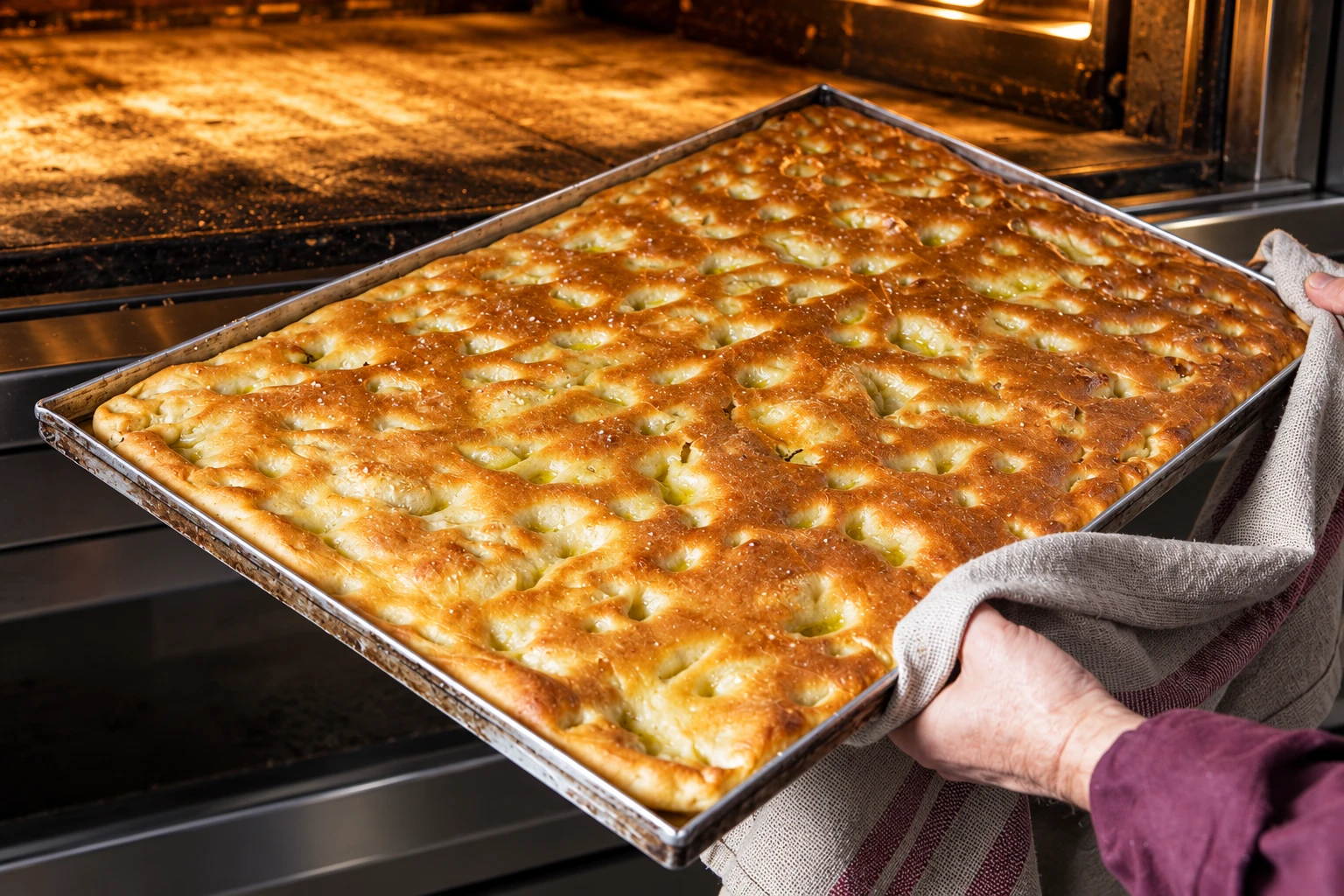
Tip: The caruggi twist and turn. Take a map and let yourself wander. Mornings find the shops and focaccia bakeries open and the lanes at their liveliest.

Best time: Year-round. In summer, the lanes provide shade in the heat of the day.

Piazza De Ferrari and Palazzo Ducale: the doges' palace and the prison tower

From Piazza De Ferrari Self-guided walk 1½ to 2 hours Morning or afternoon Easy

Piazza De Ferrari is Genoa's main square and the city's gathering place on major occasions. It's named for Raffaele De Ferrari, Duke of Galliera, who made a large donation in 1875 to expand the port. At its center stands the monumental bronze fountain designed by Cesare Crosa di Vergagni in 1936. Around it are the Teatro Carlo Felice and Accademia Ligustica di Belle Arti, the side of the Palazzo Ducale, the 1920 Liguria regional government building, and the Palazzo della Nuova Borsa, a 1912 example of Genoese Liberty style. The Palazzo Ducale's main entrance is on Piazza Matteotti. Construction began in 1298 after victories over Pisa at Meloria and Venice at Curzola as Genoa established itself as a Mediterranean power. It became the doge's residence in 1339. Its medieval core is the Torre del Popolo, or Grimaldina, whose bell marked solemn occasions and moments of crisis. From the 14th century until the 1930s the tower held political prisoners, conspirators, and intellectuals. Their inscriptions survive on cell walls alongside drawings of sailing ships and balloons. In 1591 architect Andrea Ceresola, known as Vannone, gave the palace its monumental form. A great hall between two arcaded courtyards leads to the staircase to the main floor, with its state rooms, doge's apartment, and chapel frescoed by Giovanni Battista Carlone in the mid-17th century. After a fire in 1777, Simone Cantoni rebuilt the state rooms in Neoclassical style with marble and gilded stucco. Restored and opened to the public in 1992, the palace hosts exhibitions, festivals, and lecture series year-round. For a meal nearby, the covered Mercato Orientale includes a food area with eleven counters, a restaurant, and a bar.

Stops: Piazza De Ferrari, Teatro Carlo Felice, Palazzo Ducale, Torre Grimaldina, Mercato Orientale.

Includes: The square and palace courtyards are free. Exhibitions and visits to the tower and prisons charge separate admission.

Tip: Access to Torre Grimaldina and the prisons depends on the palace program. Check ahead.

Best time: Year-round. The exhibition season is busiest from fall to spring.

Exploring the Porto Antico: the aquarium, Bigo, Biosfera and Magazzini del Cotone

From Porto Antico, a few minutes’ walk from the historic center On foot, with paid visits booked on site or in advance 3 to 4 hours, including the aquarium Morning or afternoon Easy (flat)

Renzo Piano redesigned the old harbor in 1992 for the 500th anniversary of Columbus' voyage. It's now a leisure district for aperitifs, dinner, movies, shopping, swimming, and, in winter, ice skating on Piazza delle Feste. The Arena del Mare hosts summer concerts and festivals. The Acquario di Genova, opened the same year, is one of Europe's leading aquariums, with about 11,000 animals of 450 species in 27,000 square meters. The route has three sections. First come 40 large tanks recreating underwater environments, with sharks, seals, penguins, jellyfish, and manatees. Next are the four open-air pools of Renzo Piano's Cetacean Pavilion, seen on two levels, with bottlenose dolphins and exhibits on the eight cetacean species of the Pelagos Sanctuary, a protected Mediterranean marine area. Finally, the Biodiversity Pavilion aboard the moored Nave Italia has 19 tanks showcasing Mediterranean, tropical, and Madagascan environments, including a touch tank for rays. Nearby are the Bigo, a panoramic elevator whose name and shape recall old cargo cranes, the Biosfera, and the Città dei Bambini e dei Ragazzi, an interactive children's museum. Walk to the end of the quay and the Magazzini del Cotone, former cotton warehouses now used as a convention center. From here you can see the Lanterna, the gulf, and the city spreading up the hillsides, colorful by day and illuminated at night.

Stops: Porto Antico, Aquarium of Genoa, Bigo, Biosfera, Magazzini del Cotone, Città dei Bambini e dei Ragazzi.

Includes: The port area is free to visit. The aquarium, Bigo, Biosfera and Città dei Bambini charge separate admission. Combination tickets are available. Check current rates.

Tip: Buy a timed aquarium ticket. Lines are long on weekends and holidays. The visit takes 2 to 3 hours.

Best time: Year-round. A good choice in wet weather or extreme heat.

Galata Museo del Mare, the submarine and the emigration museum at the Commenda di Prè

From Darsena, between Porto Antico and Piazza Principe station Walk between the two museums 3 to 4 hours Morning or afternoon Easy

The Galata Museo del Mare is the Mediterranean's largest maritime museum. Across 12,000 square meters and 31 rooms, 4,300 original objects tell the story of six centuries at sea. The Christopher Columbus room holds a portrait attributed to Ghirlandaio and the Book of Privileges, a collection of documents on his voyages. The route includes a full-size reconstruction of a 17th-century Genoese galley, a 19th-century brig, the cabin of an early 20th-century steamship, a shipyard, and two panoramic terraces. A 10 m lighthouse with a Fresnel lens lights the entrance hall. The Memory and Migration section explores the voyages of Italian emigrants to America, while another looks at migration today. A room on the sinking of the liner Andrea Doria leads to the Mirador, a raised garden overlooking the old town. Moored alongside is the submarine S518 Nazario Sauro, built in 1976 and retired in 2002. Tour the interior while it's afloat. Engine, sonar, and radar sounds give a sense of life on board. A few minutes away on foot is MEI, the Museo Nazionale dell'Emigrazione Italiana, in the medieval Commenda di San Giovanni di Prè. One of Genoa's oldest buildings, it originally sheltered pilgrims. Across three floors and 16 sections, diaries, letters, photographs, and documents trace Italian migration from before unification to the present. Millions of Italians sailed from Genoa to the Americas, Africa, Asia, and Australia.

Stops: Galata Museo del Mare, Sommergibile Nazario Sauro, MEI Museo Nazionale dell'Emigrazione Italiana, Commenda di San Giovanni di Prè.

Includes: Each museum charges admission, including the submarine. Combined tickets are available. MEI is free on the first Sunday of the month. Check current prices.

Tip: If your ancestors emigrated through Italy, these two museums offer complementary accounts of their journey. The submarine has narrow passages and stairs.

Best time: Year-round.

See 6 more tours

Via Balbi and nearby sights: Palazzo Reale, Villa del Principe and Castello d’Albertis

From Genova Piazza Principe Station On foot and by public elevator 3 to 4 hours Morning or afternoon Easy to moderate

Piazza Principe station stands between three very different historic homes. On Via Balbi, a monumental 17th-century street, the Balbi family built the Palazzo Reale to a design by Pier Francesco Cantone. In 1677 it passed to Eugenio Durazzo, who transformed it into a grand Baroque palace. The Savoy family took possession in 1824 and used it as their Genoa residence. The museum on the main floor shows rooms decorated by the Durazzo family in the 18th century, including the Hall of Mirrors and a room with frescoes by Valerio Castello. The Savoy period left the Throne Room, Audience Chamber, and Ballroom. There are two paintings by Van Dyck, terraces, and a garden. The courtyard floor is a risseu, a typical Ligurian pebble mosaic. Emperor Charles V's admiral Andrea Doria commissioned the Villa del Principe outside the walls beginning in 1521. It's the only princely residence in a city that was a republic. Inside are frescoes, tapestries, and furnishings. The main hall holds Perin del Vaga's 1533 fresco of Jupiter striking down the giants, and tapestries depict the Battle of Lepanto. The Neptune fountain survives in the garden. Above the station, Castello d'Albertis is a medieval-style castle built in the 19th century by Captain Enrico Alberto d'Albertis, a navigator who left it to the city at his death in 1932. The Museo delle Culture del Mondo displays maritime mementos and objects he collected on five continents in the rooms of his home. In the 16th-century bastion supporting the castle are pre-Columbian archaeological objects and ethnographic material from the Americas. The park overlooks the port. Reach it by the Montegalletto elevator from Via Balbi. The cabin first moves horizontally like a funicular, then rises vertically.

Stops: Via Balbi, Palazzo Reale, Villa del Principe, Castello d'Albertis, Ascensore di Montegalletto.

Includes: Each residence charges separate admission. Palazzo Reale is free on the first Sunday of the month. The elevator takes a city transit ticket.

Tip: Leave time for the gardens and terraces by choosing two of the three sights. The park and castle museum close in very strong winds.

Best time: Year-round.

Righi and the forts: by funicular to Parco delle Mura

From Largo della Zecca, downtown Zecca–Righi funicular and walking 3 to 5 hours Morning Moderate (trails and unpaved roads)

The Zecca–Righi funicular starts at Largo della Zecca. The first stretch runs in a tunnel. The cars then emerge among buildings, and views open up all the way to the upper station at Righi. A short walk leads to the Parco del Peralto, where the fort trails begin. The Parco delle Mura is named for the Mura Nuove, the walls built in the 17th century to defend the city and port. Running about 12 km over the hills behind downtown, they're well preserved yet almost invisible from below. The park covers 617 hectares between the Bisagno and Polcevera valleys. It includes 16 forts built from the late 18th to the early 19th century, linked by over 16 km of roads and trails through meadows, pastures, and woodland. The classic route runs from Righi to Forte Castellaccio and Forte Sperone. At 512 m, Sperone stands at the apex of the Mura Nuove and forms the centerpiece of the 19th-century fortifications. A moat and gate guard the entrance beneath the Savoy coat of arms. Inside are the powder magazine, barracks, and a chapel. For a longer hike continue inland to Forte Puin, Fratello Minore, and Forte Diamante, the route's highest point at 660 m. Alternatively, descend on the Polcevera side to Forte Begato. The walk follows a narrow road and marked trails, with the port on one side and the Apennines on the other. Side routes let you shorten or extend the outing.

Stops: Zecca–Righi Funicular, Righi, Parco del Peralto, Forte Castellaccio, Forte Sperone, Forte Diamante.

Includes: The trails are free. The funicular takes a city transit ticket. You can see the forts from outside. Interior visits depend on scheduled openings.

Tip: Bring water, walking shoes and a warm layer for the wind at the top. Forte Sperone is about 20 minutes from Righi station along a narrow road starting at the square where the funicular and bus stop.

Best time: Spring and fall in settled weather. In summer, set off early.

From Corso Italia to Boccadasse and Vernazzola via Capo Santa Chiara

From Piazza Rossetti in Foce On foot, by bike or by city bus 2 to 3 hours Late afternoon Easy (steps in Boccadasse)

Corso Italia is Genoa's seafront promenade, a favorite for Sunday strolls. Built in the early 20th century, it covers about 2.5 km from Foce, the flat neighborhood at the mouth of the Bisagno, to Boccadasse. Start at Piazza Rossetti. A bike lane comes all the way from Piazza De Ferrari. Beach clubs and sports clubs, including the Nuovo Lido, line the seaward side. Inland are Art Deco buildings such as architect Gino Coppedè's Villa Canali-Gaslini and Rationalist buildings by Luigi Carlo Daneri. Along the way are the Church of San Pietro, Fort San Giuliano, built between 1826 and 1836, and San Giuliano Abbey, founded by Franciscan friars in 1240. Its church, convent, and small Romanesque-Gothic cloister are the only surviving ensemble of the former little seafront churches. At Punta Vagno are remains of a 19th-century artillery battery and a small lighthouse dating to 1931. At the end of the promenade, Boccadasse is the best-known of Genoa's surviving fishing villages. Colorful houses surround a little beach with wooden boats and nets on the sand. Stone steps lead past the Church of Sant'Antonio, gelato shops, and waterfront bars. Follow the creuze, pedestrian lanes climbing between tall, narrow houses, to Capo Santa Chiara, a balcony over Boccadasse. Descend the far side to Vernazzola, a fishing village around the mouth of the Vernazza River. Quiet in winter and lively in summer, it has a beach among boats drawn up on shore.

Stops: Corso Italia, Abbazia di San Giuliano, Boccadasse, Capo Santa Chiara, Vernazzola.

Includes: Free, self-guided walk. Beach clubs, food and bus fares cost extra.

Tip: Walk out and return by bus. On summer Sundays Boccadasse gets crowded. Arrive before late afternoon to find a spot near the beach.

Best time: April to October, or on sunny days in winter.

Nervi: the Anita Garibaldi promenade, parks, and villa museums

From Nervi, on the eastern edge of Genoa Local train or bus, then on foot Half a day Morning or afternoon Easy (flat)

Nervi, Genoa's easternmost neighborhood, overlooks a cliff. Sheltered from the cold by the slopes behind it, it became a 19th-century winter retreat for wealthy visitors from northern and eastern Europe and Russia. Genoese nobles and prosperous merchants built villas here. Viale delle Palme and its Liberty-style buildings also survive from the Belle Époque. The Passeggiata Anita Garibaldi follows the cliff for about 2 km from the little harbor to Capolungo, between rocks and parks, with views of Golfo Paradiso and the Portofino promontory. Along the way stands Torre Gropallo, a 16th-century watchtower built to watch for Saracen ships. The Parchi di Nervi cover 92,000 square meters between Via Aurelia and the sea. Gardens of former villas, now owned by the city, form a single park with English-style lawns, palms, cedars, about a hundred botanical species, and the Luigi Viacava rose garden. Its more than 200 varieties of heritage, modern, and competition roses are usually at their best in spring. Three villas house museums, all within minutes of one another. Villa Saluzzo Serra probably dates to the 16th century, and its grounds were landscaped from 1815. Its Galleria d'Arte Moderna displays art made in Liguria from the 19th through the 21st century. Villa Grimaldi Fassio houses the Raccolte Frugone, collections of Italian and international Belle Époque art. Villa Serra Gropallo houses the Wolfsoniana, devoted to decorative arts and propaganda from 1880 to 1945. In summer the parks host Nervi's music and ballet festival and, in some years, the Euroflora flower show.

Stops: Passeggiata Anita Garibaldi, Parchi di Nervi, Galleria d'Arte Moderna, Raccolte Frugone, Wolfsoniana, Torre Gropallo.

Includes: The walk and parks are free. Museum tickets and train or bus fares are separate.

Tip: The local train is the fastest way to get here from Brignole or Piazza Principe. Park access changes on festival and Euroflora days. Check ahead.

Best time: Year-round. Come in spring for the rose garden and in late afternoon for the light on the cliff.

Pegli by boat: Villa Durazzo Pallavicini, the archaeological museum, and the waterfront

From Porto Antico Navebus ferry or local train Half a day Morning Easy to moderate, with uphill stretches in the park

Pegli in Genoa's west retains its waterfront, spared the industrialization that transformed this stretch of coast after World War II. In the 19th century it was a summer retreat for nobles, middle-class families, and intellectuals from northern Italy and elsewhere in Europe. The most interesting approach is by water. The Navebus, a scheduled public transit boat, links the Porto Antico with Pegli's Molo Archetti, passing the port and Lanterna. The city train covers the same journey by land. Villa Durazzo Pallavicini was laid out between 1837 and 1846 to designs by Michele Canzio, set designer at the Teatro Carlo Felice. He conceived the park as a theatrical performance to experience in sequence. It incorporated the rare-plant garden that Marchioness Clelia Durazzo, a scholar of botany, created in the 18th century. Its camellia collection is among Italy's oldest and usually blooms in spring. The main villa houses the Museo di Archeologia Ligure, with Ligurian objects from prehistoric through Roman times. The neighborhood also has the Museo Navale and other villas, including Villa Doria Centurione. Farther west, beyond this walk, are Pra', where basil for Genoese pesto is grown, and Voltri, with beaches popular among locals and the 17th-century Villa Duchessa di Galliera. Fallow deer live in its 32-hectare park.

Stops: Pegli, Villa Durazzo Pallavicini, Museo di Archeologia Ligure, Museo Navale.

Includes: Boat, train, park, and museum tickets are separate. Tourist transit cards do not cover the Navebus. Check current fares.

Tip: Check the Navebus timetable and service before leaving. Take the boat out and the train back.

Best time: Spring for the camellias and park, year-round for the waterfront.

The Lanterna and Staglieno, Genoa’s harbor lighthouse and monumental cemetery

From Ferry terminal for the Lanterna, Val Bisagno for Staglieno Walk along the elevated walkway, then take a city bus to the cemetery 2 hours per visit Morning or afternoon Easy to moderate (172 steps in the lighthouse)

These two sights lie on opposite sides of town, away from the downtown circuit. Allow about two hours for each, including travel time. The 77 m Lanterna is the tallest lighthouse in the Mediterranean, the second tallest in Europe, and Genoa's symbol. First built in 1128, it was rebuilt in 1543 on a 40 m rock. Reach it on a roughly 800 m footpath from the ferry terminal along 17th- and 19th-century walls, among cranes and ships. The fortifications house a multimedia museum about the city and province. Climb 172 steps to the first terrace for views of the port and old town. The Cimitero Monumentale di Staglieno in the Bisagno valley is an open-air museum and one of Europe's most important cemeteries. Carlo Barabino designed it in 1835, and Giovanni Battista Resasco continued the work after his death. It has a Pantheon, the Cappella dei Suffragi, and galleries and porticoes with hundreds of monuments commissioned by local families from 19th- and 20th-century Ligurian sculptors. The Boschetto Irregolare, laid out as a Romantic garden, holds graves of Risorgimento fighters. Those buried here include Giuseppe Mazzini, Nino Bixio, Captain Enrico Alberto d'Albertis, singer Fabrizio De André, and Constance Lloyd, Oscar Wilde's wife. Visitors have included Mark Twain, Nietzsche, Maupassant, and Empress Elisabeth of Austria.

Stops: Lanterna di Genova, Cimitero Monumentale di Staglieno.

Includes: The Lanterna requires a separate ticket for the museum and climb. Guided visits at Staglieno and bus fares cost extra.

Tip: The Lanterna has limited visiting days and hours. Check ahead. Staglieno is an active cemetery. Dress modestly, respect funerals, and pick up a map at the entrance information point.

Best time: Year-round. Choose a clear day for the Lanterna.

Day by day

1, 2 and 3-day itinerary in Genoa

Suggestions to plan the trip. Change the order of the days according to the weather and tour availability.

1 day · One day in Genoa: Strada Nuova, the caruggi lanes and Porto Antico

For Day visitors arriving by train or disembarking from a ship · Based in Genoa
  1. Day 1 · On foot from the lookout to the port

    Start on Via Garibaldi. Look into the palace entrance halls and choose one of the Musei di Strada Nuova. If you'd rather stay outdoors, take the Castelletto elevator from Piazza Portello to the city lookout instead. Descend to Piazza De Ferrari, walk past the Palazzo Ducale, and continue to San Lorenzo Cathedral. From there, enter the caruggi. Pick up focaccia at a bakery and have pasta with pesto for lunch at an old town trattoria. After lunch, climb to Porta Soprana and the Casa di Colombo, then wind down through the alleys to the Porto Antico. The Aquarium takes two to three hours in the afternoon. Alternatively, visit the Galata Museo del Mare and its submarine. Finish at the end of the Magazzini del Cotone quay for a view of the Lanterna and the hills. Save Boccadasse for a second day.

2 days · Two days in Genoa: palaces, the port and the sea at Boccadasse
For Travelers staying overnight before continuing to the Riviera · Based in Downtown Genoa
  1. Day 1 · Strada Nuova, Castelletto and the historic center

    Spend the morning at the Musei di Strada Nuova: Palazzo Rosso, Palazzo Bianco, and Palazzo Tursi with Paganini's violins. Take the elevator up to Spianata Castelletto, then walk down Salita San Francesco. Have lunch downtown. Spend the afternoon at Piazza De Ferrari, Palazzo Ducale, and San Lorenzo Cathedral with its Museo del Tesoro. Follow the caruggi to Porta Soprana and the Casa di Colombo. Finish with an aperitif in the old town or Porto Antico.

  2. Day 2 · Porto Antico and Boccadasse

    Book the Aquarium for opening time, when lines are shorter, and finish the morning at the Bigo or the Galata Museo del Mare and its submarine. Have lunch at the port. In midafternoon, take a bus or cycle to Foce and walk about 2.5 km along Corso Italia to Boccadasse. Climb to Capo Santa Chiara and descend to Vernazzola if there's time. End the day in Boccadasse with gelato or dinner facing the beach. Return downtown by bus.

3 days · Three days in Genoa: including Nervi, the forts and maritime museums
For Travelers who want to see the whole city, from downtown to its seaside districts and hills · Based in Genoa, downtown or near one of the stations
  1. Day 1 · Palaces and historic center

    Visit the Musei di Strada Nuova in the morning and Spianata Castelletto before lunch. In the afternoon, explore Piazza De Ferrari, Palazzo Ducale, San Lorenzo, the caruggi, Porta Soprana, and the Casa di Colombo. If you enjoy Asian art, the Museo Chiossone in Villetta Di Negro is a few minutes from Piazza Corvetto.

  2. Day 2 · The port, emigration history and Via Balbi

    Start at the Aquarium at opening time. Continue to the Galata Museo del Mare and its submarine, then the emigration museum in the Commenda di Prè a few minutes away. In the afternoon, choose between the Palazzo Reale on Via Balbi, the Villa del Principe, and Castello d'Albertis, reached by the Montegalletto elevator. For an outdoor alternative on days it's open, walk from the ferry terminal to the Lanterna.

  3. Day 3 · The forts in the morning, Nervi or Boccadasse in the afternoon

    Take the Zecca–Righi funicular early and walk through the Parco delle Mura to Forte Sperone, returning the same way. Allow two to three hours. Have lunch downtown, then take a city train to Nervi for the parks, one of the villa museums, and a late-afternoon walk on the Anita Garibaldi promenade. A shorter option is Boccadasse via Corso Italia. With an extra day, take a boat from the Porto Antico to Pegli for Villa Durazzo Pallavicini or visit Staglieno cemetery. Camogli, Santa Margherita Ligure, and Portofino lie along the route east by train and warrant a day of their own.

Best time to go

When to go: Genoa month by month

The seasons shown are the most usual ones; nature doesn't always follow the calendar.

January Some rain

Winter · Sunny, windy days

Winter. The Genoa weather station's 1991–2020 averages show a temperature of 9.1°C and about 76 mm of rain. At the historic Via Balbi station, highs are around 11°C and lows around 6°C. Genoa has one of northern Italy's mildest winters, with clear, windy days. Explore museums, palaces, and caruggi without the crowds and walk the Nervi promenade or Corso Italia during sunny hours.

February Some rain

Winter · Clear days

Winter. At the Genoa weather station, the 1991–2020 averages are 9.6 °C and about 58 mm of rain, with highs near 12 °C. Clear days suit Spianata Castelletto, the Lanterna and Boccadasse. Crowds are light.

March Some rain

Early spring

Early spring. The Genoa weather station's 1991–2020 averages show a temperature of 12.1°C and about 74 mm of rain, with highs around 14°C. Days grow longer and café tables return to the streets. It's a good time for the fort trails from Righi and the parks in Nervi and Pegli. Bring a raincoat for frequent showers.

April High rain

Spring · Easter · Euroflora in the Nervi parks (in some years)

Spring. The Genoa weather station's 1991–2020 averages show a temperature of 14.6°C and about 84 mm of rain in showers, with highs around 17°C. Easter and the April 25 holiday bring more visitors. In Euroflora years, the flower show occupies the Parchi di Nervi and changes access to the neighborhood. The sea is still cold.

May Some rain

Spring · Spring Rolli Days · Nervi rose garden

Spring is in full swing. The Genoa weather station's 1991–2020 averages show a temperature of 18.4°C and about 58 mm of rain, with highs around 20°C. One weekend this season, Rolli Days opens palaces that close to visitors the rest of the year. Check the dates. Nervi's rose garden is usually at its best, and the long days are ideal for late afternoons in Boccadasse.

June Low rain

Summer · Feast of patron saint John the Baptist (June 24) · Swimming season

Summer. The Genoa weather station's 1991–2020 averages show a temperature of 22°C and about 51 mm of rain, with highs around 24°C. Swimming season begins along Corso Italia and in Quarto, Quinto, Nervi, and Pegli. On June 24 Genoa celebrates its patron saint, St. John the Baptist, whose ashes rest in the cathedral. Evenings are for the Porto Antico.

July Low rain

Summer · Nervi music and ballet festival · Shows at Porto Antico

Summer. The Genoa weather station's 1991–2020 averages show a temperature of 24.7°C and about 26 mm of rain, the driest month, with highs around 27°C. Afternoons are hot and humid. Visit beaches or museums during the day and explore the streets at night. The Parchi di Nervi usually host the summer music and ballet festival, and the Arena del Mare at the Porto Antico puts on concerts.

August Low rain

Summer · Ferragosto (August 15)

Summer. The Genoa weather station's 1991–2020 averages show a temperature of 25.1°C and about 48 mm of rain, with storms late in the month and highs around 27°C. Many residents leave around August 15 and some shops close. Museums, the Aquarium, and beaches remain open. Beach clubs fill up on weekends.

September High rain

Late summer · Salone Nautico boat show

Late summer. The Genoa weather station's 1991–2020 averages show a temperature of 21.8°C and about 116 mm of rain, often in short, heavy storms, with highs around 24°C. The sea stays warm at around 23°C. Hotels fill for several days during the Salone Nautico, the international boat show. Check the dates before booking.

October High rain

Fall · Fall Rolli Days · Columbus Day on October 12 · Festival della Scienza

Fall. The Genoa weather station's 1991–2020 averages show a temperature of 17.6°C and about 150 mm of rain, with some days of heavy rainfall and highs around 20°C. Clear days come between weather fronts. Events include the fall Rolli Days, tributes to Columbus on October 12, concerts dedicated to Paganini, and the Festival della Scienza at the end of the month.

November High rain

Fall · Wettest month · Exhibition season

Late fall. The Genoa weather station's 1991–2020 averages show a temperature of 13.3°C and about 200 mm of rain, the wettest month of the year, with highs around 15°C. It's a season for the Palazzo Ducale, museums, the Aquarium, and focaccia in the caruggi. City museums and parks close during red weather alerts, so follow municipal notices.

December High rain

Winter · Christmas on Piazza De Ferrari · Ice skating at Porto Antico

Winter. The Genoa weather station's 1991–2020 averages show a temperature of 10.1°C and about 99 mm of rain, with highs around 12°C. Piazza De Ferrari has a Christmas tree and market, lights decorate the old town, and an ice rink opens on Piazza delle Feste in the Porto Antico. More visitors arrive between Christmas and New Year's.

Plan the journey

How to get there: Genoa

By air via Cristoforo Colombo Airport

Cristoforo Colombo Airport (GOA) is in Sestri Ponente in western Genoa, about 6 km from the center. The runway is almost completely surrounded by the sea.

There are two public transit connections downtown. The Volabus city airport bus runs through downtown to Genova Piazza Principe and Genova Brignole stations in about 30 minutes. The Airlink shuttle takes a few minutes from the terminal to Genova Sestri Ponente railway station, with frequent daytime departures. From there, city trains run downtown. Taxis and rental cars are also available at the airport.

If you fly into another Italian airport, continue by train. Milan is about 1 hour and 30 minutes away and Rome about 4 hours. Confirm flights before booking.

By train to Piazza Principe and Brignole

Genoa has two central stations. Genova Piazza Principe, near the port and Via Balbi, is the main departure point for the west and north. Genova Brignole, near the modern center and Foce, serves the east and south. Many trains stop at both.

By train, Milan is about 1 hour and 30 minutes away, Turin about 1 hour and 50 minutes, Pisa about 1 hour and 40 minutes, La Spezia about 1 hour and 10 minutes, and Rome about 4 hours. Allow about 3 hours and 30 minutes to Nice in France.

The coastal line also works for getting around the city. City trains link neighborhoods from Voltri to Nervi, stopping at Pegli, Sestri Ponente, Quarto, and Quinto. Eastbound regional trains reach Camogli in about 30 minutes and Santa Margherita Ligure in about 35. Validate paper regional tickets before boarding.

By ship and ferry

The Ponte dei Mille and Ponte Andrea Doria cruise terminals are a few minutes' walk from Genova Piazza Principe station and the Porto Antico beside the historic center. You can explore the city on foot as soon as you disembark.

Ferry terminals are nearby at Calata Chiappella, Ponte Caracciolo, and Ponte Colombo. Passenger ships connect with Mediterranean ports including Olbia and Porto Torres in Sardinia, Palermo in Sicily, Bastia in Corsica, Barcelona, Tunis, and Tangier. Routes and sailing days change by season, so check before booking.

By car: highways and the restricted traffic zone

Four highways reach Genoa: the A7 from Milan, the A26 from Piedmont, the A10 from the western Riviera and France, and the A12 from the eastern Riviera and Tuscany. Milan is about 145 km away, Turin about 170 km, and Pisa about 160 km.

A car is more trouble than it's worth in town. The terrain is difficult and public transit covers the sights. The old town is a restricted traffic zone (ZTL) where driving and parking are reserved for residents. In blue zones, marked with blue lines on the ground, visitors pay for time-limited parking. It's simplest to leave your car in a public lot and continue on foot, by metro, or by bus.

If you cross town on the Sopraelevata, the elevated road over the port, you'll see the Porto Antico and old town from above.

Getting around Genoa

The old town, Via Garibaldi, Piazza De Ferrari, and Porto Antico are a few minutes' walk apart. For the rest of Genoa, AMT combines several forms of public transportation in one network.

Over 140 bus routes cover the coast and valleys. A metro line links Rivarolo in the Polcevera valley with downtown, stopping at Piazza Principe, Piazza De Ferrari, and Brignole. The Sant'Anna and Zecca–Righi funiculars climb from the center to the upper neighborhoods. A rack railway dating to 1901 runs from Piazza Principe station to Granarolo. Fifteen public elevators provide quick access to hillside streets and lookouts, including Castelletto.

The Navebus runs between the Porto Antico and Pegli. City trains follow the coast from Voltri to Nervi and are the fastest way to Nervi and Pegli.

The 24- or 48-hour Genova Museum Card covers admission to city museums as well as buses, the metro, elevators, and funiculars. The Navebus and Volabus require separate tickets. Check current rates.

Your questions

Frequently asked questions about Genoa

Is Genoa worth visiting or is it just a stopover on the way to Portofino?

Worth a visit. The city has the palaces of Via Garibaldi, a UNESCO World Heritage site, a large medieval historic center, the Cathedral of San Lorenzo and the Porto Antico. Two days are well spent.

How do you climb the hills of Genoa?

The city has funiculars, a rack railway and public elevators that link the center to the upper neighborhoods, as well as metro and buses. Wear comfortable shoes: the historic center has many uphill sections and staircases.

How do you get from Genoa to Portofino?

Take the regional train to Santa Margherita Ligure–Portofino station and continue by bus or, in season, by boat to Portofino. There are also boats that depart from Genoa’s port at certain times of year: check before you go.

What to eat in Genoa?

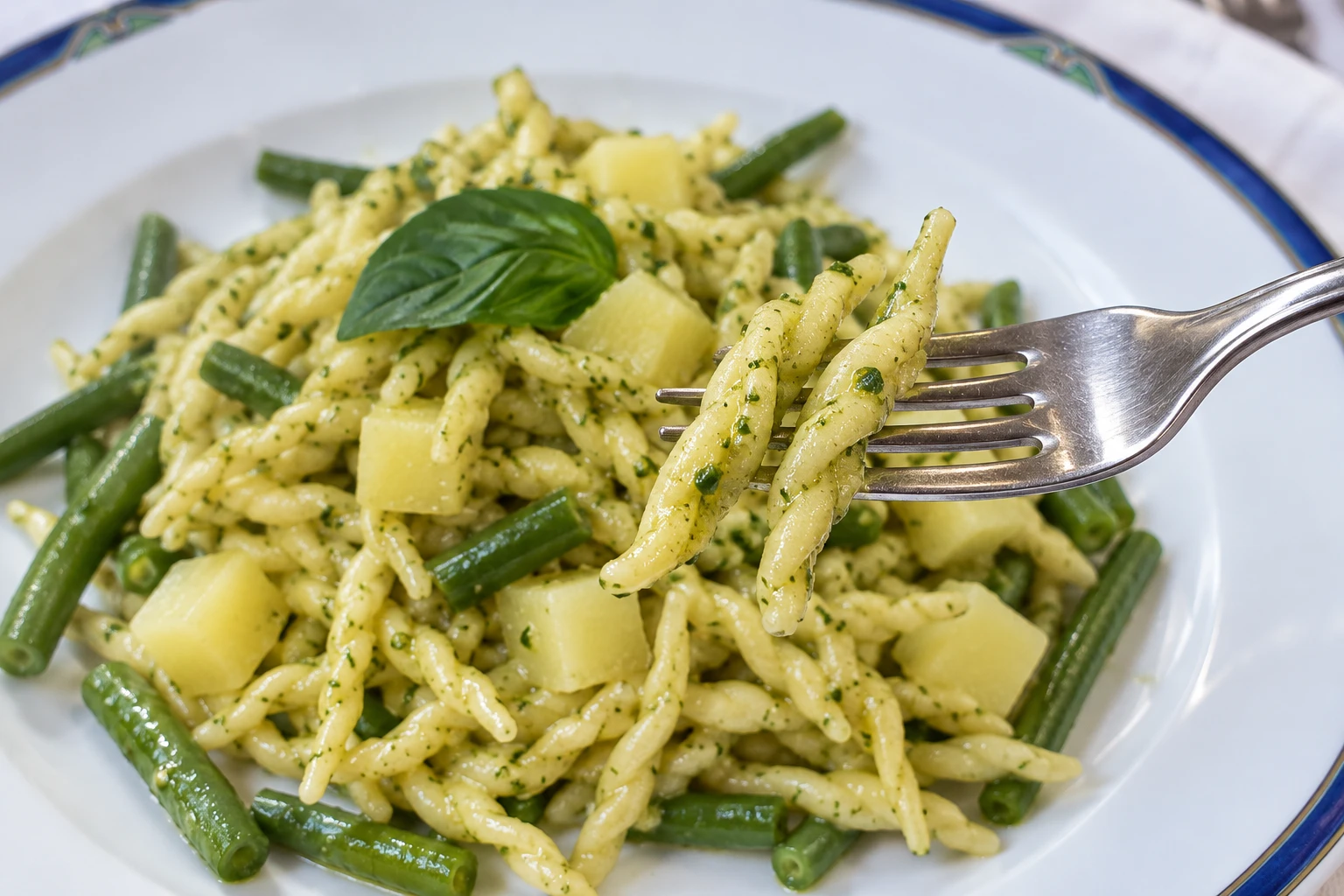
Pesto alla genovese, made with basil, pine nuts, garlic, cheese and olive oil, and focaccia, sold in bakeries from early morning. Farinata, a thin chickpea pancake, is also typical. Lunch is usually served between 12:30 and 14:30, and dinner from 19:30 or 20:00.

Is there a tourist tax in Genoa?

Yes. The tourist tax is charged at accommodation.

How many days should I spend in Genoa?

One day gives you time for Via Garibaldi, the old town and its cathedral, and the Porto Antico. In two days, you can visit the Strada Nuova museums and the aquarium and spend the late afternoon in Boccadasse. A third day gives you a choice of Nervi, the forts above Righi, the Galata Maritime Museum or one of the palaces on Via Balbi. Add at least a day if you also plan to visit Camogli, Santa Margherita Ligure and Portofino.

Where can I see Genoa from above?

The easiest viewpoint to reach is Spianata Castelletto. Take the public elevator from Piazza Portello near Via Garibaldi for a view over the old town’s rooftops and the port. Righi, at the top of the funicular from Largo della Zecca, is higher and gives you access to the forts. At the port you can ride the Bigo panoramic elevator or climb to the first terrace of the Lanterna lighthouse. The park at Castello d’Albertis also overlooks the port.

Can I swim in the sea in Genoa?

Yes, without leaving the city. Along Corso Italia you’ll find beach clubs and free stretches of shore. Boccadasse and Vernazzola have small beaches among the boats. Farther east are the rocks and beach at Priaruggia in Quarto, the beaches of Quinto and the rocks at Nervi. To the west are Pegli, Voltri and Vesima. The season runs from June through September, and you can reach all these places by bus or local train.

How do I get from Genoa Airport to downtown?

The Volabus city bus links Cristoforo Colombo Airport with Piazza Principe and Brignole stations via downtown in about 30 minutes. Another option is the Airlink shuttle to Genova Sestri Ponente station, just a few minutes away, followed by a local train. Taxis are available at the terminal. Check current fares and schedules before traveling.

Which Genoa station should I get off at, Piazza Principe or Brignole?

It depends on where you’re staying. Piazza Principe is near the port, Via Balbi, the Galata Maritime Museum and the cruise terminal. Brignole is on the east side, near the modern city center, the Foce district and the start of the route to Corso Italia and Boccadasse. Both stations are on the metro line, and many trains stop at both.

What are the Palazzi dei Rolli and the Rolli Days?

The Rolli were lists of palaces whose owners were required to host ambassadors and distinguished visitors on behalf of the Republic of Genoa. Many stand on Via Garibaldi, known as the Strada Nuova, and the group is a UNESCO World Heritage Site. Three are museums open year-round: Palazzo Rosso, Palazzo Bianco and Palazzo Tursi. During Rolli Days, held on weekends in spring and fall, other palaces open to the public. Check the dates and whether you need to book.

How long does it take to visit the Aquarium of Genoa?

Allow 2 to 3 hours. The route takes you past large tanks with sharks, seals, penguins and manatees, the cetacean pavilion with its dolphins, and the biodiversity pavilion aboard a moored ship. Buy a timed ticket, preferably for the first slot or late afternoon, as lines get long on weekends and holidays. Combination tickets are available with the Bigo, Biosfera and Galata Maritime Museum.

What can I do in Genoa on a rainy day?

Indoor options include the Musei di Strada Nuova, exhibitions at Palazzo Ducale, the aquarium, the Galata Maritime Museum, Palazzo Reale, the Chiossone Museum and San Lorenzo Cathedral. The narrow lanes of the old town offer some shelter. October and November are the wettest months. Municipal museums and parks close during red weather alerts. Follow city notices and postpone coastal and hillside outings.

Where should I stay in Genoa?

Downtown, between Piazza De Ferrari, Via Garibaldi and the Porto Antico, everything is within walking distance. Near Piazza Principe station is convenient if you arrive by train or ship. Brignole and Foce suit travelers who prefer flatter streets and easy access to the route to Boccadasse. Stay in Nervi if you’d like to sleep by the sea and take a local train downtown. If you’re driving, plan where to park in advance. The old town has restricted vehicle access.

Is the Genova Museum Card worth buying?

The Genova Museum Card comes in 24- and 48-hour versions. It covers admission to 28 city museums and travel on AMT city buses, the metro, elevators and funiculars. The Navebus and Volabus are excluded. The card can pay off if you want to visit several museums in a short time, such as the Strada Nuova museums, Castello d’Albertis, the Chiossone Museum and the museums in Nervi. Compare the current card price with individual tickets for the places on your list.

Can I visit Columbus’s house in Genoa?

Yes. The Casa di Colombo is next to Porta Soprana near Piazza De Ferrari. Christopher Columbus lived here with his family between 1455 and 1470. His father Domenico, a wool weaver, had his workshop on the ground floor, and the family lived upstairs. The building you can visit is probably an 18th-century reconstruction over the remains of the original. Admission is charged separately. The Galata Maritime Museum also has a room devoted to the navigator.

What can I do in Genoa with children?

The Porto Antico has several attractions within a short walk: the aquarium, with dolphins, penguins and a ray touch tank, the interactive Città dei Bambini e dei Ragazzi museum, the Bigo panoramic elevator and the Galata Maritime Museum, with its full-size galley and submarine. Elsewhere, children enjoy the funiculars and public elevators, Castello d’Albertis and its park, the parks of Nervi and, in summer, the beaches.

Are there boat trips from Genoa?

Yes. The Navebus public ferry runs between the Porto Antico and Pegli, with views of the port and the Lanterna lighthouse from the water. Depending on the season, boats also leave the Porto Antico for Camogli, San Fruttuoso and Portofino, for the Cinque Terre, and for whale and dolphin watching in the Pelagos Sanctuary. Sightings depend on the day and sea conditions. Rough seas can cancel departures, so check before you go.

Traveler, share your experiences through photos Up to 5 photos of each place you visited.
See the destination Genoa and Portofino Find another city