Bologna

Emilia-Romagna Capital

Bologna

In the destination Bologna and Emilia-Romagna.

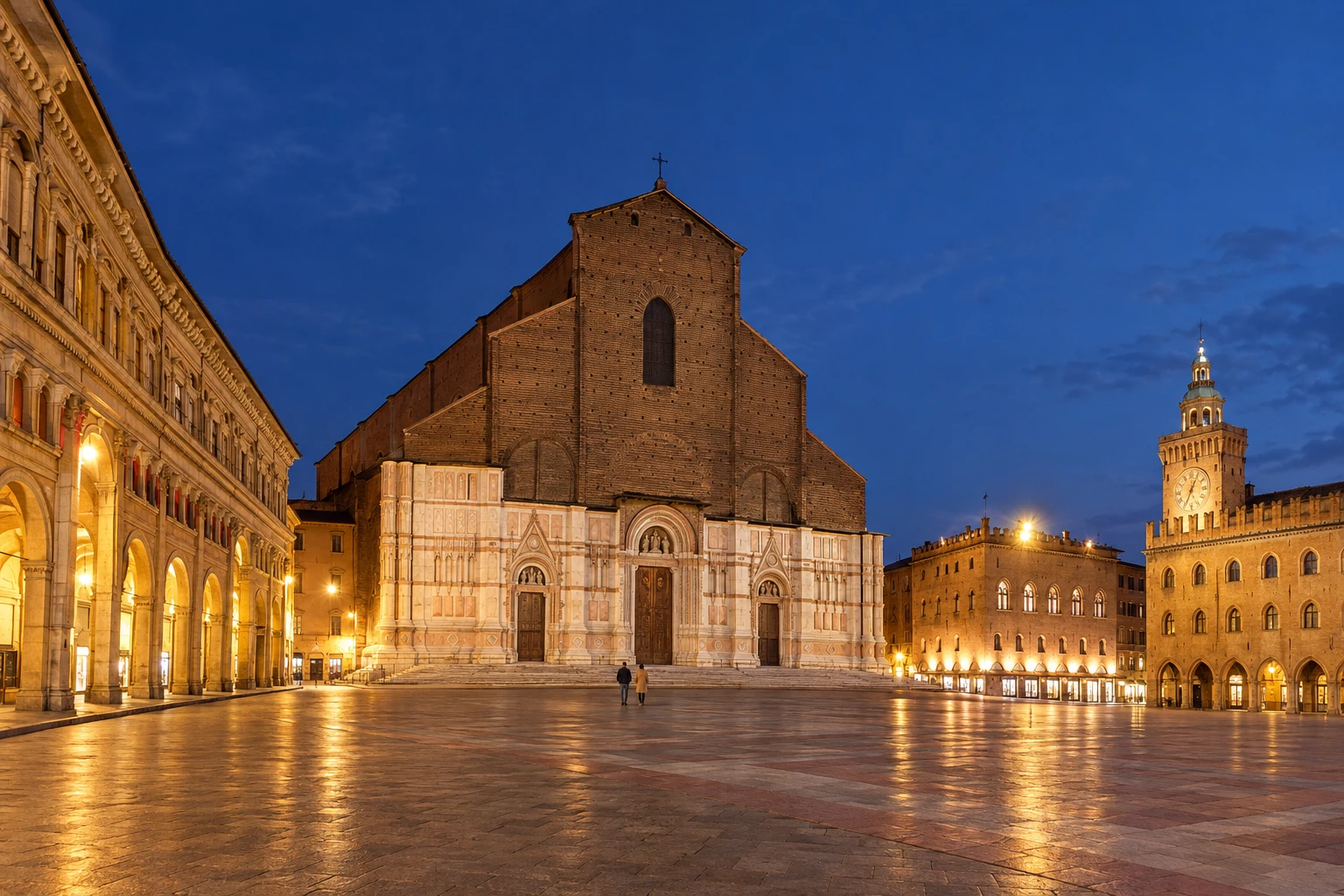
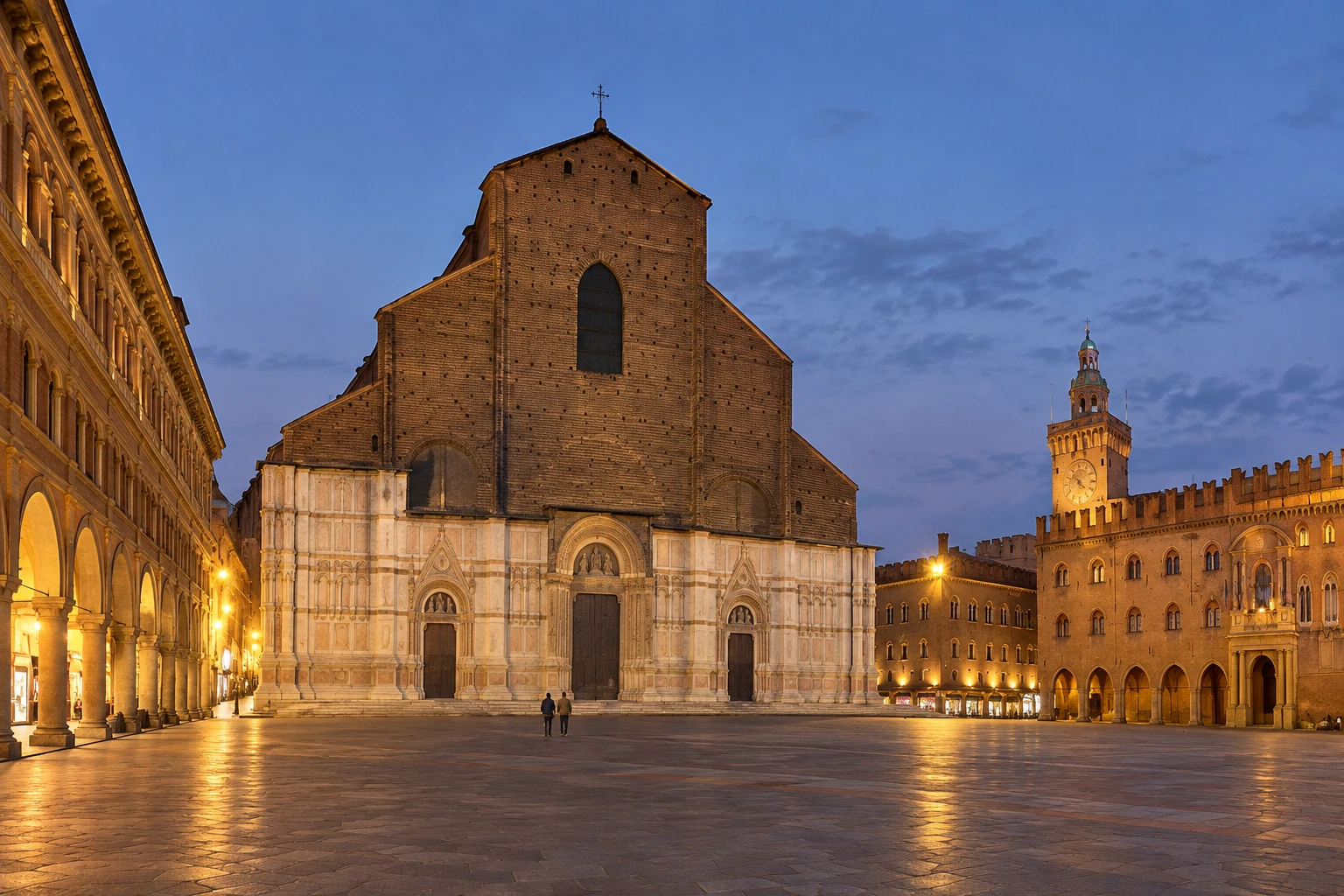
In the photo: Piazza Maggiore, Bolonha

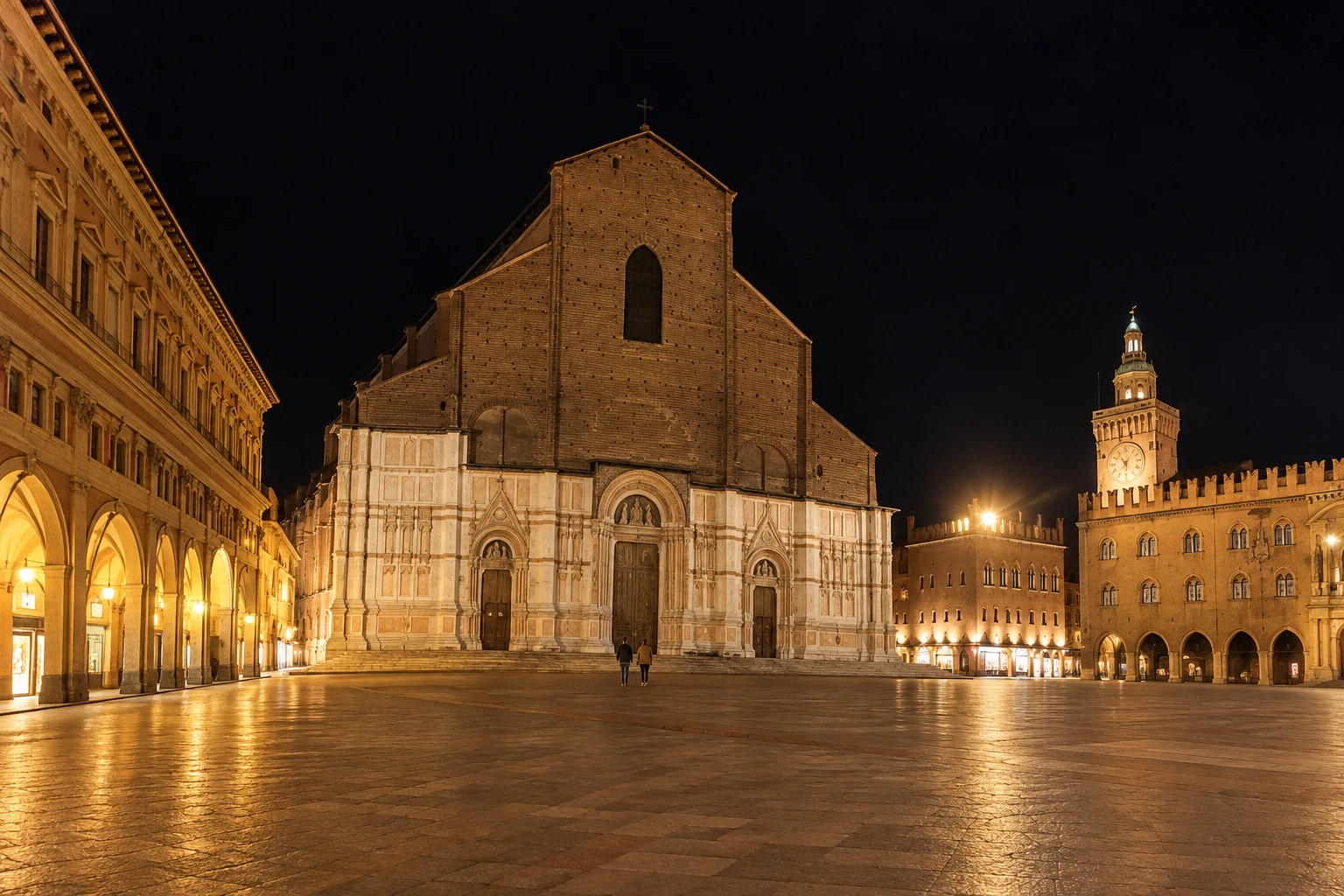
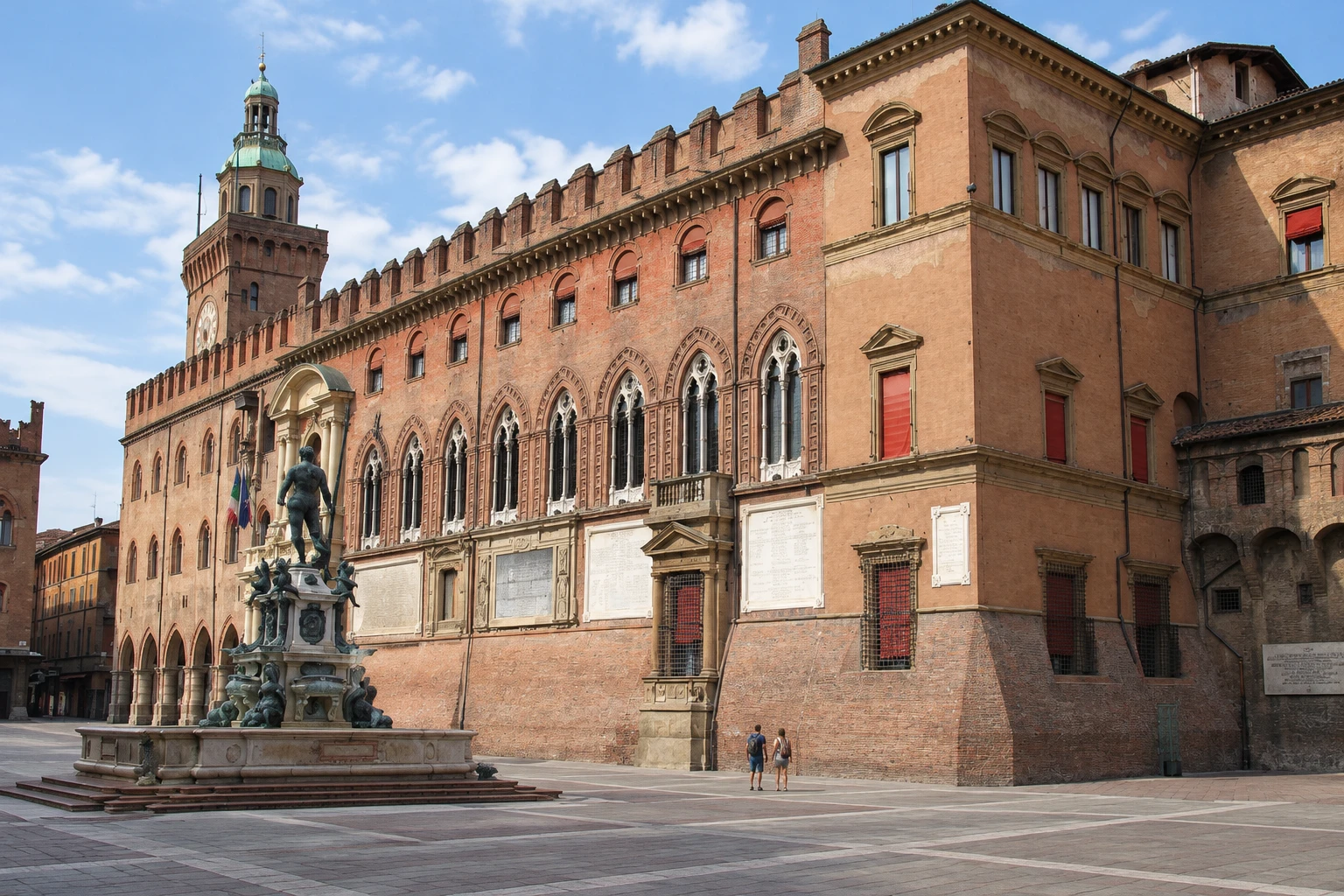
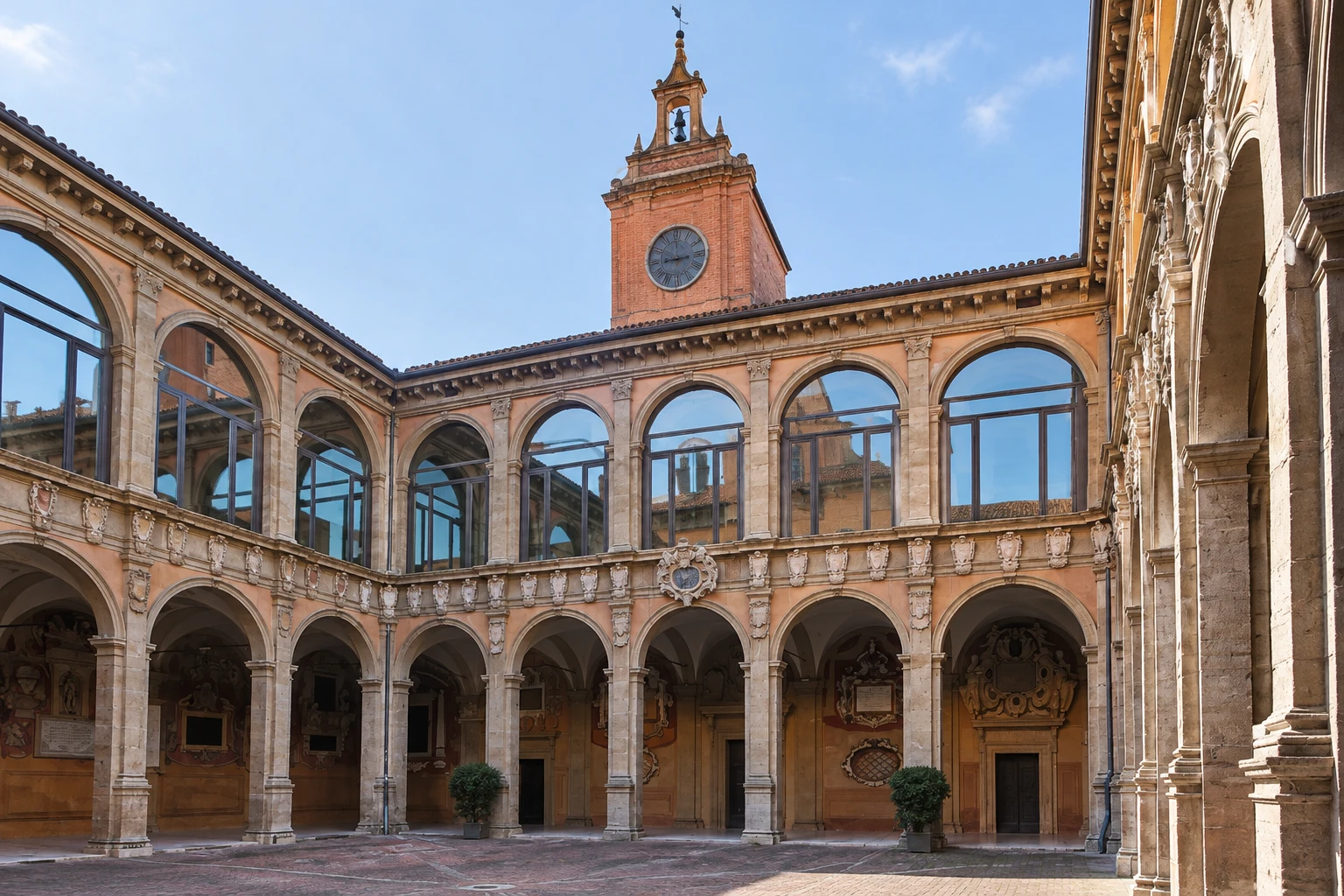
Illustrative images. The pictures in this guide are illustrations based on the real place, not photographs, and may differ from it.

Get it on Google Play

The city

What to expect from Bologna.

As the capital of Emília-Romanha, Bolonha has a red-brick historic centre cut through by porticoes. Around the Piazza Maggiore are the Basilica di San Petronio, the Palazzo d'Accursio and the Archiginnasio, the old university seat. A few minutes away are the Basilica di Santo Stefano, the Basilica di San Domenico and the Pinacoteca Nazionale. On the hill, the Santuario della Madonna di San Luca is reached via the city's longest portico.

Bologna, the capital of Emilia-Romagna, sits on the plain at the foot of the Apennines, where the ancient Via Emilia entered the city. Before the Romans founded Bononia in 189 BC, it was the Etruscan city of Felsina. In the Middle Ages, rival families built towers, the city dug canals to power mills and silk factories, and the university was founded in 1088. Bologna's three nicknames sum up what you'll find here: the Red, for the color of its bricks and rooftops; the Learned, for its university; and the Fat, for its food.

The old town lies within the outline of the 14th-century walls, whose gates still stand. You can explore it on foot, walking under porticoes most of the way. The old town has about 40 km of these covered walkways, some of which were added to the UNESCO World Heritage List in 2021. From Bologna Centrale station, it's about a 15-minute walk along Via dell'Indipendenza to Piazza Maggiore.

Piazza Maggiore and neighboring Piazza del Nettuno form the civic center, with the Basilica of San Petronio, Palazzo d'Accursio, which has served as city hall since 1336, and the Fountain of Neptune. Just behind the squares are the narrow medieval market streets of the Quadrilatero. A short walk away, the Two Towers stand in Piazza di Porta Ravegnana. Old streets fan out from there: Strada Maggiore has the tallest porticoes; Via Santo Stefano leads to the Seven Churches complex; and Via Zamboni runs through the heart of the university district, home to the National Art Gallery and the Palazzo Poggi museums. To the north, near Via Piella, windows overlooking the Canale delle Moline offer a view of one of the few stretches of water that hasn't been covered over. To the northwest, the former port area is now the Manifattura delle Arti, home to the modern art museum and the Cineteca.

To the south, the city climbs into the hills. The Portico of San Luca leads from Porta Saragozza to the sanctuary atop Colle della Guardia, at an elevation of 300 meters. San Michele in Bosco has a terrace overlooking the rooftops, and the 26-hectare Giardini Margherita is the city's largest park. Also outside the center are the Certosa, Bologna's monumental cemetery, and several museums devoted to industry, including the Ducati Museum.

Bologna has the continental climate of the plains. Winter, from December to February, is cold, with average temperatures between 3 and 5 °C, frequent fog, and occasional snow. The porticoes make it easy to walk around town in the rain. In spring, from March to May, average temperatures rise from around 10 °C to about 18 °C, with occasional showers. Summer, from June to August, is hot and humid, with highs above 33 °C in July. Around August 15, many shops and trattorias close for a week or two. Fall starts mild in September and ends wet: November is usually the rainiest month.

Bologna is also a base for exploring the region by train. Modena is about 40 km away, Ravenna about 80 km, and Parma about 95 km, all served by regional trains from Bologna Centrale. Florence is just over half an hour away by high-speed train. Those cities have their own pages and are mentioned here only as neighbors. What follows focuses on what to do in Bologna.

Share: WhatsApp

Where to stay

30 places to stay in Bologna.

Where to eat

30 places to eat in Bologna.

Map of Bologna

The city's hotels and restaurants on the map.

Flavors of Italy

To try Bologna

Discover other flavors of Italy

The local experience

Things to do in Bologna

Bologna · Italy · Square

Piazza Maggiore

The main square of Bolonha, surrounded by the Basilica di San Petronio, the Palazzo d'Accursio and the Palazzo del Podestà. Beside it is the Fontana del Nettuno by Giambologna.

Explore Piazza Maggiore

Bologna · Italy · Palace

Palazzo d'Accursio

The seat of Bologna's town hall since the Middle Ages, on the Piazza Maggiore. It houses the Collezioni Comunali d'Arte and the Torre dell'Orologio, which can be climbed by reservation.

Explore Palazzo d'Accursio

See 4 more places in Bologna

To choose before you go

Tours in Bologna

Where each tour starts, how long it takes, how it is done, what is included and the price range.

Piazza Maggiore and Piazza del Nettuno: the palaces, the fountain, and San Petronio

From Piazza Maggiore on foot, self-guided about 2 hours morning easy (flat terrain)

Piazza Maggiore began to take shape around 1200, when the city began buying houses and land to create a common space for government, markets, and trade. At its center is the Crescentone, a raised platform of pale and pink stone. Around it stand Palazzo d'Accursio, Palazzo dei Notai, the Basilica of San Petronio, Palazzo dei Banchi, and Palazzo del Podestà. The last of these was the first seat of the city government, and the bell in its Torre dell'Arengo summoned the citizens. Beneath the palace is the Voltone del Podestà: if you speak facing one corner of the vault, you can be heard in the opposite corner. Next door is Palazzo Re Enzo, built between 1244 and 1246 and named for King Enzo of Sardinia, who was held prisoner there after his capture at the Battle of Fossalta. In Piazza del Nettuno, Giambologna created the marble and bronze fountain between 1563 and 1566, following a design by Tommaso Laureti. From the same square, you can enter Salaborsa, the public library housed in Palazzo d'Accursio. The glass floor of its covered square lets you see the excavated remains, from Villanovan huts to the Roman city of Bononia. The Basilica of San Petronio, dedicated to the city's patron saint, is its largest church. Construction began in 1390 under the direction of Antonio di Vincenzo. The facade remains unfinished: its marble facing, begun in 1538, stops halfway up. The nave and two side aisles open onto 22 chapels. The Chapel of the Magi, also known as the Bolognini Chapel, contains Giovanni da Modena's paintings of Paradise and Hell. An organ built around 1470 by Lorenzo da Prato is still played in the music chapel. A 67.27-meter meridian line laid out by the astronomer Cassini runs along the floor.

Stops: Piazza Maggiore, Fountain of Neptune, Basilica of San Petronio, Palazzo del Podestà, Palazzo Re Enzo, Salaborsa Library.

Includes: The squares, the basilica, and Salaborsa are free to enter. There may be a separate charge for some of the basilica's chapels and for guided tours.

Tip: The tourist office is in the Palazzo del Podestà, right on the square. You can pick up maps there and book guided walking tours of the city center. On a sunny day, look for the spot of sunlight on the meridian line around noon.

Best time: Year-round. On summer evenings, the square hosts outdoor movie screenings.

Inside Palazzo d'Accursio: the Clock Tower and the art collections

From Piazza Maggiore timed entry about 1 hour and 30 minutes morning or afternoon easy (there are stairs in the tower)

Palazzo d'Accursio is a complex of buildings that grew around a group of properties the city bought in the late 13th century. One was the home of Accursio, a jurist and law professor from Florence. The complex has served as city hall since 1336. To reach the main ceremonial floor, you climb the cordonata, a 16th-century ramp with shallow steps attributed to Bramante. It was designed so that government officials could ride down on horseback. At the top, a series of rooms leads from the Sala d'Ercole through the Sala del Consiglio Comunale, the Sala Farnese with its chapel, and the Sala Rossa to the Sala Urbana. The top floor houses the Municipal Art Collections, with works owned by the city displayed in rooms decorated with frescoes. The corner tower once belonged to Accursio's house. In 1444, a large mechanical clock was installed to mark the daytime hours. From 1451, it marked the nighttime hours as well. In the mid-15th century, a carousel of wooden figures depicting the Virgin Mary, the Christ Child, and the Three Magi was added. It was removed in 1796. A visit to the Clock Tower takes you to two terraces overlooking Piazza Maggiore, where you can see the Basilica of San Petronio in profile, the red rooftops, the towers, and the hills to the south.

Stops: Palazzo d'Accursio, Clock Tower, Municipal Art Collections.

Includes: Admission is charged separately. The tower ticket also includes entry to the Municipal Art Collections. Check the current prices.

Tip: Tower climbs have set entry times, with only a few spots per time slot, so book ahead. With the Asinelli Tower closed to visitors, this is the easiest place in the city center to get a view from above.

Best time: Year-round. In the late afternoon, sunlight falls directly on the brickwork around the square.

The Quadrilatero, Santa Maria della Vita, and the Archiginnasio

From Piazza Maggiore, on the Palazzo dei Banchi side on foot, self-guided 2 hours 30 minutes to 3 hours morning easy (flat)

Walk under the arches of Palazzo dei Banchi to enter the Quadrilatero, a network of narrow market streets dating back to the Middle Ages. Trade continues here today. Shops passed down through generations, many still with their old furnishings, sell cold cuts, cheeses, fresh pasta, fish, and fruit. There are historic pharmacies here, too. The Mercato di Mezzo became the city's first covered market after the unification of Italy and is now a place to shop and eat. Among these streets stands the Santa Maria della Vita complex. Its Bolognese Baroque church, with a dome designed by Bibiena, houses Niccolò dell'Arca's Lamentation over the Dead Christ. Gabriele D'Annunzio described this group of terracotta figures from the second half of the 15th century as a scream in stone. The adjoining oratory houses Alfonso Lombardi's Death of the Virgin. The Portico del Pavaglione runs alongside San Petronio and leads to the Palazzo dell'Archiginnasio. Built between 1562 and 1563 to a design by Antonio Morandi, known as Terribilia, the palace housed the university until 1803. The courtyard and staircases are covered with the coats of arms of professors and students. Upstairs is the Anatomical Theater, a wooden room carved by Antonio Levante in 1637 for anatomy classes, with Ercole Lelli's statues of the Flayed Men. Also upstairs is Stabat Mater Hall, where Donizetti conducted the first performance of Rossini's Stabat Mater in 1842. The palace was badly damaged in a bombing raid in 1944 and later rebuilt. Along the same portico, the Civic Archaeological Museum occupies Palazzo Galvani. It houses the Egyptian collection and an Etruscan section that traces the origins of Felsina.

Stops: Quadrilatero, Mercato di Mezzo, Santa Maria della Vita, Palazzo dell'Archiginnasio, Anatomical Theater, Civic Archaeological Museum.

Includes: The streets and market are free to visit; food costs extra. Santa Maria della Vita, the Anatomical Theater, and the Civic Archaeological Museum each have a separate admission fee. Check current prices.

Tip: The market is liveliest in the morning and late afternoon. The Archiginnasio library is not open to visitors. The visit includes the courtyard, the Anatomical Theater, and Stabat Mater Hall.

Best time: Year-round.

From the Two Towers to Santo Stefano via Strada Maggiore

From Piazza di Porta Ravegnana on foot, self-guided about 2 hours 30 minutes morning or afternoon easy (flat)

The Two Towers stand where the Via Emilia once entered the city. The Asinelli Tower was built between 1109 and 1119 by the family of the same name and stands 97 meters tall. The Garisenda Tower dates from the same period but is shorter and leans sharply because the ground beneath it has sunk. Dante mentions it in the Inferno. Its height was reduced in the 14th century for fear it might fall. Medieval towers served as lookouts and defensive structures and showed the prestige of those who commissioned them. A few steps away stands the Palazzo della Mercanzia, where the city’s trade has been regulated since the late 14th century. The rulings of the merchants’ court were read aloud from the small marble balcony on the facade. Strada Maggiore follows a stretch of the Roman Via Emilia. Its porticoes lead past medieval houses to Porta Maggiore. Casa Isolani is a rare example of 13th-century domestic architecture: its portico rests on oak beams 9 meters tall. Farther along, a four-sided portico begun in 1393 stands in front of the Gothic basilica of Santa Maria dei Servi. Inside the basilica is a painting of the enthroned Madonna by Cimabue. From Casa Isolani, the Corte Isolani passage leads through a series of courtyards to Piazza Santo Stefano. Rather than a separate square, the piazza is where the street widens in front of the complex known as the Seven Churches. Santo Stefano brings together buildings from several periods: the Church of the Crucifix, of Lombard origin; the Church of Calvary; the Church of Saints Vitalis and Agricola, two Bolognese martyrs; and the Church of the Trinity. Inside the complex are Pilate’s Courtyard, with the marble basin donated by the Lombard kings Liutprand and Hildeprand, and the two-story Benedictine cloister.

Stops: Two Towers, Palazzo della Mercanzia, Strada Maggiore, Casa Isolani, Santa Maria dei Servi, Corte Isolani, Piazza Santo Stefano, Basilica of Santo Stefano.

Includes: Self-guided walk. Admission to Santo Stefano is free, though donations are welcome. The visit includes the complex’s museum.

Tip: Santo Stefano usually closes around midday, so check before you go. You can climb the Asinelli Tower only when it is open to the public. Check the city’s tourism website for its current status.

Best time: Year-round; from November until Christmas, the Santa Lucia Fair takes place under the portico of Santa Maria dei Servi.

University district: Via Zamboni, Santa Cecilia, Palazzo Poggi, and the National Art Gallery

From From the Two Towers, along Via Zamboni on foot, self-guided about 3 hours afternoon easy (flat)

Via Zamboni runs for about 1 km from the Two Towers to Porta San Donato, crossing the entire university district. It is named after Luigi Zamboni, an 18th-century student from Bologna. On Piazza Rossini stands the Basilica of San Giacomo Maggiore, built between 1267 and 1315 by the Hermit Friars of St. Augustine. The exterior is Romanesque, while the interior blends Gothic and Renaissance styles around a single, wide nave. The 15th-century Bentivoglio Chapel is an important work of the early Renaissance in Bologna. A side portico leads to the Oratory of Santa Cecilia, where ten fresco panels depict the lives of the saint and her husband, Valerian. Francesco Francia, Lorenzo Costa, and Amico Aspertini, painters at the Bentivoglio court, began work on the frescoes in 1505. Farther along are the Teatro Comunale and the 16th-century Palazzo Poggi, which has frescoes by Pellegrino Tibaldi and became the seat of the university in 1803. The palace museums house the collections of the former Institute of Sciences. Among the rooms are one devoted to ships and maps, with model ships from the 17th and 18th centuries, and another devoted to military architecture. You can also see the room where the poet Giosuè Carducci taught Italian literature. A few minutes away, the National Art Gallery occupies the former Jesuit Novitiate of St. Ignatius, built in the 17th century. Its collection includes paintings by Raphael, Perugino, Titian, Tintoretto, the Carracci family, Guercino, and Guido Reni. On Via Irnerio, the university's botanical garden was founded in 1568 at the initiative of Ulisse Aldrovandi. It covers about two hectares and has four greenhouses, with tropical plants and succulents.

Stops: Via Zamboni, Basilica of San Giacomo Maggiore, Oratory of Santa Cecilia, Palazzo Poggi, National Art Gallery of Bologna, University Botanical Garden.

Includes: The walk is free. The National Art Gallery and the Palazzo Poggi museums require separate tickets. Check current prices and which days the oratory and botanical garden are open.

Tip: When classes are in session, students fill the street and Piazza Verdi in the late afternoon for aperitivo. Save the National Art Gallery for a rainy or very hot day.

Best time: Year-round. The neighborhood is quieter in August, when the university is on break.

Bologna’s canals: the window on Via Piella and the Manifattura delle Arti

From Via Piella, a few minutes from Via dell'Indipendenza on foot, self-guided 2 to 3 hours, including the museum visit morning or afternoon easy (flat)

In the late 12th century, the people of Bologna brought water to a city that lacked it. Two artificial canals, totaling more than 27 km, diverted water from the Savena River to the east and the Reno River to the west. The water turned hundreds of wheels that powered silk factories, mills, and workshops along the smaller canals. Nearly the entire canal network was covered over between the early 20th century and the postwar years. The best-known stretch is on Via Piella. Walk under the Torresotto dei Piella, one of the gates in the old city wall, and you'll come to a small window overlooking the Canale delle Moline. This canal, a continuation of the Canale di Reno, runs through a narrow gap between the backs of houses. There are other views from the bridges on Via Oberdan and Via Malcontenti. Nearby Montagnola Park is the city's oldest park. It opened to the public in 1664 and was redesigned in the French style in the early 19th century on Napoleon's orders. Its monumental staircase dates to 1896. Head west to reach the Manifattura delle Arti, near Porta Lame. From the Renaissance to the 19th century, this area was the city's port and the center of its canal-based industries. The Salara, a late 18th-century salt warehouse, is what remains of the port. The area was redeveloped between 1996 and 2003 to a design by architect Aldo Rossi. It now includes Parco del Cavaticcio, several university departments, and the Cineteca di Bologna, which occupies the former tobacco factory and slaughterhouse and has movie theaters and a library. A former municipal bakery houses MAMbo, the city's museum of modern art. MAMbo traces Italian art from the end of World War II to the present and is home to the Museo Morandi, which holds the largest public collection of works by Bolognese painter Giorgio Morandi.

Stops: Finestrella di Via Piella, Canale delle Moline, Montagnola Park, Manifattura delle Arti, Salara, MAMbo, Museo Morandi, Cineteca di Bologna.

Includes: The walk is free. Admission to MAMbo and the Morandi Museum costs extra, as do screenings at the Cineteca.

Tip: The window on Via Piella is small, and there’s usually a line to take photos around midday. Early in the day, there’s no line. The water level in the canal varies, and at times the canal bed is almost dry.

Best time: Year-round. In late June, the Cineteca hosts Il Cinema Ritrovato, a festival of restored films.


See 5 more tours

San Luca from the city center: from Porta Saragozza to the sanctuary terrace

From Porta Saragozza, or Piazza Galvani for the tourist train on foot under the portico, by bus, or by tourist train 3 to 4 hours on foot, round trip morning or late afternoon moderate (3.8 km uphill)

The Sanctuary of the Madonna di San Luca stands atop Colle della Guardia, 300 m above sea level, and can be seen from almost anywhere in the city. A single portico connects it to the city center, climbing 3.8 km from Porta Saragozza through 666 arches. It is the world’s longest portico and one of the sections of Bologna’s porticoes on the UNESCO World Heritage List. Construction of the portico began in 1674. The first section is level and follows the street to the Arco del Meloncello, built in 1732 to a design by Carlo Francesco Dotti. The arch carries the portico over the road. From there, the portico climbs in a series of ramps and flights of steps, passing fifteen chapels with paintings of the Mysteries of the Rosary. At the center of the arch is the Monti Bendini family’s copper coat of arms, a reminder of the donations that paid for its construction. The sanctuary church dates to the 18th century and replaced a 15th-century building. It houses a Byzantine icon of the Virgin and Child, which is carried down to the cathedral in procession during Ascension week, a tradition that has continued without interruption since 1433. From the forecourt, you can see the plain on one side and the hills on the other. The dome’s panoramic terrace, 42 m high, offers a 180-degree view that takes in the hills and the city center and extends as far as Casalecchio di Reno. If you’d rather not walk up, you can take the San Luca Express, a tourist train that leaves from Piazza Galvani, behind San Petronio. The journey takes about an hour, and an audio guide is available in ten languages, including Portuguese. City buses drop you off at the Arco del Meloncello, where the steep section begins.

Stops: Porta Saragozza, Portico di San Luca, Arco del Meloncello, Sanctuary of the Madonna di San Luca.

Includes: The portico and church are free to enter. There are separate charges for the dome terrace, tourist train, and bus; check current prices.

Tip: A good option is to take the tourist train or bus up and walk back down under the arches. Bring water in summer: the portico provides shade, but the climb can get hot. During Ascension week in May, the icon is in the cathedral in the city center.

Best time: Year-round. Fog on the plain, common from November to January, can obscure the view from the top.

San Michele in Bosco and Giardini Margherita: the terrace and park on the south side of Bologna

From Porta Castiglione or Porta Santo Stefano on foot or by city bus 2 to 3 hours late afternoon easy to moderate (short climb)

Just beyond the line of the old walls on the south side, the city meets the hills. The San Michele in Bosco complex, made up of the church and the former monastery of the Olivetan monks, offers one of the best views: the terrace in front of the church looks out over the rooftops of the city center and the plain beyond. The church dates back to ancient times and has been rebuilt several times. The complex has served many purposes: it was a barracks and then a prison during the Napoleonic era, a villa for the papal legate, and a residence for the king of Italy. It became home to the Rizzoli Orthopedic Institute in the late 19th century, and the institute is still there today. Inside the church, the door to the right of the chancel opens onto a long corridor in the former monastery known as the Cannocchiale, or “spyglass.” Thanks to an optical illusion, the Asinelli Tower, framed by the window at the far end, looks close enough to touch. Down the hill is Giardini Margherita, Bologna’s most visited park and, at 26 hectares, its largest. It opened in 1879 as the Passeggio Regina Margherita and retains its original design, inspired by English Romantic landscape parks, with lawns, tree-lined paths, and a lake. An Etruscan burial ground was uncovered during construction. One of the tombs, made of travertine, remains beside the central lawn. Along the south shore of the lake, a short stretch of the Savena Canal flows in the open. Dating to 1176, it was one of the waterways that supplied the city.

Stops: San Michele in Bosco, Giardini Margherita.

Includes: Admission to the terrace, church, and park is free. The bus fare is separate.

Tip: The Cannocchiale corridor is on hospital grounds and isn’t always open. Check before you go and keep your voice down. The view from the terrace is best in late afternoon, when sunlight falls across the city center at an angle.

Best time: April to October for the park; any clear day for the terrace.

San Domenico, San Francesco, and the Museo Civico Medievale

From Piazza San Domenico on foot, self-guided about 3 hours morning or afternoon easy (flat)

The two great mendicant orders arrived in Bologna in the early 13th century and built basilicas in different parts of the city center. The Dominican friars built the Basilica of San Domenico to house the remains of Saint Dominic de Guzmán, the order’s founder. The tomb in the saint’s chapel is the work of several artists. It features sculptures by Nicola Pisano, Alfonso Lombardi, and the young Michelangelo. The marble crown was sculpted between 1469 and 1473 by Niccolò da Puglia, who became known as Niccolò dell’Arca because of this work. Emperor Charles V admired the inlaid wooden choir stalls by Friar Damiano of Bergamo. The church also has paintings by Guercino, Filippino Lippi, and Ludovico Carracci, and a 51 m Gothic bell tower dating to 1313. On the other side of the city center, the 13th-century Basilica of San Francesco is Italy’s earliest example of French-influenced Gothic architecture. The Franciscans had been in the city since 1218. View the apse from the outside to see the flying buttresses of the radiating chapels and the two bell towers. At the foot of the apse are the tombs of legal scholars, including Accursio and Odofredo. Inside, the marble altarpiece above the high altar was carved between 1388 and 1393 by the Venetian sculptors Jacobello and Pier Paolo dalle Masegne. Near the Cathedral of San Pietro, with its 70 m bell tower, the Museo Civico Medievale occupies Palazzo Ghisilardi. Its collection includes objects from medieval Bologna and Renaissance and Baroque bronzes, among them a model of Giambologna’s Neptune and a bust by Bernini. It also has weapons, ivory carvings, glassware, and a large statue of Boniface VIII made of gilded copper sheets in 1301.

Stops: Basilica of San Domenico, Basilica of San Francesco, Museo Civico Medievale, Cathedral of San Pietro.

Includes: Admission to the basilicas is free; donations are welcome. The Museo Civico Medievale charges a separate admission fee.

Tip: Churches usually close in the middle of the day, and visits are restricted during Mass. Parts of San Domenico may be under restoration, so check before you go.

Best time: Year-round.

Certosa di Bologna: the monumental cemetery

From Central Bologna by city bus and on foot about 2 hours morning easy (flat)

The Certosa is one of Europe’s oldest monumental cemeteries and brings together sculpture and architecture from the 19th and 20th centuries. It lies outside the city center, toward Colle della Guardia. In 1800, the health commission decided to use the former Carthusian monastery of San Girolamo as a cemetery. The monastery stood outside the city on airy, well-drained ground. The cemetery opened in 1801. The following year, architect Ercole Gasparini designed the monumental entrance, with its tall pillars topped by statues. In 1811, he designed the portico that connects the Certosa to the portico of San Luca. The first spaces used for burials were all part of the monastery: the Chiostro Terzo, the entrance cloister, the Sala della Pietà, and the Sala delle Tombe. Over time, new cloisters, galleries, and halls were added to house the tombs of the city’s families. Between 1869 and 1871, construction work uncovered Etruscan tombs dating from the 6th to the 4th centuries BC. The excavations that followed, led by Bolognese archaeologist Antonio Zannoni, helped piece together the city’s ancient history. The finds are in the Etruscan wing of the Museo Civico Archeologico in the city center. The visit is a quiet walk through cloisters and covered galleries. The monastery’s church of San Girolamo is part of the complex.

Stops: Certosa di Bologna, Chiesa di San Girolamo della Certosa.

Includes: Guided tours, when available, cost extra. Check the entry requirements before you go.

Tip: This is an active cemetery: dress modestly and be respectful of funerals. Pick up a map at the entrance, as the grounds are extensive and it’s easy to lose your way.

Best time: Year-round; in summer, morning is the best time to visit.

Outside the city center: the Ducati Museum, the Industrial Heritage Museum, and the Museum for the Memory of Ustica

From Central Bologna by city bus or taxi 2 hours per museum, including travel time morning or afternoon easy

Three museums outside the city walls tell the stories of Bologna’s factories and its recent past. Each requires a separate trip, so choose the one that interests you. The Ducati Museum is at the motorcycle manufacturer’s headquarters. In about 1,000 m², it tells the company’s story through three displays: the road bikes that defined each era, a row of racing motorcycles spanning half a century on the track, and a timeline of the brand’s defining moments. The Industrial Heritage Museum occupies the former Galotti brickworks on the northern outskirts of the city, beside the Navile, Bologna’s historic navigable canal. Inside the Hoffmann kiln are scientific instruments, models, and machines that once belonged to the Aldini-Valeriani Technical Institute. The upper floor traces five centuries of manufacturing in Bologna, from silk production to 20th-century mechanical engineering. One of the highlights is a working half-scale model of a Bolognese silk mill. Powered by water from the canals, this type of mill was among the most advanced machines in Europe before the Industrial Revolution. The Museum for the Memory of Ustica commemorates the 81 people who died when a DC-9 crashed on June 27, 1980. The wreckage is at the center of a permanent installation by French artist Christian Boltanski, with 81 lights, mirrors, and speakers that whisper everyday phrases and thoughts. Black boxes hold the passengers’ personal belongings.

Stops: Ducati Museum, Industrial Heritage Museum, Museum for the Memory of Ustica.

Includes: Admission to the Museum for the Memory of Ustica is free. The Ducati Museum and the Industrial Heritage Museum each charge a separate admission fee; check current prices.

Tip: All three museums are open only on certain days and have limited hours. The Ducati Museum may require a reservation, so check before you go.

Best time: Year-round; a good option for rainy or very hot days.

Day by day

1, 2 and 3-day itinerary in Bologna

Suggestions to plan the trip. Change the order of the days according to the weather and tour availability.

1 day · Bologna in 1 day: the main square, the market, the towers, and Santo Stefano

For travelers arriving from Florence, Milan, or Venice and spending the day in the city between trains · Based in Bologna
  1. Day 1 · The city center on foot, beneath the porticoes

    From Bologna Centrale station, walk along Via dell'Indipendenza to Piazza Maggiore, about 15 minutes away. On the way, a detour of just a few minutes takes you to the window on Via Piella overlooking the Canale delle Moline. Start in the square with the Crescentone, the Voltone del Podestà, the Fountain of Neptune, and the Salaborsa, where you can see ruins beneath the glass floor. Step inside San Petronio to see the meridian line and the Bolognini Chapel. If you’ve booked ahead, climb the Torre dell'Orologio. Have lunch in the Quadrilatero, either at the counters in the Mercato di Mezzo or at one of the fresh pasta shops, and see the Lamentation in Santa Maria della Vita. Then follow the Portico del Pavaglione to visit the Archiginnasio and its Anatomical Theater. In the afternoon, visit the Two Towers and the Palazzo della Mercanzia, then follow Strada Maggiore to Casa Isolani. Walk through Corte Isolani and finish at Santo Stefano, the Seven Churches. If there’s time, have an aperitivo on Via Zamboni or back in the Quadrilatero. It’s hard to fit San Luca into this day without rushing. Save it for a second visit.

2 days · Bologna in 2 days: the city center, the university, and San Luca
For travelers staying one or two nights who want to see the city without rushing · Based in Bologna, within the city walls
  1. Day 1 · Piazza Maggiore, the Quadrilatero and Santo Stefano

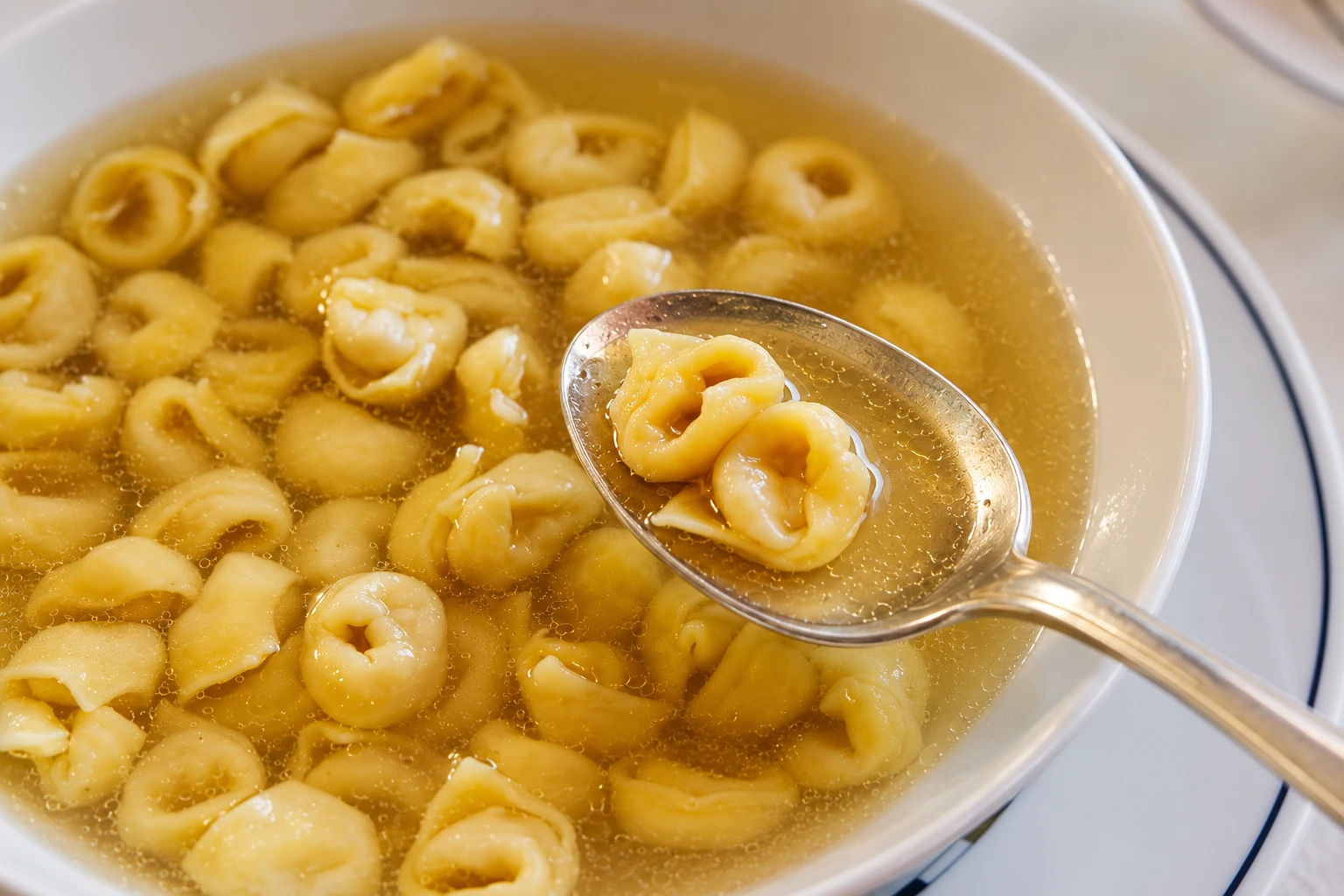
    Spend the morning in Piazza Maggiore and Piazza del Nettuno, visiting the palaces, the fountain, Salaborsa and San Petronio. Climb the Clock Tower at your reserved time and explore the rooms of Palazzo d'Accursio. Have lunch in the Quadrilatero. Then visit Santa Maria della Vita and the Archiginnasio with its Anatomical Theater. If you enjoy archaeology, the Civic Archaeological Museum is under the same portico. In midafternoon, walk from the Two Towers along Strada Maggiore to Santa Maria dei Servi, then head to Santo Stefano via Corte Isolani. For dinner in the city center, try tortellini in broth or tagliatelle al ragù.

  2. Day 2 · Canals, the university district and San Luca

    Start early at the window on Via Piella and the bridges over the Canale delle Moline. Then head to Via Zamboni to visit San Giacomo Maggiore, the Oratory of Santa Cecilia, Palazzo Poggi and the National Art Gallery. Have lunch in the university district or at the Mercato delle Erbe on Via Ugo Bassi. It's the largest covered market in the city center and has a section with restaurants. Spend the afternoon at San Luca. Take the San Luca Express from Piazza Galvani or the bus to the Arco del Meloncello. Go up to the sanctuary terrace, then walk down under the portico to Porta Saragozza in the late afternoon light. The walk down takes about an hour.

3 days · Bologna in 3 days: including the hills, the Manifattura delle Arti, and the museums
For travelers who want to get to know Bologna at a relaxed pace before using it as a base to explore the region · Based in Bologna, within the city walls or near the station
  1. Day 1 · The civic center and the market

    Visit Piazza Maggiore, Piazza del Nettuno, San Petronio and Palazzo d'Accursio, with its Clock Tower and Municipal Art Collections. Have lunch in the Quadrilatero. In the afternoon, visit Santa Maria della Vita, the Archiginnasio and the Civic Archaeological Museum. End the day with the Two Towers, Strada Maggiore and Santo Stefano.

  2. Day 2 · The religious orders, the university and San Luca

    In the morning, visit San Domenico to see the saint's tomb and San Francesco to see the apse and the tombs of the law professors. Between the two visits, stop at the Medieval Civic Museum near the cathedral. After lunch, head to Via Zamboni for San Giacomo Maggiore, Santa Cecilia and either the National Art Gallery or the museums at Palazzo Poggi. In the late afternoon, head up to San Luca. Walk under the portico from the Arco del Meloncello or take the tourist train, then return to the city center for dinner.

  3. Day 3 · Canals, modern art and the southern hills

    Start at the window on Via Piella, visit Parco della Montagnola, then walk to the Manifattura delle Arti to see the Salara, Parco del Cavaticcio, MAMbo with its Morandi Museum, and the Cineteca. Have lunch at the Mercato delle Erbe. In the afternoon, choose between the Certosa, the monumental cemetery, and a museum outside the city center, such as the Ducati Museum or the Industrial Heritage Museum. End the day on the south side of the city: visit the terrace at San Michele in Bosco in the late afternoon, then take a stroll through the Giardini Margherita. If you have more time, use Bologna as a base for train trips to Modena, Ravenna and Parma, allowing a full day for each city.

Best time to go

When to go: Bologna month by month

The seasons shown are the most usual ones; nature doesn't always follow the calendar.

January Low rain

Winter · fog · Arte Fiera (late January or early February)

Winter. At the Bologna Borgo Panigale weather station, the 1991–2020 average temperature was 3.3 °C, with lows near 0 °C. Average rainfall was about 34 mm, making this the driest month. Days are short and gray, with dense fog and occasional snow. The porticoes make it easy to walk around the city center in bad weather, and museums and churches are quiet. Bring a heavy coat. Places to stay are in high demand during Arte Fiera, the art fair.

February Some rain

Winter · few visitors

Winter. At the Bologna Borgo Panigale weather station, the 1991–2020 averages were 5.2 °C and about 56 mm of rain. It's still cold, but there are more clear days than in January. It's a quiet month and a good time to visit the National Art Gallery, the Archiginnasio and the civic museums.

March Some rain

Early spring · trade shows in the Fiera district

Early spring. The 1991–2020 averages at the Bologna Borgo Panigale weather station are 9.6 °C and about 50 mm of rain. The days grow longer, and outdoor tables return to the squares. This month’s major trade shows, including the cosmetics fair, fill the hotels for a few days, so check the calendar before booking.

April Some rain

Spring · Easter · Bologna Children’s Book Fair

Spring. The 1991–2020 averages at the Bologna Borgo Panigale weather station are 13.4 °C and about 64 mm of rain, which falls in showers. The temperatures are comfortable for the walk up to San Luca or a stroll through the Giardini Margherita. Easter and the April 25 holiday bring more visitors, and the Children’s Book Fair keeps hotels busy for four days.

May Some rain

Spring · Ascension week: the Madonna di San Luca is carried down to the cathedral

Spring is in full swing. The 1991–2020 averages at the Bologna Borgo Panigale weather station are 18.2 °C and about 61 mm of rain. During Ascension week, the city turns out as the image of the Madonna di San Luca is carried in procession from the sanctuary down to the cathedral. The days are long, and evenings are a time for aperitivo outdoors. It’s a busy time, so book your accommodations in advance.

June Some rain

Summer · Il Cinema Ritrovato (late June) · movies in Piazza Maggiore

Summer. At the Bologna Borgo Panigale weather station, 1991–2020 records show an average temperature of 22.7 °C, with highs near 29 °C, and about 66 mm of rain in thunderstorms. The heat starts to feel stifling on the plain. At the end of the month, the Cineteca’s Il Cinema Ritrovato festival screens restored films at several theaters, and Piazza Maggiore hosts outdoor screenings at night.

July Low rain

Summer · intense heat · movies in Piazza Maggiore

Summer. At the Bologna Borgo Panigale weather station, 1991–2020 records show an average temperature of 25.2 °C, with highs above 33 °C, high humidity, and about 32 mm of rain. Bologna is one of Italy’s hottest cities at this time of year. Head out early for walks, spend the middle of the day in museums and churches, and go back out in the evening, when Piazza Maggiore hosts outdoor movie screenings.

August Low rain

Summer · Ferragosto (August 15)

Summer. The 1991–2020 averages at the Bologna Borgo Panigale weather station are 25.1 °C and about 35 mm of rain, with strong thunderstorms late in the month. Around August 15, the city empties out, and many trattorias and shops close for a week or two. Museums stay open. Check that any restaurants you’d like to try are open before you go.

September Some rain

Late summer · students return

Late summer. The 1991–2020 averages at the Bologna Borgo Panigale weather station are 20.2 °C and about 61 mm of rain. Evenings turn cooler, students return, and the university district comes back to life. It’s a pleasant month for spending the whole day on foot, walking up to San Luca, and exploring the hills.

October Some rain

Fall · truffle and mushroom season

Fall. At the Bologna Borgo Panigale weather station, the 1991–2020 averages were 14.9 °C and about 75 mm of rain. Mornings are foggy and afternoons are mild. Truffles and mushrooms appear on menus. It's a good month to visit museums and walk under the porticoes. Bring a warm layer for the evening.

November High rain

Fall · wettest month · Santa Lucia market on Strada Maggiore

Late fall. At the Bologna Borgo Panigale weather station, the 1991–2020 averages were 9 °C and about 77 mm of rain, making this the wettest month. Fog settles over the plain almost daily and can obscure the view from San Luca. The city is quiet. The Santa Lucia market opens under the portico of Santa Maria dei Servi, with nativity figurines and Christmas decorations.

December Some rain

Winter · Christmas markets: Santa Lucia, Via Altabella and Porta Galliera

Winter. At the Bologna Borgo Panigale weather station, the 1991–2020 averages were 4.1 °C and about 57 mm of rain. It sometimes snows. The Santa Lucia market continues on Strada Maggiore until Christmas. There are also markets on Via Altabella, next to the cathedral, and at Porta Galliera, near the train station. The city gets busy between Christmas and New Year's Day, and trattorias serve tortellini in broth.

Plan the journey

How to get there: Bologna

By plane: Guglielmo Marconi Airport

Guglielmo Marconi Airport (BLQ) is about 6 km northwest of the city center and has daily flights from cities in Italy and elsewhere in Europe.

The Marconi Express, an electric monorail, connects the terminal to Bologna Centrale station in about 7 minutes, with several departures an hour from early morning to midnight. A bus covers the same route overnight. A slower city bus also runs between the airport and the station at the standard city fare. A taxi ride to the city center takes about 20 minutes.

From the station, it’s about a 15-minute walk along Via dell’Indipendenza to Piazza Maggiore.

If you fly into another Italian airport, you can continue by train: Bologna is on the high-speed line between Milan and Rome. Check flight availability before booking.

By train: Bologna Centrale

Bologna Centrale is one of Italy's largest rail hubs, where the north–south high-speed lines meet the lines to the Adriatic coast and the Veneto region. By high-speed train, Florence is about 35 minutes away, Milan about 1 hour, Venice about 1 hour and 30 minutes, and Rome about 2 hours.

Regional trains have no reserved seating and connect Bologna with nearby cities: Modena in 20 to 30 minutes, Ferrara in about 30 minutes, Parma in 50 minutes to 1 hour, Ravenna in about 1 hour and 10 minutes, and Rimini in about 1 hour. If you have a paper ticket for a regional train, you need to validate it at a ticket validation machine before boarding.

High-speed trains use the underground station. Allow about 10 minutes to walk from the underground platforms to the exit. From the station, the city center is about a 15-minute walk along Via dell'Indipendenza or a few minutes by bus or taxi.

By bus: the bus station next to the train station

Long-distance buses from other Italian cities and from other countries arrive at the main bus station, a short walk from the train station. From there, you can walk to the city center along Via dell'Indipendenza or take a city bus.

For trips to nearby cities, trains are usually faster and run more often than buses. Before buying a bus ticket, check the bus station's website for routes and the days they operate.

By car: highways and the limited traffic zone

Bologna is one of Italy’s main highway hubs. The A1 connects the city to Florence, about an hour’s drive south, and Milan, just over two hours north. The A14 starts in Bologna and heads south along the Adriatic side of the country, passing through Romagna. The A13 heads toward Veneto via Ferrara and Padua. On the Via Emilia, Modena is about 40 km from Bologna and Parma about 95 km. Ravenna is about 80 km from Bologna.

The historic center is a limited traffic zone (ZTL), monitored by cameras during the day. Cars without authorization cannot enter. On weekends, the main route through the center is closed to cars. Park outside the line of the city walls and continue on foot or by bus. If you’re staying inside the ZTL, ask your accommodation in advance how to register your license plate.

You don’t need a car to visit the city: you can get around on foot, by bus, or by train.

Getting around Bologna

You can explore the city center inside the walls on foot, almost always under the porticoes. It’s about a 15-minute walk from the station to Piazza Maggiore, and less than 10 minutes from the square to the Two Towers, Santo Stefano, or the Archiginnasio.

TPER city buses cover the rest of the city. You can buy tickets at machines, at ticket outlets, or through an app. You can also tap your card to pay on board.

There are three ways to reach San Luca: walk up under the portico from Porta Saragozza; take a bus to the Arco del Meloncello and walk up the final stretch; or ride the San Luca Express, the little sightseeing train that leaves from Piazza Galvani.

Cycling is popular with locals, and both bike rentals and bike sharing are available.

The Bologna Welcome Card includes admission to several city museums, and one version also includes the sightseeing train to San Luca. Check the current card options and prices.

Your questions

Frequently asked questions about Bologna

Is Bolonha a good base for exploring the region?

Yes. Bologna Centrale station is one of the largest rail hubs in Italy. From there you can catch regional trains to Módena, Parma and Ravena and high-speed trains to Florence, Milan, Venice and Rome.

What is Bolognese ragù?

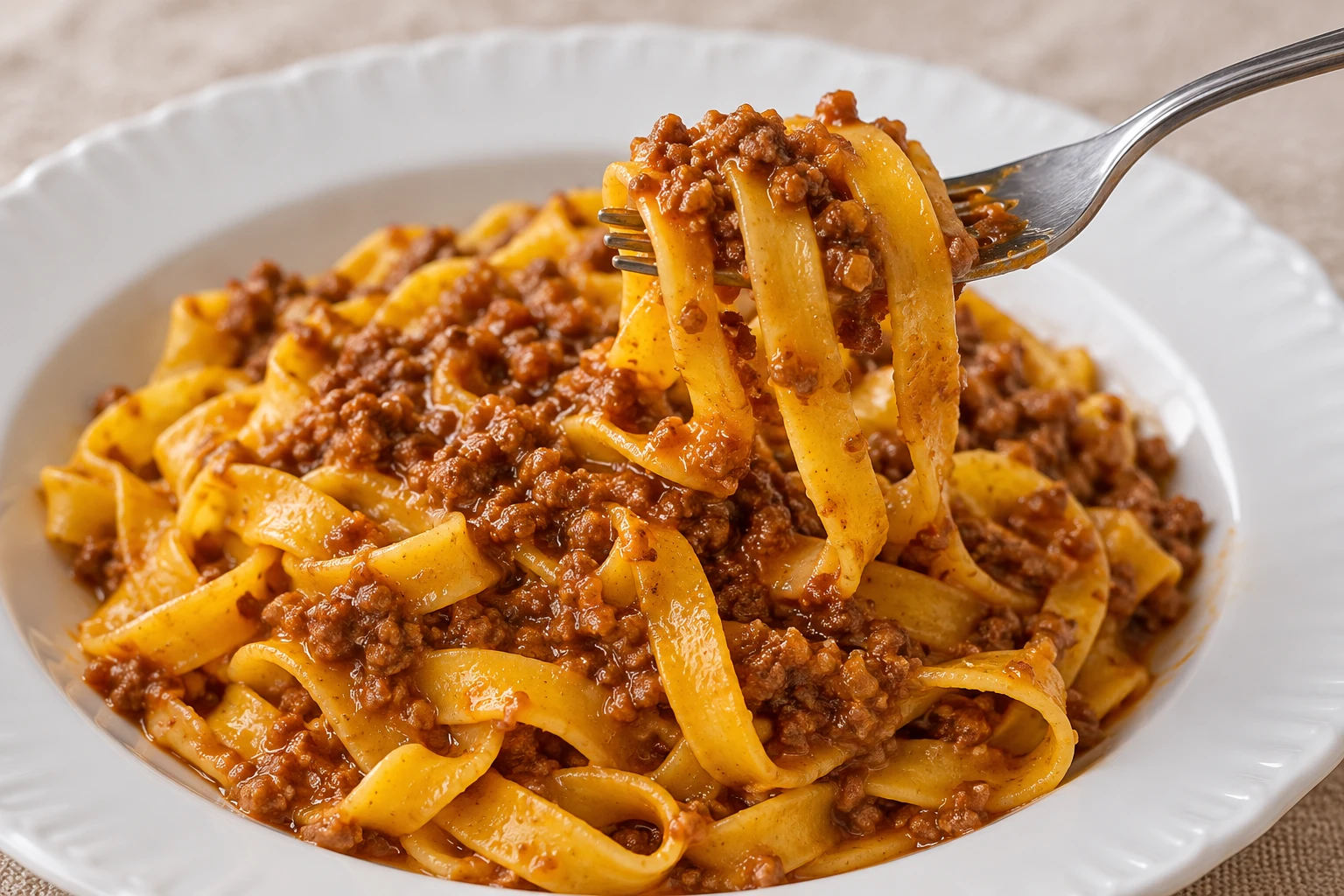
It's the meat sauce simmered for hours that the people of Bologna serve with tagliatelle, a fresh egg pasta cut into wide ribbons. In the city, spaghetti is rarely used with this sauce. Tortellini served in broth and green lasagna are also typical.

How to get from the airport to the center?

The Marconi Express, a monorail, links the airport to Bologna Centrale station in a few minutes. From the station to the center it's about a 20-minute walk along Via dell'Indipendenza, or a few minutes by bus or taxi.

What are Bolonha's porticoes?

They are covered arcades that run along the sidewalks for much of the center, totaling about 40 km within the old city. They shelter from rain and sun, and part of them is a UNESCO World Heritage Site. The longest is the one that climbs up to the Santuario della Madonna di San Luca.

Do you need to book anything in advance?

The ascent of the Torre dell'Orologio, in the Palazzo d'Accursio, is done with timed slots and has few places per turn. Other sites in the center are usually visited without reservation, but check before you go.

How many days should you spend in Bologna?

One full day gives you time to see the city center: Piazza Maggiore, San Petronio, the Quadrilatero, the Archiginnasio, the Two Towers, and Santo Stefano. With two days, you can also explore the university district, see the canals, and make the climb to San Luca. A third day gives you time for the hills south of the city, the Manifattura delle Arti, and the museums outside the center. If you’re using Bologna as a base for train trips to Modena, Ravenna, and Parma, add a day for each.

Can you visit Bologna on a day trip from Florence, Milan, or Venice?

Yes. By high-speed train, Bologna is about 35 minutes from Florence, an hour from Milan, and an hour and a half from Venice. The station is about a 15-minute walk from Piazza Maggiore, and you can explore the entire historic center on foot. A day is enough for the center; allow another half day for San Luca.

Can you climb the Torre degli Asinelli?

It depends on when you visit. The tower is 97 meters tall and has 498 steps inside, but it may be closed to climbers because of construction around the Two Towers. Check the city’s tourism website before planning your visit around the climb. The Garisenda is not open to visitors. For views over the city, you can book a time slot at the Torre dell’Orologio in Piazza Maggiore, visit the terrace at the Sanctuary of San Luca, or head to the forecourt of San Michele in Bosco.

How can you reach the Sanctuary of San Luca without walking all the way up?

There are two options. The San Luca Express, a small sightseeing train, departs from Piazza Galvani, behind San Petronio, and takes you up to the basilica, with an audio guide on board. The ticket covers a same-day round trip. City buses take you as far as the Arco del Meloncello, but you still have to walk up the steep section of the portico from there. Many visitors take the train up and walk back down under the arches to Porta Saragozza.

Where can you see Bologna’s canals?

The best-known spot is the little window on Via Piella overlooking the Canale delle Moline, a few minutes from Via dell’Indipendenza. You can see the same canal from the bridges on Via Oberdan and Via Malcontenti. A section of the Savena Canal runs in the open through the Giardini Margherita. In the old port area at the Manifattura delle Arti, the Salara, the old salt warehouse, still stands. Most of the canals were covered over in the 20th century.

Why is Bologna called “the Red,” “the Learned,” and “the Fat”?

These are the city’s three nicknames. “The Red” comes from the color of the bricks and rooftops in the city center. “The Learned” refers to the university, founded in 1088 and once based in the Archiginnasio and later in Palazzo Poggi. “The Fat” is a tribute to the local cooking: tortellini, tagliatelle al ragù, lasanha, and mortadela.

What can you do in Bologna on a rainy day?

Bologna is made for rainy days: porticoes shelter the sidewalks across much of the center, so you can walk from the station to Piazza Maggiore and on to Santo Stefano with little need for an umbrella. For indoor sights, there’s San Petronio, the Salaborsa, the Archiginnasio, the Pinacoteca Nazionale, the Museo Civico Archeologico, the Museo Civico Medievale, and MAMbo. For lunch, head to the Quadrilatero or the Mercato delle Erbe.

What can you visit in Bologna for free?

There’s no admission fee for the squares, the porticoes, the Quadrilatero, the Basilica of San Petronio, the Salaborsa, the Santo Stefano complex, the portico and church of San Luca, the window on Via Piella, the Giardini Margherita, or the Museo per la Memoria di Ustica. The towers, the panoramic terraces, the Anatomical Theater, and most museums charge admission; check current prices.

What area of Bologna should you stay in?

Within the old city walls, everything is within walking distance. Near Piazza Maggiore and the Quadrilatero, you’re surrounded by historic sights and restaurants. Staying near the station is more convenient if you’re planning day trips by train or arriving late from the airport. The university district around Via Zamboni has the liveliest nightlife when classes are in session. If you’re driving, keep in mind that the city center is a restricted traffic zone.

Is August a good time to visit Bologna?

August is the quietest month and one of the hottest. Around the August 15 holiday, many trattorias and shops close for a week or two, and the university is on summer break. Museums and churches stay open, and it’s usually easier to find a room. If you’re coming for the food, you’ll get more out of a visit at another time of year. If you’re coming for the historic sights, you’ll find the city quiet, as long as you do your walking early in the morning and in the evening.

Where can I try local food in central Bologna?

In the Quadrilatero, behind Piazza Maggiore, shops selling cured meats, cheeses, and fresh pasta sit alongside counters and tables where you can eat. The Mercato di Mezzo brings several stalls together under one roof. The Mercato delle Erbe, on Via Ugo Bassi, is the largest indoor market in the city center and has a section with restaurants. At a trattoria, try tortellini in broth, tagliatelle al ragù, or green lasagna. In August, check ahead to make sure the restaurant is open.

What is there to do in Bologna at night?

Evenings start with aperitivo in the Quadrilatero or in the university district around Via Zamboni, which fills with students when classes are in session. In summer, Piazza Maggiore becomes an open-air movie theater. The Cineteca runs movie theaters year-round. Check what's showing before you go.

Is the Bologna Welcome Card worth it?

The Bologna Welcome Card is the city's official tourist pass. It covers admission to several city museums, including the Archaeological Civic Museum, the Medieval Civic Museum, MAMbo and its Museo Morandi, and the National Art Gallery. One version also includes the San Luca sightseeing train. The card is good value if you plan to visit several museums in a few days. Compare the current card prices with the cost of individual tickets for the places you want to see.

Traveler, share your experiences through photos Up to 5 photos of each place you visited.

Routes in Italy

Bologna is part of the Via degli Dei from Bologna to Florence

About 130 km on foot across the Apennines, from Bologna’s porticoes to Florence’s city centre, passing through woodlands, ancient paved sections and villages of the Mugello.

Explore the Via degli Dei from Bologna to Florence
See the destination Bologna and Emilia-Romagna Find another city