Aosta · Aosta Valley · Historical monument
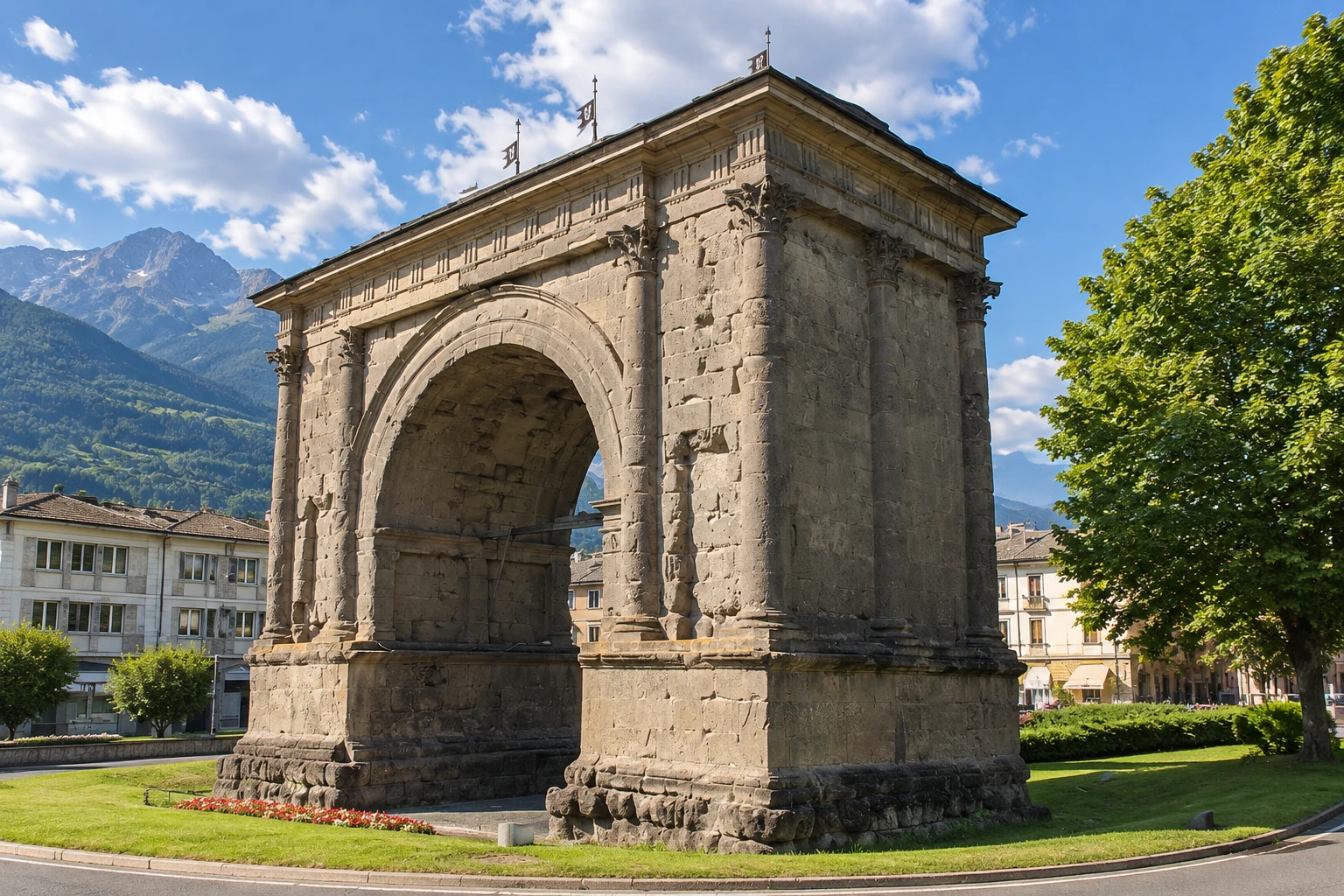
Arch of Augustus
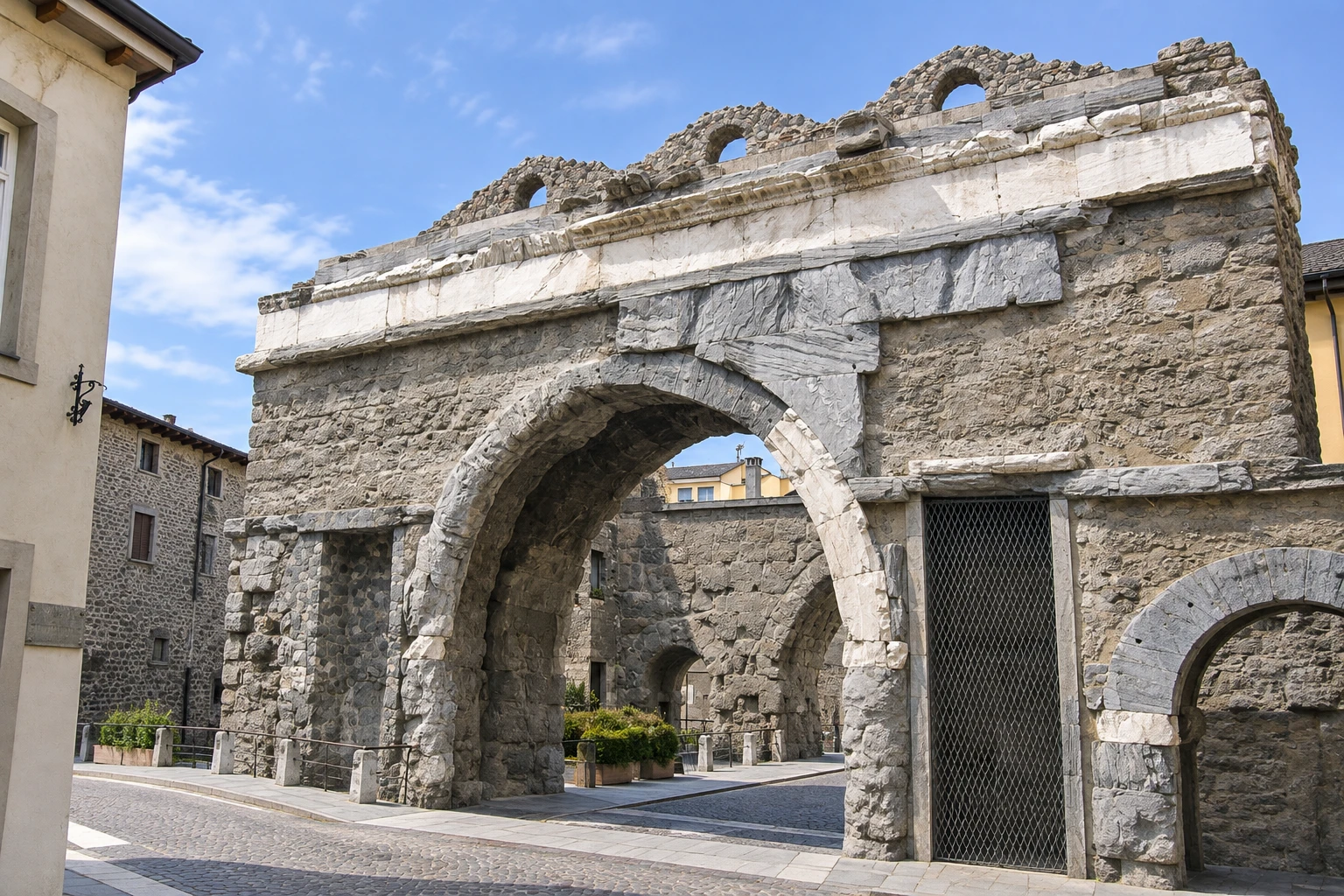
Roman arch from 25 BC, built to celebrate the victory over the Salassi and the founding of Augusta Praetoria, with a crucifix hanging beneath the vault.

 Search
 Brazil
 Antarctica
 Argentina
 Bolivia
 Chile
 Colombia
 Ecuador
 Falkland Islands (Malvinas)
 French Guiana
 Guyana
 Paraguay
 Peru
 Suriname
 Uruguay
 Venezuela
 Austria
 Belgium
 Croatia
 Denmark
 Finland
 France
 Germany
 Greece
 Hungary
 Iceland
 IrelandItaly
 Luxembourg
 Norway
 Poland
 Portugal
 Slovakia
 Slovenia
 Spain
 Sweden
 Switzerland
 the Czech Republic
 the Netherlands
 the United Kingdom
 Turkey
 Bermuda
 Canada
 Greenland
 Mexico
 Saint Pierre and Miquelon
 the United States
 the Dominican Republic
 JapanTurkey
 Egypt
 South Africa
 Australia
 Fiji
 New Zealand
 Papua New Guinea
Piedmont · Aosta Valley
26 places to visit and 14 tours, chosen by the Cidade Turismo guide.
Updated
Illustrative images. The pictures in this guide are illustrations based on the real place, not photographs, and may differ from it.
To start
One by one
Roman arch from 25 BC, built to celebrate the victory over the Salassi and the founding of Augusta Praetoria, with a crucifix hanging beneath the vault.
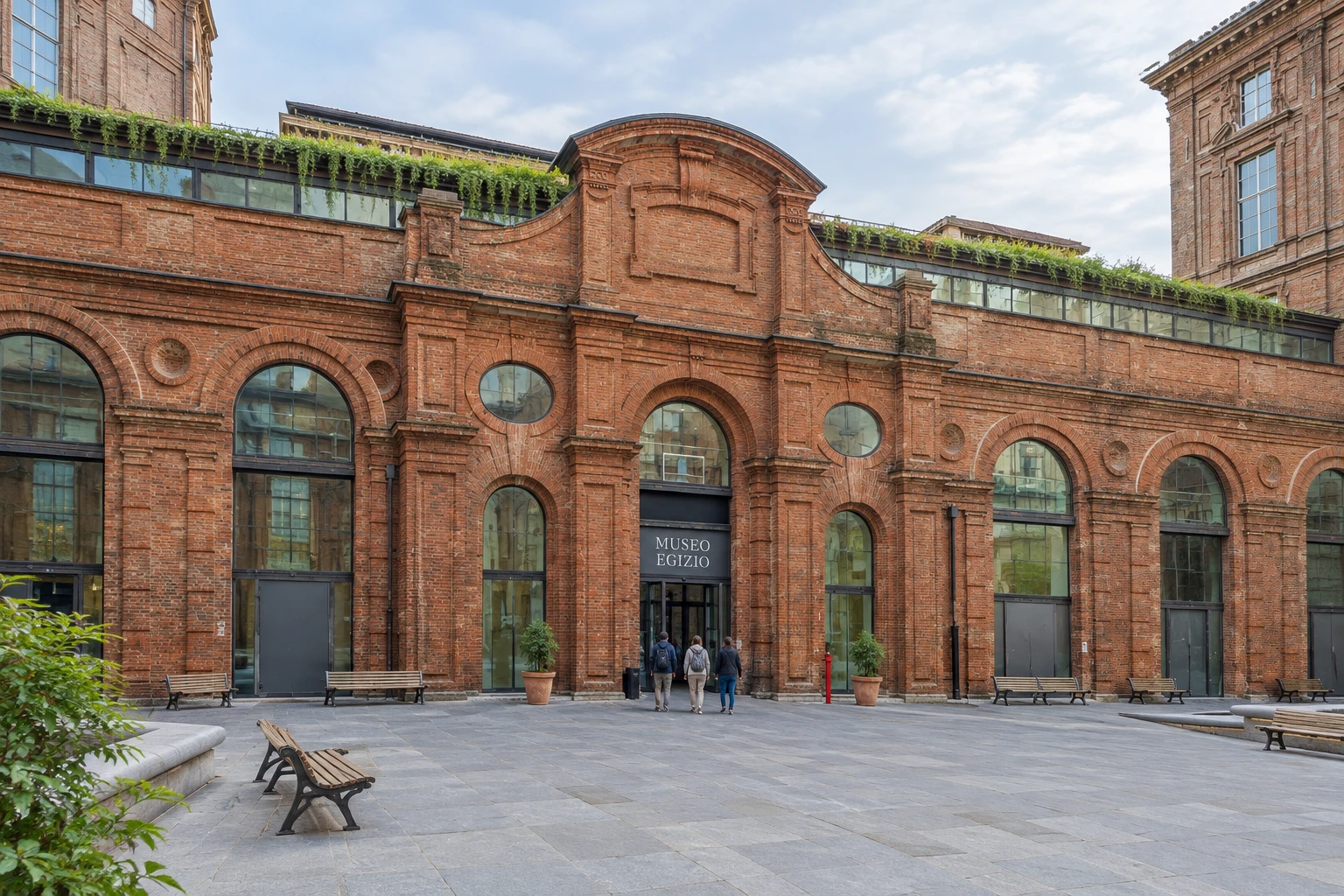
The oldest museum in the world dedicated solely to Ancient Egypt, opened in 1824. It houses statues of pharaohs, papyri, mummies and the complete tomb of the architect Kha and his wife, Merit.
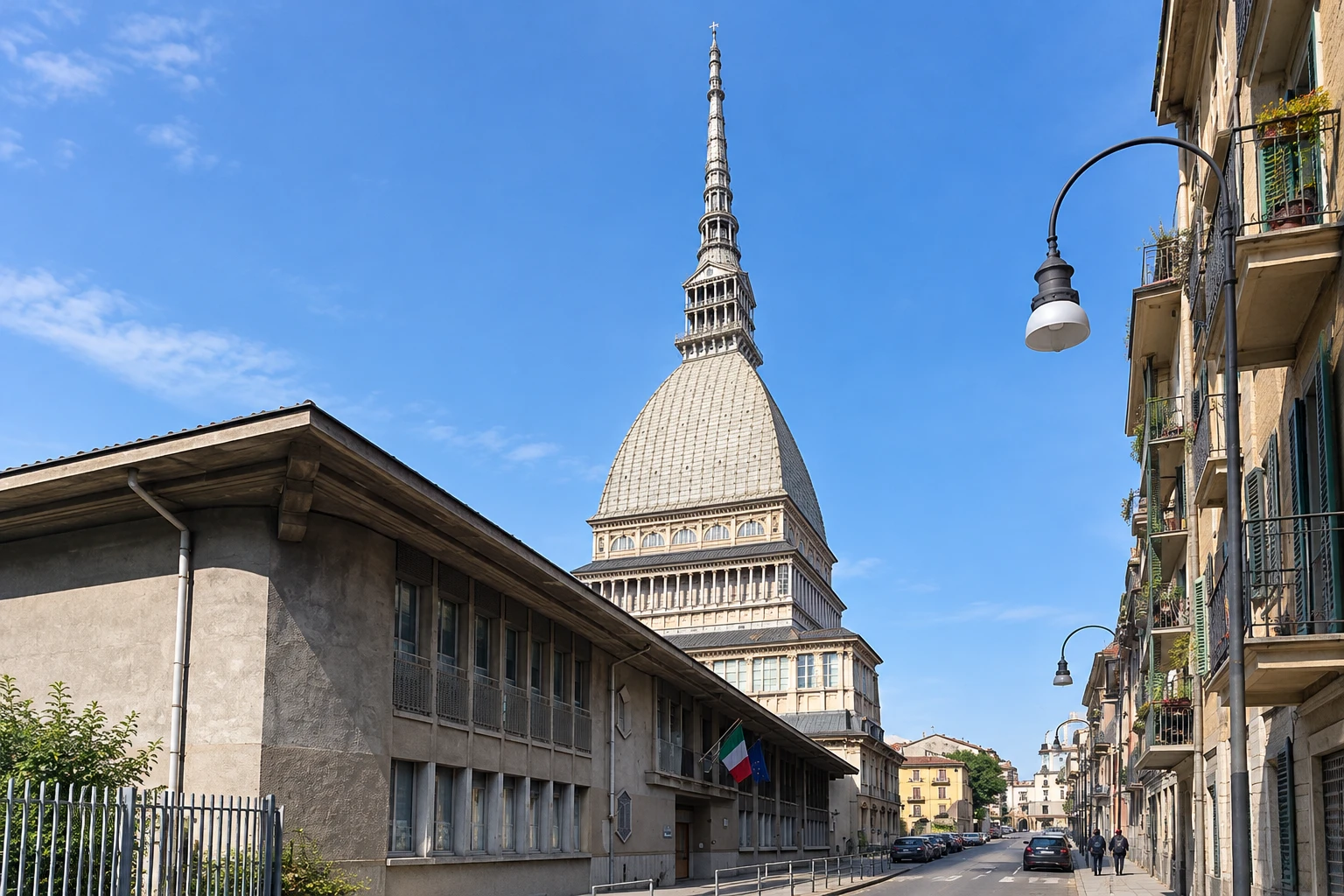
A symbol of Turin, 167.5 meters high. Inside it houses the Museo Nazionale del Cinema, and a glass-walled elevator rises to the panoramic terrace at 85 meters.
The eastern gate of the Roman town, dating from 25 BC, with two sets of arches that closed a parade square, and one of the best-preserved Roman gates.
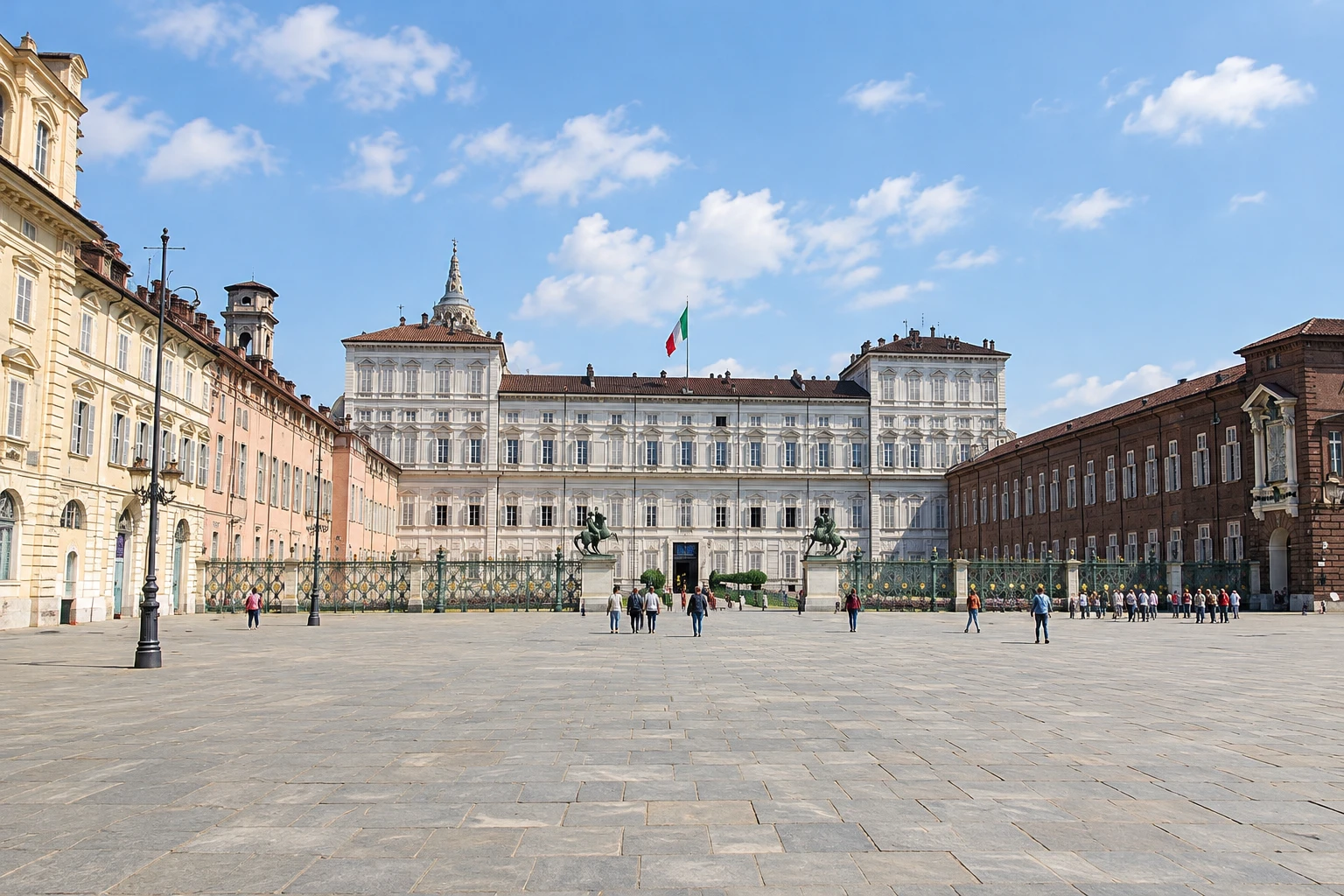
Turin's main square, surrounded by arcades, with the Palazzo Madama in the center, the Palazzo Reale to the north, the Teatro Regio and the church of San Lorenzo. From it lead Via Roma, Via Po and Via Garibaldi.
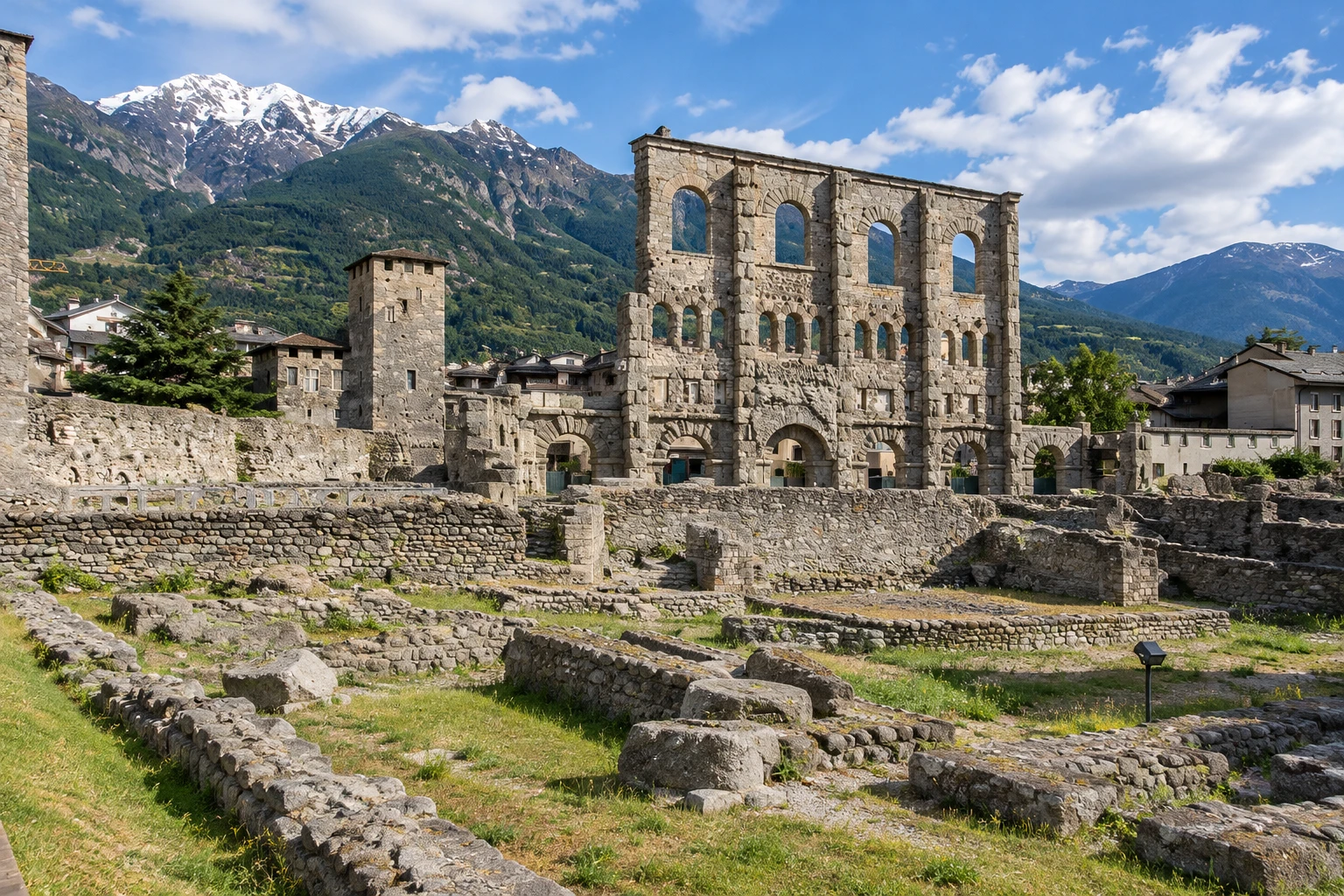
Teatro romano from the 1st century, next to the Porta Praetoria, with a 22-meter-high stone façade, arcades and windows, and space for about 4,000 spectators.
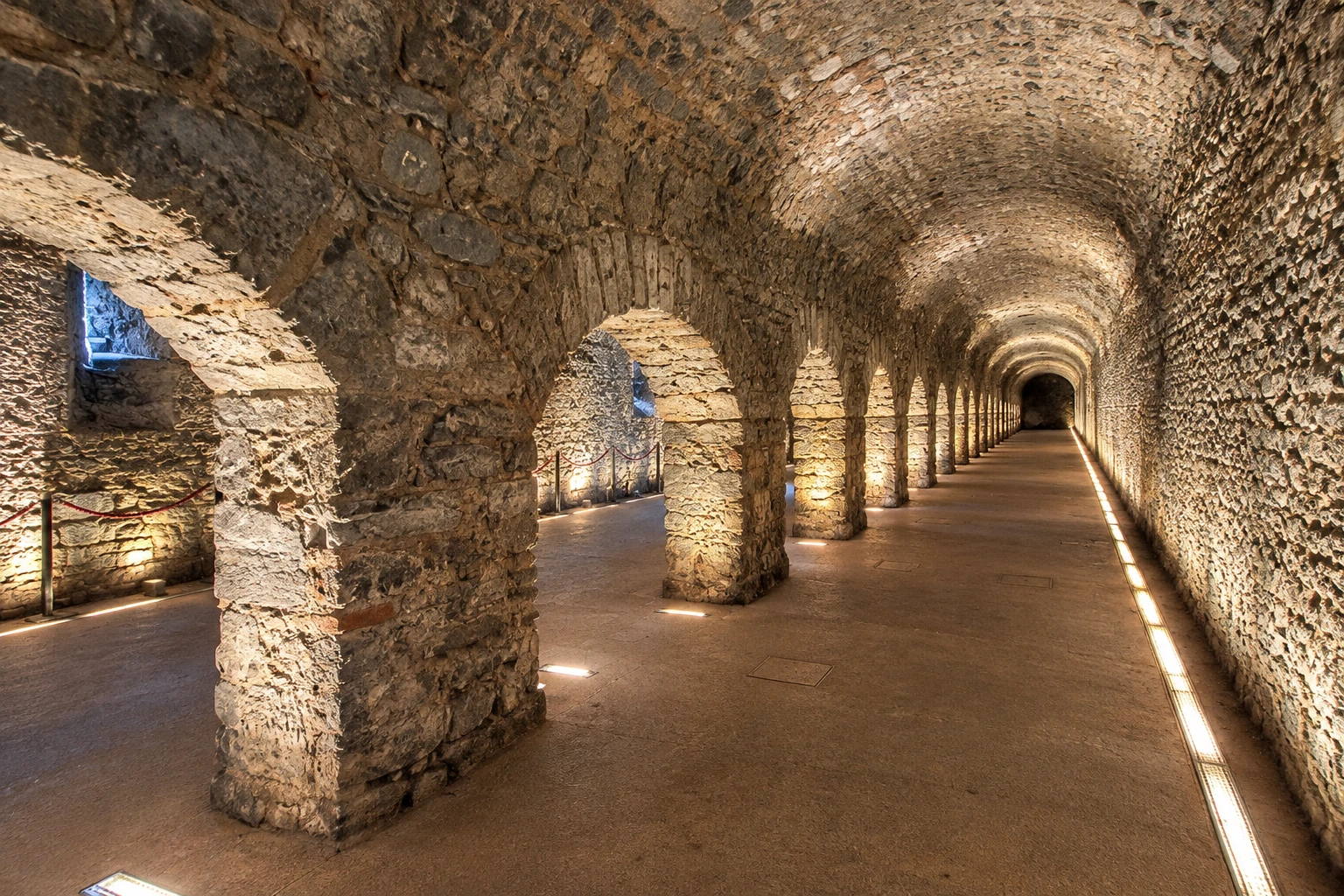
Roman underground gallery of the forum of Augusta Praetoria, with two naves and arches on three sides of a rectangle, next to the cathedral.
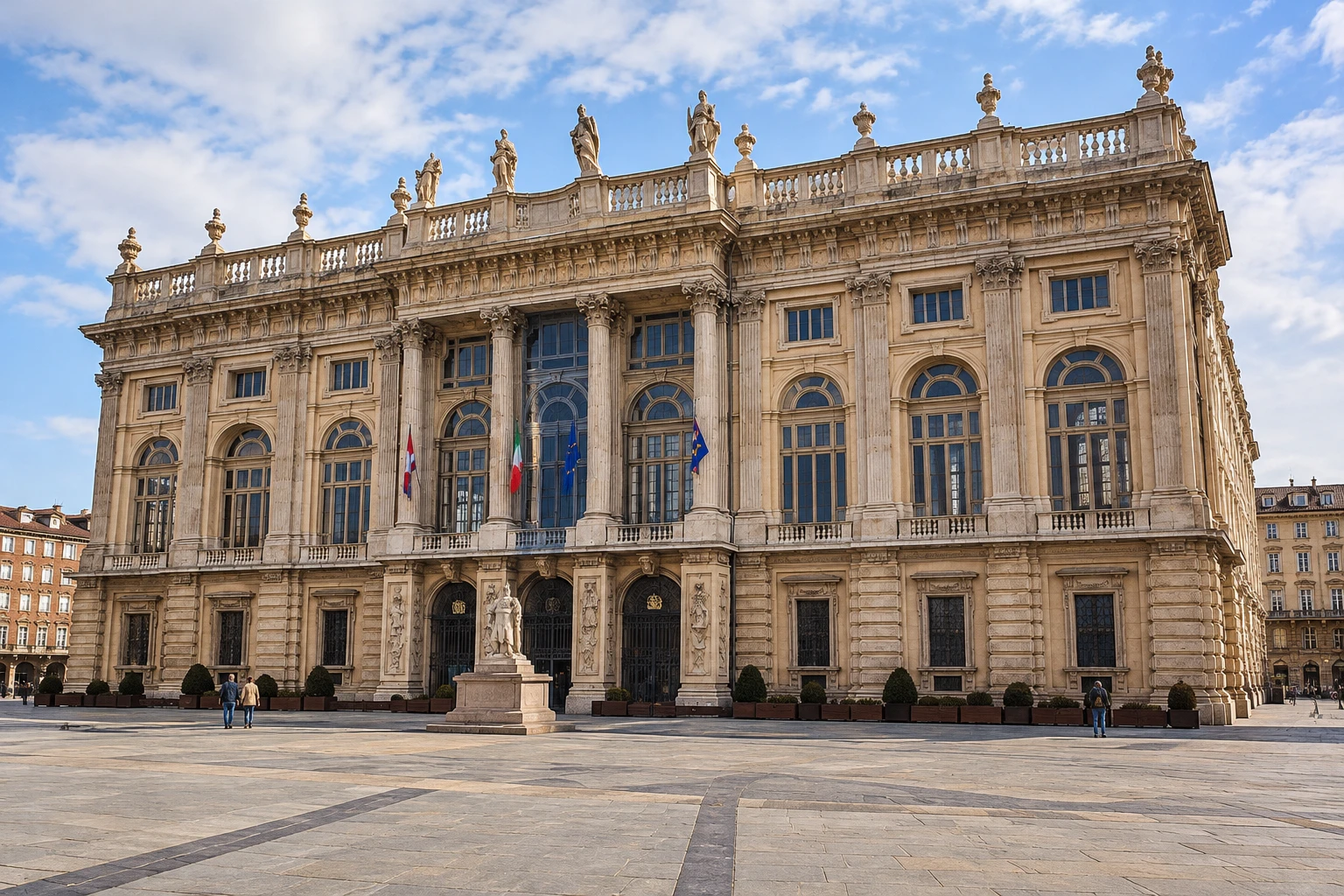
Palace in the middle of Piazza Castello that brings together two thousand years of history: a Roman gate, a medieval castle and a Baroque façade by Filippo Juvarra. It houses the Museo Civico d'Arte Antica.
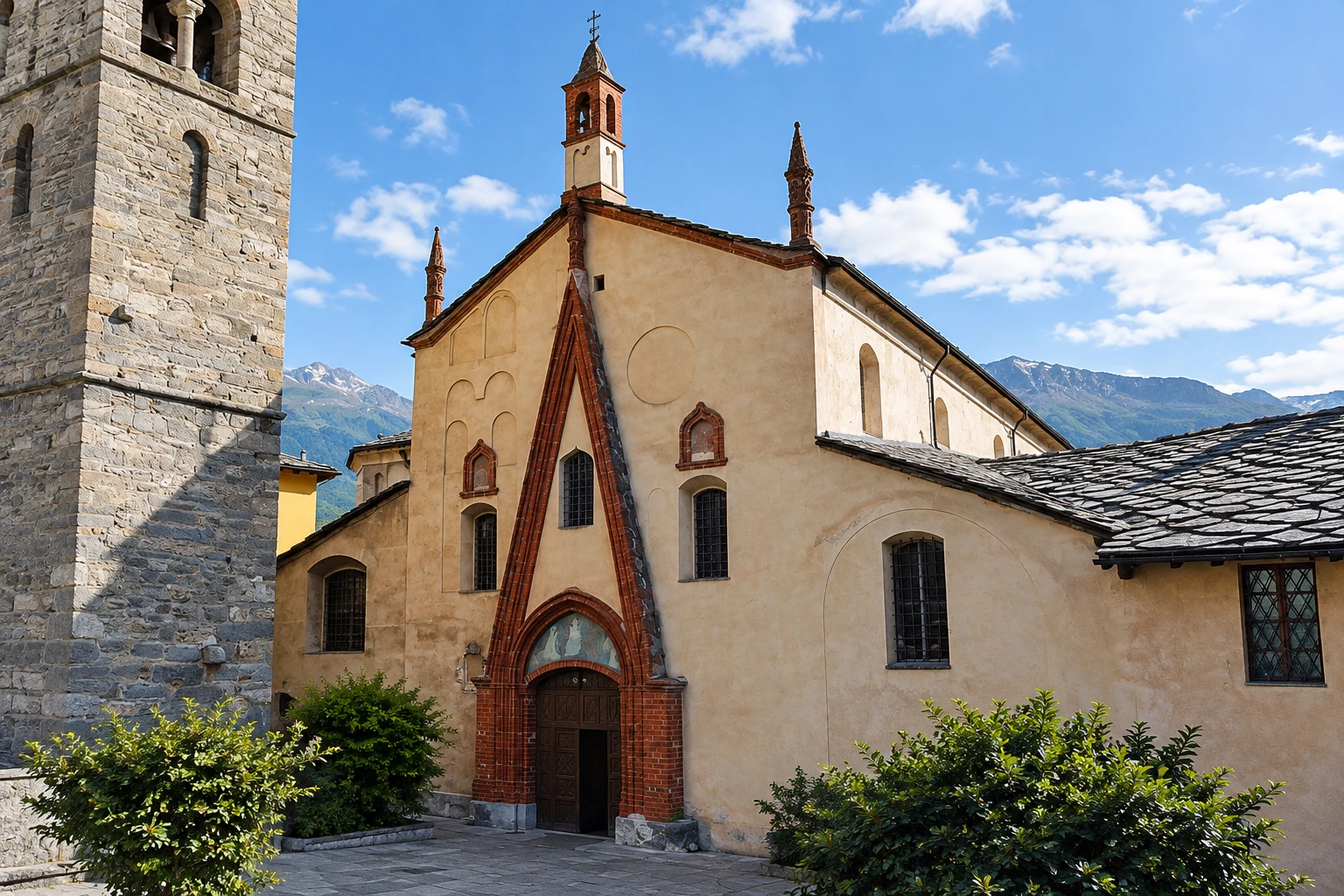
Conjunto de Santo Urso, with a church of early Christian origin, 11th‑century frescoes above the nave, a crypt, a 44‑metre Romanesque bell tower and the cloister with carved capitals from the 12th century.
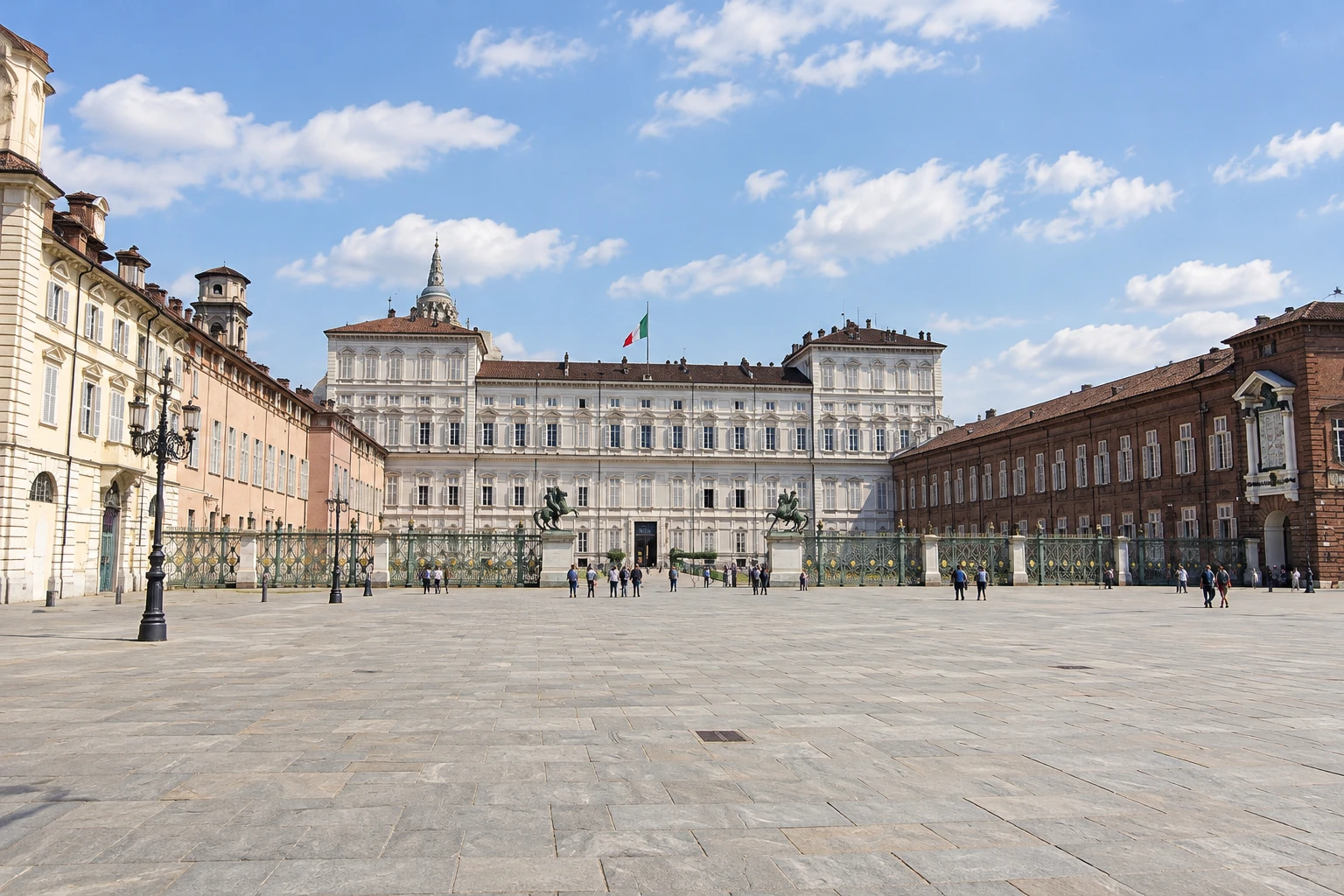
The complex of the Palazzo Reale, residence of the Savoia, including the Armeria Reale, the Galleria Sabauda, the Museo di Antichità, the Giardini Reali and the Cappella della Sindone by Guarino Guarini.
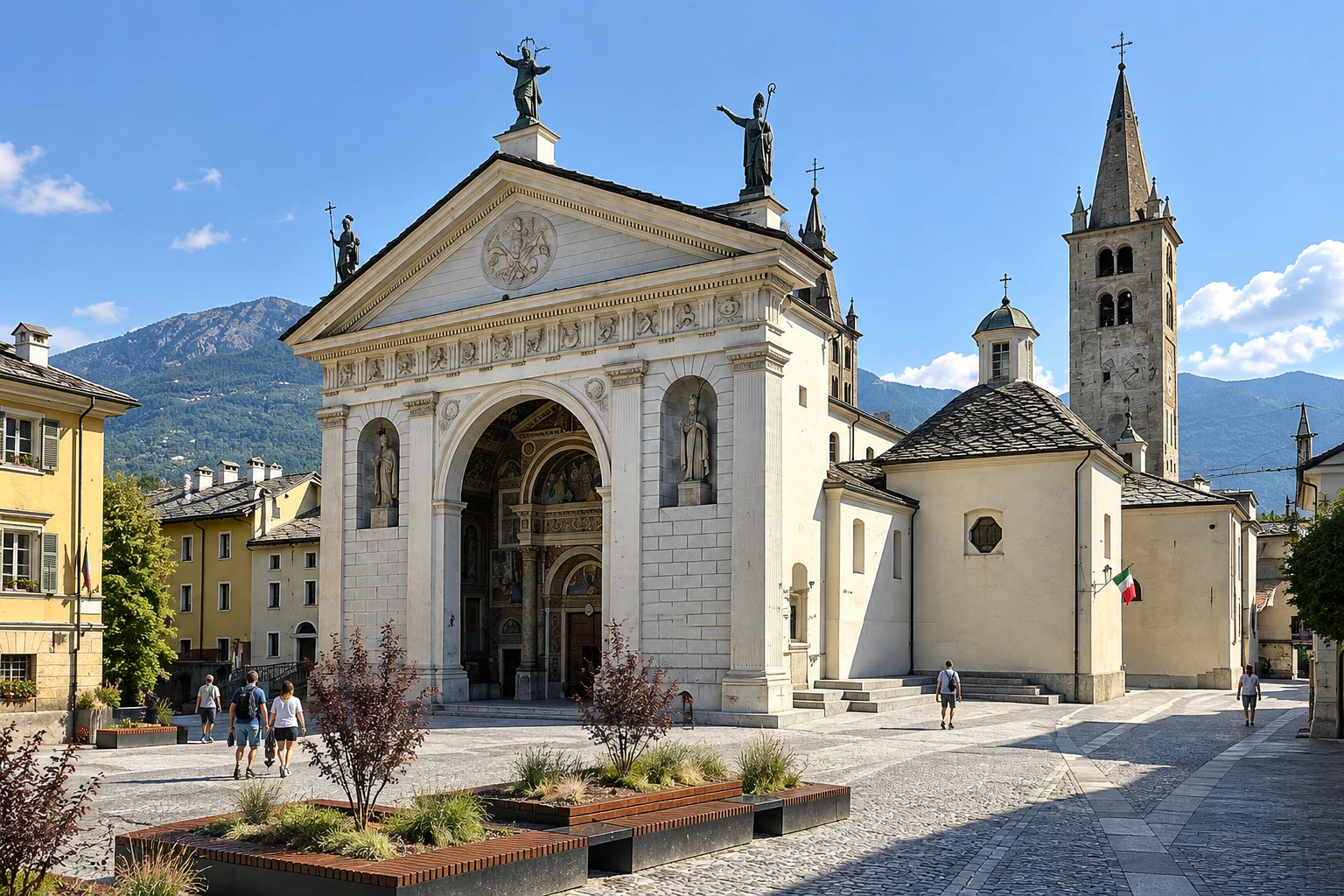
A catedral de Aosta, originating in the 4th century and rebuilt in the 11th, with a neoclassical façade, medieval floor mosaics and the treasure museum, which houses the original crucifix from the Arco de Augusto.
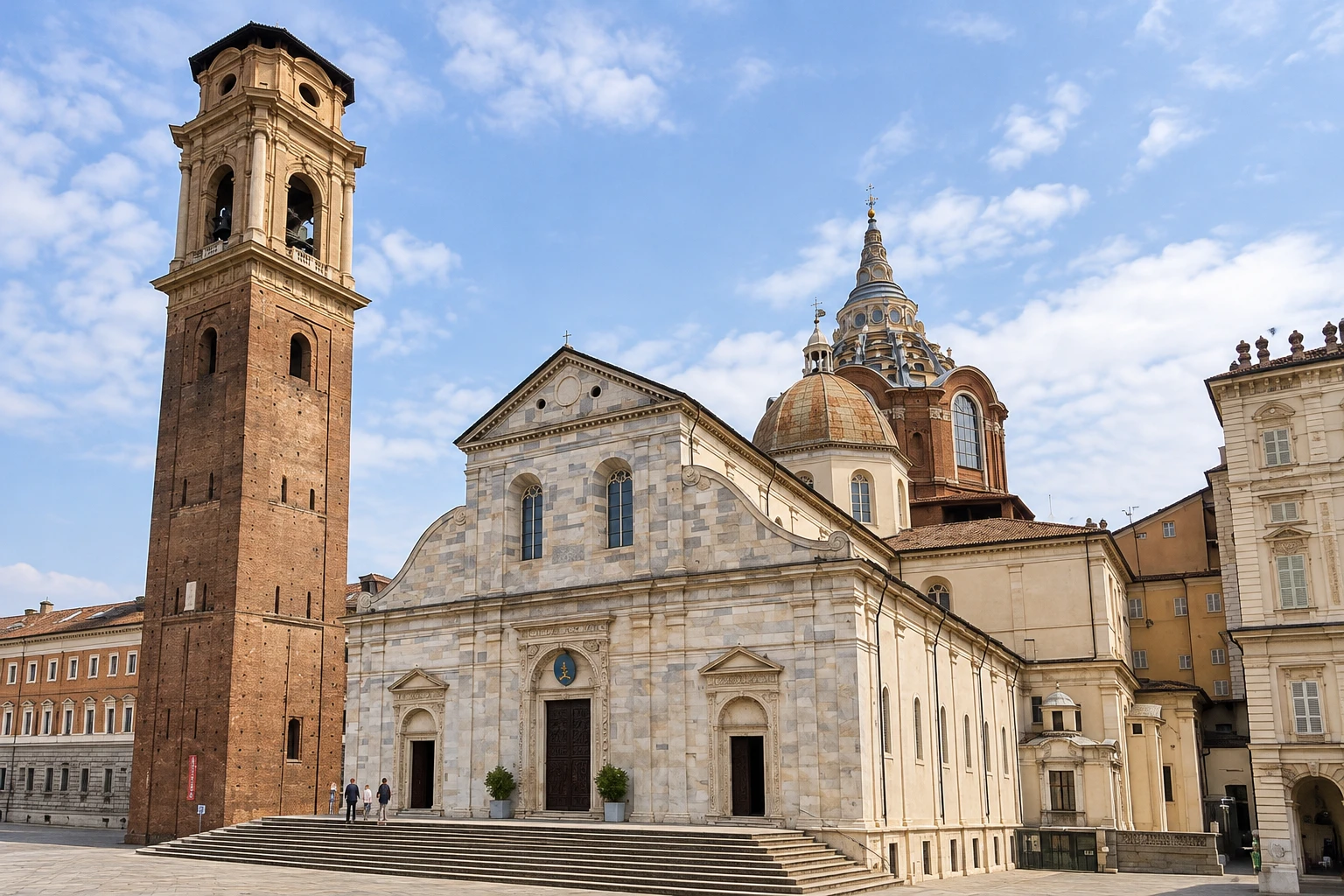
The Cathedral of Saint John the Baptist, the only Renaissance church in Turin, completed in 1505. It is where the Shroud is kept, which is displayed to the public only on rare occasions.
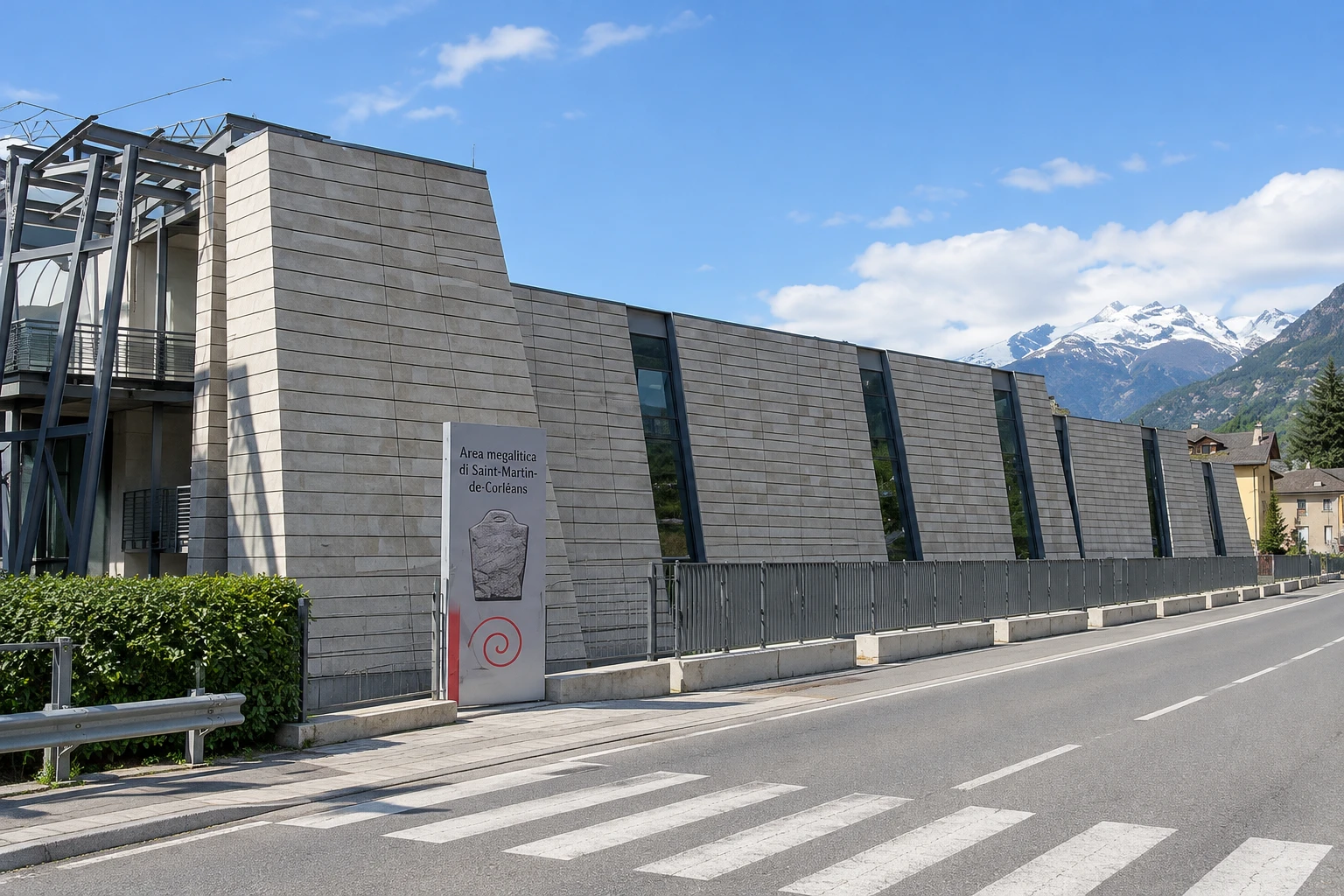
Prehistoric site on the west outskirts of Aosta, covered by a large pavilion-museum, with anthropomorphic stelae, tombs and plough marks more than 4,000 years old.
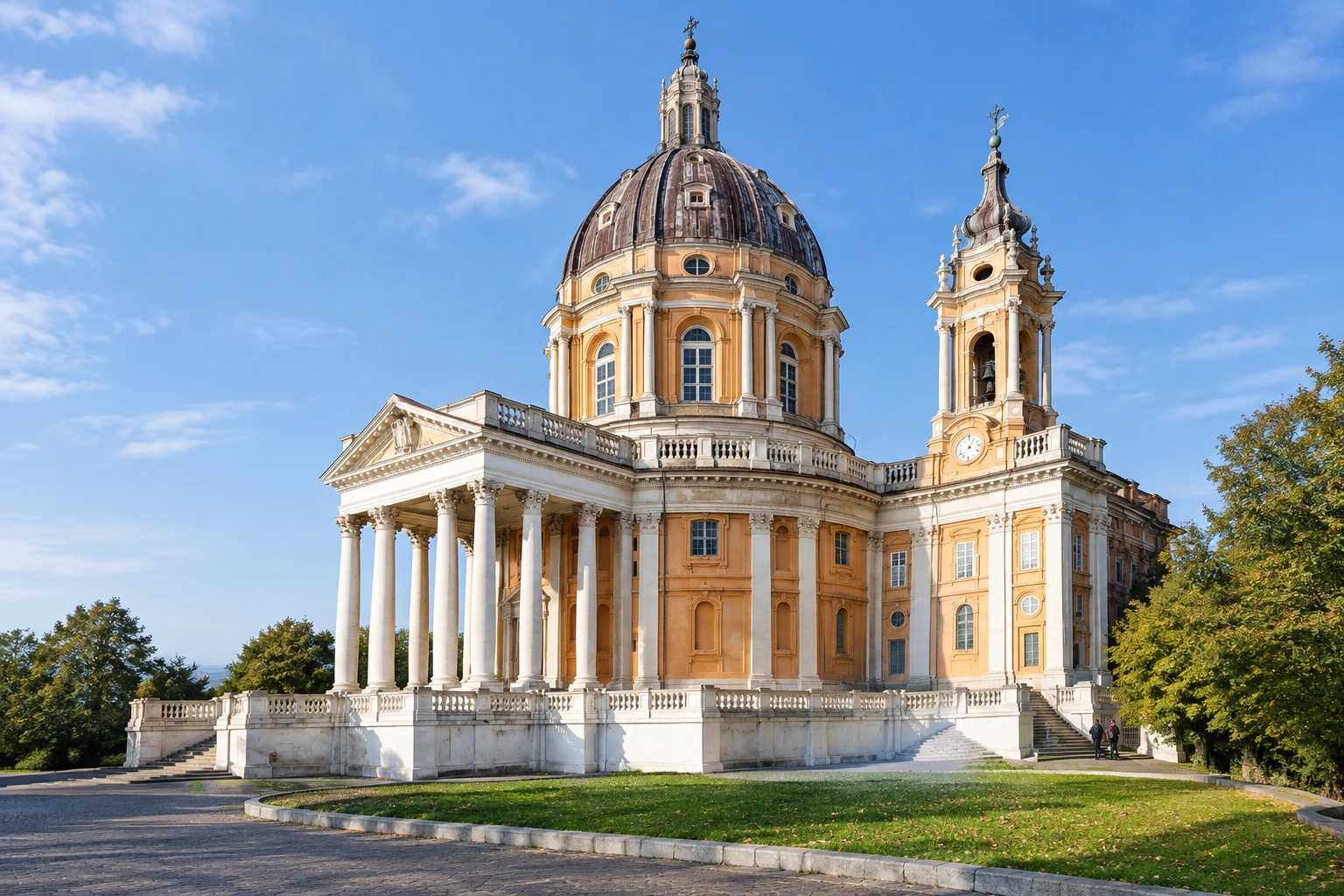
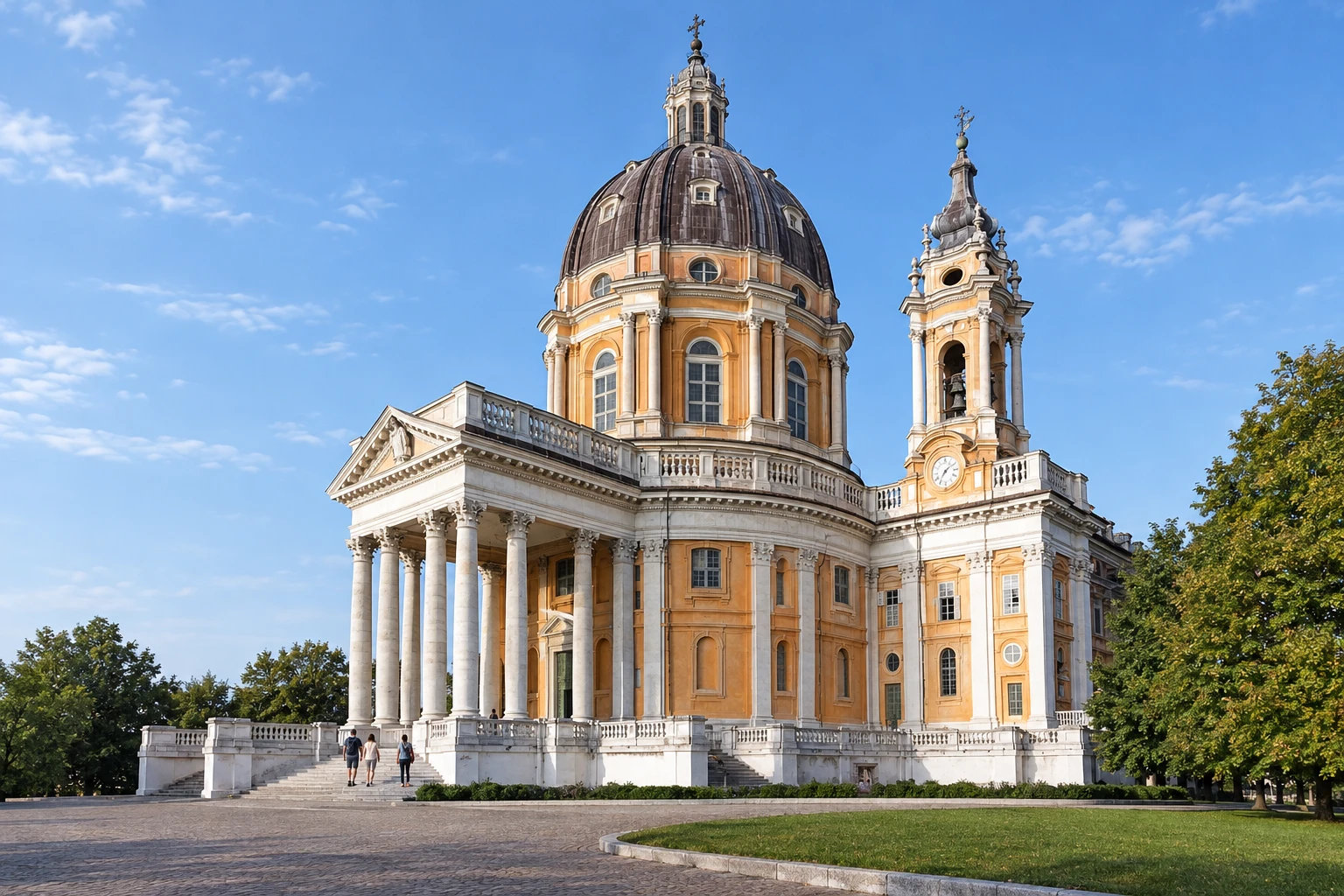
Baroque basilica by Filippo Juvarra atop the Superga hill, at 672 metres. It houses the tombs of the House of Savoia and offers views over Turin and the Alps. It is reached by a historic rack railway.
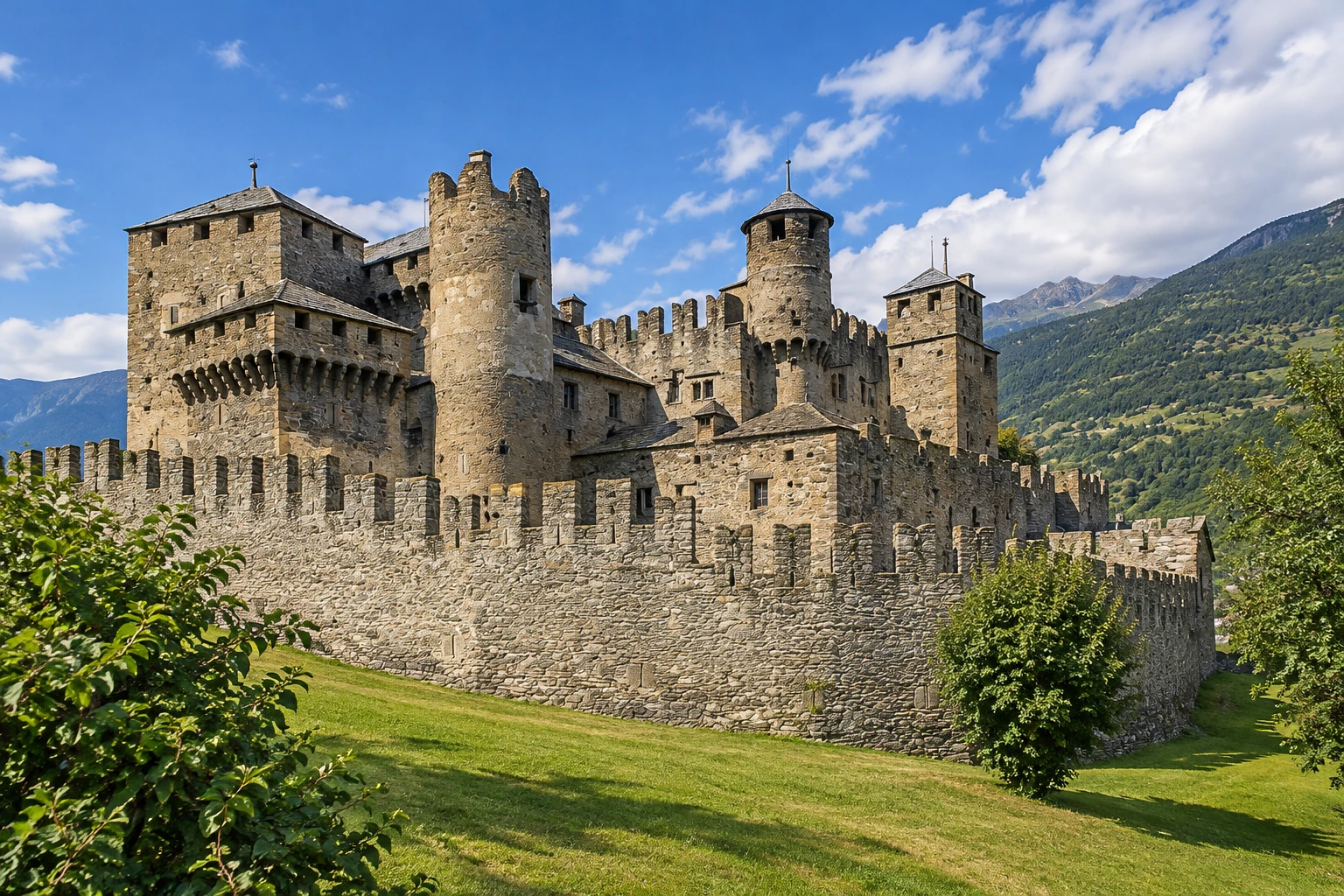
Castelo dos Challant, 12 km from Aosta, with double walls, towers and a courtyard with Gothic frescoes of Saint George and of sages holding bands inscribed with proverbs.
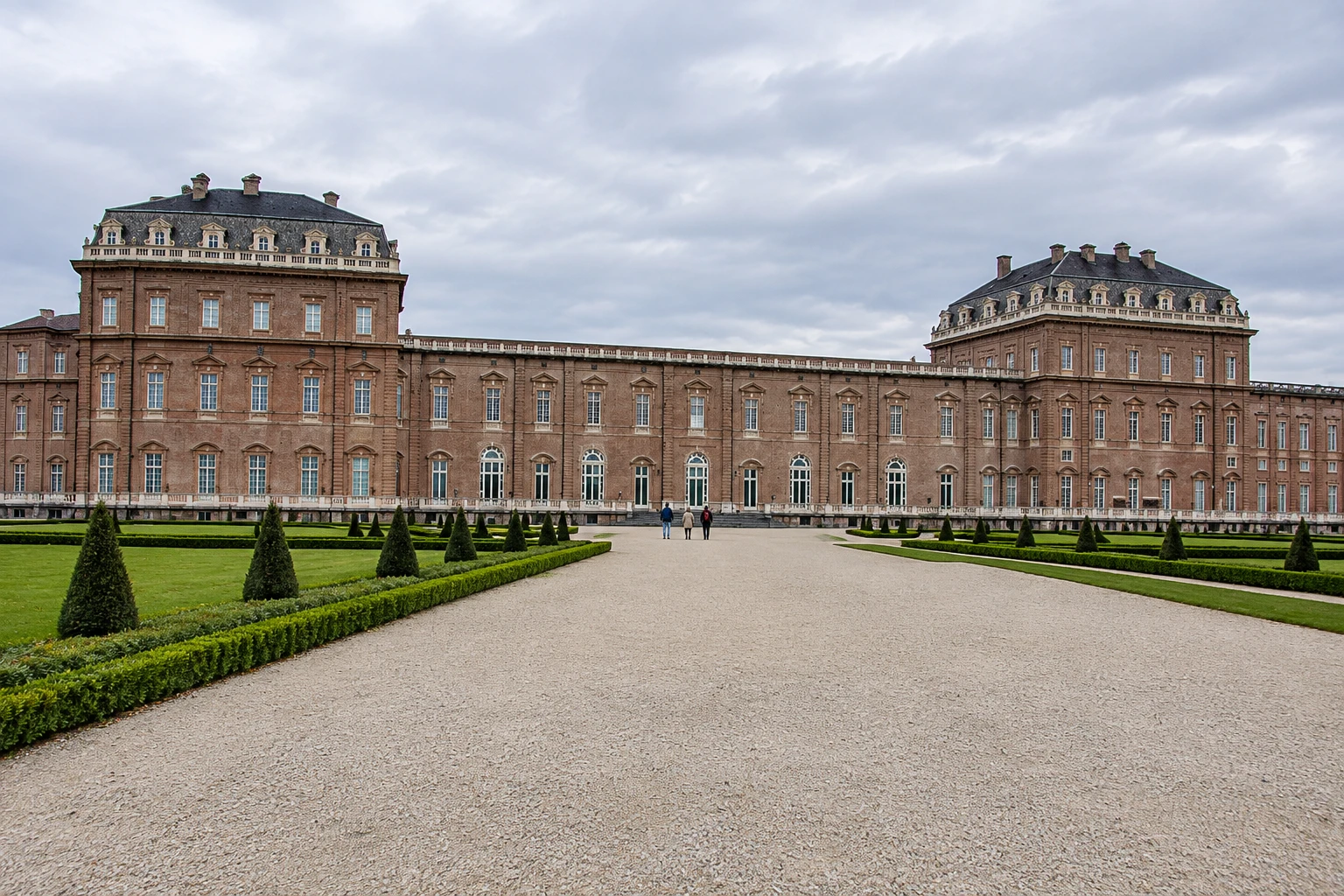
Hunting residence of the Casa de Savoia, north of Turim, with Juvarra's Galleria Grande, the church of Sant'Uberto and vast gardens. It is part of the UNESCO World Heritage.
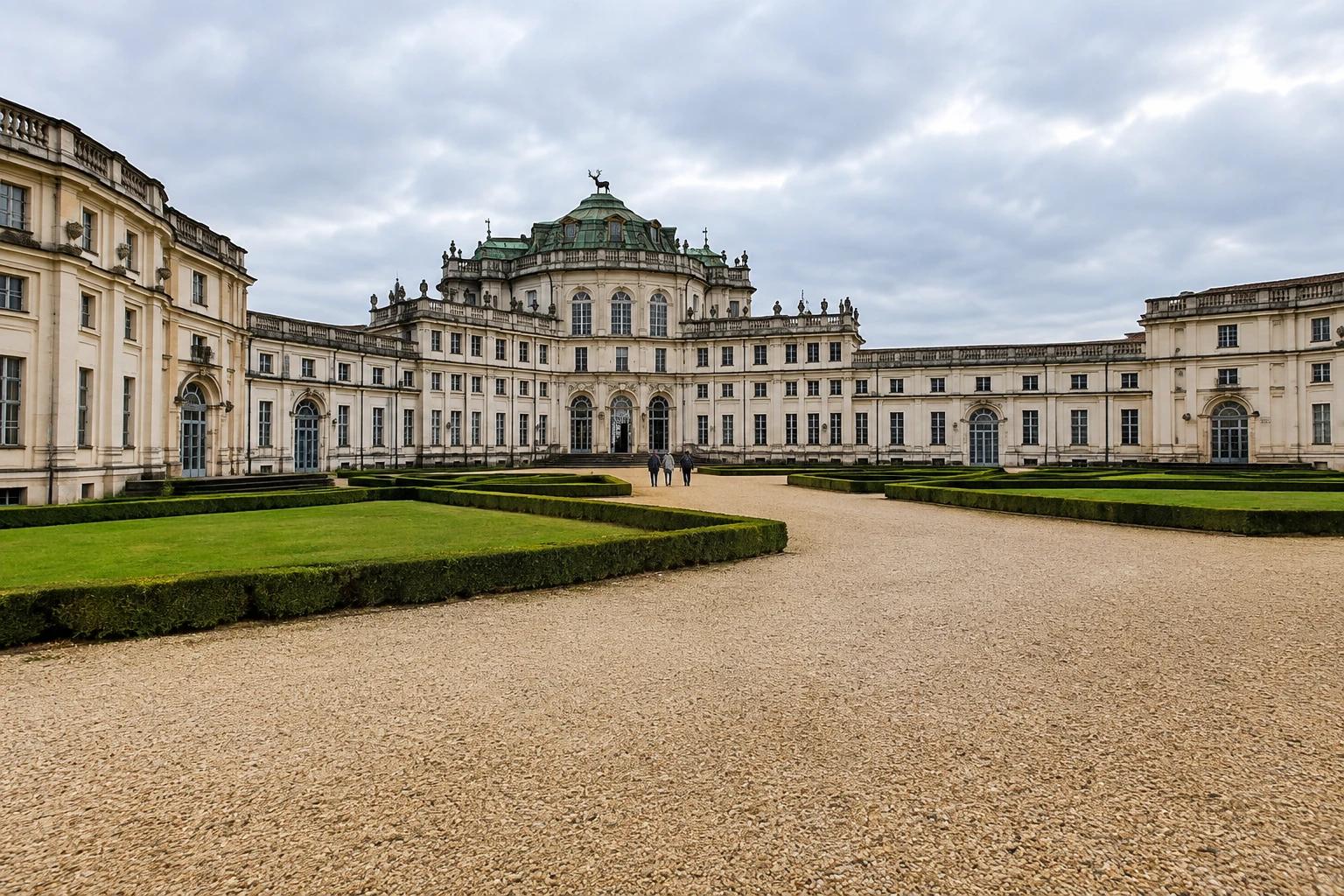
Hunting and party pavilion of the Savoia designed by Filippo Juvarra in 1729, south of Turim, with a bronze stag atop the dome and an oval central hall painted with hunting scenes.
Skiing and hiking station at about 1,800 metres, linked to the centre of Aosta by cable car, with views of the Alps from Mont Blanc to the Cervino.
42-hectare park on the banks of the river Po, with the Castello del Valentino, former residence of the Savoia, the Fontana dei Dodici Mesi and waterside paths.
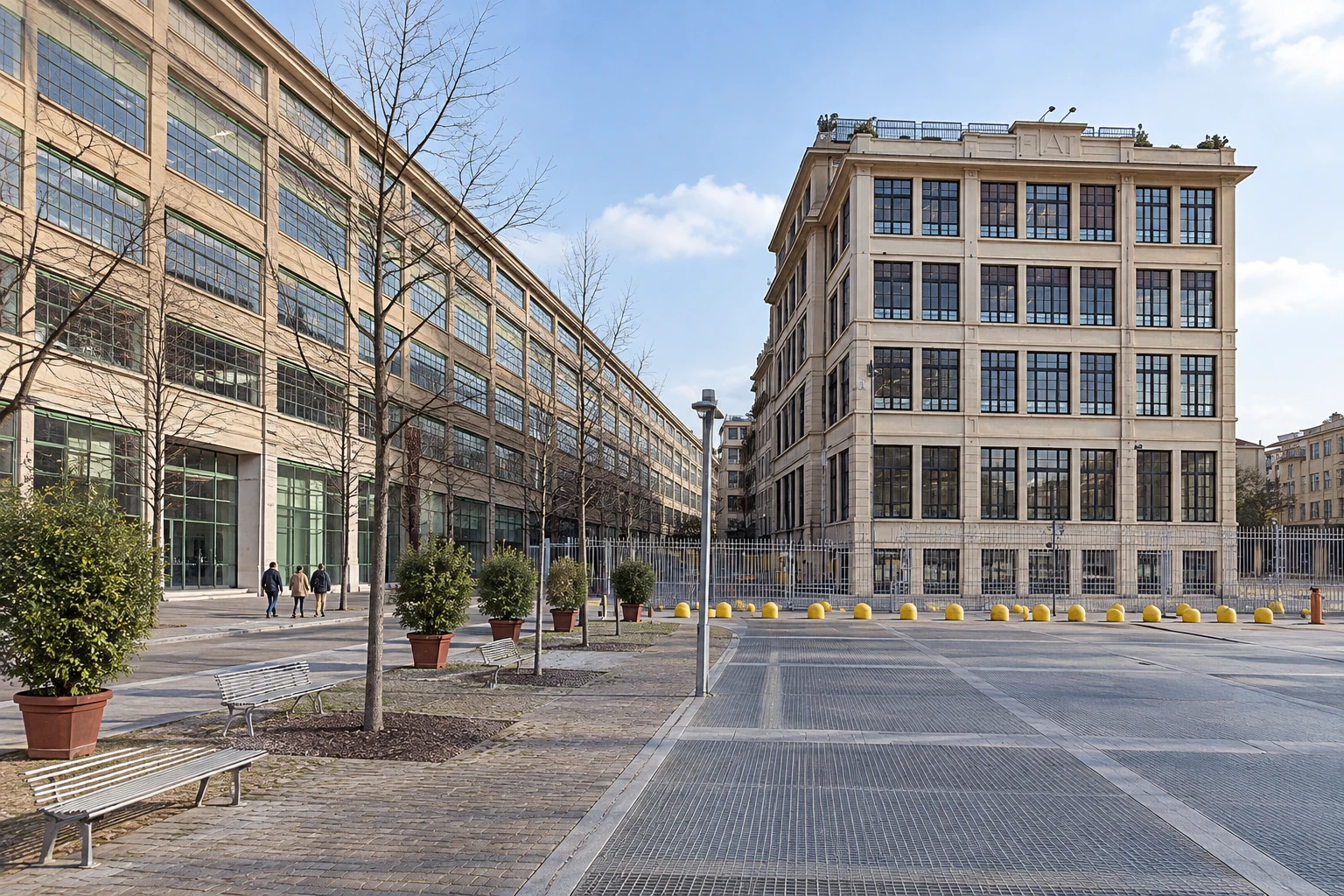
Former Fiat factory from 1923, with a test track on the roof. Renovated by Renzo Piano, it now houses a shopping center, a hotel, the Pinacoteca Agnelli and the suspended garden La Pista 500.
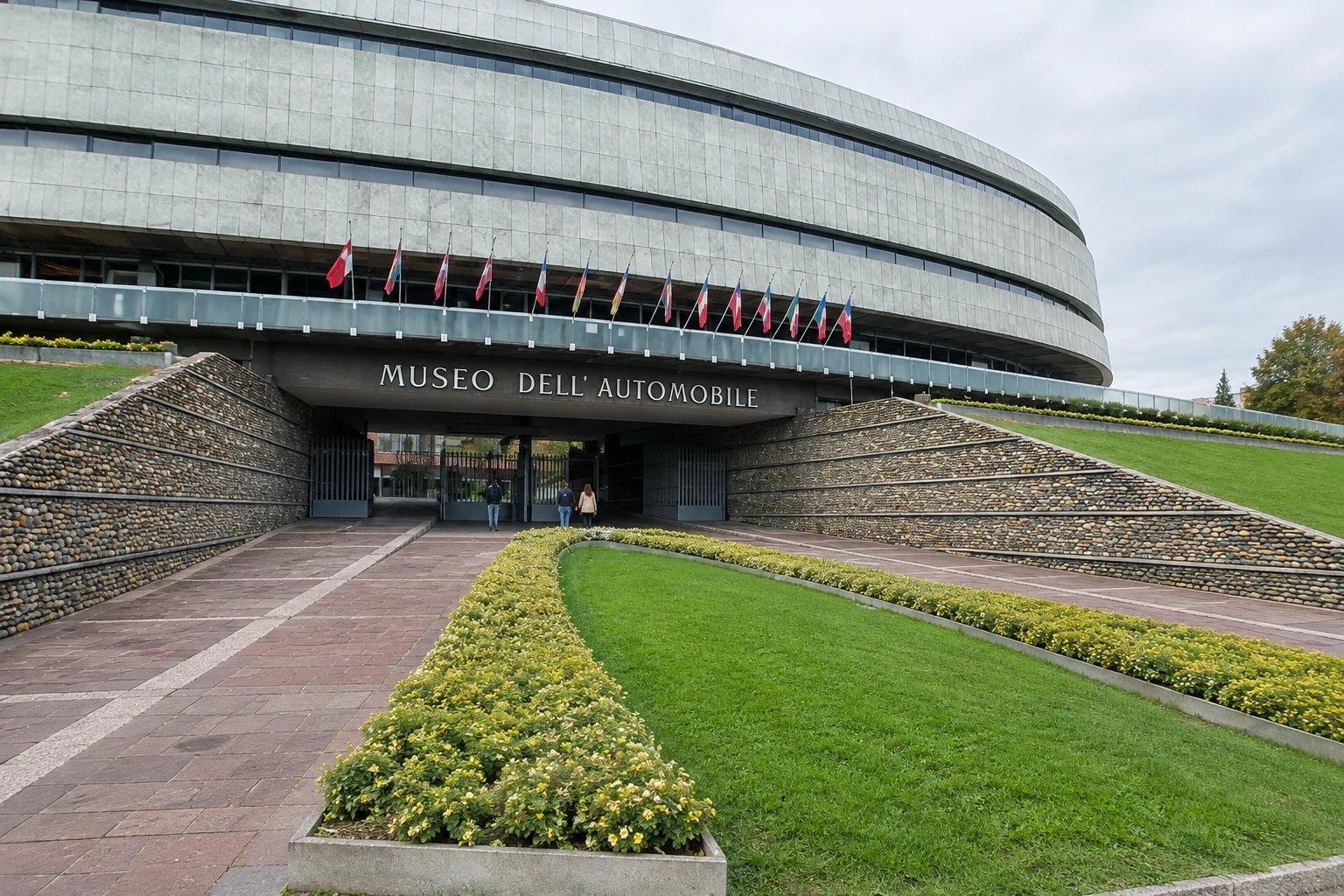
One of the world’s most important automobile museums, on the banks of the Pó, with more than 200 cars from around 80 marques, from 19th‑century steam carriages to racing cars.
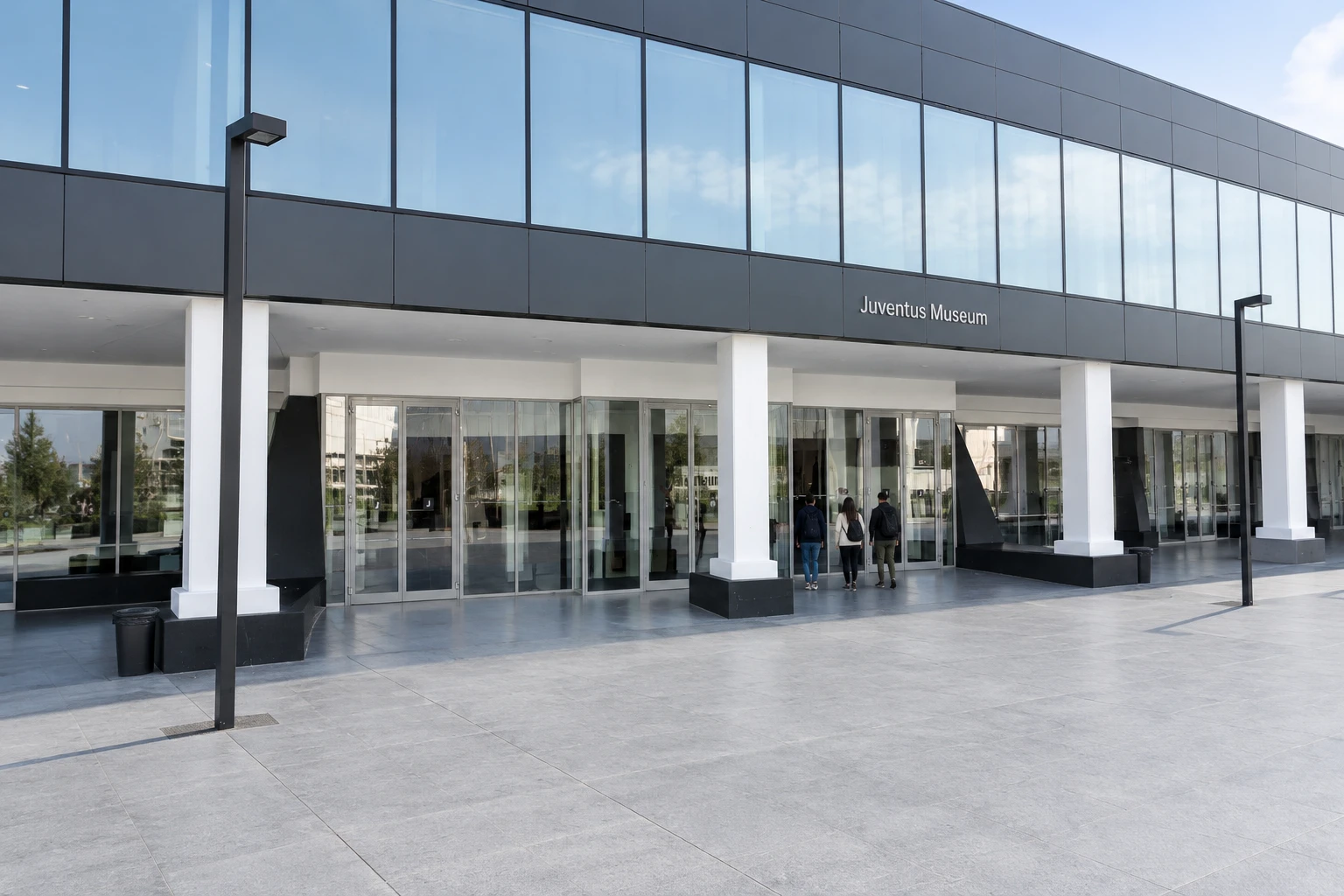
Juventus Museum at the Allianz Stadium in northwest Turin, with trophies, shirts and the club’s history. The stadium tour goes through the locker rooms, the pitch and the stands.
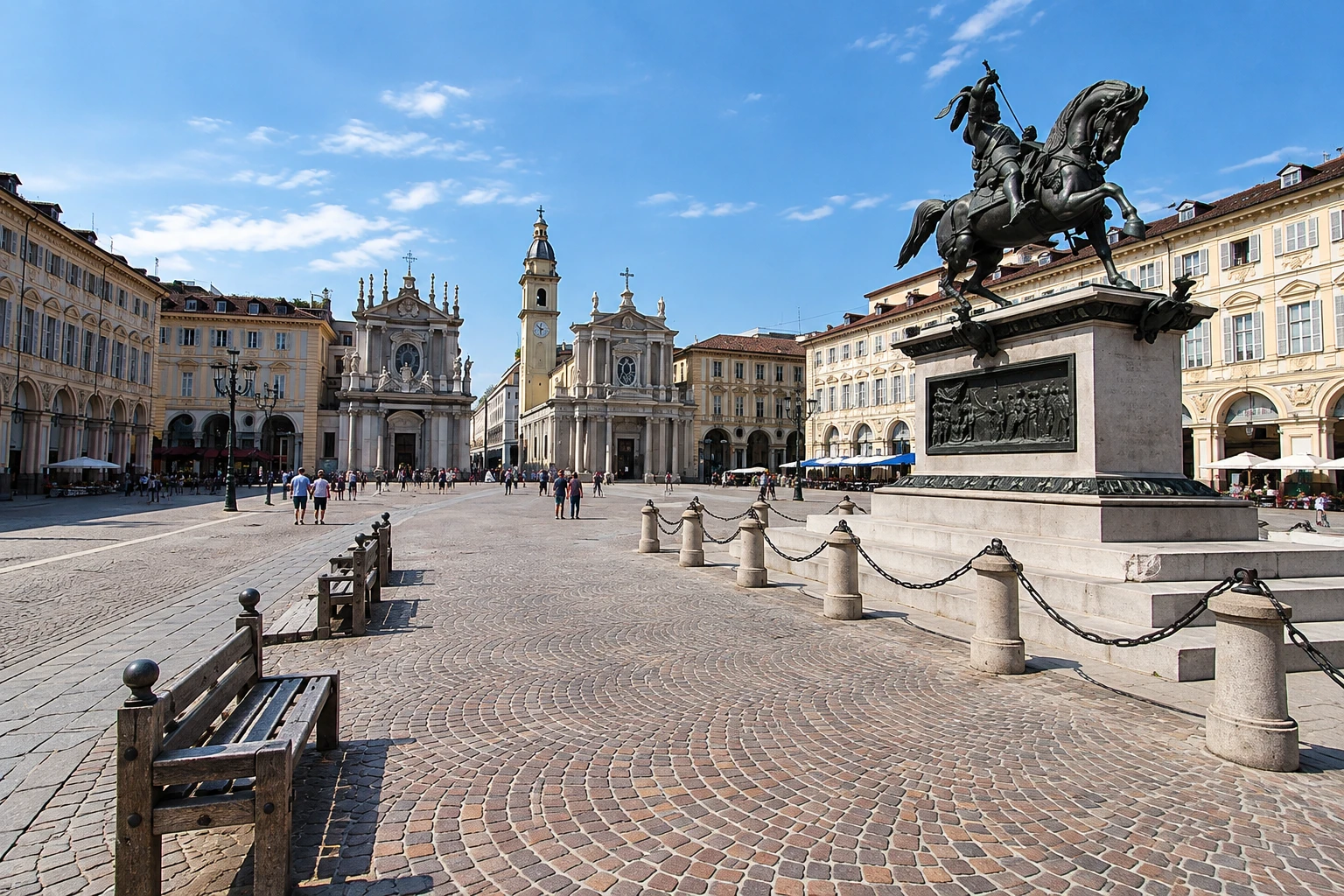
Baroque square on Via Roma, called by locals the city’s living room, with the twin churches of Santa Cristina and San Carlo, the equestrian statue of Emanuele Filiberto and historic cafés under the arcades.
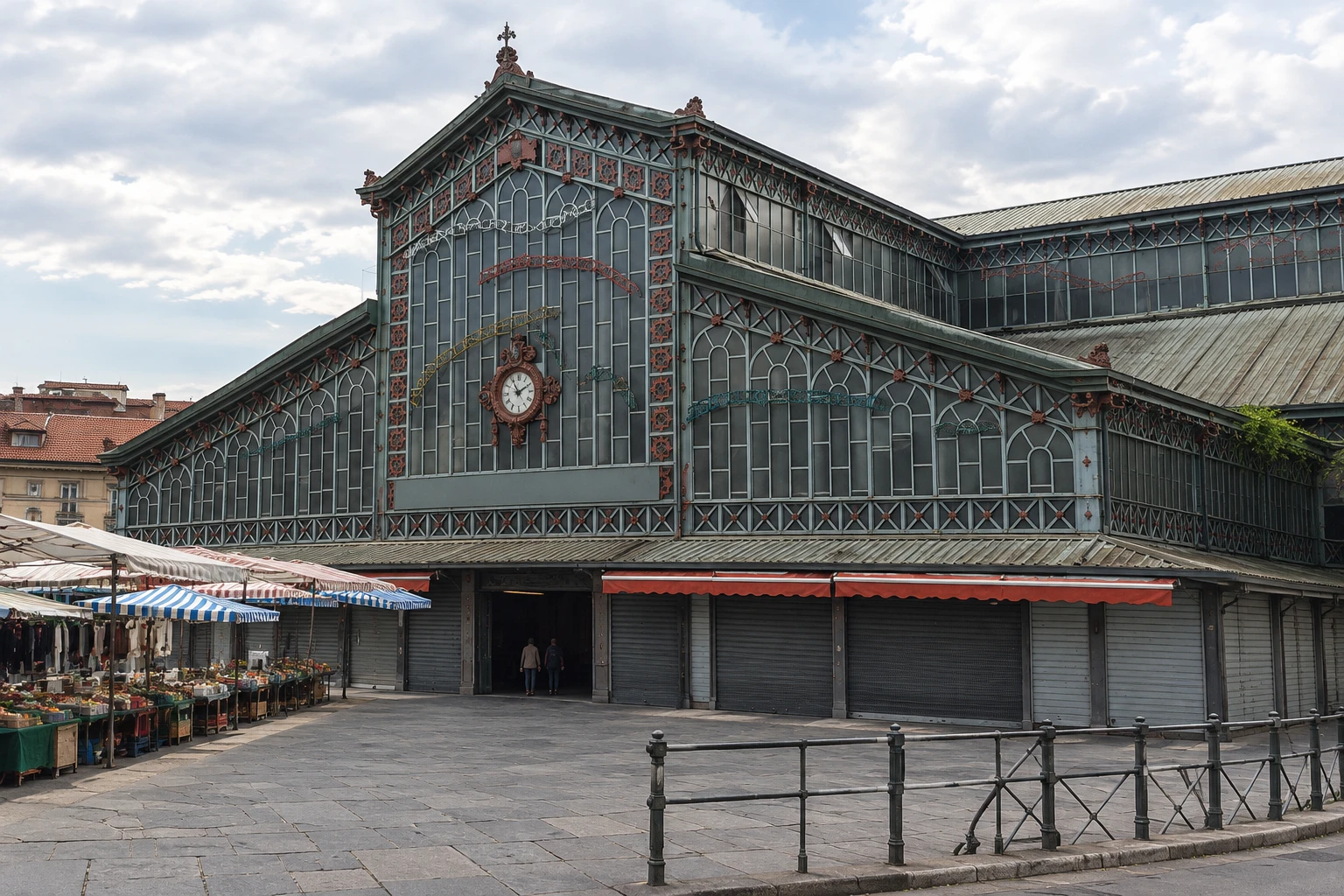
Turin’s large open-air market, on Piazza della Repubblica, the city’s biggest square. It has stalls selling fruit, vegetables, cheeses, meat and fish, as well as covered pavilions.
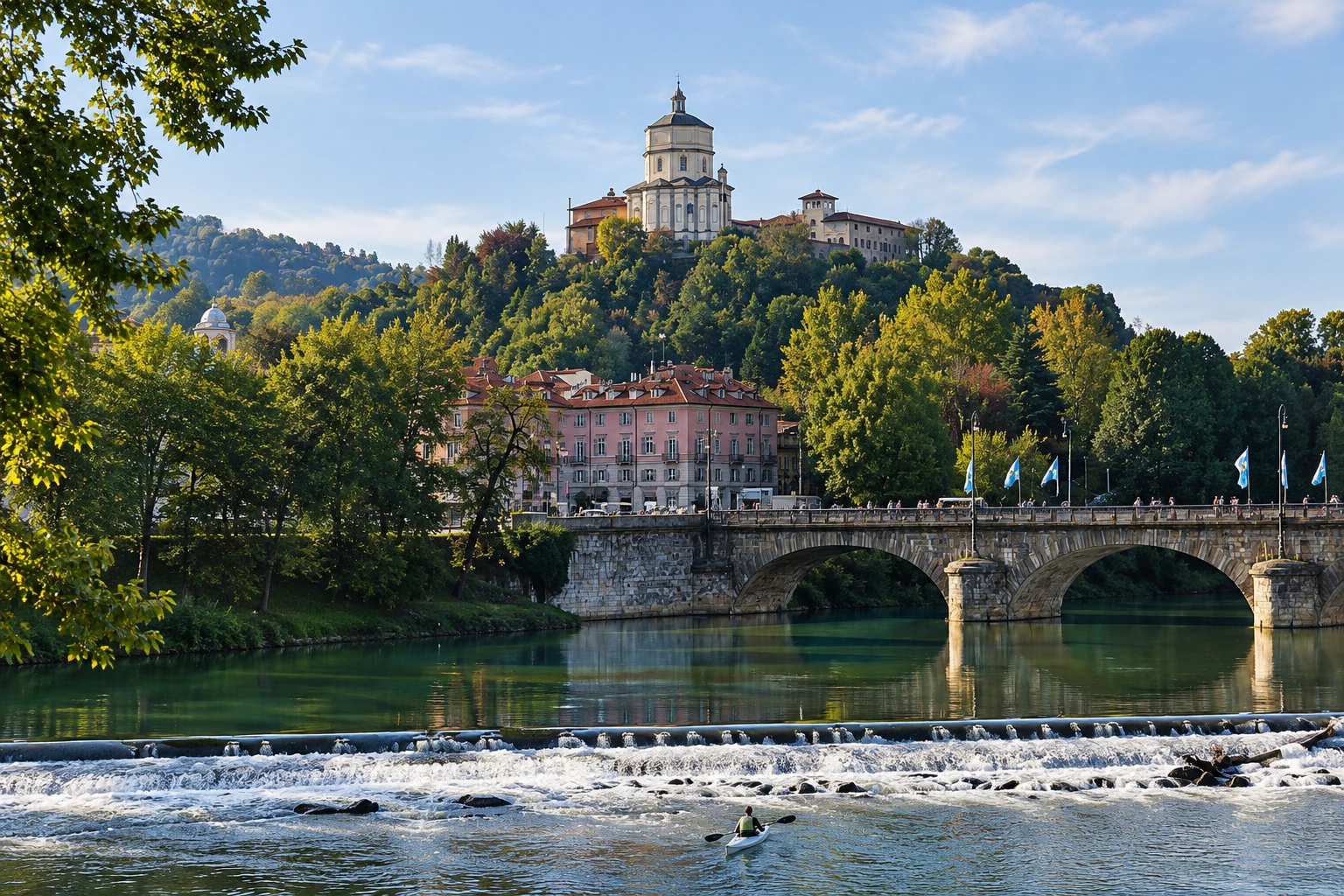
325-meter hill on the right bank of the Pó, with the church of Santa Maria al Monte and a terrace offering views over Turin’s center, the Mole Antonelliana and the Alps.
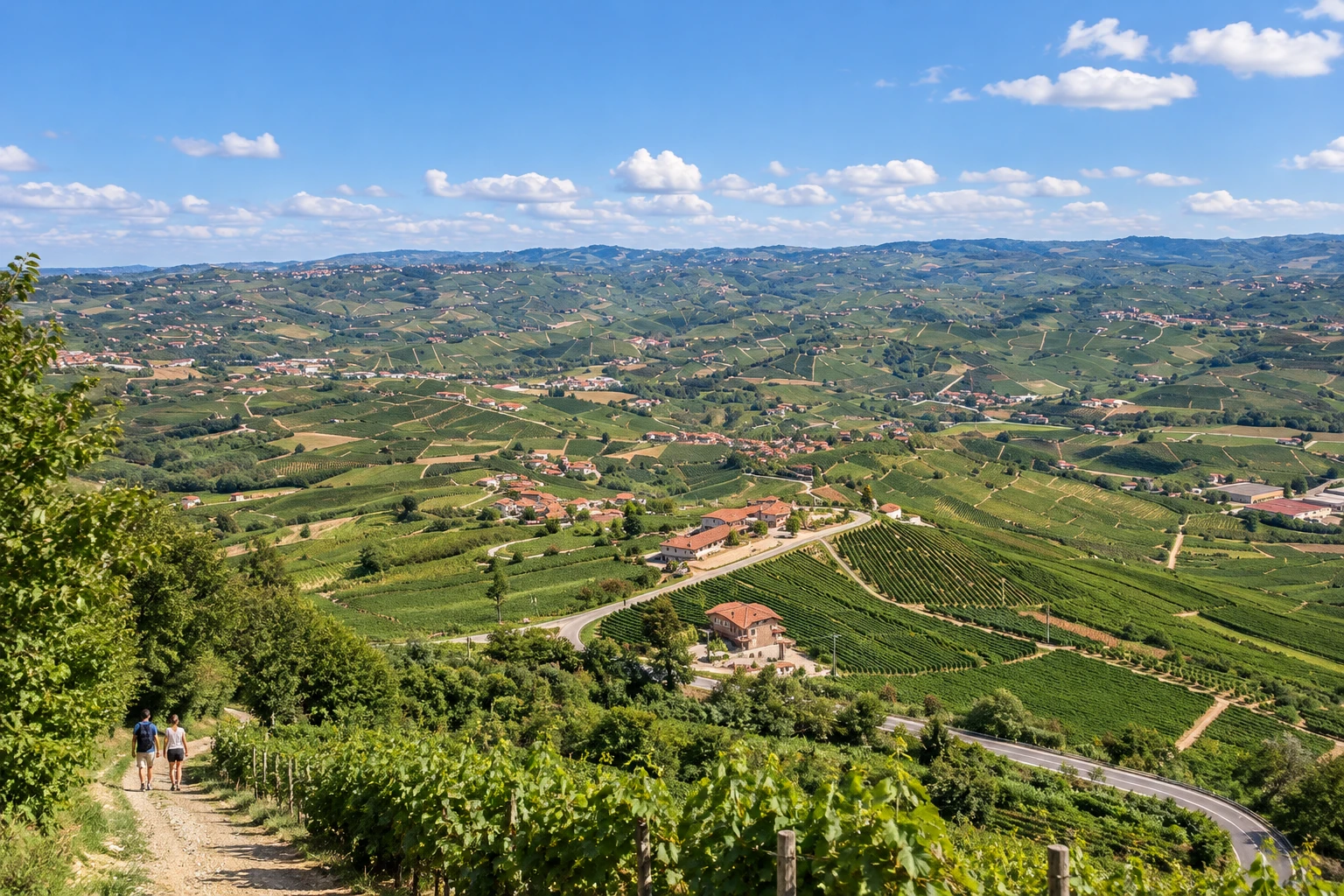
Vineyard-covered hills south of Turim, around Alba and Barolo, a UNESCO World Heritage site. Home of Barolo and Barbaresco wines and Alba’s white truffle.
To choose before you go
The details of each tour (where it leaves from, what it includes, the best time) are in the complete guide.
Get your questions answered
The guide's itineraries cover 2, 3 and 5 days: in 2 days, Egypt, the Mole and cafés; in 3 days, with Superga and Venaria; in 5 days, the city, the Savoys, Fiat and the Langhe.
Egypt, squares and cafés. Arrival (from Milan 1 hour, from Genoa 1 h 50, from Rome 4 h by train). Museo Egizio in the morning, with a reservation; Piazza San Carlo and a bicerin; Piazza Castello, Palazzo Madama and the cathedral in the afternoon; aperitivo under the arcades.
It generally rains less from December to February. The rainiest months are usually from April to June and October. The guide covers each month, with the weather and what changes on the tours.
To plan