Florence · Tuscany · Cathedral
Florence Cathedral
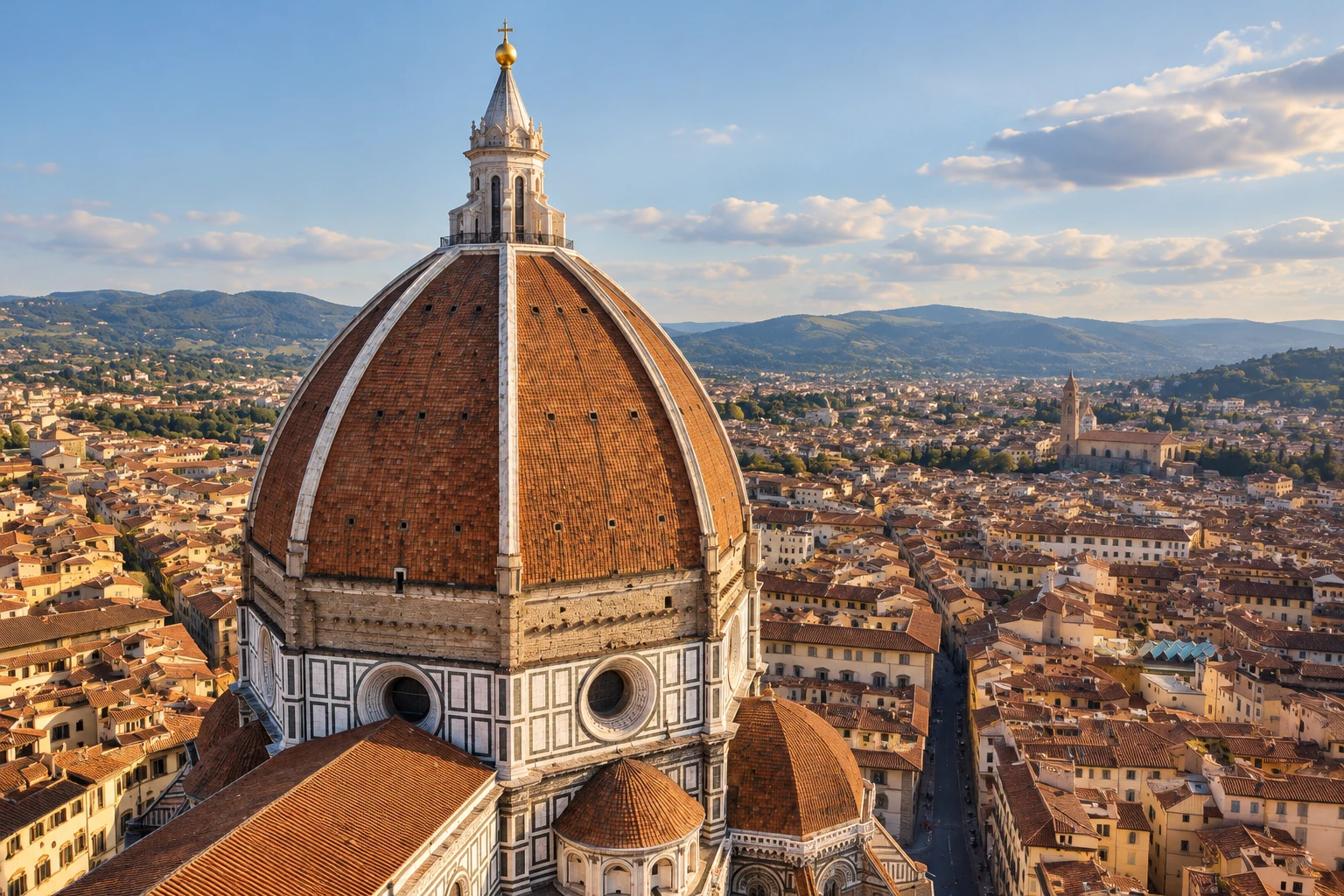
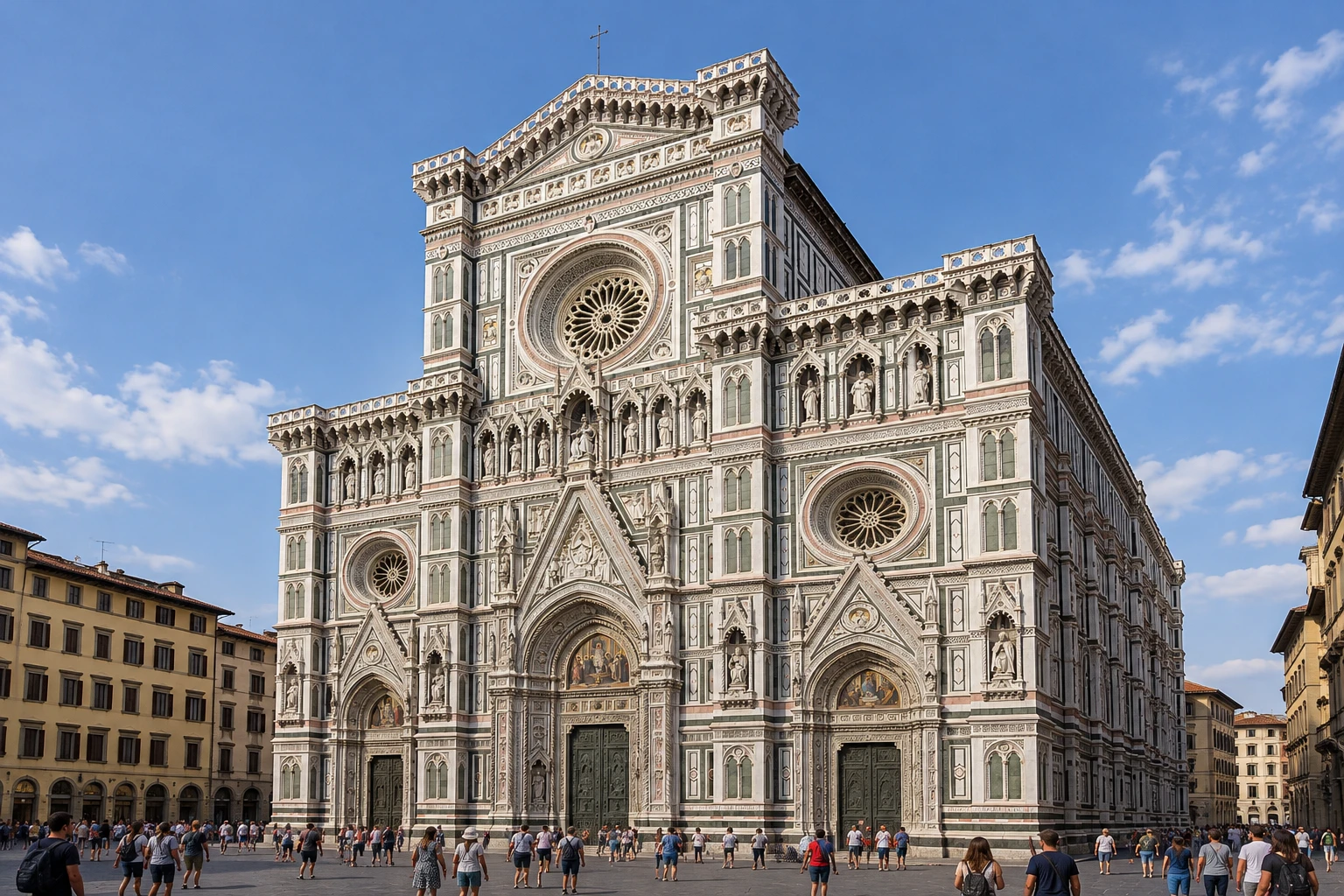
The cathedral of Florença, with a white, green and pink marble façade and Brunelleschi's dome. Under the floor are the ruins of the former church of Santa Reparata.

 Search
 Brazil
 Antarctica
 Argentina
 Bolivia
 Chile
 Colombia
 Ecuador
 Falkland Islands (Malvinas)
 French Guiana
 Guyana
 Paraguay
 Peru
 Suriname
 Uruguay
 Venezuela
 Austria
 Belgium
 Croatia
 Denmark
 Finland
 France
 Germany
 Greece
 Hungary
 Iceland
 IrelandItaly
 Luxembourg
 Norway
 Poland
 Portugal
 Slovakia
 Slovenia
 Spain
 Sweden
 Switzerland
 the Czech Republic
 the Netherlands
 the United Kingdom
 Turkey
 Bermuda
 Canada
 Greenland
 Mexico
 Saint Pierre and Miquelon
 the United States
 the Dominican Republic
 JapanTurkey
 Egypt
 South Africa
 Australia
 Fiji
 New Zealand
 Papua New Guinea
Tuscany
26 places to visit and 13 tours, chosen by the Cidade Turismo guide.
Updated
Illustrative images. The pictures in this guide are illustrations based on the real place, not photographs, and may differ from it.
To start
One by one
The cathedral of Florença, with a white, green and pink marble façade and Brunelleschi's dome. Under the floor are the ruins of the former church of Santa Reparata.
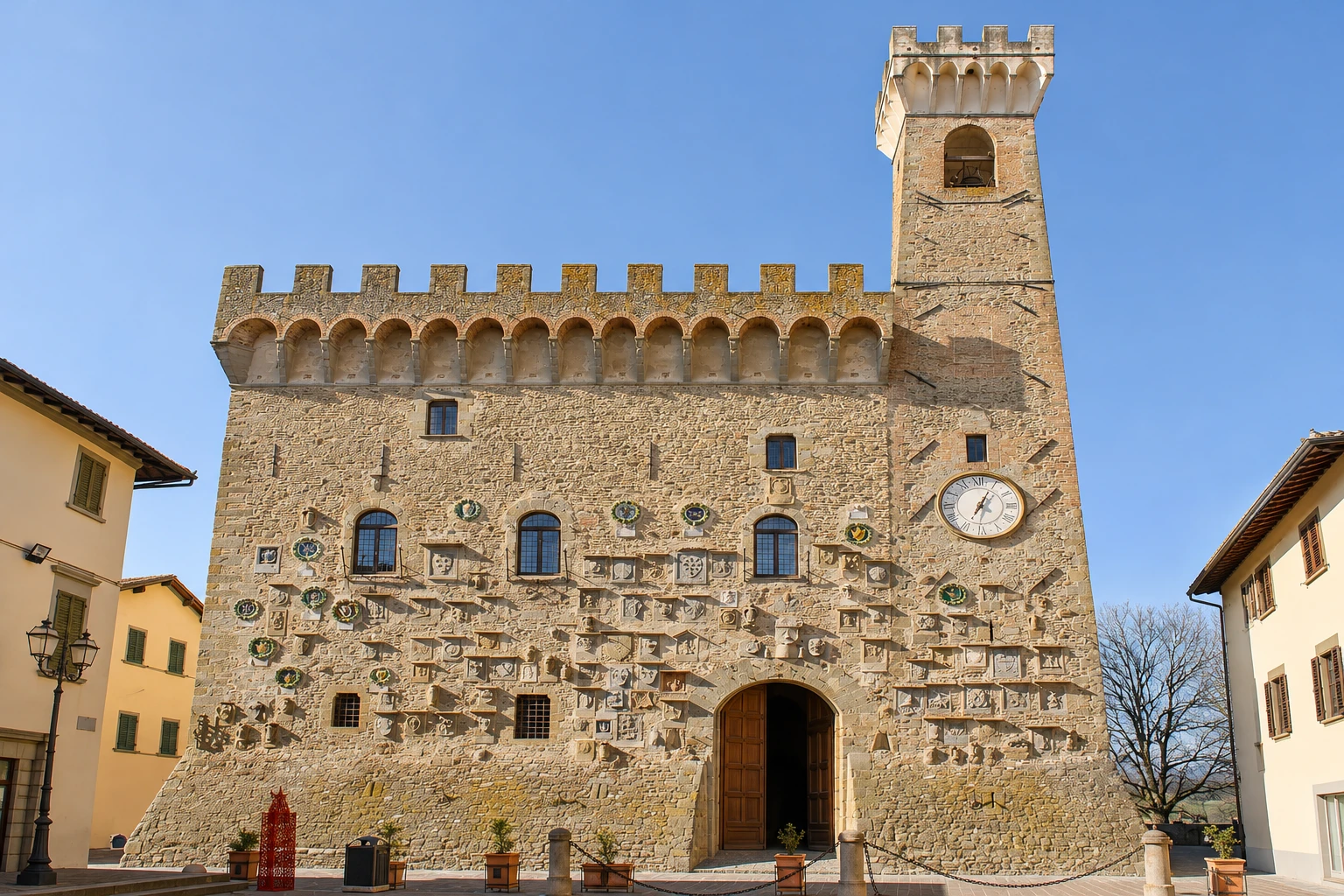
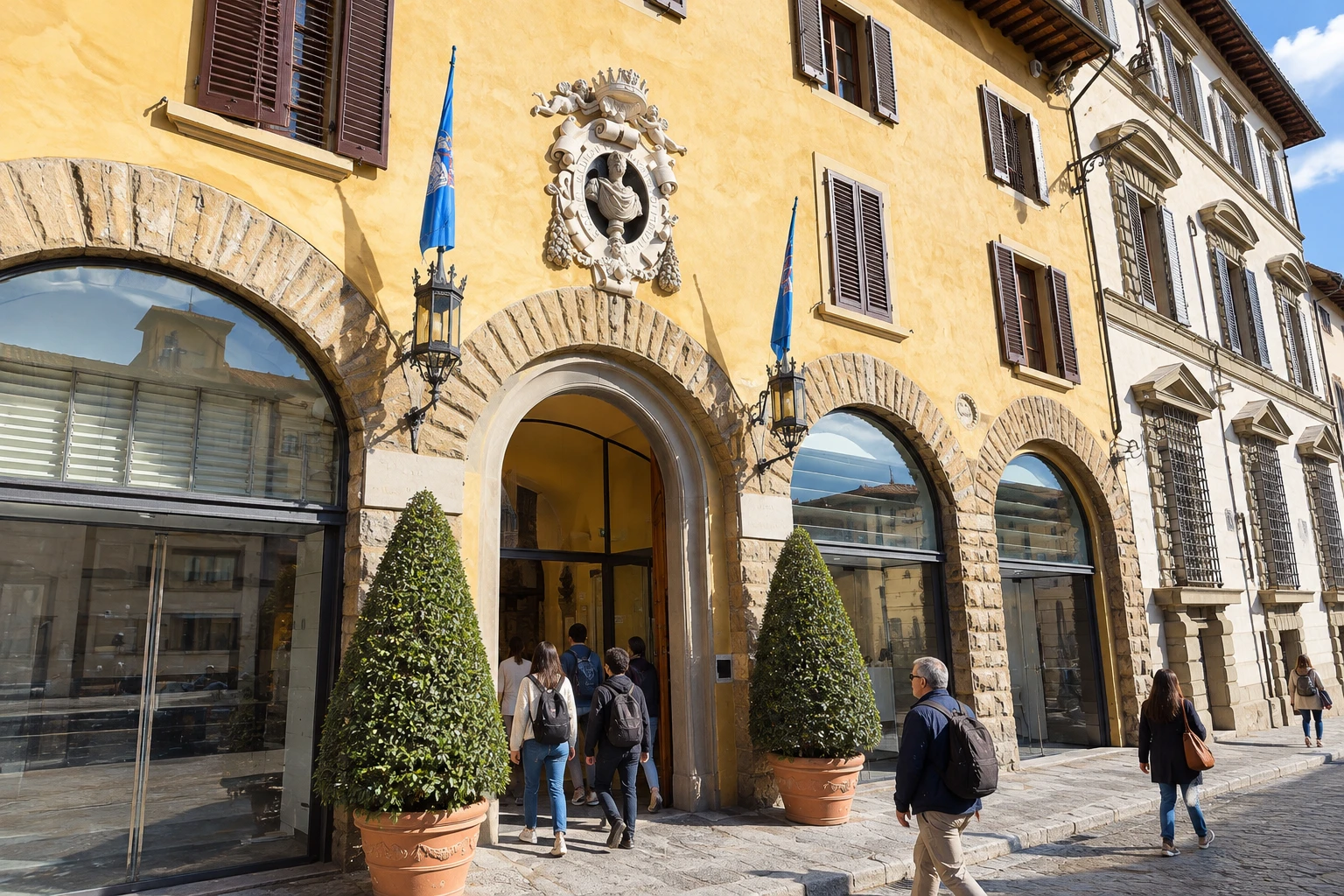
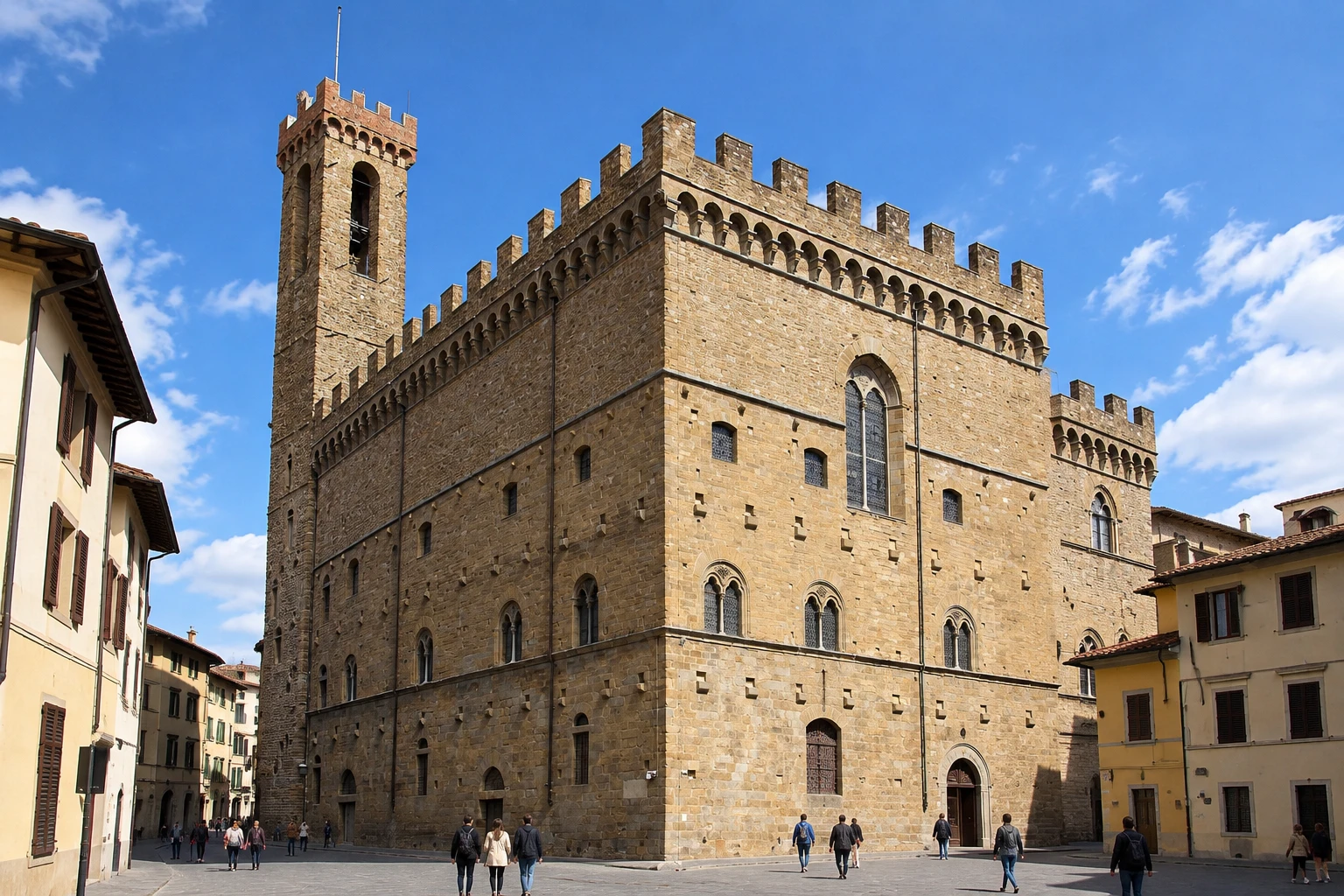
Medieval palace of Scarperia with coats of arms on the façade, historic rooms and a museum about the making of blades and cutting tools.
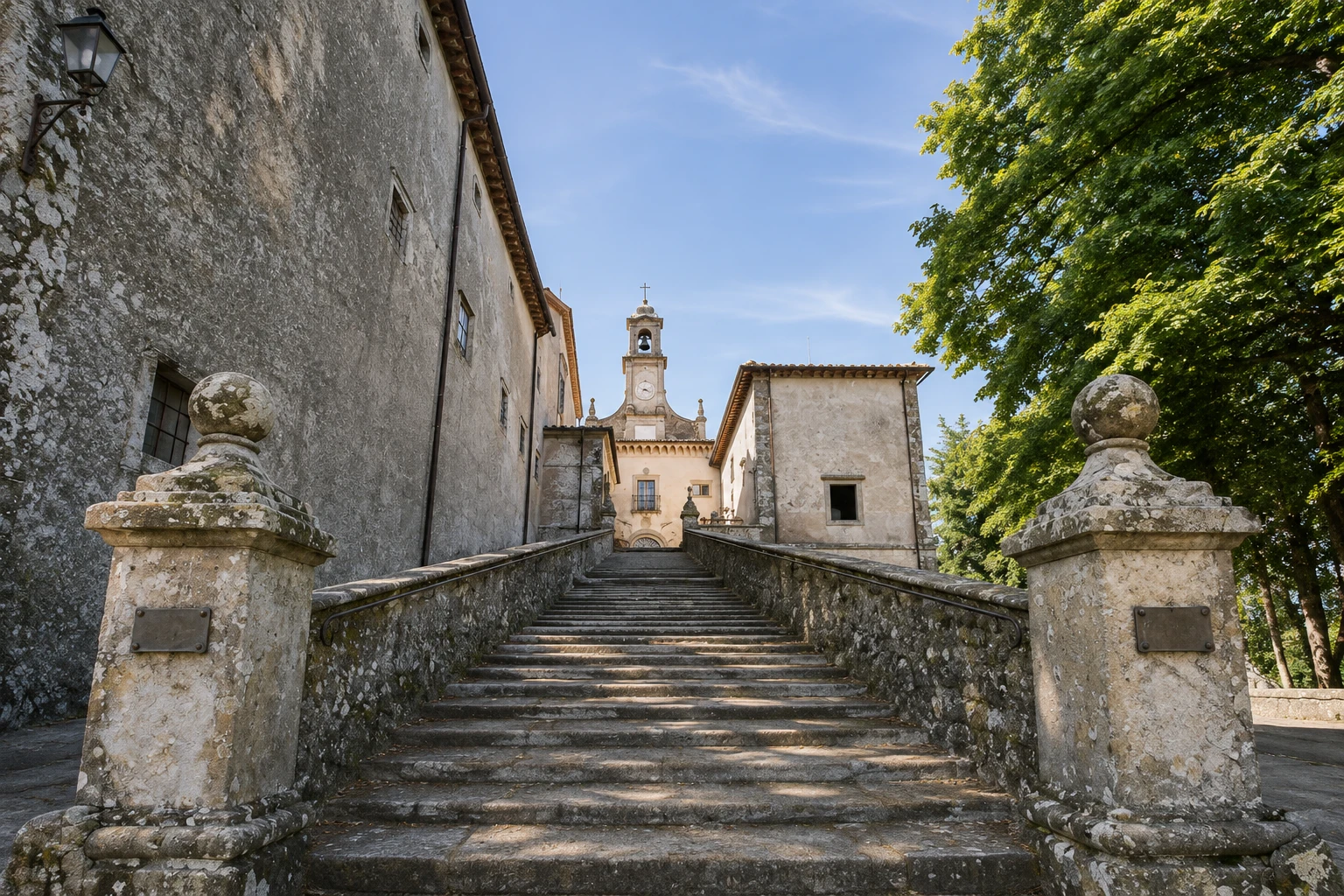
Religious complex atop Monte Senario, with stone stairway, church of the Order of the Servants of Mary, and views over the slopes of the Mugello.
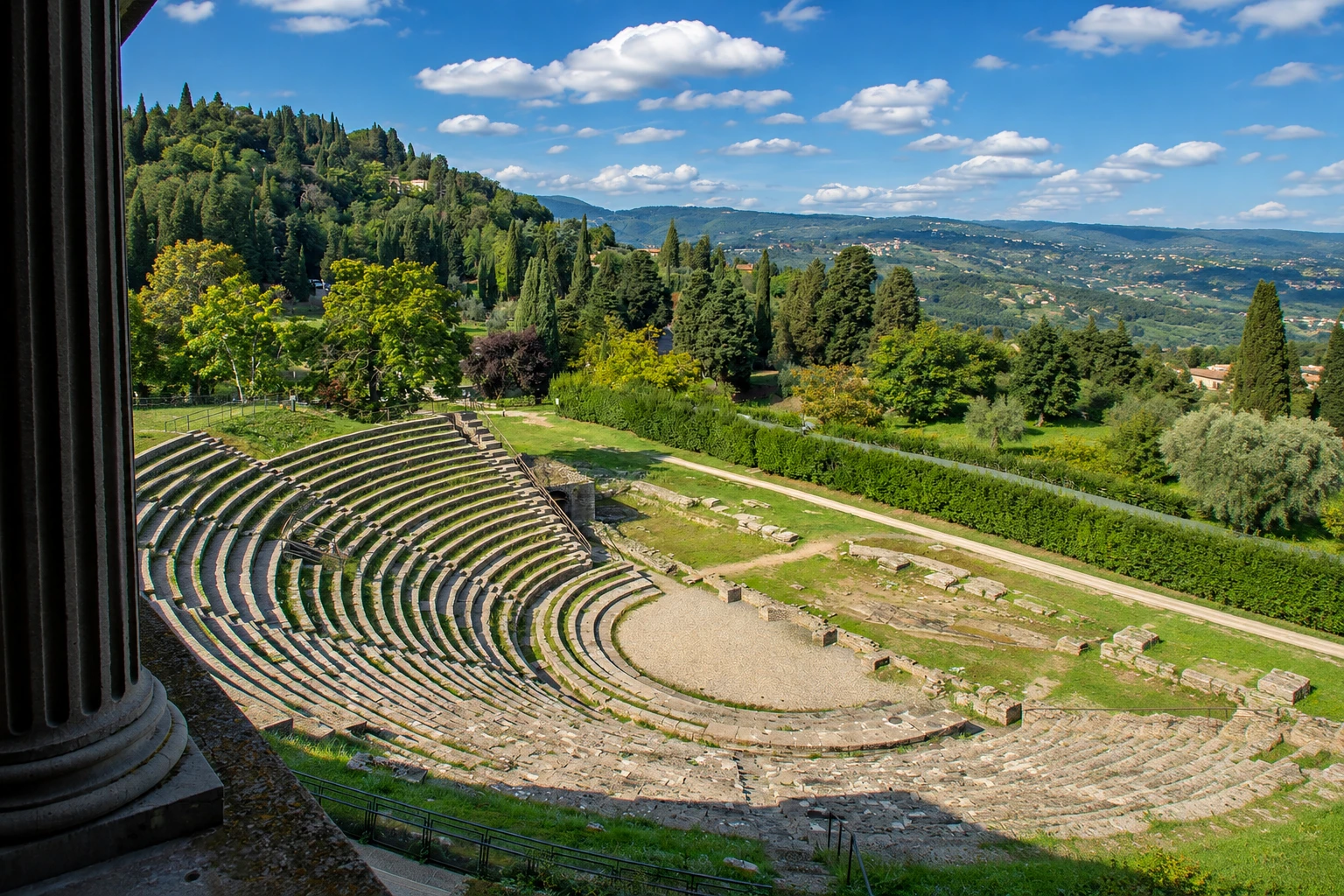
Outdoor site with a theater and Roman baths, remains of a temple of Etruscan origin and Lombard burials, near Piazza Mino.
The brick dome built by Filippo Brunelleschi between 1420 and 1436, without wooden centering. The climb has 463 steps and ends on the lantern terrace.
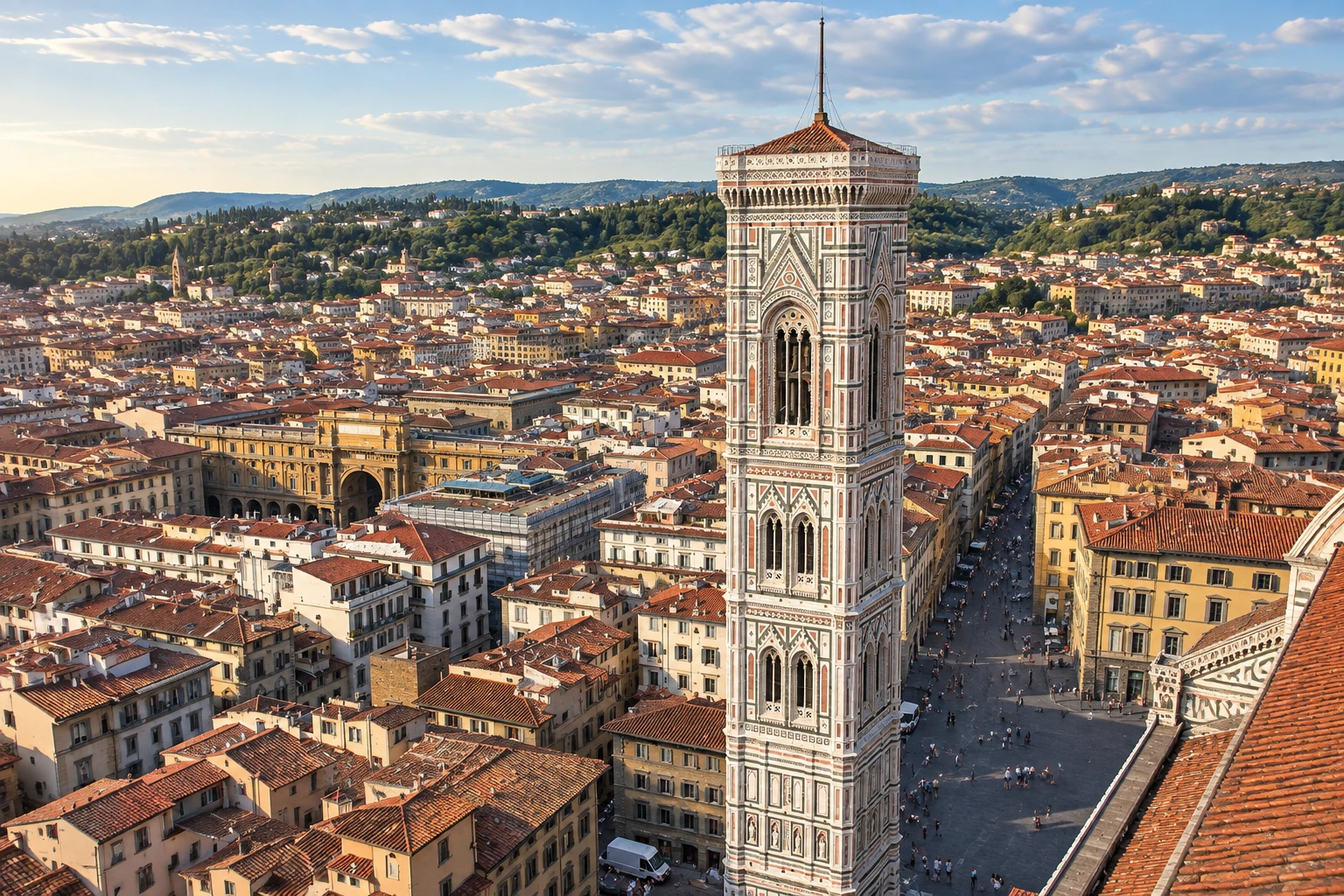
Duomo bell tower, 84.7 meters tall and clad in polychrome marble. Designed by Giotto in the 14th century, it has 414 steps to the terrace.
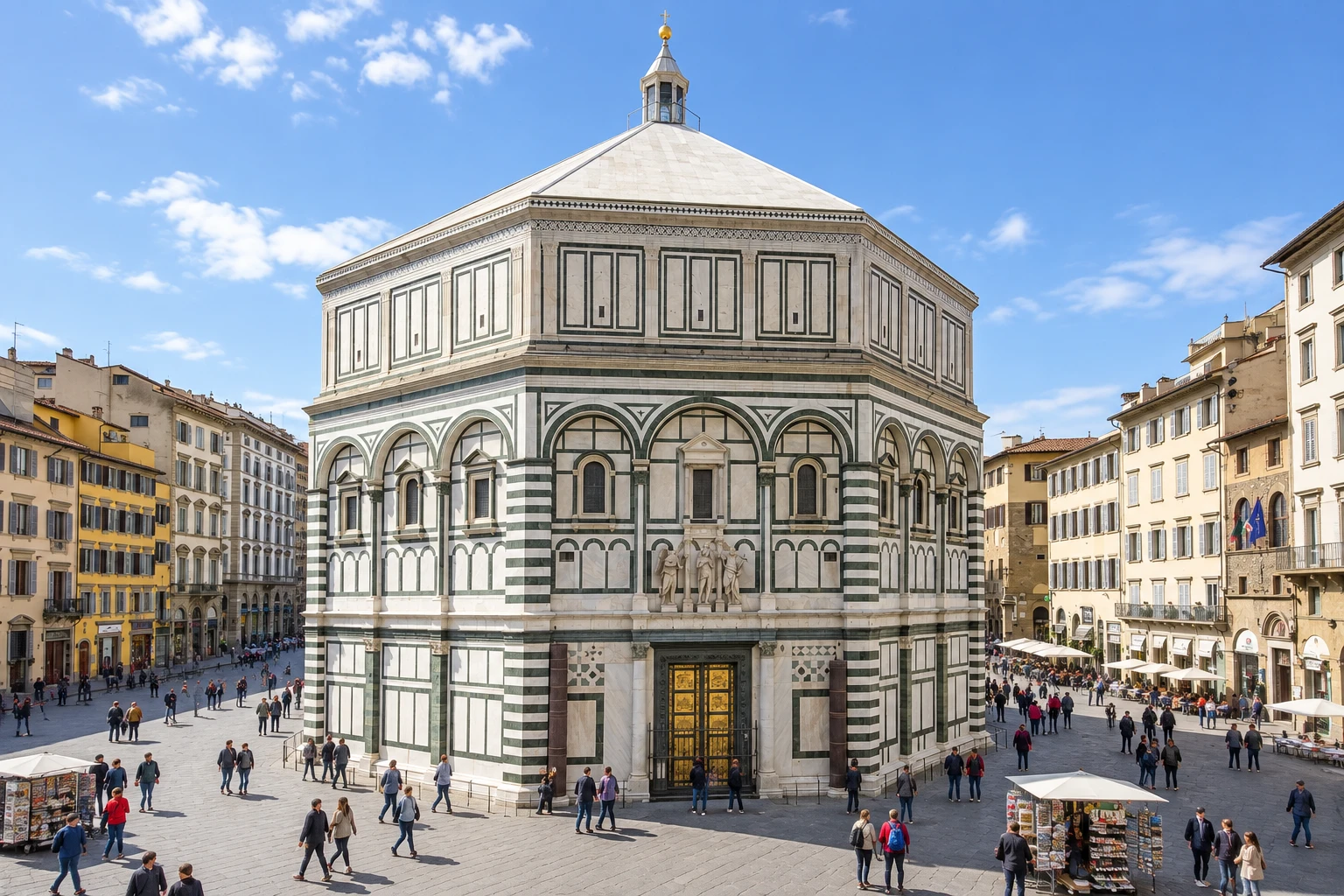
Octagonal baptistery in front of the cathedral, with bronze doors by Andrea Pisano and Lorenzo Ghiberti and an interior dome covered with medieval mosaics.
Museum behind the cathedral housing the original works from the Duomo complex: Ghiberti's doors, Michelangelo's Pietà Bandini and Donatello's Magdalene.
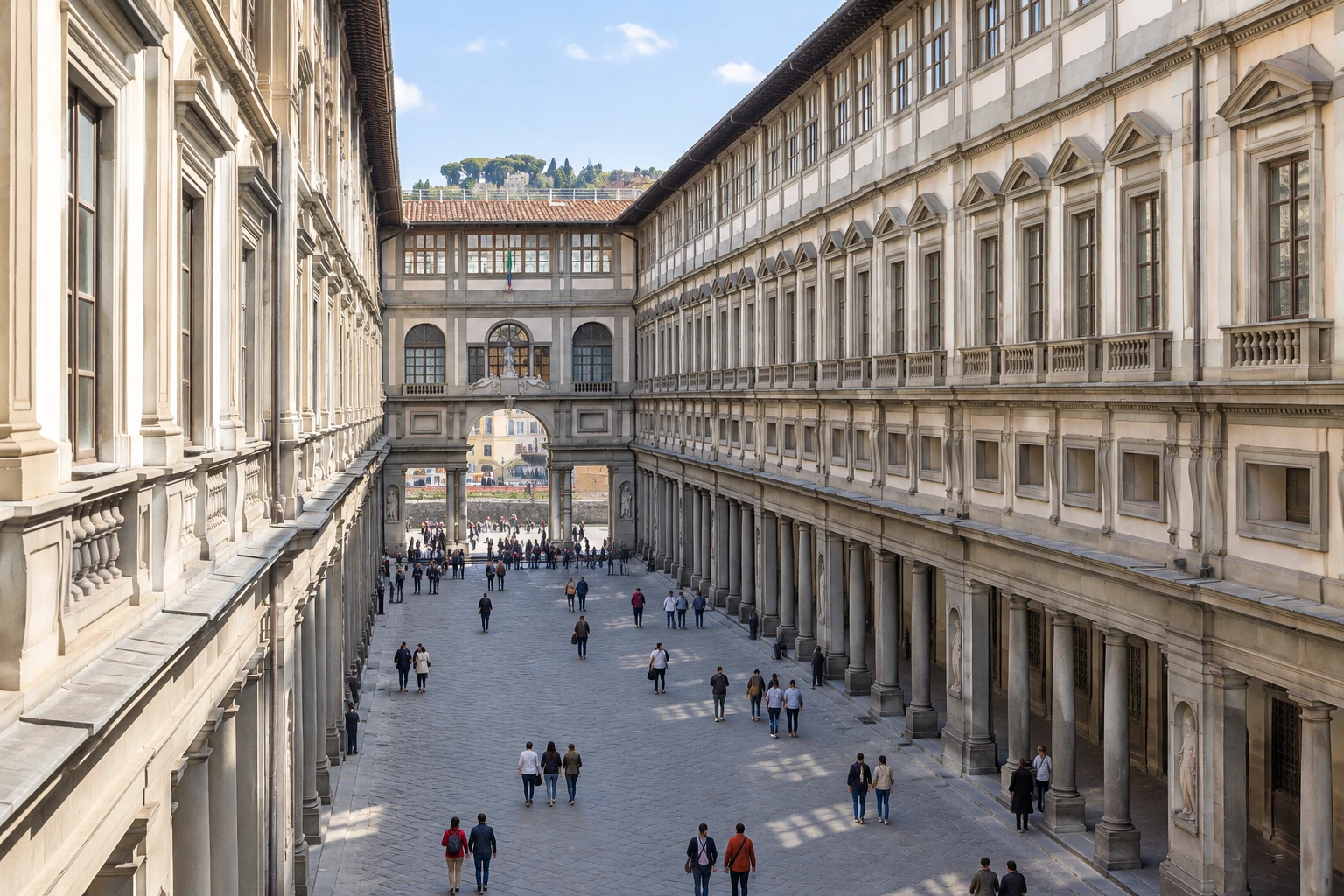
One of the world's most important art museums, with Botticelli, Leonardo, Raphael, Michelangelo and Caravaggio, housed in a Vasari building next to the Piazza della Signoria.
Museum that houses Michelangelo's original Davi, as well as the unfinished Prisioners, Florentine painting from the 13th to 16th centuries, and a collection of musical instruments.
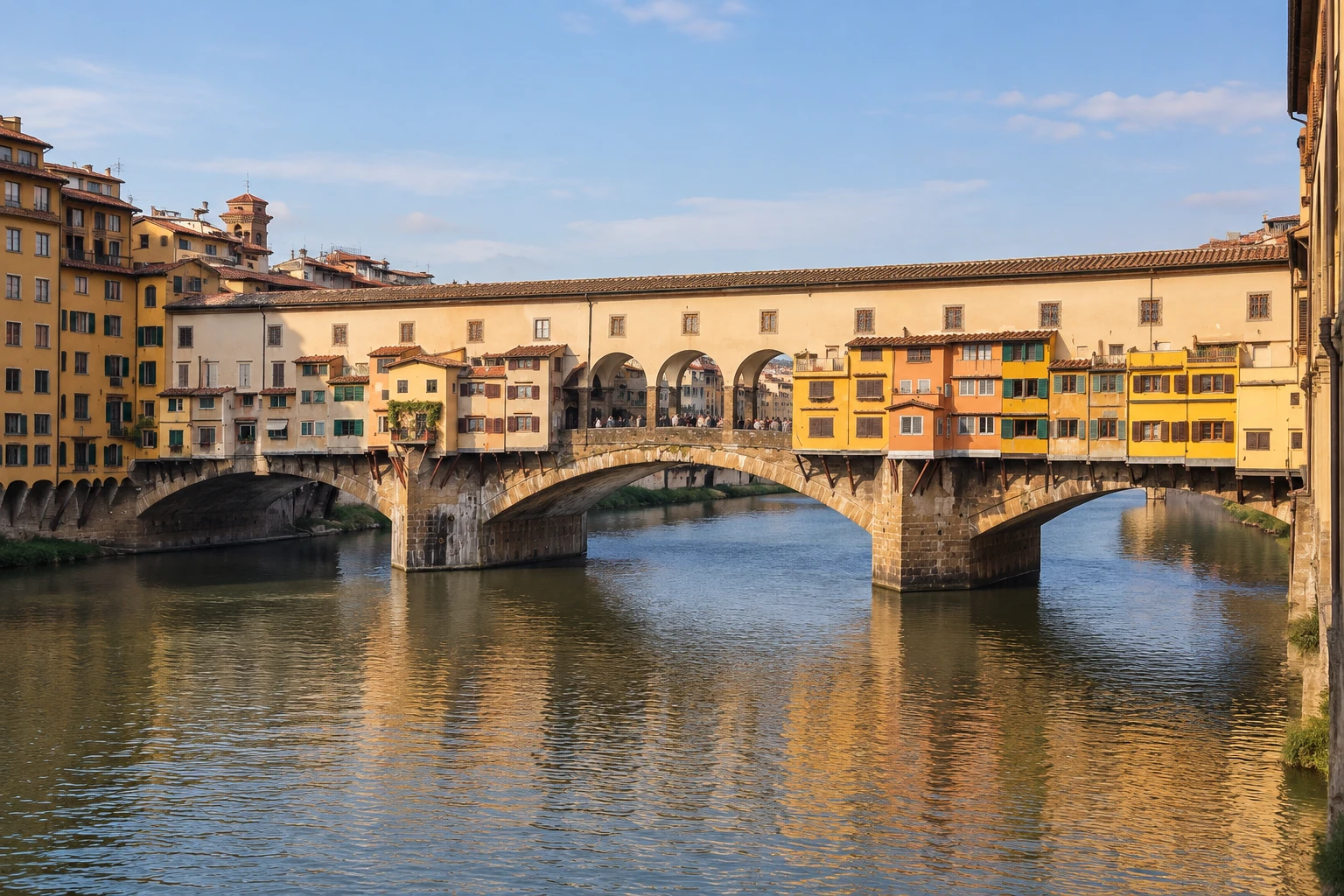
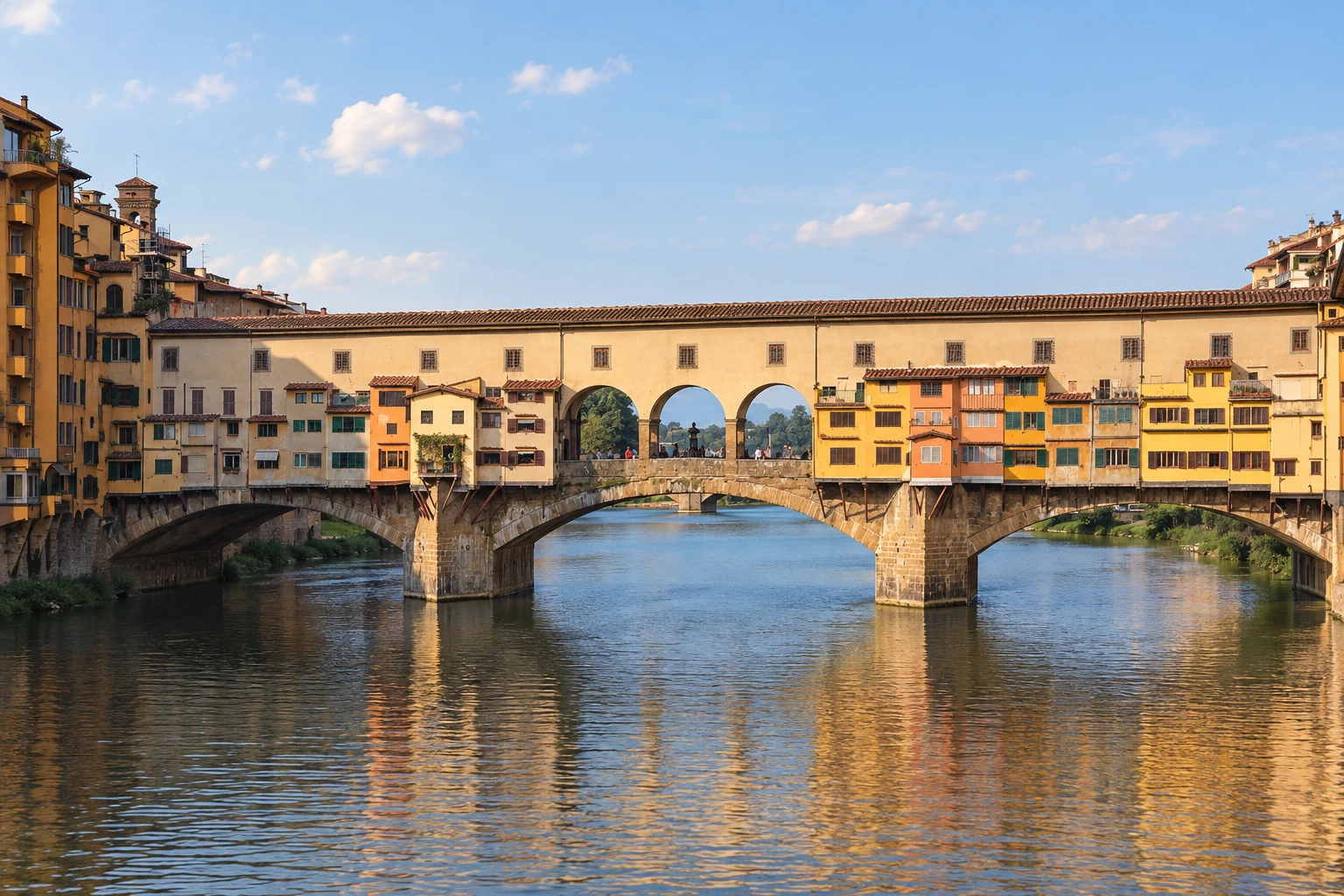
The medieval bridge over the Arno with jewellers' shops on both sides, the only one in Florença that was not destroyed in World War II.
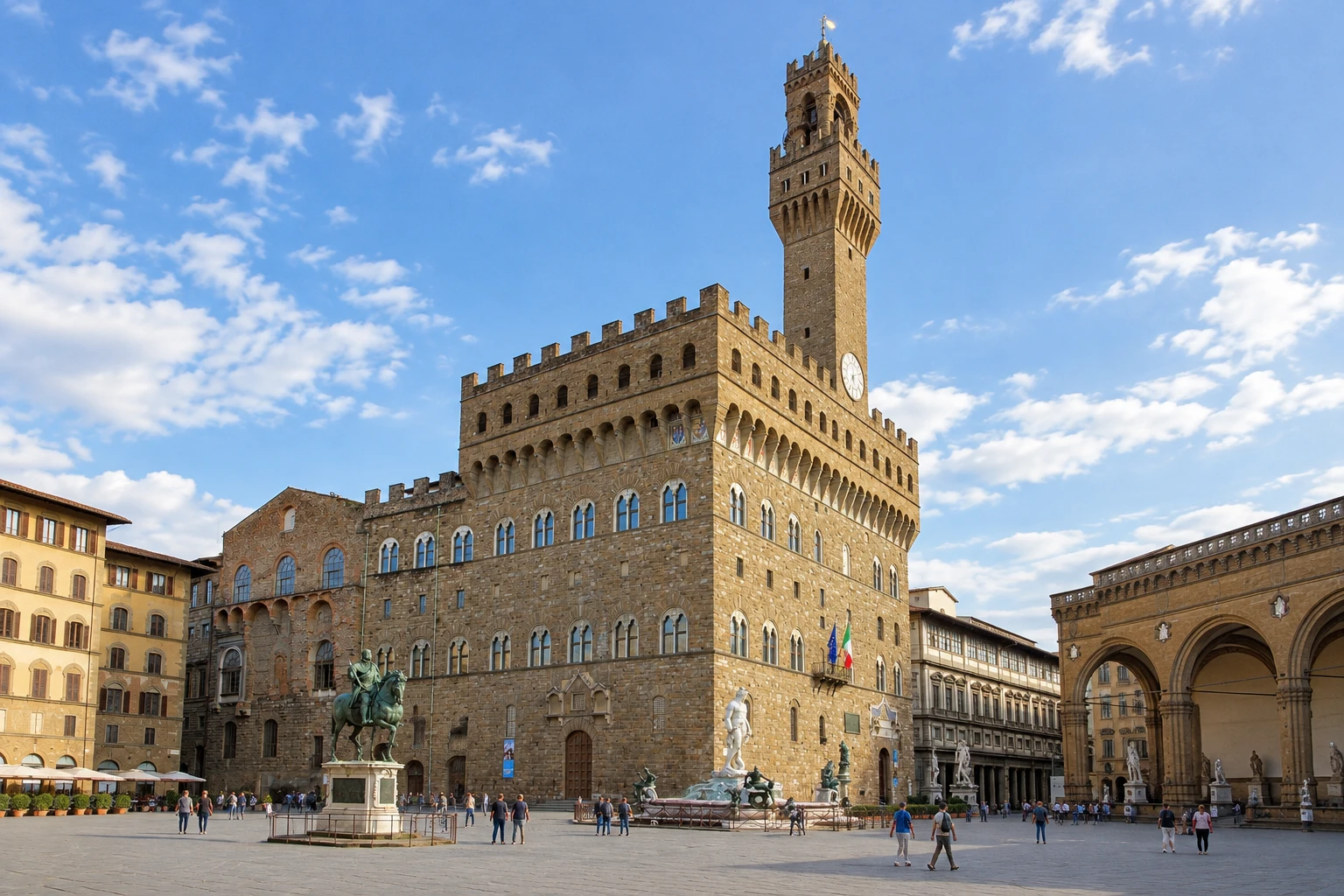
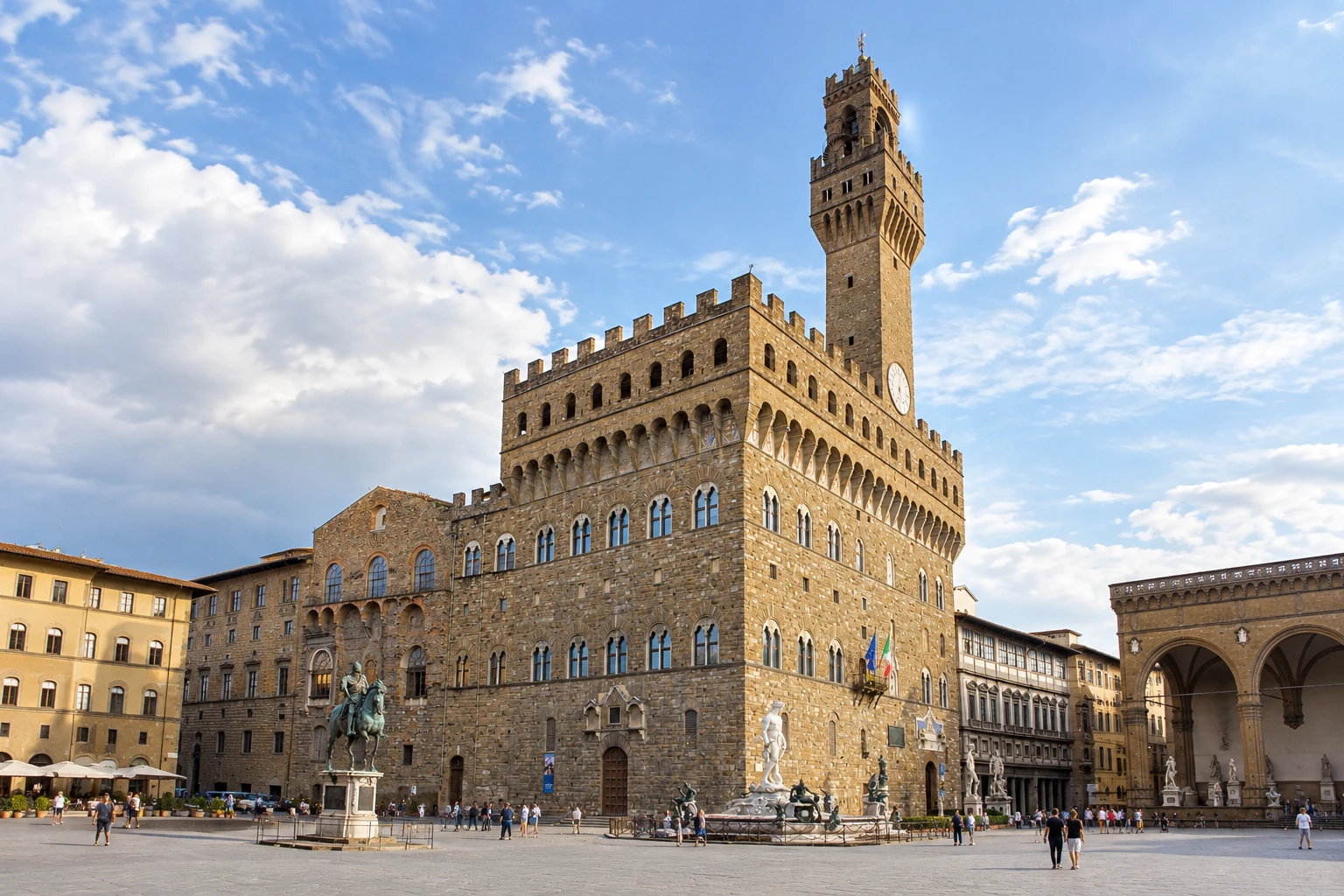
The civic square of Florença, in front of the Palazzo Vecchio, with the Fountain of Neptune, the copy of the Davi and the statues of the Loggia dei Lanzi, including the Perseu by Cellini.
Seat of Florença's government since the 14th century and still the city hall today, with the Salone dei Cinquecento, the Medici apartments and Arnolfo's tower, open to climb.
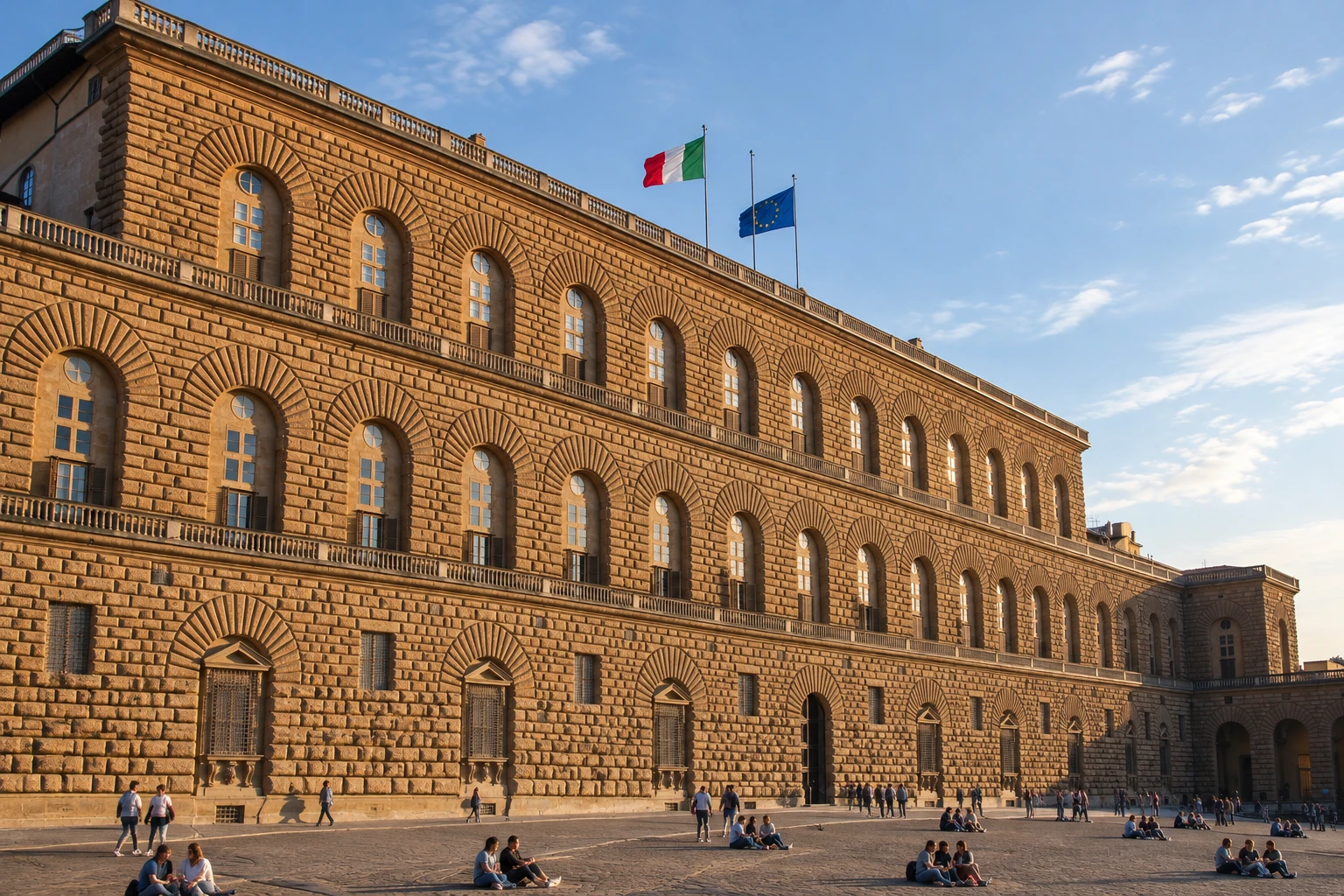
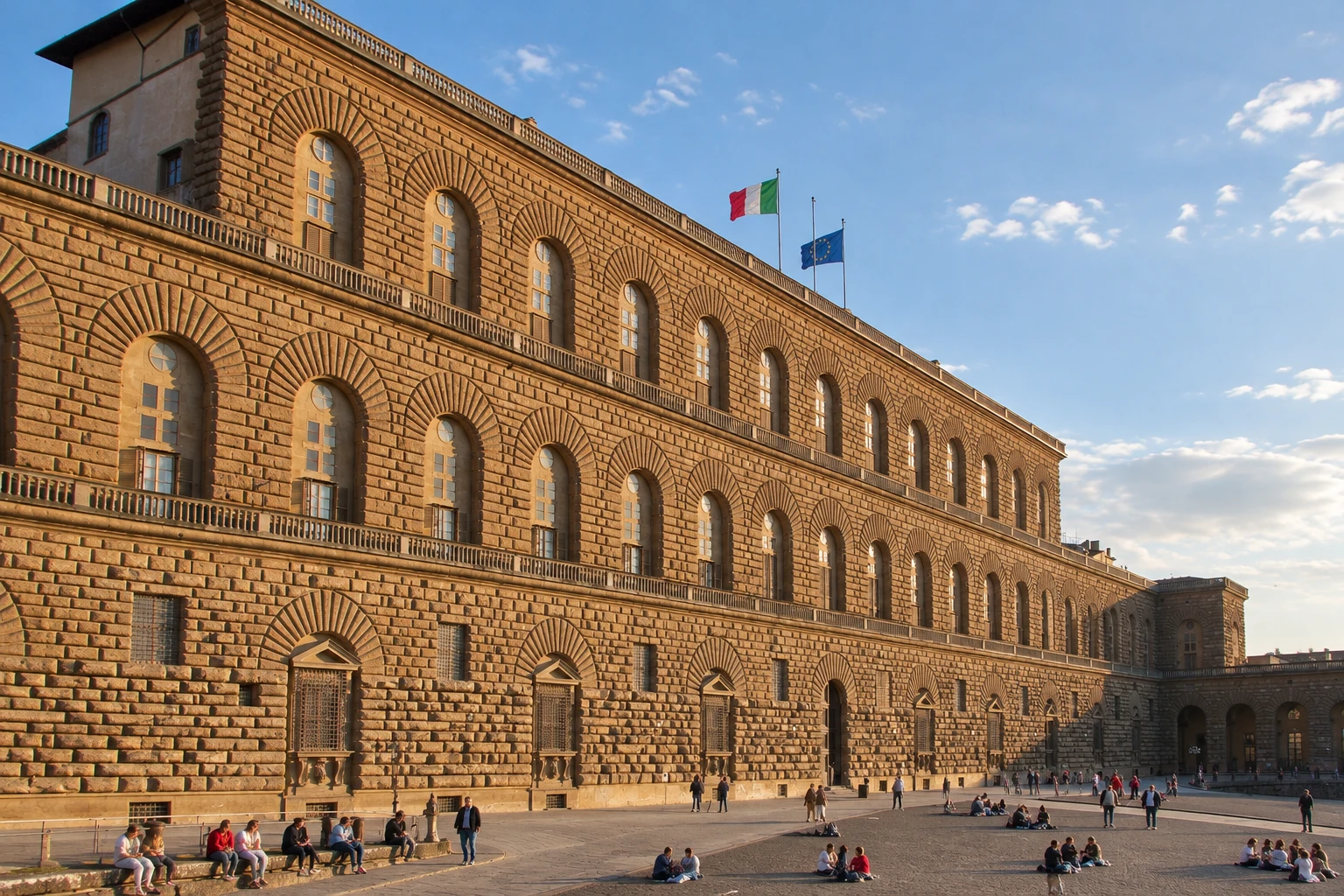
Former residence of the Medici, the Habsburg-Lorena and the kings of Italy, on the other side of the Arno, with the Galleria Palatina, the royal apartments and the fashion museum.
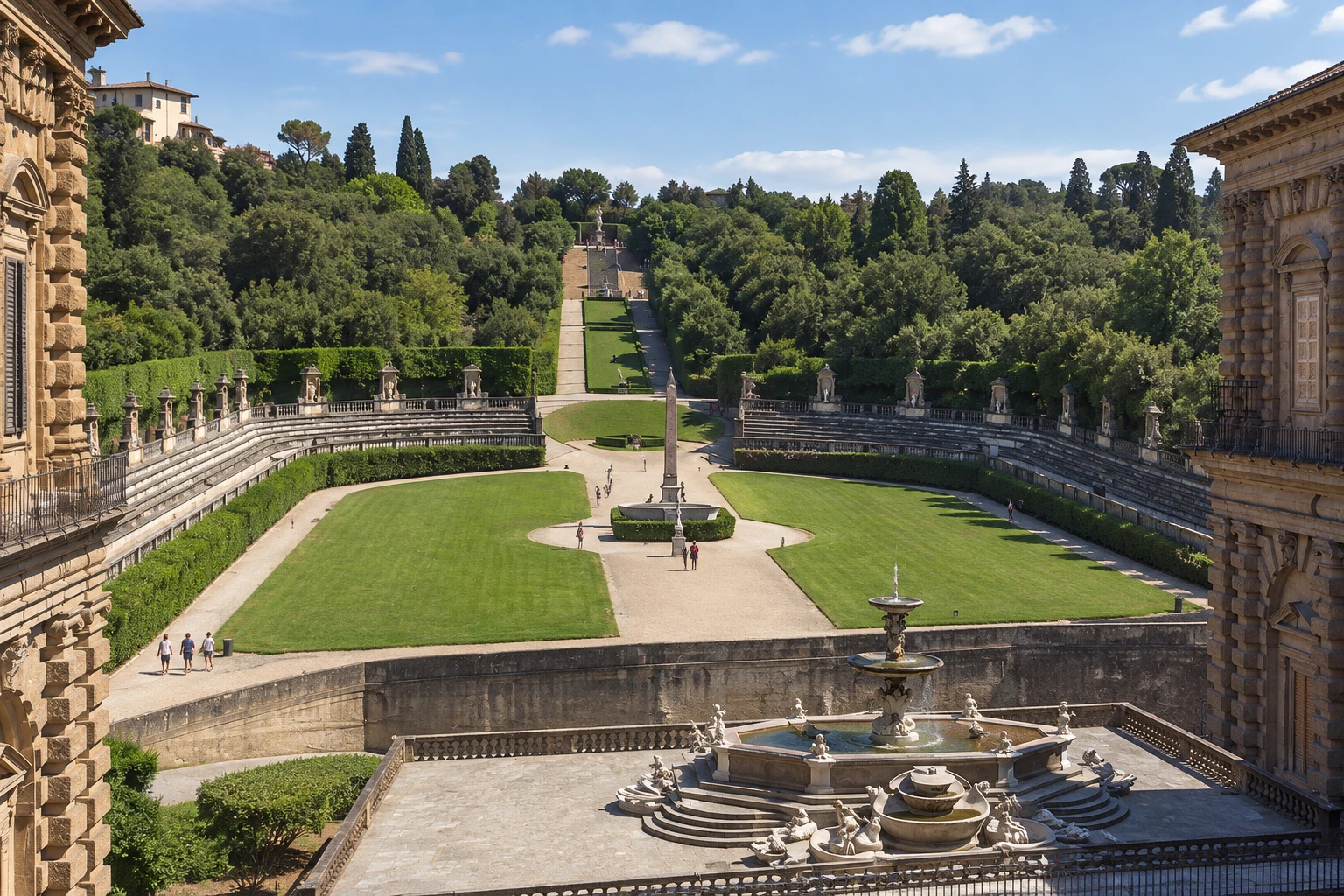
The Medici garden behind the Palazzo Pitti, a model of the Italian garden, with statues, fountains, the Grotta del Buontalenti and terraces overlooking Florença.
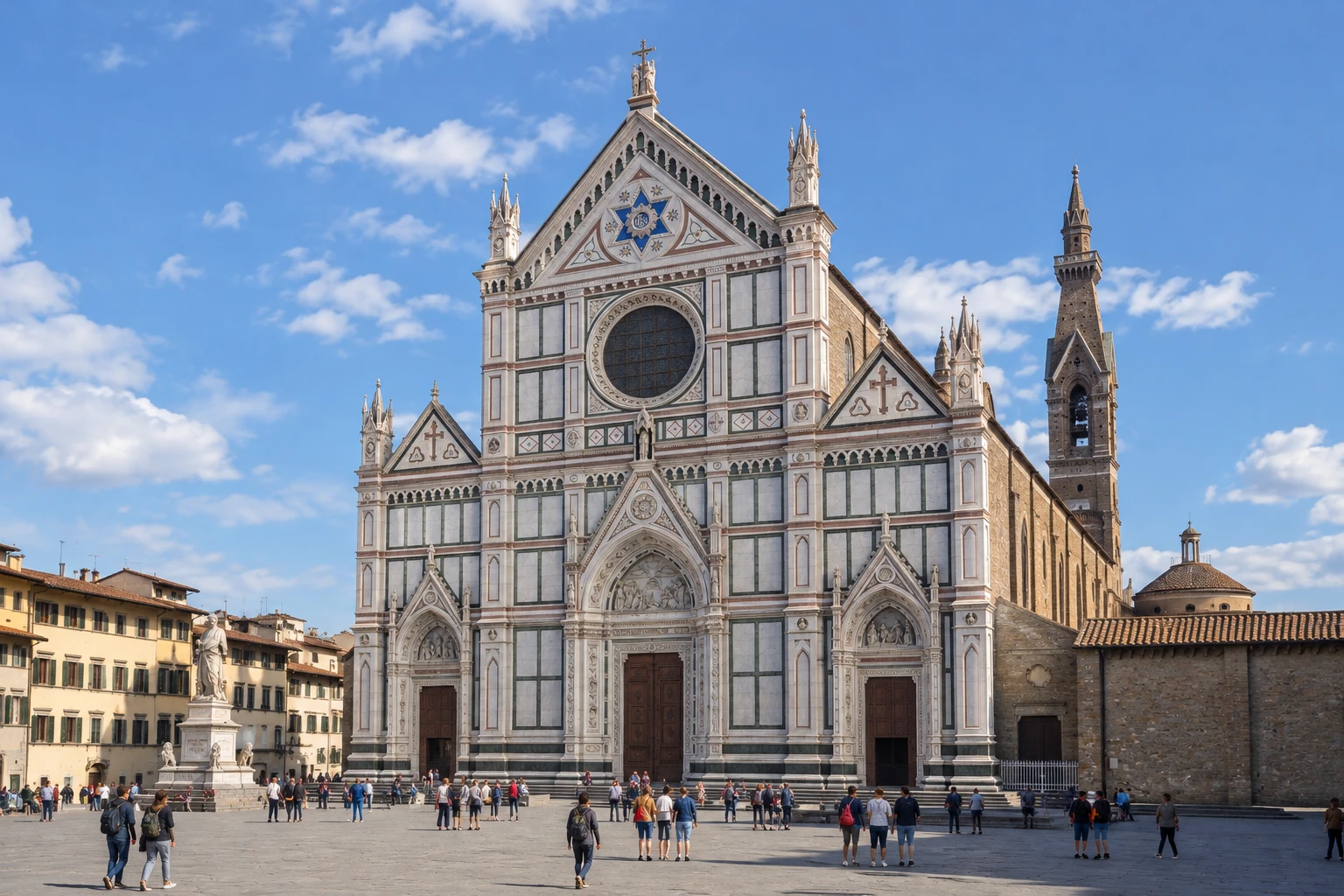
The largest Franciscan church in Florença, with the tombs of Michelangelo, Galileu, Maquiavel and Rossini, frescoes by Giotto and Brunelleschi's Capela Pazzi.
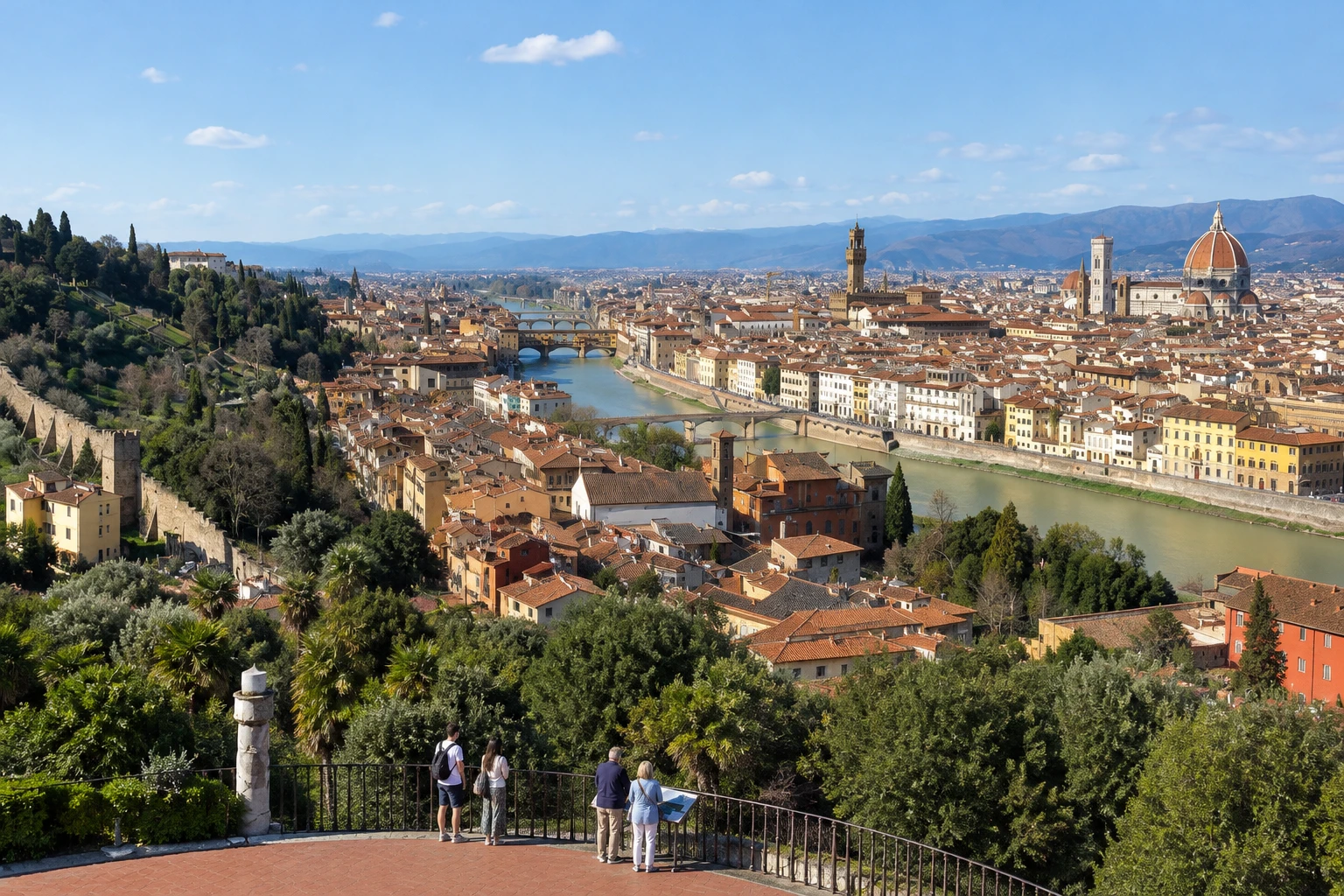
Panoramic terrace on the hill south of the Arno, with views over the entire historic center and a bronze copy of the Davi. A classic spot for sunset.
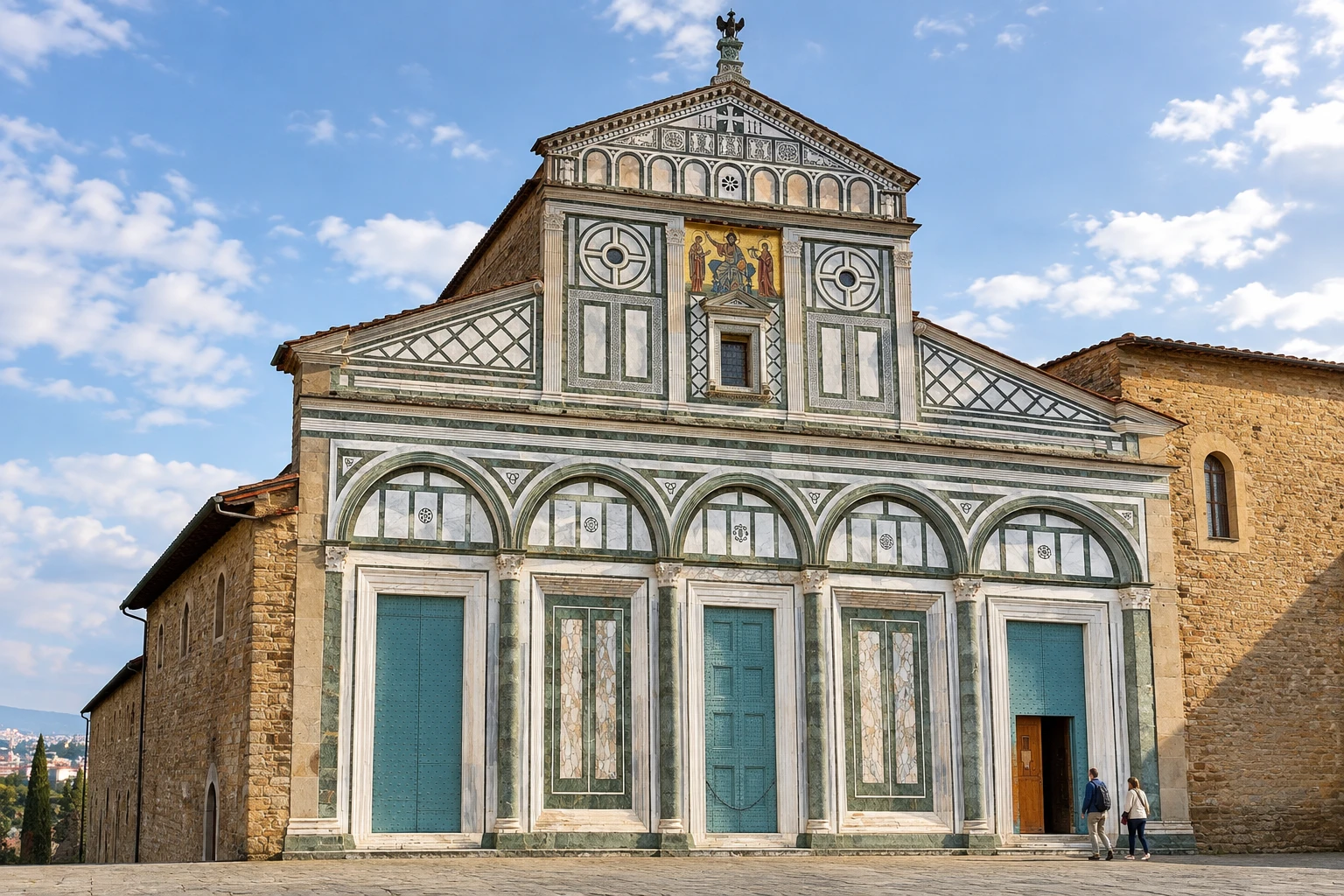
Romanesque basilica atop the hill above the Piazzale Michelangelo, with a white-and-green marble façade, mosaics and monks who chant the Gregorian office.
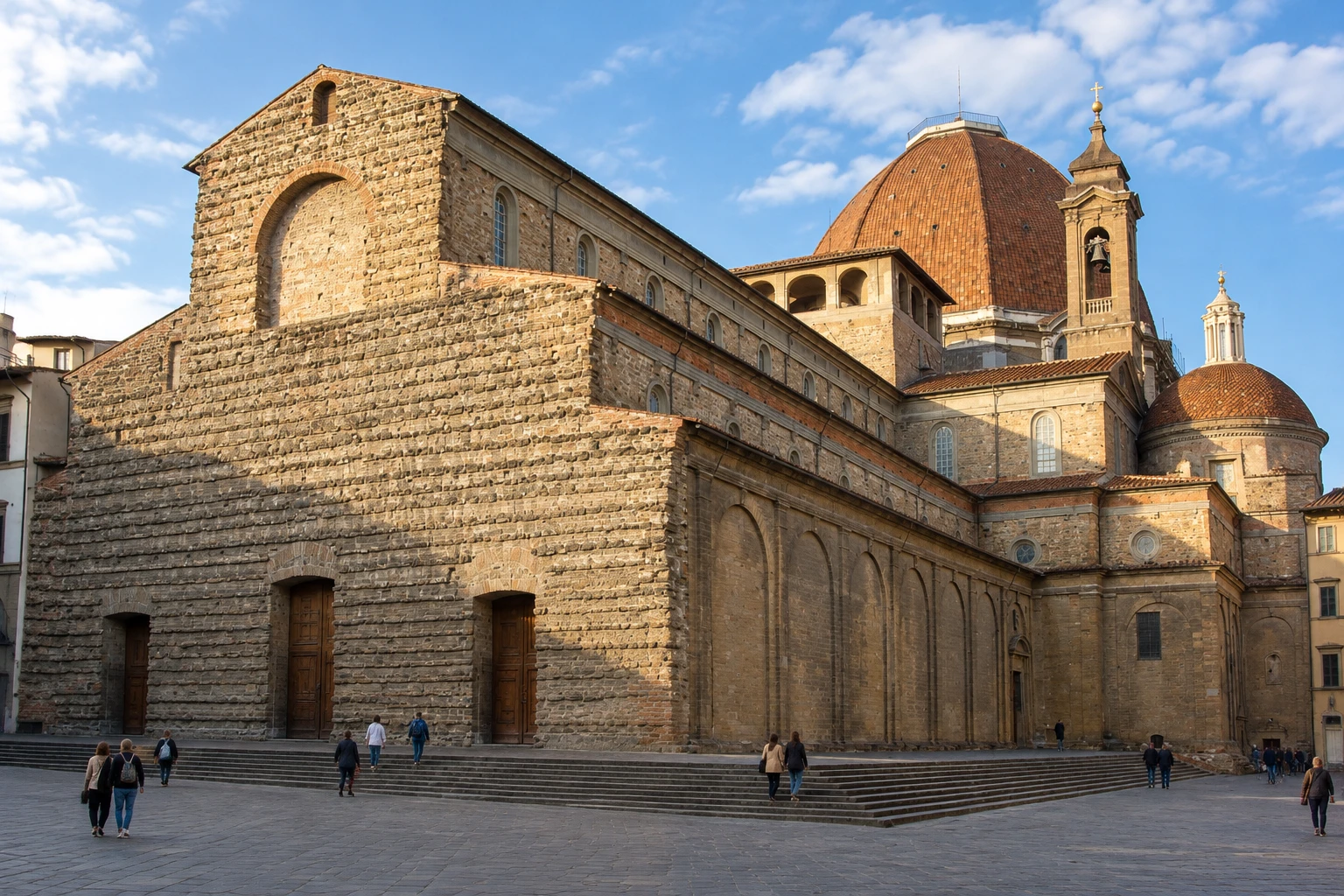
The Medici family church, designed by Brunelleschi, with the Sacristia Velha and, next to it, the Biblioteca Medicea Laurenziana designed by Michelangelo.
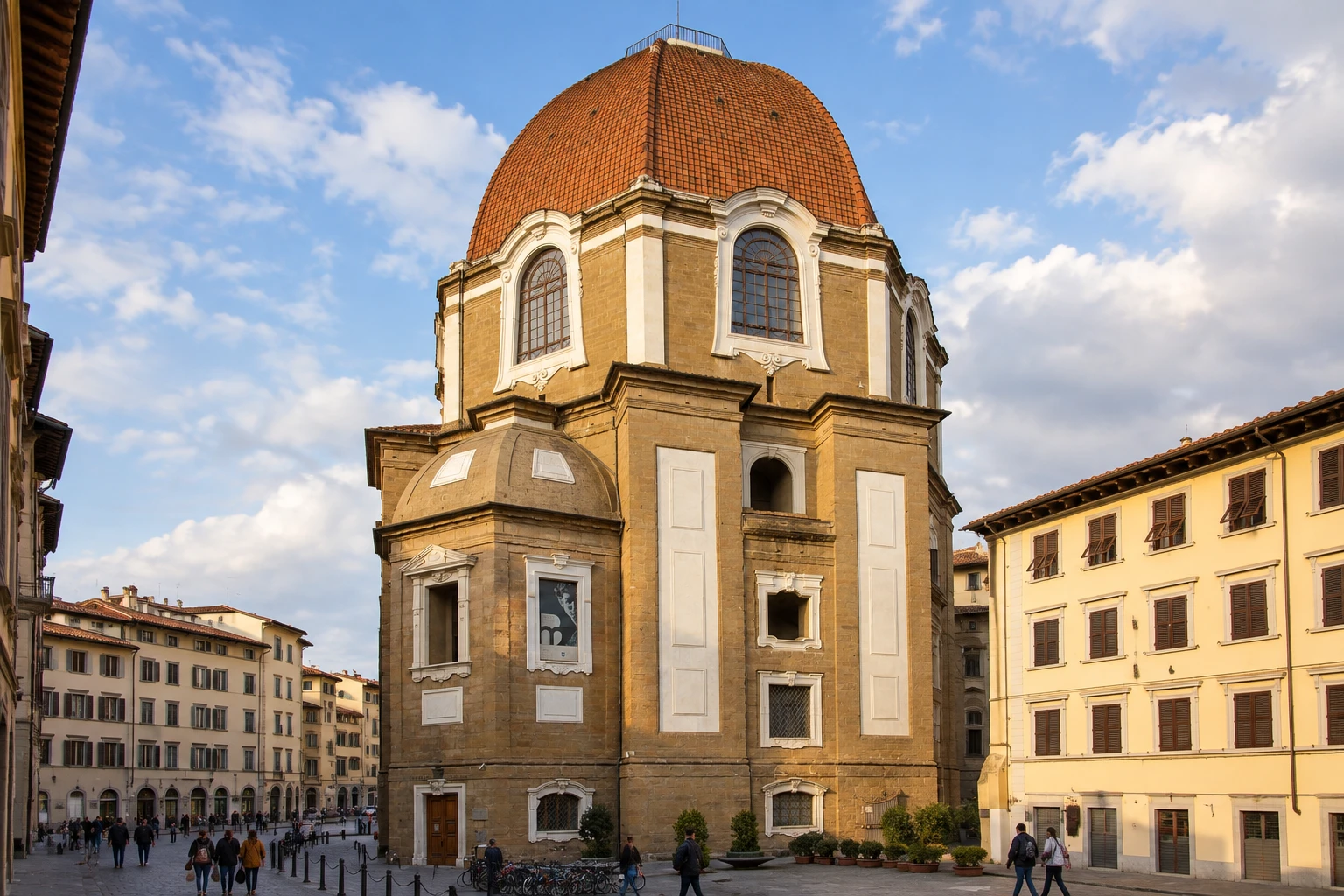
Mausoleum of the Medici family behind San Lorenzo, with the Cappella dei Principi veneered in hardstones and the Sagrestia Nuova, containing sculptures by Michelangelo.
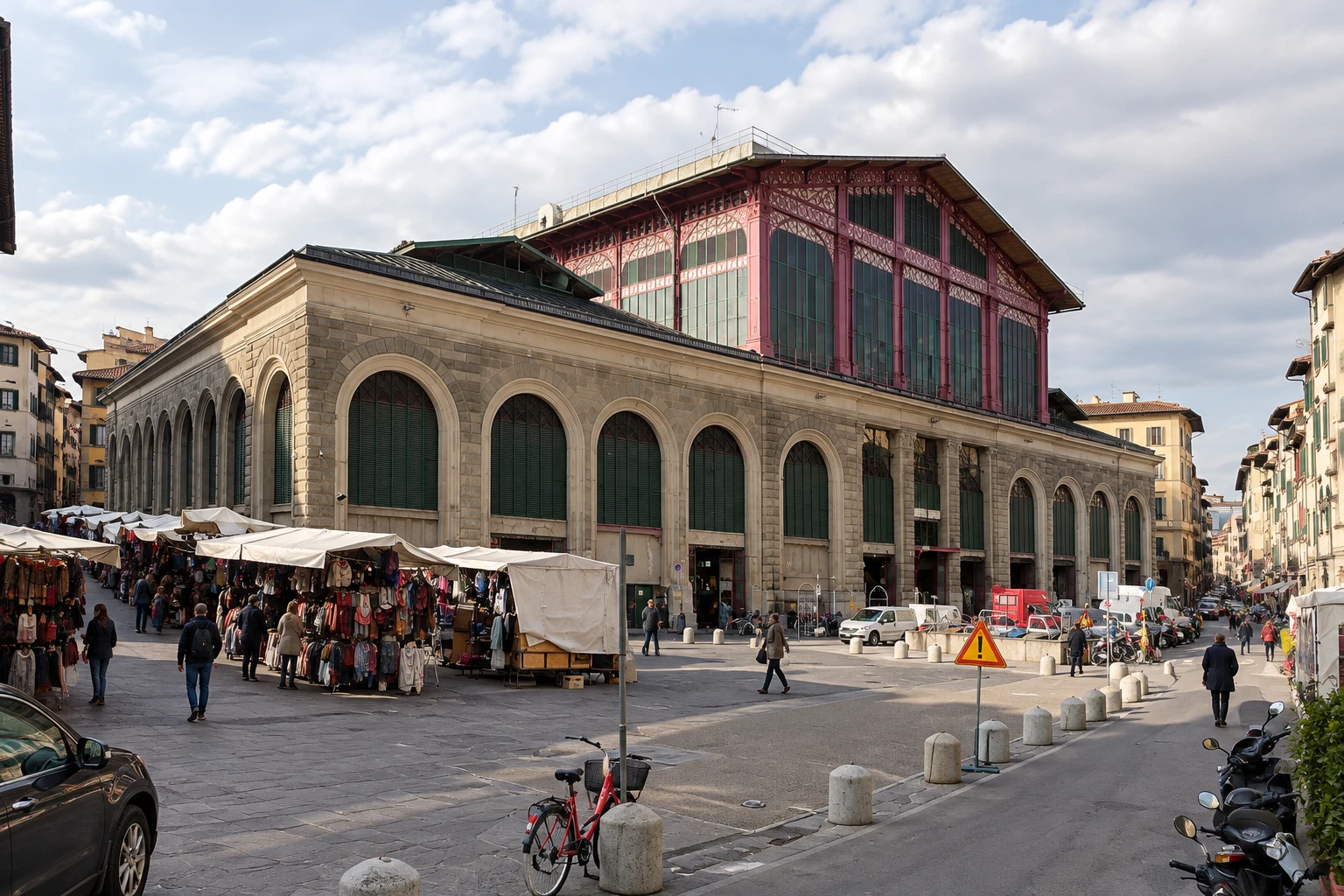
A covered iron-and-glass market from 1874 in the San Lorenzo neighborhood, with stalls selling meat, cheese and produce on the ground floor and a food court on the first floor.
The principal museum of Italian Renaissance sculpture, housed in a 13th-century palace, featuring Donatello's bronze David and Michelangelo's Bacchus.
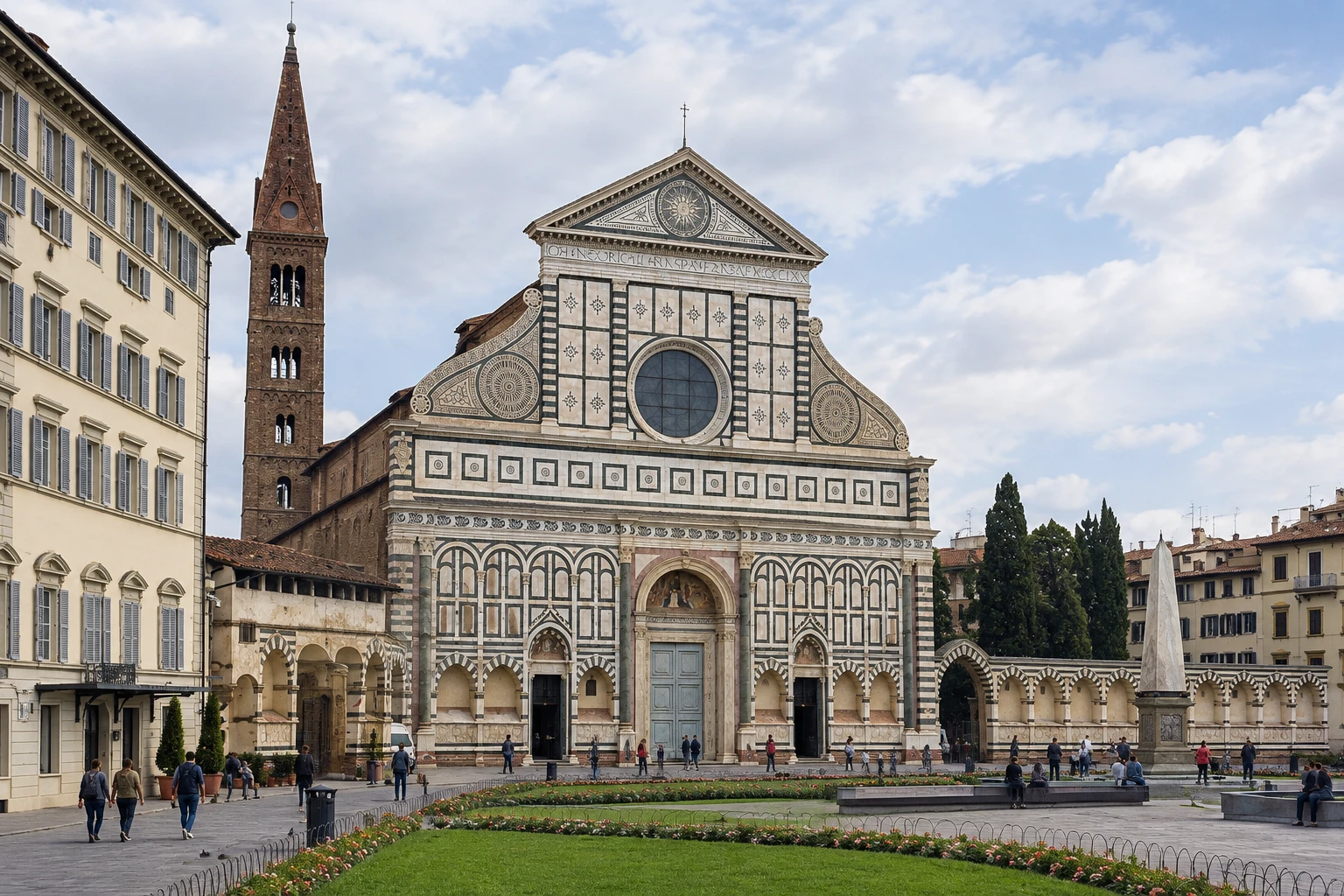
Dominican church opposite the train station, with a façade by Leon Battista Alberti, Masaccio's Trinity and frescoes by Ghirlandaio and Filippino Lippi.
The other side of the Arno, with craftsmen's workshops, the Piazza Santo Spirito and Brunelleschi's basilica, the Palazzo Pitti and the San Niccolò quarter at the foot of the Piazzale Michelangelo.
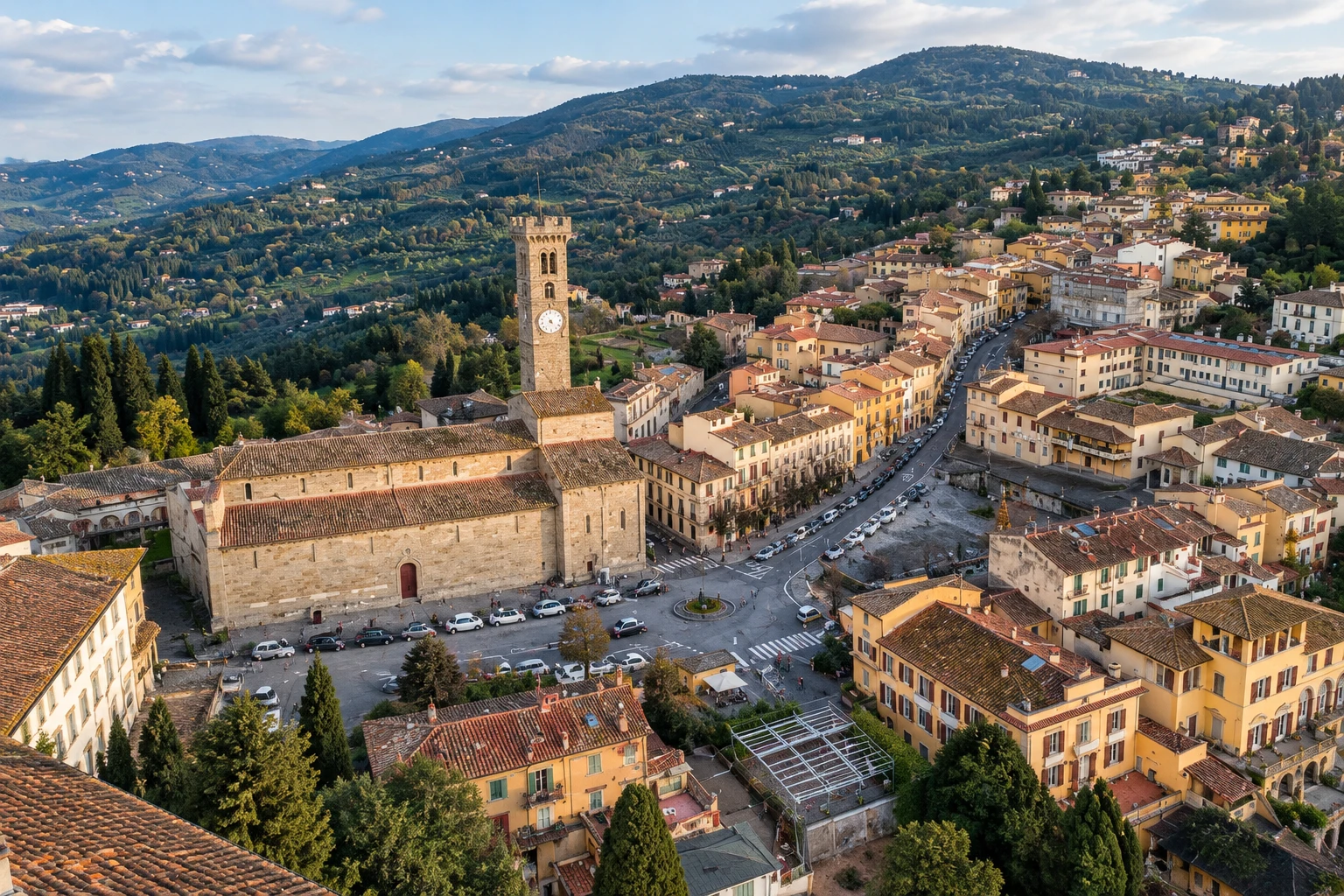
Etruscan hill town above Florence, about 8 km away, with a Roman theatre, archaeological museum and views of the whole city below.
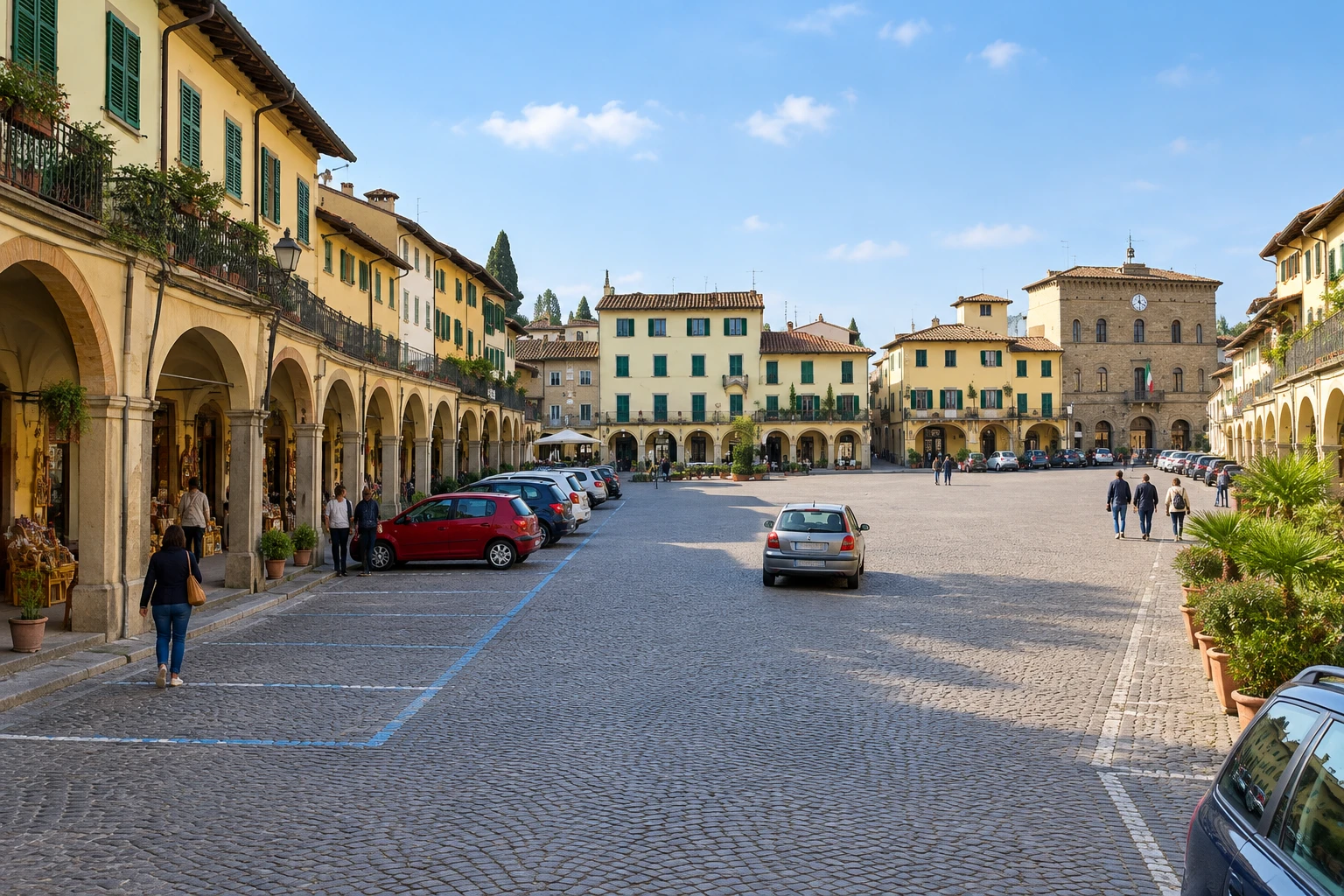
Small town considered the gateway to the Chianti, the region of vineyards and hills between Florença and Siena, with an arcaded square and the Chiantigiana road.
To choose before you go
The details of each tour (where it leaves from, what it includes, the best time) are in the complete guide.
Get your questions answered
The guide's itineraries cover 3, 5 and 7 days: in 3 days, Duomo, Uffizi, David and the Oltrarno; in 5 days, the city at a relaxed pace, Fiesole and Chianti; in 7 days, base for Tuscany.
Arrival, Duomo and Piazza della Signoria. Arrival at Santa Maria Novella station (from Rome, about 1 h 30 by Frecciarossa). Leave your bags and walk to the Duomo: climb the dome at your reserved time or the bell tower, see the baptistery and the Museo dell'Opera. In the afternoon, Piazza della Signoria, Palazzo Vecchio and the Ponte Vecchio; sunset from the Ponte Santa Trinita.
It generally rains less from June to August. The rainiest months are usually from October to December. The guide covers each month, with the weather and what changes on the tours.
To plan