Sligo · Sligo · Trail
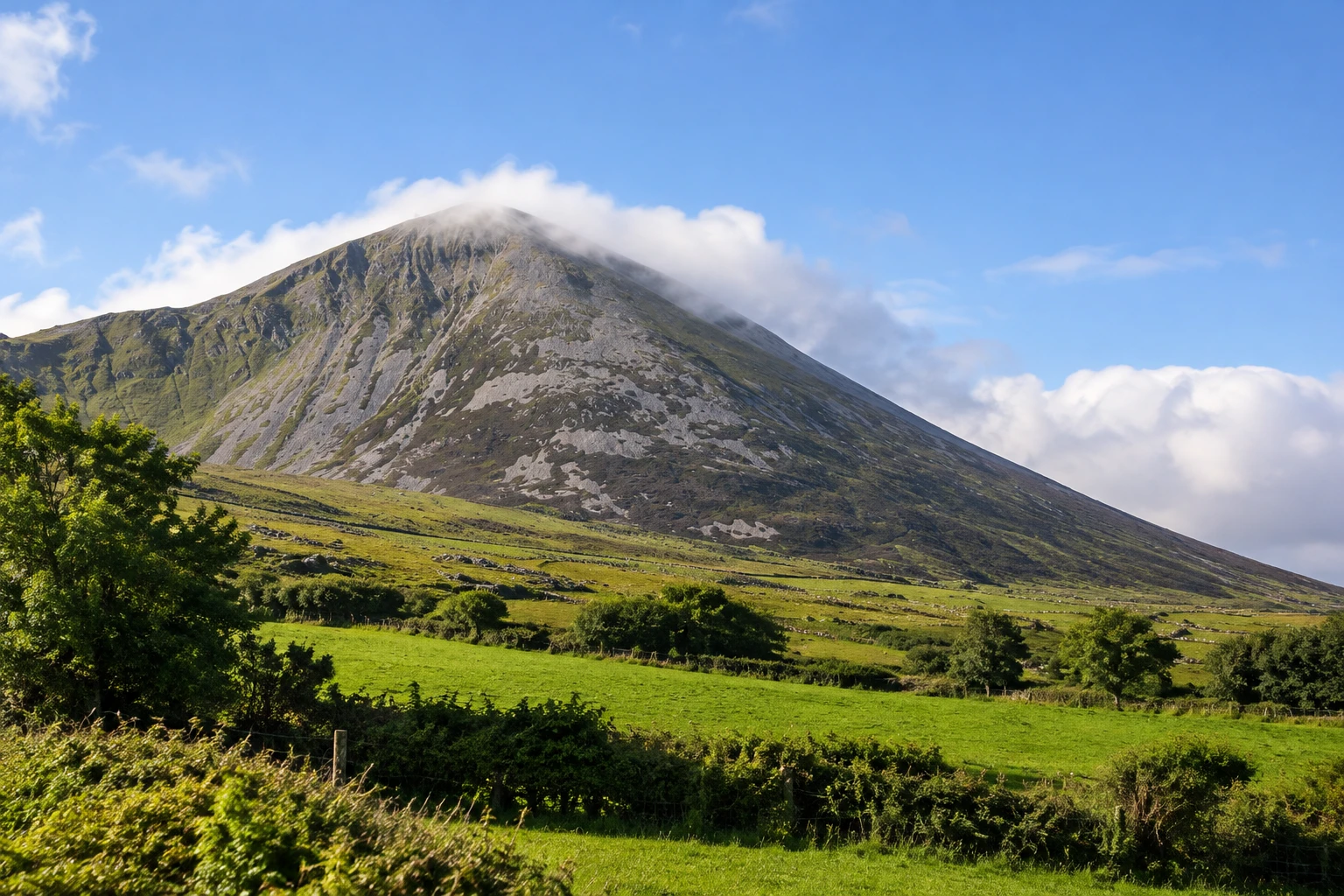
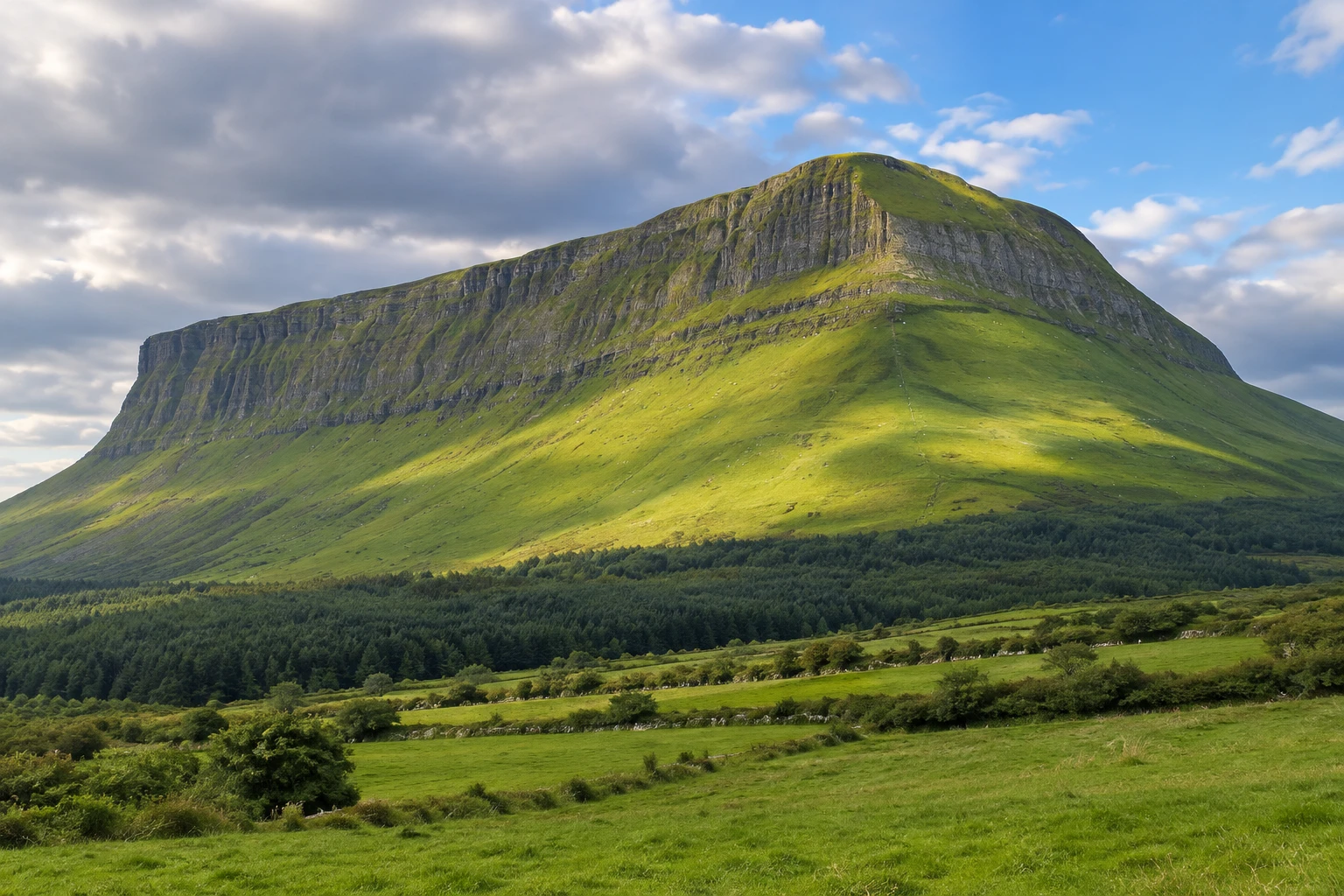
Benbulben
A 526-metre limestone mountain with a flat top and grooved slopes, dominating the landscape north of Sligo, with a 4 km forest trail at the foot of the escarpment.

 Search
 Brazil
 Antarctica
 Argentina
 Bolivia
 Chile
 Colombia
 Ecuador
 Falkland Islands (Malvinas)
 French Guiana
 Guyana
 Paraguay
 Peru
 Suriname
 Uruguay
 Venezuela
 Austria
 Belgium
 Croatia
 Denmark
 Finland
 France
 Germany
 Greece
 Hungary
 IcelandIreland
 Italy
 Luxembourg
 Norway
 Poland
 Portugal
 Slovakia
 Slovenia
 Spain
 Sweden
 Switzerland
 the Czech Republic
 the Netherlands
 the United Kingdom
 Turkey
 Bermuda
 Canada
 Greenland
 Mexico
 Saint Pierre and Miquelon
 the United States
 the Dominican Republic
 JapanTurkey
 Egypt
 South Africa
 Australia
 Fiji
 New Zealand
 Papua New Guinea
Mayo · Sligo
10 places to visit, chosen by the Cidade Turismo guide.
Illustrative images. The pictures in this guide are illustrations based on the real place, not photographs, and may differ from it.
To start
One by one
A 526-metre limestone mountain with a flat top and grooved slopes, dominating the landscape north of Sligo, with a 4 km forest trail at the foot of the escarpment.
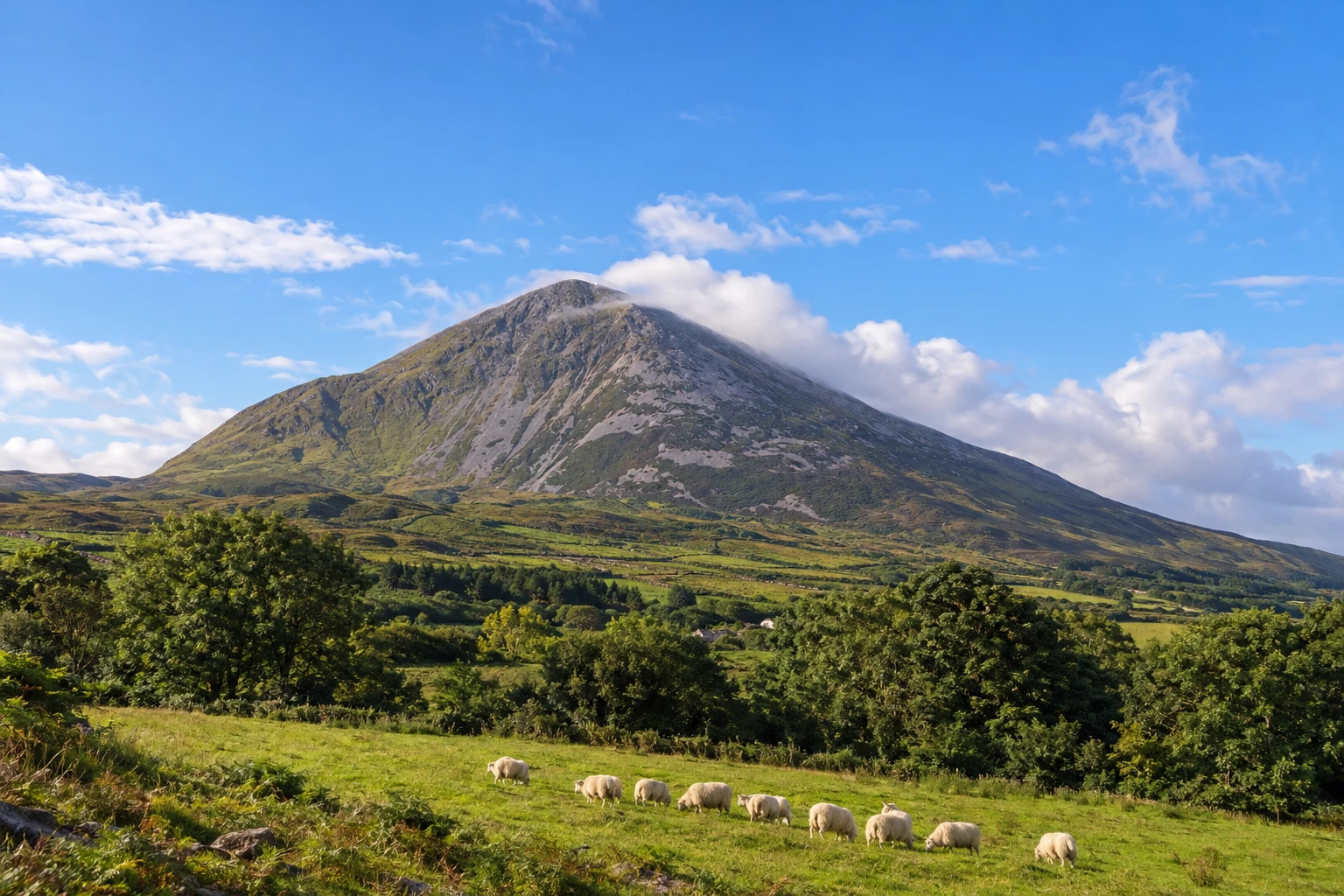
Mountain of 764 metres overlooking Clew Bay, where tradition says São Patrício fasted for 40 days, with a chapel on the summit and the pilgrimage on the last Sunday of July.
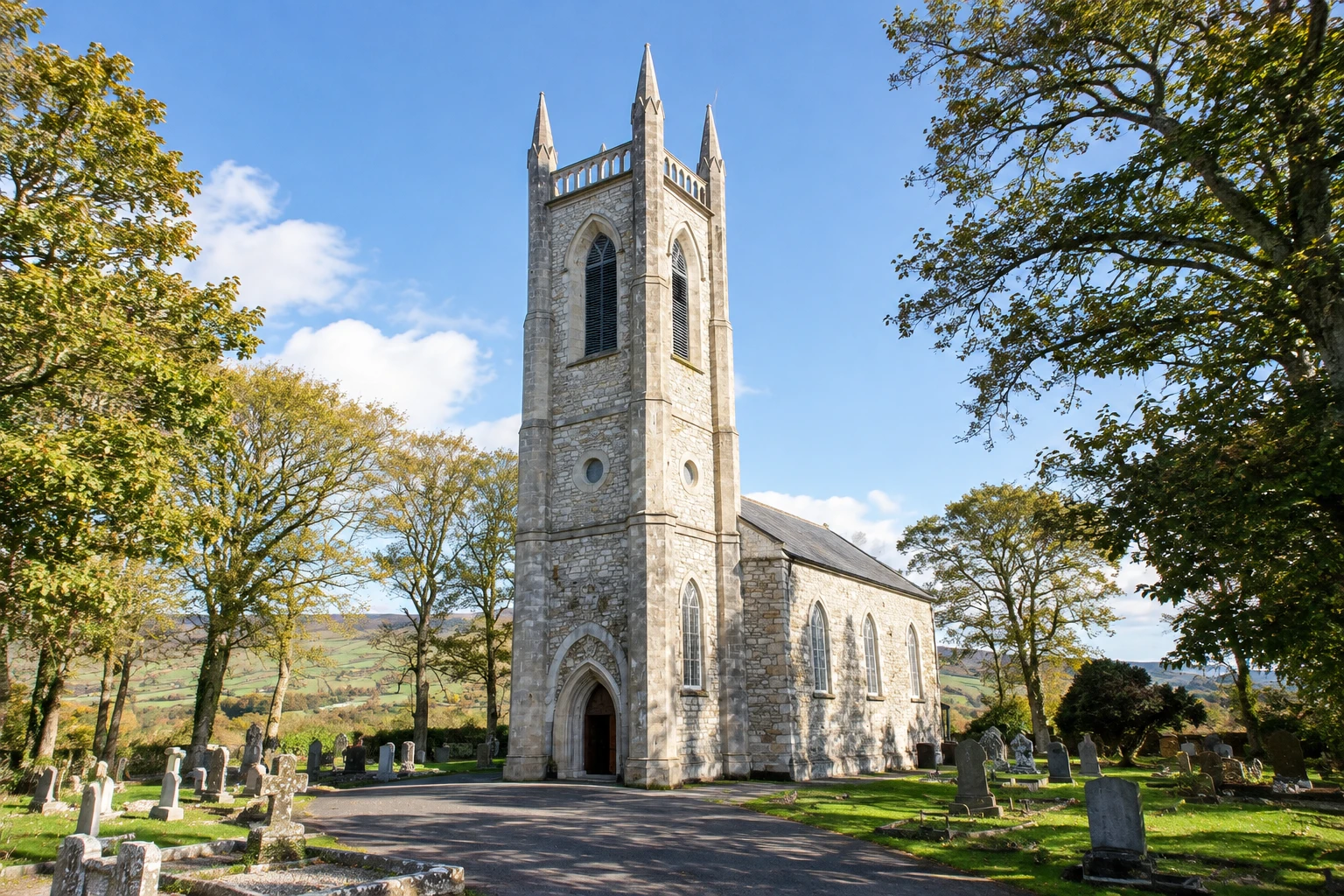
The church and cemetery where the poet W. B. Yeats is buried, at the foot of Benbulben, in an old monastery of St Columba with a tall 11th-century high cross and the stump of a round tower.
Bronze sculpture from 1997 by John Behan, shaped like a ship with skeletons instead of sails, at the foot of Croagh Patrick, in remembrance of those who died and emigrated in the Grande Fome.
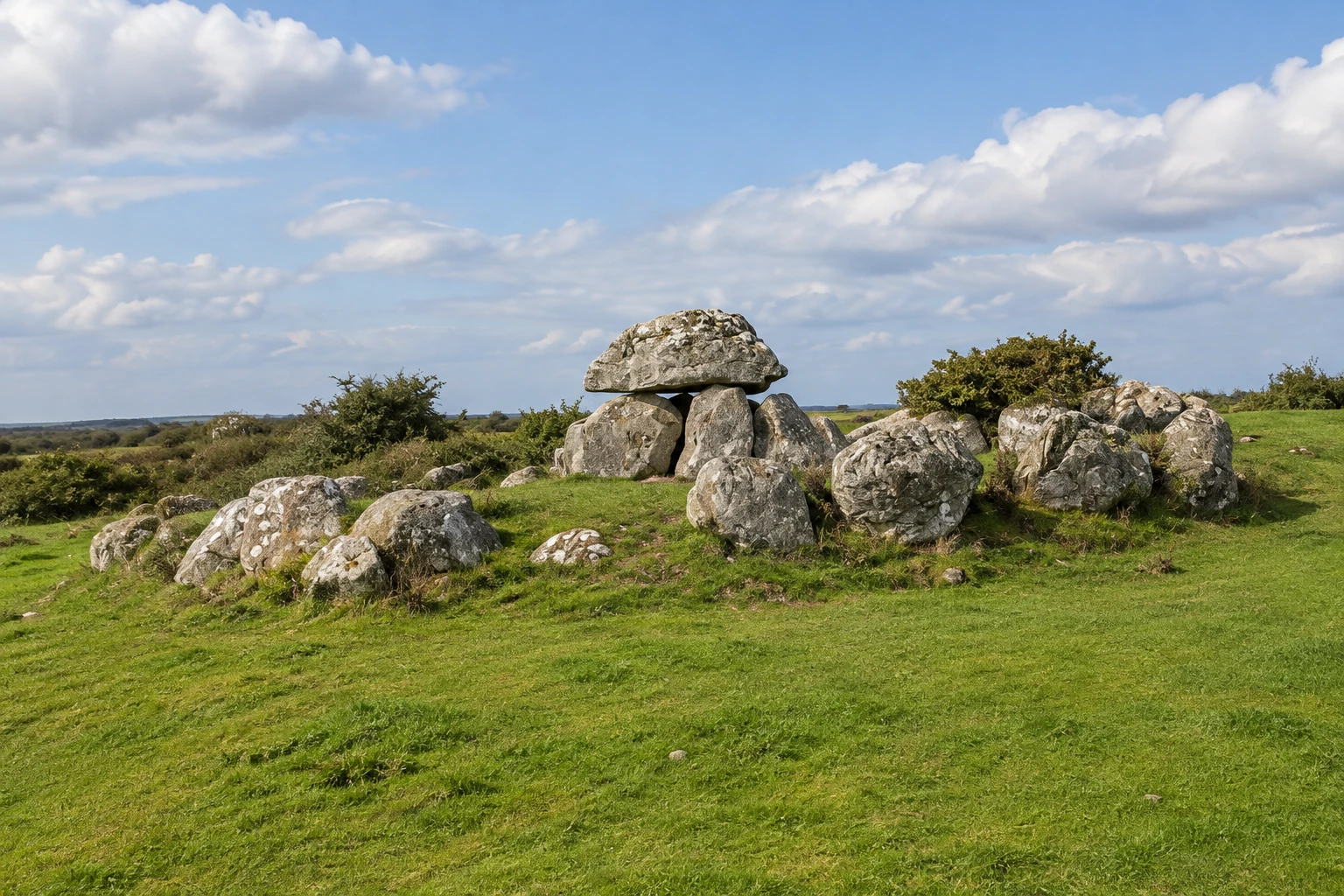
One of the largest megalithic cemeteries in Ireland, with about 30 stone tombs visible among fields, some more than 5,500 years old, 4 km from Sligo and at the foot of Knocknarea.
Cycle path and trail of about 42 km along the former Westport to Achill railway, passing through Newport and Mulranny, along the shore of Clew Bay and through bogs and mountains.
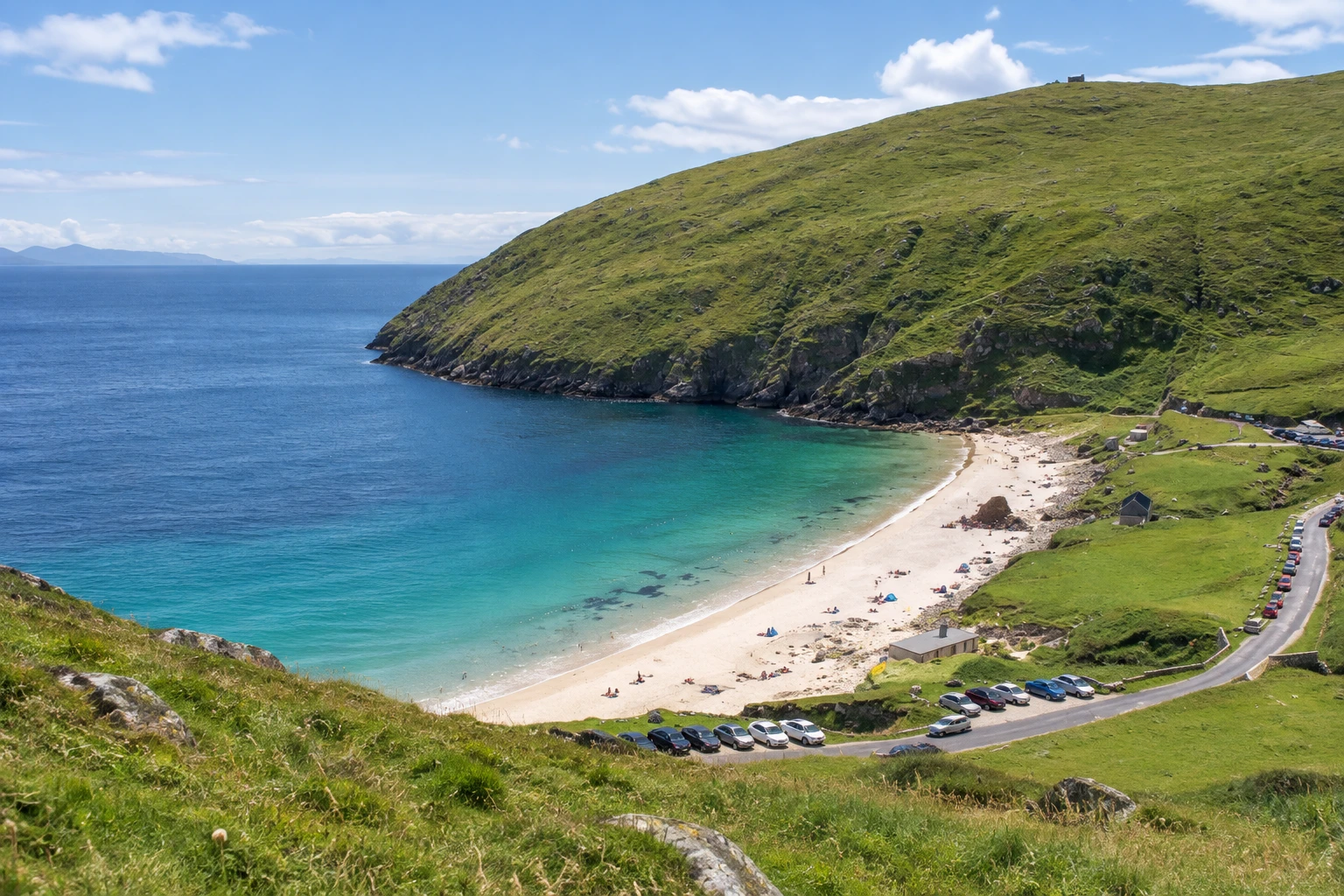
The largest island in Ireland, connected to the mainland by a bridge, with Keem Bay tucked between cliffs, sandy beaches, the Atlantic Drive and the deserted village of Slievemore.
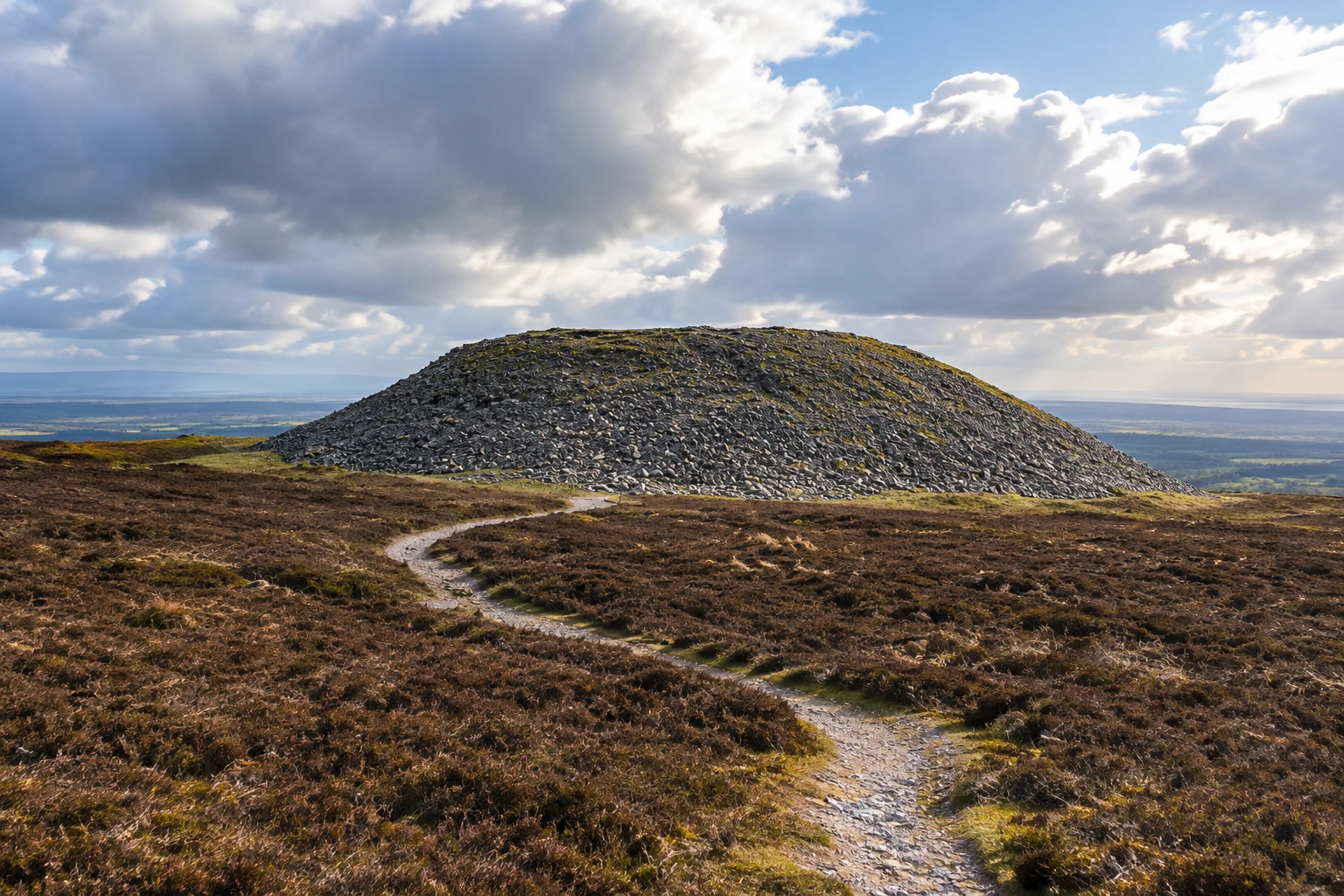
A 327-metre hill west of Sligo, topped by a large stone tomb attributed to Queen Maeve, with a trail of about 45 minutes and views of the bay and Strandhill.
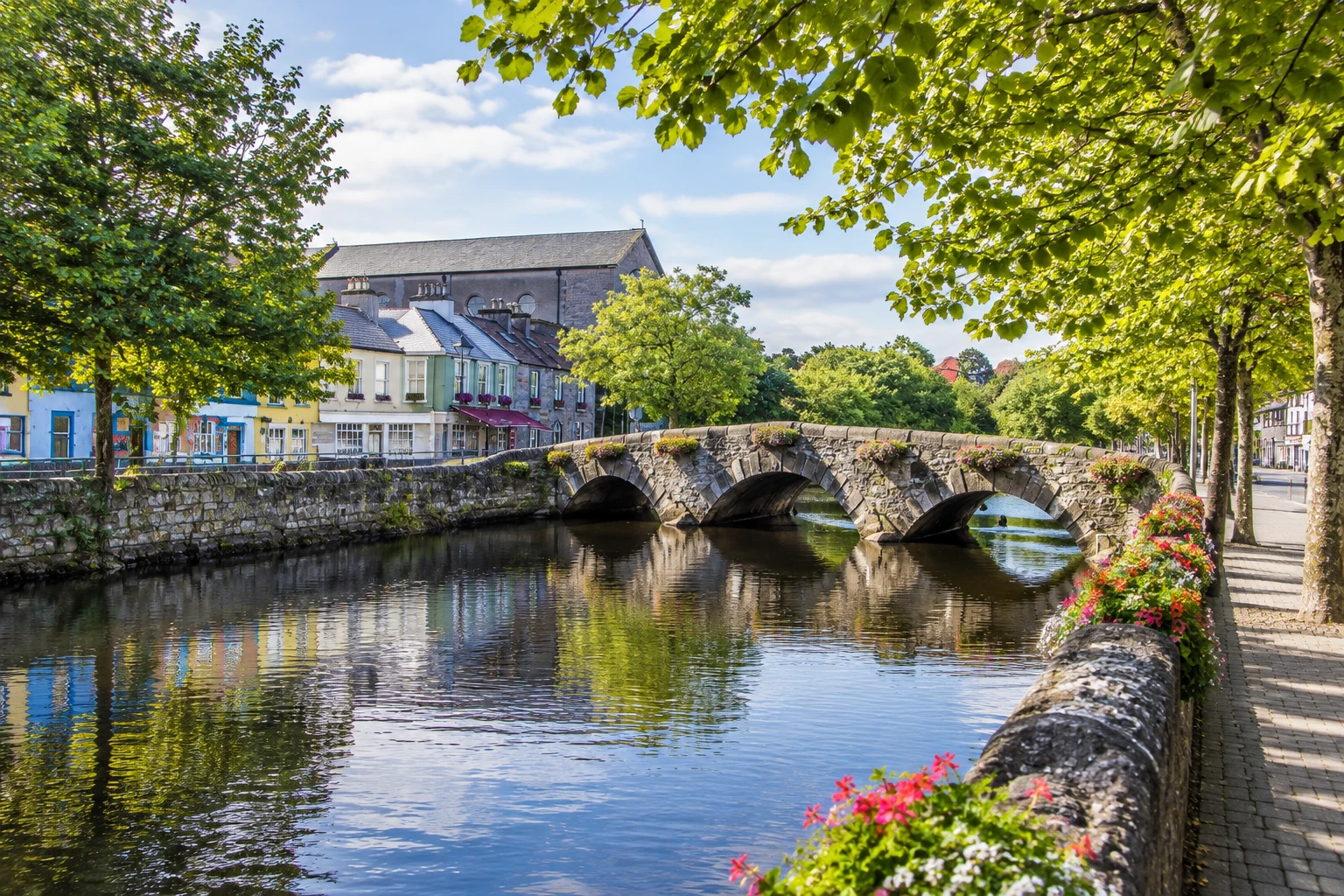
Westport's Georgian centre, with the tree-lined Mall on the banks of the Carrowbeg river, the Octagon square and streets of colourful facades, and the old Quay harbour, with stone warehouses on the shore of Clew Bay.
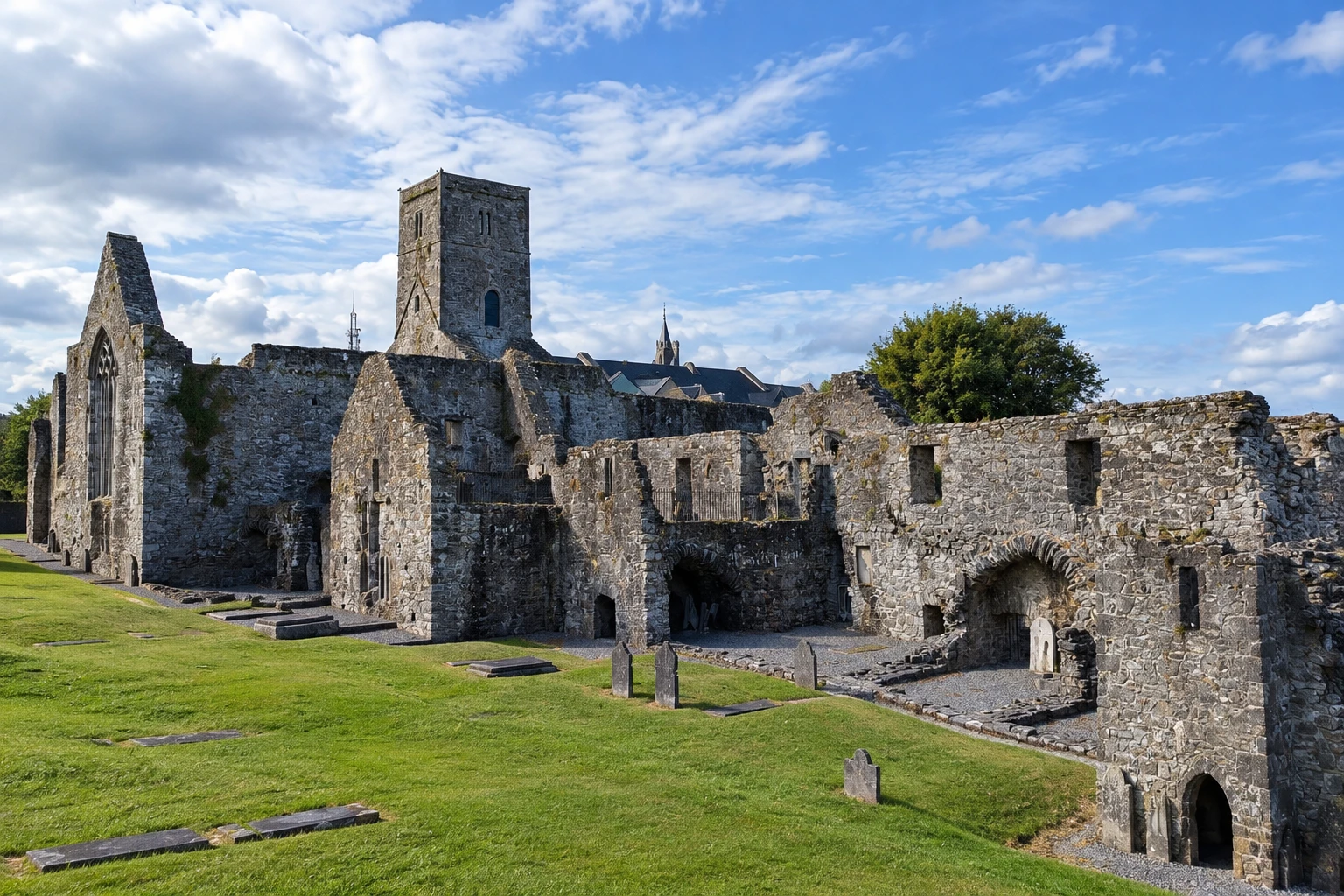
Ruins of the Dominican convent founded in 1252 in central Sligo, with the cloister, the carved 15th-century high altar and stone tombs—the only examples of this kind preserved in Ireland.
To plan