Eger Castle: the Gothic palace, the casemates, and Calvary Hill
From Dobó tér, up the hill toward the castle On foot, independently or with a guide 3 to 4 hours Morning Easy, with uphill sections and stairs
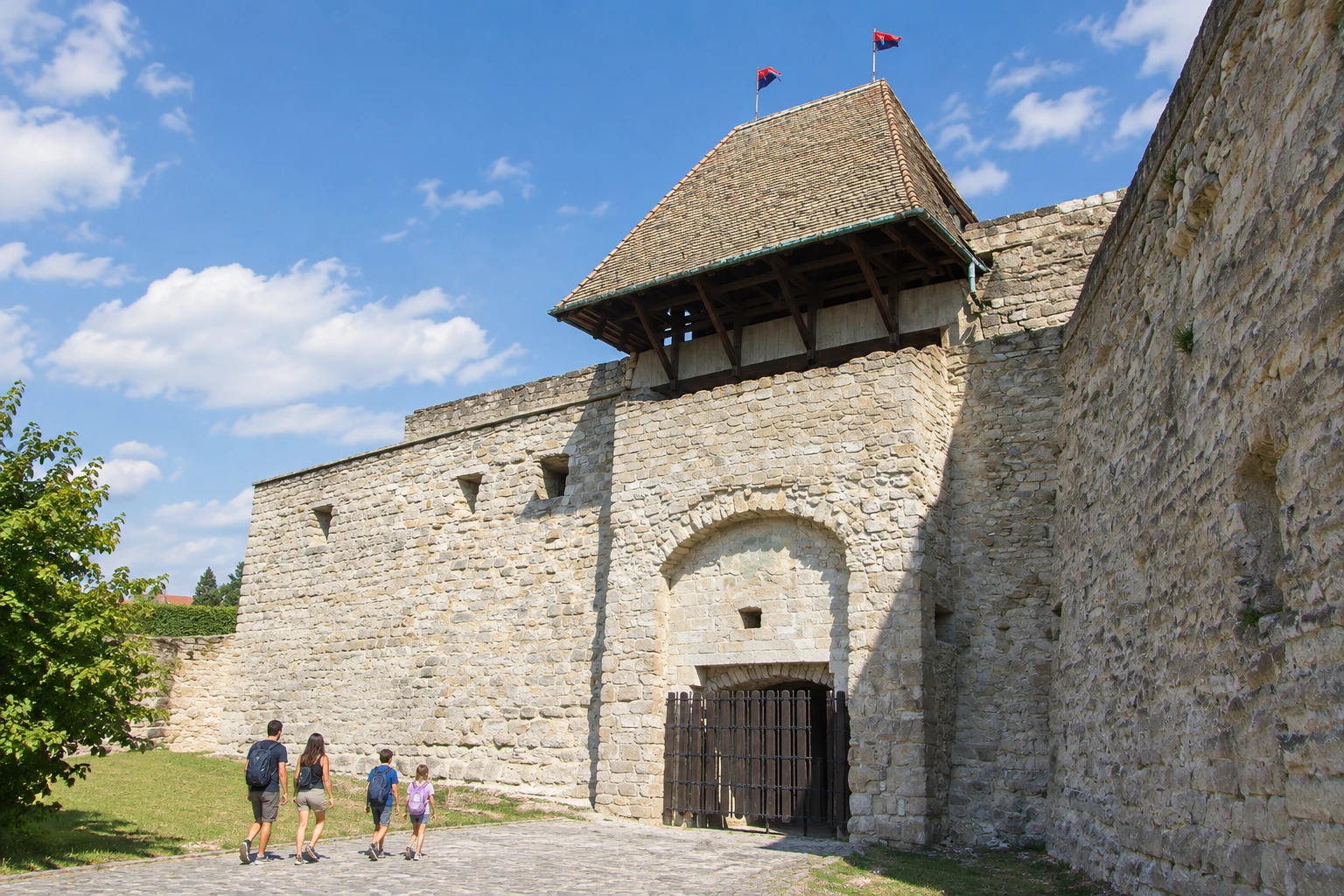
The castle dominates the town and fills half a day on its own. The site held Eger’s first cathedral, whose remains are still visible within the walls. The stone fortress was built in the second half of the 13th century after the Mongol invasion.
Its fame dates to 1552. István Dobó, captain since 1548, had strengthened the garrison and its armaments. That year it withstood a month of Ottoman bombardment. Townswomen also fought on the walls. The castle finally fell in 1596 and returned to Christian hands only in 1687.
The Gothic bishop’s palace is the only building inside the walls that already stood in the 16th century. It served as Dobó’s headquarters. On the ground floor is the Heroes’ Hall, formerly a chapel and later a prison. It holds the captain’s empty tomb. He was buried on his family’s lands in present-day Slovakia. The lid bears his only authentic portrait. Upstairs an exhibition traces the castle’s history.
The casemates are underground passages built in the 1570s for soldiers to move under cover between bastions. Enter through the Dark Gate to see stone fragments from the old cathedral and an interactive exhibition on the siege and the novel Stars of Eger. An underground gallery reopened during restoration leads to the Zárkándy Bastion.
Calvary Hill is the highest point of the fortifications. From here you can see the city, the Bükk peaks and, on clear days, Kékestető, Hungary’s highest mountain.
By the exit gate are the ruins of the Valide Sultana bath, an Ottoman hammam.
Stops: Egri vár, Gothic bishop’s palace, Hall of Heroes, Casemates, Calvary Hill, Zárkándy Bastion, Ruins of the Valide Sultana Baths.
Includes: The castle and exhibitions charge admission. Check current prices. Guides dressed as soldiers of the period lead some tours.
Tip: Bring a layer even in summer. The casemates stay around 12°C. In summer the castle usually stays open later, and Calvary Hill is popular toward evening. The Várfalsétány walk below the walls may be closed. Check before visiting.
Best time: Year-round. From April to October there's more daylight for the walls. In winter, spend time at the indoor exhibitions.
Dobó tér, the Minorite church, and Kossuth Lajos utca
From Dobó István tér Self-guided walk About 2 hours Morning or afternoon Easy
Dobó tér is known as the heart of Eger, with the main monuments a few minutes’ walk away. In the middle is Alajos Stróbl’s 1907 monument to István Dobó. The captain raises his sword with an Eger soldier on one side and a woman throwing stones at the besiegers on the other.
The Minorite church, dedicated to St. Anthony of Padua, was consecrated in 1771. Its design is attributed to Kilian Ignaz Dientzenhofer, and interior decoration continued until 1792. Unusually among Hungarian Baroque churches, the facade between its towers is gently curved. A Latin inscription above the portal says that nothing is enough for God. The altarpiece shows St. Anthony’s vision, and ceiling frescoes depict episodes from his life. City Hall stands alongside the church.
Nearby Végvári vitézek tere has Zsigmond Kisfaludi Strobl’s sculpture group of Hungarian and Turkish warriors in combat. The municipal market is 250 meters from the square. In its hall, small regional producers sell vegetables, fruit, cheese, preserves and honey.
Kossuth Lajos utca is one of Eger’s Baroque streets, retaining its 18th-century layout. It formed part of the route from the castle to St. Michael’s Church on the site of today’s basilica. County Hall has richly worked wrought-iron gates by Henrik Fazola and a sports museum inside. At the Egészségház utca corner, the Grand Provost’s Palace, built in 1774–1776 to Jakab Fellner’s design with a balcony by Fazola, houses the Bródy Sándor Library. Near the bridge over the stream stands Buttler House, associated with Kálmán Mikszáth’s novel A Strange Marriage.
Stops: Dobó István tér, Statue of István Dobó, Minorite Church of St. Anthony of Padua, Végvári vitézek tere, Municipal market, Kossuth Lajos utca, Fazola Gates.
Includes: Self-guided outdoor outing.
Tip: The square hosts most of the city's events, from Egri Csillag weekend in spring to the Advent market.
Best time: Year-round. In summer, the square stays busy until late. In December it hosts the Christmas market.
Eszterházy tér: the basilica, the Líceum, and the archbishop's palace
From Eszterházy tér Self-guided walk 3 to 4 hours Morning, to hear the organ at noon Easy, with stairs in the tower
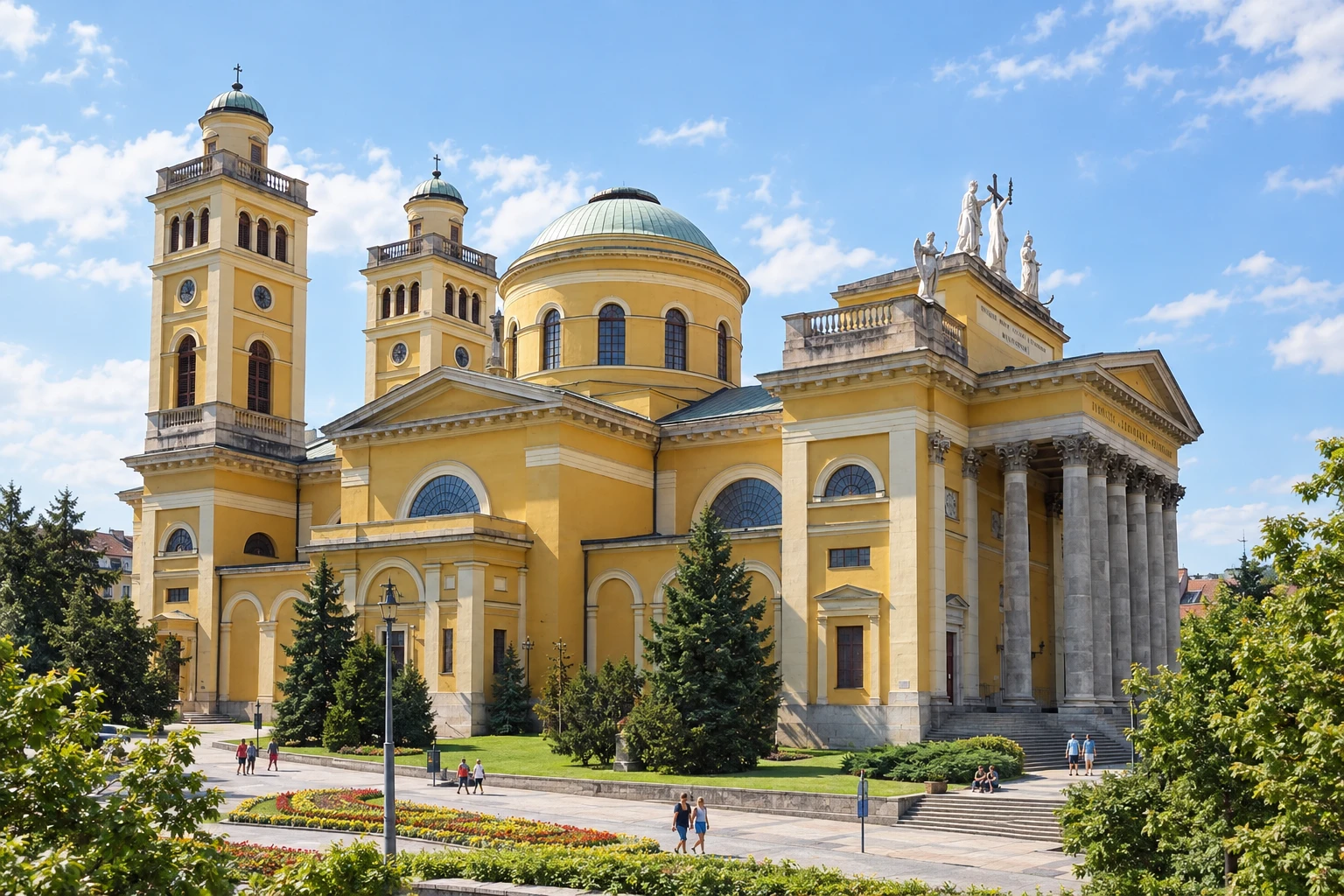
The basilica, Lyceum and archbishop’s palace enclose Eszterházy tér. The square commemorates Bishop Károly Eszterházy, who commissioned the Lyceum.
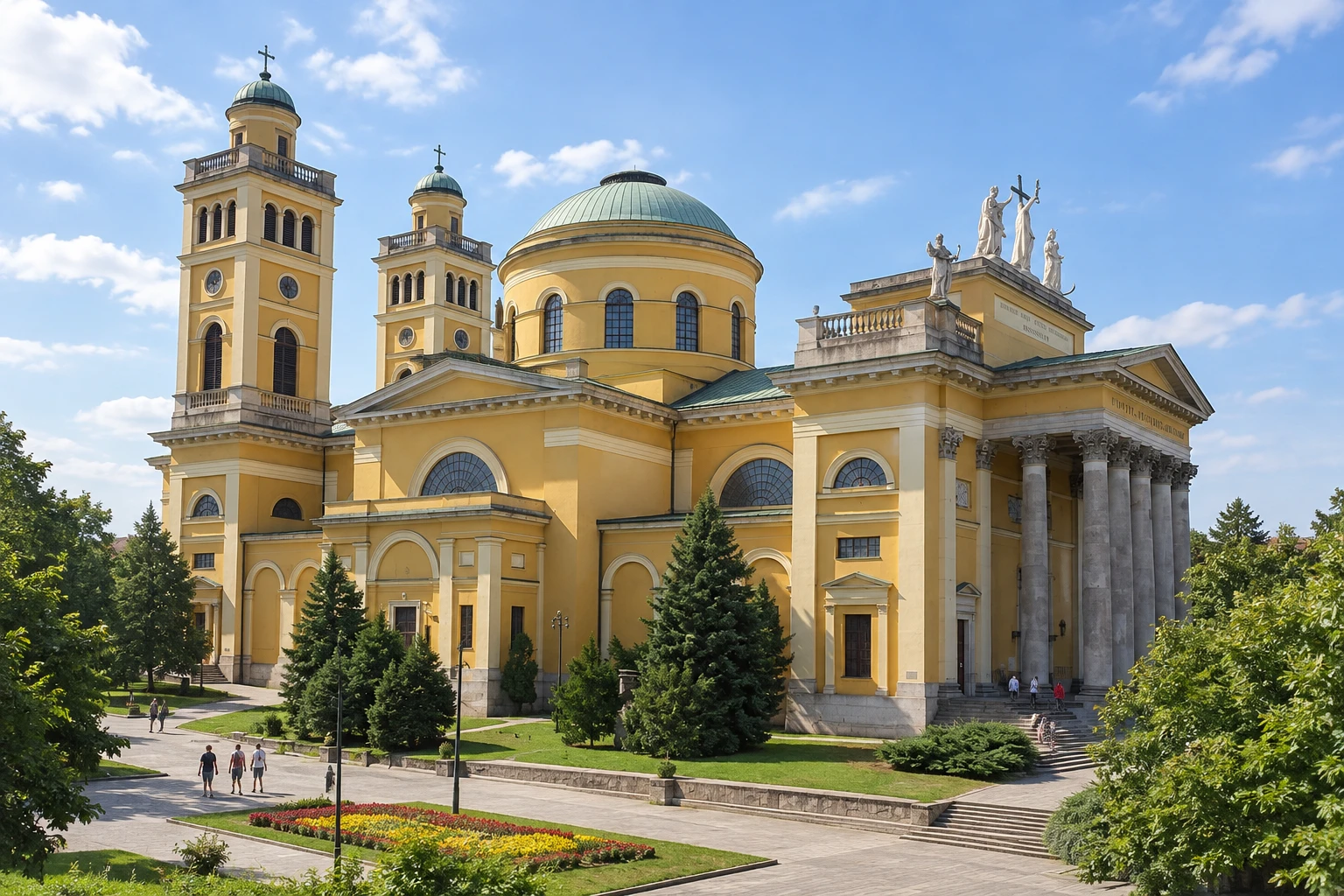
The basilica is the archdiocesan cathedral, dedicated to St. Michael and St. John and regarded as Hungary’s second-largest religious building. Archbishop János László Pyrker commissioned architect József Hild. Construction ran from 1831 to 1836 and the cathedral was consecrated in 1837. Venetian sculptor Marco Casagrande made the statues of Kings St. Stephen and St. Ladislaus and the apostles Peter and Paul beside the steps, and Faith, Hope and Charity above the Corinthian portico. The interior decoration took 120 years. István Takács painted the dome fresco in 1950. The organ built in 1864 by Salzburg master Ludwig Moser was enlarged in 1912.
The Lyceum on the same square houses the Archdiocesan Library, founded by Eszterházy in 1793 and, unusually for the time, open to the public from the start. It opened with 16,000 volumes and now has 170,000. The oldest document is a codex from 1048. Other treasures include a letter in Mozart’s own hand and a Dante codex. The originals are kept in vaults, with copies displayed to visitors.
The tower has housed an observatory since 1776, equipped by astronomer Miksa Hell. Today it is a science center with an instrument museum, experiment room and planetarium. A terrace 44 meters above the street offers a complete circuit of city views. At the top, the oldest working camera obscura on the continent projects a live image of the streets onto a table.
The Baroque archbishop’s palace opened as a visitor center in 2016 with religious art and the bishops’ apartments, including the Bird Room, whose paintings were discovered beneath 30 layers of paint.
Stops: Egri Bazilika, Líceum, Archdiocesan Library, Observatory and Varázstorony, Camera obscura, Archbishop’s Palace and Visitor Center.
Includes: The library, observatory tower, and palace charge separate admission. Check current prices. The basilica has its own visitor center.
Tip: From May to October there's usually organ music in the basilica daily around noon. The camera obscura needs sunlight. Its image loses definition in cloud, and it doesn't work in rain.
Best time: Year-round. Choose a sunny day for the tower and camera obscura. The library and palace suit rainy or hot days.
The minaret, the Serbian church, and unusual downtown museums
From Dobó tér, via Knézich Károly utca Self-guided walk 2 to 3 hours Afternoon Easy, with a narrow staircase in the minaret
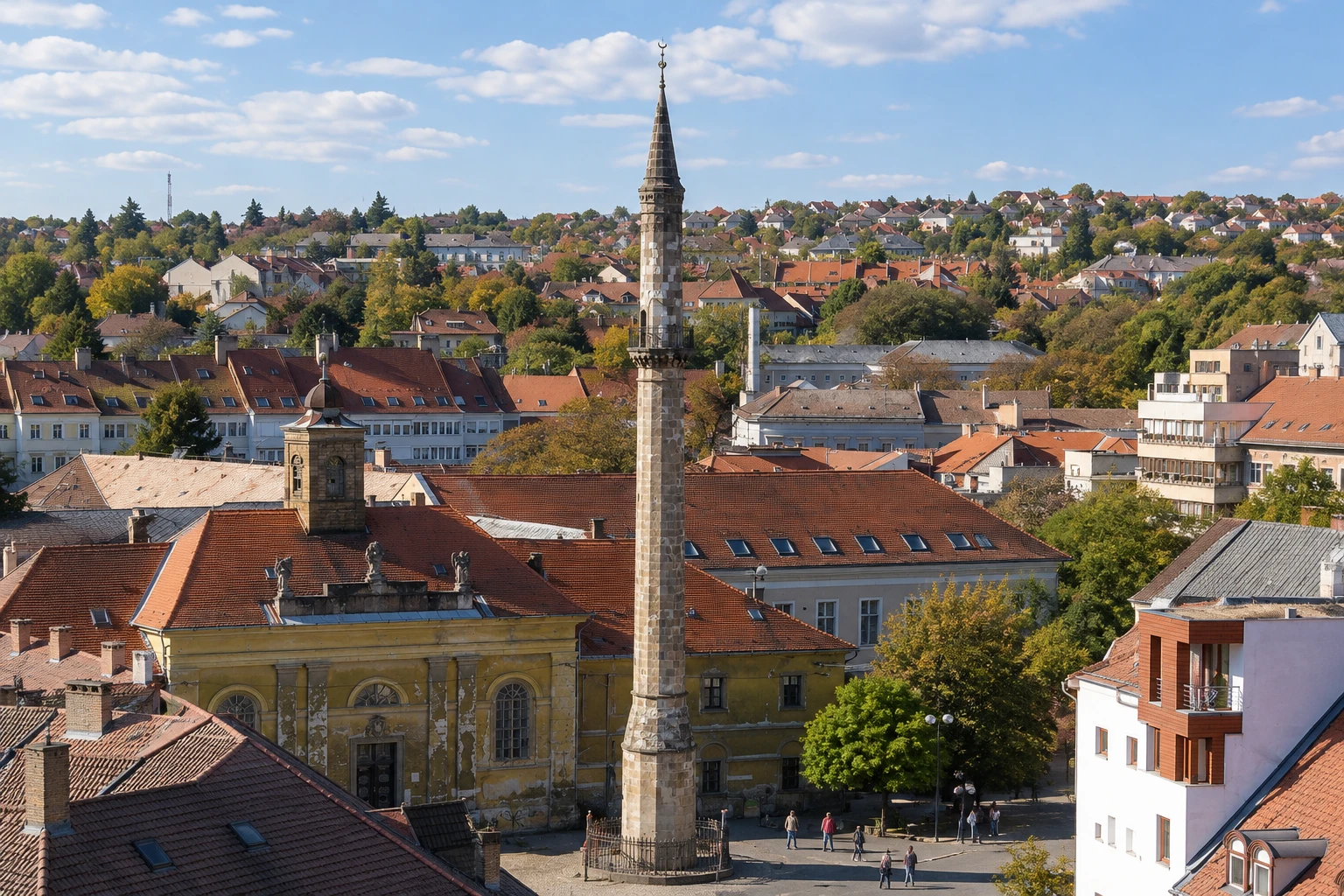
Eger’s minaret is the country’s best preserved. It was built around 1596 beside a mosque demolished in 1841, leaving it standing alone among the houses. The tower is 40 meters high, with a balcony at 26 meters reached by 97 high steps on a tight spiral staircase. Legend says that after the occupation residents harnessed 400 oxen to the tower to pull it down, but it would not budge. At the top a cross rises from the crescent.
On a hill beside the historic center stands the late Baroque Serbian Orthodox church of 1799, designed by János Povolni. Its interior stands apart from the town’s other Baroque churches. The highlight is the icon screen depicting St. Nicholas, the apostles, saints and prophets. Look also at the pulpit and red pine pews. The church operates as a museum.
Back downtown, Kopcsik Marcipánia displays around 150 sugar-paste creations by confectioner Lajos Kopcsik. The Baroque room at the end is entirely sugar, from the wallpaper to the stove, and took three years to make. The Firefighters’ Museum on Tűzoltó tér offers a permanent exhibition and an area where children can play firefighter.
Readers of Stars of Eger can finish at Géza Gárdonyi’s memorial house near the castle. He lived here from 1897 to 1922 and wrote the novel at the large carved table that still stands in place. From the garden you can see the castle, the city and the distant Mátra peaks.
Stops: Egri minaret, Serbian Church (Rác-templom), Kopcsik Marcipánia, Firefighters’ Museum, Géza Gárdonyi Memorial House.
Includes: The minaret, Serbian church, and museums charge separate admission. Check current prices.
Tip: The minaret climb is unsuitable for visitors with limited mobility or a fear of heights. You can also admire it from outside. The Serbian church closes Mondays and requires advance reservations in low season.
Best time: April to October. In winter, check whether the minaret and the Serbian church are open.
Eger thermal baths, the Turkish bath, and Érsekkert park
From Petőfi tér, at the entrance to the baths On foot from downtown Half a day Afternoon Easy
Eger’s thermal baths are beside the historic center, a five-minute walk from the main square. The complex covers 5 hectares, with three entrances and 13 pools. A local favorite has a pebble bottom and its own spring, with fresh radon-bearing medicinal water rising from the ground. Nearby is a warm ornamental pool with water lilies, a waterfall and water massage. The southern section has a swimming pool, children’s pool, slide pool and partly covered leisure pool for bad weather.
The baths connect directly to the Török Fürdő, the Turkish bath descended from the 16th-century bath built by Arnaut Pasha over the thermal spring. It has six pools. In the main pool beneath a golden dome, spring water rises between the flagstones. There is a steam bath, saunas and massages including hammam massage. Because of the radon, time in the Turkish bath is limited to two and a half hours.
Érsekkert, the Archbishop’s Garden, is the city’s largest park. Once an enclosed episcopal hunting wood, it opened to the public in 1919. Two of Henrik Fazola’s wrought-iron gates remain. There is an ornamental fountain, a small pond with a stone bridge, a playground and exercise equipment. The Eger stream runs along the eastern edge.
The city also has two sports pools, the Bitskey Aladár, designed by Imre Makovecz in the Hungarian organic architecture tradition, and the Bárány István.
Stops: Egri Termálfürdő, Török Fürdő (Turkish baths), Érsekkert, Aladár Bitskey Swimming Pool, István Bárány Swimming Pool.
Includes: The thermal baths and Turkish bath charge separate admission. Check current prices. Massages and treatments have their own fees.
Tip: Bring swimwear, a towel, and flip-flops. Check the Turkish bath's opening days and hours before going. The tourist train to Szépasszony-völgy stops near Érsekkert.
Best time: Year-round. Outdoor pools are best in the warmer months. The Turkish bath and indoor facilities work well in winter.
Szépasszony-völgy: the wine cellars of the Valley of the Beautiful Woman
From Central Eger On foot or by tourist train 3 to 4 hours Late afternoon and evening Easy
Szépasszony-völgy, the Valley of the Beautiful Woman, is the place to taste wine in Eger. A 10- to 15-minute walk from the center, it has more than 150 cellars cut side by side into the hillside.
Italian and Walloon settlers introduced viticulture to the region in the 13th century. Under the bishops, tithes could be paid in wine. The bishopric owned the valley, and opening a cellar required the bishop’s permission. From 1774 other owners could receive plots, and by 1781 there were 32 cellars. The first written reference to the valley’s name dates to 1843. Explanations include a love goddess from an ancient religion, a beautiful woman who sold good wine in a cellar, or the owner of a local villa.
Cellar owners traditionally visited one another to sample the neighbors’ wines in celebrations that could last for days. Poets including Sándor Petőfi and Mihály Vörösmarty wrote about the valley.
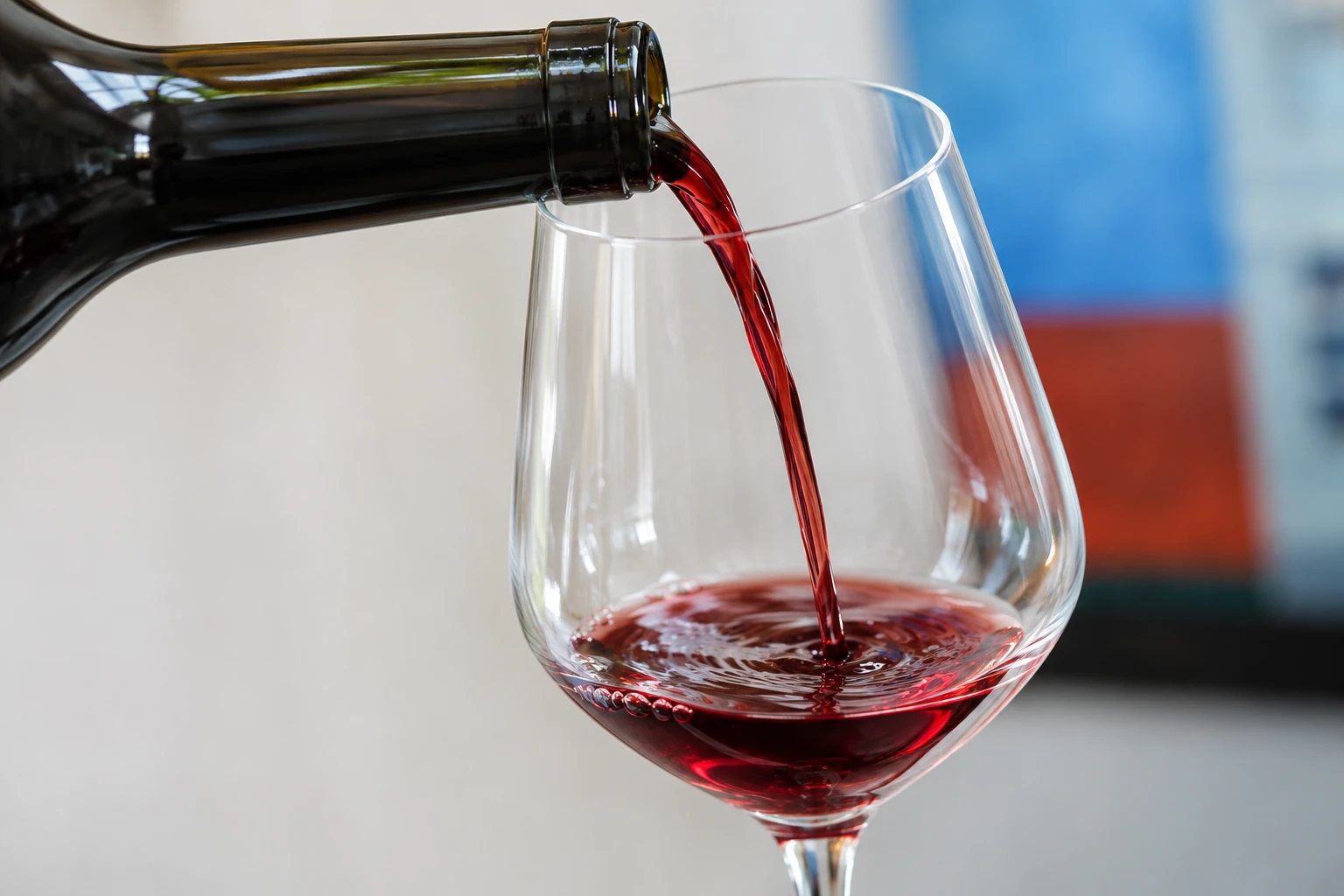
The best-known wine is Egri Bikavér, or Bull’s Blood, a red blend. Local legend connects the name to the 1552 siege. Dobó supposedly ordered red wine for the soldiers, and the besiegers, seeing red stains on their beards, thought they were drinking bull’s blood. The town itself notes the difficulty with the story: the first written use of the name was in an 1846 poem by János Garay.
No other Hungarian city has so many tunnels and cellars. The 130-kilometer network beneath Eger was dug at different times for wine storage, defense and quarrying tuff for Baroque houses.
Stops: Szépasszony-völgy, Rows of wine cellars carved into tuff.
Includes: Self-guided outing. Pay for tastings and meals at each cellar. Check current prices.
Tip: Walk or take the sightseeing train from Klapka György utca near Érsekkert, leaving the car behind. Take your time at two or three cellars and enjoy food with your tasting. Cellars stay cool even in summer.
Best time: April to October for outdoor tables. In December there is an Advent wine cellar walk.


 Brazil
 Antarctica
 Argentina
 Bolivia
 Chile
 Colombia
 Ecuador
 Falkland Islands (Malvinas)
 French Guiana
 Guyana
 Paraguay
 Peru
 Suriname
 Uruguay
 Venezuela
 Austria
 Belgium
 Croatia
 Denmark
 Finland
 France
 Germany
 Greece
 Iceland
 Ireland
 Italy
 Luxembourg
 Norway
 Poland
 Portugal
 Slovakia
 Slovenia
 Spain
 Sweden
 Switzerland
 the Czech Republic
 the Netherlands
 the United Kingdom
 Turkey
 Bermuda
 Canada
 Greenland
 Mexico
 Saint Pierre and Miquelon
 the United States
 the Dominican Republic
 Japan
 Egypt
 South Africa
 Australia
 Fiji
 New Zealand
 Papua New Guinea