Rotterdam and Kinderdijk

South Holland

Rotterdam and Kinderdijk

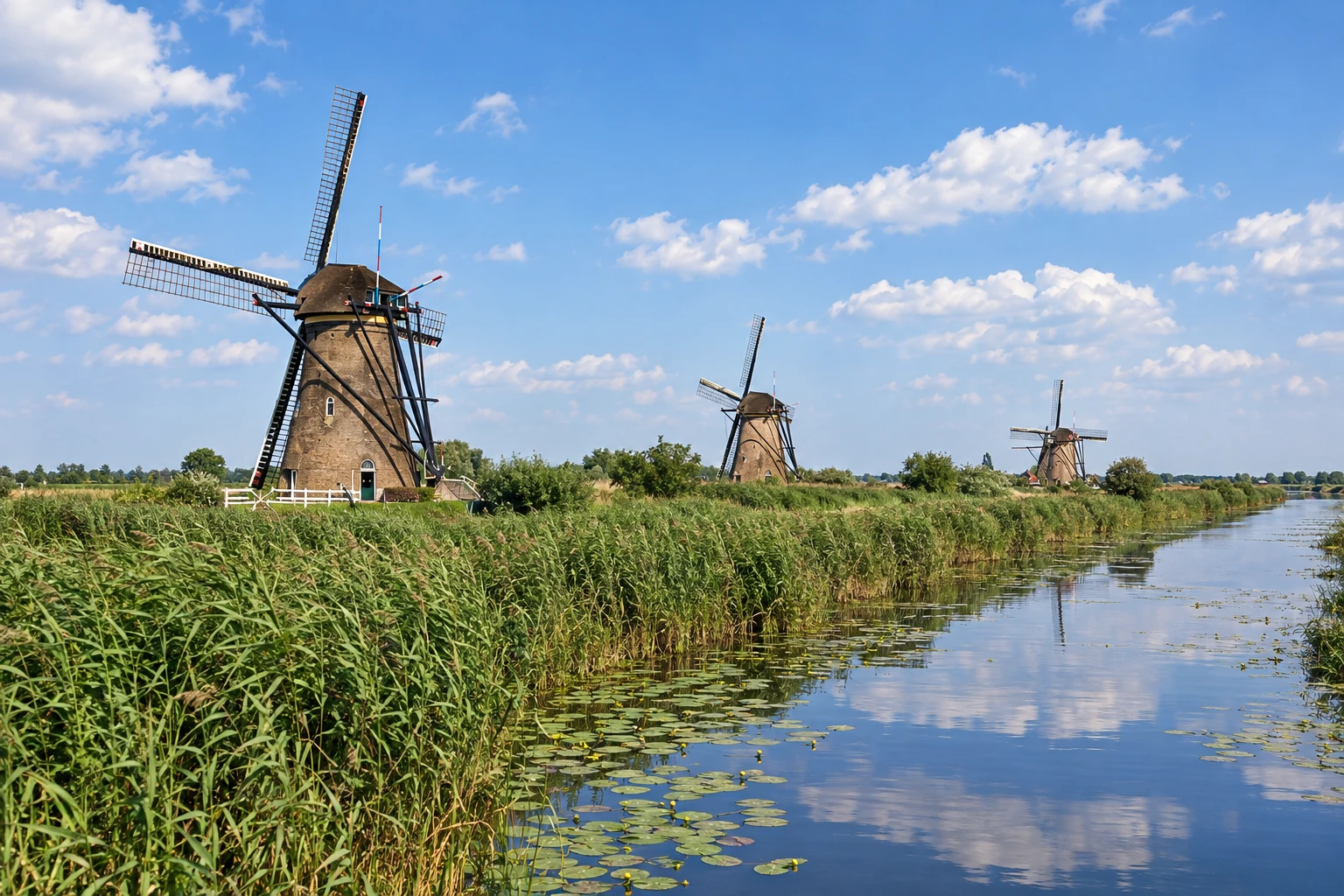
Roterdã, the largest port in Europe, rebuilt with modern architecture after 1940, and the 19 windmills of Kinderdijk, a World Heritage Site, reachable by a boat trip.

West

In the photo: Windmills of Kinderdijk

Illustrative images. The pictures in this guide are illustrations based on the real place, not photographs, and may differ from it.

Get it on Google Play

Get to know the place

A region to enjoy
at your own pace.

Roterdã is located in the delta of the river Mosa (Maas), in the province of South Holland, and the city lives off the sea: its port is the largest in Europe and stretches about 40 kilometers to the North Sea. For Brazilians, it is the second most known city in the country after Amsterdã and is 25 minutes by train from Schiphol airport.

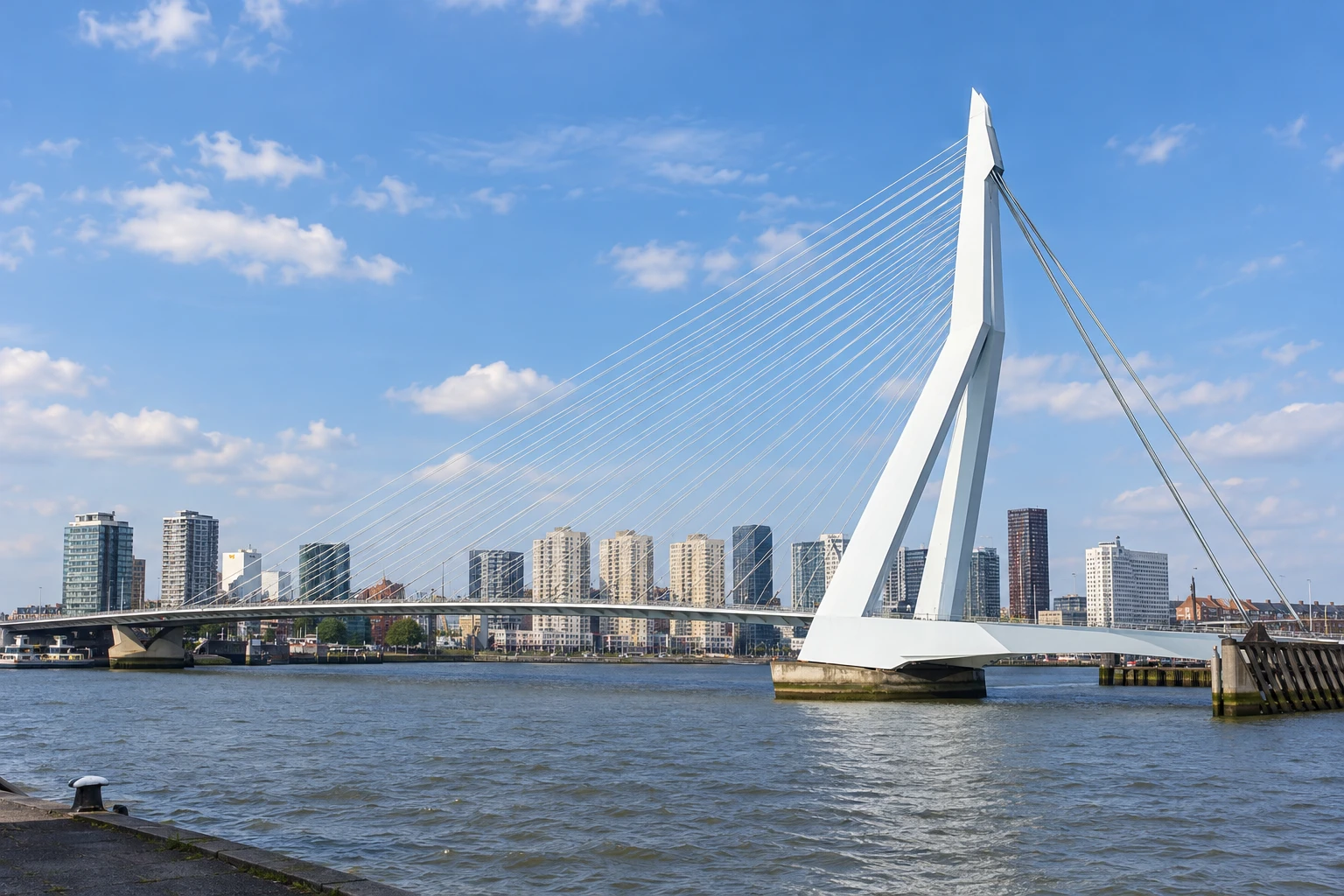
On 14 May 1940, at the start of the German occupation, a bombing destroyed almost the entire historic center and left thousands dead and homeless. The city chose not to copy the past: it rebuilt the center with modern architecture, and today buildings like the Markthal, the cube houses by Piet Blom and the Erasmusbrug bridge define Roterdã. Visitors arriving by train already notice this at Rotterdam Centraal station, opened in 2014, with its pointed steel-and-glass roof. The Laurenskerk, a Gothic church that survived the bombing, and the Witte Huis recall the city that was.

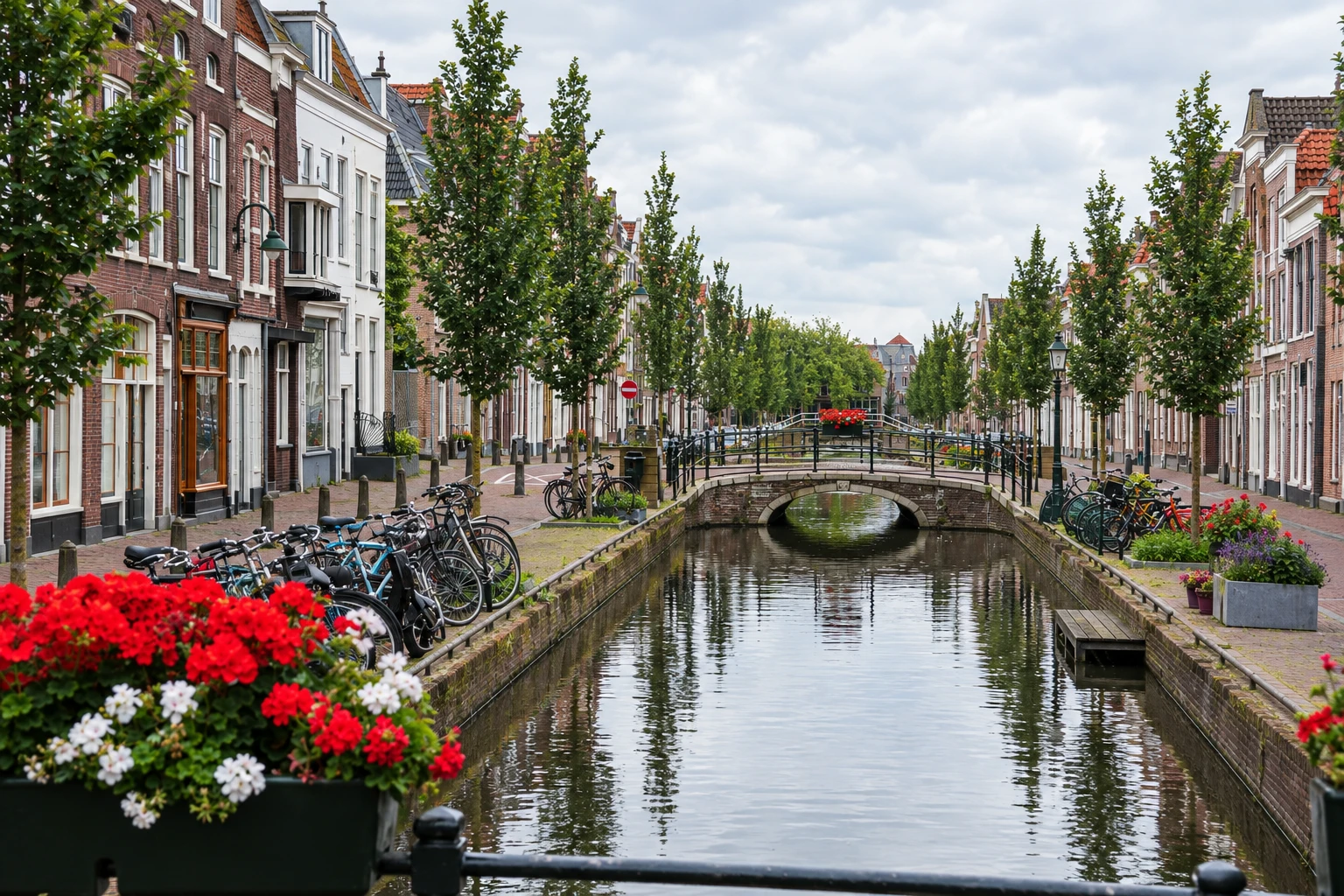
Not everything was destroyed. Delfshaven, the old port from which the Pilgrims sailed to America in 1620, preserves houses and canals from past centuries. On the other side of the river, the Hotel New York building was the headquarters of the shipping company that carried millions of emigrants to America— a story told at the Fenix museum in Katendrecht.

A half-hour boat ride along the river takes you to Kinderdijk, where 19 18th-century windmills drained the plain lying below the river level; the ensemble was listed as a UNESCO World Heritage Site in 1997. Gouda, land of cheese, is about 20 minutes by train. The word 'molen', which appears on signs, means windmill; 'centraal' is the central station.

This destination brings together 3 cities: Rotterdam, Gouda, Schiedam.

Share: WhatsApp
Traveler, share your experiences through photos Up to 5 photos of each place you visited.

One destination, many paths

The cities on this trip

Start with one city or combine several in your itinerary.

Where Rotterdam and Kinderdijk is The star marks the nearest capital, The Hague.
The HagueRotterdamGoudaSchiedam

Outlines: CBS/PDOK, Gebiedsindelingen 2024, CC BY 4.0. Adapted by Cidade Turismo.

How to get there: Rotterdam and Kinderdijk

Amsterdam Airport Schiphol (AMS), in Haarlemmermeer · 60 km to Rotterdam

Rotterdam The Hague Airport (RTM), in Rotterdam · 7 km to Rotterdam

Connections from Brazil are usually via another city. Confirm before booking. From Schiphol airport, the Intercity Direct reaches Rotterdam Centraal in about 25 minutes, with departures twice an hour and a small extra fee. From Amsterdã, the same train takes around 40 minutes. You can pay for the train contactless with a card (OVpay); check before you go.

Suggested arrival point: Rotterdam

Rotterdam
South Holland · Rotterdam and Kinderdijk Suggested arrival point

Rotterdam

Second largest city of the Holanda and home to the largest port in Europe, Roterdã had its center destroyed in the bombing of 14 May 1940 and rebuilt it with modern architecture: the Markthal, the cube houses and the Erasmusbrug. Arriving by train, you get off at Rotterdam Centraal. The Laurenskerk, the Witte Huis and Delfshaven recall the old city. The Depot Boijmans, the Kunsthal and the Fenix are the museums, and Kinderdijk is half an hour away by boat.

Gouda
South Holland · Rotterdam and Kinderdijk

Gouda

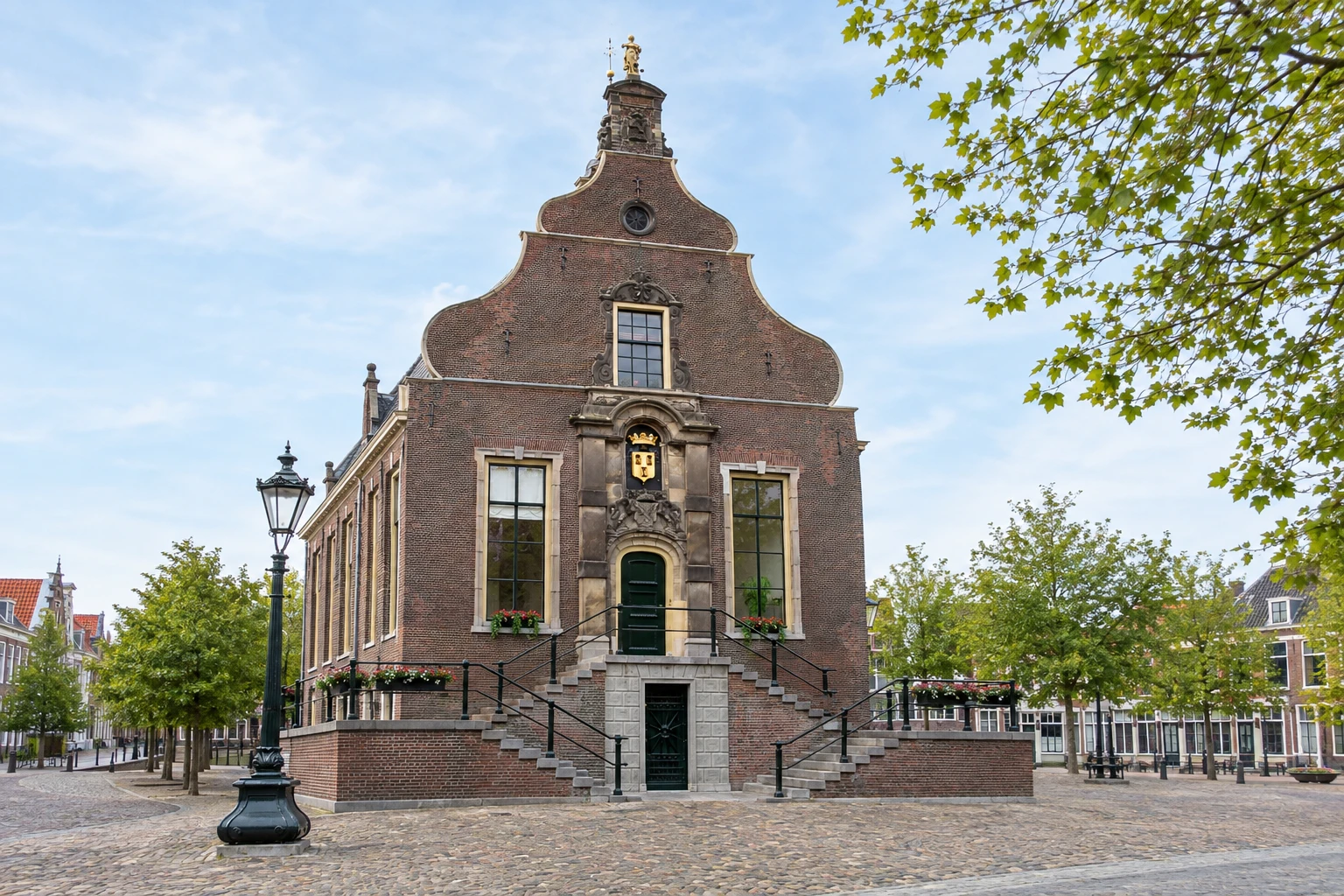
Historic town in South Holland, between Rotterdam and Utrecht, which received city rights in 1272 and gives its name to one of the world’s best-selling Dutch cheeses. Life in the town is organized around the Markt, the large square with the Gothic town hall in the center, and the Sint-Janskerk, the longest church in the Netherlands, known for the Goudse Glazen, the stained glass painted in the 16th century. Gouda is also the hometown of the Goudse stroopwafel, the syrup cookie that originated in local bakeries.

The local experience

Things to do in Rotterdam and Kinderdijk

Rotterdam · South Holland · Market

Markthal

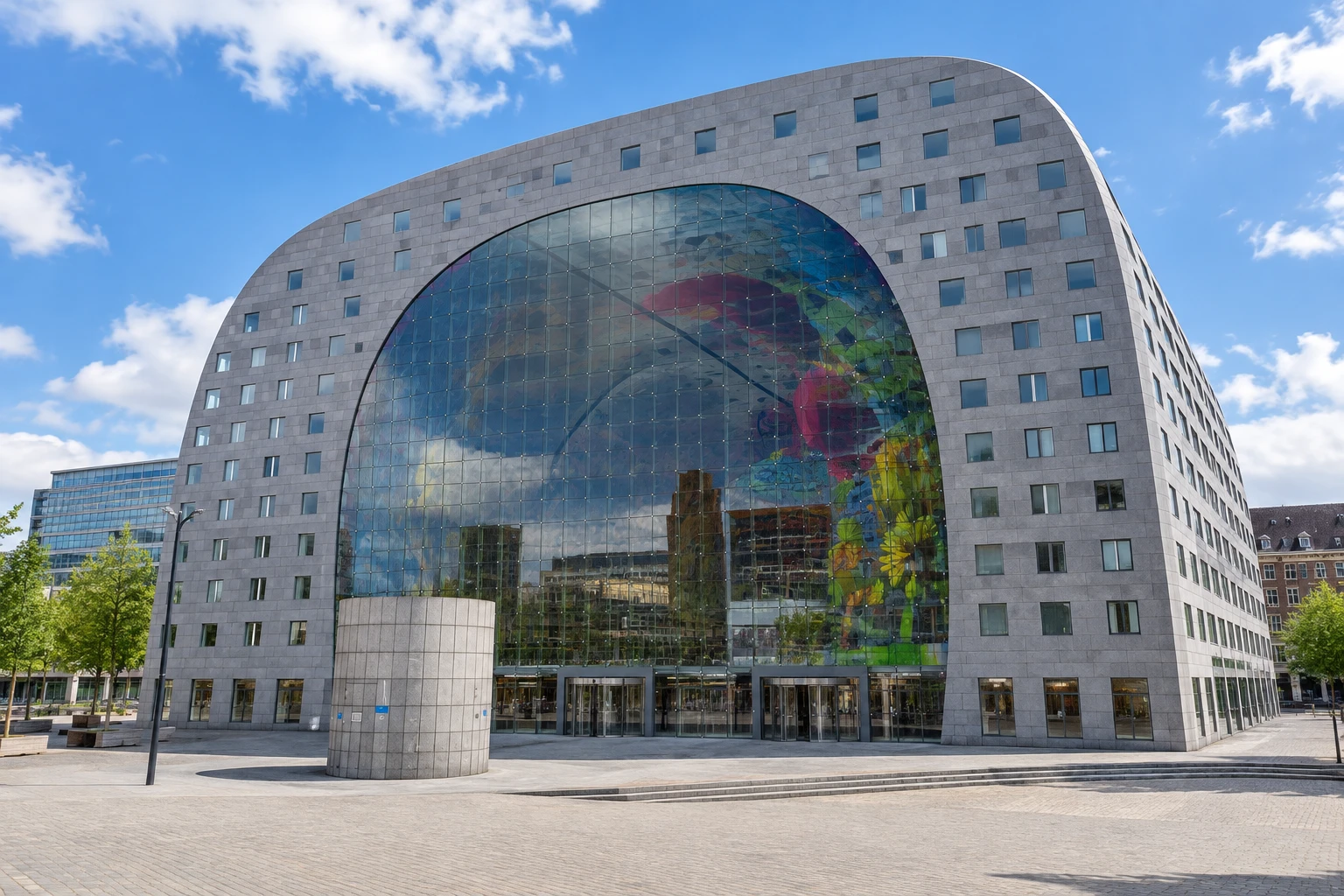
A covered market inside a giant arch of apartments, with the entire ceiling painted with fruits, vegetables, fish and flowers. It sits on the Binnenrotte square, next to the cube houses.

Explore Markthal

Schiedam · South Holland · Museum

National Jenever Museum

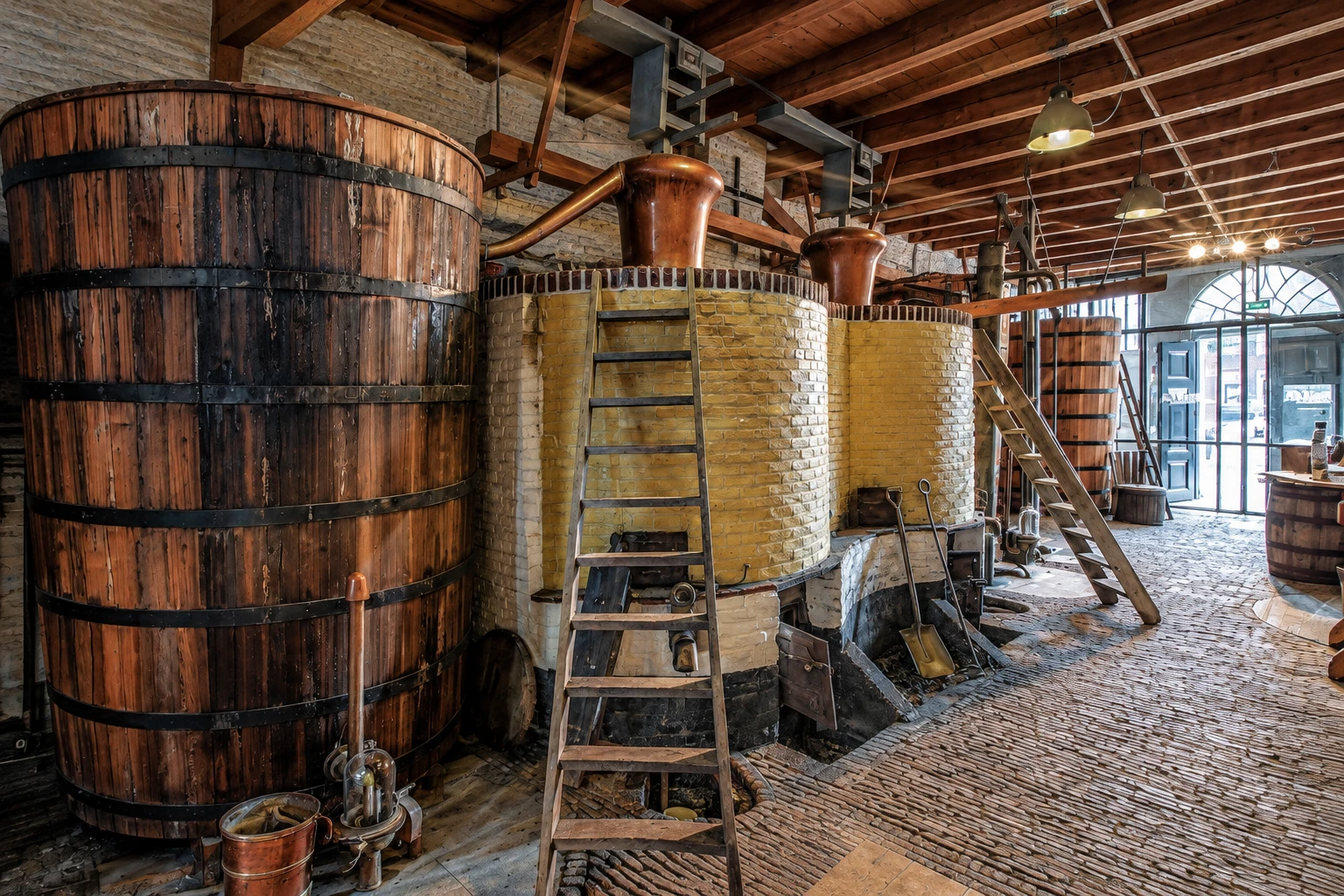
Jenever museum housed in a former distillery on the Lange Haven, in central Schiedam. It combines an exhibition, an active distillery and the De Walvisch windmill, where the grain was milled.

Explore National Jenever Museum

Gouda · South Holland · Church

Grote of Sint-Janskerk

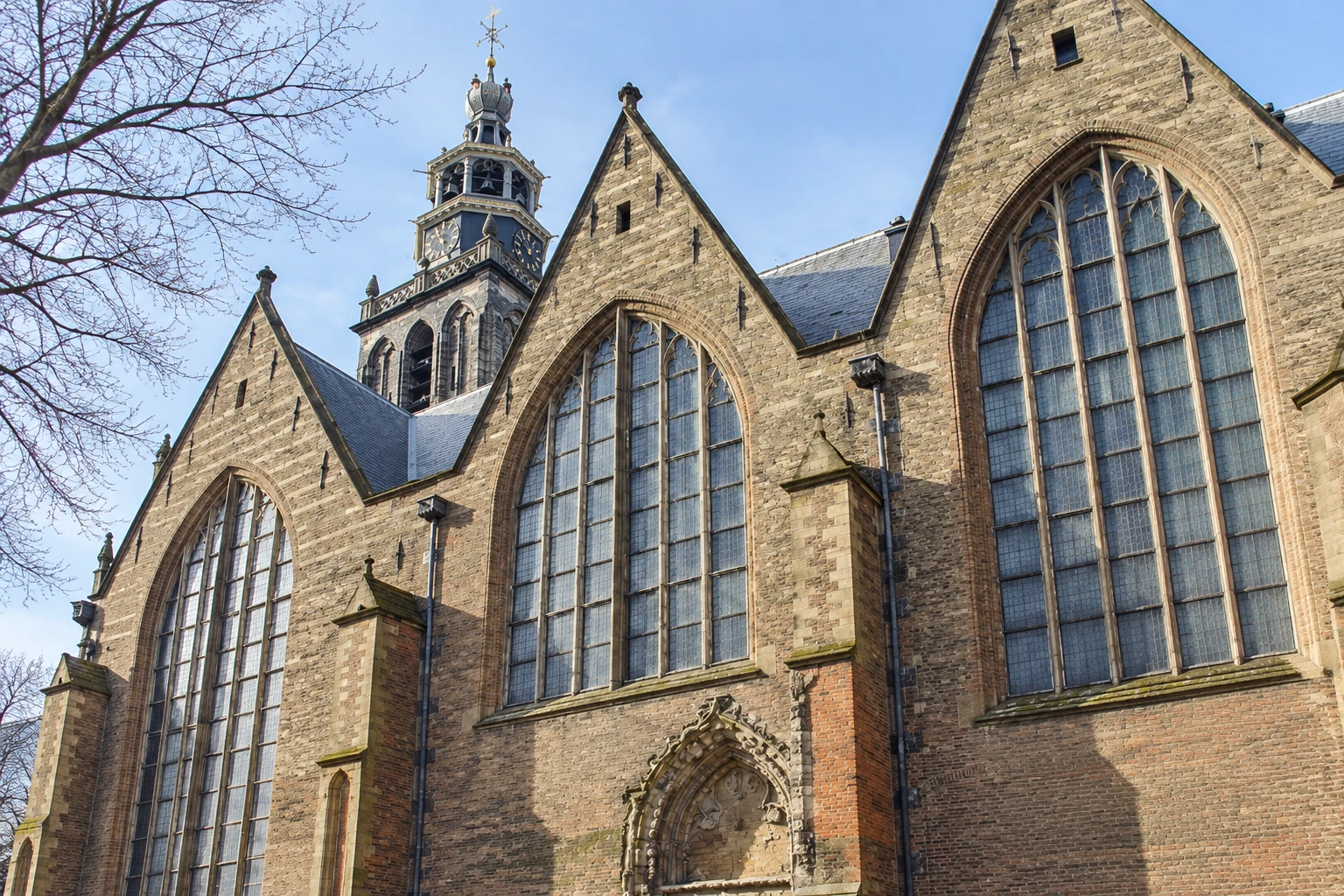
The longest church in the Netherlands, measuring 123 meters, in the centre of Gouda. Rebuilt after a fire in 1552, it houses the Goudse Glazen, a set of stained glass windows painted between 1555 and 1603, considered a high point of European glass painting.

Explore Grote of Sint-Janskerk

Rotterdam · South Holland · Architecture

Cube Houses

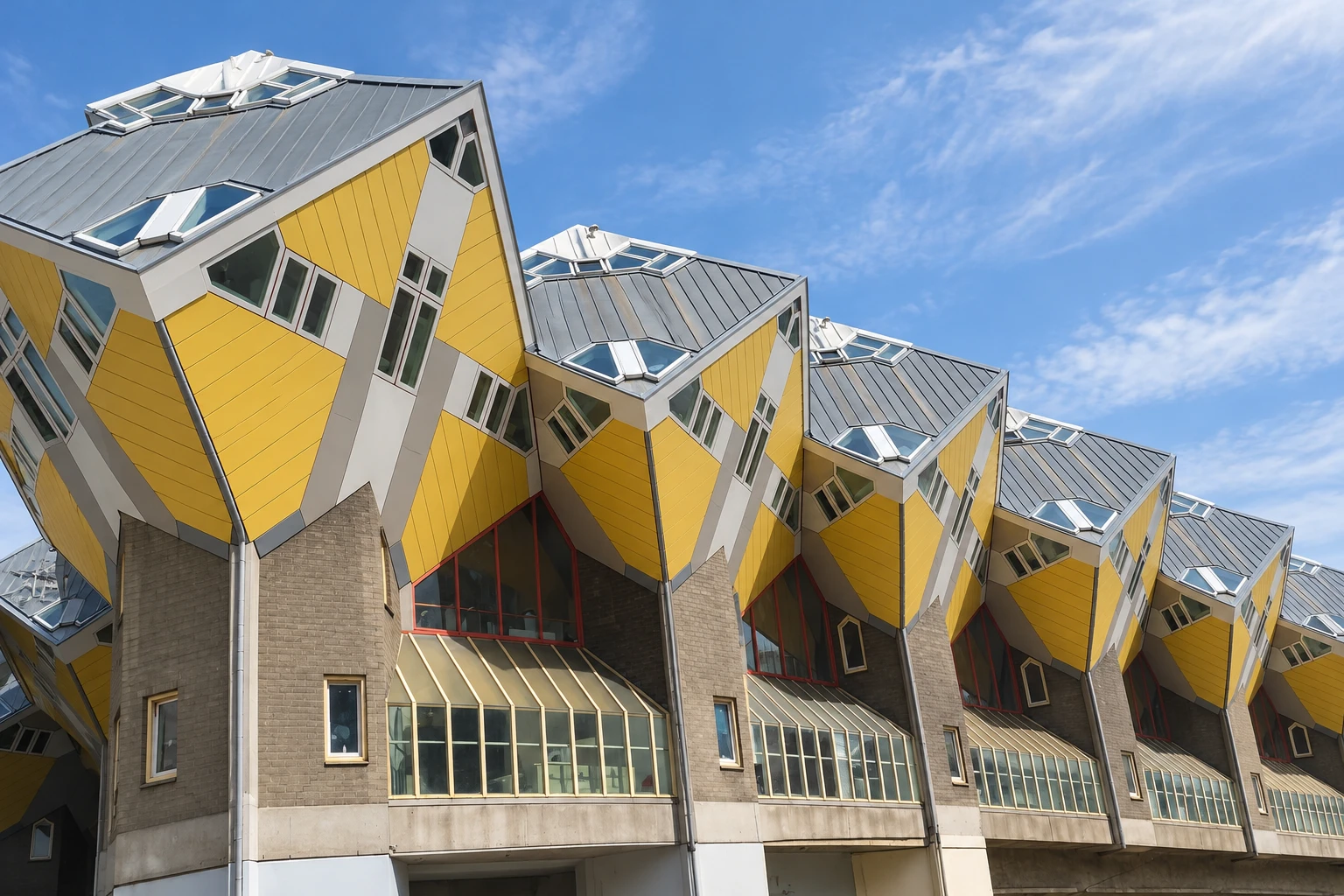
A group of tilted cube-shaped houses supported on pillars, designed by Piet Blom. One of them, the Kijk-Kubus, is a show-house museum and can be visited inside.

Explore Cube Houses

See 19 more places in Rotterdam and Kinderdijk

To choose before you go

Tours in Rotterdam and Kinderdijk

Where each tour starts, how long it takes, how it is done, what is included and the price range.

Markthal, Kubuswoningen and Laurenskerk: Rotterdam city center on foot

From Blaak metro station, in central Rotterdam On foot; metro or train to Blaak about 3 hours morning easy

The walk starts at the Markthal, the arched covered market with apartments on the walls and a ceiling painted with fruits, fish and flowers, by Arno Coenen and Iris Roskam. The project is by Rotterdam firm MVRDV. Inside are stalls for cheese, fish, bread and ready-to-eat food at the counters. On Tuesdays and Saturdays the nearby Binnenrotte square hosts the street market. Cross the square to the Kubuswoningen, Piet Blom’s 38 yellow cube houses, each balanced on a single point above the street. One of them, the Kijk-Kubus, is open to visitors and shows how life is arranged in a tilted cube. Just below is the Oude Haven, the old harbour with historic boats and waterside cafés. Finish at the Laurenskerk, a Gothic church built between 1449 and 1525 and the only medieval building that survived in the center after the 1940 bombing. On the square in front, Grotekerkplein, there is a bronze statue of Erasmus. The whole neighborhood is walked on flat streets.

Stops: Markthal, Binnenrotte, Kubuswoningen, Kijk-Kubus, Oude Haven, Laurenskerk, Grotekerkplein.

Includes: Markthal interior, Binnenrotte street market (Tuesdays and Saturdays), Kubuswoningen exterior, Kijk-Kubus (separate admission), Oude Haven and Laurenskerk (separate admission).

Tip: Go in the morning when the Markthal is less crowded, and have lunch inside. The Kijk-Kubus has narrow stairs. The Laurenskerk tower is usually open for climbing only on certain days: check the official website.

Best time: All year; the route is covered for much of the time, good for a rainy day.

Erasmusbrug and Kop van Zuid: the bridge, Hotel New York and De Rotterdam

From Willemsplein, at the foot of the Erasmusbrug (city-side) On foot; tram or metro to Leuvehaven or Wilhelminaplein about 2 hours late afternoon easy

The Erasmusbrug is the cable-stayed bridge from 1996, with an inclined steel pylon that resembles a swan's neck; the design is by UNStudio. Walk across on the side sidewalk: from there you can see the Nieuwe Maas river, the port, the Euromast and the tall buildings on both sides. On the far side begins Kop van Zuid, a former dock area turned into a tower neighborhood. On Wilhelminapier are De Rotterdam, from 2013, three stacked towers designed by OMA/Rem Koolhaas, and Hotel New York, the former headquarters of the Holland-Amerika Lijn, from where emigrant ships sailed to the United States. The brick building with two small turrets is now a hotel and restaurant, and the ground-floor café welcomes non-guests. At the tip of the pier are benches facing the river and the bridge. It's an outing for late afternoon: the low light on the water and the bridge lighting up at night. Return across the bridge or by metro from Wilhelminaplein station.

Stops: Erasmusbrug, Wilhelminapier, Hotel New York, De Rotterdam, Kop van Zuid.

Includes: Walk across the Erasmusbrug, Wilhelminapier, exterior of De Rotterdam and Hotel New York, view of the river and the skyline.

Tip: It’s very windy on the bridge: bring a jacket even in summer. Combine it with the Fenix, which is a walk from Wilhelminapier across the Rijnhavenbrug bridge.

Best time: All year; in summer sunset is late and the quay gets busy.

Fenix and Katendrecht: the migration museum and Deliplein

From Wilhelminapier or Rijnhaven metro station On foot via the Rijnhavenbrug; metro to Rijnhaven about 3 hours afternoon easy

Fenix is a museum dedicated to migration, housed in a 1923 port warehouse on the Katendrecht peninsula, facing the Rijnhaven. The theme fits the place: millions of Europeans departed from here for the Americas, and Chinese, Cape Verdeans and others arrived here and shaped the neighborhood. The exhibition mixes art, objects and personal stories of those who left or arrived. In the middle of the building rises the Tornado, a mirrored double‑helix staircase designed by MAD Architects, which leads to a roof platform with views of the river, the Erasmusbrug and the city center. Afterward, walk to Deliplein, a square with cafés, restaurants and the old port life of Katendrecht. In the same neighborhood, in the Pakhuis Santos warehouse, is the Nederlands Fotomuseum, with a collection of more than six million photographs and temporary exhibitions. The SS Rotterdam is a few minutes on foot, at the tip of the peninsula.

Stops: Fenix, Tornado, Katendrecht, Deliplein, Nederlands Fotomuseum, Rijnhaven.

Includes: Fenix (separate admission), Tornado platform, Deliplein, exterior of the Nederlands Fotomuseum (separate admission).

Tip: Reserve the afternoon: Fenix and the Fotomuseum together take time. Arrive on foot via the Rijnhavenbrug, the pedestrian bridge that leads from the Wilhelminapier.

Best time: All year; covered museums, good for a cold or rainy day.

Kinderdijk: the 19 windmills via WaterShuttle from the Erasmusbrug

From Erasmusbrug quay in Rotterdam WaterShuttle boat (about 30 min); bus 489 from Kralingse Zoom; bicycle half a day to a full day morning and afternoon easy (long, flat walk)

Kinderdijk is the group of 19 windmills aligned along two drainage canals, about 15 km from Rotterdam, a UNESCO World Heritage site. The windmills were built to pump water from the polder into the river, and three of them are museums open inside: the Nederwaard Museummolen and the Museummolen Blokweer, furnished to show how millers’ families lived in different periods, and a third mill. The steam pumping station Gemaal Wisboom operates with the old machines and an attendant explains the system. At De Fabriek there is a film and an exhibition about the region’s water history. The path along the dikes is flat and runs to the end of the site, roughly 2 km each way; the De Hopper boat travels the canal and lets you disembark at the mills. The way there is part of the visit: the WaterShuttle departs from the Erasmusbrug quay and arrives in under 30 minutes direct, with port views en route. There is also Waterbus line 20 to Ridderkerk De Schans, with a transfer on the Driehoeksveer ferry, which does not accept the Waterbus ticket. By land, bus 489 departs from Kralingse Zoom metro station. Cyclists can bring their bikes on the boat and return via the cycle paths.

Stops: Kinderdijk, Nederwaard Museummolen, Museummolen Blokweer, Gemaal Wisboom, De Fabriek, Visitor centre.

Includes: Boat crossing, walk along the dikes, museum windmills, Gemaal Wisboom, De Fabriek and the De Hopper boat (site admission charged separately—check what each ticket covers).

Tip: The WaterShuttle usually runs daily in the summer season and only Friday to Sunday in winter: check the year schedule. On the return, the last boat fills up on peak days. The windmills usually turn on windy days, but that is not guaranteed. Bring water and sunscreen: the route is exposed, with no shade.

Best time: April to October, with the daily boat and the Cruiser in operation; in winter light is low and the boat runs only on weekends.

Spido: harbor boat tour of Rotterdam

From Spido quay, at the foot of the Erasmus Bridge (Willemsplein) On foot; tram to Willemsplein or metro to Leuvehaven about 75 minutes by boat afternoon easy

Spido is the city’s traditional tour boat and departs from the foot of the Erasmus Bridge on the city-center side. The standard cruise lasts about 75 minutes and goes along the Nieuwe Maas river to the first docks of the port, with an audio guide on board. Along the way you pass shipyards, container docks, tugboats, cargo vessels and the towers of Kop van Zuid, Wilhelminapier and Katendrecht. It’s the most direct way to understand the size of the port—the largest in Europe—without leaving the city: the route shows the older terminals near the center and gives the scale of what continues downriver to the sea. There is a bar on board and an open upper deck, good for photos of the Erasmus Bridge, De Rotterdam and Hotel New York from the water. In high season there are departures throughout the day; in winter, fewer. Buy in advance on the official site for summer weekend dates.

Stops: Spido, Erasmusbrug, Nieuwe Maas, Waalhaven, Kop van Zuid.

Includes: 75-minute tour of the river and port, audio guide (admission paid separately).

Tip: Sit on the upper deck, on the right-hand side outbound, to see the Kop van Zuid. Bring a jacket: it can be windy on the river even on warm days. Combine it with the Erasmus Bridge and the Maritiem Museum, which are next to each other.

Best time: April to October, with more departures and clearer days; operates year-round.

Euromast and Het Park: the city seen from 112 meters

From Parkhaven 20, next to Het Park On foot from the Erasmusbrug (20 min); tram 8 to Euromast about 2 hours late afternoon easy

The Euromast is Rotterdam's observation tower, built in Het Park on the riverbank. The elevator takes you to the 112-meter platforms, with 360-degree views over the port, the Erasmusbrug, the city center and, on clear days, out to the sea. From there the Euroscoop rises — a glass cabin that spins while ascending to 185 meters, the highest publicly accessible point in the city. There is a restaurant and bar on the platform. At the tower's base is Het Park, an English-style park with lawns, lakes and tree-lined paths, good for extending the walk or having a picnic in summer. From there it's easy to reach the entrance to the Maastunnel, a 1942 tunnel under the river with wooden escalators for pedestrians and cyclists. Go at late afternoon to see the city in daylight and then lit up; in summer the sun sets after 21:00.

Stops: Euromast, Euroscoop, Het Park, Parkhaven, Maastunnel.

Includes: Access to the 112 m platforms and the Euroscoop (separate paid ticket), Het Park.

Tip: Buy the ticket on the official website for the time you want; on low-cloud days it's not worth going up. If you are afraid of heights, avoid the Euroscoop, which is entirely glass.

Best time: Clear days from April to October; in winter visibility is lower.

See 12 more tours

Depot Boijmans Van Beuningen: the art depot open to the public

From Museumpark 24, in the Museumpark On foot from the center; tram 7 or 8 to Museumpark; metro to Eendrachtsplein around 2 hours morning easy

The Depot is the mirrored bowl-shaped building by MVRDV that houses the collection of the Museum Boijmans Van Beuningen: about 154,000 works gathered over 175 years, from Bruegel and Bosch to Dalí and Magritte. The difference from a museum is that there is no installed exhibition here: visitors walk through the depot floors, see works hung on racks, boxed or in display cases, and watch restorers and technicians through the windows. A central atrium of crisscrossing staircases links the levels, with suspended glass display cases. On the roof there is a rooftop forest and the Renilde restaurant, with views over the Museumpark and the city centre. Entry is by timed ticket purchased on the official website. The Depot is in the Museumpark, a few steps from the Kunsthal and the Nieuwe Instituut, so you can visit all three in one day.

Stops: Depot Boijmans Van Beuningen, Museumpark, Renilde.

Includes: Visit to the Depot with a reserved time slot (admission paid separately), rooftop terrace.

Tip: Book a time slot on the official website before you go; without a reservation you cannot enter. There are no labeled exhibits: it is worth renting the audio guide or joining a guided tour to understand what you see.

Best time: Open year-round; covered tour.

Museumpark: Kunsthal and Nieuwe Instituut

From Westzeedijk 341 (Kunsthal) and Museumpark 25 (Nieuwe Instituut) On foot; tram 8 to Kievitslaan; metro to Eendrachtsplein about 3 hours afternoon easy

The Museumpark is the park that brings together Rotterdam’s museums. At the southern tip is the Kunsthal, a 1992 building by Rem Koolhaas and OMA, made of concrete, glass and steel and without a fixed visiting route. It has no permanent collection: it hosts temporary exhibitions of art, photography, design and fashion, several at once, which change throughout the year. On the other side of the park is the Nieuwe Instituut, a museum of architecture, design and digital culture, with exhibitions about the design of cities and objects and an archive of projects by Dutch architects. Next to it, the Huis Sonneveld is a modernist house from 1933, by Brinkman and Van der Vlugt, preserved with period furniture, colours and appliances; the visit shows how a wealthy Rotterdam family lived before the war. Between the museums the park has lawns and a garden, useful for resting between visits.

Stops: Kunsthal, Nieuwe Instituut, Huis Sonneveld, Museumpark.

Includes: Kunsthal (separate admission), Nieuwe Instituut and Huis Sonneveld (separate admissions), Museumpark.

Tip: Check the Kunsthal website to see what’s on before you go, because all exhibitions are temporary. The Kunsthal has late-night openings on some Fridays.

Best time: All year; covered museums.

Historic Delfshaven and the Pelgrimvaderskerk

From Delfshaven metro station (lines A, B and C) Metro; tram 4 or 8; on foot via the Nieuwe Binnenweg around 2 hours afternoon easy

Delfshaven is the part of the city that escaped the 1940 bombing and shows what Rotterdam used to be: a narrow port, the Voorhaven, with brick houses, warehouses and old moored boats. It was Delft's port, where herring arrived and gin distilleries operated. On the waterfront stands the Pelgrimvaderskerk, the church from which English pilgrims prayed in 1620 before boarding the Speedwell bound for England and then, from there, the Mayflower to America. You can enter the church at certain times and see the plaque that commemorates the departure. A windmill, De Distilleerketel, still grinds grain on the quay. The neighborhood has cafés, a brewery, small shops and the Dutch Pinball Museum, with arcade machines to play. In warm months there are electric boats for rent on the canal. The walk is short and peaceful, good for late afternoon when the light hits the façades.

Stops: Delfshaven, Pelgrimvaderskerk, Voorhaven, Achterhaven, Molen De Distilleerketel.

Includes: Walk along the Voorhaven and Achterhaven, exterior of the Pelgrimvaderskerk (entry when open), windmill, cafés.

Tip: Combine it with the Nieuwe Binnenweg, the street of bars and shops that leads from the center to Delfshaven on foot. The historic tram line 10 usually runs in summer and passes this way: check the schedule for days of operation.

Best time: April to October, with outdoor terraces open; worthwhile year-round.

Maritiem Museum and Leuvehaven: the old harbour as a museum

From Leuvehaven 1, in the city center On foot; metro to Leuvehaven or Beurs about 3 hours morning easy

The Maritiem Museum is on Leuvehaven, the oldest basin of the city center’s harbor, and tells the story of Dutch seafaring and the Port of Rotterdam with models, maps, instruments, and videos. The most engaging part is the Offshore Experience, a simulation of an oil and gas platform in the North Sea, with tasks for visitors to complete in a windy, rocking environment. Outside, in the harbor itself, is the open-air museum: old cranes, tugboats, barges and historic ships moored there, several open for visits, with an audio tour explaining how the port began here. It’s a museum that works well for children, with interactive rooms and lots to climb and handle. It’s a few minutes’ walk from the Erasmusbrug and the Spido quay, so you can do the museum in the morning and the boat trip in the afternoon. Entry by timed ticket on the official website.

Stops: Maritiem Museum Rotterdam, Leuvehaven, Harbour museum, Offshore Experience.

Includes: Indoor museum, Offshore Experience and an outdoor harbour museum with ships (separate paid entry).

Tip: Book a time slot on the official website. Start with the outer harbour if the weather is good and save the indoor galleries for when it rains.

Best time: All year; the ships in the outer harbour are best visited in dry weather.

SS Rotterdam: the former ship of the Holland-Amerika Lijn

From 3e Katendrechtse Hoofd, at the tip of Katendrecht On foot from Deliplein; bus or water taxi from the Erasmus Bridge about 2 hours afternoon easy

The SS Rotterdam was the former flagship of the Holland-Amerika Lijn, the liner that ran the Rotterdam–New York route and later became a cruise ship. Today it is permanently moored at the tip of Katendrecht, facing the Maashaven, and serves as a hotel, restaurant and museum. Guided tours go to the bridge, the engine room, the 1959 lounges with original wood and chandeliers, and the promenade decks. There are tours with different themes, from engineering to life on board, and you can go up to the top deck to see the river and the skyline from an angle you don't get from the city. The restaurants and bar welcome non-guests. The ship is within walking distance of the Fenix and Deliplein, so it is often combined with a visit to Katendrecht. It's a good option for people who like ships and 1950s design.

Stops: SS Rotterdam, Katendrecht, Maashaven.

Includes: Guided tour on board (paid separately), decks, bar and restaurants.

Tip: Book the tour on the official site, which lists set times and languages. Walk from Katendrecht along the waterfront route that passes the old warehouses.

Best time: All year; the open decks are best from April to October.

Rotterdam Centraal, Coolsingel and Hofbogen: new-centre architecture

From Rotterdam Centraal, main exit On foot about 2 and a half hours morning easy

Rotterdam Centraal, from 2014, is the station with the steel-and-glass roof that slopes like an arrow pointing toward the centre; the interior features wood and natural light, and the plaza in front opens to the tall buildings of the Weena. Walk down the Coolsingel, the main avenue, to the Stadhuis, the 1920 city hall by Henri Evers, one of the few buildings on the avenue that survived the 1940 bombing. Nearby is the Lijnbaan, from 1953, Europe’s first pedestrian-only shopping street, a model for many others. North of the station, in the Agniesebuurt neighbourhood, the Hofbogen are the old 1908 railway viaduct of the Hofplein line, with almost 2 km of brick arches now occupied by cafés, studios, bakeries and small shops. This part of the city shows how Rotterdam was rebuilt from scratch: wide blocks, glass buildings, public art and, under the arches, neighbourhood life. The walk is flat and can be done before dropping off luggage or on the last day, on the way to the train.

Stops: Rotterdam Centraal, Coolsingel, Stadhuis, Hofbogen, Hofplein, Lijnbaan.

Includes: Rotterdam Centraal, Coolsingel, exterior of the Stadhuis, Lijnbaan, Hofbogen.

Tip: The Hofbogen are livelier in the late morning and afternoon, when cafés open. For architecture fans, the Nieuwe Instituut information centre has maps for walking routes.

Best time: All year.

Witte de Withstraat and Nieuwe Binnenweg: bars, galleries and nightlife

From Eendrachtsplein metro station On foot; metro to Eendrachtsplein; tram to Museumpark about 3 hours night easy

Witte de Withstraat is the street that concentrates Rotterdam’s nightlife: bars with sidewalk tables, small restaurants, galleries and design shops, in a short stretch between Museumpark and Schiedamsedijk. There is Melly, a contemporary art centre with temporary exhibitions, and the side streets’ walls feature murals. The street fills up at dusk and stays busy late, with a mixed crowd of residents, students and tourists. Nieuwe Binnenweg, which runs west from Eendrachtsplein, is longer and more neighborhood-like: record shops, secondhand stores, cafés and restaurants of various cuisines, ending at Delfshaven. Between the two, Eendrachtsplein has the sculpture known as Kabouter Buttplug, which locals have adopted as a landmark. It’s the evening plan after the museums: have dinner on one street, grab a drink on the other and walk back to your hotel, since everything is just minutes from the centre.

Stops: Witte de Withstraat, Nieuwe Binnenweg, Melly, Eendrachtsplein, Museumpark.

Includes: Walk along the two streets, Melly (admission paid separately), bars and restaurants at the traveler’s expense.

Tip: On Friday and Saturday nights the tables on Witte de Withstraat fill up; arrive before 7:00 PM to dine without waiting. Nieuwe Binnenweg is calmer and cheaper.

Best time: From April to October, with street terraces; open all year.

Diergaarde Blijdorp: Rotterdam’s zoo

From Blijdorplaan 8, Blijdorp neighborhood Metro line E to Blijdorp; bus 44 from Rotterdam Centraal half day full day easy

Diergaarde Blijdorp is the city's zoo, founded in 1857 and located since 1940 in the park designed by architect Sybold van Ravesteyn, whose curved-line buildings are a protected monument. Animals are arranged in areas by continent, with Asian elephants, gorillas, lions, giraffes, polar bears and red pandas, among many others, in spacious, tree-lined enclosures. The most popular section is the Oceanium, an aquarium with a glass tunnel where sharks, turtles and schools of fish pass, along with penguins and otters. There is a butterfly greenhouse, a farm area for children and many lawns for stopping. The visit takes half a day at a relaxed pace and is the right choice for families with children or for a rainy day, since much of it is covered. It is a few metro stops from the center, on line E, which stops next to the entrance.

Stops: Diergaarde Blijdorp, Oceanium, Blijdorp.

Includes: Full zoo and Oceanium (separate admission fee).

Tip: Buy the ticket on the official website for the date and arrive early, before the school groups. On rainy days, start with the Oceanium and the greenhouses.

Best time: April to October, with animals more active outdoors; open year-round.

Kralingse Plas and Kralingse Bos by bicycle

From Rotterdam Centraal or Kralingse Zoom metro station Bicycle (OV-fiets at the station); metro to Voorschoterlaan or Kralingse Zoom about 3 hours afternoon easy

The Kralingse Plas is the lake in the east of the city, surrounded by Kralingse Bos, the urban woodland with trails, lawns, a sandy beach and two windmills, De Ster and De Lelie, which grind spices and open on some days. A flat bike path of about 5 km goes around the lake, making this an easy place to cycle in Rotterdam without traffic: rent an OV-fiets at the station or a bicycle in the city and follow the bike path from the Kralingen neighbourhood, with old houses and tree-lined streets. In summer locals swim, row and barbecue on the banks; there are cafés with terraces by the water and rental for rowboats and sailboats. In winter, when it is very cold, the lake often freezes and becomes a skating rink, which is not guaranteed. It is the green side of the city, twenty minutes by bike from the centre, and pairs well with the end of an afternoon of museums.

Stops: Kralingse Plas, Kralingse Bos, Kralingen, De Ster, De Lelie.

Includes: Cycle around the lake, woodland, windmills seen from outside, cafés on the shores.

Tip: Cycle on the right and respect the red bike lanes, which are for cyclists only. If you don’t cycle, take the metro to Voorschoterlaan and walk to the lake.

Best time: May to September, with long days and the lake in use; autumn brings the colours of the woods.

Day trip to Dordrecht by Waterbus

From Erasmusbrug quay (Waterbus line 20) or Rotterdam Centraal (train) Waterbus line 20 (about 60 min) or Intercity train (under half an hour) full day morning and afternoon easy

Dordrecht is the oldest city in the Netherlands, granted city rights in 1220, and sits on an island between three rivers, about 20 km from Rotterdam. The charm of the day trip is going by boat: Waterbus line 20 departs from the Erasmusbrug quay, passes Krimpen, Ridderkerk, Alblasserdam and Papendrecht and arrives at Merwekade in central Dordrecht in about 60 minutes along the river. The center has narrow streets, inner harbors with wooden boats and merchant houses from the 17th and 18th centuries: Voorstraathaven, Nieuwe Haven and Wolwevershaven. The Grote Kerk has a leaning tower with a carillon, which you can climb for river views. At the Groothoofd, the point where the Oude Maas meets the Merwede, cargo ships pass all day, opposite the cafés. The Dordrechts Museum houses Dutch painting, including Van Goyen and Cuyp, and Het Hof contains the museum about the first assembly of the free provinces in 1572. Return by train, from Dordrecht to Rotterdam Centraal, to shorten the day.

Stops: Dordrecht, Grote Kerk, Voorstraathaven, Nieuwe Haven, Groothoofd, Dordrechts Museum, Het Hof.

Includes: Waterbus crossing, walk through the city center and the harbors, Grote Kerk (tower climb paid separately), museums (admission fees not included).

Tip: Go there by boat and return by train. Check the Waterbus timetable for that day’s frequency; on Sundays and in winter there are fewer departures. From Merwekade to the center is only a few minutes on foot.

Best time: April to October, for the boat and the terraces; the city is worth visiting year-round.

Day trip to Gouda, with the cheese market on Thursdays

From Rotterdam Centraal NS train (about 20 min); on foot in the center half day to full day morning easy

Gouda is about a 20-minute train ride from Rotterdam Centraal and is the town that gave its name to the cheese. The center revolves around the Markt, the square with the 15th-century Gothic Stadhuis in the middle and the Waag, the 1668 weigh house, on one side. The cheese market usually takes place on Thursday mornings from April to August: horse-drawn carts bring the wheels of cheese, traders and producers negotiate by clapping hands as in the past, and the cheese is weighed on the Waag's original scale. Stalls selling cheese, local products and crafts are set up around the square. Outside the season the Markt is worth visiting for the square and for the cheese and stroopwafel shops, the caramel cookie that originated here. A few steps away is the Sint-Janskerk, the longest church in the Netherlands at 123 meters, famous for its 16th-century stained glass, and the Museum Gouda, in the former hospital. There are boat tours on the canals and bakeries offering stroopwafel workshops.

Stops: Gouda, Markt, Stadhuis, Waag, Sint-Janskerk, Museum Gouda.

Includes: Train, cheese market (Thursdays, April to August, usually runs until midday), Markt, Waag, Sint-Janskerk (admission paid separately).

Tip: On market day arrive before 10:00 to see the arrival of the carts. Check the city website for the season dates, which vary slightly each year and skip public holidays.

Best time: Thursdays from April to August for the market; at other times, any season.

Schiedam: the tallest windmills and jenever

From Rotterdam Centraal or Schiedam Centrum metro station Sprinter train (about 5 min) or metro A, B or C to Schiedam Centrum half a day afternoon easy

Schiedam is the town attached to Rotterdam on the west, a few minutes by train or metro, known for having the tallest windmills in the world. They were built in the 18th century to grind grain for the jenever distilleries and needed to rise above the tall warehouses, which explains their height. Five still stand along the Noordvest canal: De Noord, De Walvisch, De Drie Koornbloemen, De Nieuwe Palmboom and De Vrijheid. Some open for visits and one of them has a restaurant. On the Lange Haven, the central canal with merchants' houses and former distilleries, is the Nationaal Jenevermuseum, housed in a factory, which explains the history of the spirit that earned Schiedam the nickname Black Nazareth because of the chimneys' smoke; there is a tasting and a working distillery. The center is small, with bridges and quays, and can be visited in an afternoon. It’s the right complement for those who want to see windmills without going to Kinderdijk, or to add to the same day.

Stops: Schiedam, Lange Haven, Nationaal Jenevermuseum, De Walvisch, De Noord, De Nieuwe Palmboom.

Includes: Historic center, Lange Haven canal, windmills from the outside (interior visits when open), Nationaal Jenevermuseum (admission paid separately).

Tip: The windmills open on different days; check the weekly opening times on Schiedam’s tourism website before you go. The train is faster; the metro avoids transfers from many neighbourhoods.

Best time: All year; the windmills usually turn on windy days.

Day by day

2, 3 and 5-day itinerary in Rotterdam and Kinderdijk

Suggestions to plan the trip. Change the order of the days according to the weather and tour availability.

2 days · Rotterdam in 2 days: architecture, the port and Kinderdijk

For If you arrive from Amsterdam or Schiphol and want the city highlights and the windmills · Based in Rotterdam (Rotterdam), city center or Kop van Zuid
  1. Day 1 · Arrival, modern center and the Erasmusbrug

    Arrive at Rotterdam Centraal in the morning, drop your bags and walk the Markthal, Kubuswoningen and Laurenskerk, having lunch in the Markthal. In the afternoon, visit the Maritiem Museum and Leuvehaven and then take the Spido harbor cruise. At the end of the day, cross the Erasmusbrug to Kop van Zuid to see the bridge light up. Dine on Witte de Withstraat.

  2. Day 2 · Kinderdijk by boat and Katendrecht

    In the morning, take the WaterShuttle from the Erasmusbrug quay to Kinderdijk: the 19 windmills. Walk along the dikes, enter a mill museum and return by boat in the early afternoon. On the way back, walk to Fenix and Katendrecht, visit Deliplein and, if time allows, the SS Rotterdam. Finish at the Depot Boijmans Van Beuningen if you have a timed entry, or at the Euromast for the end-of-day view.

3 days · Rotterdam in 3 days: city, Kinderdijk and museums
For If you sleep in Rotterdam and want time for museums without rushing · Based in Rotterdam (Rotterdam)
  1. Day 1 · Arrival via Schiphol and the center on foot

    The flight from Brazil arrives at Schiphol in the morning; the Intercity Direct takes you to Rotterdam Centraal in about 25 minutes. Start with a walk around Rotterdam Centraal, Coolsingel and Hofbogen on the way to your hotel, then Markthal, Kubuswoningen and Laurenskerk. At sunset, head to the Erasmusbrug and Kop van Zuid, with dinner on the Wilhelminapier or on Witte de Withstraat. Sleep early to beat the jet lag.

  2. Day 2 · Kinderdijk and Katendrecht

    Morning at Kinderdijk on the WaterShuttle, departing from the Erasmusbrug quay; bring a snack and water. Return after lunch and spend the afternoon at Fenix and Katendrecht and the SS Rotterdam. Finish at the Euromast and Het Park at sunset to see everything you covered from above.

  3. Day 3 · Museumpark, harbor and Delfshaven

    Morning at the Depot Boijmans Van Beuningen, with a timed entry, and at Museumpark: Kunsthal and Nieuwe Instituut. Have lunch in Museumpark. In the afternoon, Maritiem Museum and Leuvehaven followed by the Spido harbor cruise. Finish in historic Delfshaven and the Pelgrimvaderskerk, with dinner on Nieuwe Binnenweg. If you continue to Amsterdam, the train takes about 40 minutes.

5 days · Rotterdam in 5 days with Dordrecht, Gouda and Schiedam
For If you use Rotterdam as a base for the region and like boat trips, cycling and small towns · Based in Rotterdam (Rotterdam)
  1. Day 1 · Arrival and the new center

    Arrival via Schiphol and Intercity Direct to Rotterdam Centraal. Walk around Rotterdam Centraal, Coolsingel and Hofbogen, lunch at the Markthal and the Markthal, Kubuswoningen and Laurenskerk route. Late afternoon at the Erasmusbrug and Kop van Zuid. Easy evening on Witte de Withstraat.

  2. Day 2 · Kinderdijk and Katendrecht

    WaterShuttle from the Erasmusbrug to Kinderdijk: the 19 windmills; a full morning on the dikes and in the mill museums. Afternoon at Fenix and Katendrecht, including the Tornado ascent, and a tour of the SS Rotterdam. Dinner at Deliplein and walk back across the lit Erasmusbrug.

  3. Day 3 · Museums and harbor

    Depot Boijmans Van Beuningen in the morning, with a timed entry, and Museumpark: Kunsthal and Nieuwe Instituut. In the afternoon, Maritiem Museum and Leuvehaven, with the ships in the outer harbor, and the Spido harbor cruise. Late afternoon at the Euromast and Het Park, with dinner on Witte de Withstraat.

  4. Day 4 · Dordrecht by boat

    Day trip to Dordrecht by Waterbus: outbound by boat on line 20, a full day in the oldest city in the Netherlands with the Grote Kerk, the harbors and the Groothoofd, and return by train to Rotterdam Centraal. Dinner on Nieuwe Binnenweg.

  5. Day 5 · Gouda, Schiedam or by bike

    If it’s Thursday between April and August, day trip to Gouda with the cheese market in the morning. Otherwise, Schiedam: the tallest windmills and the gin, half a day. In the afternoon, Kralingse Plas and Kralingse Bos by bike or Diergaarde Blijdorp with children, and historic Delfshaven and the Pelgrimvaderskerk to finish. The next day, train to Schiphol takes about 25 minutes.

Best time to go

When to go: Rotterdam and Kinderdijk month by month

From May to September the days are long and milder, and the boat to Kinderdijk runs more frequently. Summer is June to August; winter, December to February, is cold and it gets dark early. Wind and rain occur year-round. Gouda's cheese market takes place on Thursday mornings, from April until the end of August.

The seasons shown are the most usual ones; nature doesn't always follow the calendar.

January Some rain

Winter · Short days

Deep winter, the opposite of the Brazilian summer: highs around 6 °C and lows near 1 °C, with short days, river winds and frequent light rain. It’s a museum month: Depot, Fenix, Maritiem Museum and Kunsthal fill the whole day. The WaterShuttle to Kinderdijk usually operates only Friday to Sunday and the windmills are gray and quiet. Spido and Euromast operate but with reduced visibility. Few tourists and hotels with more availability.

February Some rain

Winter · Dry cold

Still winter, with highs near 7 °C and lows around 1 °C; it rains a bit less than in January and there are clear, frosty days. In very cold spells Kralingse Plas often freezes and becomes an ice rink, which is not guaranteed. Plan for museums and short walks in the center, with cafés to warm up. Kinderdijk by boat Friday to Sunday.

March Some rain

End of winter · First terraces

Transition to spring: highs of 10 °C, lows around 2 °C, rain decreasing and days getting longer. On sunny days the terraces move out onto Witte de Withstraat. A good time to explore the center on foot and to visit museums, still without queues. Kinderdijk begins to turn green; the high-season parking lot opens mid-month. Blijdorp and Het Park are already showing the first flowers.

April Low rain

Spring · Driest month

Steady spring, with highs of 14 °C and lows of 5 °C; it’s the lowest-rain month of the year in Rotterdam, with clear air and wind. Good for Kinderdijk, with the WaterShuttle back to daily service and the Cruiser boat operating; the Spido and the Euromast are more rewarding with clear skies. The Gouda cheese market usually starts on the Thursdays of this month. King’s Day at the end of April typically closes the center with street parties and markets.

May Some rain

Spring · Long days

Highs of 18 °C, lows of 8 °C and daylight until after 9:00 p.m. Low to moderate rain. This is the month for cycling: Kralingse Plas, Kinderdijk by bike with the ferry, and Delfshaven in the afternoon. The terraces on Witte de Withstraat and Deliplein are open every day. European holidays and school groups begin; book Depot and Blijdorp in advance.

June Some rain

Summer · Start of high season

Start of the European summer, the opposite of the Brazilian winter: highs of 21 °C, lows of 11 °C and the longest days of the year, with light until around 10:00 p.m. Average rainfall in short showers. Everything runs: Spido with multiple departures, Euromast open late, Kinderdijk daily. High activity on weekends and the start of the outdoor festival season in the center and at Kop van Zuid.

July Some rain

Summer · Warmer

Hottest month together with August: highs of 23 °C, lows of 13 °C, with some days exceeding 28 °C. Average rainfall, in late-afternoon showers. Rotterdam fills with visitors, Kinderdijk’s last boat trip is crowded and the Markthal becomes packed at midday. Dutch school holidays: Blijdorp and the Maritiem Museum have queues. Book Depot and Euromast on their websites and go early to tours.

August High rain

Summer · Rainiest month

Highs of 23 °C and lows of 13 °C, but it’s the wettest month of the year in Rotterdam, with heavy showers that pass quickly. High season, with all boats and terraces operating. Last month for the Gouda cheese market, on Thursdays. Bring a light raincoat and have a museum as a backup for rainy hours: Depot, Fenix or Kunsthal. Days are still long, sunset near 9:00 p.m.

September High rain

End of summer · Golden light

Highs of 19 °C, lows of 11 °C and higher rainfall, but with many clear days and low light, good for photos on the Erasmusbrug and at Kinderdijk. Holiday tourists leave and the city returns to its normal pace. End of the summer season for the Driehoeksveer ferry; the WaterShuttle remains daily. A good month for cycling at Kralingse Plas and for taking a less-crowded boat to Dordrecht.

October High rain

Autumn · Colors in the woods

Autumn, with highs of 15 °C, lows of 7 °C and high rainfall. Kralingse Bos and Het Park turn yellow and red. End of the daily WaterShuttle season to Kinderdijk, which from the end of the month runs Friday to Sunday; check the timetable. Museums have shorter lines and hotels are less busy. Daylight Saving Time ends at the end of the month and the days get noticeably shorter.

November High rain

Autumn · Rain and wind

A gray, wet month: highs of 10 °C, lows of 4 °C, high rainfall and strong winds on the river. Indoor options: Depot, Maritiem Museum, Fenix, Kunsthal and the Markthal. Spido and Euromast operate but with reduced visibility. Kinderdijk is only accessible by boat on weekends. At the end of the month the Christmas lights in the center and winter markets start.

December High rain

Winter · Christmas in the center

Winter: highs of 7 °C, lows of 1 °C and one of the rainiest months, with days getting dark before 5:00 PM. The center is lit up for Christmas and there is often an ice rink and markets on the Coolsingel and nearby. Museums and the Markthal are the plan; Kinderdijk by boat Friday to Sunday, with the windmills in winter gray. On New Year’s Eve there are fireworks on the river near the Erasmusbrug; check the schedule.

Plan the journey

How to get there: Rotterdam and Kinderdijk

By plane: from Brazil to Amsterdam and train to Rotterdam

There are direct flights from São Paulo and from Rio de Janeiro to Amsterdam; from other Brazilian cities, connections via São Paulo, Rio or another European city; confirm before booking. The direct flight takes about 11 h 30 and usually departs at night, arriving at Schiphol (AMS) in the morning. Schiphol Airport station is under the terminal: the Intercity Direct takes about 25 minutes to Rotterdam Centraal, without changes, with departures every few minutes throughout the day. Buy the ticket at the machine or use contactless payment at the gates; the Intercity Direct charges a supplement on the Schiphol–Rotterdam section, payable at the machine or in the app. Rotterdam also has its own airport, Rotterdam The Hague Airport, connected to the center by RandstadRail in about 15 minutes and by bus 33, but with no flights from Brazil.

By train from Amsterdam, The Hague, Utrecht, Brussels and Paris

From Amsterdam Centraal, the Intercity Direct reaches Rotterdam Centraal in about 40 minutes; the regular Intercity, via Haarlem and Leiden, takes about 1 h 10 and does not charge a supplement. From Den Haag Centraal (The Hague) or Den Haag HS it’s about 25 to 30 minutes by Intercity, and from Utrecht Centraal about 40 minutes. From Brussels, the Eurostar arrives in about 1 h 10, and from Paris in about 2 h 40, with mandatory reservation. Rotterdam Centraal is in the center, with metro, tram and buses at the door. Check schedules and buy tickets on the NS website or app.

By car, via motorways A4, A13, A15 and A16

From Schiphol and Amsterdam, the A4 and A13 reach Rotterdam in about 70 km, roughly 1 hour without traffic. From Utrecht it’s about 60 km via the A12 and A20. From Antwerp, around 100 km via the A16; from Brussels, about 150 km. Kinderdijk is about 15 km via the A15 and A16, with mandatory parking at the Alblasserdam Transferium in high season, from mid-March to early November, and a shuttle bus. Within Rotterdam the car gets in the way: the center has low-emission zones, expensive parking and pedestrian streets. Leave the car for the region and get around the city by metro, tram and on foot.

How to get around Rotterdam: metro, tram, Waterbus and bicycle

RET operates the metro, with lines A, B, C, D and E, the tram and buses. The metro links Rotterdam Centraal to Blaak, Beurs, Leuvehaven, Wilhelminaplein, Rijnhaven, Delfshaven, Blijdorp, Kralingse Zoom and Schiedam Centrum, which are the stations used in this guide’s routes. Pay contactless with a credit card or phone at the gates and validators, tapping on entry and exit, or use an OV-chipkaart; there are day tickets at the machine. The Waterbus is public transport on the water: line 20 departs from the Erasmusbrug quay to Dordrecht, with stops in Ridderkerk and other towns, and the WaterShuttle goes direct to Kinderdijk. For cycling, the train stations rent OV-fiets and there are rental shops in the center; bike lanes are red asphalt and cyclists have priority at crossings, so look before you cross. Water taxis and the pedestrian ferry complete river crossings.

Kinderdijk: boat, ferry, bus and bicycle

From the quay at the Erasmusbrug, the WaterShuttle goes direct to Kinderdijk in under 30 minutes; it usually operates daily in the summer season, until the end of October, and Friday to Sunday in winter, from November until the end of February, with bikes on board. The year-round alternative is Waterbus line 20 from the same quay to Ridderkerk De Schans and, there, the Driehoeksveer ferry to Kinderdijk; it is a different operator and the Waterbus ticket is not valid on that ferry. By land, bus 489 departs Kralingse Zoom metro station and stops at the site entrance in about 40 minutes. By bike it’s about 15 km via cycle paths and the dike. Check the timetables for the year before you go, especially the last afternoon return.

Documents to enter the Netherlands

Brazilians enter the Netherlands with a passport; requirements can change, so confirm before traveling. Entry into the Schengen area is done at Schiphol, at passport control, before continuing to the train.

Time zone

The Netherlands use Central European Time, with daylight saving time from late March to late October. The difference to Brasília is +4 h or +5 h, depending on the time of year. Night flights from Brazil arrive in the morning: plan a light first day and sleep on local time.

Tickets and reservations

Depot Boijmans Van Beuningen and Maritiem Museum only admit visitors with a timed entry purchased on the official website; Fenix, Euromast, Kunsthal, Blijdorp, SS Rotterdam and Spido sell tickets online and at the ticket office, and it’s advisable to reserve in summer. Kinderdijk charges admission for the site, the mill museums and the internal boats; check the current price table and what each ticket covers. The Dutch museum pass, the Museumkaart, is valid at several of them. The Rotterdam Welcome Card combines RET transport with discounts; check whether it’s worth it for the days you’ll stay.

Before you go

Practical information

A little planning leaves more time to enjoy the journey.

When to go

From May to September the days are long and milder, and the boat to Kinderdijk runs more frequently. Summer is June to August; winter, December to February, is cold and it gets dark early. Wind and rain occur year-round. Gouda's cheese market takes place on Thursday mornings, from April until the end of August.

The seasons shown are the most usual ones; nature doesn't always follow the calendar.

How many days to stay

One day covers the modern center, the Markthal, the cube houses, the Erasmusbrug and a boat trip through the port. With two days you can include the museums of the Museumpark, Delfshaven, the Euromast and a morning at the Kinderdijk windmills. A third day allows a visit to Gouda on a market Thursday, in season.

Which city to stay in

The center (Centrum), between Rotterdam Centraal, the Markthal and the Oude Haven, makes everything walkable and close to the train. The Kop van Zuid and the Wilhelminapier, on the other side of the Erasmusbrug, have river views and direct metro. Katendrecht, on the neighbouring peninsula, concentrates restaurants. Near the Museumpark and the Witte de Withstraat are the museums and a street full of bars and cafés. If you want to get to Kinderdijk early, save time by staying near the quay at the Erasmusbrug.

Respect the place

Take your trash with you, follow the signs and support local businesses. In natural areas, follow the visiting guidelines.

Beyond the guide

Your questions

Frequently asked questions about Rotterdam and Kinderdijk

How to get to Roterdã coming from Brazil?

Connections from Brazil are usually via another city. Confirm before booking. Arrival is typically at Schiphol, Amsterdam's airport, which has a train station inside the terminal. From there, the Intercity Direct reaches Rotterdam Centraal in about 25 minutes. Brazilians enter the Holanda with a valid passport. Entry requirements for Europe can change: check before travelling.

How many days to reserve for Roterdã and Kinderdijk?

Two days work well: one for the modern center, the port and the architecture; the other for Kinderdijk in the morning and Delfshaven or the museums in the afternoon. With only one day, choose between the windmills and the museums.

Can you do a day trip from Amsterdã?

Yes. The Intercity Direct links Amsterdam Centraal to Rotterdam Centraal in about 40 minutes, with frequent departures. To see Roterdã and Kinderdijk on the same day, leave early and return at night; ideally spend at least one night in Roterdã.

Do you need a car?

No. Metro, tram and bicycle cover the city, and Kinderdijk is reachable by boat from the quay at the Erasmusbrug. A car only helps if you want to combine several villages in the region on the same day.

What's the best time to visit?

From May to September, when the days are long and the boat to Kinderdijk has more departures. Bring a windbreaker in any month: the river wind is constant and rain can come without warning.

Cross-border routes

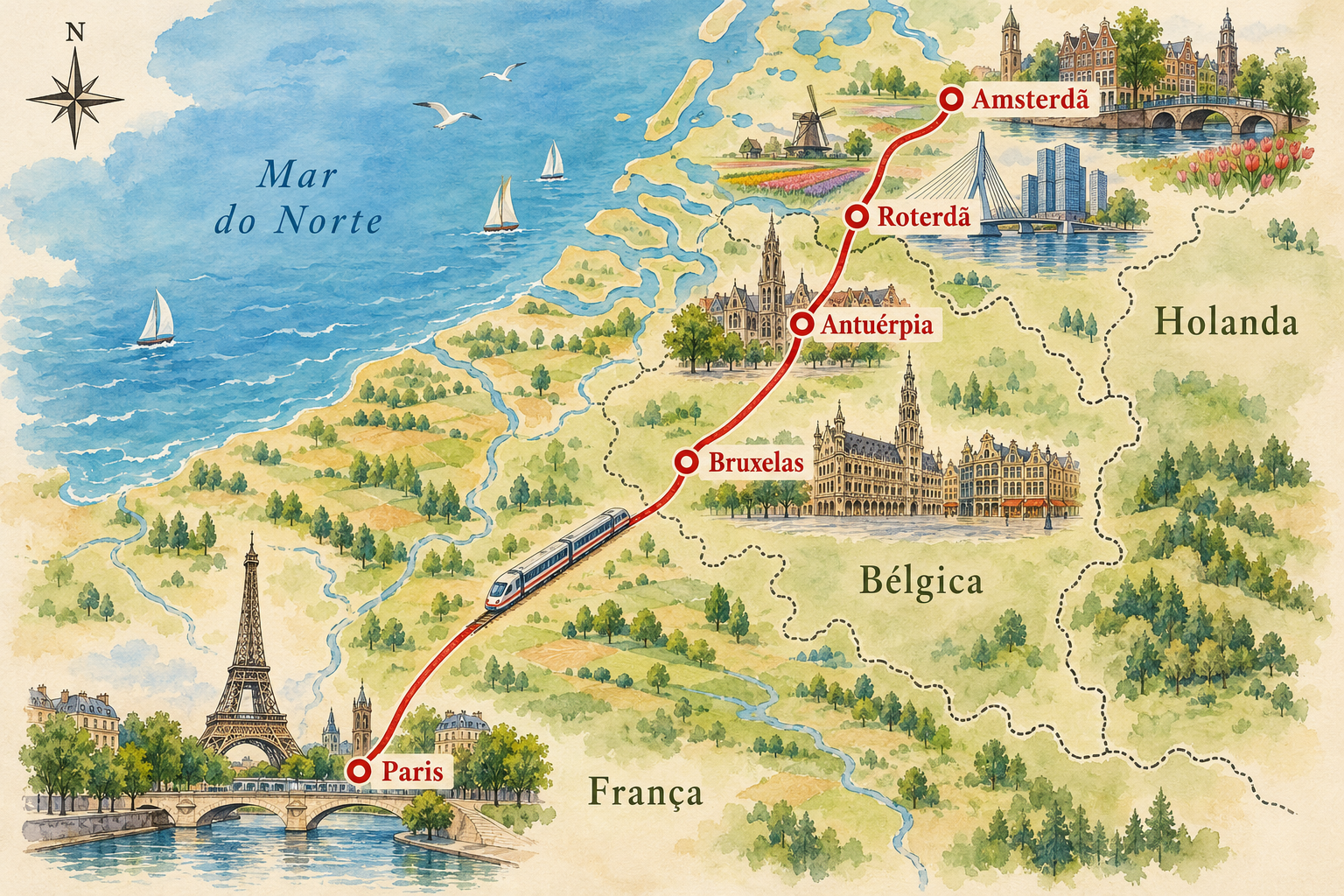
Rotterdam and Kinderdijk is on the Eurostar Paris–Amsterdam

By train through the centers of Paris, Brussels, Antwerp, Rotterdam and Amsterdam: three countries in just over three hours, from central station to central station.

Illustrative map, not to scale. Tap a city to open its page.
Illustrated map of Eurostar Paris–Amsterdam

Cross-border routes

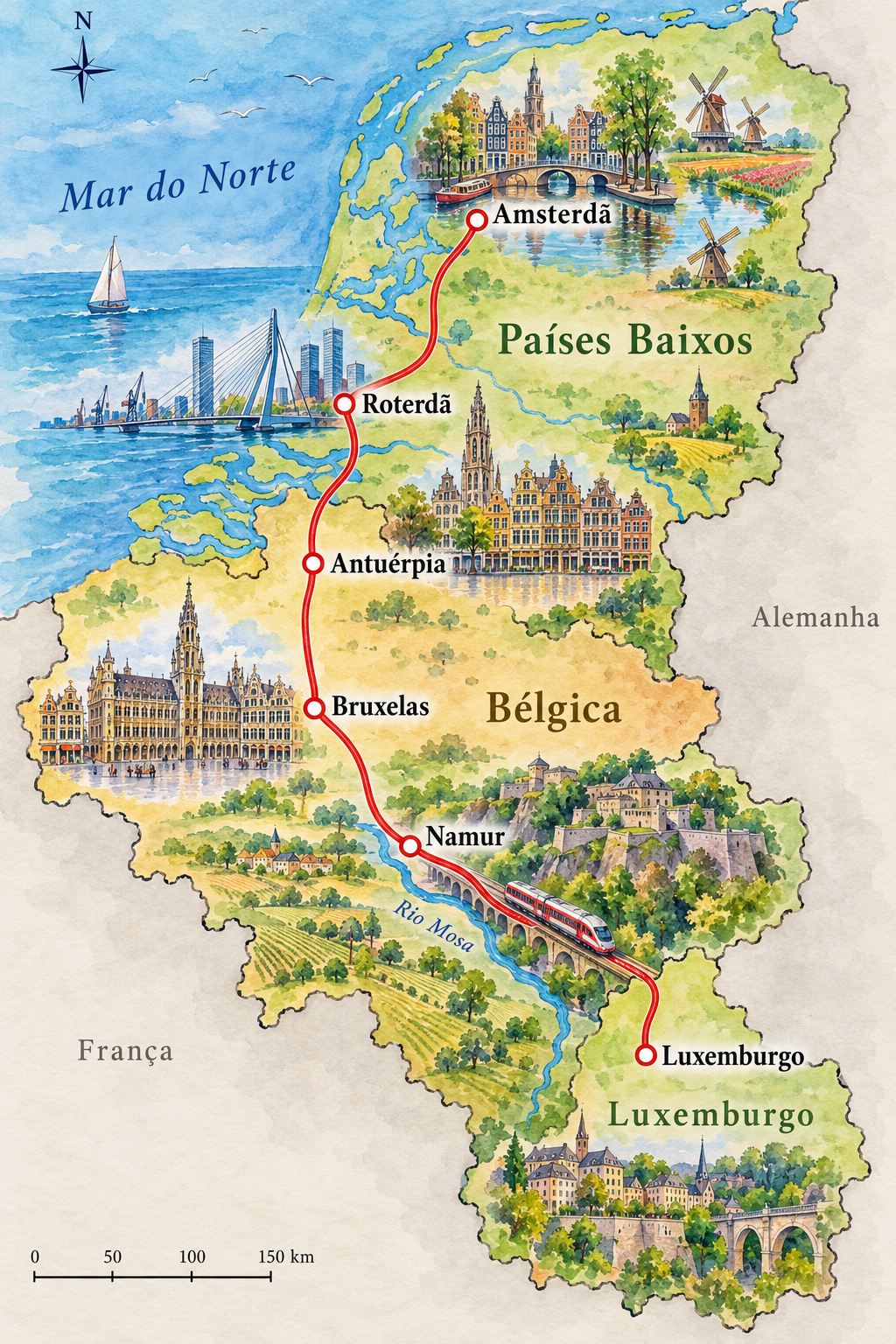
Rotterdam and Kinderdijk is on the Benelux by train: Amsterdam–Brussels–Luxembourg

The three Benelux countries by train: from Amsterdam to Brussels in about two hours, and from Brussels to Luxembourg via the Ardennes, with Rotterdam, Antwerp and Namur along the way.

Illustrative map, not to scale. Tap a city to open its page.
Illustrated map of Benelux by train: Amsterdam–Brussels–Luxembourg
Explore other destinations Search by state and city