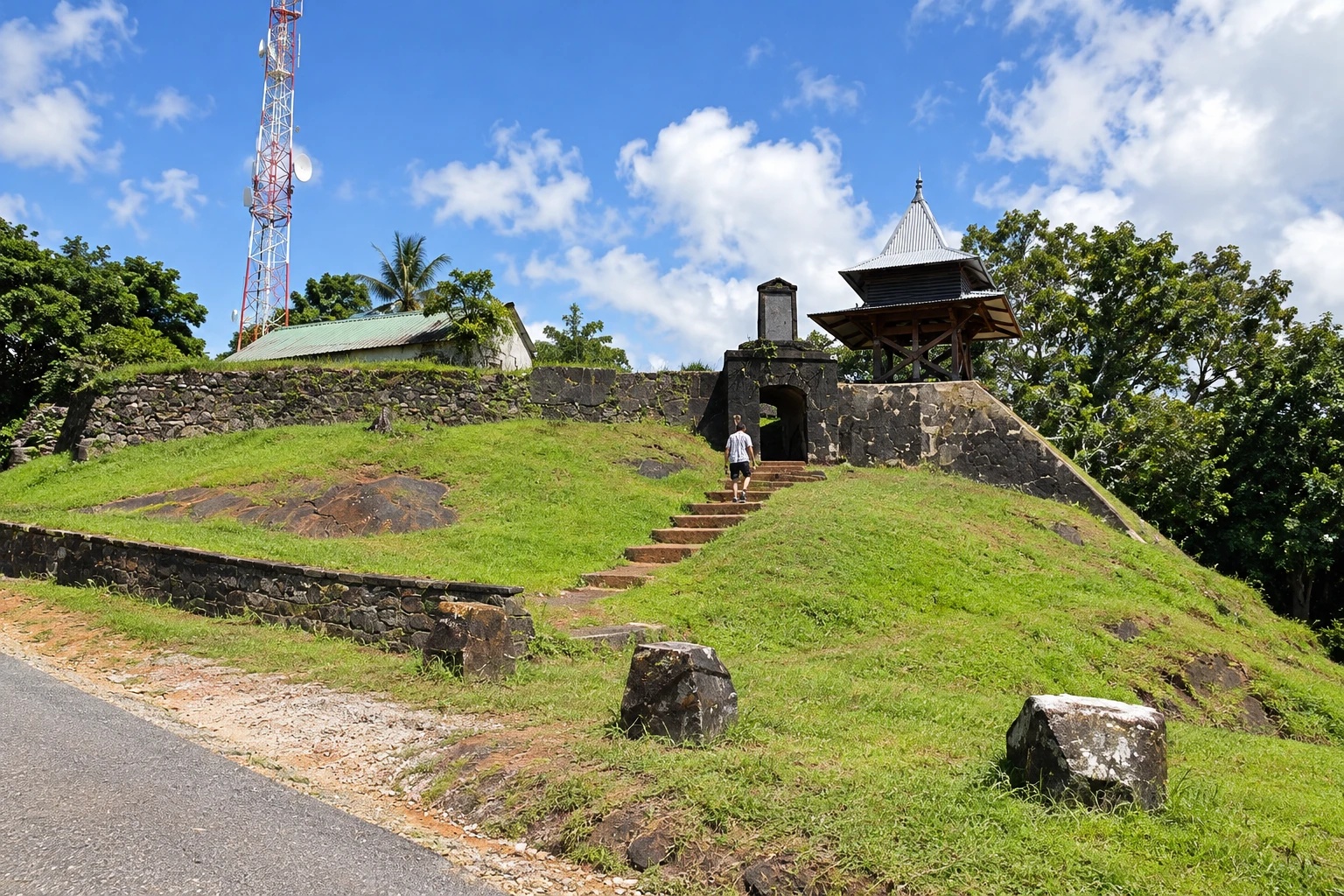
Cayenne, Kourou, and the Salvation Islands

Cayenne

Cayenne, Kourou, and the Salvation Islands

The capital of Guiana Francesa, with the Place des Palmistes, Forte Cépérou and the market; and Kourou, with the Centro Espacial and the boat to the Ilhas da Salvação, where the ruins of the former penal colony are located.

Cayenne and the Coast

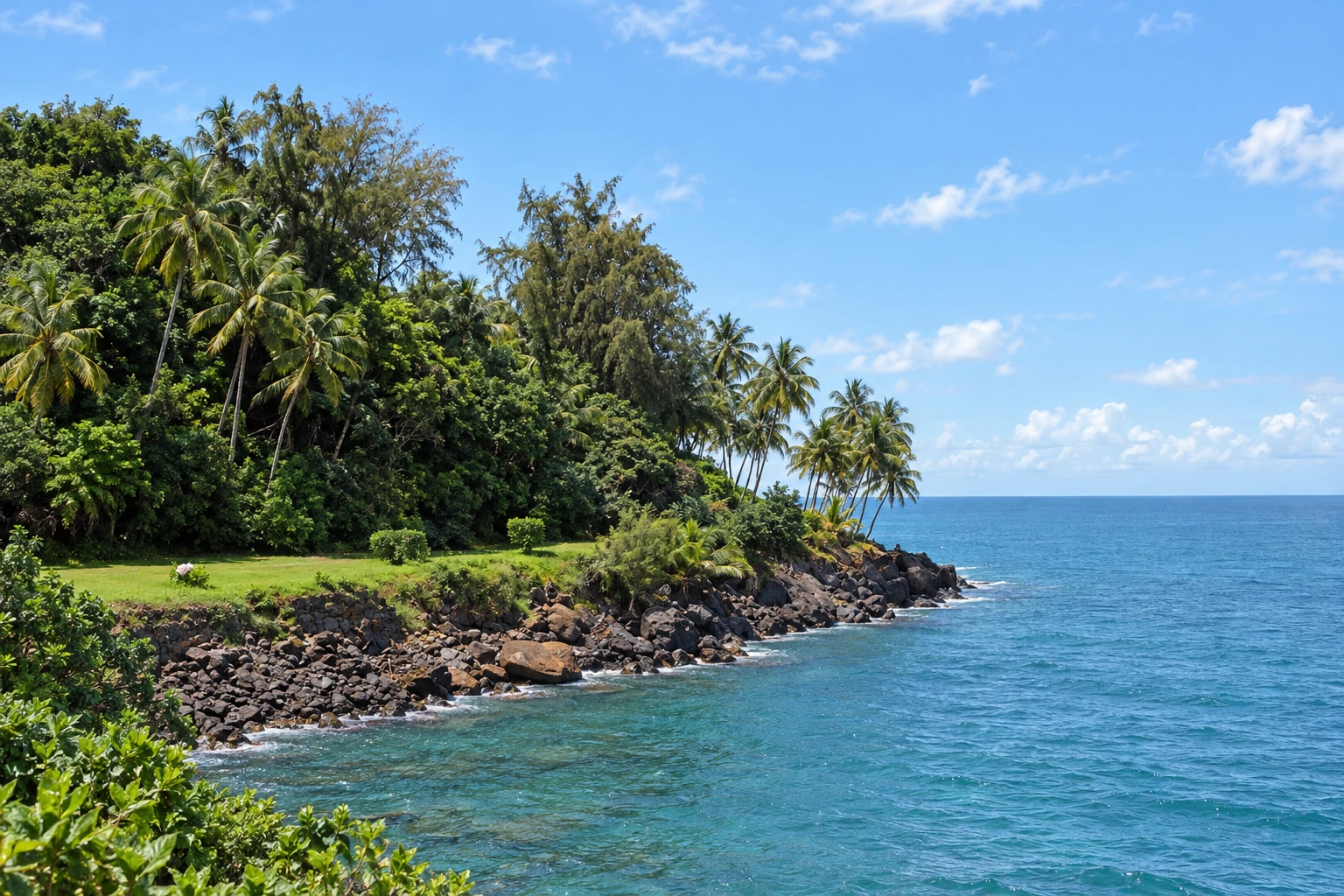
In the photo: Île Royale — Ilhas da Salvação

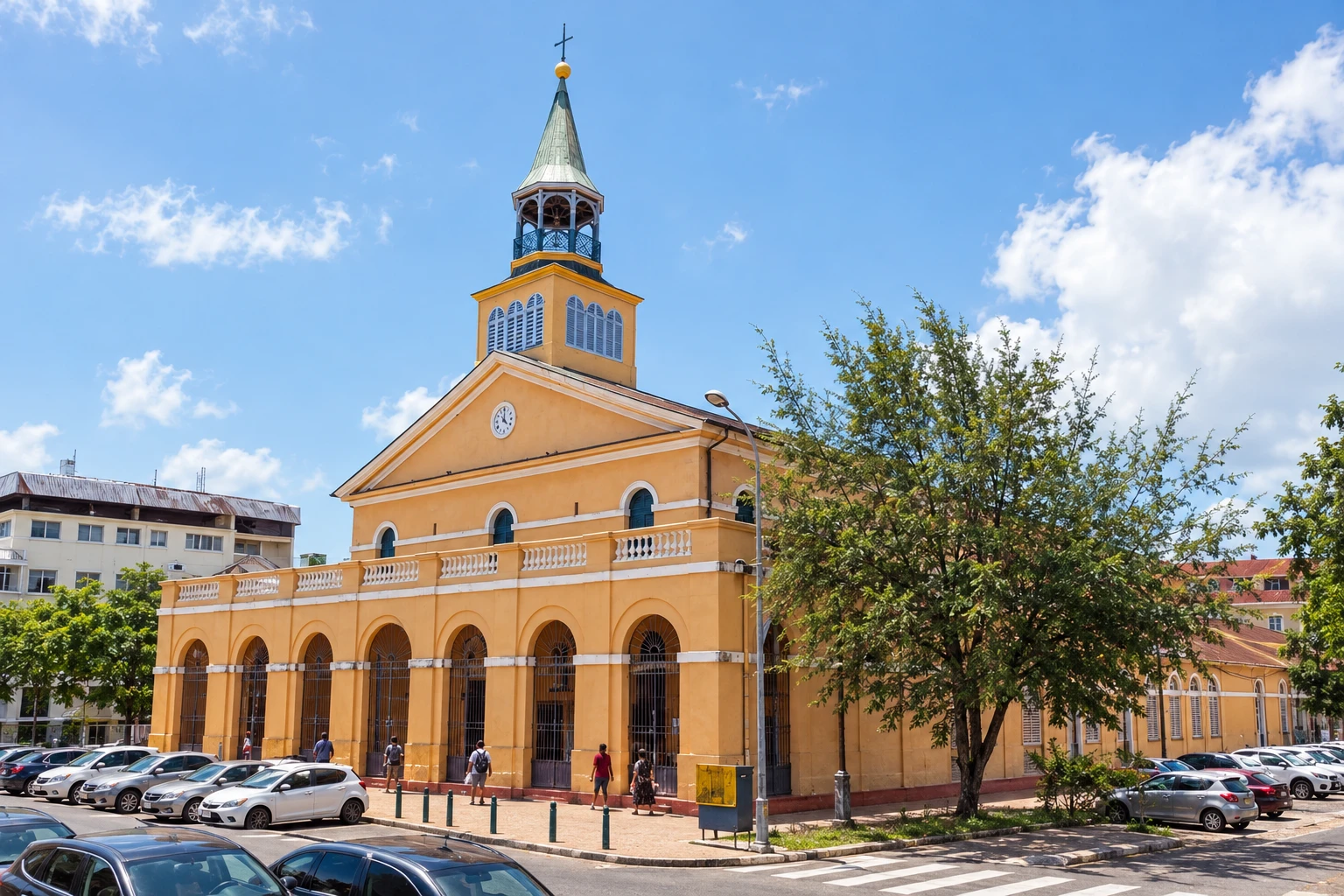
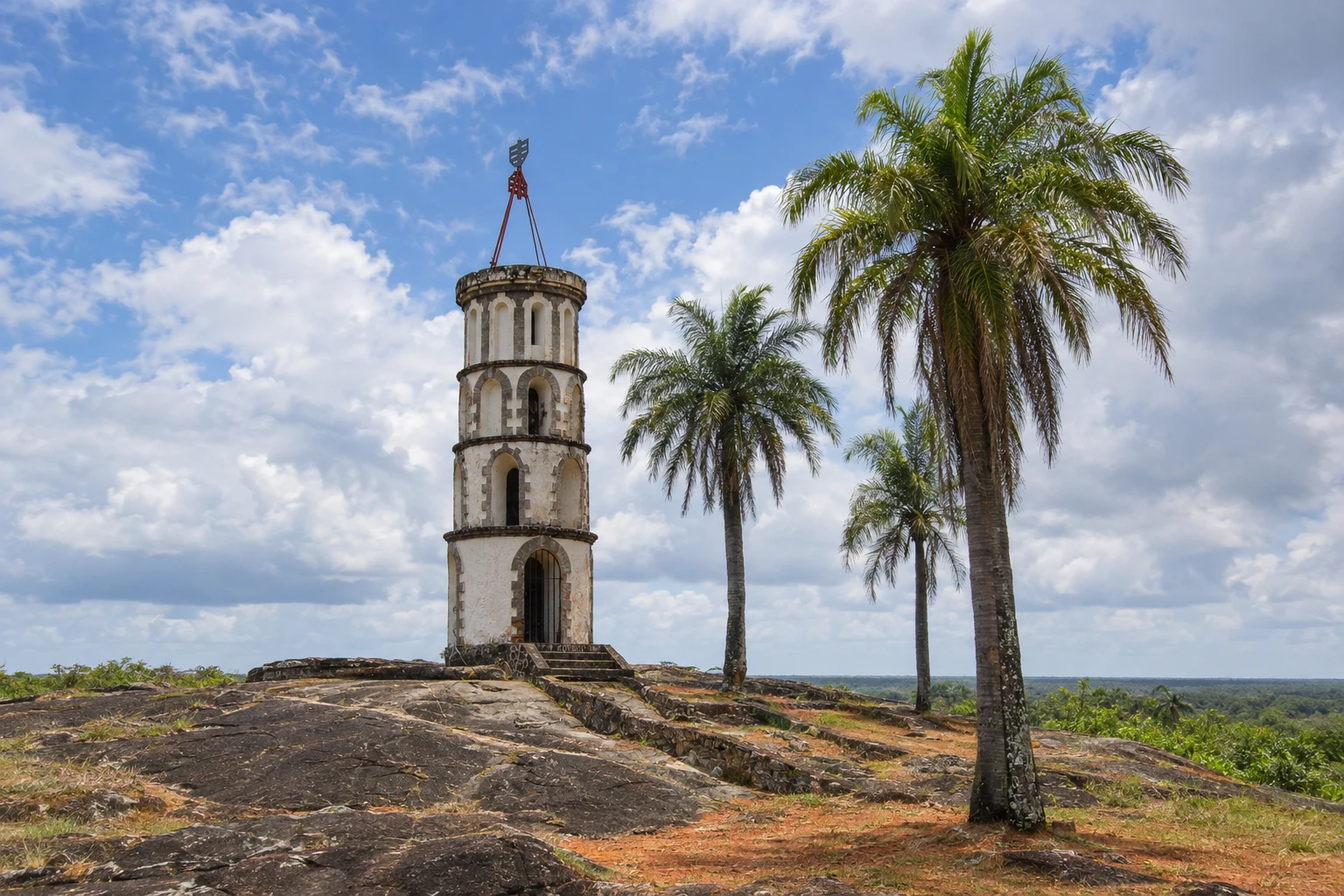
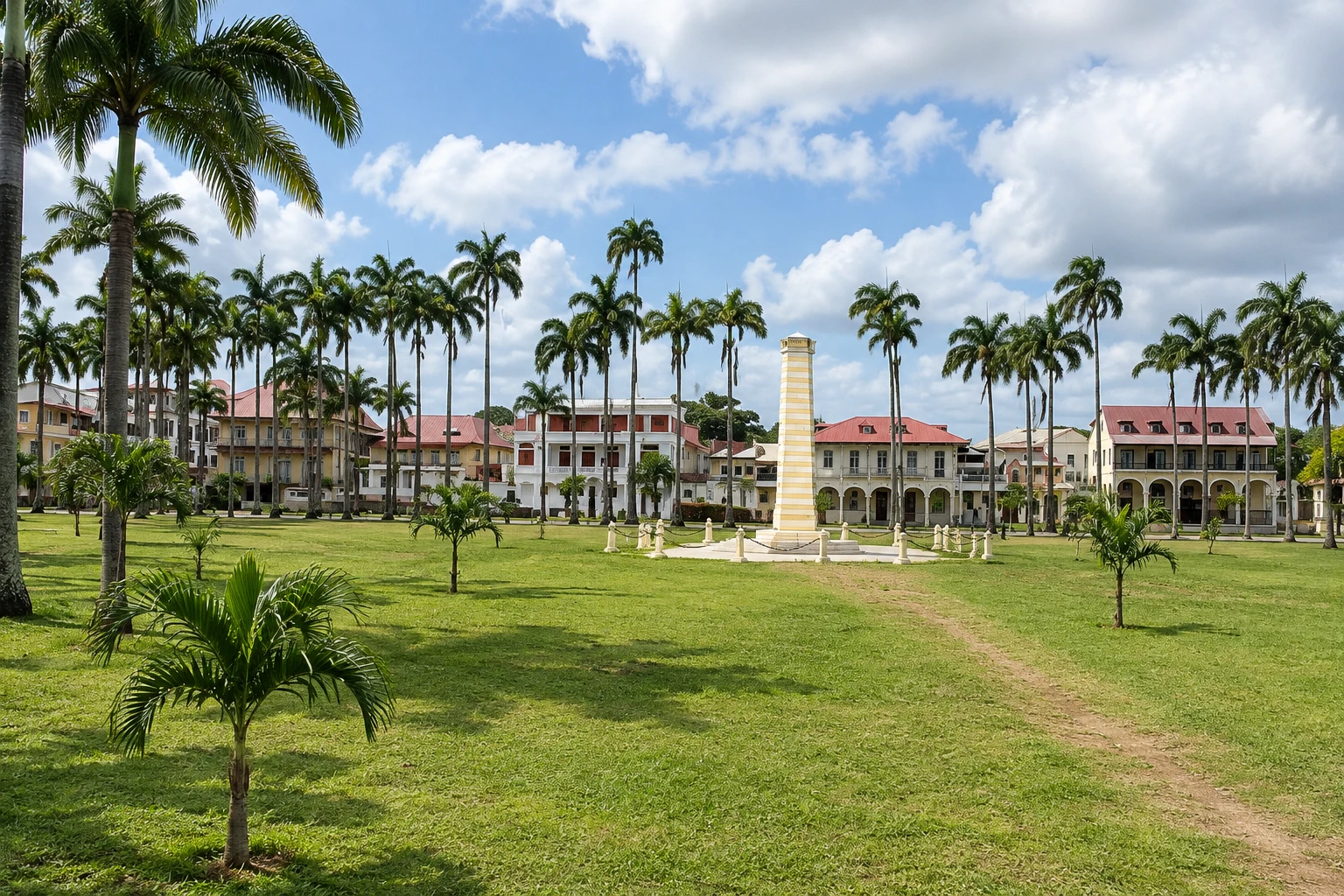
Illustrative images. The pictures in this guide are illustrations based on the real place, not photographs, and may differ from it.

Get it on Google Play

Get to know the place

A region to enjoy
at your own pace.

Caiena (Cayenne) is the capital of Guiana Francesa, a French territory in South America, between Amapá and Suriname. The city was founded in 1643 at the foot of Morro Cépérou, at the mouth of the Caiena River, and preserves an old center of wooden creole houses with verandas and louvered windows, around three squares: Place des Palmistes, with its imperial palms, Place Léopold-Héder and the market square. From the top of Forte Cépérou you can see the city, the river and the Atlantic.

About 60 km to the west, along the coastal road, is Kourou, a town that grew with the Centro Espacial Guianense, the base from which Europe launches its rockets. The base offers guided tours by reservation, and the Guyaspace Expérience, an interactive space about space and satellites, is at the entrance. On launch days, the center opens viewing areas to the public according to the schedule of each mission.

From Kourou the boat departs for the Ilhas da Salvação (Îles du Salut), three islets 14 km off the coast. On Île Royale and Île Saint-Joseph are the ruins of the penal colony that operated there from the mid-19th century until the mid-20th century, overgrown by forest, with trails, monkeys and sea views. Île du Diable, where Captain Alfred Dreyfus was imprisoned, can be seen from Royale but does not receive visitors.

For Brazilians, Guiana Francesa is France: the language is French, the currency is the euro and the sockets, signs and commerce follow the French standard. The time zone is the same as Brasília's. The climate is equatorial, hot and humid year-round, with the driest season between July and November. Yellow fever vaccination is usually required on entry; check before traveling.

This destination brings together 2 cities: Cayenne, Kourou.

Share: WhatsApp
Traveler, share your experiences through photos Up to 5 photos of each place you visited.

One destination, many paths

The cities on this trip

Start with one city or combine several in your itinerary.

Where Cayenne, Kourou, and the Salvation Islands is The star marks the capital, Cayenne.
CayenneKourou

Outlines: IGN e data.gouv.fr (ODbL 1.0). Adapted by Cidade Turismo.

How to get there: Cayenne, Kourou, and the Salvation Islands

Aéroport Cayenne-Félix-Éboué (CAY), in Matoury · 13 km to Cayenne

Connections with Brazil may be direct flights or with connections, depending on the season and airline. Check before booking. Flights land at Félix-Éboué Airport in Matoury, about 13 km from central Caiena. From Amapá, the bridge over the Oiapoque River links Oiapoque to Saint-Georges, with border control: bring your documents. From Saint-Georges to Caiena it's about 190 km by road.

Suggested arrival point: Cayenne

The local experience

Things to do in Cayenne, Kourou, and the Salvation Islands

Kourou · Cayenne · Science center

Guiana Space Center

The base from which Europe launches its rockets, close to the equator. The guided tour, by bus and by reservation, goes through the facilities and the Ariane 6 launch area, and on launch days there are viewing areas open to the public with registration.

Explore Guiana Space Center

Cayenne · Cayenne · Square

Place des Palmistes

Caiena's central square, with about 3 hectares of lawn and imperial palms, the statue of Félix Éboué and surrounding creole houses. At night, food stalls gather around the edges.

Explore Place des Palmistes

Cayenne · Cayenne · Fort

Fort Cépérou

The ruins of the 17th-century fort atop Cépérou hill, where Caiena began. The climb starts at Place Léopold-Héder, passes murals by local artists and ends at a viewpoint over the city, the river mouth and the sea.

Explore Fort Cépérou

Kourou · Cayenne · Museum

Guyaspace Experience

The visitor space of the Centro Espacial Guianense, in place of the former Museu do Espaço: interactive rooms about the history of the base, launch preparation and the use of satellites, with a planetarium and a lunar mission workshop.

Explore Guyaspace Experience

See 6 more places in Cayenne, Kourou, and the Salvation Islands

Before you go

Practical information

A little planning leaves more time to enjoy the journey.

When to go

From July to November is the driest season, with more sun for the Ilhas da Salvação and the sea is usually calmer for the crossing. From December to June it rains more, with a short break in March. Carnival, from January until Ash Wednesday, fills Caiena with Sunday parades and touloulou balls at night.

The seasons shown are the most usual ones; nature doesn't always follow the calendar.

How many days to stay

Four days: one for downtown Caiena, one for the beaches of Rémire-Montjoly, one for the Centro Espacial and Kourou, and one for the Ilhas da Salvação. With five days you can spend a night on Île Royale or fit in a launch, if the schedule allows.

Which city to stay in

In Caiena, the old center, near Place des Palmistes, leaves the fort, the cathedral and the market within walking distance. Rémire-Montjoly, to the east, has hotels near the beaches and is quiet at night. In Kourou, the Pointe des Roches neighborhood on the waterfront is close to the port where the boats to the islands depart. On Île Royale there is a hostel with rooms and hammocks for those who want to sleep on the islands.

Respect the place

Take your trash with you, follow the signs and support local businesses. In natural areas, follow the visiting guidelines.

Beyond the guide

Your questions

Frequently asked questions about Cayenne, Kourou, and the Salvation Islands

Does a Brazilian need a visa for Guiana Francesa?

Guiana Francesa has its own entry rules, different from metropolitan France. Check with the French consulate before traveling.

Is vaccination required to enter Guiana Francesa?

Yellow fever vaccination is usually required on entry; check before traveling. Bring the international vaccination certificate together with your identification.

Is it possible to drive from Amapá to Caiena?

Yes. The bridge over the Oiapoque River links Oiapoque to Saint-Georges, and from there the road continues about 190 km to Caiena. There is border control on the bridge: bring your documents. To enter with a Brazilian car, check in advance the insurance and vehicle documentation requirements.

How many days to reserve for Caiena, Kourou and the Ilhas da Salvação?

Four days cover downtown Caiena, the beaches of Rémire-Montjoly, the Centro Espacial and a full day on the Ilhas da Salvação. If you want to watch a launch, keep your travel dates flexible, because launches can change dates.

Do you need a car in Guiana Francesa?

It helps a lot. Transport between Caiena and Kourou is by shared taxis and some bus lines with limited schedules. With a rental car, the coastal road is simple to follow and you can combine Caiena, Kourou and the island port in the same day.

What is the currency and language of Guiana Francesa?

The currency is the euro and the official language is French. On the streets you also hear Guianese Creole, and many people understand Portuguese because of the proximity to Amapá and the Brazilian community. Cards are usually accepted in cities; on the islands and at markets, bring some cash.

Explore other destinations Search by state and city