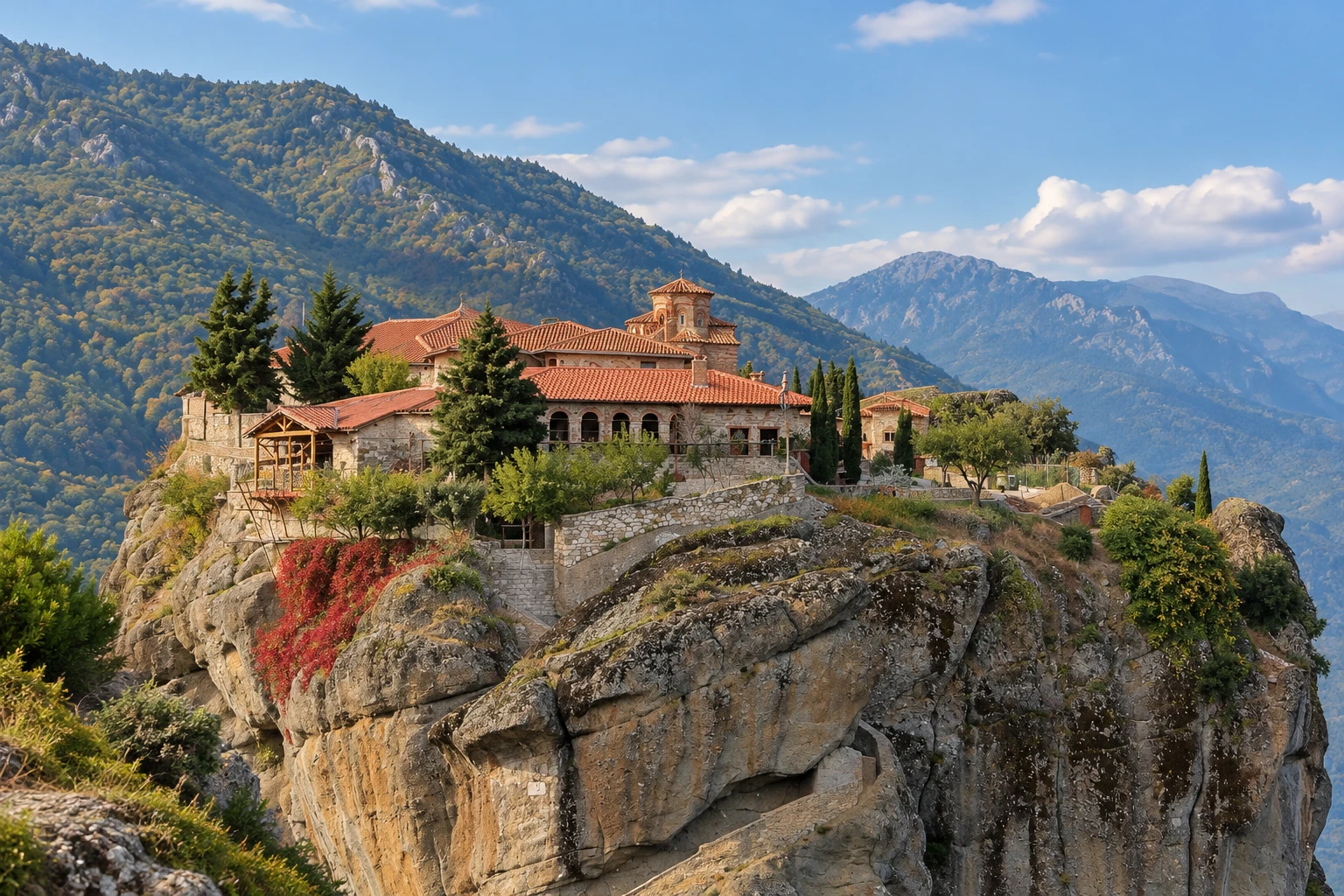
Holy Trinity Monastery (Moni Agias Triados)The monastery of the Santíssima Trindade, isolated atop a separate pillar, with a church dating to 1475 and a chapel carved into the rock.
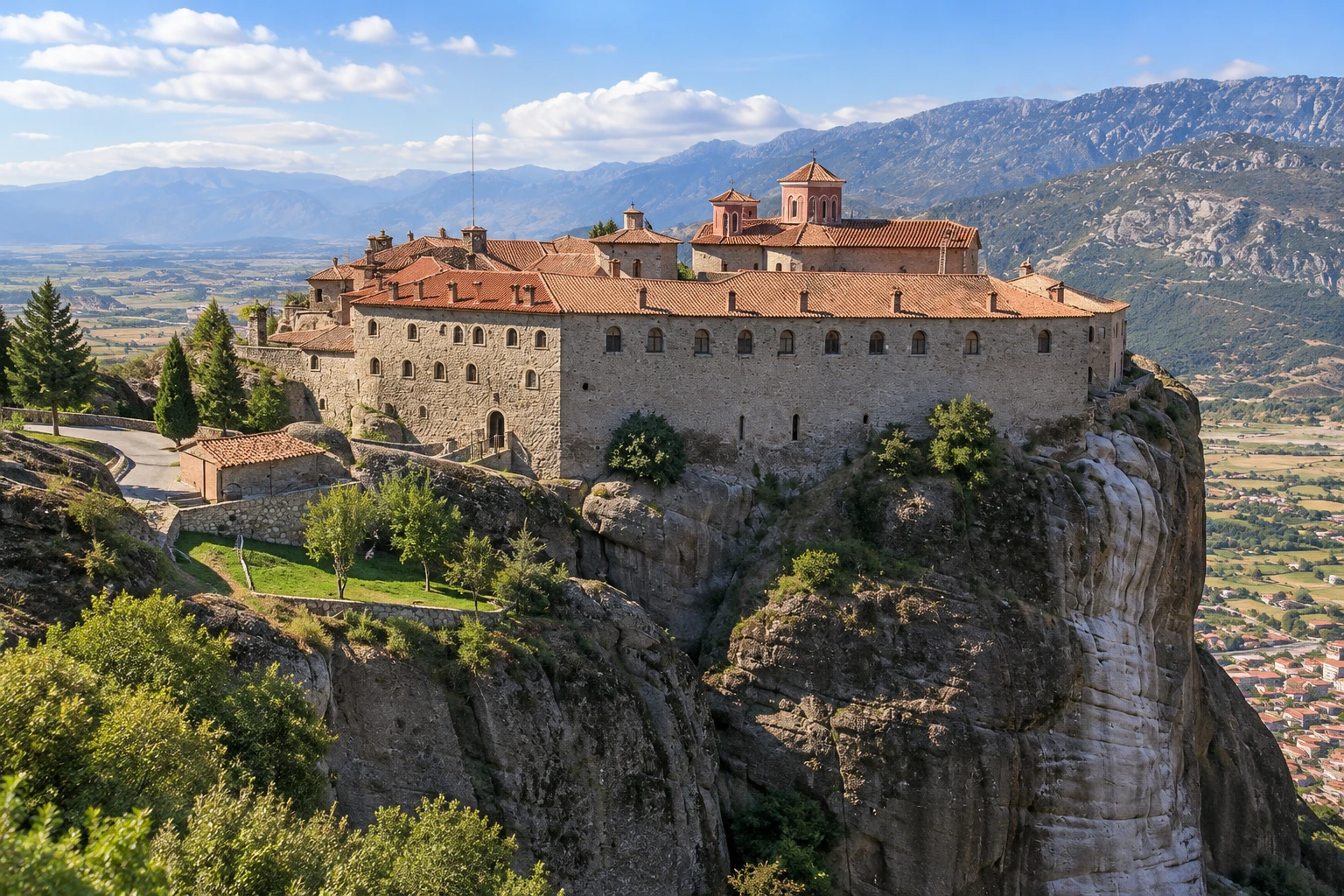
The largest and highest of the Meteora monasteries, founded in the 14th century by Atanásio the Meteorite, atop the rock Platys Lithos. Church painted in 1552, refectory-museum from 1557, ancient kitchen and the monks' ossuary.
Second largest monastery in Meteora, opposite the Grande Meteoro. Church of All Saints from 1541, frescoes from 1548 attributed to Frangos Katelanos, a tower with the hauling mechanism and the old net, and a museum of manuscripts and vestments.
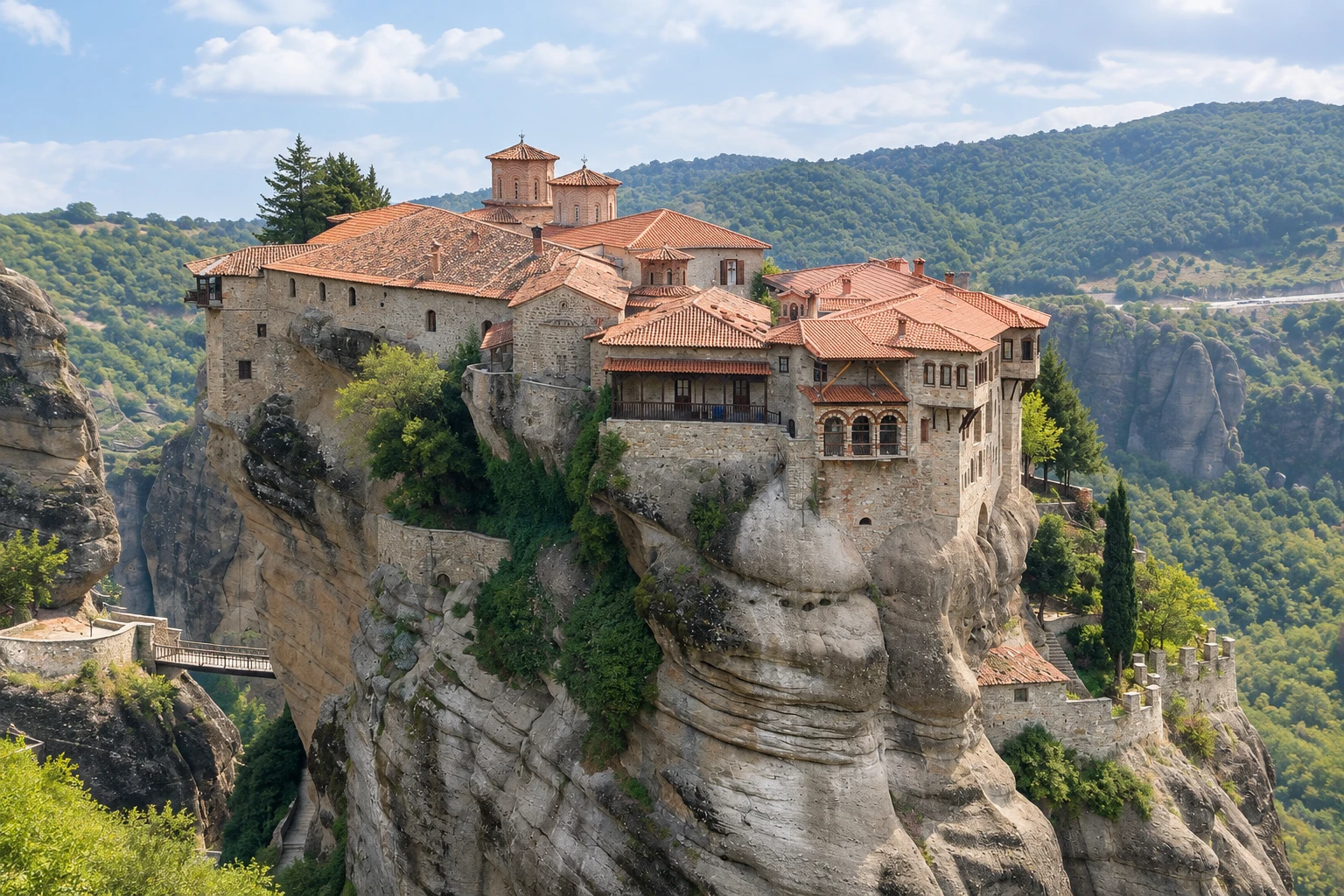
Female monastery on a narrow rock between Varlaam and Agios Nikolaos, dedicated to Santa Bárbara. 16th-century church with frescoes from 1560 of the Cretan school; access by bridge and about 140 steps.
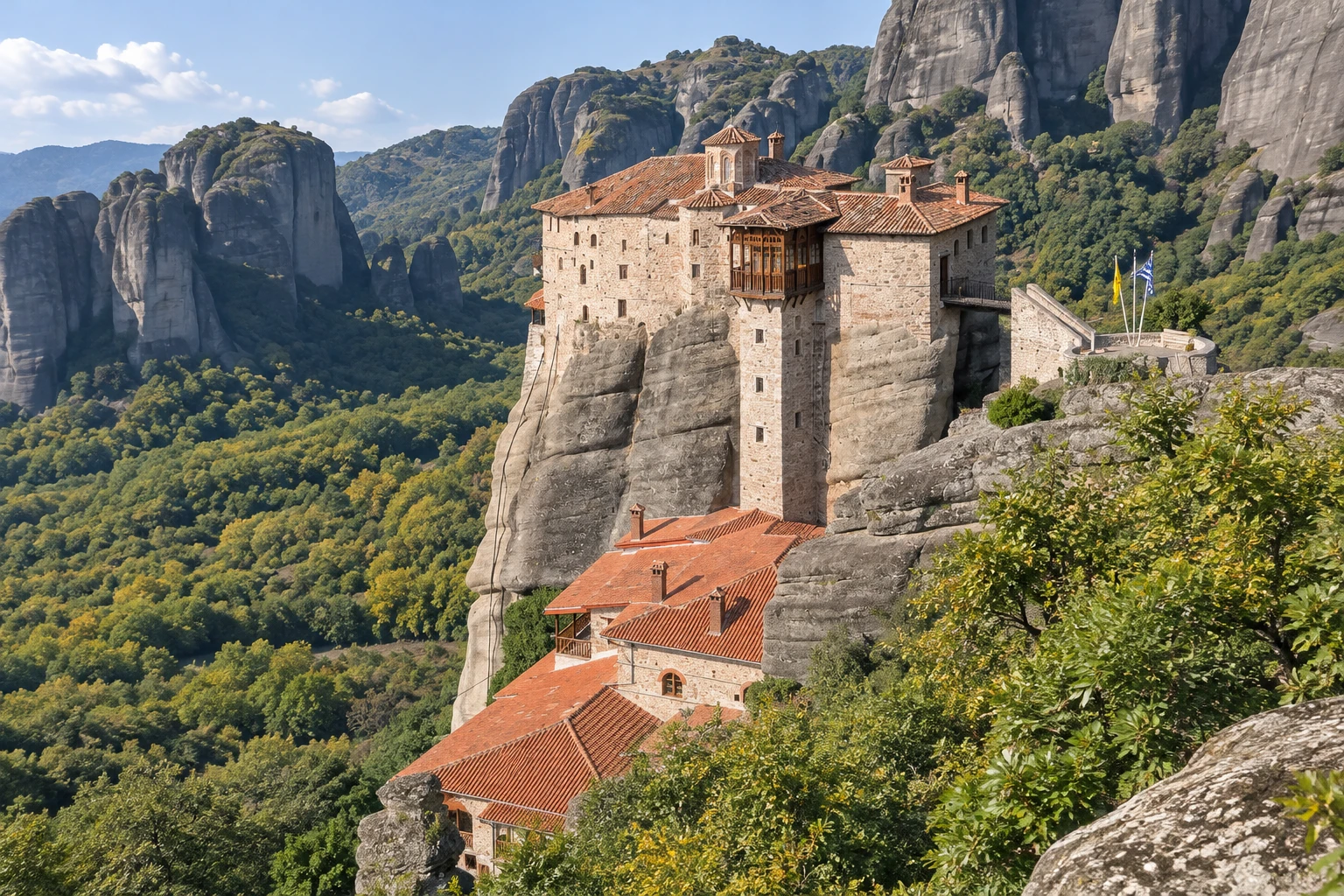
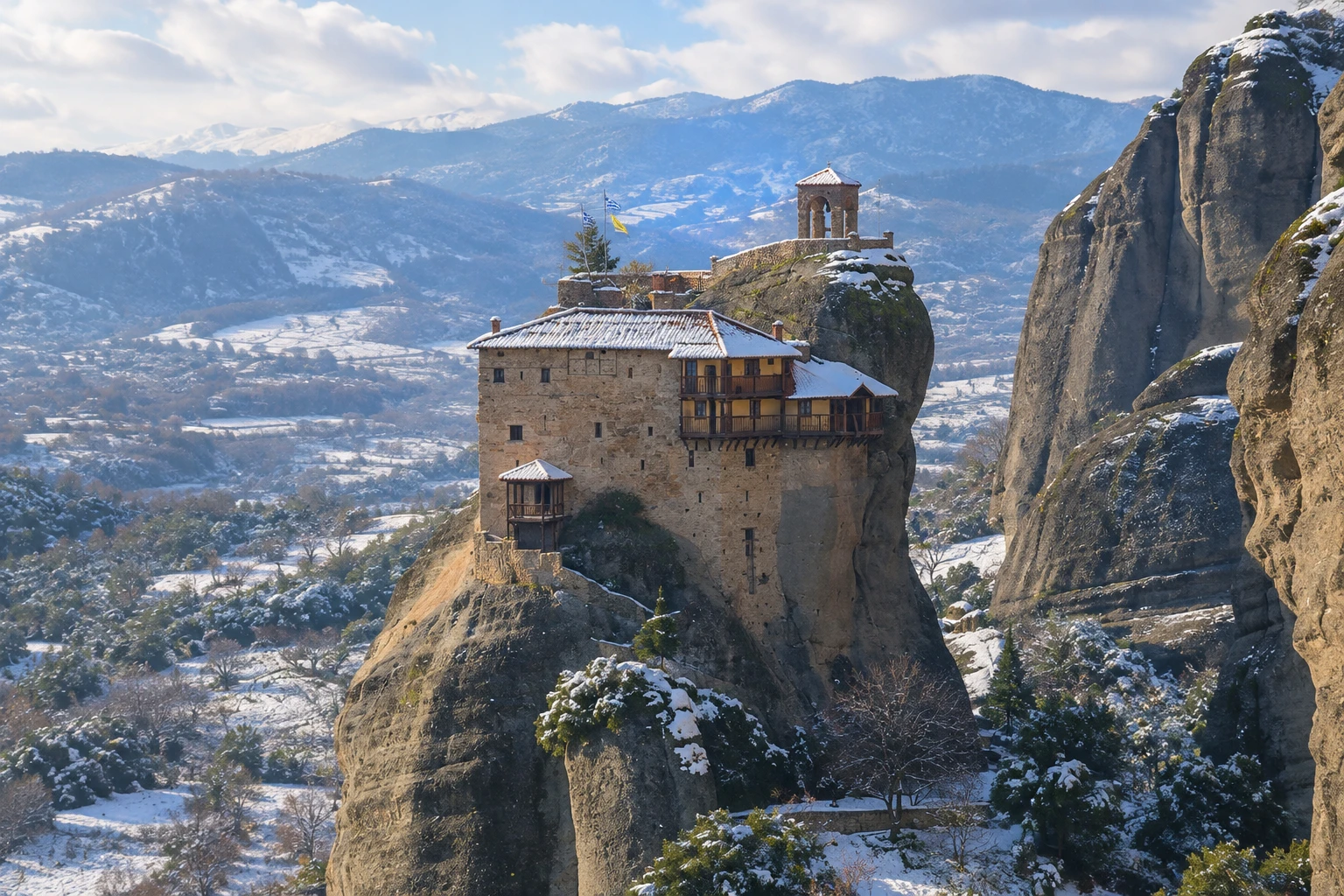
The first monastery on the road, near Kastraki, built in levels on a narrow rock. It houses the 1527 frescoes by Teófanes, the Cretan, the painter’s oldest dated work.
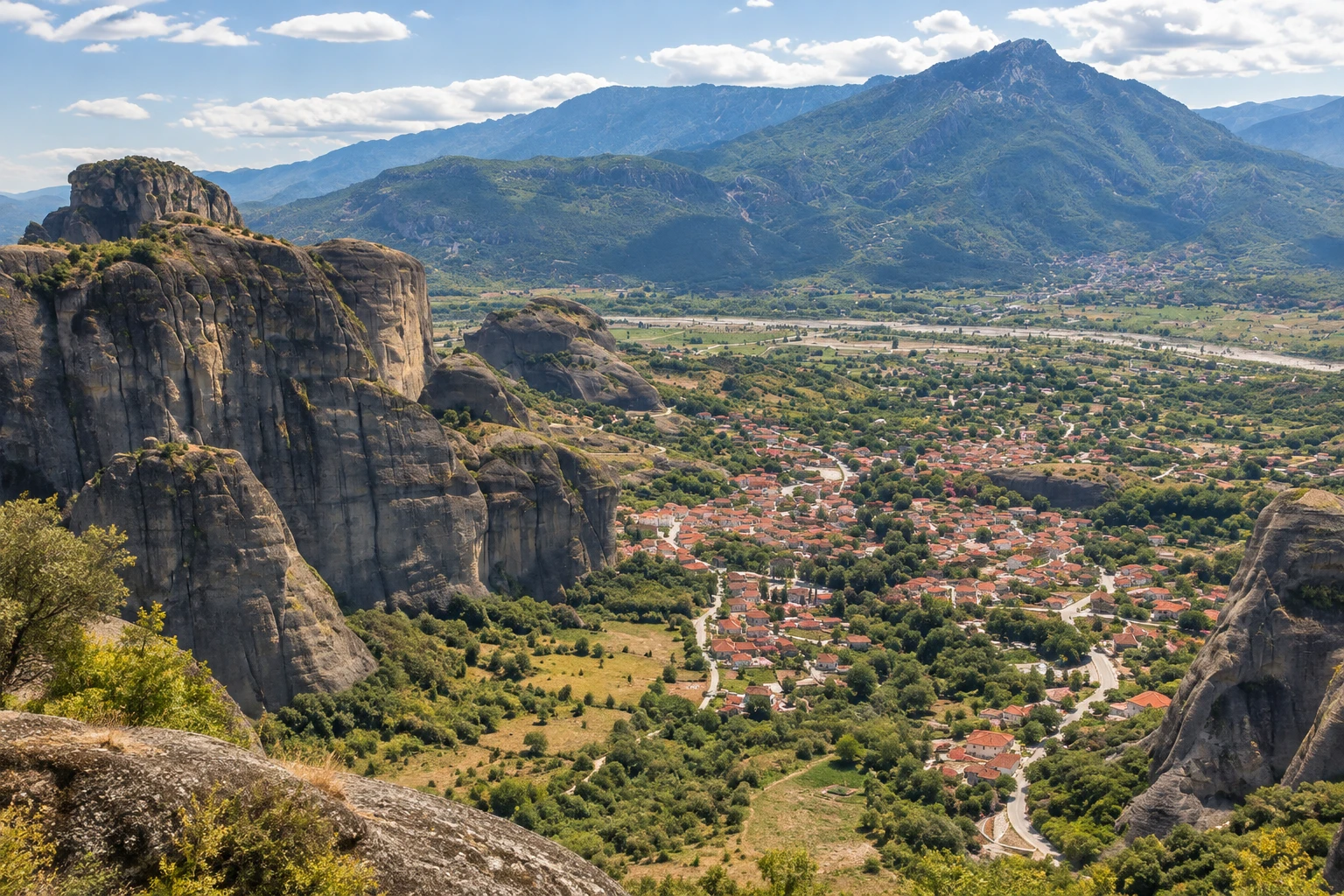
The monastery of the Santíssima Trindade, isolated atop a separate pillar, with a church dating to 1475 and a chapel carved into the rock. The climb has about 140 steps along a staircase cut into the stone, and the view reaches Kalambaka and the plain.
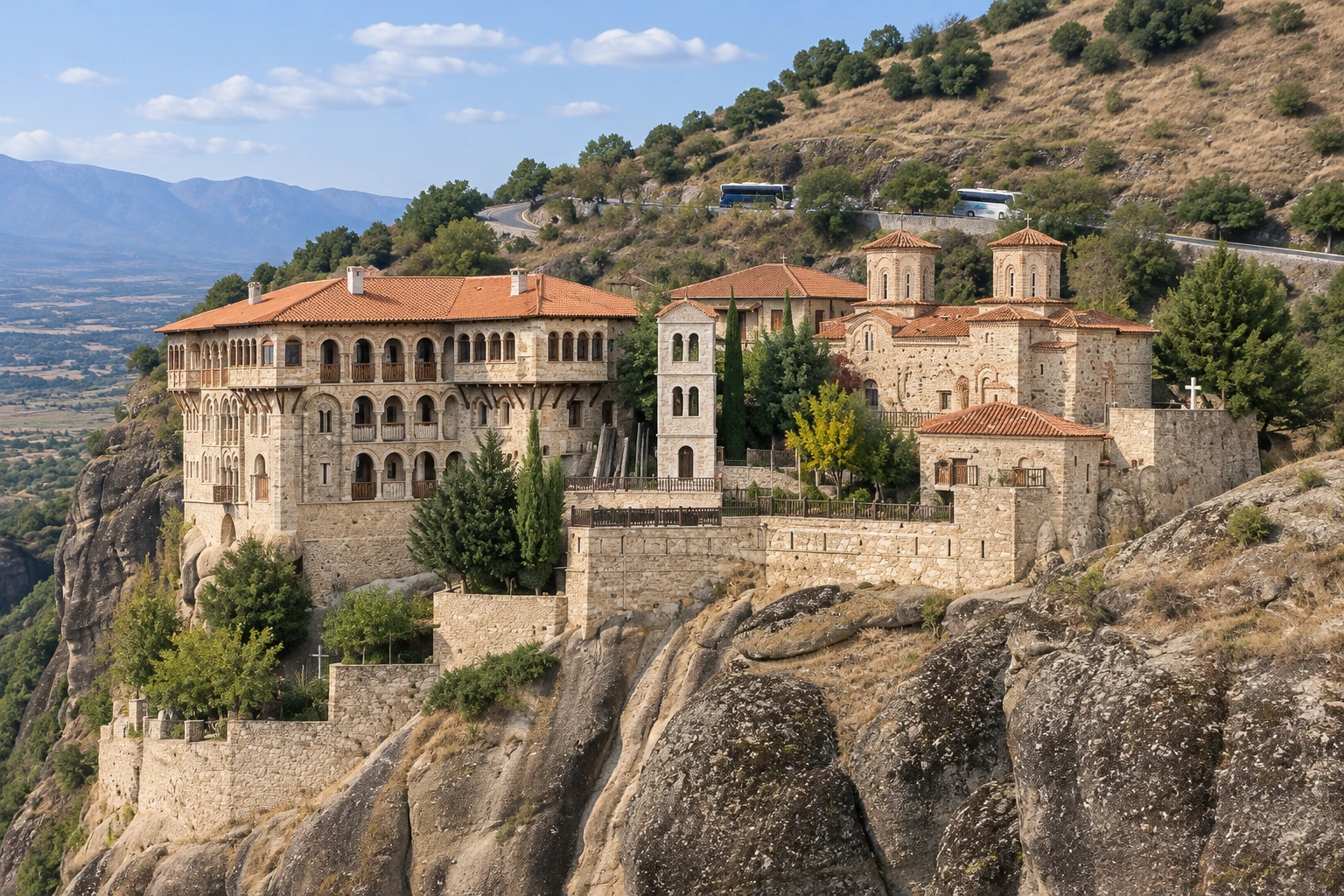
Female monastery at the end of the road, the only one reachable by a bridge without stairs. Old 14th-century church, the church of Agios Charalambos from 1798, and a museum with manuscripts and embroideries.
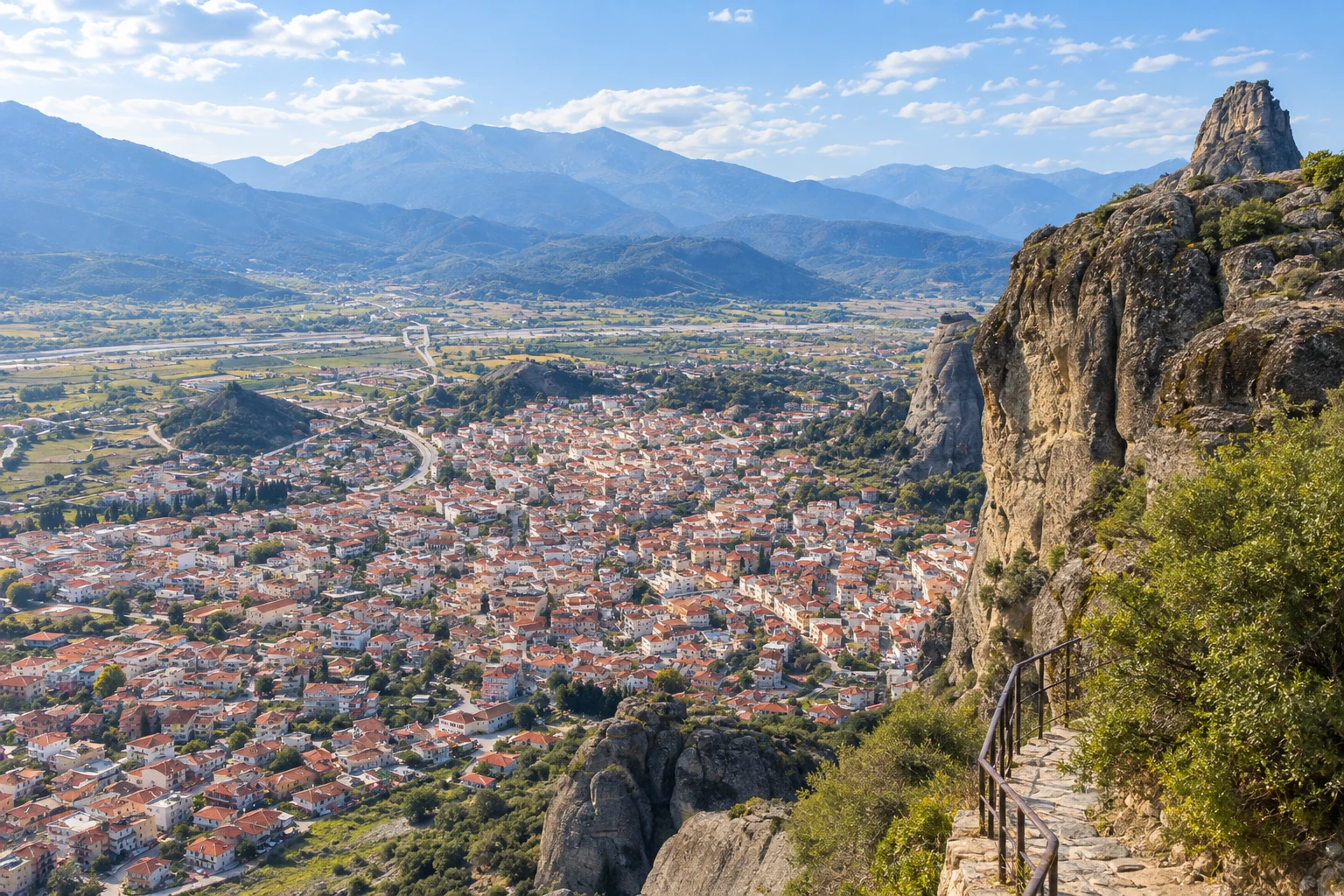
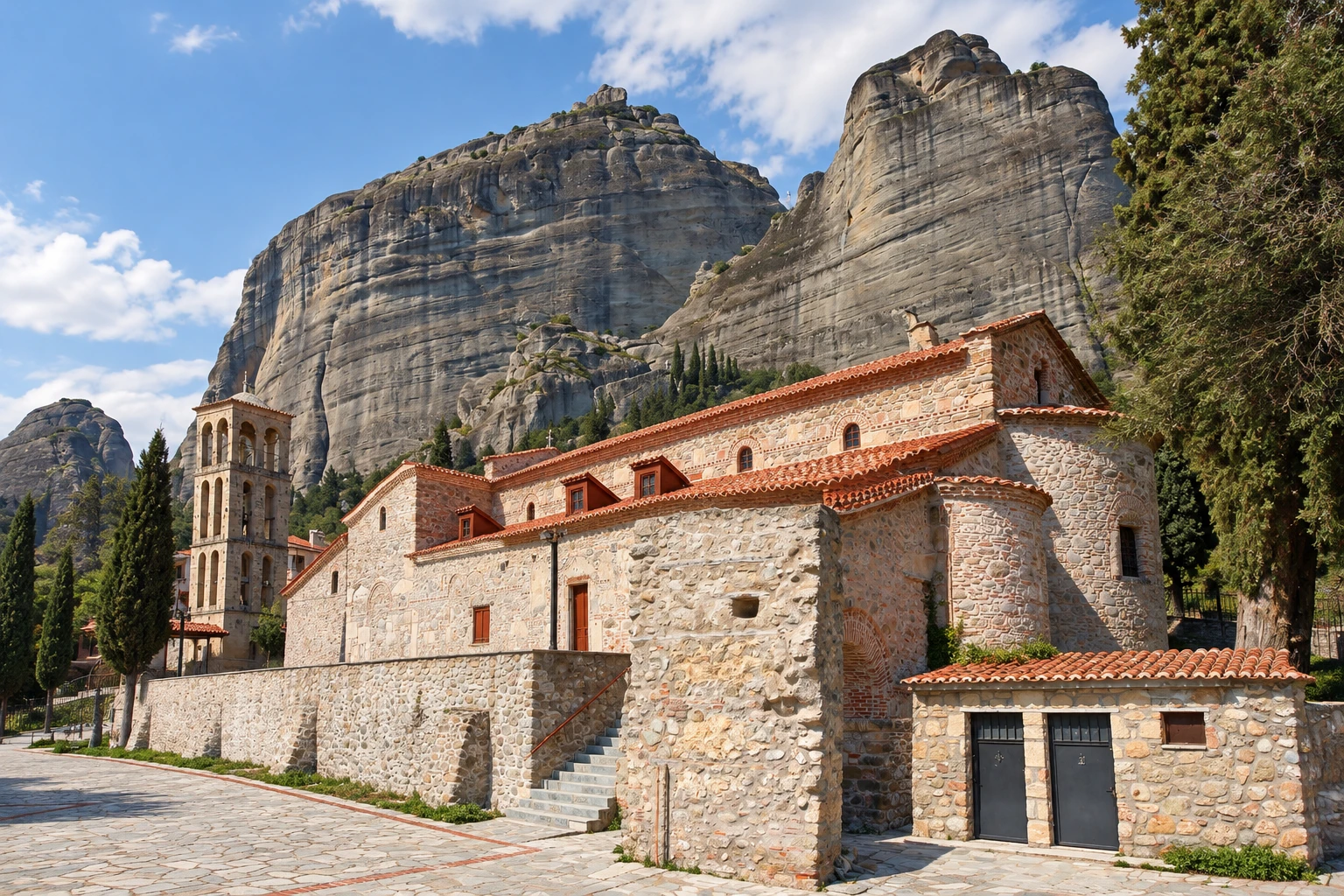
Igreja bizantina da Dormição da Virgem, in the upper neighborhood of Kalambaka, built between the 10th and 12th centuries atop a paleochristian basilica. It preserves a marble ambo in the middle of the nave, frescoes from 1573 and sections of ancient mosaic flooring.
Village of about a thousand inhabitants tucked against the rocks of Meteora, 2 km from Kalambaka. Stone houses with red roofs, tavernas, guesthouses and the start of the road and trails to the monasteries.
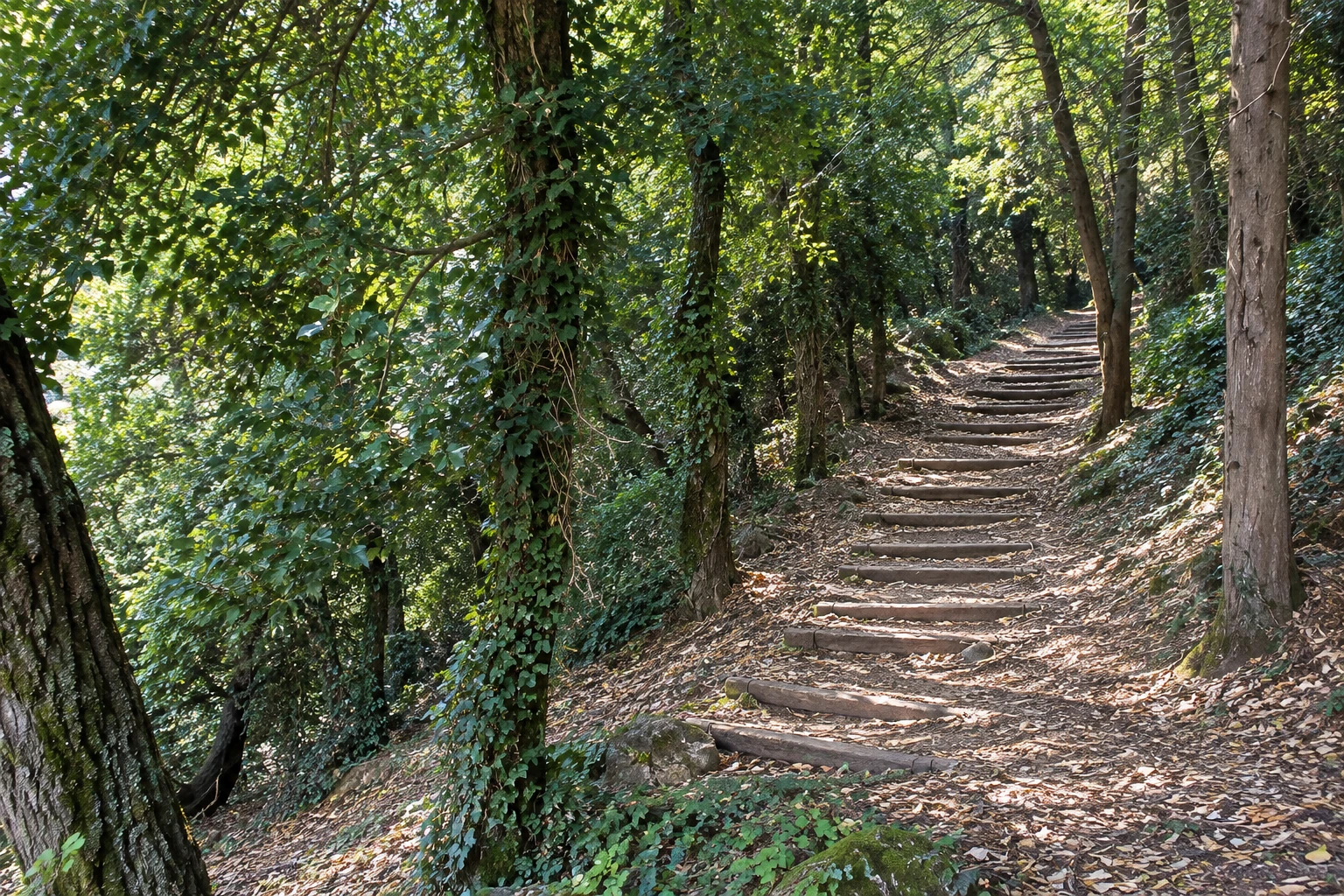
Old monk paths that link Kastraki and Kalambaka to the six monasteries, through oak woods and between the rocks. Sections range from 30 minutes to 3 hours, with steep climbs and viewpoints off the road.
Prehistoric cave about 5 km from Kalambaka, inhabited continuously from the Paleolithic to the Neolithic. A 17-metre-wide entrance with views of the Meteora rocks and a documentation center in the village of Theopetra.
Natural history and mushroom museum in Kalambaka, opened in 2014. Dioramas with around 350 species of birds and mammals from the region and a collection of roughly 250 mushroom species, with tastings and truffle-hunting outings.


 Brazil
 Antarctica
 Argentina
 Bolivia
 Chile
 Colombia
 Ecuador
 Falkland Islands (Malvinas)
 French Guiana
 Guyana
 Paraguay
 Peru
 Suriname
 Uruguay
 Venezuela
 Albania
 Austria
 Belgium
 Croatia
 Denmark
 Finland
 France
 Germany
 Hungary
 Iceland
 Ireland
 Italy
 Luxembourg
 Norway
 Poland
 Portugal
 Slovakia
 Slovenia
 Spain
 Sweden
 Switzerland
 the Czech Republic
 the Netherlands
 the United Kingdom
 Turkey
 Bermuda
 Canada
 Greenland
 Mexico
 Saint Pierre and Miquelon
 the United States
 the Dominican Republic
 Japan
 Egypt
 South Africa
 Australia
 Fiji
 New Zealand
 Papua New Guinea