Melekouni
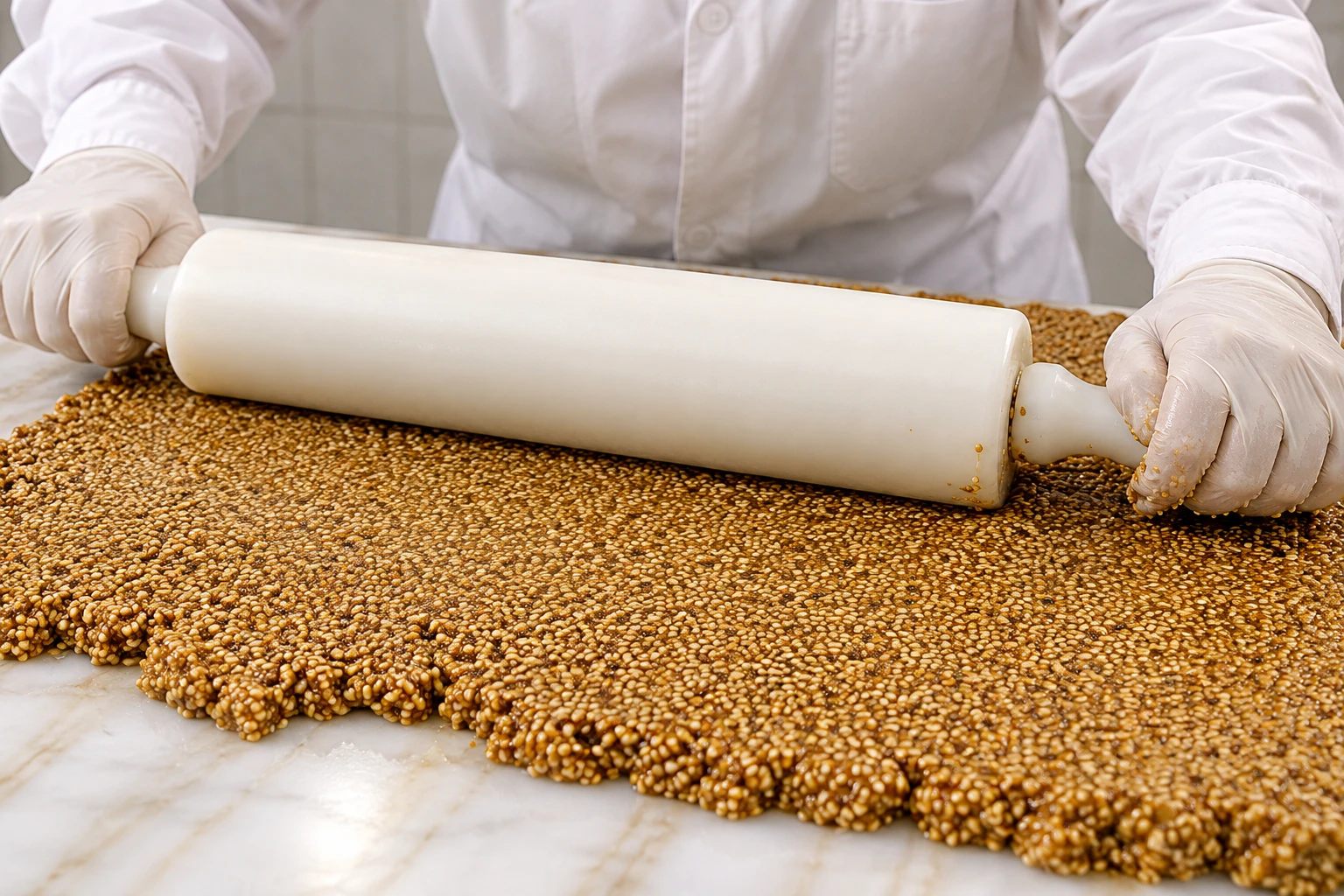
Toasted sesame and honey bar with almonds, orange peel and spices, cut into diamond shapes. It is Rhodes’ sweet offered at weddings and baptisms and has a Protected Geographical Indication from the European Union.
Antarctica
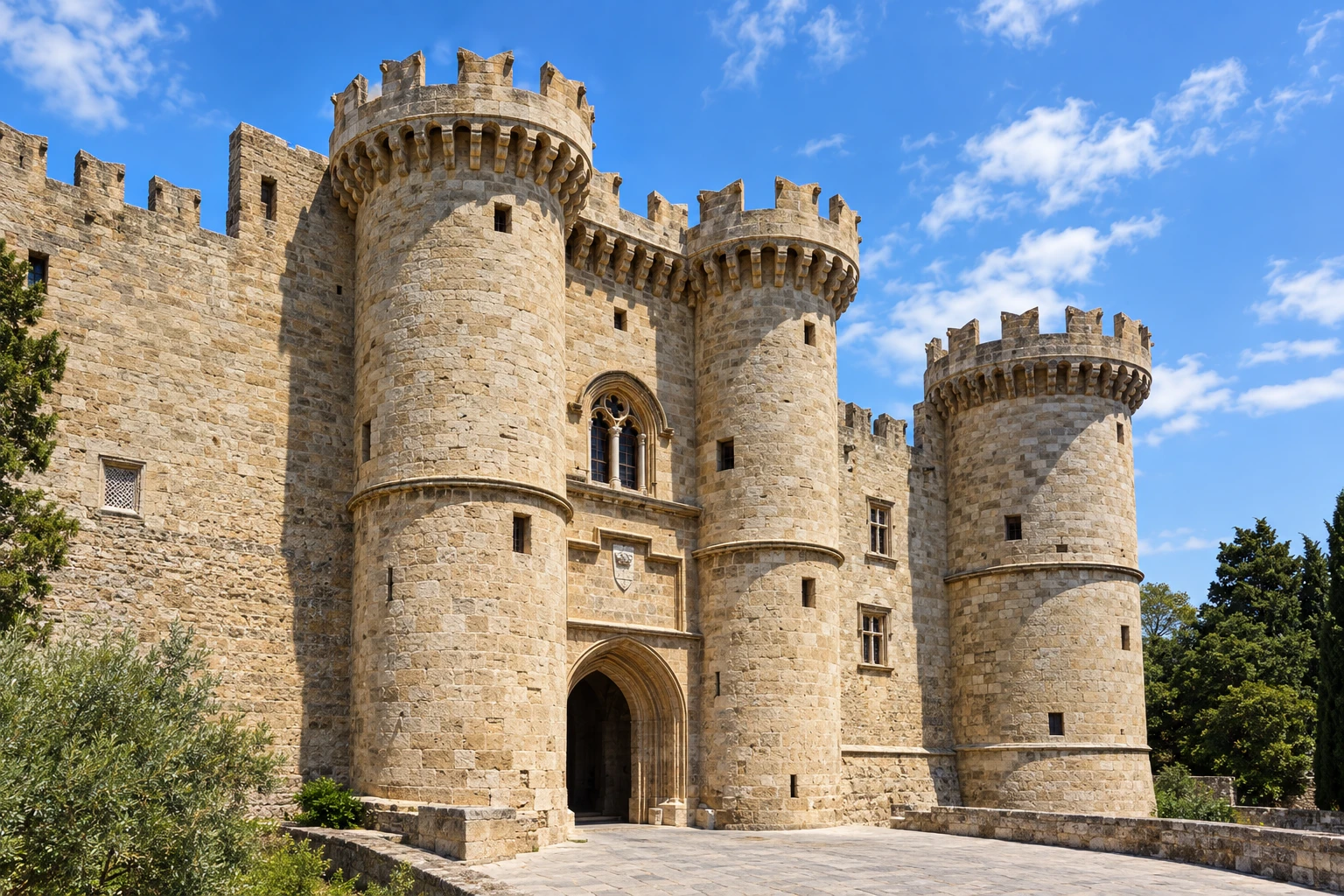
In the photo: Palácio do Grão-Mestre
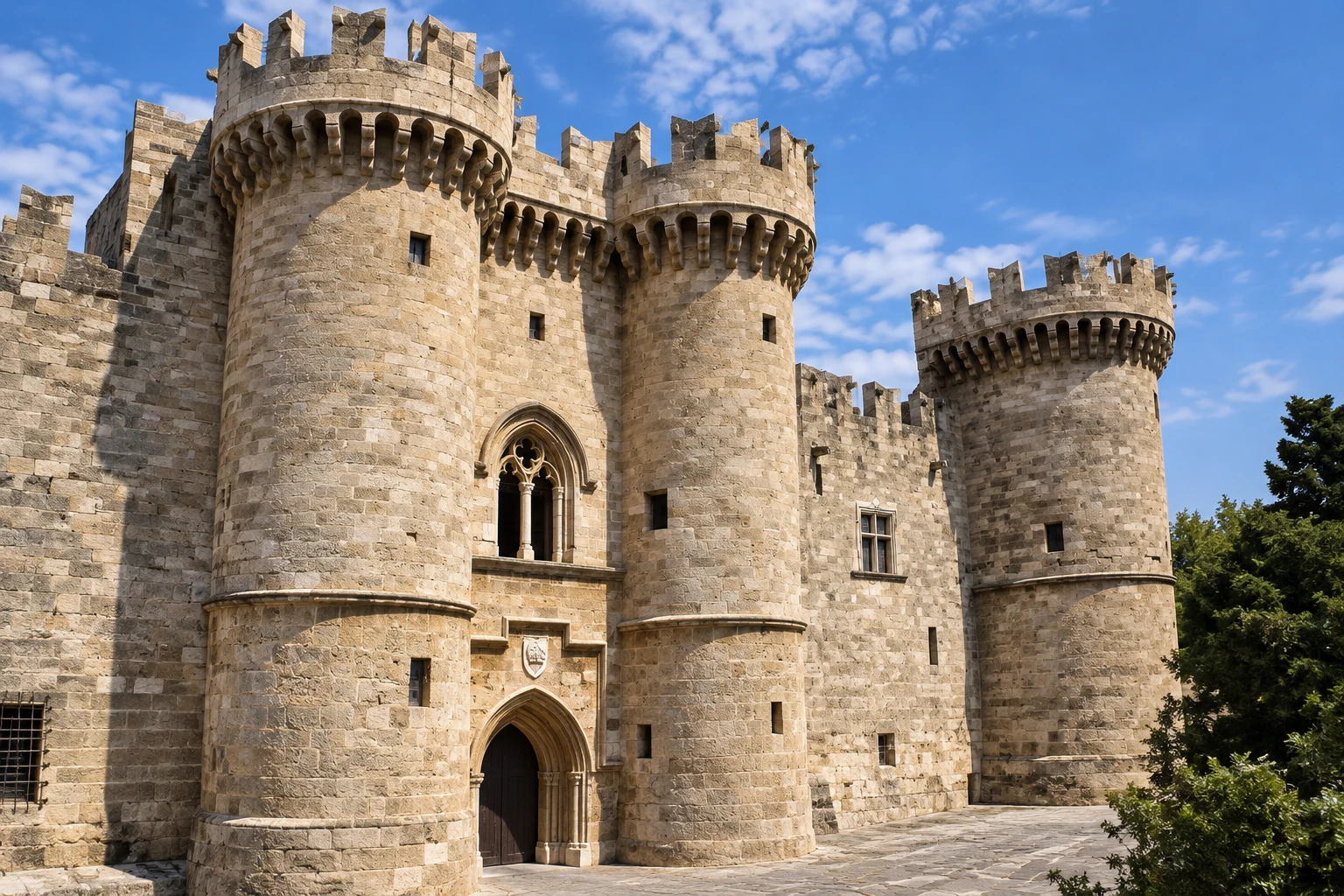
Illustrative images. The pictures in this guide are illustrations based on the real place, not photographs, and may differ from it.
The city
Rodes (Rodos) is the main town on the island of the same name, at the northern tip, and the largest in the Dodecanese. The medieval walled town, built by the Knights of São João between 1309 and 1522, is a World Heritage Site and houses the Palácio do Grão-Mestre, the Rua dos Cavaleiros and the old hospital, now the Museu Arqueológico. Outside, the port of Mandraki, with its windmills and the Forte de São Nicolau, evokes the Colossus of Rhodes; the Italian new town, Elli beach and the acropolis on Mount Smith complete the visit. It is the base for Lindos, the beaches of the east coast and the sites on the west coast.
There's no accommodation in the guide yet in Rhodes.
Tem hotel, pousada ou casa de temporada aqui? Cadastre a suaThere are no restaurants in the guide yet in Rhodes.
Know a good one? Recommend it to usHotéis e restaurantes da cidade no mapa.
how to get there · how many days · itinerary · questions
Flavors of Greece
The local experience
Walled city built by the Knights of Saint John between 1309 and 1522, a World Heritage Site. About 4 km of walls, a dry moat, monumental gates, the knights' quarter and Ottoman streets with minarets and wooden balconies.
Seat of the grand masters of the Order of Saint John, rebuilt by the Italians in 1937–1940 atop the ruins of the medieval palace. Halls with Roman mosaics brought from Kos, antique furniture and exhibitions on the history of Rodes.
Explore Palace of the Grand Master (Palati tou Megalou Magistrou)
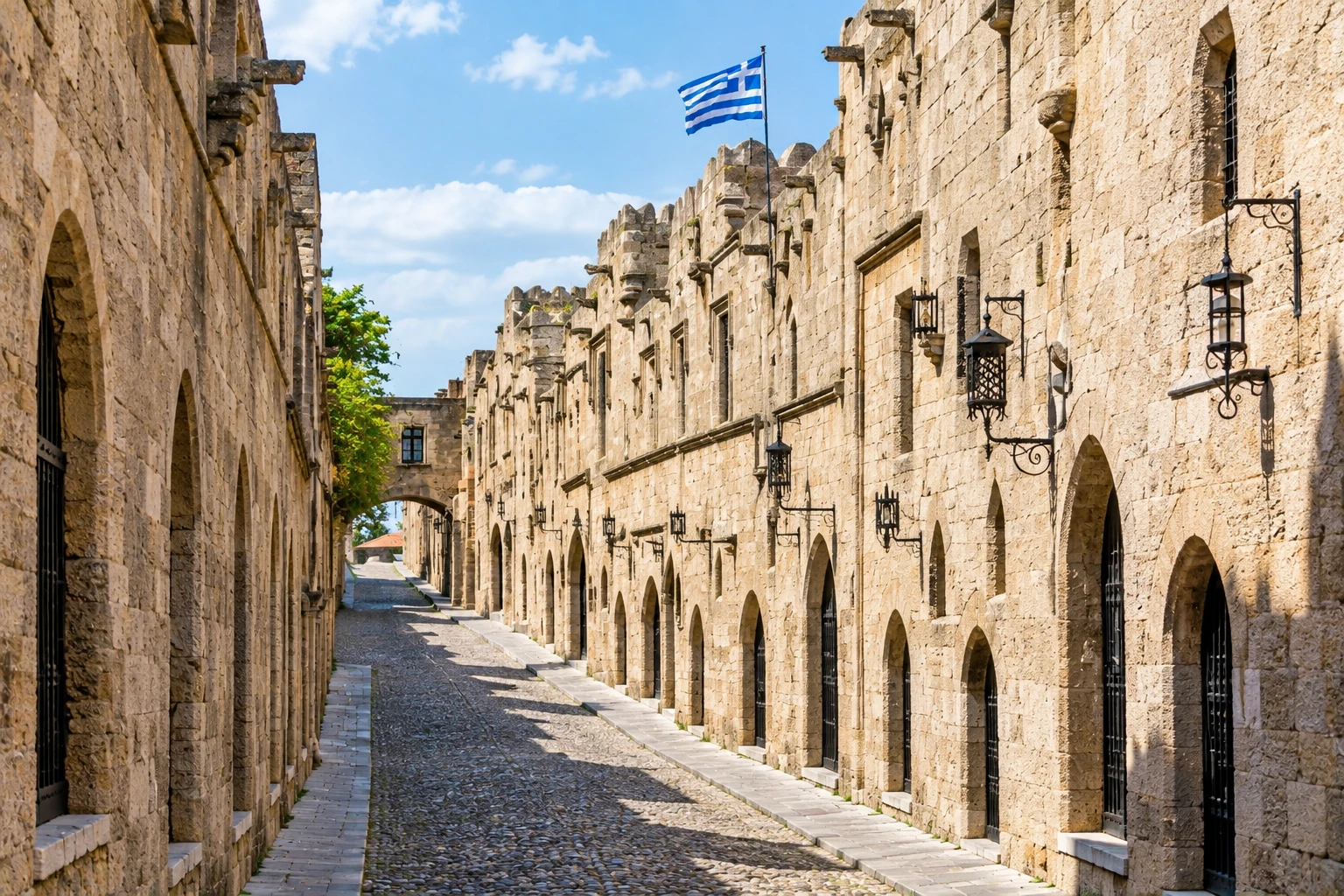
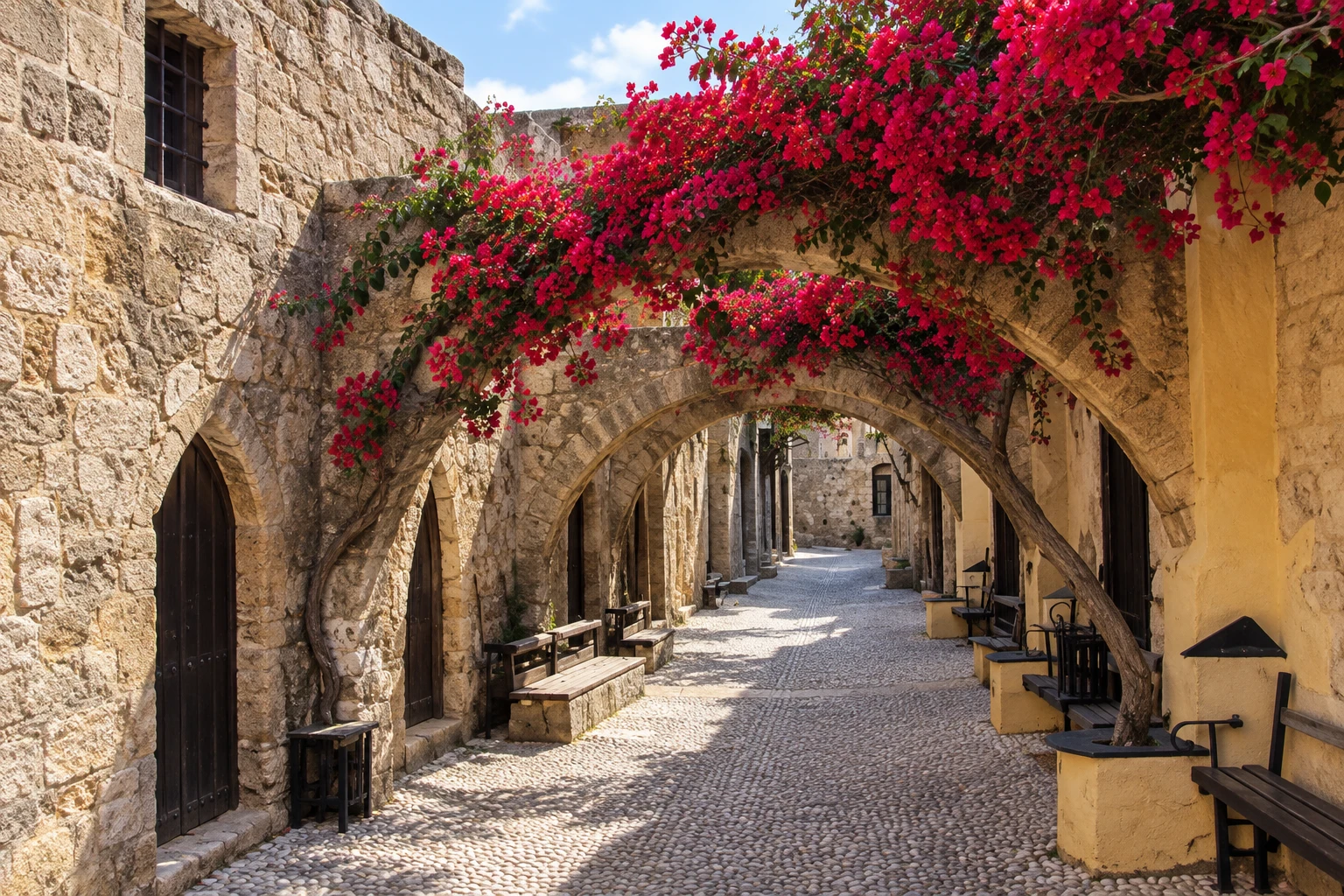
Rua dos Cavaleiros, about 600 metres long, links the old hospital to the Palácio do Grão-Mestre. On each side are the inns of the order's langues, with stone coats of arms on the Gothic façades.
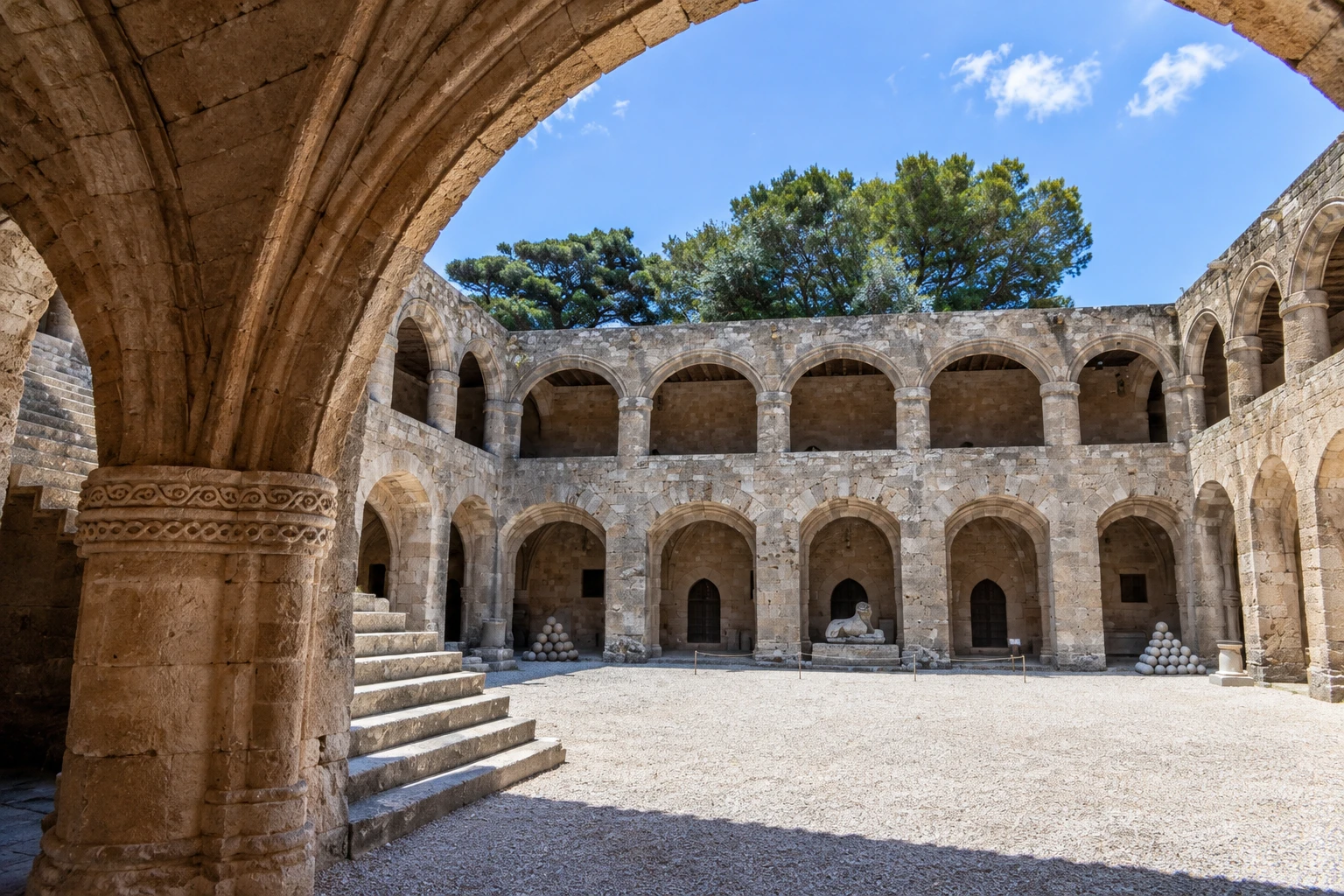
Archaeological Museum in the old knights' hospital, a Gothic building begun in 1440. It houses the Crouching Aphrodite, the Aphrodite of Rhodes, Hellenistic mosaics and finds from Kamiros, Ialysos and Lindos.
Explore Archaeological Museum of Rhodes (Archaiologiko Mouseio Rodou)
Before you go
Rhodes – Greece
Approximate distances. Check flights and bus, train or boat schedules before you travel.
Connections to Brazil are usually via a stopover in another city. Check before you buy. From Athens, the flight to Diagoras Airport, 14 km from the town, takes about an hour; in season there are flights from several European cities. From the airport, regional buses and taxis reach the center in roughly half an hour. By sea, ferries from Piraeus make a long trip to the commercial port next to the medieval town; boats connect Rodes with Kos, Symi and other Dodecanese islands. Check the season.
Two days for the town: one for the medieval town, with the palace and museum, and another for Mandraki, Elli beach, the aquarium and the acropolis on Mount Smith. From there, each additional day is an excursion: Lindos, the east coast with Kallithea, Anthony Quinn and Tsambika, or the west coast with Filerimos, the Vale das Borboletas and Kamiros. With five days you can do all this; with a week you can include the south of the island and beach days.
From May to October the town and resorts operate fully, with long days and sea for swimming. July and August tend to be very hot inside the walls and crowded, with cruise ships almost every day. May, June, September and October are the easiest months. From November to March many hotels and restaurants on the coast close, the sites reduce opening hours and tour boats stop; the medieval town remains open and quiet.
The seasons shown are the most usual ones; nature doesn't always follow the calendar.
You don't need a car for the town: the medieval town is pedestrian-only, and Mandraki, Elli, the aquarium and the new town are walkable; Mount Smith is within walking distance or a city bus ride. For Lindos, Faliraki, Kallithea and Tsambika there are regional buses from the terminal behind Mercado Novo. A car makes a difference for the west coast, Kamiros, Monolithos and Prasonisi, and for linking several beaches in one day. Those staying inside the walls leave their car in the outside parking lots.
Suggested itinerary
Built with the places on this page. No rush: it's paced so you have time to see them.
Enter through the Porta da Liberdade, opposite Mandraki, and walk up Rua dos Cavaleiros to the Palácio do Grão-Mestre, right at the entrance. See the mosaics from Kos and the ground-floor exhibitions. On the way down, visit the Museu Arqueológico in the old hospital.
Have lunch at Praça Ippokratous and walk along Sokratous to the Suleiman mosque (viewed from the outside) and the side streets of the Burg. Exit through the porta d'Amboise and walk along the dry moat, between the two lines of walls.
Go to the port of Mandraki, pass the columns of the deer and walk along the pier to the three windmills and the Forte de São Nicolau to see the walled town from the sea. Coffee at Mercado Novo.
Return to the illuminated medieval town and dine in one of the squares or on the streets of the old Jewish quarter around Praça Evreon Martyron. Greeks eat late; tables fill up after 9 pm.
Day 1
Enter through the Porta da Liberdade, opposite Mandraki, and walk up Rua dos Cavaleiros to the Palácio do Grão-Mestre, right at the entrance. See the mosaics from Kos and the ground-floor exhibitions. On the way down, visit the Museu Arqueológico in the old hospital.
Have lunch at Praça Ippokratous and walk along Sokratous to the Suleiman mosque (viewed from the outside) and the side streets of the Burg. Exit through the porta d'Amboise and walk along the dry moat between the walls.
Go to the port of Mandraki, pass the columns of the deer and walk along the pier to the three windmills and the Forte de São Nicolau. Have a coffee at Mercado Novo with a view of the port.
Return to the illuminated medieval town and dine in one of the squares or on the streets of the old Jewish quarter. Tables fill up after 9 pm.
Day 2
Take an early regional bus or drive to Lindos, 47 km to the south. Climb the acropolis right at opening, see the temple of Athena Lindia, the stoa and the knights' castle, and descend through the village of white houses and pebble streets.
Have lunch in Lindos and go down to the Baía de São Paulo for a swim, in the nearly enclosed cove below the cliff. Those driving can stop at Tsambika on the way back.
Back in town, head up Mount Smith to see the temple of Apollo, the stadium and the odeon, with the sun setting over the western sea.
Dine in the new town, near Mandraki, and walk along the promenade of Elli beach, with the Italian buildings lit up.
Day 1
Enter through the Porta da Liberdade and walk up Rua dos Cavaleiros to the Palácio do Grão-Mestre, right at the entrance. On the way down, visit the Museu Arqueológico in the old knights' hospital.
Have lunch at Praça Ippokratous, walk along Sokratous and the side streets of the Burg, exit through the porta d'Amboise and walk along the dry moat between the walls.
Walk along the Mandraki pier to the windmills and the Forte de São Nicolau to see the walled town from the sea.
Dine in the illuminated medieval town, in the squares or in the old Jewish quarter.
Day 2
Bus or car to Lindos. Climb the acropolis at opening, see the temple of Athena Lindia, the stoa and the castle, and descend through the village.
Bath in the baía de São Paulo. On the way back by car, stop at the praia de Tsambika; those with the energy climb the steps up to the monastery on the rock.
Finish the east coast at the Termas de Kallithea, with the roundabout and the Italian pergolas, and take one last swim in the coves.
Have dinner in the cidade nova, near Mandraki, and walk along the Elli promenade.
Day 3
By car or on a coast excursion to the west: climb Filerimos to the monastery, the ruins of Ialysos and the cross, then continue to the Vale das Borboletas, which from June to September often has moths resting on the tree trunks.
Have lunch at a taverna in Kamiros Skala and visit the ruins of Kamiros, from the agora to the stoa of the acropolis, with the sea in the background.
Back in town, climb Monte Smith to the Temple of Apollo and the stadium, with the sun setting over the sea.
Walk along the promenade of praia de Elli to the aquarium point and have dinner in the cidade nova.
Check before you go. Opening hours and days change, and places may close for renovations, holidays or events. This itinerary is a suggestion from Cidade Turismo, not a commitment: plan yours by checking directly with each place you intend to visit.
Before you go
Diagoras airport is 14 km away on the west coast. The regional bus departs from in front of the terminal and reaches the center, near Mandraki, in about half an hour; taxis wait outside. Check the evening schedules.
Yes, in guesthouses in old houses. Cars do not enter the walls: luggage is carried by hand through the stone streets and the car stays in a parking area outside.
Yes. The praia de Elli, made up of pebbles and coarse sand, starts just after the port of Mandraki and runs to the aquarium, a ten-minute walk from the walls.
A bronze statue of the god Helios about 33 meters tall, completed in 280 BC and toppled by an earthquake in 226 BC. Tradition places the Colosso at the entrance to the port of Mandraki, where the columns with the deer stand today, but the exact location is debated and nothing remains of it.
Symi is the most common, with excursion boats departing from Mandraki in season. There are also connections to Kos, Halki and other islands of the Dodecanese, and crossings to Marmaris in Turkey. Check the days and the season.
Yes. The aquarium, shallow sandy beaches like Tsambika, the túnel das Sete Fontes and the walled city with its moat are all family-friendly. The stone streets of the medieval city are difficult for a stroller.