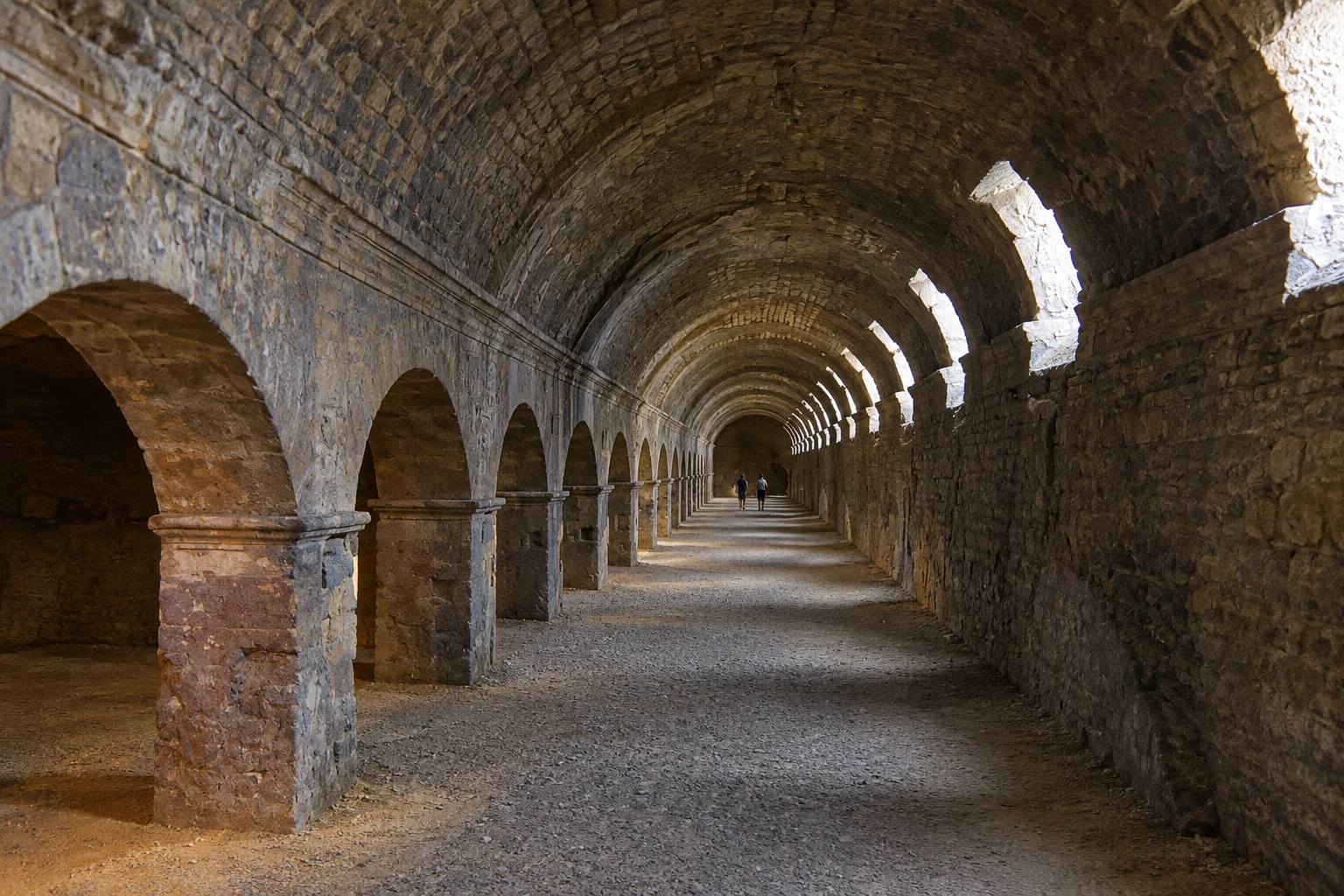
Illustrative images. The pictures in this guide are illustrations based on the real place, not photographs, and may differ from it.
The city
What to expect from Arles.
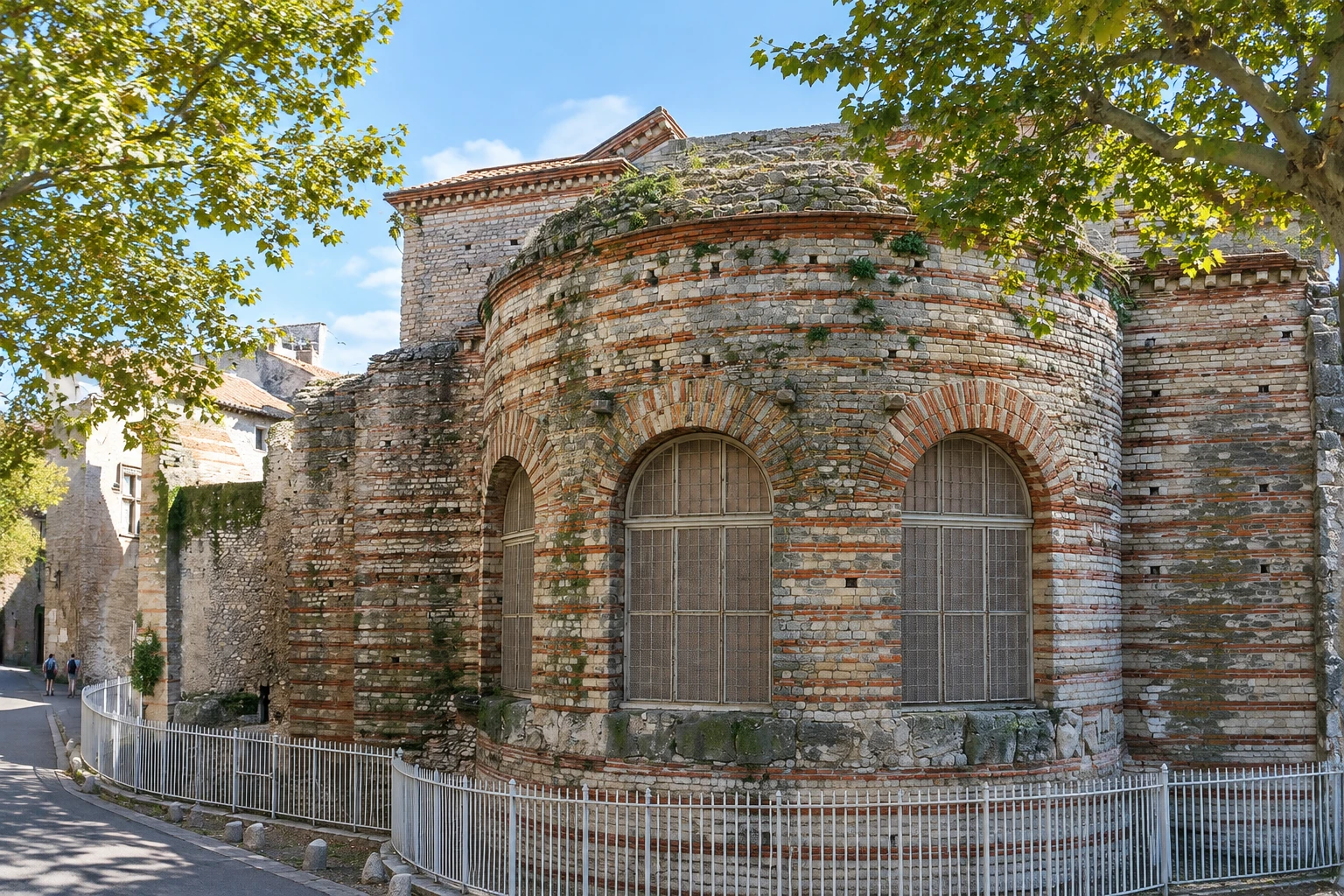
Arles, on the banks of the Ródano, preserves a Roman arena and theatre, baths, underground galleries and the Alyscamps necropolis, all UNESCO World Heritage, as well as the church and cloister of Saint-Trophime. Van Gogh lived and painted there in 1888 and 1889. The city also has Frank Gehry’s LUMA tower and is the gateway to the Camargue and Les Baux-de-Provence.
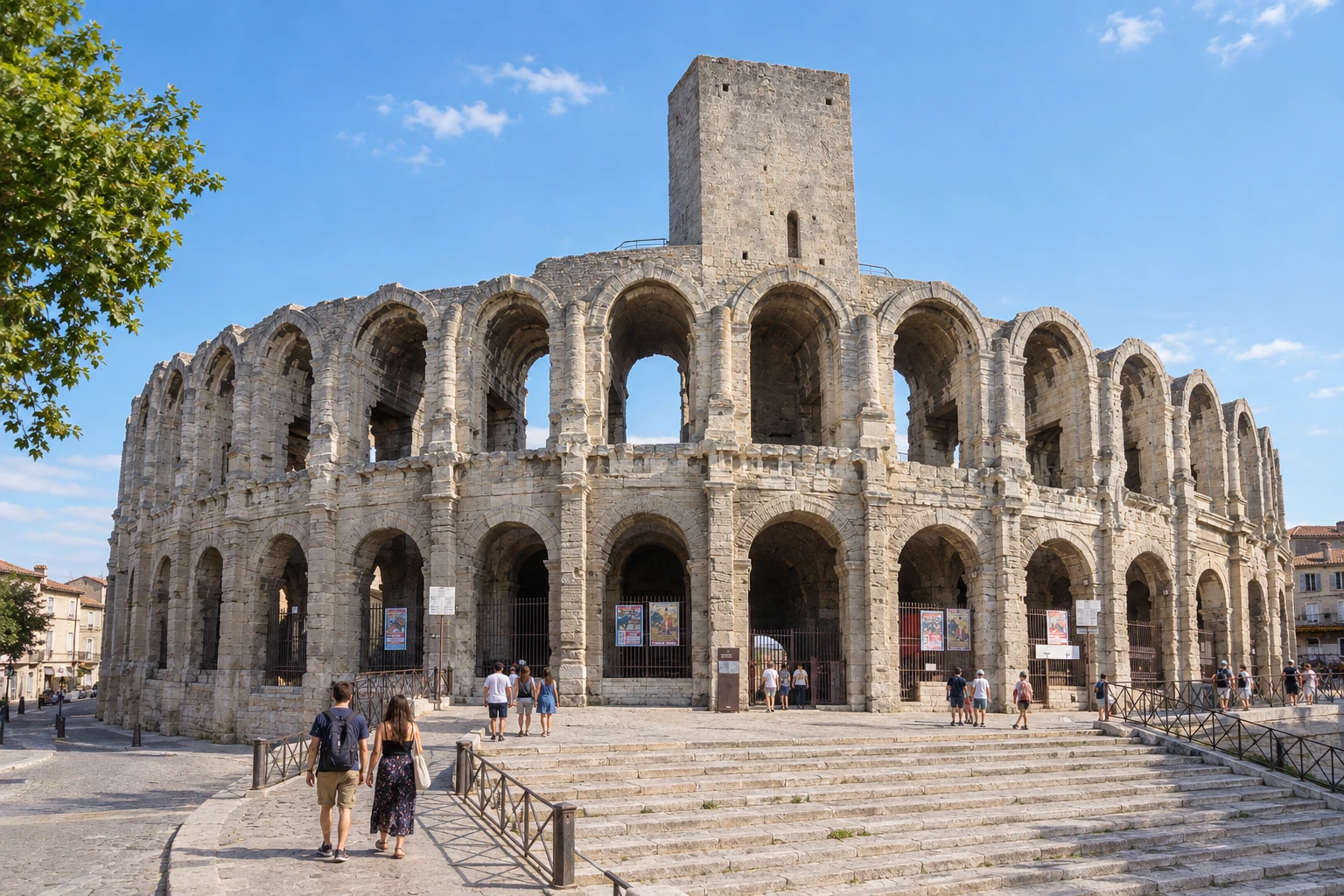
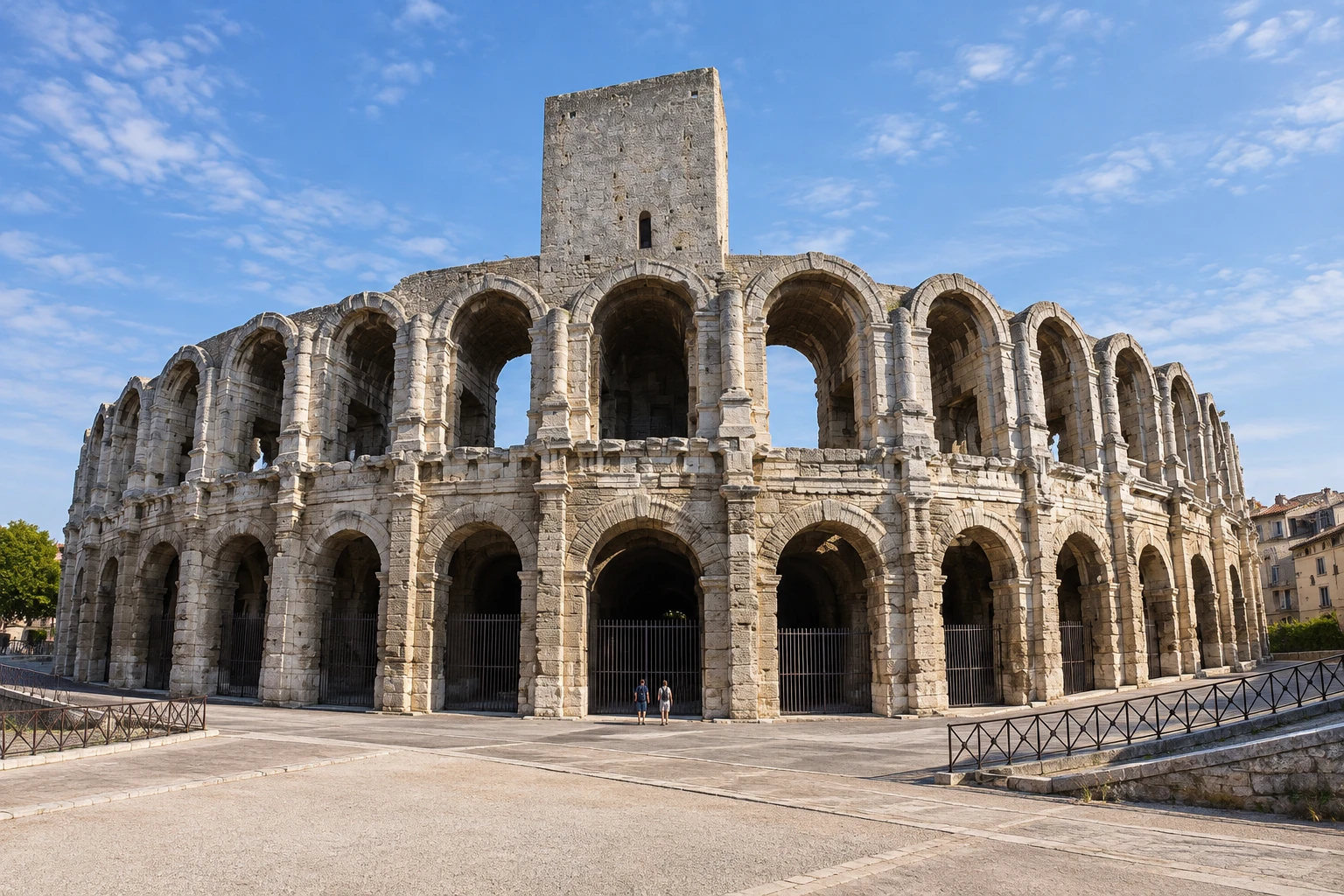
The Roman arena of Arles, built around the year 90 for about 25,000 spectators, with two rows of arcades and medieval towers on top. It still hosts the course camarguaise and other events.
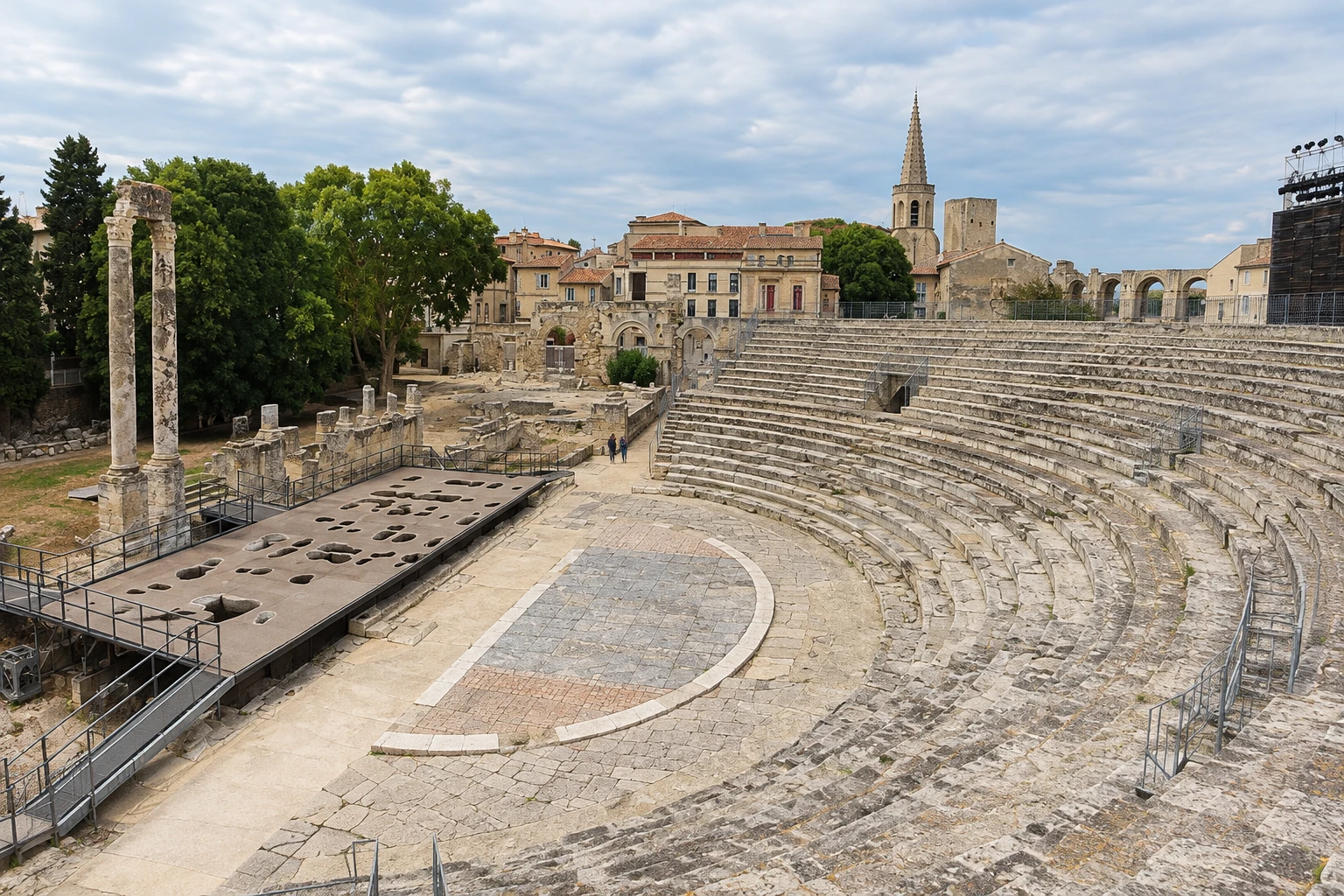
1st-century BC Roman theatre, one of the earliest stone theatres in the Roman world, with two marble columns still standing at the back of the stage. Hosts performances in summer.
Roman underground galleries in a U shape that supported the forum of Arles, with access via the town hall. Being underground, they are cool even in summer.
Arles – FranceDestination Provenceabout 92 km from Marseille
How to get there
Aéroport Marseille Provence (MRS)Marignane · 75 km
Gare d'Arles1 km
Approximate distances. Check flights and bus, train or boat schedules before you travel.
TER trains link Arles to Avignon-Centre in about 20 minutes and to Marseille-Saint-Charles in under an hour. From Paris, the most common route is the TGV to Avignon TGV or Marselha and the TER to the Gare d'Arles. The most used airport is Marselha. Flights to Brasil usually include a connection in another city. Confirm before buying.
How many days
One day is enough for the Roman monuments, Saint-Trophime and a walk to Van Gogh’s sites. With two days you can include the Arles antique museum, LUMA and the Fondation Vincent van Gogh. Allow an extra day for the Camargue and another day, or half a day, for Les Baux-de-Provence.
When to go
April to June and September to October are the best times. In summer (June to August) it gets very hot and the Rencontres de la photographie take place, from July to September. In the Camargue there are many mosquitoes in summer. In winter the city is quiet, some venues reduce opening hours and the mistral can be strong.
The seasons shown are the most usual ones; nature doesn't always follow the calendar.
Do you need a car?
For getting around the city, no car is needed: everything can be done on foot from the station. For the Camargue and Les Baux-de-Provence a car is very helpful. There are regional buses from Arles to Saintes-Maries-de-la-Mer, which pass near the Parc ornithologique, and to Les Baux, with limited schedules; check before you go.
Suggested itinerary
An order that works
Built with the places on this page. No rush: it's paced so you have time to see them.
One day in Arles
manhã
Roman arena and theatre
Start with the arena, the Amphithéâtre, and climb one of the medieval towers. Walk to the Théâtre antique, a few steps away, with its two standing columns.
tarde
Saint-Trophime and undergrounds
Have lunch near the place du Forum. Afterwards see the portal of Saint-Trophime, the cloister and go down to the Cryptoportiques beneath the town hall.
fim de tarde
Van Gogh and the Ródano
Pass through the courtyard of the Espace Van Gogh, the former hospital where the painter was treated, and finish at the quay of the Ródano, near the Thermes de Constantin.
noite
Place du Forum
Dine at the place du Forum, where the café Van Gogh painted in Terrasse du café le soir is located, or in the streets around the arena.
2 days in Arles
Day 1
manhã
Roman monuments
Visit the Amphithéâtre and the Théâtre antique with the combined ticket. Climb the arena tower to see the rooftops and the Ródano.
tarde
Saint-Trophime and Alyscamps
After lunch, visit Saint-Trophime and the cloister. Walk to the Alyscamps, the avenue of sarcophagi painted by Van Gogh and Gauguin.
fim de tarde
LUMA Arles
Walk to LUMA, beside the Alyscamps. See Frank Gehry’s tower and the surrounding park, if it is open.
noite
Dinner in the centre
Return to the centre to dine at the place du Forum or the place Paul-Doumer.
Day 2
manhã
Musée Arles antique
Go to the Musée départemental Arles antique, on the banks of the Ródano, and see the Roman boat Arles-Rhône 3 and the bust attributed to Julius Caesar.
tarde
Fondation Vincent van Gogh
Have lunch in the centre and visit the Fondation Vincent van Gogh Arles and the Thermes de Constantin, close to each other.
fim de tarde
Espace Van Gogh and quay
Walk through the Espace Van Gogh garden and along the Ródano quay to the Trinquetaille bridge.
noite
Night in Arles
Dine in the centre. If you stay another day, reserve it for the Camargue or for Les Baux-de-Provence.
Check before you go. Opening hours and days change, and places may close for renovations, holidays or events. This itinerary is a suggestion from Cidade Turismo, not a commitment: plan yours by checking directly with each place you intend to visit.
Before you go
Frequently asked questions
Is there a pass for Arles monuments?
Yes. The city sells passes that combine the Roman monuments, the cloister of Saint-Trophime, the Alyscamps and museums, as well as a combined ticket for the arena and the theatre. It usually pays off for those who plan to visit more than three sites. Check prices and what’s included before you go.
Where to see Van Gogh paintings in Arles?
There is no museum with a permanent collection of the painter in the city. The Fondation Vincent van Gogh Arles often displays one or more loaned works by him, alongside contemporary artists. Around the city, panels mark the places he painted, such as the place du Forum, the Espace Van Gogh and the Alyscamps.
Can you visit the Camargue without a car?
Partly. Regional buses connect Arles to Saintes-Maries-de-la-Mer and pass near the Parc ornithologique du Pont de Gau, with limited timetables. To explore the marshes and secondary roads, a car or an organized tour is more practical.
What are the Rencontres de la photographie?
It is one of the world’s largest photography festivals, held in Arles every summer, usually from July to September. Exhibitions take over churches, warehouses and spaces across the city, and the first week features the most intense programme.
Is Arles near Avignon?
Yes. They are about 40 km apart, and the TER covers the route in roughly 20 minutes. Many people stay in one of the two and make the other a day trip.


 Brazil
 Antarctica
 Argentina
 Bolivia
 Chile
 Colombia
 Ecuador
 Falkland Islands (Malvinas)
 French Guiana
 Guyana
 Paraguay
 Peru
 Suriname
 Uruguay
 Venezuela
 Austria
 Belgium
 Croatia
 Denmark
 Finland
 Germany
 Greece
 Hungary
 Iceland
 Ireland
 Italy
 Luxembourg
 Norway
 Poland
 Portugal
 Slovakia
 Slovenia
 Spain
 Sweden
 Switzerland
 the Czech Republic
 the Netherlands
 the United Kingdom
 Turkey
 Bermuda
 Canada
 Greenland
 Mexico
 Saint Pierre and Miquelon
 the United States
 the Dominican Republic
 Japan
 Egypt
 South Africa
 Australia
 Fiji
 New Zealand
 Papua New Guinea