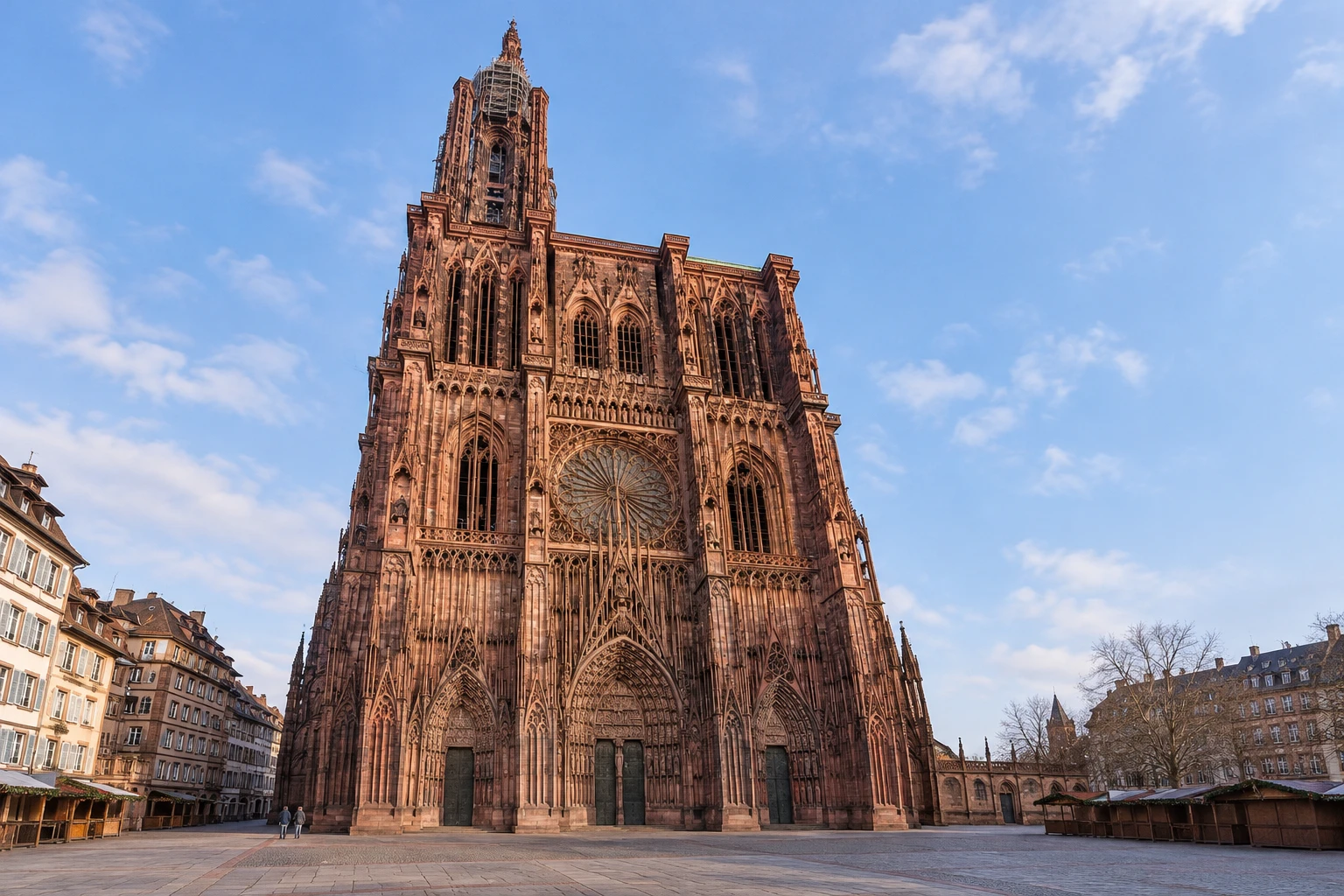
Strasbourg · France · Cathedral
Strasbourg Cathedral
Gothic cathedral of pink Vosges sandstone, with a single 142-meter tower, an astronomical clock with automatons and a platform high on the façade that is reached on foot.

 Search
 Brazil
 Antarctica
 Argentina
 Bolivia
 Chile
 Colombia
 Ecuador
 Falkland Islands (Malvinas)
 French Guiana
 Guyana
 Paraguay
 Peru
 Suriname
 Uruguay
 Venezuela
 Austria
 Belgium
 Croatia
 Denmark
 FinlandFrance
 Germany
 Greece
 Hungary
 Iceland
 Ireland
 Italy
 Luxembourg
 Norway
 Poland
 Portugal
 Slovakia
 Slovenia
 Spain
 Sweden
 Switzerland
 the Czech Republic
 the Netherlands
 the United Kingdom
 Turkey
 Bermuda
 Canada
 Greenland
 Mexico
 Saint Pierre and Miquelon
 the United States
 the Dominican Republic
 JapanTurkey
 Egypt
 South Africa
 Australia
 Fiji
 New Zealand
 Papua New Guinea
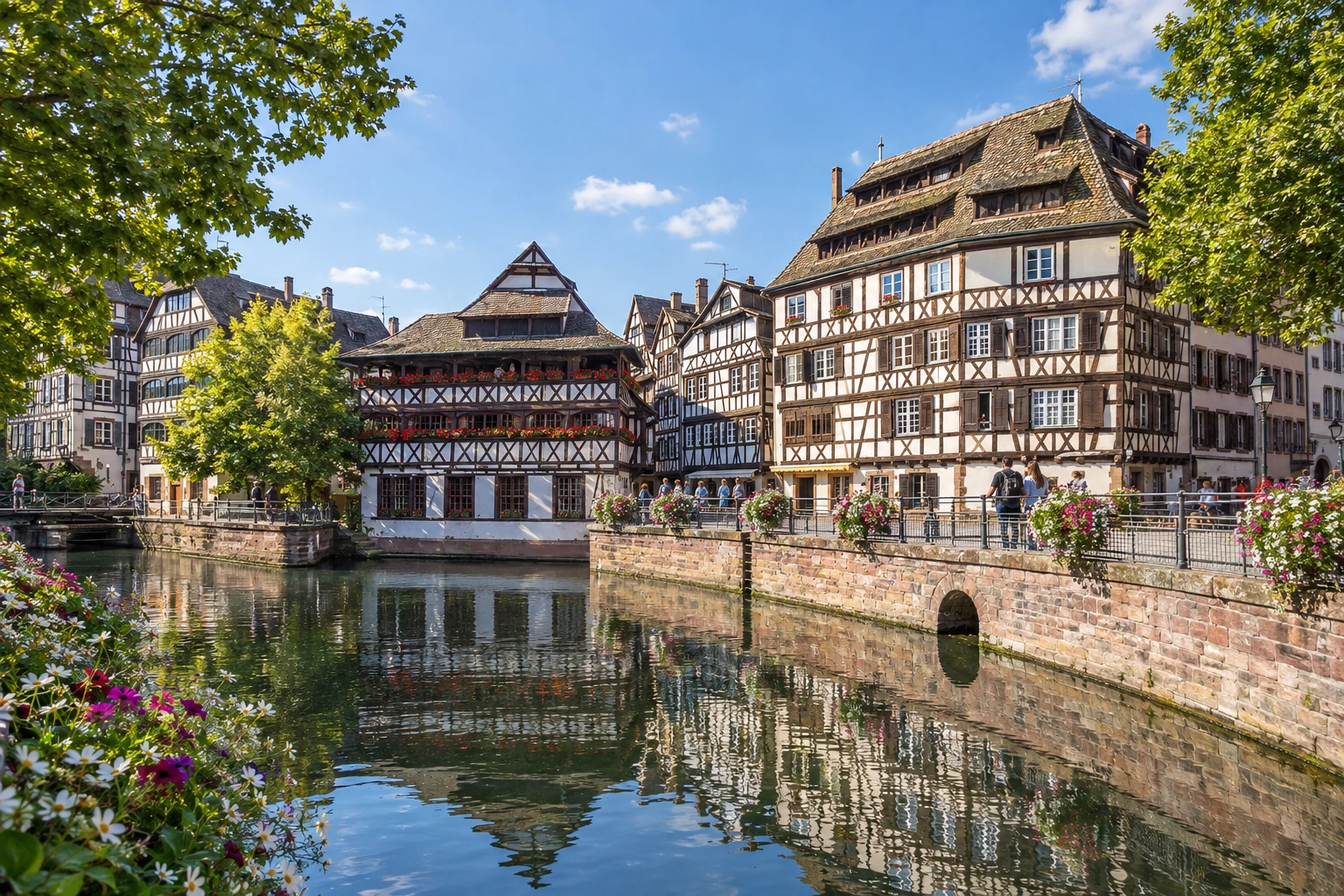
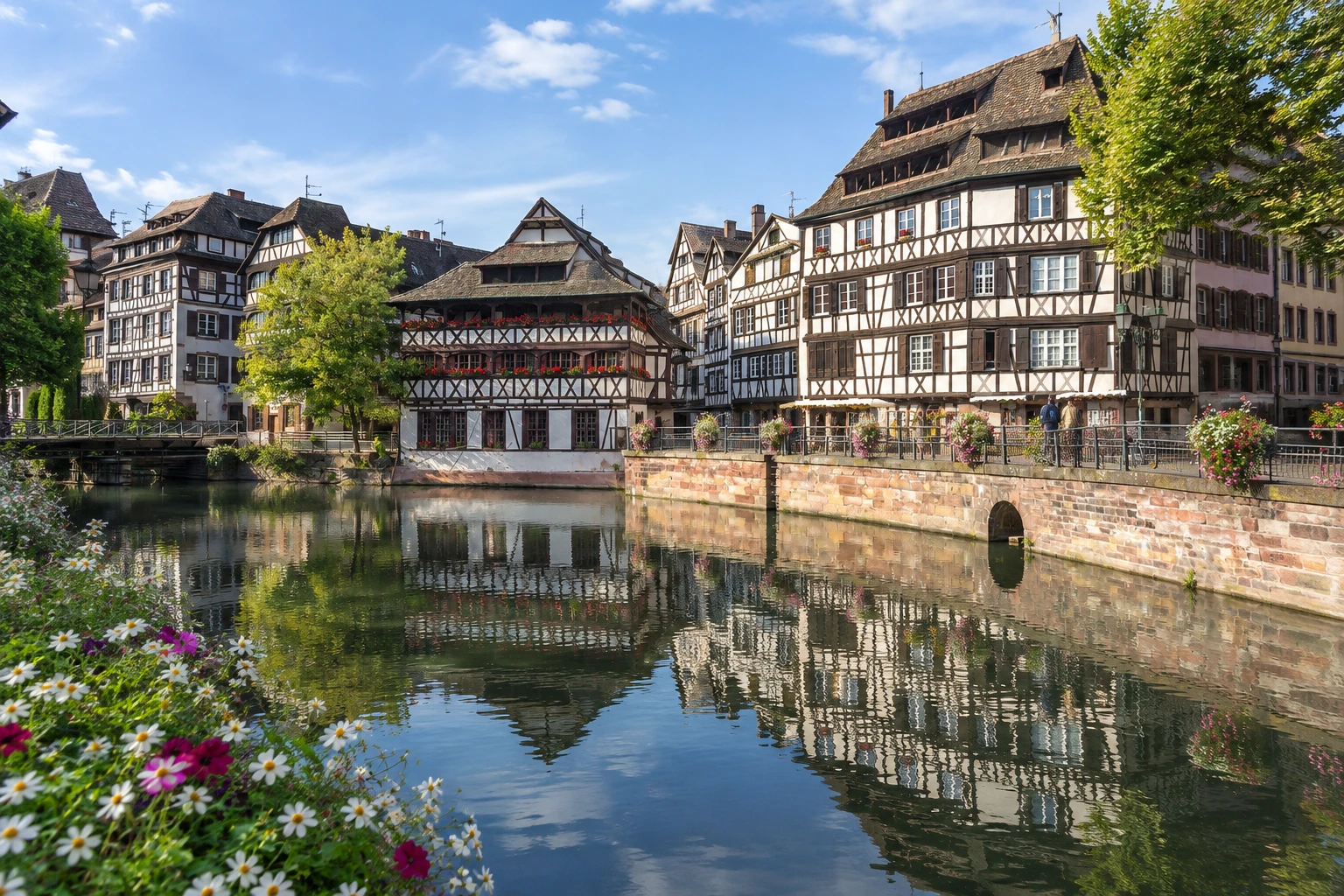
In the photo: Petite France and Place Benjamin-Zix · Strasbourg
Illustrative images. The pictures in this guide are illustrations based on the real place, not photographs, and may differ from it.

The city
Capital of Alsace, on the Rhine and on the German border, Strasbourg blends French and German culture. The historic center is on the Grande Île, surrounded by the river Ill, with the Cathédrale Notre-Dame, the Palais Rohan and the half-timbered houses of the Petite France. The city is home to the European Parliament, is about 1h50 from Paris by TGV and hosts, in December, one of the oldest Christmas markets in Europe.
There's no accommodation in the guide yet in Strasbourg.
Do you run a hotel, guesthouse or vacation rental here? List itThere are no restaurants in the guide yet in Strasbourg.
Know a good one? Recommend it to usThe city's hotels and restaurants on the map.
how to get there · how many days · itinerary · questions
The local experience
Gothic cathedral of pink Vosges sandstone, with a single 142-meter tower, an astronomical clock with automatons and a platform high on the façade that is reached on foot.
Island formed by the river Ill that contains Strasbourg's historic centre, with the cathedral, squares, medieval streets and half-timbered houses; a UNESCO World Heritage Site since 1988.
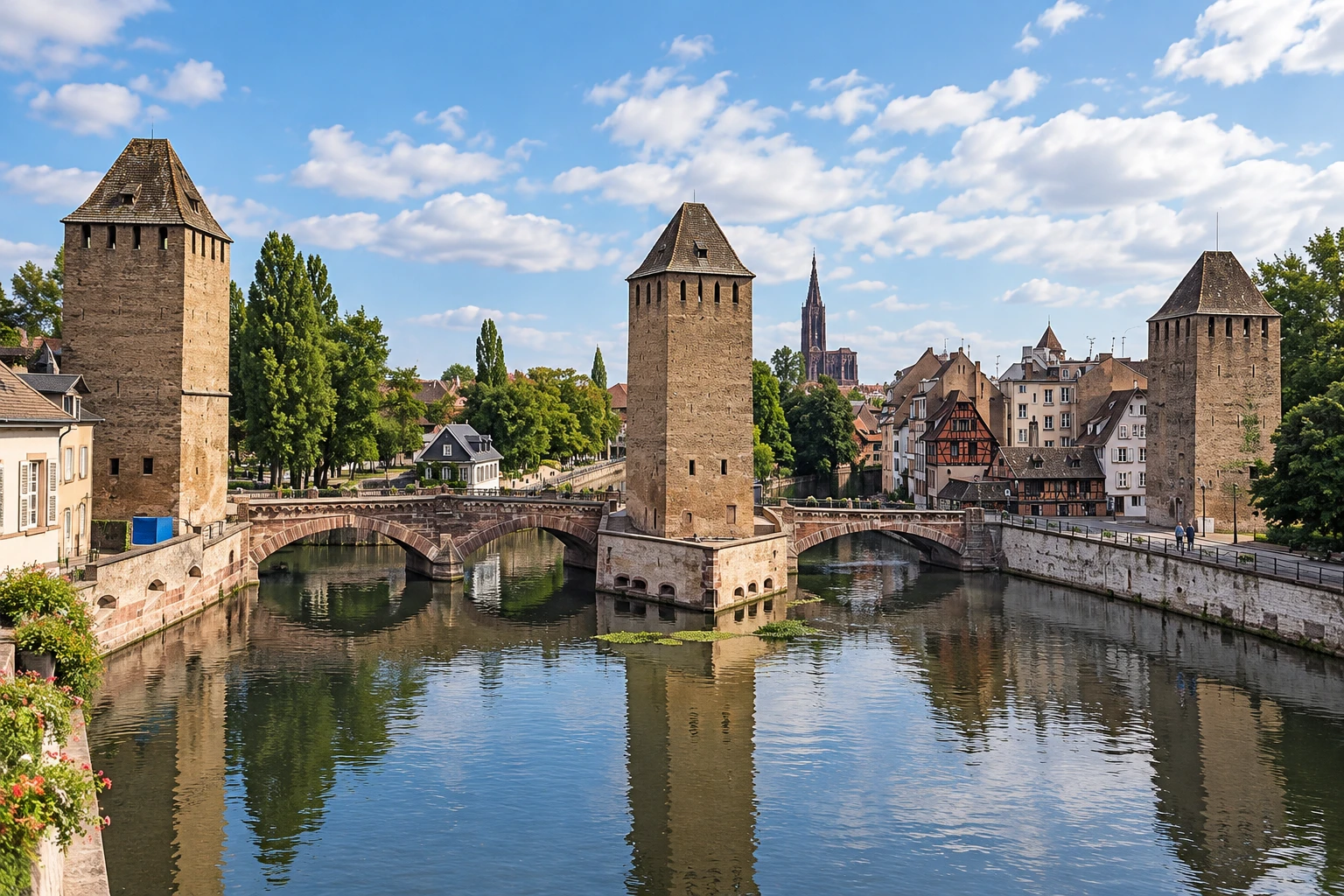
Former quarter of millers, fishermen and tanners on the banks of the Ill canals, with half-timbered houses, the Ponts couverts and the Barrage Vauban, from where you get a panoramic view of the neighbourhood.
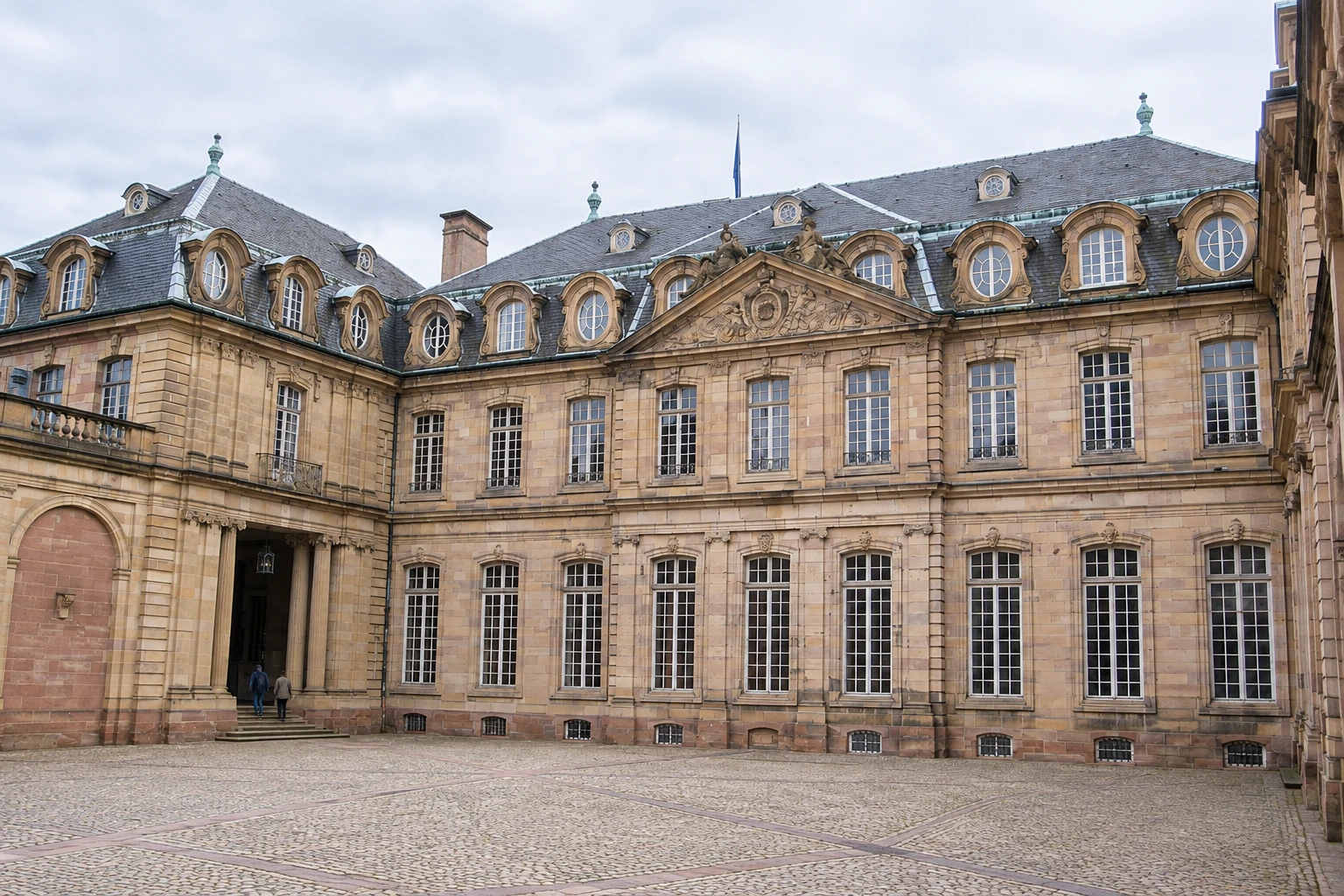
18th-century palace of the prince-bishops of Strasbourg, next to the cathedral, which houses three museums: Arts décoratifs, Beaux-Arts and Archéologique.
Before you go
Strasbourg – France Destination Alsace Capital
Approximate distances. Check flights and bus, train or boat schedules before you travel.
From Paris, the TGV departs from Gare de l'Est and arrives at Gare de Strasbourg in about 1h50. Strasbourg Airport (SXB), in Entzheim, is 12 km away and has a regional train to the central station. The EuroAirport Basel-Mulhouse-Freiburg is further south. Flights to/from Brazil usually require a connection in another city. Confirm before you buy.
With 1 day you can see the cathedral, the Grande Île and the Petite France. With 2 days you can include the museums, the boat tour, the European Parliament and the Parc de l'Orangerie. Add 1 or 2 days for Colmar and the Wine Route.
From May to September the days are long and warm; October is usually cool. Winter (December to February) is cold, with short days. The Christmas markets usually run from late November to late December and fill the city. The time difference with Brasília is 4 or 5 hours ahead, depending on the time of year.
The seasons shown are the most usual ones; nature doesn't always follow the calendar.
No. The center is small and almost entirely pedestrianized, and the tram links the station, the European quarter and the airport (with train). A car only gets in the way: leave it in a park-and-ride with tram on the outskirts. For the Wine Route, a car or an organized tour helps.
Suggested itinerary
Built with the places on this page. No rush: it's paced so you have time to see them.
Start early at the Cathédrale Notre-Dame: see the nave, the stained-glass windows and the Pillar of the Angels, then climb the 332 steps to the platform to see the city from above. In the square, notice the wooden façade of the Maison Kammerzell.
Have lunch in an Alsatian winstub, around 12:00–14:00, and walk along the Place Gutenberg and the Place Kléber. If you prefer a museum, the Musée de l'Œuvre Notre-Dame, opposite the cathedral, houses the original statues from the façade.
Walk to the Petite France, cross the Ponts couverts and climb to the terrace of the Barrage Vauban for the view of the towers with the cathedral in the background.
Have dinner from 19:30 in the Petite France or in the Krutenau, with flammekueche and a white wine from Alsace, and return along the riverbank.
Day 1
Spend the morning at the Cathédrale Notre-Dame and the climb to the platform. Buy the ticket early for the astronomical clock presentation, in the early afternoon.
Watch the procession of automatons of the astronomical clock and cross the Place du Château to the Palais Rohan, to see the cardinals' apartments and the painting museum.
Board the sightseeing boat next to the Palais Rohan to circle the Grande Île, pass the locks of the Petite France and see the European quarter from the water.
Dine near the cathedral and see the illuminated façade. Remember that many restaurants only serve dinner from 19:30.
Day 2
Take the tram to the Parlement européen and visit the hemicycle and the Parlamentarium Simone Veil. Bring your passport for entry control.
Cross to the Parc de l'Orangerie to see the storks and the lake, and return on foot through the Neustadt, passing the Place de la République.
End the day in the Petite France, with the Ponts couverts and the view from the terrace of the Barrage Vauban.
Dine in the Krutenau, a neighborhood of bars and restaurants on the other side of the Ill, frequented by students and locals.
Check before you go. Opening hours and days change, and places may close for renovations, holidays or events. This itinerary is a suggestion from Cidade Turismo, not a commitment: plan yours by checking directly with each place you intend to visit.
Before you go
By TGV, departing from Gare de l'Est in Paris to Gare de Strasbourg, in about 1h50. There are also direct trains from the Paris-Charles de Gaulle airport station. Buy in advance to pay less.
Two days allow you to see the cathedral, the Petite France, the museums of the Palais Rohan, the boat tour and the European Parliament. With only one day, focus on the Grande Île and the Petite France.
The Christkindelsmärik usually runs from late November to late December, spread across several squares in the center. It's the busiest time of the year: book accommodation well in advance.
Yes. The German town of Kehl is on the other side of the Rhine and is reached by tram. Take your passport, even without fixed border controls.
Yes, because of the train network: Colmar is about 30 minutes by regional train. For the wine-village towns, however, Colmar is closer.
Cross-border routes
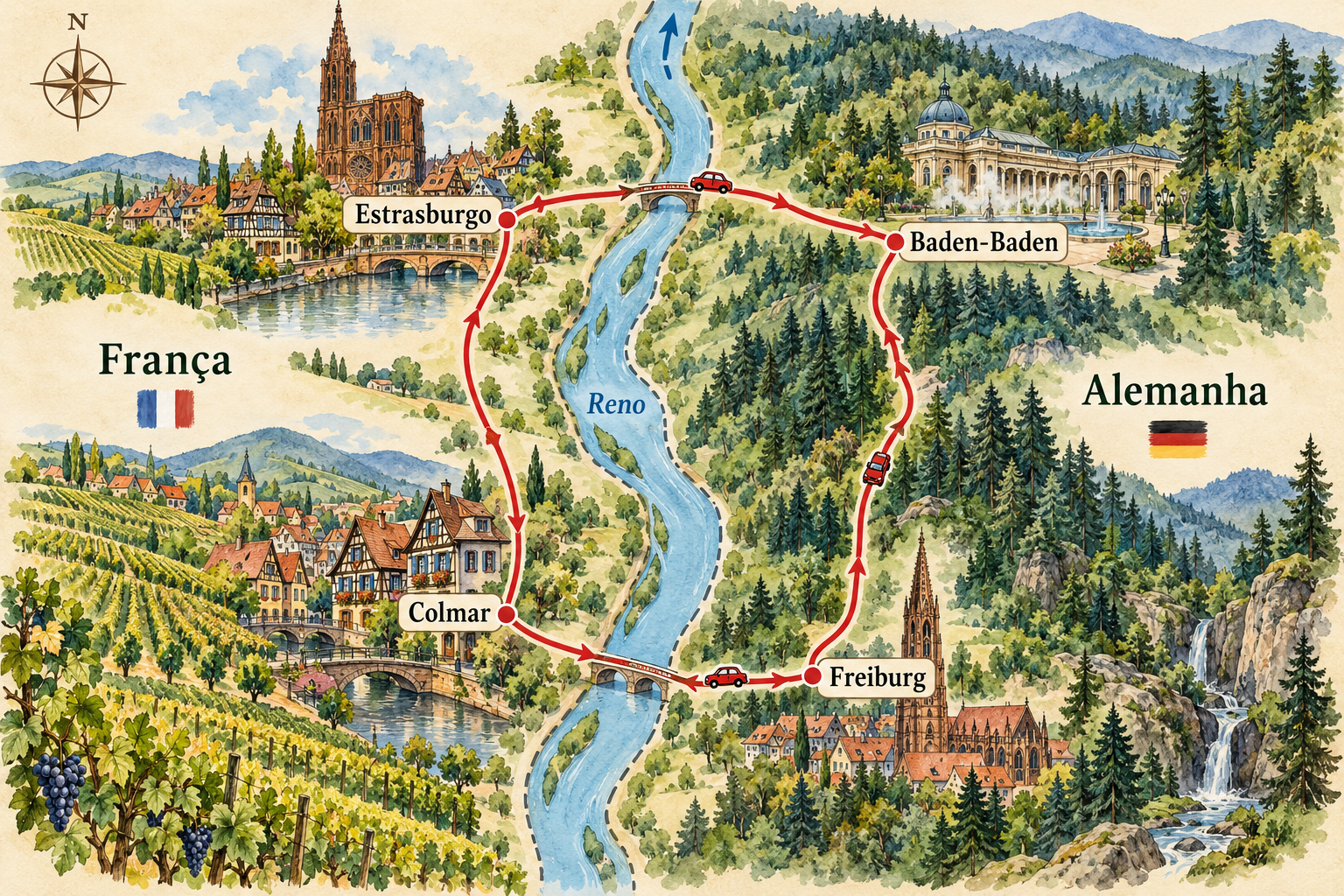
By car on both sides of the Rhine: the Alsace Wine Route, with half-timbered villages among vineyards, and the mountain roads of the Black Forest, between Strasbourg, Colmar, Freiburg and Baden-Baden.