Things to do in Le Puy, Conques, and the Lot Valley
18 places to visit, chosen by the Cidade Turismo guide.
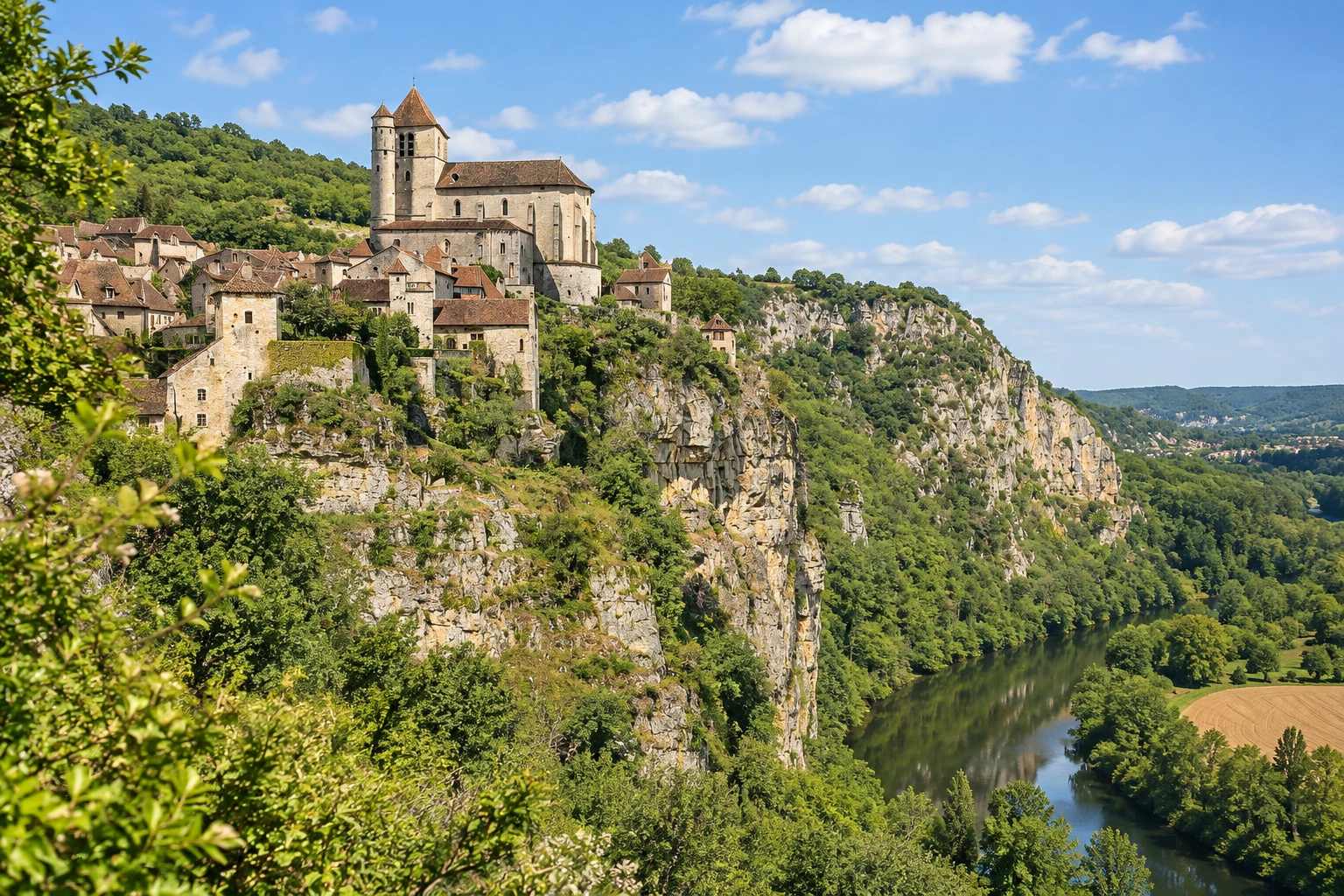
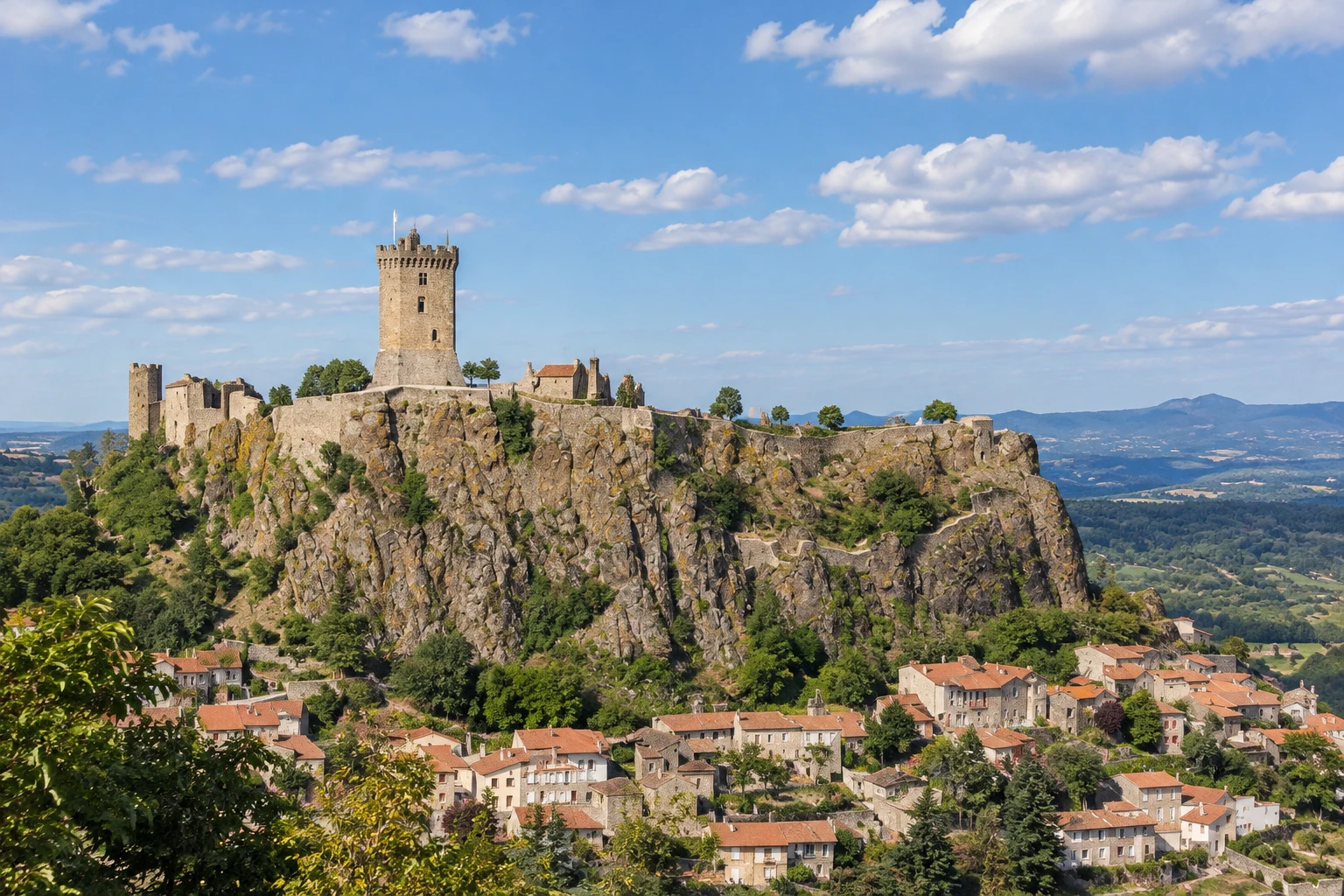
Illustrative images. The pictures in this guide are illustrations based on the real place, not photographs, and may differ from it.
To start
The 10 main places Le Puy, Conques, and the Lot Valley
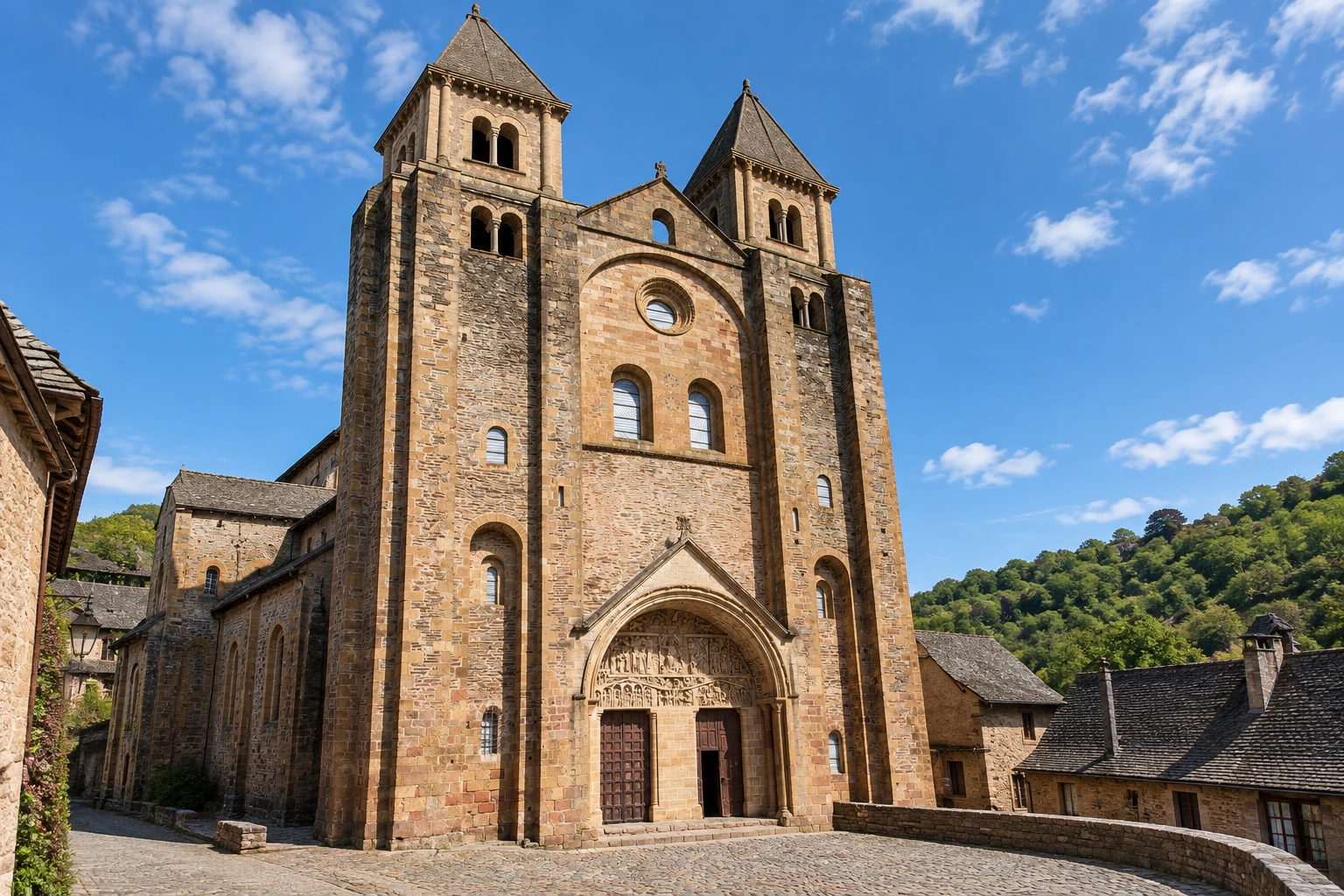
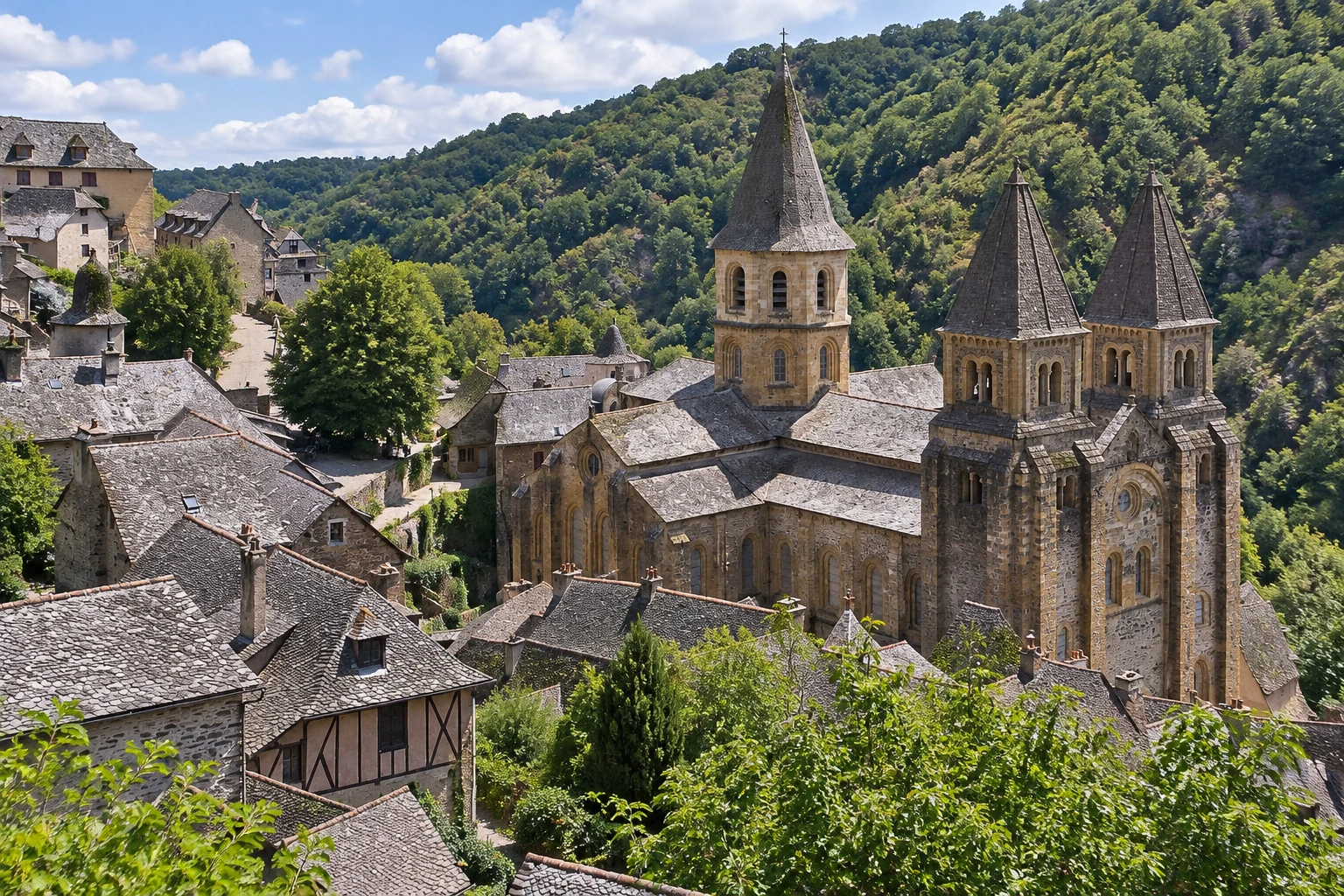
Abbey Church of Sainte-Foy in Conques · ConquesThe Romanesque abbey church built from 1041, a model for the great pilgrimage churches of the Caminho de Santiago, with the tympanum of the Last Judgment and stained-glass windo...
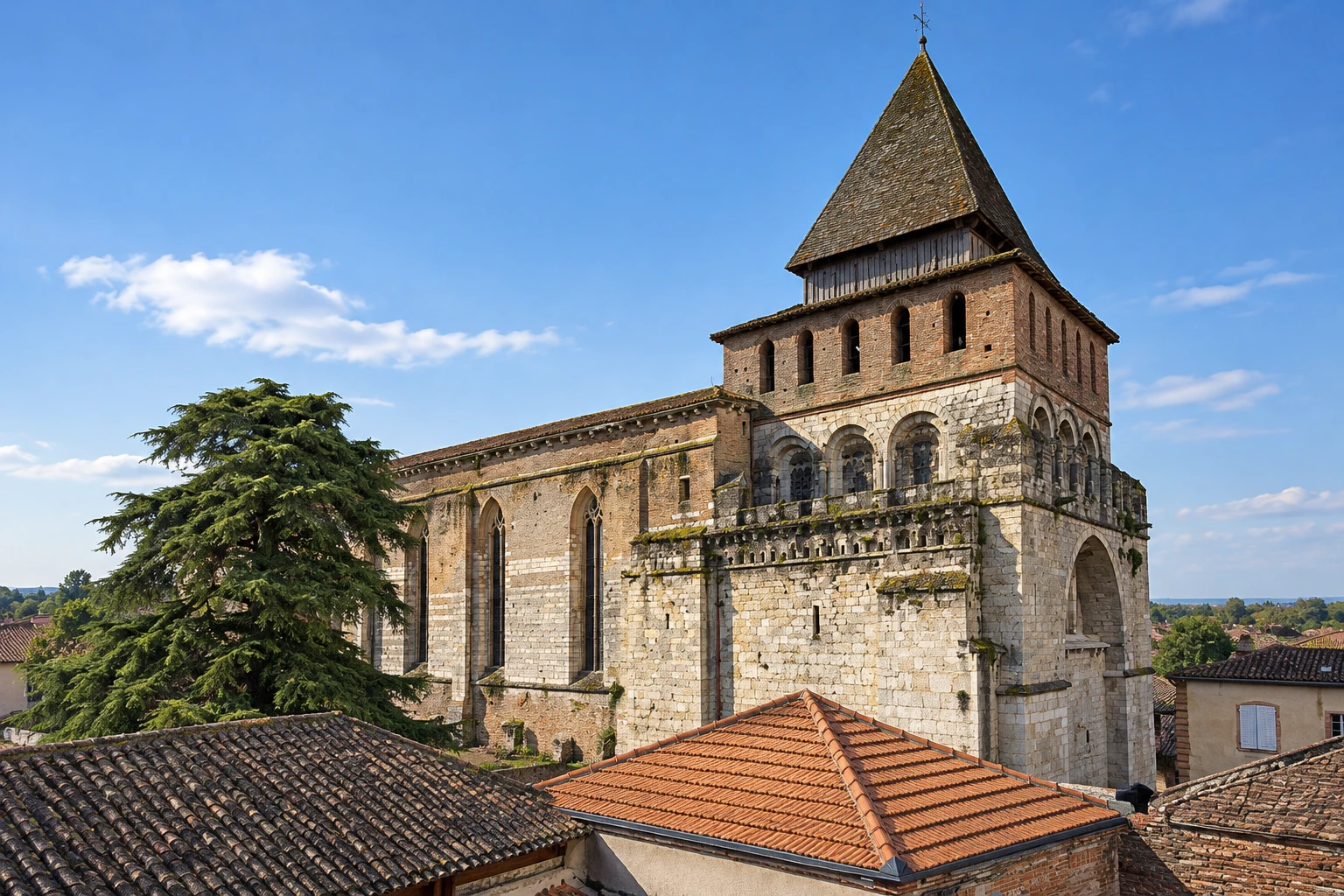
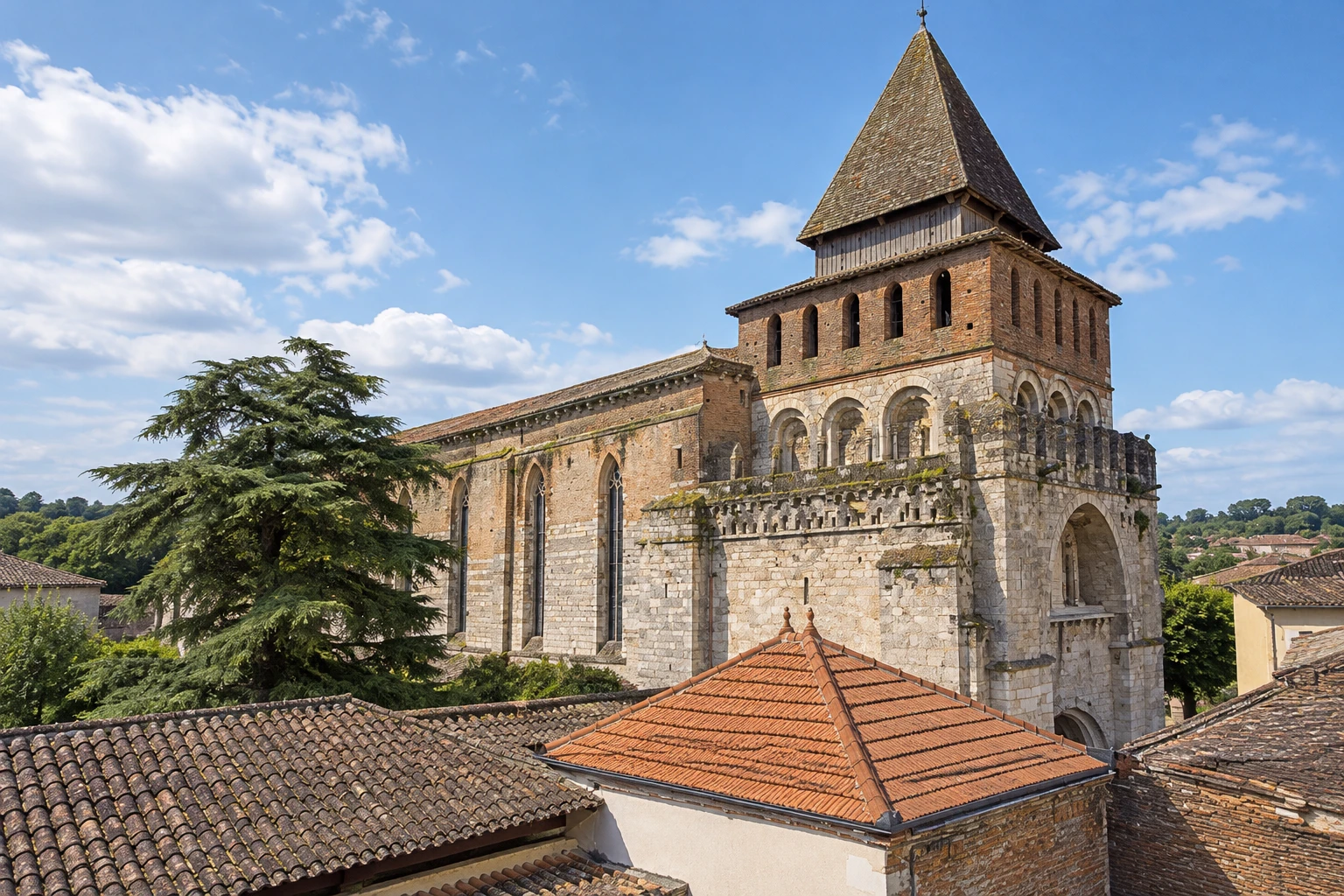
Moissac Abbey · MoissacThe former Benedictine abbey of Moissac, a World Heritage site, with the church of Saint-Pierre and the tympanum of the south portal, from the 12th century, depicting the vision...
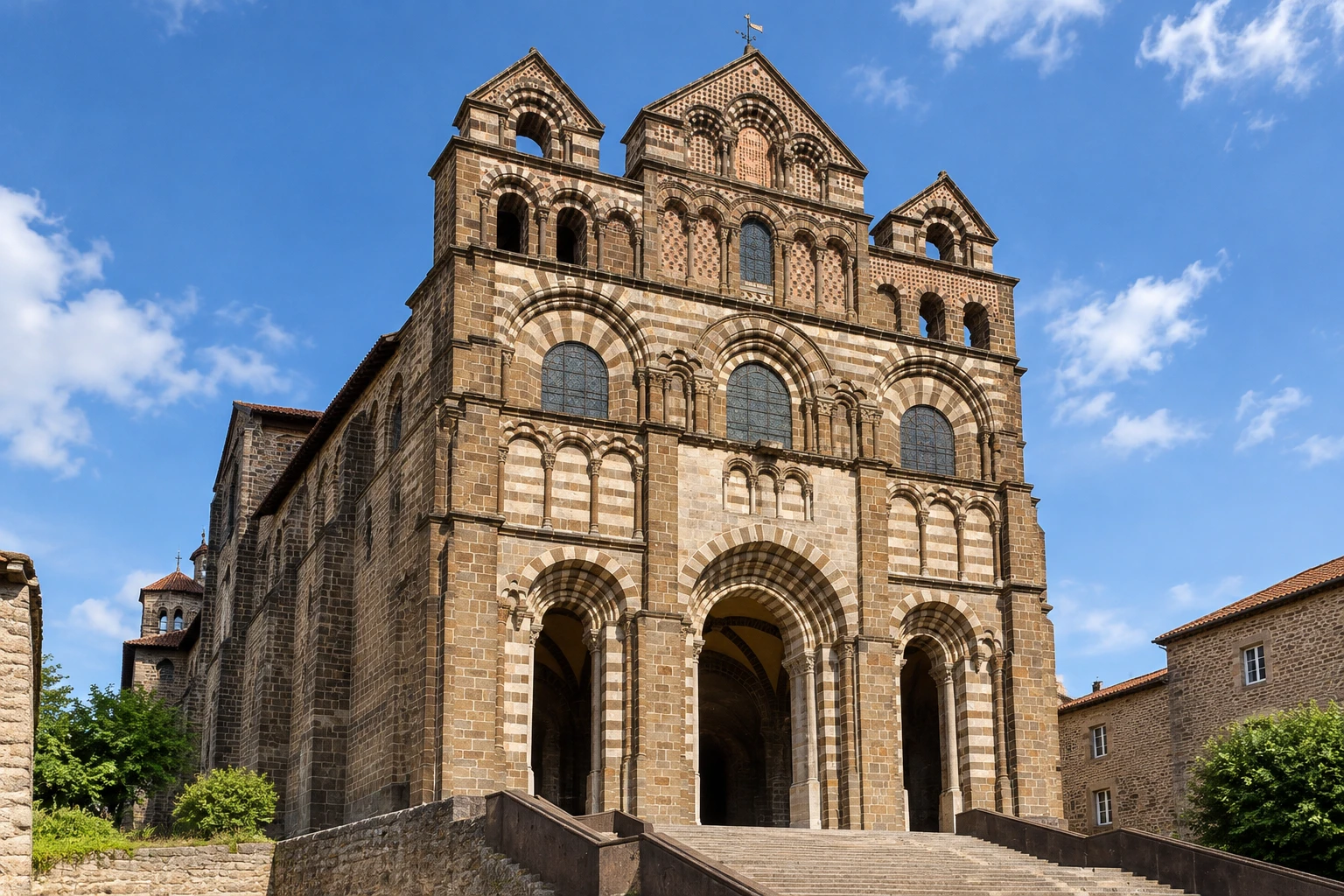
Le Puy Cathedral · Le Puy-en-VelayThe Romanesque cathedral atop the old town, a World Heritage site as part of the Routes of Santiago in France, with the Black Madonna, the fever stone and a cloister of polychro...
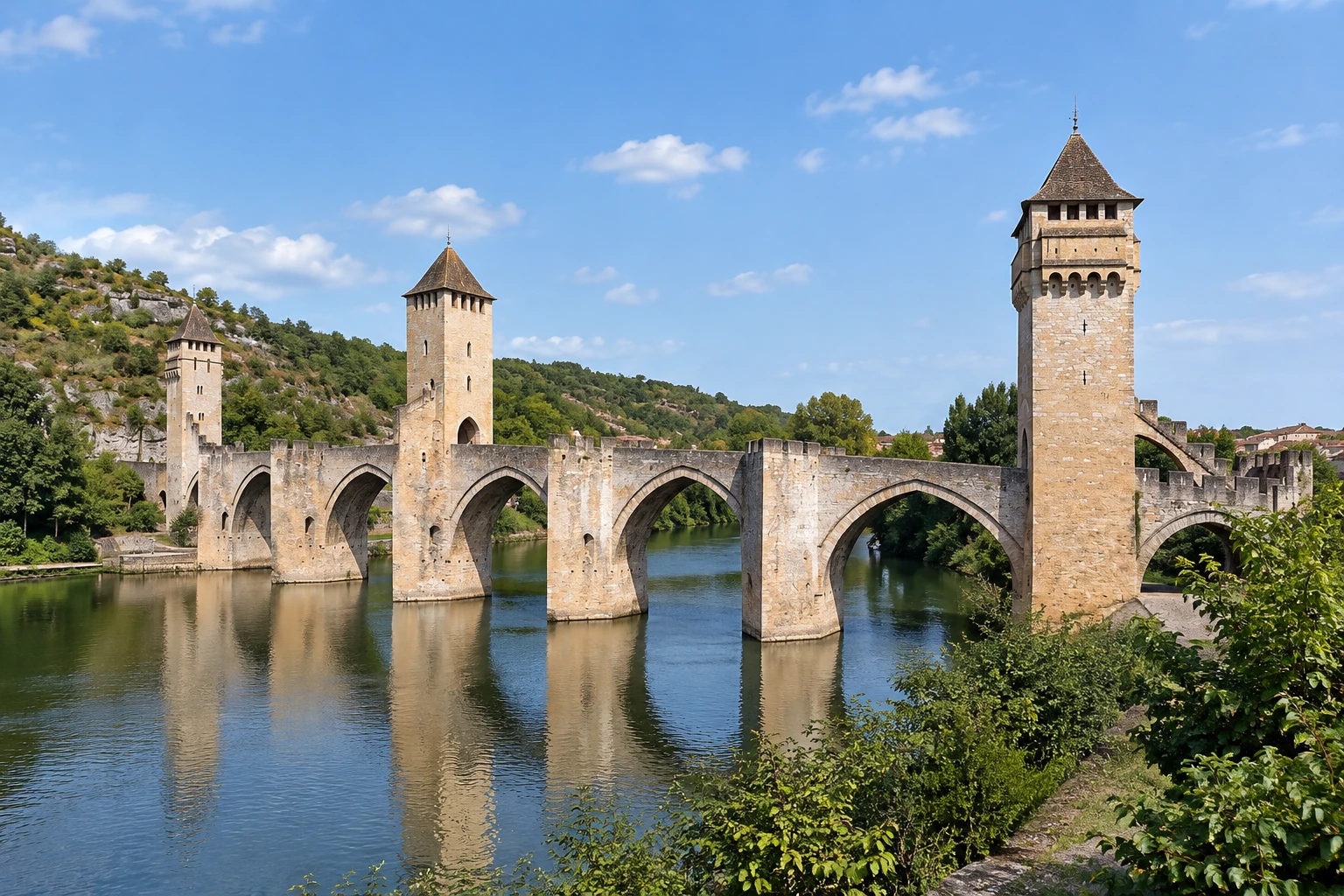
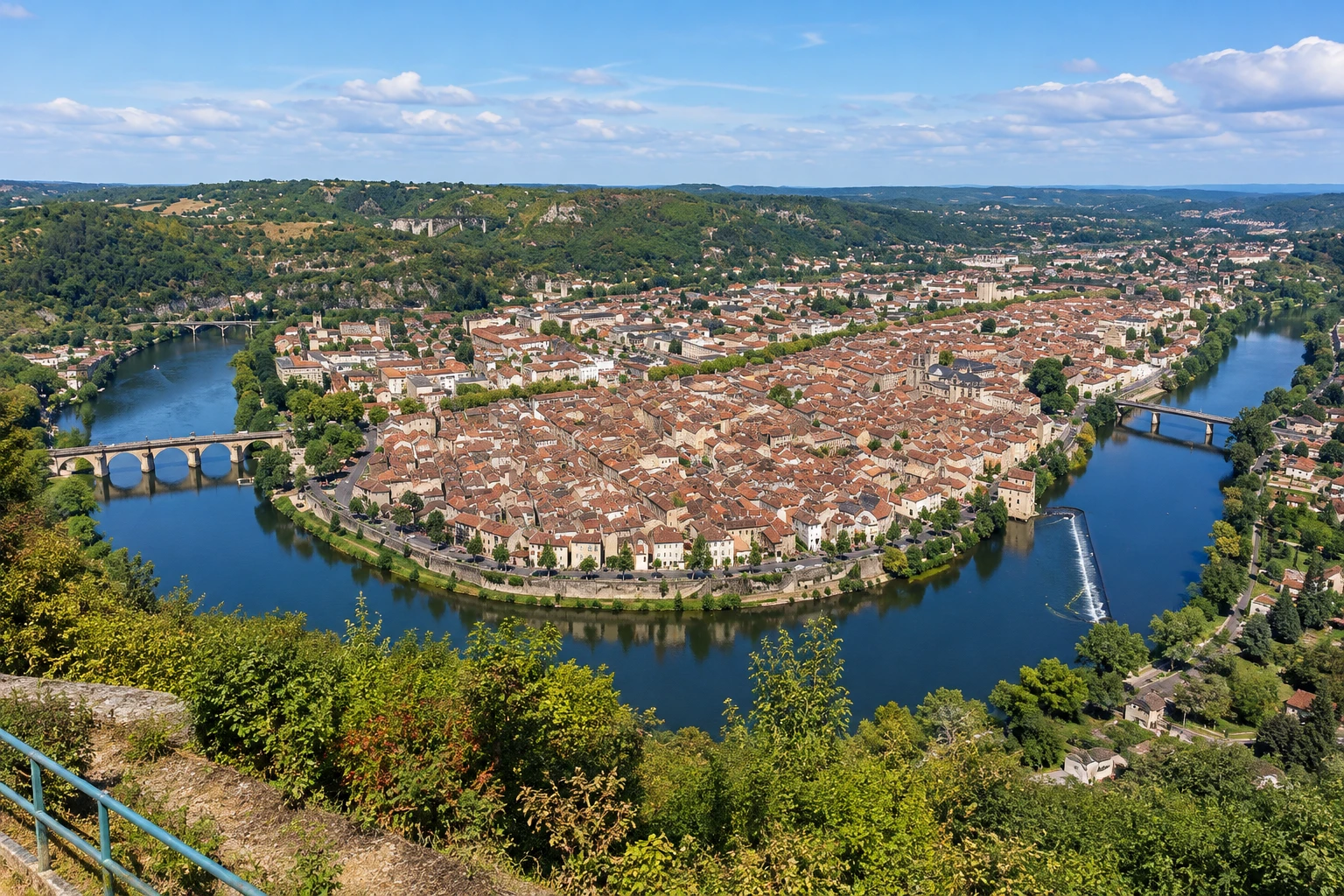
Pont Valentré · CahorsThe 14th-century fortified bridge over the Lot, with three towers and six Gothic arches, a World Heritage site and the symbol of Cahors.
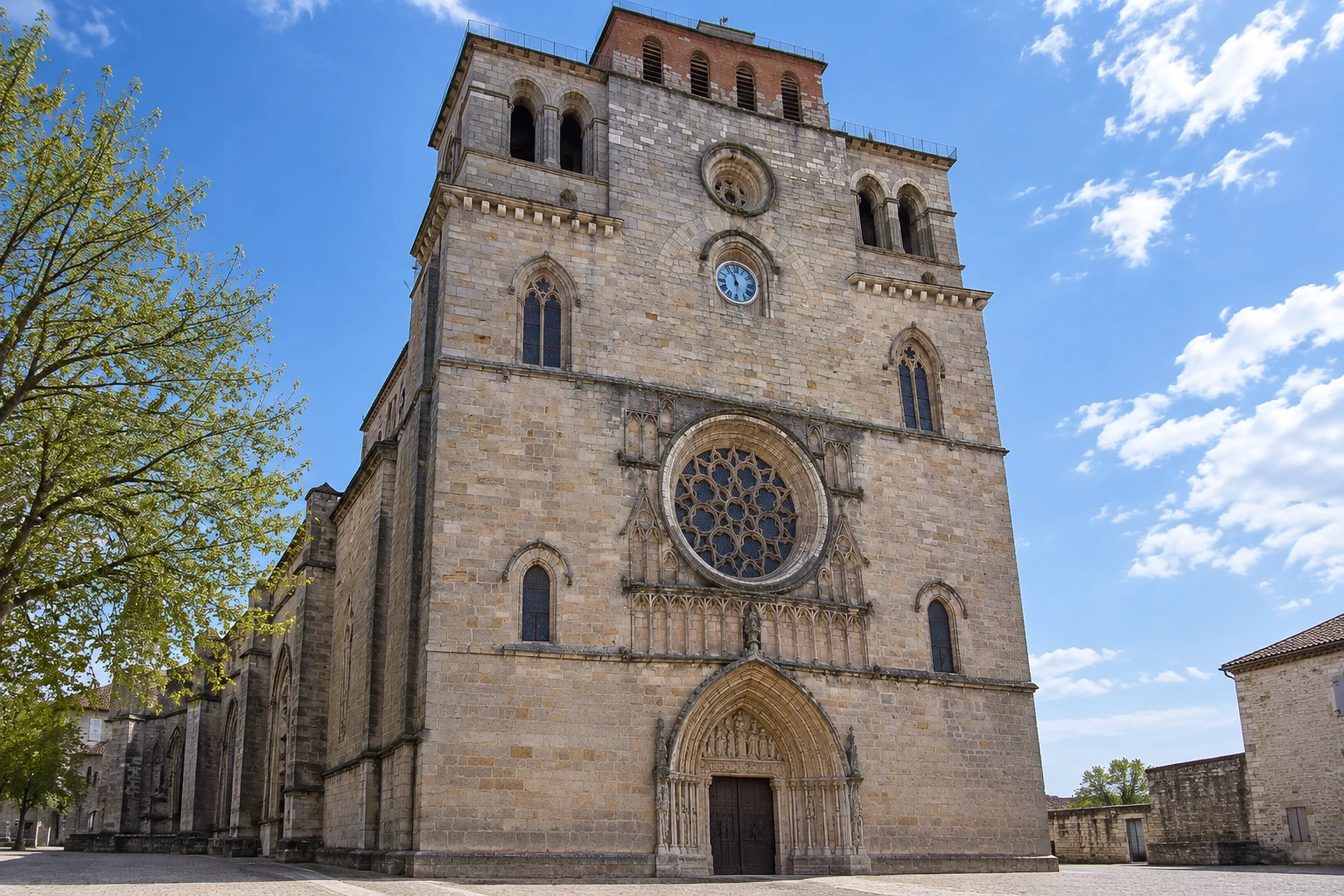
Cahors Cathedral · CahorsThe 12th-century cathedral, one of the largest domed churches in France, with a sculpted Romanesque portal, a Gothic cloister and the relic of the Sainte Coiffe.
Moissac Abbey Cloister · MoissacThe Romanesque cloister dated to 1100, one of the oldest in Europe, with 76 carved capitals, 46 of them with scenes from the Bible and the lives of the saints.
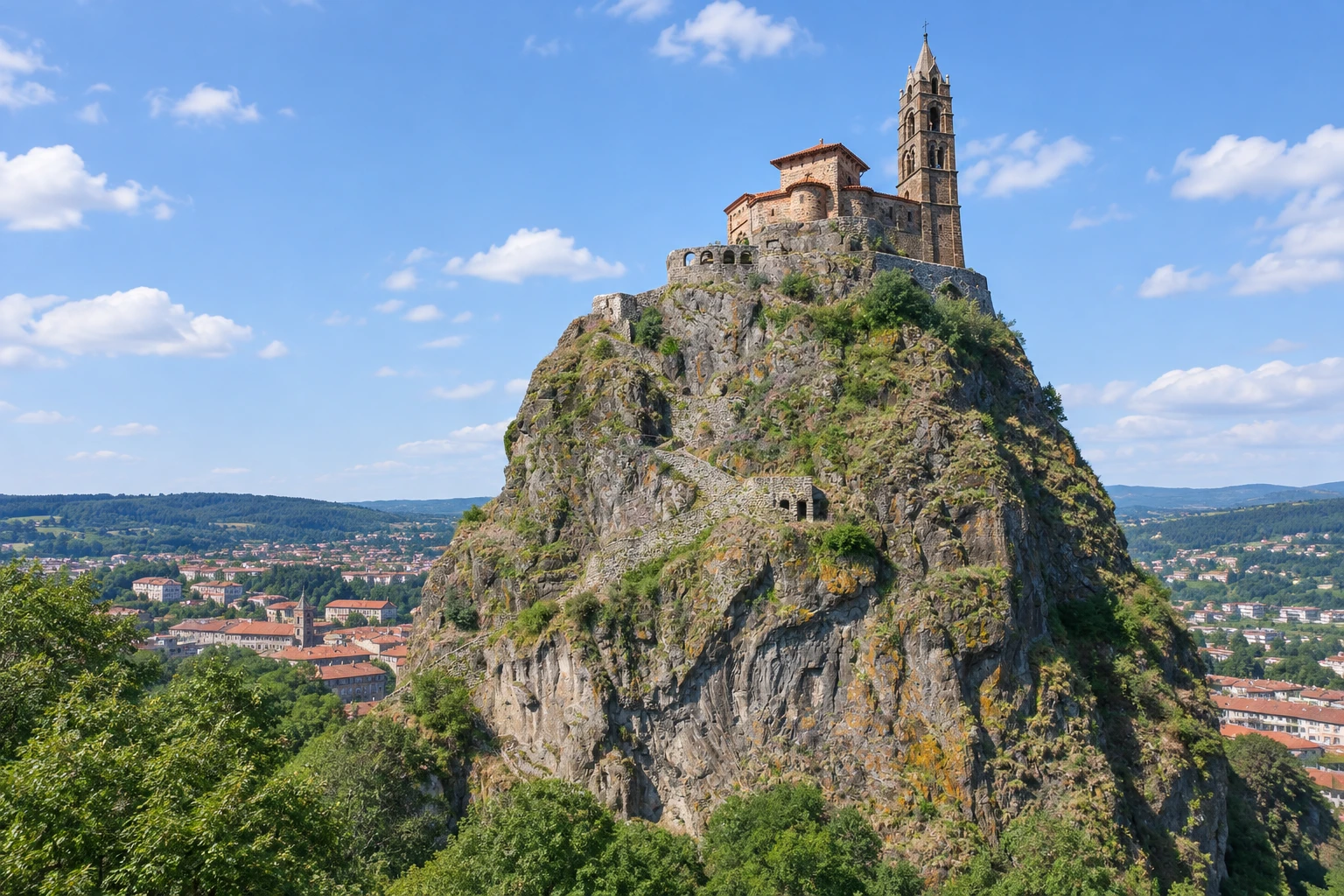
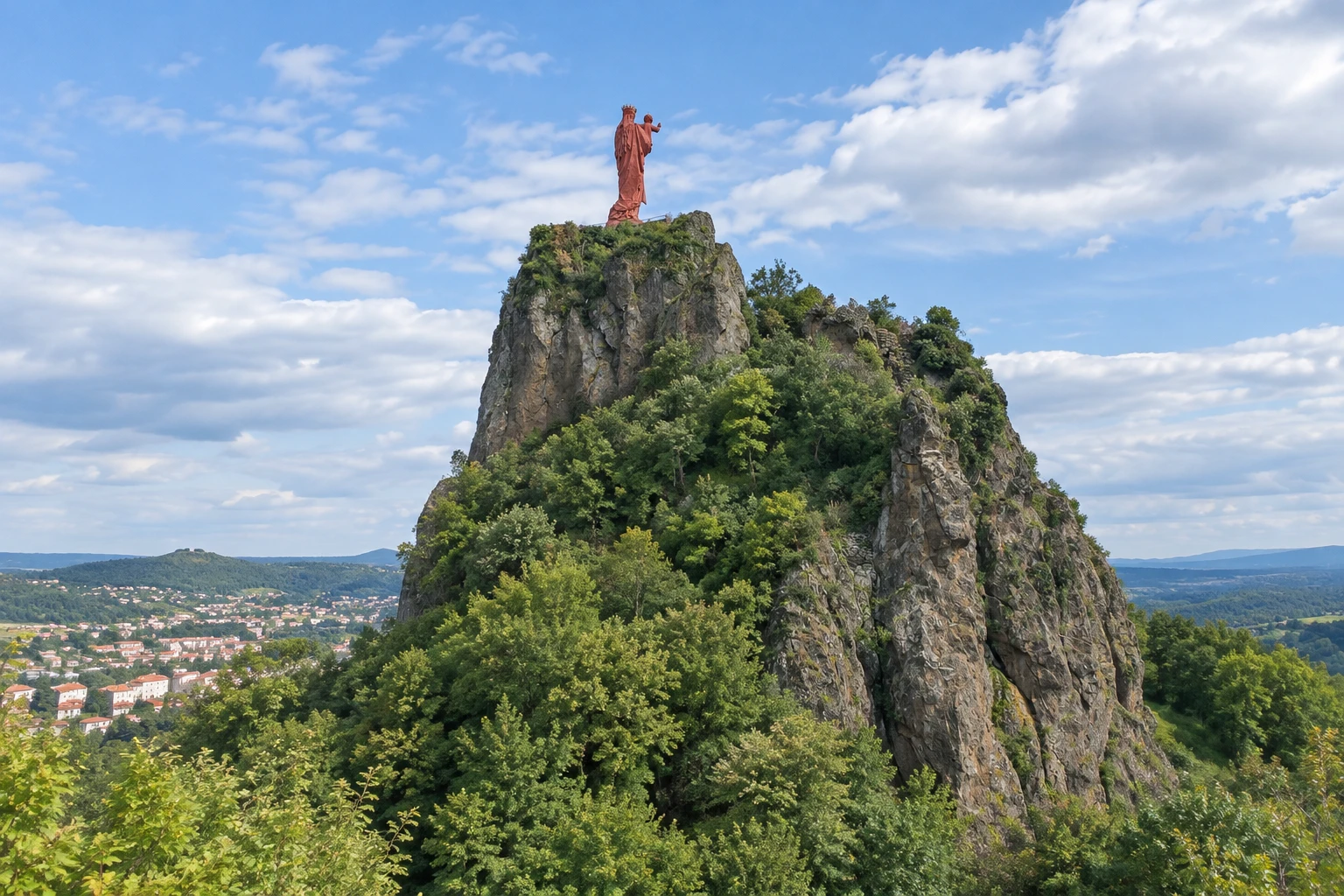
Rocher Saint-Michel d'Aiguilhe · Le Puy-en-VelayThe chapel of Saint-Michel, from the 10th century, atop an 82-meter volcanic rock needle, reached by a stairway of 268 steps.
Treasury of Conques · ConquesThe abbey's goldsmithing treasury, with pieces from the 9th to the 16th centuries, including the statue-reliquary of Sainte Foy, covered in gold and gemstones.
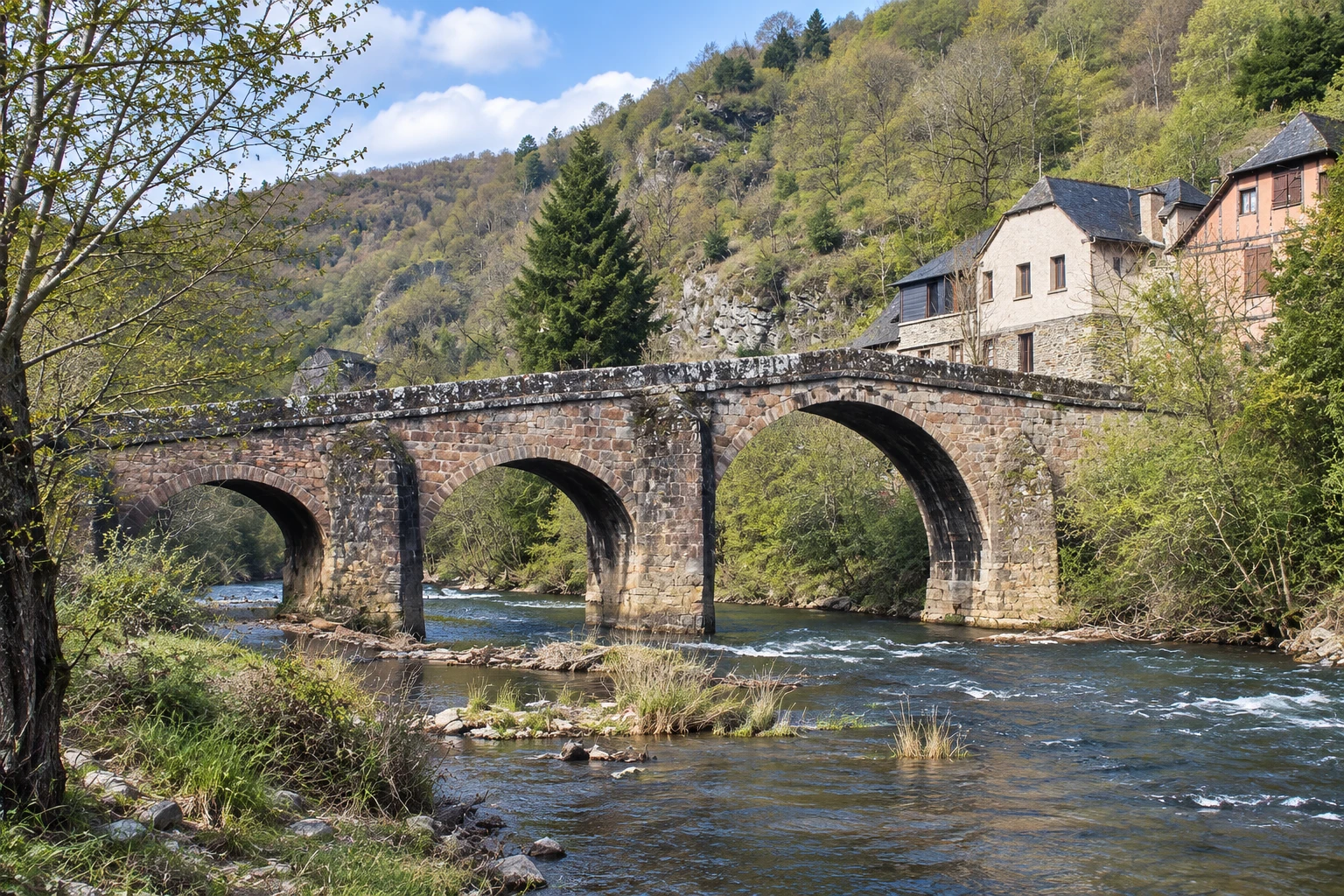
Pilgrims' Bridge in Conques · ConquesThe medieval bridge over the Dourdou river, at the exit of the village, through which pilgrims of the Caminho de Le Puy pass.
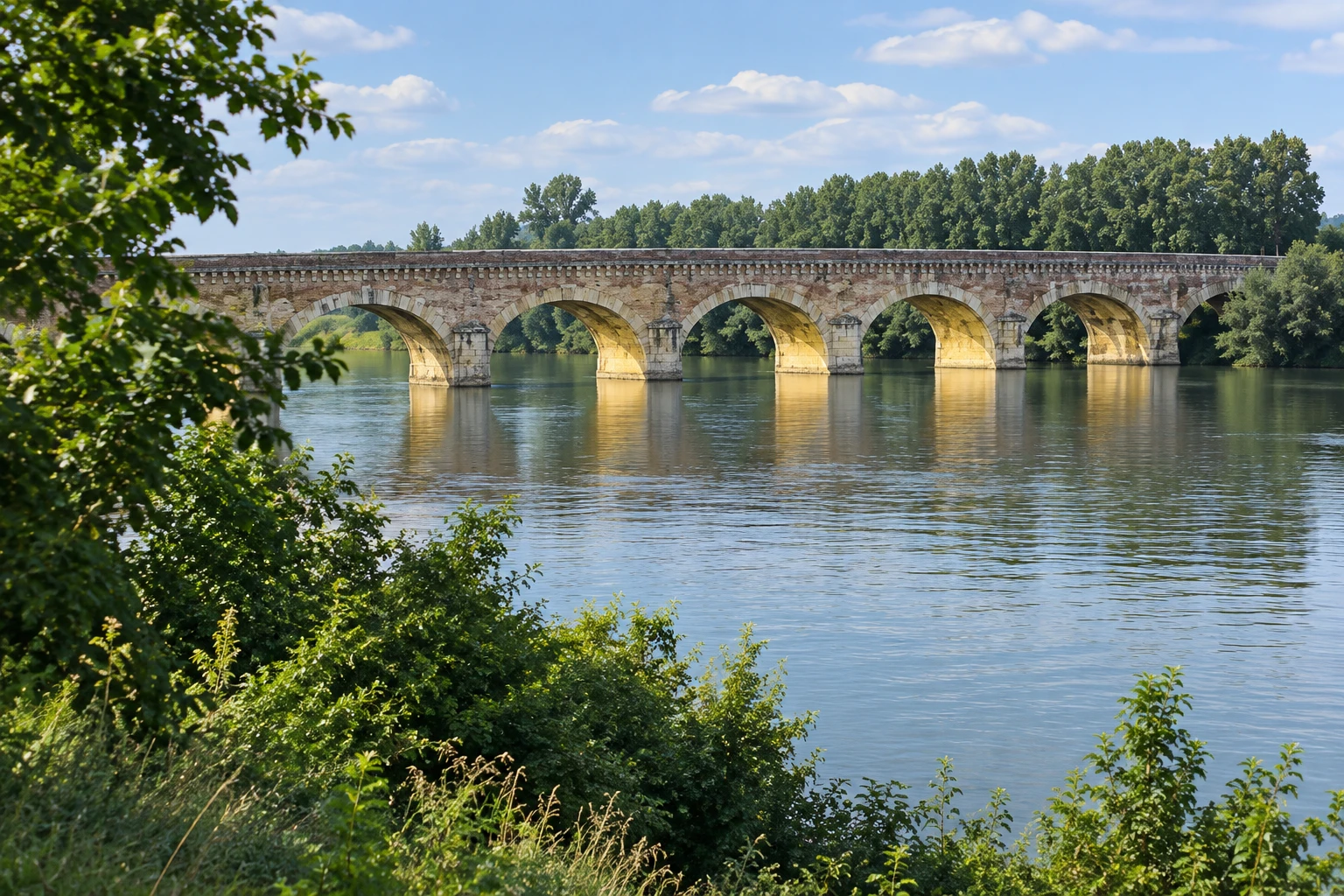
Cacor Aqueduct · MoissacThe bridge that carries the Canal Lateral à Garonne over the river Tarn, at the exit of Moissac, with a waterside path for pedestrians and cyclists.
The Romanesque abbey church built from 1041, a model for the great pilgrimage churches of the Caminho de Santiago, with the tympanum of the Last Judgment and stained-glass windows by Pierre Soulages.
The former Benedictine abbey of Moissac, a World Heritage site, with the church of Saint-Pierre and the tympanum of the south portal, from the 12th century, depicting the vision of the Apocalypse.
The Romanesque cathedral atop the old town, a World Heritage site as part of the Routes of Santiago in France, with the Black Madonna, the fever stone and a cloister of polychrome arches.
The 14th-century fortified bridge over the Lot, with three towers and six Gothic arches, a World Heritage site and the symbol of Cahors. Pedestrian only.
The 12th-century cathedral, one of the largest domed churches in France, with a sculpted Romanesque portal, a Gothic cloister and the relic of the Sainte Coiffe. World Heritage.
The Romanesque cloister dated to 1100, one of the oldest in Europe, with 76 carved capitals, 46 of them with scenes from the Bible and the lives of the saints.
The abbey's goldsmithing treasury, with pieces from the 9th to the 16th centuries, including the statue-reliquary of Sainte Foy, covered in gold and gemstones.
The medieval bridge over the Dourdou river, at the exit of the village, through which pilgrims of the Caminho de Le Puy pass. It is part of the World Heritage.
The medieval centre of Cahors, between the cathedral and the north of the town, with the tower of Pope John XXII, the Barbacane, the tower Saint-Jean and the secret gardens.
The volcanic rock behind the cathedral, about 750 metres above sea level, with the statue of Notre-Dame de France on top, made in the 19th century from the metal of cannons from Sebastopol.
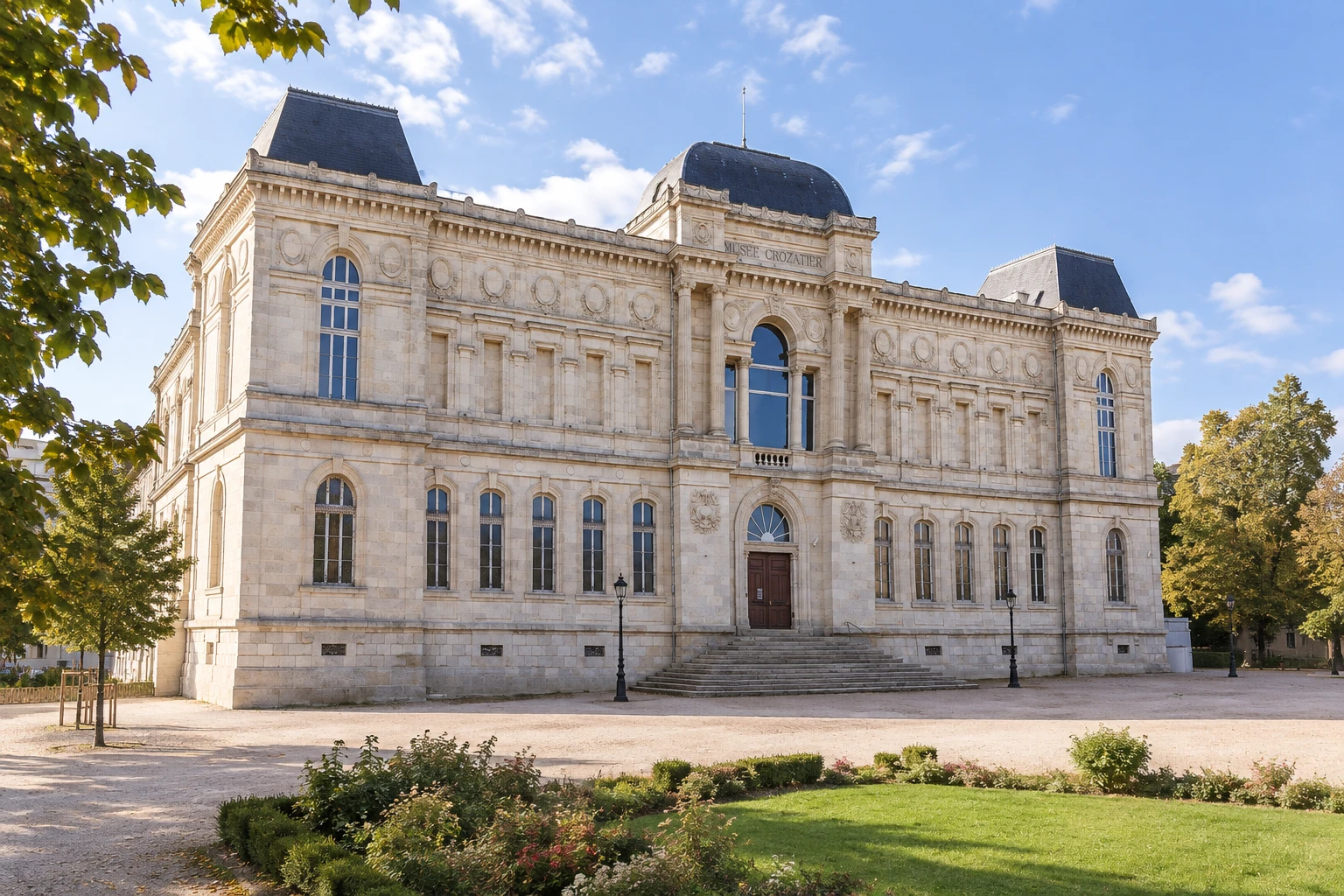
Encyclopaedic museum founded in 1820, in the Jardin Henri-Vinay, with fine arts, archaeology, natural history, technical objects and a collection of Puy lace. It reopened after a lengthy renovation.
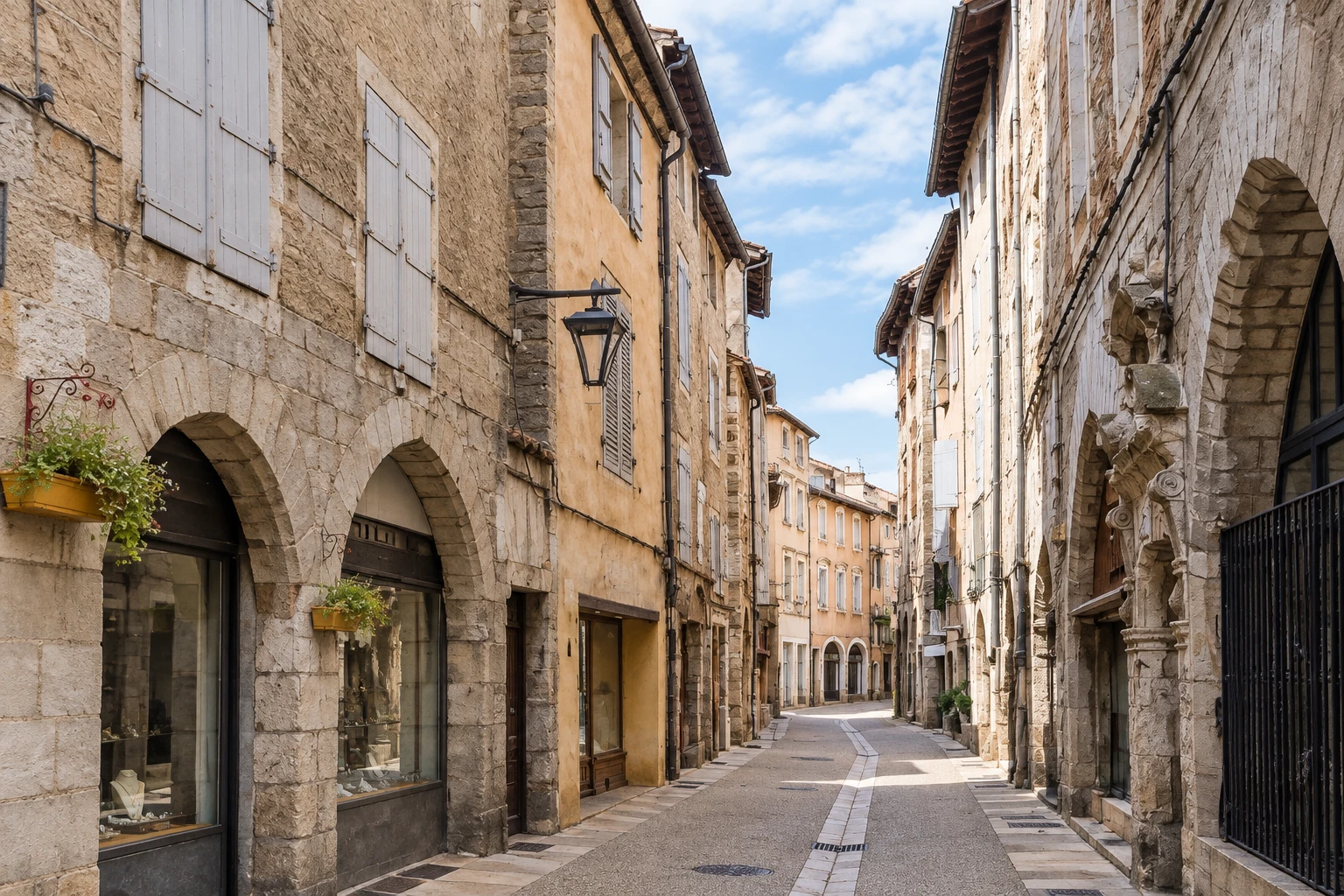
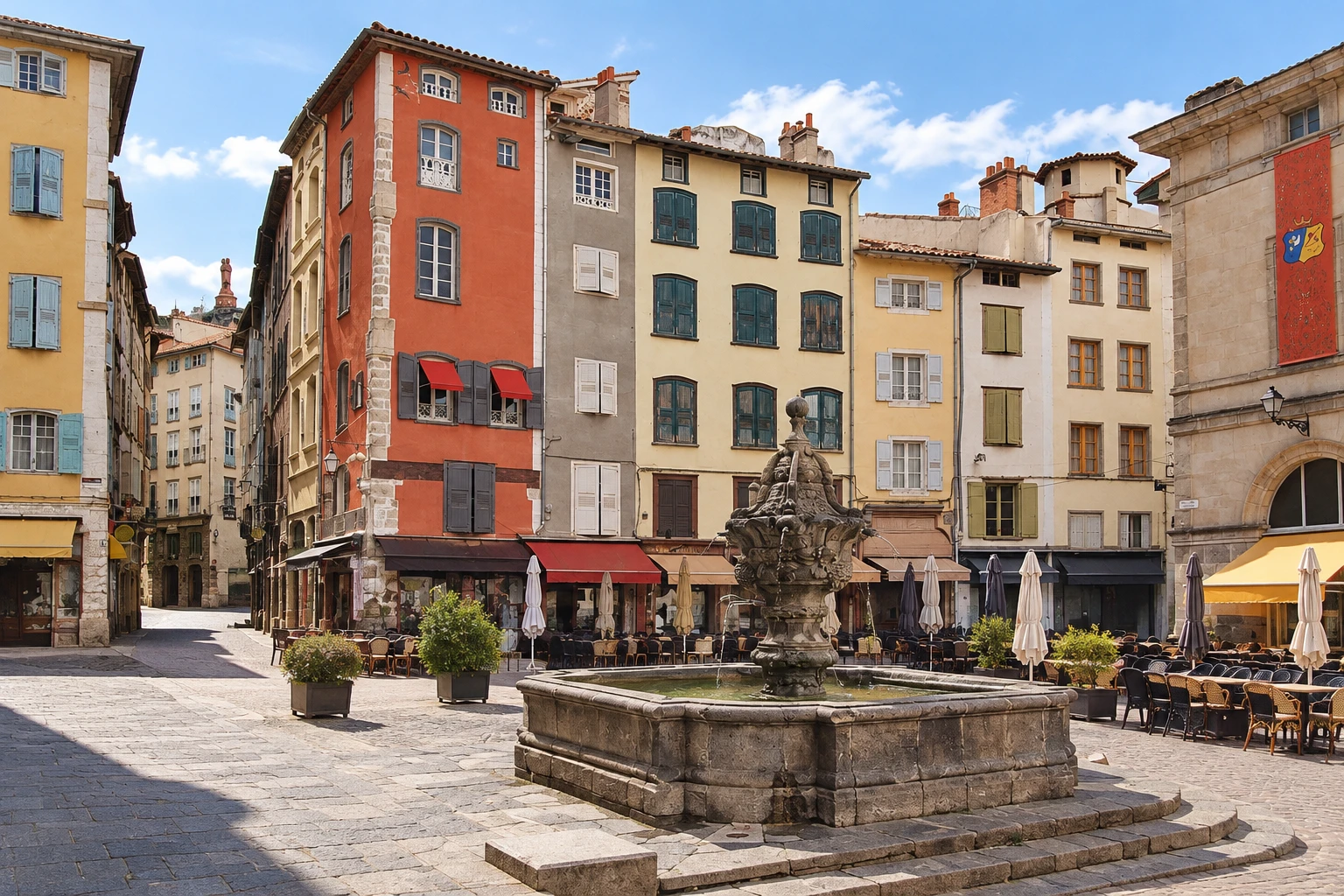
The stone streets that climb from the place du Plot up to the cathedral via the rue des Tables, with old houses, workshops and bobbin-lace shops, and the Saturday market.
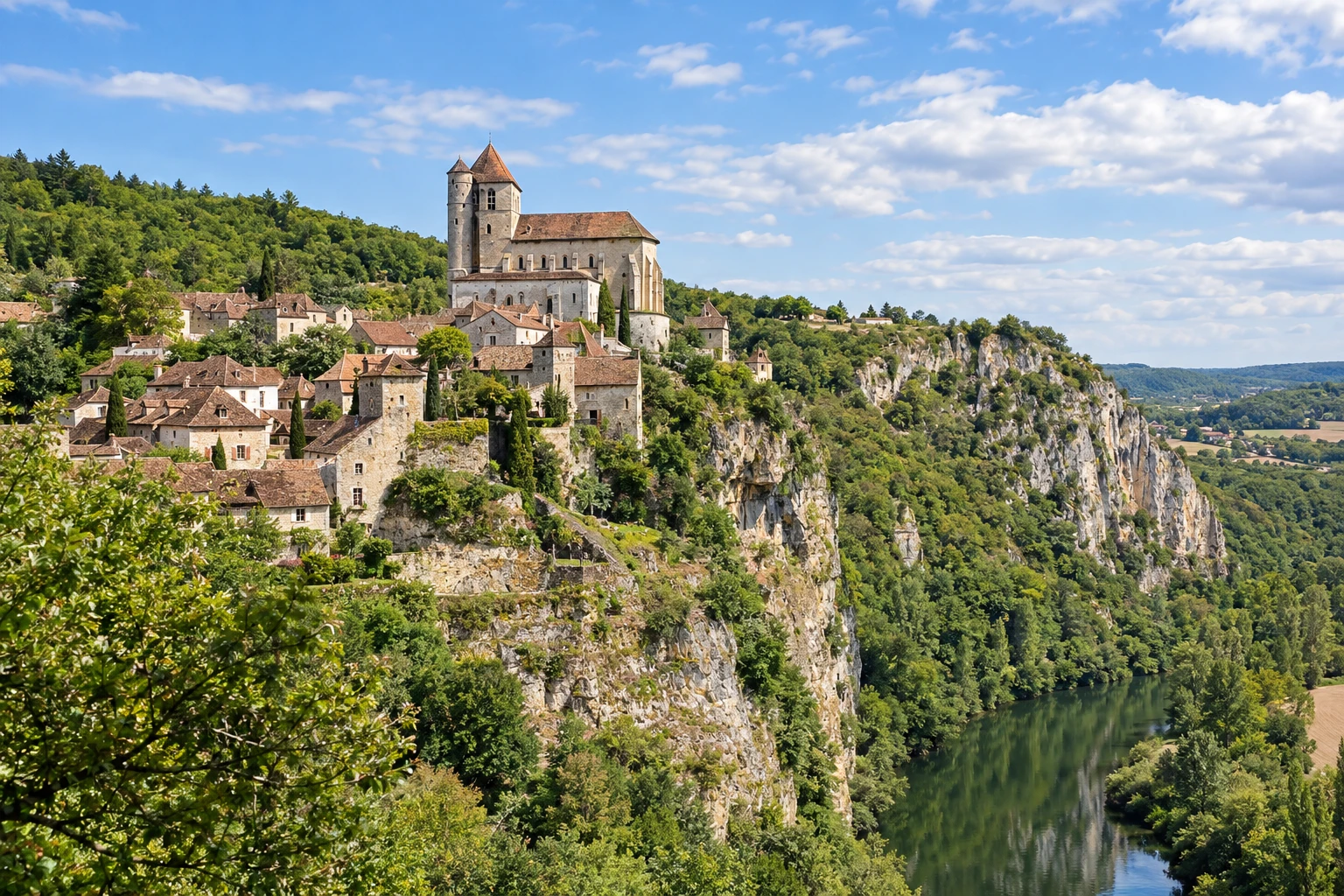
Medieval village on a cliff 100 metres above the Lot, about 30 km from Cahors, ranked among the most beautiful in France. It began to attract artists in the 20th century.
Cave with prehistoric paintings dating to around 25,000 years ago, such as the painted horses and negative hand stencils — one of the few caves in France where the original paintings are open to the public.


 Brazil
 Antarctica
 Argentina
 Bolivia
 Chile
 Colombia
 Ecuador
 Falkland Islands (Malvinas)
 French Guiana
 Guyana
 Paraguay
 Peru
 Suriname
 Uruguay
 Venezuela
 Albania
 Austria
 Belgium
 Croatia
 Denmark
 Finland
 Germany
 Greece
 Hungary
 Iceland
 Ireland
 Italy
 Luxembourg
 Norway
 Poland
 Portugal
 Slovakia
 Slovenia
 Spain
 Sweden
 Switzerland
 the Czech Republic
 the Netherlands
 the United Kingdom
 Turkey
 Bermuda
 Canada
 Greenland
 Mexico
 Saint Pierre and Miquelon
 the United States
 the Dominican Republic
 Japan
 Egypt
 South Africa
 Australia
 Fiji
 New Zealand
 Papua New Guinea