Corsica

Corsica

Corsica

French island in the Mediterranean, with Ajaccio, Napoleon's birthplace, the cliffs of Bonifácio, the Calanques de Piana and pale-sand beaches in the south.

South

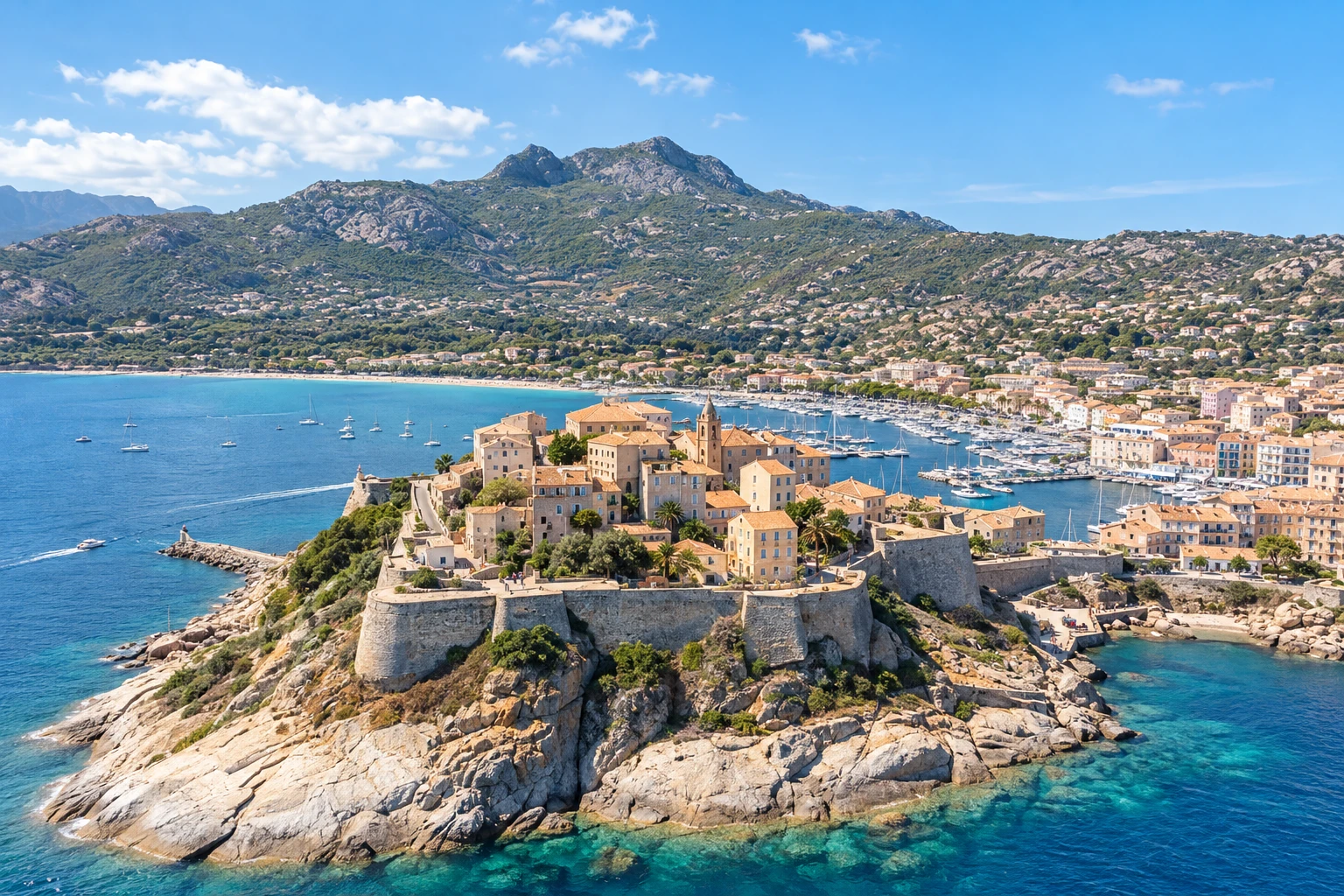
In the photo: Citadel and harbour of Calvi in Córsega, France.

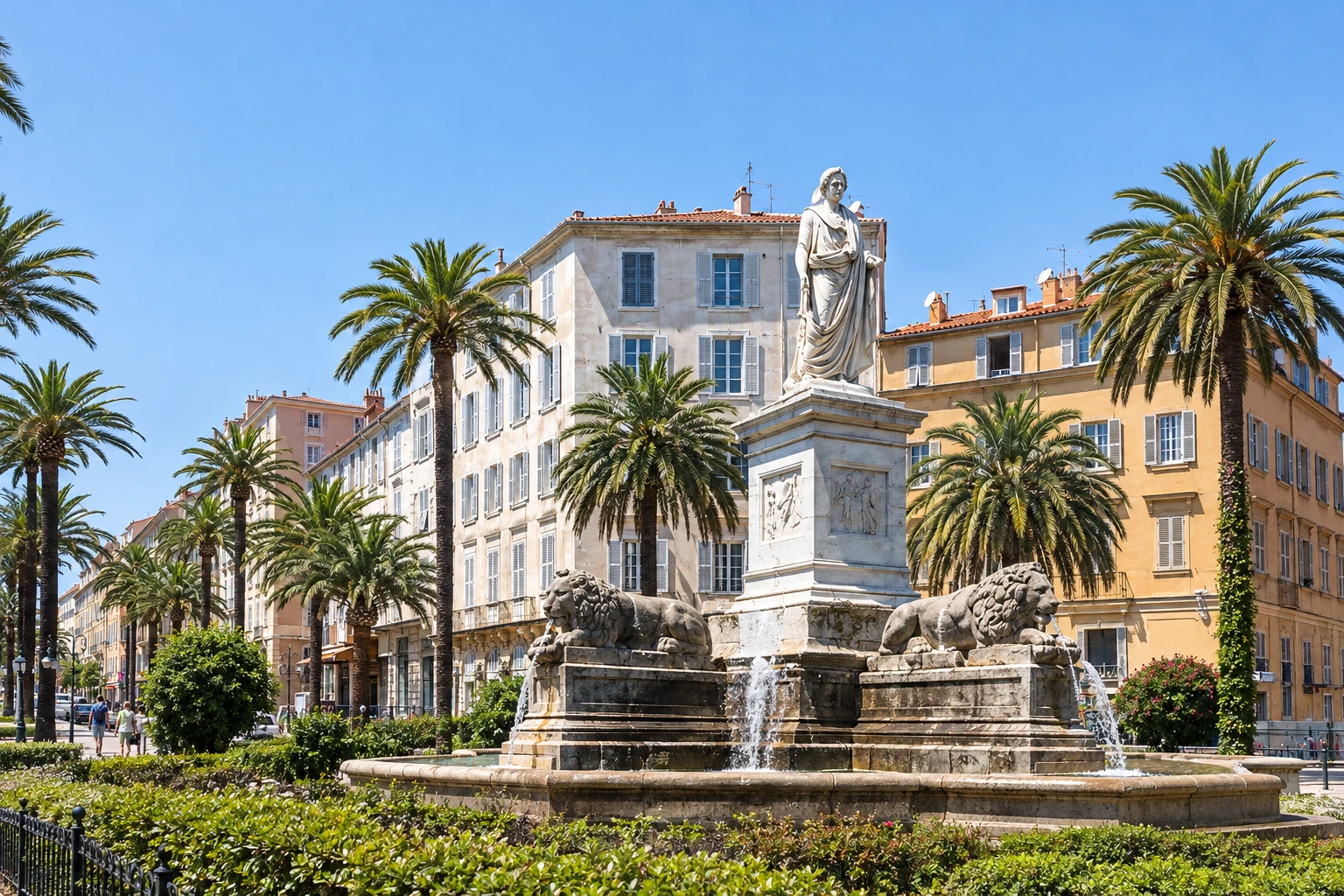
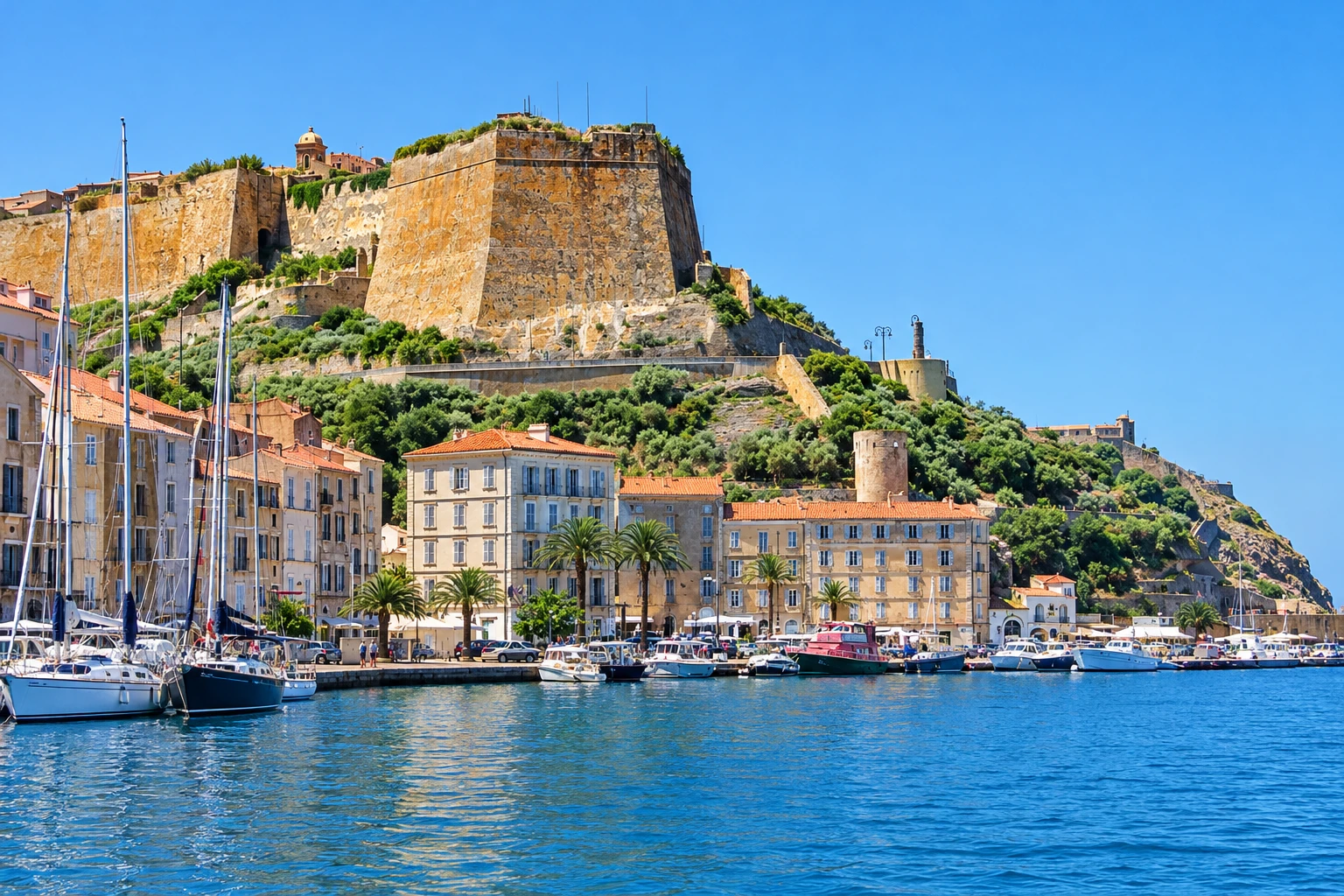
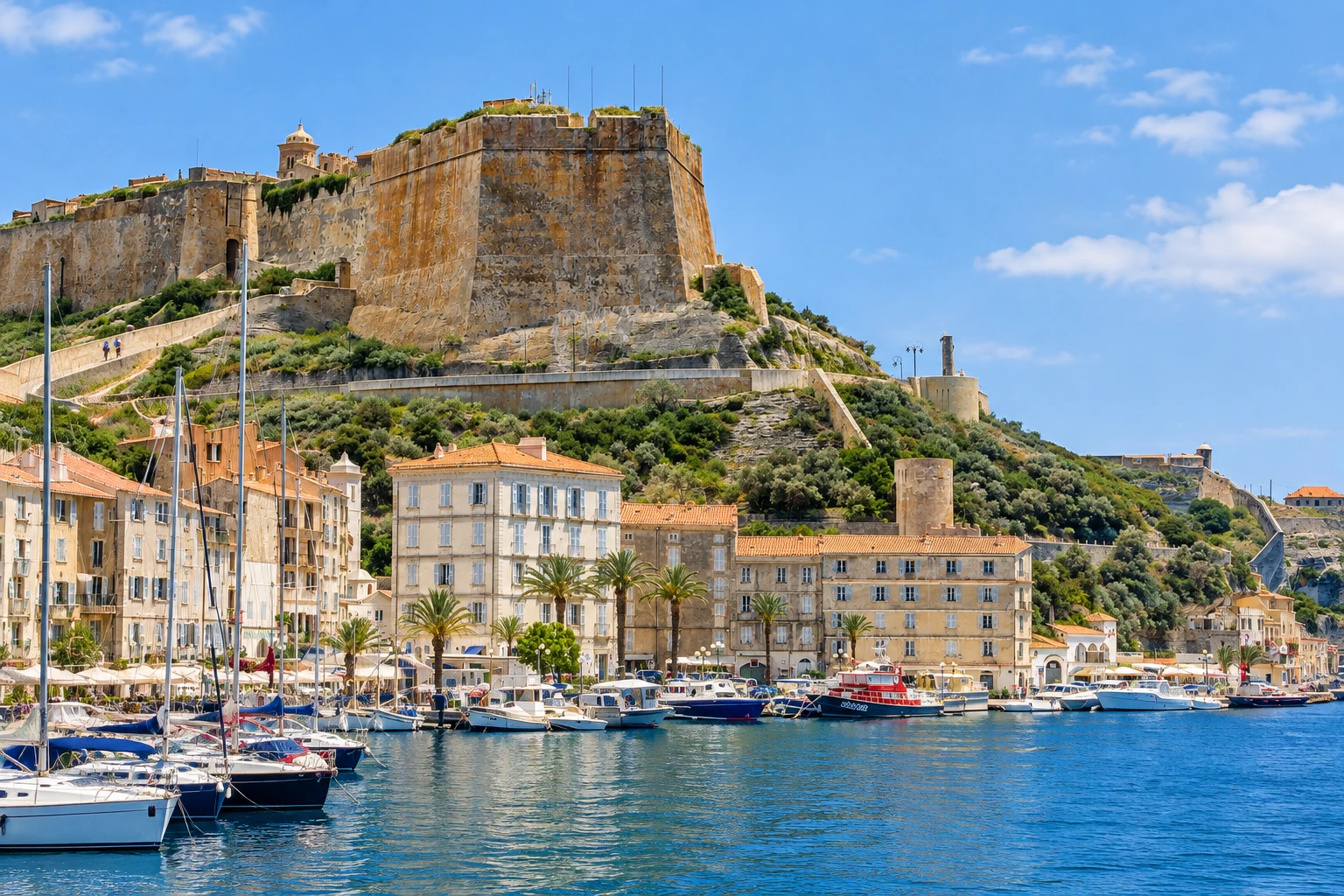
Illustrative images. The pictures in this guide are illustrations based on the real place, not photographs, and may differ from it.

Get it on Google Play

Get to know the place

A region to enjoy
at your own pace.

Córsega is a French island in the Mediterranean Sea, south of the Côte d'Azur and just north of Sardenha, which is part of Italy. It has been French territory since the 18th century, but the history with Gênova left traces in the fortified towns, the coastal watchtowers and the names. Signs are often in French and in the Corsican language: Ajaccio also appears as Aiacciu, and Bonifácio as Bunifaziu.

Ajaccio, the island's capital, is on the west coast in an open gulf. It is the city where Napoléon Bonaparte was born in 1769, and the family's house became a museum. From here depart trips to the Pointe de la Parata and the Îles Sanguinaires at the mouth of the gulf, and to the Calanques de Piana and the Golfe de Porto, listed as a World Heritage Site by UNESCO.

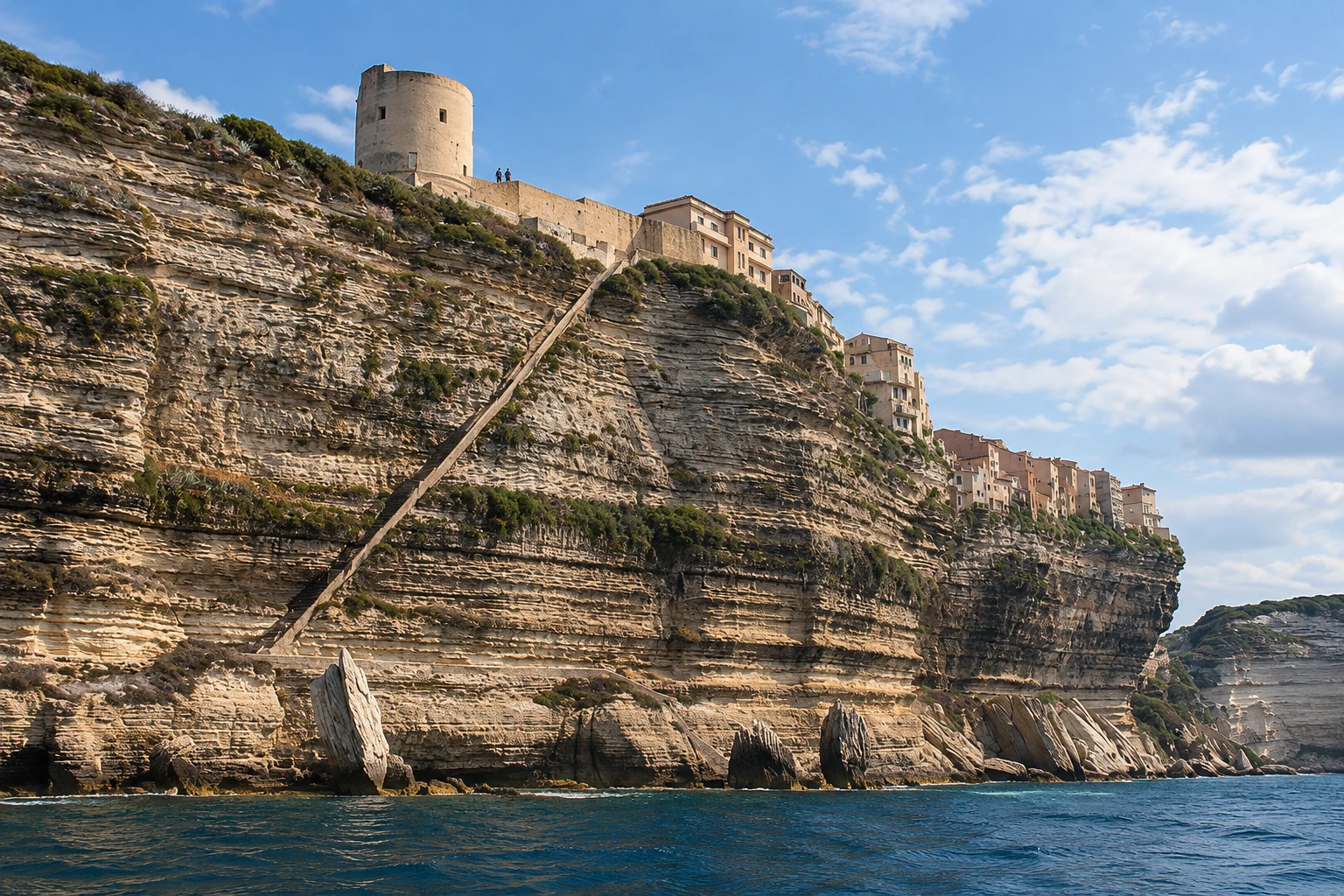
Bonifácio sits on the southern tip of the island, atop a white limestone plateau with about 60 metres of cliff above the sea. The upper town, walled, looks out over the strait that separates Córsega from Sardenha. Boats leave the port for the caves, the cliffs and the Îles Lavezzi, and a half-hour drive away are the beaches of Palombaggia and Santa Giulia, in Porto-Vecchio.

For Brazilians, the main issue is logistics. You arrive by plane or by ferry, and the island's roads are winding mountain roads: travel time is usually much longer than the distance suggests. Renting a car helps a lot, because the train only covers the centre and the north, and the time difference is 4 or 5 hours ahead of Brasília, depending on the time of year.

This destination brings together 2 cities: Ajaccio, Bonifacio.

Share: WhatsApp
Traveler, share your experiences through photos Up to 5 photos of each place you visited.

One destination, many paths

The cities on this trip

Start with one city or combine several in your itinerary.

Where Corsica is The star marks the capital, Ajaccio.
AjaccioBonifacio

Outlines: © IGN, ADMIN EXPRESS, Licence Ouverte 2.0. Adapted by Cidade Turismo.

How to get there: Corsica

Aéroport d'Ajaccio Napoléon Bonaparte (AJA), in Ajaccio · 10 km to Ajaccio

By plane, via the airports of Ajaccio (AJA) and Figari Sud Corse (FSC), near Bonifácio, with flights from Paris and other French cities. Connections from Brazil usually involve a stopover in another city. Check before buying. By ferry, there are crossings from Marselha, Nice and Toulon to Ajaccio and other ports on the island.

Suggested arrival point: Ajaccio

The local experience

Things to do in Corsica

See 10 more places in Corsica

To choose before you go

Tours in Corsica

Where each tour starts, how long it takes, how it is done, what is included and the price range.

Ajaccio on foot: historic centre, Maison Bonaparte, cathedral and Place Foch

From Ajaccio center On foot half day morning or afternoon easy

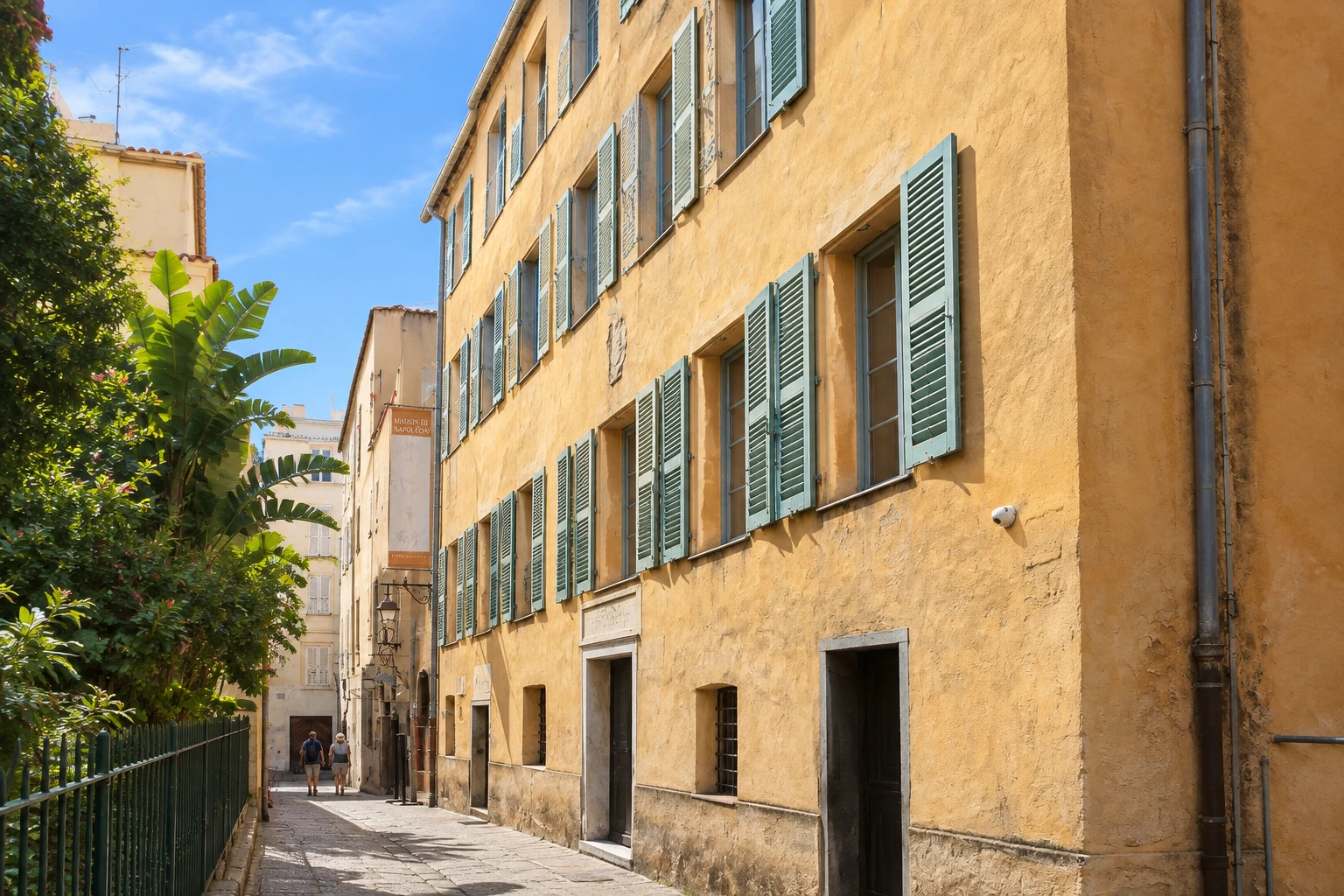
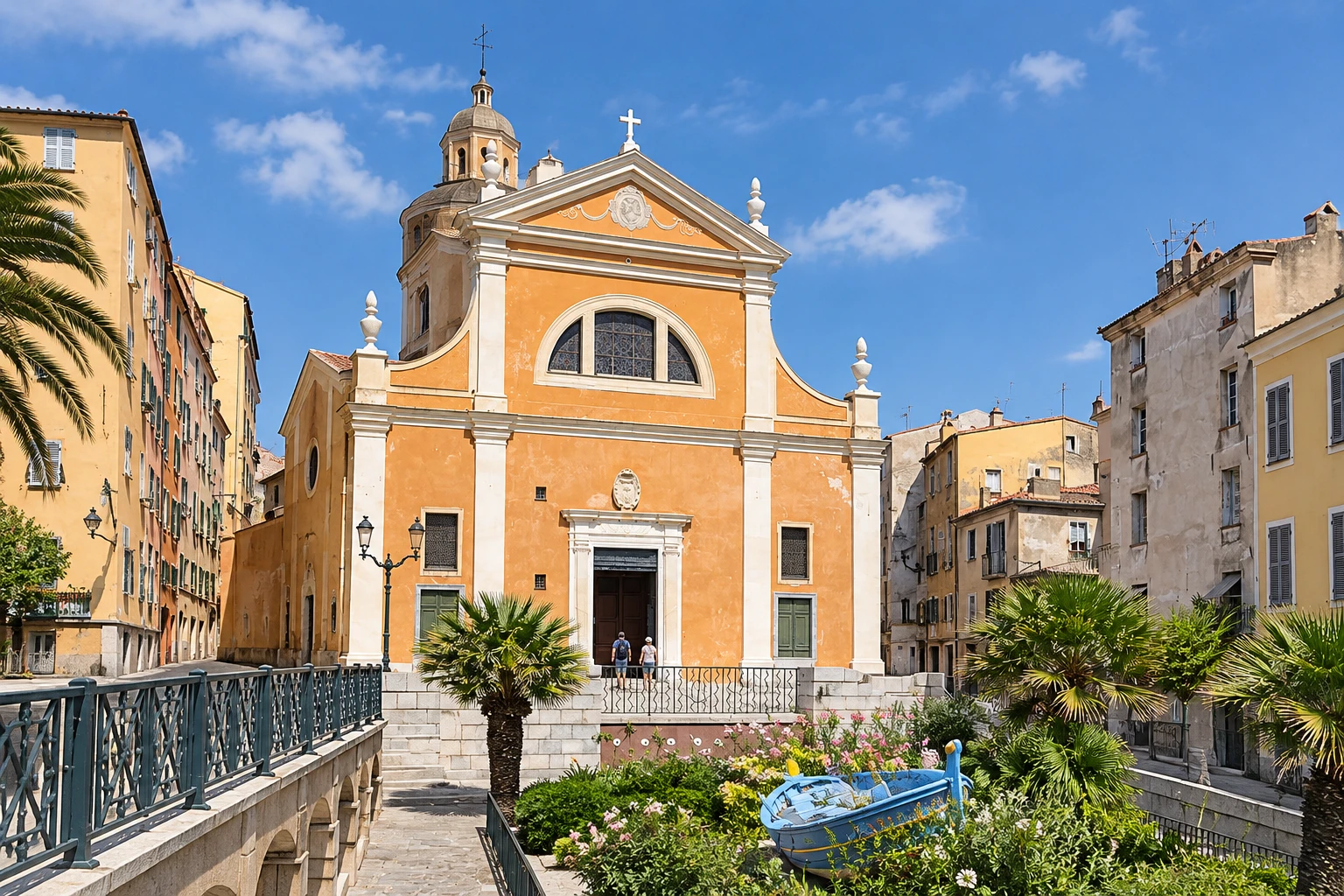
Ajaccio, capital of Corsica, is the city where Napoleon Bonaparte was born in 1769. The old town, of Genoese origin, is walked on foot between the port and the citadel. The Maison Bonaparte is the house where Napoleon was born and spent his childhood. Today it is a national museum: it displays family furniture and objects and tells the story of the house and of Corsica at the time, more than the life of the emperor. The visit is not long. A few steps away is the Cathédrale Notre-Dame-de-l'Assomption d'Ajaccio, with a simple façade, completed in 1593, where Napoleon was baptized in 1771. The Place Foch, with palm trees and the statue of Napoleon as consul, sits next to the port and the town hall, near the market. From there you follow the narrow streets of the old quarter down to the sea, where you can see the citadel from the outside (it is a military area).

Stops: Ajaccio, Maison Bonaparte, Cathédrale Notre-Dame-de-l'Assomption d'Ajaccio, Place Foch, Citadelle d'Ajaccio.

Includes: The walk is free. The Maison Bonaparte has an admission fee; entry to the cathedral is free. Check the current schedule.

Tip: Start at the Maison Bonaparte very early, before the tour groups. Wear comfortable shoes: the streets are cobbled and steep. Combine it with the Palais Fesch on the same day.

Best time: All year; from April to June and in September and October the heat is milder.

Palais Fesch – Musée des Beaux-Arts and the Chapelle impériale

From Ajaccio city centre On foot about 2 hours morning or afternoon easy

The Palais Fesch is Ajaccio’s fine arts museum, located in the Borgu neighborhood. It was created from the donation of Cardinal Joseph Fesch, Napoleon’s maternal uncle, who was born in the city and left part of his art collection to Ajaccio. The holdings are strong in old Italian painting and include one of France’s major Napoleonic collections: portraits, busts and objects from the Bonaparte family. The museum bears the Musée de France designation. The palace was built between 1828 and 1852. The complex includes the imperial chapel, where members of the Bonaparte family are buried. Allow about 2 hours to see the main rooms without rushing.

Stops: Palais Fesch – Musée des Beaux-Arts, Chapelle impériale, Ajaccio.

Includes: There is an admission fee. Check the current rate and opening days before you go.

Tip: Good option for a hot summer afternoon or for a rainy day in winter. It is a few minutes' walk from the Maison Bonaparte.

Best time: Year-round.

Îles Sanguinaires and Pointe de la Parata

From Ajaccio Car, city bus or sightseeing boat about 3 hours afternoon easy (short trail with a slight climb)

The Îles Sanguinaires are four small islets of dark red rock at the entrance to the Gulf of Ajaccio, west of the city. On the largest, Mezu Mare (Grande Sanguinaire), there is a lighthouse dating from 1870. The group, together with the Pointe de la Parata, holds the Grand Site de France designation. By land, follow the coastal road from Ajaccio to the tip of the peninsula. From the parking area, a short trail climbs to the Tour de la Parata, a Genoese tower from 1550–1551, 55 m above sea level; from there you can see the islands lined up. There are other trails around the point. By sea, tour boats depart from Ajaccio harbor and circle the islands in a half-day excursion. Sunset is the most popular time: the sun sets behind the islands and the rock turns reddish.

Stops: Pointe de la Parata, Tour de la Parata, Îles Sanguinaires, Gulf of Ajaccio.

Includes: Access by land is free; there is paid parking at certain times. The boat tour is paid separately.

Tip: Bring water and a light jacket: it is windy at the point. In summer, at sunset the parking lot fills up; arrive a little earlier.

Best time: All year by land; boats generally from April to October.

Calanques de Piana (Calanche) and the road from Ajaccio to Porto

From Ajaccio Private car or excursion most of the day, with stops full day easy (winding road)

The Calanques de Piana (in Corsican, Calanche di Piana) are a series of pink granite rock formations carved by erosion on Corsica's west coast, between the village of Piana and Porto. Together with the Gulf of Porto, the Gulf of Girolata and the Scandola reserve, they have been a UNESCO World Heritage Site since 1983. From Ajaccio the road heads north along the coast, passes Cargèse and reaches Piana. From there the narrow road crosses the Calanche for a few kilometers, between cliffs and viewpoints, and descends to Porto at the head of the gulf, with its Genoese tower and pebble beach. There are short marked trails that leave the road, including the Château Fort trail, to view the rocks from above. There is no on-foot access to the sea within the Calanche. The distance is short in kilometers, but the road is winding and the drive takes time; stops at viewpoints make the day longer.

Stops: Calanques de Piana, Piana, Porto, Gulf of Porto, Capu Rossu.

Includes: By car, no entrance fee. Excursions generally include transportation; meals are paid separately. Check the current chart.

Tip: In summer, go early: the road is narrow and buses and cars stop at the viewpoints. Combine it with the boat to Scandola departing from Porto and, if you can, stay overnight in Porto.

Best time: From April to June and from September to October.

Boat from Porto to the Réserve naturelle de Scandola and Girolata

From Porto (there are also departures from Ajaccio and Calvi) Boat tour about half a day, with a 30-minute stop in Girolata morning or afternoon easy

The Réserve naturelle de Scandola occupies a peninsula of volcanic rock on the north side of the Gulf of Porto. It can only be reached by sea: there is no road or trail. It is a UNESCO World Heritage site, together with the gulf and the Calanques de Piana. Boats depart from the small port of Porto and head north along the reddish cliffs, with caves, arches and islets. On board there is commentary about the reserve, the birds (such as the osprey) and the vegetation. Most tours stop for about 30 minutes in Girolata, a fishing village with no road access, featuring a Genoese fort from 1552. Other routes leaving Porto head south to the Calanques de Piana and Capu Rossu, or link both sides of the gulf. From Ajaccio there are full‑day departures, with more time spent sailing.

Stops: Golfe de Porto, Réserve naturelle de Scandola, Girolata, Golfe de Girolata, Calanques de Piana, Capu Rossu.

Includes: Boat tour with commentary on board. Food and drink in Girolata are paid separately. Check the current price list.

Tip: Book in advance in summer. Bring a jacket: it is windy at sea. If the sea is rough, tours may be canceled; leave some slack in your schedule.

Best time: Season generally from April to October.

Bonifacio: Haute-Ville, Bastion de l'Étendard and Cimetière marin

From Port de Bonifacio On foot about 3 hours morning or afternoon easy (steep sections and slippery stones)

Bonifacio (Bonifácio) is at the southern tip of Corsica, on white limestone cliffs, facing the Sardaigne (Sardinia). The town has two parts: the Marina, around the harbor at the head of a narrow inlet, and the Haute-Ville, the walled upper town. From the harbor, a pedestrian ramp rises to the upper town. Through the Porte de Gênes you reach the Bastion de l'Étendard, a 15th-century bastion with underground rooms and views over the harbor and, on the other side, Sardinia. Inside the walls, narrow alleys lead to the Église Sainte-Marie-Majeure, from the 12th century, and to the squares of the Genoese and Pisan quarters. The churches of Bonifacio are the only Gothic ones in Corsica. At the tip of the headland are the Cimetière marin, with family chapels facing the sea, and the Batterie Saint-François, a restored section of the ramparts. From the market square you can see houses hanging on the cliff edge. The town holds the Ville d'Art et d'Histoire label.

Stops: Bonifacio, Port de Bonifacio, Haute-Ville de Bonifacio, Bastion de l'Étendard, Église Sainte-Marie-Majeure, Cimetière marin de Bonifacio, Batterie Saint-François.

Includes: The walk is free. The Bastion de l'Étendard requires an admission fee; there is a combined ticket with the Escalier du Roi d'Aragon. Guided tours are paid separately.

Tip: Wear sneakers: the paving is uneven and smooth. In summer, go up early or late afternoon. The Bastion viewpoint is best in the morning; the Batterie Saint-François at the end of the day.

Best time: All year; from April to June and in September and October there is less crowding.

See 9 more tours

Escalier du Roi d'Aragon and cliff path to the Phare de Pertusato

From Haute-Ville de Bonifacio On foot half day morning or afternoon moderate (steps and trail without shade)

The Escalier du Roi d'Aragon is a staircase of 189 uneven steps carved into the limestone cliff, descending from the upper town almost to sea level. It sits in the Pisan quarter near the Torrione. Legend says the troops of King Alfonso V of Aragon dug it in one night during the 1420 siege. The more accepted account credits Franciscan monks who worked to reach a potable water source. Below, a narrow path runs along the rock above the sea. To view the cliffs from above, leave the upper town via the Chapelle Saint-Roch and follow the Sentier Campu Rumanilu, a trail that climbs by a stone stairway and follows the plateau edge, offering views of the Haute-Ville balanced on the rock. The trail continues south to the Phare de Pertusato and Plage de Saint-Antoine. From the lighthouse you can see the Îles Lavezzi and the Sardinian coast.

Stops: Escalier du Roi d'Aragon, Haute-Ville de Bonifacio, Chapelle Saint-Roch, Sentier Campu Rumanilu, Phare de Pertusato, Plage de Saint-Antoine.

Includes: The staircase requires an entrance ticket; there is a combined ticket with the Bastion de l'Étendard. The trail is free.

Tip: The staircase is steep and the steps are high: not suitable for people with mobility difficulties. The trail has no shade; bring water, a hat and sunscreen.

Best time: From April to June and September to October; in summer, only early or late afternoon.

Boat to the caves and cliffs of Bonifacio

From Port de Bonifacio Boat tour about 1 hour morning or afternoon easy

Seen from the sea, Bonifacio shows what cannot be seen from above: the whole town on the white cliff, cut in layers, with houses on the rock edge. Boats leave the port, cross the narrow entrance channel (the Goulet) and sail along the cliffs. The short route passes the Grotte de Saint-Antoine, called Chapeau de Napoléon for its shape, the rock Gouvernail de la Corse and the base of the Escalier du Roi d'Aragon. The Grotte du Sdragonato, known for the opening in the roof shaped like a map of Corsica, is no longer visited for safety reasons. The entire coast is part of the Réserve naturelle des Bouches de Bonifacio. Many companies join this trip with the Îles Lavezzi tour.

Stops: Port de Bonifacio, Grotte de Saint-Antoine, Gouvernail de la Corse, Escalier du Roi d'Aragon, Phare de la Madonetta, Réserve naturelle des Bouches de Bonifacio.

Includes: Boat tour with commentary on board. Paid separately. Check the current price list.

Tip: There are several companies on the quay offering tours from 1 hour to full day. Sit on the cliff side. To get closer to the caves there are kayak and stand-up paddle tours.

Best time: Season generally from April to October.

Îles Lavezzi: the archipelago of the Bouches de Bonifacio

From Port of Bonifacio Sightseeing boat or water shuttle half day or full day morning easy (rocky walking)

The Îles Lavezzi are an archipelago of islands and granite rocks about 10 km southeast of Bonifacio, in the strait between Corsica and Sardinia. The archipelago contains the southernmost point of metropolitan France. The crossing takes about 20 minutes. The main island, Lavezzo, has clear-water coves between rounded granite boulders, a lighthouse from 1874 and two cemeteries linked to the wreck of the frigate La Sémillante in 1855, when all 773 men on board died while bound for war in the Black Sea. A stele commemorates the tragedy. The nature reserve allows landings only on some islands; on those islands there are marked paths among the rocks and places for swimming. Many boats follow the full route: Bonifacio cliffs and a stop at the Lavezzi.

Stops: Îles Lavezzi, Île Lavezzo, Cimetière de la Sémillante, Réserve naturelle des Bouches de Bonifacio, Bouches de Bonifacio.

Includes: Boat crossing; some departures include the Bonifacio cliffs. Paid separately. There are no services on the island: bring water and a snack.

Tip: Bring water, a hat, sunscreen and shoes that can go in the water. Respect closed areas of the reserve. With strong wind, departures may be canceled.

Best time: Season generally from April to October; for swimming, June to September.

Porto-Vecchio beaches: Palombaggia and Santa Giulia

From Porto-Vecchio or Bonifacio Car all day morning and afternoon easy

South of Porto-Vecchio, on the east coast, are Corsica’s best-known beaches. Plage de Palombaggia has white sand between red rocks, maritime pines behind it and the Îles Cerbicale offshore. Part of the land behind the beach is protected by the Conservatoire du littoral. A little further south, the Golfe de Santa Giulia has a long crescent beach of shallow, clear water, separated from a lagoon by a strip of pine woodland. The southern shore of the gulf is a protected natural area. The two beaches are a short distance from each other and a few kilometers from Porto-Vecchio. Figari airport is 19 km from Porto-Vecchio and 15 km from Bonifacio, making it easy to include the beaches on your last day.

Stops: Plage de Palombaggia, Golfe de Santa Giulia, Porto-Vecchio, Îles Cerbicale.

Includes: Beach access is free; paid parking applies in summer. There are beach bars and chair rentals during the season.

Tip: In July and August, arrive early: parking lots fill up by late morning. Bring an umbrella: there is little shade on the beach.

Best time: For swimming, June through September; the sea is usually warmer from July through September.

Aiguilles de Bavella and the Col de Bavella

From Porto-Vecchio or Bonifacio Car most of the day, with a short walk full day easy to moderate (mountain road)

The Aiguilles de Bavella are sharp granite towers, up to 1,857 m high, in the southern part of Corsica’s central range. They sit above the Col de Bavella, at 1,218 m, a mountain pass linking Alta Rocca to the east coast. The most common route leaves Porto-Vecchio inland, passes the village of Zonza and climbs to the pass. At the top there is parking, wind-sculpted pines and views of the needles. Marked trails leave the pass for short hikes, from one to a few hours, among rocks and pine woods. The GR20 long-distance trail also crosses here; it runs roughly 180 km in 16 stages across Corsica and is for experienced hikers. The area is part of the Corsica Regional Natural Park; camping there is prohibited.

Stops: Aiguilles de Bavella, Col de Bavella, Zonza, Alta Rocca, GR20.

Includes: No entrance fee. Parking at the pass may be paid separately in season.

Tip: Narrow, winding road: allow more time than the distance suggests. It’s colder up high than on the coast; bring a jacket. Depart early in summer.

Best time: From May to October; in winter there may be snow at the pass.

Train from Ajaccio to Corte through the mountains

From Gare d'Ajaccio Train of the Chemins de fer de la Corse about 2 hours each way full day (round trip) easy

Corsica has its own rail network, on metre-gauge tracks, the Chemins de fer de la Corse, called by Corsicans u Trinichellu (the little train). There are two lines: Ajaccio–Corte–Bastia across the island’s centre, and the branch from Ponte-Leccia to Calvi in the north. The southern part of the island has no train service. Leaving Ajaccio, the train climbs the Gravona valley, passes Bocognano and crosses the mountain through the Vizzavona tunnel, 3,916 m long. Vizzavona station, set in the forest, is the starting point for hikes. After Vivario the train crosses the Pont du Vecchio, a metal viaduct from 1892 with a structure by Gustave Eiffel’s company, 94 m above the river, then descends in curves to Venaco and Corte. It’s a way to see the mountainous interior without driving. You can do a return trip the same day, with time to visit Corte.

Stops: Gare d'Ajaccio, Bocognano, Vizzavona, Pont du Vecchio, Vivario, Venaco, Corte.

Includes: Train fare paid separately. Check timetables and the current chart before you go.

Tip: Timetables change by season and there are few trains per day: check the return schedule before you leave. Bring a snack; Corte has cafés near the station.

Best time: All year; from May to October the days are longer for the round-trip outing.

Corte: citadel, Musée de la Corse and Restonica valley

From Corte (train from Ajaccio or Bastia) On foot in town; car or shuttle for the Restonica full day morning and afternoon easy; valley trails, moderate

Corte lies in the center of Corsica, amid the mountains between Ajaccio and Bastia. It was the seat of Pascal Paoli’s government in the 18th century and hosts the island university. The upper town climbs to the Citadelle de Corte, the only inland citadel in Corsica, built around a 1419 castle on a rock, the Nid d'Aigle. Inside is the Musée de la Corse, the regional anthropology museum about the island’s life, traditions and history. From the viewpoints you can see the Restonica and Tavignano valleys. The Restonica is a mountain river that springs from Lac de Melo at about 1,700 m and descends in cascades and pools down to Corte. From May 2 to September 30, private cars only reach Tuani at kilometer 6; a shuttle takes visitors from Corte to A Frassetta, 900 m up. From there long trails head to the Bergeries de Grotelle and Lac de Melo. Check access to the upper valley before you go.

Stops: Corte, Citadelle de Corte, Musée de la Corse, Gorges de la Restonica, Tuani, A Frassetta, Bergeries de Grotelle, Lac de Melo.

Includes: The town has no entrance fee. The Musée de la Corse charges admission. The Restonica shuttle sells tickets via the Via Corsica app (no onboard sales).

Tip: The trails in the upper valley are mountain routes: start early, bring water and proper hiking footwear. The river pools are cold even in summer.

Best time: From May to October.

Sartène and the prehistoric site of Filitosa

From Ajaccio, Propriano or Bonifacio Car full day morning and afternoon easy

Filitosa is an archaeological site in Sollacaro, in the Taravo valley, occupied since the Neolithic and especially during the Bronze Age. It is known for the statue-menhirs: granite blocks carved with faces and, in some cases, weapons. The visit follows an outdoor route over a hill with walls of large stones, circular structures and the statue-menhirs, some grouped around an olive tree. Guided tours run from June to September. Sartène lies further south on the T40 road between Ajaccio and Bonifacio. It is a town of tall granite houses, with narrow streets and covered passages. On Good Friday the Catenacciu procession takes place there. Both sites fit into the same day trip between Ajaccio and Bonifacio, with a lunch stop in Propriano or Sartène.

Stops: Filitosa, Sollacaro, Vallée du Taravo, Propriano, Sartène.

Includes: Filitosa requires an entry fee. Sartène has no charge. Check the current chart.

Tip: Filitosa is off the main road; allow time for the detour. In Filitosa there is little shade along the route: bring a hat.

Best time: From April to October.

Bonifacio by boat departing from Ajaccio

From Ajaccio or Porticcio Sightseeing boat full day, with about 4 hours in Bonifacio full day easy

If you stay only in Ajaccio and don’t want to drive south, there are full-day boat excursions to Bonifacio. The boat follows the southwest coast of Corsica and, on arrival, passes the cliffs of Bonifacio, including the Grotte de Saint-Antoine, the Escalier du Roi d'Aragon seen from below, and the Phare de la Madonetta. In Bonifacio there is a stop of about 4 hours to go up to the Haute-Ville. On some departures the tourist train to the citadel is included. It’s a long day at sea; to see Bonifacio at a relaxed pace, the ideal is to stay overnight there.

Stops: Ajaccio, Porticcio, Bonifacio, Grotte de Saint-Antoine, Escalier du Roi d'Aragon, Phare de la Madonetta.

Includes: Generally: sailing, onboard commentary, and the tourist train in Bonifacio. Meals paid separately. Check the current schedule.

Tip: If you get seasick, bring medication. Bring a jacket and sunscreen.

Best time: Season generally runs from April to October.

Day by day

4, 7 and 10-day itinerary in Corsica

Suggestions to plan the trip. Change the order of the days according to the weather and tour availability.

4 days · Corsica in 4 days: Ajaccio and Bonifacio

For For those with limited time who want to see Napoleon’s city and the southern cliffs. · Based in Ajaccio (2 nights) and Bonifacio (2 nights); rental car
  1. Day 1 · Arrival in Ajaccio

    Overnight flight from Brazil, morning arrival in Paris (Charles de Gaulle). Flights to Corsica mainly depart from Orly: allow time for the transfer between airports. Flight to Ajaccio the same day, or a first night in Paris if the connection is tight. In the late afternoon, pick up the car and take a stroll around Place Foch and the harbour.

  2. Day 2 · Ajaccio and Pointe de la Parata

    Morning on the Ajaccio walking tour: historic centre, Maison Bonaparte, cathedral and Place Foch. Lunch in the centre. Afternoon at the Palais Fesch – Musée des Beaux-Arts. At the end of the day, Îles Sanguinaires and Pointe de la Parata to watch the sun set behind the islands.

  3. Day 3 · Road to the south: Filitosa, Sartène and Bonifacio

    Early departure via the T40 road. Stop at Filitosa for the menhir statues and lunch in Propriano or Sartène (walk around Sartène and the prehistoric site of Filitosa). Arrival in Bonifacio late afternoon and stroll around the harbour.

  4. Day 4 · Bonifacio and return

    Morning in the Haute-Ville and on the Escalier du Roi d'Aragon. Before lunch, boat to the caves and cliffs of Bonifacio. In the afternoon, flight from Figari (15 km from Bonifacio) to Paris, connecting to Brazil, or one more night on the island.

7 days · Corsica in 7 days: west coast, mountains and south
For First trip with time for sea and mountains, by car and by train. · Based in Ajaccio (3 nights), Porto (1 night) and Bonifacio (3 nights); rental car
  1. Day 1 · Arrival in Ajaccio

    Overnight flight from Brazil, morning arrival in Paris (Charles de Gaulle) and flight from Paris to Ajaccio (mainly from Orly, with an airport transfer), or first night in Paris. Pick up the car and rest; late afternoon at Place Foch.

  2. Day 2 · Napoleon's Ajaccio and the Sanguinaires

    Ajaccio on foot: historic centre, Maison Bonaparte, cathedral and Place Foch. Afternoon at the Palais Fesch – Musée des Beaux-Arts. Sunset at the Îles Sanguinaires and Pointe de la Parata.

  3. Day 3 · Calanques de Piana and Porto

    Road from Ajaccio to Porto along the coast, with stops at the viewpoints and a short walk in the Calanques de Piana. Overnight in Porto, to catch the boat early the next day.

  4. Day 4 · Scandola and return to Ajaccio

    Morning on the boat from Porto to the Réserve naturelle de Scandola and Girolata. Lunch in Porto and return to Ajaccio by the same road, unhurried: the bends take time.

  5. Day 5 · Train to Corte

    Day trip by train from Ajaccio to Corte, via the Vizzavona tunnel and the Pont du Vecchio. In Corte, the citadel, Musée de la Corse and viewpoints over the Restonica. Return on the late-afternoon train.

  6. Day 6 · To the south: Filitosa, Sartène and Bonifacio

    T40 road south with stops at Filitosa and Sartène. Arrival in Bonifacio in the afternoon. End the day in the Haute-Ville, at the Bastion de l'Étendard and the Cimetière marin.

  7. Day 7 · Bonifacio by sea and return

    Morning by boat: caves and cliffs of Bonifacio, with a stop at the Îles Lavezzi. In the afternoon, Escalier du Roi d'Aragon. Flight from Figari at the end of the day, or stay another night and fly the next morning.

10 days · Corsica in 10 days: west, centre, south and beaches
For For those who want to explore the island at a relaxed pace: towns, boat trips, mountains and the southern beaches. · Based in Ajaccio (3 nights), Porto (1 night), Corte (1 night) and Bonifacio or Porto-Vecchio (4 nights); rental car
  1. Day 1 · Arrival in Ajaccio

    Overnight flight from Brazil, morning arrival in Paris (Charles de Gaulle) and flight to Ajaccio, mainly from Orly (airport transfer required), or a first night in Paris. Late afternoon at the harbour and Place Foch.

  2. Day 2 · Napoleon's Ajaccio

    Ajaccio on foot: historic centre, Maison Bonaparte, cathedral and Place Foch. Afternoon at the Palais Fesch – Musée des Beaux-Arts and the Chapelle impériale. Sunset at the Îles Sanguinaires and Pointe de la Parata.

  3. Day 3 · Calanques de Piana and Porto

    Coastal road from Ajaccio to Porto, with stops in Cargèse, Piana and at the viewpoints over the Calanques de Piana. Short hike from the Château Fort. Overnight in Porto.

  4. Day 4 · Scandola and Girolata

    Boat from Porto to the Réserve naturelle de Scandola and Girolata in the morning. Free afternoon on Porto beach and return to Ajaccio at the end of the day.

  5. Day 5 · Train to Corte

    Train from Ajaccio to Corte through the mountains. Afternoon in the upper town, at Corte Citadel and the Musée de la Corse. Night in Corte.

  6. Day 6 · Restonica valley and return

    Morning in the Restonica valley: from May to September, a shuttle (navette) runs from Corte to A Frassetta and a trail you can follow as far as your fitness allows, or a short walk near Tuani. Train back to Ajaccio late in the afternoon.

  7. Day 7 · Filitosa, Sartène and Bonifacio

    T40 road south. Filitosa in the morning, lunch in Sartène and arrival in Bonifacio in the afternoon. End the day in the Haute-Ville and at the Cimetière marin.

  8. Day 8 · Bonifacio on foot and by sea

    Morning at the Escalier du Roi d'Aragon and on the cliff trail to the Phare de Pertusato. In the afternoon, boat to the caves and cliffs of Bonifacio.

  9. Day 9 · Bavella and Porto-Vecchio beaches

    Early departure for the Aiguilles de Bavella via the Zonza road, with a short walk at the Col de Bavella. Descent to the coast and late afternoon on Plage de Palombaggia or in the Golfe de Santa Giulia.

  10. Day 10 · Îles Lavezzi and return

    Morning boat trip to the Îles Lavezzi, departing from Bonifacio. In the afternoon, flight from Figari to Paris and connection to Brazil, or one more night on the island.

Best time to go

When to go: Corsica month by month

From May to October. The sea usually gets warmer from July to September, when the island also receives more visitors. June and September tend to have good weather and fewer crowds. The sightseeing-boat season generally runs from April to October. In the European winter, from December to February, many beach services close.

The seasons shown are the most usual ones; nature doesn't always follow the calendar.

January Some rain

mild winter · quiet town

Winter in the northern hemisphere. In Ajaccio, average highs of 14 °C and lows of 5 °C (Météo‑France, 1991–2020), with about 9 days of rain. Short days. Good for museums and towns; sightseeing boats are generally inactive and many beach restaurants closed. There can be snow in the mountains. Low tourist activity.

February Some rain

coldest month · mountain snow

Average highs around 14 °C and lows around 4 °C in Ajaccio, the lowest of the year. Rain on about 9 days. Snow on the peaks and sometimes at the passes, such as Bavella and Vizzavona. Good for Ajaccio, Bonifacio and Corte without crowds; boat excursions are generally out of season.

March Some rain

spring begins · longer days

Average highs around 17 °C and lows around 6 °C in Ajaccio. Days lengthen and the maquis vegetation blooms. Some tourist activities reopen at the end of the month. Sea still cold for bathing.

April Some rain

boats return · Easter

Average highs around 21 °C and lows around 9 °C in Ajaccio. The season for boat excursions begins (Scandola, Bonifacio cliffs, Lavezzi), typically from April to October. Easter holiday and, in Sartène, the Catenacciu procession on Good Friday. Good for hiking.

May Some rain

green trails · French holidays

Average highs around 24 °C and lows around 12 °C in Ajaccio. Sea still cool for swimming. Recommended season for hiking, the Calanques de Piana and Bavella. French public holidays (May 1 and 8, Ascension) bring activity on long weekends. From May 2, the Restonica operates with a shuttle.

June Low rain

long days · warming sea

Average highs around 29 °C and lows around 15 °C in Ajaccio; rain is rare. Very long days. The sea is already good for swimming by the end of the month. Guided visits at Filitosa begin. Increasing activity, but still below July and August.

July Low rain

high season · warm sea

Warmest month together with August: average highs around 32 °C and lows around 18 °C in Ajaccio, with almost no rain. Warm sea from July to September. European school holidays: beaches, ferries, flights and boats crowded; book everything in advance. National holiday on July 14.

August Low rain

peak crowds · August 15

Average highs around 32 °C and lows around 18 °C in Ajaccio. Warm sea. Peak of European holidays: busy roads, beach parking full early. On August 15, the Assumption holiday, it is also Napoléon’s birth date in Ajaccio. Late afternoons can bring storms in the mountains.

September Some rain

sea still warm · fewer people

Average highs around 28 °C and lows of 15 °C in Ajaccio. Sea still warm for swimming. European holidays end and traffic decreases. Recommended time to combine beach, boat and hiking. The Restonica shuttle ends on September 30. The first heavy autumn rains may occur.

October High rain

autumn · end of season

Average highs around 24 °C and lows around 13 °C in Ajaccio; rain returns, sometimes as heavy showers. Tour boats usually end their season at the end of the month. There are still beach days early in the month. European summer time ends on the last Sunday.

November High rain

rainiest month · low season

Average highs around 19 °C and lows around 9 °C in Ajaccio. The wettest month of the year, with about 10 days of rain. Many tourist services closed. Public holidays on November 1 and 11. Good for Ajaccio and its museums, with few visitors.

December High rain

winter approaching · year-end holidays

Average highs around 15 °C and lows around 6 °C in Ajaccio, with rain on about 10 days. Short days. Christmas markets in towns. Snow in the mountains. Christmas and New Year bring some family activity; sightseeing boats are generally inactive.

Plan the journey

How to get there: Corsica

From Brazil by plane

There are direct flights from Brazil to Paris, at Charles de Gaulle Airport (CDG), from São Paulo (Guarulhos) and Rio de Janeiro (Galeão), and also from Fortaleza and Salvador, with frequencies that vary by season. From other Brazilian cities travel is via connections. Check before purchasing. From Paris you continue by plane to Corsica: most flights to Ajaccio, Bastia, Figari and Calvi depart from Orly, which requires changing airports (allow plenty of time); at some times there are flights to Ajaccio from Charles de Gaulle. There are also flights via other European cities to Ajaccio or Bastia. Many travelers spend their first night in Paris.

By plane within France

Corsica has four airports: Ajaccio (AJA), Bastia (BIA), Figari (FSC) and Calvi (CLY). Ajaccio and Bastia are the largest. Air Corsica and Air France operate year‑round flights between the island and Paris‑Orly, Marseille and Nice; Air Corsica also serves Lyon and Toulouse. In season there are flights from other French and European cities on various carriers. Choose the airport by your route: Ajaccio for the west coast and central areas; Figari, 15 km from Bonifacio and 19 km from Porto‑Vecchio, for the south; Bastia for Corte and the north. You can arrive at one and depart from another.

By ferry from Marseille, Nice or Toulon

There are ferries to Corsica from Marseille, Nice and Toulon in France, and from Italian ports. Arrival ports are Ajaccio, Bastia, L'Île‑Rousse, Porto‑Vecchio and Propriano. Crossing times range from about 2 hours 45 minutes to 11 hours 30 minutes, depending on the route; the longest crossings are overnight with cabins. From Marseille there are daily overnight sailings to Ajaccio and Bastia. Operators include Corsica Linea, La Méridionale, Corsica Ferries and Moby. Ferries carry cars, an option if you are already driving in France. To reach Marseille, Nice or Toulon from Paris there are TGV trains from Gare de Lyon. From Bonifacio there are also ferries to Santa Teresa Gallura in Sardinia (Italy).

By car to the port

There is no road to the island: cars travel by ferry. From Paris, take the A6 and A7 to Marseille (about 775 km), or the A6, A7 and A8 to Nice; to Toulon take the A50 from Marseille. Highways have tolls. For most Brazilians it is simpler to fly to the island and rent a car at the arrival airport.

Getting around Corsica

A car is very helpful: most beaches, villages, viewpoints and trails do not have frequent public transport. Roads are winding and narrow, often mountain roads; travel time is much longer than distance suggests. The T40 road links Ajaccio with Sartène and Bonifacio; the west coast to Porto follows the coastal road. Signs are in French and Corsican, the island’s language; many names appear in both forms. The Chemins de fer de la Corse train exists only in the north and center: Ajaccio–Corte–Bastia and the Ponte‑Leccia–Calvi branch, with few trains per day. There are buses between towns, with reduced schedules outside summer. In the south, excursion boats are the way to reach Scandola, Girolata and the Îles Lavezzi.

Documents and time zone

Corsica is France, not Italy. Brazilian citizens enter France with a valid passport. Entry requirements for Europe can change: check before travelling. For minors, confirm the requirements before you go. Time difference: France is 4 or 5 hours ahead of Brasília, depending on the time of year (it changes with European daylight saving time, from late March to late October). Flights between Paris and Corsica are domestic: there is no passport control, but carry your document.

Tickets, reservations and controlled access

Maison Bonaparte, Palais Fesch, Musée de la Corse, Filitosa, Bastion de l'Étendard and Escalier du Roi d'Aragon require an entrance ticket; in Bonifacio there is a combined ticket for the last two. In the Restonica valley, from May 2 to September 30, cars only go as far as Tuani and the shuttle from Corte sells tickets through the Via Corsica app. In the Îles Lavezzi and Scandola the rules of the nature reserve apply: disembark only where permitted. In summer, book excursion boats in advance.

Before you go

Practical information

A little planning leaves more time to enjoy the journey.

When to go

From May to October. The sea usually gets warmer from July to September, when the island also receives more visitors. June and September tend to have good weather and fewer crowds. The sightseeing-boat season generally runs from April to October. In the European winter, from December to February, many beach services close.

The seasons shown are the most usual ones; nature doesn't always follow the calendar.

How many days to stay

Allow at least five days: two in Ajaccio, one for the Calanques de Piana and the Golfe de Porto, and two in Bonifácio, including the boat trip and the beaches of Porto-Vecchio. With a week or more you can travel unhurriedly and include the mountainous interior. Allow for the drive time between Ajaccio and Bonifácio, about two and a half hours.

Which city to stay in

In Ajaccio, the historic centre between Place Foch, the harbour and the cathedral keeps everything within walking distance, including the train station and the ferry terminal. The seafront Route des Sanguinaires to the west has sea-front hotels, but needs a car or bus. In Bonifácio, the upper town (Haute-Ville) lies within the walls and has sea views; the marina below sits beside the excursion boats. Porto-Vecchio is an alternative for those who want to stay close to the beaches of Palombaggia and Santa Giulia.

Respect the place

Take your trash with you, follow the signs and support local businesses. In natural areas, follow the visiting guidelines.

Beyond the guide

Your questions

Frequently asked questions about Corsica

Is Córsega part of France or Italy?

It's part of France. The island has its own language, Corsican (corso), which appears on signs alongside French, and a lot of Italian influence in its history and cuisine. Sardenha, just to the south, is the one that belongs to Italy.

How to get to Córsega from Brazil?

There are no nonstop connections: the most common route is to fly to Paris or another European city and continue on a domestic flight to Ajaccio (AJA) or Figari (FSC). Connections from Brazil usually involve a stopover in another city. Check before buying. It's also possible to reach the island by ferry from Marselha, Nice or Toulon.

Do you need to rent a car in Córsega?

It helps a lot. The train only links Ajaccio to Bastia and Calvi, through the centre and the north, and does not reach Bonifácio. There are buses between towns, with fewer departures outside summer. The roads are mountainous and full of bends, so plan short sections per day and avoid driving at night on unfamiliar roads.

What's the best time to go to Córsega?

From May to October. The sea usually warms from July to September, and July and August are the busiest months. June and September are often a good balance between weather and crowds. Remember the seasons are reversed compared with Brazil: the European summer runs from June to August.

Is it possible to visit Córsega on a day trip from Nice or Marselha?

It's not worth it. The ferry crossing takes several hours, and some are overnight. The flight is short, but the island requires at least a few days because of distances and winding roads.

Can you go from Bonifácio to Sardenha?

Yes. There are ferries from Bonifácio to Santa Teresa Gallura, in northern Sardenha, on a short crossing across the strait. Remember that Sardenha is Italy; check schedules and whether the route operates at the time of your trip.

Explore other destinations Search by state and city