Saint-Malo · Brittany · Historic district
Saint-Malo Ramparts
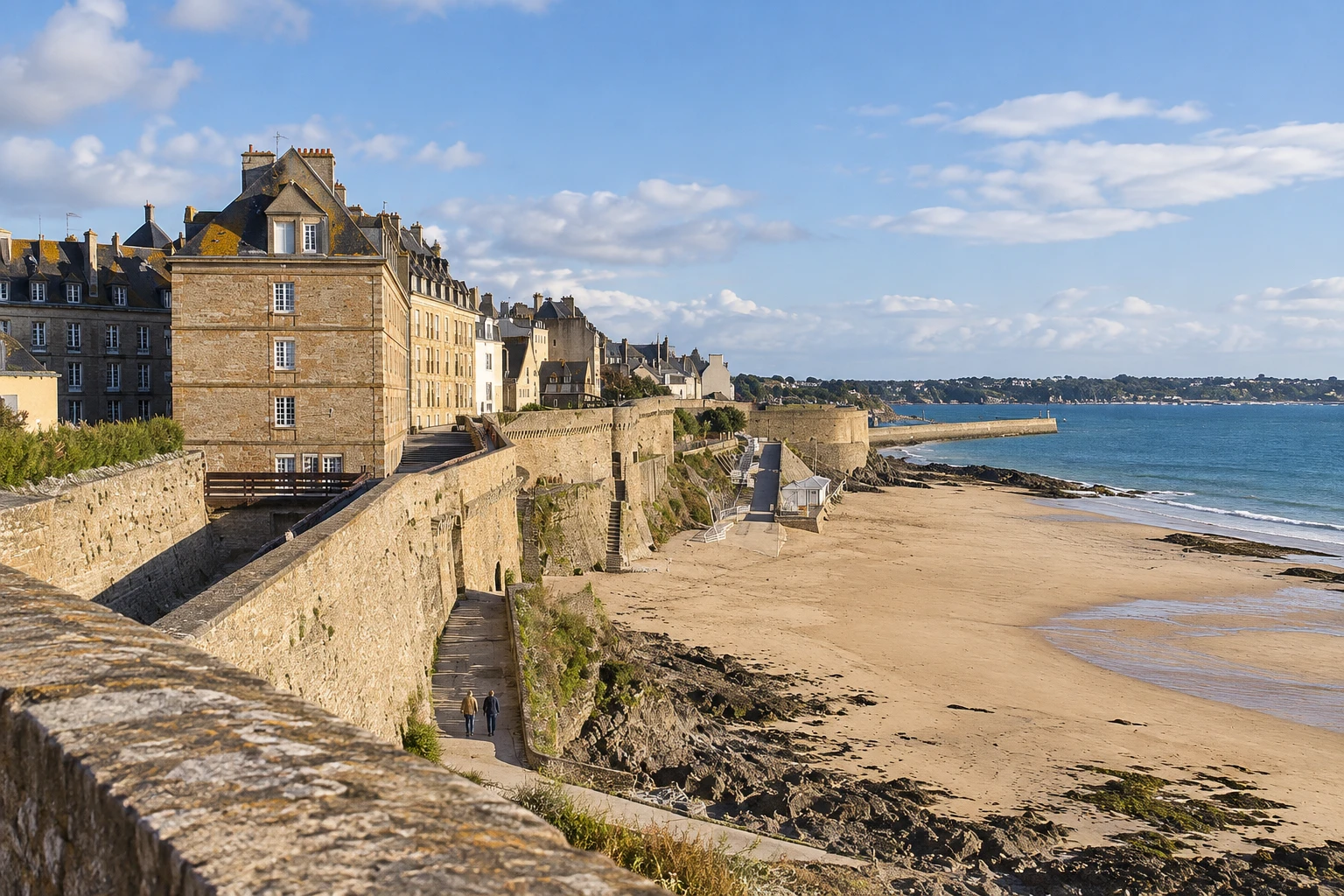
Saint-Malo's granite walls encircle the Intra-Muros, the old town, for about 1.8 km. The elevated walkway circles around with views of the sea, the beaches and the islets.

 Search
 Brazil
 Antarctica
 Argentina
 Bolivia
 Chile
 Colombia
 Ecuador
 Falkland Islands (Malvinas)
 French Guiana
 Guyana
 Paraguay
 Peru
 Suriname
 Uruguay
 Venezuela
 Austria
 Belgium
 Croatia
 Denmark
 FinlandFrance
 Germany
 Greece
 Hungary
 Iceland
 Ireland
 Italy
 Luxembourg
 Norway
 Poland
 Portugal
 Slovakia
 Slovenia
 Spain
 Sweden
 Switzerland
 the Czech Republic
 the Netherlands
 the United Kingdom
 Turkey
 Bermuda
 Canada
 Greenland
 Mexico
 Saint Pierre and Miquelon
 the United States
 the Dominican Republic
 JapanTurkey
 Egypt
 South Africa
 Australia
 Fiji
 New Zealand
 Papua New Guinea
Brittany
19 places to visit and 16 tours, chosen by the Cidade Turismo guide.
Updated
Illustrative images. The pictures in this guide are illustrations based on the real place, not photographs, and may differ from it.
To start
One by one
Saint-Malo's granite walls encircle the Intra-Muros, the old town, for about 1.8 km. The elevated walkway circles around with views of the sea, the beaches and the islets.
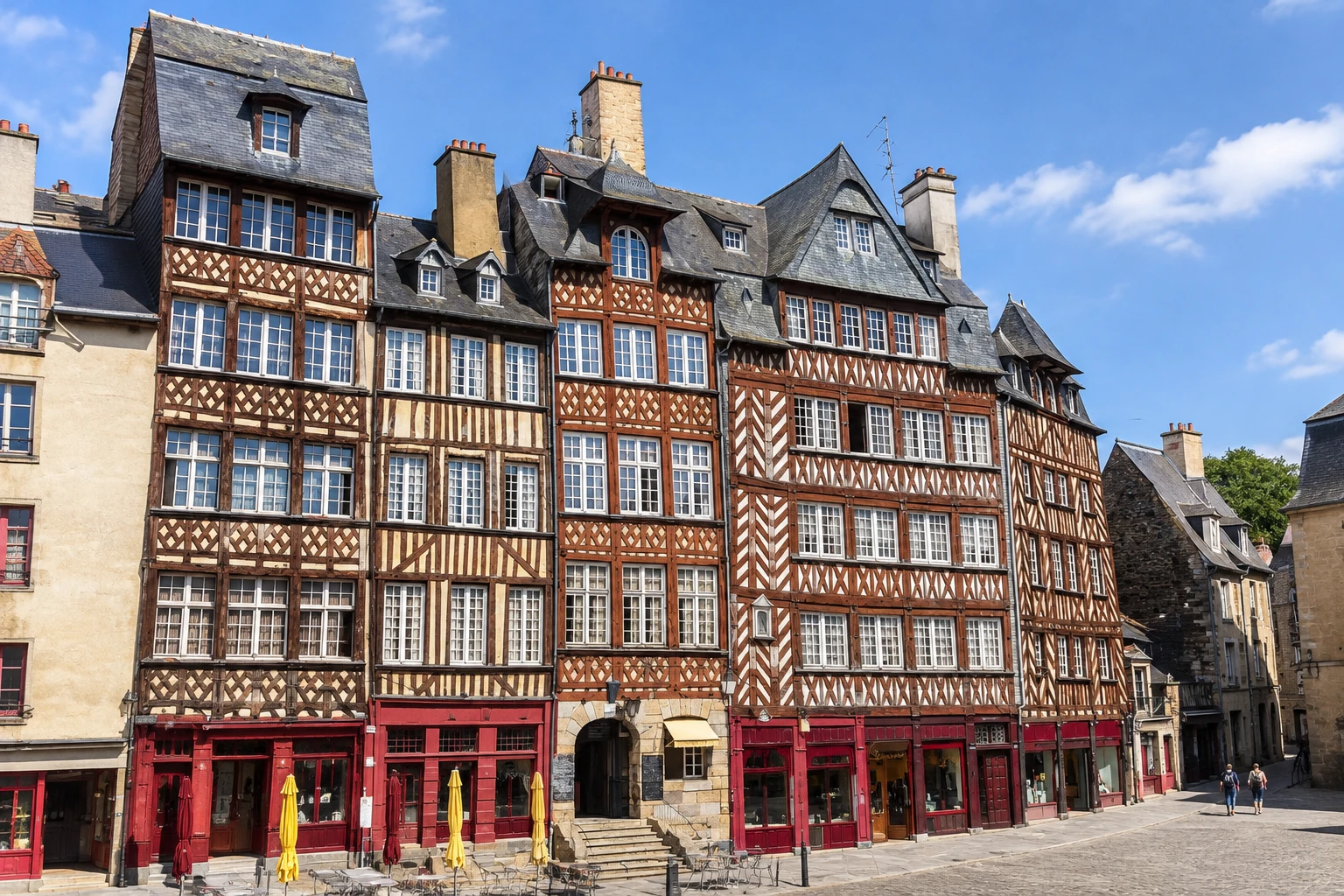
Rennes' old centre brings together colorful half-timbered houses that escaped the 1720 fire, on streets like Rue du Chapitre and around Place Sainte-Anne.
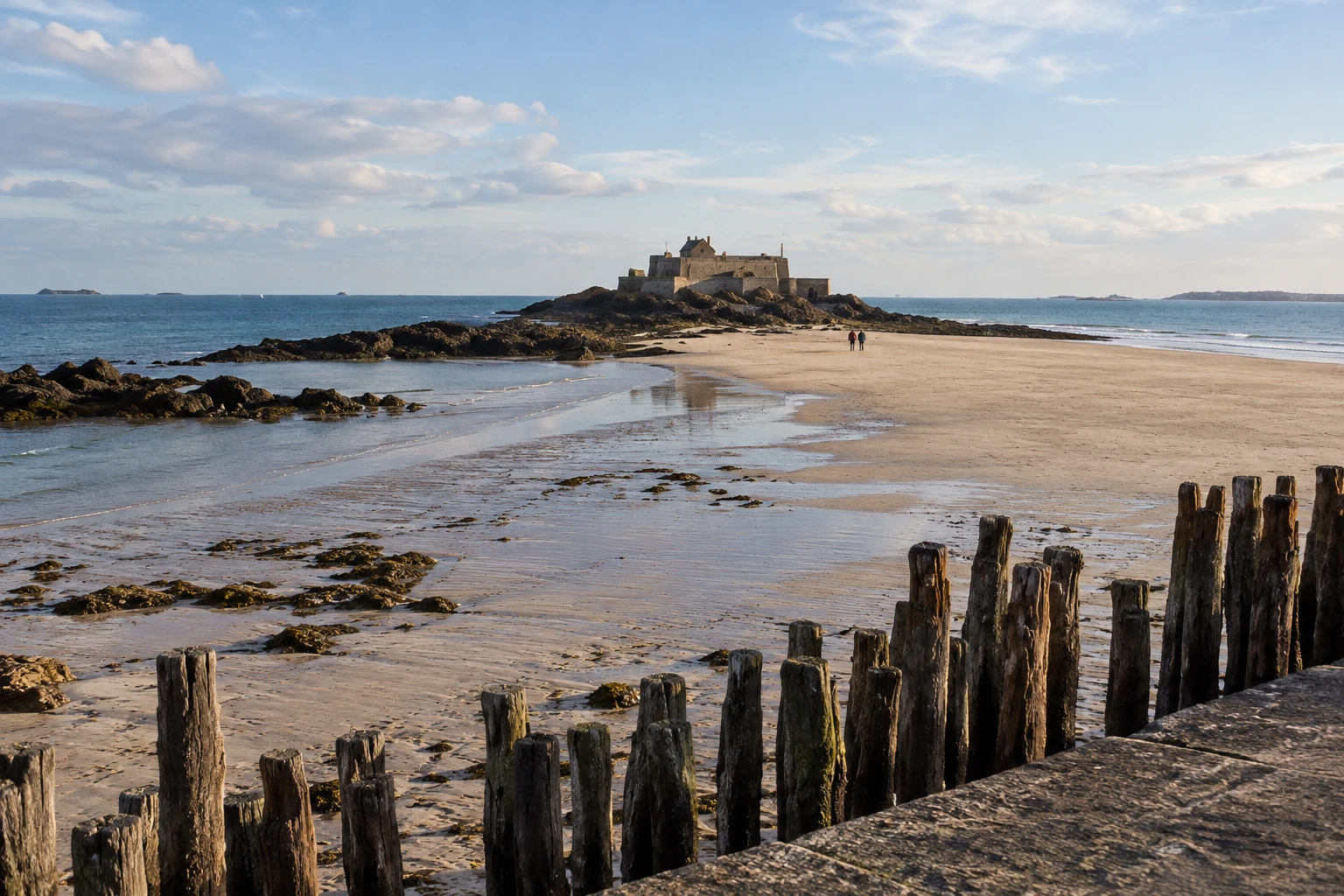
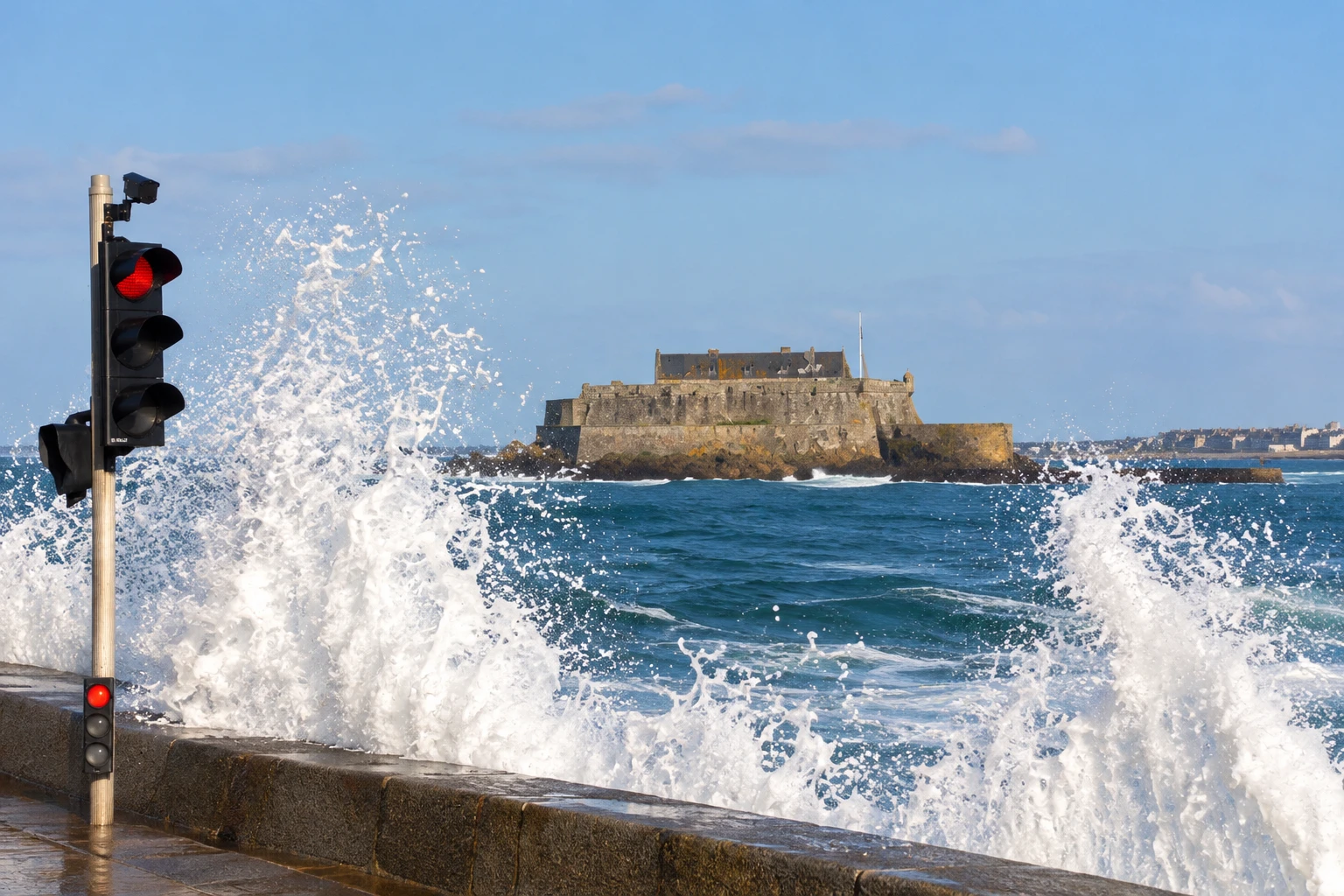
Fort built in 1689 on an islet opposite the walls, designed by Vauban. At low tide it can be reached on foot across the sand; the interior visit is guided.
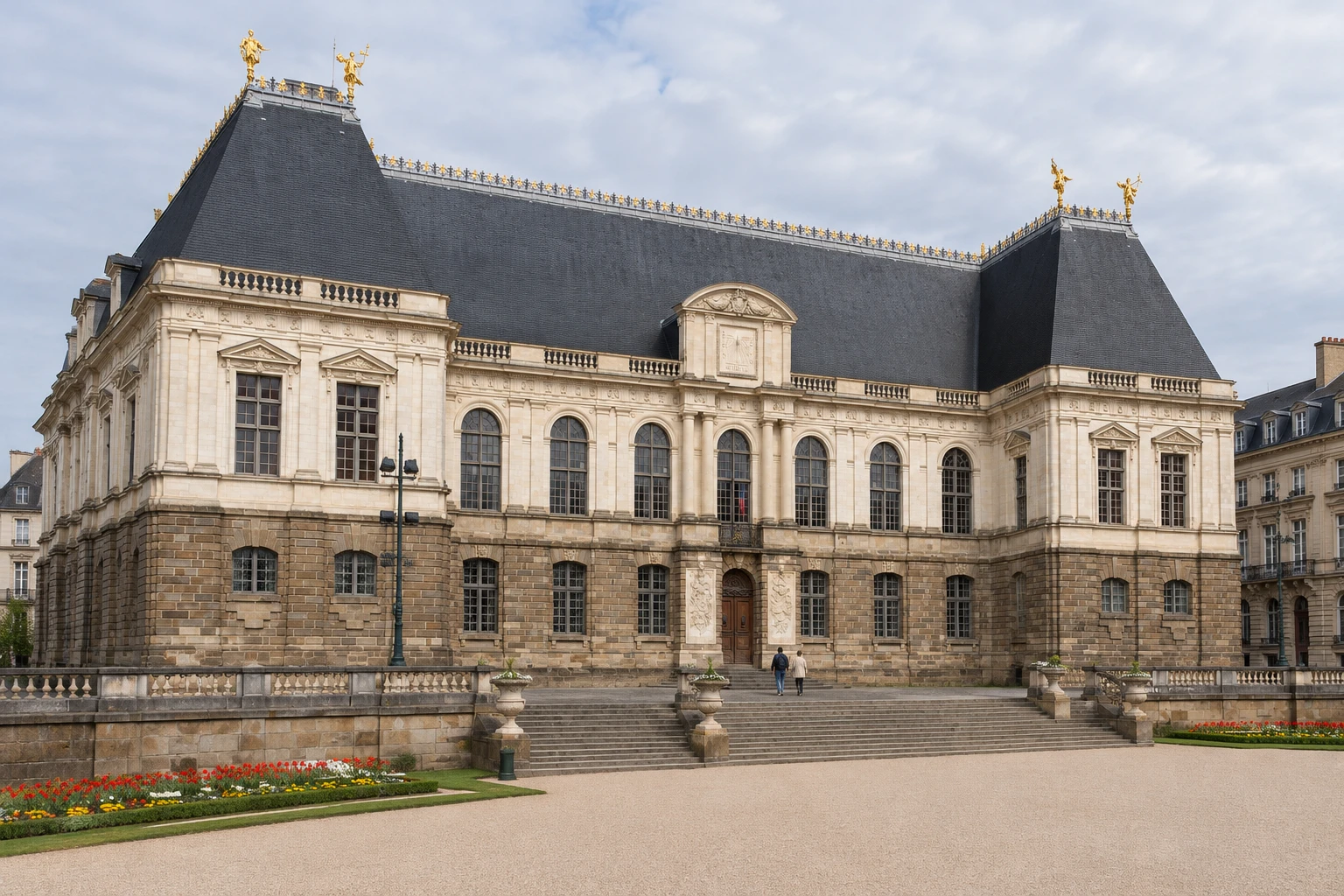
17th-century palace that was the seat of the Parlement de Bretagne and today houses the court of appeal. The Grand'Chambre has gilded ceilings and allegorical paintings; visits are guided only.
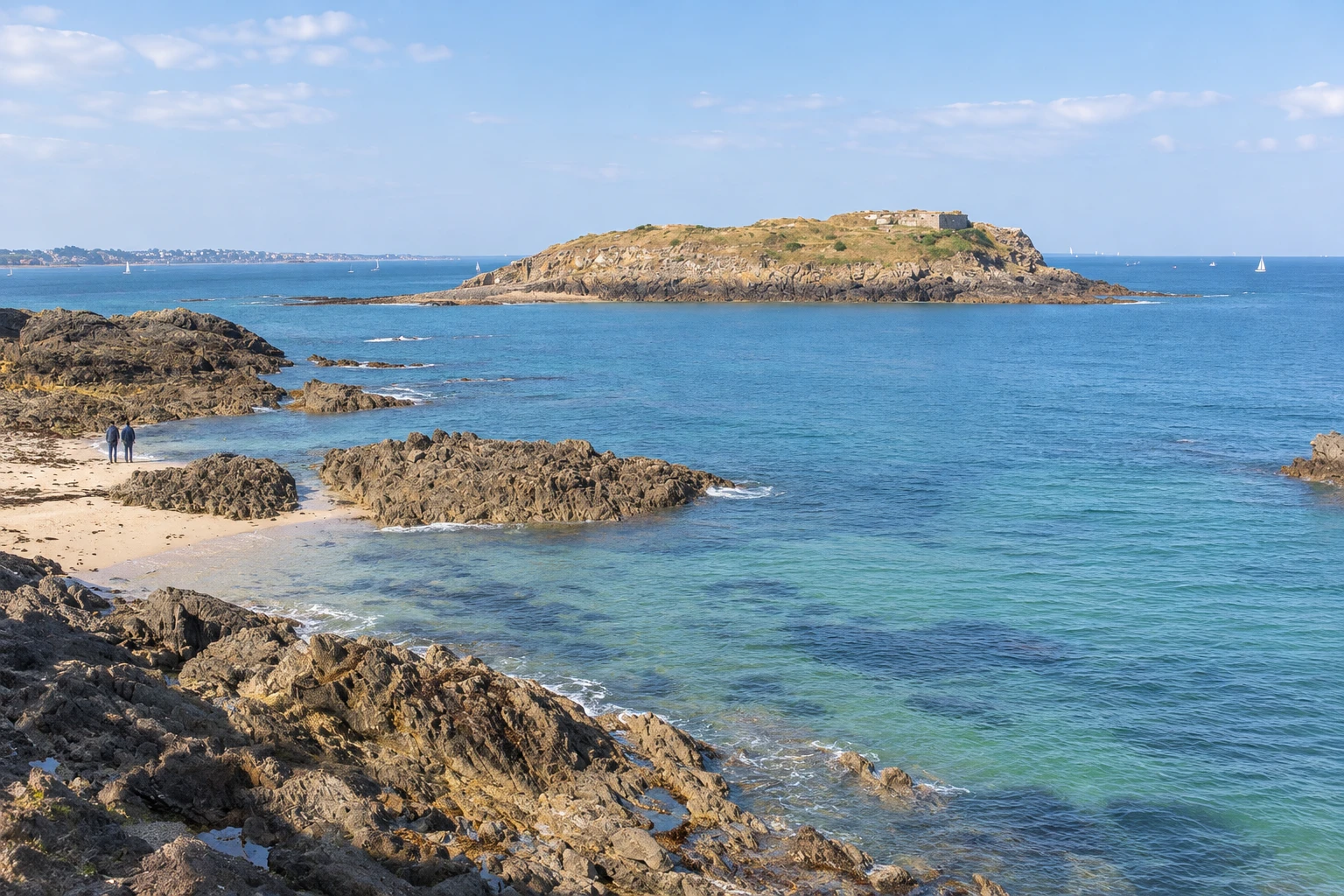
Small islet in front of the ramparts where the writer Chateaubriand's tomb is located. At low tide you can walk there from the plage de Bon-Secours.
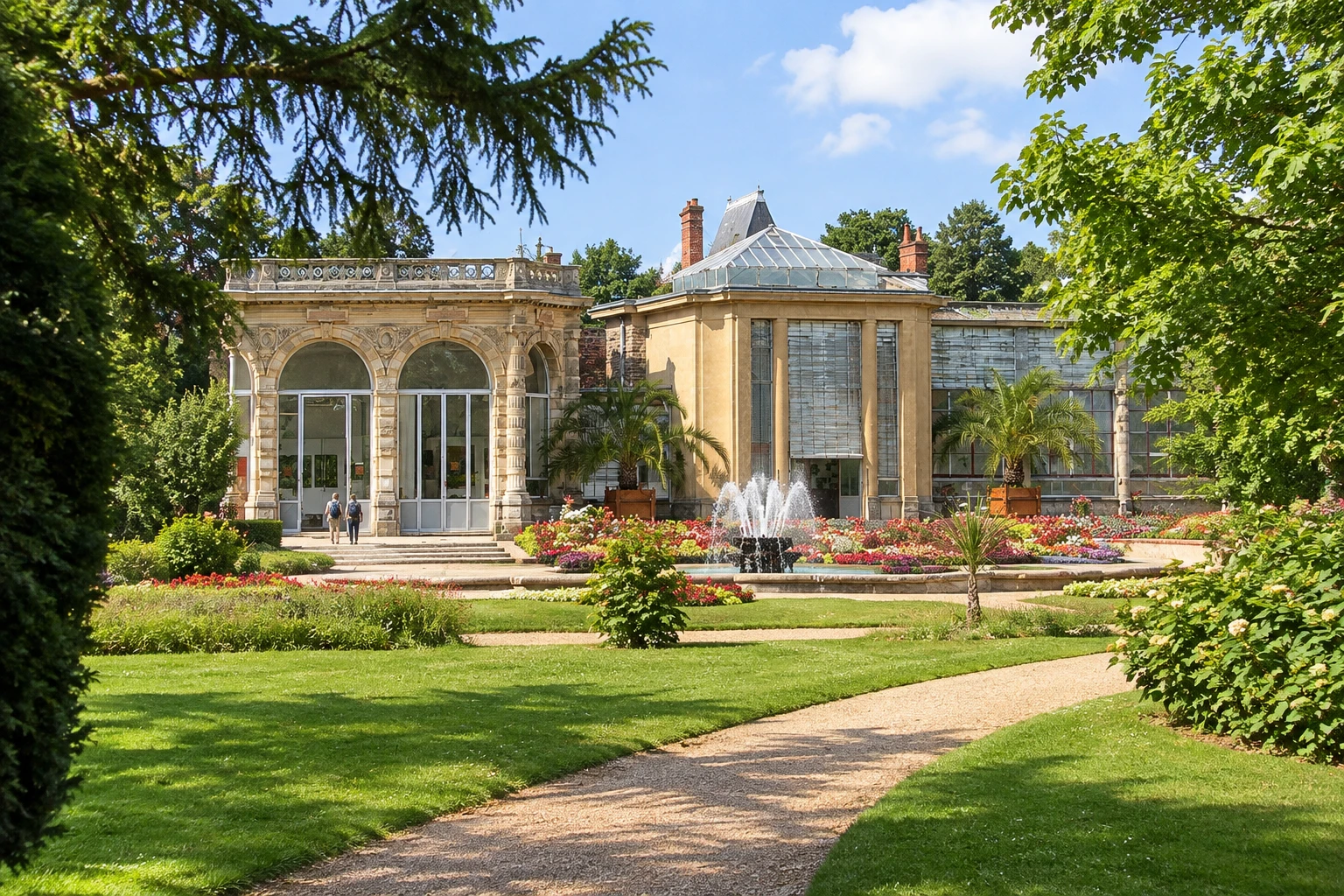
Park of more than ten hectares in the centre of Rennes that mixes a French formal garden, an English-style garden and a botanical garden, with greenhouses, an aviary and a rose garden.
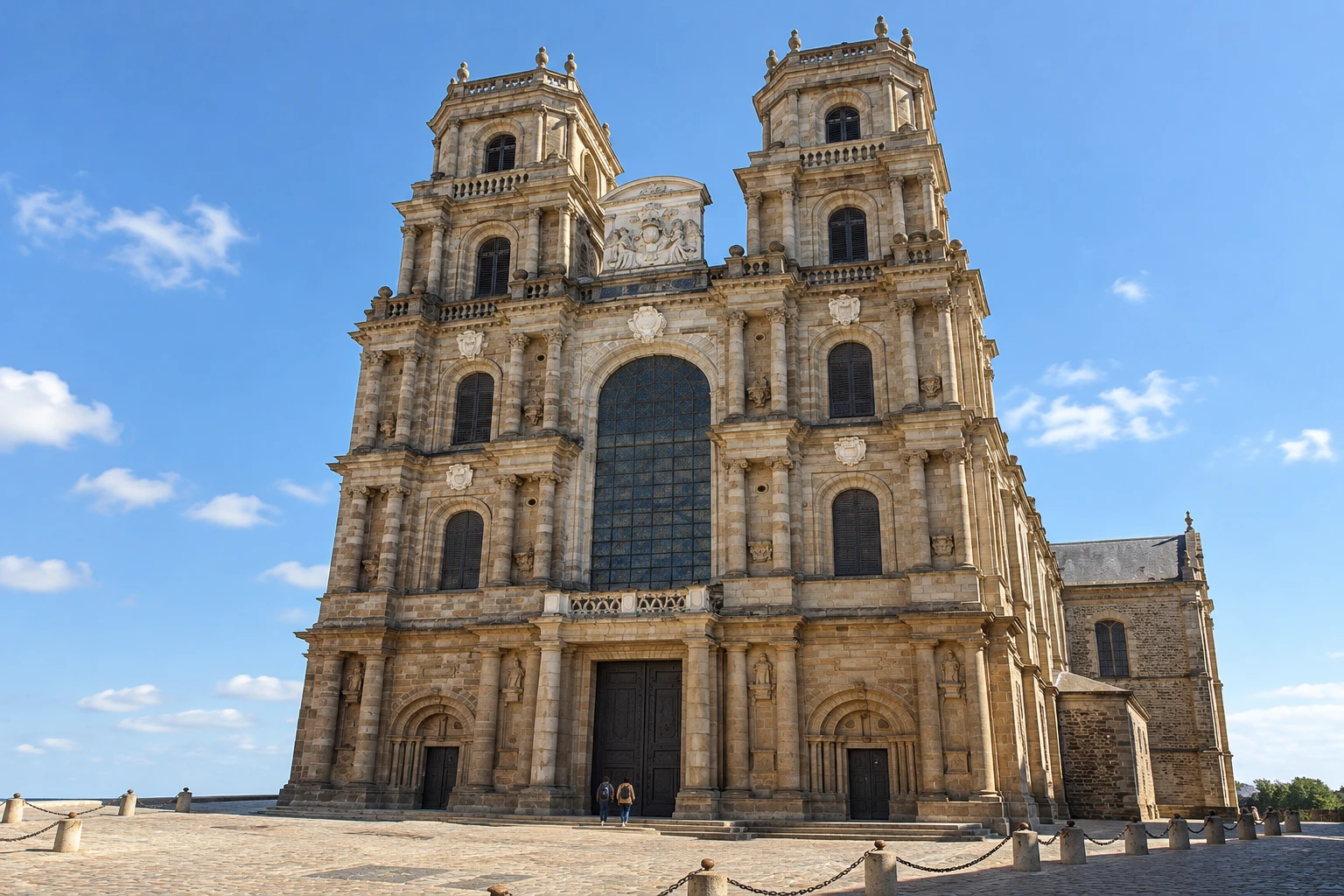
Cathedral in the old town, with a classical granite façade and a gilded neoclassical interior, completed in the 19th century. It is the seat of the archdiocese of Rennes, Dol and Saint-Malo.
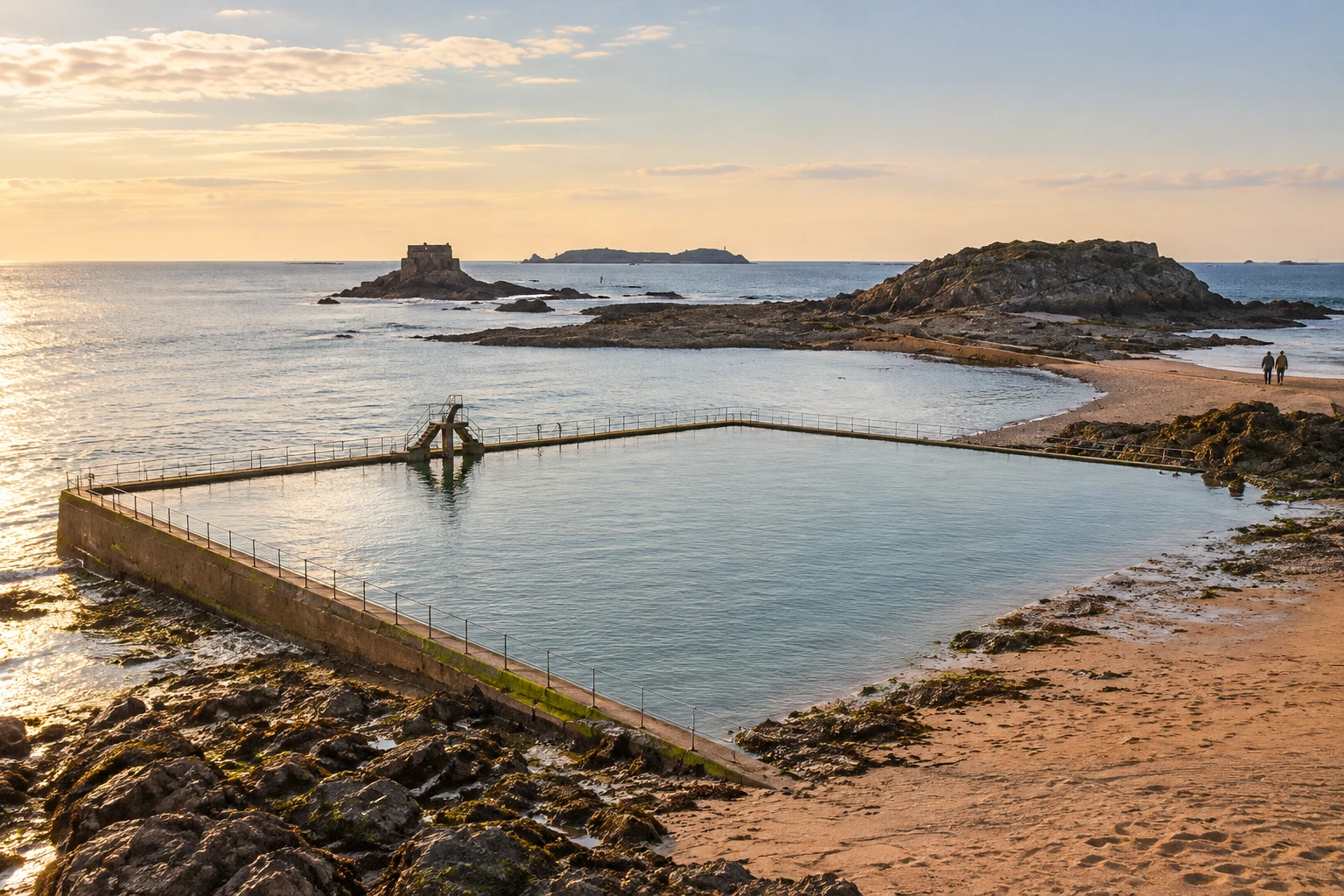
A seawater swimming pool built in 1936 on the plage de Bon-Secours, at the foot of the ramparts. At high tide it is covered by the sea, which renews the water.
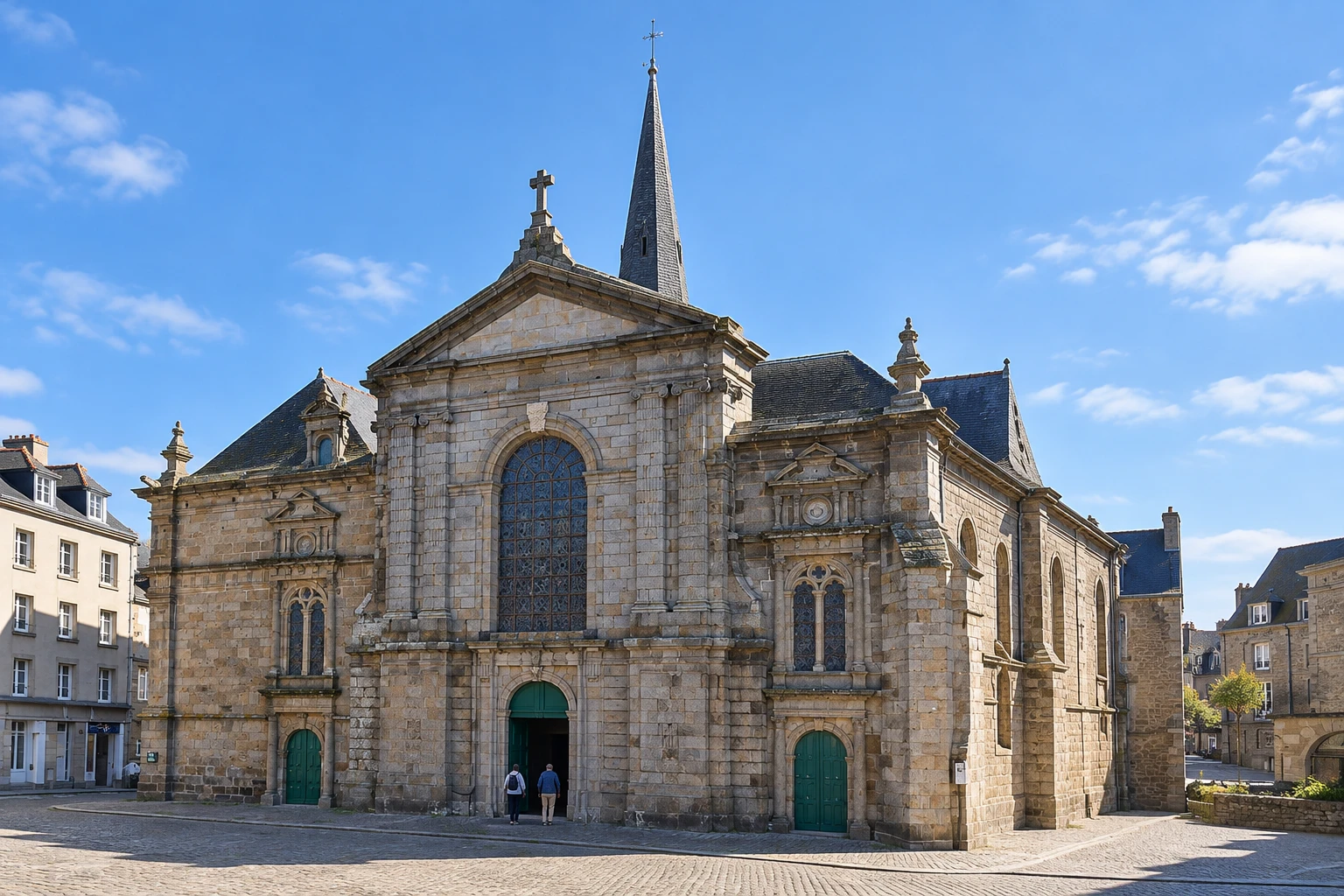
Former Romanesque and Gothic cathedral in the center of the Intra-Muros, heavily damaged in 1944 and restored until 1972, with modern stained glass windows.
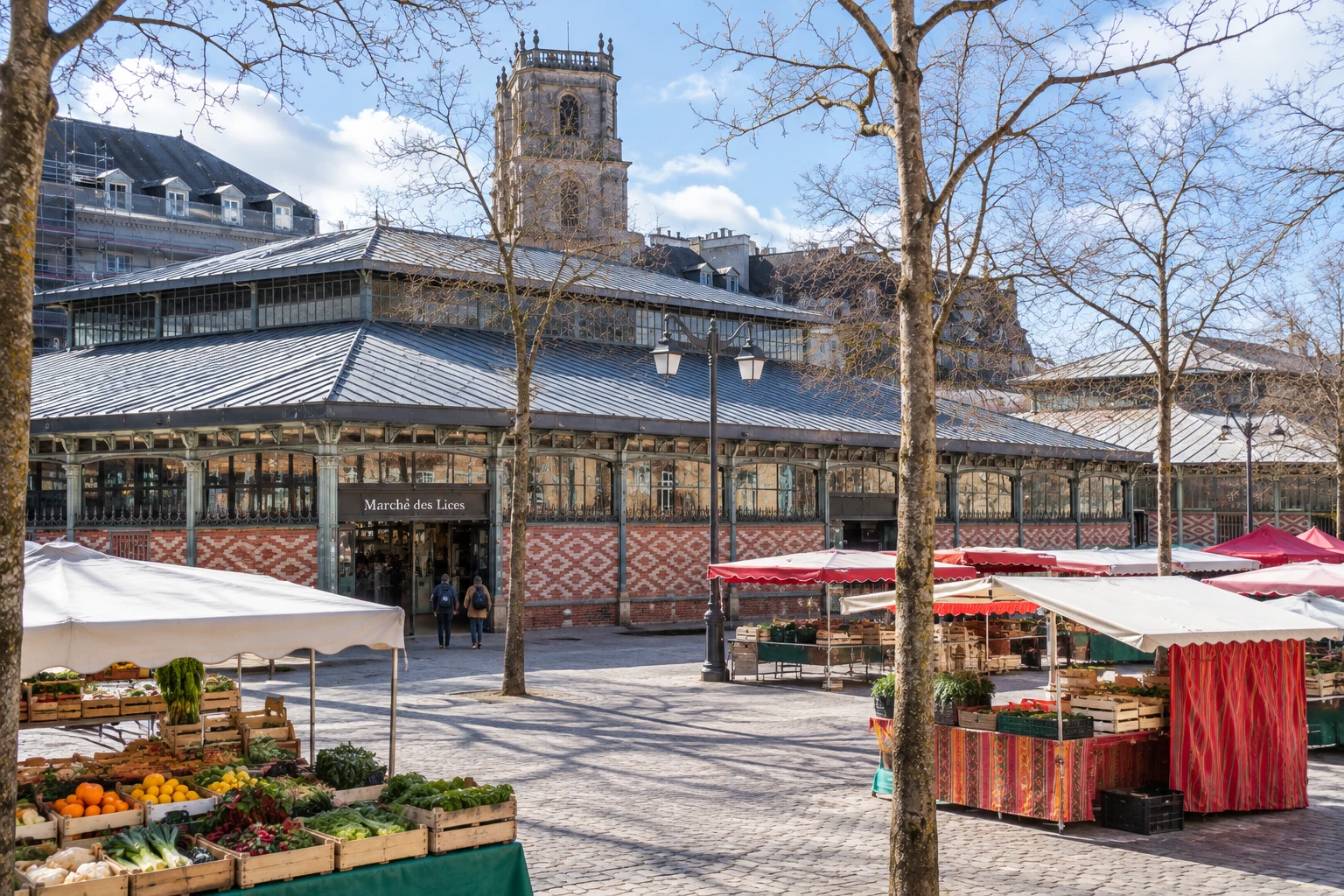
Large producers' market on Saturday mornings, on Place des Lices and in the iron pavilions of the Halles Martenot, with about 290 stalls selling Breton food.
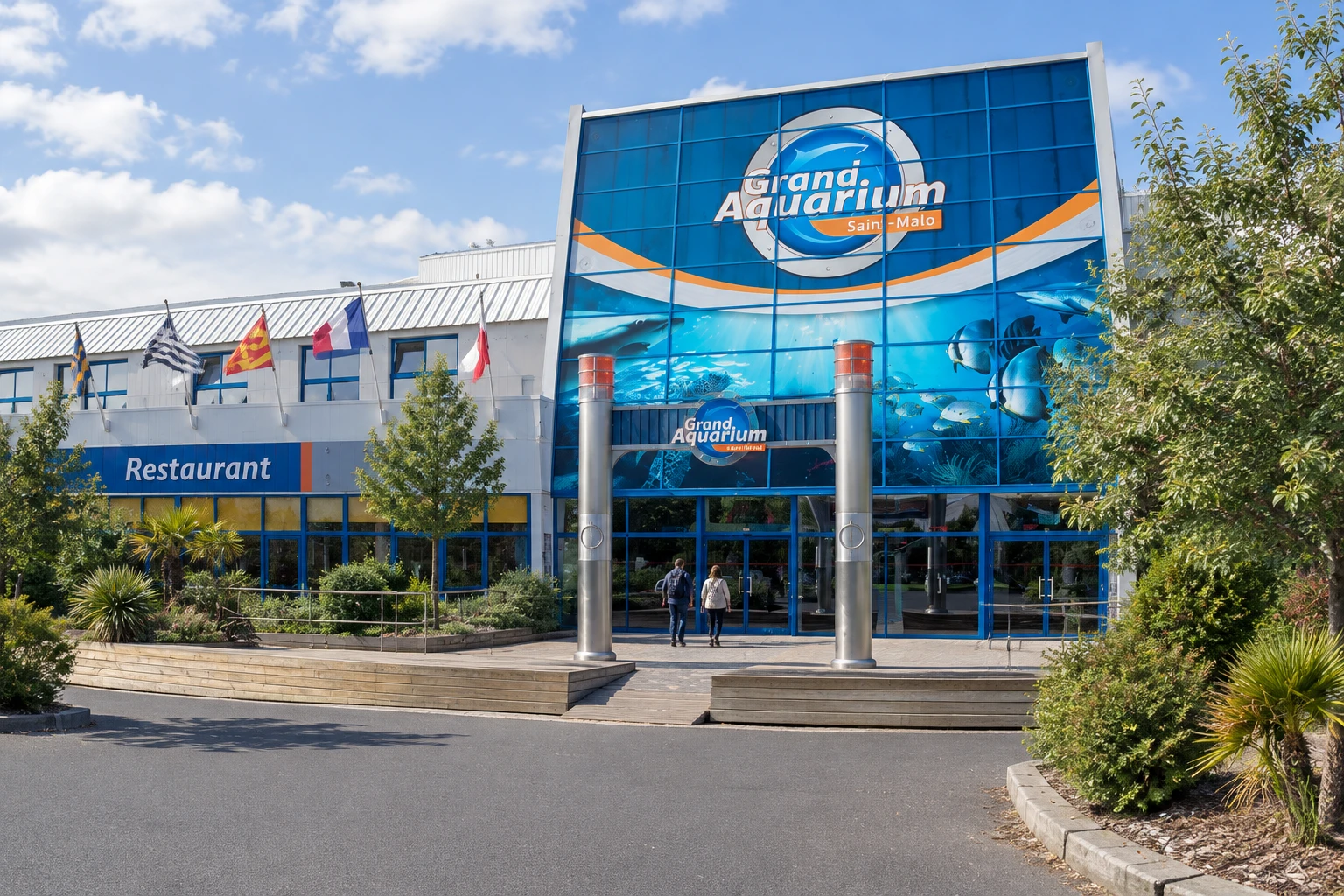
Aquarium opened in 1996 at the entrance to Saint-Malo, with around 10,000 marine animals and a 360-degree circular tank with sharks and turtles.
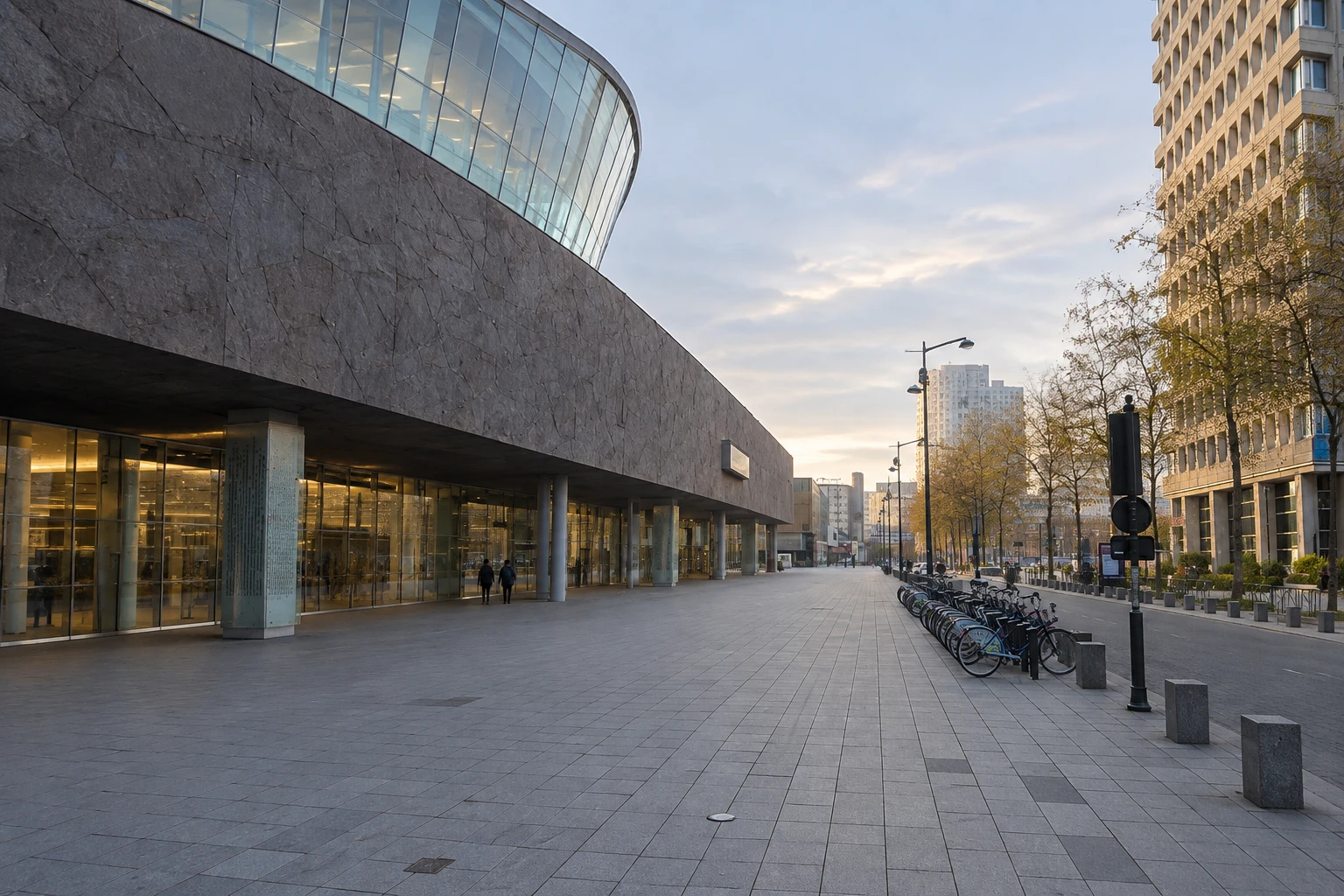
Cultural centre designed by Christian de Portzamparc that houses the Musée de Bretagne, the library and the Espace des sciences, with a planetarium, between the station and the centre.
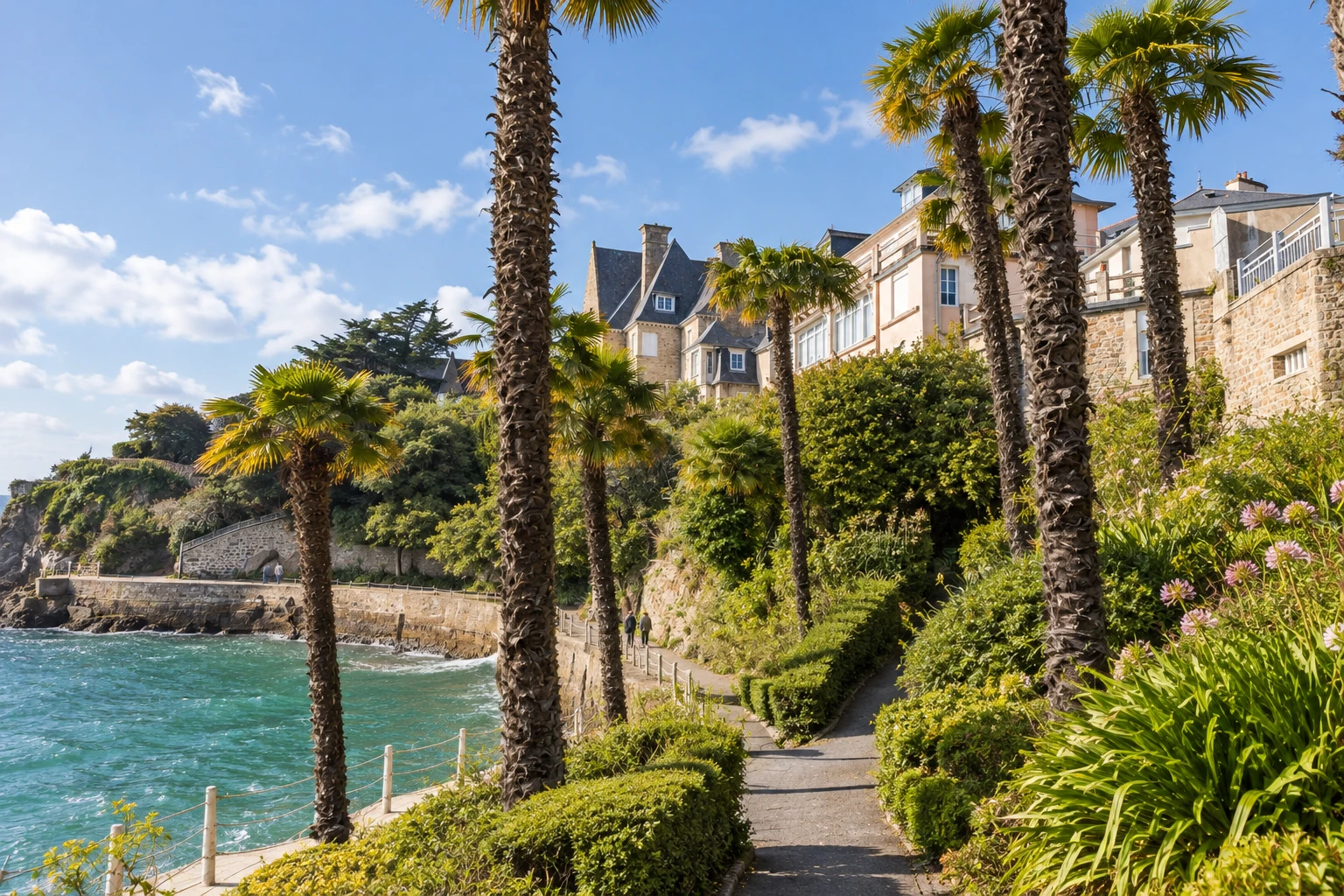
Seaside resort on the other side of the Rance estuary, known for its Belle Époque mansions and for the British film festival. By boat, the crossing from Saint-Malo is short.
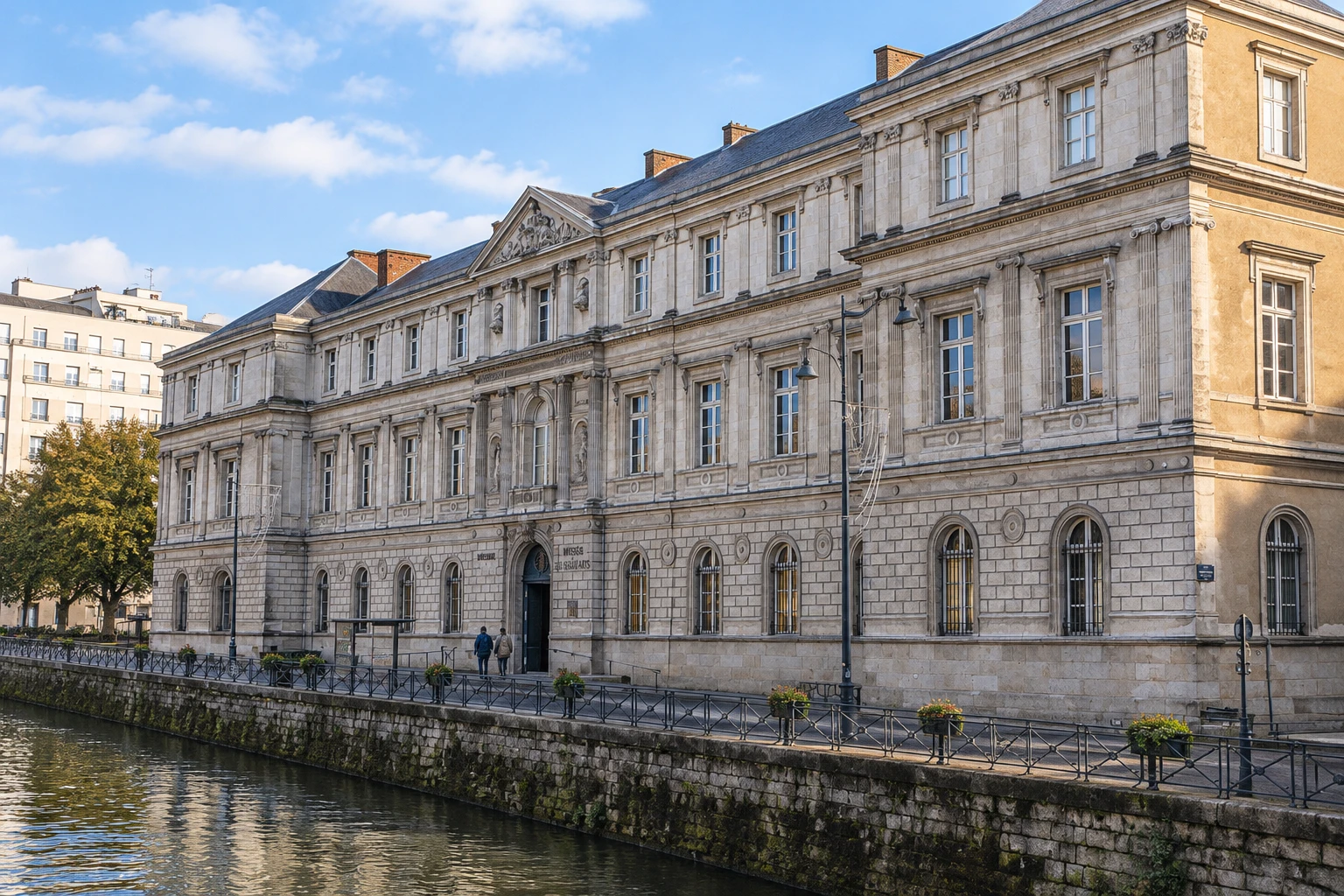
Art museum on the banks of the Vilaine, with works from Antiquity to the 20th century, including Le Nouveau-né (The Newborn) by Georges de La Tour. Access to the permanent collections is free.
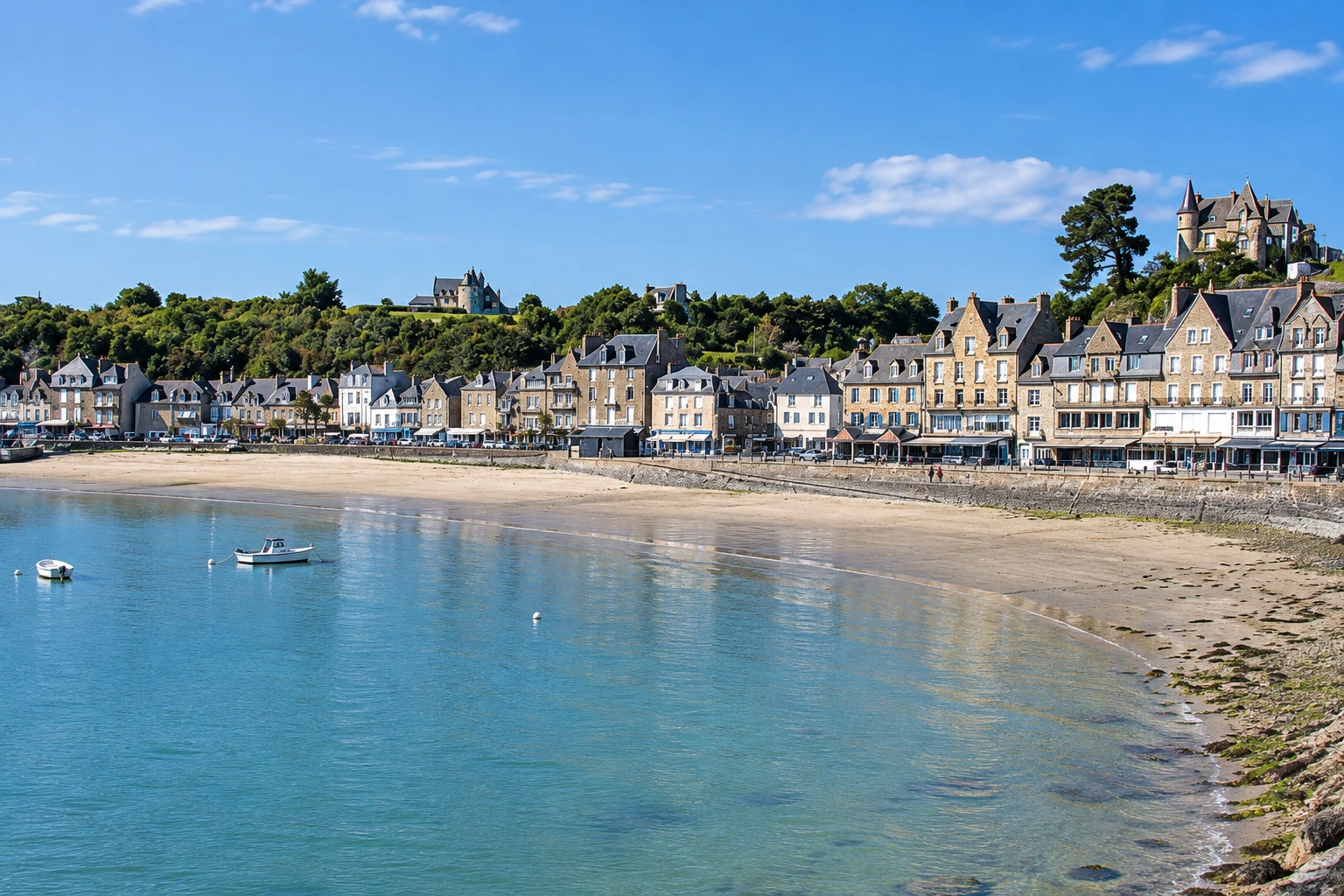
Fishing village about 15 km from Saint-Malo, famous for its oysters, which are eaten at the harbour facing the bay of Mont-Saint-Michel.
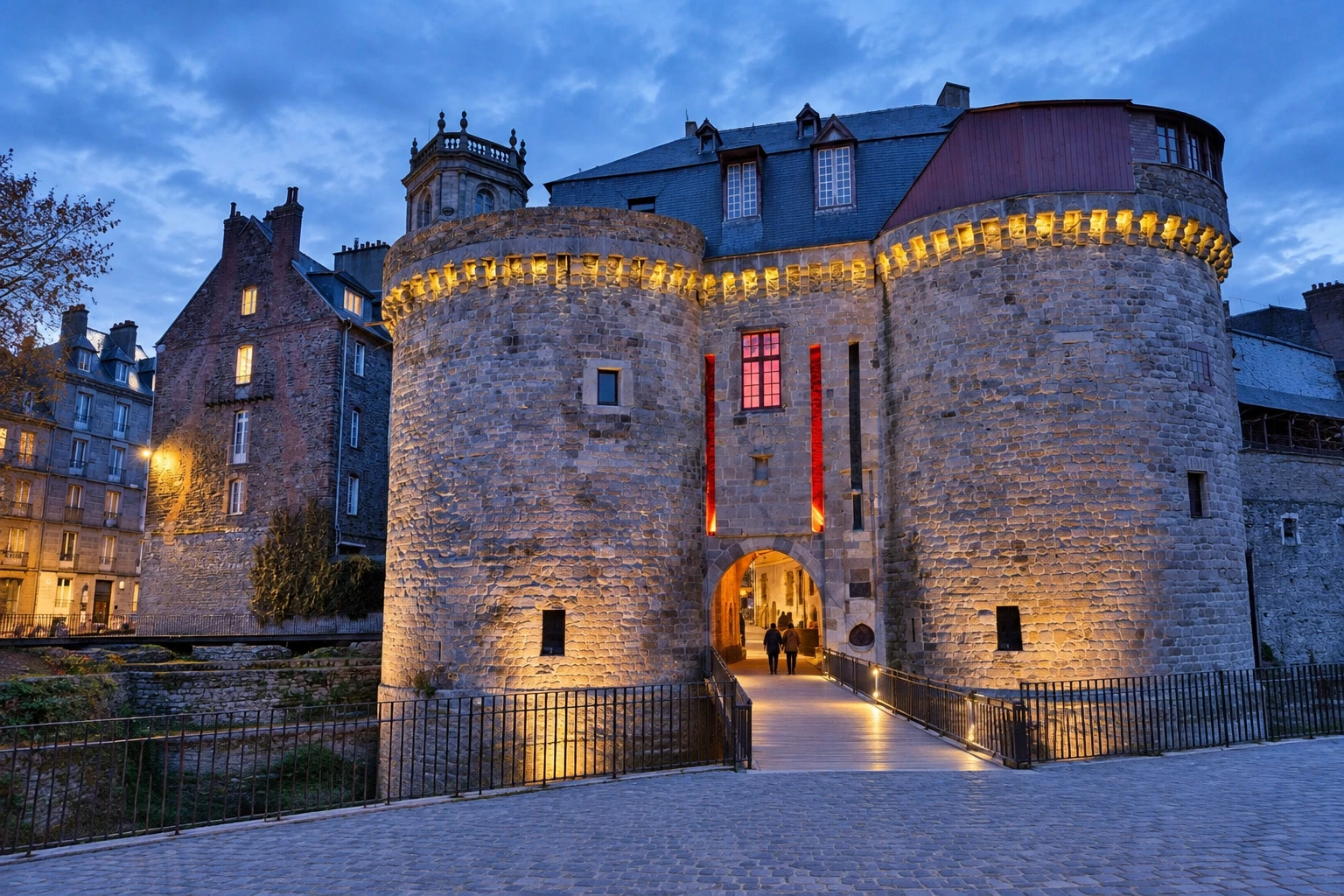
Old main city gate from the 15th century, with two towers, machicolations and traces of the drawbridge. It is the largest remaining section of Rennes' medieval walls.
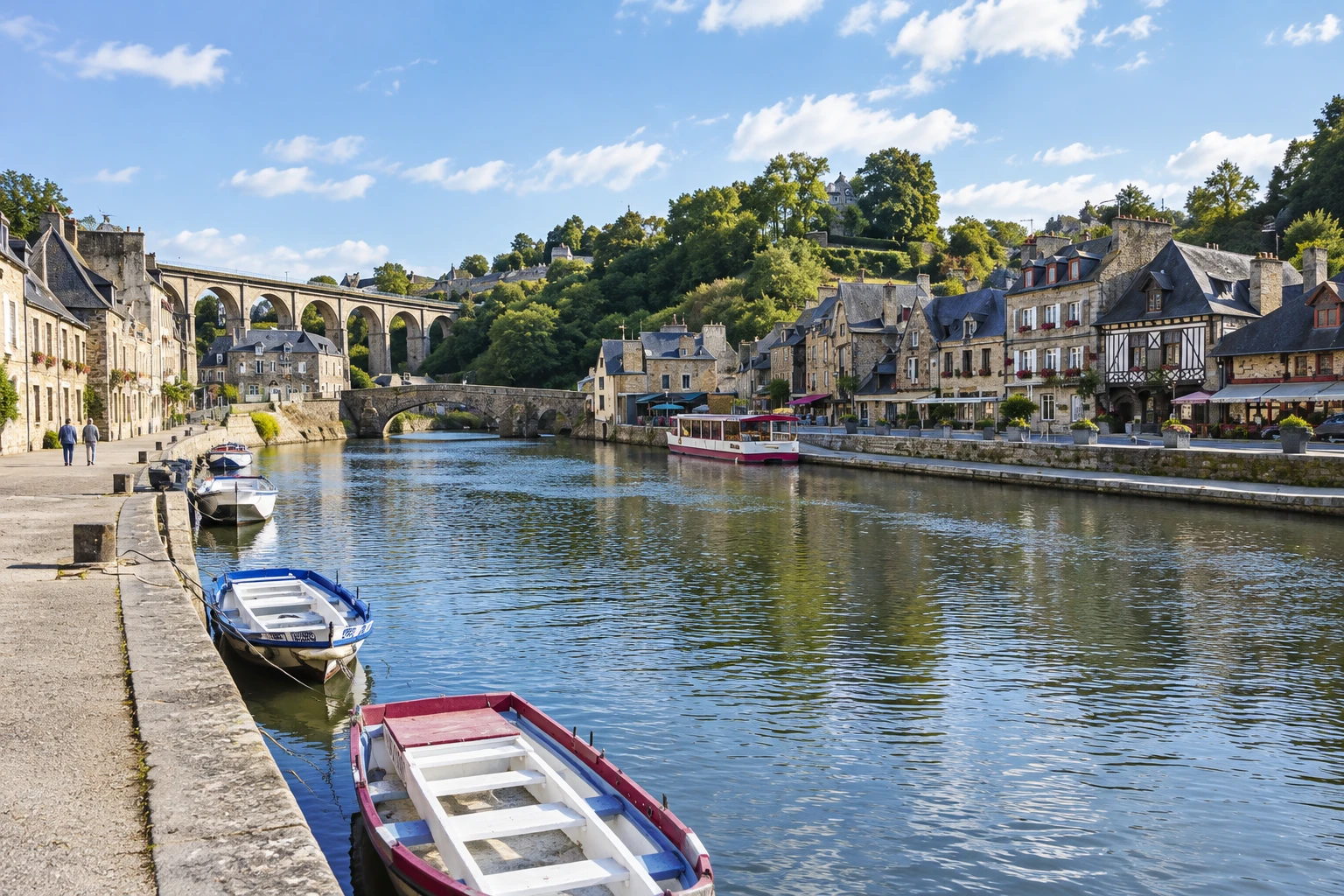
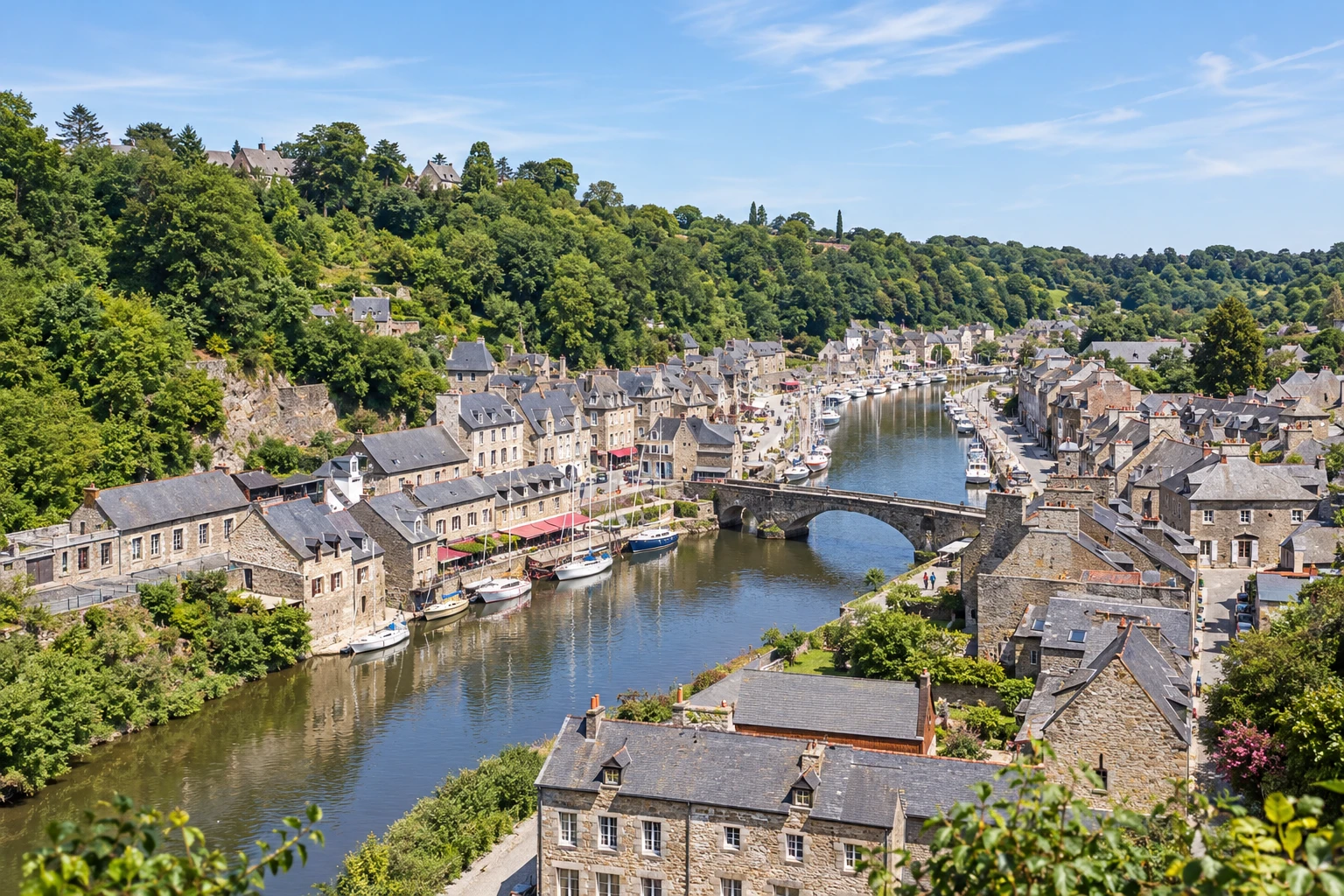
Walled medieval town about 30 km from Saint-Malo, on a hill above the river Rance, with ramparts, a castle and more than a hundred half-timbered houses.
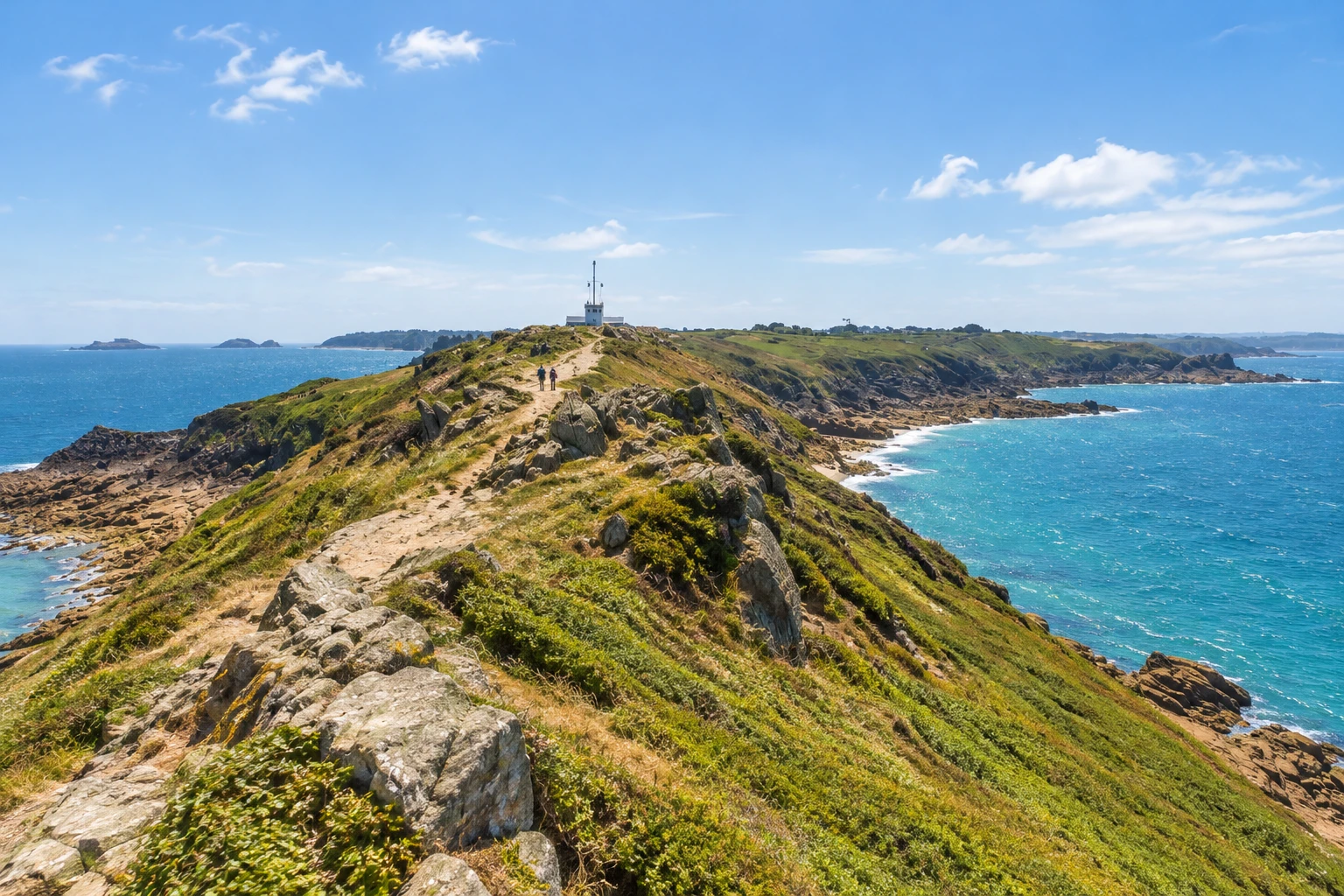
Rocky point 40 metres above the sea, north of Cancale, with views that stretch from cap Fréhel to Granville and the bay of Mont-Saint-Michel.
The large tides of Saint-Malo, with about 13 meters between high and low tide: when they occur, the walk on foot to Grand Bé and the waves on the ramparts.
To choose before you go
The details of each tour (where it leaves from, what it includes, the best time) are in the complete guide.
Get your questions answered
The guide's itineraries cover 2, 3 and 5 days: Rennes and Saint-Malo in 2 days; Rennes, Saint-Malo and the coast in 3 days; in 5 days, Rennes, Saint-Malo, Dinan and Mont-Saint-Michel.
Arrival and Rennes historic center. Flights from Brazil usually arrive in the morning at Charles de Gaulle Airport (CDG). There are few direct TGVs from the airport to Rennes; the other option is to go to central Paris and catch the TGV at Gare Montparnasse, which reaches Rennes in about 1 hour 30. In the afternoon, take a walk through Rennes's historic center: half-timbered houses on Rue du Chapitre and Place Sainte-Anne, the Portes Mordelaises and Cathédrale Saint-Pierre. Finish at the square of the Parlement de Bretagne and have dinner at a crêperie: buckwheat galette (savory) and sweet crêpe.
It generally rains less from June to September. The rainiest months are usually from October to January. The guide covers each month, with the weather and what changes on the tours.
To plan