Grand Canyon and northern Arizona

Arizona · Utah

Grand Canyon and northern Arizona

The south rim of the Grand Canyon, the historic train from Williams, the narrow canyons of Page by Lake Powell and the rock formations of Monument Valley, on Navajo land.

Southwest (Grand Canyon and Las Vegas)

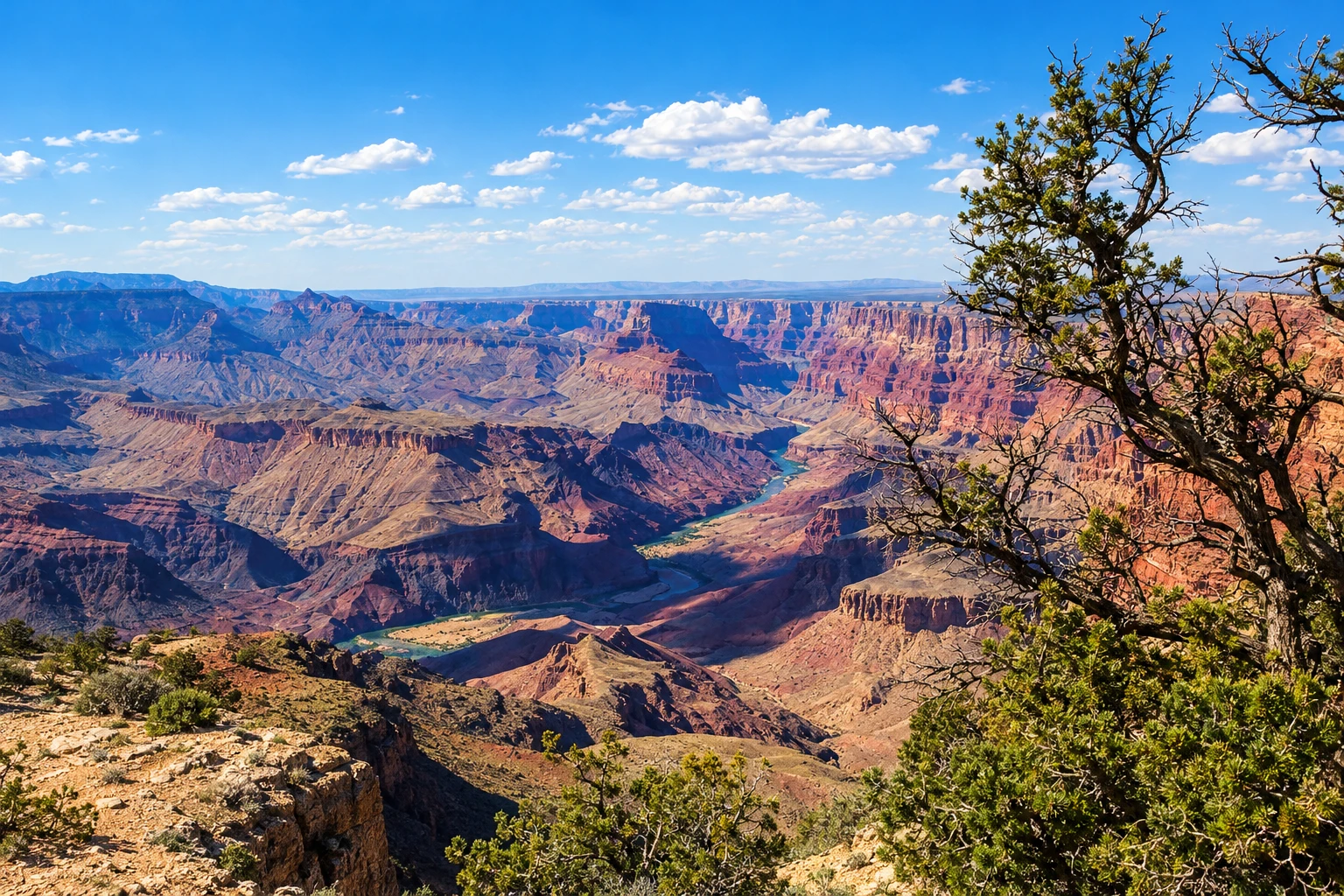
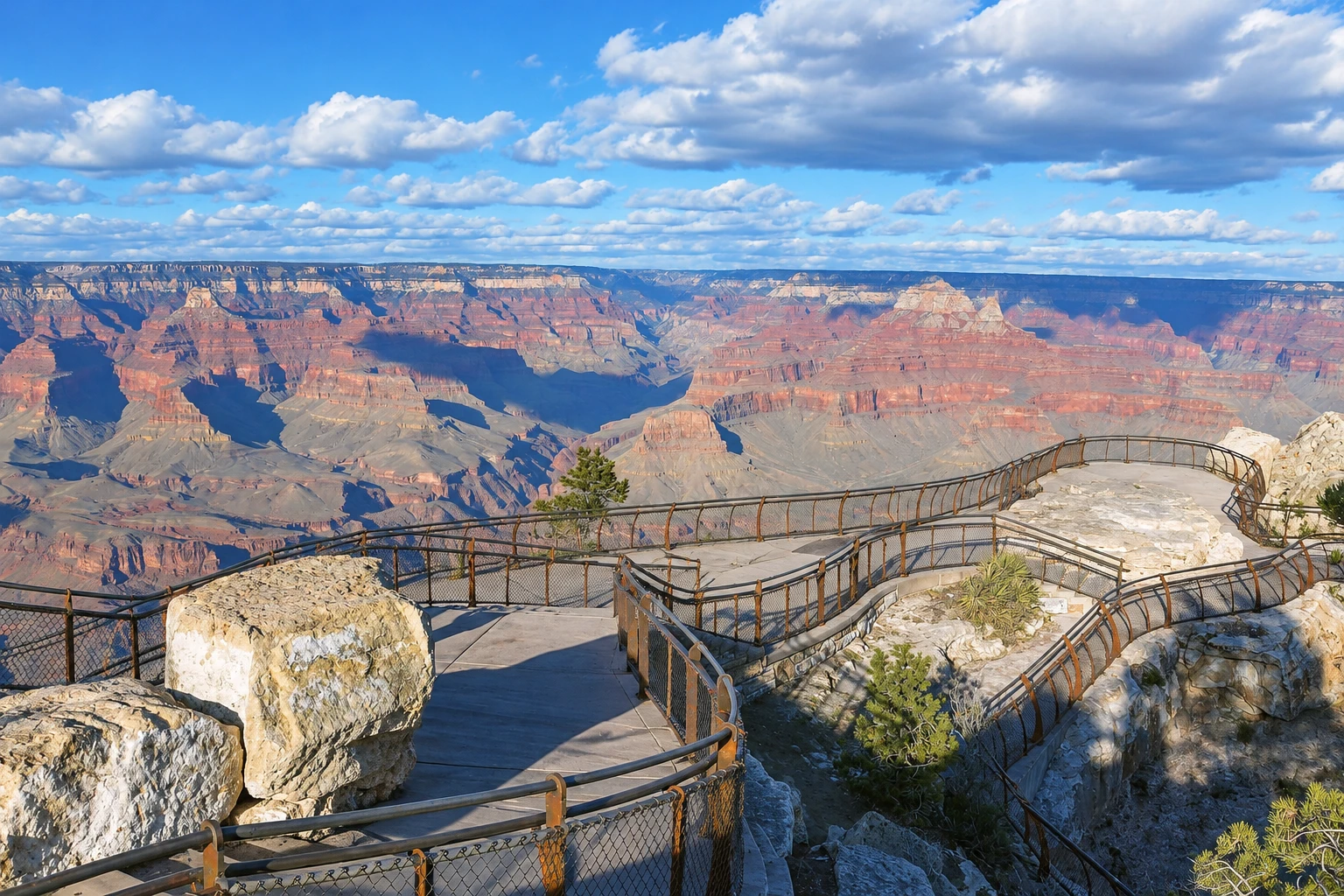
In the photo: Grand Canyon seen from the south rim

Illustrative images. The pictures in this guide are illustrations based on the real place, not photographs, and may differ from it.

Get it on Google Play

Get to know the place

A region to enjoy
at your own pace.

Northern Arizona sits on the Colorado Plateau, a high region of pine forests, stony deserts and canyons carved by the Colorado River. The Grand Canyon is the centerpiece of this landscape: a canyon about 445 km long and more than 1,800 meters deep, protected as a national park and listed by UNESCO as a World Heritage Site.

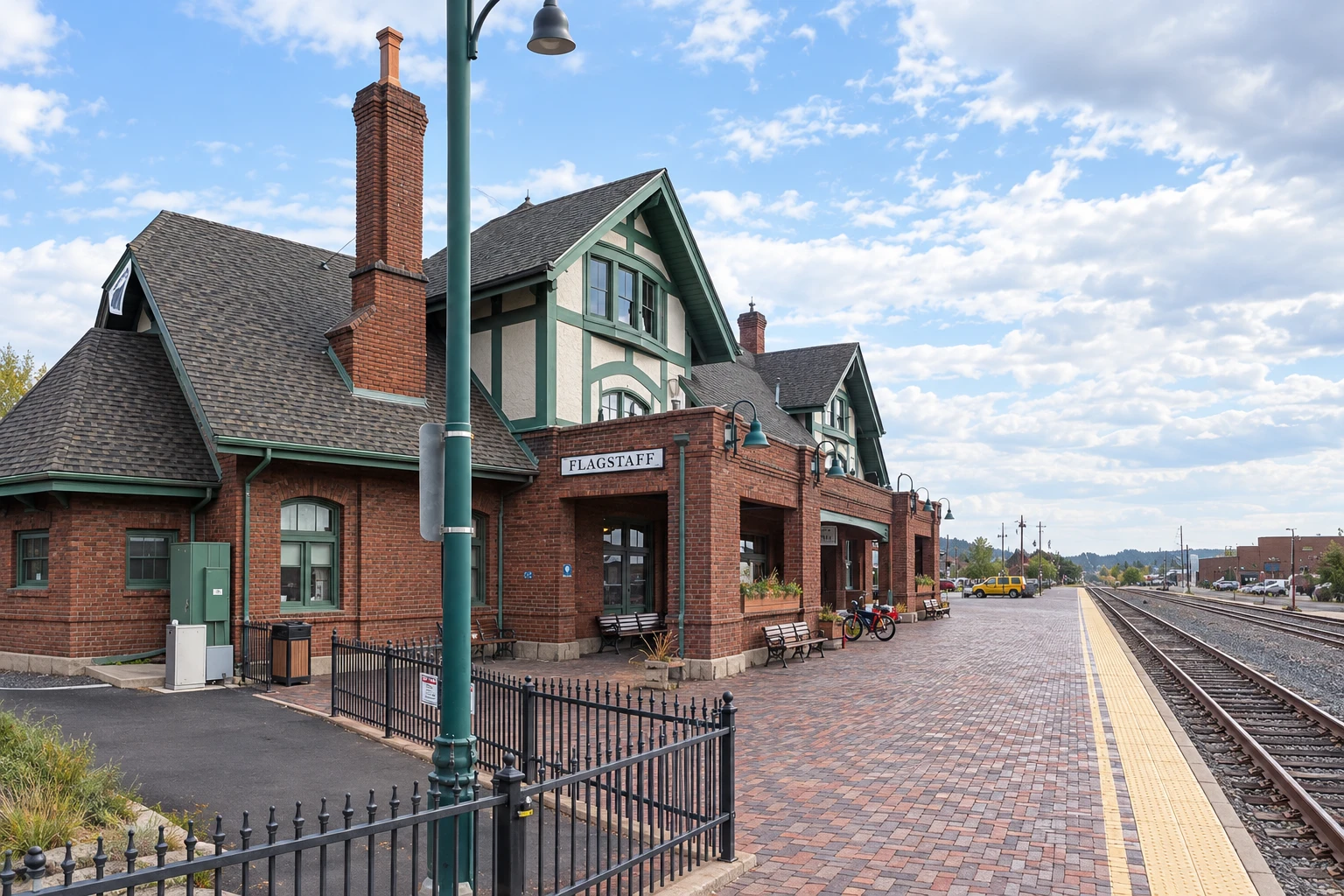
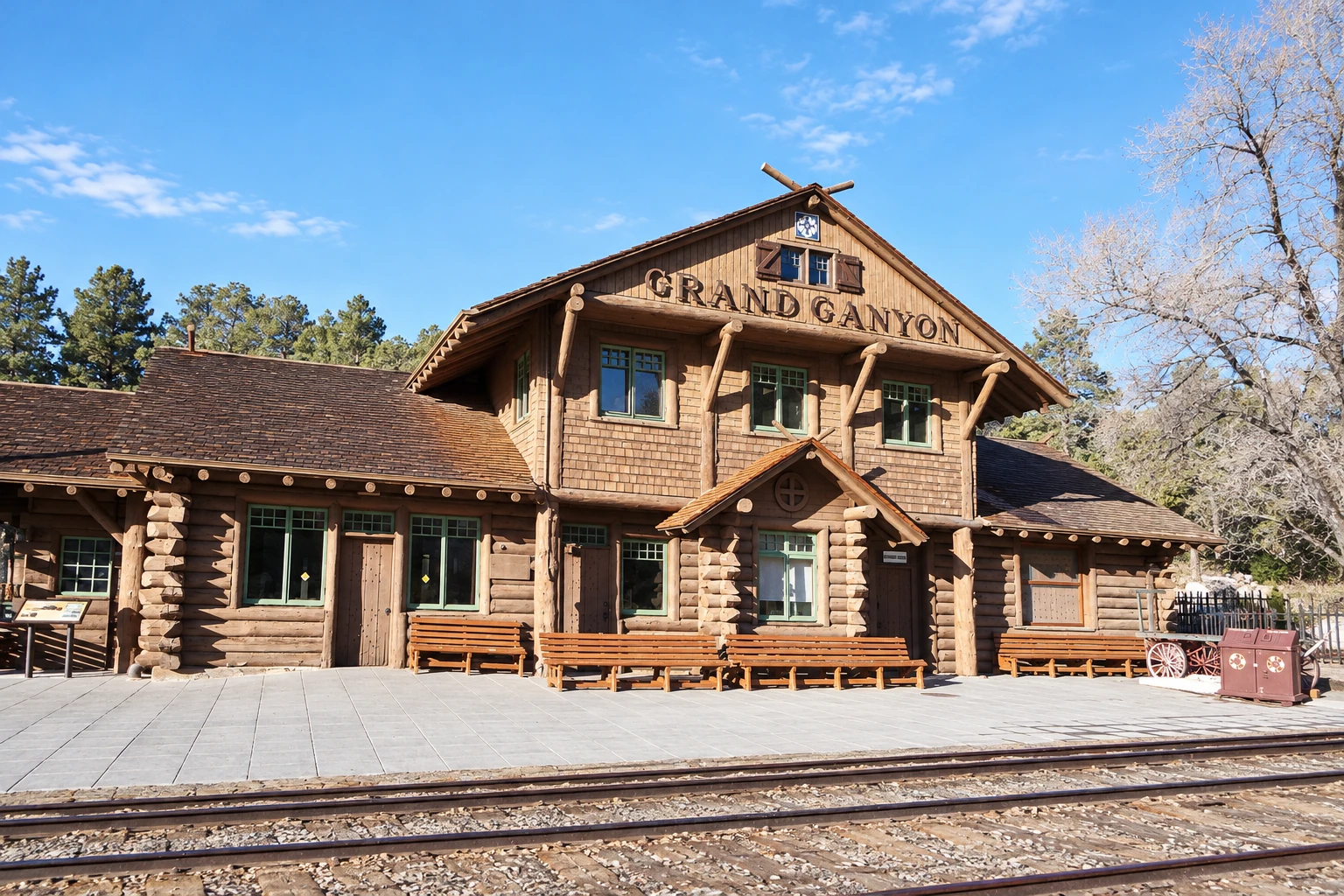
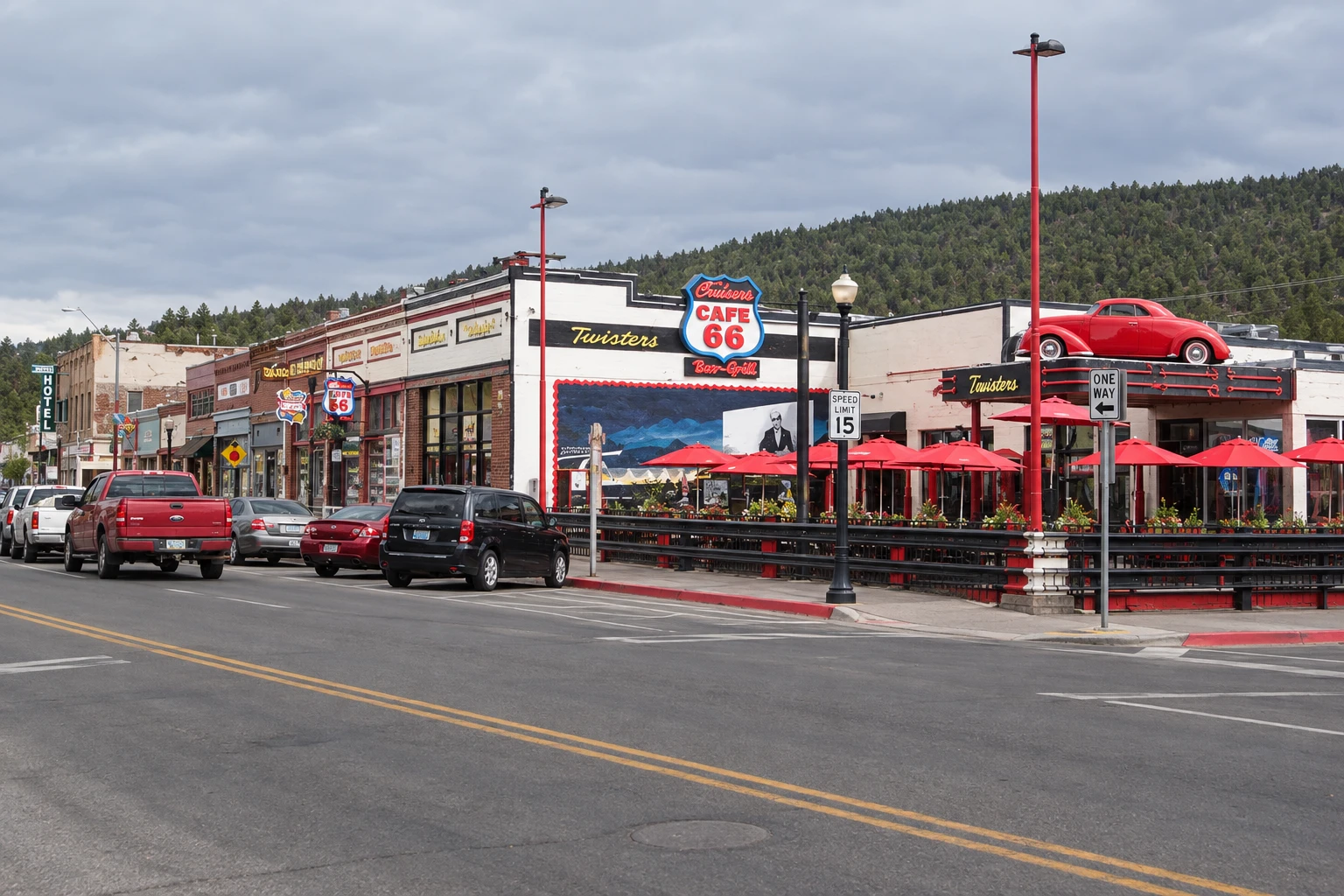
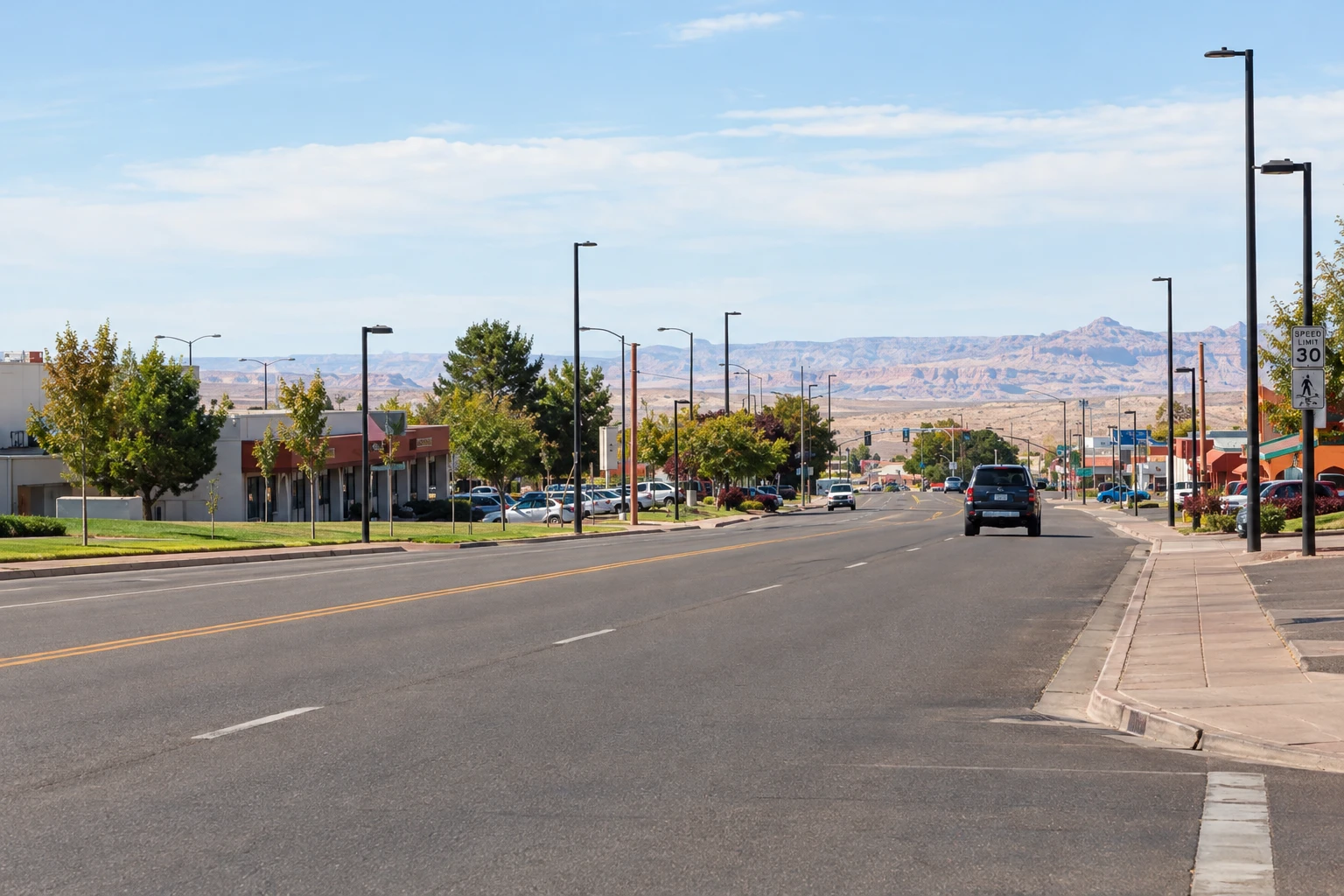
The south rim concentrates the park services and is open year-round. Grand Canyon Village, on the canyon edge, has the historic lodges, the train station and the trailheads that descend into the canyon. Flagstaff, a college town at about 2,100 meters elevation, and Williams, one of the towns on the old Route 66, are the gateway bases on the access roads; the train that reaches the rim departs from Williams.

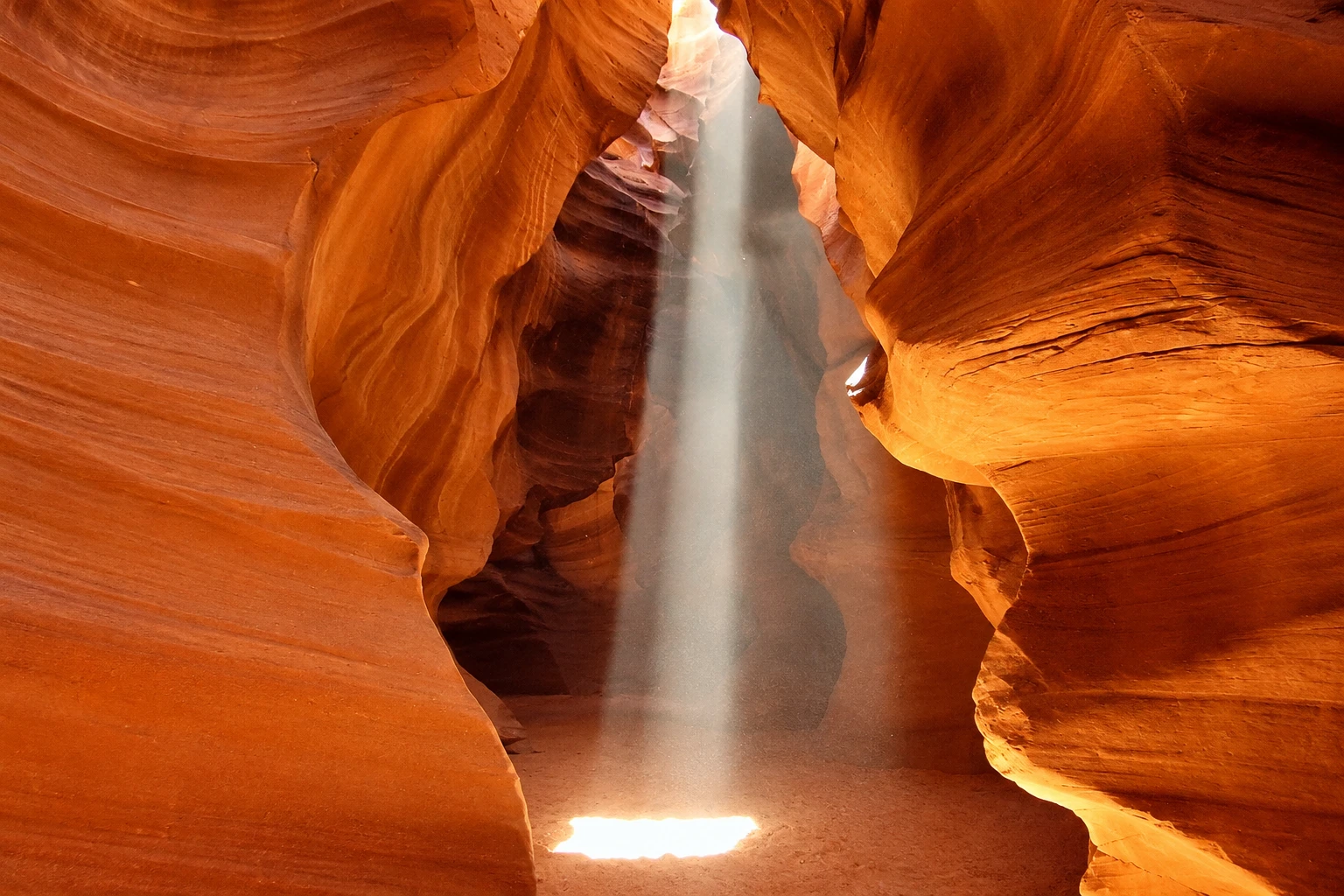
To the northeast, Page grew in the 1950s with the construction of Glen Canyon Dam, which created Lake Powell. Nearby are Antelope Canyon, with its undulating walls, open only to guided Navajo tours, and the Colorado River bend at Horseshoe Bend.

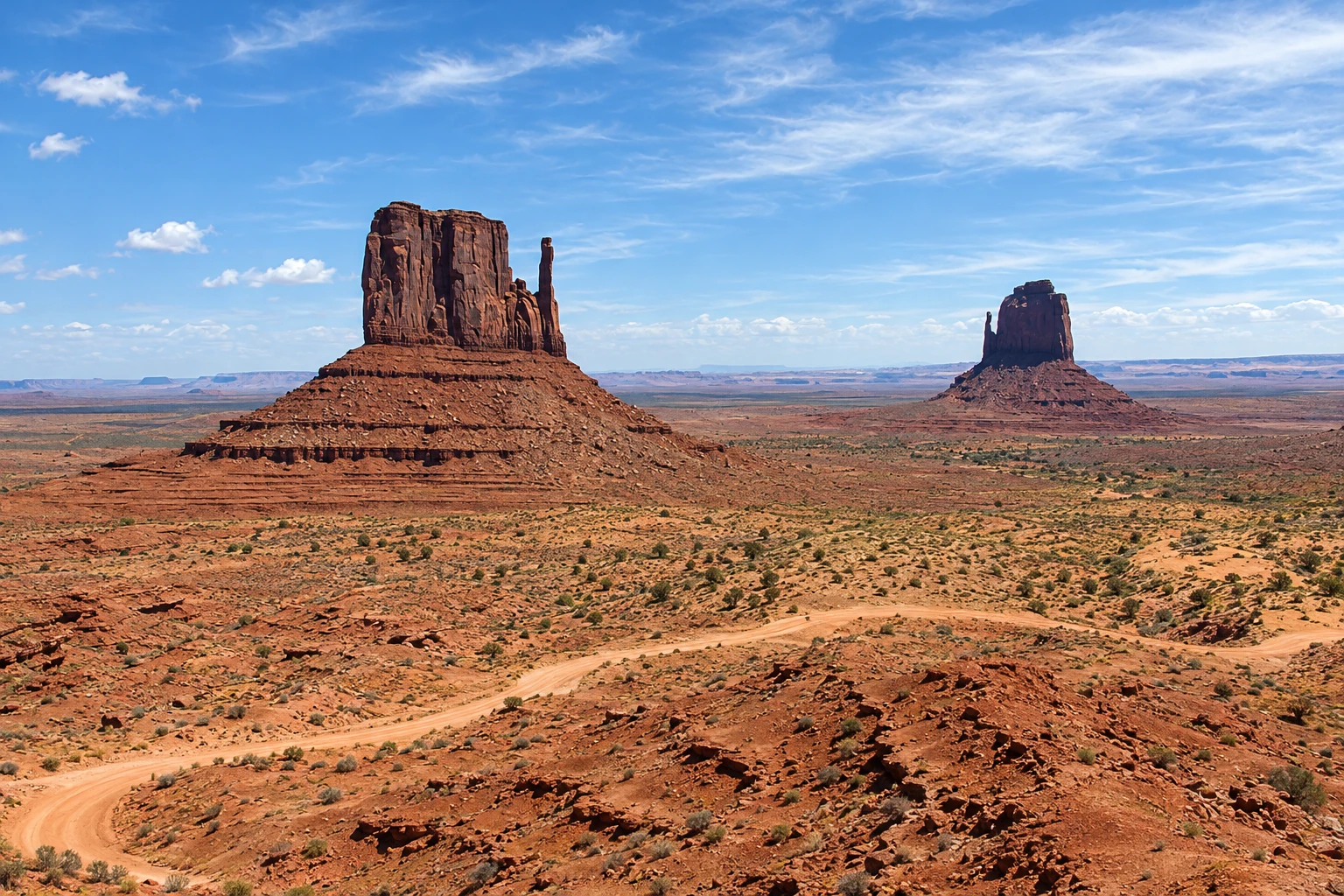
Further east, near Utah, Monument Valley brings together the red sandstone buttes that have appeared in many western films. It is a tribal park of the Navajo Nation, with its own rules and hours, and its base is the settlement of Oljato-Monument Valley on the Utah side.

This destination brings together 6 cities: Flagstaff, Grand Canyon Village, Williams, Page, Oljato-Monument Valley, Holbrook.


Share: WhatsApp
Traveler, share your experiences through photos Up to 5 photos of each place you visited.

One destination, many paths

The cities on this trip

Start with one city or combine several in your itinerary.

Where Grand Canyon and northern Arizona is The star marks the nearest capital, Phoenix.
PhoenixFlagstaffGrand Canyon VillageWilliamsPageOljato-Monument ValleyHolbrook

Boundaries: U.S. Census Bureau / geoBoundaries (public domain). Adapted by Cidade Turismo.

How to get there: Grand Canyon and northern Arizona

Flagstaff Pulliam Airport (FLG) · 7 km to Flagstaff

The larger airports are in Phoenix, about three and a half hours from the south rim, and Las Vegas, about four and a half hours. Flagstaff has regional flights and a long-distance train station. To get around the region, a car is the most practical option.

Suggested arrival point: Flagstaff

The local experience

Things to do in Grand Canyon and northern Arizona

Page · Arizona · Canyon

Antelope Canyon

Narrow sandstone canyon on Navajo land near Page, with wavy walls carved by water and light beams at midday. It can only be visited on tours with authorized Navajo guides.

Explore Antelope Canyon

Williams · Arizona · Tourist train

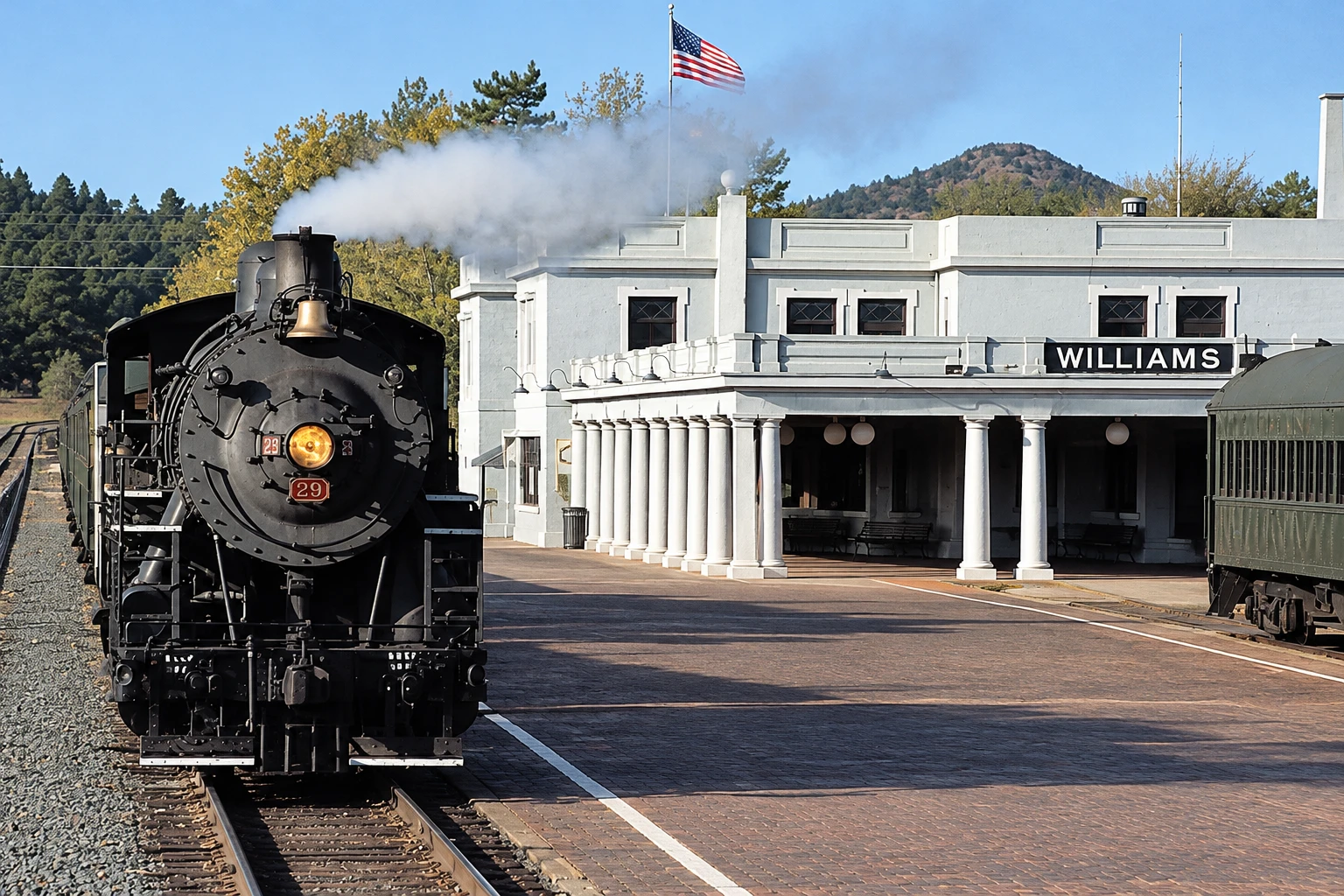
Grand Canyon Railway

Historic train that links Williams to the South Rim of the Grand Canyon over about 105 km, with vintage cars, musicians and Old West characters on board. Leaves in the morning and returns in the late afternoon.

Explore Grand Canyon Railway

Flagstaff · Arizona · Observatory

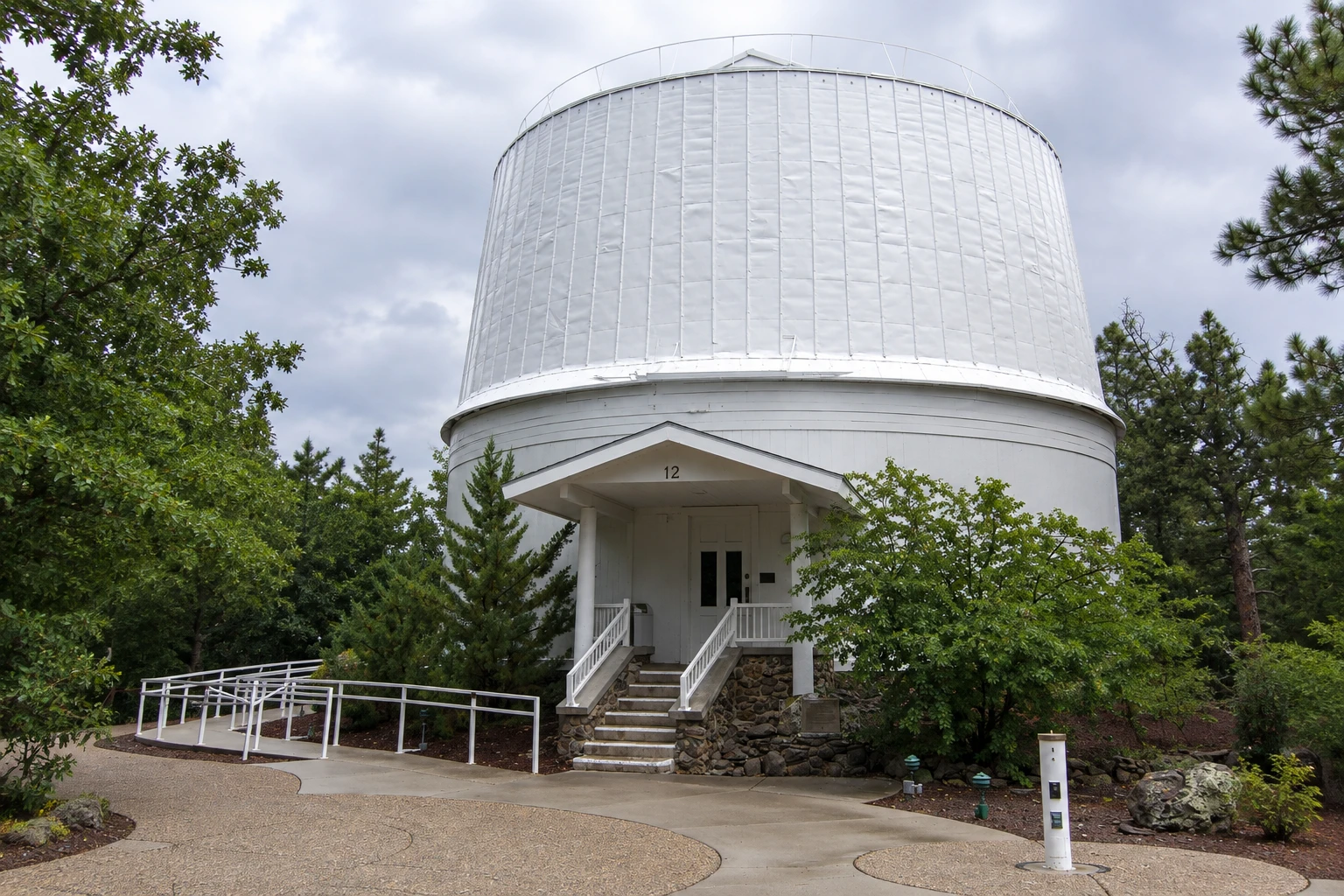
Lowell Observatory

An astronomical observatory founded in 1894 on a hill in Flagstaff, where Pluto was discovered in 1930. It has exhibits, guided tours and nighttime telescope sessions.

Explore Lowell Observatory

Grand Canyon Village · Arizona · Viewpoint

Mather Point

The most visited viewpoint on the South Rim, next to the visitor center, offering wide views across the canyon, the rock temples and a stretch of the Bright Angel Trail.

Explore Mather Point

See 10 more places in Grand Canyon and northern Arizona

Before you go

Practical information

A little planning leaves more time to enjoy the journey.

When to go

From April to June and from September to October days are usually pleasant. In summer, the south rim has mild temperatures, but the canyon floor exceeds 40 °C and afternoon storms are common from July to September. In winter, the south rim and Flagstaff commonly get snow.

The seasons shown are the most usual ones; nature doesn't always follow the calendar.

How many days to stay

Four to five days allow for two days at the Grand Canyon, one in Page and one in Monument Valley, with Flagstaff or Williams as stopovers. The south rim alone requires at least a full day, or two days to descend a trail.

Which city to stay in

Inside the park, in Grand Canyon Village, the lodges are within walking distance of the viewpoints and sell out early. Tusayan, right at the south entrance, and Williams are alternatives less than an hour away. Flagstaff has more options and lies on the route to Phoenix and Page. In Page and in Oljato-Monument Valley there are accommodations close to the canyons and buttes.

Respect the place

Take your trash with you, follow the signs and support local businesses. In natural areas, follow the visiting guidelines.

Beyond the guide

Your questions

Frequently asked questions about Grand Canyon and northern Arizona

How many days to spend at the Grand Canyon?

A full day lets you see the main viewpoints on the south rim and walk part of the rim trail. With two days, you can descend part of a trail into the canyon and see sunrise and sunset.

Do you need a car for the Grand Canyon and northern Arizona?

To travel between Flagstaff, the Grand Canyon, Page and Monument Valley, yes: distances are large and public transport is limited. Inside the park, park buses connect the south rim viewpoints.

Which rim of the Grand Canyon should you visit?

The south rim is open year-round and has most of the services. The north rim, higher and more remote, usually opens only from mid-May to mid-October; check the park website.

Can you do the Grand Canyon as a day trip from Las Vegas?

You can, but it’s a long day: about four and a half hours’ drive each way to the south rim. Spending at least one night near the park makes the visit more relaxed.

What time zone is northern Arizona in?

Arizona does not observe daylight saving time and stays on UTC-7 year-round. The Navajo Nation, where Antelope Canyon and Monument Valley are located, does observe it: from March to November Navajo tours follow UTC-6, one hour ahead of Page and the Grand Canyon.

Brasileiro precisa de visto para visitar o Grand Canyon?

Para viajantes com passaporte brasileiro, é preciso visto de turista, e o primeiro visto exige entrevista no consulado. As exigências podem mudar: confirme antes de viajar.

Explore other destinations Search by state and city