Flagstaff · the United States · Observatory
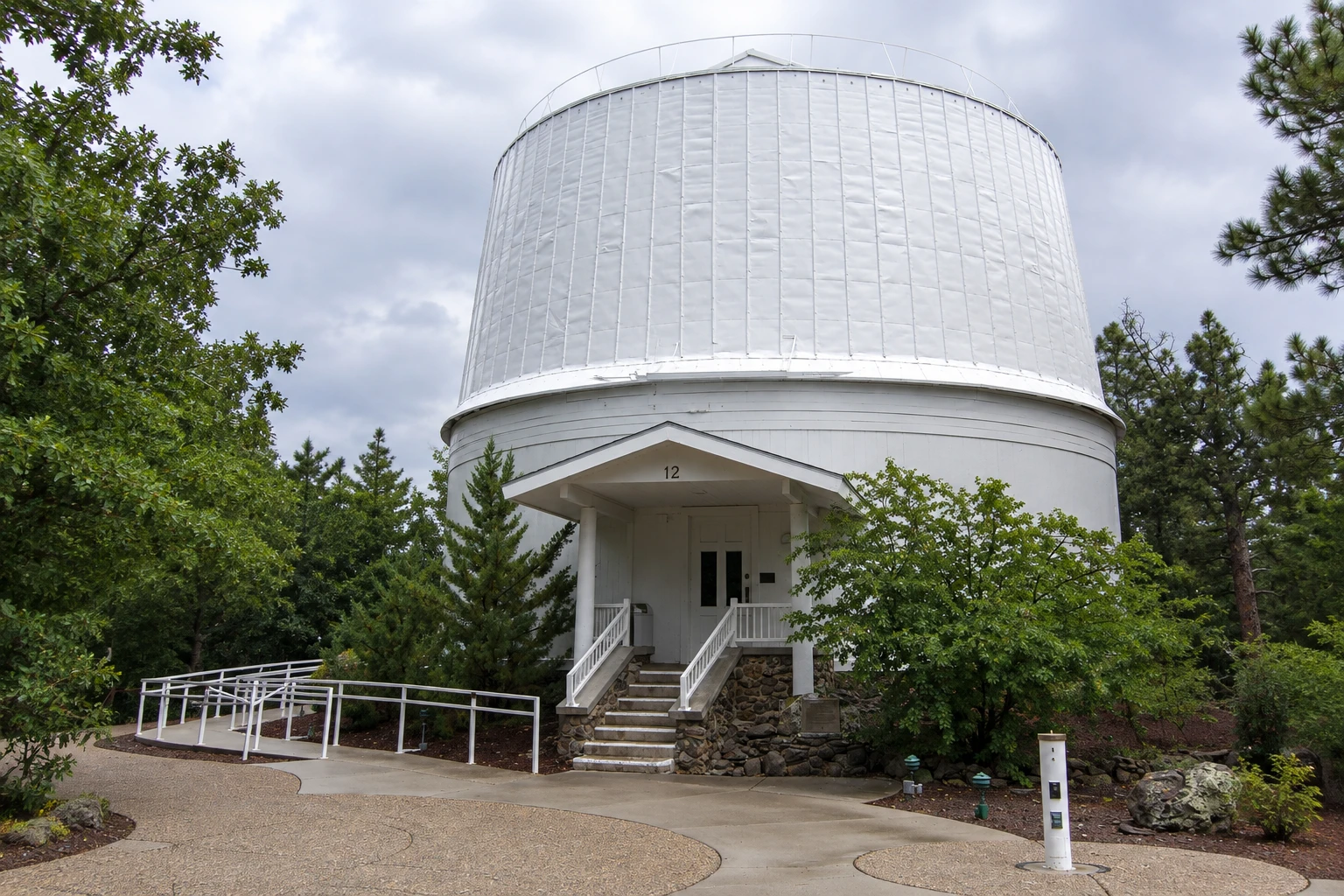
Lowell Observatory
An astronomical observatory founded in 1894 on a hill in Flagstaff, where Pluto was discovered in 1930. It has exhibits, guided tours and nighttime telescope sessions.

 Search
 Brazil
 Antarctica
 Argentina
 Bolivia
 Chile
 Colombia
 Ecuador
 Falkland Islands (Malvinas)
 French Guiana
 Guyana
 Paraguay
 Peru
 Suriname
 Uruguay
 Venezuela
 Austria
 Belgium
 Croatia
 Denmark
 Finland
 France
 Germany
 Greece
 Hungary
 Iceland
 Ireland
 Italy
 Luxembourg
 Norway
 Poland
 Portugal
 Slovakia
 Slovenia
 Spain
 Sweden
 Switzerland
 the Czech Republic
 the Netherlands
 the United Kingdom
 Turkey
 Bermuda
 Canada
 Greenland
 Mexico
 Saint Pierre and Miquelonthe United States
 the Dominican Republic
 JapanTurkey
 Egypt
 South Africa
 Australia
 Fiji
 New Zealand
 Papua New Guinea
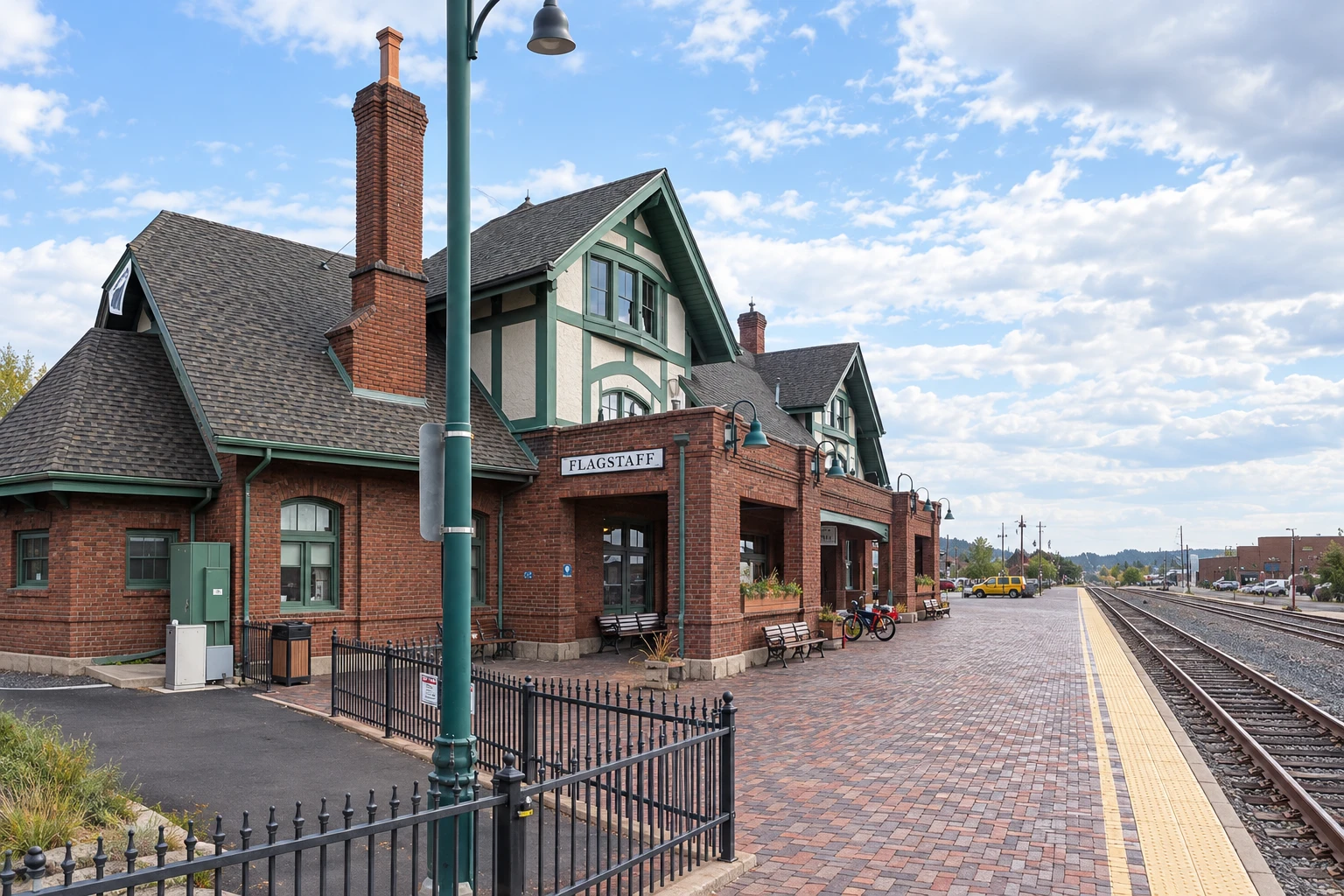
In the photo: Flagstaff train station
Illustrative images. The pictures in this guide are illustrations based on the real place, not photographs, and may differ from it.

The city
A college town at about 2,100 meters elevation, surrounded by pine forests at the foot of the San Francisco Peaks. The historic downtown is next to the railroad and the old Route 66 brick buildings. It has the Lowell Observatory, where Pluto was discovered, and is close to Walnut Canyon and about an hour and a half from the south rim of the Grand Canyon.
There's no accommodation in the guide yet in Flagstaff.
Do you run a hotel, guesthouse or vacation rental here? List itThere are no restaurants in the guide yet in Flagstaff.
Know a good one? Recommend it to usThe city's hotels and restaurants on the map.
how to get there · how many days · itinerary · questions
The local experience
An astronomical observatory founded in 1894 on a hill in Flagstaff, where Pluto was discovered in 1930. It has exhibits, guided tours and nighttime telescope sessions.
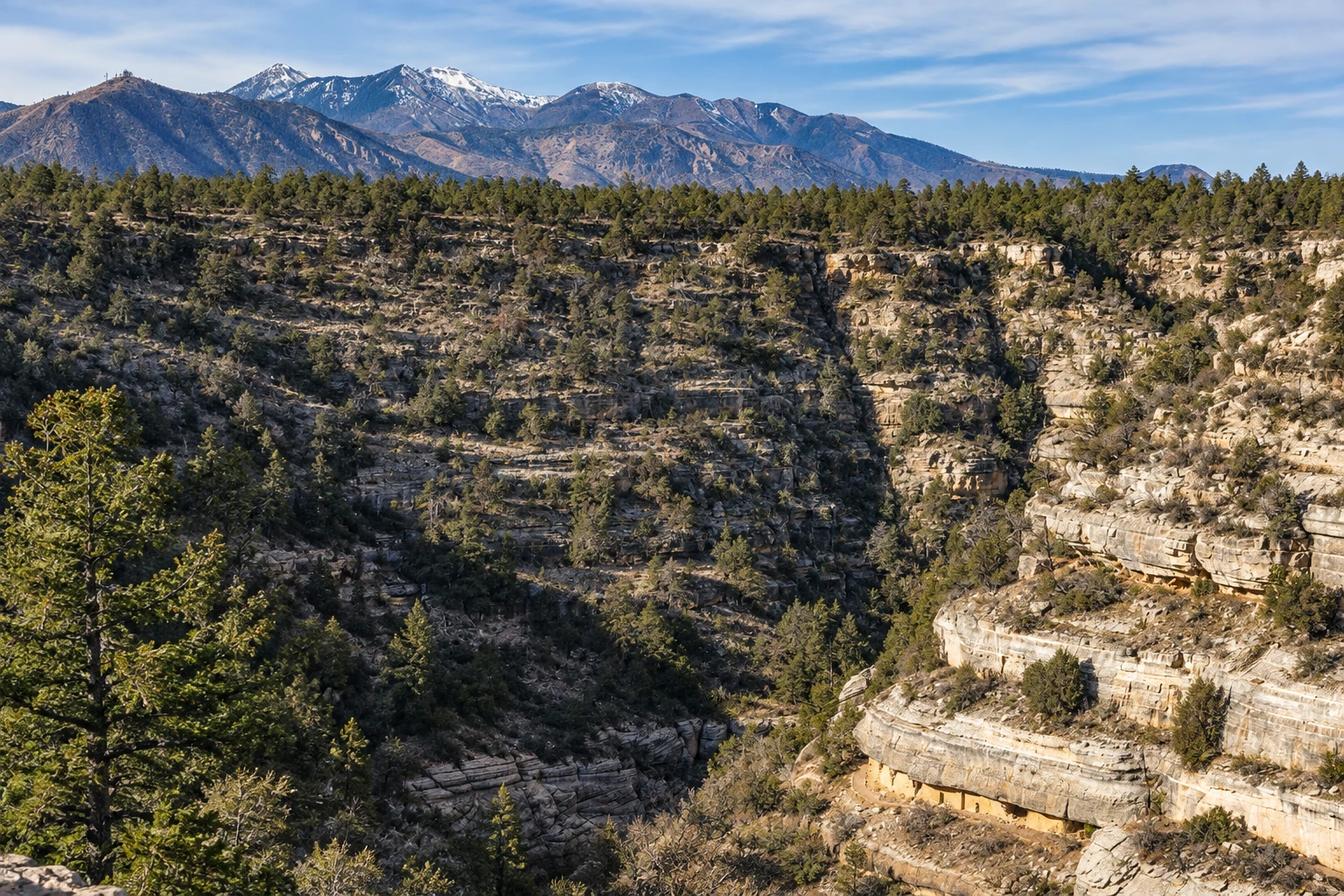
A national monument east of Flagstaff, with stone dwellings built by the Sinagua about 800 years ago on the slopes of a limestone canyon.
Before you go
Flagstaff – the United States Destination Grand Canyon and northern Arizona about 235 km from Phoenix
Approximate distances. Check flights and bus, train or boat schedules before you travel.
Flagstaff Pulliam Airport (FLG) has regional flights. The larger airports are in Phoenix, about two and a half hours via I-17, and in Las Vegas, about four hours away. The long-distance train between Chicago and Los Angeles stops at the downtown station.
One day is enough for downtown, the Lowell Observatory and Walnut Canyon. Many travelers use Flagstaff as a base for two or three nights to visit the Grand Canyon and Sedona.
From May to October days are usually pleasant, with afternoon storms from July to September. In winter the town often has snow and cold, and the Arizona Snowbowl ski area operates on the nearby peaks.
The seasons shown are the most usual ones; nature doesn't always follow the calendar.
For downtown, no: you can walk and there are city buses. For Walnut Canyon, the Grand Canyon and Sedona, a car is the most practical option.
Suggested itinerary
Built with the places on this page. No rush: it's paced so you have time to see them.
Go early to Walnut Canyon, east of town, and descend the trail that circles the rock island and passes the Sinagua people’s cliff dwellings on the slopes.
Walk through the historic downtown, between the train station and the old Route 66 brick buildings. Have lunch and enjoy the shops and cafés.
Climb Mars Hill to the Lowell Observatory and join a telescope viewing session if the sky is clear.
Check before you go. Opening hours and days change, and places may close for renovations, holidays or events. This itinerary is a suggestion from Cidade Turismo, not a commitment: plan yours by checking directly with each place you intend to visit.
Before you go
Yes. The south rim is about an hour and a half by car, and the town has more lodging and restaurant options than the park entrance. It’s also less than an hour from Sedona.
Flagstaff follows Arizona time: UTC-7 year-round, with no daylight saving time.
Yes. At about 2,100 meters elevation, the town commonly gets snow from November to March. roads in the region may require chains or specific tires on stormy days.
Visit the Lowell Observatory, hike in Walnut Canyon, see the Museum of Northern Arizona, stroll downtown along historic Route 66 and, in winter, ski at Arizona Snowbowl.