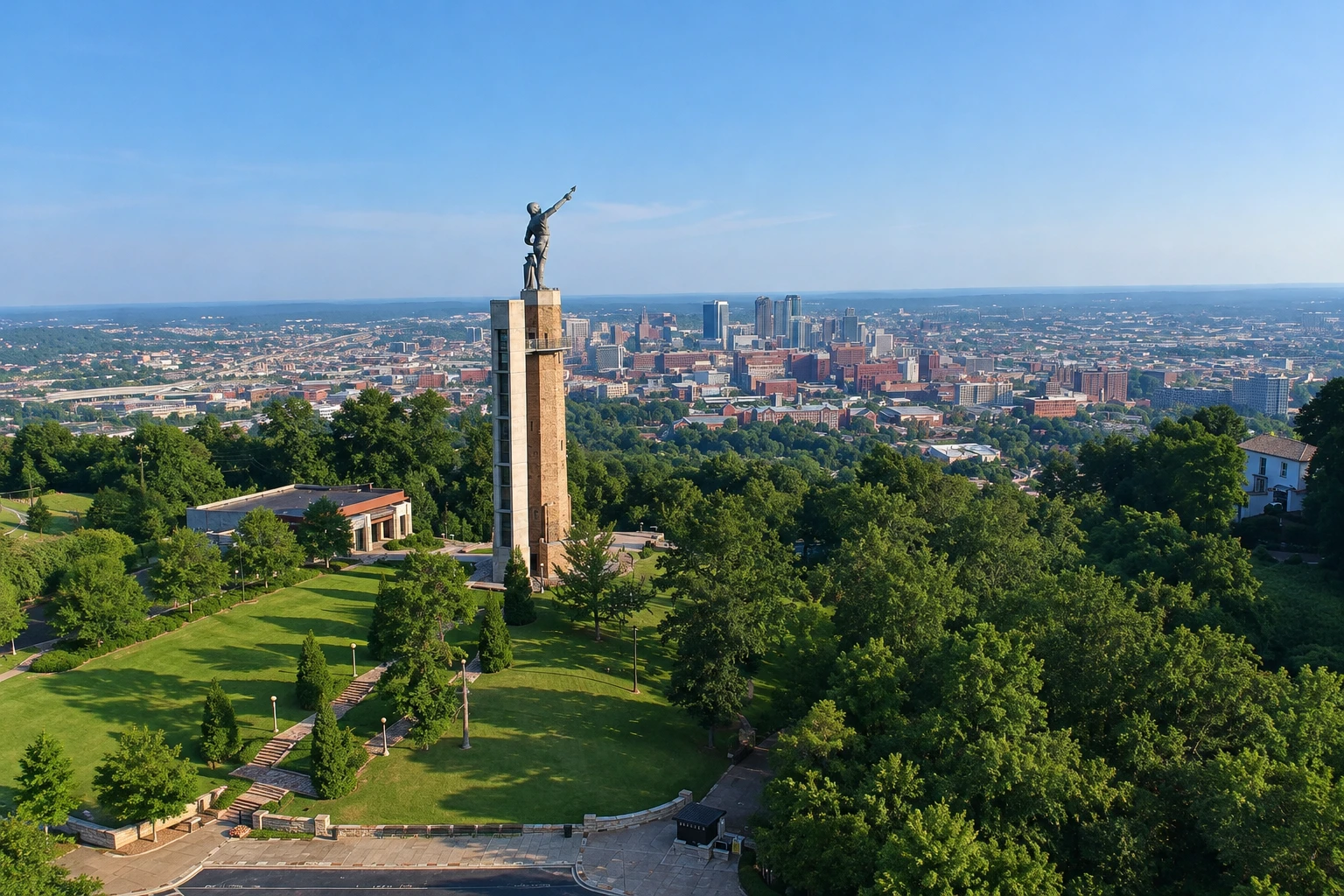
Illustrative images. The pictures in this guide are illustrations based on the real place, not photographs, and may differ from it.
The city
What to expect from Birmingham.
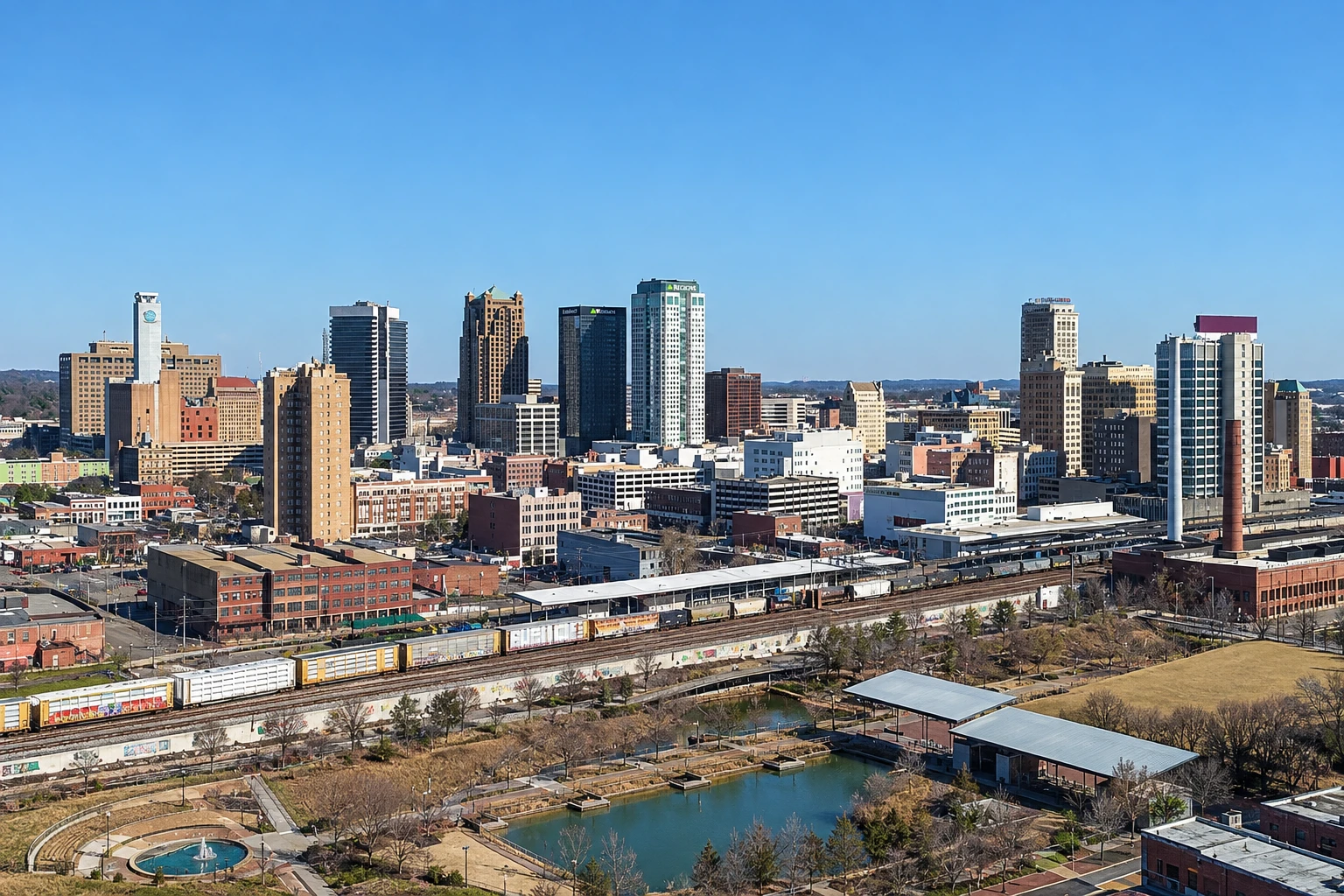
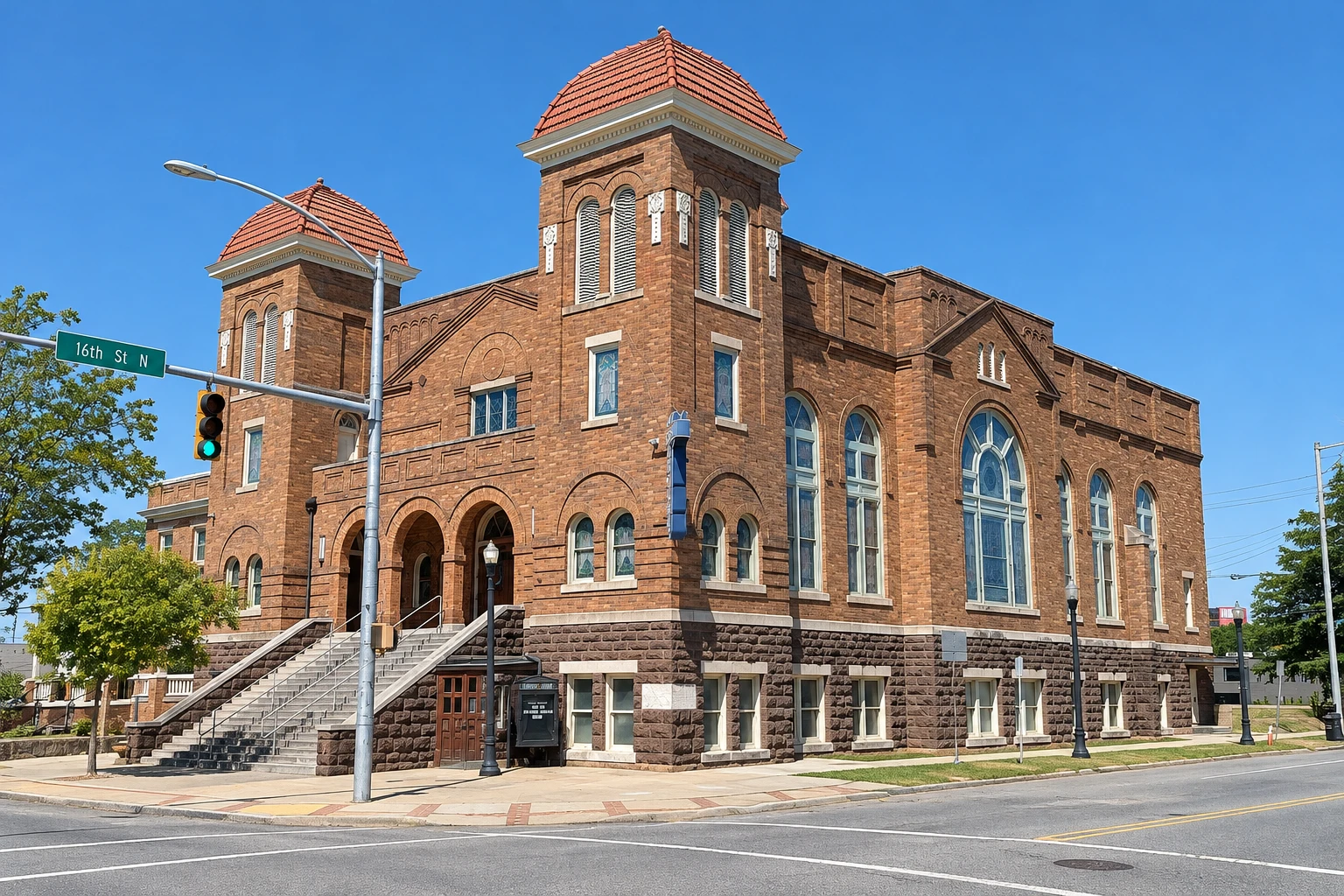
Largest city in Alabama, founded in 1871 as a center of iron and steel amid deposits of ore, coal and limestone. During the 1963 marches, the city centre became one of the symbols of the civil rights struggle. The civil rights district, the Sloss blast furnaces and the Vulcan statue atop Red Mountain are the main visits.
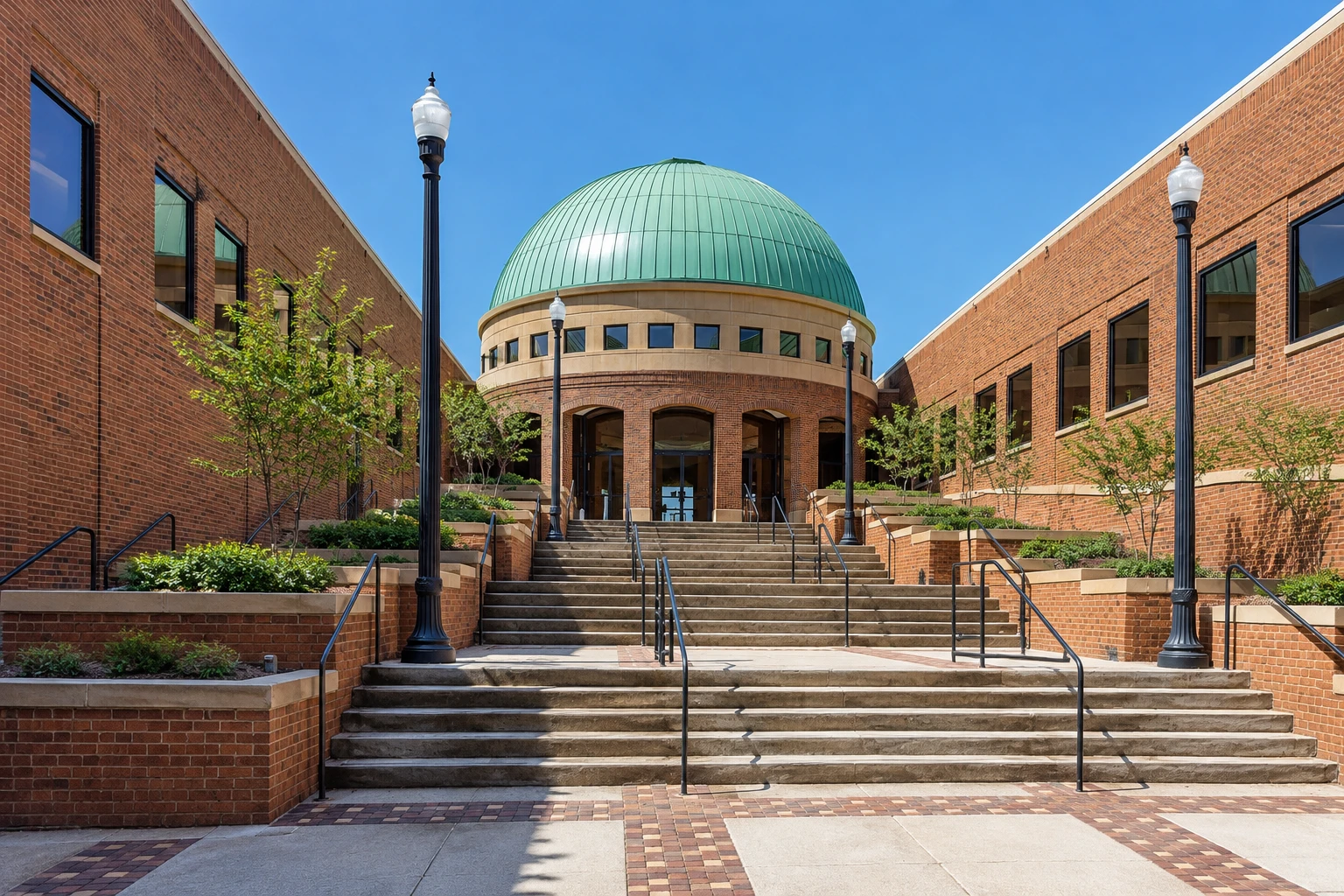
Museum and research center about the civil rights movement, facing Kelly Ingram Park, with galleries covering segregation through the 1963 marches and the door of the cell where Martin Luther King Jr. wrote a famous letter.
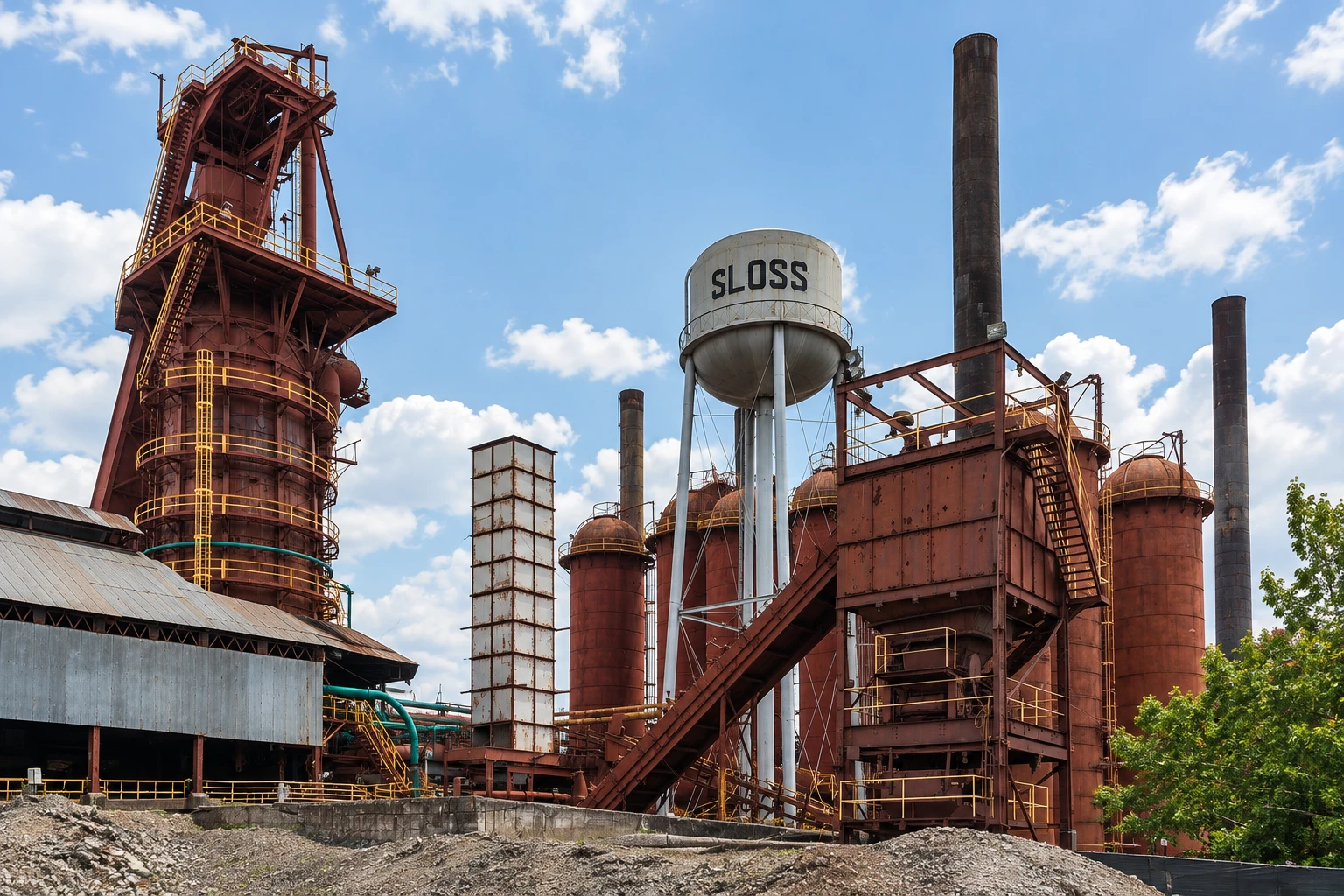
Blast furnaces that operated from 1882 to 1970 and were preserved as an open-air museum, with boilers, smokestacks and machinery from Birmingham’s industrial era.
A park on top of Red Mountain with a cast-iron statue of Vulcan, made for the 1904 World’s Fair, a local history museum and a viewpoint over Birmingham.
Birmingham-Shuttlesworth International Airport (BHM)8 km
Approximate distances. Check flights and bus, train or boat schedules before you travel.
BHM airport is about 8 km northeast of downtown, with taxis and ride apps. Interstates I-20, I-59 and I-65 intersect in the city; Atlanta is about two and a half hours by car, and Nashville about three.
How many days
One day covers the civil rights district and Sloss Furnaces. With two days, you can add Vulcan Park, the Southside neighborhood and Railroad Park.
When to go
April, May and October are the most comfortable months. Museums are open year-round, with regular weekly closure days.
The seasons shown are the most usual ones; nature doesn't always follow the calendar.
Do you need a car?
In the civil rights district, no: the institute, the church and the park are together. For Sloss Furnaces and Vulcan Park, use a car, taxi or ride app. Drive on the right.
Suggested itinerary
An order that works
Built with the places on this page. No rush: it's paced so you have time to see them.
One day in Birmingham
manhã
Civil Rights District
Visit the Birmingham Civil Rights Institute and cross the street to 16th Street Baptist Church and Kelly Ingram Park.
tarde
Sloss and Vulcan
Tour the blast furnaces at Sloss Furnaces and climb to Vulcan Park to see the city from the overlook at late afternoon.
2 days in Birmingham
Day 1
dia inteiro
Civil rights
Spend the morning at the institute and the afternoon at 16th Street Church, Kelly Ingram Park and a walk through downtown.
Day 2
dia inteiro
Iron and view
In the morning, Sloss Furnaces; in the afternoon, Vulcan Park and the Southside neighborhood, with restaurants.
Check before you go. Opening hours and days change, and places may close for renovations, holidays or events. This itinerary is a suggestion from Cidade Turismo, not a commitment: plan yours by checking directly with each place you intend to visit.
Before you go
Frequently asked questions
What to do in Birmingham, Alabama?
Explore the civil rights district with the institute, the church and the sculpture park, walk the old blast furnaces and see the city from the overlook beneath the Vulcan statue.
Does Birmingham, Alabama have a connection to the English city of Birmingham?
Only the name: the founders chose to honor the English industrial city because they also wanted an iron-and-steel center.
Is the A. G. Gaston Motel open for visits?
The motel, where Martin Luther King Jr. stayed in 1963, is part of the national civil rights monument and is undergoing a long renovation. Check the National Park Service website for the current status.
What is Birmingham’s time zone?
UTC−6 in winter and UTC−5 during daylight saving time, from March to November.


 Brazil
 Antarctica
 Argentina
 Bolivia
 Chile
 Colombia
 Ecuador
 Falkland Islands (Malvinas)
 French Guiana
 Guyana
 Paraguay
 Peru
 Suriname
 Uruguay
 Venezuela
 Austria
 Belgium
 Croatia
 Denmark
 Finland
 France
 Germany
 Greece
 Hungary
 Iceland
 Ireland
 Italy
 Luxembourg
 Norway
 Poland
 Portugal
 Slovakia
 Slovenia
 Spain
 Sweden
 Switzerland
 the Czech Republic
 the Netherlands
 the United Kingdom
 Turkey
 Bermuda
 Canada
 Greenland
 Mexico
 Saint Pierre and Miquelon
 the Dominican Republic
 Japan
 Egypt
 South Africa
 Australia
 Fiji
 New Zealand
 Papua New Guinea