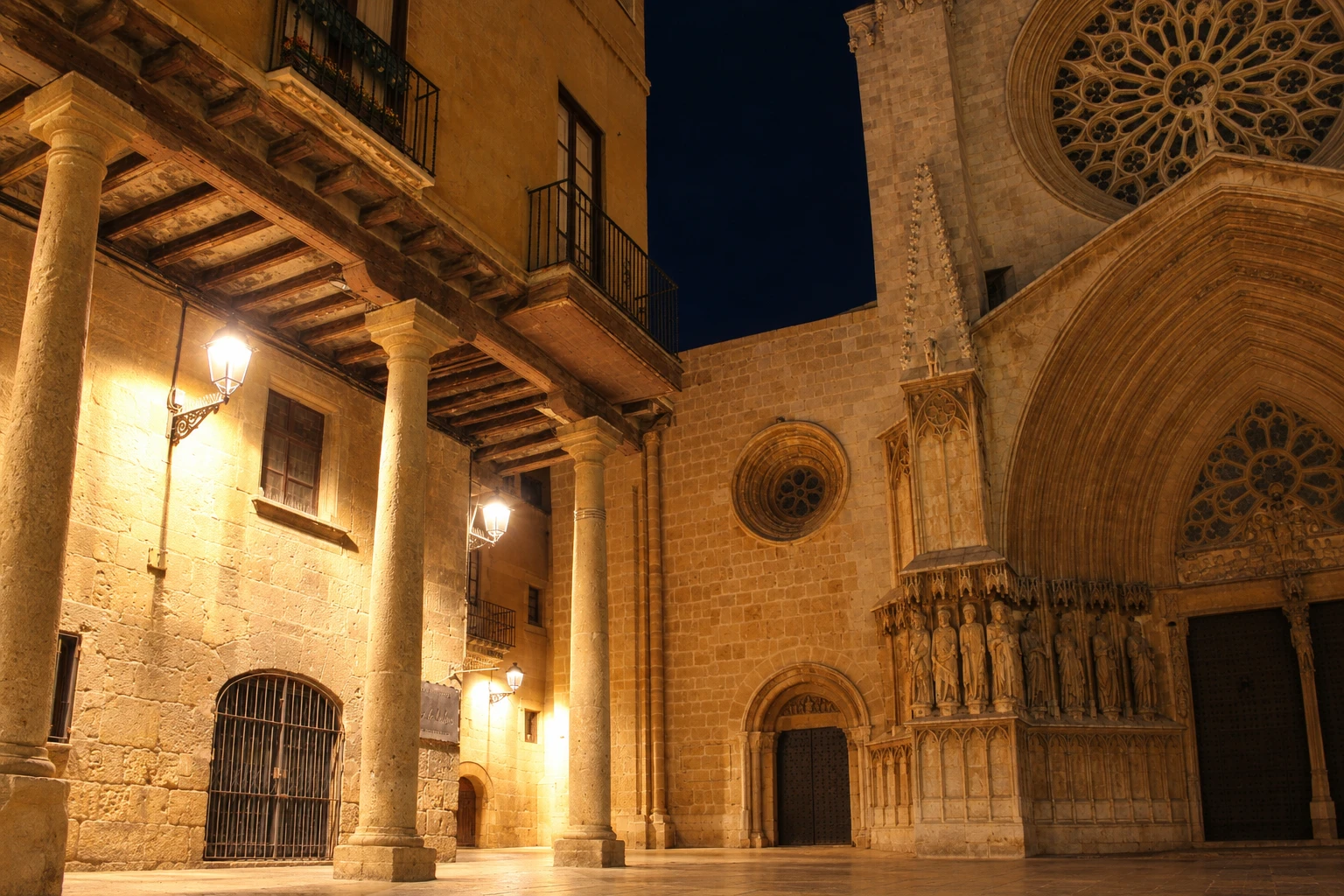
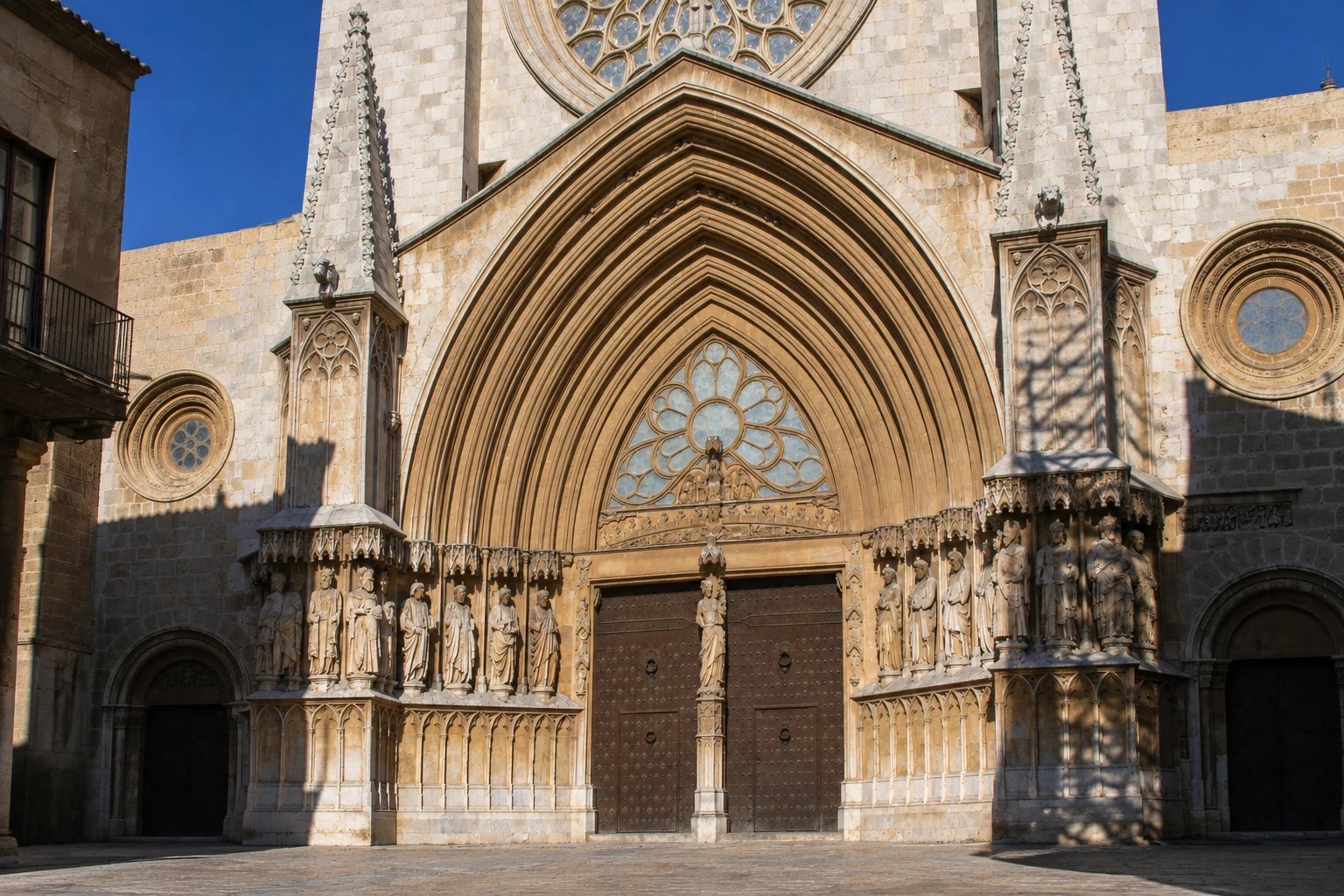
In the photo: Pla de la Seu and Tarragona Cathedral
Illustrative images. The pictures in this guide are illustrations based on the real place, not photographs, and may differ from it.
The city
What to expect from Tarragona.
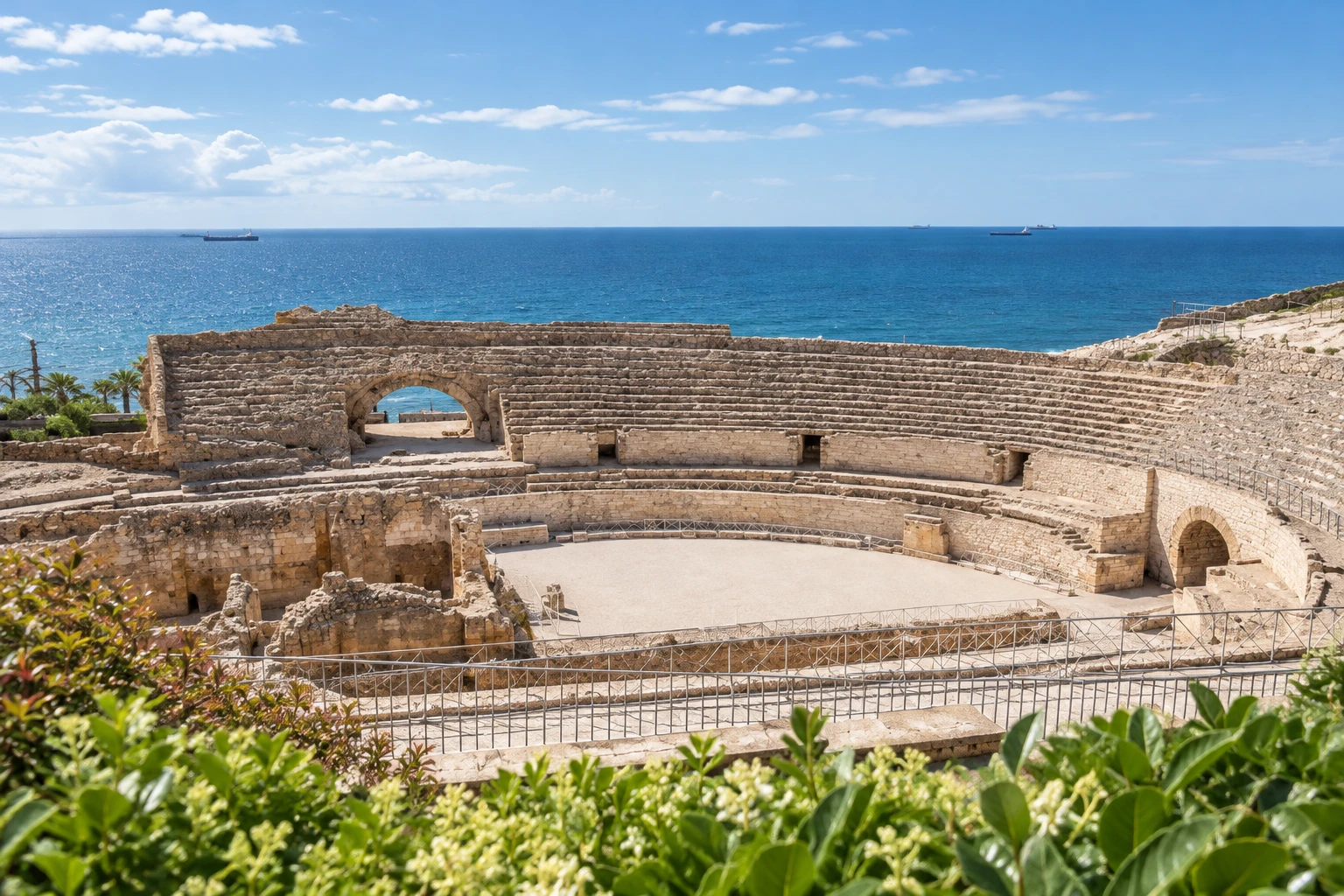
Port city in the center of the Costa Daurada, built on ancient Tarraco, the Roman capital of the province of Tarraconense. The seaside amphitheater, the circus with the Pretori tower, the walls and the Pont del Diable aqueduct are part of the archaeological ensemble declared a UNESCO World Heritage Site. At the top of the Part Alta, the cathedral was built over the former Roman place of worship.
2nd-century amphitheater by the sea, where gladiator combats and animal shows took place. It is part of the Tarraco ensemble, a World Heritage Site, and the arena preserves the remains of a Visigothic basilica and a medieval church.
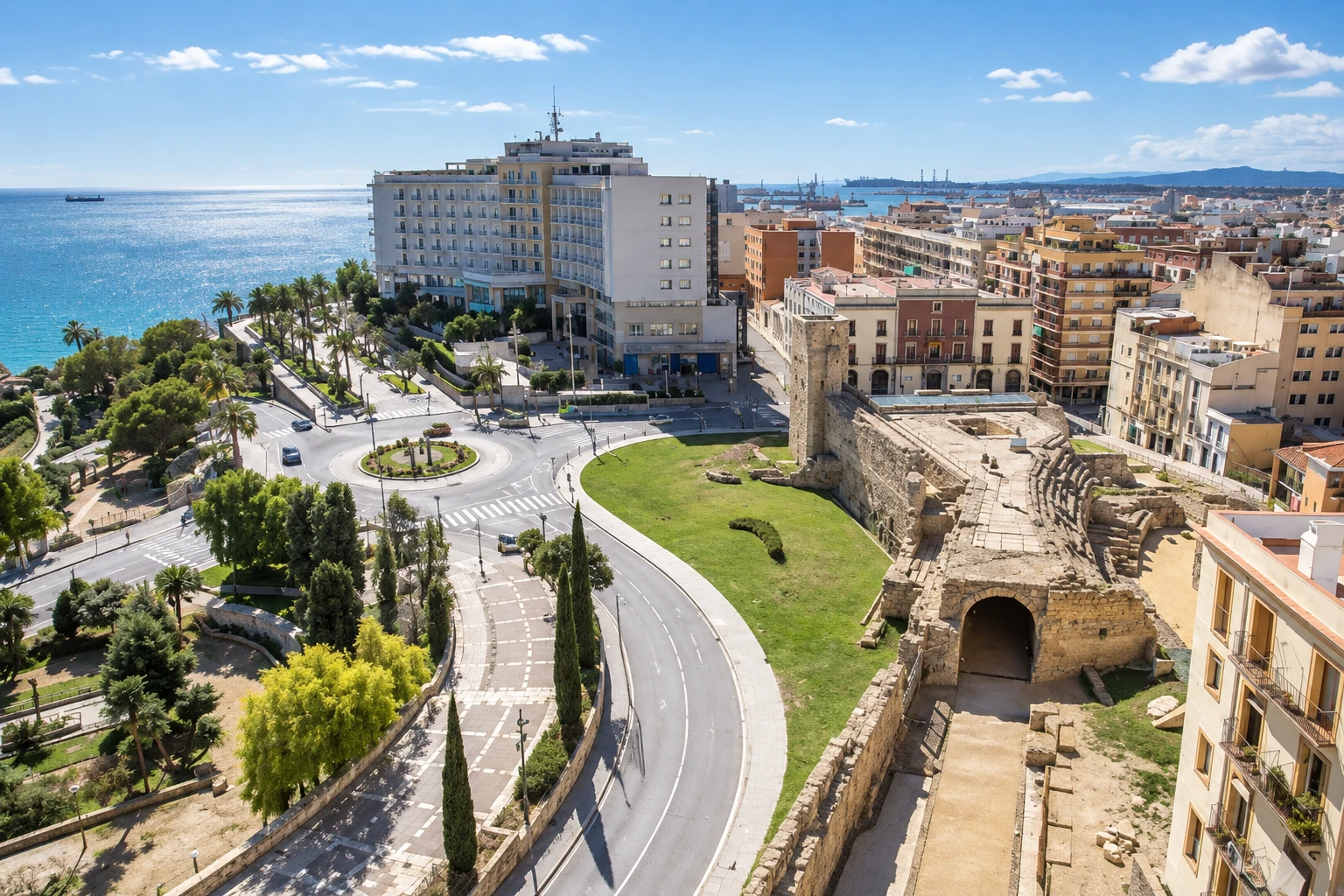
Roman tower at the top of the city, connected to the vaulted galleries of the 1st-century circus where chariot races ran. From the tower terrace you can see the Part Alta, the port and the sea.
Cathedral of Saint Tecla, at the highest point of the Part Alta, built from the 12th century on the site of an old Roman temple. It blends Romanesque and Gothic styles and has a large cloister, with the Diocesan Museum beside it.
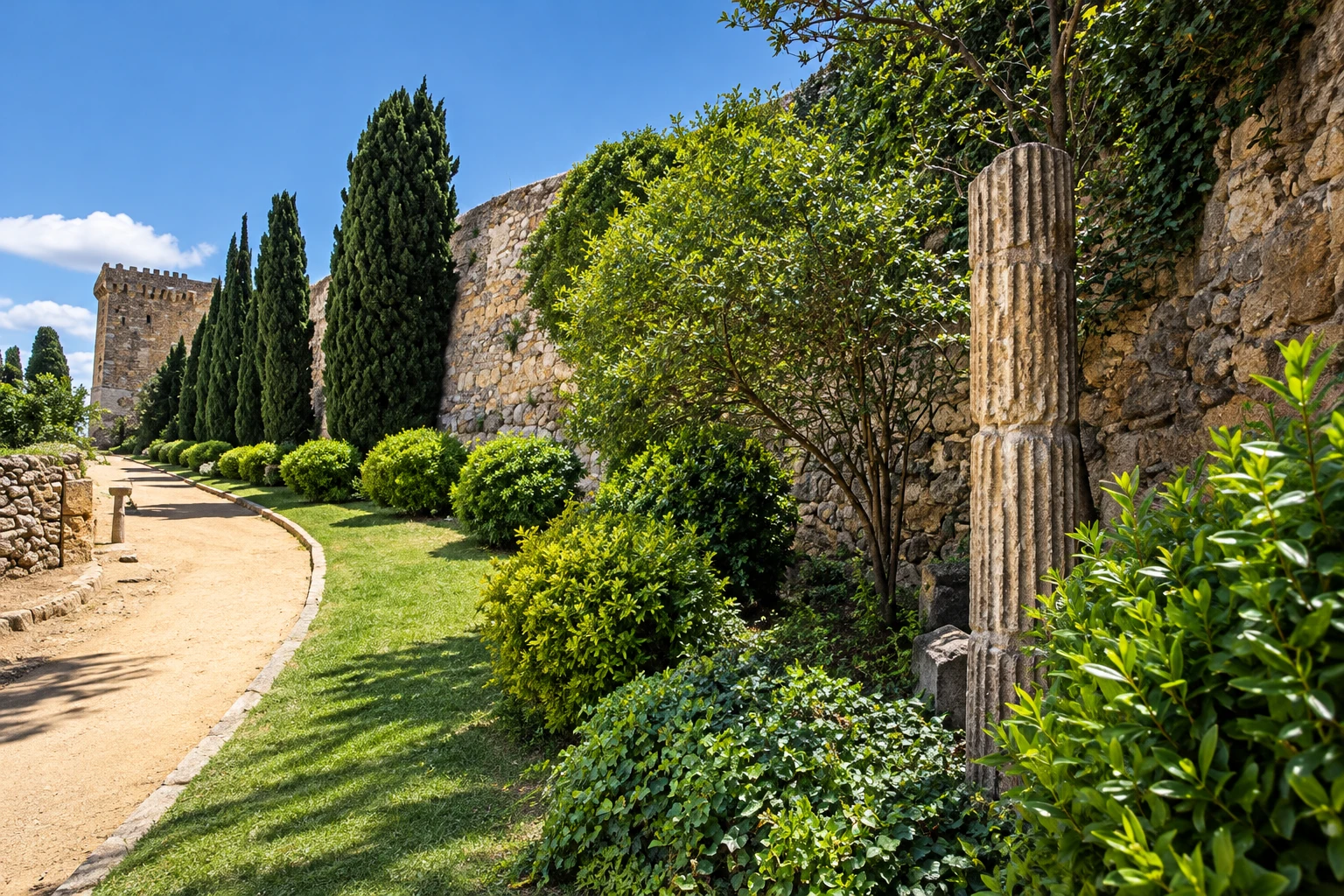
A landscaped walk that skirts part of the Part Alta between the Roman wall of the 2nd century BC and the fortifications built in the 18th century. It shows the different phases of the wall and offers views of the Camp de Tarragona.
Approximate distances. Check flights and bus, train or boat schedules before you travel.
Tarragona station, in the center, receives regional and long-distance trains along the coast; high-speed trains stop at the Camp de Tarragona station, about 12 km away. Reus airport is about 10 km away, and Barcelona’s airport about 90 km. By car, the city is roughly 100 km from Barcelona.
How many days
One day covers the amphitheater, the Pretori and the circus, the cathedral and the Passeig Arqueològic. With two days, you can include the Pont del Diable, the port and the Serrallo quarter without rushing.
When to go
From April to June and in September and October days are usually mild for walking among the ruins. July and August are hot and beaches are crowded. Winter is mild and quieter. Monument opening times change with the season; check before you go.
The seasons shown are the most usual ones; nature doesn't always follow the calendar.
Do you need a car?
No for the historic center, which is walkable, nor for the Pont del Diable, served by urban bus. A car helps to combine Tarragona with Valls and the inland monasteries in the same day.
Suggested itinerary
An order that works
Built with the places on this page. No rush: it's paced so you have time to see them.
One day in Tarragona
manhã
Amphitheater and Pretori
Start at the Roman amphitheater facing the sea, and walk up to the Pretori tower, from where you can descend into the circus galleries.
tarde
Cathedral and Passeig Arqueològic
Visit the cathedral and the cloister in the Part Alta and finish by walking along the Passeig Arqueològic, between the Roman wall and the later fortification.
2 days in Tarragona
Day 1
dia inteiro
Tarraco in the historic center
Spend the first day on the amphitheater, the Pretori and the circus, the cathedral and the Passeig Arqueològic, with breaks in the squares of the Part Alta.
Day 2
manhã
Pont del Diable
Take a bus or drive to the Ferreres Roman aqueduct north of the city, and walk the trails in the surrounding park.
tarde
Port and Serrallo
Return to the port and stroll through the Serrallo, the fishermen’s quarter, with the fish market and streets of low houses.
Check before you go. Opening hours and days change, and places may close for renovations, holidays or events. This itinerary is a suggestion from Cidade Turismo, not a commitment: plan yours by checking directly with each place you intend to visit.
Before you go
Frequently asked questions
What to see in Tarragona in one day?
The Roman amphitheater, the Pretori and the circus galleries, the cathedral and the Passeig Arqueològic, all in the center and within walking distance of each other.
How to get from Reus airport to Tarragona?
The airport is about 10 km away. There are buses on flight days and taxis. Check schedules before you go.
Which train station is in the center of Tarragona?
Tarragona station, by the sea and near the amphitheater, serves the regional coastal trains. Camp de Tarragona station, for high-speed trains, is about 12 km away and is connected to the city center by bus and taxi.
Why is Tarragona a World Heritage Site?
For the archaeological ensemble of Tarraco, declared a UNESCO World Heritage Site in 2000: remains of the city that was the capital of the Roman province Tarraconensis, including an amphitheater, circus, walls, forum and aqueduct.


 Brazil
 Antarctica
 Argentina
 Bolivia
 Chile
 Colombia
 Ecuador
 Falkland Islands (Malvinas)
 French Guiana
 Guyana
 Paraguay
 Peru
 Suriname
 Uruguay
 Venezuela
 Austria
 Belgium
 Croatia
 Denmark
 Finland
 France
 Germany
 Greece
 Hungary
 Iceland
 Ireland
 Italy
 Luxembourg
 Norway
 Poland
 Portugal
 Slovakia
 Slovenia
 Sweden
 Switzerland
 the Czech Republic
 the Netherlands
 the United Kingdom
 Turkey
 Bermuda
 Canada
 Greenland
 Mexico
 Saint Pierre and Miquelon
 the United States
 the Dominican Republic
 Japan
 Egypt
 South Africa
 Australia
 Fiji
 New Zealand
 Papua New Guinea