

 Brazil
 Antarctica
 Argentina
 Bolivia
 Chile
 Colombia
 Ecuador
 Falkland Islands (Malvinas)
 French Guiana
 Guyana
 Paraguay
 Peru
 Suriname
 Uruguay
 Venezuela
 Austria
 Belgium
 Croatia
 Denmark
 Finland
 France
 Germany
 Greece
 Hungary
 Iceland
 Ireland
 Italy
 Luxembourg
 Norway
 Poland
 Portugal
 Slovakia
 Slovenia
 Sweden
 Switzerland
 the Czech Republic
 the Netherlands
 the United Kingdom
 Turkey
 Bermuda
 Canada
 Greenland
 Mexico
 Saint Pierre and Miquelon
 the United States
 the Dominican Republic
 Japan
 Egypt
 South Africa
 Australia
 Fiji
 New Zealand
 Papua New Guinea
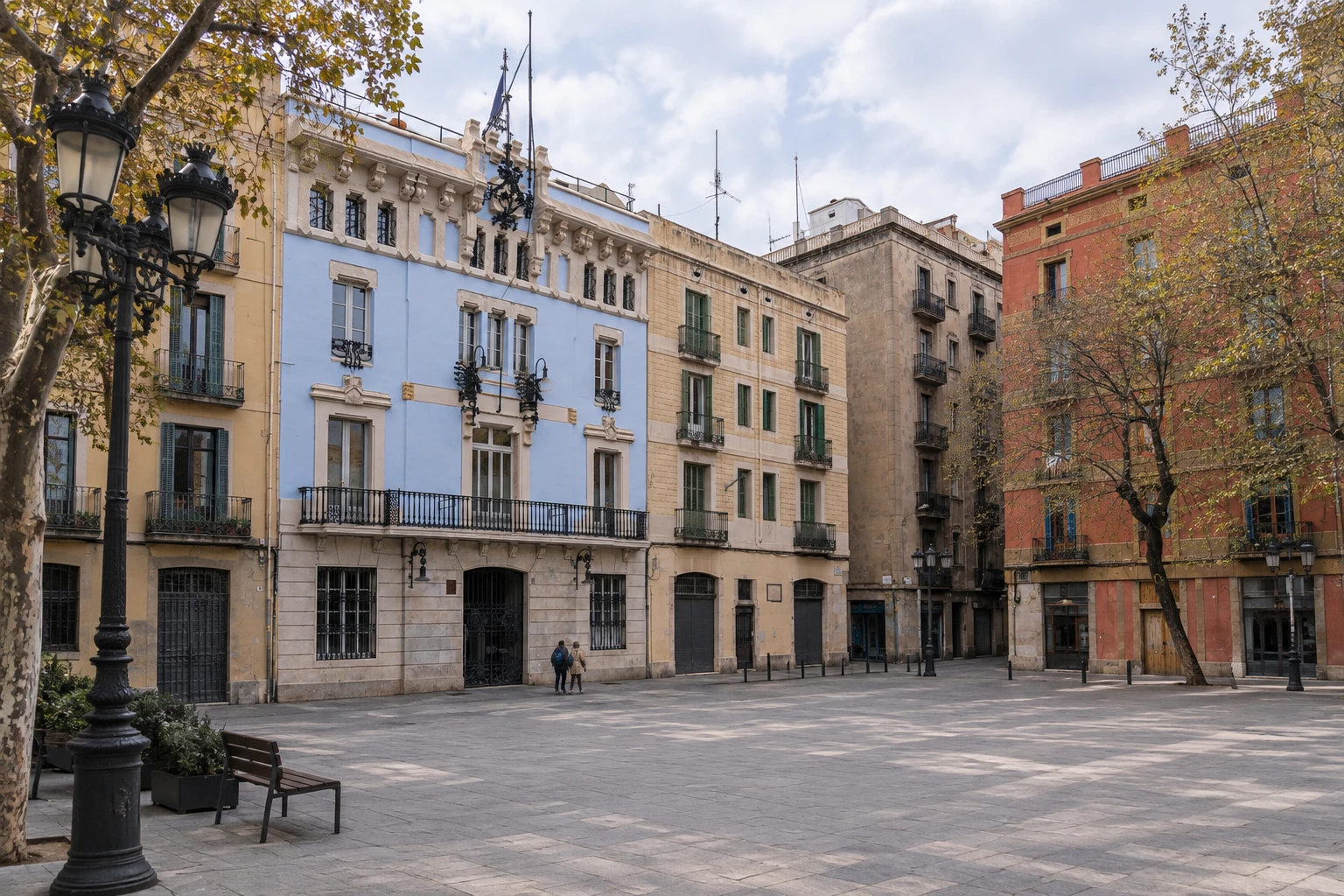
Neighborhood · Barcelona, Spain
Gràcia
Former independent village, annexed to Barcelona in 1897, with narrow streets, squares full of bars and neighbourhood life. It is home to the Casa Vicens and lies at the foot of Park Güell.
Illustrative images. The pictures in this guide are illustrations based on the real place, not photographs, and may differ from it.

Discover
About Gràcia
Gràcia grew around a Carmelite convent, Nostra Senyora de Gràcia, founded in 1626 on the road that linked Barcelona to settlements on the plain. The village grew as an independent municipality and was only annexed to Barcelona in 1897, together with Sants, Les Corts and other neighbours. The Passeig de Gràcia, the grand avenue of the Eixample, was the old road to the village.
Today the district comprises five neighbourhoods, but the heart is the Vila de Gràcia, north of the Diagonal. The streets are narrow, with low buildings and small shops, and open onto squares with bars and pavement tables, such as the Plaça del Sol and the Plaça de la Vila, where the Torre del Rellotge stands, a symbol of the neighbourhood, next to the old town hall building.
Gràcia has a strong associative life, with groups of castellers, giants and devils. The Festa Major usually takes place in August, when residents decorate the streets with different themes each year. The Casa Vicens, Gaudí's first house, is in the neighbourhood, and the upper part of the district reaches Park Güell.
Before you go
Practical information
Cidade Turismo reviews its information regularly, but something may have changed. Check with the place before planning your trip.
How much time to set aside
Half a day to stroll around the squares, see the Casa Vicens from the outside and stop at a bar. At night the neighbourhood is good for dinner.
Best time
Late afternoon and evening, when the squares fill up. The Festa Major usually takes place in August (winter in Brazil), with decorated streets and lots of people. Remember that dinner typically starts after 9 p.m.
How to get there
The Fontana station (L3) drops you at the top of Gran de Gràcia street. The Diagonal (L3 and L5) and Gràcia stations, on the FGC trains, are in the lower part. On foot, the neighbourhood starts where the Passeig de Gràcia ends.
Tip
Combine Gràcia with Park Güell in the morning and Casa Vicens in the early afternoon. In the squares, the pavement tables fill up at the weekend. Keep your voice low at night: these are residential areas.
Official website
Your questions
Frequently asked questions about Gràcia
Has Gràcia always been part of Barcelona?
No. It was an independent village that grew around a convent in 1626, and it was annexed to Barcelona in 1897.
What to do in Gràcia?
Walk the narrow streets and plazas, like Plaça del Sol and Plaça de la Vila, see Casa Vicens and dine in the neighborhood's bars and restaurants.
When is Gràcia's Festa Major?
It usually takes place in August, with streets decorated by residents. Check the dates for the year before going.
Is Gràcia near Park Güell?
Yes. Park Güell is in the upper part of the Gràcia district, and you can walk down from the park to the neighborhood's plazas.