

 Brazil
 Antarctica
 Argentina
 Bolivia
 Chile
 Colombia
 Ecuador
 Falkland Islands (Malvinas)
 French Guiana
 Guyana
 Paraguay
 Peru
 Suriname
 Uruguay
 Venezuela
 Austria
 Belgium
 Croatia
 Denmark
 Finland
 France
 Germany
 Greece
 Hungary
 Iceland
 Ireland
 Italy
 Luxembourg
 Norway
 Poland
 Portugal
 Slovakia
 Slovenia
 Sweden
 Switzerland
 the Czech Republic
 the Netherlands
 the United Kingdom
 Turkey
 Bermuda
 Canada
 Greenland
 Mexico
 Saint Pierre and Miquelon
 the United States
 the Dominican Republic
 Japan
 Egypt
 South Africa
 Australia
 Fiji
 New Zealand
 Papua New Guinea
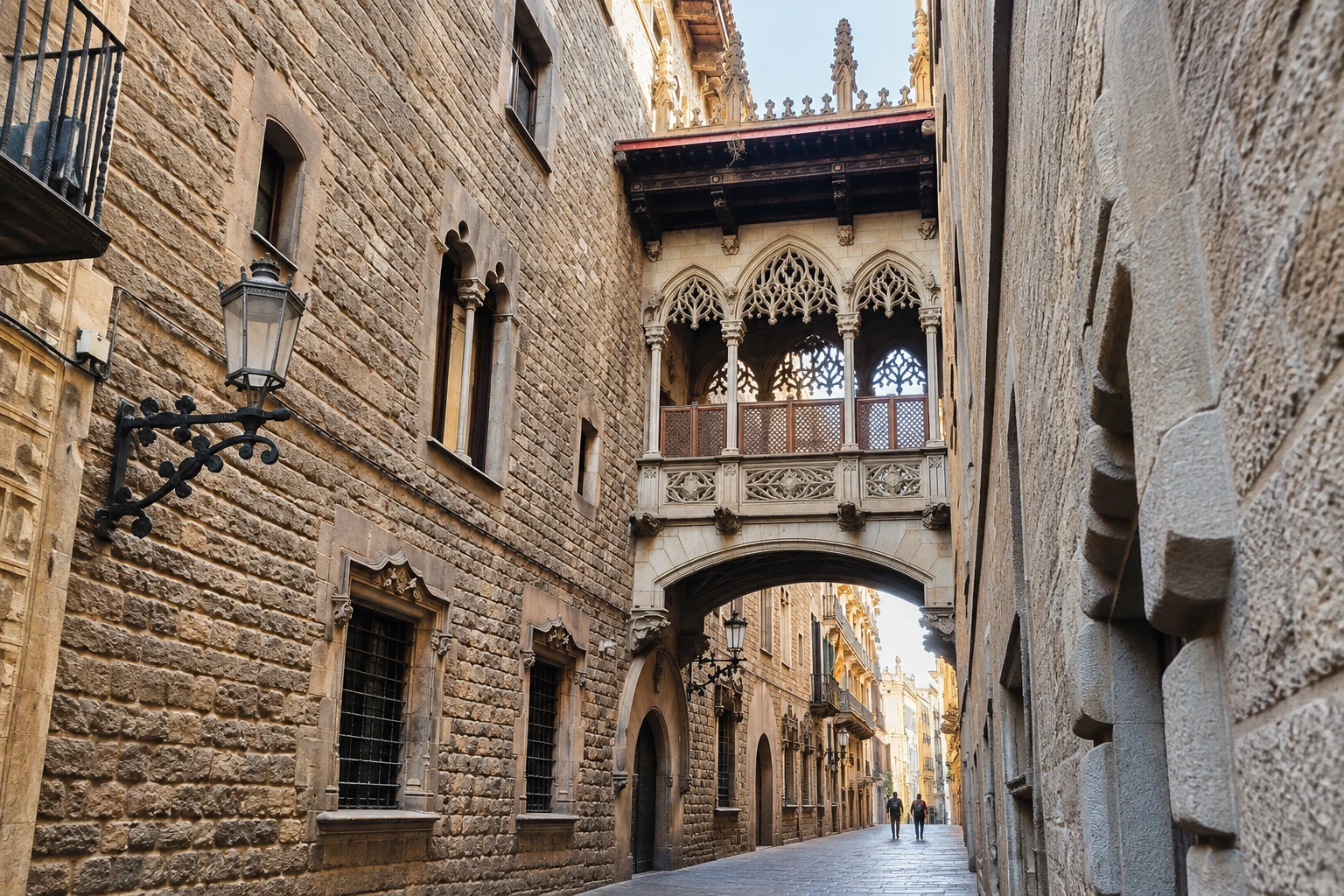
Historic neighborhood · Barcelona, Spain
Gothic Quarter
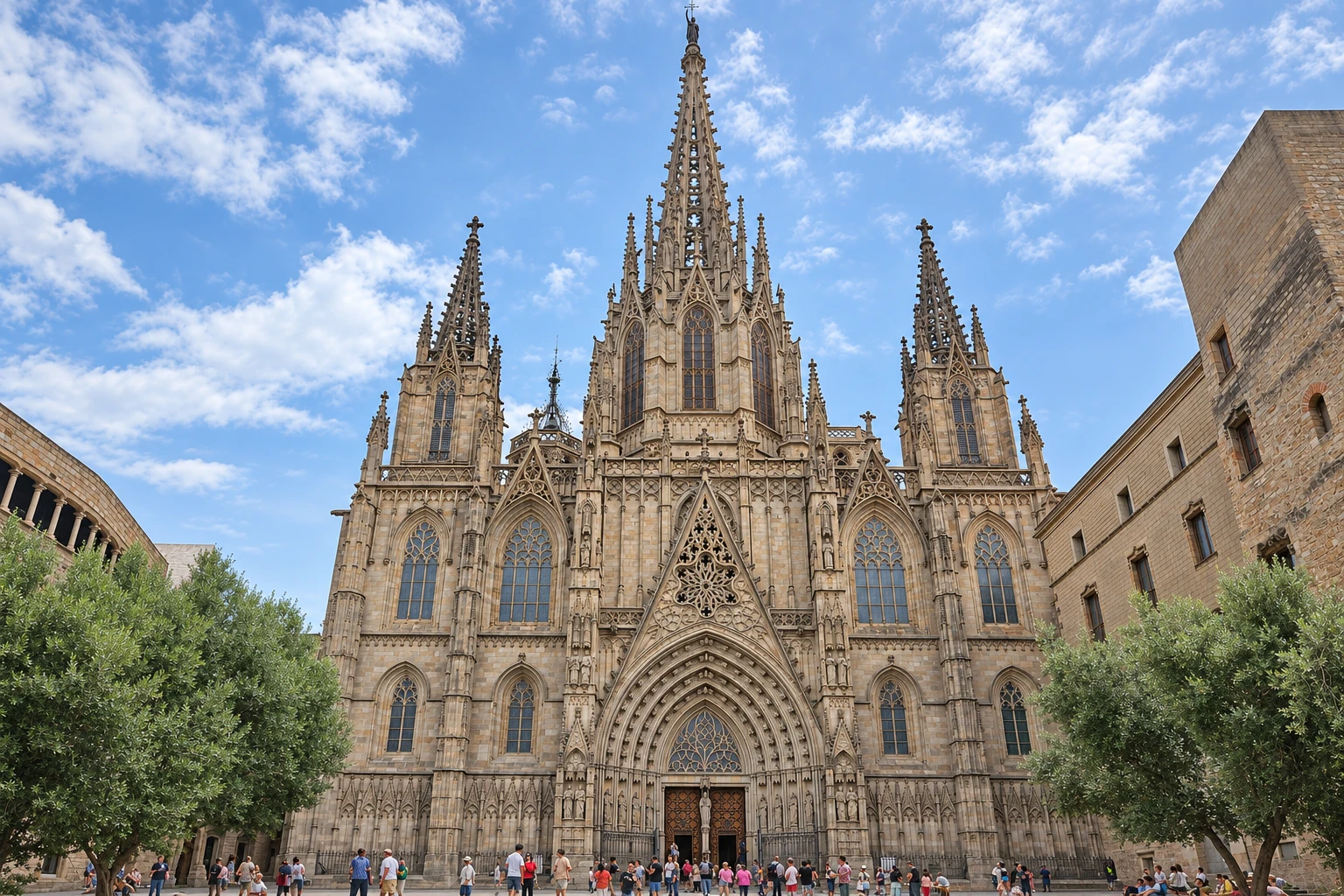
The oldest core of Barcelona, between the Rambla and the Via Laietana, with narrow streets, remains of the Roman wall, the Catedral and medieval squares.
Illustrative images. The pictures in this guide are illustrations based on the real place, not photographs, and may differ from it.

A look at the place
Gothic Quarter in pictures
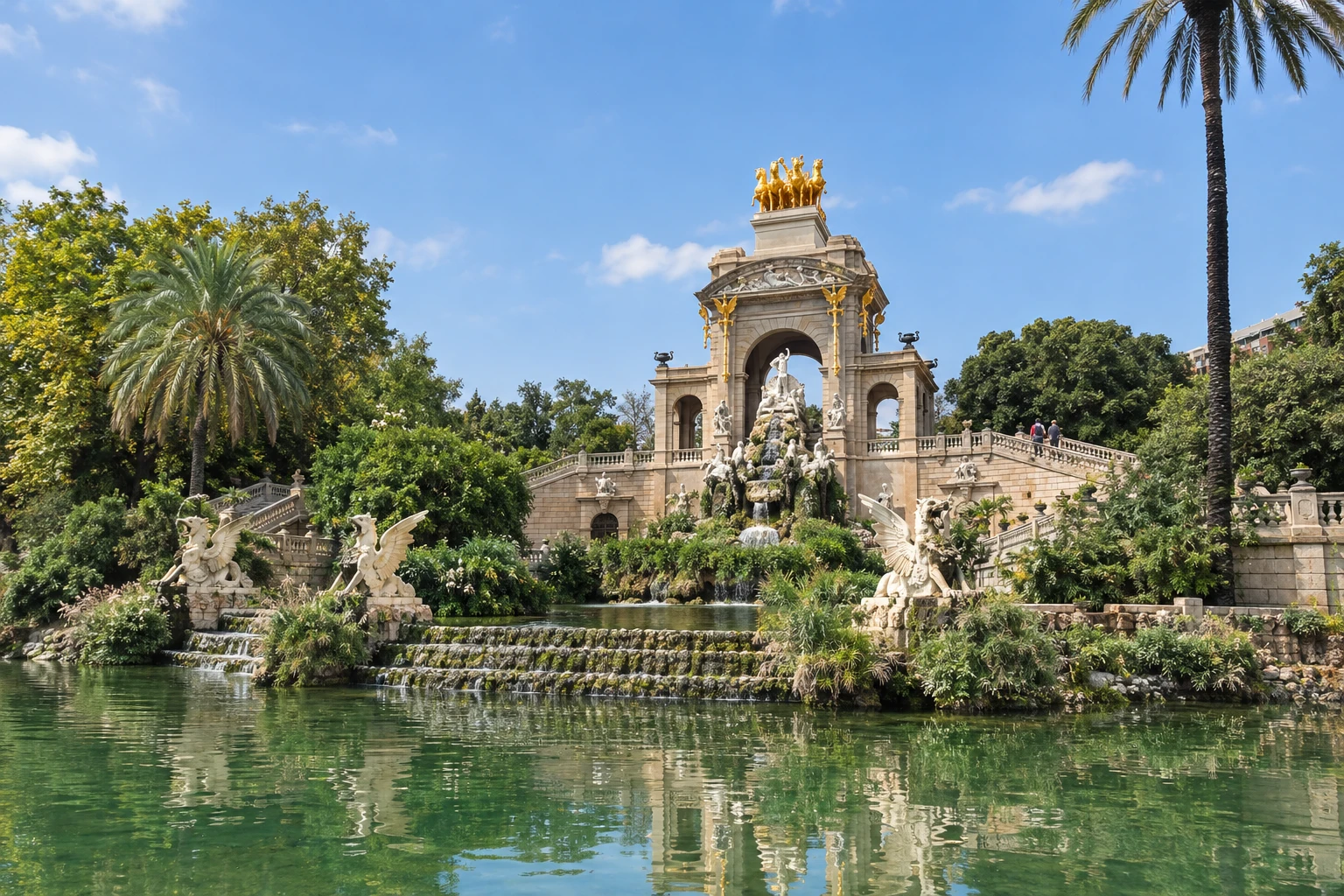
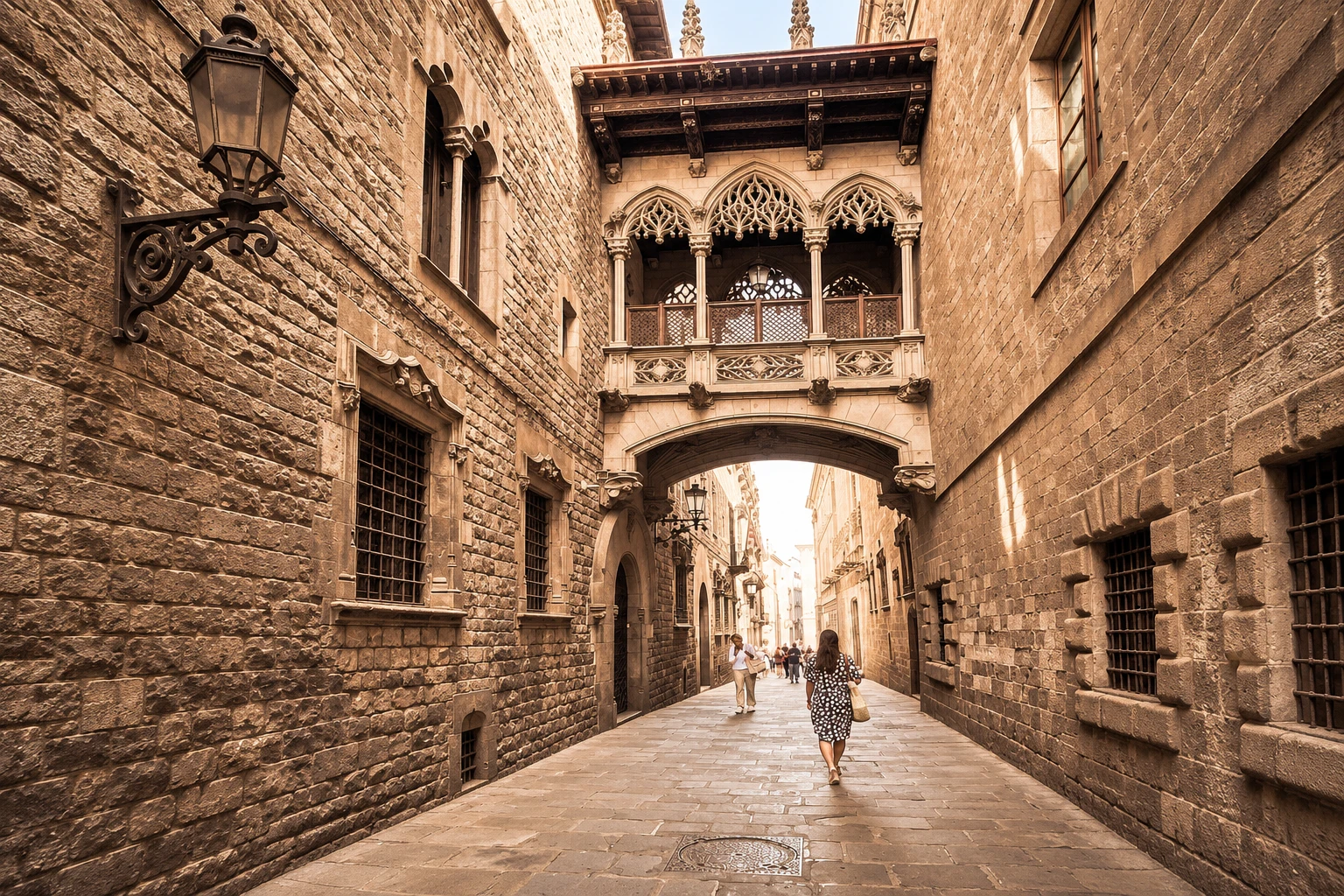
These pictures are illustrations based on the real place, not photographs. They may differ from the place.
Click the picture to enlarge it.
Discover
About Gothic Quarter
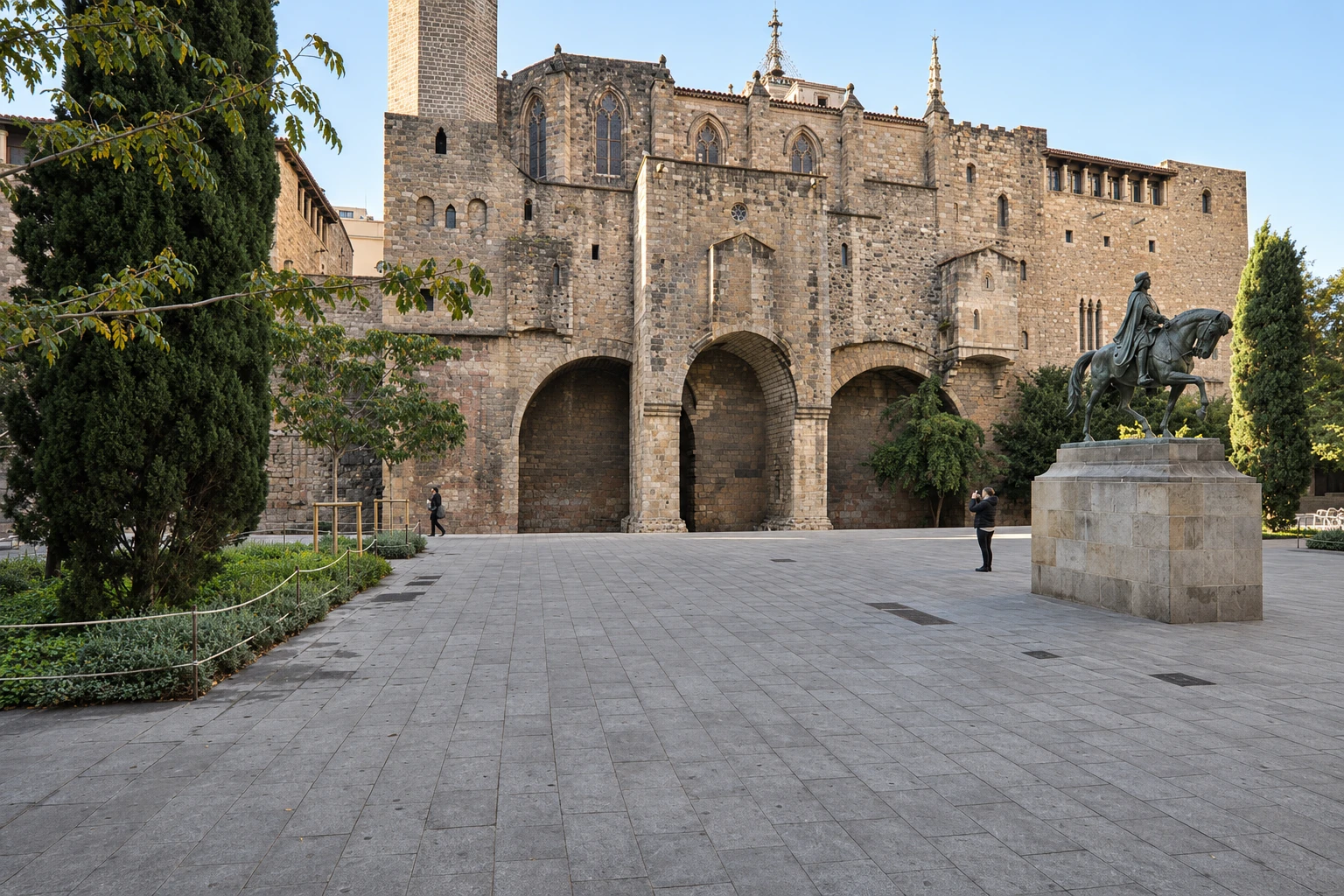
Barri Gòtic sits on the site of the Roman city of Barcino. It runs from the Rambla to the Via Laietana and, toward the sea, nearly to the port. In several places stretches of the Roman wall appear, and in a courtyard on the street Paradís there are columns of the old Templo de Augusto.
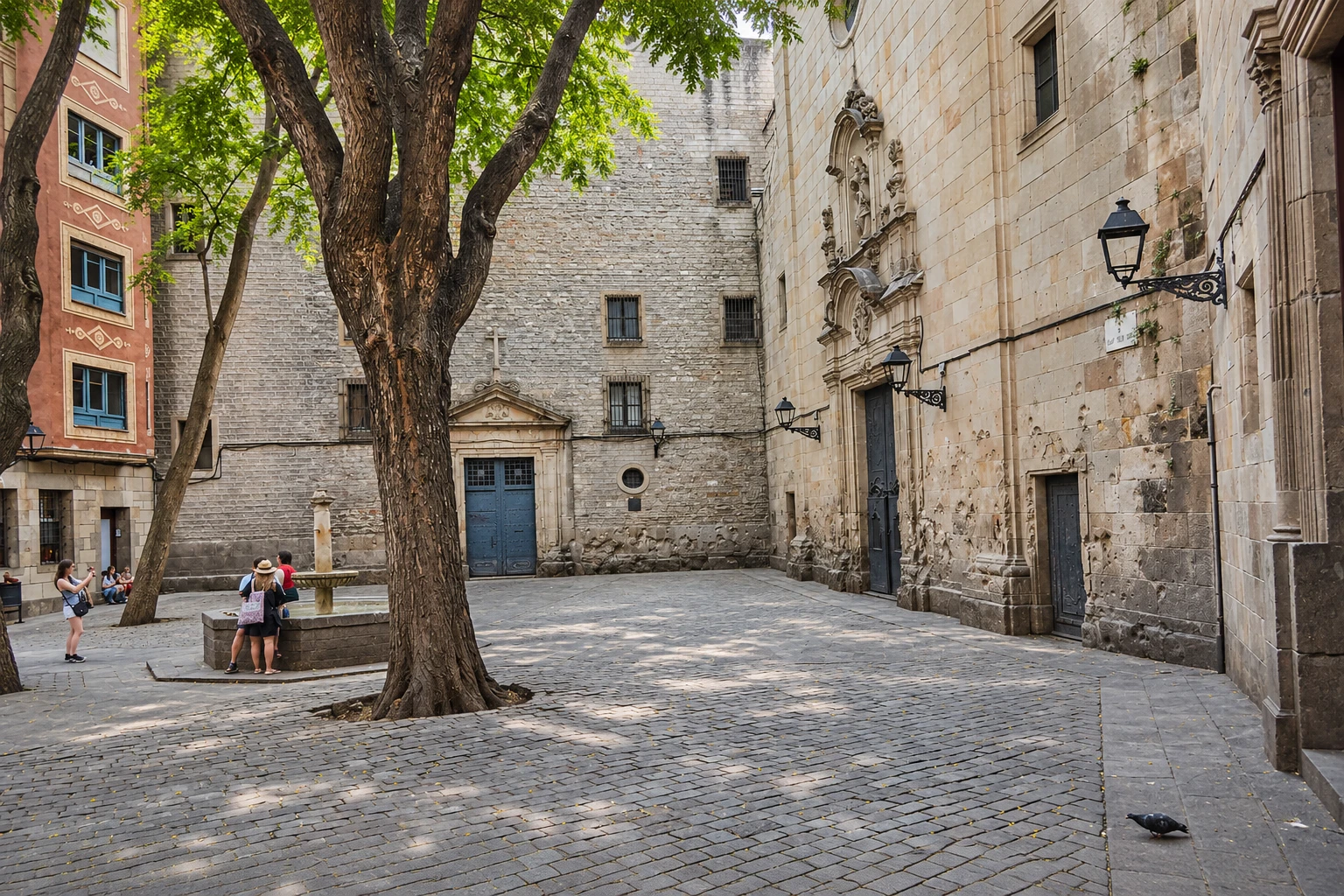
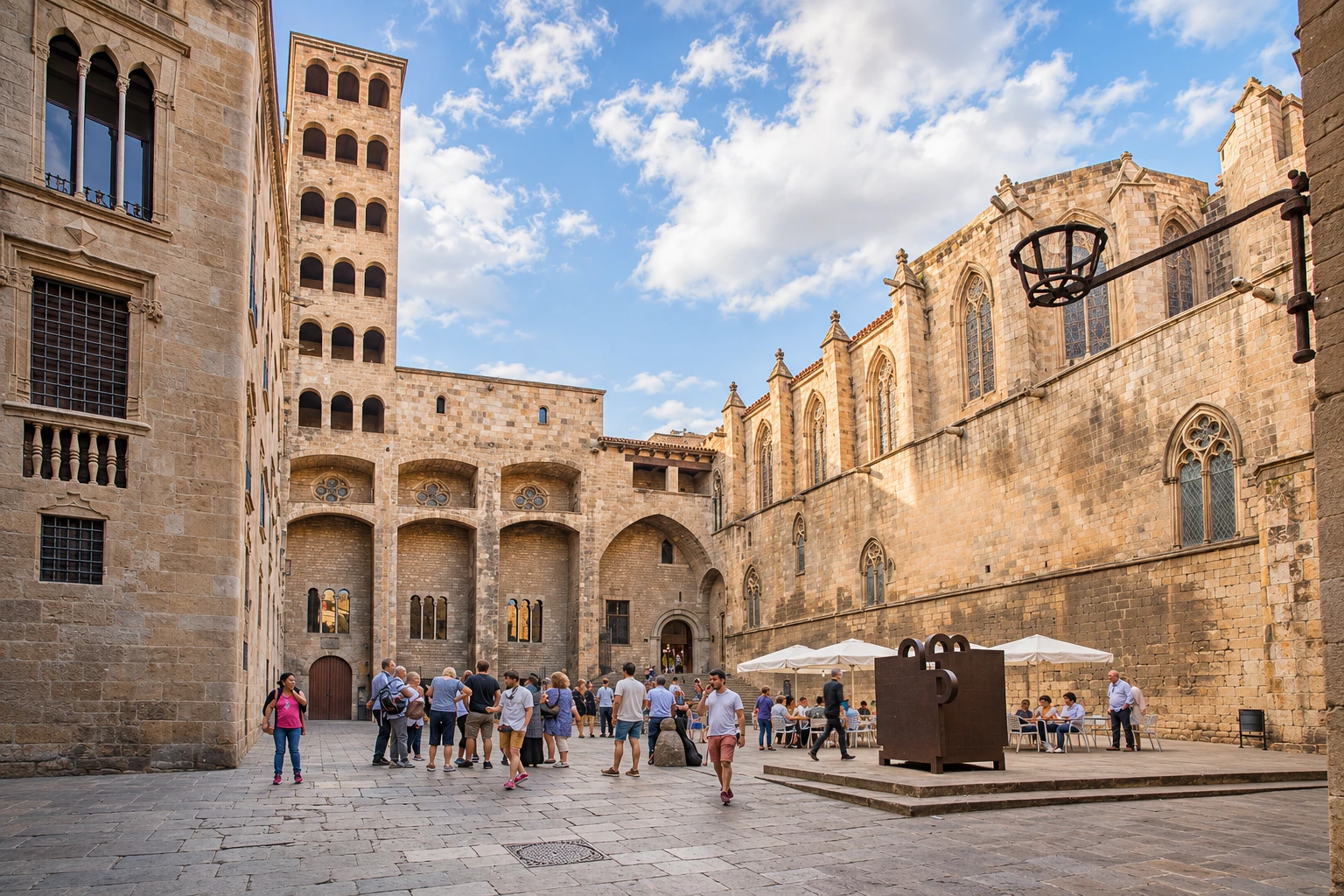
The streets, generally closed to regular traffic, open into squares. The Plaça de Sant Jaume brings together the Palau de la Generalitat, seat of the Catalan government, and the Casa de la Ciutat, the city hall. The Plaça del Rei is surrounded by buildings of the former royal palace, and the Plaça Sant Felip Neri is a quiet courtyard behind the Catedral.
Much of the neighbourhood's current Gothic appearance comes from renovations at the end of the 19th century and the start of the 20th. One example is the Pont del Bisbe, a 1928 neo‑Gothic footbridge over the Carrer del Bisbe that links the Palau de la Generalitat to the Casa dels Canonges.
The neighbourhood also preserves the Call, the old medieval Jewish quarter, and the Plaça Reial, a 19th‑century square with palm trees and lampposts designed by Gaudí, next to the Rambla. The Museu d'Història de Barcelona shows, in the underground beneath the Plaça del Rei, ruins of the Roman city.
Before you go
Practical information
Cidade Turismo reviews its information regularly, but something may have changed. Check with the place before planning your trip.
How much time to set aside
About 2 to 3 hours walking, not counting entrance to museums and the Catedral.
Best time
In the morning the streets are quieter and good for photos. At night the squares fill up with bars and restaurants. Watch your belongings on the busiest streets.
How to get there
The Jaume I (L4) and Liceu (L3) metro stations sit on the edges of the neighbourhood. From the Plaça de Catalunya, walk down the Avinguda del Portal de l'Àngel to the Catedral in about 10 minutes.
Tip
Start at the Catedral, follow the Carrer del Bisbe to the Plaça de Sant Jaume and then to the Plaça del Rei. Wear comfortable shoes: the streets are cobbled. Many shops and restaurants in the neighbourhood close in the mid‑afternoon and reopen in the evening.
Your questions
Frequently asked questions about Gothic Quarter
What to see in Barcelona's Gothic Quarter?
The Cathedral, Plaça de Sant Jaume, Plaça del Rei, Pont del Bisbe, Plaça Sant Felip Neri, stretches of the Roman wall and the columns of the Temple of Augustus. Plaça Reial is on the edge, next to the Rambla.
Is the Gothic Quarter entirely medieval?
Not exactly. The layout and many buildings are medieval, but several façades and the Pont del Bisbe were built or rebuilt in a neo-Gothic style between the late 19th century and 1929.
Can you see Roman ruins in the Gothic Quarter?
Yes. There are sections of the wall in various places, the columns of the Temple of Augustus in a courtyard on Carrer del Paradís, and ruins beneath the Museu d'Història de Barcelona.