

 Brazil
 Antarctica
 Argentina
 Bolivia
 Chile
 Colombia
 Ecuador
 Falkland Islands (Malvinas)
 French Guiana
 Guyana
 Paraguay
 Peru
 Suriname
 Uruguay
 Venezuela
 Austria
 Belgium
 Croatia
 Denmark
 Finland
 France
 Germany
 Greece
 Hungary
 Iceland
 Ireland
 Italy
 Luxembourg
 Norway
 Poland
 Portugal
 Slovakia
 Slovenia
 Sweden
 Switzerland
 the Czech Republic
 the Netherlands
 the United Kingdom
 Turkey
 Bermuda
 Canada
 Greenland
 Mexico
 Saint Pierre and Miquelon
 the United States
 the Dominican Republic
 Japan
 Egypt
 South Africa
 Australia
 Fiji
 New Zealand
 Papua New Guinea
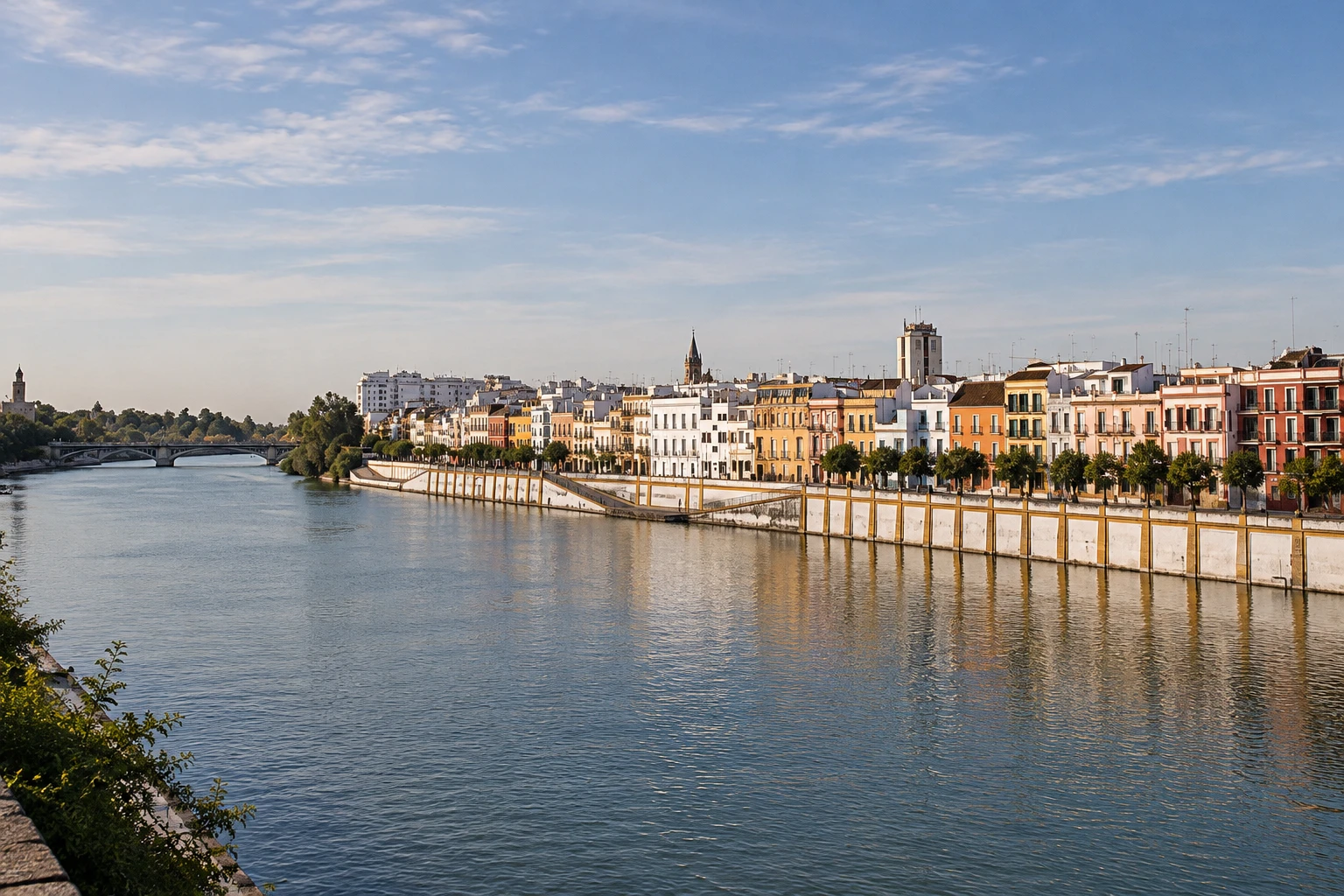
Neighborhood · Seville, Spain
Triana
Neighborhood on the other side of the Guadalquivir, linked to the center by the Isabel II bridge, with a tradition of potters, sailors and flamenco, the riverside Calle Betis and the Mercado de Triana.
Illustrative images. The pictures in this guide are illustrations based on the real place, not photographs, and may differ from it.

Discover
About Triana
Triana is on the west bank of the Guadalquivir. The historic entrance is the Isabel II bridge, which everyone calls the bridge of Triana. Crossing it brings you to the Plaza del Altozano, the neighborhood's meeting point, with the statue of the bullfighter Juan Belmonte.
Right next to the bridge is the Mercado de Triana, a wholesale market that has operated on the site since 1823 and was rebuilt in 2001, with about a hundred stalls and tapas bars. Below it are the ruins of the Castillo de San Jorge.
The neighborhood has a long tradition of pottery. On Calle San Jorge, the former Cerámicas Santa Ana factory, founded in 1870, became a ceramics museum. Many façades and shops still display tiles.
On Calle Pureza is the church of Santa Ana, founded by Afonso X around 1280, the oldest parish in Sevilha. Calle Betis runs along the river, with bars and views of the Torre del Oro and the Maestranza.
Triana is one of the birthplaces of flamenco: the soleá, one of the styles of cante, took root here. The old corrales de vecinos, communal courtyards with rooms around them, preserve that memory.
Before you go
Practical information
Cidade Turismo reviews its information regularly, but something may have changed. Check with the place before planning your trip.
How much time to set aside
2 to 3 hours, with time for the market and a snack.
Best time
Morning for the market, which closes in the afternoon. Late afternoon and evening for Calle Betis, when the light falls on the river and the bars fill up. In April, during the Feria, the neighboring neighborhood of Los Remedios hosts the fairgrounds.
How to get there
Cross the Isabel II bridge on foot, about 15 minutes from the Catedral. The Plaza de Cuba metro station is at the southern entrance to the neighborhood.
Tip
Go there via the bridge and return along Calle Betis, facing the city center on the other side. The ceramics museum is included in the general admission to the Real Alcázar. For flamenco, there are venues and bars with performances at night: book in advance.
Your questions
Frequently asked questions about Triana
How to get from Sevilha centre to Triana?
On foot, via the Isabel II bridge (the Triana bridge), about a 15-minute walk from the Cathedral. The Plaza de Cuba metro station also serves the neighbourhood.
What is the Mercado de Triana?
It is the neighborhood's wholesale market, next to the bridge, with stalls selling fish, meat, fruit and tapas bars. It stands over the ruins of the Castillo de San Jorge.
Is Triana connected to flamenco?
Yes. The neighborhood is one of the birthplaces of flamenco, and the soleá, one of the styles of cante, became established here. There are peñas and bars with performances at night.
Where to buy ceramics in Triana?
On the streets around Calle San Jorge. The old Cerámicas Santa Ana factory, dating from 1870, became a ceramics museum.