

 Brazil
 Antarctica
 Argentina
 Bolivia
 Chile
 Colombia
 Ecuador
 Falkland Islands (Malvinas)
 French Guiana
 Guyana
 Paraguay
 Peru
 Suriname
 Uruguay
 Venezuela
 Albania
 Austria
 Belgium
 Croatia
 Denmark
 Finland
 France
 Germany
 Greece
 Hungary
 Iceland
 Ireland
 Italy
 Luxembourg
 Norway
 Poland
 Portugal
 Slovakia
 Slovenia
 Sweden
 Switzerland
 the Czech Republic
 the Netherlands
 the United Kingdom
 Turkey
 Bermuda
 Canada
 Greenland
 Mexico
 Saint Pierre and Miquelon
 the United States
 the Dominican Republic
 Japan
 Egypt
 South Africa
 Australia
 Fiji
 New Zealand
 Papua New Guinea
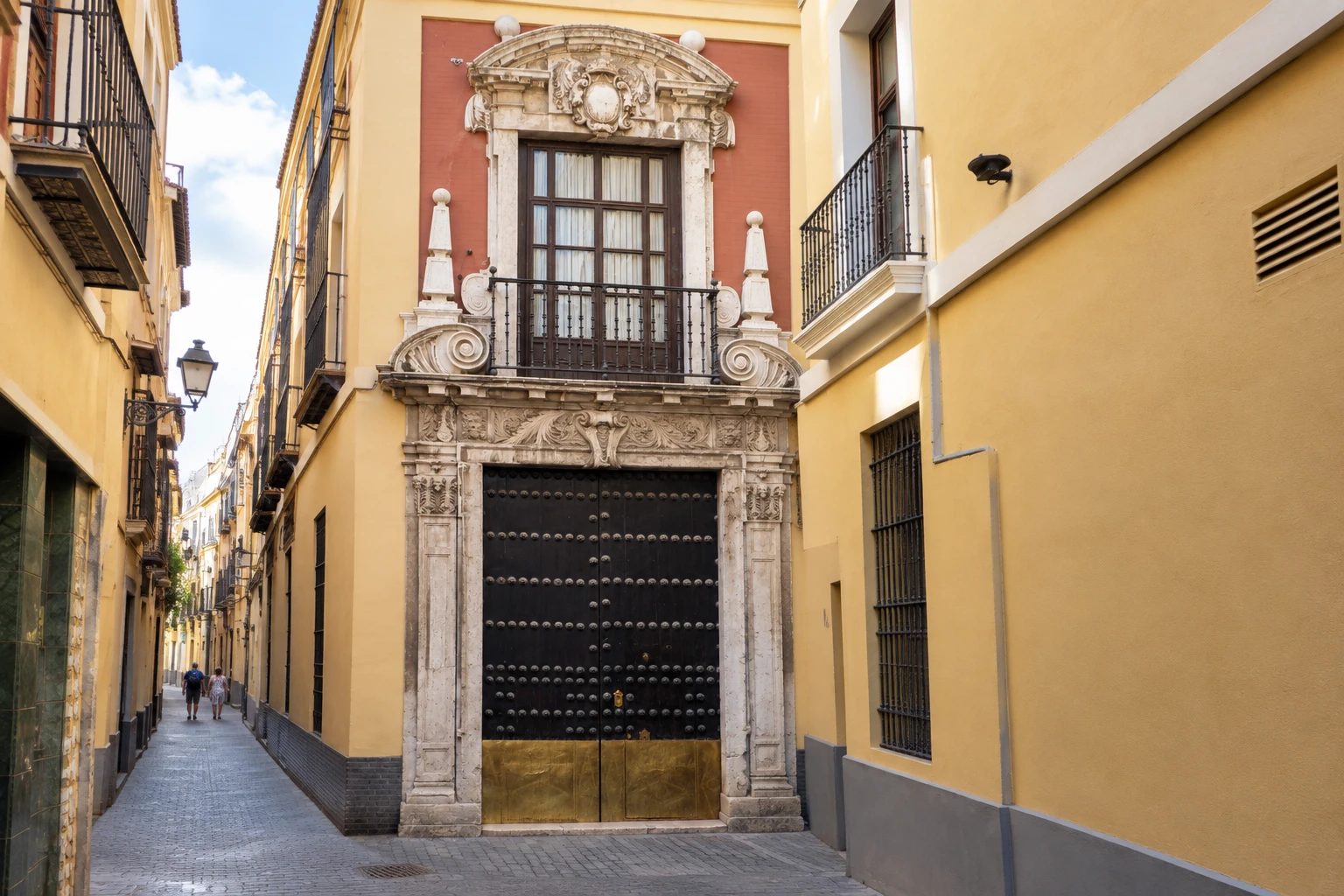
Palace · Seville, Spain
Palace of the Countess of Lebrija
16th‑century townhouse‑palace on Calle Cuna whose ground floor is paved with Roman mosaics, and which also houses archaeology and art collections.
Illustrative images. The pictures in this guide are illustrations based on the real place, not photographs, and may differ from it.

Discover
About Palace of the Countess of Lebrija
The palace began as a manor house and was renovated and expanded between the 18th and 20th centuries. In 1901 it passed to María Regla Manjón y Mergelina, the Countess of Lebrija, who was passionate about archaeology.
With the architect José Sáez y López, the countess adapted the house to display her collection. The result is a ground floor almost entirely paved with Roman mosaics, coming from family lands and purchases from dealers, totalling about 580 square metres.
The rooms contain amphorae, vases, columns, ancient sculptures and busts, as well as tiles, arches in an Arabic style and plateresque decoration. For this reason the palace became known as the best‑paved palace in Europe.
The house opened as a museum in 1999. The upper floor, with salons and artworks up to Sorolla, is visited separately.
Before you go
Practical information
Cidade Turismo reviews its information regularly, but something may have changed. Check with the place before planning your trip.
How much time to set aside
45 minutes to 1 hour; a little longer with the upper floor.
Best time
Any time. In July and August hours are reduced and the palace closes in the early afternoon.
How to get there
It is on Calle Cuna, a street parallel to Calle Sierpes, about a 5-minute walk from the Setas de Sevilla and 10 minutes from the Cathedral.
Tip
Buy tickets on the official website. The upper floor has a separate visit. The palace closes earlier in July and August: check before you go.
Official website
Your questions
Frequently asked questions about Palace of the Countess of Lebrija
What makes the Palacio de Lebrija special?
The ground floor is paved with about 580 square metres of Roman mosaics, assembled by the Countess of Lebrija at the beginning of the 20th century.
Who was the Countess of Lebrija?
María Regla Manjón y Mergelina, who bought the palace in 1901 and adapted it to display her collection of antiques.
Is the upper floor included?
The upper floor has a separate visit. Check the options when you buy the ticket.