

 Brazil
 Antarctica
 Argentina
 Bolivia
 Chile
 Colombia
 Ecuador
 Falkland Islands (Malvinas)
 French Guiana
 Guyana
 Paraguay
 Peru
 Suriname
 Uruguay
 Venezuela
 Austria
 Belgium
 Croatia
 Denmark
 Finland
 France
 Germany
 Greece
 Hungary
 Iceland
 Ireland
 Italy
 Luxembourg
 Norway
 Poland
 Portugal
 Slovakia
 Slovenia
 Sweden
 Switzerland
 the Czech Republic
 the Netherlands
 the United Kingdom
 Turkey
 Bermuda
 Canada
 Greenland
 Mexico
 Saint Pierre and Miquelon
 the United States
 the Dominican Republic
 Japan
 Egypt
 South Africa
 Australia
 Fiji
 New Zealand
 Papua New Guinea
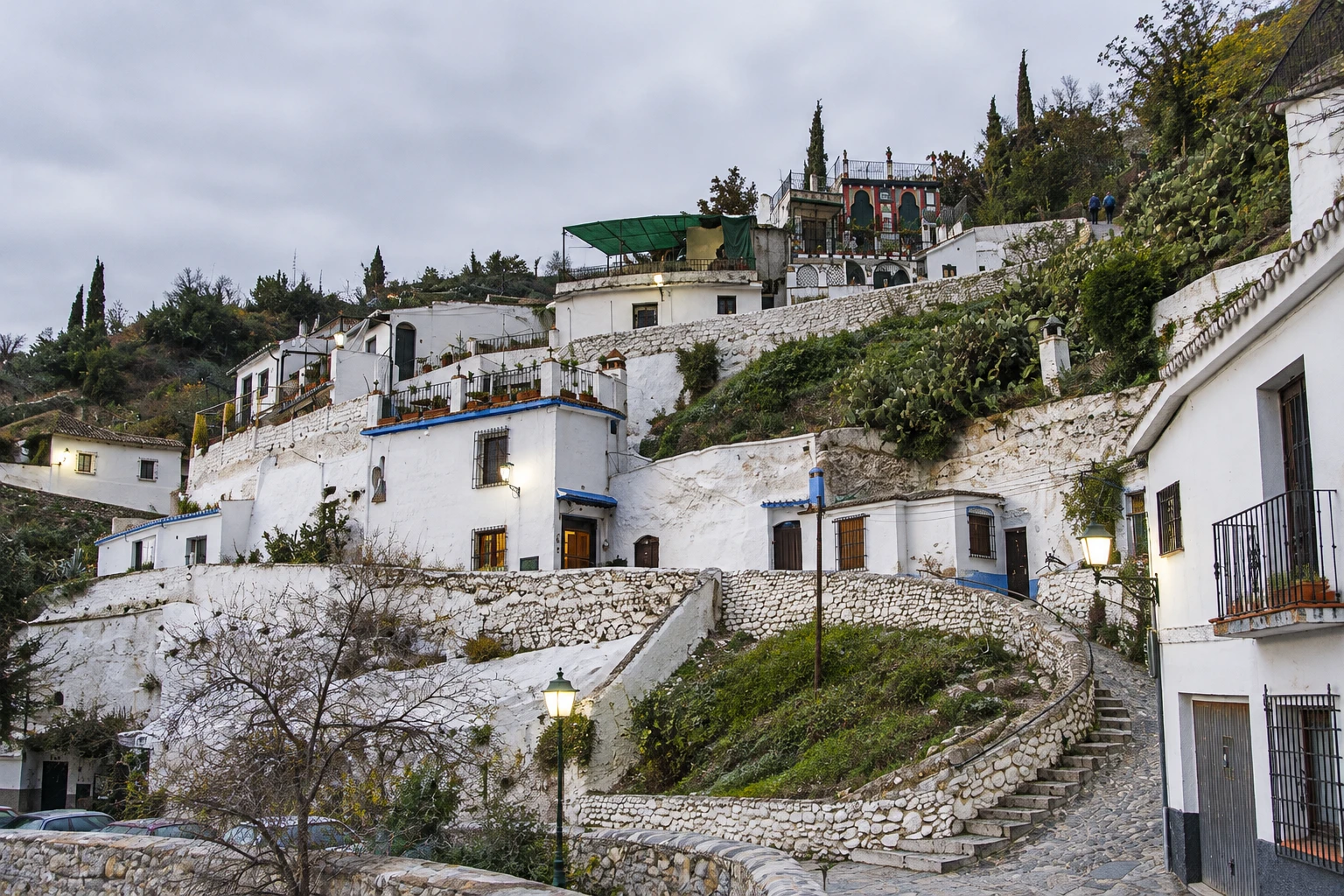
Historic neighbourhood · Granada, Spain
Sacromonte
A neighbourhood of cave houses dug into the slope of the Darro valley, birthplace of Granadan flamenco, with the Museo Cuevas del Sacromonte and views of the Alhambra.
Illustrative images. The pictures in this guide are illustrations based on the real place, not photographs, and may differ from it.

Discover
About Sacromonte
Sacromonte occupies the slope of the Darro valley, east of the Albaicín, facing the Alhambra. It is the traditional neighborhood of Granada’s gypsies, portrayed by Federico García Lorca in the Romancero gitano. The dwellings are cuevas—houses dug into the soft rock of the hill—with whitewashed façades and chimneys emerging from the ground.
The cuevas began to be occupied in the 16th century, when Muslims and Jews expelled from the city and nomadic gypsies settled outside the walls. Several are still homes, and others have become flamenco venues.
The Museo Cuevas del Sacromonte, at the top of the neighborhood, preserves eleven original cuevas. Each one shows a use or craft: dwelling, kitchen, stable, forge, basketry, ceramics and loom. Another cueva tells the origin of flamenco, and a final one shows excavated houses from other parts of the world.
At the summit stands the Abadía del Sacromonte, founded after the 16th-century discovery of the Libros Plúmbeos, which are still kept there.
Before you go
Practical information
Cidade Turismo reviews its information regularly, but something may have changed. Check with the place before planning your trip.
How much time to set aside
1 hour for the Museo Cuevas. Add another 1 hour to walk through the neighborhood from the Paseo de los Tristes.
Best time
In the morning, for the museum, which has outdoor sections. From June to August the climb up to the museum becomes tiring in the afternoon. At night, the neighborhood hosts flamenco shows in the cuevas.
How to get there
From Plaza Nueva, minibus C34 climbs up through Sacromonte. On foot, follow the Carrera del Darro to the Paseo de los Tristes and climb the Cuesta del Chapiz to the Camino del Sacromonte. The museum is in the Barranco de los Negros, with access via the Vereda de Enmedio, at the end of a slope with steps.
Tip
Bring water and sturdy footwear: the final part of the climb to the museum is steep. The museum offers a mobile audio guide, and the panels in the cuevas have QR codes. For flamenco shows in the cuevas, book in advance and confirm what is included.
Official website
Your questions
Frequently asked questions about Sacromonte
What can you see at the Museo Cuevas del Sacromonte?
Eleven original caves, each set up to show a traditional use or craft, plus areas about flamenco and about cave-houses from other countries.
Are the caves still inhabited?
Many, yes. Others function as flamenco venues or have been converted into accommodations.
What is Lorca's connection to the Sacromonte?
Federico García Lorca portrayed the gypsies of Granada in the book Romancero gitano (1928), and the neighborhood is associated with those poems.
How to get to the Sacromonte without walking up?
Minibus C34 departs from Plaza Nueva and goes through the neighborhood. The final stretch to the museum still requires a short steep walk.