Kobarid

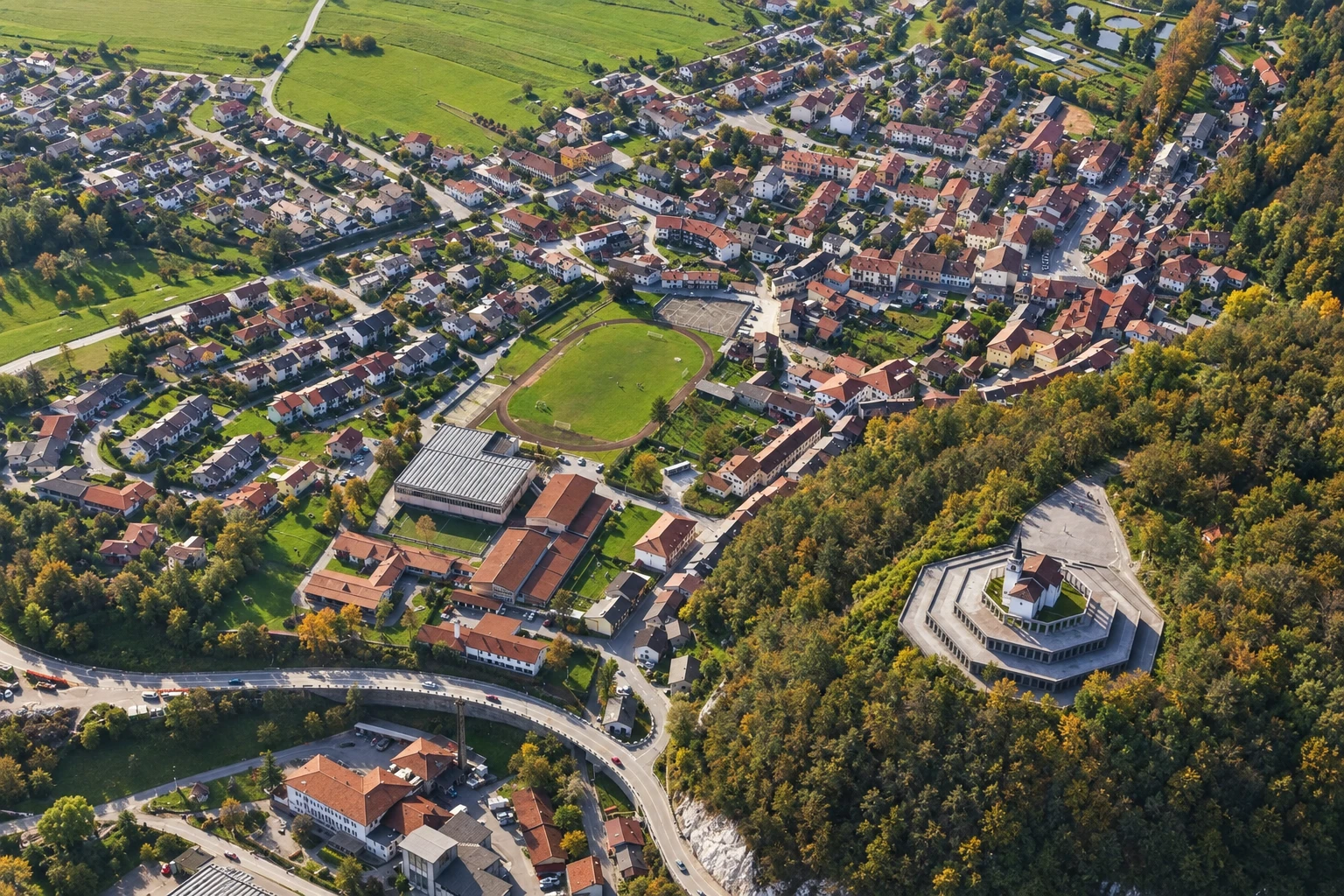
In the photo: Kobarid and its surroundings.

Illustrative images. The pictures in this guide are illustrations based on the real place, not photographs, and may differ from it.

Get it on Google Play

The city

What to expect from Kobarid.

Small town in the middle of the Soča Valley, near the border with Italy, known for the Battle of Caporetto (1917). The museum about the Isonzo front, the Italian ossuary on Gradič Hill and the Historical Trail, which leads to Napoleon’s Bridge and the Kozjak waterfall, can all be reached on foot from the square.

Kobarid is a small town in the middle of the Soča Valley in western Slovenia, a few kilometers from the Italian border. It lies in an open basin below the Krn range (2,244 m), 22 km from Bovec and 16 km from Tolmin, where the valley meets the route to Friuli. Its Italian name, Caporetto, is the one that made history.

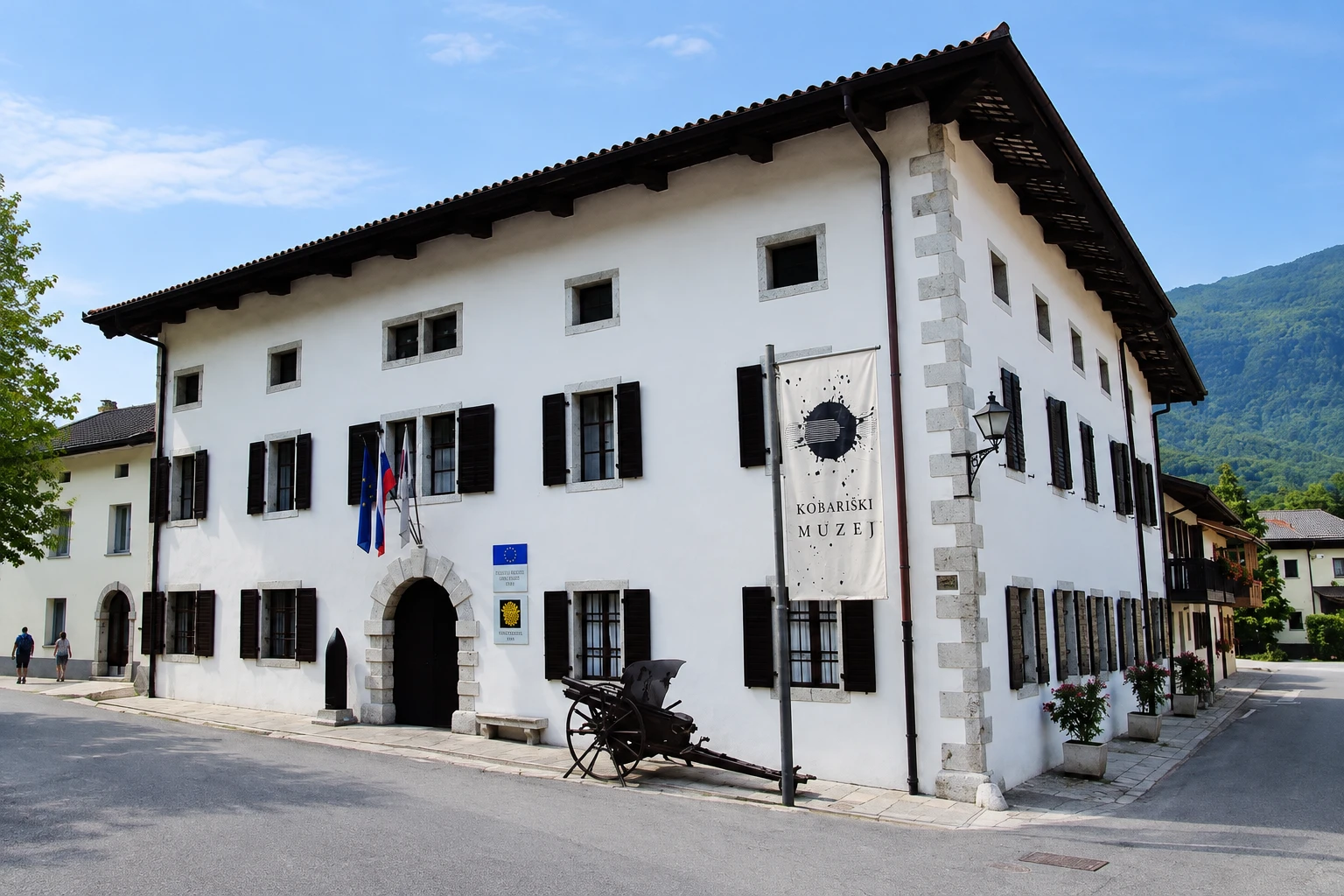
In October 1917, Austro-Hungarian and German troops broke through the Italian line here in the Twelfth Battle of the Isonzo. The Kobariški muzej in the center is the main museum devoted to the front. The Italian ossuary stands on the hill just above, and a circular walking trail links trenches, a late antique settlement, the river gorge and Kozjak Waterfall. The town also has the visitor center for the Walk of Peace, which links wartime remains from the Alps to the Adriatic.

The center is compact. Within a few blocks you’ll find Trg svobode and the tourist information center, Gregorčičeva Street and the museum, and the Planika dairy and cheese museum. From there you can walk to Napoleon’s Bridge above the narrowest part of the Soča Gorge and on to Kozjak.

The municipality extends in three directions. To the west, Breginjski kot follows the Nadiža to Breginj and Robidišče, Slovenia’s westernmost village. The river is warmer than the Soča and popular for summer swimming. To the east, the villages of Drežnica, Vrsno and Krn climb the mountain slopes amid high pastures and old front-line positions. To the south, the Livek road climbs to the Kolovrat ridge.

Kobarid has a reputation as the valley’s culinary capital. Several restaurants in and around town serve fine cuisine. Staro Selo is home to Hiša Franko, chef Ana Roš’s three-Michelin-starred restaurant. Local specialties include Tolminc cheese from the region’s pastures and Kobarid štruklji, celebrated in October at Jestival, the food and art festival.

The upper Soča has frequent rain year-round. In summer, from June to August, regional highs average 23°C to 26°C and afternoons are good for the river. Spring is green and rainy, with full waterfalls. October and November are the wettest months. In winter, average highs near 5°C bring a quieter town, but the museum opens daily.

One day covers the museum, ossuary and waterfall. With two, add the Nadiža and Breginjski kot or the villages below Krn.

Share: WhatsApp

Where to stay

23 places to stay in Kobarid.

Where to eat

4 places to eat in Kobarid.

Mapa de Kobarid

6 lugares no mapa: onde ficar e onde comer, por bairro.

The local experience

Things to do in Kobarid

Kobarid · Slovenia · Museum

Kobarid Museum

The Kobarid museum about the war in the Soča Valley and the Battle of Caporetto (1917), with photos, objects, maps and a model of the valley. It received the Council of Europe Museum Prize in 1993.

Explore Kobarid Museum

Kobarid · Slovenia · Waterfall

Kozjak Waterfall

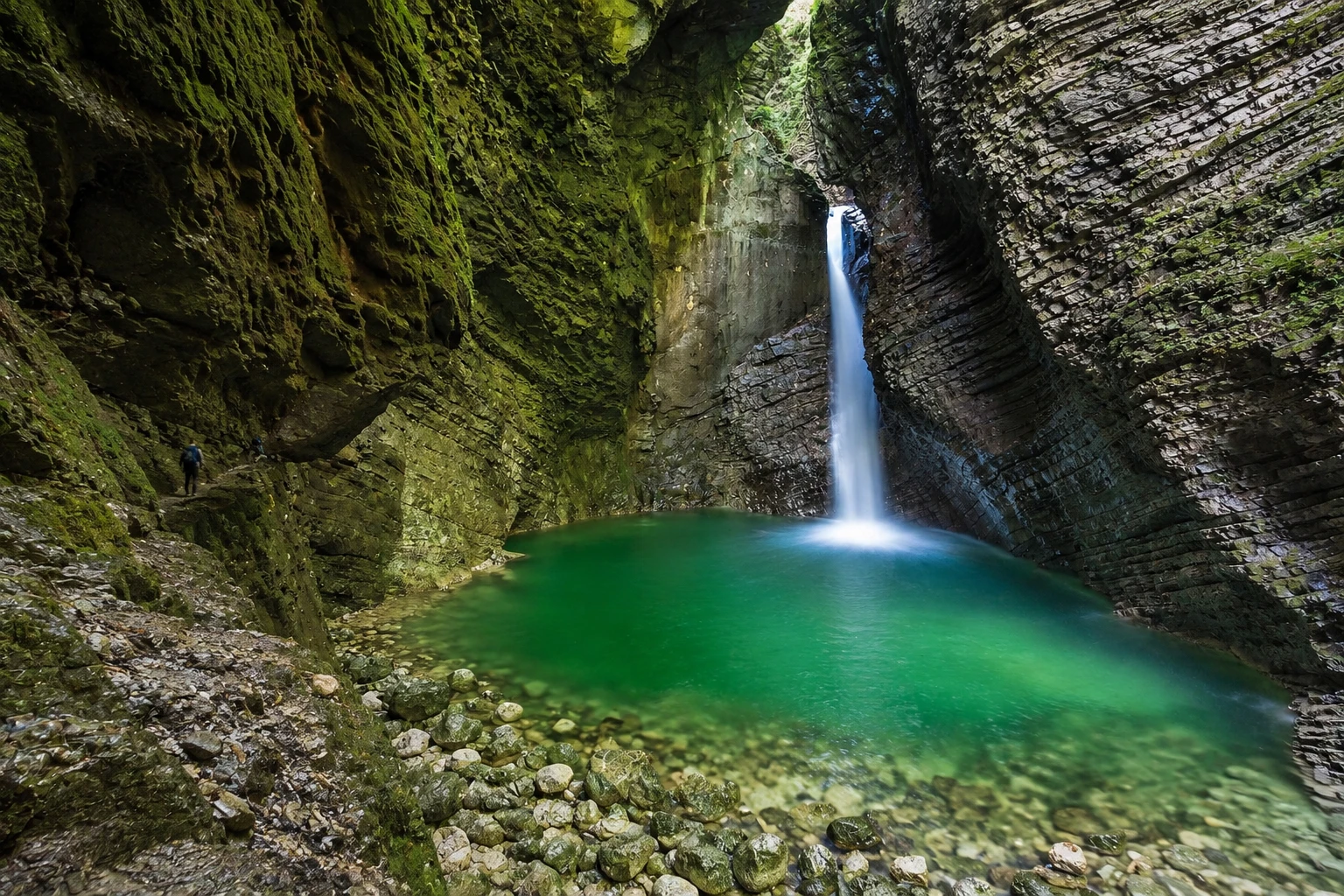
The 15‑metre waterfall that plunges into a rock chamber above a green pool, near Kobarid. You reach it by a trail that crosses the Soča via Napoleon’s Bridge and ends at a wooden walkway.

Explore Kozjak Waterfall

To choose before you go

Tours in Kobarid

Where each tour starts, how long it takes, how it is done, what is included and the price range.

Central Kobarid, the Kobariški muzej and the Planika cheese museum

From Trg svobode, the main square On foot 2 to 3 hours Morning or afternoon Easy

Everything is within a few minutes’ walk. The tourist information center on Trg svobode has maps of the historical trail and summer bus schedules. On Gregorčičeva Street, the Kobariški muzej tells the story of the Isonzo Front through objects, extensive photography, depictions of combat and soldiers’ daily lives, and a multimedia projection. It focuses on the Twelfth Battle of the Isonzo at Kobarid, which military historians consider one of World War I’s most successful offensives. Both Ernest Hemingway and Erwin Rommel are associated with these events. The museum won the Council of Europe Museum Prize and was nominated for European Museum of the Year. Its temporary exhibitions are free. Allow at least an hour and a half. Almost next door is the Walk of Peace (Pot miru) visitor center, run by the foundation responsible for the front’s open-air museums. Arrange guided visits to Kolovrat, Zaprikraj and the ossuary here, and pick up trail guides and maps. Farther along the same street, the Planika dairy runs the Od planine do Planike museum, or From the Mountain Pasture to Planika. Developed with guidance from the Tolmin Museum, the collection explores high pasture traditions and cheesemaking in the upper Soča. It includes ethnographic objects, a documentary and a reconstructed herders’ hut complete with cheesemaking equipment. The shop sells Tolminc and other dairy products.

Stops: Kobariški muzej, Walk of Peace visitor center, Od planine do Planike cheese museum, Trg svobode.

Includes: The Kobariški muzej and cheese museum charge separate admission. Check current rates. The Julian Alps Card: Soča Valley covers both.

Tip: The Kobariški muzej opens daily year-round, with longer hours in July and August and shorter hours from October to March. The cheese museum opens mornings and afternoons from May to September, closing on Sundays and holidays. Groups can arrange visits on other dates.

Best time: Year-round for the Kobariški muzej. May to September for the cheese museum.

Gradič hill, the Italian ossuary and the Zavod 1917 collection

From Central Kobarid On foot or by car 1 to 2 hours Morning or afternoon Easy, with an uphill stretch

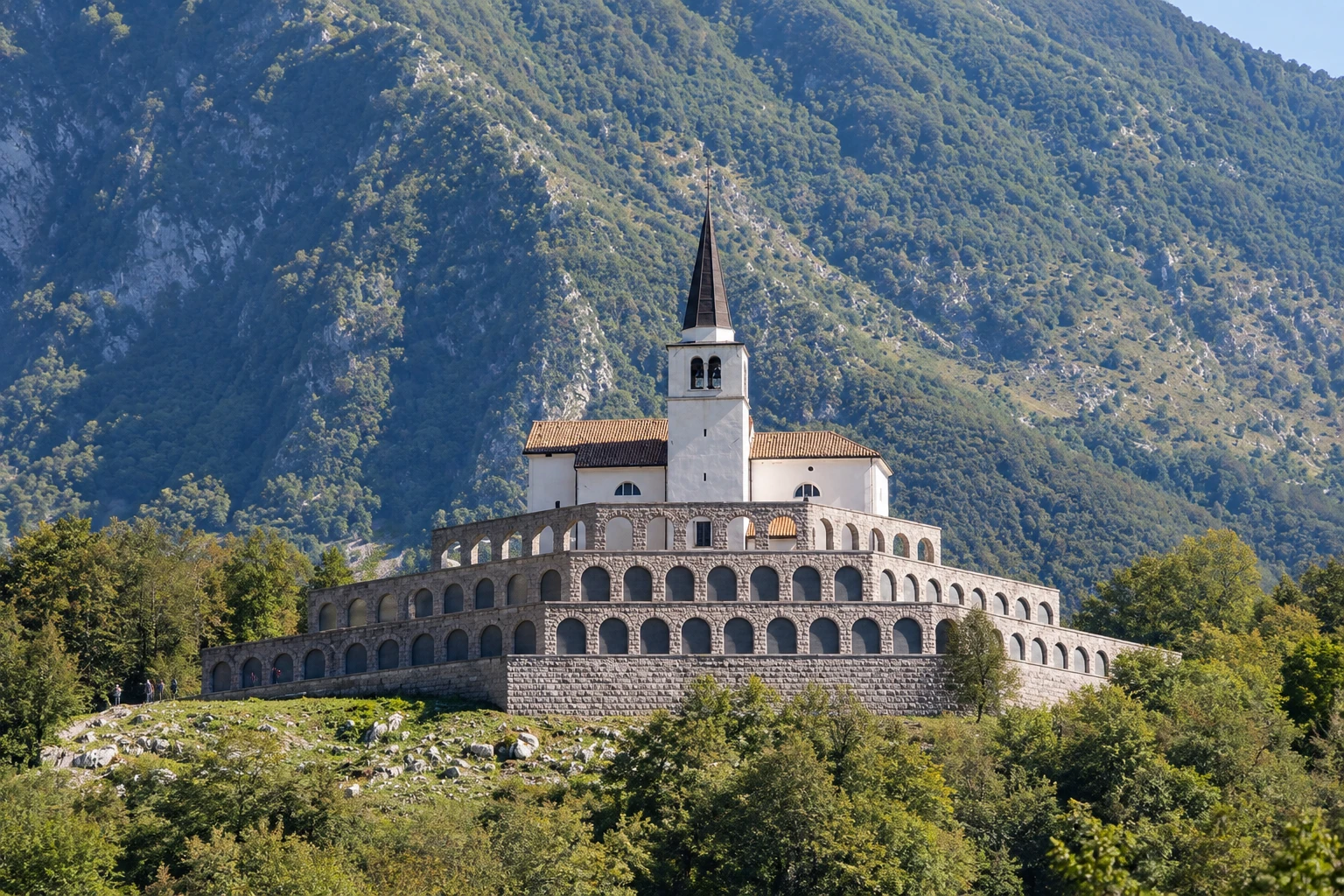
Gradič hill rises just above Kobarid’s houses. The climb is the shortest outing from the center. A road lined with the Stations of the Cross leads to the Italian ossuary at 309 m in about 15 to 20 minutes on foot. You can also drive up. Built in 1938 around the 17th-century Church of St. Anthony, the octagonal ossuary has three concentric rings that narrow toward the church. It holds the remains of 7,014 identified and unidentified Italian soldiers who died in the Soča Valley during World War I. Some nearby monuments came from Bovec’s military cemetery. This is Slovenia’s only ossuary for Italian soldiers and a stop on the Walk of Peace. Beside it, the private Zavod 1917 collection displays about 1,400 items on the ground floor under the title Kobarid in the Great War, 1917. Another 600 in the attic are dedicated to veterans of the 1991 war. If you’re following the Kobarid Historical Trail, continue through the forest to Tonovcov grad. If you came for the ossuary, return along the same road.

Stops: Italijanska kostnica, Church of St. Anthony, Zavod 1917 collection.

Includes: Free entry to the ossuary. The Zavod 1917 collection and guided visits charge separately.

Tip: The Zavod 1917 collection usually opens daily from April through late October and closes in winter. Arrange guided ossuary visits through the Kobariški muzej or the Walk of Peace visitor center.

Best time: Year-round.

Napoleon’s Bridge and the short walk to Kozjak Waterfall

From Napoleon’s Bridge, on the road out of Kobarid toward Drežnica On foot About 1 hour 30 minutes round trip Morning or afternoon Easy

If you’re skipping the full historical trail, this is the direct walk to the waterfall. Leave Kobarid toward Drežnica and follow signs for Napoleon’s Bridge over the Soča. The bridge crosses the river at the narrowest point of the gorge. There has been a crossing here since antiquity. The Venetians demolished a wooden bridge in 1616, and a single-arched stone bridge was built in 1750. Napoleon’s troops crossed it on their way to Predel. Austrian soldiers blew it up during World War I. The Italians later built a wooden bridge, then an iron one. During World War II, partisans defended the so-called Kobarid Republic here. Two monuments beside the bridge commemorate the episode. Look down to see the green river flowing between rock walls. From the parking lot, a gentle, family-friendly walk of half an hour leads to Slap Kozjak. The maintained path follows the stream over small wooden bridges and ends at a platform in a dark rock chamber, where water drops 15 m into a green pool. The high walls keep it cool even on hot days. From April to October, an entrance station collects a fee for use of the facilities. Swimming in the pool is discouraged. The stream and waterfalls are a protected natural area.

Stops: Napoleonov most, Soča Gorge, Slap Kozjak.

Includes: The entrance station charges a fee from April to October. The Julian Alps Card: Soča Valley covers admission.

Tip: The viewing platform is small and gets crowded around midday in July and August. Go early or late in the afternoon. Wear closed-toe shoes as the path gets damp near the falls.

Best time: April to October. The falls usually carry more water in spring and after rain.

The full Kobarid Historical Trail via Tonovcov grad and the Italian defensive line

From Kobariški muzej Circular walking trail, self-guided or with a guide 3 to 5 hours (about 5 km) Morning Easy to moderate, with steep steps

The Kobariška zgodovinska pot takes in nearly all the sights around Kobarid in one circular walk. The route covers about 5 km in 3 to 5 hours depending on your pace and interests. The usual order is the museum, Italian ossuary, Tonovcov grad, remains of the Italian defensive line, Soča Gorge, Kozjak Waterfall, Napoleon’s Bridge and, back in town, the cheese museum. Only the full circuit includes the forest section between the ossuary and the river. Tonovcov grad occupies a naturally protected rocky hill rising to 412 m above the Soča. People lived here in the Stone and Iron Ages, and the settlement reached its height between the 4th and 6th centuries. By the late 5th century it had more than twenty houses and several churches. Surviving buildings and finds make it one of the most important late antique hilltop settlements in the eastern Alps. Along the same path are remains from both world wars, which partly covered or destroyed the ancient ruins. From there the trail passes Italian World War I positions, drops to the gorge, crosses the river and reaches Kozjak. The shorter version covers about 3 km in 2 to 3 hours and skips the forest and Tonovcov grad. To see only the archaeological site, you can drive to a small lot about 2 km from Kobarid on the Bovec road, then climb steep steps to the hilltop.

Stops: Italijanska kostnica, Tonovcov grad, Italian defensive line, Soča Gorge, Slap Kozjak, Napoleonov most.

Includes: Marked trail. Museums and the Kozjak entrance station charge separately. The Kobariški muzej offers guided walks in several languages by advance reservation.

Tip: Walk the loop in the morning and save the museum for the afternoon, or reverse the order on a hot day. Bring water and hiking shoes for the steps and exposed roots in the forest.

Best time: April to October.

Swimming in the Nadiža River and visiting Napoleon’s Bridge at Podbela

From Kobarid, following the road to Robič and Podbela Summer bus, car or bike Half a day Afternoon Easy

The Nadiža is Kobarid’s swimming river. It rises in Breginjski kot beneath the long ridge of Mount Stol and flows into Italy. Its swift, changeable waters form gravel bars, pools and backwaters lined with willows. In summer it can reach over 20°C, making it one of the warmest and cleanest Alpine rivers, in contrast to the ever-cold Soča. Local tradition credits its waters with healing powers. The most popular swimming areas are near Robič, the closest spot to town, and Podbela. Designated parking is available in Robič, in Podbela, beside Napoleon’s Bridge and at the Logje bridge. Near Podbela, where the river has cut a deep channel through rock, stands the Nadiža’s stone Napoleon’s Bridge, dating to around 1812. It was part of the old riverside route. Local accounts say a builder from Benečija, the Slovenian area on the Italian side, built it during the French emperor’s campaigns, giving it its name. Kobarid’s other Napoleon’s Bridge crosses the Soča. The Nadiža supports fish typical of the Adriatic basin, including trout and grayling. To protect the river, washing cars, bathing dogs, lighting fires and camping outside designated campgrounds are prohibited.

Stops: Nadiža River, Robič, Podbela, Napoleon’s Bridge over the Nadiža.

Includes: Free access to the riverbanks. In summer, riverside parking is charged by the hour or day. The Podbela lot beyond the bridge is free.

Tip: In July and August, the Kobarid summer bus serves the Robič parking lot several times a day. A separate route goes to Podbela and Napoleon’s Bridge. The free bus is the recommended way to get there. Bring shoes for the gravel and take your trash home.

Best time: Mid-June to late August.

Breginjski kot, Breginj and Robidišče at Slovenia’s western tip

From Kobarid, via Staro Selo and Borjana Car, bike or summer bus Half a day Morning or afternoon Easy

Breginjski kot is Slovenia’s westernmost corner, a side valley running from Kobarid toward the border between the Stol ridge and the Nadiža River. Narrow roads link small villages, making this a good leisurely drive or an outing to combine with a river swim. Breginj is the main village. Before the great earthquake of 1976, its circular streets and two-story stone houses formed a living example of Benečija architecture. Covered balconies called ganki joined the houses to stables and barns in oval clusters. Only the old core survives, with the museum, St. Nicholas’s Church and the rectory protected as national cultural monuments. Breginj Museum occupies the houses linked by corridors and shows what the village once looked like. Visit by appointment. The road continues through Logje to Robidišče, the westernmost settlement in Slovenia. Return via Podbela to pass Napoleon’s Bridge over the river and the swimming spots. Above the valley, Stol has one of the Soča region’s best-known paragliding launches. Its scenic ridge stretches for more than 20 km. In good weather you’ll often see paragliders overhead.

Stops: Breginj, Breginj Museum, Robidišče, Logje, Podbela.

Includes: Explore on your own. Book the museum visit ahead and pay separately.

Tip: In summer, a Kobarid bus route loops through Podbela, Robidišče, Logje and Breginj twice daily. It continues on September weekends, so you can get off in a village and return on the afternoon trip. The bus does not carry bikes.

Best time: May to September.

See 2 more tours

Vrsno, Krn and Planina Kuhinja, from Gregorčič’s birthplace to the Bes Chapel

From Kobarid, via Ladra, Smast and Libušnje Car or summer bus, followed by a walk Half a day, or a full day with longer walks Morning Easy to the house, moderate to the chapel

From Kobarid the road climbs via Ladra, Smast and Libušnje through villages on the slopes of Krn and ends at a high mountain pasture. In Vrsno stands the house where Simon Gregorčič, the poet of the Soča, was born in 1844. This ethnographic monument preserves village architecture and shows how people lived in the poet’s time. Its exhibition uses personal belongings to explore his life, work and generation. His best-known poem, To the Soča, celebrates the river he grew up beside. Above the village of Krn, the road reaches Planina Kuhinja, a pasture below Mount Krn (2,244 m). Hikers set out from here for the summit or the traverse to Lake Krn and the Lepena Valley, full-day routes for experienced hikers. A shorter walk of about an hour from the pasture leads to the Bes military chapel between the peaks of Pleče (1,299 m) and Planica (1,376 m). Italian troops built the chapel near their front line to commemorate soldiers killed in the range. Its facade bears an eagle with outstretched wings, the emblem of the Italian Alpine troops, and stylized shells and cannons. Stores, a hospital, a watchtower, dugouts and trenches once stood nearby. The chapel lies on both the Walk of Peace and the long-distance Alpe Adria Trail.

Stops: Vrsno, Birthplace of Simon Gregorčič, Krn, Planina Kuhinja, Bes military chapel.

Includes: Gregorčič’s house charges admission, covered by the Julian Alps Card: Soča Valley. The chapel and trails are free.

Tip: Gregorčič’s house usually opens Thursday through Sunday afternoons from May to October and closes from November to April. At other times visits are by arrangement. In summer the Kobarid bus goes up to Planina Kuhinja.

Best time: May to October.

Drežnica and the Zaprikraj Open-Air Museum

From Kobarid, via Napoleon’s Bridge and Drežnica Drive and walk, or cycle About 4 hours of walking, plus travel to the trail Full day Moderate, with a long walk

Drežnica is a village on the slopes of Krn above Kobarid. The road crosses the Soča at Napoleon’s Bridge and climbs to the village. Drežniške Ravne, where the pavement ends, is 7 km from Kobarid. The village is known for one of the country’s most traditional carnivals, with pagan roots. Unmarried young men carve their own wooden masks. The ta lepi (“the handsome ones”) visit every house, dance, play music and wish residents good luck. The ta grdi (“the ugly ones”) chase children and scatter ashes on them. The custom takes place on Carnival Saturday in Drežnica and a week earlier in Drežniške Ravne. Outside carnival season, come up for the Zaprikraj Open-Air Museum at 1,259 m, between the Zaprikraj and Predolina pastures. The site preserves cleared and partly restored positions along the first Italian defensive line in the Krn range. There are trenches, dugouts, artillery and mortar positions, remains of barracks and a restored memorial. It’s part of the Walk of Peace. From the parking lot at the end of the paved road before the houses of Drežniške Ravne, follow a dirt road for 5 km toward the Zapleč and Zaprikraj pastures. From the Triglav National Park boundary it’s another 30 minutes at an easy pace. Positions lie on both sides of the road. The full marked route covers 8.7 km and takes about 4 hours. In summer, the pasture at Zaprikraj sells Tolminc cheese and ricotta made on site.

Stops: Drežnica, Drežniške Ravne, Planina Zaprikraj, Zaprikraj Open-Air Museum.

Includes: Free access. Book paid guided visits through the Walk of Peace visitor center in Kobarid.

Tip: Bring a flashlight for the caves, water and a warm layer. In summer, the Kobarid bus climbs to Drežnica and Drežniške Ravne in the morning and afternoon. You can also cycle part of the route.

Best time: June to September. The Drežnica carnival falls on Carnival Saturday, in February or early March.

Day by day

1, 2 and 3-day itinerary in Kobarid

Suggestions to plan the trip. Change the order of the days according to the weather and tour availability.

1 day · 1 day in Kobarid for the museum, ossuary and Kozjak Waterfall

For Day visitors from Bovec, Tolmin or Friuli. · Based in Kobarid
  1. Day 1 · The Isonzo Front and Soča Gorge

    Start at the Kobariški muzej and allow an hour and a half for the exhibits and projection. Walk up to the Italian ossuary on Gradič hill in 15 to 20 minutes. For a longer walk, follow the historical trail from there via Tonovcov grad and the Italian positions to the Soča Gorge and Slap Kozjak. To save your legs, return to the center for lunch and drive to Napoleon’s Bridge, an easy half-hour walk from the waterfall. Finish at the cheese museum in season or at a restaurant in town.

2 days · 2 days in Kobarid exploring the town, the Nadiža and the villages below Krn
For Visitors who want to combine history, river swimming and a trip up to the villages. · Based in Kobarid (2 nights)
  1. Day 1 · The Kobarid Historical Trail and museum

    In the morning, walk the full historical trail, a loop of about 5 km via the ossuary, Tonovcov grad, the Italian line, Slap Kozjak and Napoleon’s Bridge. After lunch explore the Kobariški muzej at leisure and, from May to September, visit the Planika cheese museum. In the late afternoon stop at the Walk of Peace visitor center if you want to arrange a guide for the next day.

  2. Day 2 · Vrsno or Drežnica in the morning and the Nadiža in the afternoon

    Head up to Vrsno in the morning to visit Simon Gregorčič’s house when open. Continue to Planina Kuhinja, an hour’s walk from the Bes Chapel. For a longer outing focused on trenches, choose Drežnica and the Zaprikraj Open-Air Museum instead. In summer, spend the afternoon on the Nadiža at Robič or Podbela and see the river’s Napoleon’s Bridge. Outside swimming season, visit Breginj and Robidišče in the afternoon.

3 days · 3 days in Kobarid including Breginjski kot and the Kolovrat ridge
For Visitors staying longer who want to explore the municipality’s outlying areas. · Based in Kobarid (3 nights)
  1. Day 1 · The museum, Gradič and Kozjak

    Visit the Kobariški muzej in the morning, then climb to the Italian ossuary and see the Zavod 1917 collection in season. In the afternoon, visit Napoleon’s Bridge and take the short walk to Slap Kozjak. Have dinner in town.

  2. Day 2 · Villages below Krn

    Spend the day on the slopes of Krn. For a hiking day, take in Drežnica, Drežniške Ravne and the Zaprikraj Open-Air Museum, with about 4 hours of walking. A gentler option links Vrsno, Gregorčič’s house, Planina Kuhinja and the Bes Chapel. In summer, Kobarid’s bus serves both routes.

  3. Day 3 · Breginjski kot, the Nadiža and Kolovrat

    Explore Breginjski kot in the morning. Visit the old village core in Breginj, then Logje and Robidišče. Stop for a swim in the Nadiža at Podbela or Robič. In the late afternoon, if skies are clear, climb via Idrsko and Livek to the Kolovrat ridge for the open-air museum trenches, covered in a separate valley outing. Idrsko also has a private collection devoted to the front.

Best time to go

When to go: Kobarid month by month

The seasons shown are the most usual ones; nature doesn't always follow the calendar.

January Some rain

Winter · museum open daily

The Bovec weather station, 22 km away and the reference for the upper valley, records average winter highs of 4.5°C this month and about 140 mm of precipitation, some of it snow. Snow usually melts quickly on the valley floor. The Kobariški muzej opens daily with shorter hours. The Kozjak entrance station, cheese museum, Zavod 1917 collection and Gregorčič’s house are closed. The town is quiet.

February Some rain

Winter · Drežnica carnival

Bovec records average winter highs of 6.6°C this month and about 105 mm of precipitation, the year’s lowest total. On Carnival Saturday, in February or early March, Drežnica holds its wooden-mask parade. Drežniške Ravne celebrates a week earlier. You can visit the ossuary and Napoleon’s Bridge year-round. Watch for ice in shaded areas.

March Some rain

Late winter · low trails clear of snow

Bovec records average late winter highs of 10.9°C this month and about 165 mm of precipitation. Snow clears from the low trails around town. The historical trail is pleasant to walk again and the Kozjak entrance station is still closed. The museum keeps winter hours. High roads to Drežniške Ravne and Planina Kuhinja may still have snow.

April High rain

Spring · Kozjak entrance station opens

Bovec records average spring highs of 14.9°C this month and about 200 mm of rain. Snowmelt and rain usually increase the flow at Kozjak, and the entrance station opens. The Kobariški muzej returns to longer hours and the Zavod 1917 collection reopens. It’s a good month for the historical trail. Bring a raincoat.

May High rain

Spring · cheese museum and Gregorčič’s birthplace

Bovec records average spring highs of 19.8°C this month, with about 220 mm of rain in showers. The Planika cheese museum opens, as does Simon Gregorčič’s house in Vrsno, Thursday through Sunday. The pastures below Krn turn green and the town is quiet.

June High rain

Early summer · swimming in the Nadiža

Bovec records average early summer highs of 23.3°C, with about 200 mm of rain and late-afternoon thunderstorms. Swimming season begins on the Nadiža, and riverside parking charges start in midmonth. Long days suit Zaprikraj, Planina Kuhinja and Kolovrat.

July Some rain

High season · summer bus

Bovec records average highs of 26°C this month, with about 185 mm of rain in brief showers. From early in the month, Kobarid’s free summer bus serves Drežnica, Planina Kuhinja, Kolovrat, Breginjski kot and the Nadiža. The museum keeps its longest hours of the year. Kozjak gets crowded at midday, so go early.

August High rain

High season · busy town

Bovec records average highs of 25.6°C this month and about 200 mm of rain. It’s the busiest month. Spend afternoons on the Nadiža, where the water can exceed 20°C. The summer bus runs until near the end of the month. Book popular restaurants and accommodation ahead.

September High rain

Late summer · quieter trails

Bovec records average late summer highs of 20.6°C and about 265 mm of rain. Settled days alternate with heavy rain and visitor numbers fall. Some Kobarid bus routes continue on weekends, and the valley walking and cycling festival offers guided outings. This is the cheese museum’s last month of the season.

October High rain

Fall · Jestival

Bovec’s average fall high this month is 15.9°C, with about 325 mm of rain. This month and November are the wettest period. On a Saturday early in the month, Kobarid hosts Jestival, a food and art festival with local štruklji, valley produce and an evening concert. The Kozjak entrance station and Zavod 1917 collection close at the end of the month, and the museum switches to shorter hours.

November High rain

Rainy fall · waterfalls in full flow

Bovec records average late fall highs of 9.5°C this month and about 330 mm of rain, the highest total of the year. Kozjak usually runs full and the entrance station is closed. Gregorčič’s house and the cheese museum are closed. Spend time at the Kobariški muzej, the ossuary and the table.

December High rain

Early winter · short days

Bovec records average early winter highs of 4.8°C this month and about 255 mm of precipitation, with snow on some days. Days are short and the town is quiet. The Kobariški muzej remains open daily. Roads to the high villages may have snow. Check conditions before driving up.

Plan the journey

How to get there: Kobarid

Flying via Trieste, Ljubljana, Klagenfurt or Venice

Kobarid has no airport. According to the valley tourism office, the nearest is Trieste at Ronchi dei Legionari in Italy, 64 km away. Ljubljana Airport (Jože Pučnik) is 106 km away, Klagenfurt in Austria 120 km and Venice Marco Polo 164 km.

None offers direct public transportation. The easiest option is to rent a car at the airport or book a transfer with a valley operator. Without a car, go from Ljubljana Airport to the capital’s bus station and continue by bus.

If you’re flying from Brazil, travel to Slovenia requires a connection in a European city. Routes change by season, so check before booking.

Driving via Idrija and Tolmin, Nova Gorica or Friuli

From Ljubljana the shortest route goes through Logatec and Idrija and follows the Idrijca Valley to Tolmin, about 105 km, with many bends after Idrija. From Tolmin, Kobarid is another 16 km. Allow about two and a half hours for the roughly 121 km trip.

An alternative with more motorway driving goes to Nova Gorica, then up the Soča Valley via Tolmin. Nova Gorica to Kobarid is about 55 km.

From the north, come via Bovec, 22 km away. Cross the Vršič Pass from Kranjska Gora from late spring to fall, or the Predel Pass from Tarvisio in Italy.

From Friuli, enter through Cividale del Friuli and the Robič border crossing. It’s about 30 km from Cividale and 45 km from Udine. This is the approach from the Italian side.

Buy an electronic vignette before using Slovenian motorways and expressways.

Taking the bus from Ljubljana, Nova Gorica and Bovec

Scheduled buses connect Ljubljana bus station to Kobarid via Tolmin, with only a few departures daily and journeys lasting several hours. There are also connections from Nova Gorica through the valley. Regular valley buses stop in Tolmin, Kobarid and Bovec.

From Kranjska Gora or Bled without a car, reach Bovec first on the summer Vršič route or the Predel Pass route, then change to the valley bus.

On the Italian side, a cross-border route between Cividale del Friuli and Tolmin passes through the area. Check its schedule for stops and operating days.

Schedules vary by season and school calendar. Check the national journey planner or operator before traveling.

Taking the train to Most na Soči

Kobarid has no train service. The nearest station is Most na Soči, about 22 km away, on the Bohinj line linking Jesenice to Nova Gorica via Bled and Bohinjska Bistrica. From there, take a bus or taxi via Tolmin. In summer, buses connect with the trains.

A car-carrying train also runs through the Bohinj Tunnel between Bohinjska Bistrica and Most na Soči, a shortcut if you’re driving from Bohinj or Bled.

Schedules change each season. Check with the operator before traveling.

Walking in town and taking summer buses to the villages and river

Walk the historical trail to reach the center, museum, ossuary, Napoleon’s Bridge and Kozjak Waterfall.

For the rest of the municipality, use Kobarid’s free summer buses. From early July until near the end of August, five routes leave the center. One serves Vrsno, Krn and Planina Kuhinja, another runs to Livek and the Kolovrat ridge, a third to Podbela, Robidišče and Breginj, and a fourth to Drežnica and Drežniške Ravne. The fifth runs several times a day to the Nadiža parking lot in Robič. The Planina Kuhinja and Breginjski kot routes continue on Saturdays and Sundays in September. Buses do not carry bikes or pets.

Outside this period, driving is the practical choice for the villages, the Nadiža and Kolovrat. The mountain roads to Drežniške Ravne, Planina Kuhinja and Livške Ravne are narrow.

Riverside parking on the Nadiža costs money in summer. The Julian Alps Card: Soča Valley, sold at tourist information centers, covers admission to the Kobariški muzej, Kozjak, the cheese museum and Gregorčič’s house.

Your questions

Frequently asked questions about Kobarid

What to do in Kobarid?

Visit the museum of the Isonzo front, climb to the Italian ossuary and do the trail to the Kozjak waterfall, passing Napoleon’s Bridge.

Is Kobarid far from Bovec?

No, about 20 km along the valley road, roughly a 25‑minute drive.

What is the Kobarid Historical Trail?

A walking circuit that links the museum, the ossuary, remains of fortifications, Napoleon’s Bridge and the Kozjak waterfall.

Is Kobarid close to Italy?

Yes, a few kilometres from the border. Cividale del Friuli is about 30 km away.

How many days should I spend in Kobarid?

One full day covers the Kobariški muzej, the Italian ossuary and Kozjak Waterfall. With two days, add the Nadiža River and villages below Krn such as Vrsno and Drežnica. With three, you can also explore Breginjski kot and head up to Kolovrat.

How long is the walk to Kozjak Waterfall?

It’s an easy half-hour walk from the parking lot near Napoleon’s Bridge on the road from Kobarid to Drežnica. Allow about an hour and a half for the round trip with a stop at the waterfall. Allow longer if you start in the center and follow the historical trail.

Is there an entrance fee for Kozjak Waterfall?

From April to October, an entrance station collects a fee for use of the facilities. There are rates for adults, children, students, seniors and families. The Julian Alps Card: Soča Valley includes admission. Check current rates before visiting.

Is the Kobarid Museum open every day?

Yes. The Kobariški muzej opens every day of the year. Hours are longest in July and August, intermediate from April to June and in September, and shortest from October to March. Check the day’s hours before visiting.

Why is Kobarid also called Caporetto?

Caporetto is the town’s Italian name. It became famous for the Twelfth Battle of the Isonzo in October 1917, when Austro-Hungarian and German troops broke through the Italian line here. The Kobariški muzej tells the story of the battle and the front. The episode also appears in Ernest Hemingway’s novel A Farewell to Arms.

How do I get from Ljubljana to Kobarid?

Drive via Idrija and Tolmin, about 121 km and two and a half hours, with a winding road beyond Idrija. Another option is the motorway to Nova Gorica, then up the Soča Valley. Scheduled buses leave Ljubljana bus station a few times a day. Kobarid has no train service. The nearest station is Most na Soči, about 22 km away.

Which airport is closest to Kobarid?

Trieste Airport at Ronchi dei Legionari in Italy is 64 km away. Ljubljana Airport is 106 km away and Venice Marco Polo is 164 km away. None has direct public transportation to Kobarid. Most visitors rent a car or book a transfer.

Where can I swim in the river near Kobarid?

Try the Nadiža west of town, near Robič or Podbela. It’s much warmer than the Soča and can exceed 20°C in summer. In July and August, Kobarid’s free summer bus serves the river. Riverside parking costs money in season. Swimming in the pool at Kozjak Waterfall is discouraged.

Can I explore Kobarid without a car?

Yes, in town. You can walk to the museum, ossuary, historical trail and Kozjak Waterfall. For the villages, Nadiža and Kolovrat, take Kobarid’s summer bus from early July until near the end of August. Some routes also run on September weekends. The rest of the year, regular routes only connect Kobarid with Tolmin and Bovec.

What should I eat in Kobarid?

The town is known as the culinary capital of the Soča Valley. Try Tolminc cheese, made with milk from the high pastures and sold at the Planika dairy, and Kobarid štruklji, the dumplings celebrated at Jestival, October’s food and art festival.

Where is Hiša Franko?

It’s in Staro Selo, a village in Kobarid municipality a few kilometers from the center on the road to the Italian border. Chef Ana Roš’s restaurant has three Michelin stars and serves a tasting menu. Book directly with the restaurant.

When is the Drežnica carnival?

On Carnival Saturday, in February or early March depending on the year. A week earlier, Drežniške Ravne observes the custom. The village’s unmarried young men parade in wooden masks they carve themselves. The ta lepi visit homes, while the ta grdi chase children with ashes. Drežnica lies above Kobarid on the slope of Krn.

What is Tonovcov grad?

It’s an archaeological site on a 412 m rocky hill above the Soča, on the Kobarid Historical Trail. Between the 4th and 6th centuries it held a fortified settlement with more than twenty houses and several churches, one of the most important late antique sites in the eastern Alps. Walk there from the ossuary along the trail, or climb steep steps from a parking lot about 2 km from town on the Bovec road.

Traveler, share your experiences through photos Up to 5 photos of each place you visited.
See the destination Soča Valley Find another city