Novo mesto and the Krka Valley

Jugovzhodna Slovenija · Posavska

Novo mesto and the Krka Valley

The Krka River among vineyard-covered hills: Novo mesto, the city of situlas, the castle on the island of Otočec, the Pleterje Carthusian monastery and Kostanjevica, the small town on a river island.

Thermal Pannonian Slovenia

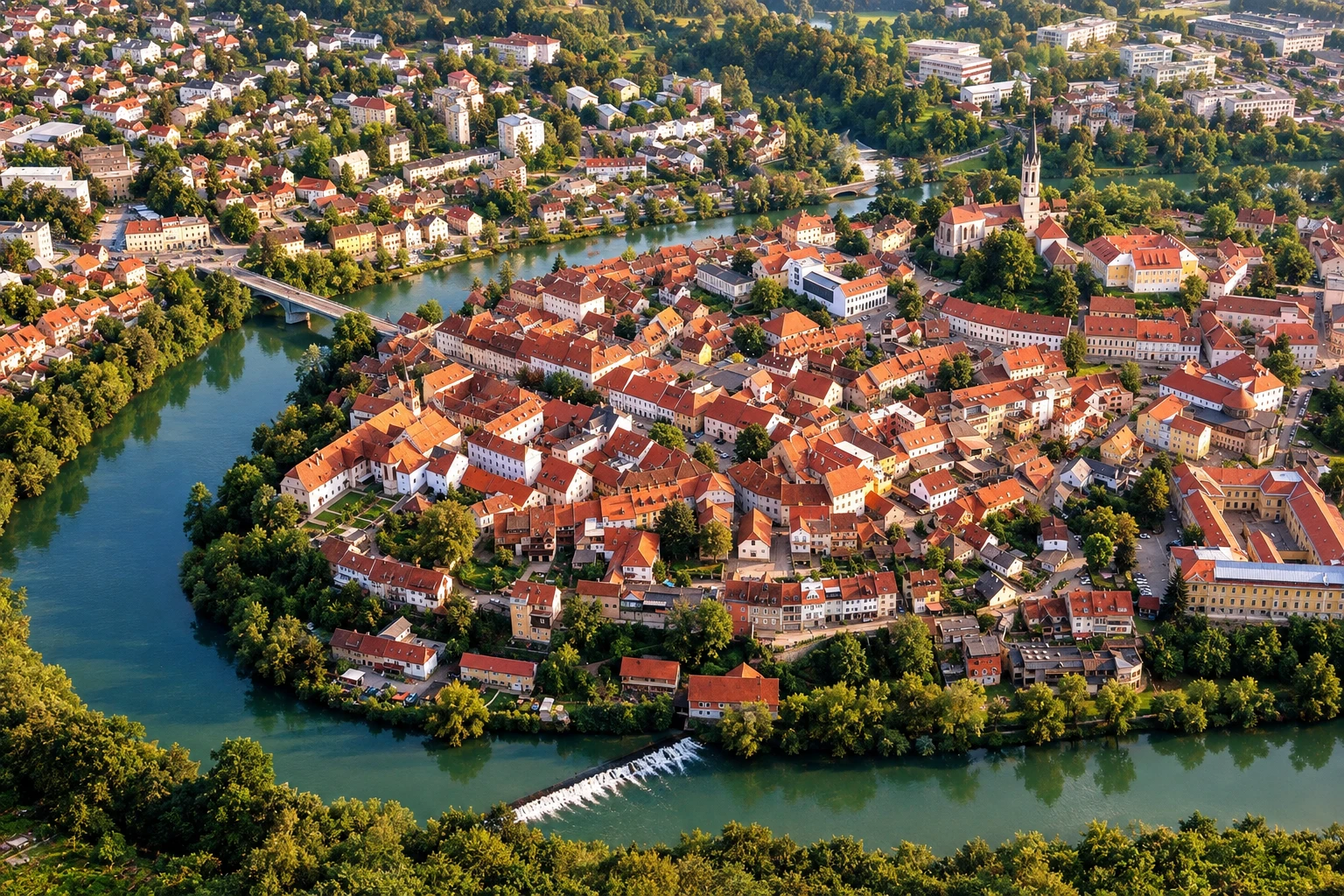
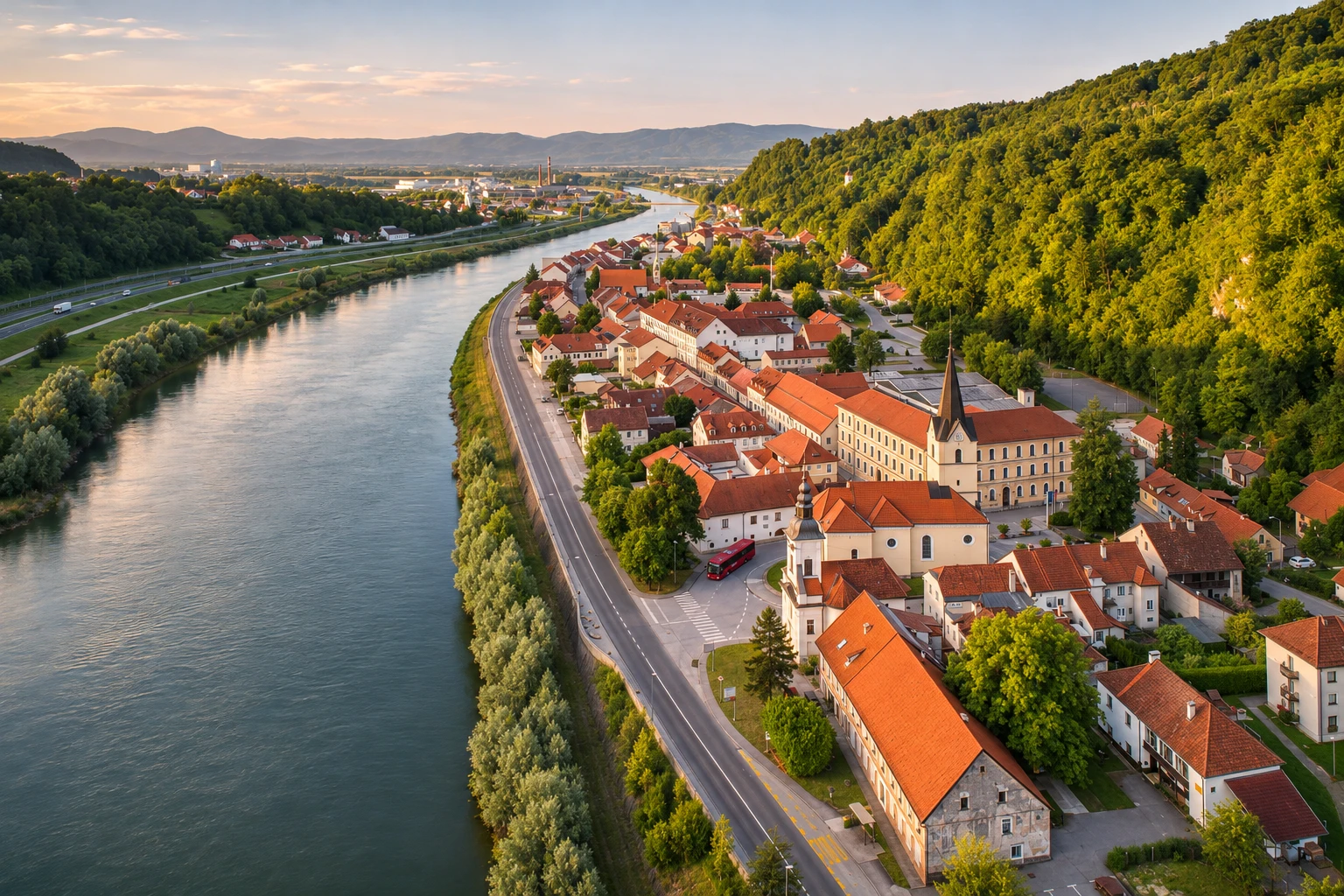
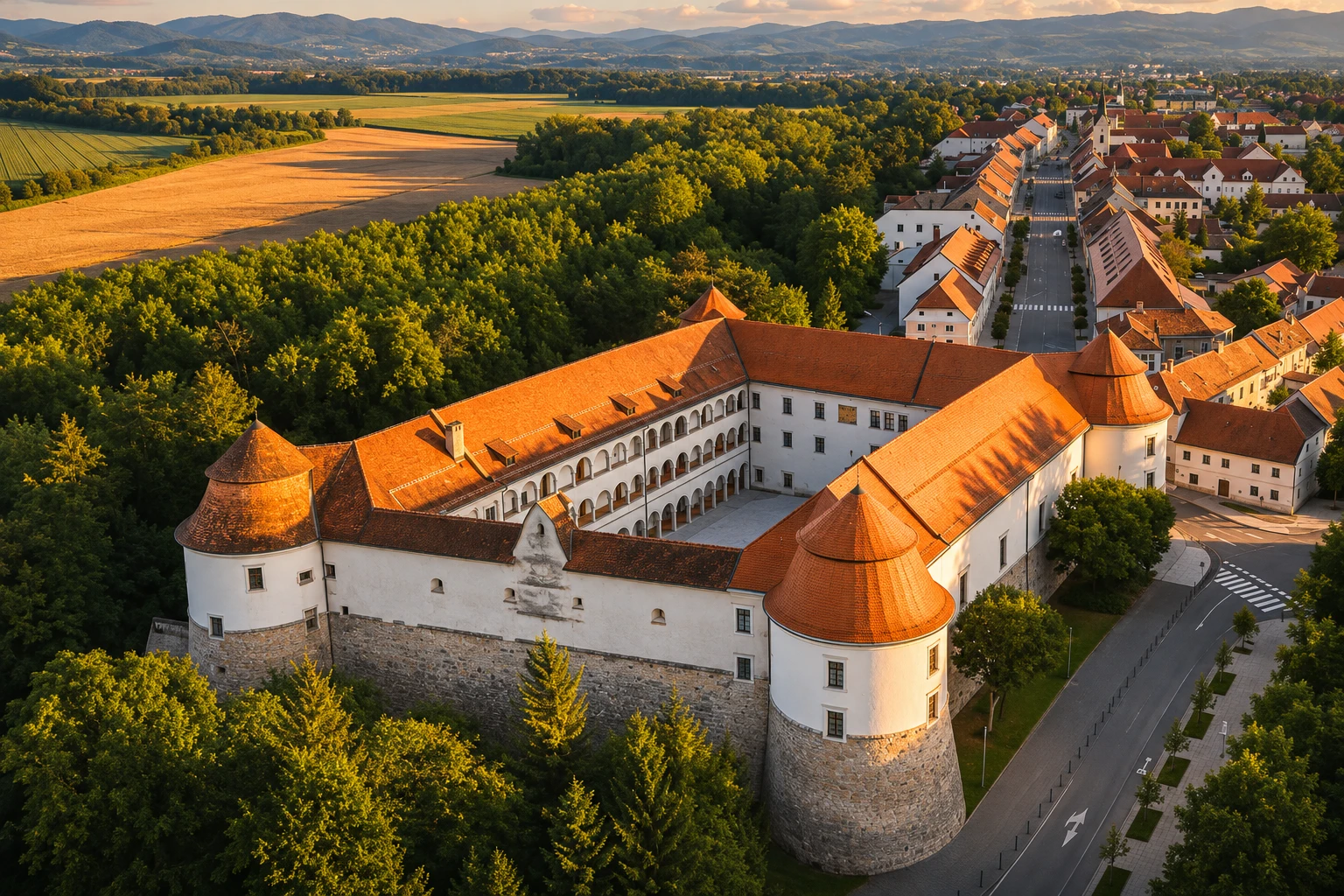
In the photo: Novo mesto on the bend of the Krka River

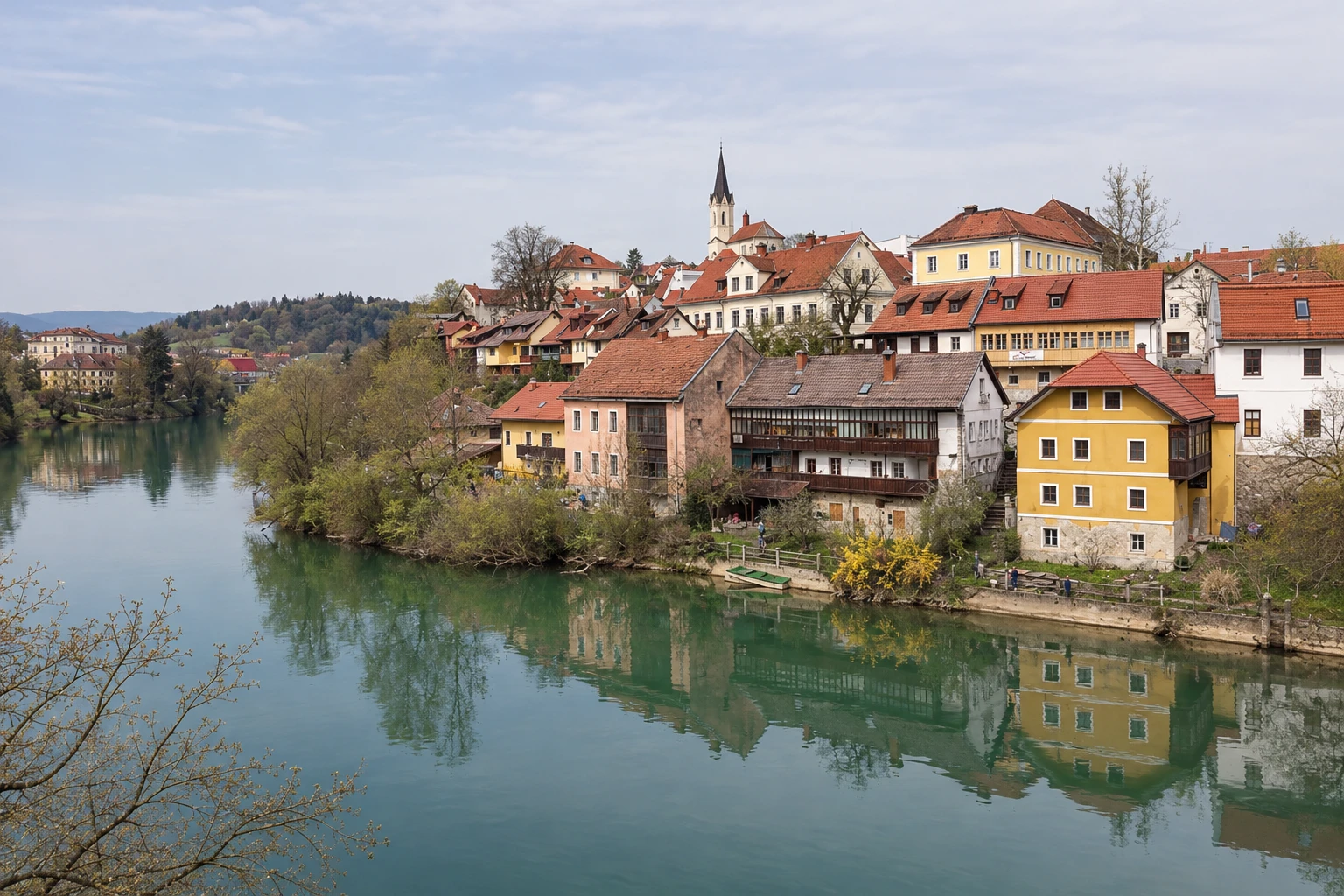
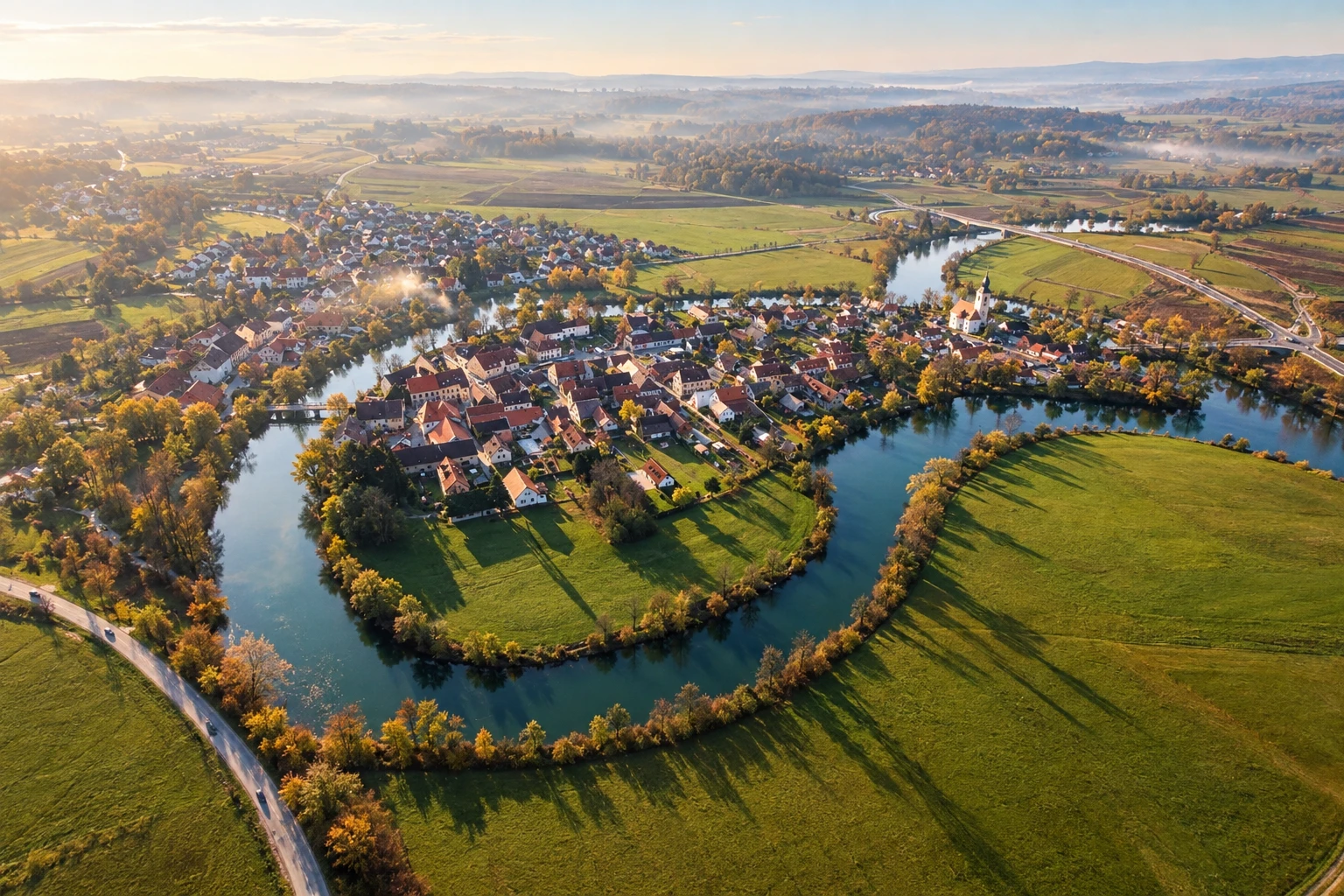
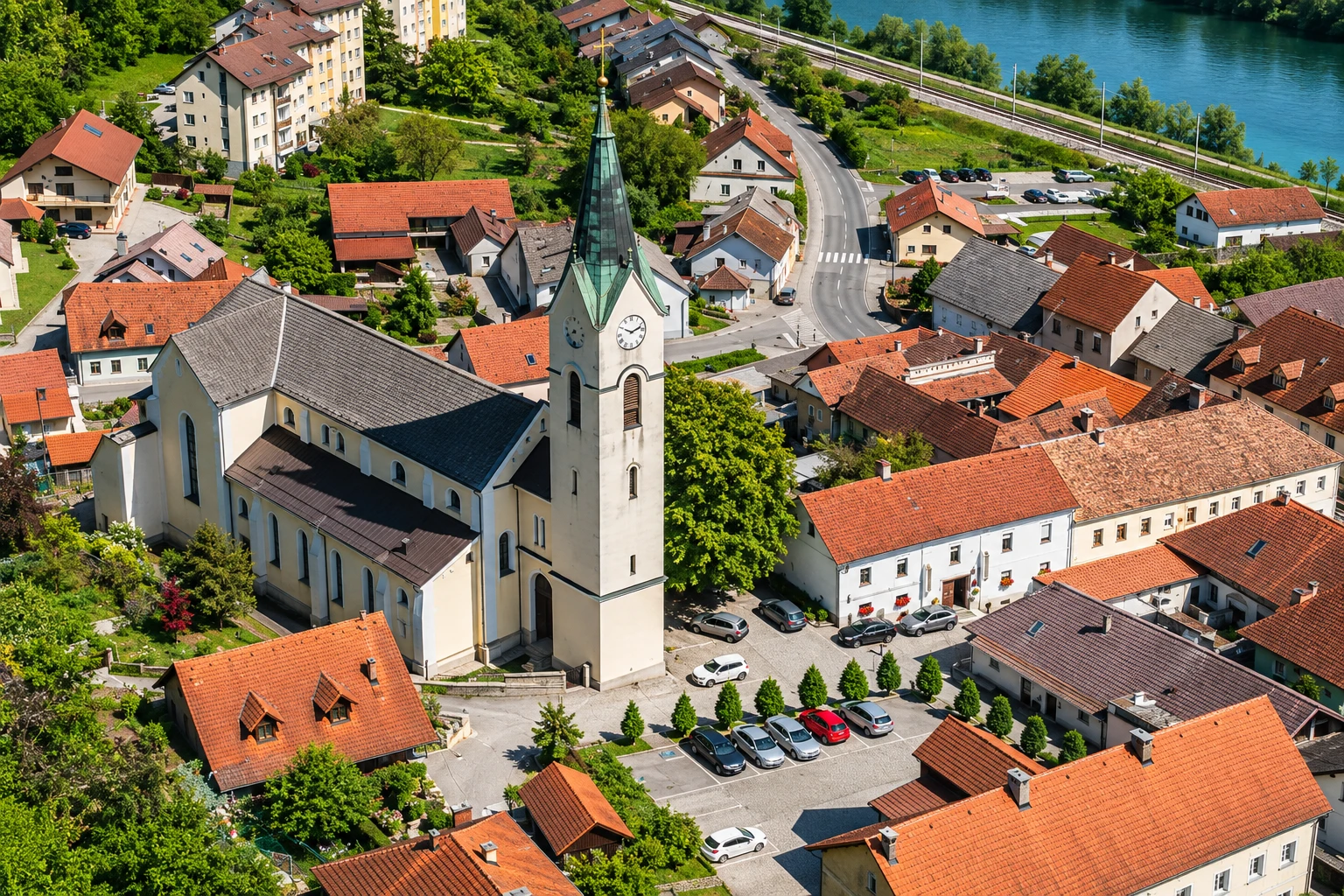
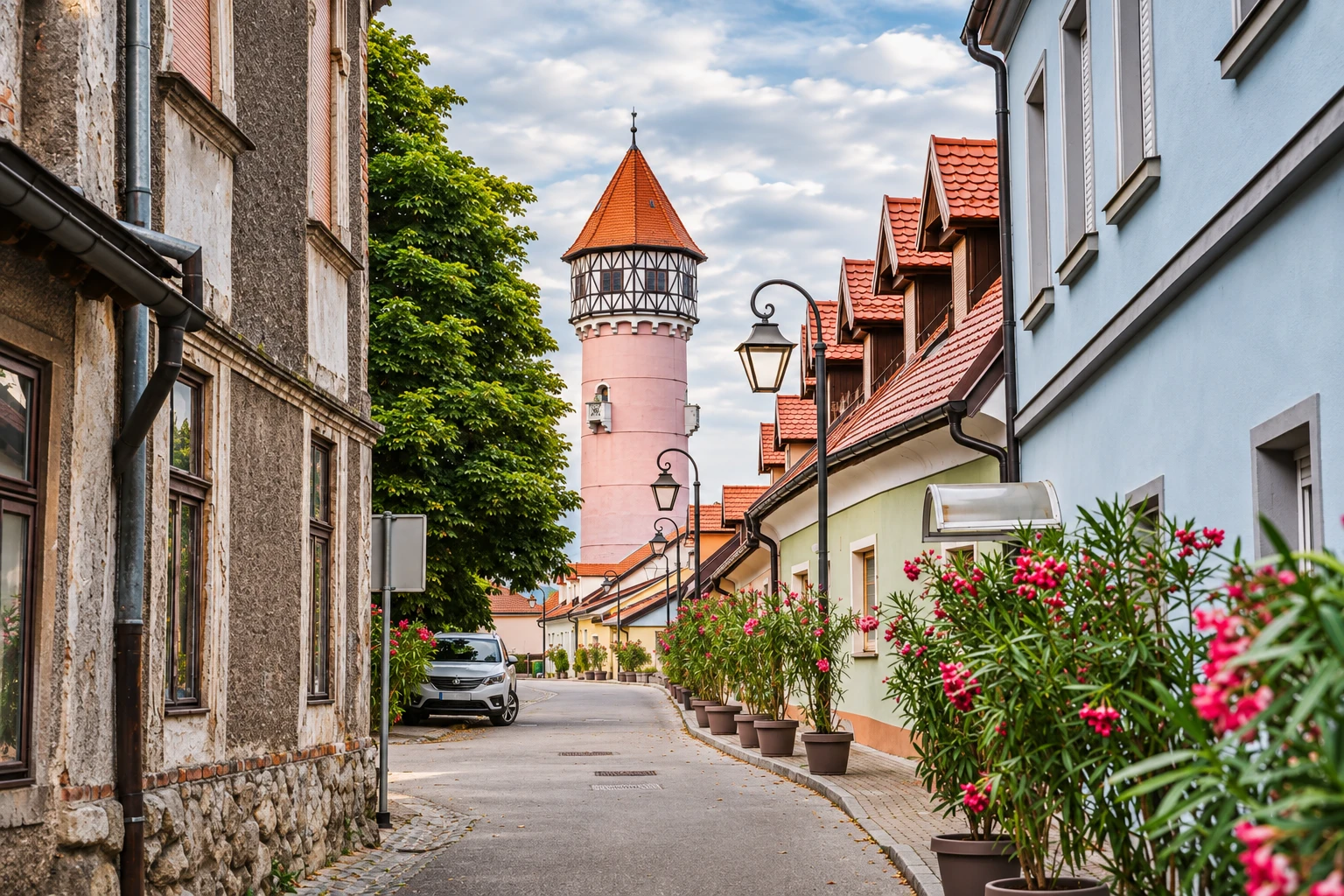
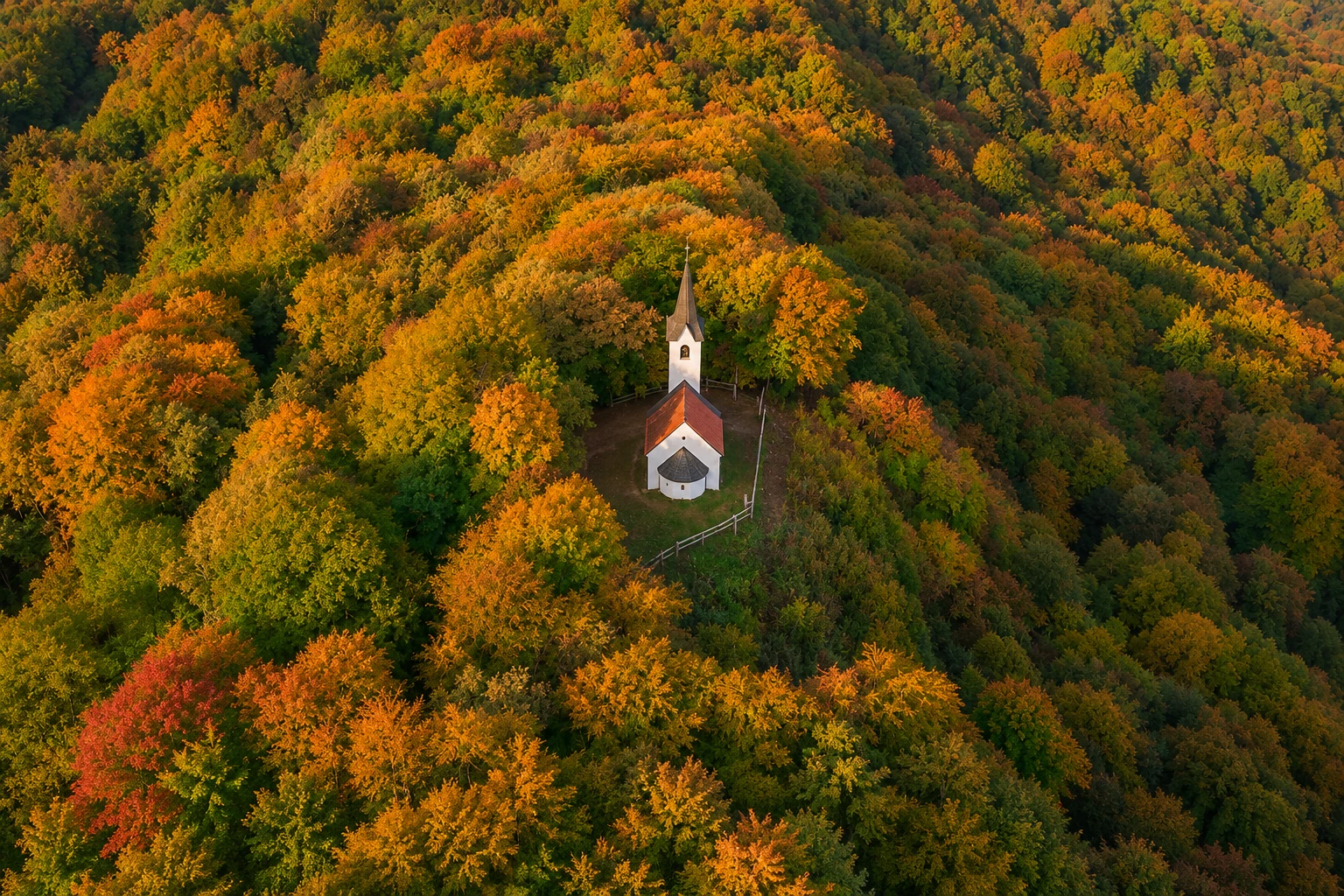
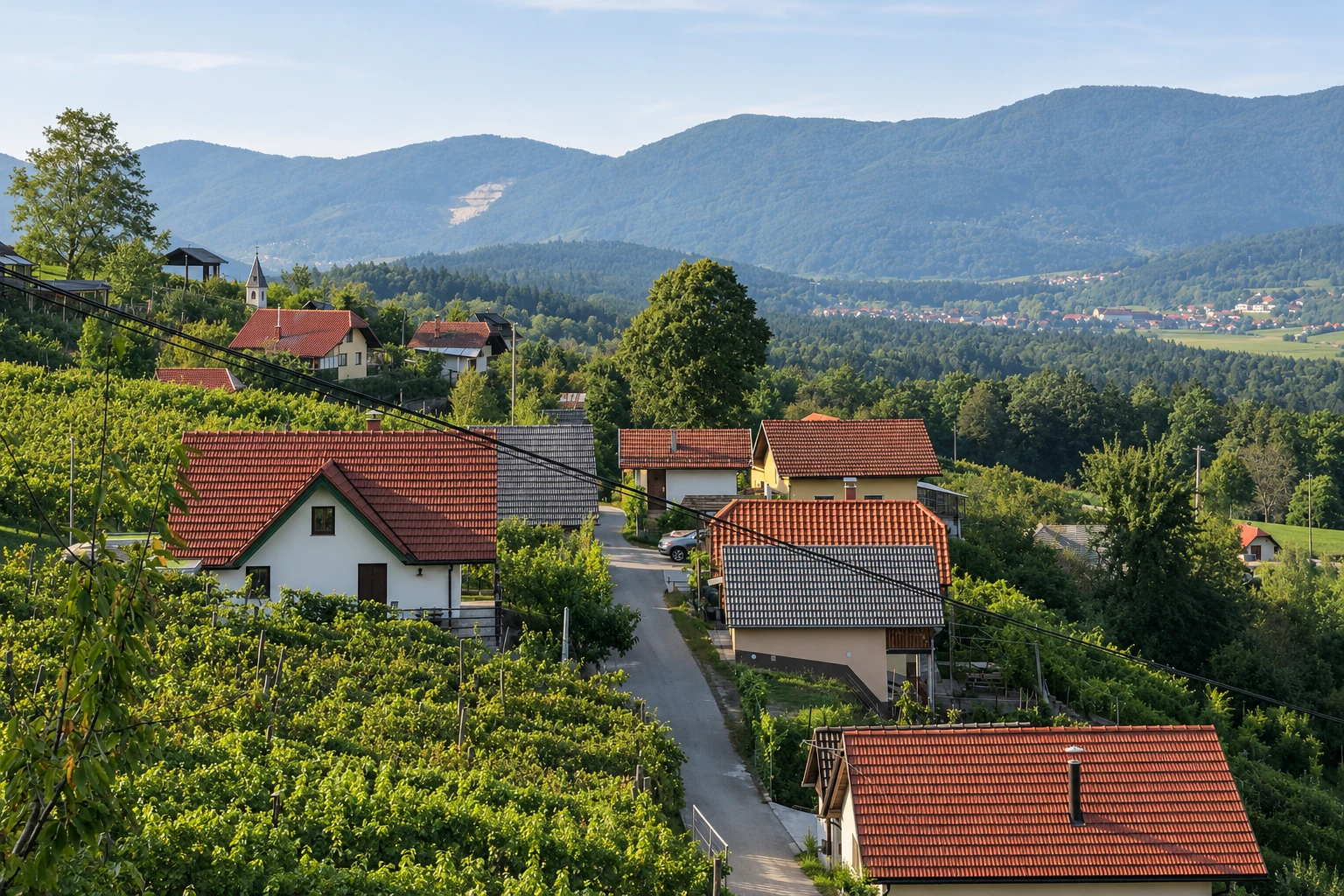
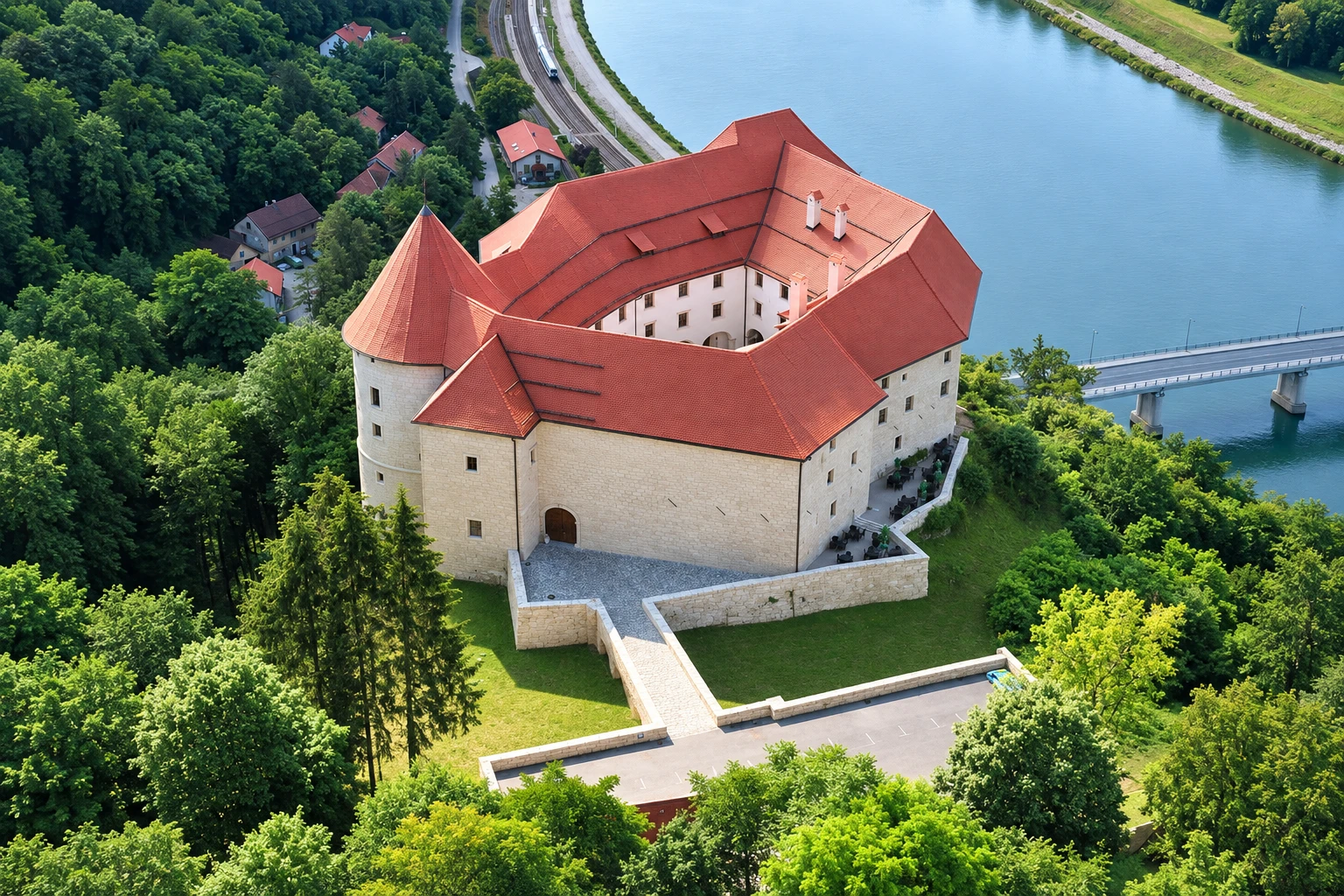
Illustrative images. The pictures in this guide are illustrations based on the real place, not photographs, and may differ from it.

Get it on Google Play

Get to know the place

A region to enjoy
at your own pace.

The Krka rises near Ljubljana and flows eastward across southeastern Slovenia until it joins the Sava, near the border with Croatia. Its middle and lower courses cross Dolenjska, a region of hills with vineyards and chapels, forests and villages, known for cviček, a light wine made from red and white grapes.

Novo mesto, the region’s main town, was founded in 1365 by Duke Rudolf IV of Habsburg on a bend of the river. The old center sits on a promontory: the main square, with arcades, slopes down to the Krka, and at the highest point stands the Cathedral of Saint Nicholas, with an altarpiece by Tintoretto. Excavations around the town revealed Iron Age graves with situlas, bronze buckets decorated with scenes of contemporary life, and the town came to be called the city of situlas. The pieces are in the Dolenjska Museum.

Downriver, Otočec Castle sits on an island in the middle of the Krka, and further on, at the foot of the Gorjanci hills, is the Pleterje Carthusian monastery, still inhabited by Carthusian monks. Kostanjevica na Krki, already in the neighboring Posavska region, is a small town built on a river island, with an old Cistercian monastery that became an art gallery and a sculpture park of oak works.

The destination is easy to travel by car with short stops, and combines history, art, river and wine.

This destination brings together 7 cities: Novo mesto, Kostanjevica na Krki, Sevnica, Krško, Brežice, Čatež ob Savi, Dolenjske Toplice.

Share: WhatsApp
Traveler, share your experiences through photos Up to 5 photos of each place you visited.

One destination, many paths

The cities on this trip

Start with one city or combine several in your itinerary.

Where Novo mesto and the Krka Valley is The star marks the capital, Novo mesto.
Novo mestoKostanjevica na KrkiSevnicaKrškoBrežiceČatež ob SaviDolenjske Toplice

Boundaries: Geodetska uprava Republike Slovenije (GURS), Register prostorskih enot, 28/02/2024, license CC BY 4.0. Adapted by Cidade Turismo.

How to get there: Novo mesto and the Krka Valley

Zračna luka Franjo Tuđman Zagreb (ZAG), in Zagreb (Croácia) · 80 km to Novo mesto

From Ljubljana to Novo mesto it’s about 70 km via the A2, the Zagreb motorway, and there are direct trains. Zagreb Airport is about 80 km away and Ljubljana Airport about 100 km. For Otočec, Pleterje and Kostanjevica, a car is most practical.

Suggested arrival point: Novo mesto

Novo mesto
Jugovzhodna Slovenija · Novo mesto and the Krka Valley Capital Suggested arrival point

Novo mesto

Main town of southeastern Slovenia, founded in 1365 on a bend of the Krka. The old town has Glavni trg square, with arcades and the town hall, the houses of the Breg along the river, the Franciscan church and the Cathedral of Saint Nicholas, with a Tintoretto painting on the high altar. The Dolenjska Museum preserves the situlae from the Iron Age. Nearby are Otočec Castle and the Pleterje Charterhouse.

The local experience

Things to do in Novo mesto and the Krka Valley

Dolenjske Toplice · Jugovzhodna Slovenija · Thermal spa

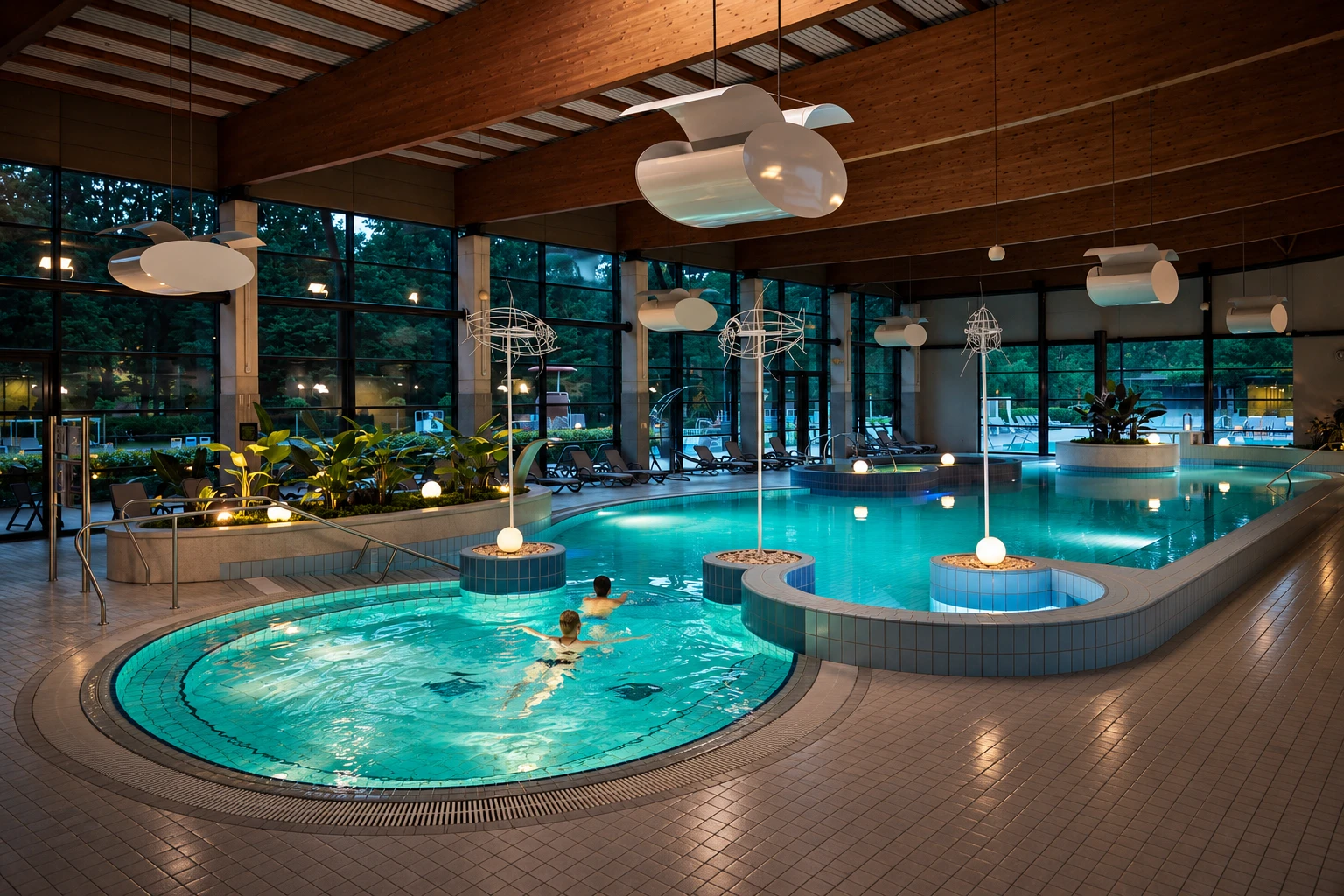
Bazeni Balnea

Thermal pools near the village center, with indoor and outdoor areas on seasonal schedules.

Explore Bazeni Balnea

Kostanjevica na Krki · Posavska · Museum

Božidar Jakac Art Museum

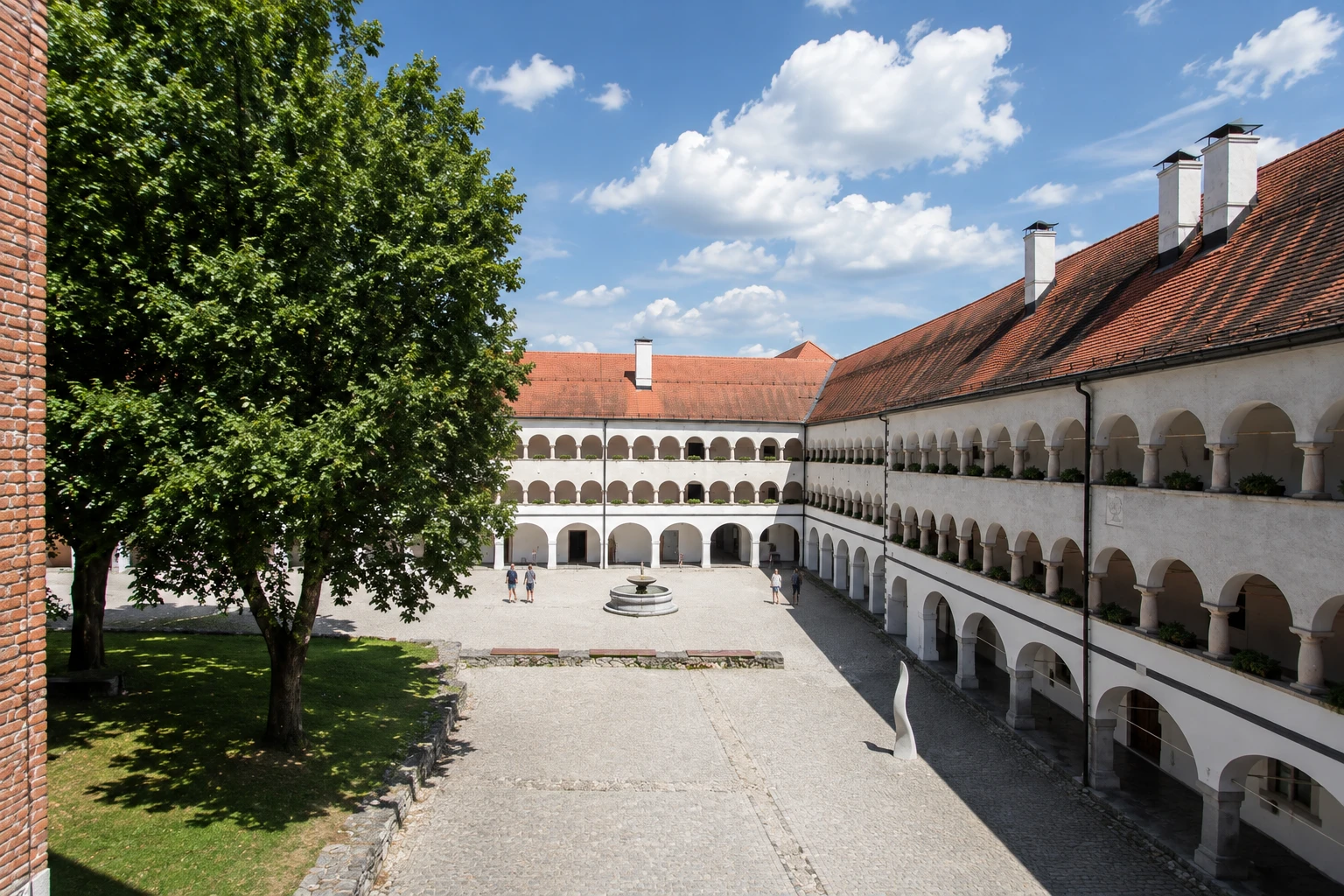
Museum of modern and contemporary art in the former Cistercian monastery of Kostanjevica, founded in 1234, with long cloister arcades and, in the surrounding park, more than 100 oak sculptures from Forma Viva.

Explore Božidar Jakac Art Museum

Brežice · Posavska · Castle

Brežice Castle

Renaissance castle that houses the Posavje Museum. The interior route goes through regional collections and the Knights’ Hall, where Baroque painting covers walls and ceiling.

Explore Brežice Castle

Krško · Posavska · Castle

Rajhenburg Castle

Fortress on the hill in Brestanica above the Sava. The castle houses exhibitions about its knights, the presence of Trappist monks and the deportation of Slovenes during the Second World War.

Explore Rajhenburg Castle

See 8 more places in Novo mesto and the Krka Valley

To choose before you go

Tours in Novo mesto and the Krka Valley

Where each tour starts, how long it takes, how it is done, what is included and the price range.

Old town of Novo mesto: Glavni trg, Breg and the Krka bridges

From Glavni trg, Novo mesto Walk through the old town center about 2 h 30 morning or late afternoon easy (short inclines)

The old town of Novo mesto occupies a meander of the Krka River, which in the past protected the town on three sides. In the middle is Glavni trg, promoted by local tourism as Slovenia’s largest medieval square, with arcades that recall its history as a trading town. On the square are the town hall (Rotovž), the tourist information center and the Kette Fountain, inscribed with verses from the poem Na trgu (On the square) by poet Dragotin Kette. Above the roofs rise the towers of St. Nicholas and St. Leonard churches; the latter belongs to the Franciscan monastery, which houses a library with incunabula. Descending to the river, you reach the picturesque Breg neighborhood, perched on the bank. The Kandija Bridge and the pedestrian walkways, including the Julija, cross the Krka and allow a circuit along both banks, with views of the center and the cathedral tower above. The information center organizes guided city tours, and a small electric minibus, the Leon, runs through the old town for part of the day.

Stops: Glavni trg, Town hall (Rotovž), Kette Fountain, Franciscan monastery and St. Leonard Church, Breg, Kandija Bridge.

Includes: Self-guided walk; guided tour from the information center charged separately.

Tip: Breg is nicely visible from the opposite bank and from the footbridges. The library of the Franciscan monastery does not allow free visits: ask at the tourist information center whether a visit is available that day.

Best time: All year; from May to September the square is busier and has outdoor tables.

Kapitelj: St. Nicholas Cathedral and the tower viewpoint

From Glavni trg, Novo mesto On foot, with stairs up the tower about 1 h 30 morning or afternoon moderate (126 steps)

St. Nicholas Cathedral stands on the Kapitelj, the highest point of the old town, above the Krka meander. The church dates from the 14th century, with a Gothic presbytery and a 53 m tower that dominates Novo mesto’s silhouette. Above the high altar is a painting of St. Nicholas by the Venetian Tintoretto, the church’s most sought-after artwork. The tower was adapted to house the Kapitelj Viewpoint: after 126 steps, at about 24 m height, the view covers the old town, the Krka, the vineyard-covered hill of Trška gora and the Gorjanci range, including Trdinov vrh. The city’s tourism presents the viewpoint as Novo mesto’s main overlook. The walk from Glavni trg to the cathedral takes a few minutes along sloping streets.

Stops: St. Nicholas Cathedral, Kapitelj Viewpoint.

Includes: Visit the cathedral outside worship hours; the tower viewpoint is separately ticketed, with tickets sold at the Glavni trg tourist information center.

Tip: Buy the viewpoint ticket at the information center before climbing and confirm opening days. The tower staircase is narrow; it is not suitable for people who have difficulty with steps. Respect the Mass times when visiting the church.

Best time: All year; on a clear day the view reaches the Gorjanci range.

Dolenjska Museum: the situlas and the Iron Age

From Novo mesto old town centre Visit to the museum, on foot from Glavni trg about 2 hours morning or afternoon easy

The Dolenjska Museum (Dolenjski muzej) explains why Novo mesto is called the city of the situlas. In the ancient Iron Age, between the 8th and 4th centuries BC, the site was one of the region’s important centres, and excavations in the town yielded nine decorated bronze situlas and seven plain ones, found in graves at sites such as Kandija and Kapiteljska njiva. The permanent exhibition The Archaeological Image of Dolenjska occupies the ground and first floors of the building known as Križatija and shows, alongside the situlas, amber and glass necklaces, glass bracelets, Greek bronze helmets and Greek pottery, almost all coming from Kapiteljska njiva graves. The museum also has displays on recent history and art, an exhibition about the Olympic gymnast Leon Štukelj and another about the accordionist Lojze Slak. Jakčev dom, named after the painter Božidar Jakac, is another museum unit focused on art. The museum organises the Situla Festival, dedicated to Iron Age life and cuisine, featuring experimental archaeology.

Stops: Dolenjska Museum (Dolenjski muzej), Exhibition The Archaeological Image of Dolenjska, Jakčev dom.

Includes: Museum admission paid separately.

Tip: The museum is closed on Mondays and has summer hours from April to October; on Sundays Jakčev dom opens only by prior arrangement. Ask for the printed guide to the archaeological exhibition.

Best time: All year; a good option for rainy days.

Krka River in Novo mesto: urban beach, paddling and ferry rides

From Novo mesto urban beach (Portoval) or Pugljev pier Rowboat, canoe, paddleboard or wooden raft 1 to 3 hours morning or afternoon easy

The Krka is the largest river in the Dolenjska region, known for its meanders and tufa limestone ledges; it rises near the village of Krka and flows into the Sava at Brežice. The entire river area is part of the European Natura 2000 network, and rainbow trout, brown trout and chub live in its waters. In Novo mesto, the slow current favors paddling. At the urban beach on the right bank, below the Portoval sports park and about a ten‑minute walk from Glavni trg, you can rent stand‑up paddleboards, canoes and wooden rowboats, and you can swim in the river. Downriver the route passes under the Loka footbridge and the railway and road bridges, then the Breg neighborhood appears, followed by the Julija footbridge and the Kandija Bridge. Two wooden ferries take visitors along the river’s curves: the larger Rudolfov splav and the smaller Nika. In July and August there are regular departures on some Sundays, lasting about 45 minutes, departing from and returning to Pugljev pier. On land, the Ragov log wood runs along the bank, with trails and picnic spots.

Stops: Urban beach (Portoval), Krka River, Breg, Ragov log.

Includes: Rental of paddleboards, canoes and boats and raft trips paid separately; fishing licence sold at the tourist information centre.

Tip: Regular raft departures are few and on set dates: check the summer calendar. Outside those dates, ask at the information centre about departures by arrangement. After heavy rain the river rises and trips may not run.

Best time: From June to September; regular ferry departures in July and August.

Otočec Castle and the vineyard hill of Trška gora

From Novo mesto By car or bicycle; Trška gora can also be reached on foot about 5 hours afternoon or full day easy by car; moderate on foot

Otočec Castle stands on an island in the Krka River, 7 km downstream from Novo mesto, and is presented as Slovenia’s only river castle. First mentioned in the 13th century, it is a cultural monument of national importance; it changed owners many times and today houses a hotel. Visitors arrive via the wooden bridges and walk through the castle park on the riverbank. Across the valley, Trška gora rises to 428 m and is Novo mesto’s vineyard hill, noted for having the highest density of zidanice, the small vineyard houses typical of the region. On the summit are the pilgrimage Church of the Nativity of Mary, from 1623, and the lime trees of Trška gora, over 400 years old. The area produces cviček, a light reddish wine made from both red and white grapes, typical of Dolenjska. Some vineyard houses open to visitors for tastings by reservation. On foot, the marked route starts at Glavni trg, crosses the Ragov log wood and the Krka and climbs via Ždinja vas; local tourism indicates 13.6 km, about 2 h 30 and moderate difficulty.

Stops: Otočec Castle, Castle park, Trška gora, Church of the Nativity of Mary, Lime trees of Trška gora.

Includes: Castle park free of charge; wine tastings at vineyard houses paid separately, by reservation.

Tip: The castle interior is used by the hotel and restaurant; visits are to the bridges and the park. For tastings on Trška gora, arrange a taxi return or choose someone who will not drink to drive. Regional buses link Novo mesto with Otočec, with few services at weekends.

Best time: From May to October; the grape harvest takes place in September and October.

Gorjanci Range: beech forest and Trdinov vrh

From Gabrje, at the foot of Gorjanci (by car from Novo mesto) By car to Gabrje and hike on foot half a day to one day full day moderate to difficult

Gorjanci is the largest range in Dolenjska and stretches along Slovenia’s southern border with Croatia. The highest point is Trdinov vrh, at 1,178 m, named in 1922 after the writer Janez Trdina; on the Croatian side the summit is called Sveta Gera. The border line runs across the top, where there is a tall concrete tower and remains of small churches. The slopes are covered by extensive beech forests, with preserved patches of primeval forest on the north face, and the many springs, such as Minutnik and Gospodična, supply water to the Novo mesto basin. The usual ascent starts in the village of Gabrje and follows marked trails to the mountain hut by the Gospodična spring and from there to the summit. Those wanting a full day’s hike can start from Novo mesto centre: the signposted forest route to Trdinov vrh is 23.3 km, about 8 hours and rated difficult. There are also shorter themed trails, such as the Trdina Trail.

Stops: Gorjanci, Gospodična spring, Trdinov vrh (1,178 m).

Includes: Trails free of charge.

Tip: Bring water, a warm layer and identification, since the summit lies on the border line. In winter there may be snow and ice at higher elevations. The dirt road that climbs from Gabrje is not always in good condition: check in advance with the Novo mesto information centre.

Best time: From May to October; in October the beeches change color.

See 4 more tours

Pleterje Charterhouse and the open-air museum

From Novo mesto or Kostanjevica na Krki By car, via Šentjernej about 2 hours morning or afternoon easy

The Pleterje Charterhouse lies in a valley at the foot of the Gorjanci ridge, near Šentjernej, and is the only Carthusian monastery still active in Slovenia. It was founded in 1403 by Count Herman II of Celje and completed in 1406; an Ottoman attack destroyed it in 1471, and the rebuilding gave it a fortress-like appearance. It later passed to the Jesuits, the State and private owners, until the Carthusian Order repurchased it in 1899 and erected the present monastery, finished in 1904. The Carthusians form a community of hermits who live in silence, and almost the entire complex is cloistered, closed to the public. Visitors may enter the old Gothic church of 1406, with ribbed vault supports, masks on the corbels and rosette-shaped fastenings; a multimedia presentation there shows the monks’ life and the house’s history. The monastery shop sells what the monks produce: wines, Williams pear brandy and other fruit spirits, honey, propolis and beeswax candles. On the monastery grounds, the Pleterje Open-Air Museum recreates a 19th-century rural estate from the Šentjernej plain, with a peasant house and outbuildings.

Stops: Pleterje Charterhouse, Old Gothic church, Pleterje Open-Air Museum.

Includes: Entrance to the old church and purchases in the shop; visit to the open-air museum is paid separately, arranged in advance; guided wine tastings by reservation only.

Tip: Keep quiet in the monastery area and do not try to enter the cloister. The open-air museum opens by prior arrangement: call before you go. Without a car, access is difficult.

Best time: All year; open-air museum from April to October.

Kostanjevica na Krki: the town on the river island

From Kostanjevica na Krki wooden bridge Walk around the island; traditional boat on the river about 2 hours morning or afternoon easy

Kostanjevica na Krki is presented as Slovenia’s smallest town and one of the oldest, and the only one in the country located on a river islet: the old core occupies an island in the Krka, which earned it the nickname Venice of Dolenjska. Around 1215 the town had a mint and, with the Cistercian monastery founded in 1234, it became the political, economic and religious centre of the regional frontier of the time. You enter the island via the wooden bridge at the north or the one at the south, which were formerly guarded by towers where tolls were collected. The parish Church of St. James is the oldest building on the island and one of the oldest Gothic churches in the country. The Church of St. Nicholas, first mentioned in 1581, has frescoes by the local painter Jože Gorjup. The Ministerial Mansion houses the Lamut Art Hall, part of the Božidar Jakac Gallery. On the river, the town’s boathouse preserves the traditional wooden boat of Kostanjevica used for water tours. North of the town lies the Krakovo Forest (Krakovski gozd), a flooded oak woodland.

Stops: Kostanjevica na Krki island, Church of St. James, Church of St. Nicholas, Ministerial Mansion (Lamut Hall), Wooden bridges.

Includes: Self-guided walk; boat rides and exhibitions charged separately.

Tip: The island is small and can be walked in a short time; add the time for the gallery in the former monastery, which lies off the island. After heavy rain the Krka can flood its banks: check conditions before you go.

Best time: From April to October; boat trips depend on river levels.

Božidar Jakac Gallery, Forma Viva and the Kostanjevica cave

From Former Cistercian monastery, Kostanjevica na Krki Visit to the gallery and sculpture park; cave with guided tour about 3 hours morning or afternoon easy

The Božidar Jakac Gallery, a modern and contemporary art museum, occupies the former Cistercian monastery of Kostanjevica na Krki. The monastery, called Fons Beatae Mariae, was founded in 1234 by Duke Bernard of Spanheim near the spring of the Obrh stream, and was rebuilt in the Renaissance and Baroque periods; in the first half of the 18th century it gained the Baroque façade, defensive towers and one of the largest arcaded courtyards in Europe. Emperor Joseph II dissolved it in 1786. Today the rooms display permanent collections of Slovenian artists, including Božidar Jakac, and the monastery’s former church hosts temporary exhibitions. In the surrounding park and at other points in town there are more than 100 sculptures from Forma Viva, the international sculptors’ symposium started in 1961: participants work for about a month, almost always in oak, and the works remain outdoors. Near the town, the Kostanjevica cave (Kostanjeviška jama) opened by itself in 1937 when floodwaters broke through the entrance. The guided tour covers roughly 300 m of lit path through halls with stalactites and an underground lake, and lasts 45 to 60 minutes.

Stops: Božidar Jakac Gallery, Former Cistercian monastery, Forma Viva, Kostanjevica cave (Kostanjeviška jama).

Includes: Gallery entry and guided cave tour charged separately; sculptures in the park can be viewed free of charge.

Tip: The gallery is closed on Mondays. The cave only opens in season, from mid-April, and at the start of the season it operates only on weekends and holidays: confirm dates before you go. Inside the cave the temperature is 10–12 °C year-round; bring a jacket.

Best time: From mid-April to October to combine gallery, park and cave; the gallery is open year-round.

Upper Krka: Žužemberk, Dvor and the tufa thresholds

From Novo mesto By car, upriver about 5 hours full day easy

Upstream from Novo mesto, the Krka runs in a narrow valley and changes character: here it is a karst river, fed almost entirely by karst springs, and it forms steps of calcareous tufa where mills and sawmills once worked. The most scenic stretches of these thresholds are near the village of Krka, in Žužemberk and in Dvor. In Žužemberk the castle rises on a rock above the river and is described by regional tourism as one of Slovenia’s most picturesque; the site’s history goes back to the 13th century and in the 16th century it was reinforced with defensive towers. The castle hosts events organised by the local community. In Dvor, the restored Auersperg Foundry complex recalls the iron industry: it operated from 1795 to 1891 and belonged to the Auersperg princes. Regional buses connect Novo mesto with Žužemberk, but a car gives the freedom to stop along the river.

Stops: Žužemberk Castle, Krka tufa thresholds, Auersperg Foundry (Dvor).

Includes: External visit to the castle and the thresholds free of charge; guided tours and paid events extra.

Tip: The castle is not always open inside: confirm with Dolenjska regional tourism whether tours are available that day. The stones on the thresholds are slippery; swim only in the indicated spots. Combine the outing with the Dolenjske Toplice spa on the return route.

Best time: From May to September; the river is fuller in spring and autumn.

Day by day

2, 3 and 5-day itinerary in Novo mesto and the Krka Valley

Suggestions to plan the trip. Change the order of the days according to the weather and tour availability.

2 days · Novo mesto and the Krka Valley in 2 days: from the situla town to the island of Kostanjevica

For For those with a weekend and a car, who want the essentials of the valley. · Based in Novo mesto (2 nights) or Novo mesto (1) and Otočec (1)
  1. Day 1 · Novo mesto and Otočec

    Morning in the old town: Glavni trg, Kette Fountain, climb to Kapitelj for St. Nicholas Cathedral and the tower viewpoint (126 steps). Then, Dolenjska Museum, with Iron Age situlas (closed on Mondays). Lunch in town. In the afternoon, descent to Breg and the Krka footbridges; by car, 7 km to Otočec Castle for the park and wooden bridges at day’s end.

  2. Day 2 · Pleterje and Kostanjevica na Krki

    By car via Šentjernej to the Pleterje Charterhouse: old Gothic church, the monks’ shop and, if arranged beforehand, the open-air museum. Continue to Kostanjevica na Krki: walk around the island, with the two wooden bridges and the churches of St. James and St. Nicholas. In the afternoon, Božidar Jakac Gallery in the former Cistercian monastery and the Forma Viva sculptures in the park. In season, the Kostanjevica cave visit fits before returning.

3 days · Krka Valley in 3 days: town, river and vineyards
For For those who want to add the river and the cviček hill to their city itinerary. · Based in Novo mesto (3 nights)
  1. Day 1 · Novo mesto

    Old town in the morning: Glavni trg, the town hall, the Franciscan monastery and Kapitelj, with the cathedral and viewpoint. Dolenjska Museum before or after lunch. Late afternoon in Breg and on the Krka walkways, with a view of the town from the opposite bank.

  2. Day 2 · Krka, Otočec and Trška gora

    Morning on the river: SUP, canoe or rowing boat at the urban beach, about a ten-minute walk from Glavni trg, or a walk through Ragov log wood; in July and August, a wooden ferry runs on scheduled dates. In the afternoon, Otočec Castle and then Trška gora: the Nativity of Mary church, ancient lindens and a cviček tasting at a vineyard house open to visitors, by reservation.

  3. Day 3 · Pleterje and Kostanjevica na Krki

    Pleterje Charterhouse in the morning, with the old church and the shop. Kostanjevica na Krki for the rest of the day: the island, Božidar Jakac Gallery, Forma Viva and, in season, the cave. Return to Novo mesto via the valley road.

5 days · Krka Valley in 5 days: from upper Krka to Gorjanci, with thermal baths
For For travelers who take it slow and drive, enjoy walking and want to include the Dolenjska thermal baths. · Based in Novo mesto or Otočec (3 nights) and Kostanjevica na Krki or nearby (2 nights)
  1. Day 1 · Novo mesto

    Old town, Kapitelj and Dolenjska Museum, with time for Jakčev dom. Late afternoon in Breg and dinner at Glavni trg.

  2. Day 2 · Upper Krka and Dolenjske Toplice

    By car upriver: Krka’s tufa thresholds, Žužemberk Castle and the Auersperg Foundry in Dvor. On the return, an afternoon at the Dolenjske Toplice thermal baths. Those interested in World War II can arrange beforehand a guided visit to Baza 20, the partisans’ base in the Kočevski rog forest, offered from April to October.

  3. Day 3 · River, Otočec and Trška gora

    Morning of paddling or a riverside walk along the Krka in Novo mesto. Otočec Castle after lunch. Afternoon on Trška gora, with views over the vineyards and a pre-arranged tasting of cviček.

  4. Day 4 · Gorjanci and Pleterje

    Morning hike in Gorjanci: from Gabrje to the shelter at the Gospodična spring and, for those fit enough, to Trdinov vrh (1,178 m). In the afternoon, Pleterje Charterhouse and the open-air museum, pre-arranged. Night in Kostanjevica na Krki or nearby.

  5. Day 5 · Kostanjevica na Krki

    Kostanjevica island at a relaxed pace: wooden bridges, churches and the Lamut Hall; a ride on the traditional boat if the river allows. Božidar Jakac Gallery and Forma Viva; cave open in season. If you prefer to finish with thermal baths, head to Šmarješke Toplice on the way back to Novo mesto.

Best time to go

When to go: Novo mesto and the Krka Valley month by month

From April to October for river tours, visits to Otočec and Pleterje, and the Kostanjevica cave, which is open in that season. September and October are harvest season in the hills. In winter, the museums and the gallery remain open.

The seasons shown are the most usual ones; nature doesn't always follow the calendar.

January Low rain

winter · museum and thermal baths

Winter. At the Novo mesto station (1981–2010 normals), mean temperature 0.0 °C and about 54 mm of precipitation. Nighttime lows fall below zero on most nights and it is common to have snow on the ground for part of the month. The driest and calmest month of the year. The Dolenjska Museum and Božidar Jakac Gallery operate on winter hours; the Kostanjevica cave and river trips are out of season. The Dolenjske Toplice and Šmarješke Toplice thermal baths are the option for cold weather.

February Low rain

winter · Carnival

Winter. At the Novo mesto station (1981–2010 normals), mean temperature 1.6 °C and about 59 mm of precipitation. Still cold, with frequent frosts and possible snow, especially in Gorjanci. It is Carnival season in Slovenia, on a date that changes each year. A good month for museums, for the old church at Pleterje and for the thermal baths. Bring a heavy coat and closed shoes.

March Some rain

late winter · longer days

Transition from winter to spring. At the Novo mesto station (1981–2010 normals), mean temperature 6.0 °C and about 76 mm of precipitation. Highs can reach around 12 °C, with mornings still cold. The Krka may be high with snowmelt and rain. European daylight saving time begins on the month’s last Sunday. Bring a coat and a waterproof layer.

April Some rain

spring · cave season opens

Spring. At the Novo mesto station (1981–2010 normals), mean temperature 10.6 °C and about 89 mm of precipitation. Mild days, with highs around 16 °C and occasional showers. The Dolenjska Museum switches to summer hours on the 1st. The Kostanjevica cave usually opens mid-month, initially only on weekends and holidays. The vineyard hills turn green and the Trška gora trails are in good shape.

May Some rain

spring · vineyards and trails

Spring. At the Novo mesto station (normals 1981–2010), the mean is 15.5 °C and about 97 mm of rain. Maximum temperatures exceed 21 °C and the days are long. It’s a good time to walk in Trška gora and Gorjanci, cycle through the valley, and visit Kostanjevica na Krki without the summer crowds. Late‑afternoon thunderstorms start to appear. Vineyard houses host cviček tastings by reservation.

June High rain

early summer · wettest month · Situla Festival

Early summer. At the Novo mesto station (normals 1981–2010), the mean is 18.7 °C and about 131 mm of rain. This is the wettest month, usually with heavy showers and late‑afternoon thunderstorms, and generally firm mornings. Highs near 24 °C. The rowing and swimming season on the Krka begins. The Situla Festival, organized by the Dolenjska Museum, has taken place in this month: check the year’s date. From mid‑month the Božidar Jakac Gallery stays open later on Saturdays.

July Some rain

summer · Krka ferries · river swimming

Summer. At the Novo mesto station (normals 1981–2010), the mean is 20.7 °C and about 99 mm of rain. The warmest and sunniest month, with average highs near 27 °C. Novo mesto’s urban beach is active, and wooden ferries run regular outings on some Sundays. Vineyard houses in Trška gora host tastings by reservation. On Gorjanci’s trails, the beech forest provides shade and lower temperatures than in the valley.

August High rain

summer · river and Gorjanci shade

Summer. At the Novo mesto station (normals 1981–2010), the mean is 19.9 °C and about 128 mm of rain. The heat continues, with average highs near 26 °C, and late‑afternoon thunderstorms bring much of the rain. Scheduled ferry outings on the Krka and river swimming continue. Kostanjevica cave, at 10–12 °C, is a refuge on hot days. This is the month with the most visitors: book accommodation in advance.

September High rain

early autumn · harvest

Early autumn. At the Novo mesto station (normals 1981–2010), the mean is 15.4 °C and about 130 mm of rain. Highs sit around 21 °C. This is the wettest month after June, with frontal systems alternating with clear days. The grape harvest begins in Trška gora and the hills of Kostanjevica na Krki. Misty mornings over the Krka are common. A good month to combine town, vineyards, and the island of Kostanjevica.

October High rain

autumn · grape harvest · beech trees in color

Autumn. At the Novo mesto station (1981–2010 normals), mean temperature 10.7 °C and about 118 mm of precipitation. The grape harvest ends and the beech trees of Gorjanci change color. Valley fog in the mornings, mild afternoons when the sun breaks through. The Dolenjska Museum’s summer hours run until the 31st, and the Kostanjevica cave season approaches its end: confirm the dates. European daylight saving time ends on the last Sunday.

November High rain

late autumn · Saint Martin and new wine

Late autumn. At the Novo mesto station (1981–2010 normals), mean temperature 5.2 °C and about 106 mm of precipitation. Short, damp, gray days with the first frosts. On the 11th, the feast of Saint Martin marks the transformation of must into new wine, with celebrations in Dolenjska’s vineyard regions. River trips and the cave are out of season; museums, the gallery and thermal baths remain open.

December Some rain

winter · year-end programming

Winter. At the Novo mesto station (1981–2010 normals), mean temperature 0.9 °C and about 85 mm of precipitation. Cold, with lows below zero and possible snow, more frequent in Gorjanci. These are the shortest days of the year. The Božidar Jakac Gallery closes earlier on Christmas Eve and on some holidays: check in advance. The region’s thermal baths are busy during the year-end holidays.

Plan the journey

How to get there: Novo mesto and the Krka Valley

By air: Ljubljana and Zagreb airports

The destination has no commercial airport. Usual entry points are Ljubljana Jože Pučnik Airport (LJU) and Zagreb Franjo Tuđman Airport (ZAG) in Croatia; Novo mesto lies between the two capitals, about 70 km from Ljubljana on the highway toward Zagreb. From Ljubljana airport the route passes through the capital, where buses and trains depart for Novo mesto, or you can drive a rental car. For travellers from other continents, journeys often include a connection in a European city: confirm connections before booking.

By bus: the quickest option from Ljubljana

Line buses connect Ljubljana’s coach station to Novo mesto in about 1 h 05 to 1 h 10, with several departures throughout the day. Novo mesto’s coach station is on Topliška cesta. From Novo mesto, regional buses run to Dolenjske Toplice, Otočec, Šmarješke Toplice, Kostanjevica na Krki, Žužemberk, Krško, Brežice and Sevnica; these routes have few services at night and on weekends. Some international lines stop in Novo mesto but do not sell domestic segments within Slovenia. Check schedules before travelling.

By train

Novo mesto is on the regional rail line from Ljubljana toward the country’s southeast, operated by Slovenske železnice (SŽ). Travel is slower than by bus but crosses the Dolenjska interior. The city has three passenger stations: Novo mesto Bršljin, Novo mesto Center and Novo mesto Kandija; Novo mesto Center is the most convenient for the old town. Kostanjevica na Krki, Otočec and Pleterje have no train service. Tickets are sold at stations, on the SŽ website or on board the train. Check the day’s timetable.

By car

The A2 motorway links Ljubljana to Novo mesto and continues to the Croatian border toward Zagreb; it’s about 70 km from Ljubljana, roughly one hour. Slovenian motorways require an electronic vignette (e‑vinjeta), bought before entering the road and linked to the car’s license plate. Otočec lies 7 km downstream from Novo mesto. Kostanjevica na Krki is further east, along the valley road that passes Šentjernej, from where the access road to the Pleterje Charterhouse branches off. Upstream, a regional road follows the Krka to Dvor and Žužemberk. A car is the most practical means to reach Pleterje, Gorjanci and Trška gora, which have little public transport.

Getting around

The old town of Novo mesto is walkable, with some hills. Urban buses sell single tickets on board, and Leon, an electric micro‑bus, circulates through the old town in the morning and early afternoon from Monday to Saturday and can be booked by phone. The city has a bike‑share system, GoNM, with registration at the tourist information centre, which also rents electric bikes. There are taxis and a car rental agency in town. In Kostanjevica na Krki the island can be walked in a short time; the gallery in the former monastery and the cave are off the island. Signed cycling routes connect Novo mesto with Otočec, Trška gora and the spa towns.

Tickets and reservations

Kapitelj viewpoint: tickets at the tourist information center on Glavni trg. Dolenjska Museum: closed on Mondays; Jakčev dom opens on Sundays only by prior arrangement. Božidar Jakac Gallery: closed on Mondays. Kostanjevica Cave: open only in season, with guided tours. Pleterje Charterhouse: the old church and the shop welcome visitors; the open-air museum and wine tastings require prior arrangement by phone. Ferries on the Krka: regular departures on a few dates in July and August; outside those dates, only for groups. Trška gora vineyard houses: tastings by reservation. Baza 20 in Kočevski rog: guided visits from April to October, arranged in advance. Check the current schedule for each site.

Documents, currency and time zone

Slovenia is part of the European Union and the Schengen area, and the currency is the euro. Entry requirements depend on your nationality, travel document, purpose and length of stay; crossing the land border with Croatia, a neighboring country, follows Schengen rules. The country uses Central European Time, with daylight saving time from the last Sunday in March to the last Sunday in October. The official language is Slovene. Requirements may change: confirm before you travel.

Your base to explore

Where to stay and where to eat

Before you go

Practical information

A little planning leaves more time to enjoy the journey.

When to go

From April to October for river tours, visits to Otočec and Pleterje, and the Kostanjevica cave, which is open in that season. September and October are harvest season in the hills. In winter, the museums and the gallery remain open.

The seasons shown are the most usual ones; nature doesn't always follow the calendar.

How many days to stay

Two days allow one day in Novo mesto and Otočec and another in Pleterje and Kostanjevica. If you only have one day, you can see Novo mesto’s center in the morning and Kostanjevica in the afternoon, with a stop at Otočec.

Which city to stay in

In Novo mesto, the old center and the streets near the main square leave the cathedral and the museum within walking distance, with riverside restaurants. If you prefer the countryside, you can find accommodation on farms and in villages among the vineyard hills between Novo mesto and Kostanjevica.

Respect the place

Take your trash with you, follow the signs and support local businesses. In natural areas, follow the visiting guidelines.

Beyond the guide

Your questions

Frequently asked questions about Novo mesto and the Krka Valley

How many days should you book for the Krka Valley?

Two days are ideal: one for Novo mesto and Otočec Castle, and another for the Pleterje Charterhouse and Kostanjevica na Krki.

Do you need a car in the Krka Valley?

Yes, to make the most of it. Novo mesto has a train from Ljubljana, but Otočec, Pleterje and Kostanjevica are off the main lines and have few buses.

Can you do Novo mesto as a day trip from Ljubljana?

Yes. The town is about 70 km away, roughly an hour by car, and there are trains. In one day you can see the old town, the museum and the cathedral and stop by Otočec.

What is a situla?

It’s a bronze bucket-shaped vessel decorated with relief scenes, used in the Iron Age. The ones from Novo mesto were found in graves and are in the Dolenjska Museum.

What is the best time to visit the Krka Valley?

From April to October, when river tours and the Kostanjevica cave are in season. September and October also have the grape harvest in the hills.

How to get from Ljubljana to Novo mesto without a car?

By bus is fastest: the trip from Ljubljana bus station takes about 1 h 05 to 1 h 10, with several departures per day. There is also a train, slower; of the town’s three stations, Novo mesto Center is the closest to the old town. Check the timetables for the day.

How to reach Kostanjevica na Krki without a car?

By regional bus from Novo mesto. Services are infrequent, especially at night and on weekends, and the town has no train. Check outbound and return timetables before you go so you’re not left without a way back. By car, the valley road passes through Šentjernej and allows visiting the Pleterje Charterhouse the same day.

What is cviček?

It’s Dolenjska’s typical wine: light, reddish in color with pronounced acidity, made by blending red and white grapes and with a low alcohol content capped at 10%. It has a recognized traditional denomination and can only be produced in specific parts of Dolenjska. In Novo mesto it’s tasted at the Trška gora vineyard houses, by reservation.

Can you visit the Pleterje Charterhouse interior?

Only partially. The monastery is cloistered, and the area where the monks live is closed to the public. Visitors can enter the old Gothic church, which has a multimedia presentation about Carthusian life, and the shop with monastery products. The open-air museum next door opens by prior arrangement.

Can you go boating on the Krka River?

Yes. At Novo mesto’s urban beach you can rent stand-up paddleboards, canoes and rowboats. Wooden barges do river cruises along the meanders, with regular departures on some Sundays in July and August and, outside those dates, for groups by reservation. In Kostanjevica na Krki there are tours on the town’s traditional boat. Everything depends on the river’s level.

Is it worth climbing the viewpoint at Novo mesto Cathedral?

Yes, for people who can climb stairs without difficulty. There are 126 steps up to about 24 m in height, with views of the old town, the Krka meander, Trška gora and the Gorjanci range. Tickets are sold at the tourist information centre on Glavni trg. In the cathedral, see Tintoretto’s painting of Saint Nicholas above the main altar.

What to do in Novo mesto and the Krka Valley on a rainy day?

In Novo mesto, the Dolenjska Museum, with the situlas, and Saint Nicholas Cathedral. In Kostanjevica na Krki, the Božidar Jakac Gallery, in the old monastery. In Pleterje, the old Gothic church. The spas at Dolenjske Toplice and Šmarješke Toplice, a short drive away, complete the day. Museum and gallery are closed on Mondays.

Where to stay: in Novo mesto, in Otočec or in Kostanjevica na Krki?

Novo mesto is the most practical base: it has buses and trains, restaurants, and sits in the middle of the valley. Otočec, 7 km away, suits those who want riverside quiet and are travelling by car. Kostanjevica na Krki is small and peaceful, good for a night near the gallery and the island. In the hills there are vineyard guesthouses, which require a car.

Routes in Slovenia

Novo mesto and the Krka Valley is on the Posavje Castles

Three castles in the Sava valley, from Sevnica to Brežice, with an optional detour to an old monastery in the Krka valley.

Explore the Posavje Castles
Explore other destinations Search by state and city