Lipica Stud Farm: stables, Lipikum museum and the lipizzaner avenues
From Entrance to Lipica Stud Farm, a few kilometers from Sežana Visit on foot, guided or self-guided 2 to 3 hours morning or afternoon easy
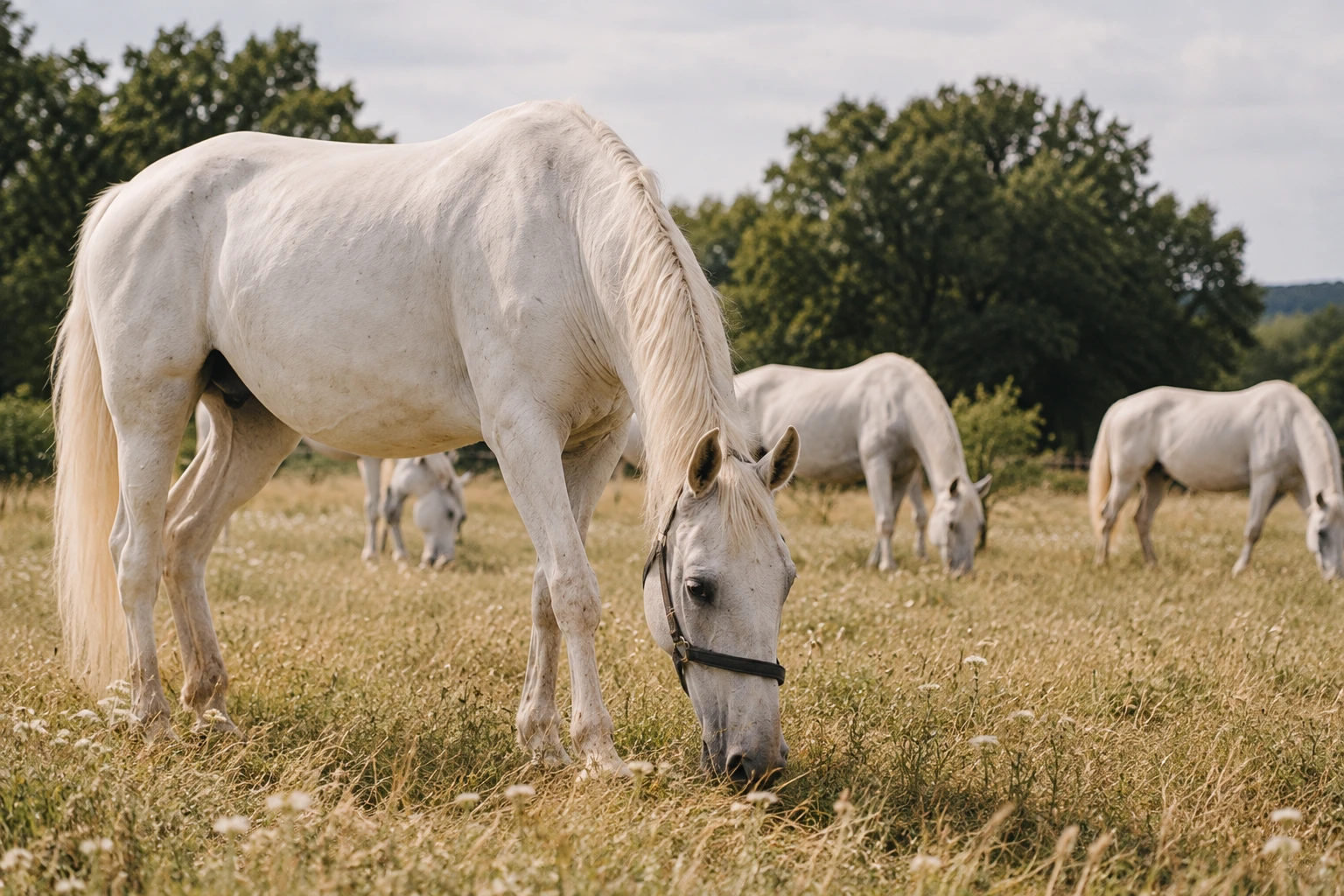
Lipica Stud Farm (Kobilarna Lipica) is the birthplace of the Lipizzaner horse, named after the village. The Habsburgs, who valued horses strategically and preferred those of Spanish origin, chose an abandoned summer house in the Karst to establish the court stud because the soil and climate resembled those of Spain. The official foundation date is 1580, and the first breeding animals came from Spain soon after. For more than 400 years breeding has continued in the same place: Lipica is the oldest European stud to breed the same breed without interruption, despite wars that forced the herds to flee more than once, and an earthquake. With over 300 horses, it is also the world’s largest Lipizzaner stud. The visit, guided or self-guided, takes about 50 minutes and tours the stables and the historic core; foals are born dark. In the center of the estate, the Lipikum tells the story of the stud and the breed with multimedia resources, and museum admission is part of the visit. The ensemble includes the carriage museum and the Avgust Černigoj Gallery, with works by the painter who lived in Lipica late in life. Surrounding meadows, fences, oak woods and avenues form a landscape shaped over centuries by horse breeding. The mares’ exit to pasture with their foals in the morning, and their return in the late afternoon, are the most sought-after moments.
Stops: Lipica Stud Farm (Kobilarna Lipica), Lipikum, Lipizzaner horse museum, Carriage museum, Avgust Černigoj Gallery.
Includes: Entrance to the stud farm is paid separately, with Lipikum included; there is a family ticket. The riding school demonstration, training and carriage rides require separate tickets.
Tip: From November to March opening hours are shorter, and the museum usually closes on Mondays. Check the day’s schedule before you go, which varies by season.
Best time: From April to October with longer hours and performances; the stud farm receives visitors year-round.
Lipica: the classical riding school performance and the training session
From Lipica Stud Farm Performance in the covered arena about 1 hour afternoon easy
The performance of Lipica’s Classical Riding School shows what the Lipizzan horses learn after years of training. To music, the riders of the stud perform the figures of classical dressage: caprioles and levades, jumps and airs that only the top horses of the breed can execute, the grand quadrille with several groups in formation, and other demanding exercises. The show lasts up to 55 minutes, is suitable for all ages and takes place in the covered arena; photography and filming are not allowed, and dogs are not admitted. The schedule follows the season: in April there is usually one performance a week, in May and October two, and from June to September three, always in the afternoon. On days without a show you can attend the school’s official training. Under the head trainer’s supervision the riders repeat the performance figures in a looser setting, and at the end the public can ask questions. Training of a Lipizzan begins when the horse is three years old and can last more than six; the first stages are aimed at building trust between horse and rider. Another way to experience the estate is the carriage ride, which follows the avenues to the rhythm of hooves.
Stops: Covered arena of the Lipica Stud Farm, Classical Riding School of Lipica.
Includes: Show ticket paid separately from the stud-farm entrance fee; training sessions and carriage rides have their own tickets.
Tip: Performances take place only on certain days of the week, from April to October: check the schedule and buy your ticket in advance. Arrive with time to visit the stables first.
Best time: From April to October; from June to September there are more performances per week.
Vilenica Cave and Lokev: the fairy grotto and the 1485 tower
From Lokev, a few kilometers from Sežana and Lipica Guided walking tour in the cave; short walk in the village about 3 hours afternoon easy
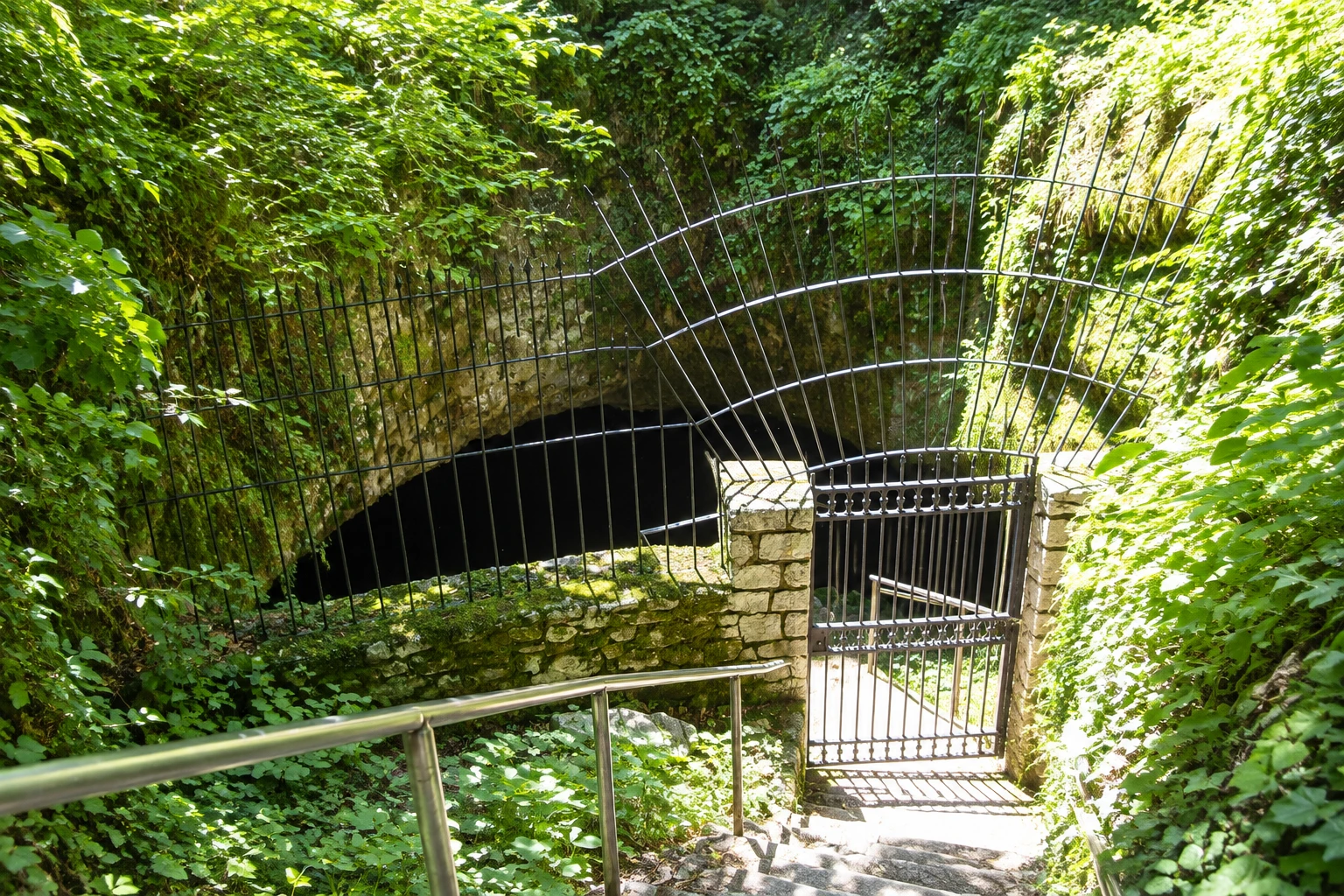
Vilenica Cave is near the village of Lokev and is presented as Europe’s oldest show cave: as early as 1633 it received visitors who came from Trieste to see the large limestone formations. Locals believed good fairies, the vile, lived there, which is where the name comes from. Until the mid-19th century it was the best-known and most-visited cave of the Karst; later interest declined, and it retained its old-fashioned character. The guided tour follows 450 meters of walkways among stalactites and stalagmites of varied shapes. In the hall called the dance hall the international Vilenica literary prize is awarded every year. The cave is open in the warm season, generally on Sunday afternoons and public holidays, and every day in August; groups arrange other times. In Lokev, near the Church of St. Michael, a 1485 defensive tower built by the Venetians against the Turks and later used as the village granary houses the Tabor Military Museum. The privately owned collection gathers equipment from both world wars and the Yugoslav army, as well as older pieces such as fragments of Roman weaponry and a Cossack uniform. The Church of St. Michael, rebuilt in 1613, has frescoes painted by Tone Kralj during World War II.
Stops: Vilenica Cave, Tabor Military Museum, Church of St. Michael, Lokev.
Includes: Guided cave tour has an extra fee; in August tickets are sold only online in advance. Entrance to the military museum is paid separately.
Tip: It’s usually cold inside the cave: bring a jacket and non-slip footwear. Confirm the day and time of the tour before you go, because outside August there are few departures.
Best time: From April to October; in August there are visits every day.
Living Karst Museum: sinkholes, dry stone walls and shepherds’ huts between Sežana and Lipica
From Sežana or Lipica Walk or bike on waymarked trails 2 to 4 hours morning or late afternoon easy
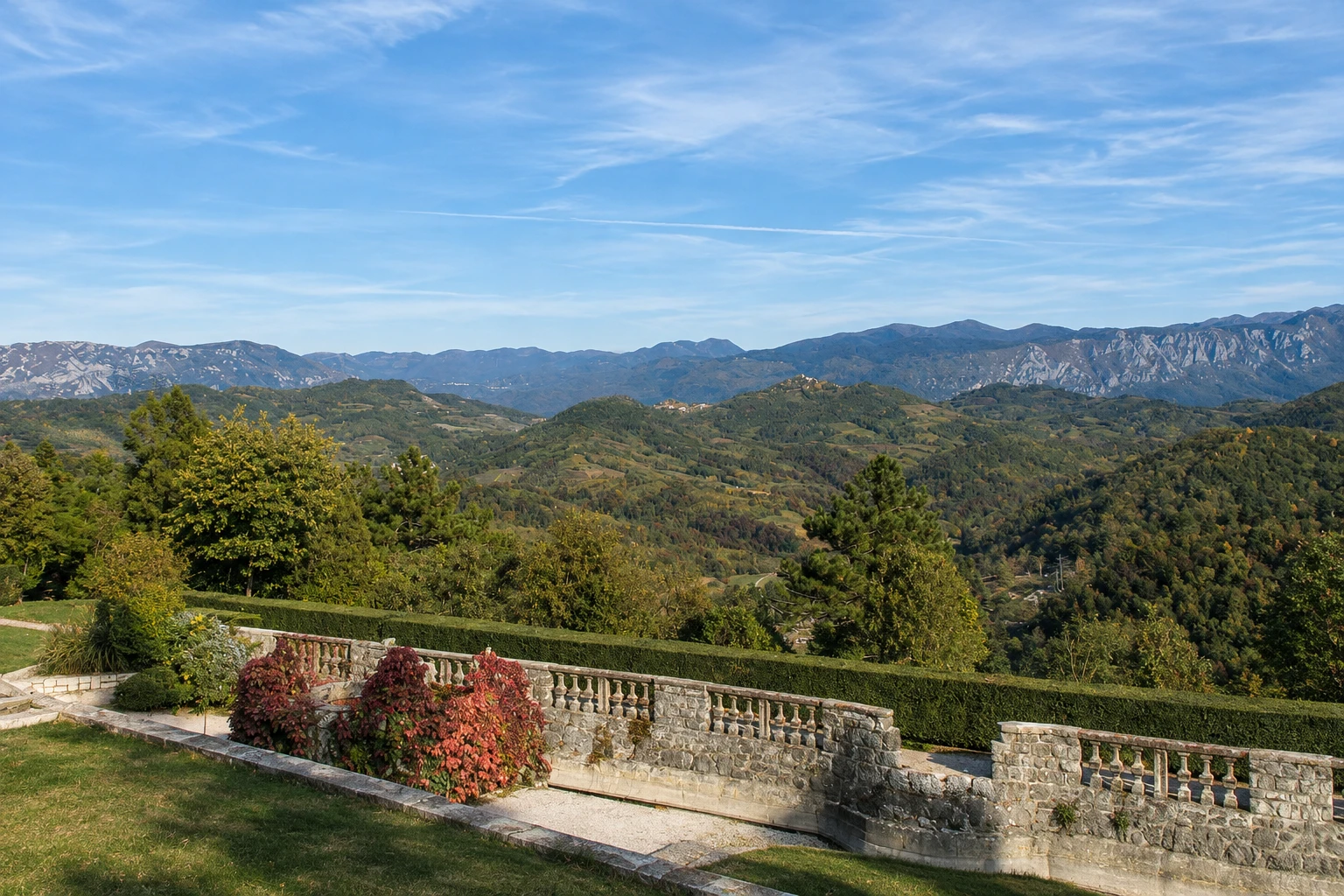
The Living Karst Museum (Živi muzej Krasa) has no walls: it is an area of more than 700 hectares between Sežana, Lipica and the former border between Slovenia and Italy, along what was an Austro-Hungarian road between Sežana and Basovizza. Few places gather so many karst phenomena in one space: sinkholes, collapse dolines, depressions, limestone pavements and caves. Because it lies next to the border, the area had restricted access for almost half a century; most of it is part of the Natura 2000 network. Waymarked thematic trails, some crossing the border, lead to wells, shepherds’ huts, limestone pavements, natural stone shapes that resemble mushrooms, an old powder magazine and Napoleon’s oak. The walls and huts are built of dry stone, a technique of stacking stones without mortar that UNESCO inscribed on the list of intangible cultural heritage in 2018; the huts served as shelter for shepherds, farmers and masons. On the edge of the area are Vilenica Cave and Gustinčič Cave, which is not open to visitors. Far below the surface runs the Reka River, called Timavo on the Italian side. The Alpe Adria Trail passes through here, as does an educational forest trail that ends at the Lipica Stud Farm.
Stops: Living Karst Museum (Živi muzej Krasa), Limestone pavement and sinkholes, Dry stone shepherds’ huts, Old powder magazine.
Includes: Free, self-guided; guided visits arranged with the Sežana tourist information centre, paid separately.
Tip: Bring water and a hat in summer. Walking time depends on the chosen route; ask for a map at the Sežana tourist information centre.
Best time: From April to June and from September to October; in summer, early morning or late afternoon.
Sežana: Mirasasso village Botanical Garden and Kosovel’s memorial room
From Sežana town centre Walk through the town centre about 2 hours morning or afternoon easy
Sežana Botanical Garden is next to the Mirasasso villa in the town centre and is protected as a horticultural monument. It began in 1848, when the Scaramangà family from Trieste started creating a garden beside the villa and filling it with plants from different parts of the world; the family cared for it until the end of World War II, when the garden was nationalized and opened to the public. Cedars about 150 years old, boxwoods clipped into circular beds, flowering pergolas and the palm greenhouse, a replica of the one at Schönbrunn Palace in Vienna, shape the place. The collection has about 200 plants: cedar of Lebanon, giant sequoia, Spanish fir, yew, olive, Osage orange with its large green fruits, cacti and exotic flowers, alongside the typical Karst flora. In the exhibition pavilion there is a small natural history museum and a presentation about the park’s history. Also in Sežana, the house where Srečko Kosovel (1904–1926), poet, critic and publicist who devoted much of his work to the Karst, was born preserves a memorial room. The space opened in 1976 and was redesigned in 2014, showing the author’s life and literary work.
Stops: Sežana Botanical Garden, Mirasasso Villa, Srečko Kosovel memorial room.
Includes: Garden entry ticket is paid separately, with a family ticket option; Kosovel’s room has reduced hours and a combined visit is recommended.
Tip: The garden is open every day, with shorter hours in winter. The memorial room is open only on some weekdays and for a few hours: book ahead so you don’t find it closed.
Best time: From April to October for the blooming garden; the greenhouse is worthwhile year-round.
Srečko Kosovel Trail: from Sežana to Tomaj through pines and vineyards
From Srečko Kosovel’s birthplace, Sežana Hike on a marked trail about 2 h 30 (7 km, one way) morning easy
The trail recalls Srečko Kosovel, the great Slovenian avant‑garde poet. It begins in front of the house where he was born in Sežana, skirts Tabor hill and follows an old cart track to Tomaj, the village where his family lived. It is an easy 7 km, through small pine woods, across the rocky pasture fields locals call gmajna and alongside vineyards. Along the way are the village of Šmarje and the Pustov Hram cave, with easy access. In Tomaj, the Kosovel House has been restored and serves as a cultural center and museum: the rooms keep the look of the house and, with objects, personal stories and multimedia, tell the family’s daily life, relationships and their bond with the landscape. The visit is guided. If you don’t want to walk the 7 km back, arrange transport to Sežana or continue to Dutovlje, the teran wine village. The route shows up close the landscape that appears in the poems: rock, pine, red earth and vine.
Stops: Srečko Kosovel memorial room, Šmarje, Pustov Hram cave, Kosovel House, Tomaj.
Includes: Trail is free, no fee; guided visit to the Kosovel House is paid separately.
Tip: The Kosovel House is open only some days of the week and for a few hours: check the opening times before you set off to arrive in Tomaj while it is open. Bring water.
Best time: From April to June and from September to October.


 Brazil
 Antarctica
 Argentina
 Bolivia
 Chile
 Colombia
 Ecuador
 Falkland Islands (Malvinas)
 French Guiana
 Guyana
 Paraguay
 Peru
 Suriname
 Uruguay
 Venezuela
 Austria
 Belgium
 Croatia
 Denmark
 Finland
 France
 Germany
 Greece
 Hungary
 Iceland
 Ireland
 Italy
 Luxembourg
 Norway
 Poland
 Portugal
 Slovakia
 Spain
 Sweden
 Switzerland
 the Czech Republic
 the Netherlands
 the United Kingdom
 Turkey
 Bermuda
 Canada
 Greenland
 Mexico
 Saint Pierre and Miquelon
 the United States
 the Dominican Republic
 Japan
 Egypt
 South Africa
 Australia
 Fiji
 New Zealand
 Papua New Guinea