

 Brazil
 Argentina
 Bolivia
 Chile
Chile Colombia
 Ecuador
 Guyana
 French Guiana
 Falkland Islands (Malvinas)
 Paraguay
 Peru
Peru Suriname
 Uruguay
 Germany
 Belgium
 Denmark
 Spain
Spain France
 Greece
 the Netherlands
 Ireland
 Italy
Italy Luxembourg
 Norway
 Portugal
 the United Kingdom
 Sweden
 Switzerland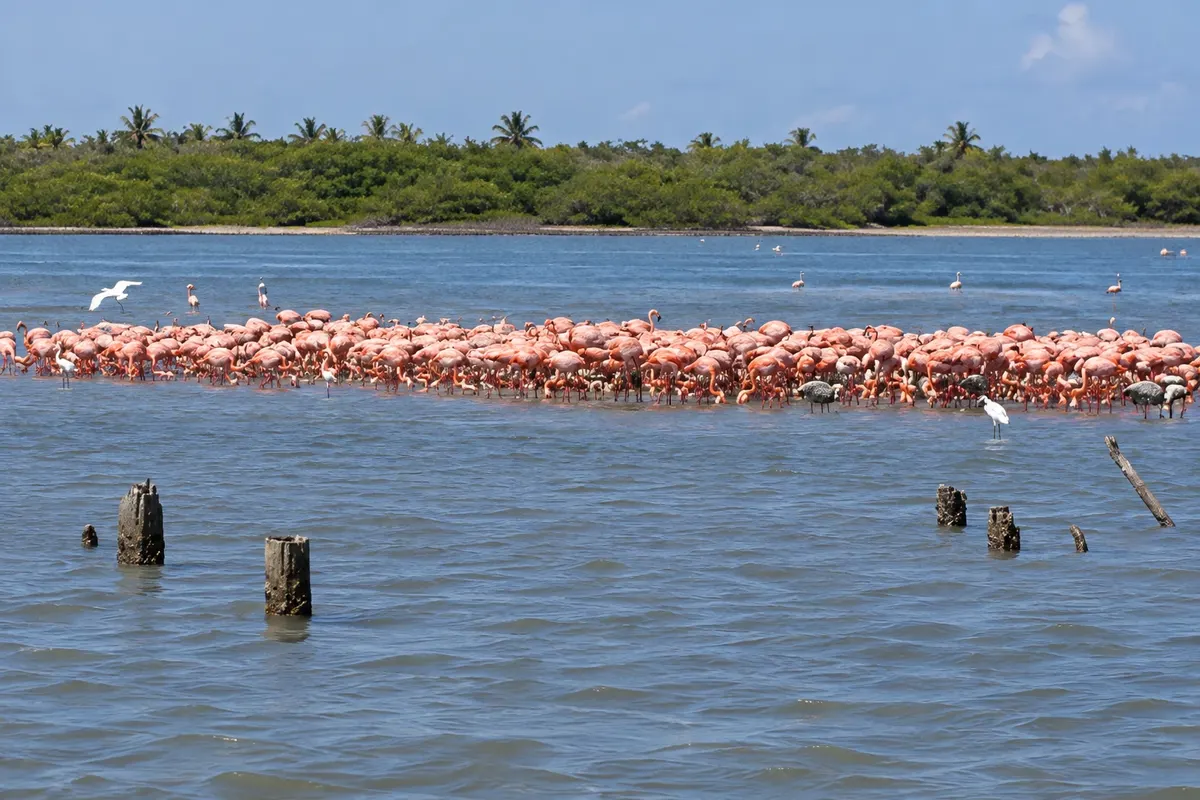
Natural area · Chichiriviche, Falcón
Refugio de Fauna Silvestre de Cuare
Protected area of mangroves and lagoons next to Parque Morrocoy, with flamingos, red corocoras and the Cueva de la Virgen, a cave in the cliff.
Illustrative images. The pictures in this guide are illustrations based on the real place, not photographs, and may differ from it.

Discover
About Refugio de Fauna Silvestre de Cuare
The Refugio de Fauna Silvestre de Cuare is on the eastern coast of the state of Falcón, next to Parque Nacional Morrocoy, west of Chichiriviche. Created in 1972, it is an area of mangroves, lagoons, cerros and the Golfete de Cuare, and is a Ramsar site of international importance for waterbirds.
The refuge is home to about 300 bird species. The most sought-after are the flamingos, which usually feed in the shallow lagoons, and the red corocoras, birds of bright red color, as well as herons and migratory birds.
Boat tours depart from Chichiriviche, cross the mangrove channels and usually stop at the Cueva de la Virgen, a cave in the limestone cliff at the water's edge, with an image of the Virgin and offerings from fishermen.
Animals should be observed from a distance, without disturbing the flocks.
Before you go
Practical information
Cidade Turismo reviews its information regularly, but something may have changed. Check with the place before planning your trip.
How much time to set aside
2 to 3 hours by boat.
Best time
Early morning or late afternoon, when birds are usually more active. The presence of flamingos varies by season: ask at the pier before going.
How to get there
Boat tours depart from the piers of Chichiriviche. Arrange the route with the boat operator: mangroves, lagoons and the Cueva de la Virgen.
Tip
Ask the boat operator to keep distance from flamingos and to turn off the engine near the flocks. Bring binoculars and a hat.
Get your questions answered
Frequently asked questions about Refugio de Fauna Silvestre de Cuare
Do the flamingos appear year-round?
Their presence varies with the season and the conditions of the lagoons. Ask at the pier before the trip.
What is the Cueva de la Virgen?
A cave in the cliff at the water's edge, with an image of the Virgin and offerings from fishermen. Boat tours usually stop there.
What birds are seen in Cuare?
Flamingos, red corocoras, herons and migratory birds, among about 300 species.