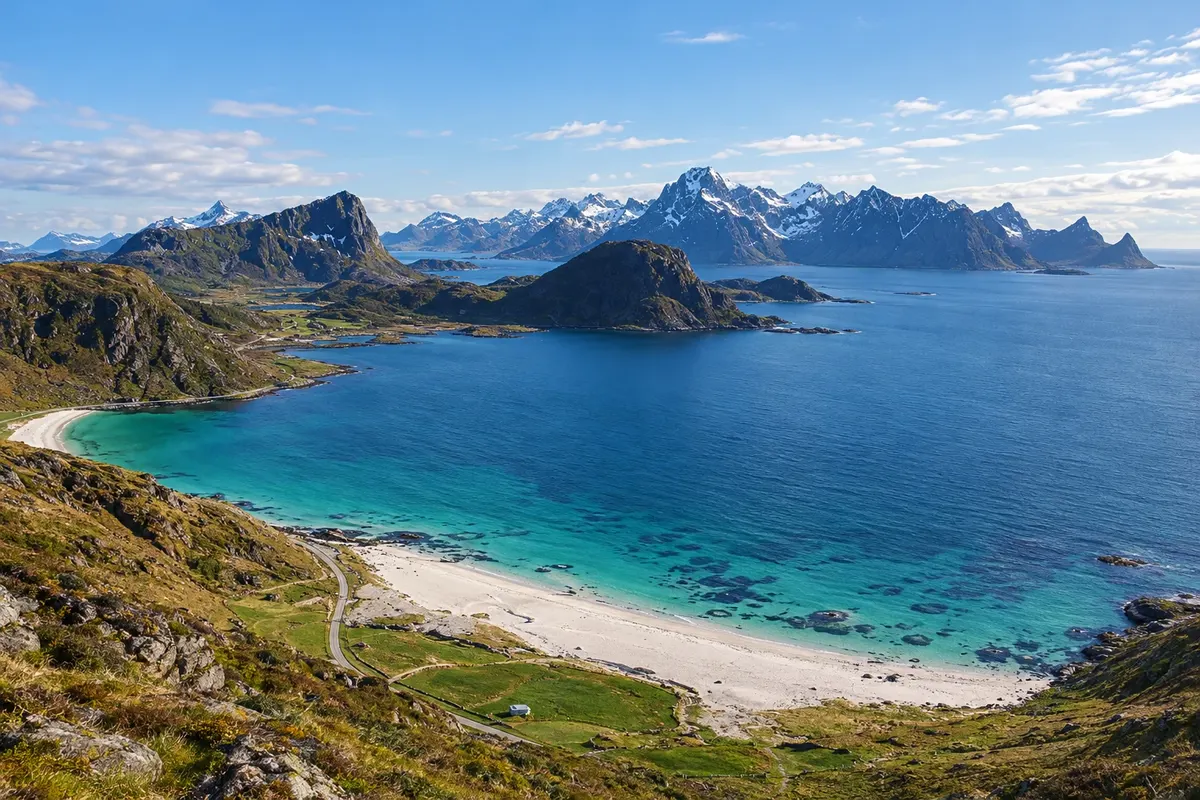
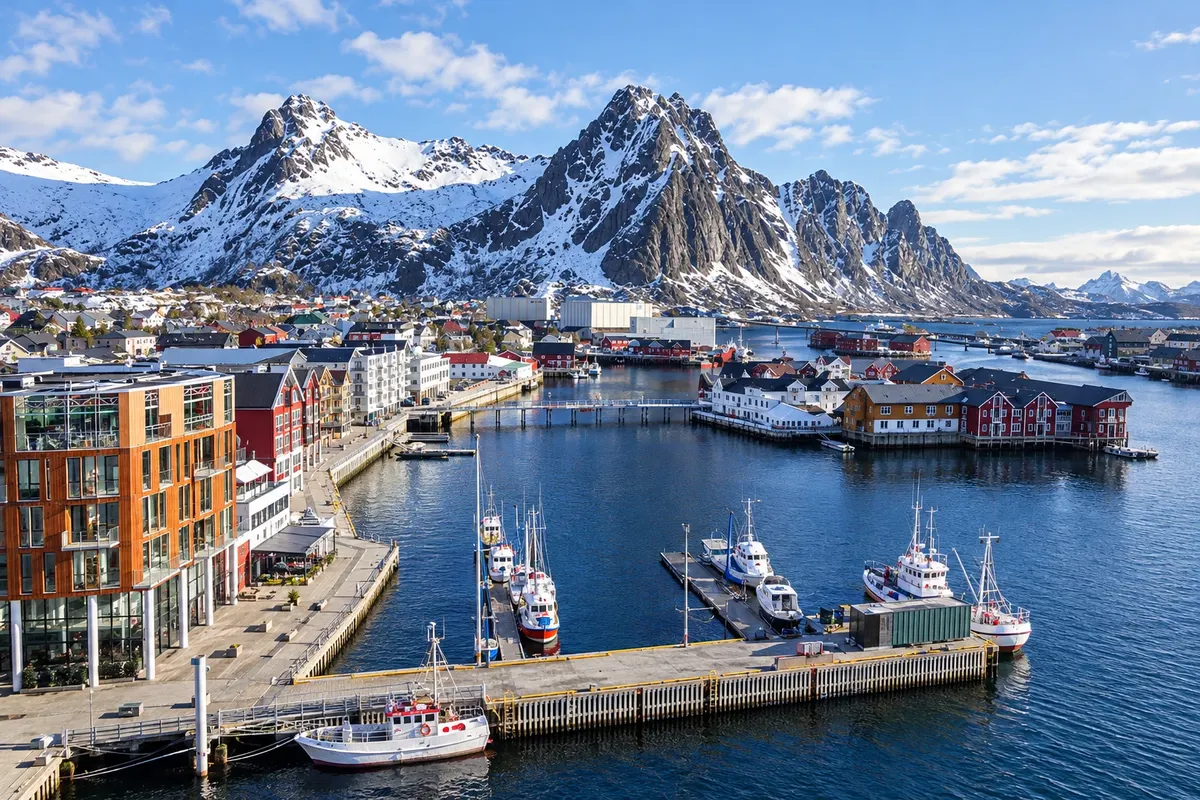
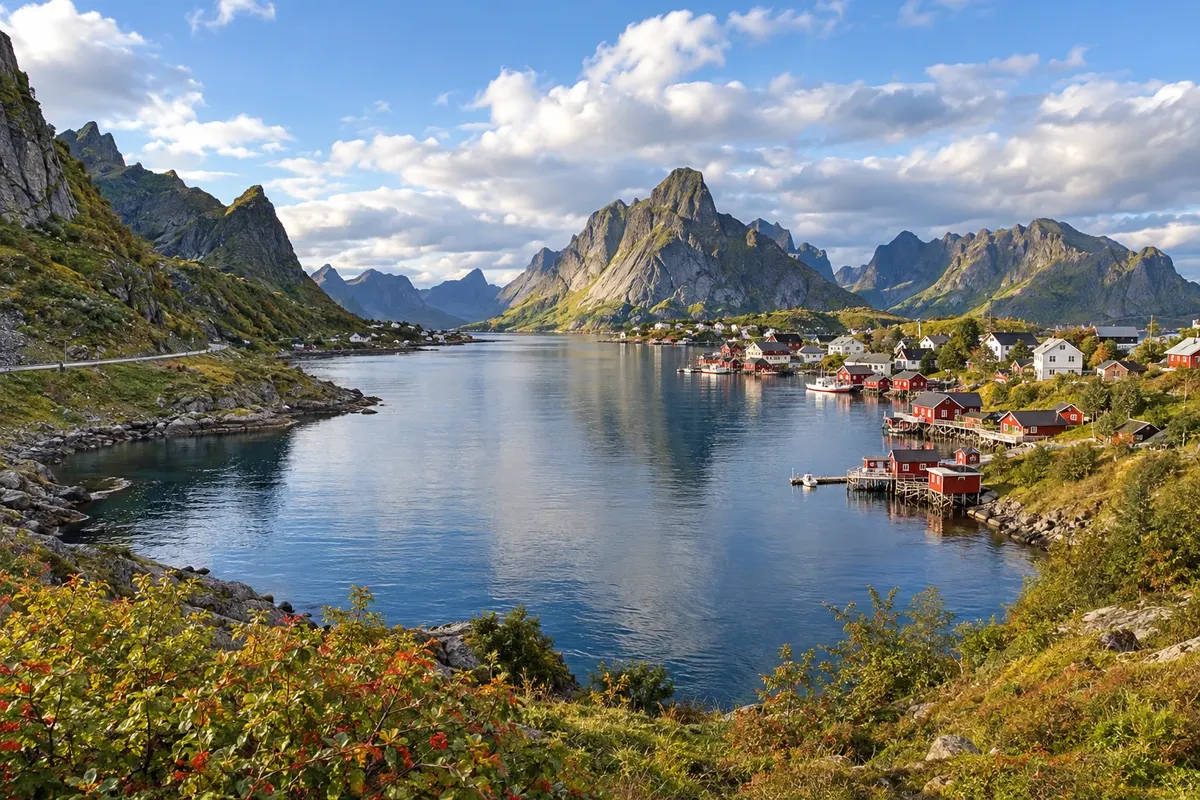
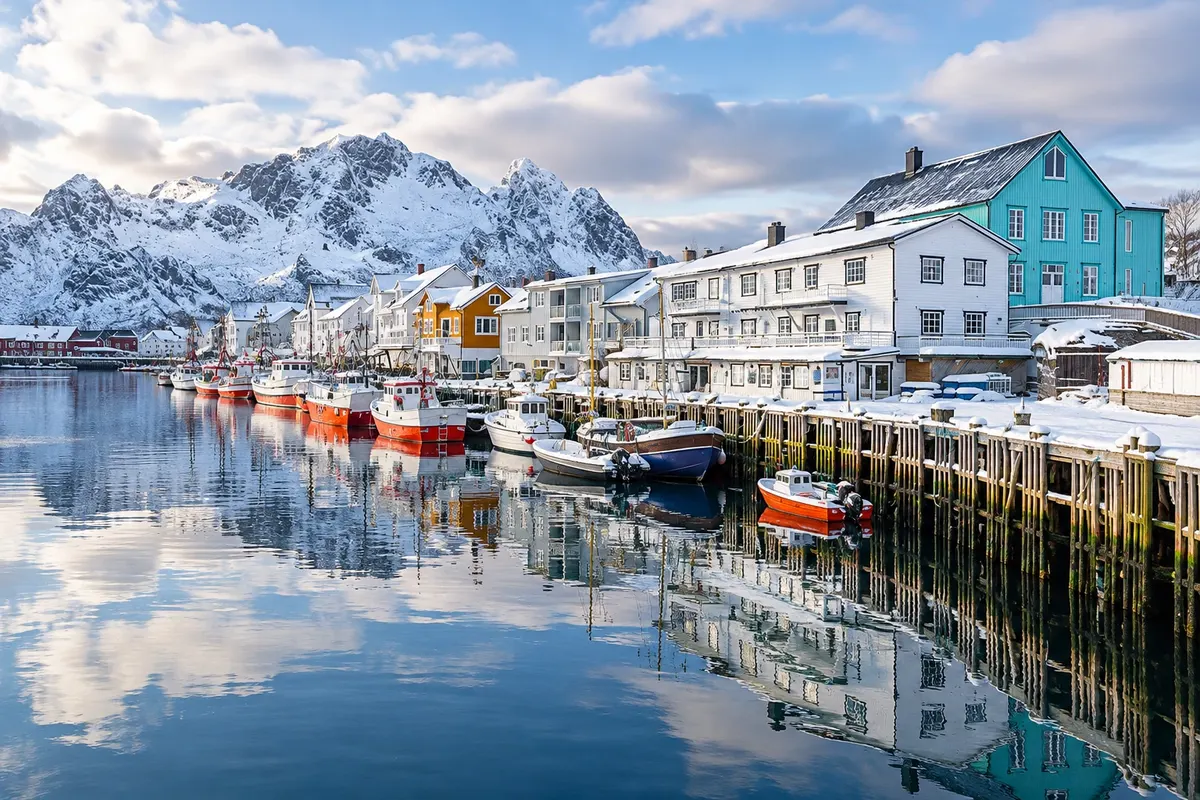
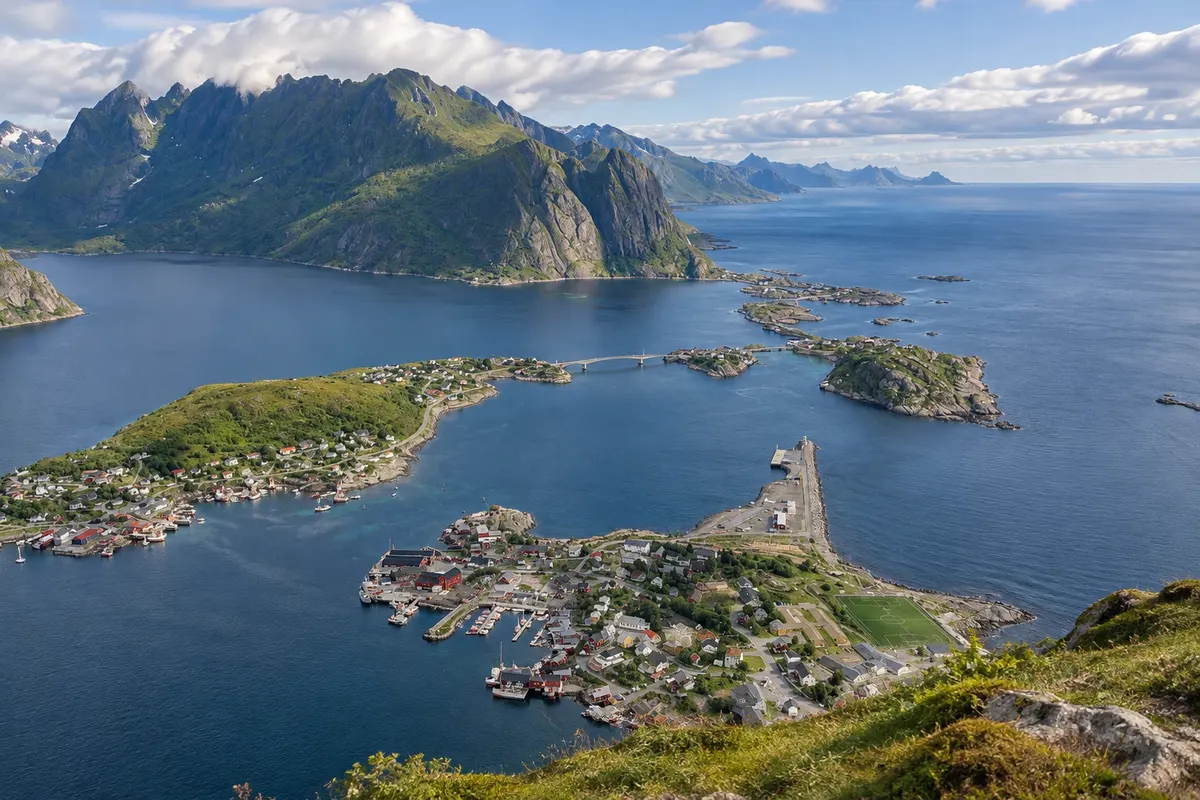
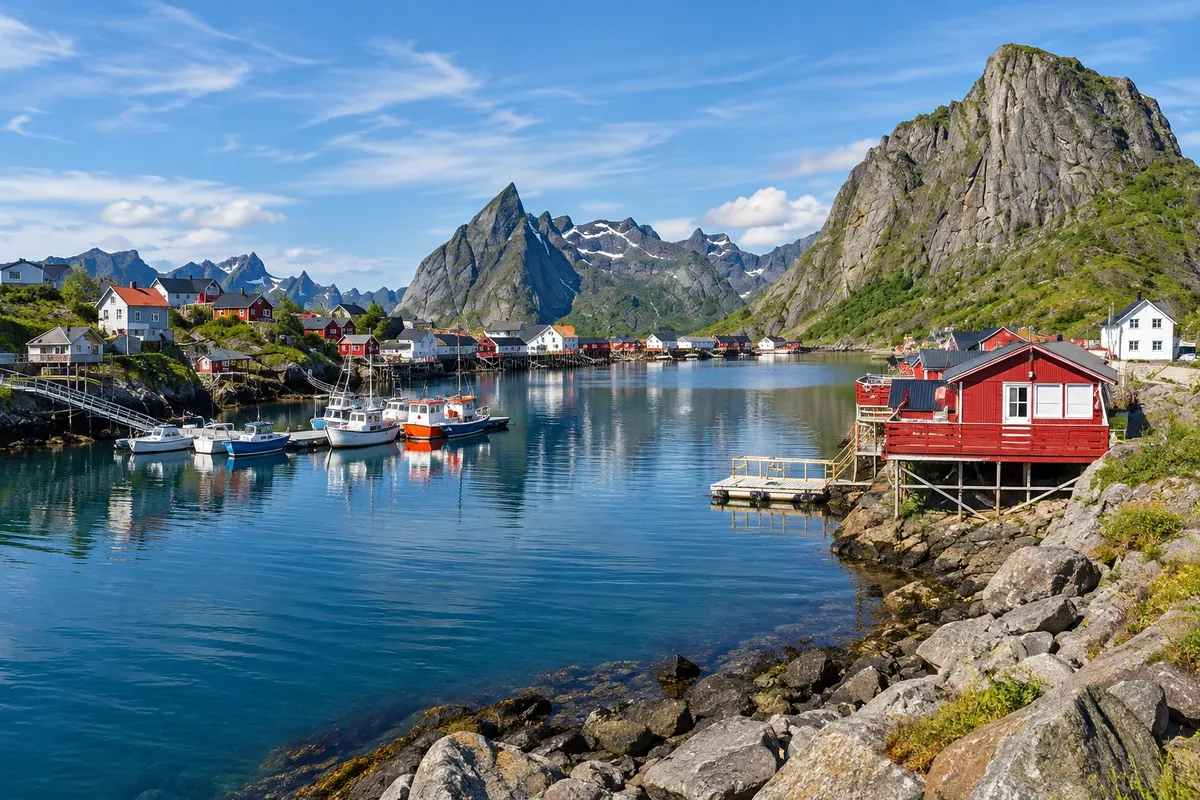
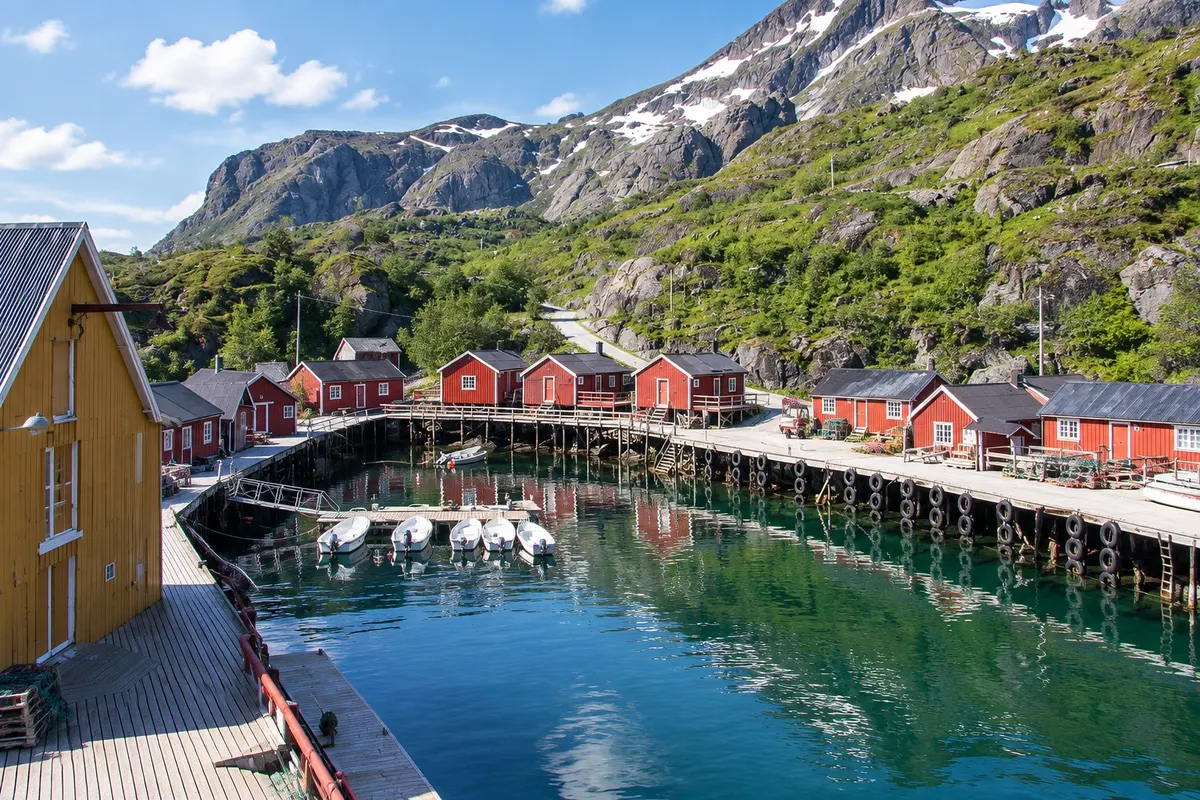
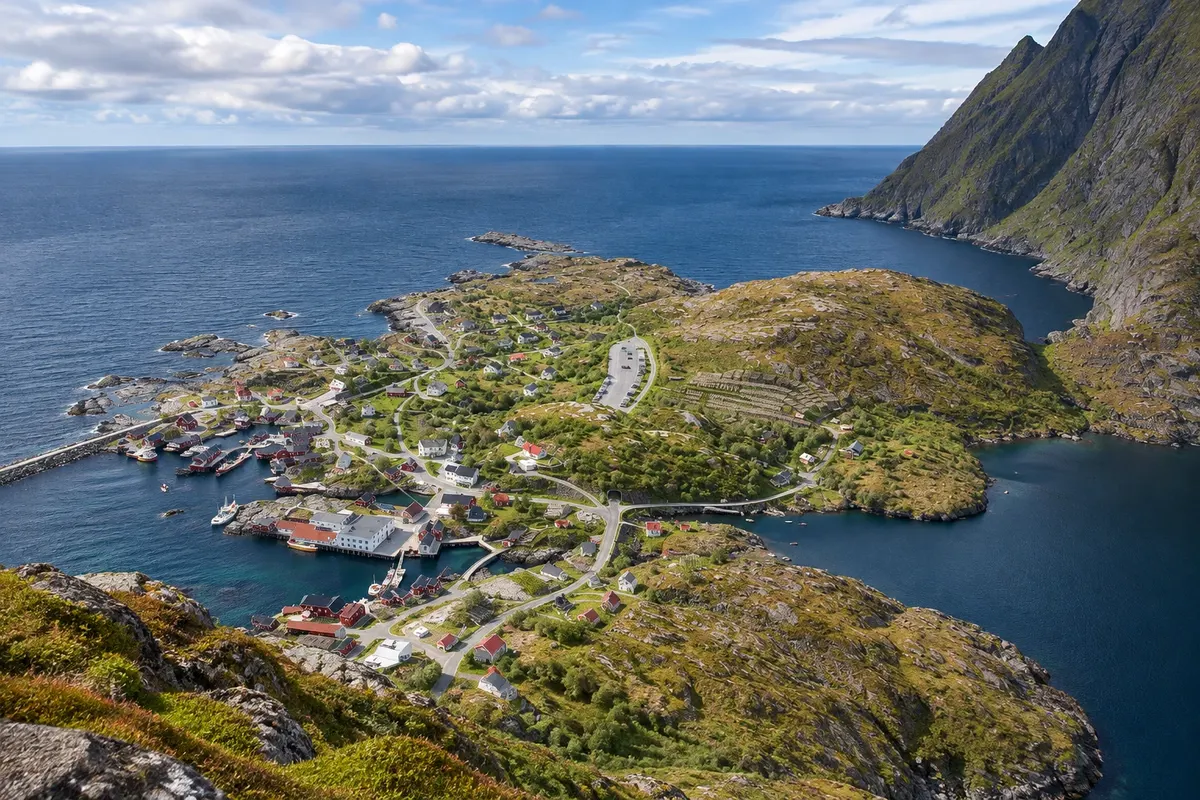
Lofoten is an archipelago in northern Norway, about 100 km above the Arctic Circle, made up of mountainous islands that stretch roughly 150 km out to sea from the mainland. Sharp granite mountains rise straight from the sea, and in the fjords between them are fishing villages with the rorbuer—red and yellow wooden houses on stilts where fishermen stayed during the cod season.
The skrei fishery, the cod that comes from the Barents Sea to spawn, usually runs from January to April and has supported the islands for over a thousand years. From February to June, wooden racks with cod drying outdoors appear in almost every village, and the dried fish, tørrfisk, is exported to Europe. Islanders also rely on tourism, and many rorbuer have become lodging.
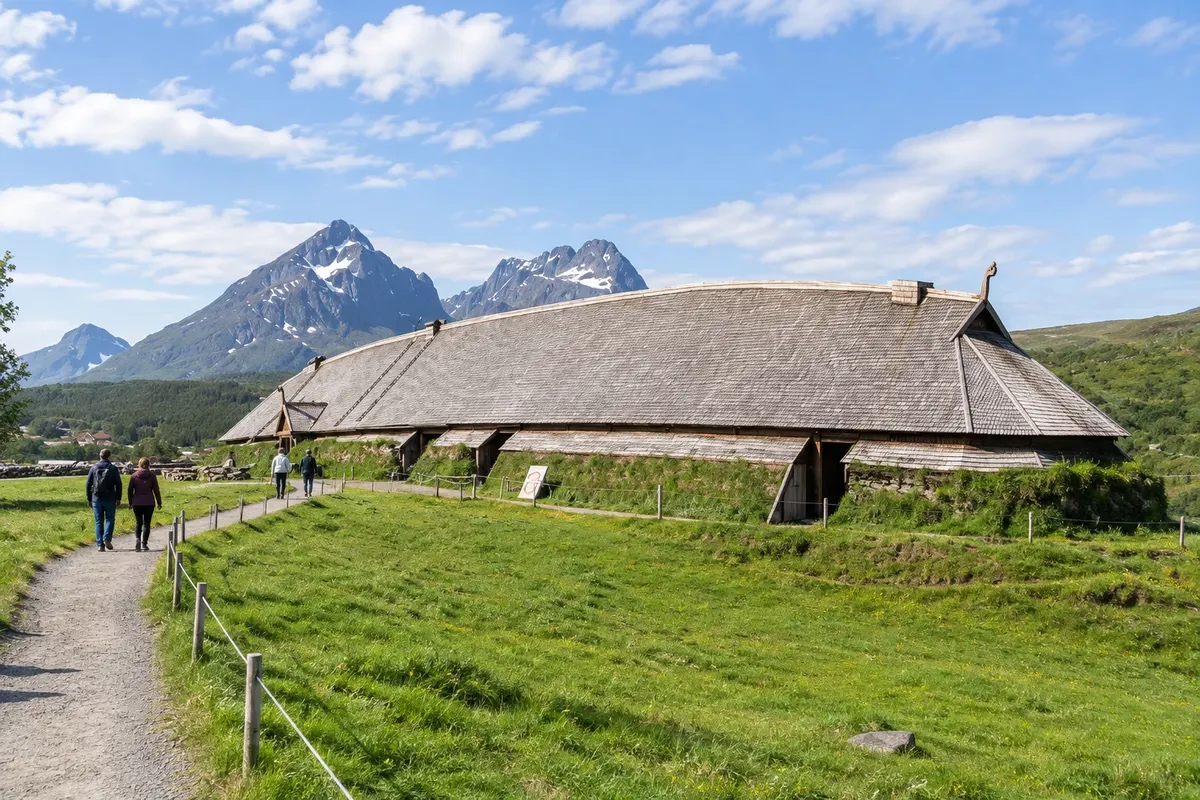
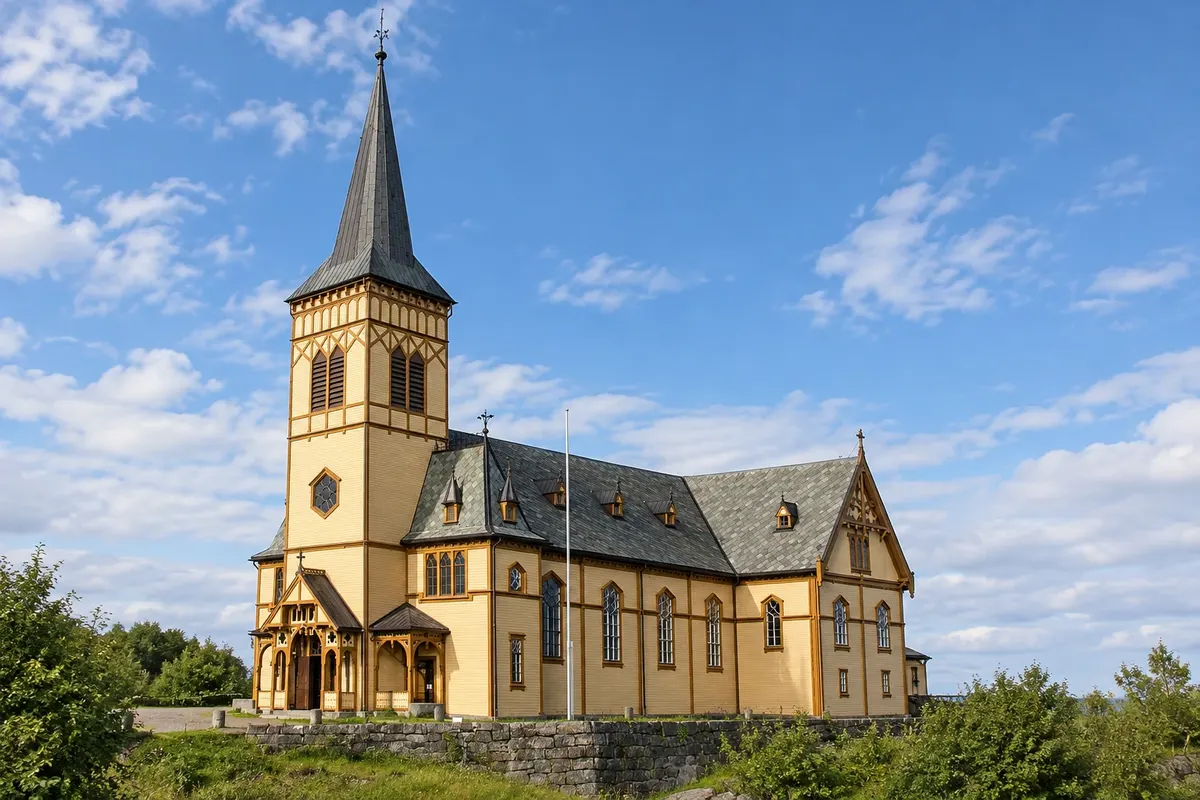
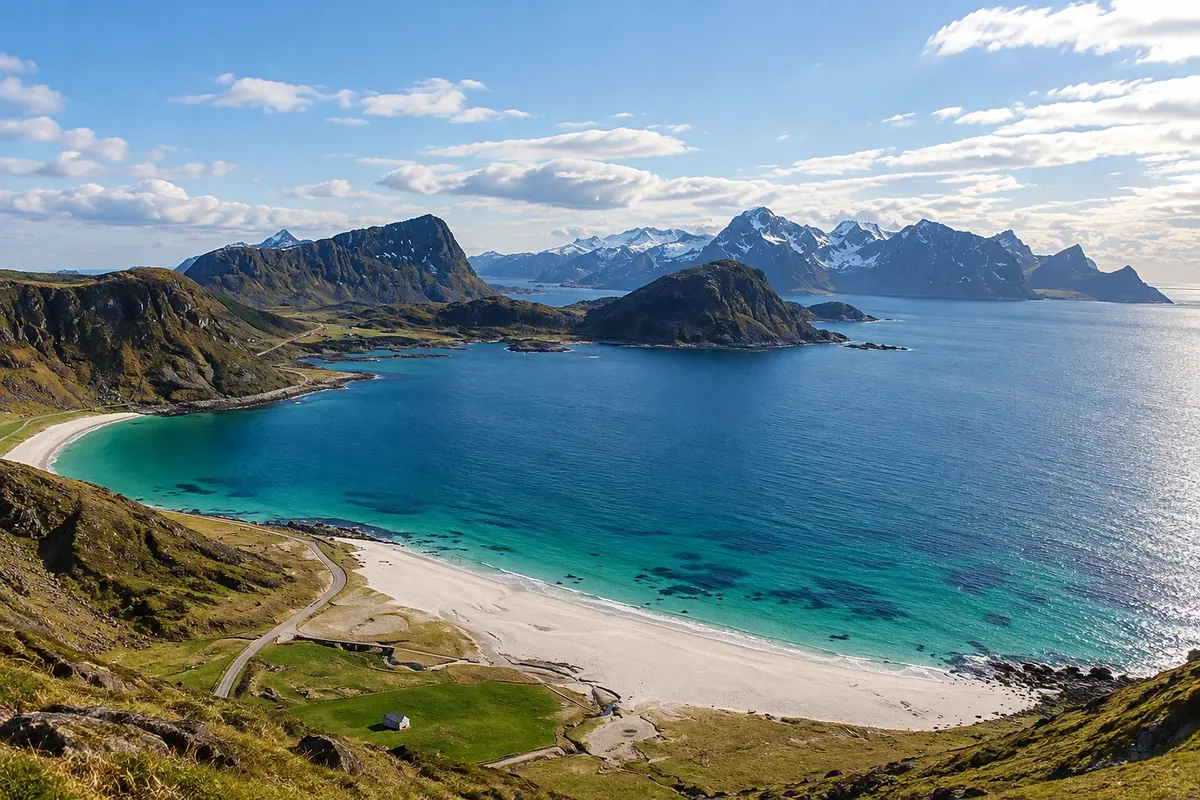
Svolvær, the largest town, is the gateway, with an airport, Hurtigruten port and access to Henningsvær, the village on small islets, and Kabelvåg, with the wooden church called the Lofoten Cathedral. In the center of the archipelago, at Borg, the Lofotr Viking Museum has reconstructed a chieftain's longhouse. In the west, near Reine, the villages of Hamnøy, Nusfjord and Å sit among peaks and bays, with the Reinebringen trail and beaches like Haukland and Ramberg.
The midnight sun is typically visible from late May to mid-July, and the northern lights from September to March on clear nights.
This destination brings together 2 cities: Svolvær, Reine.


 Brazil
 Argentina
 Bolivia
 Chile
Chile Colombia
 Ecuador
 Guyana
 French Guiana
 Falkland Islands (Malvinas)
 Paraguay
 Peru
Peru Suriname
 Uruguay
 Venezuela
 Germany
 Belgium
 Denmark
 Spain
Spain France
 Greece
 the Netherlands
 Ireland
 Italy
Italy Luxembourg
 Portugal
 the United Kingdom
 Sweden
 Switzerland