

 Brazil
 Argentina
 Bolivia
 Chile
Chile Colombia
 Ecuador
 Paraguay
 Peru
Peru Uruguay
 Germany
 Belgium
 Spain
Spain Greece
 the Netherlands
 Ireland
 Italy
Italy Luxembourg
 Portugal
 the United Kingdom
 Switzerland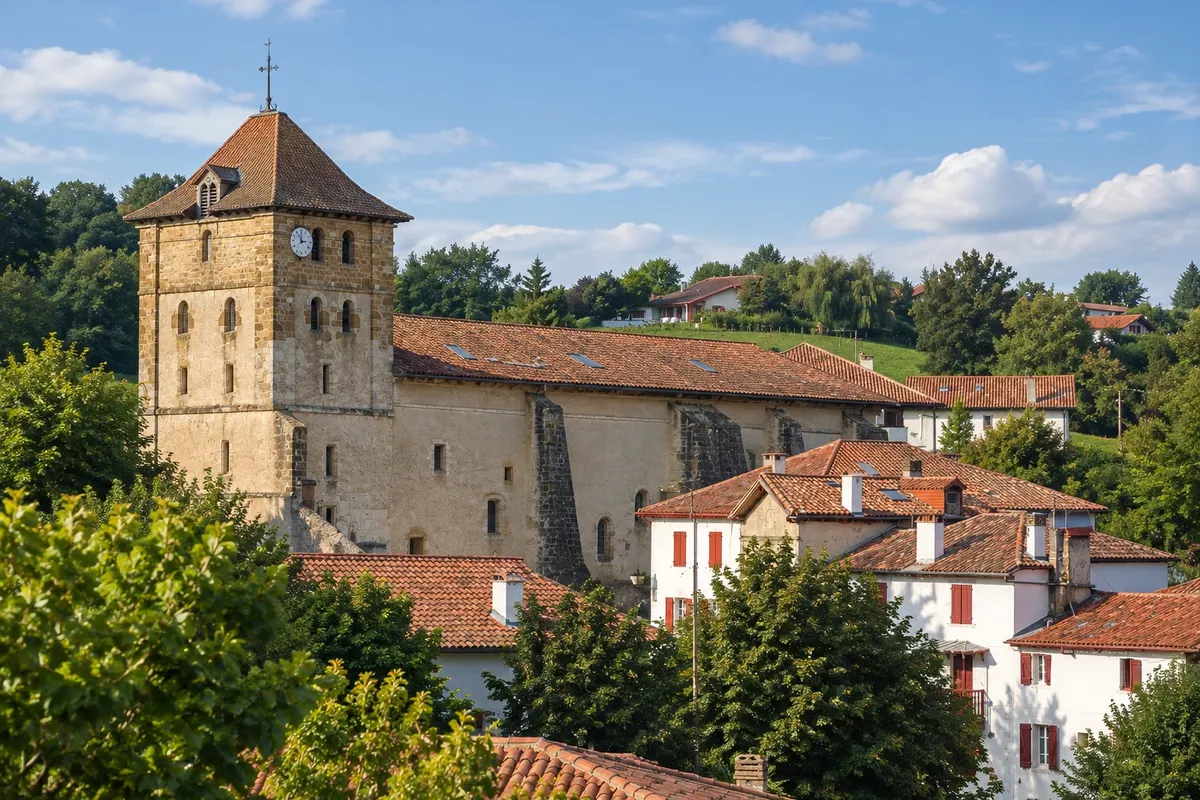
Town · Saint-Jean-de-Luz, Nova Aquitânia
Espelette
The Basque village famous for its denomination-of-origin pepper, with white houses with red timbering draped in strings of peppers in autumn, the barons' castle and the pepper festival in October.
Illustrative images. The pictures in this guide are illustrations based on the real place, not photographs, and may differ from it.

Discover
About Espelette
Espelette (Ezpeleta in Basque) is a small inland village in Labourd, at the foot of the hills leading to the Pyrenees, about 22 km from Bayonne and some 25 km from Saint-Jean-de-Luz. It is known for the Espelette pepper, the piment d'Espelette, grown in the village and neighbouring communes, with protected designation of origin since 2000.
From September the red peppers are hung in strings to dry on the facades and balconies of the white houses with red timbering, and the village becomes fully decorated. On the last weekend of October the pepper festival attracts thousands of people, with a market, music and a harvest celebration. Year-round shops sell the pepper as powder, paste and jam.
In the centre stands the castle of the barons of Ezpeleta, which has belonged to the commune since the late 17th century and is a listed historic monument. A little away from the centre, the church of Saint-Étienne has a keep-like tower, wooden galleries and painted 17th-century ceilings. The village is also known for breeding pottok, the small Basque horses, with a fair at the end of January. Agnès Souret, the first Miss France (1920), lived here and is buried here.
Before you go
Practical information
Cidade Turismo reviews its information regularly, but something may have changed. Check with the place before planning your trip.
How much time to set aside
Two to three hours, including lunch.
Best time
From September to November, when strings of peppers cover the facades, and on the last weekend of October, for the pepper festival, which fills the village. In July and August, arrive early to find parking.
How to get there
By car, about 25 km from Saint-Jean-de-Luz and 22 km from Bayonne. There are regional buses from Bayonne, with limited schedules. It pairs well on the same day with the La Rhune train in Sare and the village of Ainhoa.
Tip
Try the pepper in regional dishes such as axoa, the traditional veal stew of Espelette. The pepper has a mild heat. At the October festival, arrive early and use the parking areas at the village entrances.
Get your questions answered
Frequently asked questions about Espelette
What is piment d'Espelette?
It is a red pepper grown in Espelette and neighbouring municipalities, with a protected designation of origin since 2000. It has a mild heat and is used dried, powdered, in many Basque dishes.
When is the Espelette pepper festival?
On the last weekend of October. Check the dates for the specific year before you go; the village gets very crowded.
When are the peppers hung on the houses?
From September onwards, after the harvest, the strings of peppers are hung to dry on façades and balconies, and usually stay up until the end of autumn.
Can you get to Espelette without a car?
Yes, by regional bus from Bayonne, but with limited schedules. By car, you can combine Espelette with La Rhune and Ainhoa in the same day.