Porto–Vigo–Santiago de Compostela by train
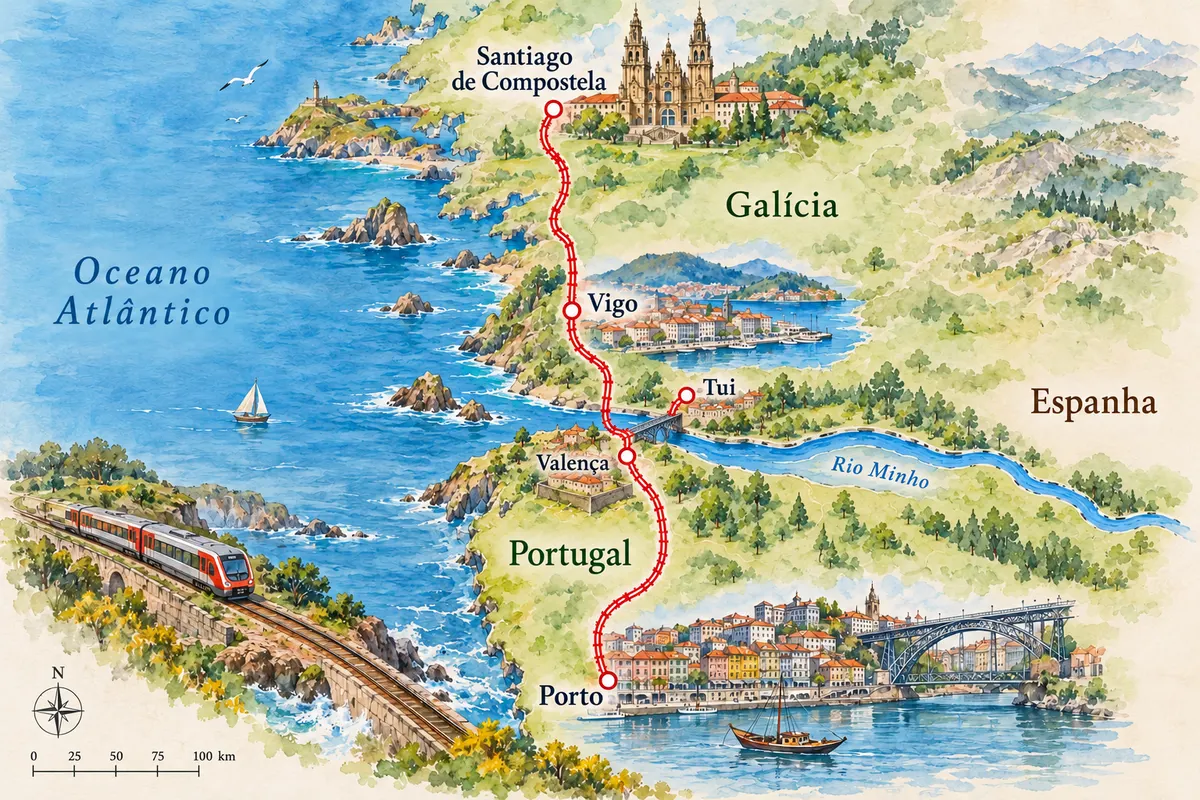
From Porto to Galicia by train: the Celta crosses the Minho to Vigo, and a regional train takes about an hour to reach Santiago de Compostela.
Autonomous community · North
Illustrative images. The pictures in this guide are illustrations based on the real place, not photographs, and may differ from it.
Routes

From Porto to Galicia by train: the Celta crosses the Minho to Vigo, and a regional train takes about an hour to reach Santiago de Compostela.

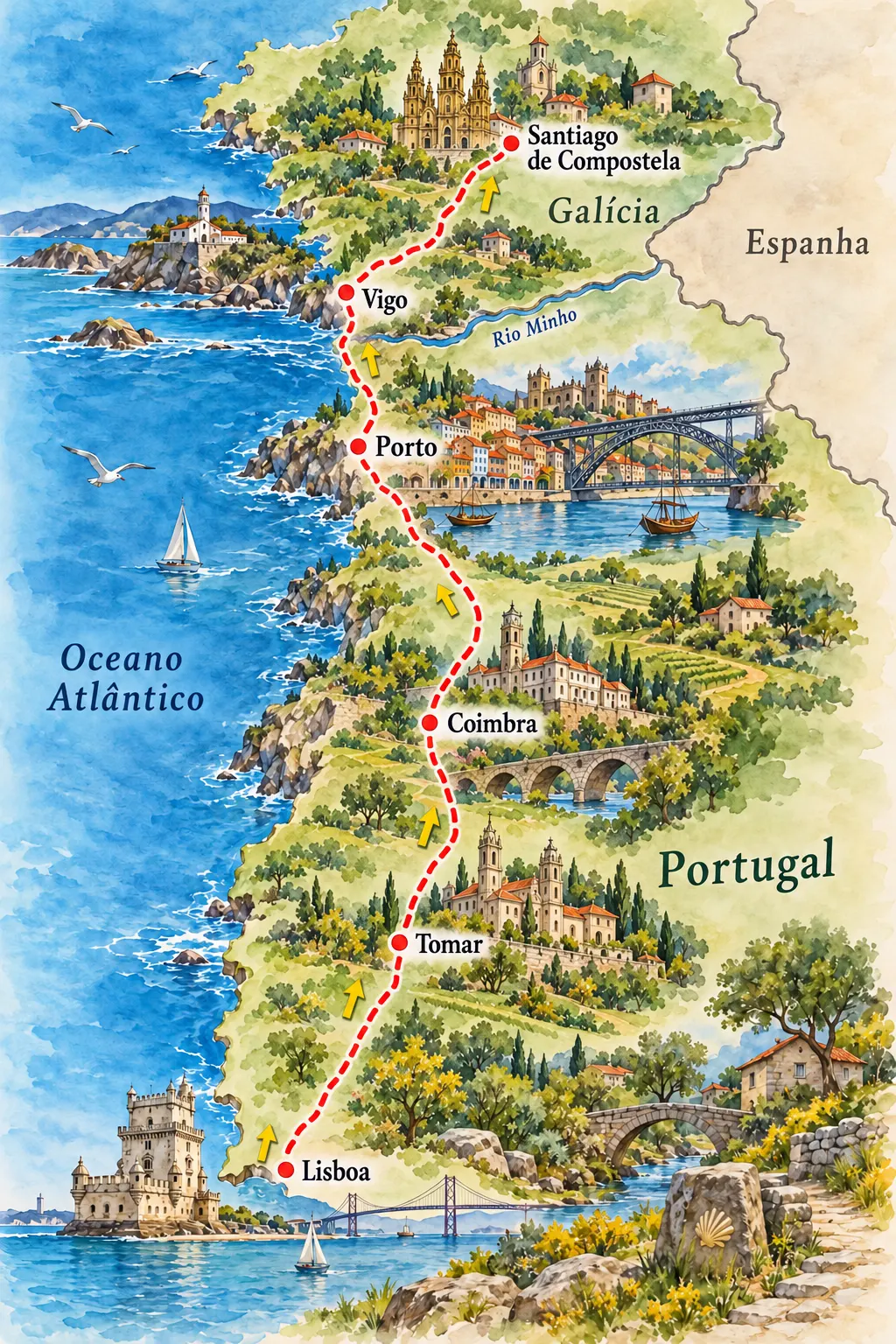
On foot from Portugal to Santiago de Compostela: the pilgrimage route that starts in Lisboa or Porto, follows the yellow arrows and ends at the praça do Obradoiro.

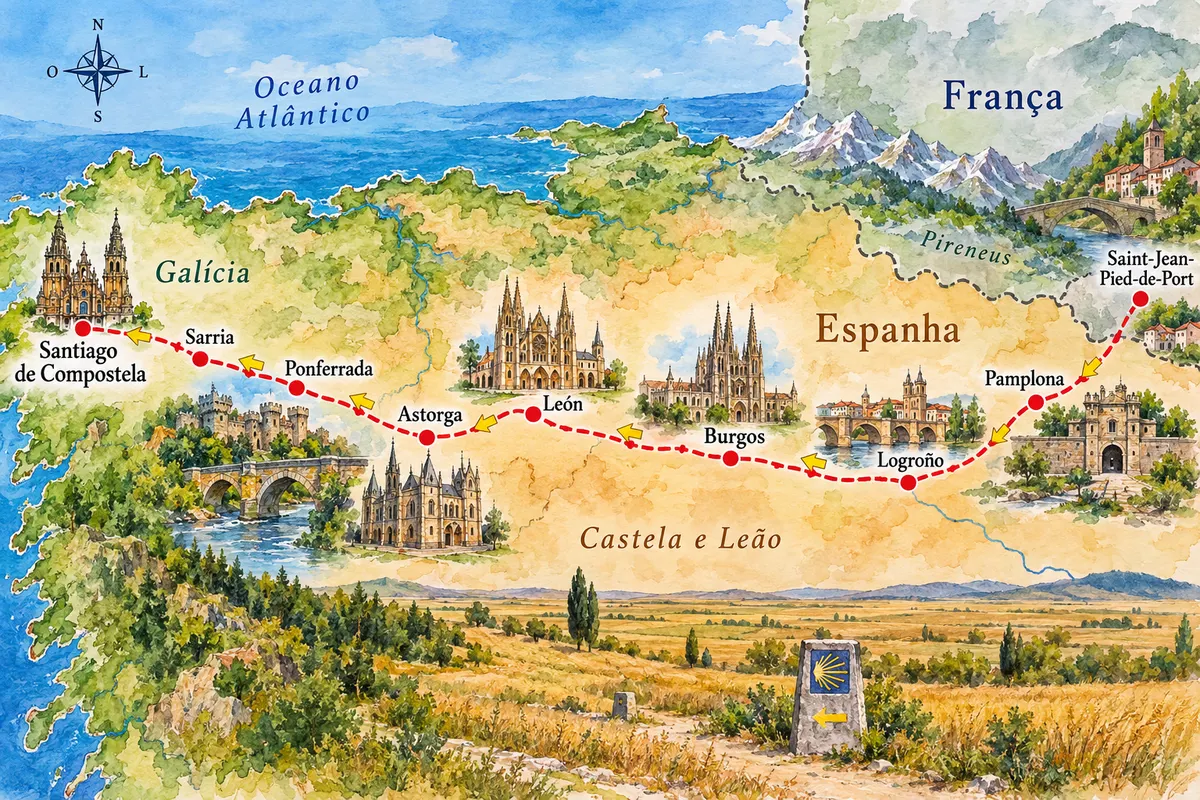
The most walked pilgrimage route to Santiago de Compostela: from the French Pyrenees to Galicia, on foot, via Pamplona, Burgos and León, following the yellow arrows.

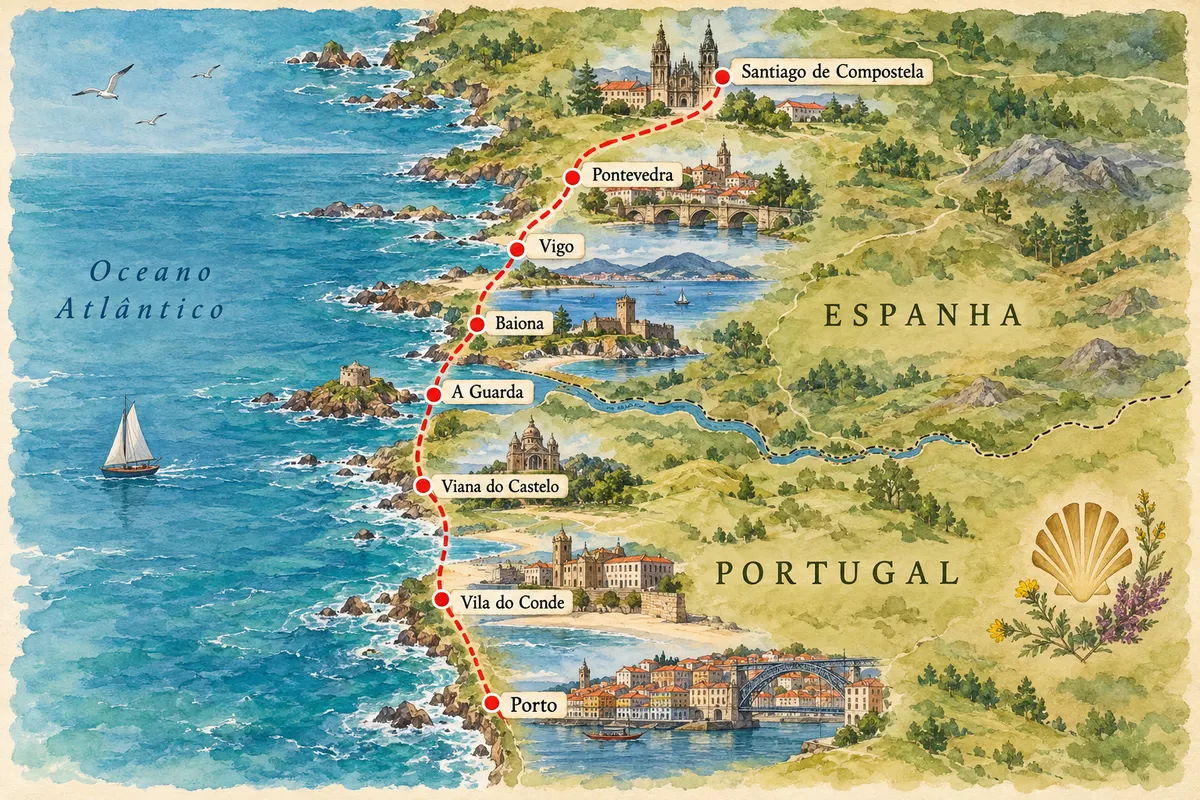
The Camino de Santiago along the Atlantic: from Porto to Galícia along the coast, via Vila do Conde, Viana do Castelo, A Guarda, Baiona and Vigo, to the cathedral of Santiago.

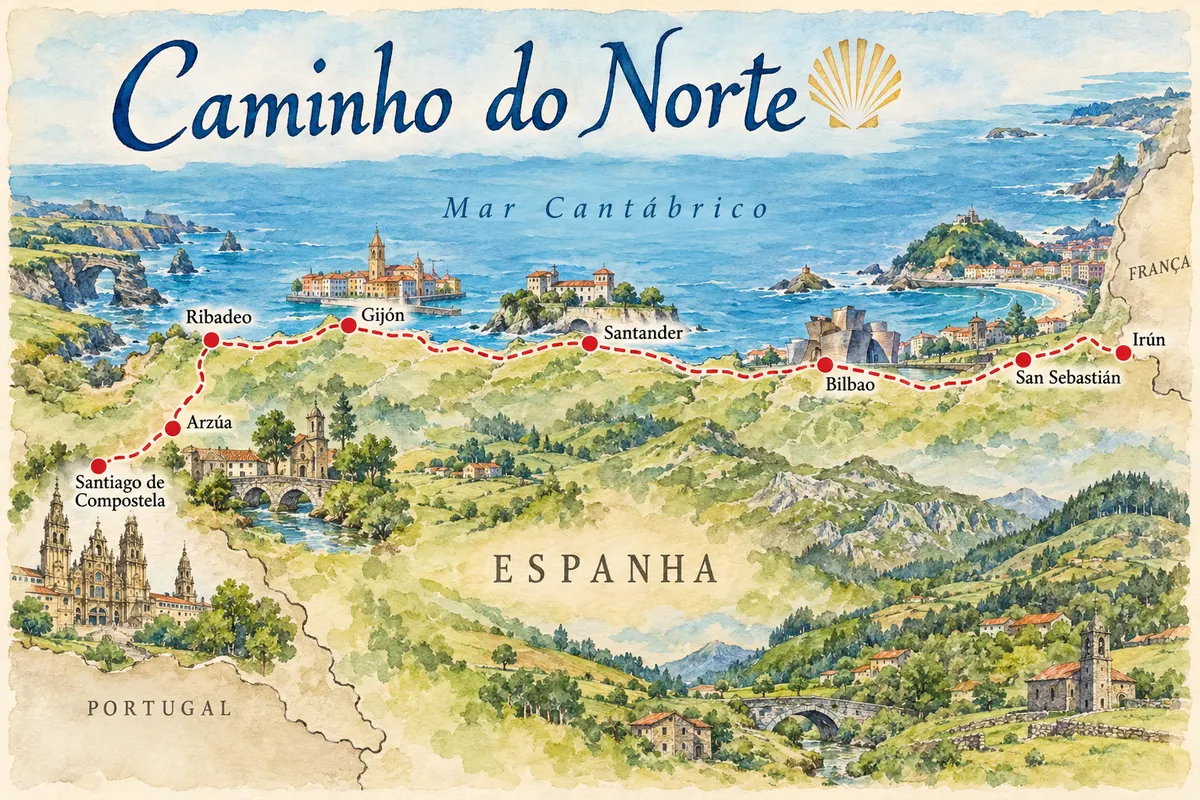
The Camino de Santiago along the Cantabrian coast: from the Basque Country to Galicia on foot, via San Sebastián, Bilbao, Santander and Gijón, between the sea and the green mountains.

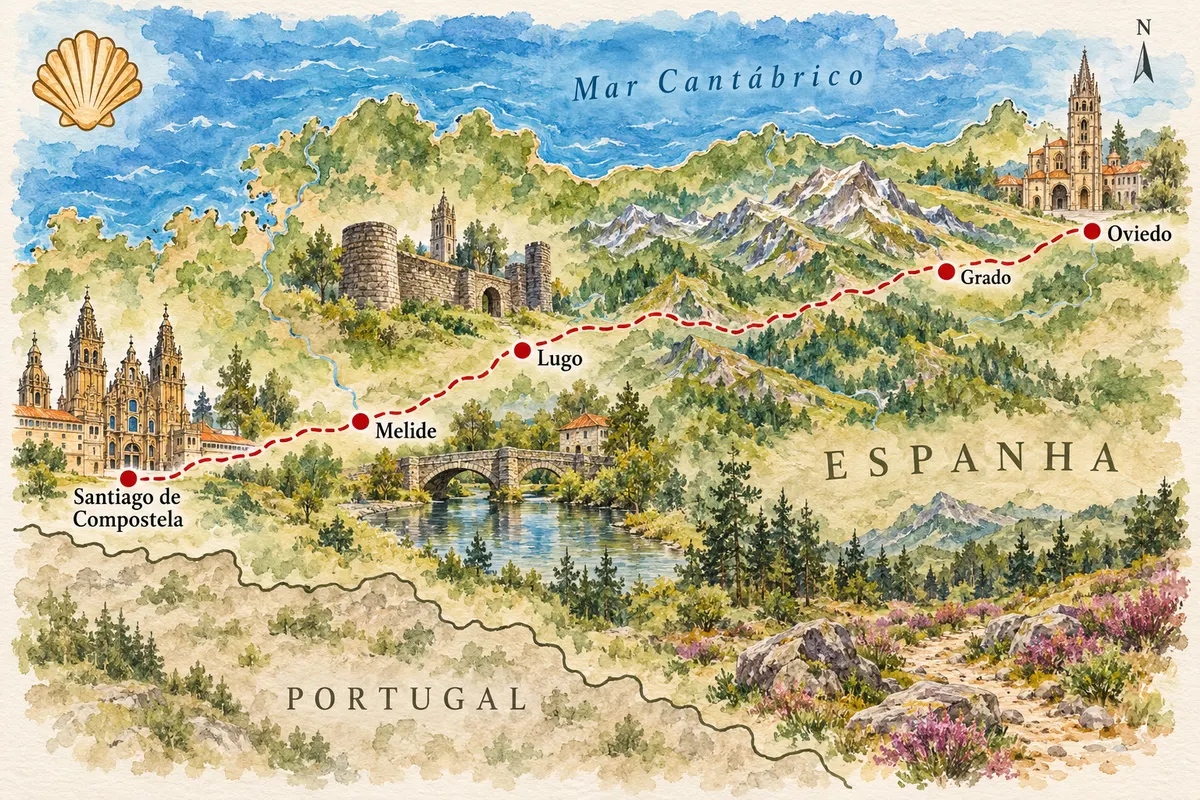
The oldest route to Santiago: from Oviedo, through the mountains of the Astúrias and via Lugo and its Roman walls, on foot to the cathedral of Compostela.

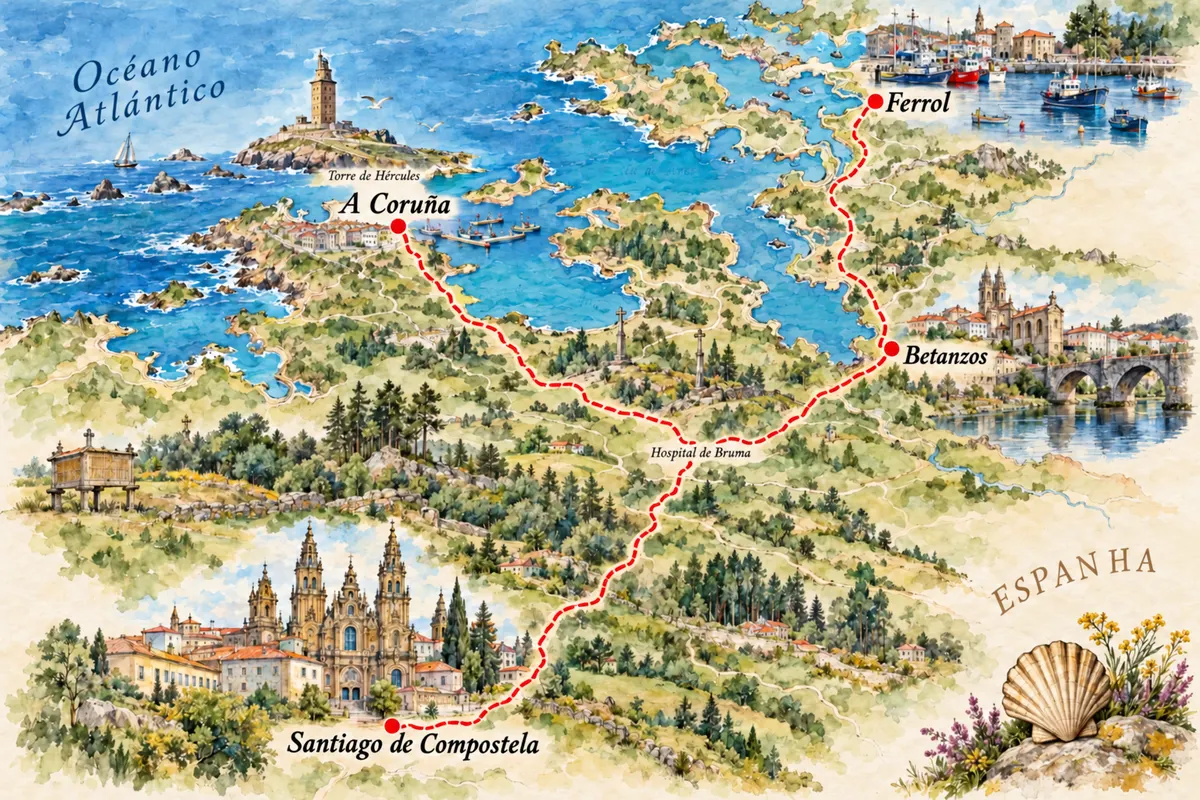
The route of pilgrims who arrived by sea: from Ferrol or from A Coruña to Santiago de Compostela, in less than a week, along northern Galicia.

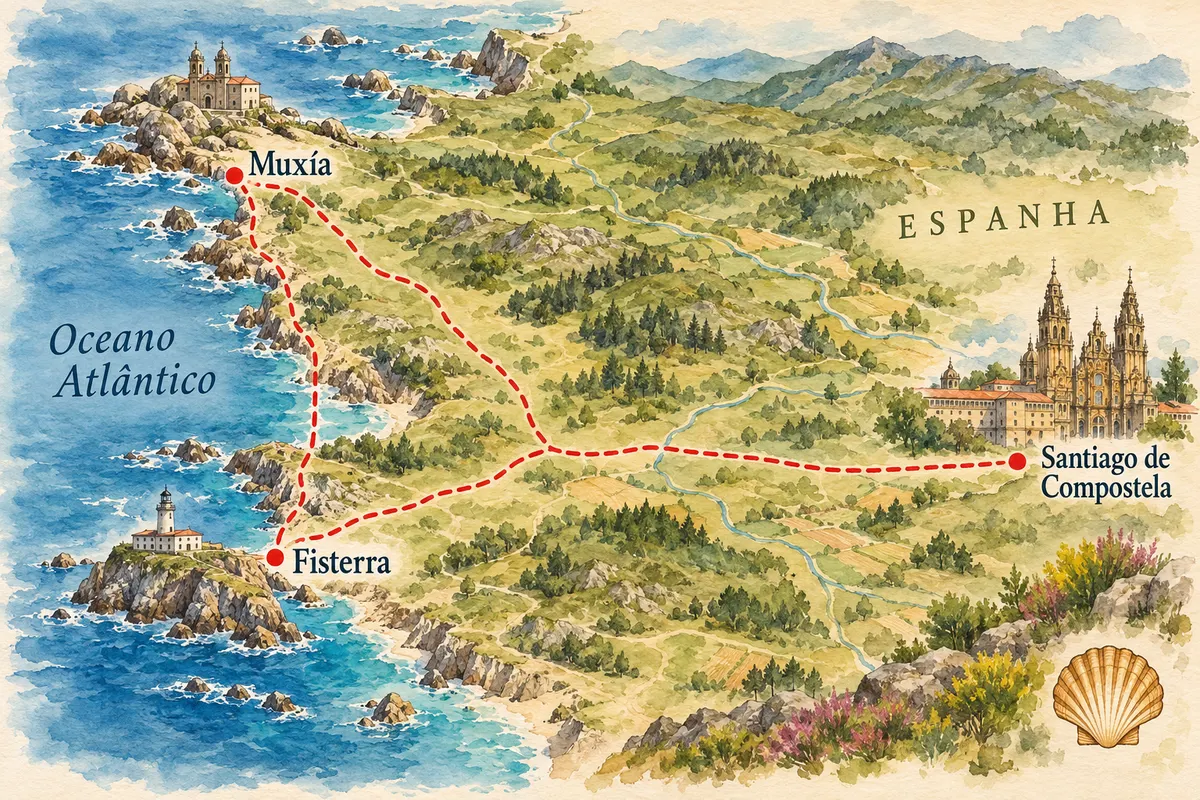
After the cathedral, the sea: from Santiago de Compostela on foot to the cabo Finisterre, the ancient end of the world, and to the sanctuary of Muxía on the Costa da Morte.

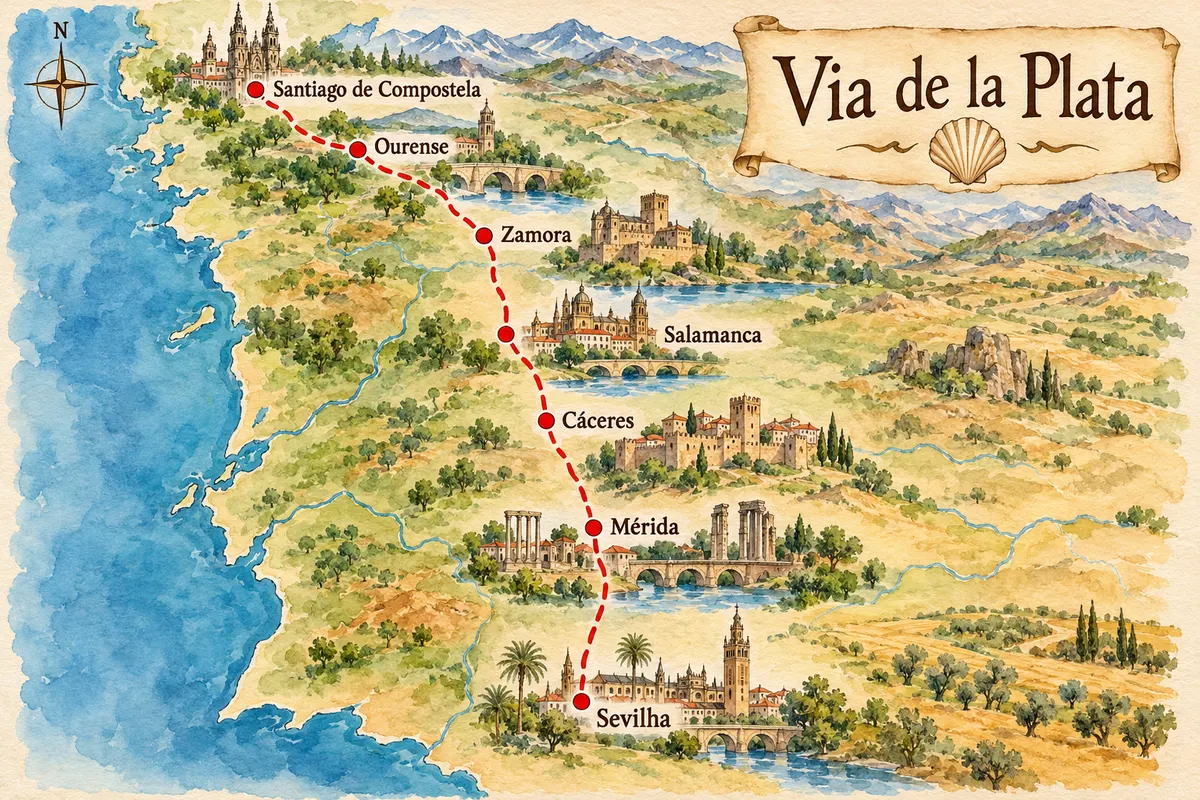
The longest Camino de Santiago in Spain: from Sevilha to Santiago de Compostela along the west of the country, following the old Roman road, via Mérida, Cáceres, Salamanca, Zamora and Ourense.