

 Brazil
 Argentina
 Chile
Chile Colombia
 Peru
Peru Uruguay
 Germany
 Belgium
 France
 Greece
 the Netherlands
 Ireland
 Italy
Italy Luxembourg
 Portugal
 the United Kingdom
 Switzerland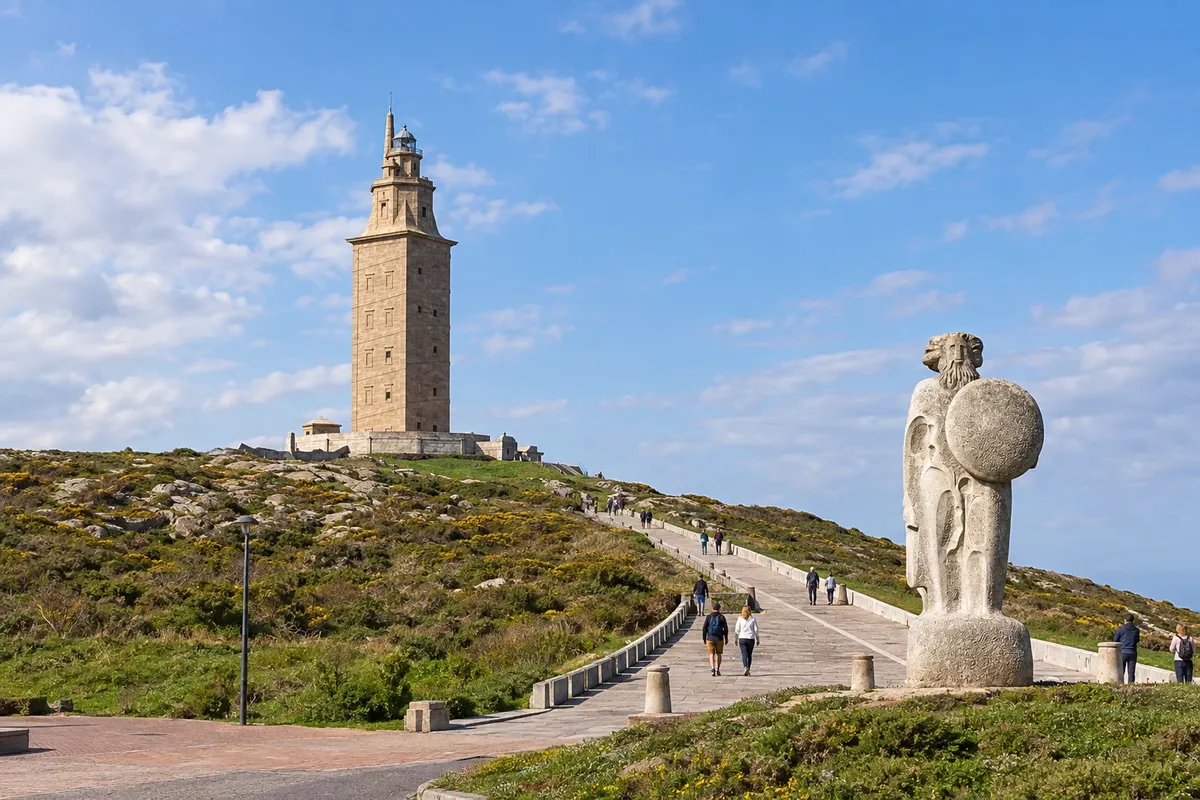
Route · Galícia
English Way to Santiago on foot
The route of pilgrims who arrived by sea: from Ferrol or from A Coruña to Santiago de Compostela, in less than a week, along northern Galicia.
In the photo: Torre de Hércules, A Coruña
Illustrative images. The pictures in this guide are illustrations based on the real place, not photographs, and may differ from it.

The route
What the English Way to Santiago on foot is
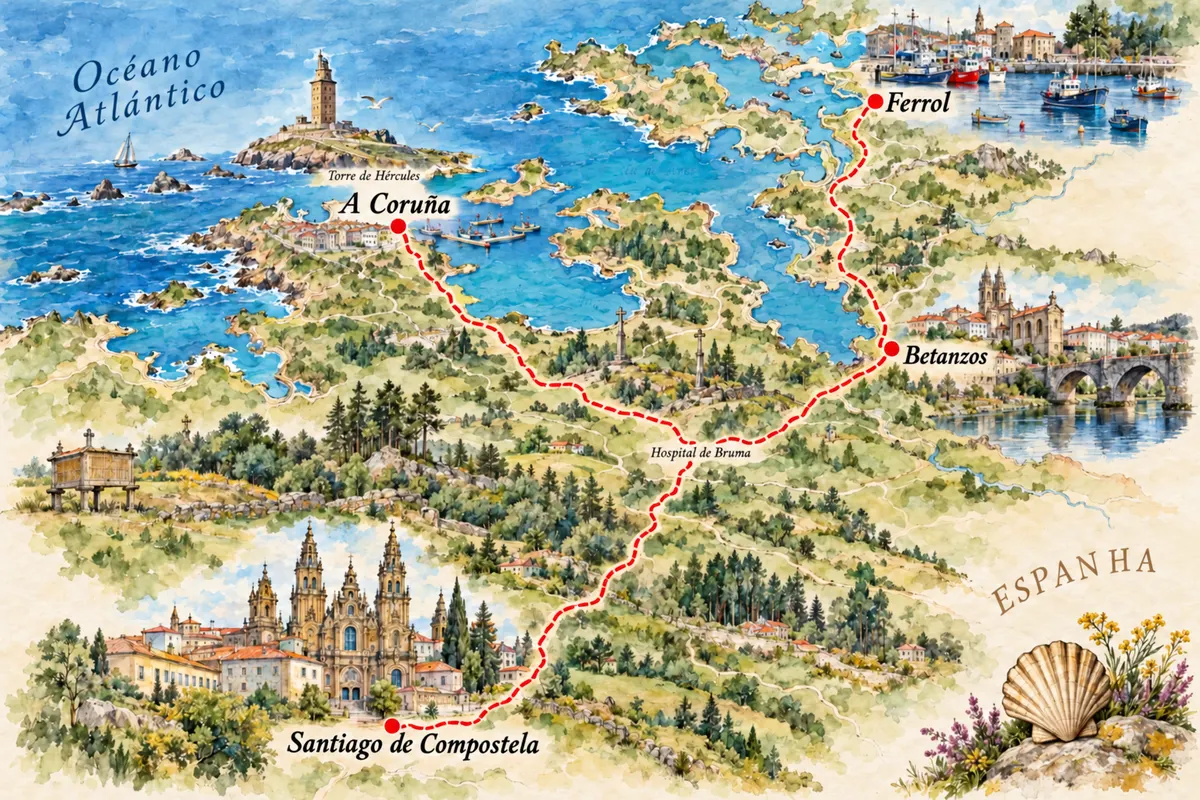
The English Way gets its name because it was the route taken by pilgrims who came by ship from northern Europe (England, Ireland, Flanders and Scandinavia) and disembarked at the ports of Ferrol and A Coruña to continue on foot to Santiago. It is a short route, entirely within Galicia, with two starting points that join at Hospital de Bruma.
The Ferrol route is the most common. It is about 117 km in 5 stages, via Neda, Pontedeume, Betanzos and Hospital de Bruma, passing rías, woods and medieval towns. It is the only one of the two that exceeds the 100 km required for the Compostela, the pilgrimage certificate.
The A Coruña route is about 75 km, in 3 to 4 stages, via Sergude to Hospital de Bruma. Because it does not reach 100 km, on its own it does not qualify for the Compostela. The Oficina do Peregrino accepts some special cases, such as recognized sections of routes completed previously in the pilgrim’s home country, and there are specific rules for city residents: check with the Oficina before setting out.
The map
4 cities along the way
Contornos: IGN/CNIG, unidades administrativas, CC BY 4.0. Adaptação do Cidade Turismo.
The journey
City by city
Distances and times are approximate: check before you set off.
-
 1 · Galícia
Ferrol
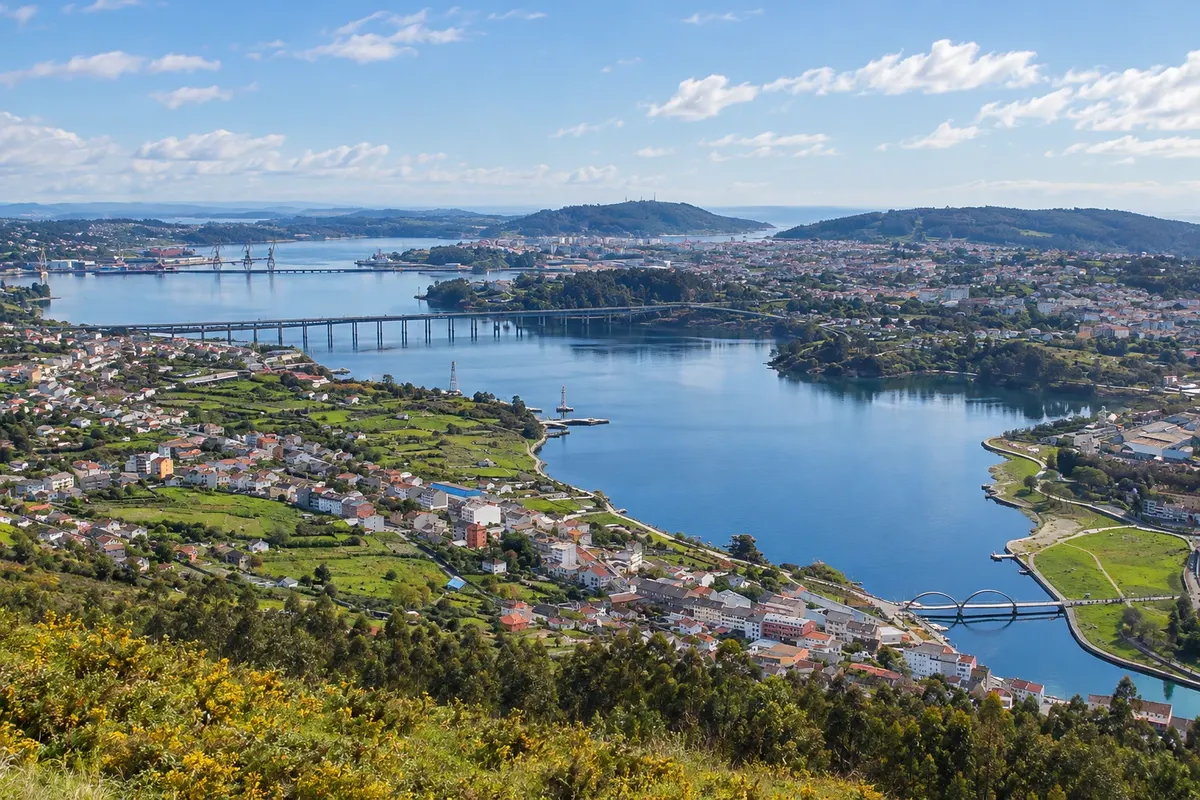
The route begins at the Curuxeiras quay in the port of Ferrol, where there is a kilometre-zero marker. The city has the Magdalena neighbourhood, laid out in the 18th century, and the shipyards on the ria. The first stage follows the ria by Neda to Pontedeume, with its medieval bridge and the Andrade tower.
→ Betanzos about 49 km about 2 days on foot Ferrol–Pontedeume (about 29 km, which can be split at Neda) and Pontedeume–Betanzos (about 20 km).
-
 2 · Galícia
Betanzos
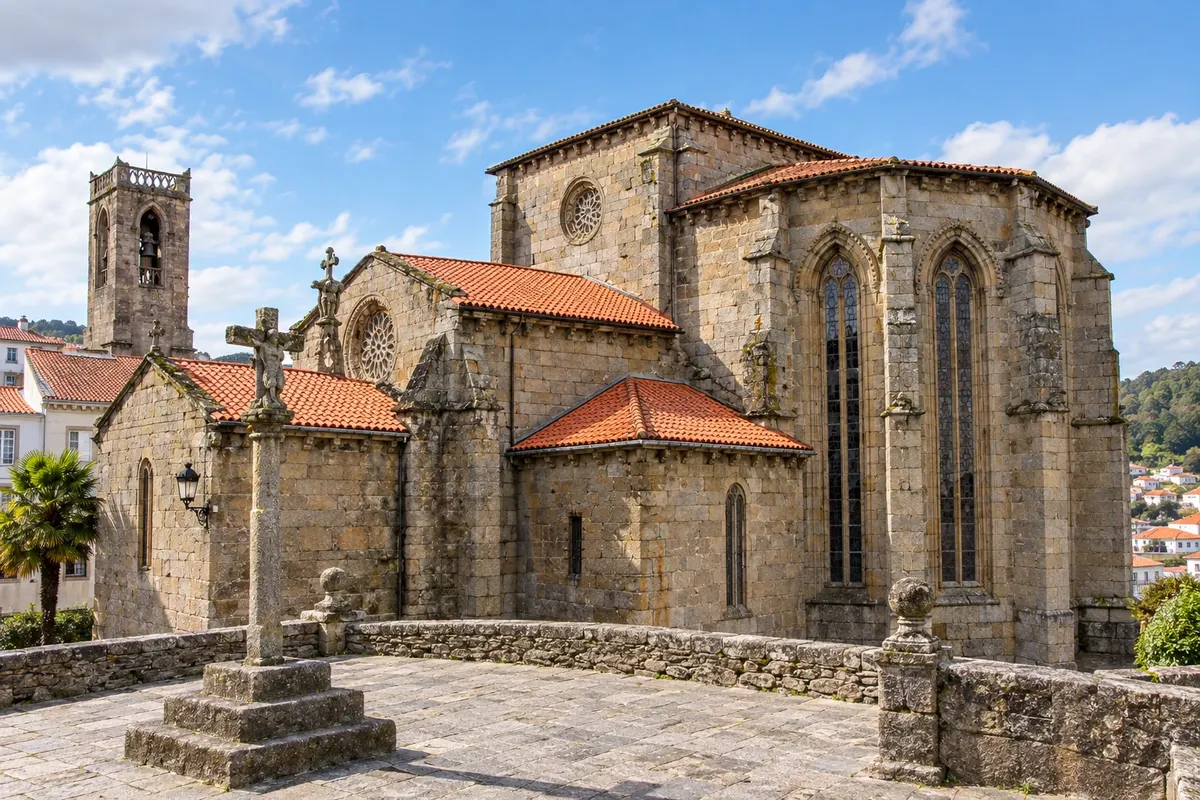
Betanzos is a medieval town at the meeting of the Mandeo and Mendo rivers, featuring the Gothic churches of Santa María do Azougue and San Francisco and squares with houses that have glazed balconies. It is known for its potato omelette. After Betanzos, the trail climbs steeply toward Hospital de Bruma.
→ Santiago de Compostela about 68 km about 3 days on foot Betanzos–Hospital de Bruma (about 23 km, with the steepest climb), Hospital de Bruma–Sigüeiro (about 25 km) and Sigüeiro–Santiago (about 20 km).
-
 3 · Galícia
A Coruña
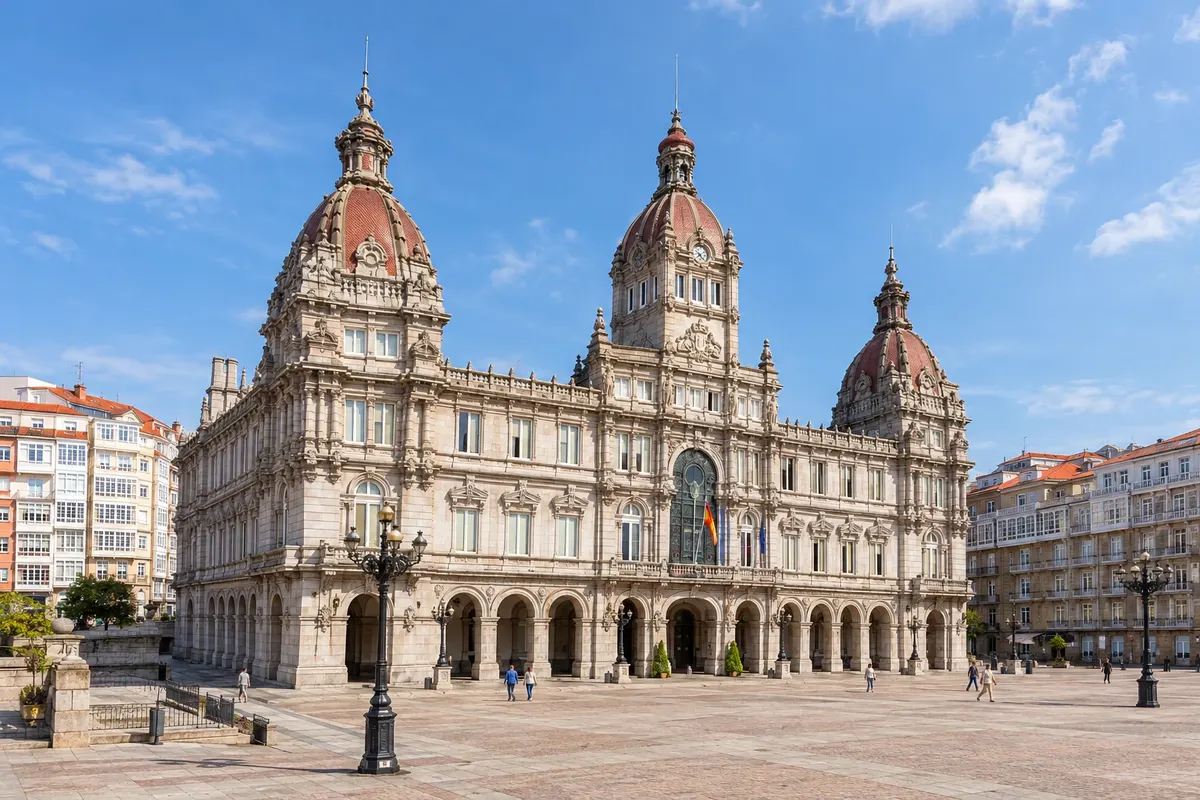
Those who start in A Coruña begin near the church of Santiago, in the old town. The city features the Torre de Hércules, a Roman lighthouse and World Heritage Site, the waterfront with the glazed galleries of the Marina and the plaza of María Pita. The route continues via Sergude and joins the Ferrol route at Hospital de Bruma.
→ Santiago de Compostela about 75 km about 3 to 4 days on foot A Coruña–Hospital de Bruma (about 29 km, via Sergude, which can be split), Hospital de Bruma–Sigüeiro (about 25 km) and Sigüeiro–Santiago (about 20 km). It does not reach the 100 km required for the Compostela.
-
 4 · Galícia
Santiago de Compostela
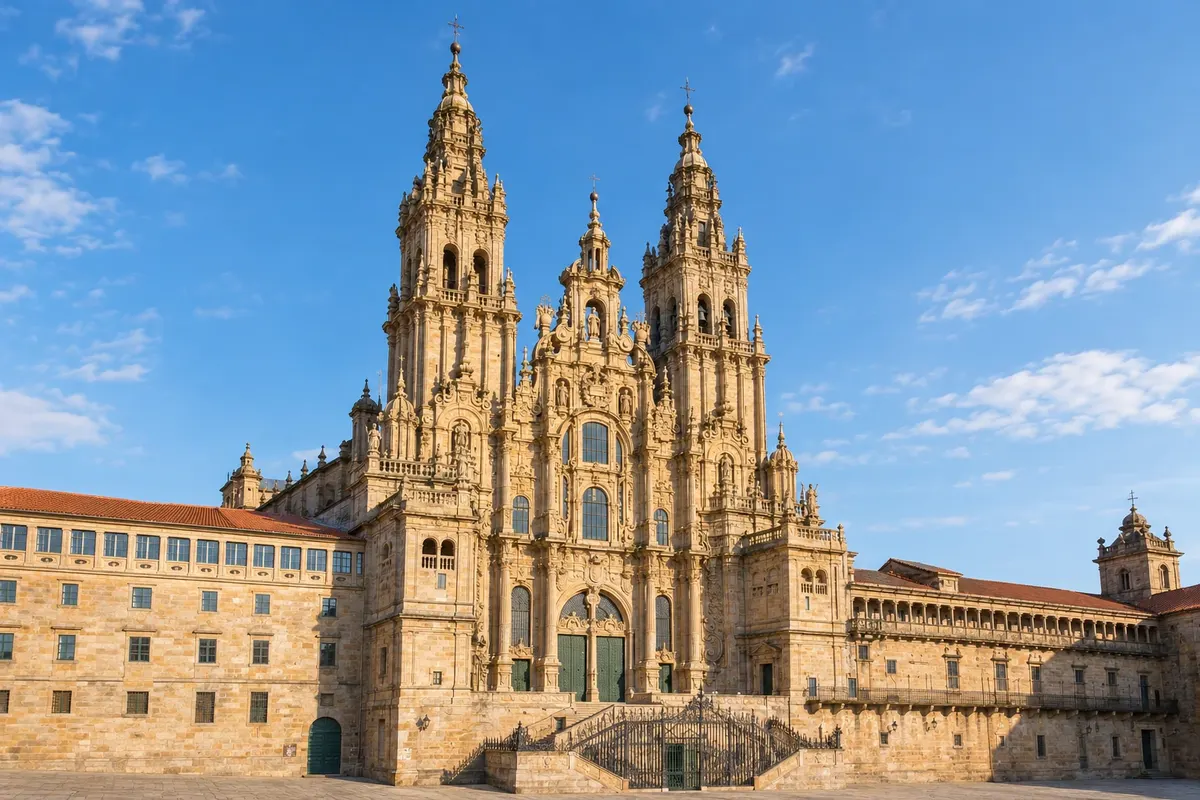
After Hospital de Bruma and Sigüeiro, the route enters Santiago from the north and crosses the old town to the praça do Obradoiro. The Oficina do Peregrino, near the cathedral, issues the Compostela.
How many days
From Ferrol, 5 to 6 days on foot. From A Coruña, 3 to 4 days. Allow one more day in Santiago on arrival.
Best time to go
From May to September, with more dry days in Galicia. July and August are the busiest months, but the English Way remains much less crowded than the French Way. From November to March it rains a lot and some hostels close.
The seasons shown are the most usual ones; nature doesn't always follow the calendar.
How to travel it
On foot, following the yellow arrows, with a backpack or using a luggage transfer service between stages. Stages range from 20 to 29 km; the first, from Ferrol to Pontedeume, can be split at Neda. There are steep climbs leaving Betanzos.
Who it's for
For those who have only one week and want the Compostela, for those who prefer a quiet route, and for those who want to experience the rías and towns of northern Galicia.
Your questions
Frequently asked questions about the English Way to Santiago on foot
Why is it called the English Way?
Because it was the route used by pilgrims who came by ship from the British Isles and northern Europe and disembarked at Ferrol or A Coruña to continue on foot to Santiago.
Which starting point gives the right to the Compostela?
The Ferrol route, at about 117 km. The A Coruña route is about 75 km and, on its own, does not reach the 100 km required by the Oficina do Peregrino. For special cases, consult the Oficina before you set out.
How many days does the English Way take?
From Ferrol, 5 to 6 days on foot. From A Coruña, 3 to 4 days.
Where do the two routes meet?
At Hospital de Bruma, about 45 km from Santiago. From there, the two routes are the same.
Is the English Way difficult?
It is short, but it has stages of 20 to 29 km and steep climbs, especially leaving Betanzos. With preparation, it is a good first Camino.
Do you need to reserve the hostels?
There are fewer hostels than on the French Way, and some are small. Public albergues generally operate on a first-come, first-served basis; in summer, book private ones.