

 Brazil
 Argentina
 Chile
Chile Colombia
 Peru
Peru Uruguay
 Germany
 Belgium
 France
 Greece
 the Netherlands
 Ireland
 Italy
Italy Luxembourg
 Portugal
 the United Kingdom
 Switzerland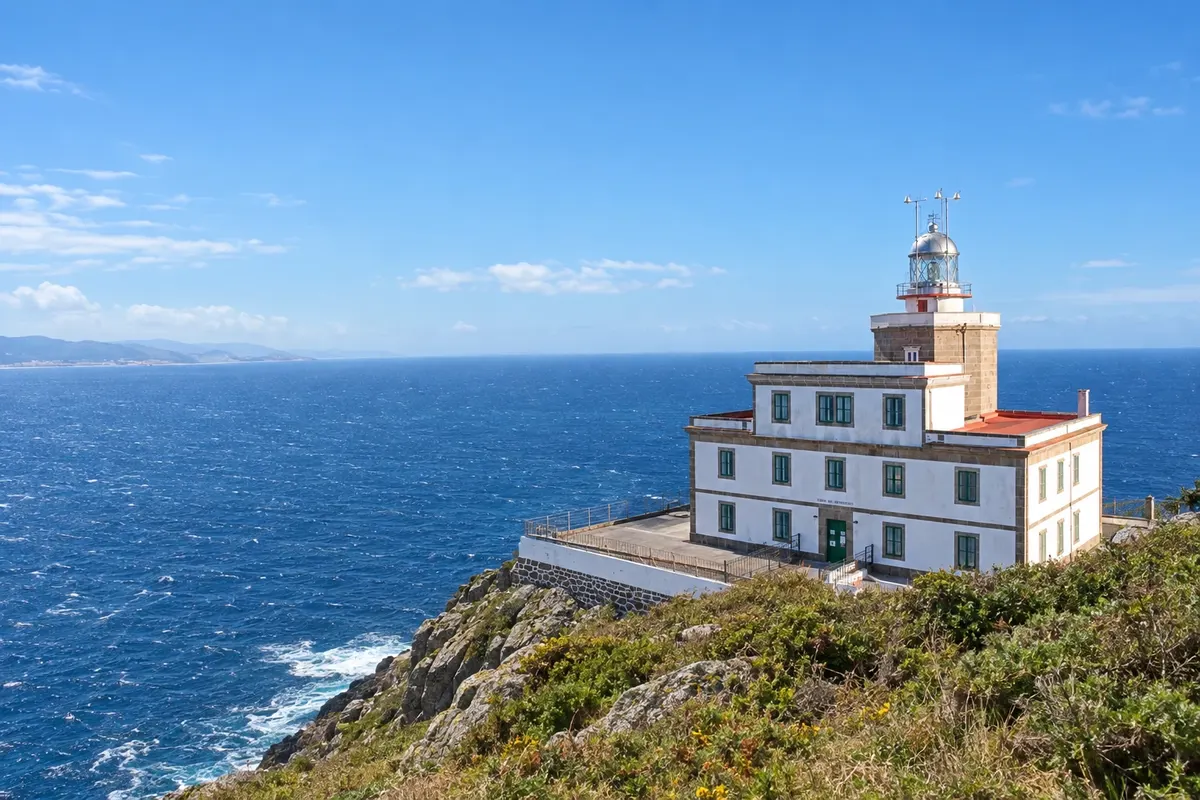
Route · Galícia
Finisterre and Muxía on foot
After the cathedral, the sea: from Santiago de Compostela on foot to the cabo Finisterre, the ancient end of the world, and to the sanctuary of Muxía on the Costa da Morte.
In the photo: Lighthouse at cabo Finisterre
Illustrative images. The pictures in this guide are illustrations based on the real place, not photographs, and may differ from it.

The route
What the Finisterre and Muxía on foot is
The Camino de Finisterre and Muxía is the only route that leaves Santiago de Compostela instead of arriving there. Many pilgrims walk it after reaching the cathedral to finish the journey facing the Atlantic Ocean. It is about 89 km from Santiago to Fisterra, in 3 to 4 stages, and another roughly 29 km from Fisterra to Muxía; you can also go straight to Muxía and finish in Fisterra.
The route crosses the interior of Galicia through Negreira, the medieval bridge Ponte Maceira and Olveiroa, and descends to the sea at Cee. Cabo Finisterre was considered by the Romans the end of the known world, and the lighthouse, about 3 km from the village of Fisterra, has the kilometer 0 marker. Muxía sits on a rocky headland by the sea, with the sanctuary of the Virgem da Barca, linked to the tradition of the apostle’s arrival.
Because the route does not end in Santiago, it does not give the right to the Compostela. Those who arrive on foot receive their own certificates: the Fisterrana in Fisterra and the Muxiana in Muxía, issued at the public hostels or at the tourist offices of the two villages to those who show a credential stamped along the way.
The map
3 cities along the way
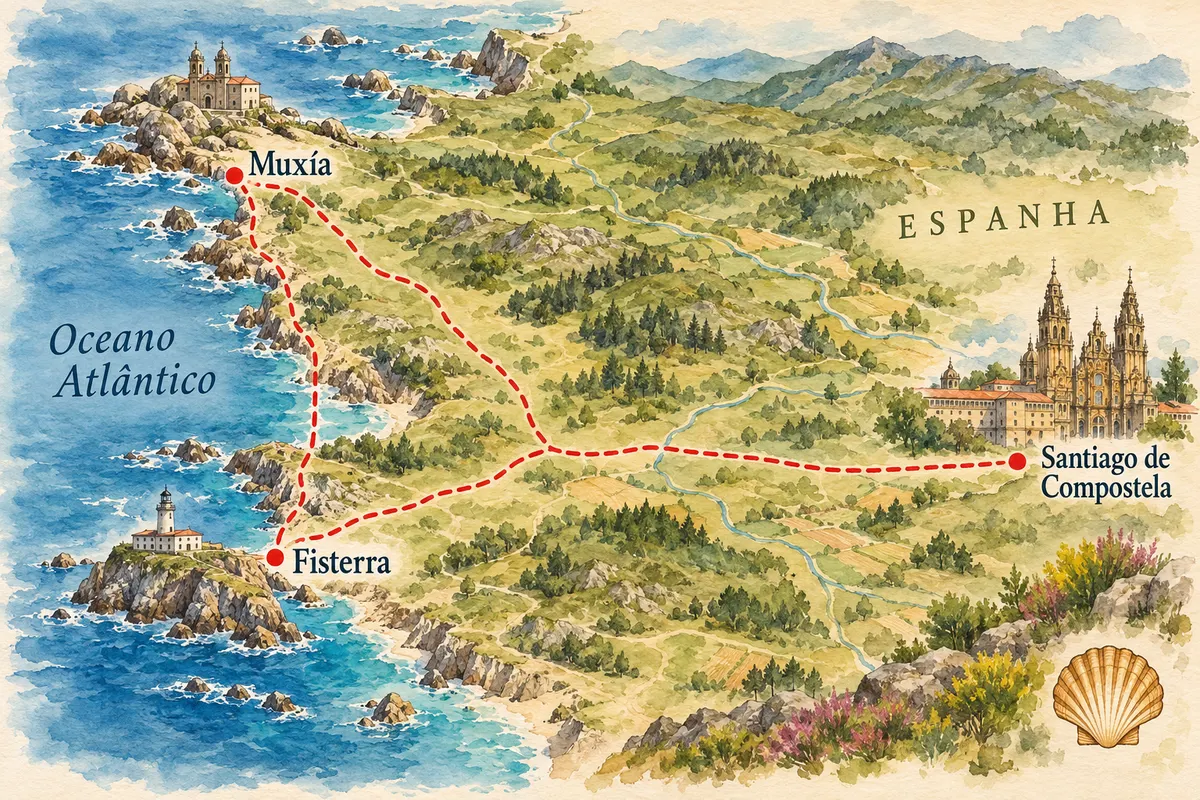
Contornos: IGN/CNIG, unidades administrativas, CC BY 4.0. Adaptação do Cidade Turismo.
The journey
City by city
Distances and times are approximate: check before you set off.
-
 1 · Galícia
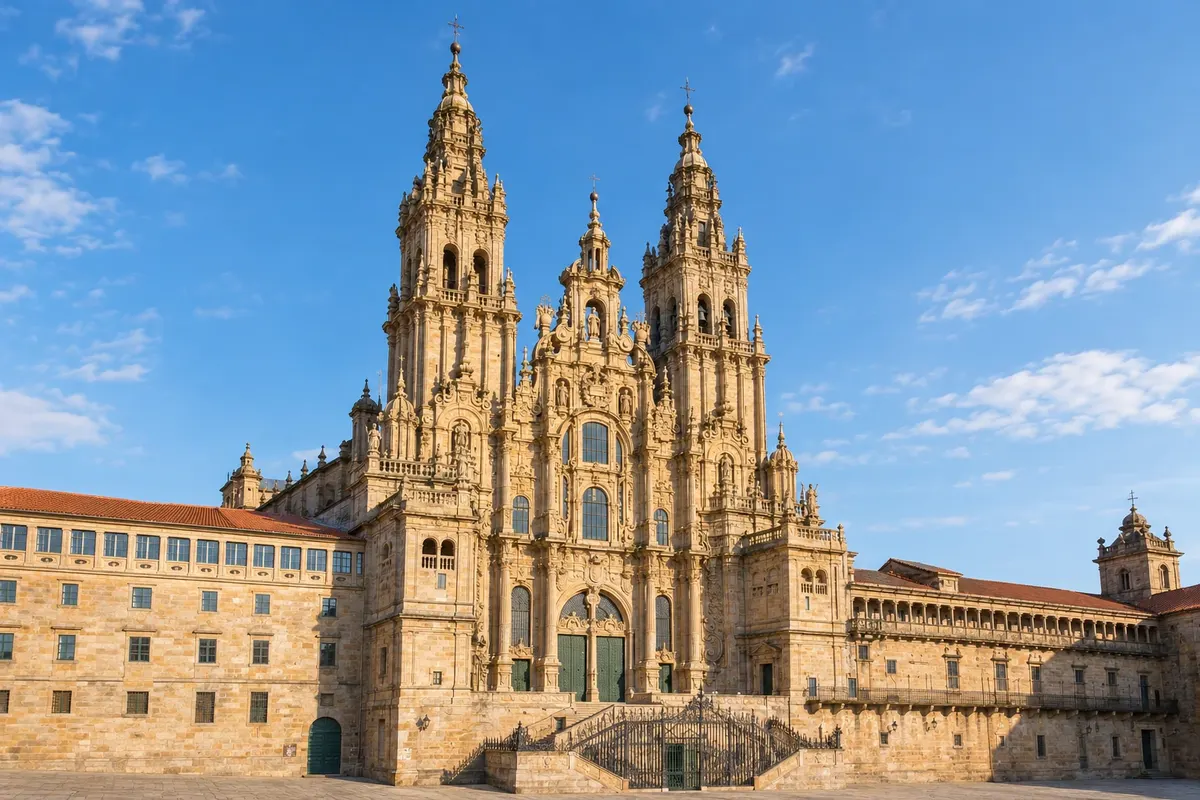
Santiago de Compostela
The route leaves the praça do Obradoiro to the west, via the Carballeira de San Lourenzo and Monte Pedroso. The first stage goes to Negreira, passing the medieval bridge Ponte Maceira over the Tambre river.
→ Fisterra about 89 km 3 to 4 days on foot Santiago–Negreira (about 21 km), Negreira–Olveiroa (about 33 km, long and with few services), Olveiroa–Cee (about 20 km) and Cee–Fisterra (about 15 km). The cabo lighthouse is roughly 3 km away.
-
 2 · Galícia
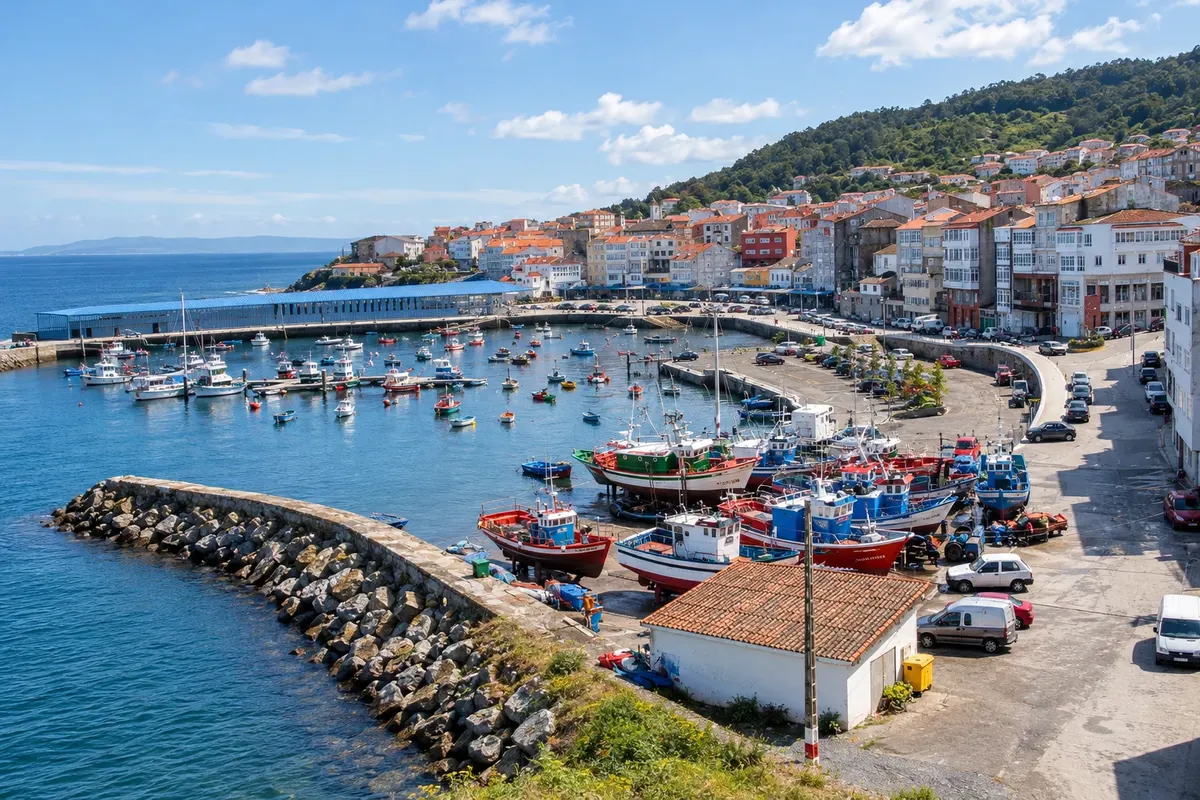
Fisterra
After Olveiroa and the descent to Cee, on the edge of the ría de Corcubión, the route reaches Fisterra, a fishing village with a port and the Langosteira beach. About 3 km away is cabo Finisterre, with the lighthouse and the kilometer 0 marker, where many pilgrims wait for the sunset over the Atlantic. The Fisterrana is issued at the village’s public hostel.
→ Muxía about 29 km 1 day on foot Fisterra–Muxía (about 29 km), via the interior and the village of Lires, near the beach and the ría.
-
 3 · Galícia
Muxía
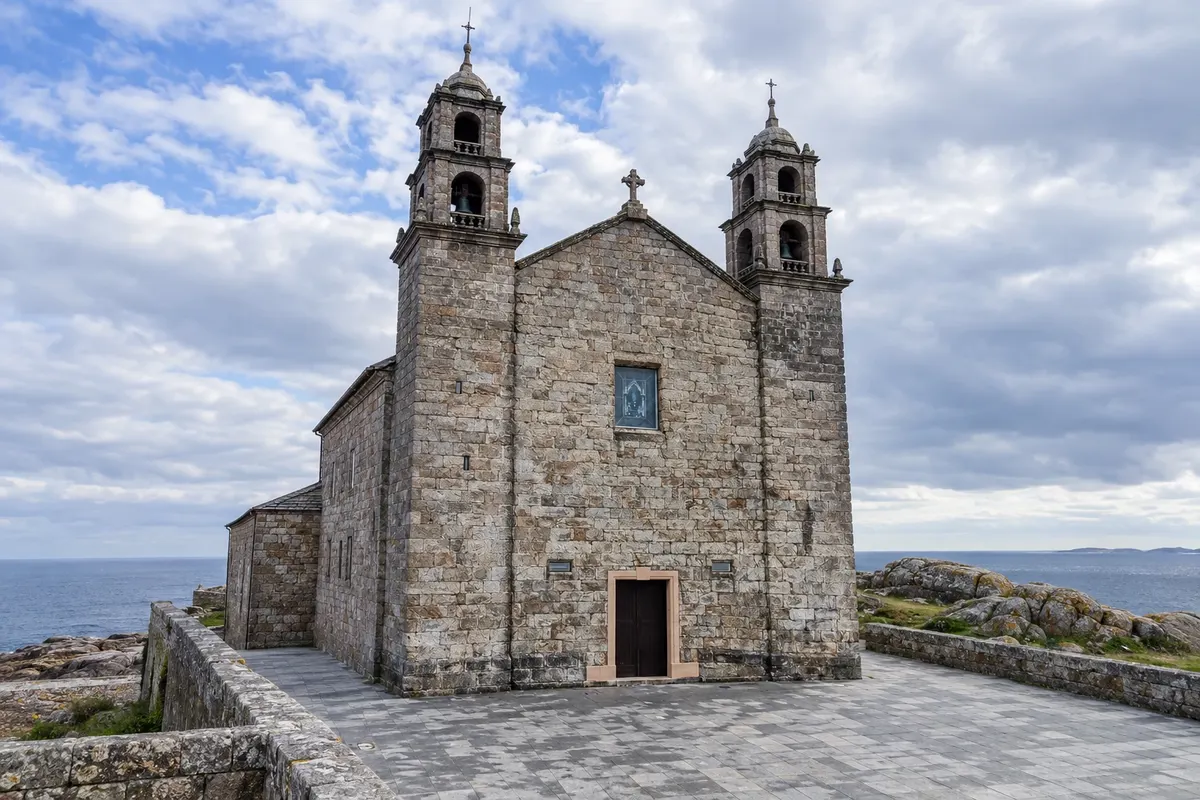
From Fisterra the route continues north through Lires to Muxía, on a rocky headland by the sea. The sanctuary of the Virgem da Barca sits on the rocks, next to the Abalar stone and the sculpture A Ferida. There is also a kilometer 0 marker. The Muxiana is issued at the public hostel or at the village tourist office.
How many days
From Santiago to Fisterra, 3 to 4 days on foot. With Muxía, 5 days. Allow one extra day for the sunset at the cabo and to return to Santiago by bus.
Best time to go
From May to September, with more dry days and late sunsets. The Costa da Morte is windy and rainy for much of the year, and in winter the sea is rough. July and August are the most popular months, with the cabo crowded at sunset.
The seasons shown are the most usual ones; nature doesn't always follow the calendar.
How to travel it
On foot, following the yellow arrows, which here point west, and the stone markers showing the distance to Fisterra or Muxía. Stages range from 15 to 33 km; the one from Negreira to Olveiroa is long and has few services. To return to Santiago there are buses from Fisterra and from Muxía.
Who it's for
For those who have just arrived in Santiago and want to continue to the sea, for those who want a short, peaceful route, and for those who enjoy wild coastline, lighthouses and fishing villages.
Your questions
Frequently asked questions about the Finisterre and Muxía on foot
Does the Camino de Finisterre entitle you to the Compostela?
No. Because it does not end in Santiago, it does not grant the Compostela. Those who arrive on foot receive the Fisterrana in Fisterra and the Muxiana in Muxía, upon showing the credential stamped along the route.
What is the Fisterrana?
It is the certificate for those who arrive on foot in Fisterra via the route, issued at the village’s public hostel upon showing the credential with the stage stamps. Confirm the conditions at the hostel itself.
Why is Finisterre called the end of the world?
For the Romans, the cape was the westernmost point of the known land, where the sun set into the sea. The name comes from the Latin finis terrae, end of the earth.
Is it better to go to Fisterra first or to Muxía?
Both directions work. Going to Muxía first and finishing in Fisterra lets you close the route with the sunset at the cabo. Going to Fisterra first is the more common route.
How to return to Santiago?
By bus, which departs from Fisterra and from Muxía several times a day, in about 2 to 3 hours. Check timetables, which change on weekends and off-season.
Do I need another credential?
It is not mandatory: you can continue using the same credential from the route to Santiago. Some hostels also offer a specific credential for this camino.