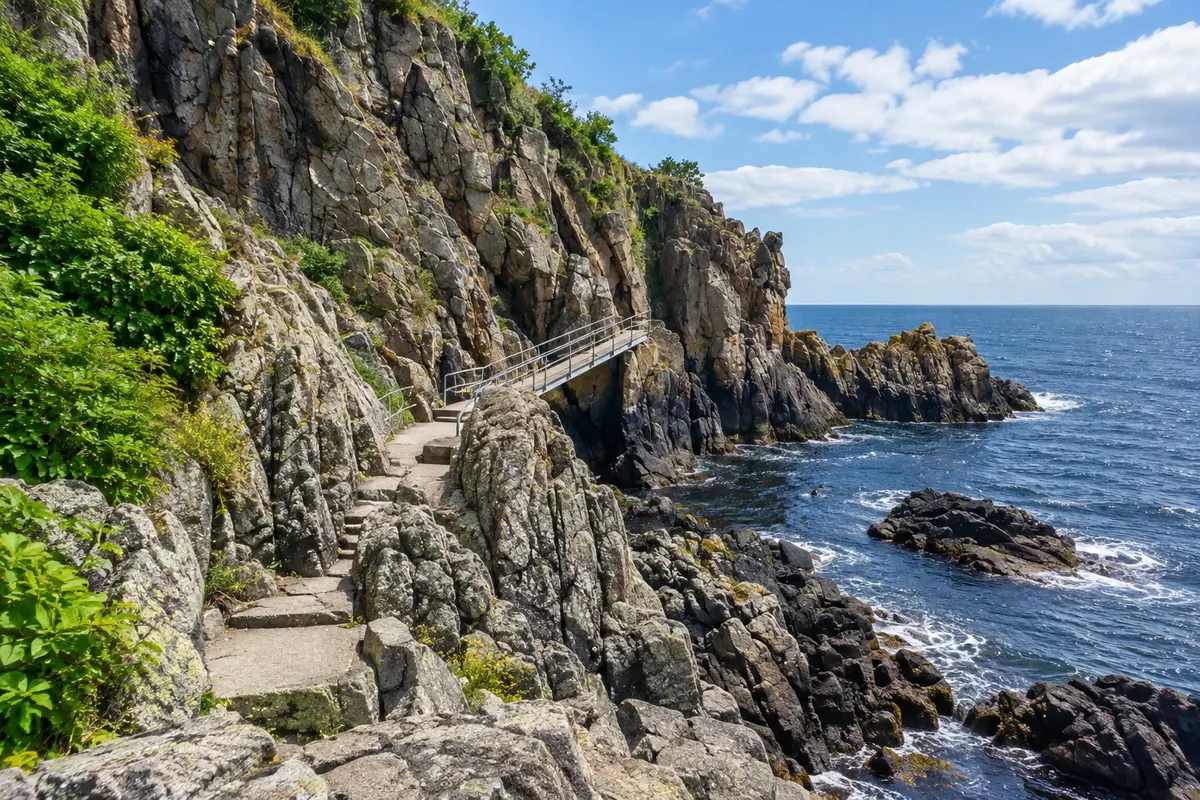
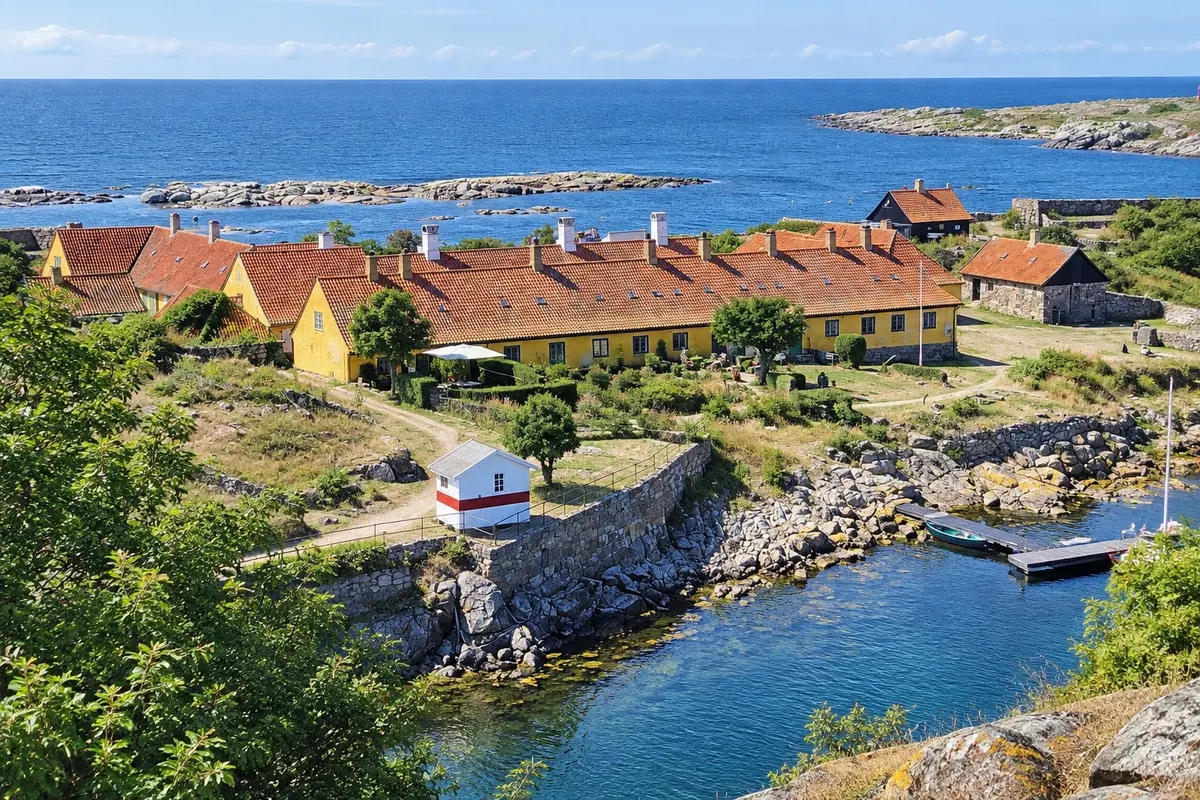
Bornholm is a Danish island in the Baltic Sea, about 150 km east of Copenhague, closer to Sweden and Poland than to the rest of the country. Unlike flat Denmark, the island is made of granite: the north coast has cliffs and rocks dropping into the sea, the interior has forests and fields, and the south has fine sandy beaches. Danes call it the "rock" (Klippeøen) and visit in summer for the light, the beaches and the villages.
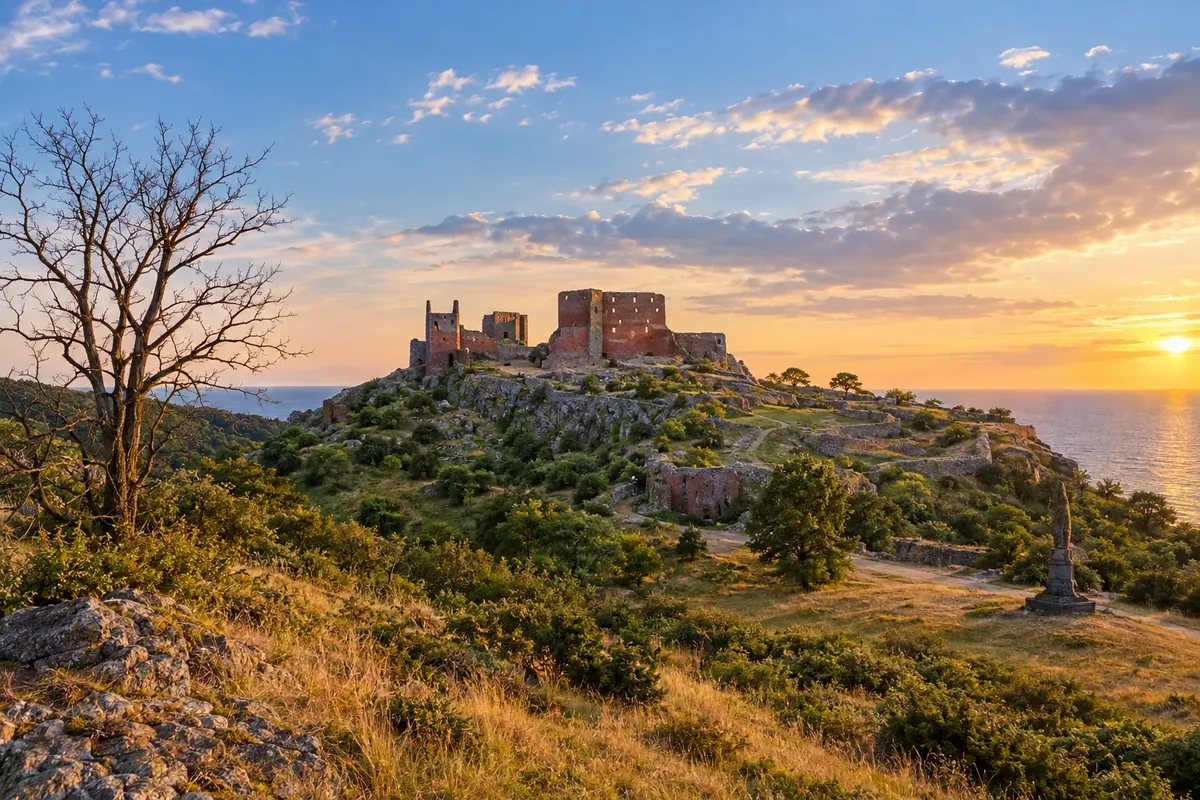
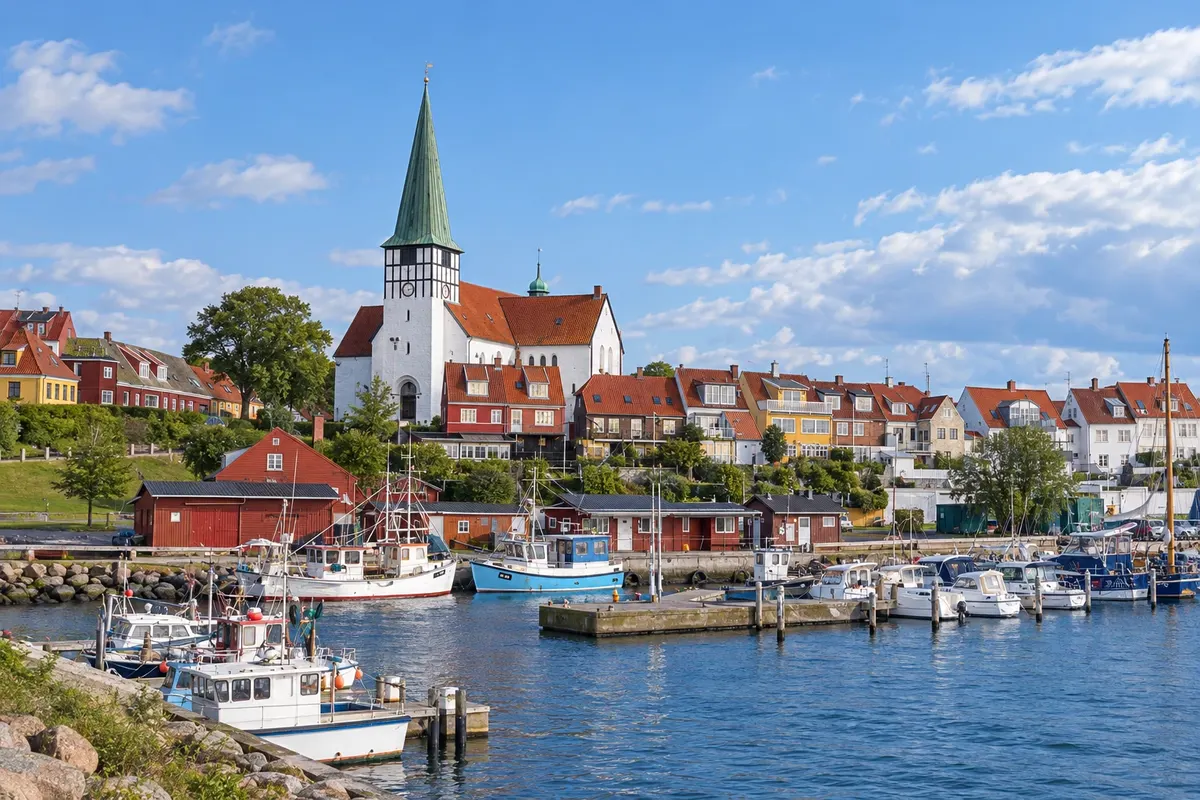
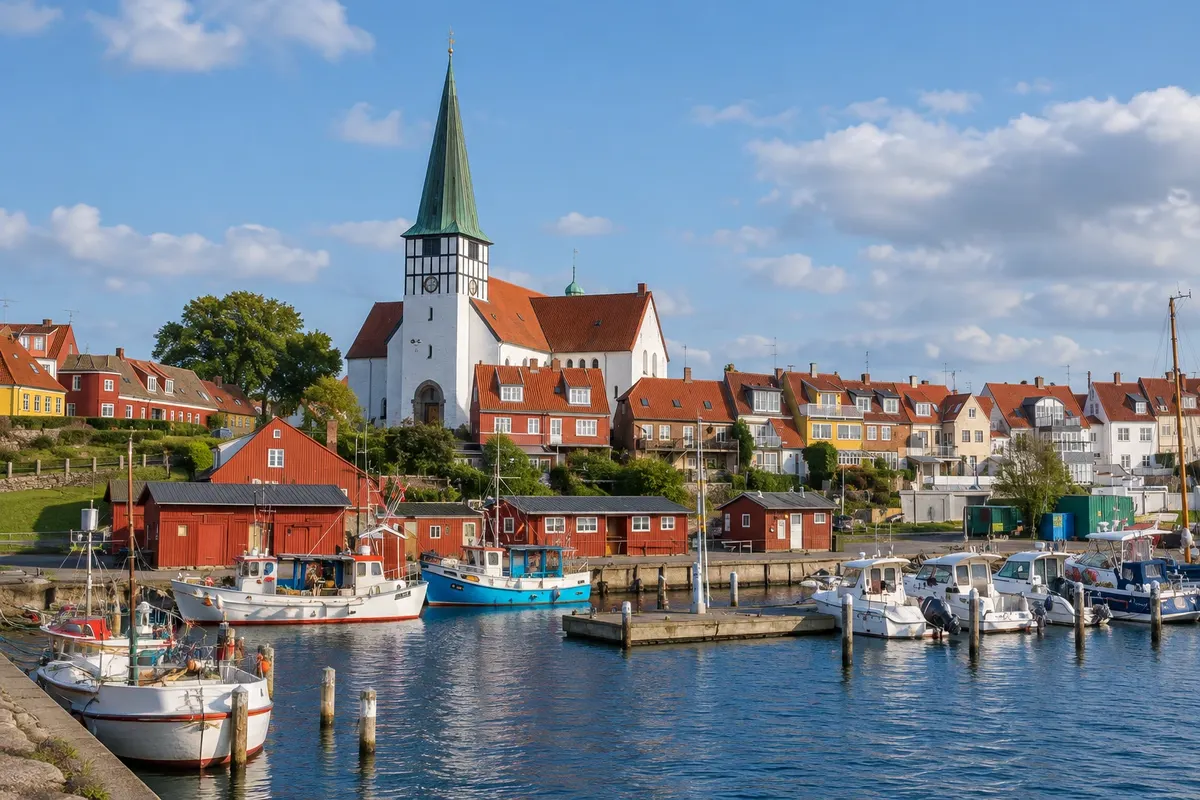
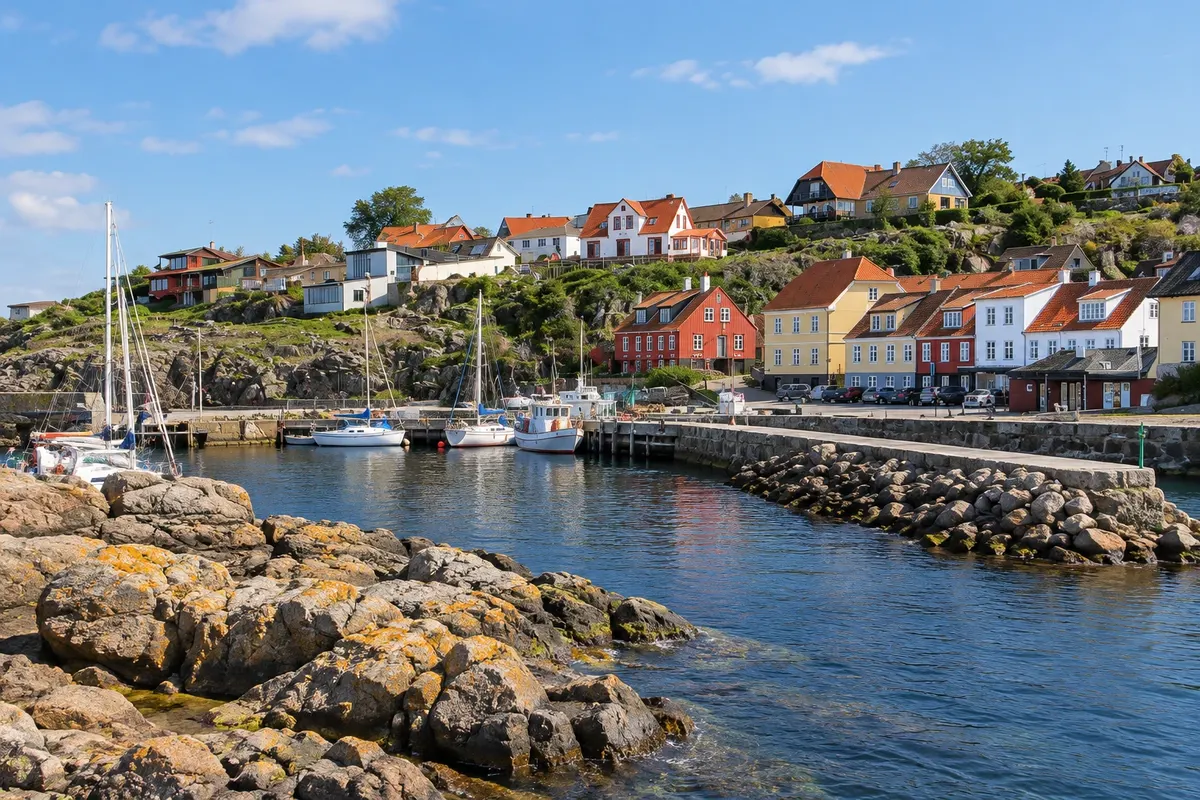
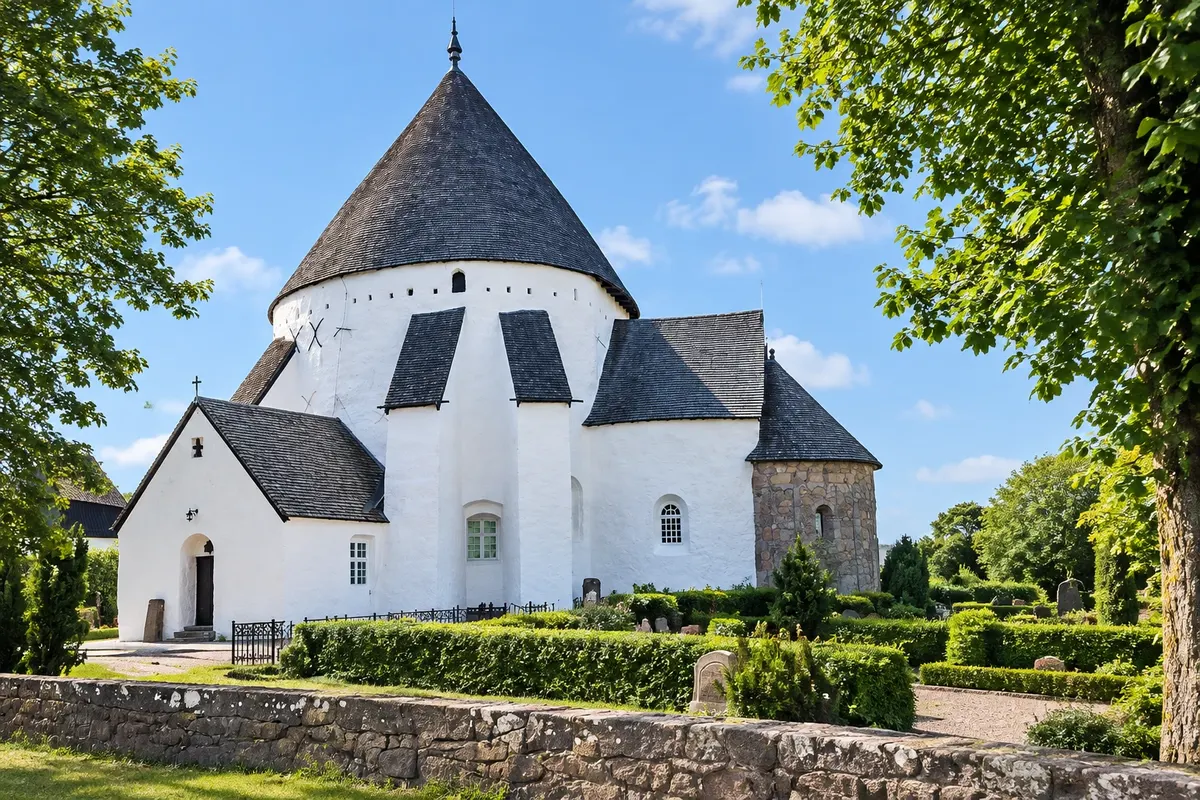
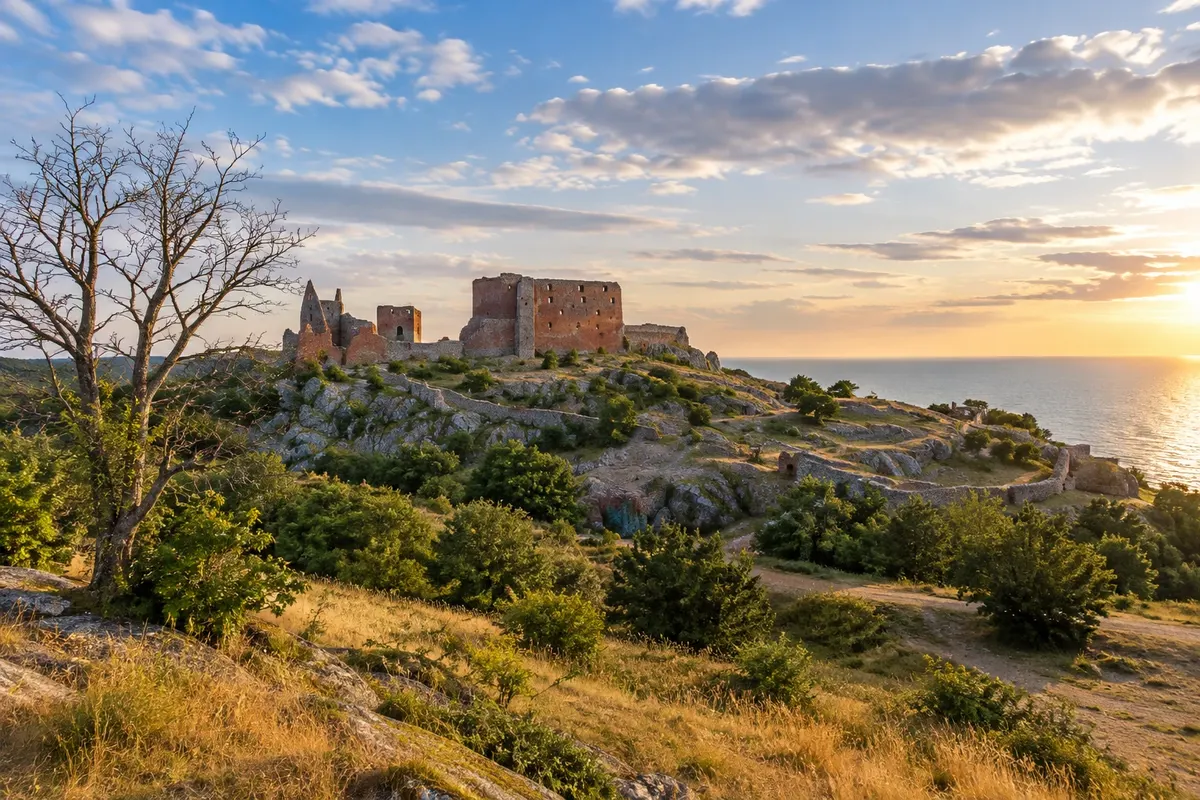
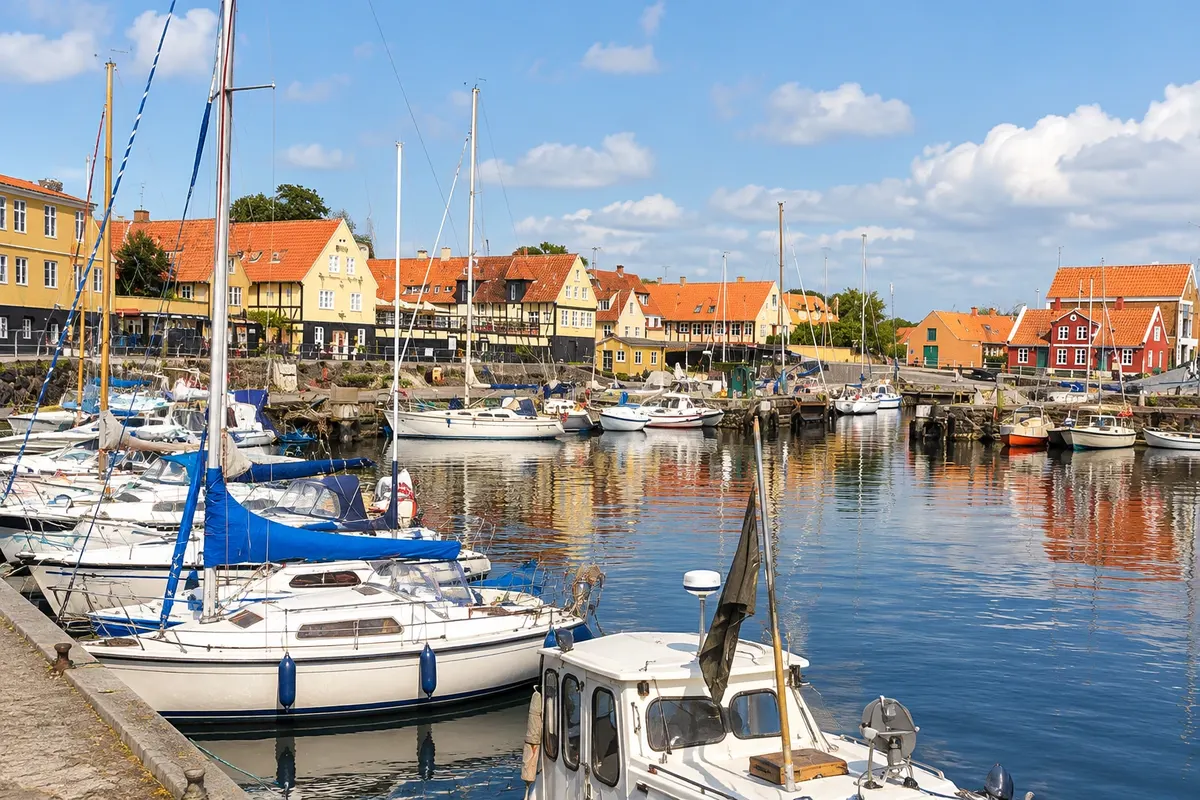
Rønne, the island's capital on the west coast, receives the ferries and the airport and has a centre of low, colourful houses, with the Bornholms Museum. At the northern tip, the ruins of Hammershus, a 13th-century fortress on a cliff, are the largest medieval fortification in Scandinavia. Around the island there are four medieval round churches, with white walls and conical roofs, which also served as fortresses; Østerlars is the biggest.
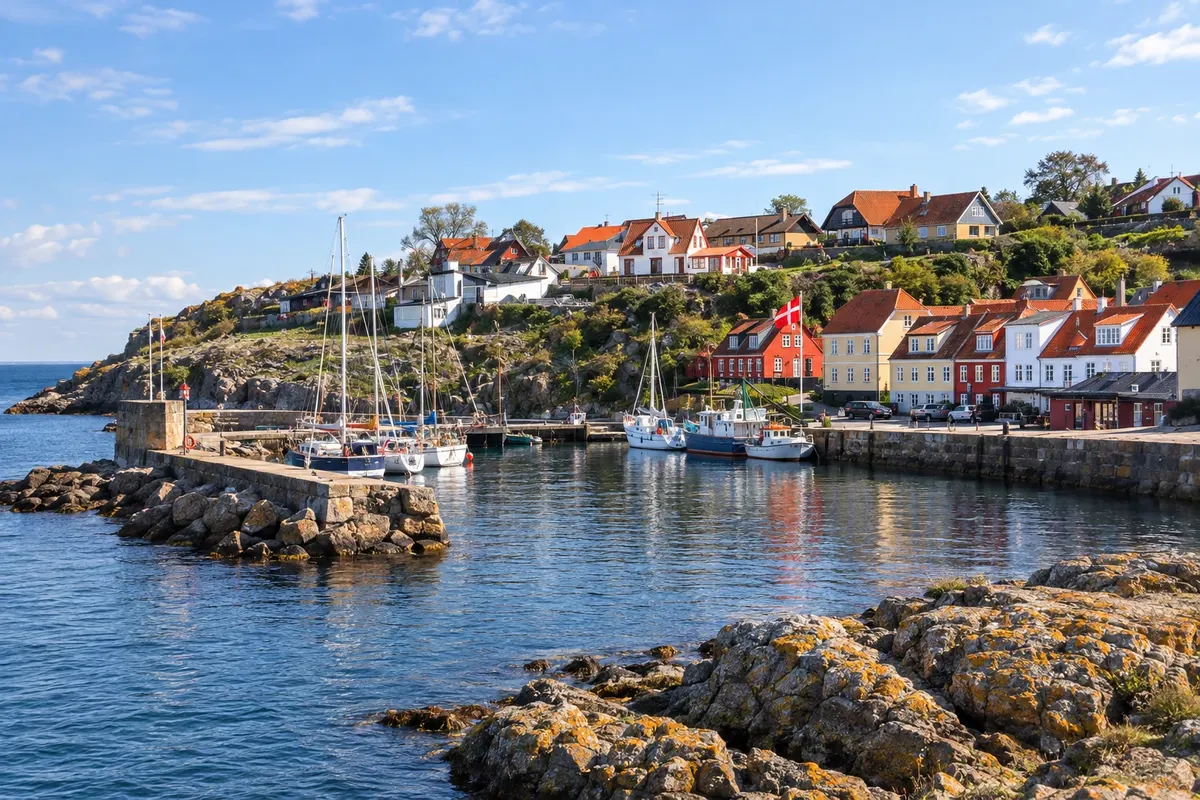
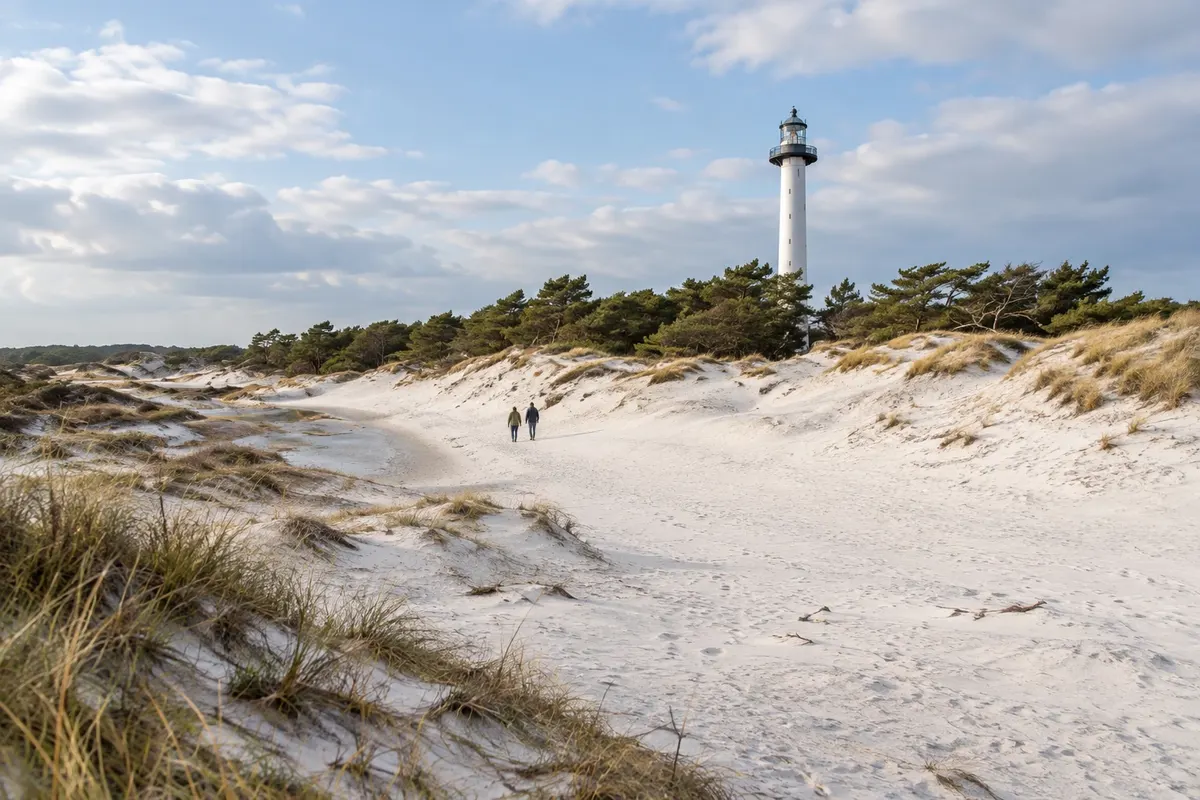
On the east coast, Gudhjem is a village of steep streets that descend to the harbour, with herring smokehouses with tall chimneys and the boat to the Christiansø archipelago. Svaneke, farther south, has red and yellow houses, a brewery, glassblowers and artisanal candy factories. North of Gudhjem, the cliffs of Helligdomsklipperne have a coastal trail and the Bornholm Art Museum on the heights. In the south, the beach of Dueodde has dunes and sand so fine it was once used in hourglasses.
The island has buses connecting the villages and over 200 km of cycle paths.
This destination brings together 2 cities: Rønne, Gudhjem.


 Brazil
 Argentina
 Bolivia
 Chile
Chile Colombia
 Ecuador
 Guyana
 French Guiana
 Falkland Islands (Malvinas)
 Paraguay
 Peru
Peru Suriname
 Uruguay
 Venezuela
 Germany
 Belgium
 Spain
Spain France
 Greece
 the Netherlands
 Ireland
 Italy
Italy Luxembourg
 Norway
 Portugal
 the United Kingdom
 Sweden
 Switzerland