Aarhus is Denmark's second largest city and the main city of Jutland, the peninsula that connects the country to continental Europe. It sits on the east coast at the head of Aarhus Bay and began as a Viking settlement in the 8th century called Aros, "the river mouth." Today it is a university city with many students, a port undergoing change, and museums that make it worth the trip.
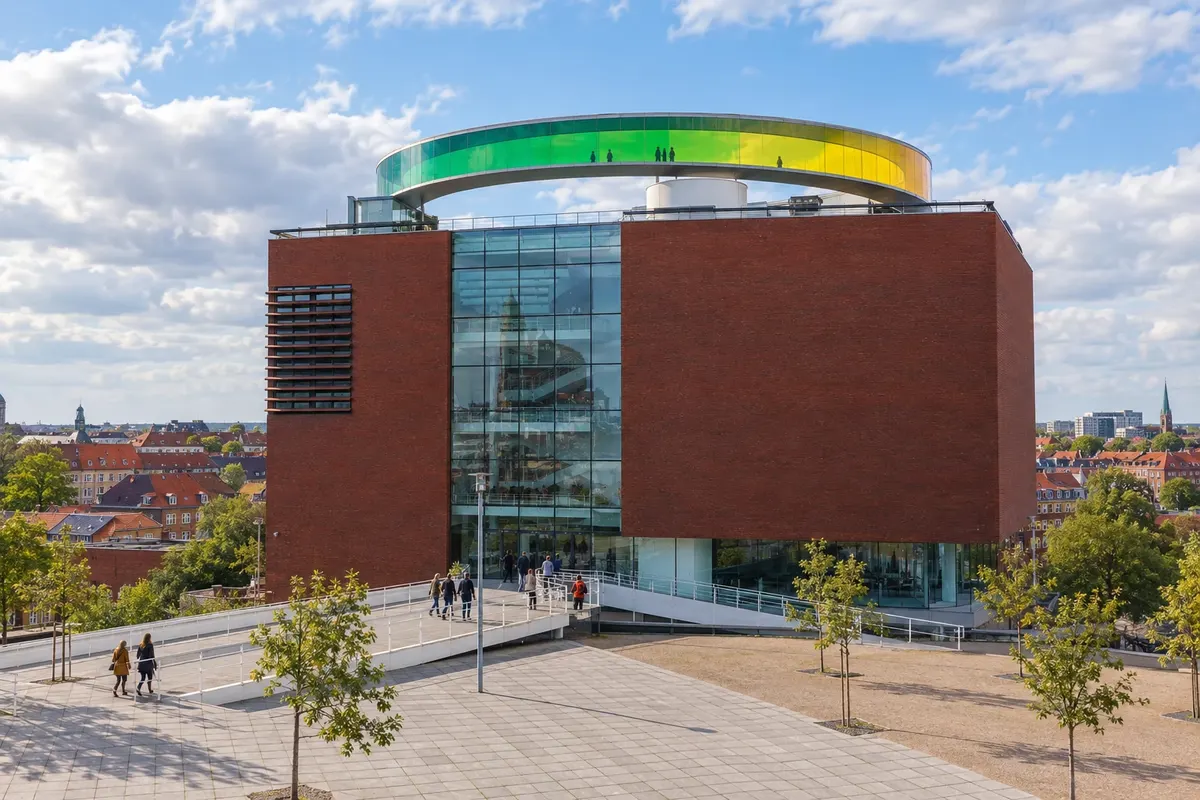
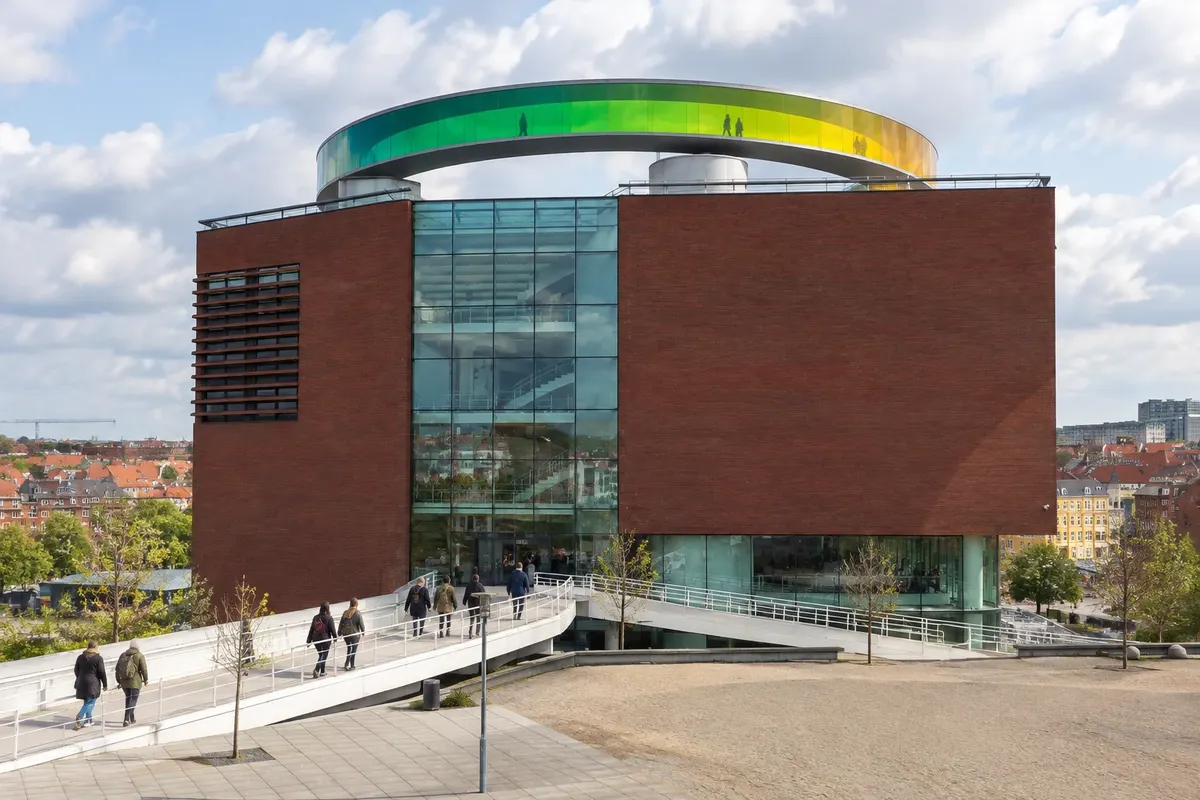
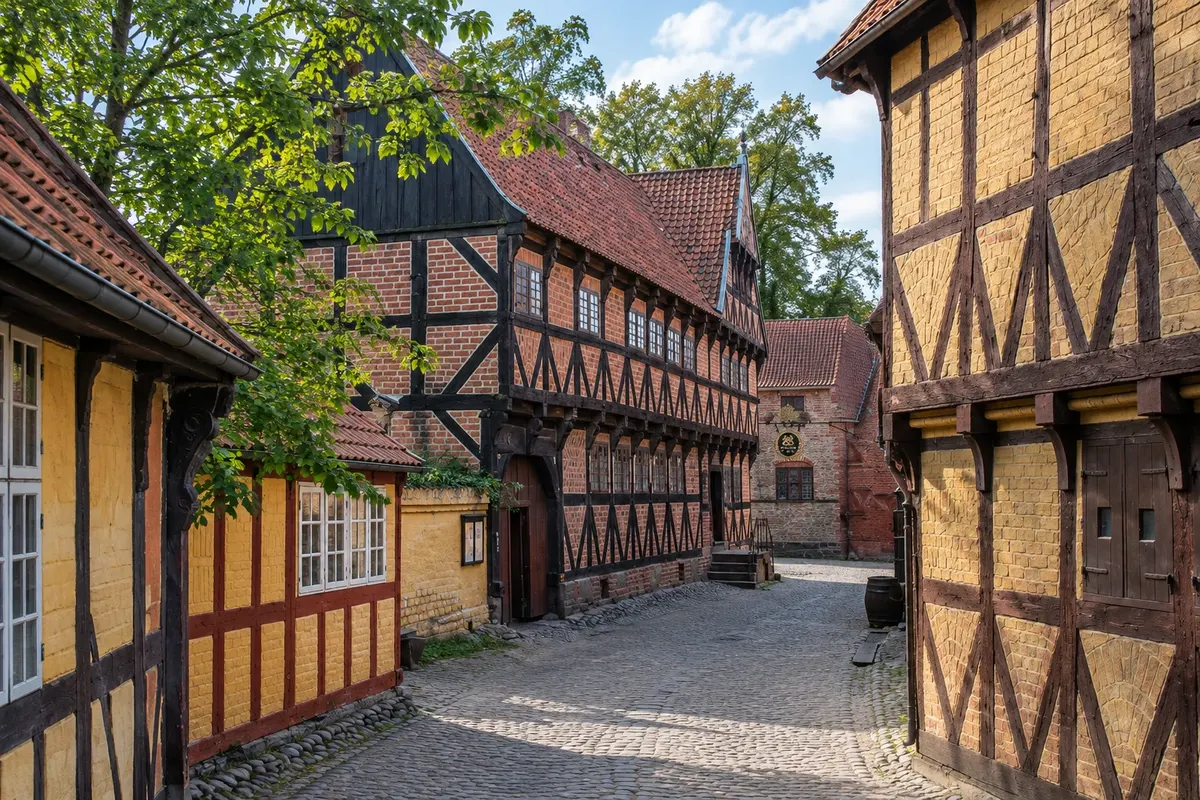
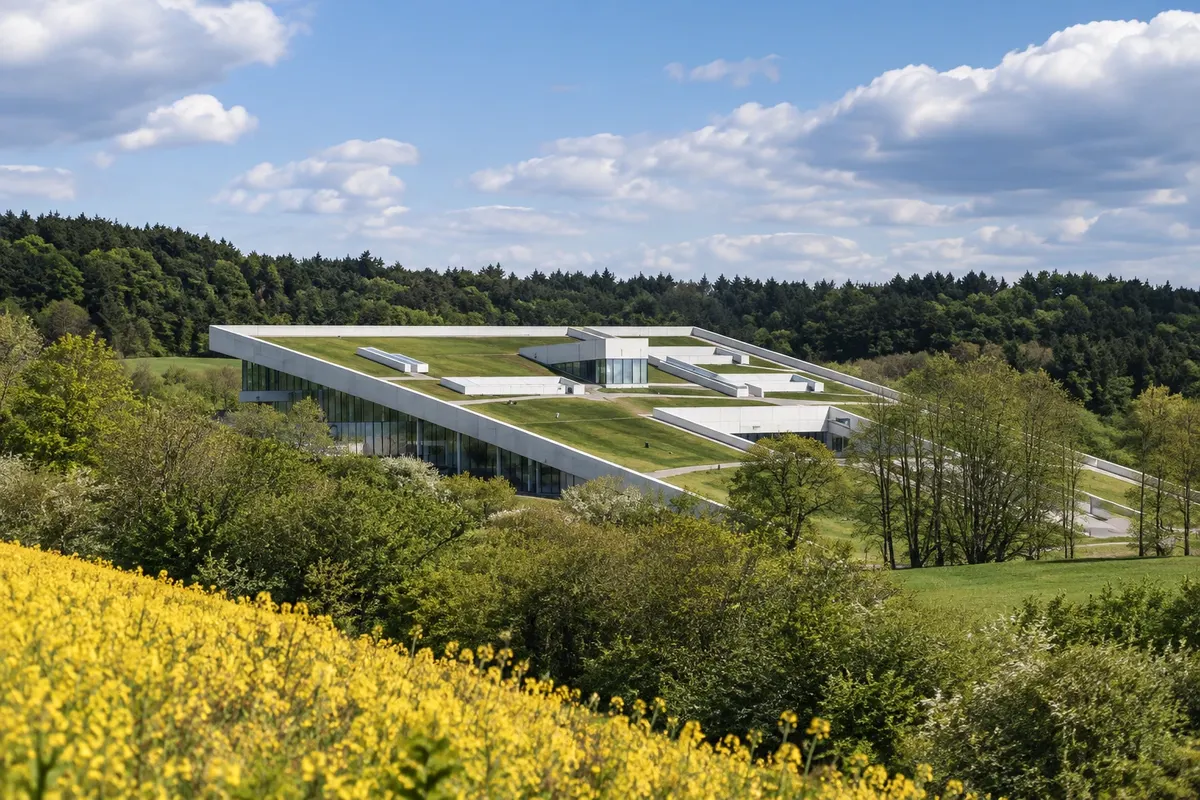
Atop ARoS, the art museum, "Your rainbow panorama" by Olafur Eliasson is a circular corridor of colored glass offering views of the city in every color of the rainbow. Den Gamle By, the "old town," is an open‑air museum with 75 historic houses from various towns around the country, arranged as streets from different eras, from the 16th century to the 1970s. To the south, Moesgaard Museum, in a building with a sloped grass roof, presents prehistory and the Vikings and houses the Grauballe Man, a 2,300‑year‑old body preserved in a bog.
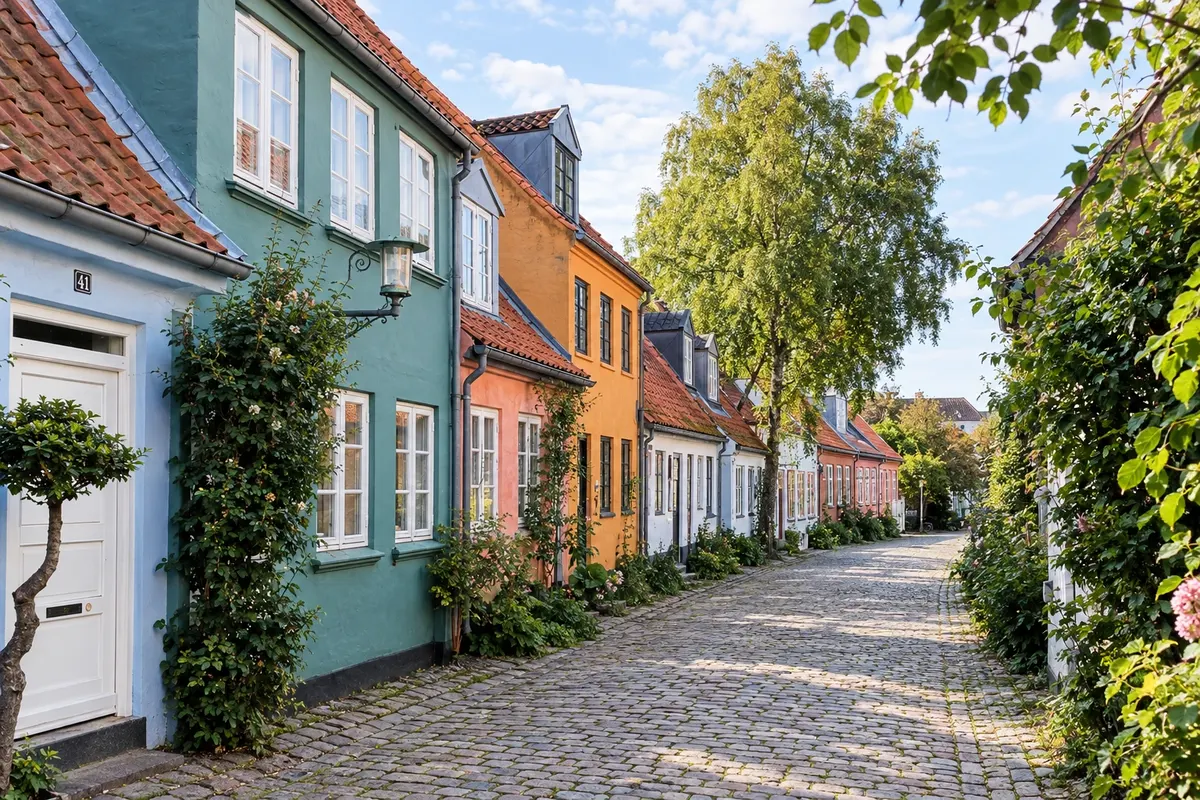
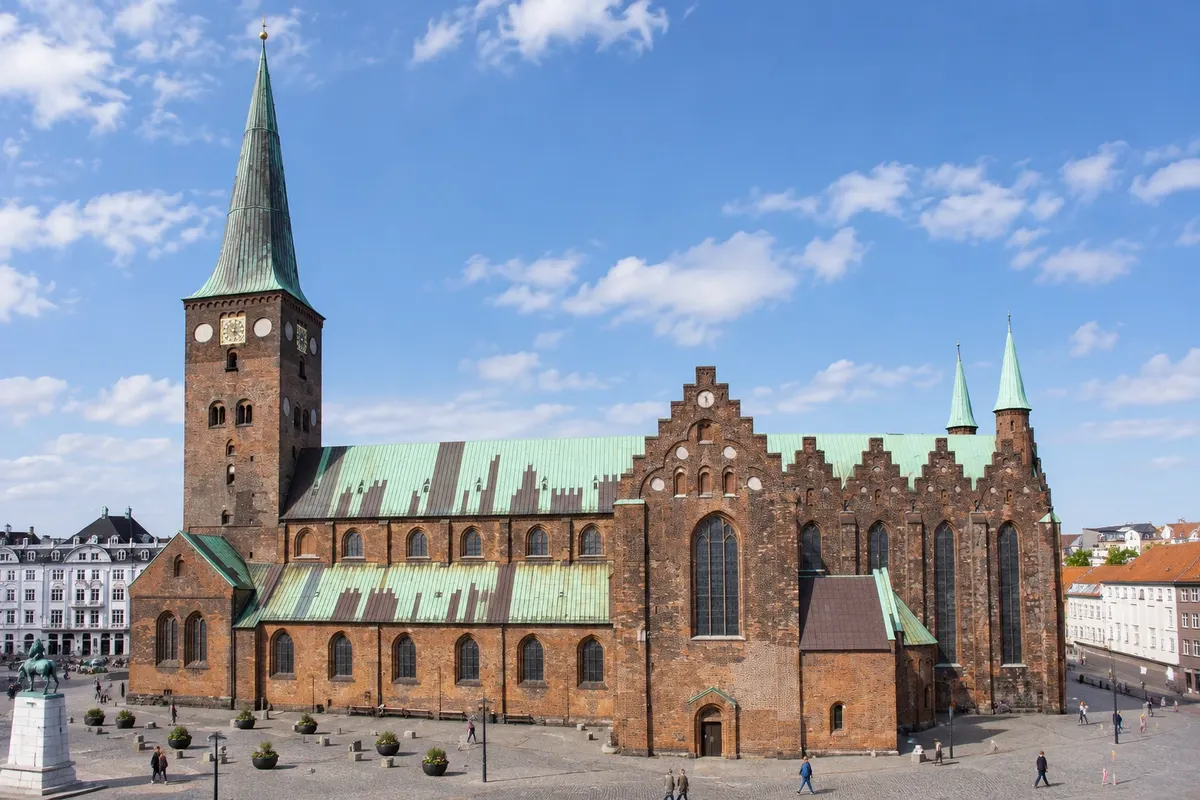
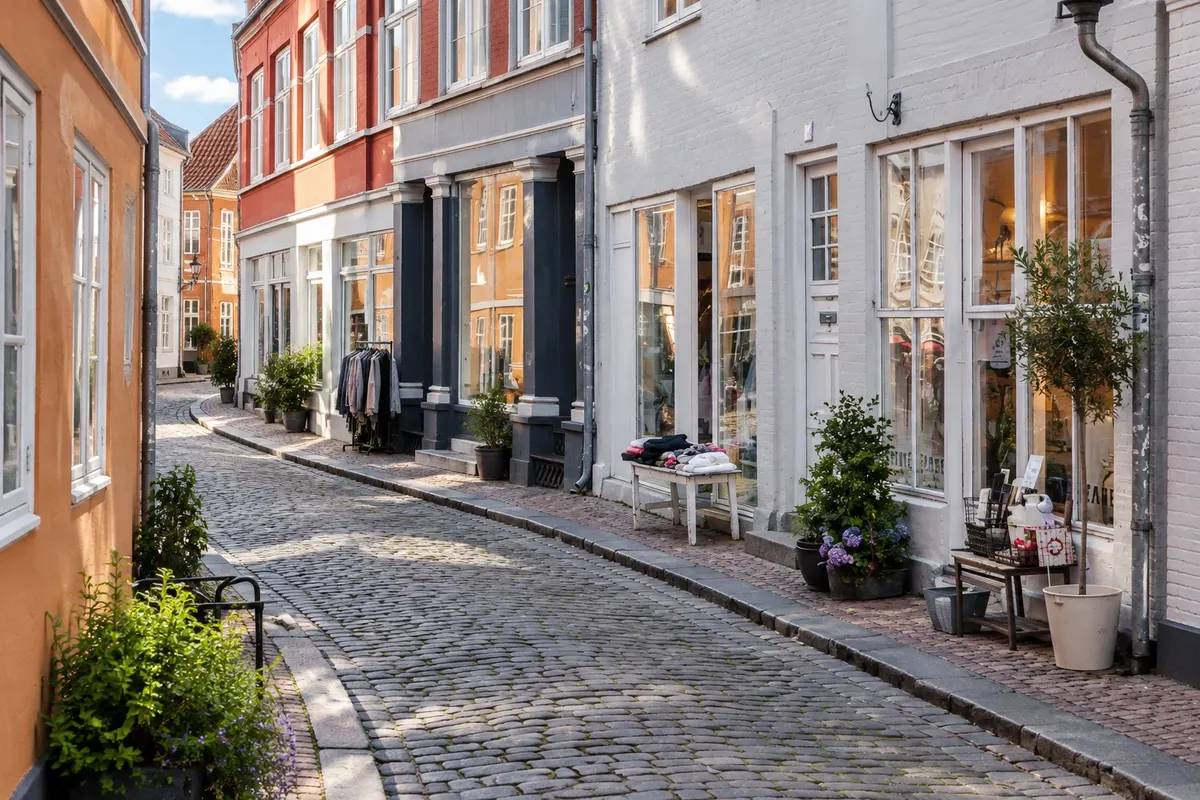
In the center, Aarhus Cathedral is the longest and tallest church in the country, with medieval frescoes. Beside it, Latinerkvarteret, the Latin Quarter, has cobbled streets with 17th‑ and 18th‑century houses, cafés, second‑hand shops and design stores. The Aarhus River, reopened through the center, has banks lined with bars and restaurants, and the new port district Aarhus Ø mixes contemporary architecture with sea bathing.
The city is done on foot, by bike and by tram.
This destination brings together 1 city: Aarhus.


 Brazil
 Argentina
 Bolivia
 Chile
Chile Colombia
 Ecuador
 Guyana
 French Guiana
 Falkland Islands (Malvinas)
 Paraguay
 Peru
Peru Suriname
 Uruguay
 Venezuela
 Germany
 Belgium
 Spain
Spain France
 Greece
 the Netherlands
 Ireland
 Italy
Italy Luxembourg
 Norway
 Portugal
 the United Kingdom
 Sweden
 Switzerland