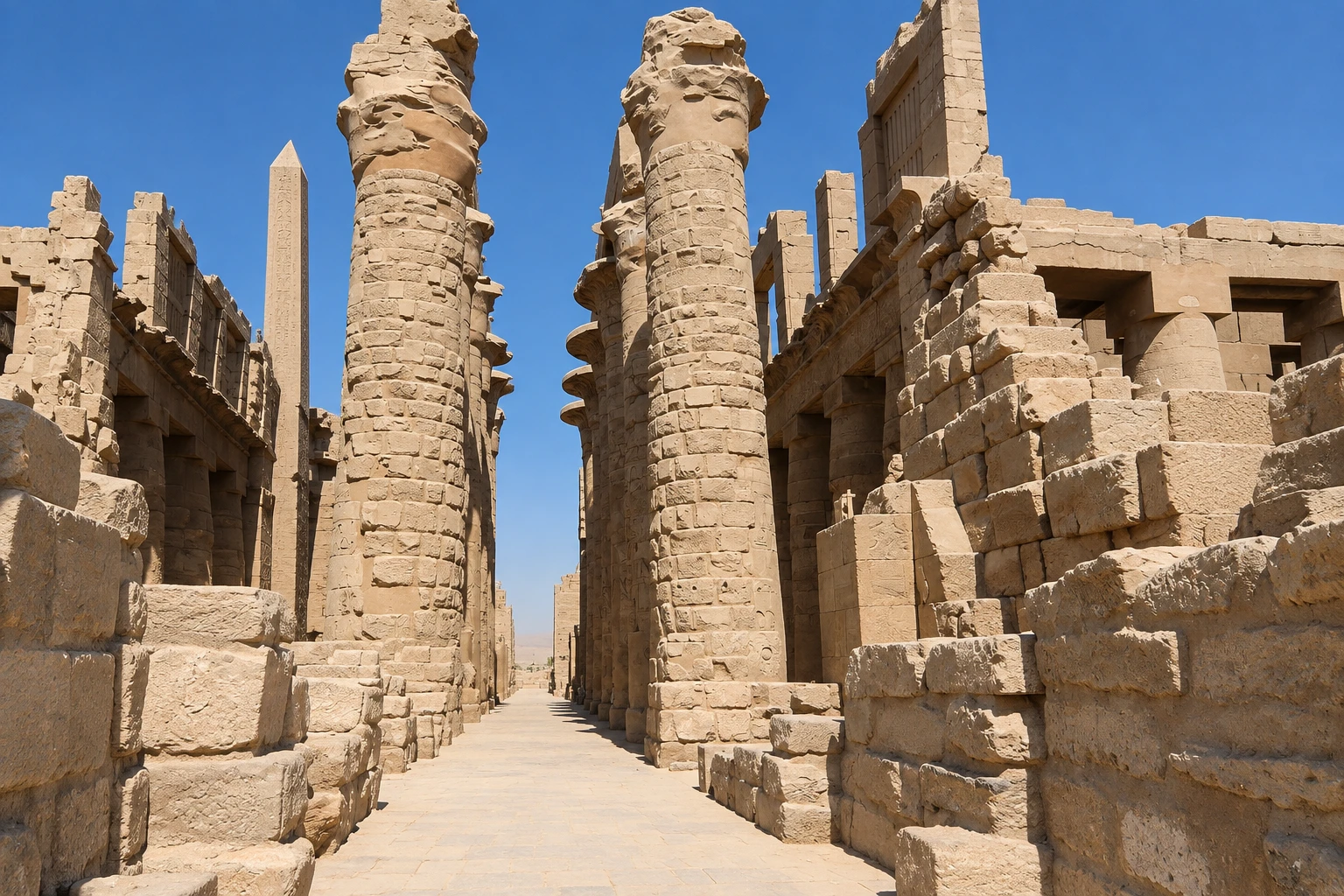
Temple
Karnak Temple
Temple complex dedicated to the god Amun, north of Luxor, built over 2,000 years, with the hypostyle hall of 134 columns, obelisks and the sacred lake.

 Search
 Brazil
 Antarctica
 Argentina
 Bolivia
 Chile
 Colombia
 Ecuador
 Falkland Islands (Malvinas)
 French Guiana
 Guyana
 Paraguay
 Peru
 Suriname
 Uruguay
 Venezuela
 Austria
 Belgium
 Croatia
 Denmark
 Finland
 France
 Germany
 Greece
 Hungary
 Iceland
 Ireland
 Italy
 Luxembourg
 Norway
 Poland
 Portugal
 Slovakia
 Slovenia
 Spain
 Sweden
 Switzerland
 the Czech Republic
 the Netherlands
 the United Kingdom
 Turkey
 Bermuda
 Canada
 Greenland
 Mexico
 Saint Pierre and Miquelon
 the United States
 the Dominican Republic
 JapanTurkeyEgypt
 South Africa
 Australia
 Fiji
 New Zealand
 Papua New Guinea
Luxor
12 places to visit Luxor (Egypt), chosen by the Cidade Turismo guide.
Illustrative images. The pictures in this guide are illustrations based on the real place, not photographs, and may differ from it.
To start
One by one
Temple complex dedicated to the god Amun, north of Luxor, built over 2,000 years, with the hypostyle hall of 134 columns, obelisks and the sacred lake.
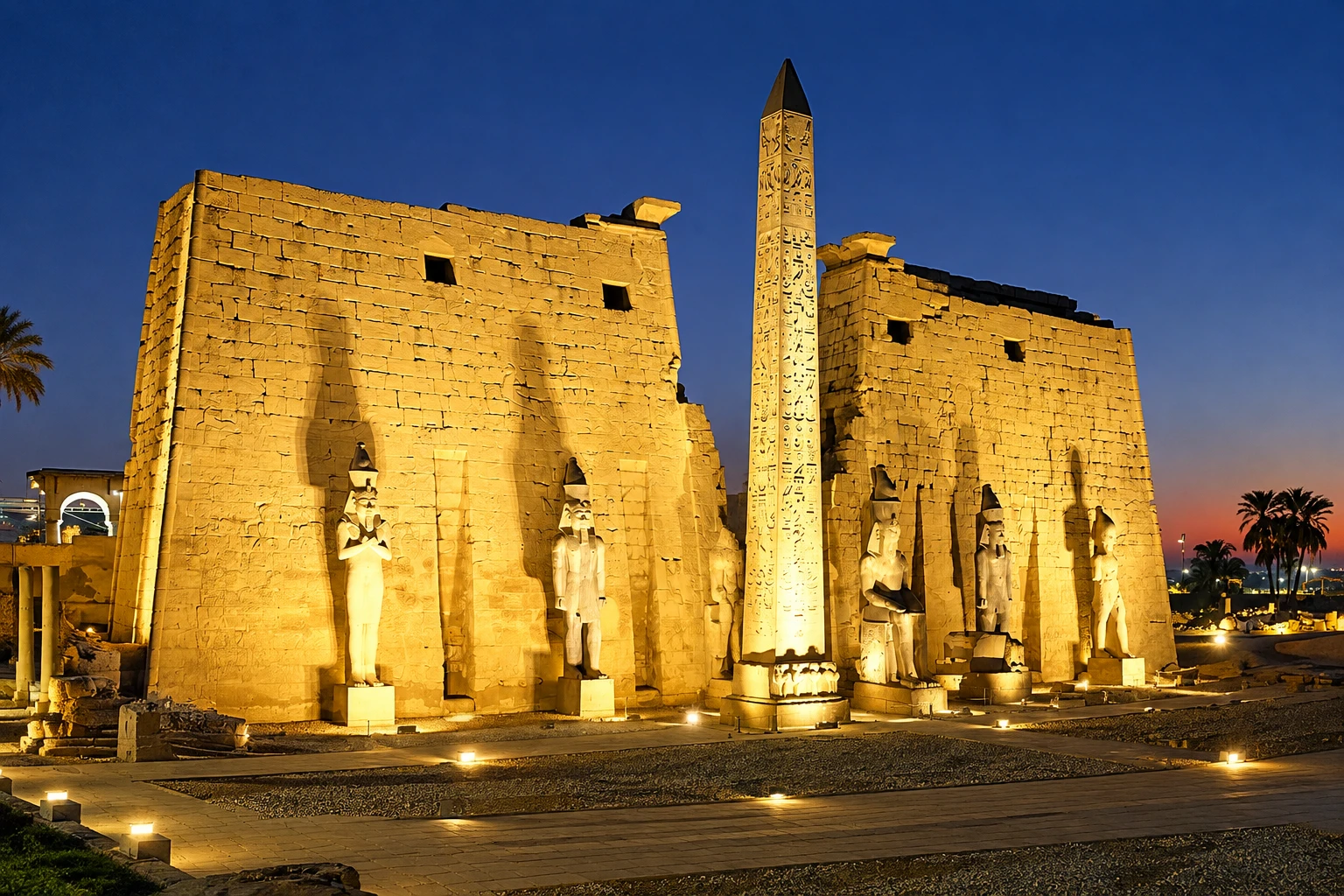
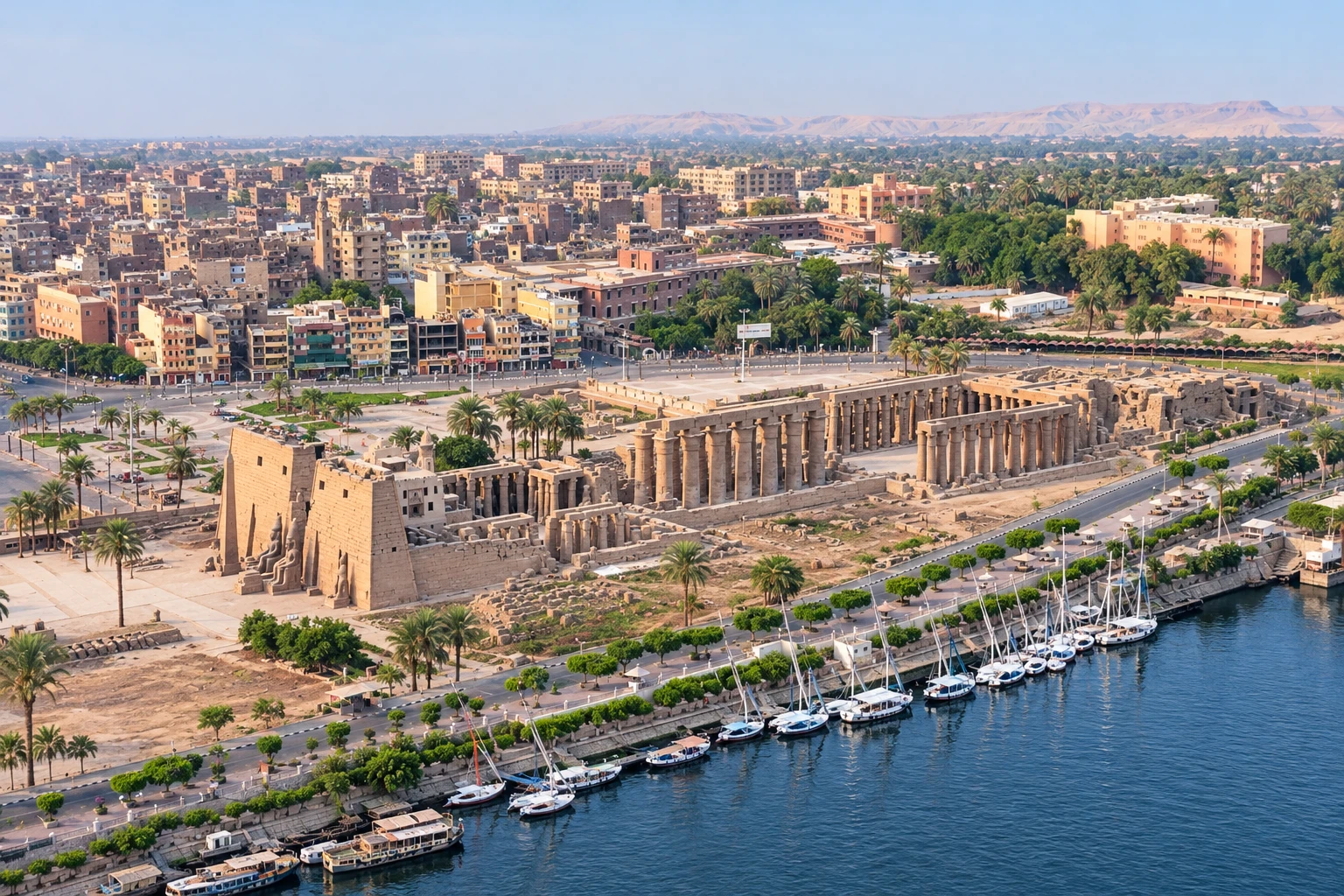
Temple in the city center dedicated to Amun, built by Amenhotep III and Ramesses II, with the obelisk at the entrance, colossal statues and courtyards illuminated at night.
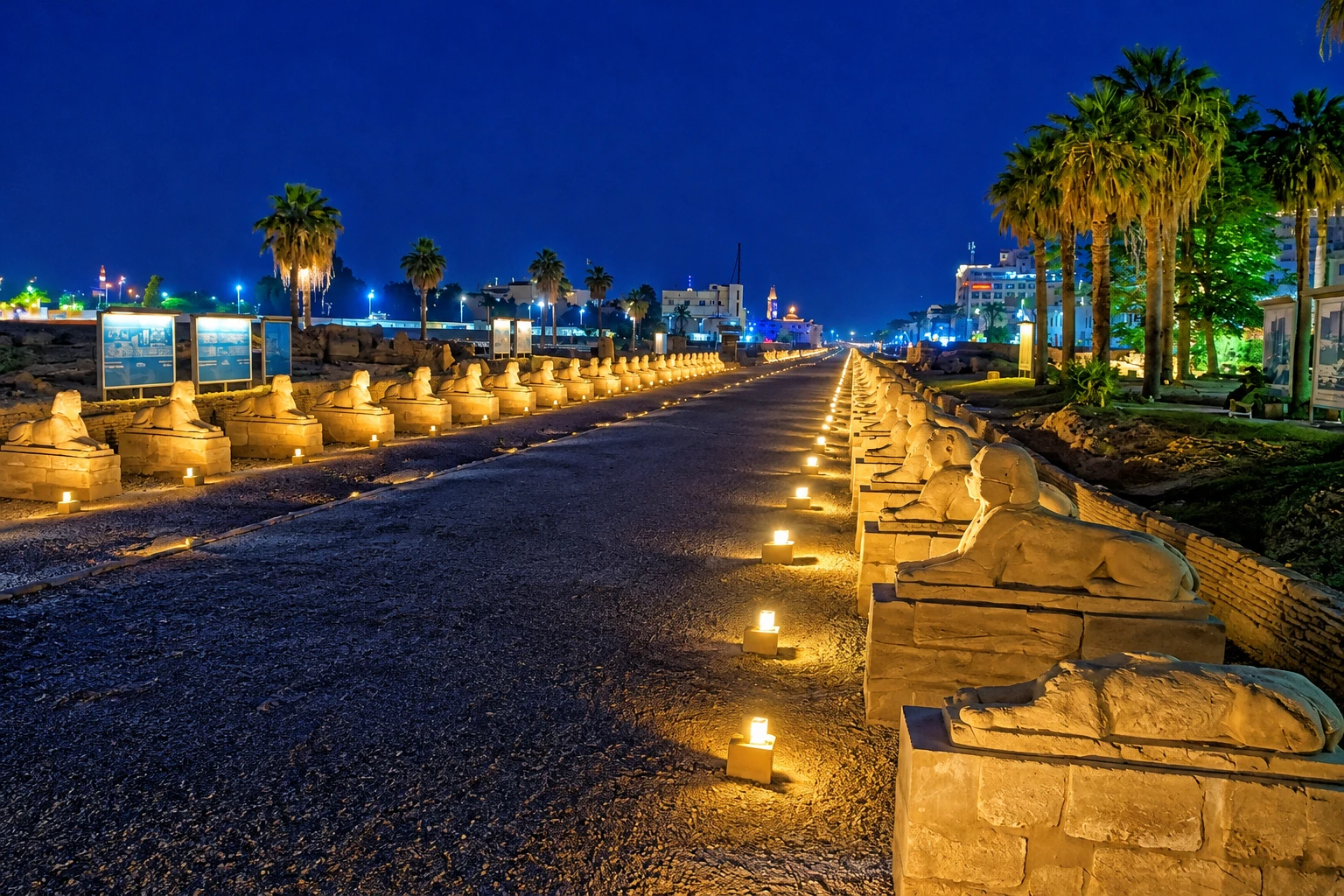
Avenue of about 2.7 km lined with sphinxes that connects Karnak to Luxor Temple and was the route for Opet processions.
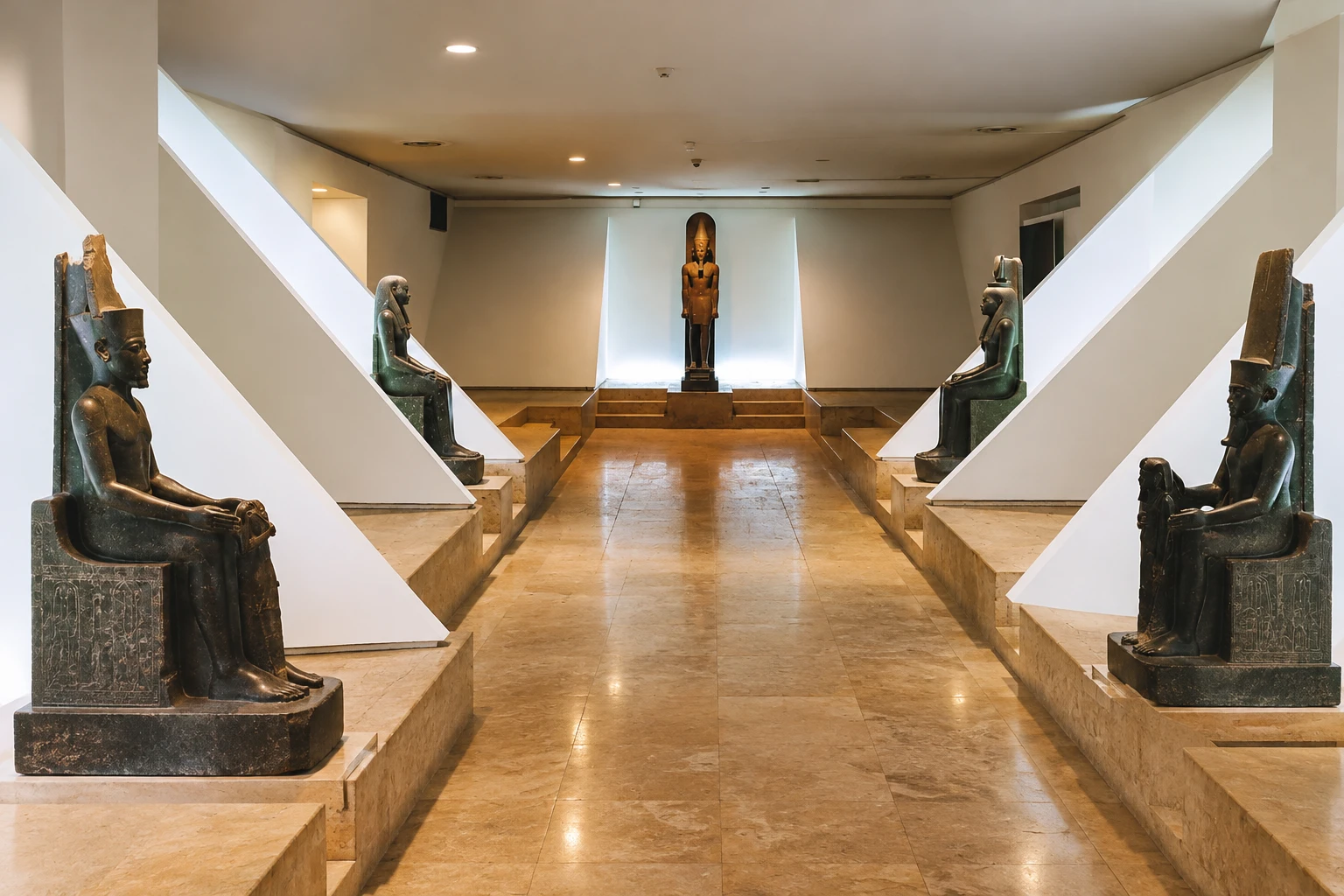
Museum on the Nile promenade with statues, reliefs and objects from Theban temples and tombs, including pieces from Tutankhamun’s tomb and statues found at Luxor Temple.
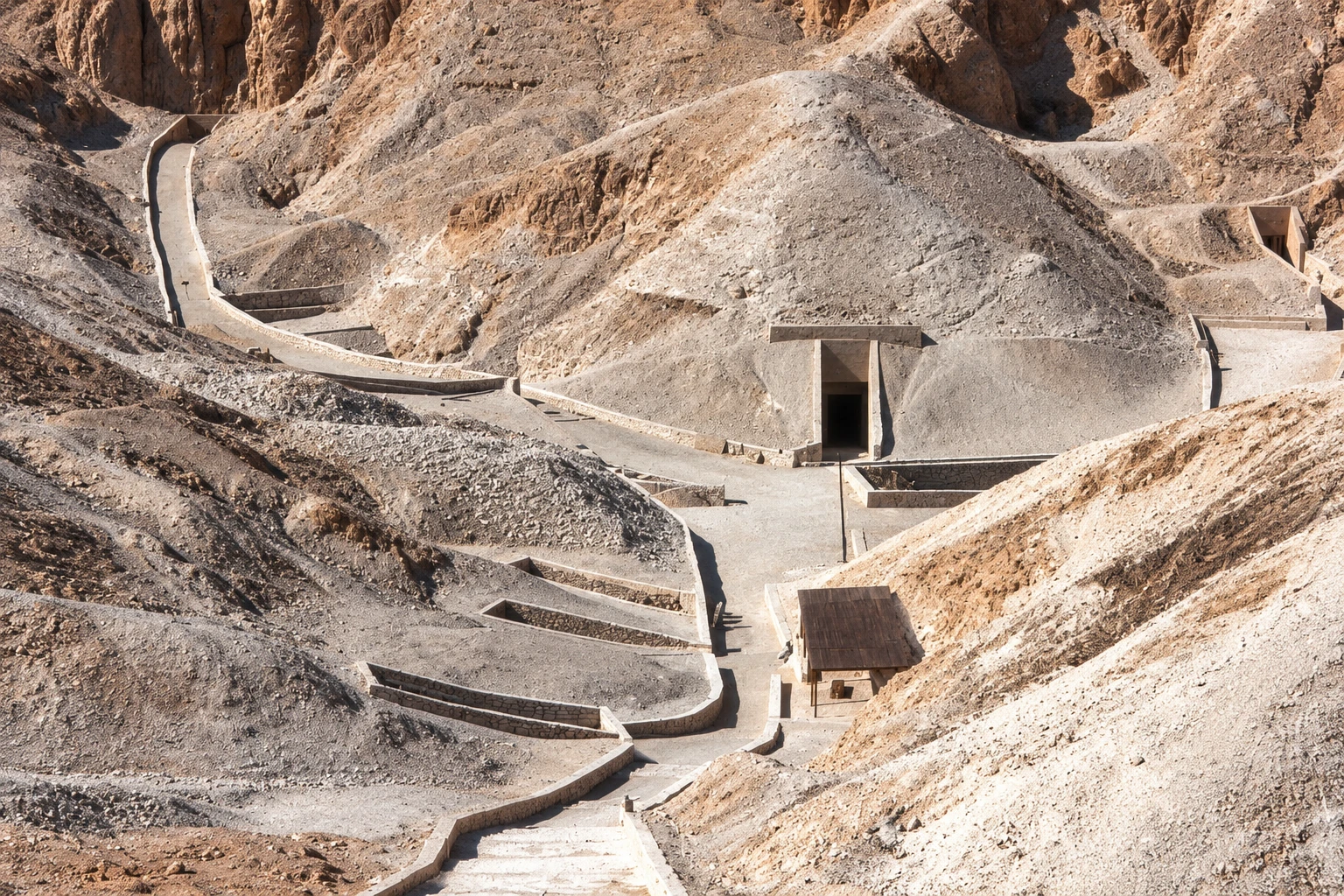
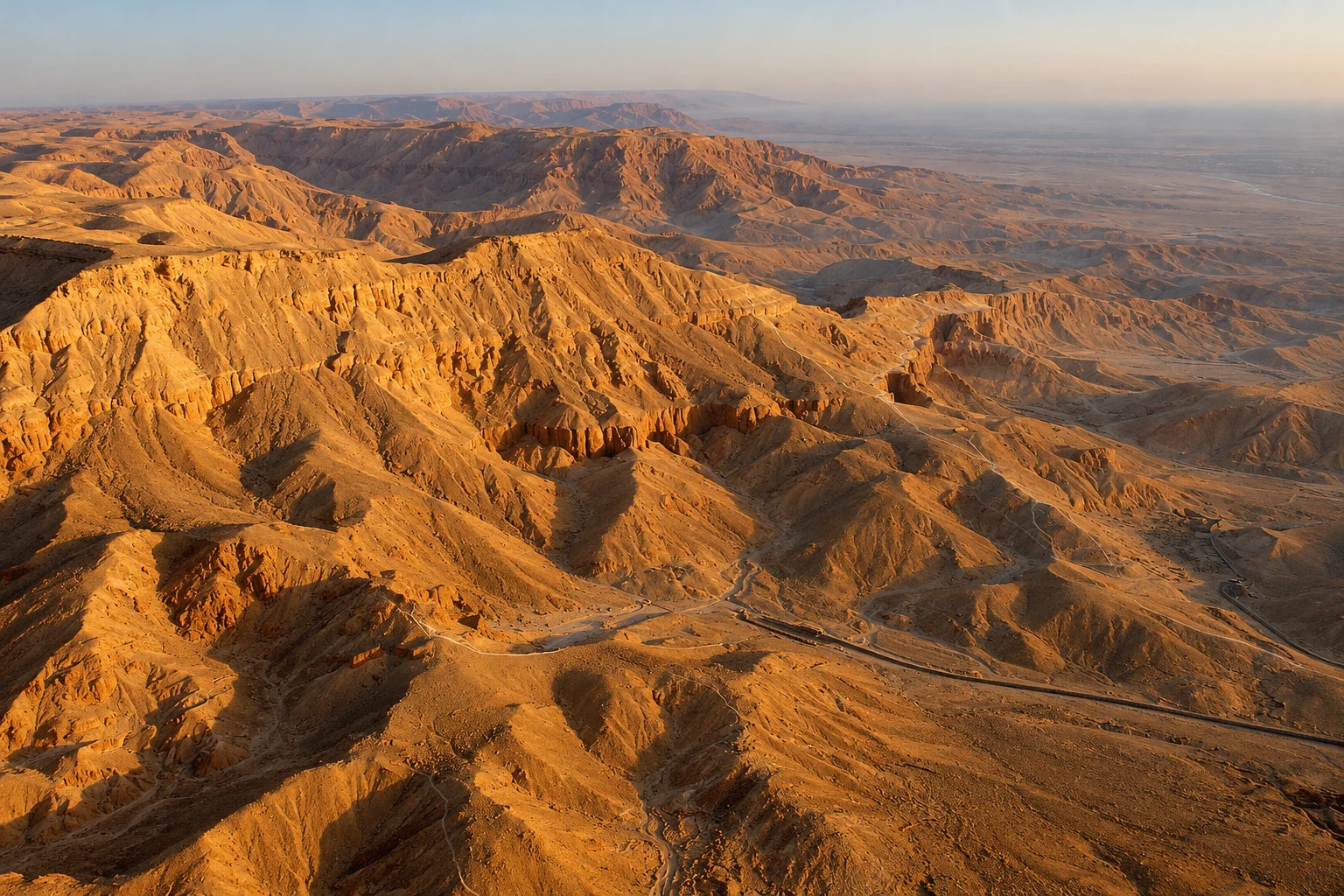
Valley on Luxor’s west bank with tombs cut into rock of New Kingdom pharaohs, such as those of Tutankhamun, Seti I and Ramesses VI, with painted walls.
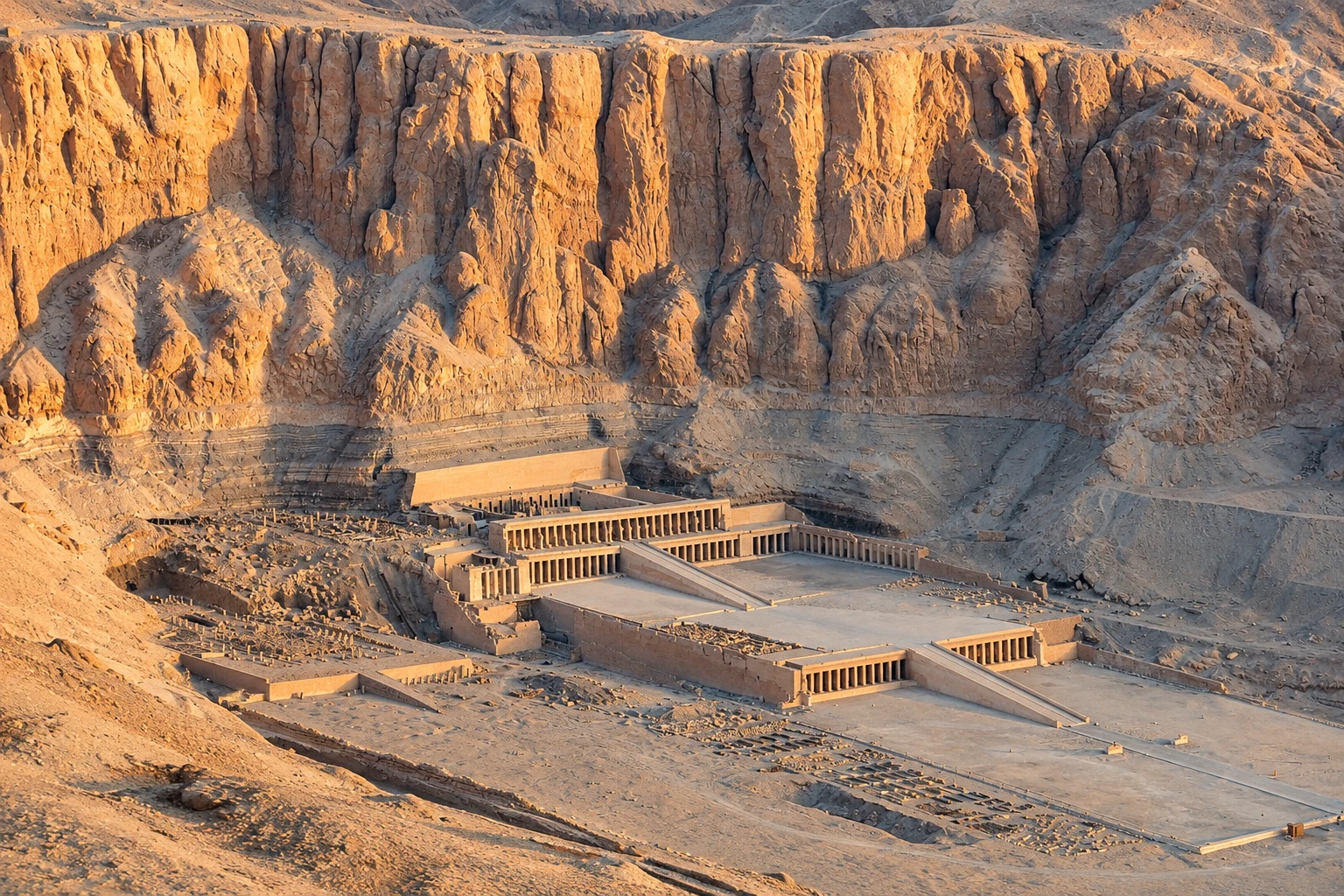
Funerary temple of the queen-pharaoh Hatshepsut at Deir el-Bahari on the west bank, in three terraces with colonnades at the foot of the Theban cliffs.
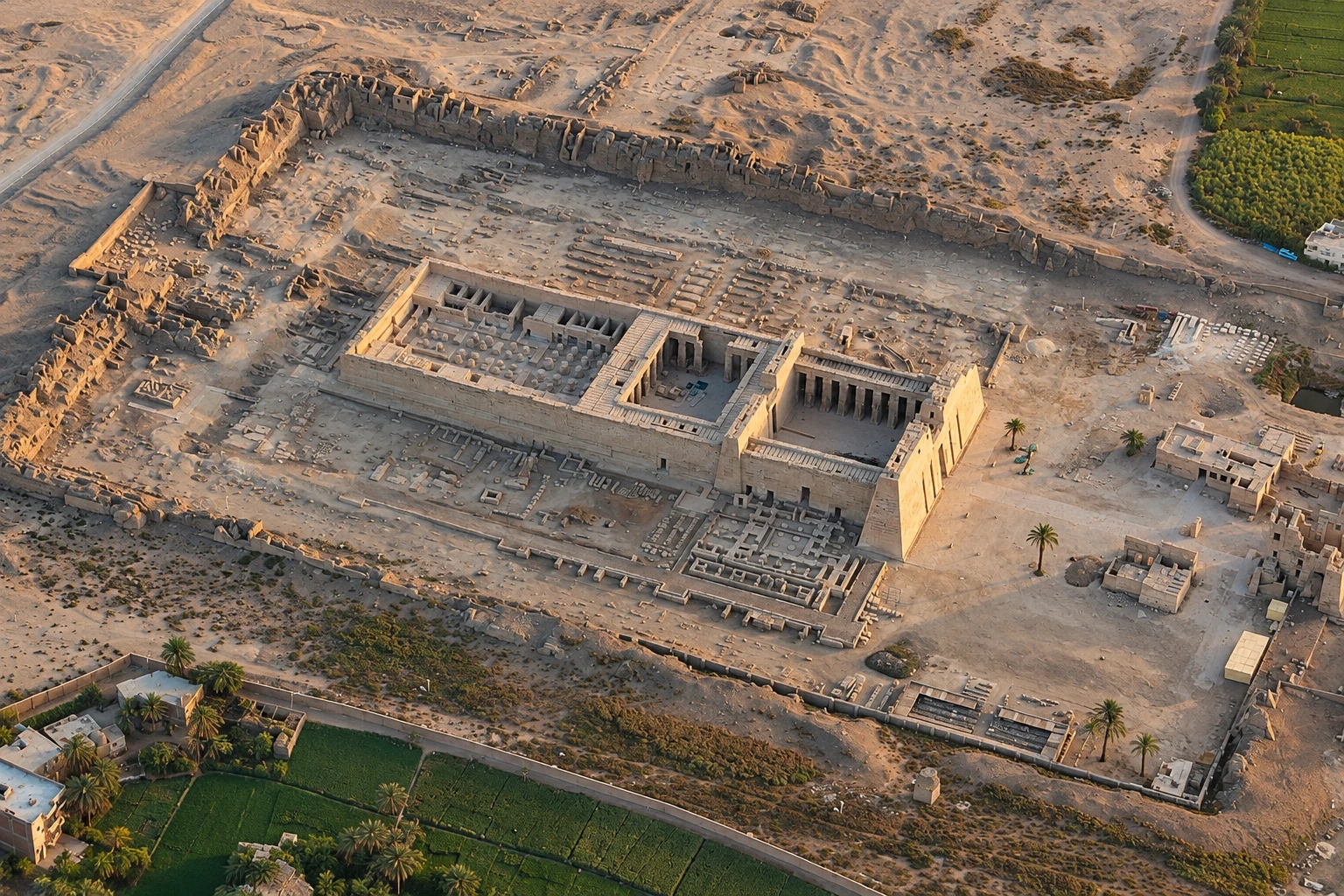
Funerary temple of Ramesses III on the west bank, surrounded by walls, with battle reliefs and ceilings that retain their colors.
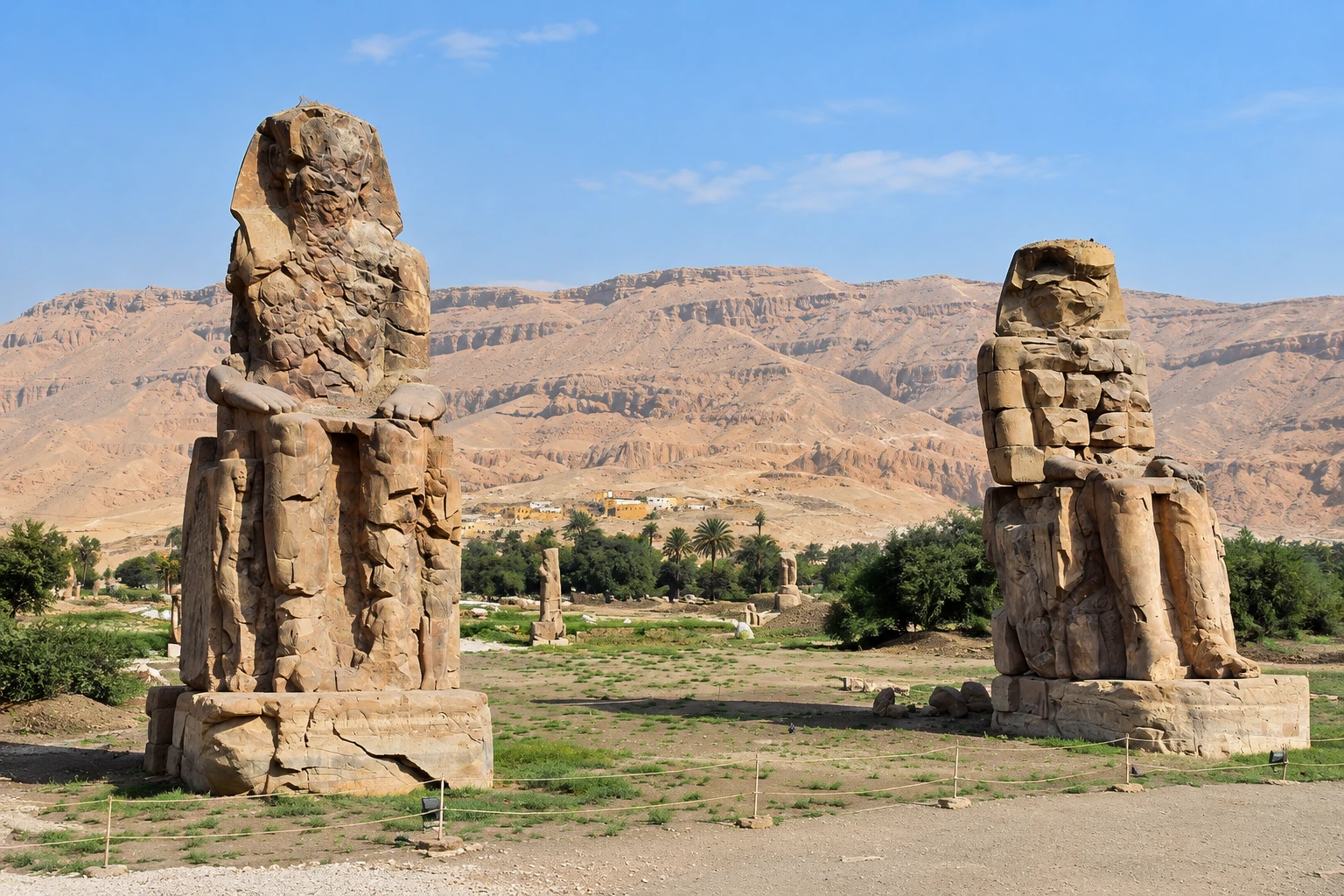
Two colossal seated statues of Amenhotep III, about 18 meters tall, that guarded the entrance of the pharaoh’s mortuary temple on the west bank plain.
West bank necropolis with tombs of queens and princes of the New Kingdom, including Nefertari’s, the wife of Ramses II, which has vivid paintings.
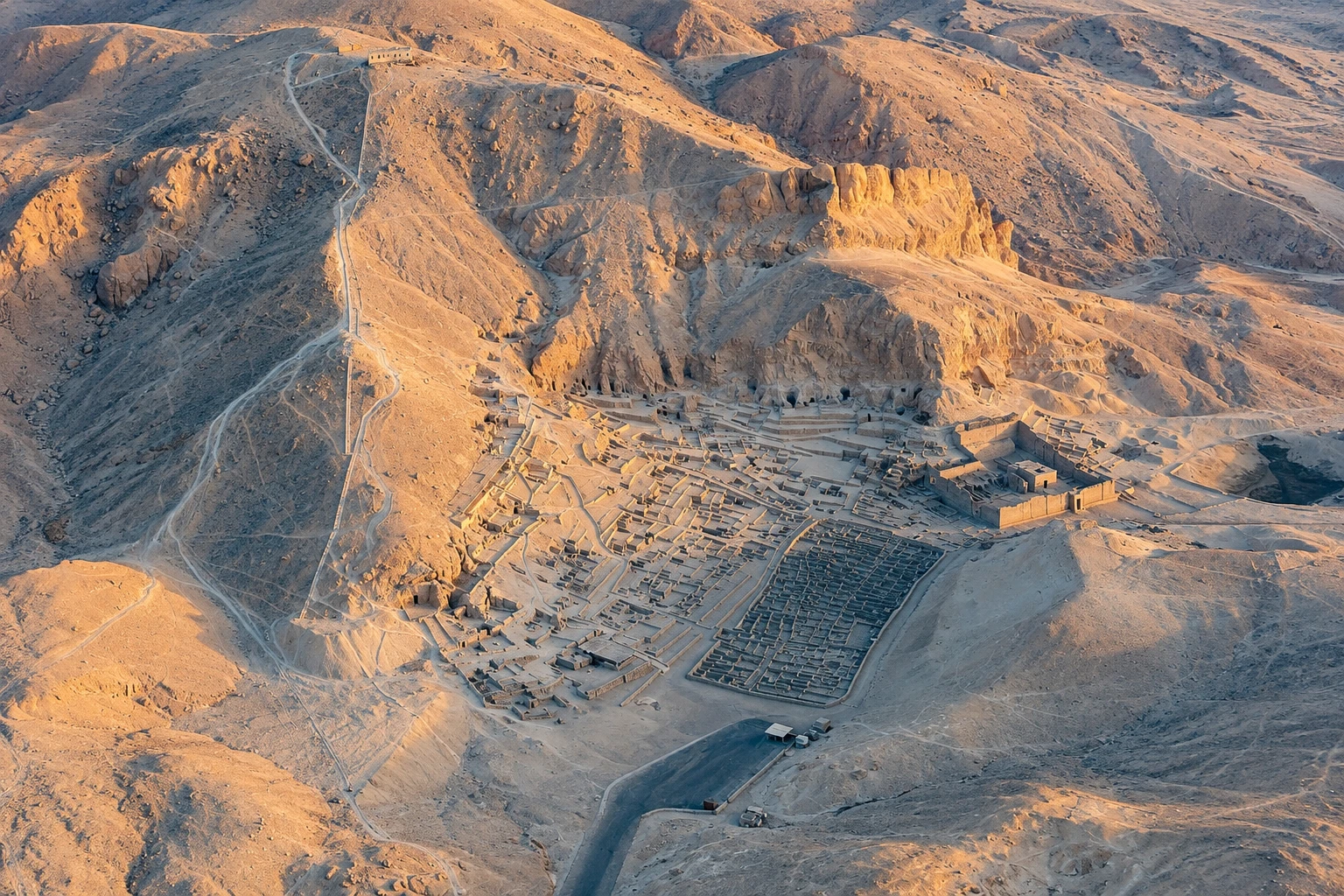
Village of the craftsmen who excavated and painted the royal tombs on the west bank, with ruins of the workers’ houses and painted tombs.
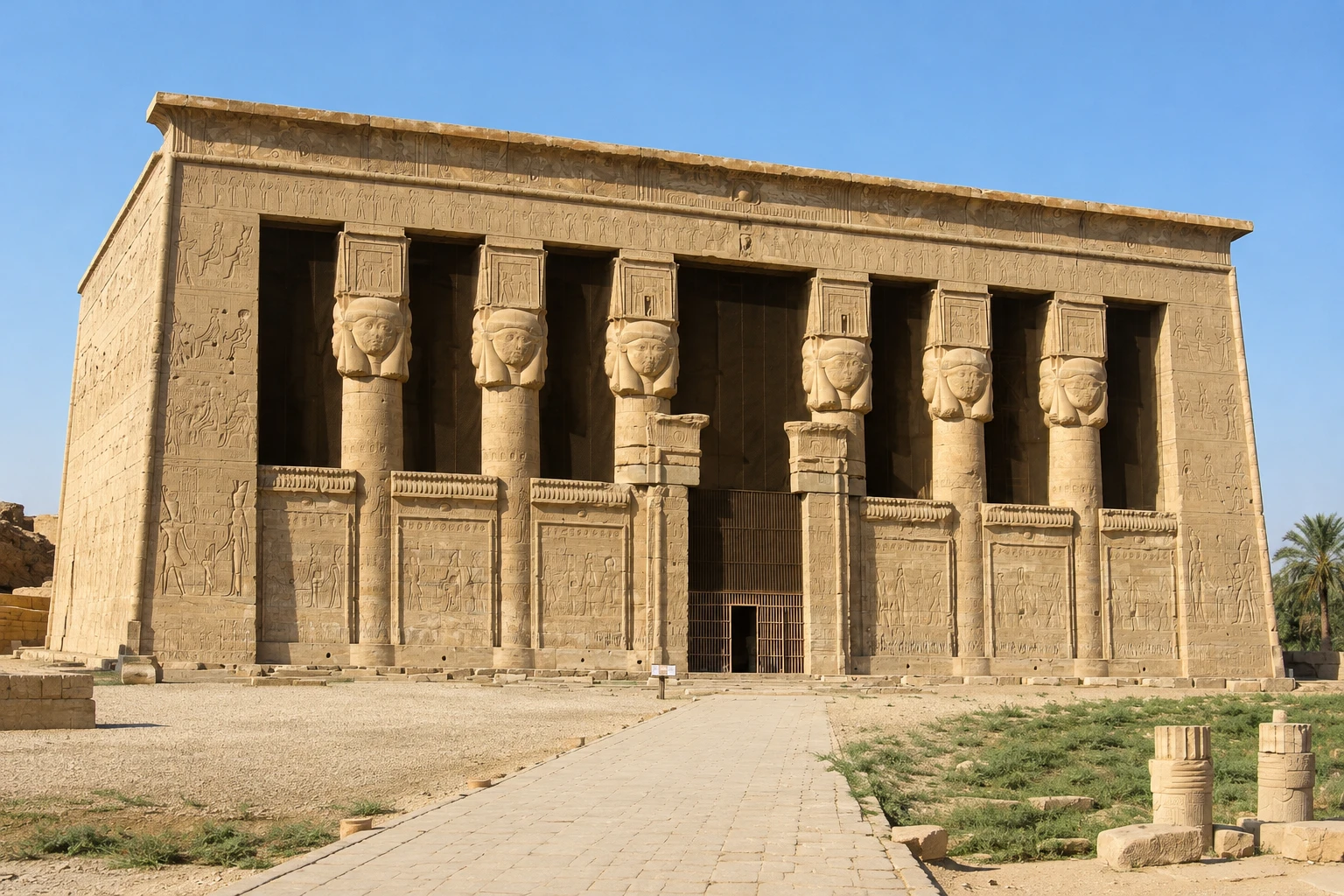
Temple of Hathor north of Luxor, in Qena governorate, from the Ptolemaic and Roman periods, with an astronomical ceiling, roof chapels, and a relief of Cleopatra.
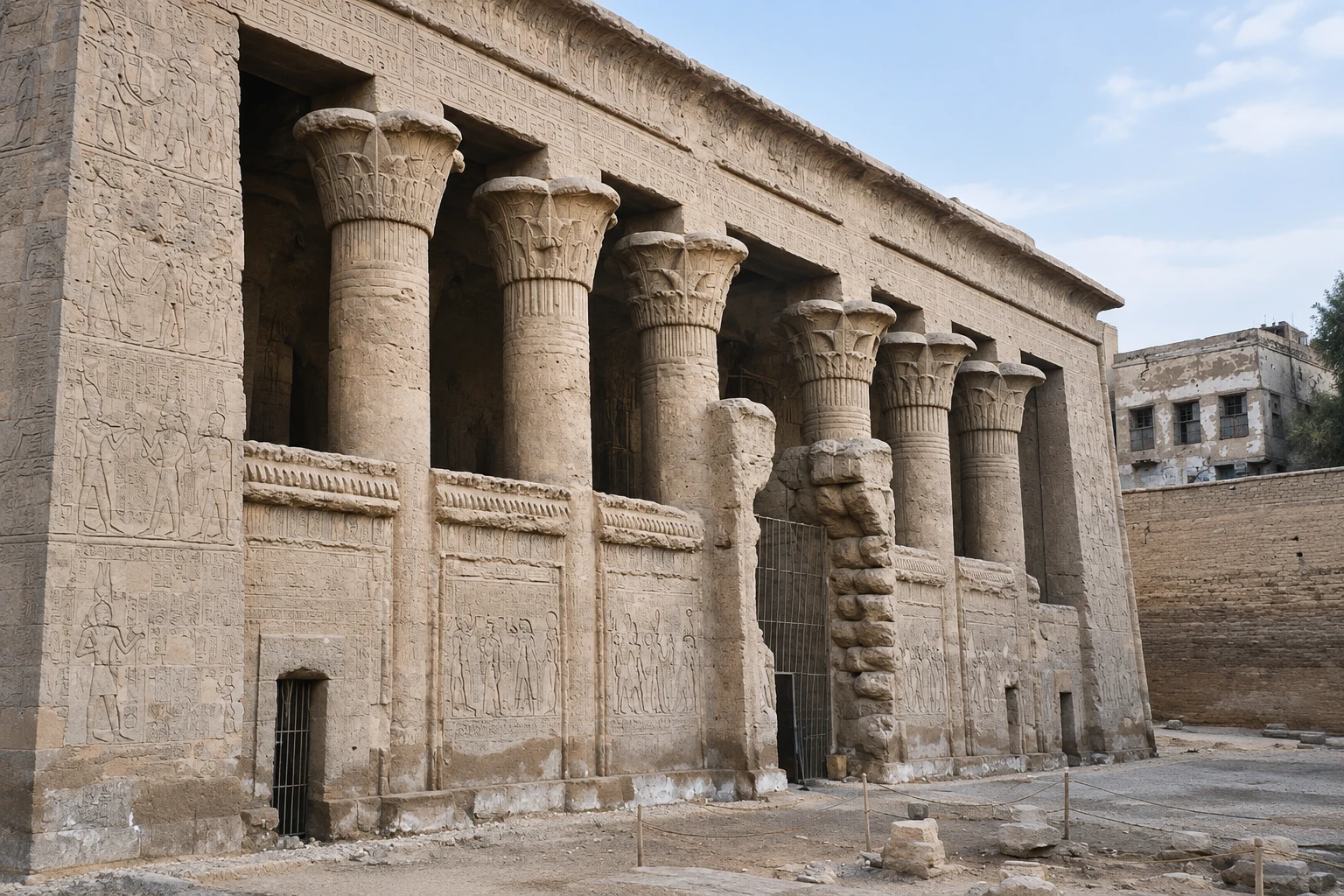
Temple of Khnum in the city of Esna, south of Luxor, from the Roman period, with a hypostyle hall of columns and an astronomical ceiling with restored colors, several meters below street level.
To plan