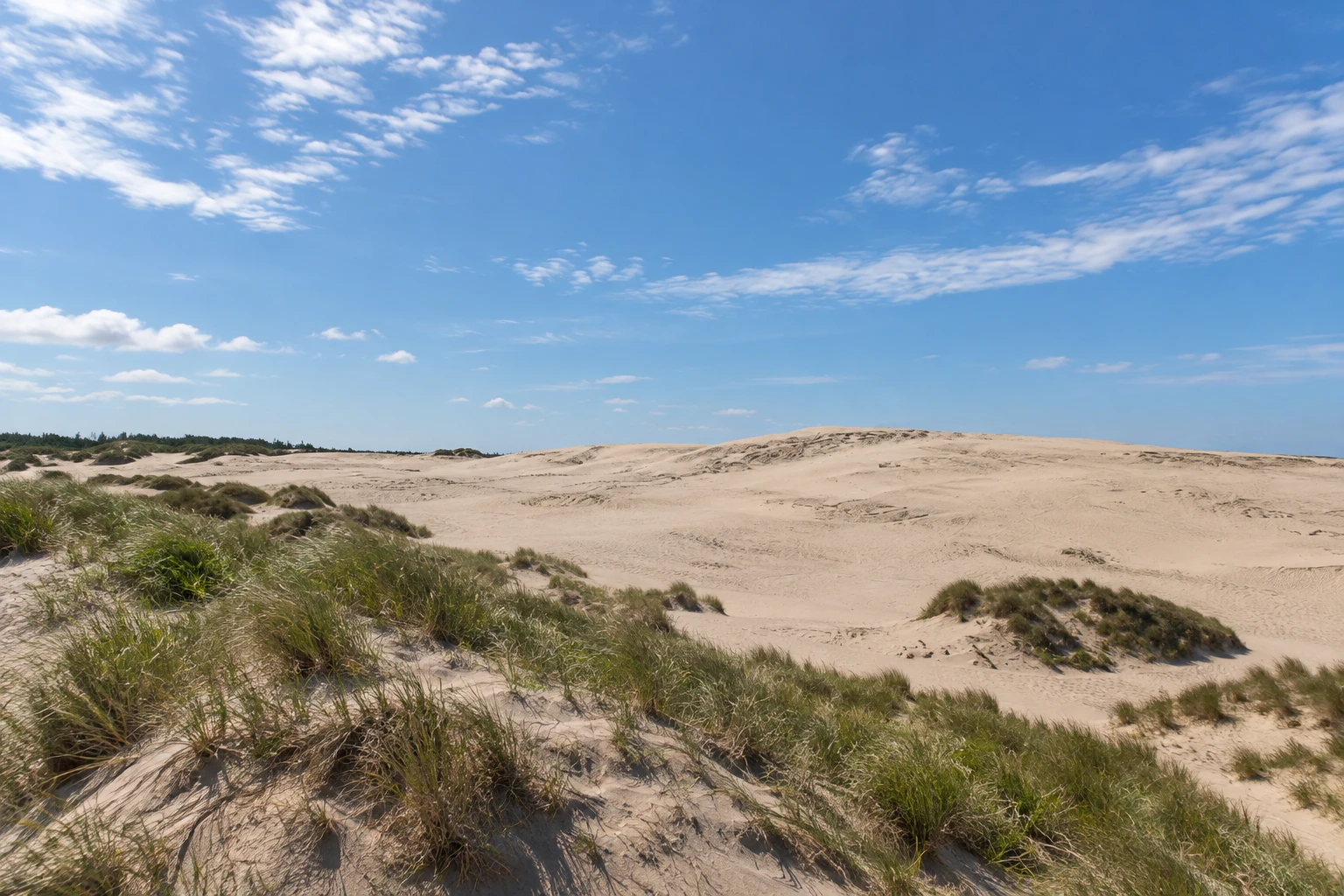
Illustrative images. The pictures in this guide are illustrations based on the real place, not photographs, and may differ from it.
The city
What to expect from Skagen.
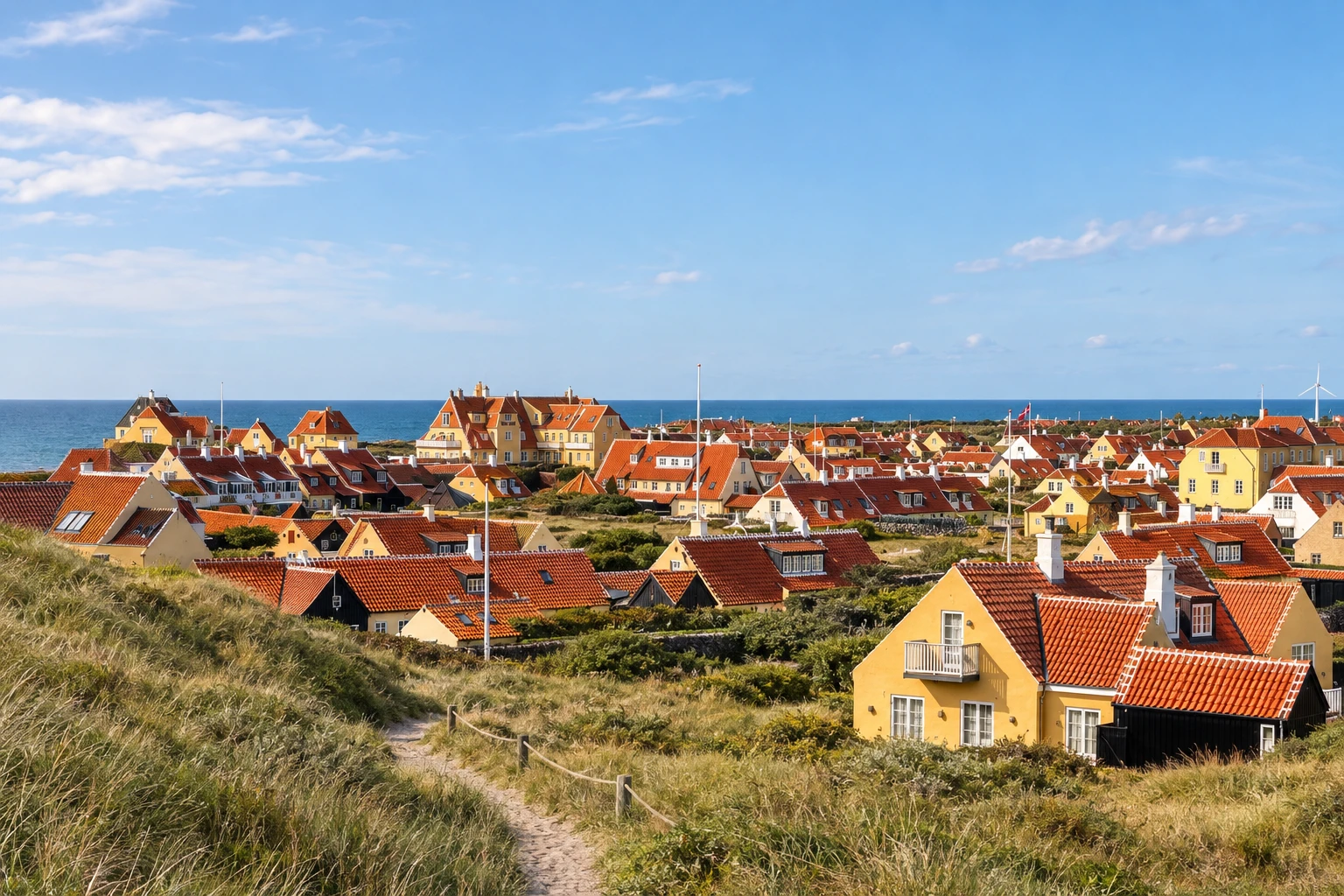
Skagen is the town at the northern tip of Dinamarca, with yellow houses with red roofs, a fishing harbour and beaches on both sides of the peninsula. At Grenen the Skagerrak meets the Kattegat. The Museu de Skagen holds the works of the painters who lived there at the end of the 19th century, and nearby are the church buried by sand and the moving dune Råbjerg Mile.
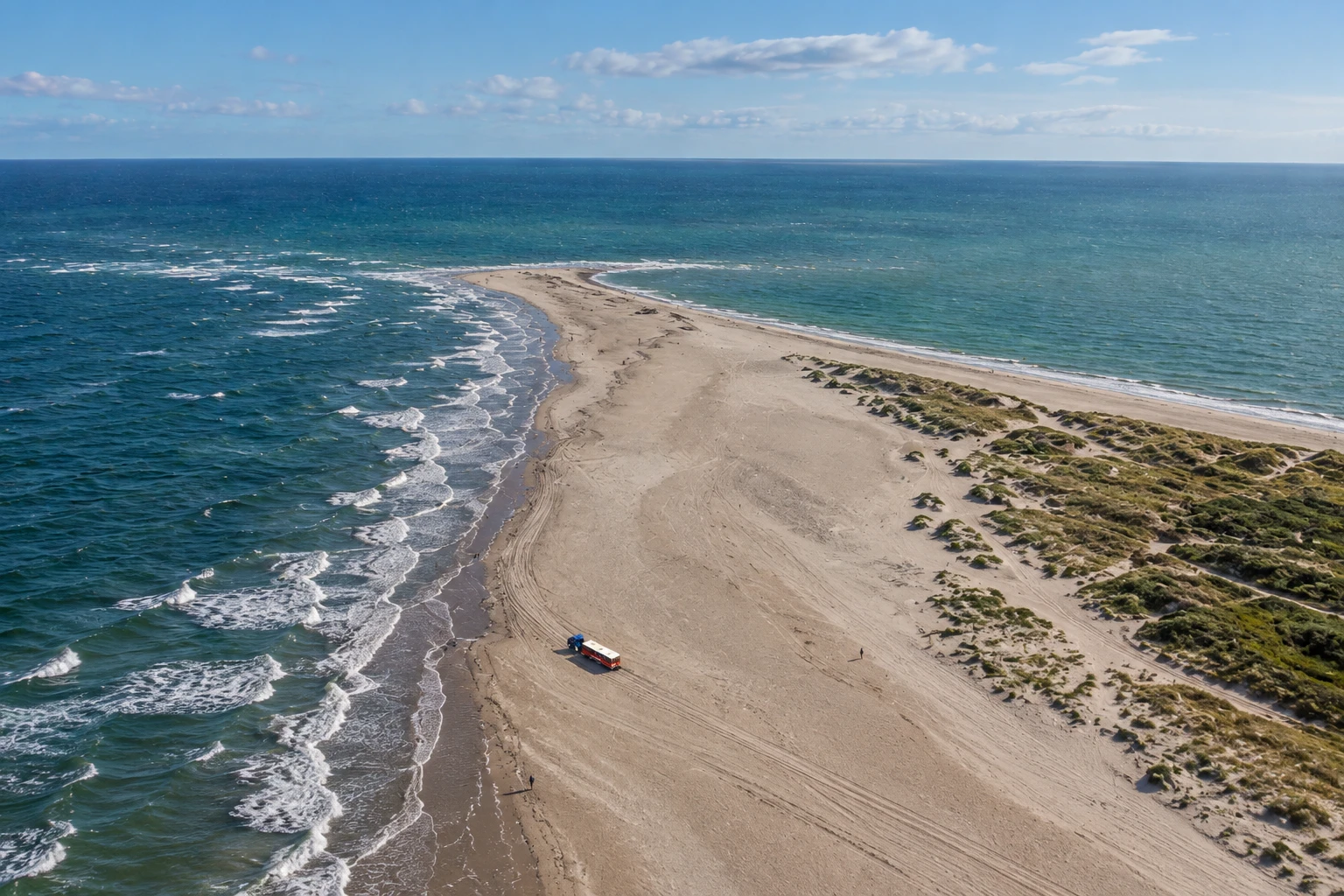
The sand spit at the northern extreme of Dinamarca, where the Skagerrak meets the Kattegat and the waves of the two seas cross. The tractor-bus Sandormen takes you to the tip; nearby is the Farol Cinza, from 1858.
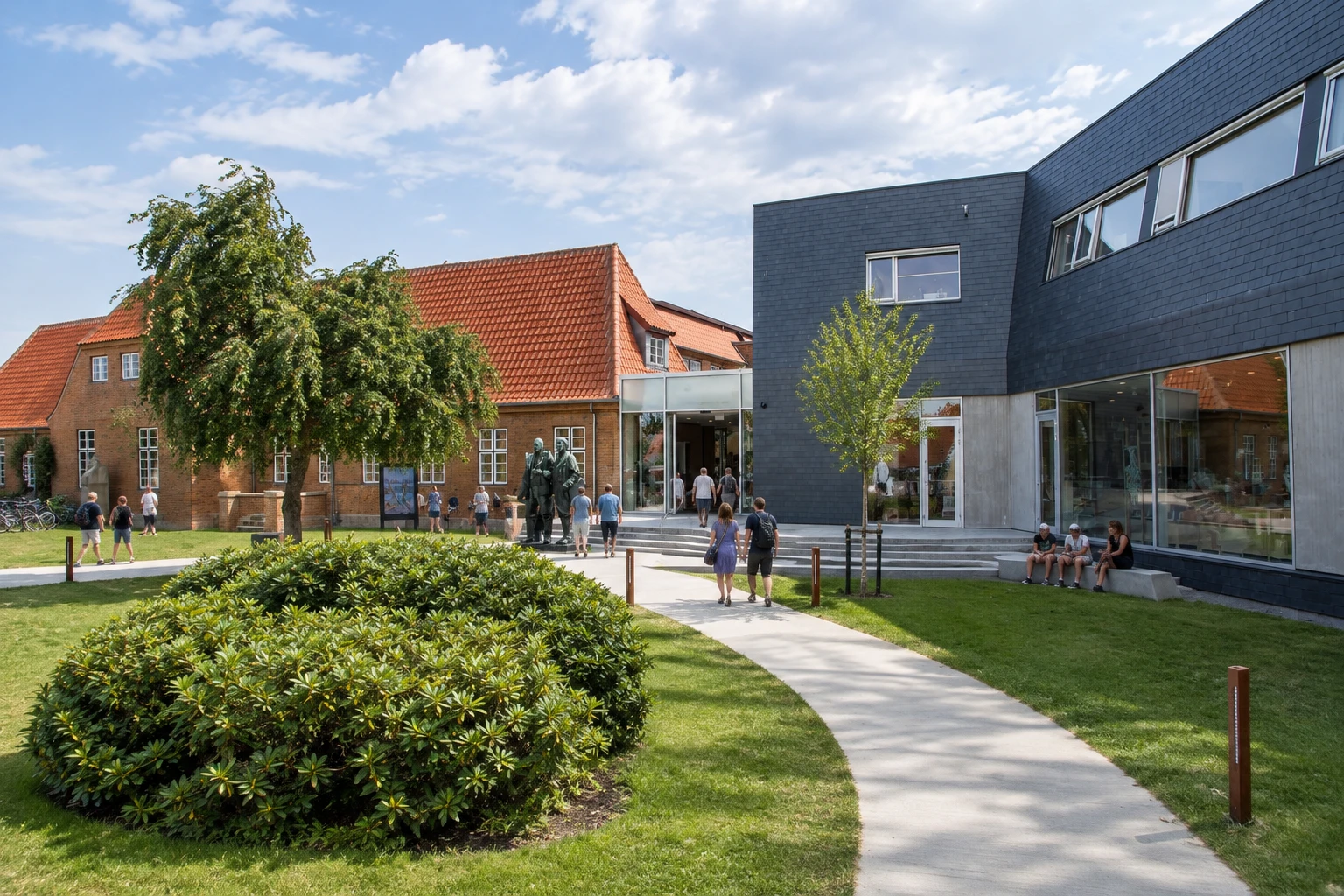
The museum of the Painters of Skagen, founded in 1908 in the dining room of Hotel Brøndum, with works by P. S. Krøyer, Michael and Anna Ancher and others. It includes the Ancher house, kept as it was.
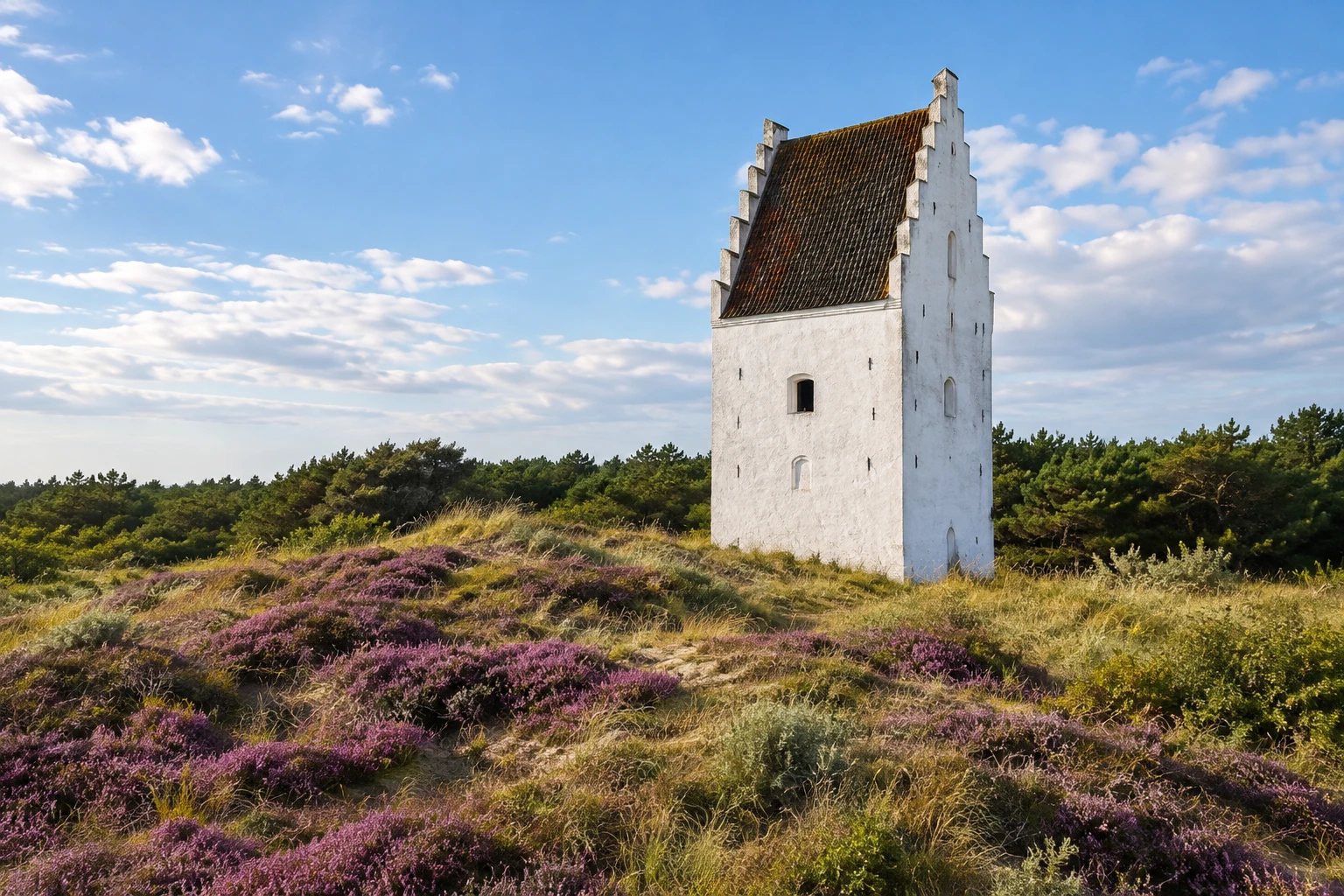
The white tower of a 14th-century church rising among the dunes west of Skagen. Moving sand covered the rest of the church, which was closed in 1795. The tower can be climbed in summer.
The largest drifting dune in northern Europe, 16 km from Skagen, about 40 metres high and 2 km² of sand that advances up to 18 metres a year to the northeast, among heather and pines.
Aeroporto de Aalborg (Aalborg Lufthavn) (AAL)Nørresundby · 100 km
Estação de Skagen (Skagen Station)1 km
Approximate distances. Check flights and bus, train or boat schedules before you travel.
The connection with Brasil is usually via a connection in another city. Confirm before buying. From Aalborg, the train goes to Frederikshavn in about 1 hour and the local line continues to Skagen in about 35 minutes. By car it's roughly 100 km. From Frederikshavn ferries depart for Noruega and Suécia.
How many days
One day for the museum, the centre and Grenen; two days if you include the church buried by sand, Råbjerg Mile, Gammel Skagen and the beaches.
When to go
From May to September, with long days and the summer season; June and August are the busiest months. In spring, especially between April and May, bird migration usually passes Grenen. From October to April it is generally cold and very windy, and many restaurants and shops close.
The seasons shown are the most usual ones; nature doesn't always follow the calendar.
Do you need a car?
You don't need a car for the centre, the museum and Grenen; there is a local bus and cycle paths. Cycling is the best way to get to the church buried by sand and to Gammel Skagen. For Råbjerg Mile, a car or taxi helps.
Suggested itinerary
An order that works
Built with the places on this page. No rush: it's paced so you have time to see them.
One day in Skagen
manhã
Museu de Skagen
Start at the painters' museum and then go to the Ancher house.
tarde
Grenen
Have lunch at the harbour and go to Grenen, walking along the beach to the tip, with the Farol Cinza on the way.
fim de tarde
Gammel Skagen
Cycle or drive to Gammel Skagen, on the west coast, for the sunset over the sea.
noite
Port
Have fish and shrimp for dinner at the port of Skagen.
2 days in Skagen
Day 1
manhã
Museum and the Ancher house
Painters of Skagen and the house of Michael and Anna Ancher.
tarde
Grenen
Walk to the tip and the Farol Cinza.
fim de tarde
Centre
Walk the streets of yellow houses in the centre.
noite
Port
Dinner at the harbour.
Day 2
manhã
Church buried by sand
By bike through the plantation to the tower of the church buried by sand.
tarde
Råbjerg Mile
By car or taxi, climb the moving dune of Råbjerg Mile.
fim de tarde
Gammel Skagen
Sunset on the beach of Gammel Skagen.
noite
Departure or last night
Return to Aalborg by train or stay one more night.
Check before you go. Opening hours and days change, and places may close for renovations, holidays or events. This itinerary is a suggestion from Cidade Turismo, not a commitment: plan yours by checking directly with each place you intend to visit.
Before you go
Frequently asked questions
Is Skagen worth one night?
Yes. Grenen, the museum, the church buried by sand and Råbjerg Mile need at least a day and a half.
Is there a beach for swimming in Skagen?
Yes, on both sides of the peninsula, away from the tip of Grenen, where swimming is prohibited. The water is cold; the season is usually from June to August.
What to eat in Skagen?
Fresh fish and shrimp at the harbour, served in bread or as simple dishes, and the smoked fish from the fishmongers.
How to get around in Skagen?
On foot in the centre, by bicycle along the plantation cycle paths and by local bus in season to Grenen.


 Brazil
 Antarctica
 Argentina
 Bolivia
 Chile
 Colombia
 Ecuador
 Falkland Islands (Malvinas)
 French Guiana
 Guyana
 Paraguay
 Peru
 Suriname
 Uruguay
 Venezuela
 Austria
 Belgium
 Croatia
 Finland
 France
 Germany
 Greece
 Hungary
 Iceland
 Ireland
 Italy
 Luxembourg
 Norway
 Poland
 Portugal
 Slovakia
 Slovenia
 Spain
 Sweden
 Switzerland
 the Czech Republic
 the Netherlands
 the United Kingdom
 Turkey
 Bermuda
 Canada
 Greenland
 Mexico
 Saint Pierre and Miquelon
 the United States
 the Dominican Republic
 Japan
 Egypt
 South Africa
 Australia
 Fiji
 New Zealand
 Papua New Guinea