Bornholm

Capital Region

Bornholm

The granite island in the Baltic, east of Copenhague: cliffs on the north coast, the ruins of Hammershus, the round churches, villages with herring smokehouses and the sand of Dueodde.

Copenhagen and Zealand

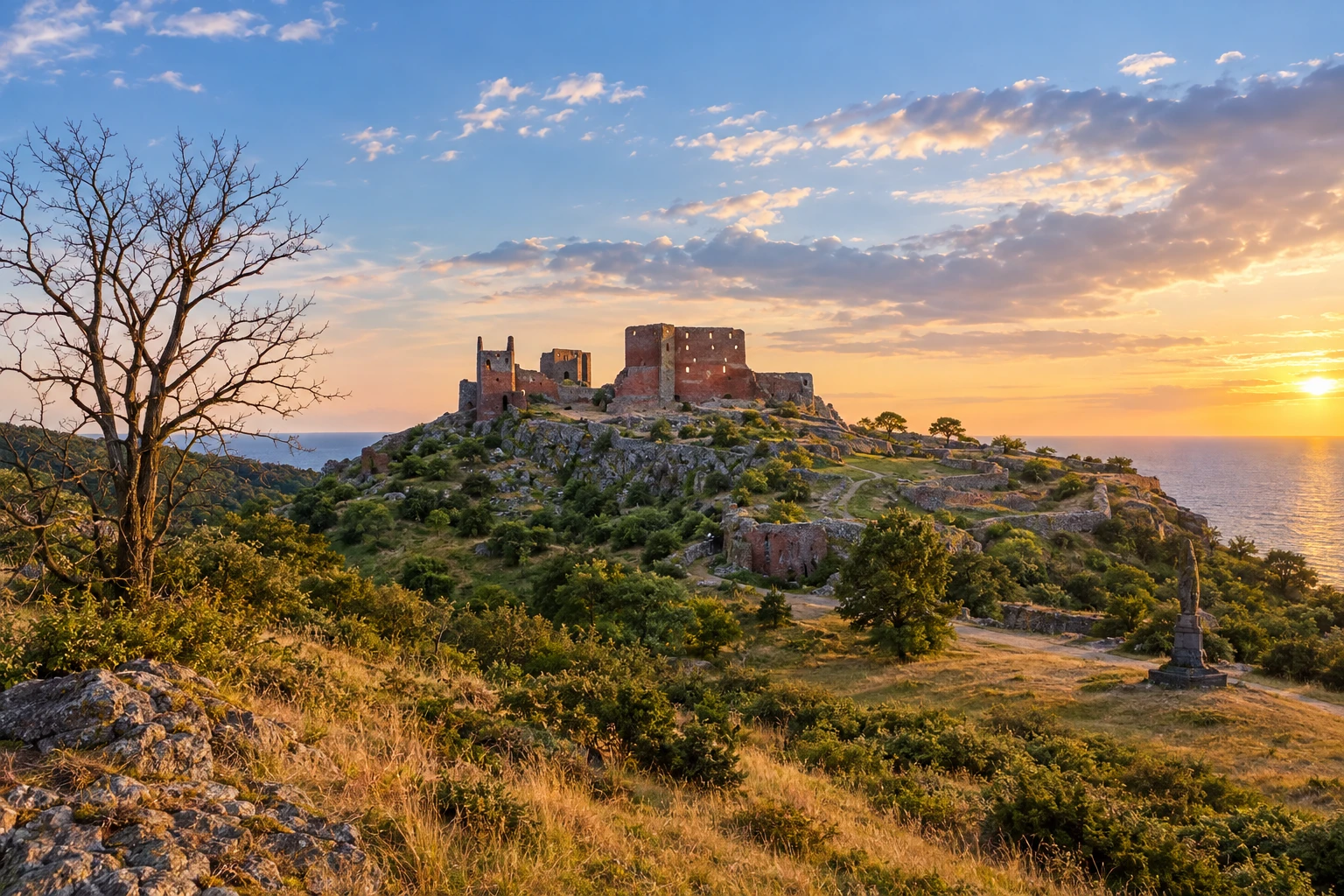
In the photo: Ruins of Hammershus

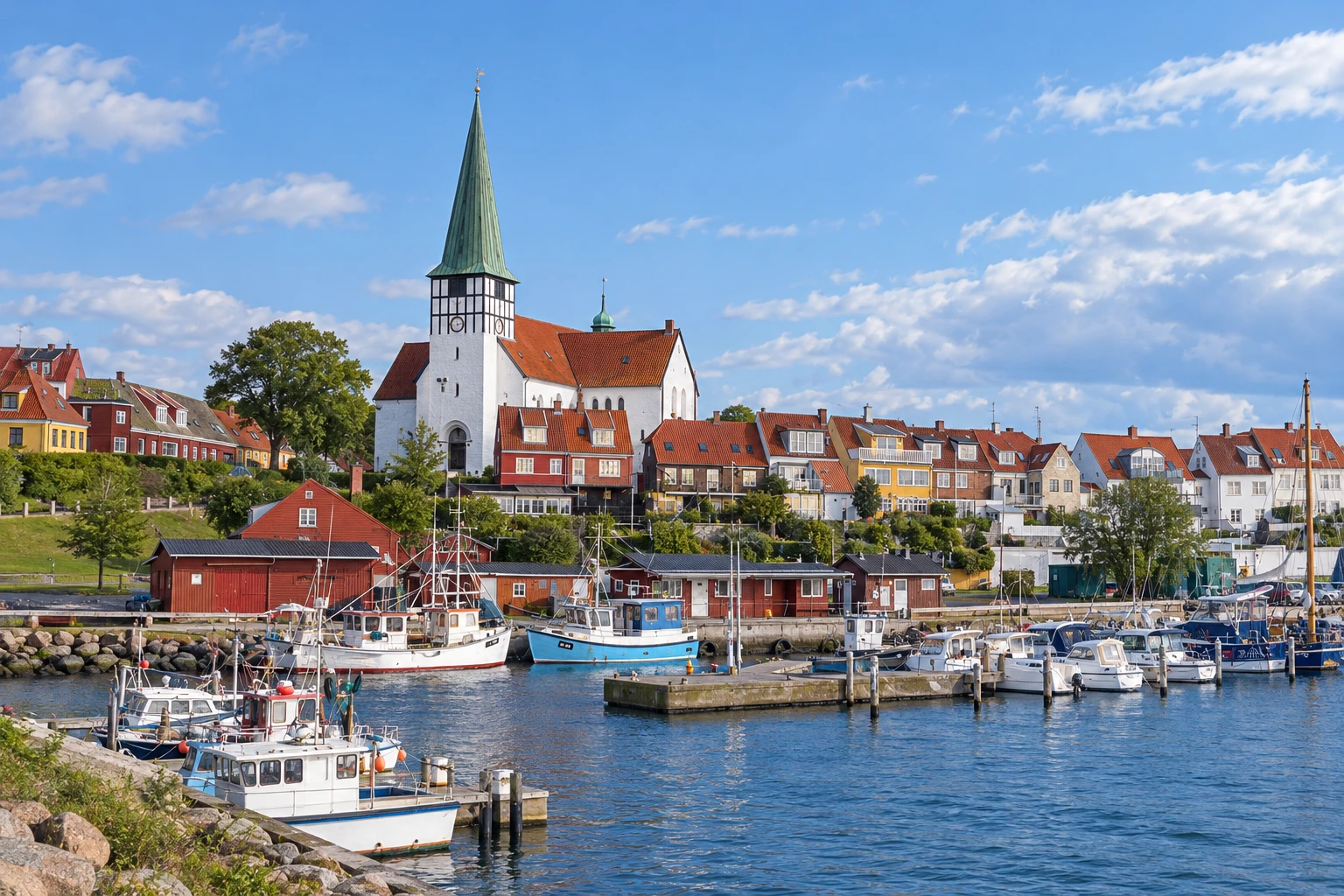
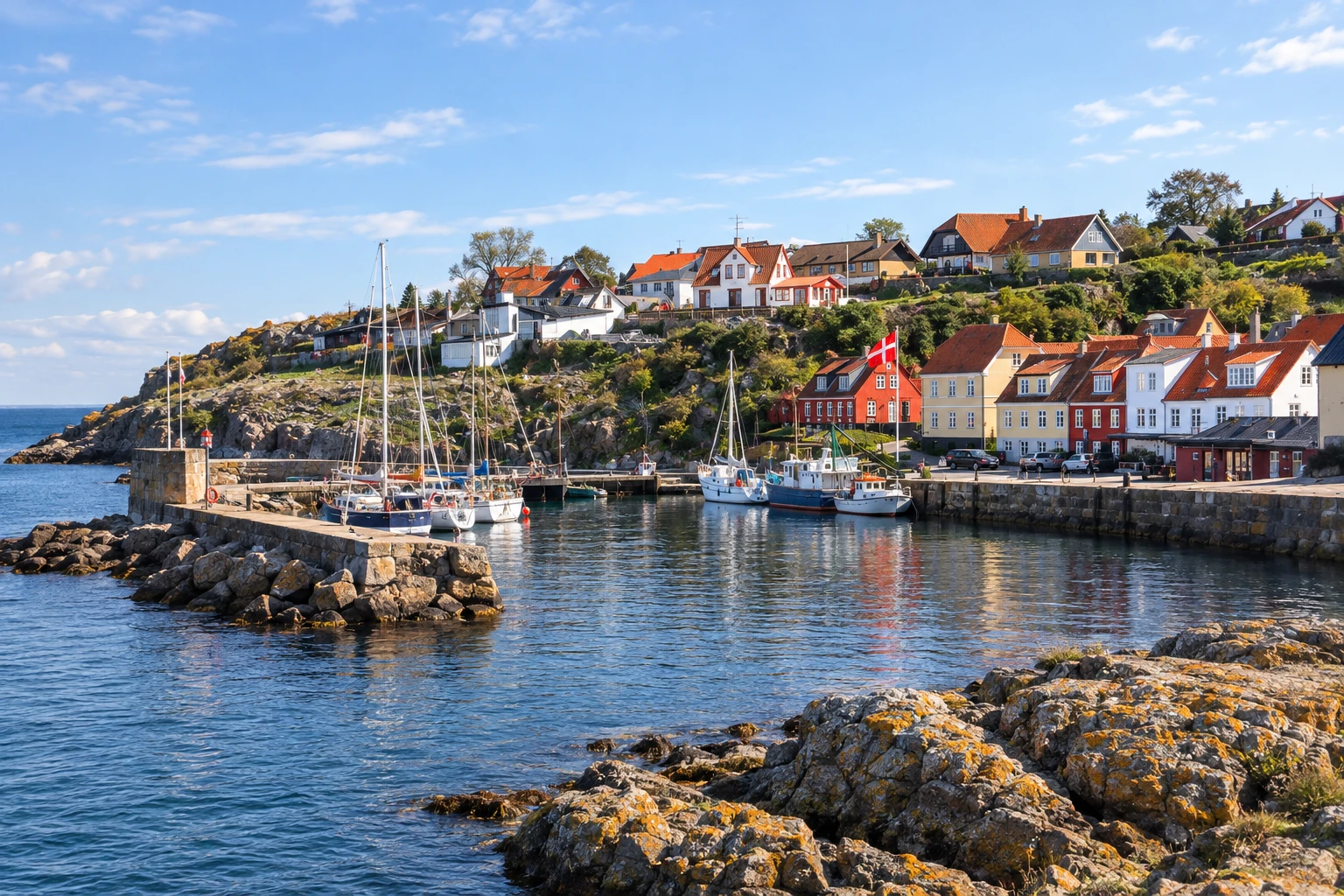
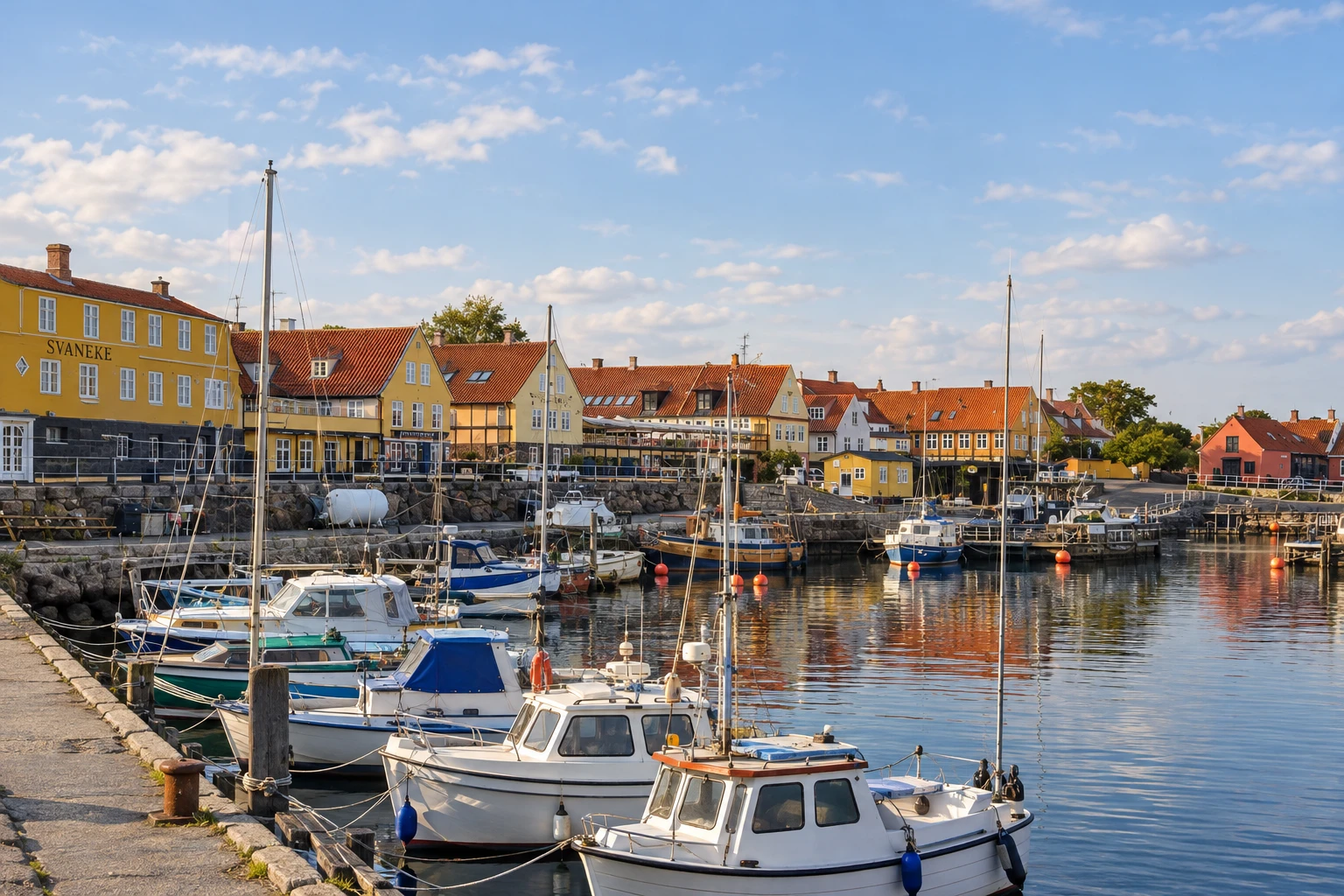
Illustrative images. The pictures in this guide are illustrations based on the real place, not photographs, and may differ from it.

Get it on Google Play

Get to know the place

A region to enjoy
at your own pace.

Bornholm is a Danish island in the Baltic Sea, about 150 km east of Copenhague, closer to Sweden and Poland than to the rest of the country. Unlike flat Denmark, the island is made of granite: the north coast has cliffs and rocks dropping into the sea, the interior has forests and fields, and the south has fine sandy beaches. Danes call it the "rock" (Klippeøen) and visit in summer for the light, the beaches and the villages.

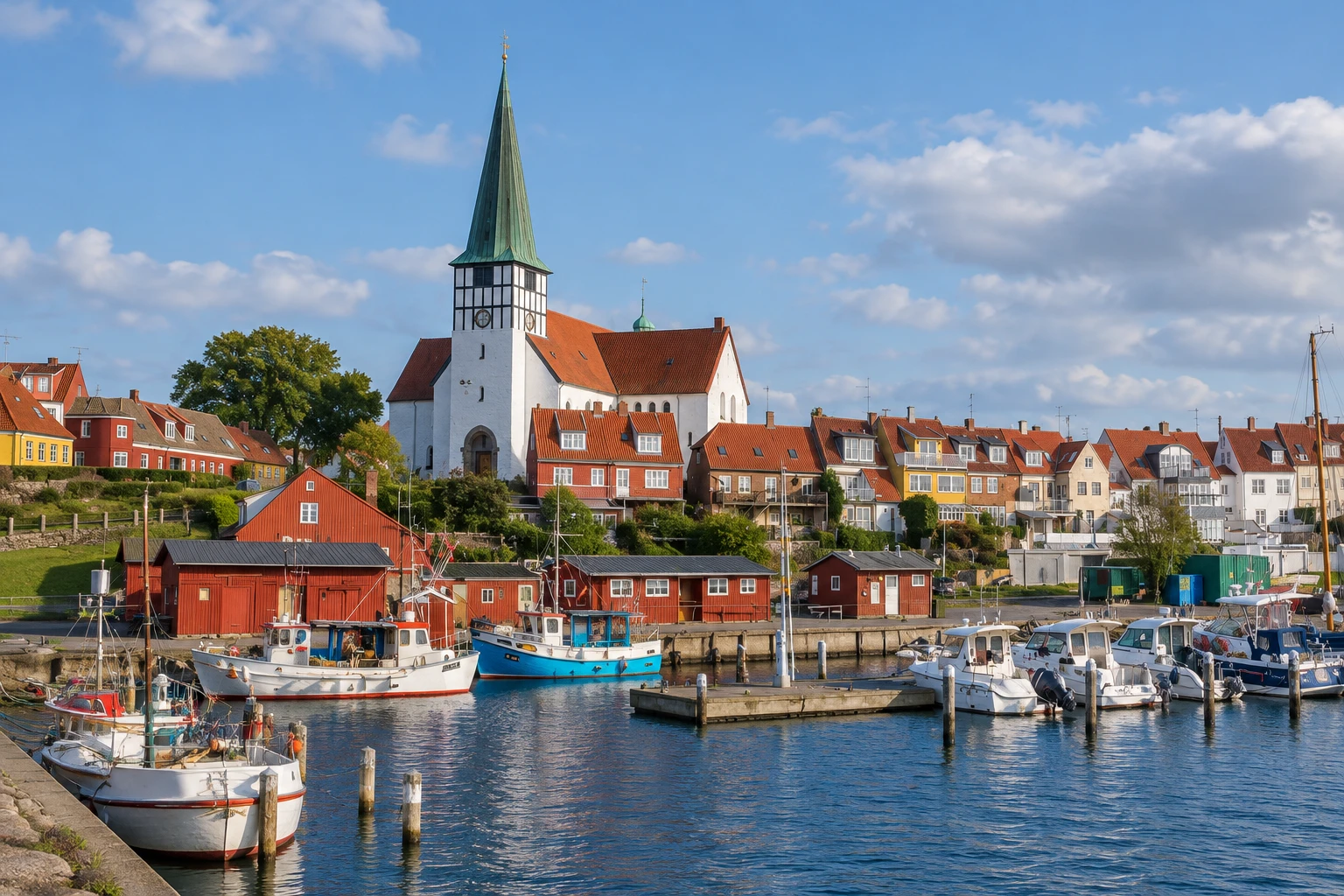
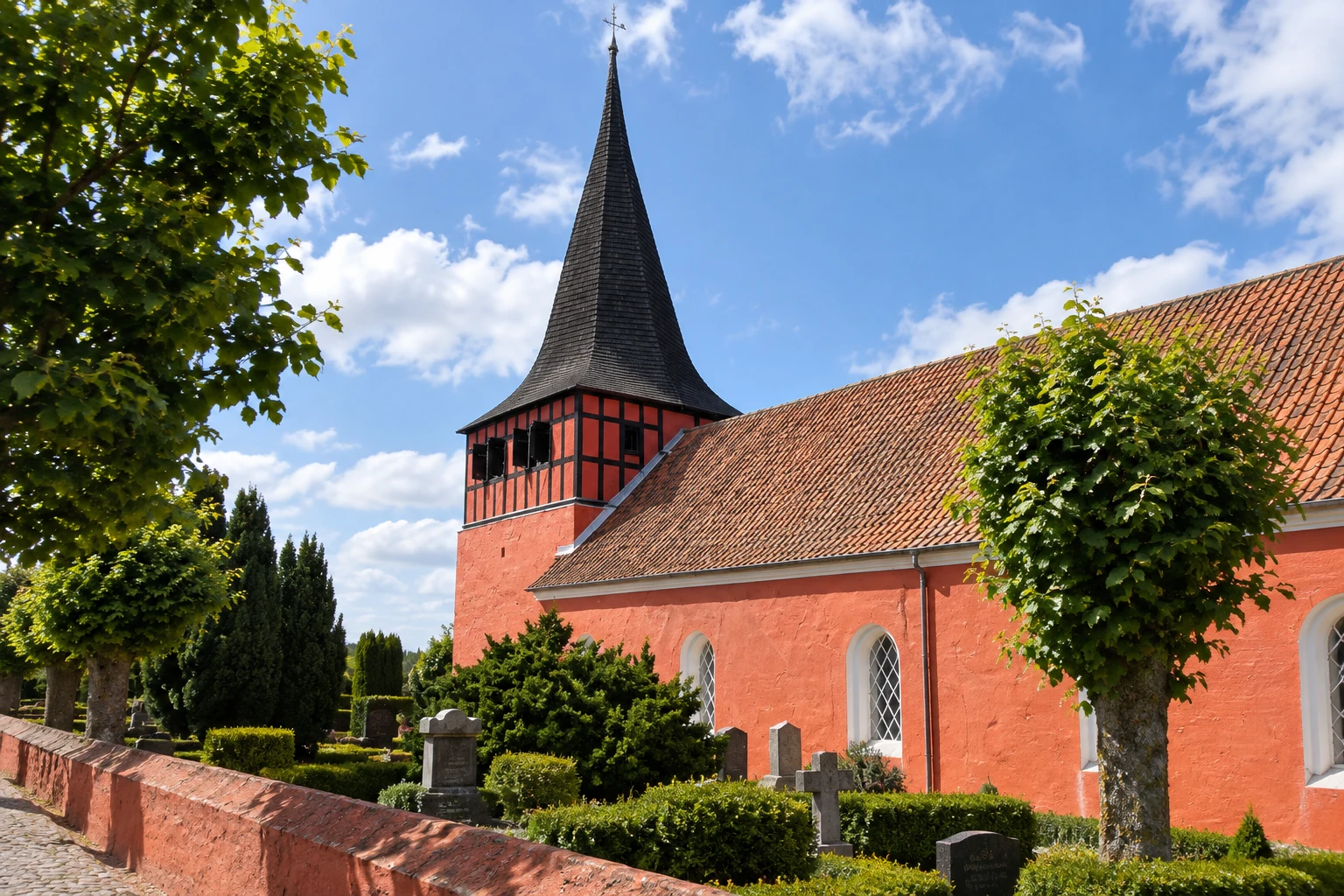
Rønne, the island's capital on the west coast, receives the ferries and the airport and has a centre of low, colourful houses, with the Bornholms Museum. At the northern tip, the ruins of Hammershus, a 13th-century fortress on a cliff, are the largest medieval fortification in Scandinavia. Around the island there are four medieval round churches, with white walls and conical roofs, which also served as fortresses; Østerlars is the biggest.

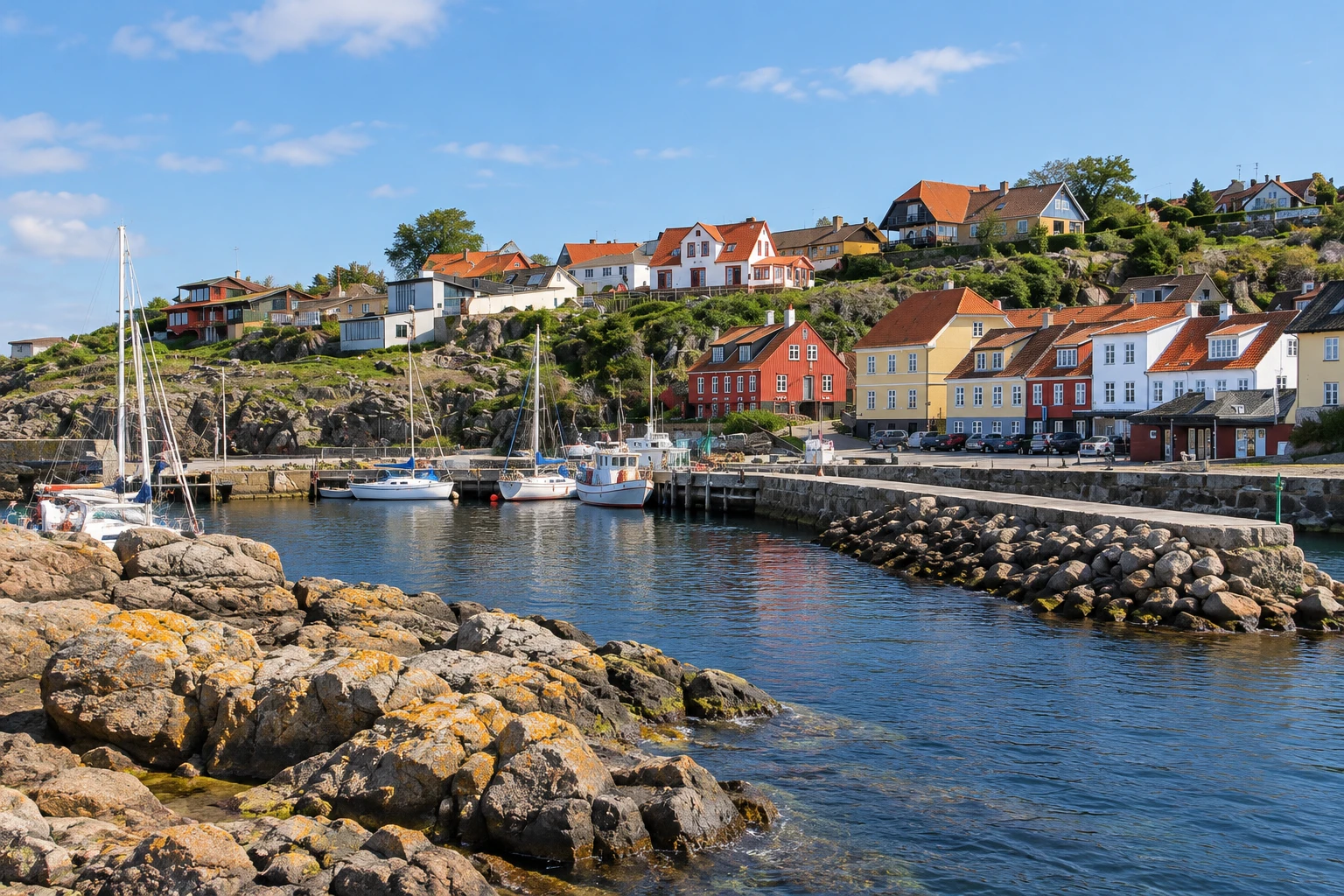
On the east coast, Gudhjem is a village of steep streets that descend to the harbour, with herring smokehouses with tall chimneys and the boat to the Christiansø archipelago. Svaneke, farther south, has red and yellow houses, a brewery, glassblowers and artisanal candy factories. North of Gudhjem, the cliffs of Helligdomsklipperne have a coastal trail and the Bornholm Art Museum on the heights. In the south, the beach of Dueodde has dunes and sand so fine it was once used in hourglasses.

For Brazilians, Bornholm needs three or four days and pairs well with Copenhague: there are domestic flights of 35 minutes and ferries. The island has buses connecting the villages and over 200 km of cycle paths.

This destination brings together 3 cities: Rønne, Gudhjem, Svaneke.

Share: WhatsApp
Traveler, share your experiences through photos Up to 5 photos of each place you visited.

One destination, many paths

The cities on this trip

Start with one city or combine several in your itinerary.

Where Bornholm is The star marks the nearest capital, Hillerød.
HillerødRønneGudhjemSvaneke

Outlines: Web Vectors Map, via geoBoundaries (CC BY 4.0). Adapted by Cidade Turismo.

How to get there: Bornholm

Aeroporto de Bornholm (Bornholms Lufthavn) (RNN), in Rønne · 5 km to Rønne

Connections from Brazil usually involve a stopover in another city. Check before booking. From Copenhague, the domestic flight to Rønne takes about 35 minutes. By land, train or bus go to Ystad in Suécia, and the catamaran crosses to Rønne in about 1h20; bring your passport. There is a ferry from Køge, taking around 5h30.

Suggested arrival point: Rønne

The local experience

Things to do in Bornholm

Rønne · Capital Region · Historic centre

Rønne Old Town

The cobbled streets and low, colorful houses of Bornholm's capital, between the square Store Torv, the church of São Nicolau by the sea, and the streets Laksegade and Storegade.

Explore Rønne Old Town

Rønne · Capital Region · Museum

Bornholm Museum

The island's history museum in central Rønne: from the Stone Age to the Vikings, the guldgubber—small gold foils from the Iron Age found at Sorte Muld—and Bornholm's recent history.

Explore Bornholm Museum

See 7 more places in Bornholm

To choose before you go

Tours in Bornholm

Where each tour starts, how long it takes, how it is done, what is included and the price range.

Rønne and ruined fortress

From Bornholm On foot, with transport to the starting point when necessary Half a day or a day, depending on the stops during the day

Visit Rønne and its museum before continuing by road to Hammershus. The fortress is a ruin and the walk requires its own time around the site. Its location in the north of the island prevents treating it as a stop within the town center.

Stops: Rønne town centre, Bornholms Museum, Hammershus.

Gudhjem and the rocky coast

From Bornholm On foot, with transport to the starting point when necessary Half a day or a day, depending on the stops during the day

Use Gudhjem as a base for selecting visits in the north and inland. The round church of Østerlars and the cliffs of Helligdomsklipperne have different access points. Allocate the day according to transport and your interest in architecture, the museum, and the landscape.

Stops: Gudhjem, Østerlars Kirke, Helligdomsklipperne.

Svaneke and southeast beaches

From Bornholm On foot, with transport to the starting point when necessary Half a day or a day, depending on the stops during the day

Wander the streets of Svaneke and choose between the church and the coastal path from the old lighthouse to Hullehavn. Dueodde lies further south and requires another transfer. The beach can be a walk even when the weather does not favor swimming.

Stops: Svaneke, Svaneke Kirke, Hullehavn, Dueodde.

Day by day

1, 2 and 3-day itinerary in Bornholm

Suggestions to plan the trip. Change the order of the days according to the weather and tour availability.

1 day · Bornholm in 1 day

For For those who want to spread out visits and travel from a base. · Based in Bornholm
  1. Day 1 · Day 1: Hammershus ruins

    Rønne and Hammershus, with road transfer and time set aside to take in the scenery of the ruins.

2 days · Bornholm in 2 days
For For those who want to spread out visits and travel from a base. · Based in Bornholm
  1. Day 1 · Day 1: Hammershus ruins

    Rønne and Hammershus, with road transfer and time set aside to take in the scenery of the ruins.

  2. Day 2 · Day 2: Gudhjem coast

    Gudhjem, Østerlars and a selection of cliffs or a museum on the north coast.

3 days · Bornholm in 3 days
For For those who want to spread out visits and travel from a base. · Based in Bornholm
  1. Day 1 · Day 1: Hammershus ruins

    Rønne and Hammershus, with road transfer and time set aside to take in the scenery of the ruins.

  2. Day 2 · Day 2: Gudhjem coast

    Gudhjem, Østerlars and a selection of cliffs or a museum on the north coast.

  3. Day 3 · Day 3: Streets and coast of Svaneke

    Svaneke and its coast; add Dueodde depending on transport. Christiansø requires a different time window for the boat crossing.

Best time to go

When to go: Bornholm month by month

From June to August the days are usually long and the sea is less cold, with the island full of Danish visitors; May and September are quieter, with still-long days. From October to April it tends to be cold and windy, ferries run less often and many restaurants, museums and smokehouses close or reduce hours. Check before you go.

The seasons shown are the most usual ones; nature doesn't always follow the calendar.

January Some rain

winter

For a trip to Bornholm, winter usually brings persistent cold and few hours of daylight, unlike Brazilian summer. Include the streets and coast of Svaneke when planning visits on Bornholm. As a national reference for 1991–2020, the averages of the minima and maxima are -0.7 °C and 3.6 °C; monthly precipitation is 65.3 mm.

February Some rain

winter

For a trip to Bornholm, February is still generally cold with short days; the trip calls for more indoor activities. Include the Hammershus ruins when planning visits on Bornholm. As a national reference for 1991–2020, the averages of the minima and maxima are -0.9 °C and 3.7 °C; monthly precipitation is 50.3 mm.

March Some rain

spring

For a trip to Bornholm, spring starts in March, but cold often continues and daylight increases gradually. Include the coasts of Gudhjem when planning visits on Bornholm. As a national reference for 1991–2020, the averages of the minima and maxima are 0.3 °C and 6.4 °C; monthly precipitation is 46.4 mm.

April Some rain

spring

For a trip to Bornholm, April typically alternates cool air and rain, with more daylight hours for walking. Include the streets and coast of Svaneke when planning visits on Bornholm. As a national reference for 1991–2020, the averages of the minima and maxima are 3.4 °C and 11.2 °C; monthly precipitation is 38.5 mm.

May Some rain

spring

For a trip to Bornholm, May usually brings milder spring weather and long days, the season being opposite to Brazil. Include the Hammershus ruins when planning visits on Bornholm. As a national reference for 1991–2020, the averages of the minima and maxima are 7.1 °C and 15.6 °C; monthly precipitation is 47.3 mm.

June Some rain

summer

For a trip to Bornholm, June usually brings mild summer weather and very long days; the wind still calls for an extra layer of clothing. Include the coasts of Gudhjem when planning visits on Bornholm. As a national reference for 1991–2020, the averages of the minima and maxima are 10.4 °C and 18.5 °C; monthly precipitation is 64.3 mm.

July Some rain

summer

For a trip to Bornholm, July is usually among the mildest months, with long daylight and possible rain during outings. Include the streets and coast of Svaneke when planning visits around Bornholm. As a national reference for 1991–2020, the averages of the minimums and maximums are 12.7 °C and 21.2 °C; monthly precipitation is 65.8 mm.

August Some rain

summer

For a trip to Bornholm, August usually keeps days mild and long, although daylight duration already begins to decrease. Include the ruins of Hammershus when planning visits around Bornholm. As a national reference for 1991–2020, the averages of the minimums and maximums are 12.8 °C and 21.2 °C; monthly precipitation is 82.1 mm.

September Some rain

autumn

For a trip to Bornholm, September usually marks the transition to autumn, with cool air and shortening days. Include the coasts of Gudhjem when planning visits around Bornholm. As a national reference for 1991–2020, the averages of the minimums and maximums are 10.1 °C and 17.2 °C; monthly precipitation is 74.7 mm.

October Some rain

autumn

For a trip to Bornholm, October is usually colder and wetter in autumn; schedule outdoor routes during daylight hours. Include the streets and coast of Svaneke when planning visits on Bornholm. As a national reference for 1991–2020, the averages of the minima and maxima are 6.4 °C and 12.3 °C; monthly precipitation is 83.2 mm.

November Some rain

autumn

For a trip to Bornholm, November is usually cold with limited daylight; the long winter already affects travel. Include the Hammershus ruins when planning visits on Bornholm. As a national reference for 1991–2020, the averages of the minima and maxima are 3.1 °C and 7.6 °C; monthly precipitation is 70.3 mm.

December Some rain

winter

For a trip to Bornholm, December usually has cold winter conditions and very short days, in contrast to summer in Brazil. Include the coasts of Gudhjem when planning visits on Bornholm. As a national reference for 1991–2020, the averages of the minima and maxima are 0.4 °C and 4.7 °C; monthly precipitation is 70.9 mm.

Plan the journey

How to get there: Bornholm

From Brazil to the region

Connections with Brazil are usually via a transfer in another city. Confirm before booking. From Copenhagen or another base with access to Bornholm, choose a ferry or a domestic flight and check the leg to your accommodation. Rønne is one of the island's entry points.

Getting around from Bornholm

Bus and bicycle allow organizing routes around the island, with scheduled frequencies and distances. A car makes it easier to combine towns and remote landscapes; Christiansø requires a separate boat.

Before you go

Practical information

A little planning leaves more time to enjoy the journey.

When to go

From June to August the days are usually long and the sea is less cold, with the island full of Danish visitors; May and September are quieter, with still-long days. From October to April it tends to be cold and windy, ferries run less often and many restaurants, museums and smokehouses close or reduce hours. Check before you go.

The seasons shown are the most usual ones; nature doesn't always follow the calendar.

How many days to stay

Three days are enough for Rønne, Hammershus, Gudhjem, Østerlars and Svaneke. With four or five days there's time for Helligdomsklipperne, the beach of Dueodde, the north coast trails and the boat to Christiansø.

Which city to stay in

Rønne has the largest selection of hotels and is close to the port and the airport. Gudhjem and Svaneke, on the east coast, have guesthouses and small hotels in old houses near the sea. Allinge and Sandvig in the north are close to Hammershus and the trails. In the south, near Dueodde, there are beach hotels and holiday homes. In summer, book in advance.

Respect the place

Take your trash with you, follow the signs and support local businesses. In natural areas, follow the visiting guidelines.

Beyond the guide

Your questions

Frequently asked questions about Bornholm

How to get from Copenhague to Bornholm?

By plane, in about 35 minutes, or by train to Ystad in Suécia and catamaran to Rønne, roughly 3 hours in total. There is also a ferry from Køge.

Do I need a passport to pass through Suécia?

Bring your passport: the route via Ystad goes through Suécia, and there may be document checks.

Do I need a car in Bornholm?

It's not essential. Buses link Rønne with the villages, and the island has over 200 km of cycle paths. A car gives more freedom to combine several spots in one day.

How many days should I stay?

Three days for the main sights; four or five with beaches, trails and Christiansø.

When to go to Bornholm?

From May to September, with long days. June to August is high season; in winter many places close.

Explore other destinations Search by state and city