

 Brazil
 Antarctica
 Argentina
 Bolivia
 Chile
 Colombia
 Ecuador
 Falkland Islands (Malvinas)
 French Guiana
 Guyana
 Paraguay
 Peru
 Suriname
 Uruguay
 Venezuela
 Austria
 Belgium
 Denmark
 Finland
 France
 Germany
 Greece
 Hungary
 Iceland
 Ireland
 Italy
 Luxembourg
 Norway
 Poland
 Portugal
 Slovakia
 Slovenia
 Spain
 Sweden
 Switzerland
 the Czech Republic
 the Netherlands
 the United Kingdom
 Turkey
 Bermuda
 Canada
 Greenland
 Mexico
 Saint Pierre and Miquelon
 the United States
 the Dominican Republic
 Japan
 Egypt
 South Africa
 Australia
 Fiji
 New Zealand
 Papua New Guinea
Nature
Ecotourism in Croatia
Follow the river past the mills of Slunj, take a boat through the channels of the Kornati Islands, or cycle along a former railway in Istria.
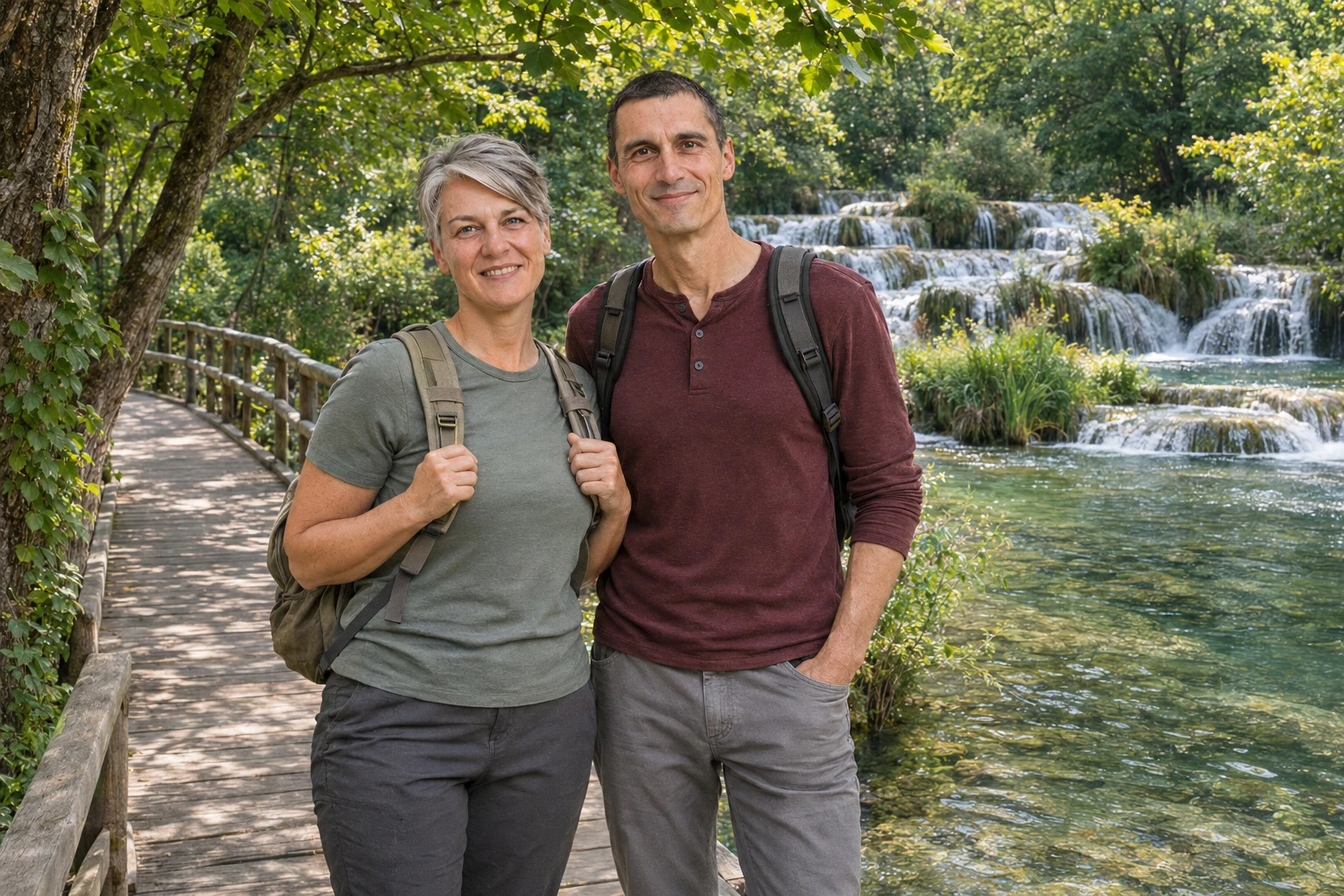
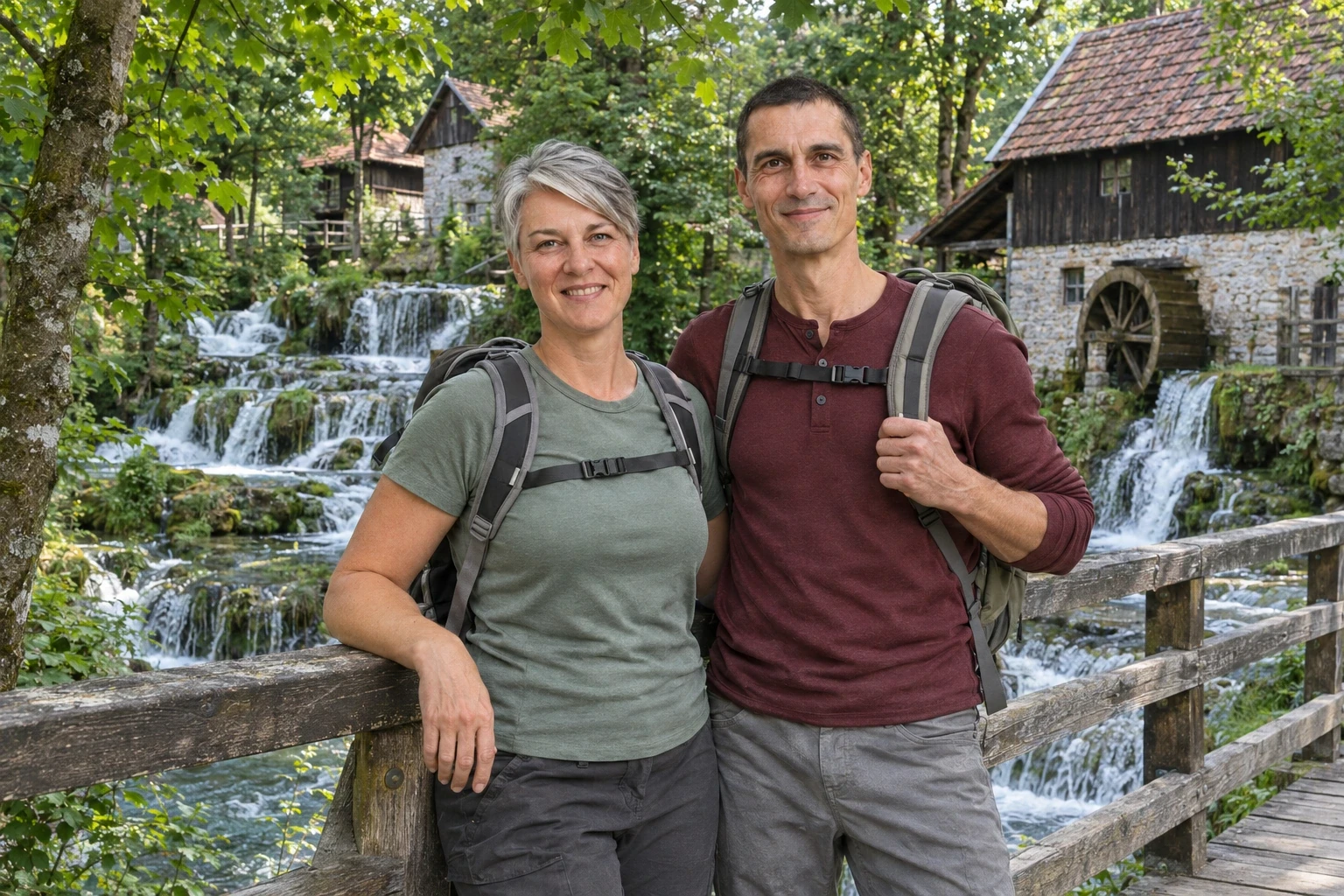
In Rastoke, in the town of Slunj, you can see a river drop from one level to the next almost on people’s doorsteps. The water splits into streams between the mills, flows over stone barriers, and spills into the Korana River. Near Skradin, the same combination of water and limestone takes on a different scale. The trail in Krka National Park passes several river channels before the view opens up to a whole staircase of waterfalls.
Where to go in Brazil
Pick a region or type what you are looking for to see the cities and who offers each activity.
- Zagreb ZG
- Slunj KA
- Grožnjan IS
- Oprtalj IS
- Poreč IS
- Pula IS
- Skradin SK
- Zadar ZD
There are four very different ways to explore these Croatian landscapes. If you enjoy walking, you can follow the water from the boardwalks above. To see the Adriatic islands, your trip starts at the dock in Zadar. Around Poreč and Zagreb, you need to go underground to see where the water once flowed. And on a bike, even a railway tunnel becomes part of the ride.
The waters of Skradin and the mills of Slunj
The Skradin entrance leads to Skradinski Buk in Krka National Park. When the boats are running, you can reach the visitor area by river. Another option is to walk along the riverbank. This path ends where the waterfall loop begins. If you want to do the whole trip on foot, save some energy for both.
At Skradinski Buk, water cascades over a series of tufa terraces. Tufa forms when some of the calcium carbonate dissolved in the water settles on the riverbed. At the top of the loop, you can get a close look at the small channels that run through the vegetation. Farther down, you can see how the water from these channels comes together to form a broad waterfall. The park does not allow swimming at Skradinski Buk.
In Rastoke, take a moment to trace the course of the Slunjčica River with your eyes to the point where it meets the Korana. Smaller branches flow between the buildings, where the water once turned the mill wheels. Looking back at the buildings from the opposite bank helps you see why local people chose that particular drop in the river to grind grain.
Seeing the Kornati Islands from Zadar
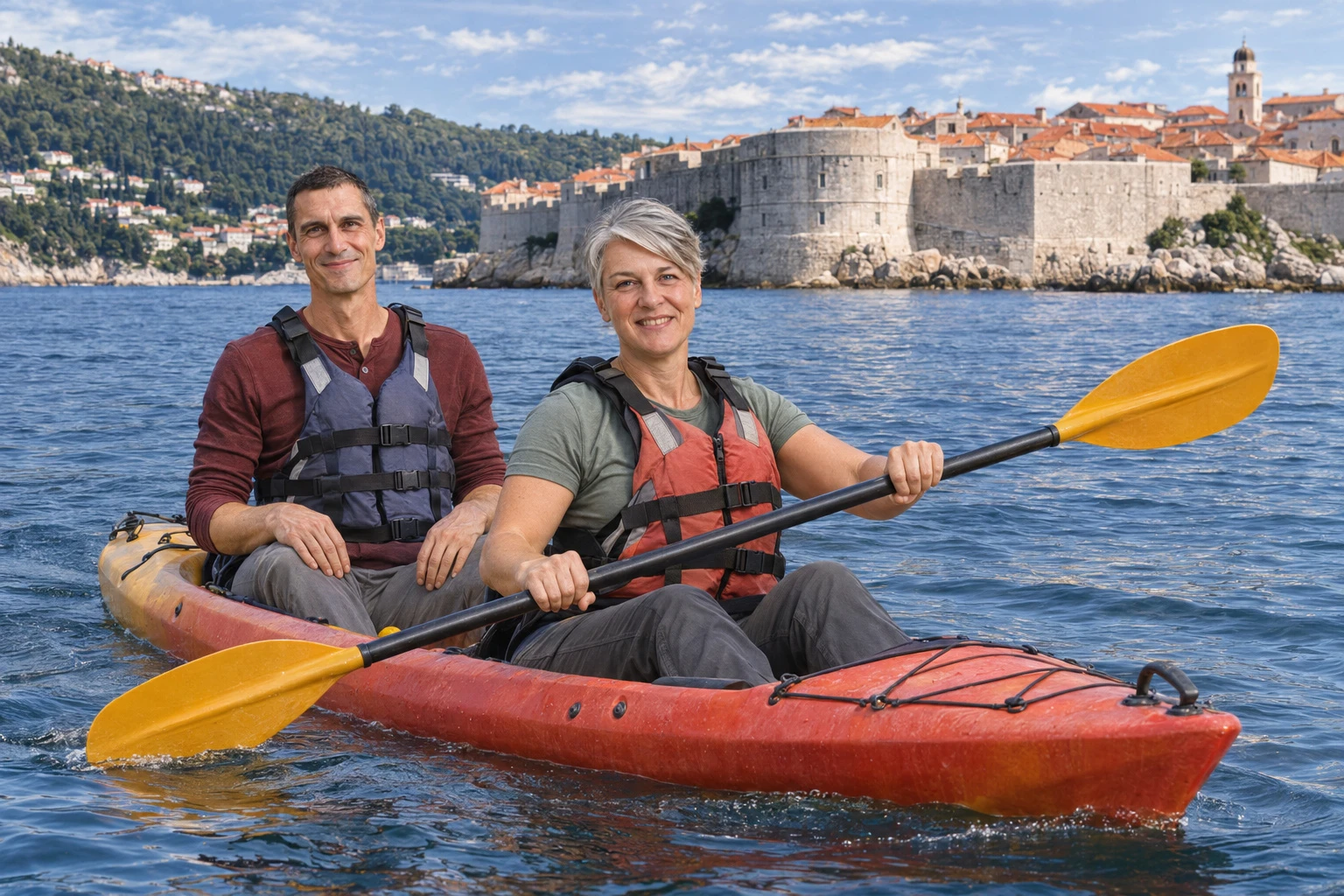
A trip from Zadar to Kornati National Park begins on the mainland. The boat takes you into a landscape where one island hides the next. As the boat changes course, a strip of sea appears between two slopes that looked like one when seen head-on. If you’re interested in the archipelago, the time on the water is an important part of the visit.
Look for the dry stone walls running across the pale slopes. Built of stones fitted together, the walls divided pastures and kept livestock from wandering from one property to another. Islands that look deserted from the deck still show signs of the work people did there. When you go ashore, stay on the visitor paths and leave the stones in the walls where they are.
When comparing boat trips from Zadar, check the map to see which route each boat takes and where you can go ashore. If you want to see the slopes and cliffs, the route matters. If you want to walk, what matters is how much time you have ashore before the return trip. Wind and sea conditions can change the planned route.
The limestone beneath Poreč and Zagreb
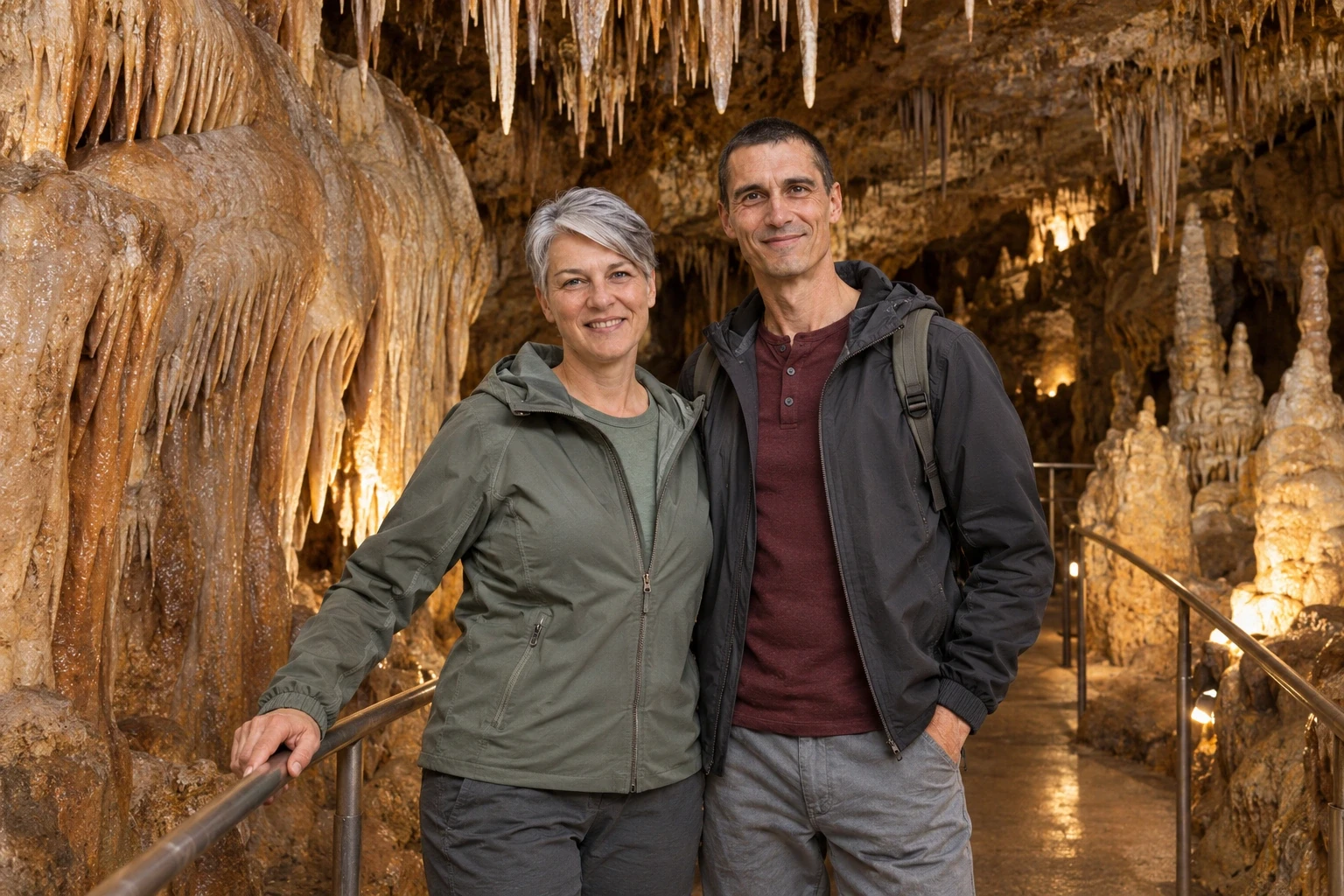
If you’re staying in Poreč, a visit to Baredine Cave near Nova Vas takes you from the Istrian coast into an underground landscape. The group descends a series of stairs and passes through chambers with limestone deposits before reaching an underground lake. Look at a spot where water drips from the ceiling, then at the floor directly below. Stalactites form on the ceiling, and stalagmites can grow where the drops land.
In Zagreb, Veternica Cave lies in Medvednica Nature Park. The guided walk takes you through passages that flowing water helped carve long ago. Among the details worth stopping for are fossils of marine animals embedded in the rock. Here, inside a mountain, you can see evidence of what the landscape was like before the cave itself formed.
Choose a cave based on where you’re staying and how you’ll reach the entrance. At Baredine, keep in mind that you’ll need to climb back up the stairs at the end of the visit. At Veternica, allow for the walk through the park to the entrance as well. For either cave, even on a hot day, bring a light jacket for the stops when the group listens to the guide.
Istria and the valleys of Slunj by bike
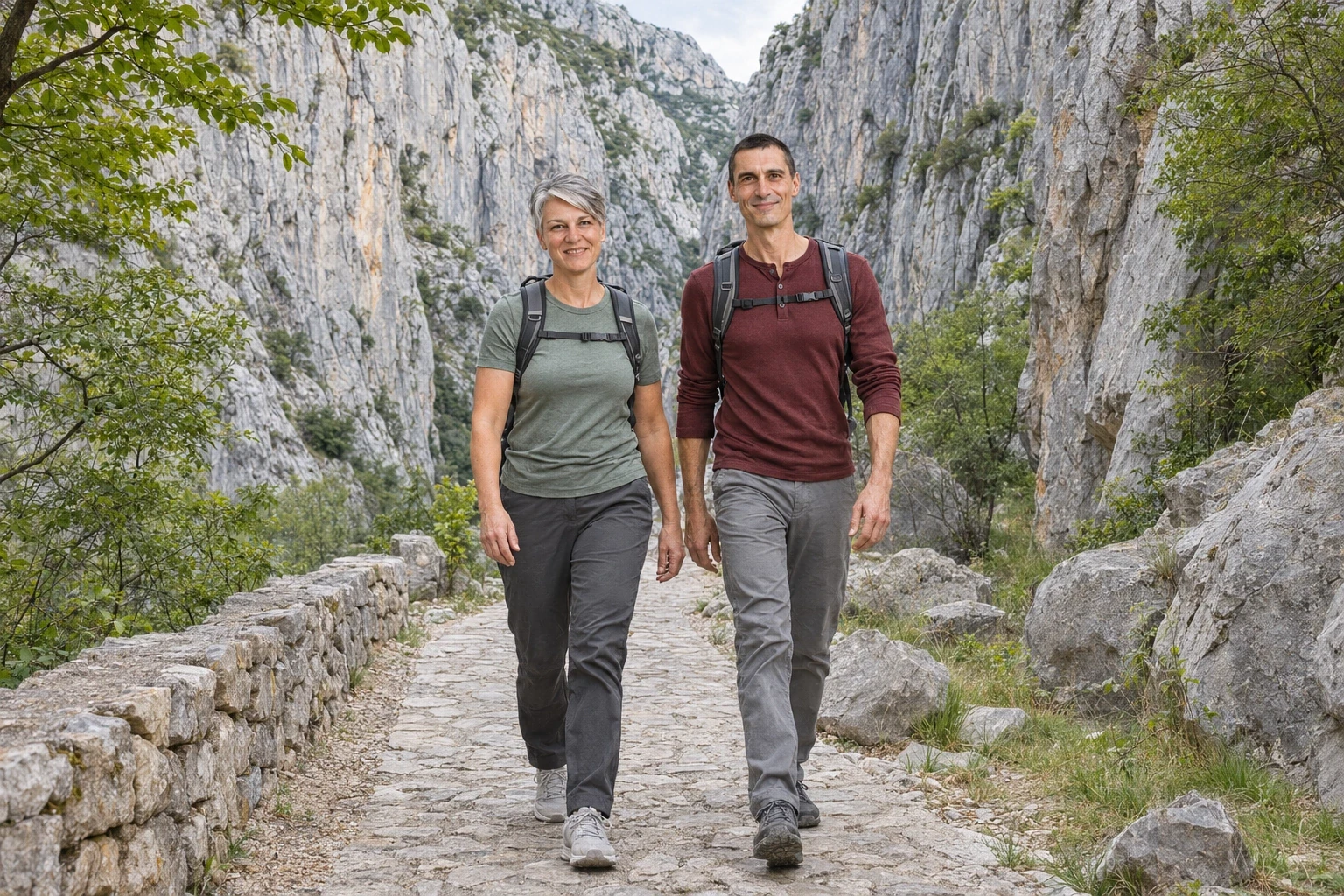
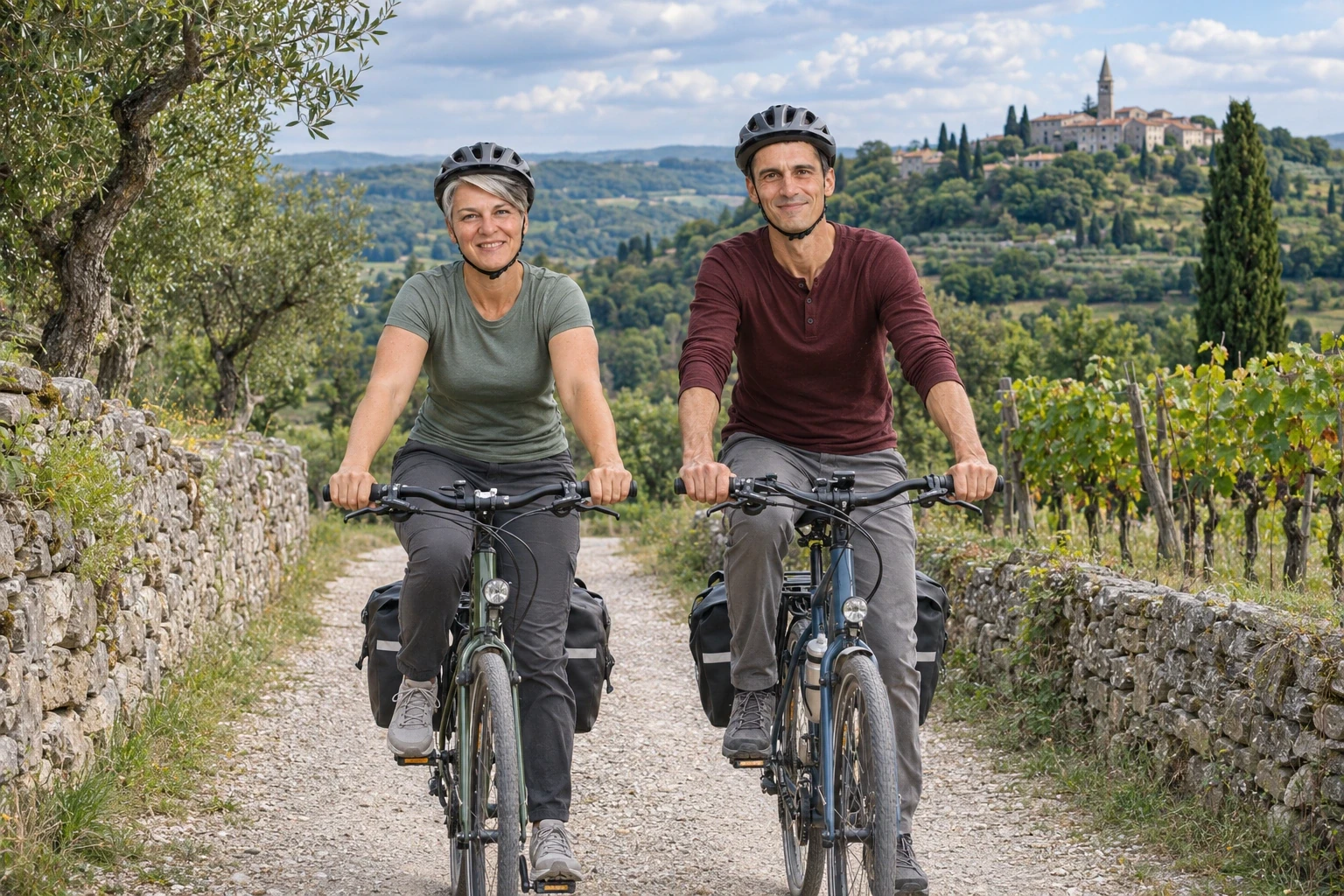
Around Grožnjan and Oprtalj, the Parenzana follows a former railway. Rather than taking the shortest way up the slope, the route climbs in curves, using tunnels and viaducts to negotiate changes in elevation. These stretches make the ride worthwhile even if you only want to cycle part of the route. Check the map to see how to reach the old rail bed from where you’re staying, since the approach may have climbs of its own.
Poreč is at the coastal end of the Parenzana and also has cycling routes along its riviera. It’s a base where you can spend one day cycling and another exploring Baredine Cave. Farther south in Istria, the Pula forts route passes through Štinjan and follows part of the ring of fortifications. Here, stops to identify the forts help break the ride into stages.
Slunj offers an inland alternative. The local cycling map shows rural roads and river valleys. If you’ve spent a morning by the mills of Rastoke, you can set aside another day to explore the countryside around town by bike. Check the elevation profile for the whole route. A route that starts and ends near the water can still climb quite a bit between one riverbank and the other.
How to plan an itinerary around a base
If your group has different interests, Poreč makes a good base in Istria for both a cave visit and cycling. If you like traveling in stages, you can trace the history of the Parenzana through the interior. If you’d rather stay in one place, you can cycle a section and return the same way. Factor in the return trip when estimating how much water, daylight, and energy you’ll need for the ride.
In Dalmatia, Zadar is the departure point for boats to the Kornati Islands, while Skradin gives you access to the boat trip on the Krka River. Set aside separate days for the two outings if you want to take your time on the boardwalks. For an itinerary that includes Zagreb and Slunj, schedule the guided visit to Veternica first. In Rastoke, it’s easier to adjust the length of the walk to your group’s pace.
Frequently asked questions
Where can you see waterfalls in Croatia if you’re starting from Skradin?
The Skradin entrance to Krka National Park leads to Skradinski Buk. You can walk to the visitor area or get there by river during the season when the boats are running.
What nature trip can you take from Zadar if you prefer to go by boat?
Boat trips to Kornati National Park take you among the islands of the Adriatic. Check the itinerary to see which islands you’ll view from the deck and where the boat is scheduled to stop for a visit ashore.
Where can you combine a cave visit with bike rides?
In Poreč, you can spend part of your trip at Baredine and set aside time to explore the routes along the riviera or a section of the Parenzana.
Can I explore the mills and valleys without staying in a different town?
Slunj has both the waterfalls of Rastoke and rural roads for cycling. Visit the mills on foot, then use the Slunj cycling map to choose a route through the valleys.
Do I need to bring the same gear for every outing?
Shoes with good grip work well on both wet boardwalks and cave stairs. For Kornati, bring water and sun protection for the stops on land, too. On the Parenzana, check your brakes and lights before entering the tunnels.
Beyond the guide


